Original Research Article
Urinary tract Infection among type 2 diabetic patients admitted in a
multispecialty hospital in South Chennai, Tamil Nadu
P. S. Vignesh
1, T. T. Gopinath
2*, D. K. Sriram
1INTRODUCTION
Diabetes mellitus refers to a group of common metabolic disorders that shares the phenotype of hyperglycemias. Diabetes mellitus (DM) is a worldwide health problem, with an expected prevalence of 592 million by 2035.1 Infections in diabetes mellitus are relatively more common which can be serious and result in worse outcome. Urinary tract forms the most frequent site of infection.2
UTI is more widespread in women with DM than in non-diabetic women as a consequence of debilitated immune system. Ninety five percent of UTIs are caused by uro-pathogens which multiply at the notch of the urethra and migrate towards the bladder.
The increased risk of UTI among diabetic patients, coupled with the increase in the incidence of type 2 diabetes mellitus worldwide in recent years, may impose a substantial burden on medical costs. In addition, the
ABSTRACT
Background: Diabetes mellitus (DM) is a chronic and potentially disabling disease which is reaching an epidemic proportion in many parts of the world. UTI is a common infection observed in diabetic patients. The objectives of this study was to determine the prevalence of UTI among hospitalized type 2 diabetic patients, the frequent bacteria responsible for UTI and most susceptible antibiotics among the diabetic patients.
Methods: A hospital-based study involving type 2 diabetes patients admitted with diagnosis of UTI between 2017- 2018 (July - June). The study was a cross sectional study and was approved by the Ethics Committee of the hospital. Patients fitting study inclusion and exclusion criteria took part in the study with informed written consent obtained. A validated pilot-tested questionnaire was used as a tool for data collection.
Results: Total of 126 subjects were identified. Prevalence of UTI was around 25% higher in women with type 2 diabetes than in men. UTI was found to be significantly associated with age, creatinine (p<0.05) and Escherichia coli was the commonly isolated micro-organism. The gram negative pathogens were highly sensitive to cefoperazone-sulbactum and amikacin was found to be the most sensitive antibiotic for both gram positive and gram negative pathogens.
Conclusions: UTIs are frequent in diabetic patients. Improved glycemic control in diabetics may help in controlling the UTIs. Accurate screening for UTI in diabetic patients is also critical to enable the appropriate treatment and avoiding related complications.
Keywords: Type 2 diabetes mellitus, UTI, Amikacin
1
Hindu Mission Hospital, Tambaram, Chennai, Tamil Nadu, India
2
Department of Community Medicine, Meenakshi Medical College Hospital and Research Institute, Kanchipuram, Tamil Nadu, India
Received: 05 January 2019
Revised: 13 February 2019
Accepted: 16 February 2019
*Correspondence:
Dr. T. T. Gopinath,
E-mail: [email protected]
Copyright: © the author(s), publisher and licensee Medip Academy. This is an open-access article distributed under the terms of the Creative Commons Attribution Non-Commercial License, which permits unrestricted non-commercial use, distribution, and reproduction in any medium, provided the original work is properly cited.
high rates of antibiotic prescription, including broad-spectrum antibiotics for UTI in these patients may further induce the development of antibiotic-resistant urinary pathogens.
Multiple potential mechanisms unique to diabetes may contribute to the increased risk of UTI in diabetic patients.6
Pathogens
The most common pathogens isolated from urine of diabetic patients with UTI are Escherichia coli, other Enterobacteriaceae such as Klebsiella spp, Proteus spp, Staphylococcus and Enterococci.7 Patients with diabetes are more prone to have resistant pathogens as the cause of their UTI including extended-spectrum β-lactamase-positive Enterobacteriaceae, fluoroquinolone-resistant uropathogens, carbapenem-resistant Enterobacteriaceae and vancomycin-resistant Enterococci.8
Patients with diabetes have worse outcomes of UTI than those without diabetes.5 Diabetes is also associated with longer hospitalization, bacteremia, azotemia, and septic shock in patients with UTI.4 Mortality from UTI is 5 times higher in patients with diabetes aged 65 and older, as compared to elderly control patients. Relapse and re-infection are also more common in diabetic patients according to a Dutch study of diabetic women with UTI.9 In this study we aimed to assess the prevalence of UTI in type 2 diabetic patients admitted in our hospital as well as the type of microbiologically confirmed UTI and pattern of the antimicrobial drugs susceptibility in relation to diabetes mellitus in patients with good and poor glycemic control.
METHODS
We performed a hospital-based study involving type 2 diabetes patients admitted with diagnosis of UTI in 2017- 2018 (July - June). The study was a cross sectional study and was approved by the Ethics Committee of the hospital. Patients fitting study inclusion exclusion criteria were explained about the study informed written consent obtained.
Inclusion criteria
Inclusion criteria includes admitted patients with type 2 DM, age >30 yrs.
Exclusion criteria
Exclusion criteria includes age <30 yrs, pregnant women, immuno-compromised, type 1 DM, RTA patients, admitted in ICU, undergoing or underwent surgery, catheterized patients, malignancy, CKD on haemodialysis.
A validated pilot-tested questionnaire was used as a tool for data collection. The questionnaire sought in addition to demographic data, information about the patient’s history of diabetes, presence of co-morbidities commonly associated with DM (hypertension, chronic kidney disease, hypothyroidism, CAD).
Each patient’s weight, height, and body mass index (BMI) were calculated. Every patient was asked about symptoms suggestive of UTI (e.g., urgency, dysuria, urinary frequency, suprapubic pain).
2 ml of blood withdrawn in fasting for fasting blood glucose and 5 ml of blood withdrawn 2 hours after meal/ OGTT in oxalate/fluoride vacutainers for PP blood glucose, HbA1C, CBC and renal function.
Glycosylated haemoglobin (HbA1C%) was estimated by
an Immunoturbidimetric method to determine the quality of glycemic control and haemoglobin, CBC measured by impedance photometry and renal functions were measured using GLDH and Jaffe kinetic methods. Urine collection and processing
Urine was collected in sterile screw-capped, graduated, wide-mouth plastic container as clean-catch midstream samples and transported to the laboratory within two hours of collection.
The criteria for ordering a urine culture were: urinary symptoms (dysuria, urgency, frequency or suprapubic pain or tenderness) with or without fever at presentation or during hospitalization, modified urinalysis (positive nitrite, positive leukocyte esterase, more than 5 white blood cells per high power field), fever or high leukocyte count of unknown aetiology.
Using a standard quantitative loop, urine samples (1 μl and 10 μl) were used to inoculate Cysteine lactose electrolyte deficient (CLED) agar, MacConkey, 5% sheep blood agar, and chromogenic UTI agar plates. All plates were incubated at 37°C for 24–48 hours for visible growth.
Identification of isolated microorganisms
Urine samples showing a colony count more than 105 cfu/ml were considered to be positive for UTI.10 UTI isolates were identified following standard biochemical tests. For positive urine cultures, identifications were done using automated system microscan (Walkaway 40 SI, Siemens Healthcare Diagnostics, Sacramento, CA). For confirmation, further biochemical tests were done for both gram-positive and gram-negative isolates.
mirabilis was assessed as small pale-to-colourless colonies testing positive to indole and urease but negative to oxidase. Peudomonas aeruginosa assessed by large, flat greenish colonies with distinctive odour testing positive for catalase and oxidase. Staph aureus was identified by beta haemolytic colonies in clusters testing positive for catalase and negative for oxidase. Enterococcus faecalis was identified by the presence of small, turquoise colonies with coccoid morphology, which tested negative for catalase and positive for bile esculin.
E. coli ATCC 25922, E. faecalis ATCC 29212, K. pneumonia ATCC 13883, and Candida albicans ATCC 10231, Staph. aureus ATCC25923 and Pseudomonas aeruginosa ATCC 27853 were used as control strains. Susceptibility testing
Susceptibilities of the common isolated bacteria (E. coli, Enterococcus faecalis, Klebsiella pneumoniae, Pseudomonas aeruginosa, Staphylococcus aureus and Proteus mirabilis) to selected antimicrobial agents causing UTI were examined. Antimicrobial sensitivity testing of all isolates was performed on diagnostic sensitivity test plates according to the Kirby-Bauer method following the definition of the Committee of Clinical Laboratory International Standards (CLIS, 2014).31 Bacterial inoculums were prepared by suspending the freshly grown bacteria in 5 ml sterile saline. A sterile cotton swab was used to streak the surface of Mueller Hinton agar plates. Filter paper disks containing a designated concentration of the antimicrobial drugs obtained from Becton and Dickinson Company (Franklin Lakes, NJ) were used.
Statistical analysis
Patient’s data were collected using an Excel worksheet database. Statistical analysis was performed using Statistical Package for the Social Sciences software for Windows version 21.0 (SPSS Inc., Chicago, IL, USA) Values are expressed as mean±SD or median with IQR or frequency with percentage. Chi-square test was used as required. P<0.05 was considered significant.
RESULTS
A total of 126 patients were identified to have been admitted with diagnosis of UTI during the study period of one year. This comprised of 25% of the hospital admissions during the study period. In the total patients, 84 (68%) number of patients were uncontrolled diabetes with UTI.
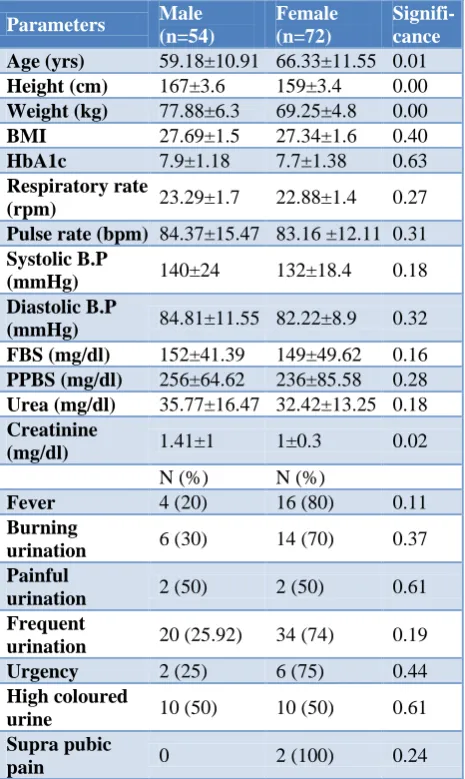
Table 1 shows the baseline characteristics of study patients. Women (57.1%) had a higher prevalence of urinary tract infection than men (42.9%) and advanced age is significantly associated with UTI (p=0.01). There was a significant relationship between creatinine and UTI
(P~0.02) A total of 18 (14.3%) subjects were on only lifestyle modifications, 24 (19.1%) subjects were treated with oral hypo-glycemic agents and 84 (66.6%) required combination therapy (OHA’s and Insulin) Upper UTI was found only in 15.9% of subjects in which females had more preponderance.
Table 1: Baseline characteristics of study patients.
Parameters Male
(n=54)
Female (n=72)
Signifi-cance Age (yrs) 59.18±10.91 66.33±11.55 0.01
Height (cm) 167±3.6 159±3.4 0.00
Weight (kg) 77.88±6.3 69.25±4.8 0.00
BMI 27.69±1.5 27.34±1.6 0.40
HbA1c 7.9±1.18 7.7±1.38 0.63
Respiratory rate
(rpm) 23.29±1.7 22.88±1.4 0.27 Pulse rate (bpm) 84.37±15.47 83.16 ±12.11 0.31
Systolic B.P
(mmHg) 140±24 132±18.4 0.18
Diastolic B.P
(mmHg) 84.81±11.55 82.22±8.9 0.32 FBS (mg/dl) 152±41.39 149±49.62 0.16
PPBS (mg/dl) 256±64.62 236±85.58 0.28
Urea (mg/dl) 35.77±16.47 32.42±13.25 0.18
Creatinine
(mg/dl) 1.41±1 1±0.3 0.02
N (%) N (%)
Fever 4 (20) 16 (80) 0.11
Burning
urination 6 (30) 14 (70) 0.37
Painful
urination 2 (50) 2 (50) 0.61
Frequent
urination 20 (25.92) 34 (74) 0.19
Urgency 2 (25) 6 (75) 0.44
High coloured
urine 10 (50) 10 (50) 0.61
Supra pubic
pain 0 2 (100) 0.24
Table 2: Comparison of co-morbidities with respect to gender.
Condition Male
(n=54)
Female
(n=72) Significance
Hypothyroid 2 (12.5) 14 (87.5) 0.06
CAD 14 (41.29) 20 (58.71) 0.87
CKD 12 (85.29) 2 (14.71) 0.01
SHT 36 (51) 34 (51) 0.12
Dyslipidemia 0 6 (100) 0.63
Table 3: Comparison of causative micro-organism and diabetes.
E. coli Klebsiella pneumoniae
Pseudomonas aeruginosa
Proteus mirabilis
Candida spp
Enterococ-cus fecalis
Staph. aureus
No growth
N (%) N (%) N (%) N (%) N (%) N (%) N (%) N (%)
Controlled
(n=42) 12 (28) 12 (28) 2 (4.7) 2 (4.7) 2 (4.7) 0 2 (4.7) 10 (23.8)
Uncontrolleda
(n=84) 26 (30) 16 (19) 8 (9.5) 2 (2.3) 2 (2.3) 4 (4.8) 2 (2.3) 24 (28.5) p>0.05.
Table 4: Comparison of causative micro-organism and sensitive antibiotics.
E. coli Klebsiella pneumoniae
Pseudomonas aeruginosa
Proteus mirabilis
Candida spp
Enterococcus fecalis
Staph. aureus
N (%) N (%) N (%) N (%) N (%) N (%) N (%)
Cefoperazone
sulbactum 14 (31) 14 (31) 6 (13.6) 0 0 0 2 (4.56)
Piperacillin
tazobactum 8 (21) 6 (21.4) 2 (20) 0 0 0 0
Nitrofurantoin 6 (27) 4 (18) 2 (9) 0 0 2 (9) 2 (9)
Amikacin 10 (33) 10 (33) 2 (6.66) 0 0 2 (6.66) 2 (6.66)
Meropenem 6 (33) 6 (33) 2 (11.11) 2 (11.11) 0 0 0
Levofloxacin 10 (50) 4 (20) 0 0 0 0 2 (10)
Doxycycline 6 (33.3) 8 (44.4) 0 0 0 0 2 (11.1)
Itraconazole 0 0 0 0 4 (100) 0 0
Table 3 shows the causative micro-organisms of UTI in controlled and uncontrolled diabetes in our study. There were 7 micro-organisms (4 gram negative, 2 gram positive, 1 fungus) which were seen in the culture. They are E. coli, Klebsiella pneumoniae, Pseudomonas aeruginosa, Proteus mirabilis, Candida spp, Enterococcus fecalis and Staph. aureus. In the comparison of organism with diabetes, micro-organism was seen high in uncontrolled diabetes. E. coli was the most common micro-organism found. About 28.5% of subjects with uncontrolled diabetes had no growth.
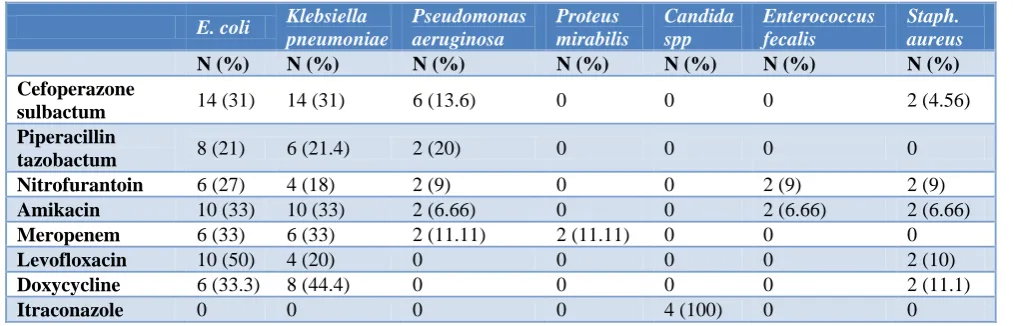
Table 4 shows the sensitive antibiotics against the micro-organisms in our study. Cefoperazone, sulbactum was found to be highly sensitive antibiotic for gram positive than gram negative micro-organisms. Amikacin was found to be sensitive for both gram positive and gram negative pathogens followed by nitrofurantoin.
DISCUSSION
In this study, we found that the prevalence of UTI was higher in female than in male type 2 diabetic patients. Evidence from various epidemiological studies showed that UTI is more common in women with diabetes than those without diabetes.11 The high level of infection in the urinary tract of diabetic women may be determined by the number of microorganisms located in the vagina.12 In a study conducted by de Aguiar et al, UTI was the
most frequent cause of infection in diabetic admissions as the same seen with our study.3
UTI appears to be multi-factorial in subjects with diabetes and various diabetes-related risk factors have been proposed. We observed that age was significantly associated with UTI as seen similarly in previous studies.13 Most of the UTI cases occurred at older age in our study. The association between glycemic control and UTI among diabetic patients is controversial. About 66.6% of subjects with uncontrolled diabetes were associated with UTI. The non-significant association between HbA1c and UTI found in our study has been reported by others as well.14
In our study, obesity might be considered as a co-founder in the correlation between glycemic control and UTI as obesity rates are increasing worldwide. Unfortunately, we do not dispose of this parameter in our subjects to further investigate this potential hypothesis. There was a significant association between creatinine and UTI, more among males in our study. Although statistically insignificant, there was an association of hypothyroid with diabetes and UTI, more among females making a futuristic investigating factor.
number of pathogens isolated in our study were gram negative bacilli rather than gram positive pathogens. In our study among the patients infected with gram negative bacilli, Escherichia coli were isolated from 30.2% of the subjects, Klebsiella pneumonia from 22.2%. Pseudomonas aeruginosa was isolated from 7.9%, Proteus mirabilis from 3.2%, Staphylococcus aureus from 3.2%, Enterococcus fecalis from 3.2%. Candidial growth was isolated from 3.2% of subjects. About 26.9% of subjects had no growth.
In another study from India, it was found that E. coli was the most commonly grown organism (64.3%), followed by Staphylococcus aureus (21.4%), and Klebsiella pneumonia (14.3%).16 In a recent study, it was noted that increased adherence of E. coli with type 1 fimbriae to uroepithelial cells isolated from the urine of women with diabetes correlated positively with HbA1C. Poorly
controlled patients had a higher adherence of E. coli.17 Gram positive pathogens were found to be highly sensitive to cefoperazone-sulbactum although gram negative pathogens were also sensitive to it. Amikacin was found to be the most sensitive antibiotic for both gram positive and gram negative pathogens followed by nitrofurantoin. Piperacillin-tazobactum and meropenem were found to be sensitive only to gram negative micro-organisms. Itraconazole was found to be the sensitive antifungal.
Interestingly, sexual intercourse was reported as a risk factor for UTI in women regardless of their DM status.18 It is difficult to investigate sexual practice in this setting (due to cultural and traditional regulations), if this had been investigated, perhaps different results might have been obtained.
Limitations
The main limitations of this study are a control group was not included for comparison; the sample size was also small which limited the power of the study for some analyses. In addition, it only included hospitalized patients which led to a limited generalization of the findings and cannot be extrapolated to the entire population of type 2 diabetic patients.
CONCLUSION
The prevalence of UTI was around 25% in type 2 diabetes subjects in our study. Prevalence was found to be higher in women with type 2 diabetes than in men. UTI was found to be significantly associated with advanced age, increased creatinine. Escherichia coli were the commonly isolated micro-organism. The gram negative pathogens were highly sensitive to cefoperazone-sulbactum and amikacin was found to be the most sensitive antibiotic for both gram positive and gram negative pathogens. Though statistically
insignificant there was an association of poor glycaemic control, obesity, hypothyroid with diabetes and UTI paving way for further detailed studies.
Therefore, improved control of glycaemia in diabetics may help in controlling the UTIs. It is essential that the clinician be aware of the local pathogen and susceptibility pattern to decide on the most appropriate antibiotic for empirical treatment to reduce the incidence of antimicrobial resistance and life threatening septicaemia. Accurate screening for UTI in diabetic patients is also critical to enable the appropriate treatment and avoiding related complications.
Funding: No funding sources Conflict of interest: None declared
Ethical approval: The study was approved by the Institutional Ethics Committee
REFERENCES
1. Guariguata L, Whiting DR, Hambleton I, Beagley J, Linnenkamp U, Shaw JE. Global estimates of diabetes prevalence for 2013 and projections for 2035. Diabetes Res Clin Pract. 2014;103(2):137–49. 2. Patterson JE, Andriole VT. Bacterial urinary tract infections in diabetes. Infect Dis Clin North Am. 1997;11(3):735–50.
3. De-Aguia LG, Carneiro JR, Ginzbarg D, Cunha EF, Gomes MB. Infection in hospitalized diabetics. Rev Assoc Med Bras. 1997;43:314-8.
4. Kofteridis DP, Papadimitraki E, Mantadakis E, Maraki S, Papadakis JA, Tzifa G, et al. Effect of diabetes mellitus on the clinical and microbiological features of hospitalized elderly patients with acute pyelonephritis. J Am Geriatr Soc. 2009;57(11):2125–8.
5. Mnif MF, Kamoun M, Kacem FH, Bouaziz Z, Charfi N, Mnif F, et al. Complicated urinary tract infections associated with diabetes mellitus: pathogenesis, diagnosis and management. Indian J Endocrinol Metab. 2013;17(3):442–5.
6. Chen SL, Jackson SL, Boyko EJ. Diabetes mellitus and urinary tract infection: epidemiology, pathogenesis and proposed studies in animal models. J Urol. 2009;182(6):51–6.
7. Geerlings SE, Meiland R, van Lith EC, Brouwer EC, Gaastra W, Hoepelman AI. Adherence of type 1-fimbriated Escherichia coli to uroepithelial cells: more in diabetic women than in control subjects. Diabetes Care. 2002;25(8):1405–9.
8. Papadimitriou-Olivgeris M, Drougka E, Fligou F, Kolonitsiou F, Liakopoulos A, Dodou V, et al. Risk factors for enterococcal infection and colonization by vancomycin-resistant entero¬cocci in critically ill patients. Infection. 2014;42(6):1013–22.
antibiotics in women with and without diabetes in primary care. Fam Pract. 2010;27(4):379–85. 10. Wilson ML, Gaido L. Laboratory diagnosis of
urinary tract infections in adult patients. Clin Infect Dis. 2004;38:1150–8.
11. Patterson JE, Andriole VT. Bacterial urinary tract infections in diabetes. Infect Dis Clin North Am. 1995;9:25–51.
12. Wheat LJ. Infection and diabetes mellitus. Diabetes Care. 1980;3:187–97.
13. Janifer J, Geethalakshmi S, Satyavani K, Viswanathan V. Prevalence of lower urinary tract infection in South Indian type 2 diabetic subjects. Indian J Nephrol. 2009;19(3):107–11.
14. Geerlings SE, Meiland R, Hoepelman I M. Urinary tract infections in women with diabetes mellitus [Article in Dutch.] Ned Tijdschr Geneeskd. 2001;145(38):1832-6.
15. Bova JG, Potter JL, Arevalos E, Hopens T, Goldstein HM, Radwin HM. Renal and perirenal infection: to the role of computerized tomography. J Urol. 1985;133:375–8.
16. Goswami R, Bal CS, Tejaswi S, Punjabi GV, Kapil A, Kochupillai N. Prevalence of urinary tract infection and renal scars in patients with diabetes mellitus. Diab Res Clin Pract. 2001;53:181–6. 17. Geerlings SE, Meiland R, van Lith EC, Brouwer
EC, Gaastra W, Hoepelman AI. Adherence of type 1-fimbriaeted E. coli to uro epithelial cells: Move in diabetic women than in control subjects. Diab Care. 2002;25:1405–9.
18. Geerlings SE, Stolk RP, Camps MJ, Netten PM, Collet TJ, Hoepelman AI. Risk factors for symptomatic urinary tract infection in women with diabetes. Diabetes Care. 2000;23(12):1737.