Original Research Article
Knowledge, attitude and practices of contraception among urban
women in Mangaluru, Karnataka
Jibi Stephen George, Hemant Kumar*
INTRODUCTION
India, with its current estimated population at 1.37 billion, is the second most populous country in the world and it is projected that by mid-2030, India’s population will be 8% more than that of China, and by mid-2050, this ‘lead’ will become 25%. While India’s population is expected to reach 1.53 and 1.68 billion by mid-2030 and 2050, China’s is likely to reach 1.42 billion by mid-2030 and then fall to 1.34 billion by mid-2050.1 There is a large amount of heterogeneity in India, with a difference of up to 55.1% in modern contraceptive use in
2015 between sub-regions. States such as Andhra Pradesh, with 92.7% demand satisfied with modern methods, are performing well above the national average, whereas Manipur, with 26.8% of demand satisfied, and Meghalaya, with 45.0%, consistently lag behind the rest of the country. Manipur and Meghalaya require the highest percentage increase in modern contraceptive use to achieve 75% demand satisfied with modern methods by 2030. In terms of absolute numbers, Uttar Pradesh requires the greatest increase, needing 9.2 million additional users of modern contraception by 2030 to meet the target of 75%.2
ABSTRACT
Background: India with 50% percent of its population in reproductive age group is the second most populous country in the world with an estimated population of 1.37 billion and if measures are not taken; it is likely to rise to 1.68 billion by the year 2050.The answer lies in promoting small family norms by modern contraceptive methods with the proposed goal of 75% coverage by 2030. In the backdrop of above present research was conceived to study, the knowledge, attitude and practices of contraception among urban women in Mangaluru, Karnataka.
Methods: Present study is a cross sectional study. A total of 110 urban women were evaluated with the help of a pre-designed and pre-tested questionnaire for the knowledge, attitude and practices on various prevalent contraceptive methods.
Results: Though all the participants were found to be aware of available contraceptives, only 57.3% of them had used one or the other method in their life time. The attitude of large majority (82.7%) of study subjects was found to be positive. The most commonly used contraceptive was condom 73.9%, followed by oral pills (39.2%) and Copper -T (23.9%). Desire for male child (30.1%), lack of awareness (15.1%) and fear of side effects (11.3%) were cited as the main barriers to the use of contraceptives.
Conclusions: The study brings out the need for health educational strategies to create awareness in the community on family planning and contraceptive methods.
Keywords: Contraceptive methods, Condoms, Knowledge, Attitude, Practices, Women
Department ofCommunity Medicine, A J Institute of Medical Sciences and Research Centre, Mangaluru, Karnataka, India
Received: 17 February 2019 Accepted: 30 March 2019
*Correspondence: Dr. Hemant Kumar,
E-mail: [email protected]
Copyright: © the author(s), publisher and licensee Medip Academy. This is an open-access article distributed under the terms of the Creative Commons Attribution Non-Commercial License, which permits unrestricted non-commercial use, distribution, and reproduction in any medium, provided the original work is properly cited.
Interestingly, 214 million women of reproductive age in developing countries who want to avoid pregnancy are not using a modern contraceptive methods. Contraception reduces the need for abortion, especially unsafe abortion and helps to determine the number and helps in spacing of children. By preventing unintended pregnancy, contraception prevents deaths of mothers and children.3
According to the fourth National Family Health Survey (NHFS-4), conducted on 6 lakh households, prevalence of contraceptive use has dropped from 56.3% in 2005-06 to 53.5% in 2014-15. While the use of modern methods has also declined marginally, the decline was mainly triggered by a drop in sterilisation rate. Male sterilisation, which was already low, dropped from 1% to 0.3% between NFHS-3 and NFHS-4. Moreover, rate of female sterilisation also witnessed a decline from 37.3% to 36%. The unmet needs for family planning also declined over the last decade from 13.9% to 12.9%. India has been attracting severe criticism from the international community for its poor mix of contraceptive methods.4
Despite sincere and constant efforts by the government during more than half a century, unmet needs of contraception still remain, which require to be assessed and analyzed to help the policy makers for bringing out realistic changes in the framework and implementation of our National Family Welfare Programme. With this in the backdrop, present study was undertaken to assess the knowledge, attitude and practice of contraception among women in urban field practice area of our Institute in Mangaluru, Karnataka.
METHODS
Present study is a community based cross sectional study conducted in the urban field practice area of A.J. Institute of Medical Sciences & Research Centre, Mangaluru, Karnataka. The study population comprised of married women in the reproductive age group of 18-45 years. Study was carried out over a period of two months i.e. from November 2017 to December 2017.
Sample size
According to NFHS 4 survey, prevalence of current users of any family planning method in Karnataka was 48.2%. Using the formula 4pq/L2 with an allowable error of 10% and non response rate of 10% a sample size of 110 eligible couples were calculated.
Sampling method
Out of the 6 adopted urban field practice areas by our institute in Kavoor, Mangaluru, three areas were randomly selected by lottery method and data collection was done until sample size was reached.
Inclusion criteria
Married women in the age group of 15-45 years, who were willing to participate, comprised the study population.
Exclusion criteria
Pregnant women and women in puerperal period (within 42 days of delivery) were excluded.
Method of collection of data
Data was collected using a semi-structured pretested, validated questionnaire after obtaining informed written consent from the participants, by interview method, after explaining the objectives of the study. The participants were assured of confidentiality. The information was collected regarding their age, parity, socio-economic status, education, occupation, knowledge, attitude and various contraceptives methods used. Reasons for not using contraceptives were also explored. After the interview, the participants were explained about various contraceptives available under the national programme and their relative merits.
Statistical analysis
Data was entered in Microsoft excel worksheet and analysed using descriptive statistical measures like frequencies and percentages. The results have been expressed with the help of tables, bar diagrams and pie diagrams.
RESULTS
Analysis of demographic characters of study population brings out that the age of the participants ranged from 18 to 45 years with mean age of 29.41±6.77 years. Majority (88.2%) of the participants belonged to Hindu religion while remaining (11.8%) subjects were Muslims. The analysis of literacy status of the study population brought out that majority (84.6%) of them were educated either up to primary or high school.The study also brought out that 82.7% of the women were house wives, their parity ranged from 0-5 children (2.15±0.79), majority of them (60.9%) were married after 18 years of age, while the mean age of marriage was 21.73±0.79 years (Table 1).
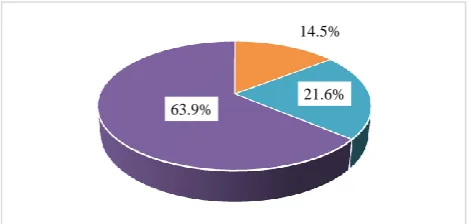
The knowledge about contraceptive devices and methods available for use among our study participants was found to be good among 63.9%, while it was found to be average among 21.6% and poor among 14.5% of the participants (Figure 1).
Only a small percentage (17.3%) had reservations about its use (Figure 2).
Table 1: Sociodemographic characters of study subjects (n=110).
Variables Frequency Percentage (%)
Age in years
18-25 25 22.7
26-35 52 47.3
36-45 33 30
Total 110 100
Religion
Hindu 97 88.2
Muslim 13 11.8
Total 110 100
BPL/APL
BPL 81 73.6
APL 26 26.4
Total 110 100
Educational status
Illiterate 2 1.8
Primary 43 39.1
High school 50 45.5
PU 11 10.0
Degree 4 3.6
Total 110 100
Occupation
Working 19 17.3
Not working/ House
Wives 91 82.7
Total 110 100
Age of marriage (years)
<18 43 39.1
>18 67 60.9
Total 110 100
Parity
1 32 29.1
2 62 56.4
3 11 10.0
4 & more 5 4.5
Total 110 100
Use of contraceptives
Never Used 47 42.7
Used some time 39 35.4 Used regularly 24 21.8
Total 110 100
Overall the percentage of women who had never used any contraception in their life was 42.7%, while the percentage of the women who used contraception irregularly or some times and those who used it regularly was 35.4% and 21.8% respectively. On further analysis of data among women who had used contraception, it was found that condom (73.9%) was the most frequently used method of spacing the pregnancies, followed by contraceptive pills (39.2%), Copper-T (23.9%)
tubectomy/vasectomy (11.3%) injectable hormones (3.3%) while 7.1% of the women also admitted having used emergency contraceptive pills at some point of time in their life (Table 2).
Figure 1: Knowledge regarding contraceptive devices and methods (n=110).
Figure 2: Attitude regarding contraceptive methods (n=110).
Table 2: Prevalent contraceptive practices among users (n=63).*
Methods of contraception Percentage (%)
Condoms 73.9
Contraceptive pills 39.2
Copper-T 23.9
Tubectomy / Vasectomy of spouse 11.3 Injectable contraceptives 3.3 Emergency contraception 7.1 * Multiple responses.
An attempt was also made to analyse the barriers for not using contraception among the participants. The study revealed that the "desire for a male child" was the main reason (30.1%) for not using any contraception, followed by lack of knowledge (15.1%), fear of side effects (11.3%), denial from family members (10.3%), fear of surgery (10.3%), desire for more children (8.5%) and denial from the spouse (6.6%) (Figure 3).
14.5%
21.6% 63.9%
Poor knowledge Average knowledge Good knowledge
82.7% 17.3%
Figure 3: Simple bar diagram representing reasons for not practicing contraception (n=47).*
* Includes multiple/non-responses.
DISCUSSION
Family planning is a way of thinking and living that is adopted voluntary upon the basis of knowledge, attitude, and responsible decisions by individuals and couples.5 It requires conscious effort by the married couples to choose their family size and space the births of their children through contraceptive devices.6 Family planning deals with reproductive health of the mother, having adequate birth spacing, avoiding undesired pregnancies and abortions, preventing sexually transmitted diseases and improving the quality of life of mother, foetus and family as a whole.7,8
In the present study 70% of the women belonged to 18 - 35 years of age group and 98.2% of them were found to be literate. Similar age profile was also reported in a study conducted by Srivastava et al, though the literacy rate among them was found to be very low i.e. 53.4%.9 In another study, from a rural area from Dakshina Kannada, Mohanan et al, reported 52.4% of the women using contraceptives were in the 15-34 years age group.10 In another study by Kasa, et al in Ethiopia, 46.5% of the women were found to be below 29 years, while in a similar study by Prachi et al, in Sikkim, 92.3% of the women were found to be below 34 years of age.11,12
In present study almost all the women had knowledge about contraceptives, while 63.9% of them had good knowledge. Similar findings have been reported by Prachi et al, where 94.2% of the participants were found to be aware of contraceptives, while Tilahun et al, in their study revealed even a higher percentage of awareness (96%) among the participants.11,13 Another similar study by Rao et al, brings out 81% awareness on contraception among their study subjects.14 Similar findings have also been reported by Omo-Aghoja et al, and Becker S in their studies.15,16
In present study, 82.7% of the women were found to be having positive attitude towards use of contraceptives. Tilahun et al, in their study also reported 91% of the
participants to be in favour of family planning while logistic regression further showed that factors associated with a more positive attitude towards family planning were: being a man, young age and being literate.13
Present study brings out that 57.3% women had used contraceptives in their life time. On further analysis, it was found that condoms (73.9%) were the most frequently used method of spacing the pregnancies, followed by contraceptive pills. Nayak et al, in their study in Karnataka found that 18% of the women used pills, 41% used Cu-T, 27% had tubectomy done, 59% used condoms, 10% used injectable hormones while 3% used emergency contraception.17 Similar findings have also been reported by Tizta et al and Pegu et al, in their studies at Ethiopia and Meghalaya, respectively.18,19
In the present study 42.7% of the participants had never used any contraceptives, while Nayak et al and Young et al, in their studies reported only 11% and 8% of the women had never used contraceptives, respectively.17,20 However, the findings of our study were comparable to the findings of Sherpa et al, in which 38.23%, Prachi et al, in which 44.6% and Srivastava et al, in which 55% of the participants had never used contraceptive methods.9,12,21
In our study the main reasons cited for not using contraceptives by the participants were - desire for male child (30.1%), lack of knowledge (15.1%) and fear of side effects (11.3%). Tizta et al, in their study at Ethiopia have also brought out "need for child" as the main reason (44%) for not using contraceptives, followed by fear of side effects (23.1%).18 Prachi et al in their study in Sikkim brought out main barriers for not using contraceptives were planning pregnancy (25.5%) and lack of knowledge (14.8%), while 30.8% of women did not disclose any reason for not using contraceptives.12
Limitations
Present study had the limitations which are inherent to cross sectional studies as these studies cannot be used to analyse behaviour over a prolonged period of time and the timings of the snapshot are not always guaranteed to be representative of the whole community. As the data was collected using interview method, information bias can not be ruled out which may be attributed to stigma associated with the use of contraceptives, hesitation and lack of understanding of questions by the participants and hence the KAPs reported in the study could be overestimated or underestimated and hence may not be generalised.
CONCLUSION
The present study brings out good knowledge and positive attitude among the participants on contraception. However, the utilization of various contraceptive methods was found to be sub-optimal. The main barriers
0 10 20 30 40 30.1
10.3 15.1
to utilisation of contraceptives observed were - the desire for male child, lack of knowledge and fear of side effects of contraceptive use. Condoms oral pills and IUDs were found to be the most prevalent methods of contraception.
ACKNOWLEDGEMENTS
Authors thank the all the women who participated in the study for their cooperation.
Funding: No funding sources Conflict of interest: None declared
Ethical approval: The study was approved by the Institutional Ethics Committee
REFERENCES
1. Population Reference Bureau. 2018-World Population Data Sheet. https://www.prb.org /2018-
world-population-data-sheet-with-focus-on-changing-age-structures/. Accessed on 15 February 2019.
2. New JR, Cahill N, Stover J, Gupta YP, Alkema L. Levels and trends in contraceptive prevalence, unmet need, and demand for family planning for 29 states and union territories in India: a modelling study using the Family Planning Estimation Tool. The Lancet, Global Health. 2017;5(3):350-8. 3. World Health Organisation. Family
Planning/Contraception. Key Facts - 08 February
2018.https://www.who.int/news-room/fact-sheets/detail/family-planning-contraception. Accessed on 15 February 2019.
4. National Family Health Survey, India.NHFS-4. Key findings. http://rchiips.org/nfhs/nfhs4.shtml. Accessed on 15 February 2019.
5. World Health Organization. Standards for maternal and neonatal care. https://www.who.int/ reproductivehealth/publications/maternal_perinatal_ health/a91272/en/. Accessed on 15 February 2019. 6. Central Statistical Agency. Ethiopian Demographic
and Health Survey 2016- key indicators report. Addis Ababa and Maryland, Ethiopia; 2016. https://dhsprogram.com/pubs/pdf/FR328/FR328. Accessed on 15 February 2019.
7. Adeyomo AR, Asabi O, Adedoturo O. Knowledge and practice of contraceptives among women of reproductive ages in southwest, Nigeria. Int J Engineering Sci. 2012;1(2):70-6.
8. World Health Organization. India and Family Planning: An overview. http://www.searo.who.int /entity/maternal_reproductive_health/documents/ind ia-fp.pdf. Accessed on 15 February 2019.
9. Srivastava R, Srivastava DK, Jina R, Srivastava K, Sharma N, Saha S. Contraceptive knowledge attitude and practice (KAP) survey. J Obstet Gynecol India. 2005;55(6):546-50.
10. Mohanan P, Kamath A, Sajjan BS. Fertility pattern and family planning practices in rural area in
Dakshina Kannada. Indian J Com Med. 2003;28(1):15-8.
11. Kasa AS, Tarekegn M, Embiale N. Knowledge, attitude and practice towards family planning among reproductive age women in a resource limited settings of Northwest Ethiopia. BMC Res Notes. 2018;11:1-6.
12. Renjhen P, Gupta SD, Barua A, Jaju S, Khati B. A study of knowledge, attitude and practice of family planning among the women of reproductive age group in Sikkim. J Obstet Gynecol India. 2008;58(1):63-7.
13. Tilahun T, Coene G, Luchters S, Kassahun W, Leye E, Temmerman M et al. Family planning knowledge, attitude and practice among married couples in Jimma Zone, Ethiopia. PLoS One. 2013;8(4):e61335.
14. Rao PD, Babu MS. Knowledge and use of contraception among Racha Koyas of Andhra Pradesh. Anthropologist. 2005;7(2):115-9.
15. Omo-Aghoja LO, Omo-Aghoja VW, Aghoja CO, Okonofua FE, Aghedo O, Umueri C. Factors associated with the knowledge, practice and perceptions of contraception in rural southern Nigeria. Ghana Med J. 2009;43(1):15-21.
16. Becker S. Measuring unmet need: wives, husbands or couples? Int Fam Plann Perspec. 1999;25(1):72-80.
17. Nayak AU, Ramakrishnan KG, Venkateswar KN, Vijayshree M. Assessing the knowledge, attitude and practice of contraception in rural India: a necessary step in achieving population control. Int J Reprod Contracept Obstet Gynecol. 2017;6:3328-31.
18. Tilahun T, Coene G, Luchters S, Kassahun W, Leye E, Temmerman M, et al. Family Planning Knowledge, Attitude and Practice among Married Couples in Jimma Zone, Ethiopia. PLoS One. 2013;8(4):e61335.
19. Pegu B, Gaur BP, Sharma N, Santa Singh A. Knowledge, attitude and practices of contraception among married women. Int J Reprod Contracept Obstet Gynecol. 2017;3(2):385-8.
20. Young LK, Farquhar CM, McCowan LM, Roberts HE, Taylor J. The contraceptive practice of women seeking termination of pregnancy in an Aukland clinic. NZ Med J. 1994;107:189-91.
21. Sherpa SZ, Sheilini M, Nayak A. Knowledge, attitude, practice and preferences of contraceptive methods in Udupi district, Karnataka. J Family Reprod Health. 2013;7(3):115-20.