Page 173
AN OPPORTUNITY TO FORM SCIENCE LITERACY IN EXTRACURRICULAR ACTIVITIES
Damyana S. Grancharova, Zhelyazka D. Raykova
University of Plovdiv Paisii Hilendarski, 24 Tzar Asen, Plovdiv 4000, Bulgaria
Abstract
The focus of the article is to compare and evaluate several physics lessons from the chapter "Mechanics" of the subject Physics, taught in two ways: in-class - formal education and out of class - informal. In the present study are described some different methods and approaches that are successfully applied in extracurricular activities. The learning in the two cases is active in nature and also student-centered. In the informal education, students acquire different skills and knowledge, mostly through their own experience: preparing science projects at a time convenient for them, work in a team outside the classroom. One of the tasks of the lessons conducted in informal education is to form scientific literacy.
Keywords: science literacy, out-of-class activities, informal education
1. INTRODUCTION
The exceptional and intensive development of science over the past years puts the knowledge of today's students to the test. They must know and be able to synthesize new information. The tasks that today's students face every day are more and more difficult and responsible. The standard methods used to teach physics and astronomy cannot provide anymore the necessary results and expectations for their solution. That is why the teachers, need to look for new, more effective methods, namely in informal education. Informal education in physics and astronomy as a part of the learning process leads to the knowledge that students acquire. The knowledge should be more durable, purposeful, deeper and of course much more practical. We firmly believe that the main goal of teaching modern physics is to develop students' logical thinking, creativity and autonomy. Unfortunately, schools or, more precisely the work in the classroom – formal education do not always provide the necessary opportunity for the younger generation to appear in the new technology world well prepared. In this situation, students don’t have the skills to solve physical problems alone. They lack the qualities of easy and quick orientation in the novelties of modern life. Thus, formal education does not educate curious young people with different interests but dulls the innovative, sometimes quite provocative thinking. Asking questions is often considered as a sign of breaking the order and interrupting the teacher's work. Furthermore, less attention is paid to students with non-standard thinking where their training should also be non-standard, other than simply being passive listeners.
Today's students need different challenges. They would hardly respond to our expectations of being "good" and "obedient". Informal learning puts teenagers in situations where they are leaders of the present time, they are the ones who present scientific information in an accessible and comprehensible language. In this new role, they feel confident and proud of the given opportunity to express themselves. They are extremely responsive to the tasks done in informal education as extracurricular activities. And this, in turn, leads to lasting knowledge and effective understanding of physical laws, their successful application to problem-solving and, last but not least, the development of logical thinking and the opportunity to form natural science literacy. In the informal method in the lessons of new knowledge is an active method in which the teacher only guides and observes the fulfillment of the assigned tasks. Students simultaneously and independently perform experiments, make observations in order to prove or disprove hypotheses using the scientific method and make measurements related to the studied physical phenomena. This helps to acquire skills and habits for self-learning.
Page 174
The main purpose of this article is to present some opportunities to form science literacy by using informal education in extracurricular activities. We examine the advantage of using extracurricular activities in and out of school. To determine how nonstandard approaches of presenting scientific information affects the quality and quantity of acquired knowledge and affect physical education.
2. SCIENCE LITERACY
Before trying to form "science literacy" we have to answer the question of what is "science literacy"? In recent years, the term "science literacy" has become increasingly popular in today's modern physics training. The reason is the fast development of the world around us, the unrestricted access to scientific information and its reflection in our lives. That is why changes are needed in student education. According to V. Boix-Mansilla and A. Jackson, in order to effectively teach competencies and skills for the 21st century, the "transmission approach" is not the most effective way to choose. (V. Boix-Mansilla and A. Jackson, 2005) "Transmission Approach," means that the teacher provides knowledge to his students only through lectures and textbooks. Although this method does not lead to creativity, critical thinking and teamwork, it is the most common method of teaching physics in Bulgarian schools. Science teaching must educate youths about the connection between sociocultural and scientific aspects of life, and it must provide opportunities for youth to participate in the practice of science in genuine social contexts. (Wolff-Michael Roth, Angela C. Barton 2004 p. 183)
The meaning of scientific literacy has changed continuously since its first introduction more than 60 years ago. However, this does not mean that the term "science literacy" will not continue to ameliorate. On the contrary, the needs of the society with precisely defined competencies and skills are at the basis of this amendment. That is why the teacher plays a decisive role, namely to be acquainted with new teaching methods and the need for them to be as useful as possible to the pupils in forming scientific literacy that is so necessary for every citizen of the world. It is extremely difficult to find precisely one definition of scientific literacy and to concentrate on it. On one hand, this is preferable because we won’t focus on something specific and limit ourselves by putting the knowledge into a frame. In this way, we have the right to choose, to interpret and to guess what the signs of a scientifically literate person are. This means answering the question: what methods will be used in modern schools to form curious, critical thinking young people prepared for the future? It is best to look at several options in order to get the most accurate idea of the skills we are looking for. Here we focus on the goals that will be put into the learning process and how to achieve them. What kind of approaches will be best to apply to form a scientific competence in pupils? We have to teach students to see the world with the eyes of science rather than to build their own view of the world and encourages the student to become conformist rather than autonomous. (Wolff-Michael Roth, Angela C. Barton 2004 p. 173) We used the definition for scientific literacy introduced by PISA 2015 “Thus, scientific literacy in PISA 2015 is defined by the three competencies to:
Explain phenomena scientifically; Evaluate and design scientific inquiry;
Interpret data and evidence scientifically. (PISA 2015)
Page 175
computers or the so-called smart devices that are easy to use in extracurricular activities. "Information literacy is the ability to effectively, ethically choose, evaluate and use information, and to acquire, apply and share knowledge." (AASL 2007)
Here, it is good to add that knowledge does not end with leaving the classroom or after finishing high school. Literacy is a competence that needs to be maintained and lasting throughout life, learning without any borders. The 21st century provides a very important advantage, easy and convenient use of scientific information from home and unlimited access to almost any virtual library with multiple books. Our life is highly dependent on the Internet. That is why in the classroom of the 21st Century there should be more activities precisely related to the use of specialized computer applications in the comfort to the teacher for easier transmission of scientific material, for greater visibility of certain physical phenomena, but also to students for better understanding of the subject matter. According to (Chu, S.K.W., Reynolds 2017) There are three main components of the digital literacies:
information literacy (IL);
information and communication technology (ICT) skills; and media literacy (ML).
IL is the ability to effectively and ethically select, evaluate, and use information to gain, apply, and share their knowledge (American Association of School Librarians 2007).”
Even if we decide to go back in time to a publication of 1958 we still can see that scientific understanding and technology are very closely related. “Progress in science and technology has reached the place where their future is dependent upon an education that is appropriate for meeting the challenges of an emerging scientific revolution.” (Hurd, P. D., 1958) Hurd adds that the science lessons themselves should be taught somewhere on the edge of the boundary discovery and students should have the opportunity to look through the doors of science and be seduced by ignorance.
Extracurricular activities are perfect to form critical thinking, creativities, working in groups – all part of scientific literacy. At the same time, information technologies with their advantages are already in classrooms such as educational tools, a virtual classroom and applications for various activities. Definitely, ICT takes precedence in modern training, that is why is good to intertwine the informal approach used extracurricular activities and information technology in the formation of natural science literacy among students.
Although digital integration is at the heart of 21st Century learning, it is not enough simply to "add" to existing teaching methods in the classroom. There must be a clear and accurate strategy for their use in the learning process and out of class activities. In recent years, students have shown progress in the use of information technology which implies that they will be much more open to technology related to the use of ICT.
We all know that schools have to provide innovative training which is bound to the necessary competencies of the 21st century. Students should have skills like critical thinking, communication, cooperation and curiosity by focusing on scientific literacy. The question is how to achieve all this in the 21st century?
3. INFORMAL EDUCATION IN EXTRACURRICULAR ACTIVITIES Regardless of its form, learning as a method of instruction should help learners to: receive new information, techniques and skills;
Page 176 improve existing skills;
apply to learn from lessons.
“Learning has taken place if – and only if – the individual-related consequences of the interaction between information, action, motivation and emotion lead to a durable change in the internal conditions of the acting individual.” According to Straka learning is connected with personal experience and is part of the real-life activity. In extracurricular activities, we have concentrated on incorporated the integrated methods. (Straka 2004). Additionally, we focus the attention on the desire of the individuals to study and their previous experiments. Informal education is focused on practical work and the relation with the real world and its attractiveness to young people. In the out of school teaching, we stress on the development of practical competencies based on the learner's need. The learning process in informal education concentrates on the full involvement of the students.
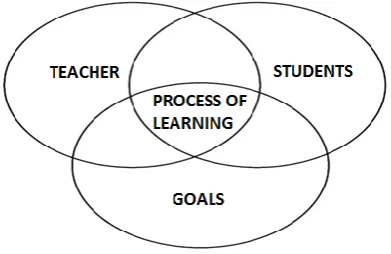
Fig. 1. Circles of education
Informal learning is extremely important because it is focused primarily on experiential learning. Experiential learning can be explained through specific observations and experiences, which provides the learners with a basis for reflection. In his book "Experiential Learning”, Kolb describes the process as: "Learning is a process of converting the experience in knowledge." (Kolb, D. A.1984) According to Dewey and Kolb, the purpose of learning through experience is that students turn the experience into knowledge and again converted the gain knowledge for our development. When students participate in activities, they gain experience and begin to explain daily events. This means that they will also be scientifically literate to wit they will understand natural phenomena. The pupils will treat the people who are engaged in science, with respect and will become responsible young people. With informal learning, there are many different ways to form scientific literacy. The extracurricular activities are the target to receive and synthesize information mainly by attracting the attention of students with demonstrations and experiences from everyday life. On the other hand, informal education performed out-of-school gives the opportunity to work in small classes. The work in the groups is very important. In the extracurricular activities, students learn to work in a team, to exchange information, to communicate together by exchanging scientific knowledge.
“Informal learning here being all that incidental learning, unstructured, unpurposeful but the most extensive and most important part of all the learning that all of us do every day of our lives.” (Rogers 2004) According to Rogers informal education is independent and also self-directed by the learners. Extracurricular activities in informal education are related to the choice of activities and subjects with an emphasis on lifelong learning. We can conclude that informal learning relies heavily on volunteerism, flexibility, adaptability and versatility. (Bozhilova, V.2015) Nowadays we don’t really talk about the amount of knowledge that is taught in school instated of that we emphasize on the ability to use knowledge to find out the essential and useful information.
Page 177
can be used are inquiry-based learning, active learning, collaborative learning and cooperative learning (PDST Dublin 2017):
Inquiry-based learning is an instructional method in which relevant problems are introduced at the beginning of the lesson then students try to solve them using physical knowledge. Inquiry-based learning is also known as a prominent model for twenty-first-century skills;
Active learning is defined as a method of teaching that engages students in the learning process. Active training puts the student in the center that is trained through various activities think about what are doing as an individual or as part of a group;
Collaborative learning is where pupils work together in small groups towards a common goal. Here, the emphasis is placed on collaborative learning, not the learning itself;
Cooperative learning can be determined as a type of structured form of group work. Here, however, students achieve common goals while working on an independent task to solve a common problem.
4. EXPERIMENT
The aim of the pedagogical experiment is to determine the emotional attitude as well as the degree of activity of the students in their participation in extracurricular work in physics. The task of this study is to confirm or reject the proposal, that the inclusion of informal learning in student physics training, as well as modern information technologies (ICT) related to the implementation and explanation of physical phenomena, enhances the cognitive activity of the students.
The research methods we used were observation, examination and interview.
The observation was focused on some signs in student behavior, which are related to the following components:
1. In terms of interest:
What is the readiness of the students to come in time for extra-curricular classes? Do they regularly attend classes at the appointed time after compulsory lessons?
2. In terms of learning achievements:
Has the quality of the acquired knowledge and skills been raised? The survey monitors their activity and their willingness to answer questions and tasks.
Do they show creativity when performing tasks? (With regard to the use of ICT) Do students prefer to use ICT to perform the assigned tasks?
What is the importance of using ICT for pupils?
A total of 46 students from the 9th grade of the school “Acad. Lyudmil Stoyanov ", Blagoevgrad, Bulgaria attended the study. The task of several extracurricular classes is a thorough study of the simple mechanisms. This topic is intended for learning from the curriculum (2016). The design method is used in extracurricular classes as part of informal education. Students are given the task to implement a project, related to the use of simple mechanisms.
Page 178
which were precisely fulfilled and saturated with personal and creative ingenuity specific to each of the students.
The results of the observation show that the pupils involved in extracurricular work are satisfied and happy. They were extremely proud of creating a hydraulic robot, that was presented to the whole school and became part of the permanent exhibition of appliances in the physics classroom.
In order to reinforce our impressions of the observation, the students were offered to complete a survey. The poll includes 5 questions which were related to the implementation of the project. Four of them have a closed response and one with an open one. The goals are: to determine the pupils' interest in extra-curricular work; to assess the role of ICT in the successful implementation of the project; to capture a change in the attitude to physics and the willingness of the students to participate in such a project. In the answer to the last question, students share personal views about the use of modern information technologies in the learning process.
In conducting the survey, ICT - computer, multimedia and the mQlicker program were used to present students' questions. Students also use school computers or smartphones to respond electronically to questions.
The experiment ends with an interview with two girls and two boys from the experimental group. The purpose of the interview is to get more detailed information about the interest and impressions of students and to collect specific data about situations in a free speech.
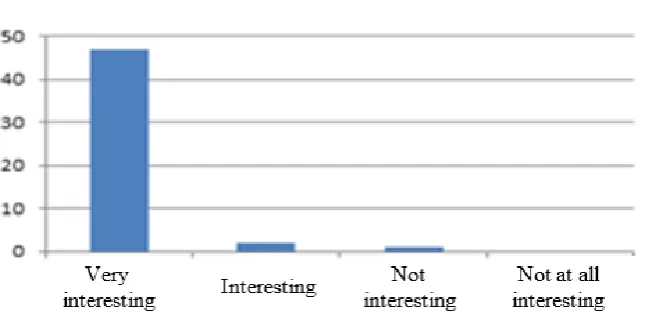
Fig. 2. Opinions of the conducted extracurricular activities in Physics
A large percentage of students (96%) find work on the project and related homework very interesting. 92% of respondents said that the use of ICT has played a key role in its implementation.
80% of students would be willing to participate in other similar projects if they are required to use ICT. The results of the interview confirm the strong positive attitudes of students to the implementation of physical projects in an informal environment. They all share that the tasks do not burden them and they feel comfortable for doing them. Moreover, the freedom to use the Internet, various applications for smartphones and computer programs provokes interest and predisposes to creativity. Here's what a student from the experimental group says: "My opinion is that without ICT nowadays it is impossible to successfully implement a project. I believe that physics is directly related to information from the Internet and we can only take advantage of gathering and presenting projects in this way. "
Page 179
On the contrary, how learning is organized and supported is more important than where learning occurs. This is so much true because schools can be organized in informal ways. (Rogoff, B. 2016)
The following conclusions can be drawn from the empirical study:
Informal learning as a teaching method in physics leads to significantly better results when it is performed in extracurricular work as a project activity. Thus students understand the basic physical concepts and laws;
The active participation of students in extracurricular activities has a positive effect on stimulated and in-depth physics study;
Implementation of knowledge in practice and knowledge-building skills were developed through research, which contributed to their better understanding. For their in-depth understanding, there is also the fact that the students did the experiments with hand-made materials in the context of the surrounding environment;
There is an increasing interest of students in the project if ICT is included. The use of smartphones (mobile devices) is still something new to school practice, but students perceive it very well. They choose independently using the Internet;
Experimental activity affects students' self-esteem and builds confidence, that they can cope with a number of experiments by applying the lessons learned in physics;
It is important for students' self-esteem and their emotional confidence the demonstration of the model is done in front of the audience (in our case the other students in the class).
The participants of the comparative study are 16 years old high school students learning simple machinery as part of the subject physics. The experimental group takes part in extracurricular activities ones a week. The standard group only learns in class. In the experimental group, we used informal education to teach pressure and hydraulic machines, simple machines – levers, pulleys, inclined plain. In the standard group is applied the traditional teaching where students listen and take notes in their notebooks. The class of informal education is divided into small groups. They have to work together to find out the real physics behind the simple machines used by the ancient people. The students have to explain the laws of basics physics and to make a short video of the application of simple machines in everyday life. The activity is also interdisciplinary because different computer programs were used in their tasks - PowerPoint, Word, CorelDraw, Photoshop, Movie Maker and Adobe Audition. The task for one of the group is to create a working hydraulic machine.
Students are expected to select the required information by using appropriate scientific literature. Examine the physical phenomena and present them in an understandable way. Students are encouraged to use originality and creative thinking in their tasks. In this case, the role of the teacher as a lecturer is minimized to wit he/she gives guidance on what the final result should be. Students participate energetically in the assigned tasks, discuss and reflect using scientific terminology. Objective evaluation of the capabilities of each student leads to complete implementation and excellent presentations of the assigned tasks as well as the lesson in the extracurricular activities.
In informal education, students are more open and ready to talk with other students. The pupils aren't afraid to admit when they can't understand specific physical laws and when they need help to solve problems. The students of the experimental group are ready to learn not because of getting good grades, but just to find answers to the day-to-day activities. The students learn meaningfully; they are fully aware of the need for science literacy. The students take part actively in the lessons with presentations, videos, pictures, posters even with a working model of a hydraulic robot.
Page 180
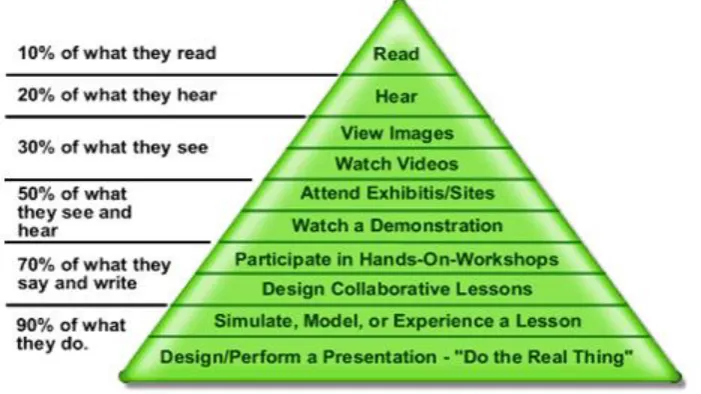
participation - 70-90%. (Dale 1969) The observation of the experiment in extracurricular activities shows active participation and therefore high success rate. Another very important factor is that in informal learning, teaching is based primarily on experience and physical content which builds the student as a person capable of learning and reproducing scientific information. This encourages their creativity, the ability to make choices in the synthesis of new concepts and physical terms. A balance is placed between the teacher's leadership and the students' initiative.
Fig. 3. Dale's Cone of Experience.
Source: P Sprawls. Biomed Imaging Interv J (2008)
The advantages of informal learning are many: Increases student activity;
Students become independent- this leads to the development of their creative potential;
It completely changes their worldview for learning and easy assimilation of science phenomena; Students can unite the new information gained through experience and textbooks.
Page 181
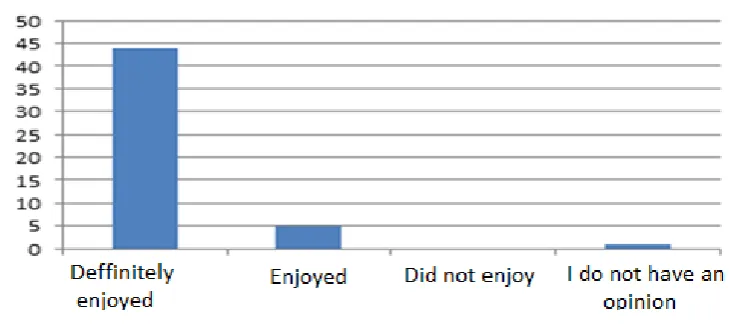
Fig. 4. Opinions of the conducted extracurricular activities in Physics
Figure 4 shows that 80% of students are eager to participate in other similar projects which include extracurricular work enriched with physical experiments and also using ICT. From experience with informal learning, we are convinced that active learning leads to the greater interest of pupils in the natural phenomena. Students are emotionally connected with the study of the subject physics. Their positive attitude toward the learning process is also a fact.
We can make a summary of the results of the experiment:
In extracurricular activities with informal learning students understand the main principle of simple machines and how they work. Students are more confident when they talk about science and the problems that need to be solved. Students are aware that the perception of basic physical's laws can lead to a clear view of everyday life activities.
The interactivity in extracurricular activities should be the driving goal. Participation in the learning process should not be passive but active. From the experiment, we can confirm that effective learning and acquiring new knowledge is based mostly on the shared experience of the students. The best results are obtained when each of the students of the experimental group expresses their science literacy according to their personal qualities and possibilities.
The aim of this experiment is to compare and evaluate the benefits of informal non-traditional methods of teaching, including multimedia and ICT. In this article, we offer other useful methods of teaching to be applied in the course in physics and astronomy.
The teaching methods that each teacher will choose can be different. But the purpose should be only one - creative young people and citizens with science literacy. Using innovative methods in school education has the potential not only to improve education but also to enable students to develop in an extremely dynamic world. Physics is a developing science that needs not only natural science literate young people but individuals with clear creativity ready to pursue their dreams.
We can draw the following conclusion from the comparative analysis:
The informal learning, as a method used for teaching physics, indicates significantly better results; In the extracurricular activates the students understand better the basic physical concepts and laws
with the help of the teacher;
Page 182
There is an increasing interest of the students in the extracurricular activities if ICT is involved. The involvement of such tasks affects favorably on students' self-esteem builds confidence in them that they can cope with the physical experiment and demonstrate it to their classmates;
The use of demonstrations and building a physical model is perceived very well by the students. They choose independently, using appropriate internet resources necessary for the physical experiment to perform and display in front of the class. In this case, the role of the teacher is generally to observe and guide the students.
The experiment shows that active learning in which students are involved in conducting physical activities leads to a number of positive results. Students are emotionally connected with the learning subject who leads to a better and deeper understanding of natural phenomena. When we give an opportunity for students to work in a group to implement and present physical experiments the success rate is considerably high. Their interest and achievements are higher, learning satisfaction is significant. In the article, we tried to compare and evaluate lessons which can be taught with different methods. We focused on the informal education used in extracurricular activities and we tried to compare it with the formal – traditional way. The experience shared in the article could be useful to physics teachers by suggesting new ideas for organizing and conducting lessons in the extracurricular activities.
REFERENCES
1. V. Boix-Mansilla and A. Jackson, 2005, Educating for Global Competence: Preparing our Youth to Engage in the World, The Asia Society, New York, 2005
2. PISA 2015 Science Framework (PDF) (Report). OECD. March 2013. Retrieved 15 October 2014 3. American Association of School Librarians [AASL]. (2007). Standards for the 21st–Century
learner. Retrieved May 11, 2015, from http://www.ala.org/aasl/standards
4. Chu, S.K.W., Reynolds, R.B., Tavares, N.J., Notari, M., Lee, C.W.Y. Springer Singapore, 2017 21st Century Skills Development Through Inquiry-Based Learning From Theory to Practice
5. Hurd, P. D. October 1958 "Science literacy: Its meaning for American schools" 6. PDST, Dublin, 2017, An Integrated Approach to Learning, Teaching &Assessment
7. Alan Rogers 2004, Looking again at non-formal and informal education – towards a new paradigm.
http://infed.org/mobi/looking-again-at-non-formal-and-informal-education-towards-a-new-paradigm/
8. Vanya Bozhilova, 2012, Formal, non-formal and informal learning – essence, content and interrelations (Theoretical and analytical overview) University publishing house "St. Kliment Ohridski ", Faculty of Pedagogy, tome 105
9. Kolb, D. A. (1984). Experiential Learning: Experience as the Source of Learning and Development. Englewood Cliffs, NJ: Prentice Hall. http://academic.regis.edu/ed205/Kolb.pdf
10. Gerald A. Straka Informal learning: genealogy, concepts, antagonisms and questions, Bremen: Institut Technik und Bildung (ITB), Universität Bremen, 2004
11. Dole Edgar, 1969 Audiovisual methods in teaching, New York, Dryden Press 3d ed 12. Wolff-Michael Roth, Angela C. Barton 2004 pp.173, pp. 183, Rethinking Science Literacy