R E S E A R C H A R T I C L E
Open Access
Growth hormone (GH) dose-dependent
IGF-I response relates to pubertal height
gain
Elena Lundberg
1*, Berit Kriström
1, Bjorn Jonsson
2, Kerstin Albertsson-Wikland
3and on behalf of the study group
Abstract
Background:Responsiveness to GH treatment can be estimated by both growth andΔIGF-I. The primary aim of the present study was to investigate if mimicking the physiological increase during puberty in GH secretion, by using a higher GH dose could lead to pubertal IGFs in short children with low GH secretion. The secondary aim was to explore the relationship between IGF-I, IGFBP-3 and the IGF-I/IGFBP-3 ratio and gain in height.
Methods:A multicentre, randomized, clinical trial (TRN88-177) in 104 children (90 boys), who had received GH 33μg/kg/day during at least 1 prepubertal year. They were followed from GH start to adult height (mean, 7.5 years; range, 4.6–10.7). At onset of puberty, children were randomized into three groups, to receive 67μg/kg/day (GH67) given once (GH67x1;n= 30) or divided into two daily injection (GH33x2;n= 36), or to remain on a single 33μg/kg/ day dose (GH33x1;n= 38). The outcome measures were change and obtained mean on-treatment IGF-ISDS, IGFBP3SDSand IGF-I/IGFBP3 ratioSDSduring prepuberty and puberty. These variables were assessed in relation to prepubertal, pubertal and total gain in heightSDS.
Results:Mean prepubertal increases 1 year after GH start were: 2.1 IGF-ISDS, 0.6 IGFBP3SDSand 1.5 IGF-I/IGFBP3ratioSDS. A significant positive correlation was found between prepubertalΔIGFs and both prepubertal and total gain in heightSDS. During puberty changes in IGFs were GH dose-dependent: mean pubertal level of IGF-ISDSwas higher in GH
67 vs GH33 (p= 0.031). First year pubertalΔIGF-ISDSwas significantly higher in the GH
67
vs GH33group (0.5 vs−0.1, respectively, p= 0.007), as well asΔIGF-ISDSto the pubertal mean level (0.2 vs−0.2,p= 0.028). In multivariate analyses, the prepubertal increase in‘ΔIGF-ISDSfrom GH start’and the‘GH dose-dependent pubertalΔIGF-ISDS’were the most important variables for explaining variation in prepubertal (21 %), pubertal (26 %) and total (28 %) gain in heightSDS.
Trial registration:TRN 88–177, not applicable 1988.
Conclusion:The dose-dependent change in IGFs was related to a dose-dependent pubertal gain in heightSDS. The attempt to mimic normal physiology by giving a higher GH dose during puberty was associated with both an increase in IGF-I and a dose-dependent gain in heightSDS.
Keywords:Gain in height, IGF-I increment, IGF-I level, IGFBP3, Ratio IGF-I/IGFBP3, GH dose-dependent pubertal IGF-I response
* Correspondence:[email protected]
1Institute of Clinical Science/Pediatrics, Umeå University, SE-90185 Umeå,
Sweden
Full list of author information is available at the end of the article
Background
Insulin-like growth factors (IGFs) have been used in the diagnosis of growth hormone (GH) deficiency, to moni-tor the impact of GH replacement therapy on growth and to assess treatment compliance and safety [1, 2]. Monitoring the impact of GH treatment on growth is mainly based on measurement of serum IGF-I levels, and less often on IGF-binding protein 3 (IGFBP3) levels and the IGF-I/IGFBP3 ratio. Rudman et al. were the first to report the relationship between short-term IGF-I in-crements and GH growth response [3]. Further short-duration studies in prepubertal children conducted by different groups found an increase in IGF-I from base-line to be a reliable sign of greater growth in response to GH [4–7]. Only two studies reported results for multiple variables (IGF-I, IGFBP3 and their molar ratio). These were non-randomized, 1-year clinical trials in prepubertal children with and without GH deficiency (GHD) [8, 9]. They both observed an increase in IGFs during GH treat-ment as a sign of high GH sensitivity and treattreat-ment com-pliance. To our knowledge, the relevance of the variables IGF-I, IGFBP3 and the IGF-I/IGFBP3 ratio in relation to prepubertal, pubertal and total gain in height has not been previously reported in GH-treated children.
Under normal conditions, serum IGF-I level increases slowly during childhood before rising to a peak in pu-berty. This peak correlates with pubertal stage due to the action of sex steroids to increase GH secretion [10–13]. Factors explaining pubertal growth in response to GH therapy: gender, age, the difference between the child’s height standard deviation score (SDS) and midparental heightSDS (diffH-MPH) at the onset of puberty, and GH
dose were identified from the KIGS observational study, but the IGF-I variable was not available in that study [14]. There have only been two published randomized trials in GH-deficient pubertal children on GH treatment receiving different GH doses. Both reported a greater pubertal height gain in high GH-dose groups (50–100μg/kg/d) ac-companied by an increase in IGF-I [15, 16]. Our group has recently published results from a randomized study in non-GH-deficient children followed from early puberty to adult height (AH): data show the greater the increase in IGF-I, the greater the gain in height [17]. In children with low GH secretion diagnosed with idiopathic isolated GHD (IIGHD), we have also reported that GH dosing, mimick-ing the physiological pubertal increase in GH secretion, has a dose-dependent effect on the gain in heightSDSuntil
AH. In this randomized GH-treatment trial, pubertal height gainSDS and AHSDS were greater in children
ran-domized to a high GH dose (67μg/kg/d) than a standard dose (33μg/kg/d) [18, 19]. The hypothesis of the present analysis of prospectively collected data in the aforemen-tioned clinical trial was that the IGFs would follow the normal pubertal change in GH-deficient children
receiving a higher, more physiological, GH dose during puberty. The secondary aim was to explore the relation-ship between serum IGF-I, IGFBP-3 and the IGF-I/ IGFBP-3 ratio and gain in height until AH.
Patients and methods
Ethics
The study (TRN number 88–177) was approved by the Ethics Committees at the Universities of Gothenburg, Lund, Linköping, Uppsala, Huddinge and Umeå and by the Karolinska Institute (dnr LU 426–1988). Informed consent was obtained from the children and their parents verbally with written registration date in the patients’medical file.
Study design
The study was a nationwide, randomized, multicenter trial conducted from 1988 to 2009 and its design has been described previously [18, 19]. In brief, all children with IIGHD had received GH at a dose of 33 μg/kg for at least 1 year prior to the onset of puberty. After the de-velopment of clinical signs of puberty, the children were allocated randomly, without stratification, into three dose groups: 33 μg/kg once daily (GH33x1); 67 μg/kg once daily (GH67x1) or 33 μg/kg twice daily (GH33x2). The children were followed until AH (the observed height at a growth rate of < 1 cm during the preceding 12 months). They were seen at least once a year at a uni-versity hospital to monitor treatment safety and efficacy and at their local children’s hospital at 3-monthly intervals.
GH dose reduction
In line with the protocol, it was accepted that any pa-tient could reduce GH dose or stop treatment if he/she was satisfied with the height development. The reduced doses used were 25 % less than the randomized dose (doses were 50μg/kg/d and 25μg/kg/d for the high and low dose groups, respectively). In the intention-to-treat (ITT) population the GH dose was reduced in 35 chil-dren and GH treatment was stopped in 5 chilchil-dren; this affected 44 % of children in the high dose and 29 % in the standard dose groups. For efficacy analyses, only IGF-ISDS levels obtained during treatment with the
ran-domized dose were used, but for safety analyses all IGF-ISDSmeasurements were used.
Patients
Inclusion and exclusion criteria
treatment was also an inclusion criterion. This was ascertained by an increase in height velocity of at least 50 % during the first prepubertal year of GH treatment (33 μg/kg/d). IGF-I, IGFBP3 and the IGF-I/ IGFBP3 ratioSDS were measured but were not
re-quired for diagnosis. Children with any hormone in-sufficiency in addition to GH or with significant chronic diseases or syndromes were excluded from the study.
Safety population
The study population has been described previously [19]. Briefly: a total of 149 (116 boys) short children (<−2SDS) with low GHmax during AITT (GHmaxAITT) were
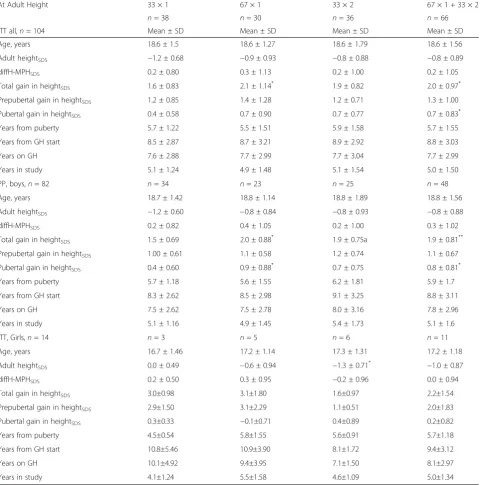
en-rolled in the study between 1989 and 2000 and form the safety population. Of the enrolled children, 38 were ex-cluded from efficacy analyses due to protocol violation/ wrong inclusion: 1 child had a bone age (BA) delay of 3.6 years at GH start, 24 children were already pubertal Table 1Growth characteristics at adult height according to randomization group
At Adult Height 33 × 1 67 × 1 33 × 2 67 × 1 + 33 × 2
n= 38 n= 30 n= 36 n= 66
ITT all,n= 104 Mean ± SD Mean ± SD Mean ± SD Mean ± SD
Age, years 18.6 ± 1.5 18.6 ± 1.27 18.6 ± 1.79 18.6 ± 1.56
Adult heightSDS −1.2 ± 0.68 −0.9 ± 0.93 −0.8 ± 0.88 −0.8 ± 0.89
diffH-MPHSDS 0.2 ± 0.80 0.3 ± 1.13 0.2 ± 1.00 0.2 ± 1.05
Total gain in heightSDS 1.6 ± 0.83 2.1 ± 1.14
*
1.9 ± 0.82 2.0 ± 0.97*
Prepubertal gain in heightSDS 1.2 ± 0.85 1.4 ± 1.28 1.2 ± 0.71 1.3 ± 1.00
Pubertal gain in heightSDS 0.4 ± 0.58 0.7 ± 0.90 0.7 ± 0.77 0.7 ± 0.83*
Years from puberty 5.7 ± 1.22 5.5 ± 1.51 5.9 ± 1.58 5.7 ± 1.55
Years from GH start 8.5 ± 2.87 8.7 ± 3.21 8.9 ± 2.92 8.8 ± 3.03
Years on GH 7.6 ± 2.88 7.7 ± 2.99 7.7 ± 3.04 7.7 ± 2.99
Years in study 5.1 ± 1.24 4.9 ± 1.48 5.1 ± 1.54 5.0 ± 1.50
PP, boys,n= 82 n= 34 n= 23 n= 25 n= 48
Age, years 18.7 ± 1.42 18.8 ± 1.14 18.8 ± 1.89 18.8 ± 1.56
Adult heightSDS −1.2 ± 0.60 −0.8 ± 0.84 −0.8 ± 0.93 −0.8 ± 0.88
diffH-MPHSDS 0.2 ± 0.82 0.4 ± 1.05 0.2 ± 1.00 0.3 ± 1.02
Total gain in heightSDS 1.5 ± 0.69 2.0 ± 0.88
*
1.9 ± 0.75a 1.9 ± 0.81**
Prepubertal gain in heightSDS 1.00 ± 0.61 1.1 ± 0.58 1.2 ± 0.74 1.1 ± 0.67
Pubertal gain in heightSDS 0.4 ± 0.60 0.9 ± 0.88
*
0.7 ± 0.75 0.8 ± 0.81*
Years from puberty 5.7 ± 1.18 5.6 ± 1.55 6.2 ± 1.81 5.9 ± 1.7
Years from GH start 8.3 ± 2.62 8.5 ± 2.98 9.1 ± 3.25 8.8 ± 3.11
Years on GH 7.5 ± 2.62 7.5 ± 2.78 8.0 ± 3.16 7.8 ± 2.96
Years in study 5.1 ± 1.16 4.9 ± 1.45 5.4 ± 1.73 5.1 ± 1.6
ITT, Girls,n= 14 n= 3 n= 5 n= 6 n= 11
Age, years 16.7 ± 1.46 17.2 ± 1.14 17.3 ± 1.31 17.2 ± 1.18
Adult heightSDS 0.0 ± 0.49 −0.6 ± 0.94 −1.3 ± 0.71* −1.0 ± 0.87
diffH-MPHSDS 0.2 ± 0.50 0.3 ± 0.95 −0.2 ± 0.96 0.0 ± 0.94
Total gain in heightSDS 3.0±0.98 3.1±1.80 1.6±0.97 2.2±1.54
Prepubertal gain in heightSDS 2.9±1.50 3.1±2.29 1.1±0.51 2.0±1.83
Pubertal gain in heightSDS 0.3±0.33 −0.1±0.71 0.4±0.89 0.2±0.82
Years from puberty 4.5±0.54 5.8±1.55 5.6±0.91 5.7±1.18
Years from GH start 10.8±5.46 10.9±3.90 8.1±1.72 9.4±3.12
Years on GH 10.1±4.92 9.4±3.95 7.1±1.50 8.1±2.97
Years in study 4.1±1.24 5.5±1.58 4.6±1.09 5.0±1.34
SDSstandard deviation score,MPHmidparental height,diffH-MPHSDSthe difference between the childs heightSDSvs MPHSDS *
(breast > 1, testes > 8 ml) at or within 1 year after GH start and 1 child was lost from follow-up. Moreover, 6 children who were born at a gestational age < 32 weeks and 6 adopted children with missing information at birth were excluded from the present analyses. Seven further children (6 boys) for whom most IGF-I data were missing were also excluded from the present analysis.
ITT/PP population
The remaining 104 children (90 boys) constituted the ITT population of whom 95 (82 boys) comprised the per-protocol (PP) population.
Of the 9 children (8 boys) not belonging to the PP population, 5 boys had stopped GH treatment prema-turely (<2.25 years after study start and before AH was reached) and 4 children (3 boys) on GH67 decreased their GH dose to GH33x1
When the study group was divided into the groups to which they were later randomized, there were no differ-ences in IGF levels between the groups. Moreover, there were no differences in IGF-I levels at baseline between boys and girls.
Methods
Hormone measurements
Serum IGF-I and IGFBP3levels were measured using an IGFBP-blocked radioimmuno assay (RIA) with an excess of IGF-II for determination of IGF-I, and a specific RIA for IGFBP3 (Mediagnost GmbH, Tübingen, Germany). The intra-assay coefficients of variation (CVs) for the IGF-I assay were 11.1, 7.2 and 7.4 % at concentrations of 36, 204 and 545 μg/L, respectively; the interassay CVs for the same concentrations were 13.5, 8.8, and 9.9 %, respectively. For the IGFBP3 assay, the intra-assay CVs
were 7.1, 7.3, and 7.9 % at concentrations of 1800, 3790 and 5776 μg/L, respectively; the interassay CVs for the same concentrations were 13.4, 10.5 and 14.1 %, respect-ively. Results were converted into SDS according to age, sex and pubertal stage, and the ratioSDS of IGF-I to
IGFBP3 was calculated [12, 22]. IGF-I and IGFBP3 were analyzed before and after the initiation of GH treatment (+10 days, +1 month, +3 months, +1 year and annually thereafter). For the purpose of the present analyses, mean pubertal IGF-ISDS, IGFBP3SDS and IGF-I/IGFBP3
ratioSDS were calculated based on individual mean levels
in the time period from 12 months after study start to treatment stop. The change in level was defined as the mean level (as calculated above) minus the level at study start. The prepubertal mean IGF-ISDS, IGFBP3SDS, and
IGF-I/IGFBP3 ratioSDS were based on data collected in
the time period from 1 year after GH start until the clin-ical onset of puberty. All samples from each individual were analyzed at the same time.
Growth hormone
GHmaxwas assessed using both the AITT and a
spontan-eous 24-h GH secretion profile [20, 21]. GH concentra-tions were analysed with polyclonal antibodies, and for comparison, all measurements were converted to the WHO standard international reference preparation 80/ 505, even if measured with 66/127 [20].
Growth outcome
The outcomes used for evaluation of growth response were: prepubertal, pubertal and total gain in heightSDS
calculated as previously described [19, 23].
Pubertal gain in heightSDS was defined as AHSDS
minus last recorded pre-pubertal heightSDS, the SDS
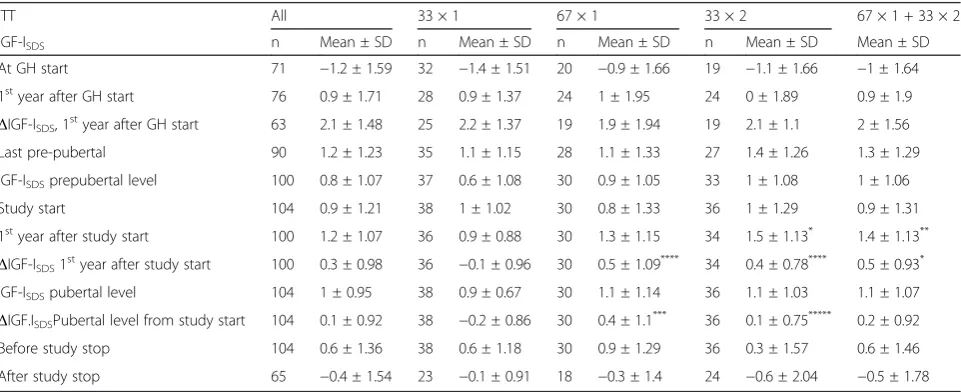
Table 2IGF-I during GH treatment according to randomization group
ITT All 33 × 1 67 × 1 33 × 2 67 × 1 + 33 × 2
IGF-ISDS n Mean ± SD n Mean ± SD n Mean ± SD n Mean ± SD Mean ± SD
At GH start 71 −1.2 ± 1.59 32 −1.4 ± 1.51 20 −0.9 ± 1.66 19 −1.1 ± 1.66 −1 ± 1.64
1styear after GH start 76 0.9 ± 1.71 28 0.9 ± 1.37 24 1 ± 1.95 24 0 ± 1.89 0.9 ± 1.9
ΔIGF-ISDS, 1styear after GH start 63 2.1 ± 1.48 25 2.2 ± 1.37 19 1.9 ± 1.94 19 2.1 ± 1.1 2 ± 1.56
Last pre-pubertal 90 1.2 ± 1.23 35 1.1 ± 1.15 28 1.1 ± 1.33 27 1.4 ± 1.26 1.3 ± 1.29
IGF-ISDSprepubertal level 100 0.8 ± 1.07 37 0.6 ± 1.08 30 0.9 ± 1.05 33 1 ± 1.08 1 ± 1.06
Study start 104 0.9 ± 1.21 38 1 ± 1.02 30 0.8 ± 1.33 36 1 ± 1.29 0.9 ± 1.31
1styear after study start 100 1.2 ± 1.07 36 0.9 ± 0.88 30 1.3 ± 1.15 34 1.5 ± 1.13* 1.4 ± 1.13**
ΔIGF-ISDS1styear after study start 100 0.3 ± 0.98 36 −0.1 ± 0.96 30 0.5 ± 1.09**** 34 0.4 ± 0.78**** 0.5 ± 0.93*
IGF-ISDSpubertal level 104 1 ± 0.95 38 0.9 ± 0.67 30 1.1 ± 1.14 36 1.1 ± 1.03 1.1 ± 1.07
ΔIGF.ISDSPubertal level from study start 104 0.1 ± 0.92 38 −0.2 ± 0.86 30 0.4 ± 1.1 ***
36 0.1 ± 0.75***** 0.2 ± 0.92
Before study stop 104 0.6 ± 1.36 38 0.6 ± 1.18 30 0.9 ± 1.29 36 0.3 ± 1.57 0.6 ± 1.46
After study stop 65 −0.4 ± 1.54 23 −0.1 ± 0.91 18 −0.3 ± 1.4 24 −0.6 ± 2.04 −0.5 ± 1.78
Δchange,IGF-Iinsulin-like growth factor I,SDSstandard deviation score
*
estimated with the childhood component of the total reference [23, 24].
Prepubertal gain in heightSDS was defined as heightSDS at last pre-pubertal visit minus heightSDS at
GH start using the childhood component of the total reference [24].
Total gain in heightSDS was calculated using AHSDS
(adult height in cm transferred into SDS for age 18 years) minus heightSDSat GH start, using the prepubertal
child-hood component of the total growth reference [23, 24]. There were no differences in gain in heightSDS
be-tween the two high-dose groups with GH67 given once or divided into twice daily GH33(Table 1); therefore, the
results from the high-dose groups are presented com-bined (GH67+33x2).
Normal or delayed infancy–childhood transition (ICT)
Age at ICT was available for 92 of the 104 children. A delayed ICT (DICT; ICT at > 12 months of age) was found in 33 children (11 boys) [25] (Additional file 1: Table S2).
Familial short stature
Midparental height (MPH) was below−2 SDS [26] in 23 children (21 boys).
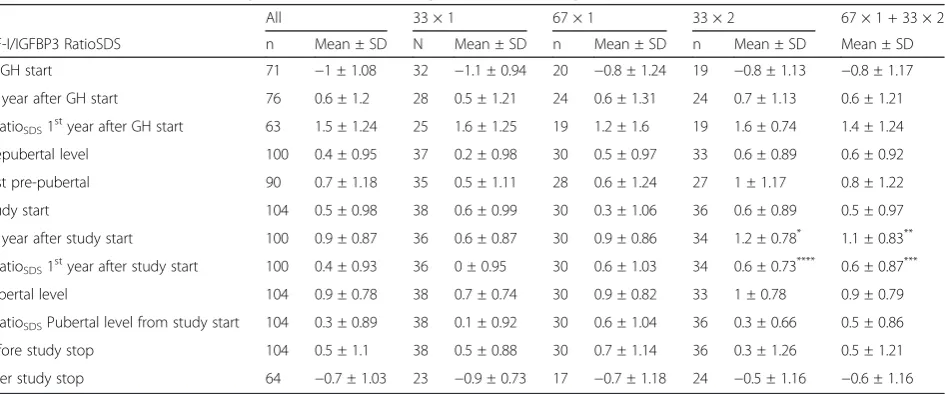
Table 3IGFBP3SDS during GH treatment according to randomization group
ITT All 33 × 1 67 × 1 33 × 2 67 × 1 + 33 × 2
IGFBP3SDS n Mean ± SD n Mean ± SD n Mean ± SD n Mean ± SD Mean ± SD
At GH start 71 −0.3 ± 0.76 32 −0.4 ± 0.8 20 −0.2 ± 0.66 19 −0.3 ± 0.83 −0.3 ± 0.74
1styear after GH start 76 0.3 ± 0.82 28 0.3 ± 0.73 24 0.4 ± 0.87 24 0.1 ± 0.87 0.2 ± 0.87
ΔIGFBP3SDS1styear after GH start 63 0.6 ± 0.55 25 0.7 ± 0.47 19 0.7 ± 0.57 19 0.5 ± 0.64 0.6 ± 0.6
Prepubertal level 100 0.3 ± 0.54 37 0.3 ± 0.54 30 0.3 ± 0.63 33 0.3 ± 0.63 0.3 ± 0.54
Last pre-pubertal 90 0.4 ± 0.55 35 0.5 ± 0.49 28 0.4 ± 0.48 27 0.4 ± 0.68 0.4 ± 0.58
Study start 104 0.4 ± 0.63 38 0.4 ± 0.58 30 0.3 ± 0.63 36 0.4 ± 0.67 0.3 ± 0.65
1styear after study start 100 0.3 ± 0.56 36 0.3 ± 0.43 30 0.3 ± 0.58 34 0.4 ± 0.67 0.4 ± 0.63
ΔIGFBP3SDS1styear after study start 100 0 ± 0.45 36 −0.1 ± 0.49 30 0 ± 0.51 34 0 ± 0.36 0 ± 0.43
Pubertal level 104 0.3 ± 0.56 38 0.2 ± 0.45 30 0.3 ± 0.62 36 0.3 ± 0.63 0.3 ± 0.62
ΔIGFBP3SDSPubertal level from study start 104 −0.1 ± 0.43 38 −0.2 ± 0.45** 30 0.0 ± 0.51 36 −0.1 ± 0.32 −01 ± 0.42*
Before study stop 104 0.2 ± 0.77 38 0.2 ± 0.82 30 0.3 ± 0075 36 0.1 ± 0.75 0.2 ± 0.75
After study stop 64 0.4 ± 0.8 23 0.6 ± 0.57 17 0.3 ± 0ö65 24 0.2 ± 1.01 0.2 ± 0.87
Δchange,IGFBP3IGF-binding protein 3,SDSstandard deviation score *p= 0.029; **p= 0.038
Table 4IGF-I/IGFBP3 RatioSDS during GH treatment according to randomization group
ITT All 33 × 1 67 × 1 33 × 2 67 × 1 + 33 × 2
IGF-I/IGFBP3 RatioSDS n Mean ± SD N Mean ± SD n Mean ± SD n Mean ± SD Mean ± SD
At GH start 71 −1 ± 1.08 32 −1.1 ± 0.94 20 −0.8 ± 1.24 19 −0.8 ± 1.13 −0.8 ± 1.17
1styear after GH start 76 0.6 ± 1.2 28 0.5 ± 1.21 24 0.6 ± 1.31 24 0.7 ± 1.13 0.6 ± 1.21
ΔRatioSDS1styear after GH start 63 1.5 ± 1.24 25 1.6 ± 1.25 19 1.2 ± 1.6 19 1.6 ± 0.74 1.4 ± 1.24
Prepubertal level 100 0.4 ± 0.95 37 0.2 ± 0.98 30 0.5 ± 0.97 33 0.6 ± 0.89 0.6 ± 0.92
Last pre-pubertal 90 0.7 ± 1.18 35 0.5 ± 1.11 28 0.6 ± 1.24 27 1 ± 1.17 0.8 ± 1.22
Study start 104 0.5 ± 0.98 38 0.6 ± 0.99 30 0.3 ± 1.06 36 0.6 ± 0.89 0.5 ± 0.97
1styear after study start 100 0.9 ± 0.87 36 0.6 ± 0.87 30 0.9 ± 0.86 34 1.2 ± 0.78* 1.1 ± 0.83**
ΔRatioSDS1styear after study start 100 0.4 ± 0.93 36 0 ± 0.95 30 0.6 ± 1.03 34 0.6 ± 0.73**** 0.6 ± 0.87***
Pubertal level 104 0.9 ± 0.78 38 0.7 ± 0.74 30 0.9 ± 0.82 33 1 ± 0.78 0.9 ± 0.79
ΔRatioSDSPubertal level from study start 104 0.3 ± 0.89 38 0.1 ± 0.92 30 0.6 ± 1.04 36 0.3 ± 0.66 0.5 ± 0.86
Before study stop 104 0.5 ± 1.1 38 0.5 ± 0.88 30 0.7 ± 1.14 36 0.3 ± 1.26 0.5 ± 1.21
After study stop 64 −0.7 ± 1.03 23 −0.9 ± 0.73 17 −0.7 ± 1.18 24 −0.5 ± 1.16 −0.6 ± 1.16
Small for gestational age
Twenty children (18 boys) were born small for gesta-tional age with a birth lengthSDS and/or birth weightSDS
<−2 SDS [27].
Statistical analyses
Statistical analyses were performed using the standard package SPSS version 20. Results are expressed as mean ± SD unless otherwise specified. Analyses concerning primary and secondary outcome variables were per-formed using non-parametric tests of the Wilcoxon type (Wilcoxon signed-rank test for within-group and Mann– WhitneyU test for between-group comparisons). Safety analyses included all 149 children who received study drug. Analyses were performed for the ITT population
and for boys in the PP population. Statistical significance was considered ifp< 0.05.
Simple bivariate correlation analyses were performed using Pearson’s r.
Stepwise multiple regression analysiswas used to ana-lyse the influence of IGF-I variables on height gain and AHSDS. Data on birth characteristics and growth until
3 years of age, as well as baseline characteristics and pre-pubertal growth, were added as predictors in the ana-lysis. Only variables entering the regressions below the significance levelp< 0.05 were used. No correction was performed for multiplicity. Stepwise forward regression analyses were performed withp< 0.05 as entering criter-ion for predictors and p< 0.10 for exclusion after inclu-sion in an earlier step.
Table 5IGF-I variables and their correlations with different gain in height outcomes
ITT Pubertal gain in heightSDS Total gain in heightSDS Prepubertal gain in heightSDS
IGF-ISDS n r p r p r p
At GH start 71 0.02 −0.37 0.002 −0.53 0.001
1styear after GH start 76 0.11 −0.14 −0.30 0.009
AIGF-ISDS1styear after GH start 63 0.25 0.053 0.42 0.001 0.29 0.019
Last pre-pubertal 90 −0.01 −0.01 0.00
IGF-ISDSprepubertal level 100 −0.09 −0.10 −0.02
Study start 104 −0.11 −0.11 −0.01
1styear after study start 100 0.14 −0.03
AIGF-ISDS1styear after study start 100 0.26 0.010 0.10
Pubertal level 104 0.21 0.034 −0.08
AIGF-ISDSPubertal level from study start 104 0.35 0.001 0.05
Before study stop 104 0.26 0.008 −0.17 0.083
After study stop 65 0.37 0.002 −0.24 0.059
Δchange,IGF-Iinsulin-like growth factor I,SDSstandard deviation score
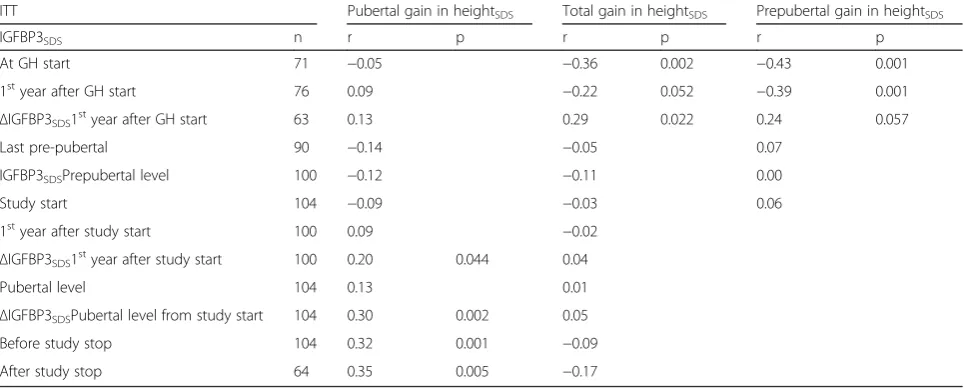
Table 6IGFBP3 variables and their correlations with gain in height outcomes
ITT Pubertal gain in heightSDS Total gain in heightSDS Prepubertal gain in heightSDS
IGFBP3SDS n r p r p r p
At GH start 71 −0.05 −0.36 0.002 −0.43 0.001
1styear after GH start 76 0.09 −0.22 0.052 −0.39 0.001
ΔIGFBP3SDS1 st
year after GH start 63 0.13 0.29 0.022 0.24 0.057
Last pre-pubertal 90 −0.14 −0.05 0.07
IGFBP3SDSPrepubertal level 100 −0.12 −0.11 0.00
Study start 104 −0.09 −0.03 0.06
1styear after study start 100 0.09 −0.02
ΔIGFBP3SDS1 st
year after study start 100 0.20 0.044 0.04
Pubertal level 104 0.13 0.01
ΔIGFBP3SDSPubertal level from study start 104 0.30 0.002 0.05
Before study stop 104 0.32 0.001 −0.09
After study stop 64 0.35 0.005 −0.17
Results
Patient characteristics
The characteristics of the study group have recently been reported including 7 more children [19] (see Table 1, Additional file 1: Table S1 for characteristics ac-cording to later randomization groups). Girls were youn-ger than boys at GH start, 7.4 vs 10.2 years (p= 0.002) and also at study start, 12.3 vs 13.7 years (p= 0.001). Girls gained more heightSDS during prepuberty than
boys, 2.2 vs 1.1 SDS, respectively (p= 0.0069) and less
during puberty 0.2 vs 0.7, respectively (p= 0.029) (Table 1; Additional file 1: Table S2).
Comparison between children with DICT and normal ICT Patients with DICT had significantly lower IGF-ISDS
at GH start than patients with a normal ICT, −1.9 ± 2.0 vs −0.9 ± 0.9 (p= 0.014). See Additional file 1: Table S2 for baseline and study characteristics accord-ing to gender and ICT.
Table 7IGF-I/IGFBP3 ratioSDS variables and their correlations with gain in height outcomes
ITT Pubertal gain in heightSDS Total gain in heightSDS Prepubertal gain in heightSDS
IGF-I/IGFBP3 RatioSDS n r p r p r p
At GH start 71 −0,16 −0,37 0,001 −0,31 0,009
RatioSDS1styear after GH start 76 0,09 0,01 −0,08
ΔRatioSDS1styear after GH start 63 0,28 0,026 0,42 0,001 0,24 0,061
RatioSDSPrepubertal level 100 0,03 −0,09 −0,10
Last pre-pubertal 90 0,08 0,01 −0,06
Study start 104 −0,02 −0,19 0,048 −0,16 0,095
1styear after study start 100 0,16 −0,11
ΔRatioSDS1styear after study start 100 0,16 0,08
RatioSDSPubertal level 104 0,23 0,021 −0,19 0,048
ΔRatioSDSPubertal level after study start 104 0,22 0,022 0,04
Before study stop 104 0,07 −0,14
After study stop 64 0,15 0,05
Δchange IGF-I/IGFBP3 Ratio,IGF-Iinsulin-like growth factor I,IGFBP3IGF-binding protein 3,SDSstandard deviation score
P
-I SDS from GH start to prepubertal
S
D
S
t
h
gi
e
h
ni
ni
a
g
l
at
r
e
b
u
p
er
P
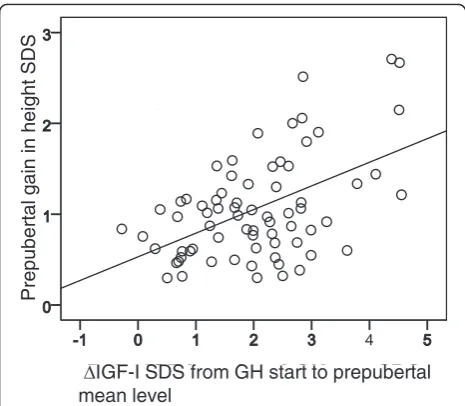
Fig. 1Prepubertal change in IGF-ISDSin relation to prepubertal gain
in heightSDS. The change (Δ) in IGF-ISDSfrom GH start to
prepubertal mean level in relation to prepubertal gain in heightSDS(r= 0.26,p< 0.001)
to pubertal
mean
lev
el P<0.028
n=38 n=66
33µg/kg/day 67µg/kg/day
Fig. 2Pubertal change in IGF-ISDSaccording to randomization dose.
Pubertal change (Δ) in IGF-ISDSfrom study start to pubertal mean
Per-protocol population (PP)
Comparing ITT and PP populations, similar results were found for the boys in both groups (data not shown); there-fore, only the ITT population will be presented (Table 1).
Prepubertal study results
IGF-ISDS(Table 2) IGFBP3SDS(Table 3) and IGF-I/IGFBP3 ratioSDS(Table 4)
At GH start, mean IGF-ISDS was −1.2 for the total
study group, mean IGFBP3SDS was−0.3 and mean
IGF-I/IGFBP3 ratioSDSwas–1.0, and values did not differ
be-tween the three groups who later constituted the randomization groups (Additional file 1: Table S2).
The observed prepubertal mean change (Δ) in IGF-ISDS from GH start to the first year on GH therapy was
2.1 (Table 2). The corresponding ΔIGFBP3SDS was 0.6
(Table 3) and the ΔIGF/IGFBP-3 ratioSDS was 1.5
(Table 4). The change in IGF-ISDSrelative to prepubertal
mean level was 2.21, range−3.89 to 6.55.
Fig. 3Pubertal change in IGF-ISDSleft and IGF-ISDSpubertal mean level right according to pubertal gain in heightSDS. a Change in pubertal IGF-ISDSfrom
study start to pubertal mean level in relation to pubertal gain in heightSDS. Open circles GH33,r= 0.32,p< 0.003; dots GH67. Correlation for total group:
r= 0.24,p< 0.026, with no significant slope for either GH33or GH67separately. b Attained IGF-I
SDSpubertal mean level in relation to pubertal gain in
heightSDS. Open circles GH33; dots GH67. Correlation for total group:r= 0.17,p< 0.034, with no significant slope for either GH33or GH67separately
Table 8Multivariate analyses on height outcomes with GH 67 μg/kg/day and IGF variables available
ITT B SEB p R2
Total gain in heightSDS
(Constant) 1.23 0.148 0.000 28
IGF-ISDS1 year after GH start 0.24 0.058 0.000 ΔIGF-ISDSpubertal level from study start 0.29 0.093 0.003
Pubertal gain in heightSDS
(Constant) 0.42 0.121 0.001 26
ΔIGF-ISDSpubertal level from study start 0.34 0.086 0.000 ΔIGF-I/IGFBP3 ratioSDS1 year after GH start 0.20 0.063 0.002
Prepubertal gain in heightSDS
(Constant) 0.91 0.136 0.000 21
IGF-ISDSat GH start −0.28 0.069 0.000
Δchange,IGF-Iinsulin-like growth factor I,IGFBP3IGF binding protein 3,SDS
standard deviation score
Table 9Multivariate analyses on height outcomes with all variables available
ITT B seb P R2, %
Total gain in heightSDS
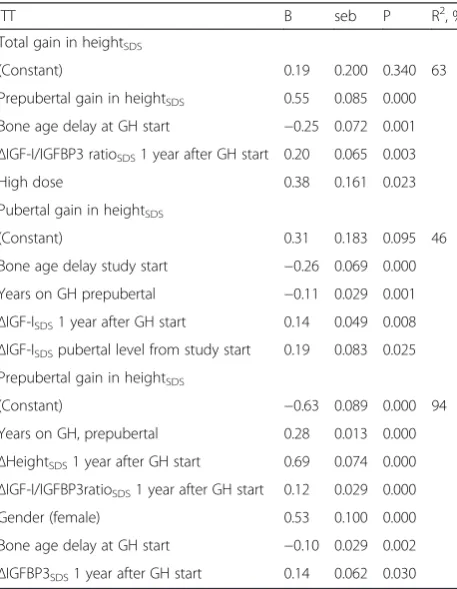
(Constant) 0.19 0.200 0.340 63
Prepubertal gain in heightSDS 0.55 0.085 0.000
Bone age delay at GH start −0.25 0.072 0.001
ΔIGF-I/IGFBP3 ratioSDS1 year after GH start 0.20 0.065 0.003
High dose 0.38 0.161 0.023
Pubertal gain in heightSDS
(Constant) 0.31 0.183 0.095 46
Bone age delay study start −0.26 0.069 0.000 Years on GH prepubertal −0.11 0.029 0.001
ΔIGF-ISDS1 year after GH start 0.14 0.049 0.008 ΔIGF-ISDSpubertal level from study start 0.19 0.083 0.025
Prepubertal gain in heightSDS
(Constant) −0.63 0.089 0.000 94
Years on GH, prepubertal 0.28 0.013 0.000
ΔHeightSDS1 year after GH start 0.69 0.074 0.000 ΔIGF-I/IGFBP3ratioSDS1 year after GH start 0.12 0.029 0.000
Gender (female) 0.53 0.100 0.000
Bone age delay at GH start −0.10 0.029 0.002
ΔIGFBP3SDS1 year after GH start 0.14 0.062 0.030 Achange,IGF-Iinsulin-like growth factor I,IGFBP3IGF-binding protein 3,Ratio
The relationship between prepubertal IGF variables and gain in heightSDSfor all children on GH
33
(Tables 5, 6 and 7) The group means for the three IGF variables at GH start were negatively correlated with prepubertal gain in heightSDS (IGF-ISDS r=−0.53, p= 0.001; IGFBP-3SDS
r=−0.43, p= 0.001; IGF-I/IGFBP3 ratioSDS r=−0.31,
p= 0.009) and with total gain in heightSDS (IGF-ISDS
r=−0.37, p= 0.002; IGFBP3SDS r=−0.36, p= 0.002;
IGF-I/IGFBP-3 ratioSDS r=−0.37, p= 0.001).
The first-year prepubertal ΔIGF-ISDS was positively
correlated with the prepubertal gain in heightSDS(Fig. 1),
but did not correlate with the ΔIGFBP3SDS or ΔIGF-I/
IGFBP3 ratioSDSafter 1 year. All three prepubertal
first-year ΔIGF variables were positively correlated with the total gain in heightSDS (ΔIGF-ISDS r= 0.42, p= 0.001; ΔIGFBP3SDS r= 0.29, p= 0.022 and ΔIGF-I/IGFBP3
ratioSDSr= 0.42,p= 0.001).
Pubertal study results
Pubertal IGF-ISDS, IGFBP3SDSand IGF-I/IGFBP3 ratioSDSmean study levels (Tables 2, 3 and 4)
At study start, the group mean IGF-ISDS was 0.9, the
group mean IGFBP3SDS was 0.4 and the group mean
IGF-I/IGFBP3 ratioSDS was 0.5. There were no
differ-ences between the three randomization groups.
The highest IGF-ISDS was reached after 1 year in the
study and the value subsequently decreased, i.e. the pu-bertal mean level was lower than the value at 1 year after randomization (see Table 2).
The pubertal IGF-ISDSfor the total study group ranged
from −2.1 to 3.5, with mean value being higher for the GH67group than for the GH33group, 1.1 vs 0.9, respect-ively (p= 0.031). The mean IGFBP3SDS for the total
study group was 0.3, with a range−1.2 to 1.3. For IGF-I/ IGFBP3 ratioSDS, the mean was 0.9, with a range of−1.3
to 2.4. There were no significant differences between the randomization groups for IGFBP3SDS or IGF-I/IGFBP3
ratioSDS.
Dose-dependent change (Δ) in IGF-ISDS(Table 2), IGFBP3SDS (Table 3) and IGF-I/IGFBP3 ratioSDS(Table 4)
After the first year in the study, pubertalΔIGF-ISDSwas
significantly greater in the group randomized to GH67 than in the group still receiving the GH33 dose, 0.5 vs
−0.1, respectively (p= 0.007; Table 2).
A similar pattern was evident for the first yearΔIGF-I/ IGFBP3 ratioSDSfor GH67vs GH33, 0.6 vs 0, respectively
(p= 0.015; Table 4), but there was no change in IGFBP3SDSafter 1 year for any group (Table 3).
When instead calculating the ΔSDS from study start to the mean pubertal level, again ΔIGF-ISDS was
signifi-cantly greater for the GH67 vs GH33group, 0.2 vs −0.2, respectively (p= 0.028), as shown in Fig. 2. When com-paring the mean prepubertal and pubertal level of
IGF-ISDS, IGFBP3SDS and IGF-I/IGFBP3 ratioSDS actually 47,
65 and 34 % respectively of children, equally for both dose groups, did not maintain the prepubertal level dur-ing puberty.
The relationship between IGF-ISDS, IGFBP3SDS,IGF-I/IGFBP3 ratioSDSand gain in heightSDS, (Tables 5, 6 and 7)
At randomization, the mean IGF-ISDS and IGFBP3SDS
did not correlate with any of the height gain outcomes, whereas the mean IGF-I/IGFBP3 ratioSDSwas negatively
associated with total height gainSDS (r=−0.19, p= 0.048;
Tables 5, 6 and 7).
For the individual, the pubertal ΔIGFSDS from
randomization was significantly correlated with the pubertal gain in heightSDS for both GH33 and GH67,
r= 0.32 (p= 0.003) and r= 0.24 (p= 0.026) respectively (Fig. 3a). For the total study group, the IGF-ISDS
pu-bertal mean level correlated with the pupu-bertal gain in heightSDS, r= 0.17 (p= 0.034; Fig. 3b). The range in
gain in heightSDSwas wide, and there were no
signifi-cant differences between the dose groups; therefore, the results from the total study group were used for further analyses.
Disregarding randomization dose, the pubertal gain in heightSDS was positively correlated with the 1st year
pubertalΔIGF-ISDS(r= 0.26,p= 0.010) and also with the ΔIGF-ISDSto the pubertal mean level (r= 0.35,p= 0.001,
Table 5).
The first year pubertal ΔIGFBP3SDS correlated with
the pubertal gain in heightSDS (r= 0.20, p= 0.044), and
the mean pubertal ΔIGFBP3SDS correlated with the
pubertal gain in height level (r= 0.30,p= 0.002; Table 6). The attained mean pubertal level of IGFBP3SDSwas not
correlated with height gain outcomes. The pubertal
ΔIGF-I/IGFBP3 ratioSDSwas correlated (r= 0.22,p= 0.022)
with the pubertal gain in heightSDS. The attained mean
pu-bertal level of IGF-I/IGFBP3 ratioSDS correlated with the
pubertal gain in heightSDS (r= 0.23, p= 0.021) and with
total gain in heightSDS(r=−0.19,p= 0.048; Table 7).
Multivariate regression (Tables 8 and 9)
Variance in pubertalΔIGFs
In total, 39 % of the variation in pubertalΔIGF-ISDSwas
explained by the variable ‘IGF-ISDS at study start’; the
lower the value at study start, the greater the increase during puberty. Similarly, for pubertal ΔIGFBP3SDS,
28 % (also including age, +) was explained and for
ΔIGF-I/IGFBP3 ratioSDS40 % was explained.
Variance in gain in heightSDSwith only IGF variables available (Table 8)
‘pubertal (from study start to pubertal level) ΔIGF-ISDS’
and ‘first year prepubertal ΔIGF-I/IGFBP3 ratioSDS’. For
total gain in heightSDS, 28 % of the variation was
ex-plained by‘prepubertal IGF-ISDSfirst year after GH start’
and ‘pubertalΔIGF-ISDS’. Regarding the variation in
pre-pubertalgain in heightSDS,21 % was explained by ‘
IGF-ISDSat GH start’(the lower the better).
Variance in gain in heightSDSwith all variables available (Table 9)
The variables are presented in the order they entered in the analyses. For thepubertal gainin heightSDS, 46 % of
the variation could be explained by ‘bone age at study start’(−),‘prepubertal years on GH’(−),‘ΔIGF-ISDS1 year
after GH start’ (+) and ‘pubertal ΔIGF-ISDS (pubertal
level from study start).
For the variation intotal gainin heightSDS. 63 % could
be explained by the variables ‘prepubertal gain in heightSDS’ (+),‘bone age at GH start’ (−),’ ΔIGF/IGFBP3
ratioSDS1 year after GH start’(+) and‘high GH dose’(+).
In the analysis of prepubertal gain in heightSDS, 94 %
of the variation was explained by‘number of prepubertal years on GH’,‘first year ΔheightSDS’,‘first year ΔIGF-I/
IGFBP3 ratioSDS’,‘gender’(girl +),‘bone age at GH start’
(the greater the delay the better) and ‘first year
ΔIGFBP3SDS’.
Discussion
Changes in IGFs relate to prepubertal and pubertal height gain
The present analysis reported results for multiple vari-ables including IGF-I, IGFBP3 and their ratio in IIGHD children from the start of GH treatment until AH, and the relationship of IGFs to both the prepubertal period when all participants received the same 33 μg/kg/d and the pubertal period when they were randomised to 33 or 67μg/kg/d. The analysis focused on GH responsiveness as estimated by changes and obtained prepubertal and pubertal levels of IGF-ISDS, IGFBP3SDS and IGF-I/
IGFBP3 ratioSDS. The main findings were: a significant
dose-dependent (33 or 67 μg/kg/d) change in IGF-ISDS
from randomization at onset of puberty to mean puber-tal study level, and a positive correlation between this pubertal ΔIGF-ISDS and the pubertal gain in heightSDS.
The greatest change was found in IGF-I followed by a less pronounced change in IGF-I/IGFBP3 ratio, while IGFBP3 values remained more stable. The GH dose given during puberty did not maintain the mean pre-pubertal IGF-I level, suggesting that some children may have benefitted from a higher dose in order to undergo a pubertal growth spurt of normal magnitude [19]. The need for wide-ranging individual GH dosing in order to promote growth has previously been demonstrated dur-ing prepuberty [28], here we find similar requirements
when studying IGFs and growth during the pubertal period. Actually, GH responsiveness in the present study group was so broad that the low dose was too high for some individuals while the high dose was too low for others in order to attain IGFs and pubertal height gain within normal range.
Prepubertal responsiveness to GH, reflected by a sig-nificant increase in IGFs after GH start [5, 28], has pre-viously been reported to be of great importance for the short-term growth response; in the present analysis it was found to be important also for the total gain in height. This highlights the importance of individual GH dosing from treatment start, with the available predic-tion models presently being the best tools with which to estimate outcomes [29, 30]. Thus, when an increased GH dose during puberty induced a greater ΔIGF-ISDS,
this resulted in a greater pubertal height gain than ob-served with a standard GH dose for most subjects. This finding has previously been reported in non-GHD sub-jects, withΔIGF-ISDSfound to be the most reliable
vari-able correlating with pubertal gain in heightSDS [17].
Thus, there is no principal difference in the IGF-I re-sponse and growth rere-sponse between these two aetiol-ogies of short stature, although the magnitude of GH responsiveness is higher in the GH-deficient than in the non-GH-deficient group [5, 31].
GH has effects on longitudinal bone growth both dir-ectly at the growth plate and locally mediated through IGF-I [32, 33]. The increase in IGF-I level as a response to GH treatment could be seen as a sign of GH respon-siveness [5]. GH/IGF-I responrespon-siveness varies not only between individuals but also between tissues within an individual, e.g. more GH is needed to produce an effect on IGF-I production than for longitudinal bone growth [34].
Pubertal response in IGFs
In the present analyses, there was a significant difference in pubertal IGF-ISDS between randomization groups,
with higher mean values in the GH67 than the GH33 group. This finding supports results from the study of Mauras et al. [15] who reported that by using higher GH doses during puberty (100 vs 42μg/kg/d), a significantly higher pubertal gain in heightSDSwas found, as well as a
higher but non-significant IGF-I response in the high-relative to the low-dose group. The difference in import-ance of IGF-I in relation to our study may be due to dif-ferences in IGF-I redif-ferences: we used our in-house reference with SDS considering gender, age and pubertal stage [12]. In the study by Sas et al. using GH doses cor-responding to 25 or 50μg/kg/d until AH, the mean in-crease in IGF-ISDSafter 1 year on GH was twice as high
difference did not reach significance. The relationship between IGF-ISDS and growth response was not given
[16]. Neither IGFBP3 nor IGF-I/IGFBP3 ratio was mea-sured in these two published trials.
The multivariate analyses
In agreement with our findings in non-GH-deficient children [17], among the IGF-variables also in the present study, the pubertal ΔIGF-ISDS was found to be
the most informative variable, and more important than the level per se, for explaining the variance in both pu-bertal and total gain in heightSDS . When all variables
were allowed, bone age delay and less prepubertal years on GH in addition toΔIGF-ISDS was positive for
puber-tal gain in heightSDS. This may be explained by some remaining catch-up growth occurring during puberty in some study subjects, even though all children had been treated with GH for at least 1 year before randomization.
The explanatory variables for pubertal gain in height were in accordance with those identified within the KIGS observational study, except that bone age was se-lected in our study and chronological age in the KIGS study [14]. This difference may be because bone age was estimated by a single radiologist in our trial which in-creased the quality and consistency of this variable.
For total gain in height in the present study, a GH dose high enough to result in a substantial prepubertal
ΔIGF-I/IGFBP-3 ratioSDS was favourable. The high dose
was set at 67 μg/kg/d even though the present results suggest that nearly 50 % of the children could have benefitted from an even higher dose. We need to re-member that at the time of study design, there were lim-ited data on GH treatment doses and safety, and no tools available for estimation of individual GH respon-siveness such as the prediction models for GH growth response [30, 35].
Prepubertal response
Mean IGF-ISDS, IGFBP3SDS and IGF-I/IGFBP3 ratioSDS
at GH start were in the low/normal range. Lower IGF levels at baseline were associated with greater changes after 1 year of GH therapy. We found a strong negative bivariate linear correlation between low baseline IGF-ISDS, IGFBP3SDS, their ratioSDSand both prepubertal and
total gain in heightSDS. The prepubertal IGF-I response
and its relationship to gain in height is already well known [3–5, 36]. It was previously reported that the ob-served prepubertal 1-year growth response makes it pos-sible to estimate the full prepubertal gain in height in both children with GHD and in non-GH-deficient groups [37]. Knowledge of the relationship between the change in IGFs and total gain in heightSDS can now be
added, and highlights the importance of considering
prepubertal GH responsiveness and achieving a greater first year ΔIGFs when selecting GH dose. The Δ IGF-ISDS, ΔIGFBP3SDS and ΔIGF/IGFBP3 ratioSDS 1 year
after GH start mirrored individual GH responsiveness as measured by IGF-I generation. This supports results from 1-year non-randomized observations in GH-deficient and non-GH-GH-deficient groups [8, 9, 36].
In our analyses, prepubertal IGF-ISDSdid not correlate
with gain in height. This is in contrast to the findings of the study by Cohen et al. who found a relationship be-tween IGF-I level (the higher the better) and height gain in prepubertal children treated for 2 years with IGF-I-targeting GH doses [28]. The difference in results may be explained by differences in study design, mainly in terms of inclusion criteria and dose ranges. However, in both studies the ΔIGF-ISDS was found in multivariate
analyses to be the most informative variable explaining growth response.
The multivariate analyses
In multivariate regression analyses using only IGF vari-ables, baseline IGF-ISDSalone explained 21 % of the
vari-ation in prepubertal gain in height. When adding auxological variables, the variation explained improved to 94 % with the following important variables: bone age delay at GH start (more delay better growth) and pre-pubertal years on GH (more years, more growth). Many prepubertal years on GH are also a sign of GHD (being young at diagnosis was associated with more severe GHD).
Different information from IGFBP3SDSand IGF/IGFBP3
ratioSDS
IGFBP3 and IGF-I/IGFBP3 ratio are not routinely moni-tored during GH treatment. IGFBP3 is less sensitive to short-term nutritional variations and diseases than IGF-I and could therefore be valuable when monitoring effi-cacy of and compliance with GH treatment [38]. In addition, a more pronounced change in IGF-I relative to IGFBP3 results in an increased IGF-I/IGFBP3 ratio [22, 39], which can be seen as an indicator of increased IGF-I bioavailability [40]. IGF-In the present study, changes in IGF-I/IGFBP3 ratioSDS followed changes in IGF-I, and
correlated significantly with both pubertal and total gain in heightSDS. In the multivariate regression analysis,
pre-pubertal ΔIGF-I/IGFBP3 ratioSDS was selected for
ex-planation of variance in both prepubertal and total gain in heightSDS.ΔIGF-I/IGFBP3 ratioSDS may be a result of
a synergistic effect of IGF-I and IGFBP3 during GH therapy [41], where IGFBP3 modulates the actions of IGF-I, as well as having an independent effect [40]. To our knowledge, longitudinal observation of IGF-I/ IGFBP3 ratioSDS during pubertal growth in a population
IGFs markers for safety
In the present study no dose-dependent adverse event involving carbohydrate metabolism was observed, which confirms previous studies with high GH doses [15, 16, 42, 43]. However, a modest association between in-creased circulating level of IGF-I and an inin-creased risk of common cancers in adult has been reported [1, 44]. Most circulating IGF-I is bound to IGFBP3 and to the acid labile subunit (ALS) [45], therefore, the IGF-I/ IGFBP3 ratioSDS could reflect the tissue availability of
IGF-I and its correlation with free IGF-I [39, 40, 46]. Our data showed no dose-dependent differences in pu-bertal IGF-I/IGFBP3 ratioSDS, only a broad range of
IGF-ISDS and IGFBP3SDS, highlighting that GH dosing
needs to be individualized [31].
Compliance
In the present study, stable IGF-ISDS and IGFBP3SDS
concentrations were observed, which is a sign of good compliance [38, 47]. There were more than 10 samples for each patient and nearly 2000 samples in the total analysis. Only 8 single samples were excluded due to suspected poor compliance.
Poor compliance could be a factor that underestimates the study results; both in terms of IGF-I and growth re-sponses. Pubertal teenagers are known to have the low-est treatment compliance due to many factors, not least psychological [48, 49]. In order to promote good compli-ance in our study, all participants were responsible for their own injections and were followed every third month. At each visit they were invited to discuss their treatment with their endocrine team [50].
The heterogeneity of the study group
The study group was heterogeneous, including patients with classic GHD, partial GHD and some short boys with low GH secretion in the late prepubertal period [51], and there was a broad range of IGF-ISDS and
IGFBP3SDS at baseline. This reflects the reality in daily
clinical practice and allows results to represent patients with a wider range of baseline levels of GH secretion and a broad range in GH responsiveness.
Limitations of the study
The study was designed before individual GH respon-siveness was broadly considered. Children were random-ized to weight-based dosing and 38 % of patients decided to reduce or stop GH treatment before AH was reached due to satisfaction with their attained height, which was accepted by the protocol. However, the com-bination of the limited number of patients in the treat-ment groups, the broad variability in their growth responses, and the premature stop/reduction of GH dose will underestimate the result of the study regarding
changes in IGF-ISDS, IGFBP-3SDS and IGF-I/IGFBP-3
ratioSDS, as well as the dose-dependent effect on
puber-tal gain in heightSDS.
The onset of puberty was defined by clinical signs in the present trial, making it possible that some pubertal growth had occurred before randomization, thus leading to underestimation of the pubertal IGF-I response and gain in height.
Girls constituted a small group in the current analyses. The low number of girls in each dose group does not allow conclusions about use of an even higher GH dose during puberty in girls.
Conclusion
In the present analysis we studied GH responsiveness es-timated on the obtained levels and change of IGF-ISDS,
IGFBP3SDS and IGF-I/IGFBP-3 ratioSDS and the
associ-ated growth response in children with IIGHD random-ized in puberty to different weight-based GH dose regimens. Thereby, the relationship of IGFs to gain in heightSDS during both the prepubertal and pubertal
growth phases could be explored. The prepubertal in-crease in IGFs associated with a 33 μg/kg/d GH dose and the GH dose-dependent (33 or 67μg/kg/d) pubertal increase in IGF-I, were both important variables that ex-plained the total gain in height: the higher the prepuber-tal GH responsiveness, the greater the toprepuber-tal gain in heightSDS. Our hypothesis that increased GH dose
dur-ing puberty would result in a more pronounced IGF-I response and greater growth was found to be valid: the higher GH dose during puberty was followed by both higher IGF-ISDSand a greater gain in heightSDSthan
ob-served in patients receiving the lower GH dose. Thus, of great importance in the clinical setting: the individual who remains short at onset of puberty require a GH dose increase great enough to result in an increment in IGF-I in order to gain any heightSDSduring puberty.
Additional file
Additional file 1:Table S1.Baseline characteristics according to randomization group: at birth, at GH start and at study start.Table S2.
Baseline characteristics according to gender and infancy–childhood transition (ICT): at birth, at GH start, at study start and at adult height. (PDF 222 kb)
Abbreviations
AITT:Arginine–insulin tolerance test; AH: Adult height; BL: Birth length; BMI: Body mass index; BW: Body weight; BA: Bone age; DICT: Delayed infancy–childhood transition, ICT >12 months after birth; diffH-MPHSDS: The
difference between the child’s HeightSDSvs MPHSDS; GH: Growth hormone;
GHD: Growth hormone deficiency; GH33x1: GH, Standard dose 33μg/kg once
daily injection; GH33x2: GH, 33μg/kg twice daily injection; GH67x1: GH, 67μg/kg
once daily injection; GH67: GH 33×2 and 67×1, the high-dose group; GHmax24h: Maximum GH level during a spontaneous 24h GH profile;
GHmaxAITT: Maximum GH level during an AITT; ICT: Infancy–childhood
growth hormone deficiency; IGFBP-3: Insulin-like growth factor-binding protein 3; IRP: International reference preparation; ITT: Intention-to-treat;
MPH: Midparental height; PP: Per-protocol; RIA: Radioimmuno assay; SDS: Standard deviation score; WHO: World Health Organization.
Competing interests
EL has no competing interest, has not received any commercial source of funding.
BK has received Umeå University Hospital Government Grants (ALF), lecture and/or consultation honoraria from Merck Serono, NovoNordisk, Pfizer and Sandoz. BJ was employed by Pilan Data Management AB until he died in February 2015. KA-W received an unrestricted research grant from Pharmacia/Pfizer until 2005. This investigator-initiated and sponsored trial, TRN 88–177 began in 1988. Kabi/Pharmacia supported the study by paying for monitoring of patients, the additional clinical costs and provided free drugs for patients receiving more than 33ug/kg/day. The study was also supported by grants from the Swedish Research Council (7509), the Swedish Foundation for Pediatric GH Research and the Foundation Växthuset for Children as well as University Hospital Government Grants (ALF) in Gothenburg and Umea. Kabi/ Pharmacia/Pfizer has not had any influence on the collection, analysis and interpretation of these data or in the writing of this manuscript.
Authors’contributions
The study was initiated (concept and design) in the 1980s by KAW, the PI who also served as local investigator for Gothenburg. Later in the 1990s, BK also became a local investigator for Umea. KAW, BK, EL made the clean file. BJ as biostatistician made all the statistical analyses. EL made the first draft. All authors made substantial intellectual contribution with analyses, interpretation of data and revising the manuscript for important intellectual content. All authors have given approval for the final version to be published.
Acknowledgements
The authors are thankful for the participation of all the children and their families; for the great care taken of the study population over the years by our Swedish paediatric colleagues, for our excellent paediatric nurses, and the staff members at Gothenburg Paediatric Growth Research Center (GP-GRC) for their long-term commitment to the study, not least Carola Pfeiffer-Mosesson and the monitor Eva Mölleborn, especially Lisbeth Larsson and Irene Leonardsson. The authors thanks to all investigators in study group: A.Stefan Aronson, Department of Paediatrics, Halmstad hospital; Jan Gustafsson, Department of Women’s and Children’s Health, Uppsala University; Lars Hagenäs, Department of Women’s and Children’s Health, Karolinska Institute; Sten-A Ivarsson, Department of Paediatrics, Lund University; Björn Jonsson, Department of Women’s and Children’s Health, Uppsala University; Martin Ritzén, Department of Women’s and Children’s Health, Karolinska Institute; Torsten Tuvemo, Department of Women’s and Children’s health, Uppsala University; Ulf Westgren, Department of Paediatrics, Lund University; Otto Westphal, Gothenburg Pediatric Growth Research Center, Department of Peditarics, Insitute of Clinical
Science, Sahlgrenska Aacademy at University of Gothenburg; Jan Åman School of Health and Medical Sciences, Örebro University.
The authors also thank Harriet Crofts for valuable language editing of the manuscript.
This investigator-initiated and sponsored trial, TRN 88–177 began in 1988. Kabi/Pharmacia supported the study by paying for monitoring of patients, the additional clinical costs and provided free drugs for patients receiving more than 33ug/kg/day. The study was also supported by grants from the Swedish Research Council (7509), the Swedish Foundation for Pediatric GH Research and the Foundation Växthuset for Children as well as University Hospital Government Grants (ALF) in Gothenburg and Umea. Kabi/Pharmacia/ Pfizer has not had any influence on the collection, analysis and interpretation of these data or in the writing of this manuscript.
Author details
1Institute of Clinical Science/Pediatrics, Umeå University, SE-90185 Umeå,
Sweden.2University of Uppsala, Women’s and Children’s Health, SE-75185 Uppsala, Sweden.3Department of Physiology/Endocrinology, Institute of
Neurosciences and Physiology, The Sahlgrenska Academy at University of Gothenburg, SE-40530 Gothenburg, Sweden.
Received: 9 March 2015 Accepted: 14 December 2015
References
1. Renehan AG, Zwahlen M, Minder C, O'Dwyer ST, Shalet SM, Egger M. Insulin-like growth factor (IGF)-I, IGF binding protein-3, and cancer risk: systematic review and meta-regression analysis. Lancet. 2004;363:1346–53. 2. Cutfield WS, Derraik JG, Gunn AJ, Reid K, Delany T, Robinson E, et al. Non-compliance with growth hormone treatment in children is common and impairs linear growth. PLoS One. 2011;6:e16223. doi:10.1371/journal.pone. 0016223.
3. Rudman D, Moffitt SD, Fernhoff PM, McKenzie WJ, Kenny JM, Bain RP. The relation between growth velocity and serum somatomedin C
concentration. J Clin Endocrinol Metab. 1981;52:622–7.
4. Albertsson-Wikland K, Hall K. Growth hormone treatment in short children: relationship between growth and serum insulin-like growth factor I and II levels*. J Clin Endocrinol Metab. 1987;65:671–8.
5. Kriström B, Jansson C, Rosberg S, Albertsson-Wikland K. Growth response to growth hormone (GH) treatment relates to serum insulin-like growth factor I (IGF-I) and IGF-binding protein-3 in short children with various GH secretion capacities. Swedish Study Group for Growth Hormone Treatment. J Clin Endocrinol Metab. 1997;82:2889–98.
6. Kamp GA, Wit JM. High-dose growth hormone therapy in idiopathic short stature. Horm Res. 1998;49:67–72.
7. Cohen P, Bright GM, Rogol AD, Kappelgaard AM, Rosenfeld RG, Group ANCT. Effects of dose and gender on the growth and growth factor response to GH in GH-deficient children: implications for efficacy and safety. J Clin Endocrinol Metab. 2002;87:90–8.
8. Tillmann V, Patel L, Gill MS, Whatmore AJ, Price DA, Kibirige MS, et al. Monitoring serum insulin-like growth factor-I (IGF-I), IGF binding protein-3 (IGFBP-3), IGF-I/IGFBP-3 molar ratio and leptin during growth hormone treatment for disordered growth. Clin Endocrinol (Oxf). 2000;53:329–36. 9. Scire G, Del Bianco C, Spadoni G, Cianfarani S. Growth hormone therapy
does not alter the insulin-like growth factor-I/insulin-like growth factor binding protein-3 molar ratio in growth hormone-deficient children. J Endocrinol Invest. 2008;31:153–8.
10. Juul A, Bang P, Hertel NT, Main K, Dalgaard P, Jørgensen K, et al. Serum insulin-like growth factor-I in 1030 healthy children, adolescents, and adults: relation to age, sex, stage of puberty, testicular size, and body mass index. J Clin Endocrinol Metab. 1994;78:744–52.
11. Albertsson-Wikland K, Rosberg S, Karlberg J, Groth T. Analysis of 24-hour growth hormone profiles in healthy boys and girls of normal stature: relation to puberty. J Clin Endocrinol Metab. 1994;78:1195–201. 12. Löfqvist C, Andersson E, Gelander L, Rosberg S, Blum WF, Albertsson WK.
Reference values for IGF-I throughout childhood and adolescence: a model that accounts simultaneously for the effect of gender, age, and puberty. J Clin Endocrinol Metab. 2001;86:5870–6.
13. Veldhuis JD, Metzger DL, Martha Jr PM, Mauras N, Kerrigan JR, Keenan B, et al. Estrogen and testosterone, but Not a nonaromatizable androgen, direct network integration of the hypothalamo-somatotrope (growth hormone)-insulin-like growth factor I axis in the human: evidence from pubertal pathophysiology and Sex-steroid hormone replacement 1. J Clin Endocrinol Metab. 1997;82:3414–20.
14. Ranke MB, Lindberg A, Martin DD, Bakker B, Wilton P, Albertsson-Wikland K, et al. The mathematical model for total pubertal growth in idiopathic growth hormone (GH) deficiency suggests a moderate role of GH dose. J Clin Endocrinol Metab. 2003;88:4748–53.
15. Mauras N, Attie KM, Reiter EO, Saenger P, Baptista J. High dose recombinant human growth hormone (GH) treatment of GH-deficient patients in puberty increases near-final height: a randomized, multicenter trial. Genentech, Inc., Cooperative Study Group. J Clin Endocrinol Metab. 2000;85:3653–60. 16. Sas TC, de Ridder MA, Wit JM, Rotteveel J, Oostdijk W, Reeser HM, et al.
Adult height in children with growth hormone deficiency: a randomized, controlled, growth hormone dose–response trial. Horm Res Paediatr. 2010; 74:172–81.
17. Kriström B, Lundberg E, Jonsson B. IGF-I and growth response to adult height in a randomized GH-treatment trial in short non-GH-deficient children. J Clin Endocrinol Metab. 2014;99:2917–24.
children: preliminary results from an ongoing randomized trial with different dose regimens. Acta Paediatr Suppl. 1999;88:80–4.
19. Albertsson-Wikland K, Kriström B, Lundberg E, Aronson A, Gustafsson J, Hagenäs L, et al. Growth hormone dose-dependent pubertal growth: a randomized trial in short children with Low growth hormone secretion. Horm Res Paediatr. 2014;82:158–70.
20. Jansson C, Boguszewski C, Rosberg S, Carlsson L, Albertsson-Wikland K. Growth hormone (GH) assays: influence of standard preparations, GH isoforms, assay characteristics, and GH-binding protein. Clin Chem. 1997;43: 950–6.
21. Albertsson-Wikland K, Rosberg S. Methods of Evaluating Spontaneous Growth Hormone Secretion. In: Ranke M, editor. Functional Endocrinologic Diagnostics in Children and Adolescents. Mannheim: J & J Verlag; 2010. p. 129–59.
22. Löfqvist C, Andersson E, Gelander L, Rosberg S, Hulthen L, Blum WF, et al. Reference values for insulin-like growth factor-binding protein-3 (IGFBP-3) and the ratio of insulin-like growth factor-I to IGFBP-3 throughout childhood and adolescence. J Clin Endocrinol Metab. 2005;90:1420–7. doi: 10.1210/jc.2004-0812.
23. Albertsson-Wikland K, Luo ZC, Niklasson A, Karlberg J. Swedish population-based longitudinal reference values from birth to 18 years of age for height, weight and head circumference. Acta Paediatr. 2002;91:739–54.
24. Karlberg J. On the construction of the infancy-childhood-puberty growth standard. Acta Paediatr Scand Suppl. 1989;356:26–37.
25. Hochberg Z, Albertsson-Wikland K. Evo-devo of infantile and childhood growth. Pediatr Res. 2008;64:2–7.
26. Karlberg P, Taranger J, Engstrom I, Karlberg J, Landstrom T, Lichtenstein H et al. I. physical growth from birth to 16 years and longitudinal outcome of the study during the same age period. Acta Paediatr Scand Suppl. 1976;258:7–76. 27. Niklasson A, Ericson A, Fryer JG, Karlberg J, Lawrence C, Karlberg P. An
update of the Swedish reference standards for weight, length and head circumference at birth for given gestational age (1977–1981). Acta Paediatr Scand. 1991;80:756–62.
28. Cohen P, Rogol AD, Howard CP, Bright GM, Kappelgaard AM, Rosenfeld RG, et al. Insulin growth factor-based dosing of growth hormone therapy in children: a randomized, controlled study. J Clin Endocrinol Metab. 2007;92: 2480–6.
29. Ranke MB, Lindberg A, Chatelain P, Wilton P, Cutfield W, Albertsson-Wikland K, et al. Derivation and validation of a mathematical model for predicting the response to exogenous recombinant human growth hormone (GH) in prepubertal children with idiopathic GH deficiency. J Clin Endocrinol Metab. 1999;84:1174–83.
30. Albertsson-Wikland K, Kristrom B, Rosberg S, Svensson B, Nierop AF. Validated multivariate models predicting the growth response to GH treatment in individual short children with a broad range in GH secretion capacities. Pediatr Res. 2000;48:475–84.
31. Kristrom B, Albertsson-Wikland K. Insulin and IGF-I levels during 2 yrs of treatment with individual GH doses (17–100 mu g/kg/d) do not differ to standard dose (43 mu g/kg/d) in prepubertal GHD and ISS children. Hormone Research. Allschwillestrasse 10, CH-4009 Basel, Switsseland: KARGER; 2009.
32. Isaksson O, Jansson J-O, Gause I. Growth hormone stimulates longitudinal bone growth directly. Science. 1982;216:1237–9.
33. Green H, Morikawa M, Mxon T. A dual effector theory of growth‐hormone action. Differentiation. 1985;29:195–8.
34. Decker R, Nygren A, Kristrom B, Nierop AF, Gustafsson J, Albertsson-Wikland K, et al. Different thresholds of tissue-specific dose-responses to growth hormone in short prepubertal children. BMC Endocr Disord. 2012;12:26.
35. Ranke MB, Lindberg A. Predicting growth in response to growth hormone treatment. Growth Horm IGF Res. 2009;19:1–11.
36. Ranke M, Schweizer R, Elmlinger M, Weber K, Binder G, Schwarze C, et al. Relevance of IGF-I, IGFBP-3, and IGFBP-2 measurements during GH treatment of GH-deficient and non-GH-deficient children and adolescents. Horm Res Paediatr. 2001;55:115–24.
37. Kriström B, Dahlgren J, Niklasson A, Nierop AF, Albertsson-Wikland K. The first-year growth response to growth hormone treatment predicts the long-term prepubertal growth response in children. BMC Med Inform Decis Mak. 2009;9:1.
38. Buckway CK, Selva KA, Pratt KL, Tjoeng E, Guevara-Aguirre J, Rosenfeld RG. Insulin-like growth factor binding protein-3 generation as a measure of GH sensitivity. J Clin Endocrinol Metab. 2002;87:4754–65.
39. Juul A, Main K, Blum WF, Lindholm J, Ranke MB, Skakkebaek NE. The ratio between serum levels of insulin-like growth factor (IGF)-I and the IGF binding proteins (IGFBP-1, 2 and 3) decreases with age in healthy adults and is increased in acromegalic patients. Clin Endocrinol (Oxf). 1994;41:85–93. 40. Chen J-W, Højlund K, Beck-Nielsen H, Sandahl Christiansen J, Ørskov H,
Frystyk J. Free rather than total circulating insulin-like growth factor-I determines the feedback on growth hormone release in normal subjects. J Clin Endocrinol Metab. 2005;90:366–71.
41. Mandel SH, Moreland E, Rosenfeld RG, Gargosky SE. The effect of GH therapy on the immunoreactive forms and distribution of IGFBP-3, IGF-I, the acid-labile subunit, and growth rate in GH-deficient children. Endocrine. 1997;7:351–60.
42. Coelho R, Brook CG, Preece MA, Stanhope RG, Dattani MT, Hindmarsh PC. A randomised study of two doses of biosynthetic human growth hormone on final height of pubertal children with growth hormone deficiency. Horm Res. 2008;70:85–8.
43. Riddick L, Alter C, Davis DA, Frane J, Lippe B, Bakker B. A stepwise increase in recombinant human growth hormone dosing during puberty achieves improved pubertal growth: a National Cooperative Growth Study report. J Pediatr Endocrinol Metab. 2009;22:623–8.
44. Popovic V, Mattsson AF, Gaillard RC, Wilton P, Koltowska-Häggström M, Ranke MB. Serum insulin-like growth factor I (IGF-I), IGF-binding proteins 2 and 3, and the risk for development of malignancies in adults with growth hormone (GH) deficiency treated with GH: data from KIMS (Pfizer International Metabolic Database). J Clin Endocrinol Metab. 2010;95:4449–54.
45. Frystyk J, Skjærbæk C, Dinesen B, Ørskov H. Free insulin-like growth factors (IGF-I and IGF-II) in human serum. FEBS Lett. 1994;348:185–91.
46. Skjaerbaek C, Vahl N, Frystyk J, Hansen T, Jorgensen J, Hagen C, et al. Serum free insulin-like growth factor-I in growth hormone-deficient adults before and after growth hormone replacement. Eur J Endocrinol. 1997;137:132–7. 47. Gelander L, Blum WF, Larsson L, Rosberg S, Albertsson-Wikland K. Monthly measurements of insulin-like growth factor I (IGF-I) and IGF-binding protein-3 in healthy prepubertal children: characterization and relationship with growth: the 1-year growth study. Pediatr Res. 1999;45:377–83.
48. Haverkamp F, Johansson L, Dumas H, Langham S, Tauber M, Veimo D, et al. Observations of nonadherence to recombinant human growth hormone therapy in clinical practice. Clin Ther. 2008;30:307–16.
49. Ba C, Kj T. Noncompliance in adolescents: A review. J Dev Behav Pediatr. 1989;10:207–15.
50. Westphal O, Lindberg A, Board SKN. Final height in Swedish children with idiopathic growth hormone deficiency enrolled in KIGS treated optimally with growth hormone. Acta Paediatr. 2008;97:1698–706.
51. Cianfarani S. Is high-dose growth hormone treatment during puberty worthwhile? Horm Res Paediatr. 2014;82:143.
• We accept pre-submission inquiries
• Our selector tool helps you to find the most relevant journal • We provide round the clock customer support
• Convenient online submission • Thorough peer review
• Inclusion in PubMed and all major indexing services • Maximum visibility for your research
Submit your manuscript at www.biomedcentral.com/submit