
Wiley - Mysql PHP Database Applications.pdf
622
0
0
Full text
(2) 3537-4 FM.f.qc. 12/15/00. 15:31. Page ii.
(3) 3537-4 FM.f.qc. 12/15/00. 15:31. Page iii. MySQL/PHP Database Applications Jay Greenspan and Brad Bulger. M&T Books An imprint of IDG Books Worldwide, Inc. Foster City, CA ● Chicago, IL ● Indianapolis, IN ● New York, NY.
(4) 3537-4 FM.f.qc. 12/15/00. 15:31. Page iv. MySQL/PHP Database Applications Published by M&T Books An imprint of IDG Books Worldwide, Inc. 919 E. Hillsdale Blvd., Suite 400 Foster City, CA 94404 www.idgbooks.com (IDG Books Worldwide Web site) Copyright © 2001 IDG Books Worldwide, Inc. All rights reserved. No part of this book, including interior design, cover design, and icons, may be reproduced or transmitted in any form, by any means (electronic, photocopying, recording, or otherwise) without the prior written permission of the publisher. ISBN: 0-7645-3537-4 Printed in the United States of America 10 9 8 7 6 5 4 3 2 1 1O/QZ/QR/QR/FC Distributed in the United States by IDG Books Worldwide, Inc. Distributed by CDG Books Canada Inc. for Canada; by Transworld Publishers Limited in the United Kingdom; by IDG Norge Books for Norway; by IDG Sweden Books for Sweden; by IDG Books Australia Publishing Corporation Pty. Ltd. for Australia and New Zealand; by TransQuest Publishers Pte Ltd. for Singapore, Malaysia, Thailand, Indonesia, and Hong Kong; by Gotop Information Inc. for Taiwan; by ICG Muse, Inc. for Japan; by Intersoft or South Africa; by Eyrolles for France; by International Thomson Publishing for Germany, Austria, and Switzerland; by Distribuidora Cuspide for Argentina; by LR International for Brazil; by Galileo Libros for Chile; by Ediciones ZETA S.C.R. Ltda. for Peru; by WS Computer Publishing Corporation, Inc., for the Philippines; by Contemporanea de Ediciones for Venezuela; by Express Computer Distributors for the Caribbean and West Indies; by Micronesia Media Distributor, Inc. for Micronesia; by Chips Computadoras S.A. de C.V. for Mexico; by Editorial Norma de Panama S.A. for Panama; by American Bookshops for Finland. For general information on IDG Books Worldwide’s books in the U.S., please call our Consumer Customer. Service department at 800-762-2974. For reseller information, including discounts and premium sales, please call our Reseller Customer Service department at 800-434-3422. For information on where to purchase IDG Books Worldwide’s books outside the U.S., please contact our International Sales department at 317-572-3993 or fax 317-572-4002. For consumer information on foreign language translations, please contact our Customer Service department at 800-434-3422, fax 317-572-4002, or e-mail [email protected]. For information on licensing foreign or domestic rights, please phone +1-650-653-7098. For sales inquiries and special prices for bulk quantities, please contact our Order Services department at 800-434-3422 or write to the address above. For information on using IDG Books Worldwide’s books in the classroom or for ordering examination copies, please contact our Educational Sales department at 800-434-2086 or fax 317-572-4005. For press review copies, author interviews, or other publicity information, please contact our Public Relations department at 650-653-7000 or fax 650-653-7500. For authorization to photocopy items for corporate, personal, or educational use, please contact Copyright Clearance Center, 222 Rosewood Drive, Danvers, MA 01923, or fax 978-750-4470. Library of Congress Cataloging-in-Publication Data Greenspan, Jay, 1968My SQL/PHP database applications / Jay Greenspan and Brad Bulger. p. cm. ISBN 0-7645-3537-4 (alk. paper) 1. SQL (Computer program language) 2. PHP (Computer program language 3.Web databases. I. Bulger, Brad, 1959- II. Title. QA76.73.S67G73 2001 005.13’3--dc21 00-053995. LIMIT OF LIABILITY/DISCLAIMER OF WARRANTY: THE PUBLISHER AND AUTHOR HAVE USED THEIR BEST EFFORTS IN PREPARING THIS BOOK. THE PUBLISHER AND AUTHOR MAKE NO REPRESENTATIONS OR WARRANTIES WITH RESPECT TO THE ACCURACY OR COMPLETENESS OF THE CONTENTS OF THIS BOOK AND SPECIFICALLY DISCLAIM ANY IMPLIED WARRANTIES OF MERCHANTABILITY OR FITNESS FOR A PARTICULAR PURPOSE. THERE ARE NO WARRANTIES WHICH EXTEND BEYOND THE DESCRIPTIONS CONTAINED IN THIS PARAGRAPH. NO WARRANTY MAY BE CREATED OR EXTENDED BY SALES REPRESENTATIVES OR WRITTEN SALES MATERIALS. THE ACCURACY AND COMPLETENESS OF THE INFORMATION PROVIDED HEREIN AND THE OPINIONS STATED HEREIN ARE NOT GUARANTEED OR WARRANTED TO PRODUCE ANY PARTICULAR RESULTS, AND THE ADVICE AND STRATEGIES CONTAINED HEREIN MAY NOT BE SUITABLE FOR EVERY INDIVIDUAL. NEITHER THE PUBLISHER NOR AUTHOR SHALL BE LIABLE FOR ANY LOSS OF PROFIT OR ANY OTHER COMMERCIAL DAMAGES, INCLUDING BUT NOT LIMITED TO SPECIAL, INCIDENTAL, CONSEQUENTIAL, OR OTHER DAMAGES. Trademarks: All brand names and product names used in this book are trade names, service marks, trademarks, or registered trademarks of their respective owners. IDG Books Worldwide is not associated with any product or vendor mentioned in this book. is a registered trademark or trademark under exclusive license to IDG Books Worldwide, Inc. from International Data Group, Inc. in the United States and/or other countries.. is a trademark of IDG Books Worldwide, Inc..
(5) 3537-4 FM.f.qc. 12/15/00. 15:31. Page v. Welcome to the world of IDG Books Worldwide. IDG Books Worldwide, Inc., is a subsidiary of International Data Group, the world’s largest publisher of computer-related information and the leading global provider of information services on information technology. IDG was founded more than 30 years ago by Patrick J. McGovern and now employs more than 9,000 people worldwide. IDG publishes more than 290 computer publications in over 75 countries. More than 90 million people read one or more IDG publications each month. Launched in 1990, IDG Books Worldwide is today the #1 publisher of best-selling computer books in the United States. We are proud to have received eight awards from the Computer Press Association in recognition of editorial excellence and three from Computer Currents’ First Annual Readers’ Choice Awards. Our bestselling ...For Dummies® series has more than 50 million copies in print with translations in 31 languages. IDG Books Worldwide, through a joint venture with IDG’s Hi-Tech Beijing, became the first U.S. publisher to publish a computer book in the People’s Republic of China. In record time, IDG Books Worldwide has become the first choice for millions of readers around the world who want to learn how to better manage their businesses. Our mission is simple: Every one of our books is designed to bring extra value and skill-building instructions to the reader. Our books are written by experts who understand and care about our readers. The knowledge base of our editorial staff comes from years of experience in publishing, education, and journalism — experience we use to produce books to carry us into the new millennium. In short, we care about books, so we attract the best people. We devote special attention to details such as audience, interior design, use of icons, and illustrations. And because we use an efficient process of authoring, editing, and desktop publishing our books electronically, we can spend more time ensuring superior content and less time on the technicalities of making books. You can count on our commitment to deliver high-quality books at competitive prices on topics you want to read about. At IDG Books Worldwide, we continue in the IDG tradition of delivering quality for more than 30 years. You’ll find no better book on a subject than one from IDG Books Worldwide.. John Kilcullen Chairman and CEO IDG Books Worldwide, Inc.. Eighth Annual Computer Press Awards 1992. Ninth Annual Computer Press Awards 1993. Tenth Annual Computer Press Awards 1994. Eleventh Annual Computer Press Awards 1995. IDG is the world’s leading IT media, research and exposition company. Founded in 1964, IDG had 1997 revenues of $2.05 billion and has more than 9,000 employees worldwide. IDG offers the widest range of media options that reach IT buyers in 75 countries representing 95% of worldwide IT spending. IDG’s diverse product and services portfolio spans six key areas including print publishing, online publishing, expositions and conferences, market research, education and training, and global marketing services. More than 90 million people read one or more of IDG’s 290 magazines and newspapers, including IDG’s leading global brands — Computerworld, PC World, Network World, Macworld and the Channel World family of publications. IDG Books Worldwide is one of the fastest-growing computer book publishers in the world, with more than 700 titles in 36 languages. The “...For Dummies®” series alone has more than 50 million copies in print. IDG offers online users the largest network of technology-specific Web sites around the world through IDG.net (http://www.idg.net), which comprises more than 225 targeted Web sites in 55 countries worldwide. International Data Corporation (IDC) is the world’s largest provider of information technology data, analysis and consulting, with research centers in over 41 countries and more than 400 research analysts worldwide. IDG World Expo is a leading producer of more than 168 globally branded conferences and expositions in 35 countries including E3 (Electronic Entertainment Expo), Macworld Expo, ComNet, Windows World Expo, ICE (Internet Commerce Expo), Agenda, DEMO, and Spotlight. IDG’s training subsidiary, ExecuTrain, is the world’s largest computer training company, with more than 230 locations worldwide and 785 training courses. IDG Marketing Services helps industry-leading IT companies build international brand recognition by developing global integrated marketing programs via IDG’s print, online and exposition products worldwide. Further information about the company can be found at www.idg.com. 1/26/00.
(6) 3537-4 FM.f.qc. 12/15/00. 15:31. Page vi. Credits ACQUISITIONS EDITOR Debra Williams Cauley PROJECT EDITOR Neil Romanosky TECHNICAL EDITORS Richard Lynch Michael Widenius COPY EDITOR S. B. Kleinman PROJECT COORDINATORS Louigene A. Santos Danette Nurse GRAPHICS AND PRODUCTION SPECIALISTS Robert Bilhmayer Rolly Delrosario Jude Levinson Michael Lewis Ramses Ramirez Victor Pérez-Varela. QUALITY CONTROL TECHNICIAN Dina F Quan PERMISSIONS EDITOR Laura Moss MEDIA DEVELOPMENT SPECIALIST Angela Denny MEDIA DEVELOPMENT COORDINATOR Marisa Pearman BOOK DESIGNER Jim Donohue ILLUSTRATORS Gabriele McCann Ronald Terry PROOFREADING AND INDEXING York Production Services COVER IMAGE © Noma/Images.com. About the Authors Jay Greenspan made his living as a technical consultant and editor before finding his way into Wired Digital’s Webmonkey. There he learned everything he knows about Web technology and gained an appreciation for electronic music, the color orange, and a “cute top.” He now makes his living as a writer and consultant. He will neither confirm nor deny the rumors that he once worked for a prime-time game show. Brad Bulger can remember when computers were as big as refrigerators and oldtimers would come into the machine room and call them “mini.” He learned more than anyone really should about database systems by working for Relational Technology nee Ingres nee CA for many years. After an interregnum, he got a job with Wired. He would still like to know when the future is going to get here, but has a sneaking suspicion he already knows..
(7) 3537-4 FM.f.qc. 12/15/00. 15:31. Page vii. In memory of Dr. Jonathan B. Postel.
(8) 3537-4 FM.f.qc. 12/15/00. 15:31. Page ix. Preface Welcome. If you are thumbing through these pages, you’re probably considering writing Web-based applications with PHP and MySQL. If you decide to go with these tools, you’ll be in excellent company. Thousands of developers — from total newbies to programmers with years of experience — are turning to PHP and MySQL for their Web-based projects; and for good reason. Both PHP and MySQL are easy to use, fast, free, and powerful. If you want to get a dynamic Web site up quickly, there are no better choices. The PHP scripting language was built for the Web. All the tasks common to Web development can be accomplished in PHP with an absolute minimum of effort. Similarly, MySQL excels at tasks common to dynamic Web sites. Whether you’re creating a content-management system or an e-commerce application, MySQL is a great choice for your data storage.. Is This Book for You? There are quite a few books that deal with PHP and a few that cover MySQL. We’ve read some of these and found a few to be quite helpful. If you’re looking for a book that deals with gory details of either of these packages, you should probably look elsewhere. The focus of this book is applications development. We are concerned with what it takes to get data-driven Web sites up and running in an organized and efficient way. The book does not go into arcane detail of every aspect of either of these tools. For example, in this book, you will not find a discussion of PHP’s LDAP functions or MySQL’s C application program interface (API). Instead, we will focus on the pieces of both packages that affect one another. We hope that by the time you’re done with this book you’ll know what it takes to get an application up and running using PHP and MySQL.. How This Book Is Organized We have organized the book into four parts.. Part I: Using MySQL Before you code any PHP scripts, you will need to know how to design a database, create tables in your database, and get the information you want from the database. Part I of this book will show you about all you need to know to work with MySQL.. ix.
(9) 3537-4 FM.f.qc. x. 12/15/00. 15:31. Page x. Preface. Part II: Using PHP As an applications developer, the bulk of your time will be spent writing scripts that access the database and present HTML to a user’s browser. Part II will start by showing you the basics of the PHP scripting language, covering how PHP works with variables, conditions, and control structures. Part II will also cover many of PHP’s functions and discuss techniques for writing clean, manageable code.. Part III: Simple Applications In this part, we present two of the seven applications in this book: a guestbook and a survey. Here you will see the lessons from Parts I and II put into practice as we build working applications.. Part IV: Not So Simple Applications Here the applications will be more complex, as we present applications commonly used on the Web. You will see how you can design a content management system, a discussion board, a shopping cart, and other useful applications. Along the way, we will show some tips and techniques that should be helpful as you write your applications.. Part V: Appendixes The appendixes cover several topics of interest to the MySQL/PHP developer. In the appendixes, you will find installation and configuration instructions, quick reference guides to PHP and MySQL functions, a regular expressions overview, and guides to MySQL administration. In addition, there are a few helpful resources, snippets of code, and instructions on using the CD-ROM.. Tell Us What You Think Both the publisher and authors of this book hope you find it a valuable resource. Please feel free to register this book at the IDG Books Web site (http://www. idgbooks.com) and give us your feedback. Also check in at the site we’ve dedicated to this book, http://www.mysqlphpapps.com/, where you will be able to contact the authors and find updates to the applications created for this book..
(10) 3537-4 FM.f.qc. 12/15/00. 15:31. Page xi. Acknowledgments This book would never have happened if not for the efforts of Debra Williams Cauley. I thank her for her patience and persistence. The efforts and talents of Neil Romanosky, S. B. Kleinman, and many others at IDG Books have made this book more lucid and attractive than we could have hoped. Richard Lynch’s exacting eye and technical acumen kept our code clean, fast, and readable. Any book on open-source software owes debt to those who have created these great tools. So I thank everyone involved with PHP and MySQL, from the core developers to those who contribute to the documentation. Special thanks to Michael (Monty) Widenius, MySQL’s lead developer. He has not only created a terrific relational database, but has offered his advice and expertise to the authors of this book.. xi.
(11) 3537-4 FM.f.qc. 12/15/00. 15:31. Page xii. Contents at a Glance Preface . . . . . . . . . . . . . . . . . . . . . . . . . . . . . . . . . . ix Acknowledgments . . . . . . . . . . . . . . . . . . . . . . . . . . xi Introduction . . . . . . . . . . . . . . . . . . . . . . . . . . . . xxiii. Part I. Working with MySQL. Chapter 1 Chapter 2 Chapter 3. Database Design with MySQL . . . . . . . . . . . . . . . . . 3 The Structured Query Language for Creating and Altering Tables . . . . . . . . . . . . . . . . . . . . . . . . . . . 21 Getting What You Want with select . . . . . . . . . . . . 45. Part II. Working with PHP. Chapter Chapter Chapter Chapter. 4 5 6 7. Getting Started with PHP — Variables . . . . . . . . . . . 71 Control Structures . . . . . . . . . . . . . . . . . . . . . . . . . 95 PHP’s Built-in Functions . . . . . . . . . . . . . . . . . . . 111 Writing Organized and Readable Code . . . . . . . . . 165. Part III. Simple Applications. Chapter 8 Chapter 9. Guestbook 2000, the (Semi-)Bulletproof Guestbook . . . . . . . . . . . . 193 Survey . . . . . . . . . . . . . . . . . . . . . . . . . . . . . . . . 215. Part IV. Not So Simple Applications. Chapter Chapter Chapter Chapter Chapter. 10 11 12 13 14. Catalog . . . . . . . . . . . . . . . . . . . . . . . . . . . . . . . . 249 Content Management System . . . . . . . . . . . . . . . 285 Threaded Discussion . . . . . . . . . . . . . . . . . . . . . . 311 Problem Tracking System . . . . . . . . . . . . . . . . . . 331 Shopping Cart . . . . . . . . . . . . . . . . . . . . . . . . . . . 361.
(12) 3537-4 FM.f.qc. 12/15/00. 15:31. Page xiii. Part V. Appendixes. Appendix A Appendix B. HTML Forms . . . . . . . . . . . . . . . . . . . . . . . . . . . . 405 Brief Guide to PHP/MySQL Installation and Configuration . . . . . . . . . . . . . . . . . . . . . . . . . . . 413 MySQL Utilities . . . . . . . . . . . . . . . . . . . . . . . . . . 423 MySQL User Administration . . . . . . . . . . . . . . . . 439 PHP Function Reference . . . . . . . . . . . . . . . . . . . 447 Regular Expressions Overview . . . . . . . . . . . . . . . 507 Helpful User-Defined Functions . . . . . . . . . . . . . . 517 PHP and MySQL Resources . . . . . . . . . . . . . . . . . 543 MySQL Function Reference . . . . . . . . . . . . . . . . . 551 What’s on the CD-ROM . . . . . . . . . . . . . . . . . . . . 585. Appendix Appendix Appendix Appendix Appendix Appendix Appendix Appendix. C D E F G H I J. Index . . . . . . . . . . . . . . . . . . . . . . . . . . . . . . . . . . 587 End-User License Agreement . . . . . . . . . . . . . . . . 599 GNU General Public License . . . . . . . . . . . . . . . . 602 CD-ROM Installation Instructions . . . . . . . . . . . . . 608.
(13) 3537-4 FM.f.qc. 12/15/00. 15:31. Page xv. Contents Preface . . . . . . . . . . . . . . . . . . . . . . . . . . . . . . . . . . . . . . . . . ix Acknowledgments . . . . . . . . . . . . . . . . . . . . . . . . . . . . . . . xi Introduction . . . . . . . . . . . . . . . . . . . . . . . . . . . . . . . . . . xxiii. Part I. Working with MySQL. Chapter 1. Database Design with MySQL . . . . . . . . . . . . . . . . . . . . . 3 Why Use a Relational Database? . . . . . . . . . . . . . . . . . . . . . . 3 Blasted Anomalies . . . . . . . . . . . . . . . . . . . . . . . . . . . . . . . . . 5 Update anomaly . . . . . . . . . . . . . . . . . . . . . . . . . . . . . . . . . . . . . . . . 5 Delete anomaly . . . . . . . . . . . . . . . . . . . . . . . . . . . . . . . . . . . . . . . . 8 Insert anomaly . . . . . . . . . . . . . . . . . . . . . . . . . . . . . . . . . . . . . . . . 10. Normalization . . . . . . . . . . . . . . . . . . . . . . . . . . . . . . . . . . . . 10 1st normal form . . . . . . . . . . . . . . . . . . . . . . . . . . . . . . . . . . . . . . . 10 2nd normal form . . . . . . . . . . . . . . . . . . . . . . . . . . . . . . . . . . . . . . 12 3rd normal form. . . . . . . . . . . . . . . . . . . . . . . . . . . . . . . . . . . . . . . 13. Types of Relationships . . . . . . . . . . . . . . . . . . . . . . . . . . . . . 13 One-to-many relationship . . . . . . . . . . . . . . . . . . . . . . . . . . . . . . . 14 One-to-one relationship . . . . . . . . . . . . . . . . . . . . . . . . . . . . . . . . . 14 Many-to-many relationship . . . . . . . . . . . . . . . . . . . . . . . . . . . . . . 16. Features MySQL Does Not Support . . . . . . . . . . . . . . . . . . . . 17 Referential integrity . . . . . . . . . . . . . . . . . . . . . . . . . . . . . . . . . . . . 17 Transactions. . . . . . . . . . . . . . . . . . . . . . . . . . . . . . . . . . . . . . . . . . 18 Stored procedures. . . . . . . . . . . . . . . . . . . . . . . . . . . . . . . . . . . . . . 19. Chapter 2. The Structured Query Language for Creating and Altering Tables . . . . . . . . . . . . . . . . . . . . . . . . . . . . . . . . . 21 Definitions . . . . . . . . . . . . . . . . . . . . . . . . . . . . . . . . . . . . . . 22 Null . . . . . . . . . . . . . . . . . . . . . . . . . . . . . . . . . . . . . . . . . . . . . . . . 22 Index . . . . . . . . . . . . . . . . . . . . . . . . . . . . . . . . . . . . . . . . . . . . . . . 24. create database Statement . . . . . . . . . . . . . . . . . . . . . . . . . . 24 use database Statement. . . . . . . . . . . . . . . . . . . . . . . . . . . . . 25 create table Statement . . . . . . . . . . . . . . . . . . . . . . . . . . . . . 26 Column Types. . . . . . . . . . . . . . . . . . . . . . . . . . . . . . . . . . . . 27 Text column types . . . . . . . . . . . . . . . . . . . . . . . . . . . . . . . . . . . . . 27 Numeric column types . . . . . . . . . . . . . . . . . . . . . . . . . . . . . . . . . . 30 Date and time types . . . . . . . . . . . . . . . . . . . . . . . . . . . . . . . . . . . . 31. Creating Indexes . . . . . . . . . . . . . . . . . . . . . . . . . . . . . . . . . . 33.
(14) 3537-4 FM.f.qc. xvi. 12/15/00. 15:31. Page xvi. Contents Table Types. . . . . . . . . . . . . . . . . . . . . . . . . . . . . . . . . . . . . . 35 alter table Statement. . . . . . . . . . . . . . . . . . . . . . . . . . . . . . . 35 Changing a table name . . . . . . . . . . . . . . . . . . . . . . . . . . . . . . . . . 36 Adding and dropping columns . . . . . . . . . . . . . . . . . . . . . . . . . . . . 36 Adding and dropping indexes . . . . . . . . . . . . . . . . . . . . . . . . . . . . 37 Changing column definitions . . . . . . . . . . . . . . . . . . . . . . . . . . . . . 37. Chapter 3. insert Statement . . . . . . . . . . . . . . . . . . . . . . . . . . . . . . . . . . 38 update Statement . . . . . . . . . . . . . . . . . . . . . . . . . . . . . . . . . 39 drop table/drop database . . . . . . . . . . . . . . . . . . . . . . . . . . . 40 show tables. . . . . . . . . . . . . . . . . . . . . . . . . . . . . . . . . . . . . . 40 show columns/show fields . . . . . . . . . . . . . . . . . . . . . . . . . . 41 Using phpMyAdmin . . . . . . . . . . . . . . . . . . . . . . . . . . . . . . . 43 Getting What You Want with select . . . . . . . . . . . . . . . 45 Basic select . . . . . . . . . . . . . . . . . . . . . . . . . . . . . . . . . . . . . . 45 The where clause . . . . . . . . . . . . . . . . . . . . . . . . . . . . . . . . . . . . . . 48 order by . . . . . . . . . . . . . . . . . . . . . . . . . . . . . . . . . . . . . . . . . . . . . 53 limit . . . . . . . . . . . . . . . . . . . . . . . . . . . . . . . . . . . . . . . . . . . . . . . . 54 group by and aggregate functions . . . . . . . . . . . . . . . . . . . . . . . . . 54 having . . . . . . . . . . . . . . . . . . . . . . . . . . . . . . . . . . . . . . . . . . . . . . 60. Joining Tables. . . . . . . . . . . . . . . . . . . . . . . . . . . . . . . . . . . . 61 Two-table join (the equi-join). . . . . . . . . . . . . . . . . . . . . . . . . . . . . 61 Multi-table join . . . . . . . . . . . . . . . . . . . . . . . . . . . . . . . . . . . . . . . 63 outer join . . . . . . . . . . . . . . . . . . . . . . . . . . . . . . . . . . . . . . . . . . . . 64 self join . . . . . . . . . . . . . . . . . . . . . . . . . . . . . . . . . . . . . . . . . . . . . 65. Portions of SQL the SQL Standard that MySQL Doesn’t Support . . . . . . . . . . . . . . . . . . . . . . . . . . . . . . . . . . . . . . . 67 Unions . . . . . . . . . . . . . . . . . . . . . . . . . . . . . . . . . . . . . . . . . . . . . . 67 Correlated subqueries . . . . . . . . . . . . . . . . . . . . . . . . . . . . . . . . . . . 67. Part II. Working with PHP. Chapter 4. Getting Started with PHP — Variables . . . . . . . . . . . . . . 71 Assigning Simple Variables Within a Script . . . . . . . . . . . . . 71 Delimiting Strings . . . . . . . . . . . . . . . . . . . . . . . . . . . . . . . . . . . . . 72 Assigning arrays within a script. . . . . . . . . . . . . . . . . . . . . . . . . . . 74 Assigning two-dimensional arrays in a script . . . . . . . . . . . . . . . . 76. Accessing Variables Passed from the Browser . . . . . . . . . . . . 77 HTML forms variables . . . . . . . . . . . . . . . . . . . . . . . . . . . . . . . . . . 77 Passing arrays . . . . . . . . . . . . . . . . . . . . . . . . . . . . . . . . . . . . . . . . 79 Cookies. . . . . . . . . . . . . . . . . . . . . . . . . . . . . . . . . . . . . . . . . . . . . . 81 Sessions . . . . . . . . . . . . . . . . . . . . . . . . . . . . . . . . . . . . . . . . . . . . . 83. Using Built-In Variables . . . . . . . . . . . . . . . . . . . . . . . . . . . . 85 PHP variables. . . . . . . . . . . . . . . . . . . . . . . . . . . . . . . . . . . . . . . . . 86 Apache variables . . . . . . . . . . . . . . . . . . . . . . . . . . . . . . . . . . . . . . 87.
(15) 3537-4 FM.f.qc. 12/15/00. 15:31. Page xvii. Contents Other Web server variables. . . . . . . . . . . . . . . . . . . . . . . . . . . . . . . 89. Testing Variables. . . . . . . . . . . . . . . . . . . . . . . . . . . . . . . . . . 90 isset() . . . . . . . . . . . . . . . . . . . . . . . . . . . . . . . . . . . . . . . . . . . . . . . 90 empty() . . . . . . . . . . . . . . . . . . . . . . . . . . . . . . . . . . . . . . . . . . . . . . 91 is_int() . . . . . . . . . . . . . . . . . . . . . . . . . . . . . . . . . . . . . . . . . . . . . . 91 is_double() . . . . . . . . . . . . . . . . . . . . . . . . . . . . . . . . . . . . . . . . . . . 91 is_string() . . . . . . . . . . . . . . . . . . . . . . . . . . . . . . . . . . . . . . . . . . . . 91 is_array() . . . . . . . . . . . . . . . . . . . . . . . . . . . . . . . . . . . . . . . . . . . . 92 is_bool() . . . . . . . . . . . . . . . . . . . . . . . . . . . . . . . . . . . . . . . . . . . . . 92 is_object(). . . . . . . . . . . . . . . . . . . . . . . . . . . . . . . . . . . . . . . . . . . . 92 gettype() . . . . . . . . . . . . . . . . . . . . . . . . . . . . . . . . . . . . . . . . . . . . . 92. Changing Variable Types . . . . . . . . . . . . . . . . . . . . . . . . . . . 92 Type casting. . . . . . . . . . . . . . . . . . . . . . . . . . . . . . . . . . . . . . . . . . 93 Using settype() . . . . . . . . . . . . . . . . . . . . . . . . . . . . . . . . . . . . . . . . 93 intval(), doubleval(), and stringval() . . . . . . . . . . . . . . . . . . . . . . . . 93. Variable Variables . . . . . . . . . . . . . . . . . . . . . . . . . . . . . . . . . 93. Chapter 5. Control Structures . . . . . . . . . . . . . . . . . . . . . . . . . . . . . . 95 The if Statements . . . . . . . . . . . . . . . . . . . . . . . . . . . . . . . . . 95 Determining true or false in PHP . . . . . . . . . . . . . . . . . . . . . . . . . . 96 Comparison operators . . . . . . . . . . . . . . . . . . . . . . . . . . . . . . . . . . 98 Logical operators . . . . . . . . . . . . . . . . . . . . . . . . . . . . . . . . . . . . . . 98 Complex if statements . . . . . . . . . . . . . . . . . . . . . . . . . . . . . . . . . . 99 if ... else statements . . . . . . . . . . . . . . . . . . . . . . . . . . . . . . . . . . . 100 if ... elseif statements . . . . . . . . . . . . . . . . . . . . . . . . . . . . . . . . . . 100 Alternative if... structures . . . . . . . . . . . . . . . . . . . . . . . . . . . . . . . 101. switch ... case . . . . . . . . . . . . . . . . . . . . . . . . . . . . . . . . . . . 102 Loops . . . . . . . . . . . . . . . . . . . . . . . . . . . . . . . . . . . . . . . . . 103 while... . . . . . . . . . . . . . . . . . . . . . . . . . . . . . . . . . . . . . . . . . . . . . 103 do ...while. . . . . . . . . . . . . . . . . . . . . . . . . . . . . . . . . . . . . . . . . . . 106 for . . . . . . . . . . . . . . . . . . . . . . . . . . . . . . . . . . . . . . . . . . . . . . . . 106 foreach . . . . . . . . . . . . . . . . . . . . . . . . . . . . . . . . . . . . . . . . . . . . . 107 continue and break. . . . . . . . . . . . . . . . . . . . . . . . . . . . . . . . . . . . 108 continue . . . . . . . . . . . . . . . . . . . . . . . . . . . . . . . . . . . . . . . . . . . . 108 break . . . . . . . . . . . . . . . . . . . . . . . . . . . . . . . . . . . . . . . . . . . . . . 108. Including files . . . . . . . . . . . . . . . . . . . . . . . . . . . . . . . . . . . 109. Chapter 6. PHP’s Built-in Functions . . . . . . . . . . . . . . . . . . . . . . . . 111 Function Basics . . . . . . . . . . . . . . . . . . . . . . . . . . . . . . . . . . 112 Arguments . . . . . . . . . . . . . . . . . . . . . . . . . . . . . . . . . . . . . . . . . . 112 Return values . . . . . . . . . . . . . . . . . . . . . . . . . . . . . . . . . . . . . . . . 113. Function Documentation. . . . . . . . . . . . . . . . . . . . . . . . . . . 114 Important PHP 4 Functions. . . . . . . . . . . . . . . . . . . . . . . . . 114 MySQL API . . . . . . . . . . . . . . . . . . . . . . . . . . . . . . . . . . . . . . . . . . 115 String-handling functions . . . . . . . . . . . . . . . . . . . . . . . . . . . . . . 125 Regular expression functions . . . . . . . . . . . . . . . . . . . . . . . . . . . . 135. xvii.
(16) 3537-4 FM.f.qc. xviii. 12/15/00. 15:31. Page xviii. Contents Type-conversion functions. . . . . . . . . . . . . . . . . . . . . . . . . . . . . . 140 Array functions . . . . . . . . . . . . . . . . . . . . . . . . . . . . . . . . . . . . . . 143 Print functions . . . . . . . . . . . . . . . . . . . . . . . . . . . . . . . . . . . . . . . 148 Date/time functions . . . . . . . . . . . . . . . . . . . . . . . . . . . . . . . . . . . 150 Filesystem functions. . . . . . . . . . . . . . . . . . . . . . . . . . . . . . . . . . . 154 Random number generator functions . . . . . . . . . . . . . . . . . . . . . . 157 cURL functions. . . . . . . . . . . . . . . . . . . . . . . . . . . . . . . . . . . . . . . 158 Session functions . . . . . . . . . . . . . . . . . . . . . . . . . . . . . . . . . . . . . 158 HTTP header functions . . . . . . . . . . . . . . . . . . . . . . . . . . . . . . . . . 158 Mail function . . . . . . . . . . . . . . . . . . . . . . . . . . . . . . . . . . . . . . . . 160 URL functions. . . . . . . . . . . . . . . . . . . . . . . . . . . . . . . . . . . . . . . . 161 Output buffering . . . . . . . . . . . . . . . . . . . . . . . . . . . . . . . . . . . . . 162. Chapter 7. Writing Organized and Readable Code . . . . . . . . . . . . 165 Indenting . . . . . . . . . . . . . . . . . . . . . . . . . . . . . . . . . . . . . . 165 Code blocks . . . . . . . . . . . . . . . . . . . . . . . . . . . . . . . . . . . . . . . . . 166 Function calls. . . . . . . . . . . . . . . . . . . . . . . . . . . . . . . . . . . . . . . . 167 SQL statements. . . . . . . . . . . . . . . . . . . . . . . . . . . . . . . . . . . . . . . 168. Includes . . . . . . . . . . . . . . . . . . . . . . . . . . . . . . . . . . . . . . . 169 include() and require(). . . . . . . . . . . . . . . . . . . . . . . . . . . . . . . . . . 171 include_once() and require_once() . . . . . . . . . . . . . . . . . . . . . . . . 171. User-Defined Functions . . . . . . . . . . . . . . . . . . . . . . . . . . . 172 Function basics . . . . . . . . . . . . . . . . . . . . . . . . . . . . . . . . . . . . . . 173 Returning values . . . . . . . . . . . . . . . . . . . . . . . . . . . . . . . . . . . . . 175 Using a variable number of arguments . . . . . . . . . . . . . . . . . . . . 177 Variable scope . . . . . . . . . . . . . . . . . . . . . . . . . . . . . . . . . . . . . . . 178. Object-Oriented Programming . . . . . . . . . . . . . . . . . . . . . . 180 Classes . . . . . . . . . . . . . . . . . . . . . . . . . . . . . . . . . . . . . . . . . . . . . 181 Instantiating an object . . . . . . . . . . . . . . . . . . . . . . . . . . . . . . . . . 184 Inheritance . . . . . . . . . . . . . . . . . . . . . . . . . . . . . . . . . . . . . . . . . . 185. Object-Oriented Code versus Procedural Code . . . . . . . . . . 187 Comments. . . . . . . . . . . . . . . . . . . . . . . . . . . . . . . . . . . . . . 187. Part III. Simple Applications. Chapter 8. Guestbook 2000, the (Semi-)Bulletproof Guestbook . . . . . . . . . . . . . . . . 193 Determining the Scope and Goals of the Application . . . . . 193 Necessary Pages . . . . . . . . . . . . . . . . . . . . . . . . . . . . . . . . . . . . . . 194 What do we need to prevent?. . . . . . . . . . . . . . . . . . . . . . . . . . . . 195. Designing the Database . . . . . . . . . . . . . . . . . . . . . . . . . . . 199 Code Overview . . . . . . . . . . . . . . . . . . . . . . . . . . . . . . . . . . 200 Code Breakdown . . . . . . . . . . . . . . . . . . . . . . . . . . . . . . . . . 201 Reusable functions . . . . . . . . . . . . . . . . . . . . . . . . . . . . . . . . . . . . 201 Interesting code flow . . . . . . . . . . . . . . . . . . . . . . . . . . . . . . . . . . 211. Scripts. . . . . . . . . . . . . . . . . . . . . . . . . . . . . . . . . . . . . . . . . 214.
(17) 3537-4 FM.f.qc. 12/15/00. 15:31. Page xix. Contents Chapter 9. xix. Survey. . . . . . . . . . . . . . . . . . . . . . . . . . . . . . . . . . . . . . . . 215 Determining the Scope and Goals of the Application . . . . . 215 Necessary Pages . . . . . . . . . . . . . . . . . . . . . . . . . . . . . . . . . . . . . . 216 What do we need to prevent?. . . . . . . . . . . . . . . . . . . . . . . . . . . . 219. Designing the Database . . . . . . . . . . . . . . . . . . . . . . . . . . . 220 Code Overview . . . . . . . . . . . . . . . . . . . . . . . . . . . . . . . . . . 224 Code Breakdown . . . . . . . . . . . . . . . . . . . . . . . . . . . . . . . . . 225 Reusable functions . . . . . . . . . . . . . . . . . . . . . . . . . . . . . . . . . . . . 225. Interesting Code Flow . . . . . . . . . . . . . . . . . . . . . . . . . . . . . 238 admin_question.php . . . . . . . . . . . . . . . . . . . . . . . . . . . . . . . . . . . 238 admin_get_winner.php. . . . . . . . . . . . . . . . . . . . . . . . . . . . . . . . . 242 admin_winners.php . . . . . . . . . . . . . . . . . . . . . . . . . . . . . . . . . . . 243. Part IV. Not So Simple Applications. Chapter 10. Catalog . . . . . . . . . . . . . . . . . . . . . . . . . . . . . . . . . . . . . . . 249 Determining the Scope and Goals of the Application . . . . . 250 Necessary Pages . . . . . . . . . . . . . . . . . . . . . . . . . . . . . . . . . . . . . . 251 What Do We Need to Prevent? . . . . . . . . . . . . . . . . . . . . . . . . . . . 255. The Data . . . . . . . . . . . . . . . . . . . . . . . . . . . . . . . . . . . . . . . 255 A flawed data design . . . . . . . . . . . . . . . . . . . . . . . . . . . . . . . . . . 255 MySQL oddities . . . . . . . . . . . . . . . . . . . . . . . . . . . . . . . . . . . . . . 257 A better schema . . . . . . . . . . . . . . . . . . . . . . . . . . . . . . . . . . . . . . 259. Code Overview . . . . . . . . . . . . . . . . . . . . . . . . . . . . . . . . . . 262 The object-oriented approach. . . . . . . . . . . . . . . . . . . . . . . . . . . . 262 Accessing the filesystem. . . . . . . . . . . . . . . . . . . . . . . . . . . . . . . . 263 Uploading files . . . . . . . . . . . . . . . . . . . . . . . . . . . . . . . . . . . . . . . 263 Accessing outside utilities . . . . . . . . . . . . . . . . . . . . . . . . . . . . . . 264. Code Breakdown . . . . . . . . . . . . . . . . . . . . . . . . . . . . . . . . . 265 Objects in theory . . . . . . . . . . . . . . . . . . . . . . . . . . . . . . . . . . . . . 266 Objects in practice . . . . . . . . . . . . . . . . . . . . . . . . . . . . . . . . . . . . 267 Classes . . . . . . . . . . . . . . . . . . . . . . . . . . . . . . . . . . . . . . . . . . . . . 268 Sample Script . . . . . . . . . . . . . . . . . . . . . . . . . . . . . . . . . . . . . . . . 282. Chapter 11. Content Management System . . . . . . . . . . . . . . . . . . . 285 Determining the Scope and Goals of the Application . . . . . 286 Necessary pages . . . . . . . . . . . . . . . . . . . . . . . . . . . . . . . . . . . . . . 286 What do you need to prevent? . . . . . . . . . . . . . . . . . . . . . . . . . . . 291. Designing the Database. . . . . . . . . . . . . . . . . . . . . . . . . . . . 291 Code Overview . . . . . . . . . . . . . . . . . . . . . . . . . . . . . . . . . . 298 Code Breakdown . . . . . . . . . . . . . . . . . . . . . . . . . . . . . . . . . 298 Reusable functions . . . . . . . . . . . . . . . . . . . . . . . . . . . . . . . . . . . . 298. Interesting Code Flow . . . . . . . . . . . . . . . . . . . . . . . . . . . . . 301 content/authenticate.php . . . . . . . . . . . . . . . . . . . . . . . . . . . . . . . 301 content/admin_user.php . . . . . . . . . . . . . . . . . . . . . . . . . . . . . . . . 304 content/edit_story.php . . . . . . . . . . . . . . . . . . . . . . . . . . . . . . . . . 308. xix.
(18) 3537-4 FM.f.qc. xx. 12/15/00. 15:31. Page xx. Contents Chapter 12. Threaded Discussion . . . . . . . . . . . . . . . . . . . . . . . . . . . . 311 Determining the Scope and Goals of the Application . . . . . 312 What do you need? . . . . . . . . . . . . . . . . . . . . . . . . . . . . . . . . . . . 312 What do you need to prevent? . . . . . . . . . . . . . . . . . . . . . . . . . . . 315. The Data . . . . . . . . . . . . . . . . . . . . . . . . . . . . . . . . . . . . . . . 316 Code Overview . . . . . . . . . . . . . . . . . . . . . . . . . . . . . . . . . . 320 Code Breakdown . . . . . . . . . . . . . . . . . . . . . . . . . . . . . . . . . 321 Reusable functions . . . . . . . . . . . . . . . . . . . . . . . . . . . . . . . . . . . . 321. Other Files . . . . . . . . . . . . . . . . . . . . . . . . . . . . . . . . . . . . . 330 index.php . . . . . . . . . . . . . . . . . . . . . . . . . . . . . . . . . . . . . . . . . . . 330. Chapter 13. Problem Tracking System . . . . . . . . . . . . . . . . . . . . . . . 331 Determining the Scope and Goals of the Application . . . . . 331 What do you need? . . . . . . . . . . . . . . . . . . . . . . . . . . . . . . . . . . . 332 What do you need to prevent? . . . . . . . . . . . . . . . . . . . . . . . . . . . 335. Designing the Database . . . . . . . . . . . . . . . . . . . . . . . . . . . 335 Code Overview . . . . . . . . . . . . . . . . . . . . . . . . . . . . . . . . . . 340 Code Breakdown . . . . . . . . . . . . . . . . . . . . . . . . . . . . . . . . . 340 Reusable functions . . . . . . . . . . . . . . . . . . . . . . . . . . . . . . . . . . . . 340 Scripts . . . . . . . . . . . . . . . . . . . . . . . . . . . . . . . . . . . . . . . . . . . . . 354. Chapter 14. Shopping Cart . . . . . . . . . . . . . . . . . . . . . . . . . . . . . . . . . 361 Determining the Scope and Goals of the Application . . . . . 361 What do you need? . . . . . . . . . . . . . . . . . . . . . . . . . . . . . . . . . . . 363 What do you need to prevent? . . . . . . . . . . . . . . . . . . . . . . . . . . . 365. The Data . . . . . . . . . . . . . . . . . . . . . . . . . . . . . . . . . . . . . . . 366 Configuration Overview . . . . . . . . . . . . . . . . . . . . . . . . . . . 369 Configuring for encryption and security . . . . . . . . . . . . . . . . . . . 369 Encryption and security tools . . . . . . . . . . . . . . . . . . . . . . . . . . . . 371 Configuring for credit-card authorization . . . . . . . . . . . . . . . . . . 372 Configuring for session handling . . . . . . . . . . . . . . . . . . . . . . . . . 372. Code Overview . . . . . . . . . . . . . . . . . . . . . . . . . . . . . . . . . . 373 Session functions . . . . . . . . . . . . . . . . . . . . . . . . . . . . . . . . . . . . . 374 cURL functions. . . . . . . . . . . . . . . . . . . . . . . . . . . . . . . . . . . . . . . 376 Dealing with the credit-card processor . . . . . . . . . . . . . . . . . . . . . 377. Code Breakdown . . . . . . . . . . . . . . . . . . . . . . . . . . . . . . . . . 378 Classes . . . . . . . . . . . . . . . . . . . . . . . . . . . . . . . . . . . . . . . . . . . . . 380 Scripts . . . . . . . . . . . . . . . . . . . . . . . . . . . . . . . . . . . . . . . . . . . . . 387.
(19) 3537-4 FM.f.qc. 12/15/00. 15:31. Page xxi. Contents Part V. Appendixes. Appendix A Appendix B. HTML Forms . . . . . . . . . . . . . . . . . . . . . . . . . . . . . . . . . . 405 Brief Guide to PHP/MySQL Installation and Configuration . . . . . . . . . . . . . . . . . . . . . . . . . . . . . . . . . 413 MySQL Utilities . . . . . . . . . . . . . . . . . . . . . . . . . . . . . . . . 423 MySQL User Administration . . . . . . . . . . . . . . . . . . . . 439 PHP Function Reference . . . . . . . . . . . . . . . . . . . . . . . . 447 Regular Expressions Overview . . . . . . . . . . . . . . . . . . . 507 Helpful User-Defined Functions . . . . . . . . . . . . . . . . . . 517 PHP and MySQL Resources. . . . . . . . . . . . . . . . . . . . . . 543 MySQL Function Reference . . . . . . . . . . . . . . . . . . . . . . 551 What’s on the CD-ROM . . . . . . . . . . . . . . . . . . . . . . . . . 585. Appendix Appendix Appendix Appendix Appendix Appendix Appendix Appendix. C D E F G H I J. Index . . . . . . . . . . . . . . . . . . . . . . . . . . . . . . . . . . . . . . . . . 587 End-User License Agreement . . . . . . . . . . . . . . . . . . . 599 GNU General Public License . . . . . . . . . . . . . . . . . . . . . 602 CD-ROM Installation Instructions . . . . . . . . . . . . . . . . 608. xxi.
(20) 3537-4 FM.f.qc. 12/15/00. 15:31. Page xxiii. Introduction SOON WE WILL HEAD OFF on a fabulous journey, a journey on which we will explore the ins and outs of MySQL and PHP database applications in great detail. It’s going to be a fun trip; we just know it. OK, maybe we’re being a bit optimistic. If you’re anything like us, there will be points when this particular journey will be a lot more tedious than it is exciting. Let’s face facts: application development isn’t always the most exciting thing in the world. And as with any other venture that involves programming, there are sure to be some very frustrating times, whether because of a syntax error you can’t find or a piece of code that won’t do what you think it ought to do. But despite all that, here you are, and I think there is a very good reason for your being here. Web applications are the present and the future. No matter your background, whether it be Visual Basic or COBOL, or maybe you know just some HTML and JavaScript, your résumé is only going to improve with some Web applications development experience. We don’t think there’s a better combination of tools to have under your belt than PHP and MySQL. The numbers bear us out. PHP and MySQL are becoming increasingly popular, and the demand for people who can use these tools will only increase. But a bit later there will be more details on why you should use PHP and MySQL. Before we can get into the details of that, we want take a bit of time to go over the architecture of Web applications. Once we’ve done this, we will be able to explain in detail why PHP and MySQL should be the centerpieces of your application development environment. Once we’ve sold you on these tools, we’ll present a very quick and grossly under-coded application. As you look over this application, you will see the basic syntax and principles behind PHP and MySQL.. NOT E. As we proceed with the book, we will assume that you have read and understand everything presented in this introduction.. Basic Architecture At the most basic level, the Web works off of a client/server architecture. Simply stated, that means that both a central server and a client application are responsible for some amount of processing. This differs from a program such as Microsoft Word, which operates just fine without any help from a server. Those of you who used older VAX machines will remember the days of dumb terminals, which had no processing power whatsoever. Depending on where you work today, perhaps in a university or a bank, you may still use applications that are in no way dependent on the client. In other words, all the work is done on the central computer..
(21) 3537-4 FM.f.qc. xxiv. 12/15/00. 15:31. Page xxiv. Introduction. The client The applications you can develop with MySQL and PHP make use of a single client: the Web browser. This is not the only possibility for Internet-based applications. For very sophisticated applications that require more client-side processing or that need to maintain state (we will talk about maintaining state later in the Introduction), a Java applet may be necessary. But unless you’re coding something like a real-time chat program, client-side Java is completely unnecessary. So the only client you should be concerned with is the Web browser. The applications will need to render in the browser. As you probably already know, the primary language of browsers is the hypertext markup language or HTML. HTML provides a set of tags that describe how a Web page should look. If you are new to the concept of HTML, get on the Web and read one of the many tutorials out there. It shouldn’t take that much time to learn the basics. Of course, most browsers will accept more than HTML. There are all kinds of plug-ins, including RealPlayer, Flash, and Shockwave. Most browsers also have some level of support for JavaScript, and some of the newer ones can work with XML. But, like most Web developers, we will be taking a lowest-common-denominator approach in this book. We’re going to create applications that can be read in any browser. There will be no JavaScript, XML, or anything else that could prevent some users from rendering the pages we serve. HTML it is.. The server Almost all of the work of Web applications takes place on the server. A specific application, called a Web server, will be responsible for communicating with the browser. A relational database server stores whatever information the application requires. Finally, you need a language to broker requests between the Web server and the database server; it will also be used to perform programmatic tasks on the information that comes to and from the Web server. Figure I-1 represents this system. But of course none of this is possible without an operating system. The Web server, programming language, and database server you use must work well with your operating system.. OPERATING SYSTEM There are many operating systems out there. Windows 98 and Macintosh OS are probably the most popular. But that’s hardly the end of it. Circumstances may have forced you to work with some obscure OS for the past few years. You may even be under the impression that your OS is the best thing going. That’s fine. But if you’re planning on spending a lot of time on the Web and are planning on running applications, you’re best off getting to know either Windows NT/2000 or Unix. These two account for well over 90 percent of all the Web servers on the Web. It is probably easier for you to learn a little NT/2000 or Unix than it is to convince everybody else that the AS/400 is the way to go..
(22) 3537-4 FM.f.qc. 12/15/00. 15:31. Page xxv. Introduction. Relational Database (MySQL, Oracle, MS SQL). Middleware. Web Server. PHP, ColdFusion, ASP,JSP. (Apache,IIS). Internet. Web Browser (Internet Explorer, Netscape). Figure I-1: Architecture of Web applications. Which should you use? Well, this is a complex question, and the answer for many will be based partially on religion. In case you’re unaware of it, let’s take a moment to talk about the broad topics in this religious war. If you don’t know what we are talking about, here are the basics. PHP and MySQL belong to a class of software known as open source. This means that the source code to the heart of their applications is available to anyone who wants to see it. They make use of an open-source development model, which allows anyone who is interested to participate in the development of the project. In the case of PHP, coders all over the world participate in the development of the language and see no immediate pay for their substantial work. Most of the people who participate are passionate about good software and code for the enjoyment of seeing people like you and me develop with their tools. This method of development has been around for some time, but it has gained prominence as Linux has become increasingly popular. More often than not, opensource software is free. You can download the application, install it, and use it without getting permission from anyone or paying a dime to anyone. Suffice it to say that Microsoft, Oracle, and other traditional software companies do not make use of this method of development. If you are not an open-source zealot, there are excellent reasons to choose NT/2000. Usually, the thing that steers people towards NT/2000 is inertia. If you or your company has been developing with Microsoft products for years, it is probably going to be easier to stay within that environment. If you have a team of people who. xxv.
(23) 3537-4 FM.f.qc. xxvi. 12/15/00. 15:31. Page xxvi. Introduction know Visual Basic, you are probably going to want to stick with NT/2000. Even if this is the case, there’s nothing to prevent you from developing with PHP and MySQL. Both products run on Windows 95/98 and Windows NT/2000. But in the real world, almost all PHP/MySQL applications are running off of some version of Unix, whether it be Linux, BSD, Irix, Solaris, HP-UX, or one of the other flavors. For that reason, the applications in this book will work with Unix. If you need to run these on Windows, minor alterations to the PHP scripts may be necessary. Most of the people who created PHP and MySQL are deeply involved with Unix, and most of their development is done on Unix machines, so it’s not surprising that the software they have created works best on Linux, BSD, and other Unix boxes. The major advantage of Unix is its inherent stability. Boxes loaded with Linux have been known to run months or years without crashing. Linux and BSD also have the advantage of being free and able to run on standard PC hardware. If you have any old 486, you can load it up with Linux, MySQL, PHP, and Apache and have yourself a well-outfitted Web server. You probably wouldn’t want to put this on the Web, where a moderate amount of traffic might overwhelm it, but it will serve nicely as a development server, a place where you can test your applications.. WEB SERVER The Web server has what seems to be a fairly straightforward job. It sits there, running on top of your operating system, listening for requests that somebody on the Web might make, responds to those requests, and serves out the appropriate Web pages. In reality, it is a bit more complicated than that, and because of the 24/7 nature of the Web, stability of the Web server is a major issue. There are many Web servers out there, but two Web servers dominate the market. They are Apache and Microsoft’s Internet Information Server (IIS). INTERNET INFORMATION SERVER IIS is deeply tied to the Windows environment and is a key component of Microsoft’s Active Server Pages. If you’ve chosen to go the Microsoft way, you’ll almost certainly end up using IIS. There is a certain amount of integration between the programming language and Web server. At this point, PHP 4 integrates well with IIS. As of this writing, there is some concern about the stability of PHP/IIS under heavy load, but PHP is improving all the time, and by the time you read this there may no longer be a problem. APACHE The Apache Web server is the most popular Web server there is. It, like Linux, PHP, and MySQL, is an open-source project. Not surprisingly, Apache works best in Unix environments, but also runs just fine under Windows. Apache makes use of third-party modules. Because it is open source, anyone with the skill can write code that extends the functionality of Apache. PHP will most often run as an Apache extension, known as an Apache module. Apache is a great Web server. It is extremely quick and amazingly stable. The most frequently stated complaint about Apache is that, like many pieces of Unix software, there are limited graphical tools with which you can manipulate the.
(24) 3537-4 FM.f.qc. 12/15/00. 15:31. Page xxvii. Introduction application. You alter Apache by specifying options on the command line or by altering text files. When you come to Apache for the first time, all this can be a bit opaque. Though Apache works best on Unix systems, there are also versions that run on Windows operating systems. Nobody, not even the Apache developers, recommends that Apache be run on a busy server under Windows. If you have decided to use the Windows platform for serving Web pages, you’re better off using IIS. But there are conditions under which you’ll be glad Apache does run under Windows. You can run Apache, PHP, and MySQL on a Windows 98 machine and then transfer those applications to Linux with practically no changes to the scripts. This is the easiest way to go if you need to develop locally on Windows but to serve off a Unix/Apache server.. MIDDLEWARE PHP belongs to a class of languages known as middleware. These languages work closely with the Web server to interpret the requests made from the World Wide Web, process these requests, interact with other programs on the server to fulfill the requests, and then indicate to the Web server exactly what to serve to the client’s browser. The middleware is where you’ll be doing the vast majority of your work. With a little luck, you can have your Web server up and running without a whole lot of effort. And once it is up and running, you won’t need to fool with it a whole lot. But as you are developing your applications, you’ll spend a lot of time writing code that makes your applications work. In addition to PHP, there are several languages that perform similar functions. Some of the more popular choices are ASP, Perl, and ColdFusion.. RELATIONAL DATABASES Relational Database Management Systems (RDBMSs) provide a great way to store and access complex information. They have been around for quite a while. In fact, they predate the Web, Linux, and Windows NT, so it should be no surprise that there are many RDBMSs to choose from. All of the major databases make use of the Structured Query Language (SQL). Some of the more popular commercial RDBMSs are Oracle, Sybase, Informix, Microsoft’s SQL Server, and IBM’s db2. In addition to MySQL, there are now two major open-source relational databases. Postgres has been the major alternative to MySQL in the open-source arena for some time. In August 1999, Borland released its Interbase product under an open-source license and allowed free download and use.. Why these Products? Given the number of choices out there, you may be asking yourself why you should choose PHP and/or MySQL. We will answer this question in the following three sections.. xxvii.
(25) 3537-4 FM.f.qc. xxviii. 12/15/00. 15:31. Page xxviii. Introduction. Why PHP? Programming languages are a lot like shoes. Some look good to some people yet look really ugly to others. To carry the analogy a little further, some shoes just fit well on some feet. What we mean is this: when it comes to Web programming, all languages do pretty much the same thing: They all interact with relational databases; they all work with a filesystem; they all interact with a Web server. The question about which language is best is rarely a matter of a language’s inability to perform certain actions. It’s usually more a matter of how quickly you can do what you need to do with the least amount of pain.. IT’S FAST AND EASY What about speed? There are really only three things that we know for sure when it comes to comparing speeds of Web programming languages. First, applications written in C will be the fastest. Second, programming in C is rather difficult and will take much longer than any of the other languages mentioned so far. Third, comparisons between languages are extremely difficult. From everything we know, we feel safe in saying the PHP is as fast as anything out there. More often than not choosing a language comes back to the same issues involved in buying shoes. You’ll want to go with what’s most comfortable. If you’re like us, you will find that PHP has managed the perfect mix of power, structure, and ease of use. Again, this is largely a matter of opinion, but we do believe the syntax of PHP is superior to that of ASP and JSP. And we believe it puts more power at your fingertips more quickly than ColdFusion and is not as difficult to learn as Perl. In the end, we believe PHP offers the best opportunity to develop powerful Web applications quickly. That generalization made, we do believe there are other excellent reasons for choosing PHP.. IT’S CROSS-PLATFORM In the rundown of Web architecture, we mentioned that PHP will run on Windows 2000/NT and Unix and with both IIS and Apache. But the cross-platform abilities of PHP go far beyond these platforms. If you happen to be using Netscape, Roxen, or just about anything else, it is likely PHP will work with it. Yes, ASP can be run on Linux, and ColdFusion can work on Solaris and Linux, and JSP is adaptable across many platforms. At this point, PHP works as well on as wide a variety of systems as any other available product.. IT ACCESSES EVERYTHING What do you need to access in the course of creating your Web applications? LDAP? IMAP mail server? Oracle? Informix? DB2? Or maybe you need an XML parser or WDDX functions. Whatever you need to use, it is more than likely that PHP has a built-in set of functions that make getting whatever you need very easy. But what if it doesn’t have something built in that you’d like? That brings us to our next point..
(26) 3537-4 FM.f.qc. 12/15/00. 15:31. Page xxix. Introduction. IT’S CONSTANTLY BEING IMPROVED If you are new to open source development, you might be surprised by the high quality of the software. There are thousands of very technical, very talented programmers out there who love to spend their time creating great, and mostly free, software. In an active project such as PHP, there is a variety of developers looking to improve the product almost daily. It is truly remarkable. If you happen to find a bug, you can submit a report to a mailing list that the core developers read. Depending on its severity, it is likely that the bug will be addressed within a couple of hours to a couple of days. When PHP 4 was put together, it was done so in a modular fashion. This makes adding greater functionality reasonably easy. If there are sets of functions you’d like added to PHP, there’s a good chance that someone will be able to do it with minimal effort.. YOUR PEERS WILL SUPPORT YOU Most languages have active mailing lists and development sites. PHP is no exception. If you run into trouble — if there’s a bug in your code you just can’t figure out or you can’t seem to fathom some function or another — someone among the hundreds subscribed to PHP mailing lists will be happy to check and fix your code. The open-source nature of PHP creates a real feeling of community. When you get into trouble, your PHP-hacking brethren will feel your pain and ease it.. IT’S FREE If you have a computer, Linux, Apache, and PHP are all completely free.. Why MySQL? This one is perhaps a little tougher to answer. Although MySQL has much to recommend it, it also has a variety of competitors, many of whom may be better suited for a particular task. In Part I of this book, MySQL is discussed in some detail. In these chapters, you’ll see that we mention features available in other relational databases that MySQL does not support. (If you know your way around databases and are curious, these include stored procedures, triggers, referential integrity, and SQL unions and subqueries.) Given these limitations, there are definitely environments where MySQL would not be the best choice. If you are planning on starting, say, a bank (you know, a savings and loan), MySQL probably isn’t for you. But for the majority of people in the majority of applications, MySQL is a great choice. It is particularly well suited for Web applications.. IT’S COST-EFFECTIVE Think you need an Oracle installation? Get ready to shell out somewhere between $30,000-$100,000 or more. There’s no doubt that Oracle, Sybase, and Informix create terrific databases, but the cost involved will be prohibitive for many. MySQL is free. You can install and use it and pay nothing in the process.. xxix.
(27) 3537-4 FM.f.qc. xxx. 12/15/00. 15:31. Page xxx. Introduction. IT’S QUICK AND POWERFUL MySQL may not have every bell and whistle available for a relational database, but for most users there is plenty. If you are serving out Web content or creating a moderately sized commerce site, MySQL has all the power you need. For small-to-medium-sized databases, MySQL will be extremely fast. The developers of MySQL take great pride in the speed of their product. For applications like the ones presented in Parts III and IV of this book, it is unlikely you’ll find a database that’s any faster.. IT’S IMPROVING ALL THE TIME MySQL is improving at a staggering rate. The developers release updates frequently and are adding impressive (and we do mean impressive) features all the time. Recently, MySQL added support for transactions; they are apparently at work now on stored procedures.. NOT. E. MySQL transaction support was added shortly before this writing.Therefore, applications in this book that might make use of transactions do not.. All in all, MySQL is an excellent product and getting better all the time.. Your First Application Enough of the prelude. Let’s get to writing an application so you can see how all of these parts come together in a real live application. By the time you have finished reading this intro, you should have a pretty good idea of how it all comes together.. Tool check There are a few key elements you need to get going. We’ll run through them here so you’ll know what you need.. SOFTWARE This is a Web-based application, so you’re clearly going to need a Web server. You will probably be using Apache, whether you are using Windows or Unix. You will need to install Apache so that it can access the PHP language. In addition, you will need to have MySQL installed. And PHP will have to be able to recognize MySQL. Apache, MySQL, and PHP are provided on the accompanying CD, and installation instructions are provided in Appendix B. You may want to install these packages before proceeding, or you could just read along to get an idea of what we’re doing and install the packages later when you want to work with the more practical examples in this book..
(28) 3537-4 FM.f.qc. 12/15/00. 15:31. Page xxxi. Introduction. TEXT EDITOR As of this writing, there are no slick, integrated development environments (IDEs) for PHP. To code PHP and your Web pages, you will need a text editor. You could use Notepad or something similarly basic, but if you’re starting without an allegiance to any particular editor, I suggest you get something with good syntax highlighting. On Windows, Allaire’s Homesite (www.allaire.com) is a tool that works well with PHP, and we’ve heard excellent things about Editplus (www.editplus.com). If you have been working on Unix for some time, it is likely that you already know and love some text editor or another, whether it be Emacs, vi , or Kedit. If not, any of these are fine, though the first two do take some getting used to. If you’re woking on Unix, but don’t have the patience to learn vi, try Pico. It’s very easy to use.. Tip. If you need a text editor under Unix but don’t know your way around vi, try Pico. It’s a very basic, easy-to-use text editor.. Application overview We thought we would start this book with something really exotic, a Web application that’s mind-blowingly original, something never before seen on the Web. After a great brainstorming session, when we contacted some of the brightest people on the Web, and geniuses in other creative fields, we found the perfect thing. We’d write an application that stores user information, a place where users can enter their names, e-mail addresses, URLs, and maybe even comments. After lengthy discussion, and deep prayer, we decided on a name for this application. It is now and forever to be known as a guestbook.. XREF. The guestbook is a simplified example, something you would never want to run on a live Web server. We re-create this application in a more robust form in Chapter 8.. Create the database Now that you know exactly what you need , the first step is to create a database that will store this information. To do this, you will use the language common to most every database server: the Structured Query Language (SQL). You will read a lot more about this later, so don’t worry if you don’t understand everything right away. Just read through the rest of the Introduction and then read Chapter 1. Start up the MySQL command-line client. If you’re working on Unix, typing mysql at the shell should do the trick (or you might have to go to the /mysql/bin directory). If you are on Windows, you will need to go to the DOS prompt, find the. xxxi.
(29) 3537-4 FM.f.qc. xxxii. 12/15/00. 15:31. Page xxxii. Introduction path to mysql.exe, and execute it. Then, at the prompt, create a new database. When you’re done, you should have something that looks very much like this: [jay@mybox jay]$ mysql Welcome to the MySQL monitor. Commands end with ; or \g. Your MySQL connection id is 716 to server version: 3.22.27-log Type ‘help’ for help. mysql> create database guestbook; Query OK, 1 row affected (0.00 sec) mysql>. Now, within the database named guestbook, you will need a table that stores the user information. This table is also created in the MySQL monitor. The command to create the table isn’t very complex. You basically need to let MySQL know what kind of information to expect, whether numbers or stings, and whether or not any of the information can be omitted (or NULL). The basic command is create table; it will look about like this when you make the table: mysql> use guestbook Database changed mysql> create table guestbook -> ( -> name varchar(40) null, -> location varchar(40) null, -> email varchar(40) null, -> url varchar(40) null, -> comments text null -> ) -> ; Query OK, 0 rows affected (0.00 sec) mysql>. So now you have a database named guestbook and a table within the database named guestbook. Now it’s time to write an application in PHP that will enable you to insert, edit, and view information kept in this guestbook.. Your PHP Script Now’s the time to move to the text editor. In the course of configuring your Web server, you will need to let it know which files should be handed off to PHP so the engine can interpret the page. Most often, these files will have a .php extension, though it is possible to have PHP interpret anything, including .html files. These.
(30) 3537-4 FM.f.qc. 12/15/00. 15:31. Page xxxiii. Introduction scripts will live inside the folder designated to hold Web pages. For Apache, this will usually be /htdocs.. BASIC SYNTAX One neat thing about PHP is that it lets you move between straight HTML and commands that are part of the PHP programming language. It works like this: The sections of your script between the opening tag <?php and a closing tag ?> will be interpreted by the PHP engine, and portions not within these tags will be treated as plain HTML. Check out the following PHP page. <?php echo “Hi,”; ?> mom.. When run through the Web server, this would create a Web page that prints, simply, “Hi, mom.” PHP’s echo command manages the first part of the line. But, of course, PHP can do quite a bit more than that. Like any other programming language, it can work with variables and make decisions. <?php echo “hi, mom. “; $var = date(“H”); if ($var <= 11) { echo “good morning”; } elseif ($var > 11 and $var < 18) { echo “good afternoon”; } else { echo “good evening”; } ?>. In this page, after printing out the greeting, there is some real programming. I’ve used PHP’s built-in date function to grab the hour of the day in 24-hour format. That value is immediately assigned to a variable named $var. Then a decision is made, and the appropriate text is printed, depending on the time of day. Notice the syntax here. Each PHP command ends with a semicolon. In the if statement, curly braces hold the commands to be executed depending on the condition. And the condition itself is held within parentheses.. xxxiii.
(31) 3537-4 FM.f.qc. xxxiv. 12/15/00. 15:31. Page xxxiv. Introduction The date() function and echo, which are used in the previous example, are just two of the hundreds of functions built into PHP, many of which you will learn to use in the course of this book. If you are going to access the database, you’re going to need a few more.. CONNECTING TO THE DATABASE While you’re installing PHP, you should let it know that you plan on using MySQL with it. If you don’t do this, what we will discuss now won’t work. Even if PHP is aware that you’re using MySQL, in your specific scripts you must identify the exact database you need access to. In this case, that will be the guestbook database you just created. mysql_connect(“localhost”, “nobody”,”password”) or die (“Could not connect to database”); mysql_select_db(“guestbook”) or die (“Could not select database”);. The first line tells MySQL that the Web server (the entity running the script) is on the local machine, has a username of nobody, and has a password of password. Then, if the connection is successful, the specific database is selected with the mysql_select_db() command. With these lines safely tucked away in your scripts, you should be able to manipulate the database with your commands. Because you’re going to need these lines in every page in this application, it makes sense to save some typing and put them in a file of their own and include them in every page. If you’ve done any programming at all, you know that this involves dumping the entire contents of that file into the file being accessed. These lines will be kept in a file called dbconnect.php. At the top of every other file in this application will be the following line: include(‘dbconnect.php’);. INSERTING INFORMATION INTO THE DATABASE Because you have yet to put any users in the database, we’ll start by reviewing the script that will allow that. But first, we need to tell you a little bit more about PHP variables. A bit earlier, we showed that you can create variables within a PHP script, but as this is a client/server environment, you’re going to need to get variable data from the client (the Web browser) to PHP. You’ll usually do this with HTML forms. There’s a basic rundown of HTML forms in Appendix A. Check that if you need to. For now we will just point out that every form element has a name, and when a form is submitted the names of those form elements become available as variables in the PHP script the form was submitted to. With the following form, as soon as the form is submitted, the variables $surname and $submit will become available in the PHP script myscript.php. The value of $surname will be whatever the user enters into the text field. The value of $submit will be the text string “submit.” <form action=”myscript.php”> <input type=”text” name=”surnmae”>.
(32) 3537-4 FM.f.qc. 12/15/00. 15:31. Page xxxv. Introduction <input type=”submit” name=”submit” value=”submit”> </form>. Before we show the script itself, now is a good time to note that Web programming is slightly different from other types of programming in one important respect: It is stateless. To display a page, a Web server must first receive a request from a browser. The language they speak is called HTTP, the Hypertext Transfer Protocol. The request will include several things — the page the browser wishes to see, the form data, the type of browser being used, and the IP address the browser is using. Based on this information, the Web server will decide what to serve. Once it has served this page, the server maintains no connection to the browser. It has absolutely no memory of what it served to whom. Each HTTP request is dealt with individually with no regard to what came before it. For this reason, in Web programming you need to come up with some way of maintaining state. That is, if you are progressing through an application, you will need some way of letting the server know what happened. Essentially, you will need ways of passing variables from page to page. This will come up in our applications. The applications will solve this problem in one of three ways: by passing hidden form elements, by using cookies, or by using sessions. Now back to our script. <form action=”myscript.php”> <input type=”text” name=”surnmae”> <input type=”submit” name=”submit” value=”submit”> </form>. You can decide what you will display on a page based on the variable information that comes from HTML forms. For instance, you could check if the preceding form had been submitted by checking if the variable name $submit had a value of “submit.” This very technique will come into play when it comes to creating the page for inserting information into the database. There is one page in our application, called sign.php, that has an HTML form. The action of the form in this page is create_entry.php. Here’s the page in all its glory: <h2>Sign my Guest Book!!!</h2> <form method=post action=”create_entry.php”> <b>Name:</b> <input type=text size=40 name=name> <br> <b>Location:</b> <input type=text size=40 name=location> <br>. xxxv.
(33) 3537-4 FM.f.qc. xxxvi. 12/15/00. 15:31. Page xxxvi. Introduction <b>Email:</b> <input type=text size=40 name=email> <br> <b>Home Page URL:</b> <input type=text size=40 name=url> <br> <b>Comments:</b> <textarea name=comments cols=40 rows=4 wrap=virtual></textarea> <br> <input type=submit name=submit value=”Sign!”> <input type=reset name=reset value=”Start Over”> </form>. When the user fills out this form and submits it, the information will be sent to create_entry.php. The first thing to do on this page is to check that the form has been submitted. If it has, take the values entered into the form and use them to create a query that you will send to MySQL. Don’t worry about the specifics of the query just yet. Just know that it will insert a row into the database table you created earlier. <?php include(“dbconnect.php”); if ($submit == “Sign!”) { $query = “insert into guestbook (name,location,email,url,comments) values (‘$name’, ‘$location’, ‘$email’, ‘$url’, ‘$comments’)” ; mysql_query($query) or die (mysql_error()); ?> <h2>Thanks!!</h2> <h2><a href=”view.php”>View My Guest Book!!!</a></h2> <?php } else { include(“sign.php”); } ?>. If the form, which is in sign.php, hasn’t been submitted, it is included and therefore will show the same form. You may notice that this page is submitted to itself..
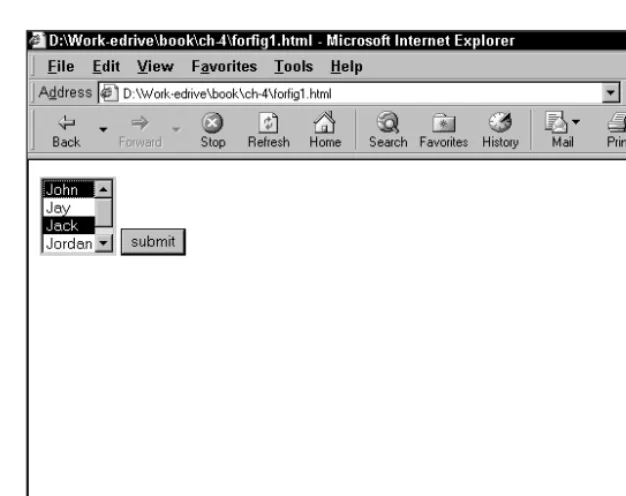
(34) 3537-4 FM.f.qc. 12/15/00. 15:31. Page xxxvii. Introduction The first time the create_entry.php page is called, the form in sign.php will be displayed. The next time, though, the data will be inserted into the database. Figures I-2 and I-3 show the pages that this script will create.. Figure I-2: create_entry.php the first time through. Figure I-3: create_entry.php after submission. xxxvii.
Figure

+7

Related documents
Annual Action Plan 7 14 Agency/Group/Organization Positively Living Agency/Group/Organization Type
na interpenetração de duas áreas lúdicas, do paciente e do analista. Se um dos dois não está podendo brincar, no sentido criativo do termo, há a necessidade que essa área
15 As shown in Fig.1–3, we have found that Smad4 negatively regulates expression of CCL15 in human CRC cell lines, and that loss of Smad4 promotes liver metastasis of CRC
The implementation of public key infrastructure (PKI) and secure cryptographic hash functions to sign the contractual documents and the messages communicated across the Internet
City Province Postal code Date seen (dd-mm-yyyy). –
Desain Pengaturan Level Pada Coupled Tank Process Dengan Menggunakan Metode Model Predictive Control
Persamaan dekopling didapat dari memasukkan nilai matriks transfer function Coupled Tank Plant yang telah didapatkan dari persamaan (6) sampai (9). Bentuk state -space
Treatment and Drugs Dosing Regimen Start Date End Date Patient response to treatment Past and Present (DD/MM/YYYY) (DD/MM/YYYY) (if discontinued, provide details
Format is YYYY/MM/DD 14 DELIST_DATE Character 10 bytes Delisting date Format is YYYY/MM/DD 15 SS_IND Character 1 byte. To indicate if a designated stock for short
