ABSTRACT
FRASCO, DANIEL ANTHONY. Synthesis and Characterization of Iridium Acetate Complexes for the Activation and Functionalization of C-H Bonds. (Under the direction of Elon A. Ison.)
This document will focus on the synthesis of iridium acetate complexes and their reactivity toward C-H bond activation and functionalization reactions. Cp*Ir complexes are well known for their ability to break C-H bonds, and acetate ligands have been shown to further facilitate this process. The ability to subsequently functionalize these activated C-H bonds is of great interest to the production of fuels, chemical feedstocks, and pharmaceuticals.
In Chapter 2 we examine the ability of Cp*Ir(III) complexes to catalyze the oxidative coupling of benzoic acids with alkynes to form isocoumarins. This reaction was successful using AgOAc as an oxidant at 60 °C in methanol after 24 h. Combined mechanistic and computational studies revealed H activation occured via an acetate-assisted mechanism, C-H activation was not turn-over limiting, and the oxidant oxidized the reduced form of the catalyst via an Ir(I)-Ir(II)-Ir(III) sequence.
In Chapter 3 Cp*Ir(Me2SO)(OAc)2 was shown to activate an ortho-C-H bond of
thiobenzoic acid in methanol at 100 ºC to form the novel iridium complex (Cp*Ir(S(O)CC6H4))2. This complexwas found to react with CO as well as the electrophilic
methyl reagents methyl iodide and methyl triflate to form new iridium species. Attempts at insertion reactions with olefins and alkynes with (Cp*Ir(S(O)CC6H4))2 were not successful.
assisted mechanism. Studies revealed a weakly coordinating ligand like DMSO was needed to facilitate activation, and electron donating carboxylates ligands increased reactivity. Activation of a second equivalent of benzene was also observed under more forcing conditions by heating Cp*Ir(Me2SO)(OAc)2 to form Cp*Ir(Me2SO)(Ph)2.
Cp*Ir(Me2SO)(Ph)2was examined in Chapter 5 and was found to produce biphenyl
using oxygen as an oxidant. AgTFA was also an effective oxidant to produce biphenyl and quantitatively regenerated an Ir(III) carboxylate complex at the end of the reaction. The regeneration of an active iridium complex can potentially lead to the development of a system for catalytic biphenyl formation.
We showed the ability of Cp*Ir(Me2SO)(OAc)2 to activate a C-H bond in furan and
2-methylfuran to form Cp*Ir(Me2SO)(furyl)2 and Cp*Ir(Me2SO)(2-methylfuryl)2
respectively in Chapter 6. We investigated Cp*Ir(Me2SO)(2-methylfuryl)2 for its ability to
facilitate C-C bond forming reactions with the activated 2-methylfuran, but no successful catalytic systems were developed.
In Chapter 7 the complexes Cp*Ir(Me2SO)(Me)(OAc), Cp*Ir(Me2SO)(Me)(TFA),
and Cp*Ir(allyl)(OAc) were synthesized, but were found to be ineffective toward intramolecular C-O bond forming reductive elimination. The catalytic acetoxylation of benzene was studied but only marginal turnovers were accomplished.
In Chapter 8 Cp*Ir(Me2SO)(OAc)2 was found to catalyze the oxidation of
cyclooctane to cyclooctyl acetate by heating cyclooctane to 100 °C with PhI(OAc)2 as the
through an acid catalyzed reaction with the acetic acid solvent. Investigations of the oxidant in the reaction revealed the likely active oxidant was PhIO which can form from PhI(OAc)2
reacting with H2O. Similar to previously reported work, the active catalyst was likely an IrIV
Synthesis and Characterization of Iridium Acetate Complexes for the Activation and Functionalization of C-H Bonds
by Daniel Anthony Frasco
A dissertation submitted to the Graduate Faculty of North Carolina State University
in partial fulfillment of the requirements for the Degree of
Doctor of Philosophy
Chemistry
Raleigh, North Carolina 2015
APPROVED BY:
_______________________________ _______________________________
Dr. Elon A. Ison Dr. Reza A. Ghiladi
Committee Chair
BIOGRAPHY
TABLE OF CONTENTS
LIST OF TABLES ... ix
LIST OF TABLES ... xi
CHAPTER 1 GENERAL INTRODUCTION ...1
1.1 Background ...2
1.2 References ...9
CHAPTER 2 Cp*Ir(III)-CATALYZED OXIDATIVE COUPLING OF BENZOIC ACIDS WITH ALKYNES ...12
2.1 Abstract ...13
2.2 Introduction ...13
2.3 Results and Discussion ...15
2.3.1 Reaction Optimization and Substrate Scope ...15
2.3.2 Mechanistic Analysis ...20
2.3.3 Computational Mechanistic Analysis ...32
2.5 Experimental ...45
2.6 References ...65
CHAPTER 3 ORTHO-C-H ACTIVATION OF THIOBENZOIC ACID: SYNTHESIS, CHARACTERIZATION AND REACTIVITY OF IRIDIUM THIOBENZOATE COMPLEXES ...70
3.1 Abstract ...71
3.2 Introduction ...71
3.3 Results and Discussion ...74
3.3.1 C-H Activation of Thiobenzoic Acid ...74
3.3.2 Reactions with Alkynes and Olefins ...76
3.3.3 Reactions with Electrophiles...78
3.3.4 Attempts at Reductive Elimination with 11 ...83
3.4 Conclusions ...84
3.5 Experimental ...85
3.6 References ...91
4.1 Abstract ...95
4.2 Introduction ...95
4.3 Results and Discussion ...97
4.3.1 C-H Activation of Benzene to Form Cp*Ir(L)(Ph)(OAc) Complexes ...97
4.3.2 Kinetic Experiments Examining the C-H Activation of Benzene with 3 ...103
4.3.3 Computational Studies Examining the Mechanism of Benzene C-H Activation ...110
4.3.4 Determining the Ancillary Ligand Effect on Benzene Activation ...115
4.3.5 Determining the Effect on Carboxylate Ligand on Benzene Activation ...120
4.3.6 Determining the Effect of Benzene Functional Group on C-H Activation ...126
4.3.7 The Activation of Two Equivalents of Benzene to Form 15 ...133
4.4 Conclusions ...137
4.5 Experimental ...138
4.6 References ...149
CHAPTER 5 REDUCTIVE ELIMINATION FROM Cp*Ir(L)(Ph)2 COMPLEXES TO FORM BIPHENYL ...155
5.1 Abstract ...156
5.3.1 Reductive Elimination of Biphenyl From 15 In Air ...158
5.3.2 Effect of the Ancillary Ligand on the Reductive Elimination of Biphenyl From Cp*Ir(L)(Ph)2 ...161
5.3.3 Kinetic Studies Examining Biphenyl Formation In Air ...164
5.3.4 Reductive Elimination of Biphenyl from 15 In Oxygen ...169
5.3.5 Kinetic Studies Examining Biphenyl Formation In Oxygen ...172
5.3.6 Reductive Elimination of Biphenyl From 15 Using Other Oxidants ...177
5.3.7 Stoichiometric Biphenyl Formation From 3 ...184
5.4 Conclusions ...186
5.5 Experimental ...187
5.6 References ...189
CHAPTER 6 SYNTHESIS AND REACTIVITY OF Cp*Ir(III) FURAN COMPLEXES TOWARD C-C FUNCTIONALIZATION REACTIONS ...192
6.1 Abstract ...193
6.2 Introduction ...193
6.3 Results and Discussion ...195
6.3.1 Synthesis and Characterization of Cp*Ir(III) Furyl Complexes ...195
6.3.4 Reductive Elimination of Bifuran From 29 ...199
6.4 Conclusions ...205
6.5 Experimental ...206
6.6 References ...209
CHAPTER 7 SYNTHESIS AND REACTIVITY OF Cp*Ir(III) COMPLEXES FOR INTRAMOLECULAR C-O BOND FORMING REDUCTIVE ELIMINATION ...212
7.1 Abstract ...213
7.2 Introduction ...213
7.3 Results and Discussion ...215
7.3.1 Synthesis and Reactivity of Cp*Ir(Me2SO)(Me)(X) Complexes ...215
7.3.2 Synthesis and Reactivity of Cp*Ir(allyl)(OAc) ...218
7.3.3 Acetoxylation of Benzene with Cp*Ir Complexes ...221
7.4 Conclusions ...224
7.5 Experimental ...224
CHAPTER 8
THE ACETOXYLATION OF CYCLOOCTANE TO FORM CYCLOOCTYL ACETATE
WITH Cp*Ir PRECATALYSTS ...230
8.1 Abstract ...231
8.2 Introduction ...231
8.3 Results and Discussion ...234
8.3.1 Reaction Optimization for the Acetozylation of Cyclooctane ...234
8.3.2 Time Profile Kinetic Plot of Cyclooctane Acetoxylation ...239
8.3.3 Experimental Studies Toward Cyclooctanol Intermediate Formation ...240
8.3.4 Examination of Oxidant Stability and Determination of the Active Oxidant ...244
8.3.5 Experimental Studies to Determine the Active Catalyst for Cyclooctane Hydroxylation ...249
8.4 Conclusions ...258
8.5 Experimental ...259
LIST OF TABLES
Table 2.1 Optimization of the reaction conditions ...16
Table 2.2 Stoichiometric reactions of 4a with diphenylacetylene and a variety of additives ...29
Table 4.1 Activation of benzene by complex 3 ...98
Table 4.2 Effect of reaction atmosphere on benzene activation ...99
Table 4.3 Effect of the ancillary ligand on the C-H activation of benzene ...119
Table 4.4 Comparison of the bond lengths of complexes 22, 3 and 23 ...123
Table 4.5 Examination of the effect of carboxylate ligand on C-H activation ...124
Table 5.1 Reductive elimination of biphenyl by Complex 15 ...159
Table 5.2 Elimination of biphenyl by 15 with deuterated benzene ...160
Table 5.3 Reductive elimination of biphenyl with various concentrations of 15 ...161
Table 5.4 Reductive elimination of biphenyl from 15, 25 or 26 ...163
Table 5.5 Elimination of biphenyl from 15 with added DMSO ...164
Table 5.6 Elimination of biphenyl from 15 in various solvents...165
Table 5.7 Reductive elimination of biphenyl from 15 in O2 atmosphere ...170
Table 5.8 Elimination of biphenyl from 15 with different oxidants ...178
Table 5.10 Elimination of biphenyl from 15 with AgTFA as an oxidant ...181
Table 5.11 Elimination of biphenyl from 15 with AgTFA and NaOAc ...183
Table 5.12 Formation of biphenyl from complex 3 ...185
Table 6.1 Reductive elimination of 30 from complex 29 ...201
Table 6.2 Reductive elimination of 30 in acetonitrile under different atmospheres ...202
Table 6.3 Reductive elimination of 30 with silver oxidants ...204
Table 7.1 Iridium catalyzed phenyl acetate formation ...223
Table 8.1 Acetoxylation of cyclooctane control reactions ...235
Table 8.2 Acetoxylation of cyclooctane with various oxidants ...237
LIST OF FIGURES
Figure 1.1 U.S. petroleum and natural gas production ...3
Figure 1.2 Pathways to fuel and chemical production ...4
Figure 2.1 X-ray crystal structure of 3 ...22
Figure 2.2 X-ray crystal structure of 4e ...25
Figure 2.3 X-ray crystal structure of 4f ...25
Figure 2.4 1H NMR spectrum for the reaction of 4-octyne with 4a at 60 °C ...27
Figure 2.5 The HMBC spectrum for the intermediate in the reaction of 4-octyne with 4a at 60 °C from 51 ppm – 101 ppm ...28
Figure 2.6 Structure for TS-1 ...34
Figure 2.7 Space filled diagrams for TS-4 ...38
Figure 2.8 X-ray crystal structure of Cp*Ir(Me2SO)(O2CCF3)2 22 ...61
Figure 3.1 X-ray crystal structure of 9 ...76
Figure 3.2 X-ray crystal structure of 10 ...78
Figure 3.3 X-ray crystal structure of 11 ...80
Figure 3.4 X-ray crystal structure of 12 ...82
Figure 4.1 1H NMR spectrum of 14 ... 101
Figure 4.3 Comparison of the IR spectra of 14 and 16 ... 103
Figure 4.4 Time profile plot of concentration of 14 vs time ... 104
Figure 4.5 Plot of concentration of 14 vs time using different concentrations of 3 ... 105
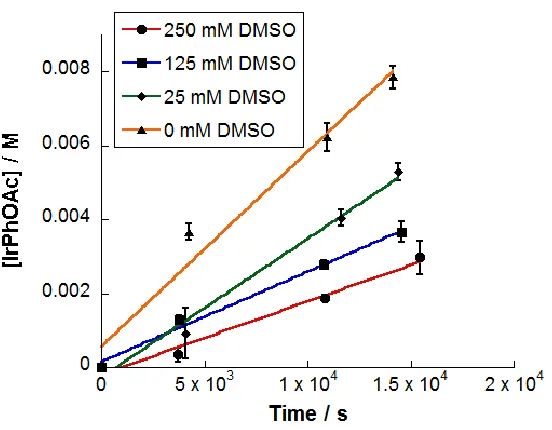
Figure 4.6 Plot of concentration of 14 vs time using different concentrations of DMSO ...106
Figure 4.7 Plot of concentration of 14 vs time using different concentrations of Et3N .106 Figure 4.8 Plot of log(initial rate) vs log([Ir]) ...107
Figure 4.9 Plot of log(initial rate) vs log(DMSO) ...108
Figure 4.10 Plot of log(initial rate) vs log(base) ...108
Figure 4.11 Plot of concentration of 14 vs time using benzene or benzene-d6 ...109
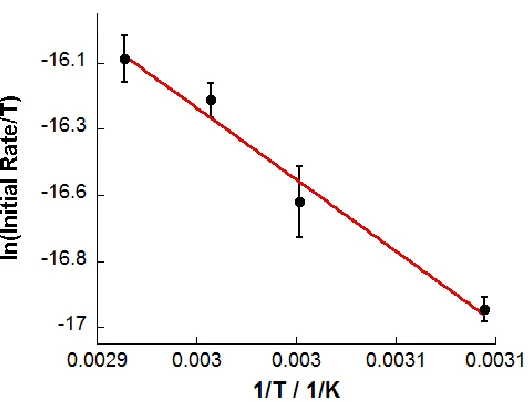
Figure 4.12 Eyring plot of ln(initial rate/T) vs 1/T ...110
Figure 4.13 σ-bond metathesis pathway ...111
Figure 4.14 Oxidative addition pathway ...112
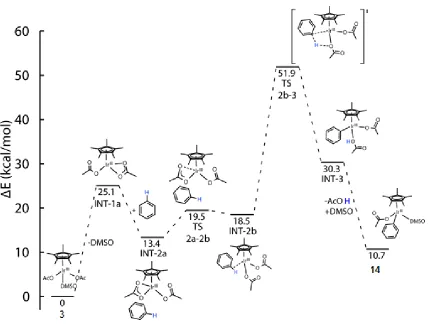
Figure 4.15 Acetate-assisted pathway ...113
Figure 4.16 Transition states of the rate determining step of the three mechanisms ...114
Figure 4.17 X-ray crystal structure of 17 ...116
Figure 4.18 C-H activation pathway with different ancillary ligands ...120
Figure 4.19 X-ray crystal structure of 23 ...122
Figure 4.21 Relative free energy for intermediates and transition states of the
acetate-assisted C-H activation pathway with different carboxylate bases ...126
Figure 4.22 The enthalpy of activation (ΔΔH‡) for the acetate-assisted pathway vs the Hammett parameter of substituent Y in para-functionalized benzene ...128
Figure 4.23 Relative free energy for intermediates and transition states of the acetate-assisted C-H activation pathway with substituted arenes ...129
Figure 4.24 The structure of TS 2a-3 in the acetate-assisted pathway ...130
Figure 4.25 Plot of bond lengths from TS 2a-3 vs σ + ...131
Figure 4.26 X-ray crystal structure of 15 ...134
Figure 4.27 Relative free energy for activation of two benzene molecules. ...136
Figure 5.1 Plot of concentration of 15 and biphenyl vs time in benzene ...166
Figure 5.2 Plot of concentration of 15 and biphenyl vs time in acetonitrile ...167
Figure 5.3 Plot of concentration of biphenyl vs time at different temperatures ...168
Figure 5.4 Eyring plot of ln(kobs/T) vs 1/T ...169
Figure 5.5 Plot of concentration of biphenyl vs time in air or oxygen atmosphere ...172
Figure 5.6 Plot of concentration of biphenyl vs time at various iridium concentrations 173 Figure 5.7 Plot of log(initial rate) vs log([Ir]) ...174
Figure 5.8 Plot of concentration of biphenyl vs time at various oxygen pressures ...175
Figure 6.1 1H NMR spectrum of 28 ...196
Figure 6.2 X-ray crystal structure of 29 ...198
Figure 7.1 1H NMR spectrum of 32 ...216
Figure 7.2 X-ray crystal structure of 32 ...217
Figure 7.3 1H NMR spectrum of 35 ...220
Figure 8.1 Yield of cyclooctyl acetate with different Cp*Ir complexes ...238
Figure 8.2 Plot of cyclooctyl acetate vs time ...239
Figure 8.3 Plot of yield of cyclooctyl acetate 36 and cyclooctanol 38 vs time ...241
Figure 8.4 Plot of yield of cyclooctyl acetate 36 and cyclooctanol 38 vs time with and without acetic anhydride ...243
Figure 8.5 Plot of concentration of 36 vs time with added oxidant ...245
Figure 8.6 Yield of 36 with various hypervalent iodine oxidants ...246
Figure 8.7 Plot of yield of 36 vs equivalents of water ...247
Figure 8.8 1H NMR spectra of 3 with oxidants. ...251
Figure 8.9 1H NMR spectra of 3 and 1.16 equiv of PhI(OAc)2 in acetic acid d4. ...253
Figure 8.10 UV-vis of 3 and 25 equiv of PhIO in acetic acid after 5 min at 100 °C and of 3 in acetic acid ...254
CHAPTER 1
1.1 Background
Organometallic chemistry is the field at the interface of inorganic and organic chemistry. It involves the interaction of a metal center and an organic ligand to generate an organometallic complex. While early examples of organometallic complexes were generated with s- and p-block elements like Li, Mg, and Al, new developments throughout the 20th century incorporated transition metals into organometallic complexes. Transition metal complexes often have partially filled d-orbitals, which enable ligands to coordinate to them and impart new properties that determine the complex’s reactivity. Many transition metal
complexes have shown enhanced selectivity and new reaction pathways previously inaccessible by organic or main group organometallic methods. In addition, many of these complexes were advantageous in that they acted as catalysts, which enabled them to be used in substoichiometric quantities.1
petroleum as well as to exploit the increased availability of natural gas would be advantageous.
Figure 1.1. U.S. petroleum and natural gas production.
through the use of homogeneous catalysts to produce useful chemicals and natural products which limit the drawbacks found in the current methods.
Homogeneous catalysts are a promising option for generating useful chemicals from carbon feedstocks, as they have been shown to catalyze reactions with outstanding selectivity. Homogeneous catalysts are soluble in solution, which makes them easier to study experimentally using spectroscopic methods. Details about catalytic processes employing homogeneous catalysts can be obtained, which can then be applied to developing industrial scale homogeneous catalysts or new, more efficient industrial heterogeneous catalysts.1
The simplest hydrocarbon is methane, which is currently obtained from the earth as natural gas. One of the main disadvantages with methane as a bulk fuel source is the difficulty associated with its transportation. It would be desirable to transform methane into methanol, which is a liquid and easily transported (Figure 1.2). Methanol has the ability to be used as an alternative liquid fuel source, either by itself or blended with gasoline. In addition to this, methanol is much more useful as a starting material in the synthesis of bulk chemicals than methane. Notable examples of the conversion of methanol into useful chemicals include the Monsanto acetic acid process, the formation of methyl acetate, and the Tennessee Eastman acetic anhydride process.2-4 Synthesis gas, which is a mixture of carbon monoxide and hydrogen gas, is curently the major route for the production of methanol (Figure 1.2). A far more favorable reaction would be the direct oxidation of methane to methanol. To this end, the cleavage of alkane C-H bonds with transition metal catalysts and the subsequent oxidation of those bonds is of great interest.
The oxidation of methane to methanol was first observed by Shilov and co-workers in 1972 using a platinum catalyst (Scheme 1.1). Unfortunately, there were a number of drawbacks to this reaction. In order to regenerate the platinum catalyst, a stoichiometric amount of Pt(IV) as an oxidant was required, which would limit any possible industrial application. The alcohol product generated was also more reactive with the starting platinum catalyst than the alkane, which limited catalytic turnover. Finally, the reaction occurred under harsh acidic conditions.56,7
In addition to Shilov’s work, Periana developed two different systems for methane
acidic conditions and the methanol derivative generated was stabilized from further oxidation. 5,8-10
Scheme 1.1. Shilov’s cycle.
A number of advances have been made in C-H activation using iridium in the last two decades.11-14 The first observation of oxidative addition of a C-H bond from a saturated hydrocarbon was reported by Bergman in 1982 using a Cp*Ir dihydride complex. Since then, a number of C-H activation reactions with hydrocarbons have been reported using iridium.
5,10,15-17
H/D exchange of benzoic acid in deuterated methanol and toluene with (Cp*IrCl2)2 indicated
the addition sodium acetate increased deuterium incorporation into the aromatic ring in either solvent.19 In previous C-H activation studies with (Cp*IrCl2)2 and an acetate source by Jones
et al., it was proposed that the active catalyst was an iridium acetate complex.20 Furthermore, studies of these systems indicated the C-H activation was facilitated by an acetate-assisted type mechanism.21-24
With the ability of acetate complexes to facilitate C-H activation and other reactions, we desired to synthesize a variety of Cp*Ir(III) acetate complexes to examine their reactivity toward activation and functionalization of aliphatic and aromatic substrates. A stable Cp*Ir(III) acetate complex was synthesized is Chapter 2, and this complex was found to be the active species in the catalysis of isocoumarins from the coupling of benzoic acids and alkynes. This reaction highlights the importance of the acetate ligands in C-H activation as no reaction occurred between iridium and benzoic acid in the absence of acetate. Notably, experimental and computational studies revealed alkyne insertion and not C-H activation was the rate-limiting step of the reaction.
In Chapter 3, C-H activation and functionalization reactions with Cp*Ir(Me2SO)(OAc)2 and thiobenzoic acid, the sulfur analogue of benzoic acid was
Chapter 4 examines the ability of iridium acetate complexes to C-H activate benzene. This project was a collaboration including both experimental and computational work. Cp*Ir(Me2SO)(OAc)2 was shown to C-H activate benzene to form an iridium phenyl
complex. Further studies indicated a labile ancillary ligand and electron donating carboxylate ligands were required for benzene activation. Increasing the temperature of the reaction resulted in the activation of a second equivalent of benzene to generate Cp*Ir(Me2SO)(Ph)2.
In Chapter 5, Cp*Ir(Me2SO)(Ph)2 is shown to be effective in the reductive elimination
of biphenyl. This reaction, using O2 as an oxidant, gave high stoichiometric yields of
biphenyl. Further studies revealed that reductive elimination likely occurred through a mechanism where oxygen first oxidized Ir(III) to Ir(V) which was the active species. Other oxidants were also effective in facilitating biphenyl formation. AgTFA was found to not only give the highest yields of biphenyl, but also regenerate a stable Ir(III) complex. This reaction in the presence of NaOAc resulted in ligand exchange to reform an iridium acetate complex which could potentially restart the catalytic cycle.
The applicability of furans as substrates toward C-H activation and subsequent functionalization reactions with Cp*Ir(Me2SO)(OAc)2 is examined in Chapter 6. Furan and
2-methylfuran could be activated to form Cp*Ir(III) difuran complexes at 25 °C over 1 h. It was proposed that these complexes could possibly be intermediates in catalytic furan functionalization reactions. The ability of iridium acetate complexes to facilitate new catalytic C-C bond forming functionalization reactions of furans was also explored.
bonds by coupling the acetate ligand with the alkyl or aryl ligand by reductive elimination. Although a number of new complexes were successfully synthesized, they were not effective in C-O bond forming reactions.
The final chapter of this work examines the use of Cp*Ir acetate pre-catalysts along with the oxidant PhI(OAc)2 to facilitate alkane oxidation reactions. Specifically, the
acetoxylation of cyclooctane to cyclooctyl acetate was achieved in acetic acid solvent at 100 °C over 24 h. Further studies revealed the hydroxylation of cyclooctane to cyclooctanol was the iridium catalyzed reaction and acetoxylation was mediated by the acid solvent. Examination of the active catalyst for the reaction revealed a blue Ir(IV) bridging oxo dimer species containing acetate ligands was likely facilitating catalysis.
1.2 References
(1) Crabtree, R. H. The Organometallic Chemistry of the Transition Metals; 5th ed.; Wiley: Hoboken, N.J., 2009.
(2) Keim, W. Pure and Appl. Chem. 1986, 58, 825. (3) Olah, G. A. Angew Chem Int Ed Engl 2005, 44, 2636.
(4) Olah, G. A.; Goeppert, A.; Prakash, G. K. S. Beyond Oil and Gas : The Methanol Economy; 2nd.; Wiley-VCH: Weinheim, 2009.
(5) Stahl, S. S.; Labinger, J. A.; Bercaw, J. E. Angew. Chem., Int. Ed. 1998, 37, 2181. (6) Goldshle.Nf; Tyabin, M. B.; Shilov, A. E.; Shteinma.Aa Russ. J. Phys. Chem. 1969,
(7) Goldshle.Nf; Shteinma.Aa; Shilov, A. E.; Eskova, V. V. Russ. J. Phys. Chem. 1972, 46, 785.
(8) Periana, R. A.; Taube, D. J.; Evitt, E. R.; Loffler, D. G.; Wentrcek, P. R.; Voss, G.; Masuda, T. Science 1993, 259, 340.
(9) Periana, R. A.; Taube, D. J.; Gamble, S.; Taube, H.; Satoh, T.; Fujii, H. Science 1998, 280, 560.
(10) Hartwig, J. F. Organotransition Metal Chemistr:From Bonding to Catalysis; University Science Books: Sausalito, Calif., 2010.
(11) Wax, M. J.; Stryker, J. M.; Buchanan, J. M.; Kovac, C. A.; Bergman, R. G. J. Am. Chem. Soc.1984, 106, 1121.
(12) Arndtsen, B. A.; Bergman, R. G. Science 1995, 270, 1970.
(13) Corberan, R.; Sanau, M.; Peris, E. Organometallics 2006, 25, 4002. (14) Corberan, R.; Sanau, M.; Peris, E. J. Am. Chem. Soc. 2006, 128, 3974. (15) Janowicz, A. H.; Bergman, R. G. J. Am. Chem. Soc. 1982, 104, 352. (16) Janowicz, A. H.; Bergman, R. G. J. Am. Chem. Soc. 1983, 105, 3929. (17) Alaimo, P. J.; Bergman, R. G. Organometallics 1999, 18, 2707.
(18) Feng, Y.; Jiang, B.; Boyle, P. A.; Ison, E. A. Organometallics 2010, 29, 2857. (19) Engelman, K. L.; Feng, Y. E.; Ison, E. A. Organometallics 2011, 30, 4572. (20) Li, L.; Brennessel, W. W.; Jones, W. D. Organometallics 2009, 28, 3492.
(22) Davies, D. L.; Al-Duaij, O.; Fawcett, J.; Giardiello, M.; Hilton, S. T.; Russell, D. R. Dalton Trans. 2003, 4132.
(23) Davies, D. L.; Donald, S. M. A.; Macgregor, S. A. J. Am. Chem. Soc. 2005, 127, 13754.
CHAPTER 2
Cp*Ir(III)-CATALYZED OXIDATIVE COUPLING OF BENZOIC
ACIDS WITH ALKYNES
Portions of this chapter were published in ACS Catalysis
Frasco, D.A.*; Lilly, C.P*; Boyle, P. D.; Ison, E. A. ACS Catal., 2013, 3(10), 2421-2429 * Frasco, D.A. performed all experimental work and Lilly, C.P. obtained all
computational data.
2.1 Abstract
Cp*Ir(III) complexes have been shown to catalyze the oxidative coupling of benzoic acids with alkynes in methanol at 60 ºC to form a variety of isocoumarins. The use of AgOAc as an oxidant was required to facilitate significant product formation. Alkyl alkynes were shown to be more reactive substrates than aryl alkynes, and a number of functional groups were tolerated on benzoic acid. Combined mechanistic and computational studies (BP86) revealed that: 1) C-H activation occurs via an acetate-assisted mechanism; 2) C-H activation is not turn-over limiting and 3) The oxidant oxidizes the reduced form of the catalyst via an Ir(I)-Ir(II)-Ir(III) sequence.
2.2 Introduction
In recent years there has been significant interest in the transition-metal catalyzed oxidative annulations14–17 of alkynes with carboxylic acids. For example, Ackermann and coworkers have recently shown that cationic ruthenium(II) catalysts enabled the synthesis of isocoumarins through the oxidative coupling of alkynes with benzoic acids.14 In addition, Jeganmohan and coworkers reported high regioselectivity for the oxidative cyclization of aromatic acids with alkynes in the presence of catalytic amounts of cationic ruthenium(II) catalysts to provide highly substituted isocoumarin derivatives.18
In addition to catalysis with ruthenium(II) complexes,19–35 Miura, Satoh and coworkers have pioneered catalysis with rhodium and iridium.36–40 For example, it was demonstrated that rhodium(III) catalysts in the presence of copper salts were effective in the oxidative annulation of alkynes with benzoic acids. Interestingly, when iridium(III) catalysts were used in the presence of silver salts for the same reaction, the desired isocoumarins were not formed. Instead, the oxidative annulation reaction lead to the formation of substituted napthalenes.41 In previous work from our lab, we showed that Cp*IrIII complexes were capable of catalytic C-H activation of benzoic acid via H/D exchange studies, and that these catalysts were also capable of functionalization, as benzoquinone insertion resulted in the formation of benzochromenones.42
complexes that are more stable than their 1st and 2nd row analogues allows for the isolation or identification of species that may be important intermediates in the catalytic cycle.
In this work, we report conditions for the iridium-catalyzed synthesis of isocoumarins from benzoic acids and alkynes. In addition, we investigate the mechanism for the reaction. As a result of this study, we have addressed questions that remain in the transition-metal catalyzed annulation of alkynes with benzoic acids. Specifically, we address: (1) what is the mechanism for the C-H activation step in these reactions? (2) What is the turnover-limiting step for these reactions, C-H activation or C-H functionalization and, (3) what is the role of the external oxidant in these reactions? Our mechanistic insight should aid in the development of appropriate catalysts for the annulation of alkynes with benzoic acids, and, more broadly, for catalytic C-H functionalization reactions.
2.3 Results and Discussion
2.3.1 Reaction Optimization and Substrate Scope
Previously, Miura and Satoh reported that the iridium catalyzed annulation of alkynes with benzoic acids resulted in the formation of substituted napthalenes, instead of isocoumarins, that were observed with the analogous rhodium catalysts.41,50 However, we have been able to discover conditions for the successful formation of isocoumarins (vide infra).
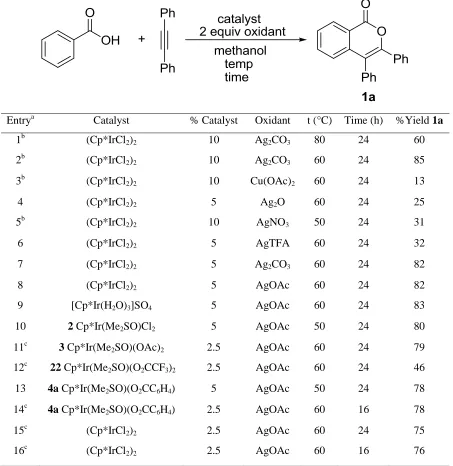
Table 2.1. Optimization of the reaction conditions.
Entrya Catalyst % Catalyst Oxidant t (°C) Time (h) %Yield 1a
1b (Cp*IrCl2)2 10 Ag2CO3 80 24 60
2b (Cp*IrCl2)2 10 Ag2CO3 60 24 85
3b (Cp*IrCl2)2 10 Cu(OAc)2 60 24 13
4 (Cp*IrCl2)2 5 Ag2O 60 24 25
5b (Cp*IrCl2)2 10 AgNO3 50 24 31
6 (Cp*IrCl2)2 5 AgTFA 60 24 32
7 (Cp*IrCl2)2 5 Ag2CO3 60 24 82
8 (Cp*IrCl2)2 5 AgOAc 60 24 82
9 [Cp*Ir(H2O)3]SO4 5 AgOAc 60 24 83
10 2 Cp*Ir(Me2SO)Cl2 5 AgOAc 50 24 80
11c 3 Cp*Ir(Me2SO)(OAc)2 2.5 AgOAc 60 24 79
12c 22 Cp*Ir(Me2SO)(O2CCF3)2 2.5 AgOAc 60 24 46
13 4a Cp*Ir(Me2SO)(O2CC6H4) 5 AgOAc 50 24 78
14c 4a Cp*Ir(Me2SO)(O2CC6H4) 2.5 AgOAc 60 16 78
15c (Cp*IrCl2)2 2.5 AgOAc 60 24 75
16c (Cp*IrCl2)2 2.5 AgOAc 60 16 76
a
A variety of oxidants were investigated for their compatibility in this reaction including AgOAc, Cu(OAc)2, AgNO3, Ag2O, AgTFA, and Ag2CO3. AgOAc was found to be
the most effective oxidant. Other Ir(III) catalysts were examined for this reaction and most exhibited similar reactivity to (Cp*IrCl2)2 (Table 2.1).
The optimal reaction conditions for the synthesis of 1a were utilized for a variety of alkynes with the exception that the reaction time was increased to 24 h to maximize conversion. The isolated yields for a number of isocoumarins using aryl-alkynes as substrates are reported in Scheme 2.1. Substrates with substituents in the para position of benzoic acid, as well the para position of diphenylacetylene are tolerated in this reaction.
Scheme 2.1. Synthesis of isocoumarins from aryl alkynes.
When alkyl-alkynes were used instead of the more sterically hindered aryl-alkynes yields significantly increased (Scheme 2.2). Like the reactions with aryl alkynes, electron withdrawing and electron donating groups are also tolerated in this reaction. Benzoic acids with methyl groups at the meta and ortho-positions were also effective (1q-1r).
Scheme 2.3. Synthesis of isocoumarins with unsymmetrical alkynes.
2.3.2 Mechanistic Analysis
Although the coupling of benzoic acids with alkynes to form isocoumarins has been examined with other transition metals, little work has been done to understand the mechanism. To simplify mechanistic studies, Cp*Ir(Me2SO)Cl2, 2, was synthesized as
Scheme 2.4. Synthesis of complexes 2 and 3.
Treatment of 2 with AgOAc in dry benzene for 2 h afforded the bis-acetate complex Cp*Ir(Me2SO)(OAc)2, 3 (Scheme 2.4). The 1H NMR of 3 revealed the DMSO signal
resonated 2.64 ppm, the acetate signal resonated at 1.98 ppm and the Cp* signal was observed at 1.66 ppm.
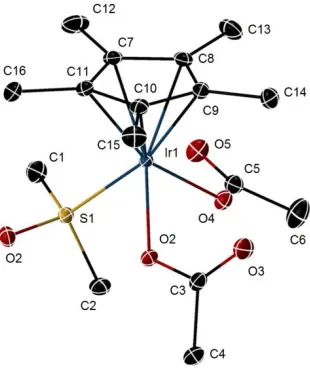
Figure 2.1. X-ray crystal structure of 3. Ellipsoids are at the 50% probability level. Hydrogen
atoms were omitted for clarity. Selected bond lengths (Å) and angles (deg). Ir1-O2, 2.098 (12); Ir1-O4, 2.089 (11); Ir1-S1, 2.332 (6); O2-C3, 1.298 (19); O4-C5, 1.287 (18); O3-C3, 1.224 (19); O5-C5, 1.231 (19); O4-Ir1-O2, 79.19 (4); C5-O4-Ir1, 123.53 (10); O5-C5-O4, 126.19 (14); O4-C5-O6, 112.86 (14).
Cp*Ir(Me2SO)(OAc-d3)2, 3’, the deuterated acetate analogue of 3 was also
synthesized using AgOAc-d3 as shown in Scheme 2.5. As expected, 3’ had identical signals
to 3 by 1H NMR spectroscopy but with the acetate signal missing. The 2H NMR spectrum of 3’ revealed a singlet resonating at 0.87 ppm corresponding to the deuterated methyl ligands from acetate.
Recently the mechanism for C-H activation for catalysts that contain acetate ligands has been proposed to proceed by an acetate-assisted mechanism.52–56 A similar mechanism may be proposed for the C-H activation step in this catalytic cycle (Scheme 2.6). In this mechanism, complex 3 reacts with benzoic acid through an acetate assisted C-H activation reaction to form an iridium metallacycle 4. Insertion of an alkyne into 4 results in metallacycle 6. Subsequently, oxidant-induced oxyfunctionalization results in the formation of the isocoumarin product. We have examined each of the steps in the proposed mechanism in detail.
1. C-H Activation. The stoichiometric reaction at room temperature of 3 with one equivalent benzoic acid for 24 h resulted in the formation of the cyclometalated benzoate complex, Cp*Ir(Me2SO)(O2CC6H4), 4a. Under conditions similar to the catalytic reaction,
(60 °C), complex 4a was formed in approximately one hour (Scheme 2.7).
When similar reactions were attempted with (Cp*IrCl2)2 and Cp*Ir(Me2SO)Cl2,2, no
reaction was observed. It is also worth noting that the formation of 4a from 3 was not reversible. In the presence of excess acetic acid (10 equiv), 4a was not converted to 3 at room temperature for 24 h.
Scheme 2.7. Reaction for the formation of 4.
analysis and X-ray crystallography. The representative crystal structures of 4e and 4f are shown in Figures 2.2 and 2.3.
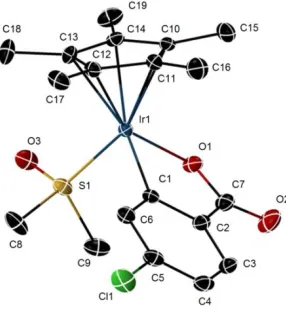
Figure 2.2. X-ray crystal structure of 4e. Ellipsoids are at the 50% probability level.
Hydrogen atoms were omitted for clarity. Selected bond lengths (Å) and angles (deg). Ir1-C1, 2.054 (2); Ir1-O1, 2.094 (14); Ir1-S1, 2.255 (6); O1-C7, 1.310 (3); O2-C7, 1.226 (2); C7-C2, 1.490 (3); C5-Cl1, 1.743 (2); C1-Ir1-O1, 79.07 (7); O1-C7-O2, 123.0 (2) Ir1-C1-C6, 128.44 (15); Ir1-C1-C2, 113.15 (14). O1-Ir1-S1, 90.12 (5); C1-Ir1-S1, 90.71 (6).
The facile formation of 4 from 3 at mild conditions and in high yields suggest that C-H activation is not turnover limiting for the catalytic reaction. Significantly, the formation of 4 is complete in 1 h. In contrast, the catalytic reactions require around 10-24 h for complete conversion. In addition, the observation that complexes lacking acetate ligands like 2 and (Cp*IrCl2)2, do not result in the formation of 4, strongly suggests that 3 or a related acetate
species formed in situ are important intermediates for the formation of isocoumarin, and that the acetate ligand is critical in promoting C-H activation.
2. Alkyne insertion step. The viability of 4a as an intermediate in the catalytic cycle was also investigated. When 4a was used as a catalyst, comparable reactivity to (Cp*IrCl2)2
was observed which suggests 4a is a catalytically competent species. As a result, catalyst 4a was used to study the insertion step in the catalytic cycle depicted in Scheme 2.6.
When 4a was treated with 4-octyne in the absence of AgOAc, for 2 h, four new peaks in the aromatic region were observed in the 1H NMR spectrum at 7.20 (dd, 1H), 6.92 (dd, 1H), 6.88 (ddd, 1H), and 6.63 ppm (ddd, 1H) (Figure 2.4b). After 24 hours, these resonances increased and the peaks for 4a decreased (Figure 2.4c). Small peaks corresponding to the final product 3,4-dipropylisocoumarin were also observed at 8.23 ppm, 7.83 ppm, 7.68 ppm, and 7.52 ppm.
We considered three possibilities for the identity of the intermediate observed in the reactions in Figure 2.4: the alkyne complex Cp*IrIII(C8H14)(O2CC6H4), 5l, with 4-octyne
replacing DMSO as the neutral ligand coordinated to the metal, Cp*IrIII(O2CC6H4C8H14), 6l,
where the alkyne inserted into the Ir-C bond in 4a, or Cp*IrI(O2CC6H4C8H14), 7l, where
noted that free DMSO was observed in the reaction of 4a with 4-octyne, which would indicate that DMSO was not bound to the metal in the intermediate.
Figure 2.4. 1H NMR spectrum (aromatic region) for the reaction of 4-octyne with 4a at 60 ºC: (a) 4a and octyne at rt; (b) 4a and octyne after heating at 60 ºC for 2 h; (c) 4a and 4-octyne after heating at 60 ºC for 24 h.
A variety of 2D NMR experiments were performed to determine the identity of the intermediate. If 6l or 7l were the intermediate, long range coupling between the C8 alkyne carbon with aromatic protons from the benzoate rings at C6 would be expected in an HMBC experiment. In contrast, long-range coupling between the alkyne carbons and the benzoate ring would not be expected in 5l as the proton on the benzoate ring is 4 bonds away.
In the HMBC spectrum from 51 ppm – 101 ppm long-range coupling was observed between the four new aromatic protons and the new quaternary carbons at 56.7 ppm, 67.5 ppm, and 87.0 ppm (Figure 2.5). The peak at 67.5 ppm was assigned as C8 because of its three bond coupling with the proton on C6 at 7.10 ppm. This coupling would rule out 5l as the observed intermediate.
3. Oxyfunctionalization. The effect of an oxidant in the stoichiometric insertion of an alkyne with 4a and subsequent oxyfunctionalization to form 1a was examined (Table 2.2). Minimal product formation was observed for the reaction of diphenylacetylene with 4a in the absence of an additive, (Entry 1). However, when two equivalents of AgOAc were added to the reaction, 1a was formed in 75% yield (Entry 2). Both sodium acetate and acetic acid were used as additives to determine the effect of the acetate anion in the absence of an oxidant (Entries 3-4). Neither of these produced a significant amount of 1a. The oxidants Ag2CO3
and Ag2O were also used and resulted in 54% and 16% yields respectively (Entries 5-6).
Table 2.2. Stoichiometric reactions of 4a with diphenylacetylene and a variety of additives.
Entry Additive % Yield 1a
1 None 5(1)
2 AgOAc 75(1)
3 NaOAc NDb
4 HOAc 12(1)
5 Ag2CO3 54(1)
6 Ag2O 16(3)
a
Reaction Conditions: 26 mg (0.05 mmol) of 4a, 9 mg (0.05 mmol) of diphenylacetylene, and (0.10 mmol) of an additive in 1 mL methanol under air, in triplicate. Errors are standard deviations of the mean. Percent yield determined by crude NMR versus an internal standard.
b
The data presented above suggest that an oxidant is required for significant product formation. The specific role of the oxidant in the insertion and reductive elimination steps was investigated with 4-octyne because the catalytic reaction proceeded at a faster rate (10 h as opposed to 24 h) with this alkyne, and the lack of aromatic protons allowed for simplification of the 1H NMR spectrum.
In a storage tube, 4a and 4-octyne were heated at 60 ºC for 4 h in methanol. The expected mixture of 4a and the previously observed intermediate was observed. Two equivalents of AgOAc were then added to this reaction mixture. An analysis after 1 h revealed that peaks for the intermediate were no longer present and peaks for 1l greatly increased (Scheme 2.9). The only other significant aromatic peaks remaining in the spectrum were from unreacted 4a.
When 4a and AgOAc were heated at 60 ºC for 4 h; no obvious intermediate was observed and it appeared that 4a remained unreacted. Upon addition of 4-octyne, the production of 1l was sluggish; after 1 hour, the aromatic region was primarily composed of unreacted 4a and a minimal amount of 1l (Scheme 2.9). When this reaction mixture was allowed to stir for 24 h, significant peaks for 1l were observed, but all components of the catalytic reaction were present under these conditions.
We propose that the intermediate observed in the absence of AgOAc is the Ir(I) complex, 7. The addition of AgOAc quickly regenerates the Ir(III) active catalyst and releases the isocoumarin product. The formation of 7 occurs slowly over time. However, once AgOAc is added, isocoumarin is quickly formed.
Recently, Huang and coworkers57 reported that an analogous Rh(I) intermediate was isolated in oxidative C—H activation/annulation reactions. Upon addition of an oxidant, the cyclometalated product was released and the active Rh(III) catalyst was regenerated.
2.3.3 Computational Mechanistic Analysis
DFT calculations (BP86) were conducted in order to elaborate on our experimental observations, as well as to address unanswered questions, such as the role of the oxidant in the catalytic cycle as described above. The proposed mechanism for isocoumarin formation was divided into 3 key steps: C-H activation, insertion, and oxyfunctionalization.
Scheme 2.10. DFT(BP86) computed pathways for C-H activation.
All energies are relative to Cp*Ir(OAc)2 + benzoic acid + DMSO + Ag2(OAc)2 which was set to 0.0 kcal/mol.
Values in parentheses are gas phase energies.
Oxidative addition of the C-H bond at the Ir center to form an Ir(V) hydride complex proceeds through TS-2 to INT-5 with an activation barrier of 27.2 kcal/mol. The reaction is endergonic overall (ΔGº = 25.6 kcal/mol). The high energy of this Ir(V) intermediate suggests that the oxidative addition pathway is unlikely.
displacement of the acetate ligand gives INT-2 (ΔGº = 15.6 kcal/mol). In this intermediate, the ortho-hydrogen atom on the benzoate ring interacts with the acetate ligand with a bond distance of 1.74 Å. Activation of the C-H bond occurs via TS-1 (ΔG‡ = 18.2 kcal/mol) whose structure and selected bond lengths are depicted in Figure 2.6. The bond lengths in TS-1 are similar to Ir(III) complexes that have been reported to operate by an acetate-assisted mechanism. For example, Ess and coworkers reported similar bond lengths for the transition state for acetate-assisted C-H activation with an (acac)2Ir(OAc) complex.62
Scheme 2.11. Equilibrium between 3 and 3.1.
Figure 2.6. Structure for TS-1. Selected bond lengths in Å.
Proton transfer to the acetate ligand results in INT-3 (ΔGº = 9.8 kcal/mol). This is followed by loss of acetic acid to produce INT-4 (ΔGº = 3.2 kcal/mol). These results suggest that the overall pathway for C-H activation via an acetate-assisted mechanism is
Scheme 2.13. Oxidative addition C-H activation pathway with coordinated DMSO.
Scheme 2.14. DFT(BP86) computed pathways for insertion.
All energies are relative to Cp*Ir(OAc)2 + benzoic acid + DMSO + Ag2(OAc)2 which was set to 0.0 kcal/mol.
Values in parentheses are gas phase energies.
Figure 2.7. Space filled diagrams for TS-4, the insertion of 2-butyne (left), 4-octyne (middle), and diphenylacetylene (right).
3. Oxyfunctionalization. A number of computational pathways were analyzed for the oxyfunctionalization step (Scheme 2.15). We first considered a mechanism where the Ir(III) complex 6 was first oxidized with two equivalents of AgOAc to the Ir(V) complex, INT-9. The direct oxidation with silver acetate to Ir(V) is extremely endergonic (ΔGº = 73.2 kcal/mol) and as a result, this pathway is unlikely to be valid. Other Ir(V) pathways were considered, but these pathways were also endergonic (Scheme 2.16). The stepwise oxidation from Ir(III) to Ir(IV) was also considered, but this also resulted in the unfavorable formation INT-10 (ΔGº = 35.6 kcal/mol). The cationic isomer of this complex was also calculated and found to be less stable than INT-10 (Scheme 2.17).
Scheme 5.15. DFT(BP86) computed pathways for oxyfunctionalization.
All energies are relative to Cp*Ir(OAc)2 + benzoic acid + DMSO + Ag2(OAc)2 which was set to 0.0 kcal/mol.
Scheme 2.16. a.) Pathway for oxidation from Ir(III) to Ir(V) with coordinated DMSO. b.) Pathway for oxidation from Ir(III) to Ir(V) without coordinated DMSO an acetate counter ion.
a)
Scheme 2.17. Oxidation of Ir(III) to Ir(IV) to form a cationic iridium complex.
Scheme 2.18. Oxidation from Ir(I) to Ir(III) to form a monocationic or dicationic complex.
Scheme 2.20. Reductive elimination pathway with coordinated DMSO.
The overall energy diagram for the catalytic reaction using benzoic acid and 2-butyne as a substrates is depicted in Scheme 2.21. The turnover-limiting step is the insertion of 2-butyne. This is consistent with experimental observations as bulkier aryl-alkynes were shown to result in lower yields of isocoumarins than the corresponding alkyl-alkynes after 24 h.
Scheme 2.21. Calculated (BP86) pathway for the catalytic formation of 1g.
All energies are relative to Cp*Ir(OAc)2 + benzoic acid + DMSO + Ag2(OAc)2 which was set
2.4 Conclusions
In this paper, we have found conditions for the successful synthesis of isocoumarins from alkynes and benzoic acids using Cp*IrIII catalysts. The reaction occurs at relatively mild conditions (60 ºC, 24 h in CH3OH), and requires AgOAc as an oxidant. We were able to
determine through a series of experimental and computational studies that: 1) C-H activation in this catalytic system most likely proceeds by an acetate-assisted mechanism, with the acetate ligand playing a critical role in cleaving the C-H bond in benzoic acid; 2) The turn over limiting step for the catalytic reaction is alkyne insertion and not C-H activation as proposed in some other systems14 and 3) Oxyfunctionalization in this catalytic system is facile and the oxidant regenerates the active catalyst to its active oxidation state Ir(III). Interestingly, the oxidant does this in a stepwise manner by first oxidizing Ir(I) to Ir(II) followed by the oxidation of Ir(II) to Ir(III).
2.5 Experimental
Computational Studies. Theoretical calculations have been carried out using the Gaussian0965 implementation of BP86 density functional theory.66 All calculations were conducted with the same basis set combination. The Stuttgart-Dresden (SDD) relativistic effective core potential (RECP) basis set was used for iridium.67,68 The LANL2DZ effective core basis set (ECP)69–71 was used for silver. The 6-31G(d,p) basis sets were used for all other atoms. Cartesian d functions were used throughout, i.e., there are six angular basis functions per d function. All structures were fully optimized and analytical frequency calculations were performed on all structures to ensure either a zeroth-order saddle point (a local minimum) or a first-order saddle point (transition state: TS) was achieved. The minima associated with each transition state was determined by animation of the imaginary frequency and, if necessary, with intrinsic reaction coordinate (IRC) calculations. Solvation energies were computed geometries optimized in the gas phase using the SMD method,72 with methanol as the solvent, as implemented in Gaussian 09. In this method an IEFPCM calculation is performed with radii and electrostatic terms from Truhlar and coworkers’ SMD solvation model.73 In this manuscript energies are reported in kcal/mol with gas phase energies in parentheses and solvation energies without parentheses. For the calculations with silver, Ag2(OAc)2 was used as a model for AgOAc.74 Ag was modeled as Ag2 by removing
the OAc ligands from Ag2(OAc)2. Ag2 is clearly not an accurate representation for elemental
Ag; as a result, the absolute values for ΔG°rxn for steps involving AgOAc are too high and
involving AgOAc, the error associated with this model is systematic; therefore the relative trends in the energies are accurate.
General Considerations. IrCl3·3H2O was purchased from Pressure Chemical Company.
(Cp*IrCl2)2,75 [Cp*Ir(H2O)3]SO4, and Cp*Ir(Me2SO)Cl251 2 were prepared as previously
reported. All other reagents were purchased from commercial sources and used as received. All reactions were performed under air and using non-dry solvents unless otherwise noted. Reactions involving oxidants were covered in tin foil. 1H and 13C spectra were obtained at room temperature on a Varian Mercury 400 MHz or a Varian Mercury 300 MHz spectrometer. Chemical shifts are listed in parts per million (ppm) and referenced to their residual protons or carbons of the deuterated solvents. 2D NMR analysis was done on a Bruker 500 MHz spectrometer. Gas Chromatography/Mass Spectrometry analysis was performed on a GC/MS HP-G1800A using an Agilent HP-5MS (30m x 0.25mm x 0.55μm) column. Infrared spectrums were obtained in KBr thin films on a JASCO FT/IR-4100 instrument. X-ray crystallography was performed at the X-ray Structural Facility of North Carolina State University by Dr. Paul Boyle. High resolution ESI mass spectrometry was performed at the North Carolina State University Mass Spectroscopy Facility using an Agilent 6210 LC-TOF. Column chromatography was performed with a silica gel column using Kiesel Gel 0.063-0.200mm (70-230) mesh ASTM.
0.015 mmol), and 200.5 mg of silver acetate (1.2 mmol) were placed in a 25 mL storage tube covered in foil with a stir bar and 8 mL of methanol. The storage tube was heated in an oil bath for 24 h with a bath temperature of 60°C. After cooling, the solution was filtered through celite with additional dichloromethane to prevent loss of product. The solvent was removed and the crude mixture was purified by column chromatography using silica gel (hexanes/ethyl acetate mixtures) and dried with Na2SO4 to yield 143.9 mg (80%) as a white
solid.
3,4-diphenylisocoumarin. 1a. The general reaction conditions were followed using 73.2 mg of benzoic acid (0.6 mmol), 108 mg of diphenylacetylene (0.6 mmol), 12 mg of (Cp*IrCl2)2
(2.5%, 0.015 mmol), and 200.5mg of silver acetate (1.2mmol.) The product was purified using silica gel (20/1-10/1 hexanes/ethyl acetate) to give 143.9 mg (80%) of the product as a white solid. 1H NMR δ = 8.40 (d, J = 7.5, Hz, 1H), 7.68-7.60 (m, 1H), 7.56-7.48 (m, 1H), 7.46-7.37 (m, 3H), 7.37-7.30 (m, 2H), 7.31-7.16 (m, 6H). 13C NMR: δ = 162.4 (Cq), 151.1
(Cq), 139.0 (Cq), 134.8 (CH), 134.5 (Cq), 133.1 (Cq), 131.5 (CH), 129.7 (CH), 129.4 (CH),
129.3 (CH), 129.2 (CH), 128.4 (CH), 128.3 (CH), 128.1 (CH), 125.6 (CH), 120.7 (Cq), 117.3
(Cq). IR (KBr): νCO 1733.7 cm-1.
6-methyl-3,4-diphenylisocoumarin. 1b. The general reaction conditions were followed using 82.0 mg of p-toluic acid (0.6 mmol), 108 mg of diphenylacetylene (0.6 mmol), 12 mg of (Cp*IrCl2)2 (2.5%, 0.015 mmol), and 200.5mg of silver acetate (1.2mmol.) The product
product as a white solid. 1H NMR: δ = 8.28 (d, J = 8.0 Hz, 1H), 7.44-7.37 (m, 3H), 7.34-7.28 (m, 3H), 7.27-7.13 (m, 5H), 2.35 (s, 3H). 13C NMR: δ = 162.5 (Cq), 151.2 (Cq), 146.0 (Cq),
139.1 (Cq), 134.7 (Cq), 133.3 (Cq), 131.5 (CH), 129.8 (CH), 129.7 (CH), 129.5 (CH), 129.3
(CH), 129.0 (CH), 128.3 (CH), 128.0 (CH), 125.5 (CH), 118.3 (Cq), 117.1 (Cq), 22.5 (CH3).
IR (KBr): νCO 1733.7 cm-1.
6-chloro-3,4-diphenylisocoumarin. 1c. The general reaction conditions were followed using 94.0 mg of 4-chlorobenzoic acid (0.6 mmol), 108.0 mg of diphenylacetylene(0.6 mmol), 12 mg of (Cp*IrCl2)2 (2.5%, 0.015 mmol), and 200.5mg of silver acetate (1.2mmol.) The
product was purified using silica gel (20/1 hexanes/ethyl acetate) and recrystallized to give 84 mg (42%) of the product as a yellow solid. 1H NMR: δ = 8.32 (d, J = 8.5 Hz, 1H), 7.48-7.41 (m, 4H), 7.34-7.31 (m, 2H), 7.26-7.15 (m, 6H). 13C NMR: δ = 161.7 (Cq), 152.5 (Cq),
141.8 (Cq), 140.6 (Cq), 133.8 (Cq), 132.7 (Cq), 131.5 (CH), 131.3 (CH), 129.6 (CH), 129.5
(CH), 129.4 (CH), 128.8 (CH), 128.7 (CH), 128.1 (CH), 125.2 (CH), 118.9 (Cq), 116.3 (Cq).
IR (KBr): νCO 1733.7 cm-1.
6-tert-butyl-3,4-diphenylisocoumarin. 1d. The general reaction conditions were followed using 107.0 mg of 4-tert-butylbenzoic acid (0.6 mmol), 108 mg of diphenylacetylene (0.6 mmol), 12 mg of (Cp*IrCl2)2 (2.5%, 0.015 mmol), and 200.5mg of silver acetate (1.2mmol.)
1.21 (s, 9H). 13C NMR: δ = 162.49 (Cq), 158.8 (Cq), 151.1 (Cq), 138.9 (Cq), 134.7 (Cq), 133.3
(Cq), 131.4 (CH), 129.6 (CH), 129.4 (CH), 129.2 (CH), 129.0 (CH), 128.3 (CH), 128.0 (CH),
126.2 (CH), 121.9 (CH), 118.2 (Cq), 117.5 (Cq), 35.7 (Cq), 31.12 (CH3). IR (KBr): νCO
1733.7 cm-1.
3,4-bis(4-methylphenyl)isocoumarin. 1e. The general reaction conditions were followed using 73.2 mg of benzoic acid (0.6 mmol), 123.8 mg of 1,2-dip-tolylethyne (0.6 mmol), 12 mg of (Cp*IrCl2)2 (2.5%, 0.015 mmol), and 200.5mg of silver acetate (1.2mmol.) The
product was purified using silica gel (20/1 hexanes/ethyl acetate) and recrystallized to give 115 mg (59 %) of the product as a white solid. 1H NMR: δ = 8.39 (dd, J = 7.9, 1.0 Hz, 1H), (dd, J = 7.9, 1.0 Hz, 1H), 7.61 (ddd, J =8.0, 7.5, 1.5 Hz, 1H), 7.49 (ddd, J =8.0, 7.0, 1.1 Hz, 1H), 7.28-7.18 (m, 5H), 7.14 (d, J =7.9 Hz, 2H), 7.00 (d, J =8.2 Hz, 2H), 2.42 (s, 3H), 2.28 (s, 3H). 13C NMR: δ = 162.6 (Cq), 151.2 (Cq), 139.4 (Cq), 139.2 (Cq), 138.0 (Cq), 134.7 (CH),
131.6 (Cq), 131.3 (CH), 130.4 (Cq), 130.1 (CH), 129.7 (CH), 129.3 (CH), 128.8 (CH), 128.1
(CH), 125.6 (CH), 120.6 (Cq), 116.53 (Cq), 21.6 (CH3), 21.5 (CH3). IR (KBr): νCO 1726.0 cm -1
.HR-MS (ESI): m/z calcd for C23H18O2 [M+] 327.1380, found 32.1377.
3,4-bis(4-methoxyphenyl)isocoumarin. 1f. The general reaction conditions were followed using 73.2 mg of benzoic acid (0.6 mmol), 143.0 mg of 1,2-bis(4-methoxyphenyl)ethyne (0.6 mmol), 12 mg of (Cp*IrCl2)2 (2.5%, 0.015 mmol), and 200.5mg of silver acetate (1.2mmol.)
7.61 (dd, J = 8.7, 7.6 Hz, 1H), 7.48 (dd, J = 8.7, 7.8 Hz, 1H), 7.32-7.13 (m, 5H), 6.97 (d, J = 8.5 Hz, 2H), 6.72 (d, J = 9.0 Hz, 2H), 3.86 (s, 3H), 3.76 (s, 3H). 13C NMR: δ = 162.7 (Cq),
160.1 (Cq), 159.5 (Cq), 151.1 (Cq), 139.7 (Cq), 134.8 (CH), 132.6 (CH), 130.9 (CH), 129.7
(CH), 127.9 (CH), 126.8 (Cq), 125.7 (Cq), 125.4 (CH), 120.4 (Cq), 115.6 (Cq), 114.8 (CH),
113.5 (CH), 55.5 (CH3), 55.4 (CH3). IR (KBr): νCO 1740.4 cm-1.
3,4-dimethylisocoumarin. 1g. The general reaction conditions were followed using 73.2 mg of benzoic acid (0.6 mmol), 47 μL of 2-butyne (0.6 mmol), 12 mg of (Cp*IrCl2)2 (2.5%,
0.015 mmol), and 200.5mg of silver acetate (1.2mmol.) The product was purified using silica gel (20/1 hexanes/ethyl acetate) to give 70 mg (87%) of the product as a white solid. 1H NMR: δ = 8.23 (d, J = 8.0 Hz, 1H), 7.68 (dd, J = 8.0, 8.5 Hz, 1H), 7.46-7.38 (m, 2H), 2.26 (s, 3H), 2.12 (s, 3H). 13C NMR: δ = 163.0 (Cq), 150.2 (Cq), 138.8 (Cq), 134.8 (CH), 129.7
(CH), 127.3 (CH), 122.6 (CH), 120.6 (Cq), 107.9 (Cq), 17.5 (CH3), 12.4 (CH3). IR (KBr): νCO
1719.2 cm-1.
3,4-diethylisocoumarin. 1h. The general reaction conditions were followed using 73.2 mg of benzoic acid (0.6 mmol), 69 μL of 3-octyne (0.6 mmol), 12 mg of (Cp*IrCl2)2 (2.5%,
(Cq), 155.1 (Cq), 137.9 (Cq), 134.8 (CH), 130.0 (CH), 127.2 (CH), 122.7 (CH), 121.0 (Cq),
113.2 (Cq), 24.3 (CH2), 19.5 (CH2), 14.5 (CH3), 12.7 (CH3). IR (KBr): νCO 1712.5 cm-1.
3,4-diethyl-6-methylisocoumarin. 1i. The general reaction conditions were followed using 82.0 mg of p-toluic acid (0.6 mmol), 69 μL of 3-hexyne (0.6 mmol), 12 mg of (Cp*IrCl2)2
(2.5%, 0.015 mmol), and 200.5mg of silver acetate (1.2mmol.) The product was purified using silica gel (20/1 hexanes/ethyl acetate) to give 121mg (94%) of the product as a white solid. 1H NMR: δ = 8.14 (d, J = 8.3 Hz, 1H), 7.27 (s, 1H), 7.21 (d, J = 8.3 Hz, 1H), 2.57 (m, 4H), 2.45 (s, 3H), 1.24 (t, J = 7.5 Hz, 3H), 1.15 (d, J = 7.5 Hz, 3H). 13C NMR: δ = 164.0 (Cq), 155.2 (Cq), 145.7 (Cq), 138.0 (Cq), 130.0 (CH), 128.6 (CH), 122.7 (CH), 118.6 (Cq),
113.1 (Cq), 24.3 (CH3), 22.5 (CH2), 19.4 (CH2), 14.6 (CH3), 12.8 (CH3). IR (KBr): νCO
1719.2 cm-1.
6-tert-butyl-3,4-diethylisocoumarin. 1j. The general reaction conditions were followed using 107.0 mg of 4-tert-butylbenzoic acid (0.6 mmol), 69 μL of 3-hexyne (0.6 mmol), 12 mg of (Cp*IrCl2)2 (2.5%, 0.015 mmol), and 200.5mg of silver acetate (1.2mmol.) The
product was purified using silica gel (50/1 hexanes/ethyl acetate) to give 158 mg (99%) of the product as a clear liquid. 1H NMR: δ = 8.20 (d, J = 8.6 Hz, 1H), 7.50-7.44 (m, 2H), 2.68-2.53 (m, 4H), 1.34 (s, 9H) 1.25-1.15 (m, 6H). 13C NMR: δ = 163.1 (Cq), 158.5 (Cq), 155.1
(Cq), 137.7 (Cq), 129.9 (CH), 125.0 (CH), 118.9 (CH), 118.6 (Cq), 113.5 (Cq), 35.7 (Cq),
31.27 (CH3), 24.31 (CH2), 19.5 (CH2), 14.5 (CH3), 12.82 (CH3). IR (KBr): νCO 1726.0 cm-1.
6-chloro-3,4-dipropylisocoumarin. 1k. The general reaction conditions were followed using 94.0 mg of 4-chlorobenzoicacid (0.6 mmol), 88 μL of 4-octyne (0.6 mmol), 12 mg of (Cp*IrCl2)2 (2.5%, 0.015 mmol), and 200.5mg of silver acetate (1.2mmol.) The product was
purified using silica gel (50/1 hexanes/ethyl acetate) to give 129 mg (81%) of the product as a white solid. 1H NMR: δ = 8.17 (d, J = 8.0 Hz, 1H), 7.41 (d, J = 1.6 Hz, 1H), 7.35 (dd, J = 8.0, 1.6 Hz, 1H), 2.60-2.47 (m, 4H), 1.78-1.65 (m, 2H), 1.60-1.49 (m, 2H), 1.04-0.93 (m, 6H). 13C NMR: δ = 162.2 (Cq), 155.8 (Cq), 141.6 (Cq), 139.7 (Cq), 131.7 (CH), 127.7 (CH),
122.7 (CH), 119.3 (Cq), 111.7 (Cq), 33.0 (CH2), 28.3 (CH2), 23.0 (CH2) 21.3 (CH2), 14.3
(CH3), 14.0 (CH3). IR (KBr): νCO 1719.2 cm-1.HR-MS (ESI): m/z calcd for C15H17ClO2 [M+]
265.0990, found 265.0988.
3,4-dipropylisocoumarin. 1l. The general reaction conditions were followed using 73.2 mg of benzoic acid (0.6 mmol), 88 μL of 4-octyne (0.6 mmol), 12 mg of (Cp*IrCl2)2 (2.5%,
0.015 mmol), and 200.5mg of silver acetate (1.2mmol.) The product was purified using silica gel (50/1 hexanes/ethyl acetate) to give 138mg (99%) of the product as a colorless oil. 1H NMR: δ = 8.11 (d, J = 7.9, Hz, 1H), 7.55 (dd, J = 7.9, 8.5 Hz, 1H), 7.35 (d, J = 7.9, Hz, 1H), 7.26 (dd, J = 7.9, 8.5 Hz, 1H), 2.45-2.37 (m, 4H) 1.65-1.53 (m, 2H), 1.48-1.56 (m, 2H) 0.91-0.82 (m, 6H). 13C NMR: δ = 162.8 (Cq), 154.13 (Cq), 138.0 ( Cq), 134.6 (CH), 129.7 (CH),
127.1 (CH), 122.8 (CH), 120.8 (Cq), 112.3 (Cq), 32.7 (CH2), 28.21 (CH2), 23.0 (CH2), 21.2
6-tert-butyl-3,4-dipropylisocoumarin. 1m. The general reaction conditions were followed using 107.0 mg of 4-tert-butylbenzoicacid (0.6 mmol), 88 μL of 4-octyne (0.6 mmol), 12 mg of (Cp*IrCl2)2 (2.5%, 0.015 mmol), and 200.5mg of silver acetate (1.2mmol.) The product
was purified using silica gel (50/1 hexanes/ethyl acetate) to give 172 mg (99%) of the product as a white solid. 1H NMR: δ = 8.20 (d, J = 8.9 Hz, 1H), 7.49-7.45 (m, 2H), 2.63-2.50 (m, 4H), 1.77-1.53 (m, 4H), 1.36 (s, 9H), 1.04-0.93 (m, 6H). 13C NMR: δ = 163.1 (Cq),
158.4 (Cq), 154.3 (Cq), 138.0 (Cq), 129.8 (CH), 125.1 (CH), 119.2 (CH), 118.6 (Cq), 112.6
(Cq), 35.7 (Cq), 32.9 (CH2) 31.3 (CH3) 28.3 (CH2), 23.1 (CH2) 21.4 (CH2), 14.4 (CH3), 14.0
(CH3). IR (KBr): νCO 1719.2 cm-1.HR-MS (ESI): m/z calcd for C19H26O2 [M+] 287.2006,
found 287.2003.
6-methoxy-3,4-dipropylisocoumarin. 1n. The general reaction conditions were followed using 91.2 mg of p-anisic acid (0.6 mmol), 88 μL of 4-octyne (0.6 mmol), 12 mg of (Cp*IrCl2)2 (2.5%, 0.015 mmol), and 200.5mg of silver acetate (1.2mmol.) The product was
purified using silica gel (50/1-20/1 hexanes/ethyl acetate) to give 149 mg (95 %) of the product as a white solid. 1H NMR: δ = 8.20 (d, J = 8.7 Hz, 1H), 6.96 (d, J = 8.7 Hz, 1H), 6.90 (s, 1H), 3.89 (s, 3H), 2.60-2.48 (m, 4H), 1.77-1.67 (m, 2H), 1.62-1.52 (m, 2H), 1.05-0.92 (m, 6H). 13C NMR: δ = 164.7 (Cq), 162.8 (Cq), 154.9 (Cq), 140.4 (Cq), 132.3 (CH), 114.3
(CH), 114.2 (Cq), 112.2 (Cq), 106.4 (CH), 55.7 (CH3), 32.9 (CH2), 28.4 (CH2), 22.9 (CH2),
6-methyl-3,4-dipropylisocoumarin. 1o. The general reaction conditions were followed using 82.0 mg of p-toluic acid (0.6 mmol), 88 μL of 4-octyne (0.6 mmol), 12 mg of (Cp*IrCl2)2 (2.5%, 0.015 mmol), and 200.5mg of silver acetate (1.2mmol.) The product was
purified using silica gel (50/1 hexanes/ethyl acetate) to give 138mg (94%) of the product as a white solid. 1H NMR: δ = 8.18 (d, J = 7.9 Hz, 1H), 7.28-7.24 (m, 2H), 2.59-2.52 (m, 4H), 2.49 (s, 3H), 1.79-1.52 (m, 4H), 1.06-0.95 (m, 6H). 13C NMR: δ = 163.1 (Cq), 154.3 (Cq),
145.6 (Cq), 138.2 (Cq), 129.9 (CH), 128.5 (CH), 122.9 (CH), 32.9 (CH2), 28.2 (CH2), 23.1
(CH2), 22.5 (CH3), 21.3 (CH2), 14.4 (CH3), 13.9 (CH3). IR (KBr): νCO 1726.0 cm-1.
6-chloro-3,4-diethylisocoumarin. 1p. The general reaction conditions were followed using 94.0 mg of 4-chlorobenzoic acid (0.6 mmol), 69 μL of 3-hexyne (0.6 mmol), 12 mg of (Cp*IrCl2)2 (2.5%, 0.015 mmol), and 200.5mg of silver acetate (1.2mmol.) The product was
purified using silica gel (50/1 hexanes/ethyl acetate) to give 120 mg (84%) of the product as a yellow solid. 1H NMR: δ = 8.17 (d, J = 8.4 Hz, 1H), 7.43 (d, J = 1.6 Hz, 1H), 7.35 (dd, J = 1.6, 8.4 Hz, 1H), 2.65-2.52 (m, 4H), 1.30-1.11 (m, 6H). 13C NMR: δ = 162.2 (Cq), 156.7(Cq),
141.7 (Cq), 139.5 (Cq), 131.7 (CH), 127.7 (CH), 122.5 (CH), 119.4 (Cq), 112.6 (Cq), 24.4
(CH2), 19.5 (CH2), 14.4 (CH3), 12.6 (CH3). IR (KBr): νCO 1719.2 cm-1.
5,7-dimethyl-3,4-dipropylisocoumarin. 1q. The general reaction conditions were followed using 90.1 mg of 3,5-dimethylbenzoic acid (0.6 mmol), 88 μL of 4-octyne (0.6 mmol), 12 mg of (Cp*IrCl2)2 (2.5%, 0.015 mmol), and 200.5mg of silver acetate (1.2mmol.) The product
product as a clear oil. 1H NMR: δ = 7.98 (s, 1H), 7.24 (s, 1H), 2.68-2.60 (m, 2H), 2.59 (s, 3H), 2.52-2.47, (m, 2H), 2.30 (s, 3H), 1.73-1.63 (m, 2H), 1.49-1.37 (m, 2H), 0.98-0.92 (t, 6H). 13C NMR: δ = 163.7 (Cq), 153.0 (Cq), 140.7 (CH), 137.0 (Cq), 134.5 (Cq), 133.5 (Cq),
128.6 (CH), 122.5 (Cq), 113.6 (Cq), 33.2 (CH3), 30.1 (CH3), 24.8 (CH2), 23.7 (CH2), 21.7
(CH2), 20.8 (CH2), 14.1 (CH3), 14.0 (CH3). IR (KBr): νCO 1719.2 cm-1. HR-MS (ESI): m/z
calcd for C17H22O2 [M+] 259.1693, found 259.1690.
8-methyl-3,4-dipropylisocoumarin. 1r. The general reaction conditions were followed using 81.7 mg of o-toluic acid (0.6 mmol), 88 μL of 4-octyne (0.6 mmol), 12 mg of (Cp*IrCl2)2 (2.5%, 0.015 mmol), and 200.5mg of silver acetate (1.2mmol.) The product was
purified using silica gel (50/1-20/1 hexanes/ethyl acetate) to give 147 mg (99 %) of the product as a clear oil. 1H NMR: δ = 7.51 (dd, J = 7.7, 7.8 Hz, 1H), 7.31 (d, J = 7.9 Hz, 1H), 7.19 (d, J = 7.2 Hz, 1H), 2.78 (s, 3H), 2.54-2.49 (m, 4H), 1.76-1.65 (m, 2H), 1.59-1.48 (m, 2H), 1.02-0.94 (m, 6H). 13C NMR: δ = 162.3 (Cq), 154.0 (Cq), 143.8 (Cq), 139.6 (Cq), 133.9
(CH), 130.3 (CH), 120.8 (CH), 119.5 (Cq), 112.3 (Cq), 32.8 (CH2), 28.7 (CH2), 23.9 (CH3),
23.0 (CH2), 21.3 (CH2), 14.4 (CH3), 14.0 (CH3). IR (KBr): νCO 1719.2 cm-1.
4-methyl-3-phenylisocoumarin. 1s. The general reaction conditions were followed using 73.2 mg of benzoic acid (0.6 mmol), 75 μL of 1-phenyl-1-propyne (0.6 mmol), 12 mg of
(Cp*IrCl2)2 (2.5%, 0.015 mmol), and 200.5mg of silver acetate (1.2mmol.) The product yield
internal standard run in triplicate. The identity of this compound was confirmed by comparison to the spectroscopic data reported by Miura.3
3-methyl-4-phenylisocoumarin. 1s´. The general reaction conditions were followed using 73.2 mg of benzoic acid (0.6 mmol), 75 μL of 1-phenyl-1-propyne (0.6 mmol), 12 mg of
(Cp*IrCl2)2 (2.5%, 0.015 mmol), and 200.5mg of silver acetate (1.2mmol.) The product yield
was determined to be 6% by 1H NMR analysis of the crude reaction mixture versus and internal standard run in triplicate. The identity of this compound was confirmed by comparison to the spectroscopic data reported by Miura.3
4-propyl-3-phenylisocoumarin. 1t. The general reaction conditions were followed using 73.2 mg of benzoic acid (0.6 mmol), 96 μL of 1-phenyl-1-pentyne (0.6 mmol), 12 mg of
(Cp*IrCl2)2 (2.5%, 0.015 mmol), and 200.5mg of silver acetate (1.2mmol.) The product yield
was determined to be 87% by 1H NMR analysis of the crude reaction mixture versus and internal standard run in triplicate. The identity of this compound was confirmed by comparison to the spectroscopic data of the very similar 4-butyl-3-phenylisocoumarin compound reported by Miura.41
3-propyl-4-phenylisocoumarin. 1t´. The general reaction conditions were followed using 73.2 mg of benzoic acid (0.6 mmol), 96 μL of 1-phenyl-1-pentyne (0.6 mmol), 12 mg of (Cp*IrCl2)2 (2.5%, 0.015 mmol), and 200.5mg of silver acetate (1.2mmol.) The product yield