O R I G I N A L R E S E A R C H
Cinobufotalin as an effective adjuvant therapy for
advanced gastric cancer: a meta-analysis of
randomized controlled trials
This article was published in the following Dove Press journal: OncoTargets and Therapy
Huiling Sun1
Wenxiao Wang2
Minghua Bai3
Dongling Liu4
1Department of Gastroenterology, Liaocheng People‘s Hospital, Liaocheng, Shandong 252000, People’s Republic of China;2Department of
Gastroenterological Surgery, Liaocheng People‘s Hospital, Liaocheng, Shandong 252000, People’s Republic of China; 3Department of Health, Liaocheng People‘s Hospital, Liaocheng, Shandong 252000, People’s Republic of China; 4Department of Pharmacy, Liaocheng People‘s Hospital, Liaocheng, Shandong 252000, People’s Republic of China
Purpose:This study aimed to investigate the efficacy and safety of combining cinobufotalin
and chemotherapy for advanced gastric cancer (GC).
Patients and methods:Literature retrieval was performed in Cochrane Library, Web of
Science, PubMed, Embase, China National Knowledge Infrastructure (CNKI), Chinese Biological Medicine Database (CBM), Wanfang database and Chinese Scientific Journal Database (VIP) before September 2018. The primary reported outcomes including therapeu-tic efficacy, quality of life (QoL), and adverse events were systematically evaluated.
Results: Data from 27 trials including 1,939 advanced GC patients were included. The
results indicated that, compared with chemotherapy alone, the combination of chemotherapy and cinobufotalin significantly improved patients' overall response rate (odds ratio [OR] =1.88, 95% confidence interval [CI] =1.54–2.31,P<0.00001) and disease control rate (OR =2.05, 95% CI =1.63–2.58,P<0.00001). The QoL of patients also evidently improved after chemotherapy and cinobufotalin combined treatment, as indicated by increased QoL improved rate (OR =2.39, 95% CI =1.81–3.15,P<0.00001), Karnofsky Performance Score (OR =7.00, 95% CI =2.25–11.75,P=0.004) and pain relief rate (OR =7.00, 95% CI =2.25– 11.75,P=0.004). Adverse events including nausea and vomiting, diarrhea, leukopenia, hand-foot syndrome, anemia, gastrointestinal side effects and peripheral neurotoxicity caused by chemotherapy were evidently alleviated (P<0.05) when cinobufotalin was administered to GC patients.
Conclusion:Evidence from the meta-analysis suggested that the combination of
chemother-apy and cinobufotalin is more effective in treating GC than chemotherchemother-apy alone. It alleviates the adverse effects associated with chemotherapy and improves the QoL of GC patients.
Keywords:cinobufotalin, traditional Chinese medicine, chemotherapy, gastric cancer,
meta-analysis
Introduction
Gastric cancer (GC) represents the second leading cause of death among all cancer
types and caused 782,685 deaths worldwide in 2018.1Currently, the incidence of
GC has significantly increased, with about 1,033,701 new cases every year.1China
has a high risk for GC, and the new cases of GC in this region account for about
43% in the world.2Despite the improvement of diagnostic and therapeutic methods
in the past decades,3,4the prognosis of GC is still poor (5-year survival rate <20%)
since it is mostly diagnosed at advanced stage.3,4 Therefore, effective therapeutic
approaches should be developed.
Correspondence: Dongling Liu Department of Pharmacy, Liaocheng People’s Hospital, Dongchang West Road, No.67, Liaocheng, Shandong 252000, People’s Republic of China Tel +86 137 8072 0620 Email [email protected]
open access to scientific and medical research
Open Access Full Text Article
OncoTargets and Therapy downloaded from https://www.dovepress.com/ by 118.70.13.36 on 25-Aug-2020
Traditional Chinese medicine has an extensive history and has been more widely used as an effective adjuvant drug for cancer treatment.5–10 Cinobufotalin is a cardio-tonic steroid or bufotalin, which is extracted from the skin secretion of the giant toad.10–14Many in vitro studies have shown that cinobufotalin has antitumor activity and
enhanced chemotherapeutic effect.7,10,13,14 Cinobufotalin
can inhibit the growth and metastasis of the tumor by inhibiting the expression of vascular endothelial growth
factor and epidermal growth factor receptor.15
Additionally, it can also kill tumor cells by inducing non-apoptotic death possibly depending on cyclophilin-D
involved pathway.12
Several studies have indicated that chemotherapy com-bined with cinobufotalin exhibits more prominent thera-peutic effects than chemotherapy alone for advanced GC.16–42 Despite the intensive clinical studies using cino-bufotalin and chemotherapy combined therapy in treating
GC, its clinical efficacy and safety have not been
system-atically evaluated. In this study, we conducted a
meta-analysis to investigate the treatment efficacy and safety
of chemotherapy combined with cinobufotalin in compar-ison with chemotherapy alone for advanced GC to provide scientific reference for the design of future clinical trials.
Materials and methods
Search strategy and selection criteria
This meta-analysis was performed in accordance with the Preferred Reporting Items for Systematic Reviews and Meta-Analyses (PRISMA) guidelines and Cochrane Handbook. Original articles were searched across eight electronic data-bases, including Cochrane Library, Web of Science,
PubMed, Embase, China National Knowledge
Infrastructure (CNKI), Chinese Biological Medicine
Database (CBM), Wanfang database and Chinese Scientific
Journal Database (VIP) before September 2018, with key terms “huachansu” or “cinobufotalin,” “cinobufacini,” or
”cinobufagin”combined with“gastric carcinoma”or“gastric cancer.”No language limits were applied.
Selection Criteria: The inclusion criteria were as fol-lows: (1) controlled trials concerning advanced GC patients, (2) literature comparing the clinical outcomes of chemotherapy plus cinobufotalin adjuvant therapy (experi-mental group) with chemotherapy treatments alone (con-trol group) and (3) articles involving more than 40 GC patients. On the other hand, the exclusion criteria were as
follows: (1) non-contrast articles, case studies and review papers and (2) patients with mixed malignancies.
Data extraction and quality assessment
Data were independently extracted by two investigators (Sun HL, and Bai MH) following the same inclusion criteria; disagreements were adjudicated by the third reviewer (Liu DL). The extracted characteristics were
summarized as follows: (I) first author’s names, (II)
years of publication, (III) study locations, (IV) tumor stages, (V) Karnofsky Performance Score (KPS), (VI) number of cases, (VII) patient ages, (VIII) study parameter types, (IX) therapeutic regimens, (X) enrollment period
and (XI) dosage of cinobufotalin. The included trial’s
quality was evaluated according to the Cochrane
Handbook.43
Outcome de
fi
nition
Clinical responses include treatment efficacy, quality of life
(QoL) and adverse events. Treatment efficacy was assessed
in terms of the overall survival rates (OS rates, defined as the length of time from the start of treatment to death from any cause), complete response (CR) rates, partial response (PR) rates, stable disease (SD) rates, progressive disease (PD) rates, overall response rates (ORRs, ORR=CR + PR) and
disease control rates (DCRs, DCR=CR + PR + SD). Patients’
QoL was evaluated using QoL improved rate (QIR), KPS and pain relief rate (PRR). Adverse events including nausea and vomiting, diarrhea, leucopenia, thrombocytopenia, hepa-totoxicity, nephrotoxicity, oral mucositis, alopecia, hand-foot syndrome, anemia, gastrointestinal adverse effects, periph-eral neurotoxicity, neutropenia and myelosuppression were also assessed.
Statistical analysis
RevMan 5.3 (Nordic Cochran Centre, Copenhagen, Denmark) and Stata 13.0 (Stata Corp., College Station, TX, USA) software were the main statistical analysis tools in this study. P<0.05 was considered statistically
significant. Analysis model was determined by
heteroge-neity among studies assessed using Cochran’s Q test, and
publication bias was analyzed using Begg’s and Egger’s
regression asymmetry tests and presented using funnel plots.44 I2<50% or P>0.1 indicated that the studies were homogenous. Treatment effects were mainly represented
by odds ratio (OR) presented with a 95% confidence
OncoTargets and Therapy downloaded from https://www.dovepress.com/ by 118.70.13.36 on 25-Aug-2020
mined that trim and fill method would be applied to coordinate the estimates of unpublished studies, and the adjusted results were compared with the original pooled
OR.45 Sensitivity analysis was performed to evaluate the
impact of different therapeutic regimens, drug forms of cinobufotalin, sample sizes and research types on clinical efficacy.
Results
Search results
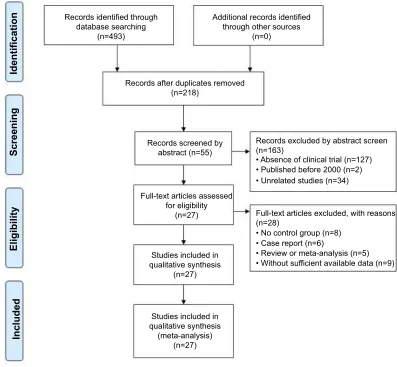
A total of 493 articles were identified and initially retrieved, and 275 papers were excluded due to duplication. After title and abstract review, 163 articles were further excluded because they did not include clinical trials (n=127) and were unrelated studies (n=34) or published before 2000 (n=2), leaving 55 studies as potentially relevant. After detailed assessment of full texts, articles without control group (n=8),
(n=5), and trials with insufficient data (n=9) were excluded. Finally, 27 trials16–42involving 1,939 advanced GC patients were included in this analysis (Figure 1).
Patient characteristics
After selection, all included studies were performed in different medical centers of China since 2000. In total, 972 advanced GC patients were treated with chemotherapy in combination with cinobufotalin adjuvant therapy, while 967 patients were treated with chemotherapy alone. Detailed information of the involved studies and GC patients is shown in Tables 1 and 2.
Quality assessment
The assessment of bias risk is shown in Figure 2. A total of 24 studies were determined as having low risk, and the remaining 3 studies were not true randomized controlled
Records identified through database searching
(n=493)
Additional records identified through other sources
(n=0)
Records after duplicates removed (n=218)
Records screened by abstract (n=55)
Records excluded by abstract screen (n=163)
• Published before 2000 (n=2) • Unrelated studies (n=34)
• No control group (n=8) • Case report (n=6)
• Review or meta-analysis (n=5) • Without sufficient available data (n=9) Full-text articles excluded, with reasons (n=28)
• Absence of clinical trial (n=127)
Full-text articles assessed for eligibility
(n=27)
Studies included in qualitative synthesis
(n=27)
Studies included in qualitative synthesis
(meta-analysis) (n=27)
Included
Eligibility
Screening
Identification
Figure 1Flow diagram of the selection process.
OncoTargets and Therapy downloaded from https://www.dovepress.com/ by 118.70.13.36 on 25-Aug-2020
T able 1 Clinical information fr om the eligible trials in the meta-analysis Included studies Nation T umor sta g e KPS P atients Con/Exp Ag e (y ear) P arameter types Con Exp Cha XT (2016) 16 China ND >70 20/20 ND ND ORR, DCR, AE Chen GF (2012) 17 China IV ND 86/62 71.8±18.6 (mean) 73.1±22.3 (mean) ORR, DCR, QoL, AE Chen HM(2009) 18 China III – IV KPS ≥ 60 33/34 49.6 (median) 50.6 (median) ORR, DCR Cui P (2009) 19 China ND 65 (mean) 23/32 ND ND ORR, DCR, QoL, AE Guo CJ (2011) 20 China IV ≥ 50 43/43 ND ND ORR, DCR, QoL Guo XY (2013) 21 China III – IV ≥ 65 38/42 64.8±3.7 (mean) 66.4±4.2 (mean) ORR, DCR, QoL Huang Q (2014) 22 China ND ≥ 60 20/26 55.8±4.9 (mean) 57.4±5.6 (mean) ORR, DCR, QoL Li W (2016) 23 China ND ND 74/76 66.8±1.4 (mean) 66.6±1.5 (mean) ORR, DCR, AE Li YX (2012) 24 China ND ND 74/74 ND ND ORR, DCR, QoL, AE Lu B (2016) 25 China ND >60 30/30 74.8±6.2 (mean) 73.7±5.1 (mean) ORR, DCR, QoL, AE Lu CH (2014) 26 China ND 71 (mean) 31/31 ND ND ORR, DCR Tian B (2012) 27 China III – IV KPS>60 22/23 ND ND ORR, DCR, AE W ang F (2014) 28 China ND ND 58/58 58.8 (mean) 58.4 (mean) ORR, DCR, QoL, AE W ang WM (2010) 29 China ND >60 23/20 ND ND ORR, DCR, AE W ang YH (2009) 30 China III – IV >60 32/36 ND ND ORR, DCR, AE W ang ZF (2012) 31 China ND >60 24/24 59.1 (median) 58.7 (median) ORR, DCR, QoL Xiao XN (2018) 32 China III – IV 58 (mean) 31/34 ND ND ORR, DCR, QoL, AE Xu DM (2015) 33 China ND >60 30/30 65.0±3.9 (mean) 66.3±4.6 (mean) ORR, DCR, QoL, AE Xu YM (2016) 34 China ND ≥ 60 30/30 49.9 (median) 45.8 (median) ORR, DCR, QoL, AE Y ang B (2017) 35 China ND >60 34/34 53 (mean) 51 (mean) ORR, DCR Y ang F (2018) 36 China ND ND 25/25 50 (median) 54 (median) ORR, DCR, QoL, AE Zhang CW (2001) 37 China III – IV >70 32/35 66 (median) 64 (median) ORR, DCR, AE Zhang RG (2004) 38 China IV ≥ 40 43/43 48 (median) 49 (median) OS, ORR, DCR, AE Zhang Y (2005) 39 China IV ≥ 40 29/28 54 (median) 57 (median) OS, ORR, AE Zheng YL (2007) 40 China III – IV 68 (mean) 20/20 ND ND OS, QoL Zhu WK (2012) 41 China III – IV ≥ 70 32/32 62.8 (mean) 61.7 (mean) ORR, DCR, QoL, AE Zou HP (2012) 42 China III – IV ND 30/30 56.5 (median) 59.1 (median) ORR, DCR, AE Notes: Con, contr ol gr oup (chemotherap y alone gr oup); Exp , experimental gr oup (chemotherap y and cinobufotalin combined gr oup). Abbre viations: ND , non determined; KPS, karnofsky performance scor e; ORR, ov erall response rate; DCR, disease contr ol rate; Qol, quality of life; AE, advers e e vent s.
OncoTargets and Therapy downloaded from https://www.dovepress.com/ by 118.70.13.36 on 25-Aug-2020
T able 2 Information on cinobufotalin combined with chemotherap y Included studies Therapeutic regimen Enr ollment P eriod Dosa g e of cinobufotalin Experimental gr oup Contr ol gr oup Cha XT (2016) 16 Oxaliplatin+T egafur+CF/SF+Cinobufotalin a Oxaliplatin+T egafur+CF/SF Januar y 2013 – Mar ch 2016 750 mg/time , 3 times/da y Chen GF (2012) 17 Capecitabine+Cinobufotalin b Capecitabine October 2006 – October 2010 10 ml/time, 3 times/da y Chen HM (2009) 18 Paclitax el+Cisplatin+5-Fu+Cinobufotalin b Paclitax el+Cisplatin+5-Fu October 2005 – December 2007 30 ml/time, 1 time/da y Cui P (2009) 19 FOLFO X+Cinobufotalin b FOLFO X 2004 – 2006 30 ml/time, 1 time/da y Guo CJ (2011) 20 Docetax el+Cinobufotalin b Docetax el Mar ch 2005 – Mar ch 2010 20 ml/time, 1 time/da y Guo XY (2013) 21 FOLFO X+Cinobufotalin c FOLFO X Januar y 2009 – Ma y 2010 1200 mg/time, 4 times/da y Huang Q (2014) 22 XELO X+Cinobufotalin b XELO X August 2009 – August 2013 50 ml/time, 1 time/da y Li W (2016) 23 Capecitabine+Cinobufotalin b Capecitabine Januar y 2012 – Januar y 2015 10-20 ml/time, 1 time/da y Li YX (2012) 24 Capecitabine+Cinobufotalin b Capecitabine Januar y 2006 – July 2011 10 ml/time, 1 time/da y Lu B (2016) 25 Capecitabine+Cinobufotalin a Capecitabine Januar y 2010 – December 2012 500 mg/time , 3 times/da y, Lu CH (2014) 26 FOLFO X+Cinobufotalin b FOLFO X 2009 – 2013 20 ml/time, 1 time/da y Tian B (2012) 27 FOLFO X+Cinobufotalin b FOLFO X 2004 – 2006 30 ml/time, 1 time/da y W ang F (2014) 28 Cisplatin+5-Fu+Cinobufotalin a Cisplatin+5-Fu ND 500 mg/time , 3 times/da y, W ang WM (2010) 29 S-1+Cinobufotalin a S-1 October 2011 – October 2013 500 mg, 3 times/da y W ang YH (2009) 30 FOLFO X+Cinobufotalin b FOLFO X December 2004 – Ma y 2008 10-20 ml/time, 1 time/da y W ang ZF (2012) 31 FOLFO X+Cinobufotalin b FOLFO X December 2003 – Ma y 2008 20 ml/time, 1 time/da y Xiao XN (2018) 32 FOLFO X+Cinobufotalin b FOLFO X Januar y 2008 – December 2010 10-20 ml/time, 1 time/da y Xu DM (2015) 33 Docetax el+Cisplatin+Cinobufotalin b Docetax el+Cisplatin 2013 – 2016 20 ml/time, 1 time/da y Xu YM (2016) 34 Capecitabine+Cinobufotalin b Capecitabine June 2010 – June 2011 20 ml/time, 1 time/da y Y ang B (2017) 35 FOLFO X+Cinobufotalin a FOLFO X Januar y 2014 – April 2015 750 mg/time , 3 times/da y, Y ang F (2018) 36 XELO X+Cinobufotalin b XELO X Januar y 2015 – June 2017 20 ml/time, 1 time/da y Zhang CW (2001) 37 EOF+Cinobufotalin a EOF Ma y 2014 – Ma y 2015 200-500 mg/time, 3 times/da y Zhang RG (2004) 38 Etoposide+Leucov orin+5-Fu+Cinobufotalin b Etoposide+Leucov orin+5-Fu Mar ch 1999 – December 2000 20 ml/time, 1 time/da y Zhang Y (2005) 39 HCPT+CF+5-Fu+Cinobufotalin b HCPT+CF+5-Fu July 1998 – June 2003 20 ml/time, 1 time/da y Zheng YL (2007) 40 FOLFO X+Cinobufotalin b FOLFO X Mar ch 2002 – F ebruar y 2003 50 ml/time, 1 time/da y Zhu WK (2012) 41 Oxaliplatin+Capecitabine+Cinobufotalin b Oxaliplatin+Capecitabine Mar ch 2010 – MAr ch 2011 30 ml/time, 1 time/da y Zou HP (2012) 42 EOF+Cinobufotalin b EOF Ma y 2008 – Ma y 2011 20 ml/time, 1 time/da y Notes: Contr ol gr oup , chemotherap y alone gr oup; Experimental gr oup , chemotherap y and cinobufotalin combined gr oup . a, cinobufotalin capsule; b, cinobu fotalin injection; c, cinobufotalin tablet; S-1, Gimeracil and Oteracil P orassium Capsules. Abbre viations: ND , non determined; CF , Calcium folinate; SF , Sodium folinate; Fu, Fluor ouracil; HCPT , Hydr o xycamptothecin; FOLFO X, Oxaliplatin+CF+5-Fu; XELO X , Oxaliplatin+Capecitabine; EOF , Epirubicin+Oxaliplatin+5-Fu.
OncoTargets and Therapy downloaded from https://www.dovepress.com/ by 118.70.13.36 on 25-Aug-2020
trials. All included trials did not provide clear description of performance and detection risks. The attrition risks of involved trials were low; 9 trials were considered as hav-ing unclear risk owhav-ing to selective reporthav-ing.
Therapeutic ef
fi
cacy assessment
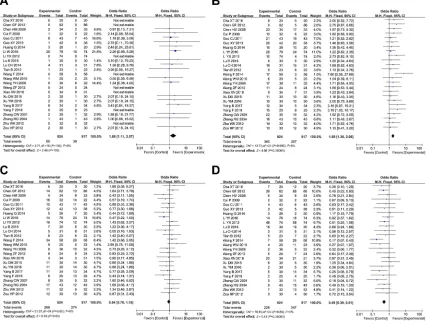
As shown in Figures 3 and 4, Figure S1 and Table 3, the pooled results showed that patients who underwent
combined therapy had significantly improved CR, PR,
ORR and DCR (CR, OR =1.69, 95% CI =1.11–2.57,
P=0.01; PR, OR =1.69, 95% CI =1.38–2.08,
P<0.00001; ORR, OR =1.88, 95% CI =1.54–2.31,
P<0.00001; DCR, OR =2.05, 95% CI =1.63–2.58,
P<0.00001) and significantly decreased PD (OR
=0.49, 95% CI =0.39–0.61, P<0.00001), whereas SD
and 6- and 12-months OS rates had no significant
Figure 2(A) Risk of bias summary: review of authors’judgments about each risk of bias item for included studies. (B) Risk of bias graph: review of authors’judgments about each risk of bias item presented as percentages across all included studies. Each color represents a different level of bias: red for high-risk, green for low-risk and yellow for unclear-risk of bias.
Figure 3Forest plot of the comparison of 6-months (A) and 12-months (B) overall survival (OS) between the experimental and control group. Control group, chemotherapy
alone group; Experimental group, chemotherapy and cinobufotalin combined group. Thefixed-effects meta-analysis model (Mantel–Haenszel method) was used.
OncoTargets and Therapy downloaded from https://www.dovepress.com/ by 118.70.13.36 on 25-Aug-2020
differences in patients who received chemotherapy
alone (SD, OR =0.94, 95% CI =0.76–1.15, P=0.53;
6-months OS, OR =1.49, 95% CI =0.81–2.74, P=0.20;
12-months OS, OR =1.35, 95% CI =0.64–2.86,
P=0.43). Fixed effect models were used to analyze
OR rate because of low heterogeneity.
Figure 4Forest plot of the comparison of overall response rate (ORR,A) and disease control rate (DCR,B) between the experimental and control group. Control group,
chemotherapy alone group; Experimental group, chemotherapy and cinobufotalin combined group. Thefixed-effects meta-analysis model (Mantel–Haenszel method) was used.
OncoTargets and Therapy downloaded from https://www.dovepress.com/ by 118.70.13.36 on 25-Aug-2020
Quality of life assessment
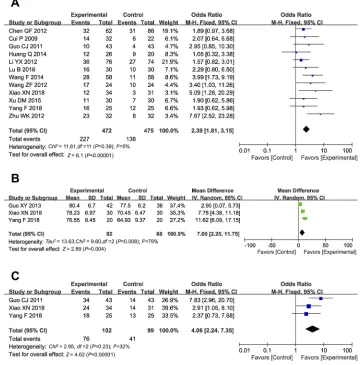
QoL was evaluated in this analysis. Result showed that
QoL of patients in the combined group was significantly
better than that of the control group, indicated by increased QIR, KPS and PRR (Figure 5, QIR, OR =2.39, 95% CI
=1.81–3.15, P<0.00001; KPS, OR =7.00, 95% CI =2.25–
11.75, P=0.004; PRR, OR =4.06, 95% CI =2.24–7.35,
P<0.00001).
Adverse event assessment
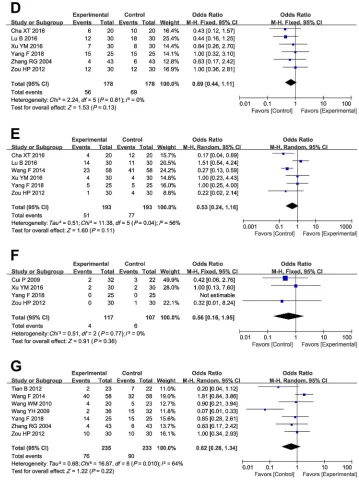
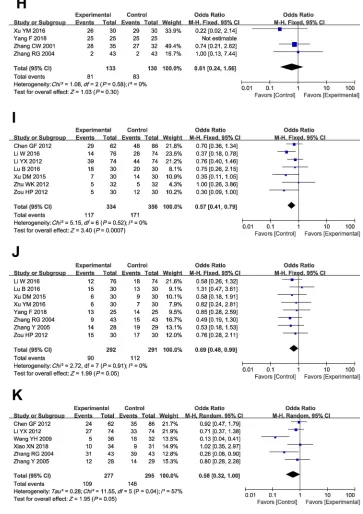
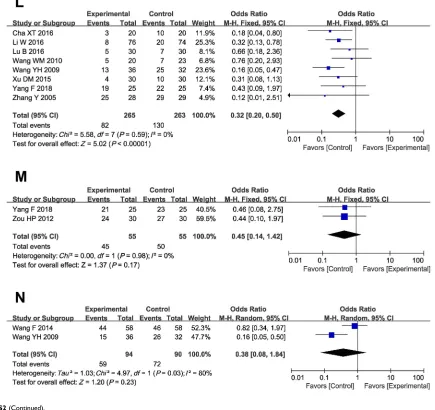
As shown in Table 4 and Figure S2, patients treated with cinobufotalin and chemotherapy combined therapy showed lower incidences of nausea and vomiting, diarrhea, leucope-nia, hand-foot syndrome, anemia, gastrointestinal side effects and peripheral neurotoxicity (nausea and vomiting, OR =0.55, 95% CI =0.41–0.74,P<0.0001; diarrhea, OR =0.65, 95% CI =0.46–0.90,P=0.010; leucopenia, OR =0.62, 95% CI =0.47–
0.82, P=0.0008; hand-foot syndrome, OR =0.57, 95% CI
=0.41–0.79, P=0.0007; anemia, OR =0.69, 95% CI =0.48–
0.99,P=0.05; gastrointestinal side effects, OR =0.56, 95% CI =0.32–1.00,P=0.05; peripheral neurotoxicity, OR =0.32, 95% CI =0.20–0.50,P<0.00001), whereas analysis on thrombocy-topenia, hepatotoxicity, nephrotoxicity, oral mucositis, alope-cia, neutropenia and myelosuppression (thrombocytopenia,
OR =0.69, 95% CI =0.44–1.11, P=0.13; hepatotoxicity, OR
=0.53, 95% CI =0.24–1.16,P=0.11; nephrotoxicity, OR =0.56,
95% CI =0.16–1.95,P=0.36; oral mucositis, OR =0.62, 95%
CI =0.28–1.34,P=0.22; alopecia, OR =0.61, 95% CI =0.24–
1.56,P=0.30; neutropenia, OR =0.45, 95% CI =0.14−1.42,
P=0.17; myelosuppression, OR =0.38, 95% CI =0.08–1.84,
P=0.23) did not differ significantly between the two groups.
Publication bias
Funnel plots drawn for the studies on primary outcomes (CR, PR, SD, PD, ORR, DCR and adverse events) were approximately symmetrical, which indicated generally controlled publication bias and reliability of our primary conclusions (Figure 6 and S3).
We also assessed publication bias using Begg’s and
Egger’s regression asymmetry tests (Table 5), and PR
and leucopenia were found with bias (PR, Begg, 0.038; Egger, 0.015; leucopenia, Begg, 0.003; Egger, <0.0001). To determine if the bias affects the pooled risk, we
con-ducted a trim and fill analysis. The adjusted OR rate
indicated the same trend with the result of the primary analysis (PR [before, P<0.0001; after, P<0.0001], leuko-penia [before, P=0.0002; after. P=0.0002]), reflecting the
T able 3 Comparison of CR, PR, SD , PD , ORR and DCR betw een the experimental and contr ol gr oup P arameter Experimental gr oup Contr ol gr oup Analysis method Heter o g eneity Odds Ratio (OR) 95% CI P -value No . patients (n) No . patients (n) I 2 (%) P -value CR 924 917 Fix ed 0 1.00 1.69 1.11 to 2.57 0.01 PR 924 917 Fix ed 0 0.95 1.69 1.38 to 2.08 <0.00001 SD 924 917 Fix ed 0 0.62 0.94 0.76 to 1.15 0.53 PD 924 917 Fix ed 0 0.86 0.49 0.39 to 0.61 <0.00001 ORR 952 946 Fix ed 0 0.96 1.88 1.54 to 2.31 <0.00001 DCR 924 917 Fix ed 0 0.86 2.05 1.63 to 2.58 <0.00001 Notes: Contr ol gr oup , chemotherap y alone gr oup; Experimental gr oup , chemotherap y and cinobufotalin combined gr oup . Abbre viations: CR, complete re sponse; PR, partial re sponse; SD , stable disease; PD , pr ogres sive disease; ORR, ov erall response rate; DCR, disease contr ol rate.
OncoTargets and Therapy downloaded from https://www.dovepress.com/ by 118.70.13.36 on 25-Aug-2020
reliability of our primary conclusions, except those based on a few number of trials.
Sensitivity analysis
We performed subgroup analysis to explore the source of heterogeneity in ORR and DCR with respect to therapeutic regimens, drug forms of cinobufotalin, sample sizes and research types. As shown in Table 6, our analysis results
showed that no significant difference was found between
different forms of cinobufotalin, sample sizes and research types. Moreover, cinobufotalin combined with FOLFOX/ XELOX/capecitabine chemotherapy regimens was found to be more effective for GC treatment.
Discussion
In view of the limitations of the current chemotherapy for malignancies such as drug resistance and toxic side effects,
clinicians have been exploring complementary and
alter-native medicine treatments to improve patients’ survival
time or QoL and reduce side effects caused by
chemotherapy.6,10,46,47 Traditional Chinese medicine,
par-ticularly cinobufotalin, has been clinically applied as an
adjuvant therapy for decades.7,10,11 Several studies have
been reported that the addition of cinobufotalin could be beneficial to advanced GC patients.16–42Even though there was a statistical analysis of published clinical trials, the exact therapeutic effects were still not systematically eval-uated because of small sample sizes and different applied protocols in different studies. Therefore, in this analysis, we conducted a wide range of online search according to strict inclusion and exclusion criteria to provide clear and systematical conclusion.
Our meta-analysis revealed that cinobufotalin and che-motherapy combined therapy for GC patients achieved
Figure 5Forest plot of the comparison of quality of life improved rate (QIR,A), karnofsky performance score (KPS,B) and pain relief rate (PRR,C) between the
experimental and control group. Control group, chemotherapy alone group; Experimental group, chemotherapy and cinobufotalin combined group. Thefixed-effects
meta-analysis model (Mantel–Haenszel method) was used.
OncoTargets and Therapy downloaded from https://www.dovepress.com/ by 118.70.13.36 on 25-Aug-2020
T able 4 Comparison of adv erse e vents betw een the experimental and contr ol gr oup Adv erse e v ents Experimental gr oup Contr ol gr oup Analysis method Heter o g eneity Odds Ratio (OR) 95% CI P -value No . of patients (n) No . of patients (n) I 2 (%) P -value Nausea, vomi ting 452 437 Fix ed 37 0.09 0.55 0.41 to 0.74 <0.0001 Nausea, vomiting I+II 292 279 Fix ed 0 0.50 0.83 0.59 to 1.16 0.27 Nausea, vomiting III+IV 292 279 Fix ed 4 0.41 0.41 0.23 to 0.75 0.003 Diarrhea 395 379 Fix ed 0 0.88 0.65 0.46 to 0.90 0.010 Diarrhea I+II 235 221 Fix ed 0 0.69 0.84 0.56 to 1.27 0.41 Diarrhea III+IV 235 221 Fix ed 0 1.00 0.27 0.10 to 0.75 0.01 Leucopenia 420 429 Fix ed 34 0.13 0.62 0.47 to 0.82 0.0008 Leucopenia I+II 250 238 Fix ed 0 0.86 0.57 0.39 to 0.83 0.003 Leucopenia III+IV 250 238 Fix ed 0 0.77 0.36 0.17 to 0.75 0.007 Thr ombocytopenia 178 178 Fix ed 0 0.81 0.69 0.44 to 1.11 0.13 Thr ombocytopenia I+II 178 178 Fix ed 0 0.84 0.70 0.43 to 1.13 0.14 Thr ombocytopenia III+IV 178 178 Fix ed 0 0.83 0.91 0.39 to 2.14 0.83 Hepatoto xicity 193 193 Random 56 0.04 0.53 0.24 to 1.16 0.11 Hepatotox icity I+II 193 193 Fix ed 26 0.24 0.61 0.38 to 0.97 0.04 Hepatotox icity III+IV 193 193 Fix ed 0 0.70 0.14 0.02 to 0.81 0.03 Nephr oto xicity 117 107 Fix ed 0 0.77 0.56 0.16 to 1.95 0.36 Nephr oto xicity I+II 117 107 Fix ed 0 0.54 0.63 0.16 to 2.46 0.51 Nephr oto xicity III+IV 117 107 Fix ed 0.32 0.01 to 8.24 0.49 Oral mucositis 235 233 Random 64 0.010 0.62 0.28 to 1.34 0.22 Oral mucositis I+II 179 178 Fix ed 44 0.13 1.08 0.68 to 1.72 0.74 Oral mucositis III+IV 179 178 Fix ed 0 0.58 0.54 0.15 to 1.96 0.35 Alopecia 133 130 Fix ed 0 0.58 0.61 0.24 to 1.56 0.30 Alopecia I+II 133 130 Fix ed 0 0.93 0.93 0.48 to 1.81 0.83 Alopecia III+IV 133 130 Fix ed 0 0.97 0.72 0.30 to 1.75 0.47 Hand foot syndr ome 334 356 Fix ed 0 0.52 0.57 0.41 to 0.79 0.0007 Hand foot syndr ome I+II 92 92 Fix ed 12 0.32 0.64 0.33 to 1.24 0.18 Hand foot syndr ome III+IV 92 92 Fix ed 0.48 0.04 to 5.63 0.56 Anemia 292 291 Fix ed 0 0.91 0.69 0.48 to 0.99 0.05 Anemia I+II 186 187 Fix ed 0 0.65 0.92 0.60 to 1.42 0.71 Anemia III+IV 186 187 Fix ed 0 0.87 0.34 0.12 to 0.96 0.04 Gastr ointestinal adv erse effects 277 295 Random 57 0.04 0.56 0.32 to 1.00 0.05 Gastr ointestinal adv erse effects I+II 71 72 Fix ed 0 0.75 0.71 0.35 to 1.42 0.33 Gastr ointestinal adv erse effects III+IV 71 72 Fix ed 0.39 0.09 to 1.60 0.19 P eripheral neur oto xicity 265 263 Fix ed 0 0.59 0.32 0.20 to 0.50 <0.00001 ( Continued )
OncoTargets and Therapy downloaded from https://www.dovepress.com/ by 118.70.13.36 on 25-Aug-2020
with chemotherapy alone. Combined therapy-treated patients broadly exhibited increased ORR and DCR
(P<0.05) and also significantly improved their QoL.
These results indicated that using cinobufotalin could improve the curative effects of chemotherapy.
Safety is the top priority of the clinical treatment. One
trial7 that was conducted at Fudan University Cancer
Hospital showed that cinobufotalin is well tolerated by hepa-tocellular carcinoma, non-small-cell lung cancer and pan-creatic cancer patients (only mild adverse events were observed in cancer patients who received cinobufotalin ther-apy; no grade III and IV toxicities were observed). Our analysis showed that most of the adverse events caused by chemotherapy, including nausea and vomiting, diarrhea, leu-copenia, hand-foot syndrome, anemia, gastrointestinal side effects and peripheral neurotoxicity, were alleviated with
cinobufotalin combination therapy (P<0.05). Therefore,
cinobufotalin is a safe auxiliary antitumor medicine for GC and can effectively alleviate the adverse events associated with chemotherapy.
The analysis on therapeutic effects may be influenced by several factors. In our study, no difference was found between different drug forms of cinobufotalin, sample sizes and research types. Cinobufotalin combined with FOLFOX/ XELOX/capecitabine chemotherapy regimens was more effective for GC treatment (Table 6). However, a compara-tive analysis of the above-mentioned individual chemother-apy regimens should be performed in the future to rule out the possibility that the therapeutic advantage of cinobufotalin combined with FOLFOX, XELOX or capecitabine is due to the better therapeutic effect of them alone compared to that of EOF. As a summary, recent studies on the impact of these factors on the curative effects of cinobufotalin adjuvant
ther-apy remain insufficient, and hence, further investigations
should be performed.
There are some limitations in our analysis. First, although traditional Chinese medicine has been exported to 185 countries and regions, its main markets still
remained in Asia.48As a traditional medicine,
cinobufota-lin was mainly applied in China, which may bring the
unavoidable regional bias and subsequently influence the
clinical application of cinobufotalin worldwide. Second, according to the Cochrane Handbook for systematic reviews of interventions, the most appropriate way of summarizing survival outcomes is to use methods of sur-vival analysis and express the intervention effect as a hazard ratio (HR) because this method takes into
T able 4 (Continued). Adv erse e v ents Experimental gr oup Contr ol gr oup Analysis method Heter o g eneity Odds Ratio (OR) 95% CI P -value No . of patients (n) No . of patients (n) I 2 (%) P -value P eripheral neur oto xicity I+II 103 104 Fix ed 29 0.24 0.52 0.26 to 1.03 0.06 P eripheral neur oto xicity III+IV 103 104 Fix ed 0 0.53 0.58 0.21 to 1.63 0.30 Neutr openia 55 55 Fix ed 0 0.98 0.45 0.14 to 1.42 0.17 Neutr openia I+II 55 55 Fix ed 0 0.35 0.93 0.44 to 1.96 0.85 Neutr openia III+IV 55 55 Fix ed 0 0.40 0.73 0.34 to 1.59 0.43 My elosuppr ession 94 90 Random 80 0.03 0.38 0.08 to 1.84 0.23 Mye losuppre ssion I+II 58 58 Fix ed 1.09 0.48 to 2.49 0.83 Mye losuppre ssion III+IV 58 58 Fix ed 0.24 0.03 to 2.19 0.20 Notes: Contr ol gr oup , chemotherap y alone gr oup; Experimental gr oup , chemotherap y and cinobufotalin combined gr oup .
OncoTargets and Therapy downloaded from https://www.dovepress.com/ by 118.70.13.36 on 25-Aug-2020
consideration the time factor and censored participants. However, the included articles that reported the OS rate only provided the survival number and the total number of patients at 6 months and 12 months, and none of them
provided HR with 95% CI and Kaplan–Meier survival
curves. Therefore, there were insufficient data to perform
a statistical analysis using HR, which almost certainly will introduce bias. Third, treatment/medical history is very
important in evaluating the efficacy of
cinobufotalin-mediated therapy. However, our data were partly extracted from published papers rather than from the original patient records; therefore, analytical bias would possibly exist. Moreover, the therapeutic effects of the combined therapy
may be influenced by numerous variables such as dosage
of cinobufotalin, tumor stage and patient’s age. However,
based on currently available literature, there are insuffi -cient data to perform more statistical analysis to evaluate the correlation. We will keep following up with upcoming clinical trials to obtain relevant data when available. Finally, the follow-up durations of the included studies
were short, and the long-term efficacy of cinobufotalin
for advanced GC remains to be further evaluated.
Conclusion
In summary, this meta-analysis indicated that cinobufota-lin and chemotherapy combined therapy was effective in treating advanced GC. Clinical application of cinobufota-lin not only evidently improved the therapeutic effects of chemotherapy but also effectively alleviated most of the side effects caused by chemotherapy. However, the
long-term efficacy of cinobufotalin-mediated adjuvant therapy
for advanced GC still needs methodologically rigorous trials to verify its efficacy.
Acknowledgments
The risk bias assessment in this study was helped and guided by Dr. Ma J (Statistician, Department of Science
and Education, Liaocheng People’s Hospital). No funding
was received for conducting out this study.
Figure 6Funnel plot of overall response rate (ORR,A), disease control rate (DCR,B), quality of life improved rate (QIR,C), Nausea and vomiting (D), Diarrhea (E),
Leukopenia (F), Anemia (G) and neurotoxicity (H).
Table 5Publication bias on therapeutic efficacy indexes (CR, PR, SD, PD, ORR, DCR and QIR) and adverse events indexes (Nausea
and vomiting, Diarrhea, Leucopenia, Anemia and Neurotoxicity)
Publication
Bias
Therapeutic efficacy Adverse events
CR PR SD PD ORR DCR QIR Nausea and
vomiting
Diarrhea Leucopenia Anemia Neurotoxicity
Begg 0.742 0.038 0.513 0.870 0.280 0.870 0.304 0.161 0.755 0.003 0.454 1.000
Egger 0.833 0.015 0.721 0.905 0.331 0.905 0.235 0.069 0.623 <0.0001 0.528 0.894
Note:Parameters discussed in over 8 papers were conducted bias analyses.
Abbreviations:CR, complete response; PR, partial response; SD, stable disease; PD, progressive disease; ORR, overall response rate; DCR, disease control rate; QIR, quality of life improved rate.
OncoTargets and Therapy downloaded from https://www.dovepress.com/ by 118.70.13.36 on 25-Aug-2020
T
able
6
Subgr
oup
analyses
of
ORR
and
DCR
betw
een
the
experimental
and
contr
ol
gr
oup
P
arameter
F
actors
at
study
le
v
el
Experimental
gr
oup
No
.
of
patients
(n)
Contr
ol
gr
oup
No
.
of
patients
(n)
Analysis method
Heter
o
g
eneity
Odds
Ratio
(OR)
95% CI
P
-value
I
2 (%)
P
-value
ORR
Therapeutic
regimen
Cinobufotalin +FOLFO
X
215
200
Fix
ed
0
0.99
1.84
1.23
to
2.76
0.003
Cinobufotalin +XELO
X
92
86
Fix
ed
0
0.41
2.43
1.30
to
4.53
0.005
Cinobufotalin+EOF
55
55
Fix
ed
22
0.26
1.93
0.91
to
4.10
0.09
Cinobufotalin +Capecitabine
272
294
Fix
ed
0
0.85
1.98
1.29
to
3.04
0.002
Drug
form
of
cinobufotalin
Cinobufotalin capsule
186
185
Fix
ed
9
0.36
2.47
1.54
to
3.98
0.0002
Cinobufotalin injection
724
723
Fix
ed
0
0.98
1.78
1.41
to
2.25
<0.00001
Study
sample
siz
e
>60
634
641
Fix
ed
0
0.67
2.05
1.58
to
2.65
<0.00001
≤
60
318
305
Fix
ed
0
0.99
1.64
1.18
to
2.28
0.003
T
ype
of
contr
ol
trials
RCT
833
829
Fix
ed
0
0.96
1.93
1.55
to
2.41
<0.00001
Ov
erall
952
946
Fix
ed
0
0.96
1.88
1.54
to
2.31
<0.00001
DCR
Therapeutic
regimen
(
Continued
OncoTargets and Therapy downloaded from https://www.dovepress.com/ by 118.70.13.36 on 25-Aug-2020
T able 6 (Continued). P arameter F actors at study le v el Experimental gr oup No . of patients (n) Contr ol gr oup No . of patients (n) Analysis method Heter o g eneity Odds Ratio (OR) 95% CI P -value I 2 (%) P -value Cinobufotalin +FOLFO X 215 200 Fix ed 0 0.97 2.26 1.26 to 4.04 0.006 Cinobufotalin +XELO X 92 86 Fix ed 0 0.39 2.55 1.24 to 5.23 0.01 Cinobufotalin+EOF 55 55 Fix ed 0 0.71 1.70 0.52 to 5.57 0.38 Cinobufotalin +Capecitabine 272 294 Fix ed 0 0.63 1.63 1.11 to 2.38 0.01 Drug form of cinobufotalin Cinobufotalin capsule 186 185 Fix ed 0 0.49 2.78 1.69 to 4.58 <0.0001 Cinobufotalin injection 696 694 Fix ed 0 0.87 1.88 1.45 to 2.45 <0.00001 Study sample siz e >60 634 641 Fix ed 0 0.53 2.21 1.68 to 2.90 <0.00001 ≤ 60 290 276 Fix ed 0 0.94 1.73 1.13 to 2.64 0.01 T ype of contr ol trials RCT 805 800 Fix ed 0 0.86 2.16 1.69 to 2.77 <0.00001 Ov erall 924 917 Fix ed 0 0.86 2.05 1.63 to 2.58 <0.00001 Notes: Contr ol gr oup , chemotherap y alone gr oup; Experimental gr oup , chemotherap y and cinobufotalin combined gr oup . Abbre viations: ORR, ov erall re sponse rate; DCR, disease contr ol rate; FOLFO X, Oxaliplatin+Calcium folinate+5-Fluor ouracil; XELO X, o xaliplatin+capecitabine ; EOF , epirubicin+o xaliplatin+calcium folate+ fl uor ouracil; RCT , randomized contr olled trial.
OncoTargets and Therapy downloaded from https://www.dovepress.com/ by 118.70.13.36 on 25-Aug-2020
All authors contributed to study design, data analysis,
drafting and revising the article, gave final approval of
the version to be published, and agree to be accountable for all aspects of the work.
Disclosure
The authors report no conflicts of interest in this work.
References
1. Bray F, Ferlay J, Soerjomataram I, Siegel RL, Torre LA, Jemal A. Global cancer statistics 2018: GLOBOCAN estimates of incidence and mortality worldwide for 36 cancers in 185 countries.CA Cancer
J Clin. 2018;68(6):394–424. doi:10.3322/caac.21492
2. Chen W, Zheng R, Baade PD, et al. Cancer statistics in China, 2015.
CA Cancer J Clin. 2016;66(2):115–132. doi:10.3322/caac.21338
3. Cheng H, Sun A, Guo Q, Zhang Y. Efficacy and safety of apatinib combined with chemotherapy for the treatment of advanced gastric cancer in the Chinese population: a systematic review and meta-analysis.Drug Des Devel Ther. 2018;12:2173–2183. doi:10.2147/ DDDT.S170678
4. Mu Y, Zhou CH, Chen SF, et al. Effectiveness and safety of che-motherapy combined with cytokine-induced killer cell/dendritic cell-cytokine-induced killer cell therapy for treatment of gastric cancer in China: a systematic review and meta-analysis.Cytotherapy. 2016;18 (9):1162–1177. doi:10.1016/j.jcyt.2016.05.015
5. Xue JX, Zhu ZY, Bian WH, Yao C. The traditional Chinese medicine Kangai injection as an adjuvant method in combination with che-motherapy for the treatment of breast cancer in Chinese patients: a meta-analysis. Evid Based Complement Alternat Med. 2018;2018:6305645. doi:10.1155/2018/9567061
6. Chen Y, Zhang G, Chen X, et al. Jianpi Bushen, a traditional Chinese medicine therapy, combined with chemotherapy for gastric cancer treatment: a meta-analysis of randomized controlled trials. Evid
Based Complement Alternat Med. 2018;2018:4924279. doi:10.1155/
2018/9567061
7. Meng Z, Yang P, Shen Y, et al. Pilot study of huachansu in patients with hepatocellular carcinoma, nonsmall-cell lung cancer, or pancrea-tic cancer.Cancer. 2009;115(22):5309–5318. doi:10.1002/cncr.24602 8. Chen YZ, Feng XB, Li ZD, Zheng WX, Sun H, Li PP. Clinical study on long-term overall survival of advanced non-small-cell lung cancer patients treated with Chinese medicine and Western medicine.Chin J
Integr Med. 2014;20(3):179–183. doi:10.1007/s11655-014-1770-6
9. Jiang Y, Liu LS, Shen LP, et al. Traditional Chinese medicine treat-ment as maintenance therapy in advanced non-small-cell lung cancer: a randomized controlled trial.Complement Ther Med. 2016;24:55– 62. doi:10.1016/j.ctim.2015.12.006
10. Shi Z, Song T, Wan Y, et al. A systematic review and meta-analysis of traditional insect Chinese medicines combined chemotherapy for non-surgical hepatocellular carcinoma therapy. Sci Rep. 2017;7 (1):4355. doi:10.1038/s41598-017-04351-y
11. Kai S, Lu JH, Hui PP, Zhao H. Pre-clinical evaluation of cinobufo-talin as a potential anti-lung cancer agent. Biochem Biophys Res
Commun. 2014;452(3):768–774. doi:10.1016/j.bbrc.2014.08.147
12. Emam H, Zhao QL, Furusawa Y, et al. Apoptotic cell death by the novel natural compound, cinobufotalin.Chem Biol Interact. 2012;199 (3):154–160. doi:10.1016/j.cbi.2012.07.005
13. Chen KK, Anderson RC, Henderson FG. Comparison of cardiac action of bufalin, cinobufotalin, and telocinobufagin with
cinobufa-gin.Proc Soc Exp Biol Med. 1951;76(2):372–374.
cinobufotalin-induced growth inhibition and apoptosis in cultured hepatocellular carcinoma cells. Tumour Biol. 2015;36(8):5763– 5771. doi:10.1007/s13277-015-3245-1
15. Li QW, Sun T, Hu KW. Research progress on anti-tumor mechanism of cinobufagin.China J Tradit Chin Med Pharm. 2010;25(12):2075–2078. 16. Cha XT, Hang ZK. Efficacy of cinobufotalin capsule combined with
oxaliplatin and tegafur in the treatment of advanced gastric cancer.
Psychol Doctor. 2016;22(18):126–127.
17. Chen GF, Jin DX, Li MJ. Clinical observation of cinobufotalin combined with capecitabine in the treatment of 62 cases of senile advanced gastric cancer.Zhejiang J Tradit Chin Med. 2012;47(6):462–463.
18. Chen HM. Efficacy of cinobufotalin combined with TPF regimen in the treatment of advanced gastric cancer.J Emergency Tradit Chin Med. 2009;18(1):35–36.
19. Cui P. Clinical efficacy observation of cinobufotalin in the treatment of advanced gastric cancer.J Liaoning Med Univ. 2009;30(4):333–334. 20. Guo CJ, Yu TH, Zhang HP, Xing JH. The observation of clinical
therapeutic effect of cinobufacini combined with docetaxel on advanced stomach cancer.Chin Med Guides. 2011;8(28):54–55. 21. Guo XY, Sun T, Wang XX, Wang Y. Curative efficacy of cinobufacini
adjuvant FOLFOX6 regimen in treatment of non operative elderly patients with advanced gastric cancer.J Liaoning Univ Tradit Chin Med. 2013;15(12):190–192.
22. Huang Q, Dong J. Efficacy observation of cinobufotalin injection via hepatic artery perfusion combined with XELOX chemotherapy regi-men in the treatregi-ment of gastric cancer with liver metastasis.Chin J
Tradit Med Sci Technol. 2014;21(3):311–312.
23. Li W, Li HZ. Clinical efficacy analysis of cinobufotalin combined with capecitabine in the treatment of elderly patients with gastric cancer.Med J Chin People‘S Health. 2016;28(04):82–83.
24. Li YX. Clinical treatment comparison of 148 elderly patients with advanced gastric cancer.J Front Med. 2012;35:204–205.
25. Lu B, Wu J, Tong RM, Zhang JF. Clinical observation for the combination of capecitabine and cinobufacin capsule on treating elderly advanced gastric cancer.J Liaoning Univ Tradit Chin Med. 2016;18(9):84–87.
26. Lu CH, Hong M, Liu KH, You J. Efficacy observation of neoadjuvant chemotherapy with cinobufotalin in advanced gastric cancer.Tradit
Chin Med Jl. 2014;13(3):41–49.
27. Tian B. The enteric capsule of cinobufotalin efficacy combined with chemotherapy in the treatment of gastric cancer. Med Aesthetics
Cosmetology. 2012;20(11):33.
28. Wang F, Wu LG, Le XY, Chen XD. Clinical effect of gimeracil and oteracil porassium capsules combined with Huachan vegetarian cap-sules in the treatment of patients with gastric cancer.Chin J Clin
Oncol Rehabil. 2014;21(12):1485–1488.
29. Wang WM, Li CF, Yao RJ. Clinical observation of cinobufotalin injection combined with chemotherapy in the treatment of advanced gastric cancer.Clin J Tradit Chin Med. 2010;22(4):314–315. 30. Wang YH. Cinobufotalin injection combined with chemotherapy in
the treatment of 36 cases of advanced gastric cancer. Jiangxi J
Traditional Chin Med. 2009;40(4):31–32.
31. Wang ZF, Wang P. Efficacy observation of cinobufotalin combined with chemotherapy in the treatment of advanced gastric cancer.Chin
J Primary Med Pharm. 2012;19(13):1991–1992.
32. Xiao XN, Lin CH, Li Q, Lin ZJ, Xiao HB. Effect of chemotherapy of DC combined with cinobufacini in the treatment of advanced sto-mach cancer.Chin J Primary Med Pharm. 2018;25(3):322–324. 33. Xu DM, Liu LJ. Clinical observation of cinobufotalin combined with
capecitabine for gastric cancer in elderly patients.Pract J Cancer. 2015;30(3):405–407.
34. Xu YM, Liu S. Efficacy observation of huachansu capsule combined with chemotherapy in treating advanced gastric cancer.World Chin Med. 2016;11(7):1212–1214.
OncoTargets and Therapy downloaded from https://www.dovepress.com/ by 118.70.13.36 on 25-Aug-2020
35. Yang B. Efficacy observation of cinobufotalin injection combined with chemotherapy in the treatment of advanced gastric cancer.
World Clin Med. 2017;11(23):92.
36. Yang F, Zhang T. Clinical study of cinobufotalin capsule combined with chemotherapy in the treatment of advanced gastric cancer.Chin
Remedies Clin. 2018;18(2):266–268.
37. Zhang CW, Wang QH. Cinobufotalin combined with chemotherapy in the treatment of 35 cases of advanced gastric cancer. J Anhui
Tradit Chin Med Coll. 2001;20(4):18–19.
38. Zhang RG, Cheng CH, Shen B, Zhou DM, Zhuang GX. Clinical observation of cinobufotalin combined with chemotherapy in the treatment of advanced gastric cancer. Chin Clin Oncol. 2004;9 (3):269–270.
39. Zhang Y, Zhu M, Cao Y, Zhang P, Yao LG, Huang HX. Efficacy observation of cinobufotalin combined with chemotherapy in the treatment of intermediate and late stage gastric cancer. Henan J
Oncol. 2005;18(5):359–360.
40. Zheng YL, Ma BH, Yang F. Observation of cinobufotalin combined with chemotherapy for intermediate and late stage gastric cancer.
Qingdao Med J. 2007;39(4):260–261.
41. Zhu WK, Li Y, Hou FG, Chen M, Zhou YY. Efficacy of cinobufacini combined with CapeOX regimen in treatment of advanced gastric cancer.Chin Med Guides. 2012;9(5):35–36.
42. Zou HP, Guo XZ, Zhu YF. Clinical research on huachansu with EOF regimen in patients with advanced gastric cancer.Chin J Clin Med. 2012;19(2):140–141.
43. Zeng X, Zhang Y, Kwong JS, et al. The methodological quality assessment tools for preclinical and clinical studies, systematic review and meta-analysis, and clinical practice guideline: a systema-tic review. J Evid Based Med. 2015;8(1):2–10. doi:10.1111/ jebm.12141
44. Jackson D, White IR, Riley RD. Quantifying the impact of between-study heterogeneity in multivariate meta-analyses.Stat Med. 2012;31 (29):3805–3820. doi:10.1002/sim.5453
45. Duval S, Tweedie R. Trim and fill: a simple funnel-plot-based method of testing and adjusting for publication bias in meta-analysis.
Biometrics. 2000;56(2):455–463.
46. Yan Z, Lai Z, Lin J. Anticancer properties of traditional Chinese medicine. Comb Chem High Throughput Screen. 2017;20(5):423– 429. doi:10.2174/1386207320666170116141818
47. Xu J, Song Z, Guo Q, Li J. Synergistic effect and molecular mechan-isms of traditional Chinese medicine on regulating tumor microenvir-onment and cancer cells. Biomed Res Int. 2016;2016:1490738. doi:10.1155/2016/1490738
48. Lin AX, Chan G, Hu Y, et al. Internationalization of traditional Chinese medicine: current international market, internationalization challenges and prospective suggestions. Chin Med. 2018;13:9. doi:10.1186/s13020-018-0167-z
OncoTargets and Therapy downloaded from https://www.dovepress.com/ by 118.70.13.36 on 25-Aug-2020
Figure S1Forest plot of the comparison of complete response rates (CR,A), partial response rates (PR,B), stable disease rates (SD,C) and progressive disease rates (PD,
D) between the experimental and control group. Control group, chemotherapy alone group; Experimental group, chemotherapy and cinobufotalin combined group. The
fixed-effects meta-analysis model (Mantel–Haenszel method) was used.
OncoTargets and Therapy downloaded from https://www.dovepress.com/ by 118.70.13.36 on 25-Aug-2020
Figure S2Forest plot of the comparison of adverse effects including nausea and vomiting (A), diarrhea (B), leukopenia (C), thrombocytopenia (D), hepatotoxicity (E),
nephrotoxicity (F), oral mucositis (G), alopecia (H), hand-foot syndrome (I), anemia (J), gastrointestinal adverse effects (K), peripheral neurotoxicity (L), neutropenia (M)
and myelosuppression (N) between the experimental and control group. Control group, chemotherapy alone group; Experimental group, chemotherapy and cinobufotalin
combined group.
OncoTargets and Therapy downloaded from https://www.dovepress.com/ by 118.70.13.36 on 25-Aug-2020
Figure S2(Continued).
OncoTargets and Therapy downloaded from https://www.dovepress.com/ by 118.70.13.36 on 25-Aug-2020
Figure S2(Continued).
OncoTargets and Therapy downloaded from https://www.dovepress.com/ by 118.70.13.36 on 25-Aug-2020
Figure S2(Continued).
OncoTargets and Therapy downloaded from https://www.dovepress.com/ by 118.70.13.36 on 25-Aug-2020
OncoTargets and Therapy
Dove
press
Publish your work in this journal
OncoTargets and Therapy is an international, peer-reviewed, open access journal focusing on the pathological basis of all cancers, potential targets for therapy and treatment protocols employed to improve the management of cancer patients. The journal also focuses on the impact of management programs and new therapeutic
agents and protocols on patient perspectives such as quality of life, adherence and satisfaction. The manuscript management system is completely online and includes a very quick and fair peer-review system, which is all easy to use. Visit http://www.dovepress.com/ testimonials.php to read real quotes from published authors.
Submit your manuscript here:https://www.dovepress.com/oncotargets-and-therapy-journal
Figure S3Funnel plot of percentage of complete response rates (CR,A), partial response rates (PR,B), stable disease rates (SD,C) and progressive disease rates (PD,D).
OncoTargets and Therapy downloaded from https://www.dovepress.com/ by 118.70.13.36 on 25-Aug-2020