On Quantum Chosen-Ciphertext Attacks
and Learning with Errors
Gorjan Alagic1, Stacey Jeffery2, Maris Ozols3, and Alexander Poremba4
1
QuICS, University of Maryland, and NIST, Gaithersburg, MD, USA 2 QuSoft and CWI, Amsterdam, Netherlands
3
QuSoft and University of Amsterdam, Amsterdam, Netherlands 4
Computing and Mathematical Sciences, Caltech, Pasadena, CA, USA
Abstract. Large-scale quantum computing is a significant threat to classical public-key cryptography. In strong “quantum access” security models, numerous symmetric-key cryptosystems are also vulner-able. We consider classical encryption in a model which grants the adversary quantum oracle access to encryption and decryption, but where the latter is restricted to non-adaptive (i.e., pre-challenge) queries only. We define this model formally using appropriate notions of ciphertext indistinguishability and semantic security (which are equivalent by standard arguments) and call itQCCA1in analogy to the classicalCCA1security model. Using a bound on quantum random-access codes, we show that the standardPRF- andPRP-based encryption schemes areQCCA1-secure when instantiated with quantum-secure primitives.
We then revisit standardIND-CPA-secure Learning with Errors (LWE) encryption and show that leaking just one quantum decryption query (and no other queries or leakage of any kind) allows the adversary to recover the full secret key with constant success probability. In the classical setting, by contrast, recovering the key uses a linear number of decryption queries, and this is optimal. The algorithm at the core of our attack is a (large-modulus version of) the well-known Bernstein-Vazirani algorithm. We emphasize that our results shouldnot be interpreted as a weakness of these cryptosystems in their stated security setting (i.e., post-quantum chosen-plaintext secrecy). Rather, our results mean that, if these cryptosystems are exposed to chosen-ciphertext attacks (e.g., as a result of deployment in an inappropriate real-world setting) then quantum attacks are even more devastating than classical ones.
1 Introduction
1.1 Background
Large-scale quantum computers pose a dramatic threat to classical cryptography. The ability of such devices to run Shor’s efficient quantum factoring algorithm (and its variants) would lead to devastation of the currently deployed public-key cryptography infrastructure [Che+16;Sho94]. This threat has led to significant work on so-called “post-quantum” alternatives, where a prominent category is occupied by cryptosystems based on theLearning with Errors(LWE) problem of solving noisy linear equations overZq [Reg05] and its variants [Che+16;NIS17].
reverse engineering or forced quantum behavior (consider, e.g., the so-called “frozen smart card” example [GHS16]). For instance, one may reasonably ask:what happens to the security of a classical cryptosystem when the device leaks only a single quantum query to the adversary?
When deciding which functions the adversary might have (quantum) access to, it is worth recall-ing the classical settrecall-ing. For classical symmetric-key encryption, a standard approach considers the security of cryptosystems when exposed to so-called chosen-plaintext attacks (CPA). This notion encompasses all attacks in which an adversary attempts to defeat security (by, e.g., distinguish-ing ciphertexts or extractdistinguish-ing key information) usdistinguish-ing oracle access to the function which encrypts plaintexts with the secret key. This approach has been highly successful in developing cryptosys-tems secure against a wide range of realistic real-world attacks. An analogous class, the so-called chosen-ciphertext attacks (CCA), are attacks in which the adversary can make use of oracle access to decryption. For example, a well-known attack due to Bleichenbacher [Ble98] only requires access to an oracle that decides if the input ciphertext is encrypted according to a particular RSA stan-dard. We will consider analogues of bothCPAand CCAattacks, in which the relevant functions are quantumly accessible to the adversary.
Prior works have formalized the quantum-accessible model for classical cryptography in several settings, including unforgeable message authentication codes and digital signatures [BZ13b;BZ13a], encryption secure against quantum chosen-plaintext attacks (QCPA) [BJ15;GHS16], and encryption secure against adaptive quantum chosen-ciphertext attacks (QCCA2) [BZ13b].
1.2 Our Contributions
The model. In this work, we consider a quantum-secure model of encryption called QCCA1. This model grantsnon-adaptiveaccess to the decryption oracle, and is thus intermediate between QCPA
and QCCA2. Studying weaker and intermediate models is a standard and useful practice in theo-retical cryptography. In fact, CPA and CCA2 are intermediate models themselves, since they are both strictly weaker than authenticated encryption. Our particular intermediate model is naturally motivated: it is sufficent for a new and interesting quantum attack on LWE encryption.
As is typical, the challenge in QCCA1 can be semantic, or take the form of an indistinguisha-bility test. This leads to natural security notions for symmetric-key encryption, which we call
IND-QCCA1 and SEM-QCCA1, respectively. Following previous works, it is straightforward to de-fine bothIND-QCCA1andSEM-QCCA1formally, and prove that they are equivalent [BJ15;GHS16; BZ13b].
We then proveIND-QCCA1security for two symmetric-key encryption schemes, based on stan-dard assumptions. Specifically, we show that the stanstan-dard encryption schemes based on quantum-secure pseudorandom functions (QPRF) and quantum-secure pseudorandom permutations (QPRP) are bothIND-QCCA1. We remark that bothQPRFs andQPRPs can be constructed from quantum-secure one-way functions [Zha12; Zha16]. Our security proofs use a novel technique, in which we control the amount of information that the adversary can extract from the oracles and store in their internal quantum state (prior to the challenge) by means of a certain bound on quantum random-access codes.
analogue of our attack thus requires nlogq queries. The attack is essentially an application of a modulo-q variant of the Bernstein-Vazirani algorithm [BV97]. Our new analysis shows that this algorithm correctly recovers the key with constant success probability, despite the decryption func-tion only returning an inner product which is rounded to one of two values. We show that the attack applies to four variants of standardIND-CPA-secureLWE-based encryption: the symmetric-key and public-key systems originally described by Regev [Reg05], theFrodoPKE scheme5 [LP11;Alk+17], and standardRing-LWE [LPR13a;LPR13b].
Important caveats. Our results challenge the idea that LWE is unconditionally “just as secure” quantumly as it is classically. Nonetheless, the reader is cautioned to interpret our work carefully. Our results do not indicate a weakness in LWE (or any LWE-based cryptosystem) in the stan-dard post-quantum security model. Since it is widely believed that quantum-algorithmic attacks will need to be launched over purely classical channels, post-quantum security does not allow for quantum queries to encryption or decryption oracles. Moreover, while our attack does offer a dra-matic quantum speedup (i.e., one query vs. linear queries), the classical attack is already efficient. The schemes we attack are already insecure in the classical chosen-ciphertext setting, but can be modified to achieve chosen-ciphertext security [FO99].
Related work. We remark that Grilo, Kerenidis and Zijlstra recently observed that a version of
LWE with so-called “quantum samples” can be solved efficiently (as a learning problem) using Bernstein-Vazirani [GKZ17]. Our result, by contrast, demonstrates an actual cryptographic attack on standard cryptosystems based on LWE, in a plausible security setting. Moreover, in terms of solving the learning problem, our analysis shows that constant success probability is achievable with only a single query, whereas [GKZ17] require a number of queries which is at least linear in the modulus q. In particular, our cryptographic attack succeeds with a single query even for superpolynomial modulus.
1.3 Technical summary of results
Security model and basic definitions. First, we set down the basic QCCA1 security model, adapting the ideas of [BZ13a;GHS16]. Recall that an encryption scheme is a tripleΠ = (KeyGen,Enc,Dec) of algorithms (key generation, encryption, and decryption, respectively) satisfyingDeck(Enck(m)) =
mfor any keyk←KeyGenand messagem. In what follows, all oracles are quantum, meaning that a function f is accessed via the unitary operator |xi|yi 7→ |xi|y ⊕f(x)i. We define ciphertext indistinguishability and semantic security as follows.
Definition 1 (informal). Π is IND-QCCA1 if no quantum polynomial-time algorithm (QPT) A
can succeed at the following experiment with probability better than 1/2 + negl(n). 1. A key k ← KeyGen(1n) and a uniformly random bit b $
←− {0,1} are generated; A gets access to oracles Enck and Deck, and outputs(m0, m1);
2. A receives Enck(mb) and gets access to an oracle for Enck only, and outputs a bit b0;A wins if
b=b0.
Definition 2 (informal). Consider the following game with a QPTA.
5
1. A key k← KeyGen(1n) is generated; A gets access to oracles Enck, Deck and outputs circuits (Samp, h, f);
2. Sample m ← Samp; A receives h(m), Enck(m), and access to an oracle for Enck only, and
outputs a string s; Awins if s=f(m).
ThenΠ isSEM-QCCA1 if for everyQPTAthere exists aQPTS with the same winning probability but which does not get Enck(m) in step 2.
Theorem 1. A classical symmetric-key encryption scheme is IND-QCCA1 if and only if it is SEM-QCCA1.
Secure constructions. Next, we show that standard pseudorandom-function-based encryption is QCCA1-secure, provided that the underlyingPRF is quantum-secure (i.e., is a QPRF.) A QPRF
can be constructed from any quantum-secure one-way function, or directly from theLWE assump-tion [Zha12]. Given a PRF f = {fk}k, define PRFscheme[f] to be the scheme which encrypts a plaintextm using randomnessr via Enck(m;r) = (r, fk(r)⊕m) and decrypts in the obvious way.
Theorem 2. If f is aQPRF, then PRFscheme[f] isIND-QCCA1-secure.
We also analyze a standard permutation-based scheme. Quantum-secure PRPs (i.e., QPRPs) can be obtained from quantum-secure one-way functions [Zha16]. Given a PRP P ={Pk}k, define
PRPscheme[P] to be the scheme that encrypts a plaintext m using randomnessr viaEnck(m;r) =
Pk(m||r), where||denotes concatenation; to decrypt, one appliesPk−1 and discards the randomness bits.
Theorem 3. If P is aQPRP, then PRPscheme[P] isIND-QCCA1-secure.
We briefly describe our proof techniques for Theorems 2 and 3. In the indistinguishability game, the adversary can use the decryption oracle prior to the challenge to (quantumly) encode information about the relevant pseudorandom function instance (i.e., fk or Pk) in their private, poly-sized quantum memory. From this point of view, establishing security means showing that this encoded information cannot help the adversary compute the value of the relevant function at the particular randomness used in the challenge. To prove this, we use a bound on quantum random access codes (QRAC). Informally, a QRAC is a mapping from N-bit strings x to d-dimensional quantum states %x, such that given %x, and any index j ∈ [N], the bit xj can be recovered with some probability px,j = 12 +x,j. The average bias of such a code is the expected value of x,j, over uniform xand j. A QRACwith shared randomness further allows the encoding and decoding procedures to both depend on some random variable.
Lemma 1. The average bias of a quantum random access code with shared randomness that encodes
N bits into a d-dimensional quantum state is O(pN−1logd). In particular, if N = 2n and d = 2poly(n) the bias is O(2−n/2poly(n)).
Quantum algorithm for linear rounding functions. In the simplest case we analyze, the oracle outputs 0 if the inner product is small, and 1 otherwise. Specifically, given integers n ≥ 1 and
q≥2, define a keyed family of (binary) linear rounding functions,LRFk,q :Znq −→ {0,1}, with key
k∈Zn
q, as follows:
LRFk,q(x) := (
0 if|hx,ki| ≤ b4qc,
1 otherwise.
Here h·,·idenotes the inner product moduloq. Our main technical contribution is the following.
Theorem 4 (informal). There exists a quantum algorithm which runs in time O(n), makes one quantum query to LRFk,q (with q ≥ 2 and unknown k ∈ Znq), and outputs k with probability 4/π2−O(1/q).
We also show that the same algorithm succeeds against more generalized function classes, in which the oracle indicates which “segment” of Zq the exact inner product belongs to.
One quantum query againstLWE. Finally, we revisit our central question of interest: what happens to a post-quantum cryptosystem if it leaks a single quantum query? We show that, in standard
LWE-based schemes, the decryption function can (with some simple modifications) be viewed as a special case of a linear rounding function, as above. In standard symmetric-key or public-keyLWE, for instance, we decrypt a ciphertext (a, c)∈Zn+1
q with keyk by outputting 0 if|c− ha,ki| ≤ q
4
and 1 otherwise. In standard Ring-LWE, we decrypt a ciphertext (u, v) with key k(here u, v, k are polynomials inZq[x]/hxn+ 1i) by outputting 0 if the constant coefficient of v−k·u is small, and 1 otherwise.
Each of these schemes is secure against adversaries with classical encryption oracle access, under the LWE assumption. If adversaries also gain classical decryption access, then it’s not hard to see that a linear number of queries is necessary and sufficient to recover the private key. Our main result is that, by contrast, only a single quantum decryption query is required to achieve this total break. Indeed, in all three constructions described above, one can use the decryption oracle to build an associated oracle for a linear rounding function which hides the secret key. The following can then be shown usingTheorem 4.
Theorem 5 (informal).LetΠbe standardLWEor standardRing-LWEencryption (either symmetric-key, or public-key.) Let n be the security parameter. Then there is an efficient quantum algorithm that runs in time O(n), uses one quantum query to the decryption functionDeck of Π,and outputs
the secret key with constant probability.
1.4 Organization
The remainder of this paper is organized as follows. In Section 2, we outline preliminary ideas that we will make use of, including cryptographic concepts, and notions from quantum algorithms. In Section 3, we define the QCCA1 model, including the two equivalent versions IND-QCCA1 and
2 Preliminaries
2.1 Basic notation and conventions
Selecting an elementxuniformly at random from a finite setX will be written asx $
←−X. If we are generating a vector or matrix with entries in Zq by sampling each entry independently according to a distribution χ on Zq, we will write, e.g., v←−χ Znq. Given a matrix A, AT will denote the transpose ofA. We will view elementsv ofZnq as column vectors; the notation vTthen denotes the corresponding row vector. The notation negl(n) denotes some function of nwhich is smaller than every inverse-polynomial. We denote the concatenation of strings x and y by x||y. We abbreviate classical probabilistic polynomial-time algorithms as PPT algorithms. By quantum algorithm (or
QPT) we mean a polynomial-time uniform family of quantum circuits, where each circuit in the family is described by a sequence of unitary gates and measurements. In general, such an algorithm may receive (mixed) quantum states as inputs and produce (mixed) quantum states as outputs. Sometimes we will restrictQPTs implicitly; for example, if we write Pr[A(1n) = 1] for aQPTA, it is implicit that we are only considering those QPTs that output a single classical bit.
Every function f :{0,1}m → {0,1}` determines a unitary operator U
f :|xi|yi → |xi|y⊕f(x)i on m+` qubits where x ∈ {0,1}m and y ∈ {0,1}`. In this work, when we say that a quantum algorithmA gets (adaptive) oracle access tof (written Af), we mean thatAcan apply the oracle unitary Uf.
Recall that a symmetric-key encryption scheme is a triple of classical probabilistic algorithms (KeyGen,Enc,Dec) whose run-times are polynomial in some security parameter n. Such a scheme must satisfy the following property: when a key k is sampled by running KeyGen(1n), then it holds that Deck(Enck(m)) =m for all m except with negligible probability in n. In this work, all encryption schemes will be fixed-length, i.e., the length of the message m will be a fixed (at most polynomial) function of n.
Since the security notions we study are unachievable in the information-theoretic setting, all adversaries will be modeled byQPTs. When security experiments require multiple rounds of inter-action with the adversary, it is implicit thatAis split into multipleQPTs (one for each round), and that these algorithms forward their internal (quantum) state to the next algorithm in the sequence.
2.2 Quantum-secure pseudorandomness
Letf :{0,1}n× {0,1}m→ {0,1}` be an efficiently computable function, wheren, m, `are integers and wheref defines a family of functions{fk}k∈{0,1}n withfk(x) =f(k, x). We sayf is a
quantum-secure pseudorandom function (orQPRF) if, for every QPTA,
Pr k←−$ {0,1}n
h
Afk(1n) = 1
i
− Pr g←−$ F`
m
[Ag(1n) = 1]
≤negl(n). (1)
Here F`
m denotes the set of all functions from {0,1}m to {0,1}`. The standard method for con-structing a pseudorandom function from a one-way function produces a QPRF, provided that the one-way function is quantum-secure [GL89;GGM86;Zha12].
for everyQPTA with access to both the function and its inverse,
Pr k←−$ {0,1}n
h
APk,Pk−1(1n) = 1
i
− Pr π←−$ Pm
h
Aπ,π−1(1n) = 1 i
≤negl(n), (2)
where Pm denotes the set of permutations over m-bit strings. One can construct QPRPs from quantum-secure one-way functions [Zha16].
2.3 Quantum random access codes
A quantum random access code (QRAC) is a two-party scheme for the following scenario involving two parties Alice and Bob [Nay99]:
1. Alice getsx∈ {0,1}N and encodes it as a d-dimensional quantum state %x.
2. Bob receives %x from Alice, and some indexi∈ {1, . . . , N}, and is asked to recover thei-th bit of x, by performing some measurement on %x.
3. They win if Bob’s output agrees with xi and lose otherwise.
We can view a QRAC scheme as a pair of (not necessarily efficient) quantum algorithms: one for encoding, and another for decoding. We remark that the definition of a QRAC does not require a bound on the number of qubits; the interesting question is with what parameters a QRACcan actually exist.
A variation of the above scenario allows Alice and Bob to useshared randomness in their encod-ing and decodencod-ing operations [Amb+08]. Hence, Alice and Bob can pursue probabilistic strategies with access to the same random variable.
Define the average bias of a QRACwith shared randomness as =pwin−1/2, wherepwinis the
winning probability averaged overx $
←− {0,1}N and i $
←− {1, . . . , N}.
2.4 Quantum Fourier transform
For any positive integerq, the quantum Fourier transform overZq is defined by the operation
QFTZq|xi= √1
q
X y∈Zq
ωqx·y|yi,
where ωq = e 2πi
q . Due to early work by Kitaev [Kit95], this variant of the Fourier transform can
be implemented using quantum phase estimation in complexity polynomial in logq. An improved approximate implementation of this operation is due to Hales and Hallgren [HH00].
3 The QCCA1 security model
3.1 Quantum oracles
In our setting, adversaries will (at various times) have quantum oracle access to the classical func-tionsEnckandDeck. The case of the deterministic decryption functionDeckis simple: the adversary gets access to the unitary operator UDeck :|ci|mi 7→ |ci|m⊕Deck(c)i. For encryption, to satisfy
IND-CPA security, Enck must be probabilistic and thus does not correspond to any single unitary operator. Instead, each encryption oracle call of the adversary will be answered by applying a unitary sampled uniformly from the family {UEnck,r}r where
and r varies over all the possible values of the randomness register of Enck. Note that, since Enck and Deck are required to be probabilistic polynomial-time algorithms provided by the underlying classical symmetric-key encryption scheme, both UEnck,r and UDeck correspond to efficient and
reversible quantum operations. For the sake of brevity, we adopt the convenient notationEnck and
Deck to refer to the above quantum oracles for encryption and decryption respectively.
3.2 Ciphertext indistinguishability
We now define indistinguishability of encryptions (for classical, symmetric-key schemes) against non-adaptive quantum chosen-ciphertext attacks.
Definition 3 (IND-QCCA1).LetΠ = (KeyGen,Enc,Dec) be an encryption scheme,AaQPT, and
n the security parameter. DefineIndGame(Π,A, n) as follows. 1. Setup: A key k←KeyGen(1n) and a bit b $
←− {0,1} are generated;
2. Pre-challenge: A gets access to oracles Enck and Deck, and outputs(m0, m1); 3. Challenge: A gets Enck(mb) and access to Enck only, and outputs a bit b0;
4. Resolution: Awins if b=b0.
Then Π has indistinguishable encryptions under non-adaptive quantum chosen ciphertext attack (or isIND-QCCA1) if, for every QPT A,
Pr[Awins IndGame(Π,A, n)]≤1/2 + negl(n).
By inspection, one immediately sees that our definition lies between the established notions of IND-QCPAand IND-QCCA2 [BJ15; GHS16;BZ13b]. It will later be convenient to work with a variant of the gameIndGame, which we now define.
Definition 4 (IndGame0). We define the experiment IndGame0(Π,A, n) just as IndGame(Π,A, n), except that in the pre-challenge phase A only outputs a single message m, and in the challenge phase A receives Enck(m) if b= 0, andEnck(x) for a uniformly random message x if b= 1.
Working with IndGame0 rather thanIndGamedoes not change security. Specifically (as we show inAppendix A),ΠisIND-QCCA1if and only if, for everyQPTA, Pr[A winsIndGame0(Π,A, n)]≤ 1/2 + negl(n).
3.3 Semantic security
In semantic security, rather than choosing a pair of challenge plaintexts, the adversary chooses a challenge template: a triple of circuits (Samp, h, f), where Samp outputs plaintexts from some distribution DSamp, and h and f are functions with domain the support of DSamp. The intuition is that Samp is a distribution of plaintexts m for which the adversary, if given information h(m) about m together with an encryption ofm, can produce some new informationf(m).
Definition 5 (SEM-QCCA1). Let Π = (KeyGen,Enc,Dec) be an encryption scheme, and consider the experiment SemGame(b) (with parameter b∈ {real,sim}) with a QPTA, defined as follows.
1. Setup: A key k←KeyGen(1n) is generated;
2. Pre-challenge:Agets access to oraclesEnckandDeck, and outputs a challenge template(Samp, h, f);
3. Challenge:A plaintext m $
4. Resolution: Awins if s=f(m).
Π has semantic security under non-adaptive quantum chosen ciphertext attack (or isSEM-QCCA1) if, for every QPTA, there exists aQPTS such that the challenge templates output byAand S are identically distributed, and
Pr[A wins SemGame(real)]−Pr[S wins SemGame(sim)]
≤negl(n).
Our definition is a straightforward modification ofSEM-QCPA[GHS16;BZ13b]; the modification is to giveA andS oracle access to Deck in the pre-challenge phase.
Theorem 6. Let Π = (KeyGen,Enc,Dec) be a symmetric-key encryption scheme. Then, Π is IND-QCCA1-secure if and only if Π isSEM-QCCA1-secure.
The classical proof of the above (see, e.g., [Gol09]) carries over directly to the quantum case. This was already observed for the case of QCPAby [GHS16], and extends straightforwardly to the case where both the adversary and the simulator gain oracle access to Deck in the pre-challenge phase.6
4 Secure Constructions
4.1 PRF scheme
Let us first recall the standard symmetric-key encryption based on pseudorandom functions.
Construction 1 (PRF scheme) Let n be the security parameter and let f :{0,1}n× {0,1}n−→ {0,1}n be an efficient family of functions {f
k}k. Then, the symmetric-key encryption scheme
PRFscheme[f] = (KeyGen,Enc,Dec) is defined as follows: 1. KeyGen: output k $
←− {0,1}n;
2. Enc:to encrypt m∈ {0,1}n, chooser $
←− {0,1}n and output (r, f
k(r)⊕m);
3. Dec:to decrypt (r, c)∈ {0,1}n× {0,1}n, output c⊕f k(r);
For simplicity, we chose a particularly simple set of parameters for thePRF, so that key length, input size, and output size are all equal to the security parameter. It is straightforward to check that the definition (and our results below) are valid for arbitrary polynomial-size parameter choices. We show that the above scheme satisfies QCCA1, provided that the underlying PRF is secure against quantum queries.
Theorem 7. If f is aQPRF, then PRFscheme[f] isIND-QCCA1-secure.
Proof. Fix aQPT adversaryA againstΠ :=PRFscheme[f] = (KeyGen,Enc,Dec) and letn denote the security parameter. It will be convenient to splitAinto the pre-challenge algorithmA1 and the
challenge algorithmA2.
We will work with the single-message variant ofIndGame,IndGame0, described below asGame 0.
InAppendix A, we show that Π isIND-QCCA1if and only if no QPTadversary can winIndGame0
with non-negligible bias. We first show that a version ofIndGame0where we replacef with a random function, calledGame 1below, is indistinguishable fromIndGame0, so that the winning probabilities
cannot differ by a non-negligible amount. We then prove that no adversary can winGame 1with
non-negligible bias by showing how any adversary for Game 1 can be used to make a quantum
random access code with the same bias. 6In fact, the proof works even if Dec
k access is maintained during the challenge, so the result is really that
1n A
1
|ψi
m∗
Φb c
∗ A2 b0
Enck Deck Enck
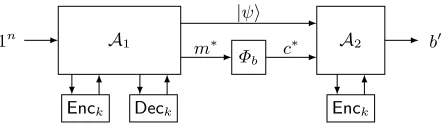
Fig. 1.IndGame0fromDefinition 4.
Game 0: This is the game IndGame0(Π,A, n), which we briefly review for convenience (see also Figure 1). In the pre-challenge phase, A1 gets access to oraclesEnck and Deck, and outputs a message m∗ while keeping a private state |ψi for the challenge phase. In the challenge phase, a random bit b $
←− {0,1}is sampled, and A2 is run on input |ψi and a challenge ciphertext
c∗ :=Φb(m∗) := (
Enck(m∗) ifb= 0,
Enck(x) ifb= 1.
Here Enck(x) := (r∗, fk(r∗) ⊕x) where r∗ and x are sampled uniformly at random. In the challenge phase, A2 only has access to Enck and must output a bitb0.Awins ifδbb0 = 1, so we callδbb0 the outcome of the game.
Game 1: This is the same game as Game 0, except we replace fk with a uniformly random functionF :{0,1}n→ {0,1}n.
First, we show that for any adversaryA, the outcome whenAplaysGame 0is at most negligibly
different from the outcome when A plays Game 1. We do this by constructing a quantum oracle
distinguisher D that distinguishes between the QPRF {fk}k and a true random function, with distinguishing advantage
Pr[1←Game 0]−Pr[1←Game 1] ,
which must then be negligible sincef is aQPRF. The distinguisherDgets quantum oracle access to a functiong, which is eitherfk, for a randomk, or a random function, and proceeds by simulating A playingIndGame0 as follows:
1. Run A1, answering encryption queries using classical calls to g in place of fk, and answering decryption queries using quantum oracle calls to g:
|ri|ci|mi 7→ |ri|ci|m⊕ci 7→ |ri|ci|m⊕c⊕g(r)i; 2. Simulate the challenge phase by sampling b $
←− {0,1} and encrypting the challenge using g in place of fk; runA2 and simulate encryption queries as before;
3. When A2 outputsb0, output δbb0.
It remains to show that no QPTadversary can winGame 1with non-negligible probability. To
do this, we design a quantum random access code from any adversary, and use the lower bound on the bias given in Lemma 1.
Intuition. We first give some intuition. In an encryption query, the adversary, either A1 or A2, queries a message, or a superposition of messages P
m|mi, and gets back P
m|mi|r, m⊕F(r)ifor a randomr, from which he can easily get a sample (r, F(r)). Thus, in essence, an encryption query is just classically sampling a random point ofF.
In a decryption query, which is only available to A1, the adversary sends a ciphertext, or a superposition of ciphertexts,P
r,c|r, ciand gets back P
P
r|r, F(r)i. Thus, a decryption query allowsA1to queryF, in superposition. Later in the challenge
phase,A2 gets an encryption (r∗, m⊕F(r∗)) and must decide if m=m∗. Since A2 no longer has access to the decryption oracle, which allows him to queryF, there seem to be two possible ways A2 could learnF(r∗):
1. A2 gets lucky in one of his at most poly(n) many queries to Enck and happens to sample (r∗, F(r∗));
2. Or, the adversary is somehow able to use what he learned while he had access to Deck, and thusF, to learnF(r∗), meaning that the poly(n)-sized quantum memoryA1 sends toA2, that
can depend on queries to F, but which cannot depend onr∗, allows A2 to learn F(r∗).
The first possibility is exponentially unlikely, since there are 2n possibilities for r∗. As we will see shortly, the second possibility would imply a very strong quantum random access code. It would essentially allow A1 to interact with F, which contains 2n values, and make a state, which must
necessarily be of polynomial size, such that A2 can use that state to recover F(r∗) for any of the
2npossible values of r∗, with high probability. We now formalize this intuition. To clarify notation, we will use boldface to denote the shared randomness bitstrings.
Bits to be encoded:
b1, . . . , b2n∈ {0,1}
Bit to be recovered:
j∈ {1, . . . ,2n}
Shared randomness:
s,y1, . . . ,y2n,r1, . . . ,r`∈ {0,1}n
QRACEncoding QRACDecoding
A1 A2
b0
m (r, m⊕f(r))˜
Encquery
r $
←− {0,1}n
(r, c) c⊕f(r)˜
Decquery
mi (ri, mi⊕f(r˜ i))
i-thEncquery
˜
f(r1), . . . ,f(r˜ `)
|ψi
m∗
Φj
c∗
(j, m∗⊕yj)
˜ f(r) :=
(
yr ifbr= 0
yr⊕s ifbr= 1
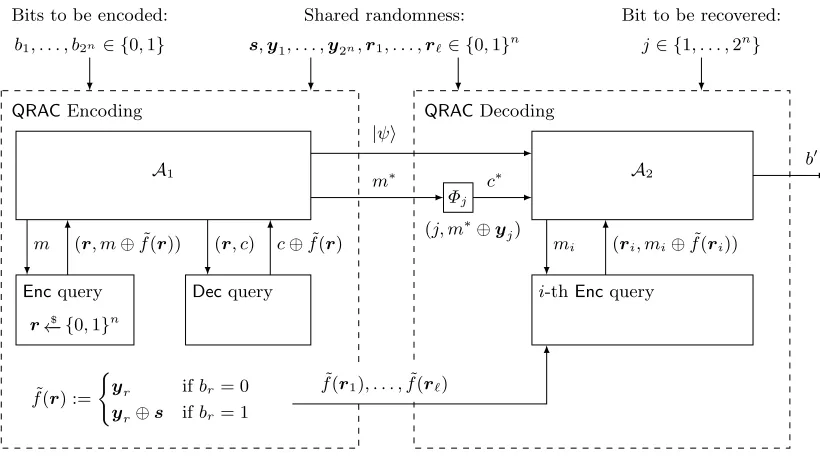
Fig. 2.Quantum random access code construction for thePRFscheme.
Construction of a quantum random access code. LetAbe aQPTadversary with winning probability
p. Let `= poly(n) be an upper bound on the number of queries made byA2. Recall that a random
access code consists of an encoding procedure that takes (in this case) 2n bits b1, . . . , b2n, and
outputs a state % of dimension (in this case) 2poly(n), such that a decoding procedure, given % and an index j ∈ {1, . . . ,2n} outputs bj with some success probability. We define a quantum random access code as follows (see also Figure 2).
Encoding. Let b1, . . . , b2n ∈ {0,1} be the string to be encoded. Let s,y1, . . . ,y2n ∈ {0,1}n be
abuse notation by letting r denote the corresponding integer value between 1 and 2n. Define ˜
f(r) =yr⊕brs. Run A1, answering encryption and decryption queries using ˜f in place of F.
Let m∗ and|ψi be the outputs ofA1 (see Figure 1). Output%= (|ψi, m∗,f˜(r1), . . . ,f˜(r`)). Decoding. Let j ∈ {1, . . . ,2n} be the index of the bit to be decoded (so given % as above, the
goal is to recover bj). Decoding will make use of the values s,y1, . . . ,y2n,r1, . . . ,r` given by
the shared randomness. Upon receiving a query j ∈ {1, . . . ,2n}, run A2 with inputs |ψi and
(j, m∗⊕yj). OnA2’si-th encryption oracle call, use randomnessri, so that if the input to the oracle is |m, ci, the state returned is|m, c⊕(ri, m⊕f˜(ri))i (note that ˜f(ri) is given as part of
%). Return the bit b0 output by A2.
Average bias of the code. We claim that the average probability of decoding correctly, taken over all choices of b1, . . . , b2n ∈ {0,1} and j ∈ {1, . . . ,2n}, is exactly p, the success probability of A.
To see this, first note that from A’s perspective, this is exactly Game 1: the function ˜f is a uniformly random function, and the queries are responded to just as inGame 1. Further, note that
if bj = 0, then m∗⊕yj = m∗⊕f˜(j), so the correct guess for A2 would be 0, and if bj = 1, then
m∗⊕yj =m∗⊕f˜(j)⊕s=x⊕f˜(j) for the uniformly random string x=m∗⊕s, so the correct guess for A2 would be 1.
Therefore, the average bias of the code is p−1/2. We also observe that % has dimension at most 2poly(n), since |ψi must be a poly(n)-qubit state (A1 only runs for poly(n) time), and `, the
number of queries made byA2 must be poly(n), since A2 only runs for poly(n) time. As this code encodes 2n bits into a state of dimension 2poly(n), byLemma 1 (proven inAppendix A), the bias is
O(2−n/2poly(n)) = negl(n), so p≤ 12+ negl(n). ut
4.2 PRP scheme
We now prove the IND-QCCA1 security of a standard encryption scheme based on pseudorandom permutations.
Construction 2 (PRP scheme) Let nbe the security parameter and letP :{0,1}n× {0,1}2n−→ {0,1}2n be an efficient family of permutations {P
k}k. Then, the symmetric-key encryption scheme
PRPscheme[f] = (KeyGen,Enc,Dec) is defined as follows: 1. KeyGen: output k $
←− {0,1}n;
2. Enc:to encrypt m∈ {0,1}n, chooser $
←− {0,1}n and output P
k(m||r);
3. Dec:to decrypt c∈ {0,1}2n, output the first n bits ofP−1
k (c).
As before, we chose a simple set of parameters; in general, the randomness length, plaintext length, and security parameter can be related by arbitrary polynomials.
Theorem 8. If P is aQPRP, then PRPscheme[P] isIND-QCCA1-secure.
Proof. We follow a similar proof strategy as with thePRF scheme. Fix aQPTadversaryAagainst
Π:=PRPscheme[P] = (KeyGen,Enc,Dec) and letndenote the security parameter. We have thatΠ
isIND-QCCA1if and only if noQPTadversary can winIndGame0 with non-negligible bias. First, we show that a version of IndGame0 where we replaceP with a random permutation, described below asGame 1, is indistinguishable from IndGame0, so that the winning probabilities cannot differ by
a non-negligible amount. We then prove that no adversary can win Game 1 with non-negligible
bias, by showing how any adversary for Game 1 can be used to make a quantum random access
Game 0: In the pre-challenge phase, A1 gets access to oracles Enck and Deck. In the challenge phase, A1 outputs m and its private data |ψi; a random bit b $
←− {0,1} is sampled, and A2 is run on input |ψiand a challenge ciphertext
c∗:= (
Enck(m∗) =Pk(m∗||r∗) ifb= 0,
Enck(x) =Pk(x||r∗) ifb= 1,
wherer∗ $
←− {0,1}nandxis sampled uniformly at random. In the challenge phase,A
2 has oracle
access to Enck only and outputs a bit b0. The outcome of the game is simply the bitδbb0.
Game 1: This is the same game as Game 0, except we now replace Pk with a perfectly random permutation π :{0,1}2n→ {0,1}2n.
We show that for any adversary A, the outcome when A plays Game 0 is at most negligibly
different from the outcome whenAplaysGame 1. We construct a quantum oracle distinguisherD
that distinguishes between Pk and a perfectly random permutation, with distinguishing advantage |Pr[1←Game 0]−Pr[1←Game 1]|,
which must then be negligible since Pk is a QPRP. Here, the distinguisher D receives quantum oracle access to a functionϕ, which is eitherPk for a randomk, or a random permutation π, and proceeds by simulatingA playingIndGame0 as follows:
1. Run A1, answering encryption queries using oracle calls toϕin place of Pk, where for a given input and via randomness r,
Enc: |mi|ci 7→ |mi|c⊕ϕ(m||r)i.
Answer decryption queries using quantum oracle calls to ˜ϕ−1, a function that first computes
ϕ−1 but then (analogous to the PRP construction) discards the last n bits of the pre-image corresponding to the randomness, i.e.
Dec: |ci|mi 7→ |ci|m⊕ϕ˜−1(c)i.
2. Simulate the challenge phase by sampling b $
←− {0,1} and encrypting using a randomness r∗
together with a classical call to ϕ in place of Pk; run A2 and simulate encryption queries as
before.
3. When A2 outputsb0, output δbb0.
It remains to show that no QPT adversary can win Game 1 with non-negligible probability.
To do this, we will again design a random access code from any adversary’s strategy with success probability p, and use the lower bound on the bias given in Lemma 1. We will then construct a
QRACwith bias negl(n) from this adversary, and hence conclude that p≤ 1
2 + negl(n).
Construction of a quantum random access code. LetAbe aQPTadversary with winning probability
pand let`= poly(n) be an upper bound on the number of queries made byA2. When constructing
aQRACfor thePRPscheme, we shall also assume for simplicity that both the encoder and decoder share a random permutation (as part of the shared randomness). According to the well known
Bits to be encoded:
b1, . . . , b2n∈ {0,1}
Bit to be recovered:
j∈ {1, . . . ,2n}
Shared randomness:
s,y1, . . . ,y2n,r1, . . . ,r`
QRACEncoding QRACDecoding
A1 A2
b0
m P˜(m||r)
Encquery
r $
←− {0,1}n
c P˜−1(c)
Decquery
mi P˜(mi||ri) =ymi⊕bris||ri
i-thEncquery
br1, . . . , br` |ψi
m∗
Φj
c∗
ym∗||j
˜
P(x||r) :=
(
yx||r ifbr= 0
yx⊕s||r ifbr= 1
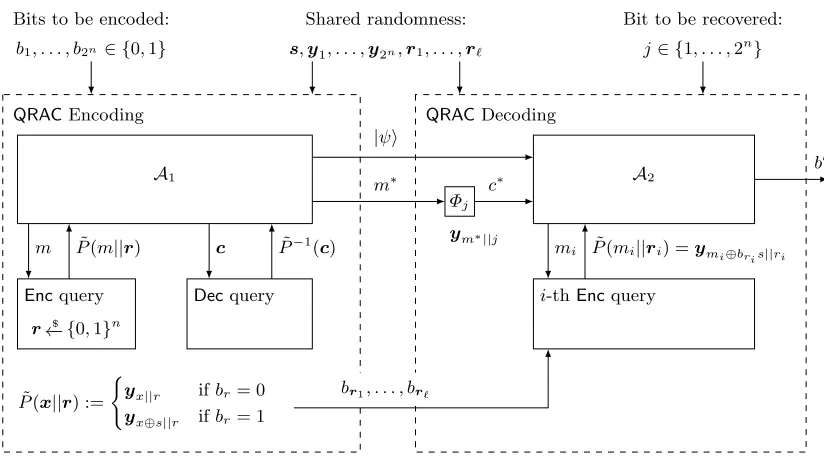
Fig. 3.Quantum random access code construction for thePRPscheme.
Encoding. Letb1, . . . , b2n ∈ {0,1}be the string to be encoded and let the shared randomness be
given by a random string s together with a random permutation y = y1, . . . ,y22n ∈ {0,1}2n
and a set of random strings r1, . . . ,r` ∈ {0,1}n. Using b1, . . . , b2n, we define a new random
permutation by letting ˜P(x||r) :=yx⊕brs||r ( ˜P remains a permutation
7). RunA
1 by answering
encryption and decryption queries using ˜P in place of π (for decryption, use ˜P−1 and discard the last nbits). Letm∗ and |ψibe the outputs of A1. Then, output %= (|ψi, m∗, br1, . . . , brl).
Decoding. Let j ∈ {1, . . . ,2n} be the index of the bit to be decoded; so given % as above, we will recover bj by making use of the shared randomness defined above. Upon receiving a query
j ∈ {1, . . . ,2n}, runA2 with inputs |ψi and c∗ =ym∗||j. Return the bitb0 output byA2.
Average bias of the code. We claim that the average probability of decoding correctly, taken over all choices of b1, . . . , b2n ∈ {0,1} and j∈ {1, . . . ,2n}, is exactlyp, the success probability ofA. To
see this, first note that fromA’s perspective, this is exactlyGame 1: the function ˜P is a uniformly random permutation, and the queries are responded to just as in Game 1. Further, note that if
bj = 0, the challenge amounts to ˜P(m∗||j) =ym∗||j, so the correct guess forA2 would be 0, and if
bj = 1, then yx||j is an encryption of a uniformly random string x=m∗⊕s, so the correct guess forA2 would be 1.
Therefore, the average bias of the code is p−1/2. We now proceed with a similar analysis as with thePRFscheme. Note that%has dimension at most 2poly(n), since|ψimust be a poly(n)-qubit state (A1 only runs for poly(n) time), and `, the number of queries made by A2 must be poly(n),
sinceA2 only runs for poly(n) time. As this code encodes 2n bits into a state of dimension 2poly(n), by Lemma 1, the bias is O(2−n/2poly(n)) = negl(n), so p≤ 12 + negl(n). ut
7
5 Quantum algorithm for linear rounding functions a a + 1 . . . a + b − 1 b a + b . . . a + 2 b − 1 b . . . a + ( c − 2) b . . . a + ( c − 1) b − 1 b a + ( c − 1) b . . . a − 1
b−(cb−q) I0(a, b) I1(a, b) Ic−2(a, b) Ic−1(a, b)
Fig. 4.DividingZqintoc=dq/beblocks, starting froma. The firstc−1 blocks, labelledI0(a, b), . . . , Ic−2(a, b), have sizeband the last, labelledIc−1(a, b), contains the remainingb−(cb−q)≤belements ofZq.
In this section, we analyze the performance of the Bernstein-Vazirani algorithm [BV97] with a modified version of the oracle. While the original oracle computes the inner product moduloq, our version only gives partial information about it by rounding its value to one of dq/be blocks of size
b, for someb∈ {1, . . . , q−1} (ifbdoes not divide q, one of the blocks will have size< b).
Definition 6. Let n≥1 be an integer and q ≥2 be an integer modulus. Leta∈Zq, b∈Zq\ {0}
and c :=dq/be. We partition Zq into c disjoint blocks (most of them of size b) starting from a as
follows (see Figure 4):
Iv(a, b) := (
{a+vb, . . . , a+vb+b−1} if v∈ {0, . . . , c−2},
{a+vb, . . . , a+q−1} if v=c−1.
Based on this partition, we define a family LRFk,a,b :Znq −→Zcof keyed linear rounding functions,
with keyk∈Zn
q, as follows:
LRFk,a,b(x) :=v ifhx,ki ∈Iv(a, b).
Algorithm 1:Bernstein-Vazirani for linear rounding functions
Parameters:n,q,b∈ {1, . . . , q−1},c=dq/be.
Input :Quantum oracle ULRF :|xi|zi 7→ |xi|z+LRFk,a,b(x) (mod c)iwhere
x∈Znq,z∈Zcand LRFk,a,b is the rounded inner product function for some unknownk∈Zn
q and a∈Zq.
Output :String ˜k∈Zn
q such that ˜k=kwith high probability. 1. Prepare the uniform superposition and append √1
c Pc−1
z=0ωzc|zi whereωc=e2πi/c: 1
√
qn X x∈Zn
q
|xi ⊗√1
c
c−1
X z=0
ωcz|zi.
2. Query the oracleULRF forLRFk,a,b to obtain 1 √
qn X x∈Znq
ω−LRFk,a,b(x)
c |xi ⊗ 1 √ c c−1 X z=0
ωcz|zi.
3. Discard the last register and apply the quantum Fourier transform QFT⊗n
Zq.
The following theorem shows that the modulo-q variant of the Bernstein-Vazirani algorithm (Algorithm 1) can recover k with constant probability of success by using only a single quantum query to LRFk,a,b.
Theorem 9. LetULRFbe the quantum oracle for the linear rounding functionLRFk,a,bwith modulus
q ≥2, block size b∈ {1, . . . , q−1}, and an unknown a∈ {0, . . . , q−1}, and unknown key k∈Zn q
such that khas at least one entry that is a unit moduloq. Letc=dq/beand d=cb−q. By making one query to the oracleULRF,Algorithm 1recovers the keykwith probability at least4/π2−O(d/q). Proof. For an integer m, let ωm = e2πi/m. Several times in this proof, we will make use of the identityP`−1
z=0ωmrz=ω r(`−1)/2
m
sin(`rπ/m)
sin(rπ/m)
.
Letc=dq/be. Throughout this proof, letLRF(x) =LRFk,a,b(x). By querying with√1cPcz−1=0ωcz|zi in the second register, we are using the standard phase kickback technique, which puts the output of the oracle directly into the phase:
|xi√1
c
c−1
X z=0
ωcz|ziULRF
7−→ |xi√1
c
c−1
X z=0
ωcz|z+LRF(x) (modc)i
= |xi√1
c
c−1
X z=0
ωcz−LRF(x)|zi=ω−LRF(c x)|xi√1
c
c−1
X z=0
ωzc|zi.
Thus, after querying the uniform superposition over the cipherspace with √1
c Pc−1
z=0ωcz|zi in the second register, we arrive at the state
1 √
qn X x∈Znq
ω−LRF(c x)|xi√1
c
c−1
X z=0
ωzc|zi.
Note thatωc=ωqq/c. If we discard the last register and applyQFT⊗Zqn, we get
|ψi= 1
qn X y∈Znq
X x∈Znq
ω−(q q/c)LRF(x)+hx,yi|yi.
We then perform a complete measurement in the computational basis. The probability of obtaining the key kis given by
|hk|ψi|2= 1 qn X x∈Znq
ω− q
cLRF(x)+hx,ki
q 2 = 1 qn c−1 X v=0 ω− q cv q X x∈Zn
q:LRF(x)=v ωqhx,ki
2 . (3)
We are assuming thatkhas at least one entry that is a unit moduloq. For simplicity, suppose that entry iskn. Let k1:n−1 denote the firstn−1 entries of k. Then, for anyv∈ {0, . . . , c−2}:
X x∈Zn
q:LRF(x)=v
ωqhx,ki= X x∈Zn
q:hx,ki∈Iv(a,b) ωqhx,ki
= X
y∈Znq−1
ωhy,k1:n−1i q
X xn∈Zq:
xnkn∈Iv(a−hy,k1:n−1i,b)
ωxnkn
(Recall the definition ofIv(a, b) fromDefinition 6). Sinceknis a unit, for eachz∈Iv(a−hy,k1:n−1i),
there is a uniquexn∈Zqsuch thatxnkn=z. Thus, for a fixedy∈Znq−1, lettinga0=a−hy,k1:n−1i,
we have:
X xn∈Zq:xnkn∈Iv(a0,b)
ωxnkn
q =
a0+(v+1)b−1
X z=a0+vb
ωqz=ωaq0+vb
b−1
X z=0
ωqz,
which we can plug into (4) to get:
X x∈Znq:
LRF(x)=v
ωhqx,ki= X y∈Znq−1
ωhy,k1:n−1i q ωa
−hy,k1:n−1i+vb q
b−1
X z=0
ωqz=qn−1ωqa+vb
b−1
X z=0
ωzq. (5)
We can perform a similar analysis for the remaining case whenv=c−1. Recall thatd=cb−q ≥0 sovb=cb−b=d+q−b=−(b−d) (mod q) and we get
X x∈Znq:LRF(x)=c−1
ωqhx,ki=qn−1ωaq−(b−d)
b−d−1
X z=0
ωqz. (6)
This is slightly different from the v < c−1 case, shown in (5), but very similar. If we substitute
v=c−1 in (5) and compare it to (6), we get
qn−1ωaq−(b−d)
b−d−1
X z=0
ωqz−qn−1ωaq−(b−d)
b−1
X z=0
ωzq
=qn−1
b−1 X z=b−d
ωzq
=qn−1
d−1 X z=0
ωqz
=qn−1
sin(πd/q) sin(π/q)
≤qn−1πd/q
2/q =q
n−1π
2d. (7)
Above, we have used the facts sinx≤x, and|sinx| ≥2x/πwhen|x| ≤π/2. Now, plugging (5) into (3) for all thev < c−1 terms, and using (7) and the triangle inequality for the v=c−1 term, we get:
|hk|ψi| ≥ 1 qn c−1 X v=0
ωq−qv/c·qn−1ωaq+vb
b−1
X z=0
ωzq
− 1
qnω
−q(c−1)/c q ·qn
−1π 2d =1 q c−1 X v=0
ωqv(b−q/c)sin(bπ/q)
sin(π/q) −π 2 d q =1 q
sin(bπ/q) sin(π/q)
c−1 X v=0
ωvq(b−q/c)
−π 2 d
q. (8)
Since b−q/c=d/c, we can bound the sum as follows: c−1 X v=0
ωvq(b−q/c)
= c−1 X v=0
ωvd/cq
≥ c−1 X v=0 cos 2π q vd c ≥ c−1 X v=0 cos 2π q d = ccos 2πd q (9)
To get the inequality (9), we used 0 ≤ v ≤ c and the assumption that d/q ≤ 1/4 (if d/q > 1/4, the claim of the theorem is trivial), which implies that 2πvc dq ≤ π
2. The last inequality follows from
|cosx| ≥√1−x2.
Next, we bound sin(sin(bπ/qπ/q)). When b/q≤1/2, bπ/q ≤π/2, so we have sin(bπ/q) ≥2b/q. We also have sin(π/q)≤π/q. Thus,
sin(bπ/q) sin(π/q) ≥
2b π .
On the other hand, whenb/q >1/2, we must havec= 2 and b= q+2d. In that case
sin(bπ/q) = sinπ(q+d) 2q = sin
π
2 +
π
2
d q
= cosπd 2q ≥
s 1−
πd
2q
2
.
Since sin(π/q)≤π/q and q≥2b,
sin(bπ/q) sin(π/q) ≥
r
1−πd
2q 2
π/q ≥
2b π
p
1−O(d/q).
Thus, in both cases, sin(sin(bπ/qπ/q)) ≥ 2b π
p
1−O(d/q). Plugging this and (10) into (8), we get:
|hk, ψi| ≥ 1
q ·
2b π
p
1−O(d/q)·cp1−O(d/q)−O(d/q)
= 2
π bc
q −O(d/q) =
2
π q+d
q −O(d/q) =
2
π −O(d/q),
completing the proof. ut
6 Key recovery against LWE
In this section, we consider variousLWE-based encryption schemes and show usingTheorem 9that the decryption key can be efficiently recovered using a single quantum decryption query (Section 6.1, Section 6.2, andSection 6.3). Then, inSection 6.4, we show that a single quantumencryption query can be used to recover the secret key in a symmetric-key version of LWE, as long as the querying algorithm also has control over part of the randomness used in the encryption procedure.
6.1 Key recovery via one decryption query in symmetric-key LWE
Recall the following standard construction of anIND-CPAsymmetric-key encryption scheme based on the LWE assumption [Reg05].
Construction 3 (LWE-SKE [Reg05]) Letn≥1be an integer, letq≥2be an integer modulus and let χ be a discrete and symmetric error distribution. Then, the symmetric-key encryption scheme LWE-SKE(n, q, χ) = (KeyGen,Enc,Dec) is defined as follows:
1. KeyGen: output k $ ←−Znq;
2. Enck: to encryptb∈ {0,1}, sample a←−$ Znq, e
χ
←−Zq and output (a,ha,ki+b q
2
+e); 3. Deck: to decrypt(a, c), output 0 if |c− ha,ki| ≤q
4
As a corollary of Theorem 9, an adversary that is granted a single quantum decryption query can recover the key with probability at least 4/π2−o(1):
Corollary 1. There is a quantum algorithm that makes one quantum query toLWE-SKE.Deck and
recovers the entire key k with probability at least 4/π2−o(1).
Proof. Note that LWE-SKE.Deck coincides with a linear rounding functionLRFk0,a,b for a keyk0= (−k,1)∈Zn+1
q , which has a unit in its last entry. In particular, b=dq/2e, and if q = 3 (mod 4),
a=dq/4e, and otherwise,a=−bq/4c. Thus, byTheorem 9,Algorithm 1makes one quantum query toLRFk0,a,b, which can be implemented using one quantum query toLWE-SKE.Deck, and recovers
k0, and thus k, with probability 4/π2−O(d/q), whered=dq/beb−q ≤1. ut Note that the key in this scheme consists ofnlogq uniformly random bits, and that a classical decryption query yields at most a single bit of output. It follows that any algorithm making t
classical queries to the decryption oracle recovers the entire key with probability at most 2t−nlogq. A straightforward key-recovery algorithm does in fact achieve this.
6.2 Key recovery via one decryption query in public-key LWE
The key-recovery attack described in Corollary 3 required nothing more than the fact that the decryption procedure ofLWE-SKEis just a linear rounding function whose key contains the decryp-tion key. As a result, the attack is naturally applicable to other variants of LWE. In this section, we consider two public-key variants. The first is the standard construction of IND-CPA public-key encryption based on the LWE assumption, as introduced by Regev [Reg05]. The second is the
IND-CPA-secure public-key encryption schemeFrodoPKE[Alk+17], which is based on a construction of Lindner and Peikert [LP11]. In both cases, we demonstrate a dramatic speedup in key recovery using quantum decryption queries.
We emphasize once again that key recovery against these schemes was already possible classically using a linear number of decryption queries. Our results should thus not be interpreted as a weakness of these cryptosystems in their stated security setting (i.e., IND-CPA). The proper interpretation is that, if these cryptosystems are exposed to chosen-ciphertext attacks, then quantum attacks can be even more devastating than classical ones.
Regev’s public-key scheme. The standard construction of anIND-CPApublic-key encryption scheme based onLWE is the following.
Construction 4 (LWE-PKE [Reg05]) Let m ≥ n ≥ 1 be integers, let q ≥ 2 be an integer mod-ulus, and let χ be a discrete error distribution over Zq. Then, the public-key encryption scheme
LWE-PKE(n, q, χ) = (KeyGen,Enc,Dec) is defined as follows: 1. KeyGen:output a secret keysk=k $
←−Znq and a public keypk= (A,Ak+e)∈Z
m×(n+1)
q , where
A $
←−Zmq ×n, e
χ
←−Zmq , and all arithmetic is done modulo q.
2. Enc: to encrypt b∈ {0,1}, pick a random v ∈ {0,1}m with Hamming weight roughly m/2 and
output (vTA,vT(Ak+e) +bbq2c)∈Znq+1, where vT denotes the transpose of v.
3. Dec:to decrypt (a, c), output 0 if |c− ha,ski| ≤q
4
, else output1.
Although the encryption is now done in a public-key manner, all that matters for our purposes is the decryption procedure, which is identical to the symmetric-key case, LWE-SKE. We thus have the following corollary, whose proof is identical to that of Corollary 3:
Corollary 2. There is a quantum algorithm that makes one quantum query to LWE-PKE.Decsk
Frodo public-key scheme. Next, we consider the IND-CPA-secure public-key encryption scheme
FrodoPKE, which is based on a construction by Lindner and Peikert [LP11]. Compared toLWE-PKE, this scheme significantly reduces the key-size and achieves better security estimates than the initial proposal by Regev [Reg05]. For a detailed discussion ofFrodoPKE, we refer to [Alk+17]. We present the entire scheme for completeness, but the important part for our purposes is the decryption procedure.
Construction 5 (FrodoPKE [Alk+17]) Let n,m,¯ n¯ be integer parameters, let q ≥2be an integer power of 2, let B denote the number of bits used for encoding, and let χ be a discrete symmetric error distribution. The public-key encryption scheme FrodoPKE= (KeyGen,Enc,Dec) is defined as follows:
1. KeyGen: generate a matrix A $
←−Znq×n and matrices S,E
χ
←−Znqׯn; compute B = AS+E ∈
Znqׯn; output the key-pair (pk,sk) with public keypk= (A,B) and secret key sk=S.
2. Enc: to encrypt m ∈ {0,1}B·m¯·¯n (encoded as a matrix M ∈
Zmq¯×¯n with each entry having 0s
in all but the B most significant bits) with public key pk, sample error matricesS0,E0←−χ Zmq¯×n
and E00←−χ Zmq¯×¯n; compute C1=S0A+E0 ∈Zqm¯×n and C2 =M +S0B+E00∈Zmq¯×¯n; output
the ciphertext (C1,C2).
3. Dec:to decrypt (C1,C2)∈Zmq¯×n×Zmq¯×¯n with secret-key sk=S, compute M =C2−C1S ∈ Zmq¯×¯n. For each (i, j)∈[ ¯m]×[¯n], output the first B bits of Mi,j.
We now show how to recover ¯m of the ¯ncolumns of the secret key S using a single quantum query toFrodoPKE.DecS. If ¯m= ¯n, as in sample parameters given in [Alk+17], then this algorithm recoversS completely.
Theorem 10. There exists a quantum algorithm that makes one quantum query toFrodoPKE.DecS
and recovers any choice ofm¯ of the¯ncolumns ofS. For each of the chosen columns, if that column has at least one odd entry, then the algorithm succeeds in recovering the column with probability at least 4/π2.
Proof. Let s1, . . . ,sn¯ be the columns of S. Let U denote the map:
U :|ci|z1i. . .|zn¯i 7→ |ci|z1+LRFs1,0,q/2B(c)i. . .|z¯n+LRFs¯n,0,q/2B(c)i,
for anyc∈Zn
q andz1, . . . , z¯n∈Z2B. We first argue that one call toFrodoKEM.DecS can be used to
implementU⊗m¯. Then we show that one call toU can be used to recover any choice of the columns of S with probability 4/π2, as long as it has at least one entry that is odd.
Let Trunc :Zq 7→ Z2B denote the map that takes x ∈Zq to the integer represented by the B
most significant bits of the binary representation of x. We have, for anyC1 ∈Zqm¯×n, C2 = 0m¯×¯n,
and any {zi,j}i∈[ ¯m],j∈[¯n]⊆Z2B:
UFrodoKEM.Dec :|C1i|0m¯·¯ni
O i∈[ ¯m],j∈[¯n]
|zi,ji 7→ |C1i|0m¯·¯ni
O i∈[ ¯m],j∈[¯n]
|zi,j+Trunc([C1S]i,j)i. (11)
Above, [C1S]i,j represents the ij-th entry of C1S. If c1, . . . ,cm¯ denote the rows of C1, then
[C1S]i,j = hci,sji. Thus, Trunc([C1S]i,j) = LRFsj,0,q/2B(ci), the linear rounding function with
Discarding the second register (containingC2 = 0), the right-hand side of (11) becomes
|c1i. . .|cm¯i O i∈[ ¯m],j∈[¯n]
|zi,j+LRFsj,0,q/2B(ci)i. (12)
Reordering the registers of (12), we get:
O i∈[ ¯m]
|ciiO j∈[¯n]
|zi,j+LRFsj,0,q/2B(ci)i
=U
⊗m¯
O i∈[ ¯m]
|ciiO j∈[¯n]
|zi,ji .
Thus, we can implement U⊗m¯ using a single call toFrodoKEM.DecS.
Next we show that for any particular j ∈[¯n], a single call to U can be used to recover sj, the
j-th column of S, with probability at least 4/π2, as long as at least one entry of sj is odd. To do this, we show how one use of U can be used to implement one phase query to LRFsj,0,q/2B. Then
the result follows from the proof of Theorem 9. Let |ϕi= 2−B/2P2B−1
z=0 |zi, and define
|φji=|ϕi⊗(j−1)⊗ 1 √
2B
2B−1
X z=0
ωz2B|zi ⊗ |ϕi⊗(¯n−j).
Then for any c∈Zn
q, we have: 1 √
2B
2B−1
X z=0
|z+LRFsi,0,q/2B(c)i=
1 √
2B
2B−1
X z=0
|zi=|ϕi,
since addition here is modulo 2B, and
1 √
2B
2B−1
X z=0
ω2zB|z+LRFsj,0,q/2B(c)i=
1 √
2B
2B−1
X z=0
ω2zB−LRFsj ,0,q/2B(c)|zi.
Thus:
U(|ci|φji) =|ci|ϕi⊗(j−1)⊗ 1 √
2B
2B−1
X z=0
ω2z−LRFB sj ,0,q/2B(c)|zi ⊗ |ϕi
⊗(¯n−j)
=ω2−LRFB sj ,0,q/2B(c)|ci|φji.
Thus, by the proof ofTheorem 9, if we applyU toq−n/2P
c∈Znq |ci|φji, Fourier transform the first
register, and then measure, assuming sj has at least one entry that is a unit8 we will measure sj
with probability at leastπ2/4−O(d/q), where d=q/2Bdq/(q/2B)e −q = 0.
Thus, if we want to recover columns j1, . . . jm¯ of S, we apply our procedure for U⊗m¯, which
costs one query to FrodoKEM.DecS, to the state X
c∈Znq
1 √
qn|ci|φj1i ⊗ · · · ⊗ X c∈Znq
1 √
qn|ci|φjm¯i,
Fourier transform each of the cregisters, and then measure. ut 8
6.3 Key recovery via one decryption query in public-key Ring-LWE
Next, we analyze key-recovery with a single quantum decryption query against Ring-LWE encryp-tion. Unlike the plainLWE-based encryption schemes we considered in the previous sections,
Ring-LWEencryption uses noisy samples over a polynomial ring. In the following, we consider the basic, bit-by-bit Ring-LWEpublic-key encryption scheme introduced in [LPR13a;LPR13b]. It is based on the rings R= Z[x]/hxn+ 1i and Rq := R/qR =Zq[x]/hxn+ 1i for some power-of-two integer n and poly(n)-bounded prime modulus q. The details of the error distribution χ below will not be relevant to our results.
Construction 6 (Ring-LWE-PKE [LPR13a; LPR13b]) Let n ≥ 1 be an integer, let q ≥ 2 be an integer modulus, and let χ be an error distribution over R. The public-key encryption scheme Ring-LWE-PKE = (KeyGen,Enc,Dec) is defined as follows:
1. KeyGen: sample a $
←− Rq and e, s←− Rχ ; output sk=s and pk= (a, c=a·s+e (modq))∈ R2
q.
2. Enc: to encrypt b∈ {0,1}, sample r, e1, e2←− Rχ and output a ciphertext pair (u, v)∈ R2q, where
u=a·r+e1 (modq) and v=c·r+e2+bbq/2c (modq).
3. Dec: to decrypt(u, v), compute v−u·s= (r·e−s·e1+e2) +bbq/2c (modq) ∈ Rq; output 0
if the constant term of the polynomial is closer to 0 than bq/2c, else output 1.
We note that our choice of placing single-bit encryption in the constant term of the polynomial is somewhat arbitrary. Indeed, it is straightforward to extend our results to encryption with respect to other monomials. We show the following corollary toTheorem 9.
Corollary 3. There is a quantum algorithm that makes one quantum query toRing-LWE-PKE.Decs
and recovers the entire key swith probability at least 4/π2−o(1).
Proof. We first analyze the decryption function. Let (p)0 denote the constant term of a polynomial
p∈ Rq. Then, for any two polynomials u=Pn−1
j=0 ujxj and s= Pn−1
j=0sjxj ∈ Rq, we can identify the constant term of u·sas
(u·s)0=u0s0+
n−1
X j=1
ujsn−jxjxn−j ≡u0s0−u1sn−1−u2sn−2−. . .−un−1s1 (modq), (13)
since xn ≡ −1 in Rq. We show that the outcome of Ring-LWE-PKE.Decs(u, v) coincides with a binary linear rounding function over Znq. Let u,s∈Znq denote the coefficient vectors of u, s ∈ Rq respectively, and define a constant polynomial v ≡v0 ∈ Rq and vector u0 := (u, v0) ∈ Znq+1, for some v0 ∈ Zq. Consequently, Ring-LWE-PKE.Decs(u, v0) rounds the inner product hu0,s0i, where s0 = (−s0 (modq), sn−1, . . . , s1,1). Thus, we can run the Bernstein-Vazirani algorithm for binary
linear rounding functions on a uniform superposition over Znq and recover s from s0 with simple classical post-processing. Note also that any choice of isomorphism betweenRq andZnq necessarily preserves the inner product in Eq.(13), and thus any measurement outcome can be mapped back to the standard basis prior to post-processing – independently of the actual ring representation used in practice. By Theorem 9,Algorithm 1 makes one quantum query to LRFs0,q, which can be implemented using one quantum query to Ring-LWE-PKE.Decs, and recovers s0, and thus s, with
probability 4/π2−o(1). ut
6.4 Key recovery via a randomness-access query
is whether a similar statement can be made for encryption queries. Classically, it is known that the symmetric key version of LWE described in Construction 3, LWE-SKE, can be broken using a linear number of classical encryption queries when the adversary is also allowed to choose the randomness used by the query: the adversary simply usese= 0 each time, withatakingnlinearly independent values. In case the adversary is allowed to make quantum encryption queries with randomness access, a single quantum query suffice to recover the entire key with non-negligible probability, even when the adversary only has control over a part of the randomness used by the encryption: the randomness used to prepare vectorsa, but not the randomness used to select the error e. Specifically, the adversary is given quantum oracle access to the randomness-access encryption oracle UEncRA
k such that, on input (b;a), the adversary receives
EncRAk (b;a) = (a,ha,ki+bbq/2c+e),
where e← χ. We extend this to a quantum randomness-access oracle by answering each element of the superposition using i.i.d. errors ea←χ:
UEncRAk :|mi|ai|ci 7→ |mi|ai|c⊕EncRAk (m;a)i.
This model is identical to the noisy learning model considered by Grilo et al. [GKZ17] and thus matches the original proposal by Bshouty and Jackson [BJ98].
First, it is not hard to see that algorithms making classical queries to the above oracle can extract at most logq bits of key from each query (specifically, from the last component of the ciphertext), and thus still require a linear number of queries to recover the complete key with non-negligible probability.
On the other hand, by a slight generalization of the proof of Theorem IV.1 from Ref. [GKZ17], we can recover the entire key with inverse polynomial success probability using a single query to
UEncRA
k as long as the noise magnitureη is polynomial inn, sinceϕ(q) =Ω(q/log logq), for Euler’s
totient functionϕ.
Theorem 11. Consider LWE-SKE(n, q, χ) with an arbitrary integer modulus 2≤q ≤exp(n) and a symmetric error distributionχ of noise magnitudeη. Then, there exists a quantum algorithm that makes one query to a randomness-accessible quantum encryption oracle for LWE-SKE(n, q, χ) and recovers the entire key with probability at least ϕ(q)/(24ηq)−o(1).
Finally, in a different model in which a single error e ← χ is used for every branch of the superposition of a single query (independent of a) we can recover k using a single query to the randomness access encryption oracle: simply query |0i√1
qn
P
a∈Znq |ai
1 √
q Pq−1
z=0ωqz|zi to get |0i√1
qn
P a∈Znq ω
−ha,ki
q |ai√1qPqz−1=0ωqz|z+ei, apply the quantum Fourier transform to the second register, and then measure the second register to getk with probability 1.
References
[Alk+17] Erdem Alkim, Joppe W. Bos, L´eo Ducas, Patrick Longa, Ilya Mironov, Michael Naehrig, Valeria Nikolaenko, Chris Peikert, Ananth Raghunathan, Douglas Stebila, Karen East-erbrook, and Brian LaMacchia. “FrodoKEM – Learning With Errors Key Encapsula-tion”. 2017.
[BJ15] Anne Broadbent and Stacey Jeffery.“Quantum homomorphic encryption for circuits of lowT-gate complexity”. In:Advances in Cryptology – CRYPTO 2015. Ed. by Rosario Gennaro and Matthew Robshaw. Springer, 2015, pp. 609–629. arXiv: 1412.8766. [BJ98] Nader H. Bshouty and Jeffrey C. Jackson. “Learning DNF over the uniform
distribu-tion using a quantum example oracle”. In:SIAM Journal on Computing 28.3 (1998), pp. 1136–1153.
[Ble98] Daniel Bleichenbacher.“Chosen ciphertext attacks against protocols based on the RSA encryption standard PKCS #1”. In: Advances in Cryptology – CRYPTO ’98. Ed. by Hugo Krawczyk. Springer, 1998, pp. 1–12.
[BV97] Ethan Bernstein and Umesh Vazirani.“Quantum complexity theory”. In:SIAM Jour-nal on Computing 26.5 (1997), pp. 1411–1473.
[BZ13a] Dan Boneh and Mark Zhandry.“Quantum-secure message authentication codes”. In:
Advances in Cryptology – EUROCRYPT 2013. Ed. by Thomas Johansson and Phong Q. Nguyen. Springer, 2013, pp. 592–608. Cryptology ePrint Archive:2012/606. [BZ13b] Dan Boneh and Mark Zhandry.“Secure signatures and chosen ciphertext security in a
quantum computing world”. In:Advances in Cryptology – CRYPTO 2013. Ed. by Ran Canetti and Juan A. Garay. Springer, 2013, pp. 361–379. Cryptology ePrint Archive: 2013/088.
[Che+16] Lily Chen, Stephen Jordan, Yi-Kai Liu, Dustin Moody, Rene Peralta, Ray Perlner, and Daniel Smith-Tone.“Report on post-quantum cryptography”. Tech. rep. National Institute of Standards and Technology, 2016.
[FO99] Eiichiro Fujisaki and Tatsuaki Okamoto. “Secure integration of asymmetric and sym-metric encryption schemes”. In: Advances in Cryptography – CRYPTO 1999. 1999, pp. 537–554.
[GGM86] Oded Goldreich, Shafi Goldwasser, and Silvio Micali.“How to construct random func-tions”. In:Journal of the ACM 33.4 (1986), pp. 792–807.
[GHS16] Tommaso Gagliardoni, Andreas H¨ulsing, and Christian Schaffner.“Semantic security and indistinguishability in the quantum world”. In:Advances in Cryptology – CRYPTO 2016. Ed. by Matthew Robshaw and Jonathan Katz. Springer, 2016, pp. 60–89. arXiv:
1504.05255.
[GKZ17] Alex B. Grilo, Iordanis Kerenidis, and Timo Zijlstra. “Learning with errors is easy with quantum samples”. 2017. arXiv: 1702.08255.
[GL89] Oded Goldreich and Leonid A. Levin.“A hard-core predicate for all one-way functions”. In:Proceedings of the Twenty-first Annual ACM Symposium on Theory of Computing. STOC ’89. Seattle, Washington, USA: ACM, 1989, pp. 25–32.
[Gol09] Oded Goldreich. “Foundations of Cryptography: Volume 2, Basic Applications”. Cam-bridge, UK: Cambridge University Press, 2009.
[HH00] Lisa Hales and Sean Hallgren. “An improved quantum Fourier transform algorithm and applications”. In: Proceedings of the 41st Annual Symposium on Foundations of Computer Science. 2000, pp. 515–525.
[Kap+16] Marc Kaplan, Ga¨etan Leurent, Anthony Leverrier, and Mar´ıa Naya-Plasencia. “Break-ing symmetric cryptosystems us“Break-ing quantum period find“Break-ing”. In:Advances in Cryptol-ogy – CRYPTO 2016. Ed. by Matthew Robshaw and Jonathan Katz. Springer, 2016, pp. 207–237. arXiv: 1602.05973.