Study; Country, Design and Control Condition
Participants*; Age; Gestational weeks at
recruitment (if
reported) PA Intervention (Type; Frequency and duration)
Evaluation (Baseline;
Follow-up and PA measure) Results
RCTs
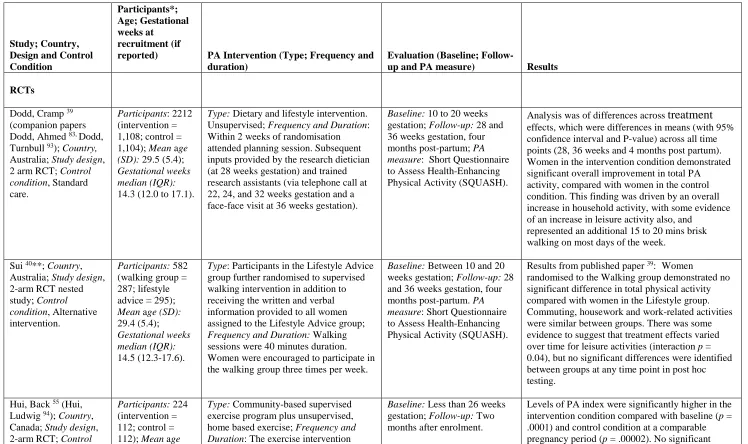
Dodd, Cramp 39
(companion papers Dodd, Ahmed 83, Dodd,
Turnbull 93); Country,
Australia; Study design, 2 arm RCT; Control condition, Standard care.
Participants: 2212 (intervention = 1,108; control = 1,104); Mean age (SD): 29.5 (5.4);
Gestational weeks median (IQR):
14.3 (12.0 to 17.1).
Type: Dietary and lifestyle intervention. Unsupervised; Frequency and Duration: Within 2 weeks of randomisation attended planning session. Subsequent inputs provided by the research dietician (at 28 weeks gestation) and trained research assistants (via telephone call at 22, 24, and 32 weeks gestation and a face-face visit at 36 weeks gestation).
Baseline: 10 to 20 weeks gestation; Follow-up: 28 and 36 weeks gestation, four months post-partum; PA measure: Short Questionnaire to Assess Health-Enhancing Physical Activity (SQUASH).
Analysis was of differences across
treatment
effects, which were differences in means (with 95% confidence interval and P-value) across all time points (28, 36 weeks and 4 months post partum). Women in the intervention condition demonstrated significant overall improvement in total PA activity, compared with women in the control condition. This finding was driven by an overall increase in household activity, with some evidence of an increase in leisure activity also, and
represented an additional 15 to 20 mins brisk walking on most days of the week.
Sui 40**; Country,
Australia; Study design, 2-arm RCT nested study; Control condition, Alternative intervention.
Participants: 582 (walking group = 287; lifestyle advice = 295);
Mean age (SD):
29.4 (5.4);
Gestational weeks median (IQR):
14.5 (12.3-17.6).
Type: Participants in the Lifestyle Advice group further randomised to supervised walking intervention in addition to receiving the written and verbal information provided to all women assigned to the Lifestyle Advice group;
Frequency and Duration: Walking sessions were 40 minutes duration. Women were encouraged to participate in the walking group three times per week.
Baseline: Between 10 and 20 weeks gestation; Follow-up: 28 and 36 weeks gestation, four months post-partum. PA measure: Short Questionnaire to Assess Health-Enhancing Physical Activity (SQUASH).
Results from published paper 39: Women
randomised to the Walking group demonstrated no significant difference in total physical activity compared with women in the Lifestyle group. Commuting, housework and work-related activities were similar between groups. There was some evidence to suggest that treatment effects varied over time for leisure activities (interaction p = 0.04), but no significant differences were identified between groups at any time point in post hoc testing.
Hui, Back 55 (Hui,
Ludwig 94); Country,
Canada; Study design, 2-arm RCT; Control
Participants: 224 (intervention = 112; control = 112); Mean age
Type: Community-based supervised exercise program plus unsupervised, home based exercise; Frequency and Duration: The exercise intervention
Baseline: Less than 26 weeks gestation; Follow-up: Two months after enrolment.
condition, Standard care.
(SD): Intervention 30.1 (5.2), control 28.7 (5.9);
Gestational weeks: Not reported.
period was from 20-26 gestational weeks to 36 gestational weeks. Participants were encouraged to exercise for 3-5 times a week, 30-45 minutes/time, including attending group exercise class or following the exercise DVD at home.
PA measure: PARMed-X form for Pregnancy.
difference in the levels of PA index was detected between the control and intervention conditions at baseline.
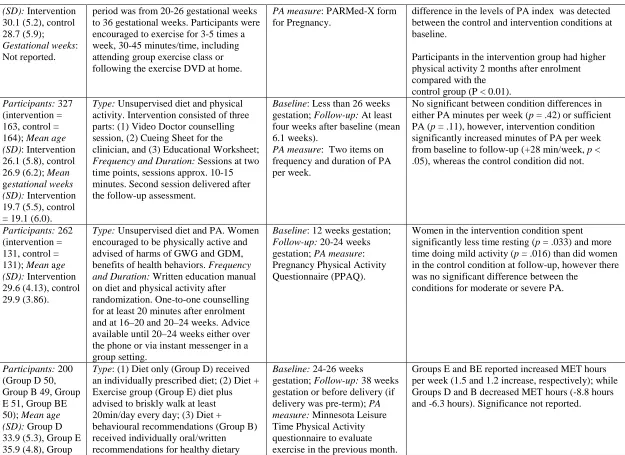
Participants in the intervention group had higher physical activity 2 months after enrolment compared with the
control group (P < 0.01). Jackson, Stotland 56;
Country, United States,
Study design, 2-arm RCT; Control condition, Standard care.
Participants: 327 (intervention = 163, control = 164); Mean age (SD): Intervention 26.1 (5.8), control 26.9 (6.2); Mean
gestational weeks (SD): Intervention 19.7 (5.5), control = 19.1 (6.0).
Type: Unsupervised diet and physical activity. Intervention consisted of three parts: (1) Video Doctor counselling session, (2) Cueing Sheet for the
clinician, and (3) Educational Worksheet;
Frequencyand Duration: Sessions at two time points, sessions approx. 10-15 minutes. Second session delivered after the follow-up assessment.
Baseline: Less than 26 weeks gestation; Follow-up: At least four weeks after baseline (mean 6.1 weeks).
PA measure: Two items on frequency and duration of PA per week.
No significant between condition differences in either PA minutes per week (p = .42) or sufficient PA (p = .11), however, intervention condition significantly increased minutes of PA per week from baseline to follow-up (+28 min/week, p < .05), whereas the control condition did not.
Jing, Huang 54;
Country, China; Study design, 2-arm RCT;
Control condition, Standard care.
Participants: 262 (intervention = 131, control = 131); Mean age (SD): Intervention 29.6 (4.13), control 29.9 (3.86).
Type: Unsupervised diet and PA. Women encouraged to be physically active and advised of harms of GWG and GDM, benefits of health behaviors. Frequency and Duration: Written education manual on diet and physical activity after randomization. One-to-one counselling for at least 20 minutes after enrolment and at 16–20 and 20–24 weeks. Advice available until 20–24 weeks either over the phone or via instant messenger in a group setting.
Baseline: 12 weeks gestation;
Follow-up: 20-24 weeks gestation; PA measure: Pregnancy Physical Activity Questionnaire (PPAQ).
Women in the intervention condition spent significantly less time resting (p = .033) and more time doing mild activity (p = .016) than did women in the control condition at follow-up, however there was no significant difference between the
conditions for moderate or severe PA.
Bo, Rosato 61; Country,
Italy; Study design,
Randomised trial with a 2×2 factorial design;
Control condition,
Alternative interventions.
Participants: 200 (Group D 50, Group B 49, Group E 51, Group BE 50); Mean age (SD): Group D 33.9 (5.3), Group E 35.9 (4.8), Group
Type: (1) Diet only (Group D) received an individually prescribed diet; (2) Diet + Exercise group (Group E) diet plus advised to briskly walk at least 20min/day every day; (3) Diet +
behavioural recommendations (Group B) received individually oral/written recommendations for healthy dietary
Baseline: 24-26 weeks
gestation; Follow-up: 38 weeks gestation or before delivery (if delivery was pre-term); PA measure: Minnesota Leisure Time Physical Activity questionnaire to evaluate exercise in the previous month.
B 35.1 (4.4), Group BE 35.5 (4.4).
choices and debunking false myths about diet in pregnancy; (4) Diet + behavioural recommendations + exercise (Group BE) was prescribed brisk walking at least 20 min/day along with the same
recommendations of group B; Frequency and Duration: Weekly monitoring phone calls; visited every 2-weeks to monitor adverse events and protocol adherence. Polley, Wing 53 (Polley
95); Country, United
States; Study design, 2-arm RCT; Control condition, Standard care.
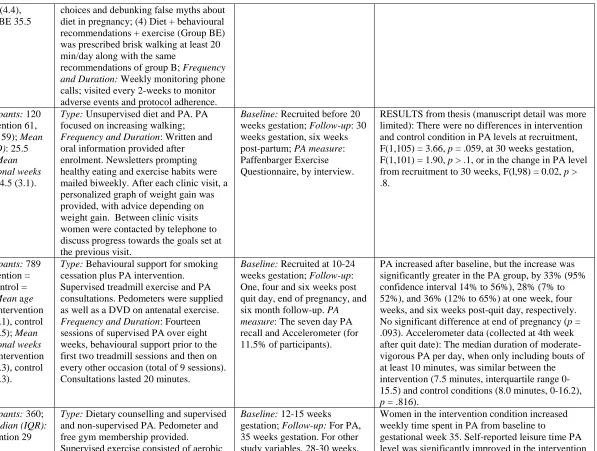
Participants: 120 (intervention 61, control 59); Mean
age (SD): 25.5 (4.8); Mean gestational weeks (SD): 14.5 (3.1).
Type: Unsupervised diet and PA. PA focused on increasing walking;
Frequency and Duration: Written and oral information provided after enrolment. Newsletters prompting healthy eating and exercise habits were mailed biweekly. After each clinic visit, a personalized graph of weight gain was provided, with advice depending on weight gain. Between clinic visits women were contacted by telephone to discuss progress towards the goals set at the previous visit.
Baseline: Recruited before 20 weeks gestation; Follow-up: 30 weeks gestation, six weeks post-partum; PA measure: Paffenbarger Exercise Questionnaire, by interview.
RESULTS from thesis (manuscript detail was more limited): There were no differences in intervention and control condition in PA levels at recruitment, F(1,105) = 3.66, p = .059, at 30 weeks gestation, F(1,101) = 1.90, p > .1, or in the change in PA level from recruitment to 30 weeks, F(l,98) = 0.02, p > .8.
Ussher, Lewis 72
(companion paper Ussher, Aveyard 96);
Country, United Kingdom; Study design, 2-arm RCT;
Control condition, Six weekly sessions of behavioural support for smoking cessation
Participants: 789 (intervention = 394, control = 395); Mean age (SD): Intervention 27.2 (6.1), control 27.8 (6.5); Mean gestational weeks (SD): Intervention 15.6 (3.3), control 15.6 (3.3).
Type: Behavioural support for smoking cessation plus PA intervention.
Supervised treadmill exercise and PA consultations. Pedometers were supplied as well as a DVD on antenatal exercise.
Frequency and Duration: Fourteen sessions of supervised PA over eight weeks, behavioural support prior to the first two treadmill sessions and then on every other occasion (total of 9 sessions). Consultations lasted 20 minutes.
Baseline: Recruited at 10-24 weeks gestation; Follow-up: One, four and six weeks post quit day, end of pregnancy, and six month follow-up. PA measure: The seven day PA recall and Accelerometer (for 11.5% of participants).
PA increased after baseline, but the increase was significantly greater in the PA group, by 33% (95% confidence interval 14% to 56%), 28% (7% to 52%), and 36% (12% to 65%) at one week, four weeks, and six weeks post-quit day, respectively. No significant difference at end of pregnancy (p = .093). Accelerometer data (collected at 4th week after quit date): The median duration of moderate-vigorous PA per day, when only including bouts of at least 10 minutes, was similar between the intervention (7.5 minutes, interquartile range 0-15.5) and control conditions (8.0 minutes, 0-16.2),
p = .816). Vinter, Jørgensen 60
(companion paper Vinter, Jensen 76);
Country, Denmark;
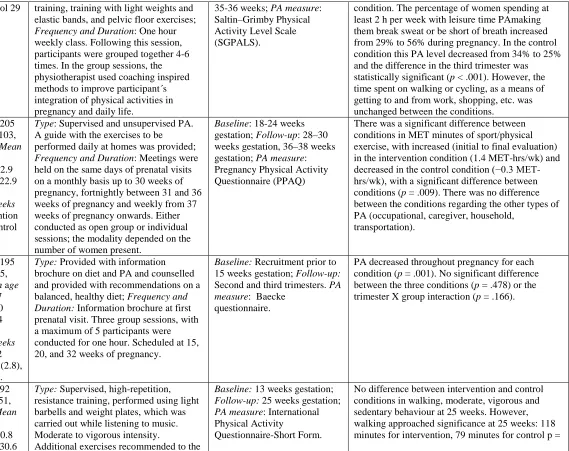
Participants: 360;
Age median (IQR):
Intervention 29
Type: Dietary counselling and supervised and non-supervised PA. Pedometer and free gym membership provided.
Supervised exercise consisted of aerobic
Baseline: 12-15 weeks gestation; Follow-up: For PA, 35 weeks gestation. For other study variables, 28-30 weeks,
Women in the intervention condition increased weekly time spent in PA from baseline to
Study design, 2-arm RCT; Control condition, Access to a website with advice about dietary habits and PA.
(27-32), control 29 (26-31).
training, training with light weights and elastic bands, and pelvic floor exercises;
Frequency and Duration: One hour weekly class. Following this session, participants were grouped together 4-6 times. In the group sessions, the physiotherapist used coaching inspired methods to improve participant´s integration of physical activities in pregnancy and daily life.
35-36 weeks; PA measure: Saltin–Grimby Physical Activity Level Scale (SGPALS).
condition. The percentage of women spending at least 2 h per week with leisure time PAmaking them break sweat or be short of breath increased from 29% to 56% during pregnancy. In the control condition this PA level decreased from 34% to 25% and the difference in the third trimester was statistically significant (p < .001). However, the time spent on walking or cycling, as a means of getting to and from work, shopping, etc. was unchanged between the conditions.
Miquelutti, Guilherme Cecatti 68 (companion
paper Miquelutti, Cecatti 97); Country,
Brazil; Study design, 2-arm RCT; Control condition, Standard care.
Participants: 205 (intervention 103, control 102); Mean
age (SD):
intervention 22.9 (4.6), control 22.9 (5.1); Mean
gestational weeks (SD): Intervention 20.7 (1.8), control 20.4 (2.0).
Type: Supervised and unsupervised PA. A guide with the exercises to be performed daily at homes was provided;
Frequency and Duration: Meetings were held on the same days of prenatal visits on a monthly basis up to 30 weeks of pregnancy, fortnightly between 31 and 36 weeks of pregnancy and weekly from 37 weeks of pregnancy onwards. Either conducted as open group or individual sessions; the modality depended on the number of women present.
Baseline: 18-24 weeks gestation; Follow-up: 28–30 weeks gestation, 36–38 weeks gestation; PA measure: Pregnancy Physical Activity Questionnaire (PPAQ)
There was a significant difference between conditions in MET minutes of sport/physical exercise, with increased (initial to final evaluation) in the intervention condition (1.4 MET-hrs/wk) and decreased in the control condition (−0.3 MET-hrs/wk), with a significant difference between conditions (p = .009). There was no difference between the conditions regarding the other types of PA (occupational, caregiver, household,
transportation).
Guelinckx, Devlieger
52;
Country, Belgium;
Study design, RCT with three groups (control group -CG, passive group -PG and active group -AG); Control condition: Standard care.
Participants: 195 (PG 65, AG 65, CG 65); Mean age (SD): PG 28.7 (4.0), AG 28.0 (3.6), CG 29.4 (4.4); Mean
gestational weeks (SD): PG 10.2 (2.6), AG 9.3 (2.8), CG 10.2 (2.4).
Type: Provided with information brochure on diet and PA and counselled and provided with recommendations on a balanced, healthy diet; Frequency and Duration: Information brochure at first prenatal visit. Three group sessions, with a maximum of 5 participants were conducted for one hour. Scheduled at 15, 20, and 32 weeks of pregnancy.
Baseline: Recruitment prior to 15 weeks gestation; Follow-up:
Second and third trimesters. PA measure: Baecke
questionnaire.
PA decreased throughout pregnancy for each condition (p = .001). No significant difference between the three conditions (p = .478) or the trimester X group interaction (p = .166).
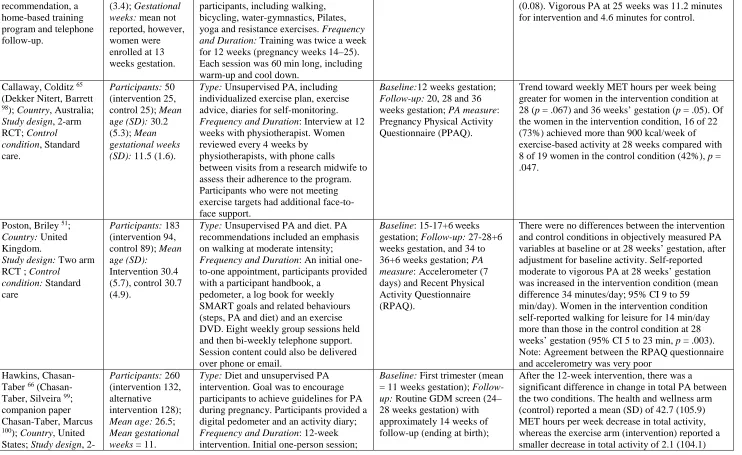
Petrov Fieril, Glantz 57;
Country, Sweden;
Study design, 2-arm RCT; Control condition, generalized exercise
Participants: 92 (intervention 51, control 41); Mean
age (SD): intervention 30.8 (3.6), control 30.6
Type: Supervised, high-repetition, resistance training, performed using light barbells and weight plates, which was carried out while listening to music. Moderate to vigorous intensity.
Additional exercises recommended to the
Baseline: 13 weeks gestation;
Follow-up: 25 weeks gestation;
PA measure: International Physical Activity
Questionnaire-Short Form.
recommendation, a home-based training program and telephone follow-up.
(3.4); Gestational weeks: mean not reported, however, women were enrolled at 13 weeks gestation.
participants, including walking, bicycling, water-gymnastics, Pilates, yoga and resistance exercises. Frequency and Duration: Training was twice a week for 12 weeks (pregnancy weeks 14–25). Each session was 60 min long, including warm-up and cool down.
(0.08). Vigorous PA at 25 weeks was 11.2 minutes for intervention and 4.6 minutes for control.
Callaway, Colditz 65
(Dekker Nitert, Barrett
98); Country,Australia;
Study design, 2-arm RCT; Control condition, Standard care.
Participants: 50 (intervention 25, control 25); Mean
age (SD): 30.2 (5.3); Mean
gestational weeks (SD): 11.5 (1.6).
Type: Unsupervised PA, including individualized exercise plan, exercise advice, diaries for self-monitoring.
Frequency and Duration: Interview at 12 weeks with physiotherapist. Women reviewed every 4 weeks by
physiotherapists, with phone calls between visits from a research midwife to assess their adherence to the program. Participants who were not meeting exercise targets had additional face-to-face support.
Baseline:12 weeks gestation;
Follow-up: 20, 28 and 36 weeks gestation; PA measure: Pregnancy Physical Activity Questionnaire (PPAQ).
Trend toward weekly MET hours per week being greater for women in the intervention condition at 28 (p = .067) and 36 weeks’ gestation (p = .05). Of the women in the intervention condition, 16 of 22 (73%) achieved more than 900 kcal/week of exercise-based activity at 28 weeks compared with 8 of 19 women in the control condition (42%), p = .047.
Poston, Briley 51;
Country: United Kingdom.
Study design: Two arm RCT ; Control
condition: Standard care
Participants: 183 (intervention 94, control 89); Mean
age (SD):
Intervention 30.4 (5.7), control 30.7 (4.9).
Type: Unsupervised PA and diet. PA recommendations included an emphasis on walking at moderate intensity;
Frequency and Duration: An initial one-to-one appointment, participants provided with a participant handbook, a
pedometer, a log book for weekly SMART goals and related behaviours (steps, PA and diet) and an exercise DVD. Eight weekly group sessions held and then bi-weekly telephone support. Session content could also be delivered over phone or email.
Baseline: 15-17+6weeks gestation; Follow-up: 27-28+6 weeks gestation, and 34 to 36+6 weeks gestation; PA measure: Accelerometer (7 days) and Recent Physical Activity Questionnaire (RPAQ).
There were no differences between the intervention and control conditions in objectively measured PA variables at baseline or at 28 weeks’ gestation, after adjustment for baseline activity. Self-reported moderate to vigorous PA at 28 weeks’ gestation was increased in the intervention condition (mean difference 34 minutes/day; 95% CI 9 to 59 min/day). Women in the intervention condition self-reported walking for leisure for 14 min/day more than those in the control condition at 28 weeks’ gestation (95% CI 5 to 23 min, p = .003). Note: Agreement between the RPAQ questionnaire and accelerometry was very poor
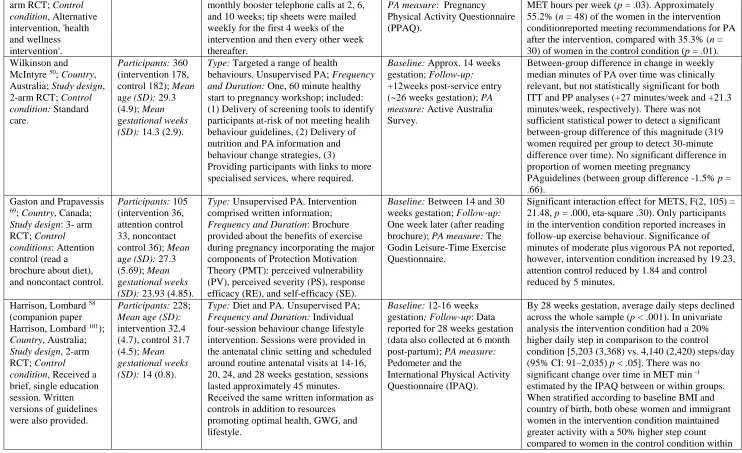
Hawkins, Chasan-Taber 66
(Chasan-Taber, Silveira 99;
companion paper Chasan-Taber, Marcus
100); Country, United
States; Study design,
2-Participants: 260 (intervention 132, alternative intervention 128);
Mean age: 26.5;
Mean gestational weeks = 11.
Type: Diet and unsupervised PA intervention. Goal was to encourage participants to achieve guidelines for PA during pregnancy. Participants provided a digital pedometer and an activity diary;
Frequency and Duration: 12-week intervention. Initial one-person session;
Baseline: First trimester (mean = 11 weeks gestation); Follow-up: Routine GDM screen (24– 28 weeks gestation) with approximately 14 weeks of follow-up (ending at birth);
After the 12-week intervention, there was a
arm RCT; Control condition, Alternative intervention, 'health and wellness intervention'.
monthly booster telephone calls at 2, 6, and 10 weeks; tip sheets were mailed weekly for the first 4 weeks of the intervention and then every other week thereafter.
PA measure: Pregnancy Physical Activity Questionnaire (PPAQ).
MET hours per week (p = .03). Approximately 55.2% (n = 48) of the women in the intervention conditionreported meeting recommendations for PA after the intervention, compared with 35.3% (n = 30) of women in the control condition (p = .01). Wilkinson and
McIntyre 50; Country,
Australia; Study design, 2-arm RCT; Control condition: Standard care.
Participants: 360 (intervention 178, control 182); Mean
age (SD): 29.3 (4.9); Mean
gestational weeks (SD): 14.3 (2.9).
Type: Targeted a range of health
behaviours. Unsupervised PA; Frequency and Duration: One, 60 minute healthy start to pregnancy workshop; included: (1) Delivery of screening tools to identify participants at-risk of not meeting health behaviour guidelines, (2) Delivery of nutrition and PA information and behaviour change strategies, (3)
Providing participants with links to more specialised services, where required.
Baseline: Approx. 14 weeks gestation; Follow-up: +12weeks post-service entry (~26 weeks gestation); PA measure: Active Australia Survey.
Between-group difference in change in weekly median minutes of PA over time was clinically relevant, but not statistically significant for both ITT and PP analyses (+27 minutes/week and +21.3 minutes/week, respectively). There was not sufficient statistical power to detect a significant between-group difference of this magnitude (319 women required per group to detect 30-minute difference over time). No significant difference in proportion of women meeting pregnancy
PAguidelines (between group difference -1.5% p = .66).
Gaston and Prapavessis
69; Country, Canada;
Study design: 3- arm RCT; Control conditions: Attention control (read a brochure about diet), and noncontact control.
Participants: 105 (intervention 36, attention control 33, noncontact control 36); Mean
age (SD): 27.3 (5.69); Mean
gestational weeks (SD): 23.93 (4.85).
Type: Unsupervised PA. Intervention comprised written information;
Frequency and Duration: Brochure provided about the benefits of exercise during pregnancy incorporating the major components ofProtection Motivation Theory (PMT): perceived vulnerability (PV), perceived severity (PS), response efficacy (RE), and self-efficacy (SE).
Baseline: Between 14 and 30 weeks gestation; Follow-up:
One week later (after reading brochure); PA measure: The Godin Leisure-Time Exercise Questionnaire.
Significant interaction effect for METS, F(2, 105) = 21.48, p = .000, eta-square .30). Only participants in the intervention condition reported increases in follow-up exercise behaviour. Significance of minutes of moderate plus vigorous PA not reported, however, intervention condition increased by 19.23, attention control reduced by 1.84 and control reduced by 5 minutes.
Harrison, Lombard 58
(companion paper Harrison, Lombard 101);
Country, Australia;
Study design, 2-arm RCT; Control condition, Received a brief, single education session. Written versions of guidelines were also provided.
Participants: 228;
Mean age (SD):
intervention 32.4 (4.7), control 31.7 (4.5); Mean gestational weeks (SD): 14 (0.8).
Type: Diet and PA. Unsupervised PA;
Frequency and Duration: Individual four-session behaviour change lifestyle intervention. Sessions were provided in the antenatal clinic setting and scheduled around routine antenatal visits at 14-16, 20, 24, and 28 weeks gestation, sessions lasted approximately 45 minutes. Received the same written information as controls in addition to resources
promoting optimal health, GWG, and lifestyle.
Baseline: 12-16 weeks gestation; Follow-up: Data reported for 28 weeks gestation (data also collected at 6 month post-partum); PA measure:
Pedometer and the
International Physical Activity Questionnaire (IPAQ).
By 28 weeks gestation, average daily steps declined across the whole sample (p < .001). In univariate analysis the intervention condition had a 20% higher daily step in comparison to the control condition [5,203 (3,368) vs. 4,140 (2,420) steps/day (95% CI: 91–2,035) p < .05]. There was no
significant change over time in MET min -1
the same category, although neither reached significance (p = .1 and p = .4, respectively). Women in the lower BMI category (<30 kg/m2) and
Australian born women showed a similar, non-significant reduction in daily step count between intervention and control conditions.
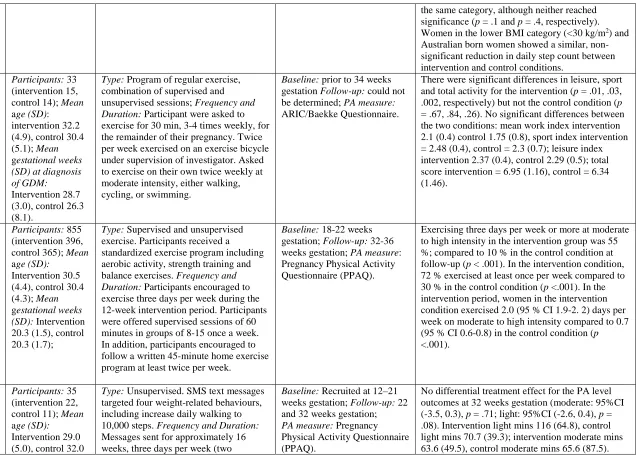
Avery, Leon 62 (Avery 102); Country, United
States; Study design, 2-arm RCT; Control condition, Continued diet therapy and were advised to continue their usual level of PA
Participants: 33 (intervention 15, control 14); Mean
age (SD): intervention 32.2 (4.9), control 30.4 (5.1); Mean
gestational weeks (SD) at diagnosis of GDM:
Intervention 28.7 (3.0), control 26.3 (8.1).
Type: Program of regular exercise, combination of supervised and unsupervised sessions; Frequency and Duration: Participant were asked to exercise for 30 min, 3-4 times weekly, for the remainder of their pregnancy. Twice per week exercised on an exercise bicycle under supervision of investigator. Asked to exercise on their own twice weekly at moderate intensity, either walking, cycling, or swimming.
Baseline: prior to 34 weeks gestation Follow-up: could not be determined; PA measure:
ARIC/Baekke Questionnaire.
There were significant differences in leisure, sport and total activity for the intervention (p = .01, .03, .002, respectively) but not the control condition (p
= .67, .84, .26). No significant differences between the two conditions: mean work index intervention 2.1 (0.4) control 1.75 (0.8), sport index intervention = 2.48 (0.4), control = 2.3 (0.7); leisure index intervention 2.37 (0.4), control 2.29 (0.5); total score intervention = 6.95 (1.16), control = 6.34 (1.46).
Stafne, Salvesen 74
(Salvesen, Stafne 103,
Stafne, Salvesen 104,
Gustafsson, Stafne 105,
Stafne 106, 107); Country,
Norway; Study design, 2-arm RCT; Control condition, Standard care.
Participants: 855 (intervention 396, control 365); Mean
age (SD):
Intervention 30.5 (4.4), control 30.4 (4.3); Mean
gestational weeks (SD): Intervention 20.3 (1.5), control 20.3 (1.7);
Type: Supervised and unsupervised exercise. Participants received a
standardized exercise program including aerobic activity, strength training and balance exercises. Frequency and Duration: Participants encouraged to exercise three days per week during the 12-week intervention period. Participants were offered supervised sessions of 60 minutes in groups of 8-15 once a week. In addition, participants encouraged to follow a written 45-minute home exercise program at least twice per week.
Baseline: 18-22 weeks gestation; Follow-up: 32-36 weeks gestation; PA measure: Pregnancy Physical Activity Questionnaire (PPAQ).
Exercising three days per week or more at moderate to high intensity in the intervention group was 55 %; compared to 10 % in the control condition at follow-up (p < .001). In the intervention condition, 72 % exercised at least once per week compared to 30 % in the control condition (p <.001). In the intervention period, women in the intervention condition exercised 2.0 (95 % CI 1.9-2. 2) days per week on moderate to high intensity compared to 0.7 (95 % CI 0.6-0.8) in the control condition (p
<.001).
Pollak, Alexander 49;
Country,United States;
Study design, 2-arm
RCT; Control condition, Access to ‘‘Text4Baby”.
Participants: 35 (intervention 22, control 11); Mean
age (SD):
Intervention 29.0 (5.0), control 32.0
Type: Unsupervised. SMS text messages targeted four weight-related behaviours, including increase daily walking to 10,000 steps. Frequency and Duration:
Messages sent for approximately 16 weeks, three days per week (two
Baseline: Recruited at 12–21 weeks gestation; Follow-up: 22 and 32 weeks gestation;
PA measure: Pregnancy Physical Activity Questionnaire (PPAQ).
(2.0); Mean
gestational weeks (SD): Intervention 16.0 (3.0), control 17 (3.0);
messages on Mondays and Wednesdays; two messages on Fridays plus an additional text requesting weight and another asking participants to confirm they were receiving their weekly texts). Monthly, participants received a text message reminding them of the
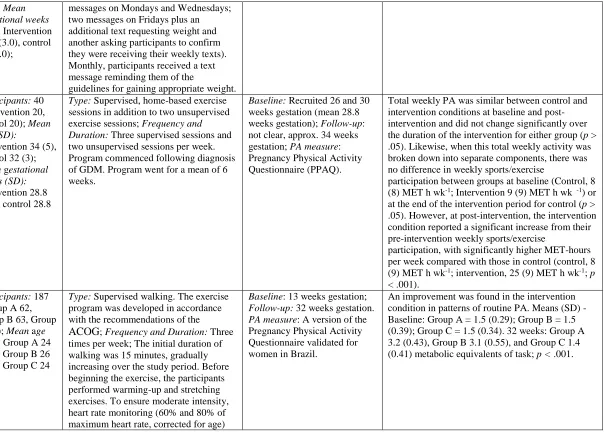
guidelines for gaining appropriate weight. Halse, Wallman 63;
Country, Australia;
Study design, 2-arm RCT; Control condition,Standard care.
Participants: 40 (intervention 20, control 20); Mean
age (SD):
Intervention 34 (5), control 32 (3);
Mean gestational weeks (SD):
Intervention 28.8 (0.8), control 28.8 (1.0).
Type: Supervised, home-based exercise sessions in addition to two unsupervised exercise sessions; Frequency and Duration: Three supervised sessions and two unsupervised sessions per week. Program commenced following diagnosis of GDM. Program went for a mean of 6 weeks.
Baseline: Recruited 26 and 30 weeks gestation (mean 28.8 weeks gestation); Follow-up: not clear, approx. 34 weeks gestation; PA measure: Pregnancy Physical Activity Questionnaire (PPAQ).
Total weekly PA was similar between control and intervention conditions at baseline and post-intervention and did not change significantly over the duration of the intervention for either group (p > .05). Likewise, when this total weekly activity was broken down into separate components, there was no difference in weekly sports/exercise
participation between groups at baseline (Control, 8 (8) MET h wk-1; Intervention 9 (9) MET h wk -1) or
at the end of the intervention period for control (p > .05). However, at post-intervention, the intervention condition reported a significant increase from their pre-intervention weekly sports/exercise
participation, with significantly higher MET-hours per week compared with those in control (control, 8 (9) MET h wk-1; intervention, 25 (9) MET h wk-1; p
< .001). de Oliveria Melo, Silva
75; Country, Brazil;
Study design, 3- arm RCT (Group A initiated exercise at 13 weeks gestation, Group B initiated exercise at 20 weeks gestation, Group C was control group);
Control condition: Standard care.
Participants: 187 (Group A 62, Group B 63, Group C 62); Mean age (SD): Group A 24 (5.8), Group B 26 (5.3), Group C 24 (5.4).
Type: Supervised walking. The exercise program was developed in accordance with the recommendations of the
ACOG
; Frequency and Duration: Three times per week; The initial duration of walking was 15 minutes, gradually increasing over the study period. Before beginning the exercise, the participants performed warming-up and stretching exercises. To ensure moderate intensity, heart rate monitoring (60% and 80% of maximum heart rate, corrected for age)Baseline: 13 weeks gestation;
Follow-up: 32 weeks gestation.
PA measure: A version of the Pregnancy Physical Activity Questionnaire validated for women in Brazil.
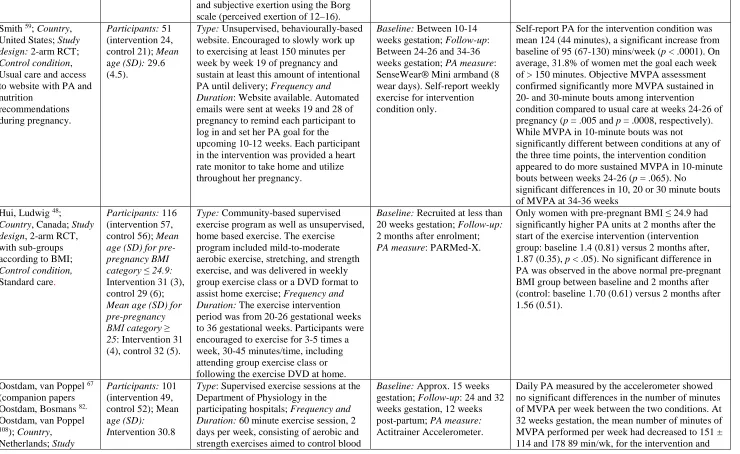
and subjective exertion using the Borg scale (perceived exertion of 12–16). Smith 59; Country,
United States; Study design: 2-arm RCT;
Control condition, Usual care and access to website with PA and nutrition
recommendations during pregnancy.
Participants: 51 (intervention 24, control 21); Mean
age (SD): 29.6 (4.5).
Type: Unsupervised, behaviourally-based website. Encouraged to slowly work up to exercising at least 150 minutes per week by week 19 of pregnancy and sustain at least this amount of intentional PA until delivery; Frequency and Duration: Website available. Automated emails were sent at weeks 19 and 28 of pregnancy to remind each participant to log in and set her PA goal for the upcoming 10-12 weeks. Each participant in the intervention was provided a heart rate monitor to take home and utilize throughout her pregnancy.
Baseline: Between 10-14 weeks gestation; Follow-up: Between 24-26 and 34-36 weeks gestation; PA measure: SenseWear® Mini armband (8 wear days). Self-report weekly exercise for intervention condition only.
Self-report PA for the intervention condition was mean 124 (44 minutes), a significant increase from baseline of 95 (67-130) mins/week (p < .0001). On average, 31.8% of women met the goal each week of > 150 minutes. Objective MVPA assessment confirmed significantly more MVPA sustained in 20- and 30-minute bouts among intervention condition compared to usual care at weeks 24-26 of pregnancy (p = .005 and p = .0008, respectively). While MVPA in 10-minute bouts was not
significantly different between conditions at any of the three time points, the intervention condition appeared to do more sustained MVPA in 10-minute bouts between weeks 24-26 (p = .065). No
significant differences in 10, 20 or 30 minute bouts of MVPA at 34-36 weeks
Hui, Ludwig 48;
Country,Canada; Study design, 2-arm RCT, with sub-groups according to BMI;
Control condition,
Standard care.
Participants: 116 (intervention 57, control 56); Mean age (SD) for pre-pregnancy BMI category ≤ 24.9:
Intervention 31 (3), control 29 (6);
Mean age (SD) for pre-pregnancy BMI category ≥ 25: Intervention 31 (4), control 32 (5).
Type: Community-based supervised exercise program as well as unsupervised, home based exercise. The exercise program included mild-to-moderate aerobic exercise, stretching, and strength exercise, and was delivered in weekly group exercise class or a DVD format to assist home exercise; Frequency and Duration: The exercise intervention period was from 20-26 gestational weeks to 36 gestational weeks. Participants were encouraged to exercise for 3-5 times a week, 30-45 minutes/time, including attending group exercise class or following the exercise DVD at home.
Baseline: Recruited at less than 20 weeks gestation; Follow-up:
2 months after enrolment;
PA measure: PARMed-X.
Only women with pre-pregnant BMI ≤ 24.9 had significantly higher PA units at 2 months after the start of the exercise intervention (intervention group: baseline 1.4 (0.81) versus 2 months after, 1.87 (0.35), p < .05). No significant difference in PA was observed in the above normal pre-pregnant BMI group between baseline and 2 months after (control: baseline 1.70 (0.61) versus 2 months after 1.56 (0.51).
Oostdam, van Poppel 67
(companion papers Oostdam, Bosmans 82,
Oostdam, van Poppel
108); Country,
Netherlands; Study
Participants: 101 (intervention 49, control 52); Mean age (SD): Intervention 30.8
Type: Supervised exercise sessions at the Department of Physiology in the
participating hospitals; Frequency and Duration: 60 minute exercise session, 2 days per week, consisting of aerobic and strength exercises aimed to control blood
Baseline: Approx. 15 weeks gestation; Follow-up: 24 and 32 weeks gestation, 12 weeks post-partum; PA measure:
Actitrainer Accelerometer.
design, 2-arm RCT;
Control condition, Standard care.
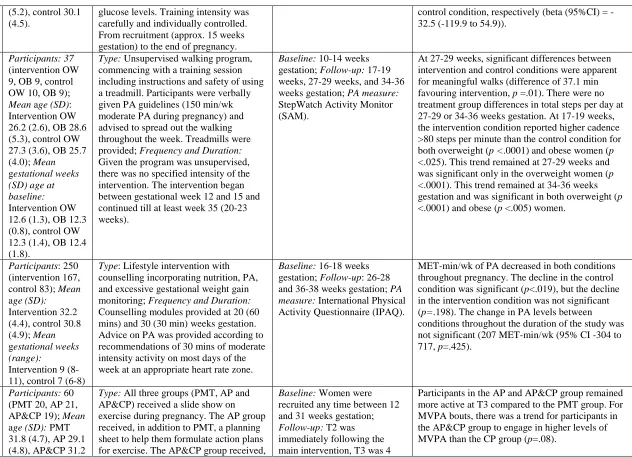
(5.2), control 30.1 (4.5).
glucose levels. Training intensity was carefully and individually controlled. From recruitment (approx. 15 weeks gestation) to the end of pregnancy.
control condition, respectively (beta (95%CI) = -32.5 (-119.9 to 54.9)).
Kong, Campbell 70
(Kong 109); Country,
United States; Study design, 2-arm RCT;
Control condition, Not provided with
recommendations but not restricted from PA
Participants: 37
(intervention OW 9, OB 9, control OW 10, OB 9);
Mean age (SD): Intervention OW 26.2 (2.6), OB 28.6 (5.3), control OW 27.3 (3.6), OB 25.7 (4.0); Mean
gestational weeks (SD) age at baseline:
Intervention OW 12.6 (1.3), OB 12.3 (0.8), control OW 12.3 (1.4), OB 12.4 (1.8).
Type: Unsupervised walking program, commencing with a training session including instructions and safety of using a treadmill. Participants were verbally given PA guidelines (150 min/wk moderate PA during pregnancy) and advised to spread out the walking throughout the week. Treadmills were provided; Frequency and Duration:
Given the program was unsupervised, there was no specified intensity of the intervention. The intervention began between gestational week 12 and 15 and continued till at least week 35 (20-23 weeks).
Baseline: 10-14 weeks gestation; Follow-up: 17-19 weeks, 27-29 weeks, and 34-36 weeks gestation; PA measure: StepWatch Activity Monitor (SAM).
At 27-29 weeks, significant differences between intervention and control conditions were apparent for meaningful walks (difference of 37.1 min favouring intervention, p =.01). There were no treatment group differences in total steps per day at 27-29 or 34-36 weeks gestation. At 17-19 weeks, the intervention condition reported higher cadence >80 steps per minute than the control condition for both overweight (p <.0001) and obese women (p
<.025). This trend remained at 27-29 weeks and was significant only in the overweight women (p
<.0001). This trend remained at 34-36 weeks gestation and was significant in both overweight (p
<.0001) and obese (p <.005) women.
Rauh, Gabriel 47;
Country, Germany;
Study design, Cluster RCT; Control condition, Standard care.
Participants: 250 (intervention 167, control 83); Mean
age (SD):
Intervention 32.2 (4.4), control 30.8 (4.9); Mean
gestational weeks (range):
Intervention 9 (8-11), control 7 (6-8)
Type: Lifestyle intervention with counselling incorporating nutrition, PA, and excessive gestational weight gain monitoring; Frequency and Duration:
Counselling modules provided at 20 (60 mins) and 30 (30 min) weeks gestation. Advice on PA was provided according to recommendations of 30 mins of moderate intensity activity on most days of the week at an appropriate heart rate zone.
Baseline: 16-18 weeks gestation; Follow-up: 26-28 and 36-38 weeks gestation; PA measure: International Physical Activity Questionnaire (IPAQ).
MET-min/wk of PA decreased in both conditions throughout pregnancy. The decline in the control condition was significant (p<.019), but the decline in the intervention condition was not significant (p=.198). The change in PA levels between conditions throughout the duration of the study was not significant (207 MET-min/wk (95% CI -304 to 717, p=.425).
Gaston and Prapavessis
71; Country, Canada;
Study design, 3-arm RCT (PMT (Protection motivation theory); AP (Action planning +
Participants: 60 (PMT 20, AP 21, AP&CP 19); Mean
age (SD): PMT 31.8 (4.7), AP 29.1 (4.8), AP&CP 31.2
Type: All three groups (PMT, AP and AP&CP) received a slide show on exercise during pregnancy. The AP group received, in addition to PMT, a planning sheet to help them formulate action plans for exercise. The AP&CP group received,
Baseline: Women were recruited any time between 12 and 31 weeks gestation;
Follow-up: T2 was immediately following the main intervention, T3 was 4
PMT); AP&CP (action planning and coping planning + PMT);
Control condition, There was no 'standard care' control condition. The PMT group acted as an active control condition.
(4.5); Mean gestational weeks (SD): PMT 21.2 (5.5), AP 22.6 (5.2), AP&CP 23.3 (5.2).
in addition to PMT and AP, instructions on how to anticipate potential barriers and strategies to overcome these barriers to exercise; Frequency and Duration:
The intervention materials were delivered as a one-on-one session lasting 45 mins (same time for each group). After T3, women in the AP and AP&CP group received a brief email reminding them to formulate another set of action and/or coping plans.
weeks post-intervention; PA measure: Accelerometer and Leisure-Time Questionnaire.
Davis, Goodman 77
(Davis 110); Country,
United States; Study design, RCT; Control condition,: Standard care.
Participants: 46 (intervention 23; control 23); Mean
age (SD): 30.15 (4.92); Mean
gestational weeks (SD): 20.78 (6.42).
Type: Supervised and unsupervised yoga intervention; Frequency and Duration:
Eight consecutive 75-min weekly group classes. Participants also received an antenatal yoga instructional video to use for home practice.
Baseline: Recruited prior to 28 weeks gestation; Follow-up:
Mid-intervention, post-intervention (post-intervention was 8 weeks); PA measure: IPAQ ; time (mins/week) spent practising yoga.
No significant changes in PA over time, nor any significant differences between the two conditions at the three time points.Mean post-intervention yoga participation was 77.25 min/wk in the yoga group and 15.8 min/wk in the usual care group (significance values not reported).
Nodine 73; Country,
United States; Study design,2-arm RCT; Control condition:
received information regarding the benefits of exercise in
pregnancy, safety, and recommendations for PA.
Participants: 29 (intervention 15, control 14); Mean age (SD): 30.6 (5.0); Mean
gestational weeks (SD): 22.8 (5.4).
Type: Supervised and unsupervised.
Community-based program for exercise promotion in pregnancy; Frequency and duration: Eight weekly (once per week for 8 weeks) group activity session of 60-75 minutes in duration. Each session involved education (increase PA knowledge, how to exercise safely, benefits to exercise, how to overcome barriers, etc.) and a PA component building up to an average of 30-45 minutes each session at moderate intensity.
Baseline: Recruited between 13-28 weeks gestation; Follow-up: Immediately
post-intervention (8 weeks); PA measure: Pregnancy Physical Activity Questionnaire (PPAQ) and Pedometer.
PA did not change over time in pregnancy. The intervention was not a significant moderator of change in PA (p=.658).
Mendelson, McNeese-Smith 64 (Mendelson 111); Country, United
States; Study design, 2-arm RCT; Control
Participants: 100 (intervention 49, control 51); Mean age (SD): 31.04 (5.41); Mean
Type: Diet and PA. Unsupervised.An enhanced education and support program (Parish Nurse Intervention Program);
Frequency and Duration: 1 hour (single session) nurse-led discussion regarding medical recommendations for control of
Baseline: Recruited between 12-32 weeks gestation; Follow-up: Three weeks post-baseline;
PA measure: Health Promoting Lifestyle Profile II.
Significant changes were noted in the PA domain of the Health Promoting Lifestyle Profile II from pre-post intervention (p=.000). Significant in
condition, Standard care.
gestational weeks (SD): 28.7 (7.6).
GDM. Included discussion about diabetes control with nutrition, PA, and medical treatment.
changes were found for any of the subscales for the control group.
Hawkins, Hosker 46;
Country: United States;
Study design,2-arm RCT; Control condition, received standard care.
Participants: 88 (intervention 33, control 35); Age groups:
Intervention ≤20 18.2%, 21-24 42.4%, 25-28 15.2%, ≥29 24.2%, Control ≤20 8.6%, 21-24 40.0%, 25-28 22.9%, ≥29 28.6%; Mean gestational weeks
14.9.
Type: A lifestyle intervention consisting of in-person and telephone delivered behavioural counselling; Frequency and Duration: Six, monthly in-person and 5 telephone booster sessions with the goal to encourage participants to achieve the ACOG guidelines for PA during pregnancy through increasing walking and developing a more active lifestyle.
Baseline: Less than 18 weeks gestation (mean 14.9); Follow-up: Mid-pregnancy (24-28 weeks gestation) and 6 weeks post-partum; PA measure: Pregnancy Physical Activity Questionnaire (PPAQ)
The intervention condition reported a smaller reduction in moderate-intensity PA from baseline to mid-pregnancy compared to the control condition (ns, p=.88). The intervention condition reported an increase in vigorous-intensity PA at mid-pregnancy, while a decline was reported in the control
condition and this difference was significant (p=.04).
Quasi-Experimental
Smith and Michel 41,
Smith 112); Country,
United States; Study design, Two group, quasi-experimental design; Control condition: Self-selected in to non-exercise group. No intervention.
Participants: 40 (intervention 20, control 20); Mean age (SD):
Intervention 25.1 (4.9), control 24.8 (5.6); Mean gestational weeks (SD): Intervention 26 (5); control 27 (5).
Type: Aquatic exercise supervised program; Frequency and Duration: 6-week program, with three sessions per week. Each class was 60 minutes duration, including warm-up, continual movement strengthening and flexibility. Relaxation session concluded the class.
Baseline: At least 19 weeks gestation; Follow-up:
Following 6-week aquatic program; PA measure: The Health-Promoting Lifestyle Profile (HPLP).
Total HPLP post test scores indicated that intervention condition were likely to participate in health-promoting behaviours (p = .05), including PA (p = .006), scores indicated significantly more participation in health-promoting activities among women in the intervention condition compared to control.
Liquori, Widener 42;
Country, United States;
Study design, Quasi-experimental; Control condition, Women who called to inquire about
Participants: 15 (intervention 7, control 6); Mean age: Intervention 32.86, control 30.5; Mean
Type: Aquatic exercise supervised program, this was an ongoing aquatic prenatal exercise class; Frequency and Duration: One hour sessions were held on 3 alternate days per week for 6 weeks. Class consisted of 15 minute warm-up,
Baseline: Most 20-29 weeks gestation; Follow-up: 6-7 weeks post recruitment (1 week following 6-week program for intervention group); PA measure: Health Promoting
the prenatal classes but decided not to enrol.
gestational weeks:
Intervention 24.71, control 21.83
25 minutes of cardiovascular training, 10 minutes of cool down and 10 minutes relaxation routines. Heart rates and exertion were monitored.
Lifestyle Profile II questionnaire
Mustila, Raitanen 43
(companion paper Mustila, Keskinen 113);
Country, Finland; Study design,
Quasi-experimental; Control condition: Recruited among GDM risk group mothers and their offspring born in 2008 before the offspring had reached the age of one year.
Participants: 216 (intervention 96, control 89). Age (Mean and 95% CI): Intervention 30.9 (29.7 to 32.0), control 30.1 (29.0 to 31.2).
Type: Diet and PA intervention. Participants received information on suitable and sufficient exercise during pregnancy; Frequency and duration: Two group counselling sessions, during the first and second trimesters of pregnancy. Sessions were 1.5 hours. Also
participated in a brief session of muscle tone exercise that could be repeated at home. Written educational material distributed. During the 13 routine visits to the maternity health care clinics starting from 10th week of pregnancy, staff briefly recapped the counselling information provided during the group sessions.
Baseline (intervention only): 8-12 weeks gestation; Follow-up (intervention only): 26-28 weeks gestation and 37 weeks gestation (study followed children up to 5 years of age); For the control, this measure was retrospective. PA measure:
Self-reported duration of exercise (until at least slightly out of breath).
No significant differences were found in the weekly duration of PA during the second (hours per week: intervention 4.2 (3.6 to 4.7), control = 4.5 (3.6 to 5.4; p = .62) and the third trimesters of pregnancy (intervention = 3.4 (3.0 to 3.8); control = 3.2 (2.5 to 3.9); p = .11). Also no differences at baseline.
Kinnunen, Pasanen 44;
Country, Finland; Study design,
Quasi-experimental; Control condition, Standard care.
Participants: 105 (intervention 49, control 56); Mean age (SD):
Intervention 27.6 (4.5), control 28.8 (4.1).
Type: PA counselling aiming to increase PA to 800 MET minutes per week with the option to attend a supervised group exercise session once a week; Frequency and duration: 5 sessions in total, beginning with one primary counselling session of 20-30 mins at 8-9 weeks gestation, and 4 booster sessions (10-15 mins each) until the 37th week gestation. Optional sessions were weekly including endurance and muscular training for 45-60 min. Intervention lasted approximately 28-29 weeks.
Baseline: 8-9 weeks gestation;
Follow-up: 22-24 weeks and 37 weeks gestation. PA measure: Modified International Physical Activity Questionnaire (IPAQ).
There were no significant differences between groups from baseline to 22-24th gestational week or 36-37th gestational week, when adjusted for age, pre-pregnancy BMI, and education. Means and standard deviations were not reported.
Wilkinson, Miller 45;
Country, Australia;
Study design, Quasi-experimental; Control
Participants:
Intervention 140, control 130; Mean age (SD):
Intervention 27.1
Type: The intervention was delivered as a "Pregnancy Pocketbook" 73-page interactive resourced presented in an A5 ring folder to improve health behaviours, including PA. Designed to be used
Baseline: Women were assessed at recruitment; Follow-up: 12 weeks service-entry (12 weeks baseline), and 24 weeks
Notes:
* Participants is the number of participants randomised; number of intervention and control may not add up to participant n because some
authors presented the demographic characteristics of only those who completed the intervention or excluded those who withdrew
**Thesis. Study reported as a nested study in Dodd et al. 2014. To distinguish this nested study, it has been referenced as Sui 2013.
Studies referenced in parentheses also met inclusion criteria; ‘companion papers’ did not meet inclusion criteria, however they provided
additional information relating to the study and were used to assist in assessing RE-AIM criteria.
ACOG = American College of Obstetricians and Gynecologists; BMI = Body Mass Index; GDM = Gestational Diabetes Mellitus; GWG =
Gestational Weight Gain; IOM = Institute of Medicine; MET = Metabolic Equivalent of Task; MVPA = Moderate-to-vigorous Physical
Activity; OW = Overweight; OB = Obese; PA = Physical Activity; RCT = Randomised Controlled Trial.
condition: Standard care.
(5.6), control 27.2 (5.6); Mean gestational weeks (SD): Intervention 19.5 (5.0), control = 19.9 (7.6).
according to the 5As self-management framework (Assess, Advise, Agree, Assist, Arrange), with screening tools, information, goal setting and
self-monitoring activities with information for further referral for greater support when required; Frequency and Duration: Not specified as the intervention was completed by the women in their own time.
service-entry; PA measure: