p
-
p
minimum-bias dijets and nonjet quadrupole in relation
to conjectured collectivity (ows) in high-energy nuclear
collisions
Thomas A. Trainor1
1CENPA 354290 University of Washington, Seattle, Washington, USA
Abstract. Recent observations of ridge-like structure inp-pand p-A angular
correlations at the RHIC and LHC have been interpreted to imply collective motion in smaller collision systems. It is argued that if correlation structures
accepted as manifestations of ow inA-A collisions appear in smaller systems
collectivity (ow) must extend to the smaller systems. But the argument could
be reversed to conclude that such structures appearing in A-A collisions may
not imply hydrodynamic ow. I present spectrum, correlation and uctuation
data from RHICp-pand Au-Au collisions andp-p,p-Pb and Pb-Pb results from
the LHC described accurately by a two-component (soft+dijet) model of hadron
production. I also present evidence for a signicantp-pnonjet (NJ) quadrupole
(v2) component with nch systematics directly related toA-A NJ quadrupole
systematics. The combination suggests that soft, dijet and NJ quadrupole com-ponents are distinct phenomena in all cases, inconsistent with hadron production from a common bulk medium exhibiting collective motion (ow).
1 Introduction
Certain analysis techniques applied to LHC data for smaller collision systems have lead to
claims for collectivity (ows) even in p-p collisions at higher energies. The original ow
concept has been extended to a universal property of all high-energy nuclear collisions, not just a subset corresponding to the highest particle and energy densities. That conceptual trend is ironic in that accumulating evidence from alternative analysis techniques argues against any hydrodynamic phenomenon in high-energy collisions, a conclusion buttressed by
the observation that certain phenomena associated with ows in centralA-Acollisions also
appear inp-pcollisions with negligible particle and energy densities. Given the limitation on
article length I summarize here only a few results most relevant to recent LHC claims.
2 p-p 2D angular correlations vs
n
chthe three-component model
Figure 1 shows a 2D model t to data from high-multiplicity (nch index n = 6) 200 GeV
φ∆ ∆ρ / √ρref η∆ -1 0 1 0 2 4 0 0.1 0.2 0.3 (a) φ∆ ∆ρ / √ρref η∆ -1 0 1 0 2 4 0 0.1 0.2 0.3 (b) φ∆ ∆ρ / √ρref η∆ -1 0 1 0 2 4 0 0.05 0.1 (c) φ∆ ∆ρ / √ρref η∆ -1 0 1 0 2 4 0.1 0.2 0.3 (d)
Figure 1. Example 2D model t ton = 6 angular correlations from 200 GeV p-p collisions: (a)
data, (b) t model, (c) t residuals, (d) dijet and NJ quadrupole components of the data.
dijet + NJ quadrupole elements [1]. The t residuals (c) indicate that the 2D model ts are typically excellent. Panel (d) shows dijet plus NJ quadrupole data components in isolation.
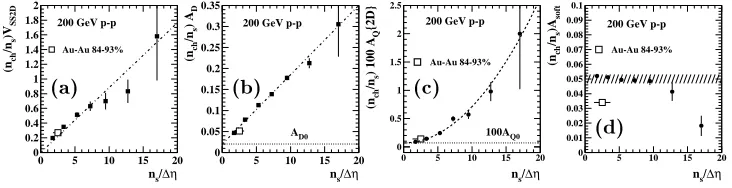
Figure 2 shows model-t results for the principal model elements vs soft multiplicity
densityρ¯s= ns/∆η within acceptance∆η = 2. Those results are consistent with previous
studies of minimum-bias (MB)p-pcollisions [2, 3]. In terms of correlated hadron-pair number
(e.g.nchAsoft) the soft (projectile dissociation) pair number scales∝ρ¯s, the dijet pair number
scales∝ρ¯2sand the NJ-quadrupole pair number scales∝ρ¯3s. Since multiplicitynch =ns+nh
varies ten-fold the range of dijet production is 100-fold and the NJ quadrupole varies 1000-fold
for this data sample. The dijet trend conrms results from apt spectrum analysis leading to
a two-component model (TCM) where the hard-component (dijet) hadron yieldnh is related
to the soft-component (projectile-dissociation) yieldns asnh≈0.01n2s within∆η= 1[4].
0 0.2 0.4 0.6 0.8 1 1.2 1.4 1.6 1.8 2
0 5 10 15 20
ns/∆η
(n
ch
/ns
)V
SS2D 200 GeV p-p
Au-Au 84-93% (a) 0 0.05 0.1 0.15 0.2 0.25 0.3 0.35
0 5 10 15 20
ns/∆η
(n
ch
/ns
) A
D
200 GeV p-p
AD0 (b) 0 0.5 1 1.5 2 2.5
0 5 10 15 20
ns/∆η (nch
/ns
) 100 A
Q
{2D}
Au-Au 84-93%
100AQ0 200 GeV p-p
(c) 0 0.01 0.02 0.03 0.04 0.05 0.06 0.07 0.08 0.09 0.1
0 5 10 15 20
ns/∆η
(n ch /ns )A soft Au-Au 84-93% 200 GeV p-p
(d)
Figure 2. Fit parameters vs soft-multiplicity densityρ¯s=ns/∆η: (a) SS 2D peak volume, (b) AS
1D peak amplitude, (c) NJ quadrupole amplitude, (d) soft-component (projectile-nucleon) amplitude.
The dijet trend for spectra and 2D angular correlations is consistent with recent LHC
measurements of ensemble-meanpt [5] and ptuctuations [6] vs nch where p-pcollisions at
LHC energies are found to be dominated by dijet production described accurately by the same TCM (see Sec. 4). Dijet correlation trends in Au-Au collisions at the RHIC are consistent with spectrum hard components [7, 8] and with QCD (via event-wise reconstructed jets) [9].
The new third model element forp-pcollisions (NJ quadrupole) is found to be very
signi-cant for larger multiplicities. Evidence from Au-Au collisions suggests that the NJ quadrupole
3 The CMS ridge nonjet quadrupole vs minimum-bias dijets
One argument for collectivity (ows) in small collision systems proceeds from identication
of a same-side (SS) ridge in 2D angular correlations from 7 TeVp-pcollisions with certain
cuts applied [11]. Note that several ridges have been identied in RHIC and LHC data including a soft ridge [12] and a ridge associated with trigger-associated combinatoric jet analysis [13] (both probably jet-related). Evidence from 2D angular correlations as in Sec. 2 suggests that the CMS ridge is associated with the NJ quadrupole component [14].
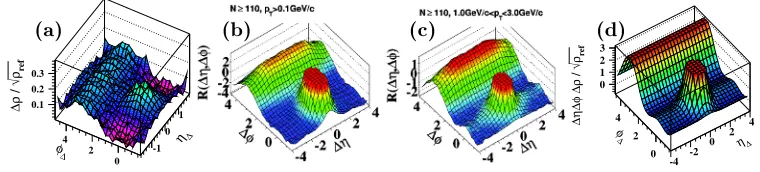
Figure 3 (a) repeats results from then= 6 multiplicity class of 200 GeVp-pcollisions in
Fig. 1 (d) that can be compared with high-multiplicity events from 7 TeV p-p collisions in
panel (b). The structures are quite similar, including a large negative curvature nearφ∆=π
and nearly zero curvature at the origin. The critical issue is the net azimuth curvature near
φ∆= 0in the interval|η∆|>1that is determined by a superposition of the away-side (AS)
dipole (positive curvature) and NJ quadrupole (negative curvature). A ridge appears when
the net SS curvature becomes negative (corresponding to a maximum). With increasingnch,
collision energy andpt cut the NJ quadrupole amplitude increases relative to the AS dipole
amplitude. At some point a change in sign of the curvature may occur and a ridge appears.
φ∆
∆ρ
/
√ρref
η∆
-1 0
1
0 2 4 0.1 0.2 0.3
(a) (b) (c)
φ∆
∆η∆φ
∆ρ
/
√ρref
η∆
-4 -2 0 2
4
0 2 4 0 1 2 3 (d)
Figure 3. (a) 200 GeVp-pdijets + NJ quadrupole, (b) CMS 7 TeVp-pdata for Ntrk >110(c)
CMS data with additionalptcut (d) extrapolation from 200 GeV data trends for CMS conditions.
Figure 3 (c) shows the appearance of a SS ridge when aptcut is applied to CMS
high-multiplicity data, the primary evidence for claims of a novel ridge phenomenon interpreted
by some to signal ow in p-p collisions. In Ref. [14] dijet and NJ quadrupole trends for
62 and 200 GeV Au-Au collisions were extrapolated rst to N-N collisions and then to 7
TeV. The prediction shown in panel (d) agrees quantitatively with the CMS result in panel
(c). One motivation for thep-pcorrelation study in Sec. 2 was to conrm the extrapolation
to N-N collisions in Ref. [14] and that has been achieved. It is notable that as the SS
curvature changes sign from positive to negative the negative AS curvature doubles for the
same conditions, conrming the role of the NJ quadrupole with its two maxima at 0 andπ.
4
p
tuctuations at the RHIC and LHC minimum-bias dijets
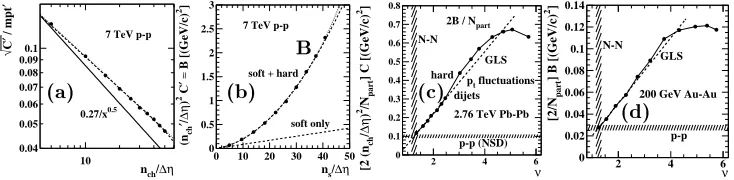
Figure 4 (a) showsptuctuations (ALICE) as measured by relative r.m.s. measure
√
C/p¯tvs
multiplicity densityρ¯0 =nch/∆η. The ALICE result is interpreted to suggest collectivity
(ow) inp-pcollisions and no signicant energy dependence over a large interval. The choice
of uctuation measure is motivated as a pt proxy for relative temperature uctuations in
conventional variance-based uctuation measureB asC=B/nch(nch−1), with conditional
variance dierenceB≡(Pt−nchp¯t)2−n¯chσp2t (the second term is a central-limit reference).
Figure 4 (b) shows ALICE data from panel (a) transformed to measure B (points) per
the relations above. The dashed curve is (soft + hard) TCM representation B = bsρ¯s+
bhρ¯2s. The second term is the contribution from MB dijet production that dominates pt
uctuations. Corresponding results for other collision energies inferred from known
ensemble-meanp¯t systematics [5] indicate thatB (andpt uctuations) are strongly energy dependent
as expected for dijets [6]. The ALICE choice ofptuctuation measure (a ratio of ratios) has
as one consequence the near cancellation of the dominant dijet contribution, suggesting as a consequence that small collision systems may be substantially thermalized with no signicant correlation structure and that event-wise temperature as a state variable may be relevant.
0.04 0.05 0.06 0.07 0.08 0.09 0.1
10
nch/∆η
√
C
′
/ mpt
′
7 TeV p-p
0.27/x0.5 (a)
0 0.5 1 1.5 2 2.5 3
0 10 20 30 40 50
ns/∆η
(n
ch
′
/
∆η
)
2 C
′
≈
B [(GeV/c)
2]
soft + hard
soft only 7 TeV p-p
(b) B
0 0.1 0.2 0.3 0.4 0.5 0.6 0.7 0.8
2 4 6
ν
[2 (n
ch
/
∆η
)
2/N
part
] C [(GeV/c)
2]
hard
dijets N-N
pt fluctuations GLS
2.76 TeV Pb-Pb
p-p (NSD) 2B / Npart
(c)
0 0.02 0.04 0.06 0.08 0.1 0.12 0.14
2 4 6
ν
[2/N
part
] B [(GeV/c)
2]
200 GeV Au-Au
p-p N-N
GLS
(d)
Figure 4. (a)p-p ptuctuations from ALICE, (b) same data converted to variance dierenceB, (c)
per-participant form2B/Npartfor 2.76 TeV Pb-Pb, (d) STAR data for 200 GeV Au-Au collisions.
Figure 4 (c) shows ALICEptuctuation data for 2.76 TeV Pb-Pb collisions transformed
to the per-particpant statistical measure2B/Npart. The TCM for transparentA-Acollisions
is given by the GLS curve (dashed line, Glauber linear superposition) withν = 2Nbin/Npart.
The hard-component trend ∝ ν is a signature for dijet production that appears to
dom-inate pt uctuations up to central collisions. Figure 4 (d) shows STAR 200 GeV Au-Au
uctuation data in the same format (obtained almost ten years ago) that exhibit the same trend [15, 16]. The ve-fold increase in overall amplitude from RHIC to LHC is expected from
the energy dependence of dijet production. The STAR study derived the underlyingpt 2D
angular correlations corresponding to measuredpt uctuations (via inversion of uctuation
scale dependence), and the dominant jet-related correlation structure is undeniable.
5 The nonjet quadrupole ow or nonow?
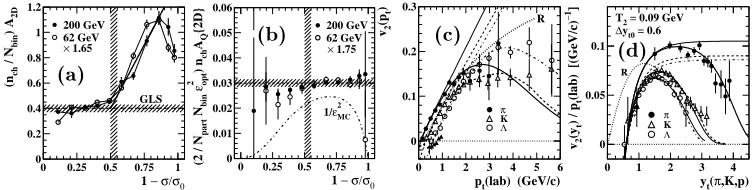
Figure 5 (a) shows the per-binary-collision trend of the SS 2D jet-peak amplitude vs Au-Au
centrality. For the more-peripheral half of total cross section σ0 Au-Au collisions exhibit
transparency jets remain unmodied. For the more-central half jet formation is modied resulting in a larger yield of jet fragments, the change occurring at a sharp transition (ST) (hatched band) [1]. One could speculate that above the ST a owing bulk medium (QGP?) may cause jet modication, in which case a corresponding change should occur to elliptic ow
measure v2. In panel (b) NJ quadrupole measure AQ = ¯ρ0v22 follows the same trend from
peripheral to central Au-Au with no signicant deviation, no response to a bulk medium [17].
Figure 5 (c) showsv2(pt)vsptfor three hadron species in a conventional plotting format.
1 −σ/σ0
(n
ch
/ N
bin
) A
2D
GLS 200 GeV 62 GeV × 1.65
0 0.2 0.4 0.6 0.8 1 1.2
0 0.25 0.5 0.75 1
(a)
0 0.01 0.02 0.03 0.04 0.05 0.06
0 0.25 0.5 0.75 1
1 −σ/σ0
(2 / N
part
N
bin
ε
2 opt
) n
ch
AQ
{2D}
1/ε2MC 200 GeV 62 GeV × 1.75 (b)
pt(lab) (GeV/c) v2
(p
t
)
R
π
K
Λ
0 0.1 0.2 0.3
0 1 2 3 4 5 6
(c)
yt(π,K,p) v2
(yt
) / p
t
(lab) [(GeV/c)
−
1]
R
π
K
Λ
T2 = 0.09 GeV ∆yt0 = 0.6
0 0.05 0.1
0 1 2 3 4
(d)
Figure 5. (a) 200 GeV Au-Au jet correlations showing sharp transition, (b) Au-Au NJ quadrupole (c)v2(pt)vspt, (d)v2(pt)/ptvs transverse rapidityyt revealing common source boost atyt= 0.6.
interpreted to conrm a hydrodynamic ow mechanism (i.e. elliptic ow). However, hydro theory itself relating to the particle-source boost distribution can only describe a tiny fraction of that plot space near the origin. Panel (d) shows the result of a simple transformation to
v2/pt(lab) vs transverse rapidity yt ≡ ln[(pt+mt)/mh] (logarithmic measure of speed or
boost). The common zero intercept atyt= 0.6 reveals the hadron-source boost distribution
consistent with a single value. Conventional hydro theories based on a Hubble-expanding
bulk medium include a broad source-boost distribution (as for theory curve R). Thus,v2(pt)
data for identied hadrons demonstrate that the NJ quadrupole corresponds to an expanding cylindrical shell with xed source boost for all collisions systems [18, 19]. The combination of results in Fig. 5 plus other evidence against a hydrodynamic mechanism argues against a ow interpretation for the NJ quadrupole in any high-energy collision system [20]. The possibility emerges that the NJ quadrupole represents an alternative (nonow) QCD mechanism [21].
6 Summary
The two-component (soft + hard) model (TCM) provides a remarkably accurate description
of hadron production over a broad range of collision systems p-pandp-Aord-Avsnchand
A-Avs centrality measureνat RHIC and LHC collision energies. The dijet (hard) component
of the TCM is quantitatively consistent with spectrum hard components and with data from
event-wise reconstructed jets. Evidence frompt spectra, ensemble-mean pt, pt uctuations
and 2D angular correlations shows that minimum-bias (MB) dijets dominate high-energy collisions. However, alternative spectrum, uctuation and correlation measures can act to suppress evidence for large dijet contributions, for instance in the form of statistical ratios of
ratios that cancel the hard components of TCM trends or spectrum ratios (e.g.RAA) that
suppress spectrum hard components at smallerptwhere they achieve their maximum values.
A third component, the azimuth quadrupole (conventionally identied with elliptic ow), emerges as a signicant element only in angular correlations. A nonjet (NJ) quadrupole contribution can be identied unambiguously via 2D model ts, with a substantial amplitude
even in p-p collisions as demonstrated in the present study. Careful examination of NJ
quadrupole trends onp-p nch, A-Acentrality and on pt for identied hadron species reveals
systematic trends incompatible with the conventional hydro interpretation. For instance, the NJ quadrupole vs centrality trend in Au-Au collisions shows no correspondence with the large change in jet formation (jet quenching) in more-central collisions attributed to formation of
dense bulk medium, support instead an expanding thin cylindrical shell with source boost independent of collision centrality for those few hadrons carrying the NJ quadrupole.
The CMS ridge, seen as a novel phenomenon suggesting collectivity (ow) in small collision systems at LHC energies, is simply explained as an interplay of the NJ quadrupole with the away-side dijet peak that controls the same-side net azimuth curvature. The LHC phenomenon can be predicted quantitatively from quadrupole and dijet trends observed al-ready in RHIC collisions. One could argue that appearance of an NJ quadrupole component
inp-pcollisions does support a ow interpretation there, as recently claimed. But the
oppo-site is more likely: the appearance of a quadrupole component in small systems where the particle density is negligible argues against a hydro interpretation, instead is consistent with mounting evidence against a hydrodynamic description in any high-energy collision system.
The unanticipated abundance of resolved low-energy (MB) jets or minijets in more-central Au-Au collisions at the RHIC became apparent in STAR angular-correlation data more than ten years ago, already casting doubt on claims for local thermalization in such collisions and therefore for a owing bulk medium or QGP. Evidence against thermalization and hydro-dynamic ows has mounted steadily since then. Statistical and correlation measures and spectrum-analysis techniques that reveal the persistent large dijet contribution and evidence against ows have been developed and published throughout that period. It is remarkable how little inuence those results have had on the larger community over the ensuing ten years.
References
[1] G. Agakishiev, et al. (STAR Collaboration), Phys. Rev. C 86, 064902 (2012).
[2] R. J. Porter and T. A. Trainor (STAR Collaboration), J. Phys. Conf. Ser. 27, 98 (2005). [3] R. J. Porter and T. A. Trainor (STAR Collaboration), PoS C FRNC2006, 004 (2006). [4] J. Adams et al. (STAR Collaboration), Phys. Rev. D 74, 032006 (2006).
[5] T. A. Trainor, Phys. Rev. C 90, no. 2, 024909 (2014) [6] T. A. Trainor, Phys. Rev. C 92, no. 2, 024915 (2015). [7] T. A. Trainor, Int. J. Mod. Phys. E 17, 1499 (2008).
[8] T. A. Trainor and D. T. Kettler, Phys. Rev. C 83, 034903 (2011). [9] T. A. Trainor, Phys. Rev. C 80, 044901 (2009).
[10] T. A. Trainor, Phys. Rev. C 78, 064908 (2008). [11] CMS Collaboration, JHEP 1009, 091 (2010).
[12] S. Gavin, L. McLerran and G. Moschelli, Phys. Rev. C 79, 051902 (2009). [13] B. I. Abelev et al. (STAR Collaboration), Phys. Rev. C 80, 064912 (2009). [14] T. A. Trainor and D. T. Kettler, Phys. Rev. C 84, 024910 (2011).
[15] J. Adams et al. (STAR Collaboration), J. Phys. G 32, L37 (2006). [16] J. Adams et al. (STAR Collaboration), J. Phys. G 33, 451 (2007). [17] D. T. Kettler (STAR collaboration), Eur. Phys. J. C 62, 175 (2009). [18] D. Kettler ( STAR Collaboration), J. Phys. Conf. Ser. 270, 012058 (2011). [19] D. T. Kettler, D. J. Prindle and T. A. Trainor, Phys. Rev. C 91, 064910 (2015). [20] T. A. Trainor, J. Phys. G 37, 085004 (2010).