Electronic Thesis and Dissertation Repository
3-14-2019 2:30 PM
Accessibility And Academic Libraries: A Comparative Case Study
Accessibility And Academic Libraries: A Comparative Case Study
Claire Burrows
The University of Western Ontario
Supervisor Hill, Heather
The University of Western Ontario
Graduate Program in Library & Information Science
A thesis submitted in partial fulfillment of the requirements for the degree in Doctor of Philosophy
© Claire Burrows 2019
Follow this and additional works at: https://ir.lib.uwo.ca/etd
Part of the Library and Information Science Commons
Recommended Citation Recommended Citation
Burrows, Claire, "Accessibility And Academic Libraries: A Comparative Case Study" (2019). Electronic Thesis and Dissertation Repository. 6114.
https://ir.lib.uwo.ca/etd/6114
This Dissertation/Thesis is brought to you for free and open access by Scholarship@Western. It has been accepted for inclusion in Electronic Thesis and Dissertation Repository by an authorized administrator of
ii
Abstract
Although individuals with disabilities represent more than 22% of the Canadian
population over the age of 15, they remain underrepresented in higher education, and especially in the university setting. Although some library and information science (LIS) research has focused on creating accessible webpages, resources for individuals with print disabilities, and the physical infrastructure of libraries, few studies have included the perspectives of disabled individuals themselves or attempted to understand how libraries are conceptualizing disability and accessibility. By incorporating a disability-studies lens into this study, we can develop a more comprehensive understanding of the obstacles that arise in the pursuit of university education for students with disabilities, and perhaps of the ways in which academic libraries may address some of these
obstacles. This dissertation, then, examines what Canadian academic libraries are doing to support university students with disabilities and how students are experiencing services in practice.
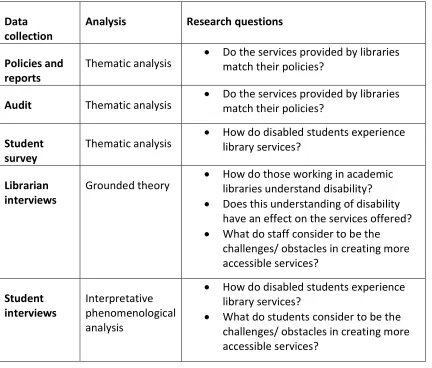
To answer these questions, a comparative case study was conducted across two provinces, focusing on one institution in Ontario and one in Québec. Ontario has developed the most comprehensive accessibility legislation in Canada over the last decade, while Québec’s legislation remains relatively unknown and weak. At each institution, data was collected from a variety of sources: interviews with library staff members; survey with students registered with Disability Support Services; interviews with a selection of students; examination of library policies and reports; and a physical and informational audit. Analysis was carried out using grounded theory, interpretative phenomenological analysis, and thematic analysis.
iii
interacting with library staff, but they face a variety of obstacles in accessing spaces, resources, and information about accommodations or accessible services.
Keywords
iv
This work is dedicated to my grandparents, and especially to my grandmothers, whose
v
First and foremost, I want to thank all of the participants of this study. Without you taking the time to share your thoughts and experiences, this study would not have been possible. I would also like to thank the staff at Disability Support Services at the two institutions for their help in recruiting students to take part in surveys and interviews.
I’d like to thank my fantastically bad-ass supervisor, Dr. Heather Hill. I had no idea what to expect in a PhD supervisor. I had hoped for support, but I did not expect fun. Many coffees and several international trips as well as the odd roller derby later, I now expect nothing less. A huge thank you as well to my committee member, Dr. Lynne McKechnie. I could not have dreamed of a more supportive committee and am so grateful and honoured for the chance to have worked with you both. Over my time at FIMS, I have also had the pleasure of working with or taking classes with many other amazing faculty members at FIMS, including Dr. Paulette Rothbauer, who was a member of my
comprehensive exams committee, and Dr. Grant Campbell, whose class on critical theory remains one of my favourites. Other individuals at FIMS have also made my experience there a thoroughly enjoyable one, and I am especially grateful to Marni Harrington, Shelley Long, Cindy Morrison, and Becky Blue for this. And thank you to my examining committee, Dr. Joan Bartlett, Dr. Melissa Adler, Dr. Paulette Rothbauer, and Dr. Jeff Preston, for taking the time to read this and for your insightful comments.
vi thank you for leading the way.
A thank you as well to those friends from London outside of FIMS. Kelly, I am so glad I latched onto you at CDSA years ago. Alexandra and Breanna, your presence always makes me laugh until my stomach hurts. And of course, my bestie forever, Christine, with whom I can have entire conversations about the cuteness of cats. (Cats are cute, aren’t they?)
I’d also like to thank everyone at Concordia Library for being so welcoming and supportive during my time there as researcher-in-residence. I’m truly grateful for the interest in and support for my work, not to mention for the many wonderful
conversations I’ve had with so many of you. Thank you to Dr. Beaudry and Dr. Kloda for giving me this opportunity. And a special thanks to Dee Winn for keeping me running, dancing, and 5 à 7ing, and to Jenna DuFour for always being there when there were coffee or dog-conversation needs!
To my parents, Fran and John. I am so grateful for the love and support that you have always shown me, and which have given me the confidence to take something like this project on. And to my brother, Galen, who has become one of the most reliable
people—as well as just one of my favourites—in my life. I am forever grateful for your moving help, flying visits, and just your company in general. Thank you to my in-laws, Jean and Richard, as well as the siblings, Jonny, Charlotte, and Lizzie, who have been cheering on from afar. And of course, thank you to my furry family: Lolo (my faithful PhD dog), Delia, Macaroni, and Toby. But not you, Biffy.
vii
my Canadian slunk, and I cannot wait for the next chapter.
viii
Abstract ... ii
Dedication ... iv
Acknowledgements ... v
Table of contents ... viii
List of appendices ... xvi
1 Introduction ... xvi
1.1 Background ... 1
1.2 Why study disability? ... 2
1.3 Focus of this study ... 3
1.4 Structure ... 4
1.5 Language of disability ... 7
2 Literature review ... 10
2.1 International context ... 10
2.2 Disability in Canada ... 11
2.2.1 Canada’s disability policy ... 13
2.2.2 Government reports ... 18
2.2.3 Accessibility for Ontarians with Disabilities Act (AODA) ... 21
2.2.4 Criticisms of the AODA ... 23
2.2.5 Québec legislation ... 26
2.2.6 Criticisms of Québec legislation ... 27
2.3 U.S. and U.K. policy ... 28
ix
2.3.3 H.R. 620 update to the ADA ... 30
2.3.4 The Special Educational Needs and Disabilities Act (SENDA) and the Equality Act ... 31
2.3.5 Criticisms of SENDA ... 32
2.4 Higher education in Canada ... 33
2.4.1 Ontario ... 34
2.4.2 Québec ... 36
2.5 Higher education and disability ... 37
2.6 Higher education and academic libraries ... 40
2.7 Accessibility in libraries ... 42
2.7.1 Practitioner literature ... 44
2.7.2 Academic research ... 44
2.7.3 Organizational literature ... 46
2.7.4 Accessibility of libraries in Canada ... 47
2.7.5 Theory use in LIS literature on accessibility ... 49
2.8 Research questions ... 51
3 Disability studies ... 54
3.1 Theorizing disability ... 54
3.1.1 Medical model of disability ... 55
3.1.2 Social model of disability ... 59
3.1.3 Minority-group model of disability: Two paths to the same end ... 63
3.2 Moving beyond the social model of disability ... 66
x
3.2.3 Mad studies ... 70
3.3 Disability studies and LIS ... 71
4 Methodology ... 75
4.1 Epistemology and framing lens ... 75
4.2 Research design ... 78
4.3 Research methods ... 80
4.3.1 Library audit ... 81
4.3.2 Documents ... 82
4.3.3 Interviews with library staff ... 83
4.3.4 Student survey ... 85
4.3.5 Student interviews ... 86
4.4 Methodology and analysis ... 89
4.4.1 Grounded theory... 90
4.4.2 Interpretative phenomenological analysis ... 95
4.4.3 Thematic analysis ... 98
4.5 Bringing the data together ... 100
4.6 Reflexive and memo-writing practices ... 103
4.7 Participatory elements ... 104
4.8 Credibility ... 107
4.9 Limitations and constraints ... 109
4.10Ethics ... 110
5 Ontario institution findings ... 113
xi
5.1.1 Strategic directions and annual reports ... 114
5.1.2 LibQUAL surveys... 115
5.1.3 Policies ... 116
5.2 Audit ... 117
5.2.1 Entrance ... 117
5.2.2 Elevators ... 118
5.2.3 Bathrooms ... 118
5.2.4 Stacks ... 119
5.2.5 Signage and lighting ... 120
5.2.6 Study rooms ... 121
5.2.7 Access rooms... 122
5.2.8 Software and hardware ... 123
5.2.9 Online information ... 123
5.3 Library staff interviews ... 123
5.3.1 Library profession ... 125
5.3.2 Doing our best ... 130
5.3.3 Conferring with experts ... 135
5.3.4 Working in an institution ... 139
5.3.5 Library users ... 142
5.3.6 Using the library ... 146
5.3.7 Conceptualizing disability ... 150
5.3.8 Looking forwards... 152
xii
5.5.1 Experiences of disability... 159
5.5.2 Academic progress ... 161
5.5.3 Using the library spaces ... 163
5.5.4 Using library resources... 169
5.5.5 Interactions in the library... 172
5.5.6 Accommodations in the library ... 175
5.5.7 Working around disability ... 176
5.5.8 Reasons for participating ... 180
5.6 Overall picture ... 181
6 Québec institution Findings ... 183
6.1 Background ... 183
6.2 Reports and policies ... 183
6.2.1 Strategic directions and annual reports ... 184
6.2.2 LibQUAL and survey results ... 185
6.2.3 Policies ... 186
6.3 Audit ... 187
6.3.1 Elevators ... 187
6.3.2 Washrooms ... 187
6.3.3 Stacks ... 188
6.3.4 Signage ... 188
6.3.5 Study rooms ... 189
6.3.6 Software and hardware ... 189
xiii
6.4.1 Library profession ... 192
6.4.2 Working in an institution ... 194
6.4.3 Working with DSS ... 198
6.4.4 Library users ... 199
6.4.5 Using the library ... 204
6.4.6 Obstacles ... 206
6.4.7 Comparing provinces ... 208
6.4.8 Conceptualizing disability ... 210
6.5 Student survey ... 212
6.6 Student interviews ... 215
6.6.1 Experiences of disability... 217
6.6.2 Accommodations ... 220
6.6.3 Progress and timelines ... 223
6.6.4 Using the library spaces ... 225
6.6.5 Using library resources... 228
6.6.6 Accommodations in the library ... 230
6.6.7 Interactions in the library... 232
6.6.8 Sharing the space with other students ... 235
6.6.9 Learning experiences ... 237
6.6.10 Understanding the world around them ... 240
6.7 Overall picture ... 241
7 Discussion ... 242
xiv
7.1.2 Going to university ... 247
7.1.3 Progress ... 251
7.1.4 Advocacy ... 253
7.1.5 Other stories and information ... 257
7.2 Taking up space and belonging ... 258
7.2.1 Library as place ... 261
7.2.2 Sharing the space ... 263
7.2.3 A communal space and welcoming environment ... 265
7.3 Library collections and access ... 267
7.3.1 Webpage and catalogue usability ... 268
7.3.2 Books and digital resources ... 269
7.3.3 Digitization ... 270
7.3.4 Workarounds ... 274
7.4 Librarians with good intentions ... 275
7.4.1 Culture of being a helper profession ... 275
7.4.2 Having authority ... 277
7.4.3 Supporting accessibility in practice ... 278
7.4.4 Sprinkle of suspicion ... 279
7.5 Expertise for access ... 282
7.5.1 Disability Support Services ... 282
7.5.2 Accessibility librarians ... 285
7.6 Why the library remains inaccessible ... 287
xv
7.6.3 Assuming it’s happening elsewhere ... 291
7.6.4 Talking to disabled people ... 293
7.7 Provincial similarities and differences ... 294
7.8 Accessible services are good for all ... 295
7.9 Gatekeeping the library ... 296
7.10Research questions revisited ... 297
8 Conclusion ... 299
8.1 Key takeaways ... 299
8.2 Recommendations for future research ... 301
References ... 303
Appendices ... 341
xvi
Appendix A Ethics approvals ... 341
Appendix B Librarian recruitment email ... 344
Appendix C Librarian letter of information and consent ... 346
Appendix D Librarian semi-structured staff interview schedule ... 351
Appendix E Support information for librarians ... 355
Appendix F Student survey recruitment email ... 356
Appendix G Student survey letter of information and consent ... 358
Appendix H Student survey ... 361
Appendix I Student survey results ... 366
Appendix J Student recruitment poster ... 373
Appendix K Student interview recruitment email ... 374
Appendix L Student interview letter of information and consent ... 376
Appendix M Student semi-structured interview schedule ... 381
Appendix N Support information for students ... 385
Appendix O Library audit ... 387
Appendix P Library audit Ontario... 390
1
Introduction
This study provides a comparative examination of accessibility at two universities’ library systems in Canada—one in Ontario and one in Québec. The availability of accommodated services in the library, librarians’ knowledge of accessibility, and students’ experiences using academic libraries are key elements of this study.
1.1 Background
The United Nations has declared disabled individuals to be “the world’s largest
minority” (United Nations, 2006b), and it suggests that “many, if not most people, will acquire a disability at some time in their life due to physical injury, disease or aging” (United Nations, 2006c). Despite the overwhelming prevalence of disability throughout the world and the likelihood that we may all experience disability in some form or another, “persons with disabilities continue to face barriers in their participation as equal members of society and violations of their human rights in all parts of the world” (United Nations, 2006a). This is true in all areas of society, from employment and transportation to health care, recreational activities, and educational opportunities. A consideration of the many ways in which the services, resources, and infrastructure that so many of us take for granted in our society can contribute to the marginalization of some is therefore vital in order to eliminate barriers and discrimination, as well as to create equitable opportunities for full societal participation for all.
post-secondary education at university level as their highest educational attainment is below 15% across Canada, while it varies from approximately 20% to 30% for persons without disabilities” (p. 9). This state of affairs raises the question of why university education remains inaccessible to so many members of the disabled population.
Certainly there are many components of higher education—from faculty attitudes to financial support—that need to be addressed to develop a full picture and
understanding of the obstacles that disabled people face in considering an academic degree. The academic library is one of these components. And it is one that is often overlooked in considering academic accessibility, despite the oft-repeated cliché that the library is the “heart of the university” (Kleymeer, Kleinman, & Hanss, 2010; Pennsylvania State University, 2010; Virkus & Metsar, 2004). After all, any given
university library provides not only access to core course readings but also, among other resources and services, hundreds of thousands—or even millions—of other academic publications, as well as computer access, study space, research support, and study-skills instruction. It can certainly be argued that without the support of an accessible library, disabled students are less likely to succeed in postsecondary educational pursuits.
1.2 Why study disability?
Disability “is an open-enrollment social category—all humans potentially belong; this makes disability uniquely positioned for fruitful investigations of hegemonic normativity in its myriad formulations” (McDonald-Morken, 2014, p. 19). Bell (2011) too notes that:
To fully appreciate why research that focuses on disabled students is so vital, we must remember that disability crosses age groups, genders, sexualities, races, ethnicities, socioeconomic statuses, and religions. Without a focus on disability specifically, a
proportion of the populations of all of these groups will continue to face various degrees of discrimination and oppression no matter the strides that they make in other areas. As Withers (2012) states, “The construction of disability is an essential tool for how people with power work to maintain that power. Without targeting disability specifically and simultaneously recognizing and responding to its intersectionality with other
oppressions, the systems and values that create disability will remain intact, replicating disablism” (p. 11). Research in this area is not only a matter of considering how to better support disabled students in university libraries, but also a way of working towards the construction of an accessible society rather than a disabling one. It is important to note that accessibility does not only refer to disability, but also to access for other
marginalized groups, such as People of Colour (POC), members of the LGBTQ+ community, and First Nations, Métis, and Inuit peoples.
1.3 Focus of this study
This study examines accessibility practices at Canadian academic libraries through a perspective developed from disability studies, a focus which has seldom appeared in library and information science (LIS) literature. The thesis constitutes a comparative case study of two Canadian universities’ library systems, one in Ontario and one in Québec. The exploration of accessibility at these two libraries allows for an
understanding of current policies, services, and best practices, as well as of potential areas for improvement. Key to this study is the inclusion of disabled students’
1.4 Structure
Chapter 2 of this thesis provides an overview of relevant literature on this topic. I begin by highlighting statistics about the presence of disability both in the international community and in Canada in particular, before providing a brief history of Canada’s disability policies. While a federal disability policy is yet to be fully enacted, I provide a brief overview of the Accessibility for Ontarians with Disabilities Act and of Québec’s Act to Secure Handicapped Persons in the Exercise of their Rights with a View to Achieving Social, School and Workplace Integration, as well as of the criticisms that they have both attracted. I also briefly discuss relevant policies in both the U.K. and U.S. Next I look at systems of higher education in Canada, and how disability and accessibility have been considered in higher education in general. An overview of the role of the academic library in higher education is also considered before I then discuss accessibility in libraries, which I have divided between practitioner, academic research, and
organizational literature. Finally, the literature review sets out the research questions for this PhD study.
Chapter 3 of the thesis provides the theoretical framework for this study. The study itself is grounded in disability studies, which posits that disability is not a negative identity factor, but rather that it is socially constructed. It should be noted at this early juncture that disability studies and many of the theories under this umbrella have emerged from a worldview that places whiteness at the centre and posits it as the “neutral” or “natural” category. Bell (2006) emphasizes that “White Disabilities Studies, while not wholeheartedly excluding people of color from its critique, by and large focuses on the work of white individuals and is itself largely produced by a corps of white scholars and activists” (p. 275). This study, too, has been developed from a white perspective in the sense that I, the researcher, am a white person.
circumstances in which they emerged. Although this research borrows heavily from the social model’s understandings of disability, current critical disability theory goes beyond this model. Criticisms of the social model lead into a discussion of critical disability theory in general, and of how current theories are attempting to integrate intersectional elements into our understandings of disability. Finally, I emphasize the
underrepresentation of disability theory in library and information science (LIS) literature, and I call for greater engagement with disability studies on the part of both practitioners and researchers within LIS.
Chapter 4 focuses on the methodology for this study. A constructivist epistemological approach alongside a framing lens developed from disability studies shape the design of this study. Research methods for data collection include a physical audit, review of relevant policies and reports, interviews with library staff members, a survey with students registered with Disability Support Services (DSS), and interviews with a selection of disabled students. An overview of the analysis methods is also provided through a discussion of grounded theory, interpretative phenomenological analysis (IPA), and thematic analysis. Other key elements such as the way in which a reflexive practice was used and the study’s limitations and ethical considerations are also discussed.
student interviews. Students emphasized their reasons for going to the library, various barriers they had faced, and questions about what types of accommodations might be available. They also shared their reasons for participating in this study.
Chapter 6 presents the findings from the Québec library institution, and it is organized in the same manner as Chapter 5. A brief overview of the institution itself provides context for the various findings. Important takeaways from the audit and document
examination are included. Key findings from interviews with library staff members brought to light themes such as training and institutional support as well as on
collaborations with the institution’s DSS. Results from the student survey again provide some context for the student interviews. Key takeaways from these interviews included reasons for visiting the library and requirements for comfortable study spaces.
Chapter 7 provides the discussion for this study. How the various themes emerging from the two institutions relate to relevant literature from the field of LIS as well as from disability studies is included. Key elements of the discussion focus on the experiences of attending university and registering with DSS in order to receive accommodations, the library’s role in providing a space for study, potential barriers in accessing library
collections, and the ways in which library staff members approach their job roles. I argue here that potential barriers to providing an accessible service relate to a lack of
engagement with disability theory on the part of universities and their libraries, which in turn leads them to not prioritize accessibility. Finally, a brief discussion of similarities and differences between the two provinces as well as of the potential of universal design in libraries closes this chapter.
1.5 Language of disability
For the purposes of this study, a broad definition of “disability” is used. Disabled individuals may include those with physical impairments, medical conditions, cognitive impairments, emotional or mental health conditions, or sensory impairments. These conditions, impairments, and disorders can be medically diagnosed or be self-identified by the individual. However, it is essential to note that the focus of this study is not medical conditions, but rather the societal obstacles and barriers that limit
opportunities for full participation in society.
There are many ways to talk about disability and multiple perspectives on how best to do this. McDonald-Morken (2014) points out the difficulty of speaking about disability, as “the very use of the word implies that disability is definable and recognizable—an indefensible implication, as the work of critical disability studies scholars attests” (p. 36). In practice, many people in North America prefer the use of person-first language, in which one speaks about a “person with a disability” rather than about a “disabled person.” The purpose of this term is to emphasize the personhood of those with
disabilities. The Canadian government encourages the use of person-first language, as is demonstrated through its use in various federal publications (Human Resources and Skills Development Canada, 2006, 2010, 2011). The Canadian government is certainly not the only entity to do so:
Titchkosky goes on to write that “the proper speaker is one who does not collapse the difference between person and disability” (p. 51). However, many within the disabled community, and many who engage with disability studies, reject the use of person-first language. It has been suggested by some that person-first language has the unintended consequence of separating an individual from their disability and that it carries the risk of actually emphasising the disability’s medical aspects (Ross, 2013; Titchkosky, 2001). In contrast, speaking of “disablement” and “disabled individuals” arguably allows for an interpretation according to which disablement is imposed on an individual—for example, by a lack of suitable methods for accessing a given place or situation:
Unlike the term “person with a disability,” the term “disabled person” does not demand disability to be related to and understood as a disabling condition attached to a person; it does not reinforce that disability is (or is caused by) a person’s bodily impairment. Stating “disabled person” indicates that a person is disabled without implying what causes the disablement. (Ross, 2013, p. 136)
In this study, I primarily make use of the terms “disabled people” or “disabled
individuals,” although at times I may also use person-first language, in part for reasons of flow and sentence composition. I do so to emphasize that disability is not exclusively located within individuals, but that it is societal factors—in this instance our academic libraries and wider university institutions—that create and maintain disabling barriers. These terms will not be preferred by everyone, but I believe that language has the power to help us to examine our assumptions and biases, and it is for these reasons that I reject the strict use of person-first language. As Titchkosky (2011) writes:
2
Literature review
This chapter provides an overview of available literature about disability in Canada, such as governmental statistics and legislation. It also briefly discusses legislation in the U.S. and the U.K., two countries that share Canada’s common law tradition—although with significant differences in terms of federal reach—and have passed national-level accessibility legislation. Academic literature about higher education, including the role of academic libraries, is also included. Finally, a discussion of the academic literature about accessibility in libraries—both academic and public—wraps up this chapter.
2.1 International context
The World Health Organization (2011) estimates that approximately 15% of the world’s population—that is, over one billion people in 2010—have a disability of some kind, with many of these individuals living in extreme poverty, being denied access to
education, and/or facing violence and abuse (United Nations, 2006b). The prevalence of worldwide persecution and oppression led to the establishment of a UN committee in 2001 with the purpose of developing a convention to protect the rights of disabled individuals. After several years, the UN Convention on the Rights of Persons with Disabilities (CRPD)—whose purpose is “to promote, protect and ensure the full and equal enjoyment of all human rights and fundamental freedoms by all persons with disabilities, and to promote respect for their inherent dignity” (United Nations, 2006a)— was adopted in 2006 by the UN General Committee (United Nations, 2006c). This Convention was ratified by Canada in 2010.
information and evidence of remaining problems” and “the emphasis on the
involvement of disabled persons themselves and their representative organizations in the national monitoring process” (p. 21) are unique aspects of the CRPD that prior movements have neglected. However, he goes on to indicate that many nations have done little or nothing to institute these requirements in reality. Additionally, while the Convention certainly places pressure on governments to consider disability, at least in theory, it “is not directly enforceable by individuals” (Moran, 2014, p. 7) unless a country has also signed onto the Optional Protocol. For countries that do accept and implement the Optional Protocol, individuals can communicate to the UN’s Committee on the Rights of Persons with Disabilities that their guaranteed rights have been violated by their country. If specific criteria are met—such as the exhaustion of all domestic remedies (United Nations Human Rights, 2019)—the Committee can begin a process of communication and inquiry into the complaint with the nation in question. Canada only recently acceded this protocol, with the announcement being made on December 3, 2018.
2.2 Disability in Canada
identifying as disabled and more recognition of disabilities and chronic illnesses, both physical and cognitive. However, it should be noted that the percentage of disabled individuals in a given population is in many ways misleading, as considerations of who is disabled depend largely on the arguably arbitrary medicalization of various
characteristics. Consider, for example, how the line is drawn between a healthy weight on the one hand and being overweight or obese on the other—or the criteria for what is “normal” (Withers, 2012). Furthermore, the Statistics Canada numbers are based upon respondents “report[ing] a limitation in their day-to-day activities” (Cloutier, Grondin, & Lévesque, 2019, p. 9). Thus the figure of 22% may be a helpful starting point, but this number can vary greatly depending on the definitions of disability that are employed in a given context.
Robertson (2016) draws attention to variations in the disabled population found in Canadian national surveys between 1991 and 2012, with these numbers at times decreasing, despite the suggestion noted above that numbers will increase over time. She suggests that “it is critical to understand the various influences, such as how disability was conceptualized, and how such influences impact the outcomes of these and other surveys of disability” (Robertson, 2016, p. 48). Robertson (2016) also highlights that there has been very little research on disability and Indigenous
Many authors have demonstrated that disabled individuals in Canada and other countries face countless instances of systemic and overt discrimination on a daily basis (August, 2009; Burns & Gordon, 2010; Flaherty & Roussy, 2014; Prince, 2009; Ross, 2013; Torjman, 2014). For instance, Prince (2004) and Morris, Facett, Brisebois, and Hughes (2018) have highlighted that disabled individuals in Canada have continuously achieved lower levels of education, are more likely to be unemployed or
underemployed, and have lower incomes when employed than their nondisabled counterparts: “Research shows that persons with disabilities in Canada have abysmal incomes (Sherry 2008) because many people with disabilities are forced into cheap labour” (Dunn & Langdon, 2016, p. 39). Human Resources and Skills Development Canada (2010) has also observed a link between incomes and disability, in which
average incomes decrease as the severity of disability increases. However, Fichten et al. (2003) and Turcotte (2014) suggest that through greater access to higher education opportunities, the discrepancy between employment rates and incomes for disabled individuals and those for nondisabled individuals is at least partially mitigated. In a neoliberal context in which social programming and benefits are being reduced, and one in which the disabled population is growing, it becomes crucial that we ask what
opportunities disabled Canadians are being offered or denied that would allow them the same freedoms and advantages as their nondisabled fellow citizens.
2.2.1 Canada’s disability policy
Historically, Canadian policies related to disability were generally geared towards eugenics initiatives, as they were in other countries. These legislative policies supported institutionalization, as well as non-consensual sterilization for individuals with
disabilities should have limited reproductive rights” (Dunn & Langdon, 2016, p. 33), as well as in discussions and practices of aborting fetuses that are found to have or are likely to have disabilities. Canada’s history of policies pertaining to disability has certainly not been admirable, and while significant improvements with regards to disabled individuals’ rights have certainly been made, some aspects of these historical views are persistent.
At present, disability is increasingly an area of focus for policy development in many countries. Prince (2004) suggests that conventionally “disability policy is about methods and processes, and about what interventions are available or desirable… Disability policy making is about formulating programs and providing services for people in need who have disabilities or who are at risk of developing a disabling condition” (p. 62). One cannot assume that there is a single perspective on disability policy that could be
attributed to a category that encompasses such a large and diverse body as that covered by the term “disabled people.” However, disability policy from such a perspective might well be about “‘enabling people to function in and contribute to society’ and about addressing ‘what individuals should be enabled to do for themselves and for others’” (Fox and Willis, 1989 as cited in Prince, 2004, p. 63).
like air and rail, and the Government of Canada itself” (Employment and Social Development Canada, 2018a). Interestingly, the introduction of this Act “received no coverage in the francophone media” (Bénard, 2018).
It is important to note that this Act does not require the development of standards that organizations across the country would be required to meet, for instance in relation to the built environment. Instead, the Act “proposes creating the Canadian Standards Development Organization, which would develop model accessibility standards… Accessibility standards would be published and submitted to the Minister of Sport and Persons with Disabilities, who would consider making them mandatory under the law” (Employment and Social Development Canada, 2018b). The Act would also require those entities under its purview—government, parliamentary entities, federally regulated sectors such as transportation and telecommunications, and federal police—to develop and publish accessibility plans and progress reports, although critics have pointed out there these organizations are not obligated to follow through on these plans, and that the enforcement of any regulations that are developed are splintered across different sectors of government, such as the Canadian Transportation Agency and the Canadian Radio-television and Telecommunications Commission (Council for Canadians with Disabilities, 2018b, 2018a).
The Council of Canadians with Disabilities, while supporting this Act in theory, suggests that additional work must be done to ensure that it takes into account intersectional experiences of discrimination and oppression:
experience, in addition to ableism, other forms of oppression (racism, sexism, homophobia, transphobia, xenophobia, classism, colonialism, etc.). (Council for Canadians with Disabilities, 2018b)
Other criticisms, set out in an open letter signed by more than a hundred disability advocacy groups, include the lack of timelines, the power to exempt organizations from compliance, and language that allows for but does not require implementation of actions plans or steps to actually address disabling barriers in practice (Council for Canadians with Disabilities, 2018a). These groups also emphasize that the Bill does not “address the unique barriers experienced by Indigenous and First Nations persons with disabilities” (Council for Canadians with Disabilities, 2018a).
In addition to the current lack of enacted legislation, there is not one standardized definition of disability or set of guidelines for accessibility within Canadian disability policy. This is perhaps both a strength and weakness of policy in Canada, as one could argue that the country’s policy is not exclusionary in terms of who is defined as disabled. However, without a clear definition of the grounds on which one faces this
discrimination, it may also be harder to draw attention to oppression and prejudice. Disability is included as a protected characteristic in the Charter of Rights and
prominence given to disability as a protected characteristic through its inclusion in Canada’s constitution, disabled individuals in Canada continue to face significant discrimination (Burns & Gordon, 2010; Withers, 2012).
Canada’s federal structure also has implications for the provision of disability policy, as policies and services are developed at both provincial and federal levels. Many services that affect disability policies are provided at the provincial level—for example, health, education, and welfare—though welfare policies exist at the federal level as well (Oakes, 2005; Torjman, 2001). There are thus ongoing compromises between provincial and federal governments regarding who is responsible for providing services to the disabled population; these are often related to the distribution of financial resources (Prince, 2004; Torjman, 2001). The negotiations at play between these powerful groups may in fact marginalize the perspectives of the other key stakeholder in this matter, namely the disabled population itself. This is certainly a concern for the disability community, which has called for the federal government to take a strong approach to the issue in order to avoid fragmentation of policy or relegation of disability into the area of health issues (Torjman, 2001). Additionally, Bach and Gallant (2012) emphasize that there are varying definitions of disability across levels of government, which illuminates another difficulty of negotiation. Burns and Gordon (2010) also suggest that Canada would benefit from an overarching national legislative approach that would replace the disjointed provincial policies that currently exist. In practice, there are conflicting approaches to addressing the rights of disabled individuals, demonstrating that constitutional protection does not mitigate the compromises that take place in policy development and enactment.
2.2.2 Government reports
The Government of Canada has addressed disability a number of times over the last few decades, beginning with the formation of the Special Committee on the Disabled and the Handicapped in 1980 (Canadian Disability Policy Alliance, 2012) and its 1981
Obstacles Report (Collin, 2012). This working group was followed by other committees, such as the Standing Committee on Human Rights and the Status of Disabled Persons in 1989, and the 1996 Task Force on Disability Issues, as well as reports, such as A
Completing the Circle in 1993 (Prince, 2004; Torjman, 2001). More recent publications have most often focused on highlighting statistics about the disabled population in Canada (Arim, 2017; Human Resources and Skills Development Canada, 2011, 2013; Human Resources Development Canada, 2003; Statistics Canada, 2013).
Many of these publications include a heavy emphasis on the importance of language to describe disability, with one report entirely dedicated to this topic (Human Resources and Skills Development Canada, 2006). Several publications uphold the use of person-first language, which promotes the use of terms such as “person/people with a
disability” as opposed to the term “disabled person/people.” According to the Canadian government, person-first language is appropriate because “choosing words and images that help shape positive attitudes will promote the person rather than the disability” (Human Resources and Skills Development Canada, 2006, p. 6). However, Titchkosky (2001) and Ross (2013) both criticize the unreflective use of this language by various levels of government. Titchkosky (2001) suggests that “people-first phraseology
conceives of disability as a troublesome condition arbitrarily attached to some people, a condition (unlike gender, race or ethnicity) that is only significant as a remedial or managerial issue” (p. 126). She goes on to stress that the seemingly “objective” nature of this language in fact creates a scenario where “difference is overridden, or repressed” (Titchkosky, 2001, p. 128). Ross (2013) suggests that the use and promotion of words such as “disability” rather than “disablement” does little to stress the continued existence of socioeconomic barriers to full participation in Canadian society.
government may have, and may continue to lead to, a disregard of the social effects and other aspects of disability, such as attitudinal barriers.
In addition to the publications on understanding and respecting disabled individuals, there are also several reports on the negative socioeconomic impacts of having a disability (Human Resources and Skills Development Canada, 2010, 2011; Human Resources Development Canada, 2003), although these do not necessarily strive to remedy this situation in a way that questions structural and systemic inequalities. For example, Human Resources and Skills Development Canada (2010) suggests that:
Supporting people with disabilities in maximizing independence and well-being is essential for adequate standard of living. Income and housing are some of the most important components of well-being; however, the statistics presented in this chapter reveal that some adults with disabilities have trouble meeting these basic needs.… Through continued support of people with disabilities through government-funded and non-profit social programs, vulnerable people with disabilities can receive help in meeting their basic needs. Once these needs are met, doors can be opened to other areas of life such as education and
employment. (p. 13)
Housing and income for basic living are essential, yet there seems to be little
consideration that improving employment and educational opportunities for disabled individuals will aid in alleviating these issues as well. There is, however, little to no evidence that a singular compartmentalized focus on housing and living income will have the desired effect of opening doors for educational and employment
opportunities.
Achieving Social, School and Workplace Integration, the Accessibility for Ontarians with Disabilities Act of 2005 (AODA), the recently introduced Accessibility for Manitobans Act (Accessibility for Manitobans Act, 2013; Disabilities Issues Office, 2015), British Columbia Accessibility Act, 2018 (British Columbia Accessibility Act, 2018, 2018), and finally Nova Scotia’s Act—An Act Respecting Accessibility in Nova Scotia (2017). Other provincial protection often falls under the scope of human rights legislation such as the Ontario Human Rights Code. However, in a similar vein to the Charter, “legal proceedings [based upon infringement of the Code] are typically very time-consuming, complex and costly. Moreover, achieving broader systemic change is not easily accomplished through case-by-case determinations” (Moran, 2014, p. 7). Relevant to this study are Québec’s Act to Secure Handicapped Persons in the Exercise of their Rights with a View to Achieving Social, School and Workplace Integration and Ontario’s AODA.
2.2.3 Accessibility for Ontarians with Disabilities Act (AODA)
The AODA replaces the Ontario Disability Act of 2001 and is intended to benefit disabled individuals, who are recognised as making up a significant portion of the population, by creating the mandate for an accessible province by the year 2025 (Beer, 2010). The Act itself cites “the history of discrimination against persons with disabilities in Ontario” as its impetus (AODA, 2016). Pooran and Wilkie (2005) and Beer (2010) note that the AODA utilizes the definition of disability put forward by the Ontario Human Rights Code. The Ontario Human Rights Commission posits that beyond considering physical
impairments, mental health conditions, and learning disabilities,
developmental disabilities and learning disabilities. (Ontario Human Rights Commission, 2009)
This definition and its use in the AODA is ultimately aimed at removing barriers rather than at merely stopping overtly discriminatory practices, and thus it constitutes a step forward in Canadian disability policy.
Accessibility under the AODA is to be achieved through the implementation of a number of standards. The Customer Service Standard was implemented between 2010 and 2012 depending on type of organization, while the Integrated Accessibility Standard—
covering information and communications, employment, transportation, and the design of public spaces—is planned to take effect in various stages between 2012 and 2021 (Beer, 2010; Government of Ontario, 2014). While a health care standard and education standard are in development (Government of Ontario, 2017a, 2018a), further standards are yet to be officially announced at this time. However, it is worth noting that Beer (2010) emphasized in his 2010 review that the Act was likely already behind schedule.
A fair amount of detail about the development processes of the AODA can be found in reviews of the effectiveness of the Act (Beer, 2010). The Act demands that the
committees developing the aforementioned standards are to be made up of disabled individuals, representatives from industries affected by the standard in question, and ministry representatives (Accessibility for Ontarians with Disabilities Act, 2005, 2005), with at least half the members of these groups being disabled or community
representatives of disability groups (Beer, 2010). While this requirement suggests a strong presence of disability advocates in the development of disability policy, Beer (2010) goes on to discuss some of the compromises that have taken place in this development process, such as a lack of guidance, support, or resources for the
2010). It is also not clear whether all parties involved in the formulation of standards actually had an equal say in the negotiation processes in practice.
With regards to libraries, the most relevant standards are those related to information and communications and customer service. The Integrated Accessibility Standards Regulation actually has two sections specifically relating to public or educational libraries (Part 2, Sections 18 and 19) (Accessibility for Ontarians with Disabilities Act, 2005). Both of these sections relate to the provision of accessible materials and resources.
2.2.4 Criticisms of the AODA
Despite the fairly recent introduction of the AODA, criticisms of it have emerged, some of which focus on how the Act has been implemented thus far. The AODA has been praised by some for containing a broad and inclusive definition of disability (Pooran & Wilkie, 2005). The AODA states that disability is:
(a) any degree of physical disability, infirmity, malformation or disfigurement that is caused by bodily injury, birth defect or illness and, without limiting the generality of the foregoing, includes diabetes mellitus, epilepsy, a brain injury, any degree of paralysis, amputation, lack of physical co-ordination, blindness or visual impediment, deafness or hearing impediment, muteness or speech impediment, or physical reliance on a guide dog or other animal or on a wheelchair or other remedial appliance or device,
(b) a condition of mental impairment or a developmental disability,
(c) a learning disability, or a dysfunction in one or more of the processes involved in understanding or using symbols or spoken language,
(e) an injury or disability for which benefits were claimed or received under the insurance plan established under the Workplace Safety and Insurance Act, 1997; (“handicap”). (Government of Ontario, Accessibility for Ontarians with
Disabilities Act, 2005, S.O. 2005, c. 11, s. 2)
This definition is broad, and Withers (2012) suggests that it is at times meaningless, as social assistance programs do not necessarily use the same definition, meaning that individuals may be defined as disabled under the AODA but unable to receive financial assistance as they do not qualify as disabled by another program. Moreover, while the AODA’s definition of disability includes mental impairments and disorders as well as learning disabilities, Beer (2010) argues that people with nonvisible disabilities have not been adequately represented in the development of this legislation, resulting in their concerns being largely absent in the developed standards.
In 2010, Charles Beer (2010) conducted an independent review of the AODA (the review itself being a requirement of the AODA), in which he described a number of practical compromises in implementation. One of these compromises relates to a lack of ongoing publicity, meaning that impacted organizations and the general public remain unaware of the legislation. A lack of leadership in practice has also led to a poor coordination across municipalities, with local organizations lacking information on how others are implementing accessibility and what best practices are emerging (Beer, 2010).
emphasized continued discrimination, as well as an ongoing lack of publicity,
educational campaigns, or public awareness about the existence of the Act. Confusion over interpretations of the various standards was another significant theme (Moran, 2014).The AODA has been under its third review throughout 2018 by Hon. David Onley. It remains to be seen whether these issues are addressed.1
A further key criticism is the lack of emphasis on how increasing accessibility can lead to positive economic effects for the province as disabled individuals are increasingly enabled to participate in society (Beer, 2010; Ross, 2013). Through focusing instead on costs, the Act may lead to resistance rather than enthusiastic uptake of accessibility initiatives. This potential opposition to change is especially important to consider; Prince (2009) refers to a 2004 study in which Canadians “expressed concern that the
integration of people with disabilities in workplaces could negatively affect the rights of those who do not have disabilities to participation in the labour market” (p. 37).
While some criticisms, as highlighted above, relate to a lack of resources and obvious commitment from government parties, others relate to the content of the Act itself. For example, Ross (2013) suggests the language contained in the Act, specifically the use of “disabled” rather than “disablement” ultimately supports a biomedical understanding of disability and does little to address “intangible barriers” (p. 128). Ross (2013) stresses that “these barriers play a major role in shaping conceptualizations of disability and accessibility that permit the general public to regularly move through spaces and use services/systems containing disabling barriers without recognizing and/or taking issue with this exclusion” (p. 128).
2.2.5 Québec legislation
Québec was technically one of the first provinces to develop some sort of accessibility legislation, via the introduction of the Act to Secure Handicapped Persons in the Exercise of their Rights in 1978. This law was amended in 2004 and renamed the Act to Secure Handicapped Persons in the Exercise of their Rights with a View to Achieving Social, School and Workplace Integration. This law requires that municipalities and public agencies publish annual action plans, appoint accessibility coordinators, and address accessibility in transportation, building standards, and employment, among other areas. The stated goal of this Act is
to help [disabled individuals] to integrate into society to the same extent as other citizens by providing for various measures to apply specifically to handicapped persons and their families, their living environments and the
development and organization of resources and services for them. (Act to Secure Handicapped Persons in the Exercise of their Rights with a View to Achieving Social, School and Workplace Integration, 2004, Section 1.1)
The definition used in this Act is relatively simplistic in comparison to that used in Ontario: “‘Handicapped person’ means a person with a deficiency causing a significant and persistent disability, who is liable to encounter barriers in performing everyday activities” (Act to Secure Handicapped Persons in the Exercise of their Rights with a View to Achieving Social, School and Workplace Integration, 2004, Section 1g).
The Régie du bâtiment du Québec is responsible for the implementation and monitoring of the Construction Code for Québec. Of note in this Code is that “the majority of
2.2.6 Criticisms of Québec legislation
Québec was one of the earlier adopters of disability-focused legislation, but the province’s Act has received significant criticism. Québec Accessible—a grassroots disability advocacy group—indicates that ministries and government agencies “are invited (but not required) to train their employees [emphasis in original] on the needs of people with disabilities” (Québec Accessible, 2018b) and that “Québec’s law doesn’t include a deadline for the accessibility of transportation services” (Québec Accessible, 2018c). The Act requires the development of action plans and independent reviews of the Act itself, yet there are no penalties for noncompliance. The first independent report about the policy was three years late and did not address many of the articles contained in the law. Québec Accessible further states that “there was no public consultation [emphasis in original] leading up to these reports. People with disabilities and the general public therefore didn’t get to give their input on the impact of the law” (Québec Accessible, 2018a).
There is also nothing in the law to force compliance—for example, while annual action plans from municipalities and public agencies are required, “there are no penalties for unsubmitted reports and no requirement to follow through” (The McGill Daily editorial board, 2016). The law itself does not apply to private entities, and it has received very little media coverage in comparison to the AODA.
2.3 U.S. and U.K. policy
It is certainly worthwhile to look beyond our borders to develop an understanding of policies in other countries. For example, the Americans with Disabilities Act (ADA) was established in the early 1990s. Due to its prolonged existence and publicity, it is not unreasonable to surmise that at least to some extent Canada’s own disability policies have been developed in response to the ADA’s strengths and weaknesses. A further piece of legislation that will be considered here is the Special Educational Needs and Disability Act (SENDA) in the U.K. While it is less well known in North America than the ADA, its focus on higher educational opportunities for disabled individuals is especially relevant to this study.
2.3.1 Americans with Disabilities Act (ADA)
The Americans with Disabilities Act (ADA) was signed into law in 1990 by President George H. W. Bush. It focuses on civil rights for disabled individuals, especially with regards to transportation, employment, and telecommunications. The Act contains five titles relating to employment, public services, public accommodations,
telecommunications, and miscellaneous provisions. It was later amended in 2008. The law itself was not initially supported across the board, and delays in implementing it led to the “Capitol Crawl,” in which disabled individuals convened at and physically crawled up the steps of the Capitol Building in order to put pressure on Congress to sign the ADA into law. This event ultimately garnered media attention (Eaton, 1990) and has been pinpointed as key in the passing of the Act (Histories of the National Mall, 2016).
2.3.2 Criticisms of the ADA
often focuses on individual actions rather than systemic barriers (Erevelles, 2013; Hahn, 2003). This individual focus is further highlighted by Withers (2012), who suggests that the ADA is about disabled people accessing rights that are available to nondisabled people rather than making any challenges to current systems of power.
Much of the criticism of the ADA pertains to its language, specifically the terms “major life activities” and “substantial limitations.” The clause containing these terms states that if a disability does not “substantially limit a major life activity, that person would not qualify for protection under the ADA” (Pooran & Wilkie, 2005, p. 25). In practice, courts have often been left to rule on definitions of disability and eligibility. They have generally ruled using strict definitions of disability and limitations, creating a widely held view that the ADA is weak legislation (Pooran & Wilkie, 2005). From the perspective of many disabled individuals, the interpretation that has prevailed constitutes a
compromise of their rights as it means that these are subject to limitations, especially as these are only ensured in a reactive manner upon a complaint being upheld. Essentially, protection from discrimination is not a guaranteed right, but a matter to be decided by the courts. In addition to this, Hahn (2003) suggests that many nondisabled people think disabled people are provided with advantages over others through the ADA: “In fact, judicial opinions have increasingly suggested that the protection granted Americans with disabilities constitutes a kind of unreasonable bias that extends beyond the guarantees bestowed on other individuals” (Hahn, 2003, p. 27). This judgement likely further perpetuates systemic oppression and disadvantage, as a segment of the general public fails to grasp the discrimination that exists in reality.
It has also been noted that the ADA is an underfunded piece of legislation (Hinton, 2003; Oakes, 2005), which ultimately leads to a compromise between human rights and
comparison to what it was originally developed to do as a result of the concessions that have arisen in its application. This state of affairs in turn has significant effects not only on disabled individuals, but also on considerations and application of the law in other areas, such as academic libraries.
2.3.3 H.R. 620 update to the ADA
In addition to the above criticisms around weaknesses in the ADA, there have also been attacks on the future of the ADA. In February 2018, the House of Representatives in the U.S. passed Bill H.R. 620, the ADA Education and Reform Act of 2017. The new Bill removes one of the options available to individuals when encountering architectural barriers to businesses. Under the former ADA, individuals had the opportunity to take a business to court in this circumstance. H.R. 620 removes this option, and requires the individual to instead first write to the business in question, “allowing 60 days for an owner to acknowledge receipt of the complaint, plus an additional 120 days before legal action can be initiated” (GovTrack, 2018). Supporters of the Bill suggest that this will cut back on “frivolous lawsuits that benefit trial lawyers more than disabled Americans” (GovTrack, 2018).
The changes have been heavily criticized by disability rights organizations as protecting business owners’ rights over those of disabled individuals, and of encouraging
2.3.4 The Special Educational Needs and Disabilities Act (SENDA)
and the Equality Act
In the U.K., the Disability Discrimination Act (DDA) was introduced in 1995. The Act did not apply to educational institutions, a fact that was later addressed through the introduction of the Special Educational Needs and Disability Act (SENDA), which was originally developed to be incorporated into the DDA as Section IV of that Act. SENDA was introduced in 2001, with various stages of implementation in 2002, 2003, and 2005. The objective of SENDA was to “make further provision against discrimination, on grounds of disability, in schools and other educational establishments” (Special Educational Needs and Disability Act, 2001).
More recently, the DDA was replaced with the Equality Act of 2010, a statute that “brings together 9 major pieces of legislation and around 100 statutory instruments” (Ashtiany, 2011, p. 29) and is aimed at protecting the rights of and encouraging equality for all citizens, as well as at reducing systemic socioeconomic disadvantages faced by many populations in the U.K. It accomplishes these tasks primarily through prohibiting discrimination on the basis of nine characteristics that range from disability to gender reassignment and race. Ashtiany (2011) suggests that many of the definitions and orders from previous legislation remain unchanged, and a review of Part 6, Chapter 2 of the Equality Act suggests that requirements for anticipatory reasonable adjustments in higher education remain unchanged under the new Act.
from those to whom it applies. SENDA puts forward the need for anticipatory and “reasonable accommodations,” which “puts the emphasis on institutions being prepared in advance for disabled students” (Tinklin, Riddell, & Wilson, 2004, p. 649). This places more responsibility on higher education institutions and the libraries within them to comply with the policy, and to do so before a complaint is made.
2.3.5 Criticisms of SENDA
SENDA has been the focus of far fewer criticisms than has the ADA. This may be due in part to its relatively recent introduction, meaning that the effects of the legislation are still being measured. Moreover, this legislation is weighted more heavily in favour of disabled individuals than the ADA is, and it places a greater burden on higher education institutions to overcome systemic barriers. Reaney, Gorra, and Hassan (2012) go so far as to propose that SENDA has placed students in the role of consumers, suggesting they are not just passive recipients of accommodation strategies. The primary concerns with regards to SENDA relate to a lack of clarity on what constitutes “reasonable
adjustments,” as well as a lack of provisions to draw on extra government funding to make necessary changes (Heaven & Goulding, 2002; Tinklin et al., 2004). This concern is especially an issue with regards to older universities, as many of these require major renovations to very old buildings in order to comply.
expressions of concern about disability potentially being sidelined by other “minority characteristics” have been raised (Lee, 2010).
2.4 Higher education in Canada
In Canada, postsecondary education—like secondary education—falls under the remit of provincial governments, and “the federal government has no direct role in shaping or coordinating postsecondary education” (Shanahan & Jones, 2007, p. 32). The federal government does provide a substantial amount of funding to postsecondary institutions and the activities that take place within them, but the legislation and policies that affect how this funding is provided and spent are separately negotiated with each province or territory (Fisher & Rubenson, 2014). This has led to varying approaches to the
establishment and purview of both public and private universities and colleges, and to accessibility to postsecondary education through mechanisms such as access to student loans across the country. Fisher and Rubenson (2014) suggest that there has often been “a major line of tension in federal-provincial relations as each jurisdiction attempts to fulfil its respective responsibilities” (p. 13), and postsecondary education is certainly an area of contention at times.
Overall, there are nearly a hundred universities in Canada, and these serve nearly two million students. There are over 20 public universities located in Ontario, which is Canada’s most populous province. Nine of these are bilingual or French-language institutions (Government of Ontario, 2018b; Shanahan, Jones, Fisher, & Rubenson, 2014). Québec has both the largest population in the country and the second-largest number of universities, with 18 public institutions. Three of these are
2.4.1 Ontario
In Ontario, postsecondary education is regulated by the Ontario Ministry of Advanced Education and Skills Development (previously named the Ministry of Training, Colleges and Universities), while primary and secondary education are regulated by another ministry, namely the Ministry of Education. Shanahan, Jones, Fisher, and Rubenson (2014) point out that student enrolment in both universities and colleges in Ontario has increased over the last 20 years but that postsecondary education “has not become more affordable in Ontario, and tuition increases have disproportionately affected lower-income students” (p. 181). The affordability of university tuition was addressed by the Ontario Liberal government in 2017, led by former premier Kathleen Wynne. This government introduced a new assistance program, providing free tuition for students from low-income families (Government of Ontario, 2017b). However, it is not yet clear whether this policy will be maintained by the current Conservative government
(Rushowy, 2018).
It is also worth noting that Ontario universities have obligations under the AODA:
The act requires that all institutions receiving public funding (including colleges and universities) report annually on their efforts to make their institutions accessible to persons with disabilities as a precondition for receiving funding for facility maintenance and upgrading under the Facility Renewal Program.
(Shanahan et al., 2014, p. 157)
university more accessible—which they define as having to do with economic access— for underrepresented populations have been successful in Ontario.
Accommodations for students with disabilities in Ontario higher education are in part funded through the Accessibility Fund for Students with Disabilities (Ministry of Training Colleges and Universities, 2004). The funds delivered through this program require reporting on numbers of students registered with Disability Support Services at Ontario universities. Although numbers are difficult to come by, the Ontario Human Rights Commission reported that
For 2001-2002, 8,188 university students and 13,549 college students received accommodation for a disability, for a total of 21,737 students receiving
accommodation. The most common type of disability cited by students at post-secondary institutions is a learning disability, followed by mobility impairments, and sensory impairments. A relatively small percentage indicate mental health disabilities. (2003, p. 45)
More recently, McCloy and DeClou (2013) found that the number of registered disabled students climbed substantially after 2003 in both colleges and universities: “This has been reflected in the number of students registering with disability offices on campuses, with university registrations increasing by 69 per cent between 2003-2004 and 2010-2011, and by 63 per cent in colleges over the same time period” (p. 9). McCloy and DeClou (2013) also emphasize a vast increase in numbers of students with mental health disabilities, especially mood and anxiety conditions. They highlight a 2011
Gallagher-Mackay (2017) highlights the lack of available data and suggests that “there should be serious consideration given to attaching basic demographic data including race, indigeneity, disability, sexual orientation/gender identity and special education needs to the [Ontario Education Number] for purposes of research into equity of access” (p. 28).
2.4.2 Québec
In Québec, postsecondary education is regulated by the Ministère de l'Éducation et de l'Enseignement supérieur, which also oversees secondary education. Québec’s higher education system differs from those of the other Canadian provinces in the respect that students who complete their secondary education and wish to continue studying then enter a two- or three-year college program in the CEGEP system. CEGEPs have a variety of diploma options that correspond to whether students hope to enter university or the workforce. CEGEPs generally do not charge tuition for Québec residents, although there are also private CEGEPs that do. University tuition rates for residents of Québec are among the lowest in the country, but they do not apply to residents of other provinces or international students.
Government funding for Québec’s universities has recently undergone changes, with new methods of calculating how much each university receives and a promised increase in funding over the coming years (Venne, 2018). According to the Québec government, “the universities are independent legal entities and enjoy a great deal of autonomy” (Gouvernement du Québec, 2018).
In Québec, the number of students registered with disabilities has grown dramatically since the early 2000s: “It suffices to take a look at the 2002-2003 report, which indicates that in total there were 1,645 students with disabilities across all of Québec's
universities. This year, the figure stands at 14,652” (Association Québécoise