University of Windsor University of Windsor
Scholarship at UWindsor
Scholarship at UWindsor
Electronic Theses and Dissertations Theses, Dissertations, and Major Papers
5-11-2018
3D FACE RECOGNITION USING LOCAL FEATURE BASED
3D FACE RECOGNITION USING LOCAL FEATURE BASED
METHODS
METHODS
Sima Soltanpour University of Windsor
Follow this and additional works at: https://scholar.uwindsor.ca/etd
Recommended Citation Recommended Citation
Soltanpour, Sima, "3D FACE RECOGNITION USING LOCAL FEATURE BASED METHODS" (2018). Electronic Theses and Dissertations. 7416.
https://scholar.uwindsor.ca/etd/7416
3D FACE RECOGNITION USING LOCAL FEATURE BASED METHODS
by
Sima Soltanpour
A Dissertation
Submitted to the Faculty of Graduate Studies
through the Department of Electrical and Computer Engineering in Partial Fulfillment of the Requirements for
the Degree of Doctor of Philosophy at the University of Windsor
Windsor, Ontario, Canada
2018
c
3D face recognition using local feature based methods
by
Sima Soltanpour
APPROVED BY:
Y. L. Murphey, External Examiner University of Michigan-Dearborn
B. Boufama
School of Computer Science
M. Ahmadi
Department of Electrical and Computer Engineering
M. Khalid
Department of Electrical and Computer Engineering
J. Wu, Advisor
Department of Electrical and Computer Engineering
Declaration of Co-Authorship / Previous
Publication
I. Co-Authorship Declaration
I hereby declare that this dissertation incorporates material that is result of joint research,
as follows:
This dissertation also incorporates the outcome of a joint research undertaken under
the supervision of and in collaboration with Dr. Q. M. Jonathan Wu. The collaboration is
covered through Chapters 2, 3, 4, and 5 of the dissertation. Chapter 2 of the dissertation
was co-authored with Dr. B. Boufama, and chapter 3 was co-authored with M. Anvaripour.
In all cases, the key ideas, primary contributions, experimental designs, data analysis and
interpretation, were performed by the author, and the contribution of the collaborator was
primarily through the provision of valuable suggestions for the representation of ideas, for
the analysis of the results for the experiments carried out and editorial activities throughout
the process of dissemination of the work.
I am aware of the University of Windsor Senate Policy on Authorship and I certify that
I have properly acknowledged the contribution of other researchers to my dissertation, and
have obtained written permission from each of the co-authors to include the above materials
in my dissertation.
I certify that, with the above qualification, this dissertation, and the research to which it
Thesis chapter Publication title/full citation Publication status
Chapter 2 S. Soltanpour, B. Boufama, and Q. M. Jonathan
Wu, ”A survey of local feature methods for 3D face recognition”, Elsevier Pattern Recognition, 72, 391-406, 2017.
Published
Chapter 3 S. Soltanpour, Q. M. Jonathan Wu, and M.
An-varipour, ”Multimodal 2D-3D face recognition us-ing structural context and pyramidal shape index”, IET International Conference on Imaging for Crime Prevention and Detection (ICDP), 2-6, 2015.
Published
S. Soltanpour, and Q. M. Jonathan Wu, ”Multi-modal 2D-3D face recognition using local descrip-tors: pyramidal shape map and structural context”, IET Biometrics, 6(1), 27-35, 2016. (Invited paper from ICDP 2015)
Published
Chapter 4 S. Soltanpour, and Q. M. Jonathan Wu, ”Multiscale
depth local derivative pattern for sparse represen-tation based 3D face recognition”, IEEE Interna-tional Conference on Systems, Man, and Cybernet-ics (SMC), 560- 565, 2017.
Published
Chapter 5 S. Soltanpour, and Q. M. Jonathan Wu,
”High-order local normal derivative pattern (LNDP) for 3D face recognition”, IEEE International Confer-ence on Image Processing (ICIP), 2811-2815, 2017.
Published
S. Soltanpour, and Q. M. Jonathan Wu, ”Weighted extreme sparse classifier and local normal deriva-tive pattern for 3D face recognition”, IEEE Trans-action on Image Processing, 2018.
Submitted
II. Declaration of Previous Publication
This dissertation includes 6 original papers that have been previously published/submitted
in peer reviewed conference proceedings and journals, as above table shows.
I certify that I have obtained a written permission from the copyright owners to include
work completed during my registration as graduate student at the University of Windsor.
I declare that, to the best of my knowledge, my dissertation does not infringe upon
anyone’s copyright nor violate any proprietary rights and that any ideas, techniques,
quota-tions, or any other material from the work of other people included in my thesis, published
or otherwise, are fully acknowledged in accordance with the standard referencing
prac-tices. Furthermore, to the extent that I have included copyrighted material that surpasses
the bounds of fair dealing within the meaning of the Canada Copyright Act, I certify that I
have obtained a written permission from the copyright owners to include such materials in
my dissertation.
I declare that this is a true copy of my dissertation, including any final revisions, as
approved by my dissertation committee and the Graduate Studies office, and that this
Abstract
Face recognition has attracted many researchers’ attention compared to other biometrics
due to its non-intrusive and friendly nature. Although several methods for 2D face
recog-nition have been proposed so far, there are still some challenges related to the 2D face
including illumination, pose variation, and facial expression. In the last few decades, 3D
face research area has become more interesting since shape and geometry information are
used to handle challenges from 2D faces. Existing algorithms for face recognition are
di-vided into three different categories: holistic feature-based, local feature-based, and hybrid
methods. According to the literature, local features have shown better performance relative
to holistic feature-based methods under expression and occlusion challenges.
In this dissertation, local feature-based methods for 3D face recognition have been
studied and surveyed. In the survey, local methods are classified into three broad
cat-egories which consist of keypoint-based, curve-based, and local surface-based methods.
Inspired by keypoint-based methods which are effective to handle partial occlusion,
struc-tural context descriptor on pyramidal shape maps and texture image has been proposed in
a multimodal scheme. Score-level fusion is used to combine keypoints’ matching score
in both texture and shape modalities. The survey shows local surface-based methods are
efficient to handle facial expression. Accordingly, a local derivative pattern is introduced
to extract distinct features from depth map in this work. In addition, the local derivative
pattern is applied on surface normals. Most 3D face recognition algorithms are focused
to utilize the depth information to detect and extract features. Compared to depth maps,
surface normals of each point can determine the facial surface orientation, which provides
an efficient facial surface representation to extract distinct features for recognition task. An
Extreme Learning Machine (ELM)-based auto-encoder is used to make the feature space
more discriminative. Expression and occlusion robust analysis using the information from
hy-brid classifier is proposed to combine Sparse Representation Classifier (SRC) and ELM
classifier in a weighted scheme.
The proposed algorithms have been evaluated on four widely used 3D face databases;
FRGC, Bosphorus, Bu-3DFE, and 3D-TEC. The experimental results illustrate the
effec-tiveness of the proposed approaches. The main contribution of this work lies in
identifica-tion and analysis of effective local features and a classificaidentifica-tion method for improving 3D
to my
dear parents
Acknowledgements
I would like to thank my supervisor Dr. Q. M. Jonathan Wu for all his support during
the entire program, patience, and belief in my abilities. I am also grateful to my doctoral
committee members: Dr. Majid Ahmadi, Dr. Mohammed Khalid, and Dr. Boubakeur
Boufama for their valuable suggestions and insightfulness. I thank the external examiner
Dr. Yi Lu Murphey for her suggestions and help in improving the quality of the dissertation.
I would also like to thank the departmental graduate secretary, Ms. Andria Ballo for all
her help during my studies at the University of Windsor. I am grateful to my friend, Dr.
Ashirbani Saha for her help and support. I thank my friends and colleagues in the ECE
department and CVSS laboratory whom have supported and believed in me.
I would like to express my gratitude and appreciation to my dear mother and father for
instilling in me the love for learning and knowledge, and for their continuous support and
encouragement not only for my studies but for my whole life. I would like to thank my
sisters for their inspiration and love. I also thank my parents-in-law for their support and
patience.
Finally, my deepest gratitude goes to my husband, Ashkan, for his tireless support.
Without his unconditional love, help, and encouragement this research work would have
Table of Contents
Page
Declaration of Co-Authorship / Previous Publication . . . iii
Abstract . . . vi
Dedication . . . viii
Acknowledgements . . . ix
List of Tables . . . xiv
List of Figures . . . xvi
List of Acronyms . . . xix
1 Introduction . . . 1
1.1 Face recognition . . . 1
1.2 Applications . . . 2
1.3 Challenges . . . 3
1.3.1 Lighting . . . 3
1.3.2 Occlusion . . . 3
1.3.3 Facial expression . . . 4
1.3.4 Pose . . . 4
1.3.5 Generalization . . . 5
1.4 Deep learning for face recognition . . . 5
1.5 Motivation . . . 6
1.6 Main Contributions . . . 6
1.7 Organization . . . 7
2 Literature Survey . . . 9
2.1 Introduction . . . 9
2.2 Terminology and 3D databases . . . 12
2.3 3D local feature-based methods . . . 14
2.3.1 Keypoints-based methods . . . 15
2.3.2 Curve-based methods . . . 22
2.3.3 Local surface-based methods . . . 29
2.4 Discussion . . . 33
2.5 Conclusion . . . 39
3 Multimodal Face Recognition using Local Descriptors . . . 40
3.1 Introduction . . . 40
3.2 Overview of the proposed method . . . 42
3.3 Pre-processing . . . 43
3.4 Structural context . . . 45
3.5 Pyramidal shape map . . . 46
3.5.1 Feature extraction on pyramidal shape maps . . . 50
3.6 Matching approach . . . 50
3.6.1 Texture image . . . 51
3.6.2 Pyramidal shape map . . . 52
3.6.3 Score-level fusion . . . 52
3.7 Experimental results . . . 54
3.7.1 Experiments on FRGC database . . . 55
3.7.2 Experiments on Bosphorus database . . . 57
3.8 Conclusion . . . 61
4 Multiscale Depth Local Derivative Pattern for Sparse Representation Based 3D Face Recognition . . . 62
4.1 Introduction . . . 63
4.2 Pre-processing . . . 65
4.3 Proposed method . . . 66
4.3.1 Multiscale depth local derivative pattern descriptor . . . 66
4.4 Experimental results . . . 71
4.4.1 FRGC DB . . . 71
4.4.2 Bosphorus DB . . . 71
4.4.3 Experiments . . . 72
4.5 Conclusion . . . 74
5 Weighted Extreme Sparse Classifier and Local Normal Derivative Pattern for 3D Face Recognition . . . 76
5.1 Introduction . . . 77
5.1.1 Local Feature-based Methods . . . 78
5.1.2 ELM-based Methods . . . 80
5.1.3 Sparse-based Methods . . . 80
5.2 Proposed descriptor . . . 82
5.2.1 Surface Normal . . . 82
5.2.2 Multiscale local normal derivative pattern . . . 83
5.2.3 Dimension reduction . . . 90
5.3 Proposed weighted hybrid classifier . . . 91
5.3.1 Extreme Learning Machine . . . 92
5.3.2 Sparse Representation . . . 92
5.3.3 Weighted Extreme Sparse Classifier . . . 93
5.4 Experiments and results . . . 96
5.4.1 Pre-processing . . . 97
5.4.2 Performance of proposed descriptor . . . 98
5.4.3 Performance of proposed classifier . . . 101
5.4.4 Performance on different databases . . . 104
5.5 Conclusion . . . 106
6 Conclusion and Future Directions . . . 109
6.1 Conclusion . . . 109
References . . . 113
Appendix A: IEEE Permission to Reprint . . . 132
List of Tables
2.1 Popular 3D face databases . . . 14
2.2 Keypoint-based methods . . . 23
2.3 Curve-based methods . . . 28
2.4 Local surface-based methods . . . 34
2.5 Performance of local feature methods on FRGCv2 Database: 0.1% FAR VR and RR1 (”n/n: neutral vs. neutral”, ”n/a: neutral vs. all”, ”n/nn: neutral vs. non-neutral”, ”a/a: all vs. all”) . . . 35
2.6 Performance of local feature methods on other databases: 0.1% FAR VR and RR1 (”e: expression”, ”n: neutral”, ”nn: non-neutral”, ”a: all”, ”o: occlusion”, ”p: pose”) . . . 36
3.1 Verification rate for neutral versus all at 0.1% FAR for pyramidal shape map descriptors on two different databases . . . 57
3.2 VR for Neutral versus neutral, Neutral versus nonneutral, and Neutral ver-sus all at FAR = 0.1% on FRGCv2 database . . . 59
3.3 VR for All versus all and ROCIII at FAR = 0.1% on FRGCv2 database . . . 60
3.4 Comparison of rank-1 identification rate on FRGCv2 database . . . 60
4.1 The comparison of RR1 for two different classifiers on the FRGCv2 database 73 4.2 The comparison of RR1 for two different classifiers on the Bosphorus database . . . 73
4.3 The performance of the proposed method under facial expression on the FRGCv2 database . . . 74
5.1 Specification of 3D databases used in this work . . . 97
5.2 Comparison of the proposed descriptor with other LBP-based methods on
FRGCv2 . . . 102
5.3 Testing time per image for different numberkof largest entries . . . 103
5.4 Comparison of the proposed WESC algorithm with other classifiers on
FRGCv2 . . . 104
5.5 Comparison of 3D face recognition methods in term of R1RR on FRGCv2 . 105
5.6 Comparison of 3D face recognition methods in term of matching time on
FRGCv2 . . . 106
5.7 Comparison of 3D face recognition methods in term of R1RR on
Bospho-rus (”n: neutral”, ”e: expression”, ”o: occlusion”, ”p: pose”, ”all: e, o,
p”). . . 107
5.8 Comparison of 3D face recognition methods in term of R1RR on BU-3DFE 107
List of Figures
1.1 A typical face recognition system framework . . . 2
1.2 Popular 3D scanners [1] . . . 3
1.3 Examples of occlusion. From left to right, eye occlusion, mouth occlusion
with a hand, occlusion caused by eyeglasses and hair [2] . . . 4
1.4 Some samples from happiness expression [2] . . . 4
2.1 3D face data representations : (a) Range image, (b) Poin cloud, (c) Mesh [1] 13
2.2 A keypoint on a 3D face and its corresponding texture [3] . . . 16
2.3 a) Normals and their projections, b) Nine circular regions around a keypoint[4] 18
2.4 a) Salient points by kmax (left) and kmin (right), b) Canonical orientation,
salient point and its neighborhood vertices [5] . . . 18
2.5 a) 3D keypoints detected at each step b) central facett1 and its neighbors
c) the angle and perpendicular distance [6] . . . 19
2.6 Four-scale Curvelet decomposition [7] . . . 20
2.7 Level curves of a) geodesic function [8], and b) depth function [9] for
sev-eral levels . . . 24
2.8 Nose tip, the reference curvature, radial curves [10] . . . 26
2.9 The binary mask and 17 ARSs [11] . . . 26
2.10 Ordered ring construction, three Fout facets adjacent to the fc and
se-quences ofFgapfacets [12] . . . 30
2.11 Low-level geometric features [13] . . . 32
3.1 Block diagram of the proposed method . . . 43
3.2 a) Three-dimensional ROI extraction and its corresponding 2D ROI b)
be-fore and c) after pre-processing . . . 44
3.4 a) 3D shape maps and b) three-level Gaussian pyramid of the SI, C, H, and
K descriptors . . . 49
3.5 a) Keypoints extracted from the texture images, SI, and pyramidal SI maps and b) histogram of structural context from the pyramidal shape index and curvedness . . . 51
3.6 Matched keypoints using a comparison of structural context for a) two tex-ture images and b) pyramidal SI maps of the same subject and different subjects, c) comparison of number of matched keypoints from left to right for PSI map, SI map and texture image . . . 53
3.7 ROC curves for texture and shape modalities and the results after score-level fusion a) Neutral vs Neutral, Neutral vs Non-neutral, and Neutral vs All experiments, b) All vs All, and ROC III experiments . . . 58
3.8 Cumulative match characteristics curve . . . 59
4.1 The framework of the proposed method . . . 64
4.2 Illustration of samples of the face pre-processing on the FRGCv2 database . 65 4.3 Eight neighborhood aroundP0with different R, (a) R=1, (b) R=2, (c) R=3 . 68 4.4 Construction of depth-LDP descriptor . . . 69
4.5 Comparison of rank-one recognition rate of MsDLDP descriptor on FRGCv2 and Bosphorus databases for different orders . . . 73
5.1 Local feature methods categorization . . . 79
5.2 Surface normal components for same subjects (first and second column) and different subjects (other columns) on FRGCv2, depth map,normal x, normal y, normal z in each row respectively . . . 84
5.3 (a) Eight neighbors around pi, (b) LBP micro-pattern example . . . 87
5.4 32 LNDP templates . . . 88
5.6 Example of different scales, from left to right: R=1,R=2, andR=3 for
U =8 . . . 89
5.7 Patch weights for three normal maps (x, y, and z direction) from FRGC
database and local patch size equal to 40×32 . . . 96
5.8 Recognition accuracy versus feature dimension on FRGCv2 for depth (DLDP),
normal x (LNDPx), normal y (LNDPy), and normal z (LNDPz) . . . 99
5.9 Effectiveness of different orders of LDP on FRGCv2 . . . 100
5.10 Effectiveness of different scales of LDP on the recognition rate on FRGCv2,
A: all scales are fused, T: scales 2, 3, and 5 (top three RR) are fused . . . . 101
5.11 R1RR of proposed ESC for different thresholdsσ and different numberk
of largest entries . . . 102
List of Acronyms
2D Two Dimensional
3D Three Dimensional
AIK Adjustable Integral Kernels
AMD Advanced Micro Device
ARS Angular Radial Signatures
CMC Cumulative Match Characteristic
CNPs Closest Normal Points
CNN Convolutional Neural Network
CPU Central Processing Unit
DoG Difference of Gaussian
EER Equal Error Rate
EID Expression Insensitive Descriptor
ELM Extreme Learning Machine
ESC Extreme Sparse Classifier
FAR False Acceptance Rate
FFT Fast Fourier Transform
FRGC Face Recognition Grand Challenge
GA Genetic Algorithm
GB Giga Byte
GH Geometric Histogram
GHz Giga Hertz
HI Histogram Intersection
HLNDP Histogram of Local Normal Derivative Pattern
ICP Iterative Closest Point
KMTS Keypointbased Multiple Triangle Statistics
LBP Local Binary Pattern
LCC Local Coordinate Coding
LDP Local Derivative Pattern
LNP Local Normal Pattern
MB Mega Byte
MsELBP Multiscale Extended Local Binary Pattern
MsMcLNP Multiscale Multicomponent Local Normal Pattern
MsLBP Multiscale Local Binary Pattern
MsDLDP Multiscale Depth Local Derivative Pattern
MsLNDP Multiscale Local Normal Derivative Pattern
PC Personal Computer
ROI Region of Interest
ROC Receiver Operating Characteristic
R3DM Region based 3D Deformable Model
RR1 Rank-1 Recognition Rate
RAM Random Access Memory
SHF Spherical Harmonic Features
SI Shape Index
SIFT Scale Invariant Feature Transform
SRC Sparse Representation Classifier
SSDM Signed Shape Difference Map
SVM Support Vector Machine
3DWWs 3D Weighted Walkthroughs
VGG Visual Geometry Group
VLBP Voting Local Binary Pattern
VR Verification Rate
WESC Weighted Extreme Sparse Classifier
Chapter 1
Introduction
The work presented in this dissertation is related to the research and investigation for
im-proving 3D human face recognition system performance using local features. In this
chap-ter, the preliminary concepts related to the area of 3D face recognition are discussed. In
addition, the motivation and objective of the proposed research are presented in this chapter.
1.1
Face recognition
Biometrics are physiological or behavioral characteristics of people measured and analyzed
for the purpose of verifying identity. The extraction and representation of human
charac-teristic have been an interesting research area in computer vision and pattern recognition
for many years. Among biometrics, the human face attracts a lot of attention because of its
applicability in important areas, such as security and surveillance. Compared to other types
of biometrics such as iris images, finger-prints, palm-prints, and retinal scans; facial images
are more socially acceptable since they are easily captured using contact-free scanners.
Face recognition is defined as a process to identify or verify a person’s identity by
comparing the input face characteristics against known faces from a database. A typical
framework for a face recognition system has been shown in figure 1.1.
There are two different modalities including 2D images (grey scales and color images),
and 3D data (depth maps, point clouds, and meshes) which are common for face
recogni-tion. The main focus of this research is on 3D face data because of the robustness under
variations in lighting, head pose, and sensor viewpoint. 3D data can be captured using
Figure 1.1– A typical face recognition system framework
3D scanners. Before feature extraction and classification, any noise and spikes in captured
data need to be removed. Noise is generated due to optical components of the sensors, the
external ambiance, and the facial properties. Spikes are a common problem found in 3D
captured data because of specular surfaces such as the eyes, the nose tip, and shiny teeth. In
the pre-processing step, the noise and spikes are removed using filtering and thresholding
techniques. The step of feature extraction is an approach to encode the distinct
informa-tion of the face image. An efficient feature extractor should be discriminating for different
subjects, compact, and robust under facial challenges. In the step of face matching,
gen-erally, two scenarios, which include identification and verification are performed. In the
identification scenario, the identity of the input face is determined by searching the gallery
to find the most similar face. During the verification scenario, the claimed identity of the
input face is accepted or rejected by comparing the similarity between the probe face and
the gallery face using a predefined threshold.
1.2
Applications
There are different applications of any face recognition system. It is used in game and
Figure 1.2– Popular 3D scanners [1]
to develop advanced human-machine interface [14]. In security and surveillance, it can
be applied to a myriad of aspects such as system log on, internet access, access control,
border control, suspect tracking, and terrorist identification. Medical treatments, such as
facial surgery and maxillofacial rehabilitation have also emerged as other application based
research directions for face recognition [1].
1.3
Challenges
1.3.1
Lighting
Lighting conditions for data acquisition can vary significantly for different subjects on
var-ious times/dates of capturing. Therefore, probe and gallery samples can be captured in
different lighting conditions. Shadows and skin reflections can cause illumination
varia-tions in different samples. These changes cause an increase in intra-class variation which
makes 2D face recognition a challenging task. Compared to 2D face data, 3D images are
more robust under lighting variations due to shape and geometrical information.
1.3.2
Occlusion
Occlusion is one of the main problems in both 2D and 3D face recognition. It can occur
due to the presence of glasses, caps, scarves, covering a part of the face by a hand, and hair
Figure 1.3– Examples of occlusion. From left to right, eye occlusion, mouth occlusion with a hand, occlusion caused by eyeglasses and hair [2]
Figure 1.4– Some samples from happiness expression [2]
1.3.3
Facial expression
One of the major challenges for face recognition systems is expression variation. It can
af-fect the performance of both 2D and 3D face recognition systems. The shape and geometry
of the face can suffer deformations due to expression changes. Thus, facial expression
vari-ations can cause a significant difference between the samples of the same subject. Some
samples from happiness expression have been presented in figure 1.4.
1.3.4
Pose
The probe and gallery samples can be captured with different poses. For example, one
and self-occlusion have a remarkable influence on the accuracy of 2D face system. Since,
pose correction methods can be applied for 3D face recognition, it is more robust under
pose variations. However, extreme pose variation reduces the accuracy of 3D face system
because of self-occlusion.
1.3.5
Generalization
Most 3D face recognition systems [15] have reported their performance on the Face
Recog-nition Grand Challenge (FRGC) database [16] which is most used face database. Achieving
high accuracy on one database cannot guarantee a good performance on other databases as
each database consists of a subset of the challenges related to face recognition. Therefore,
another important goal for a face recognition system is to achieve a good generalization
performance.
1.4
Deep learning for face recognition
Recently, 2D face recognition systems have been improved by applying a deep
convolu-tional neural network (CNN) [17] on public large-scale 2D face databases. Applying deep
CNN for 3D face systems is not a straightforward task due to lack of large set databases.
3D scans are difficult to capture and the number of 3D samples and persons in public 3D
face databases is limited. Kim et al. [18] presented deep 3D face recognition results. They
reported the results on three public databases after fine-tuning the Visual Geometry Group,
VGGFace network [17] on 3D depth images. An augmented database of around 100,000
depth images was used to tune the VGGFace network. Other databases are applied to the
test phase individually. For all databases except one, their results do not outperform the
state-of-the-art conventional methods. Moreover, they did not report the results on the
most challenging 3D face database, FRGC [16], and their fine-tuned model is not publicly
1.5
Motivation
In the past decades, 2D face recognition has been comprehensively investigated [19, 20].
Although several methods have been proposed so far, there are still many limitations with
2D face recognition. 3D images compared to 2D data provide more reliable geometric
information. Scale, rotation, and illumination do not affect the extraction of certain
fea-tures, from these 3D images [21]. Furthermore, 3D pose estimation is more accurate than
pose estimation with 2D images. Given these advantages, 3D face recognition has become
an active research area aimed at overcoming the existing challenges, arising from 2D face
images. A 3D face contains geometrical information and can be applied to overcome the
challenges arising from illumination and pose. 3D face recognition under facial
expres-sion, extreme pose, and occlusion is still a very challenging task due to large intra-class
variations.
Face recognition approaches are categorized based on the type of data and the algorithm
used. This data is divided into three types: (i) 2D texture image (2D face recognition),
(ii) 3D depth map or point clouds (3D face recognition), and (iii) 2D and 3D face data
(multimodal face recognition) [22]. Approaches for 2D and 3D face recognition are divided
into three categories, including (i) holistic feature-based, (ii) local feature-based, and (iii)
hybrid algorithms [19]. Local features have attracted many researchers’ attention due to
their robustness under pose variation, expression, and occlusion [23]. Therefore, the main
focus of this research is on 3D face recognition using local features.
1.6
Main Contributions
The major contributions of the dissertation are listed as follows:
• As an initial step in the field of 3D face recognition, the existing algorithms in three
different categories, local feature-based, global feature-based, and hybrid methods
are more robust and promising to enhance the performance of the recognition system.
Consequently, a complete survey was performed on the local feature-based methods
for 3D face recognition.
• A methodology is proposed for hybrid face recognition using local features from
shape and texture modalities incorporating histogram matching. This approach achieves
improved performance on two databases as compared to the state-of-the-art
algo-rithms. The overall performance of the proposed hybrid method is also better than
state-of-the-art algorithms.
• An algorithm is proposed to extract local patterns on depth maps and surface
nor-mals. The proposed local descriptor improves the performance of the state-the-art
algorithms on several databases.
• A methodology is proposed using the combination of two different classifiers to
en-hance the performance of the recognition system in terms of accuracy and
computa-tional cost. The approach achieves competitive performance compared to the
state-of-the-art techniques in several databases.
1.7
Organization
This dissertation is organized into six chapters as follows:
• Chapter 2surveys the local feature-based methods for 3D face recognition in three
different categories including keypoint-based methods, curve-based methods, and
local surface-based methods. The most common 3D face databases are reviewed and
the criteria to evaluate the recognition system is explained. The comparison between
state-of-the-art approaches is discussed with their relative strengths and weaknesses.
• Chapter 3 proposes a novel approach by the combination of 2D and 3D face data
dif-ferent facial shape maps and the texture image. A fusion scheme is used for hybrid
matching and the final decision.
• Chapter 4introduces the Multiscale Depth Local Derivative Pattern (MsDLDP)
de-scriptor to extract efficient local features from depth maps. Details of how the
ex-pression variation problem is addressed by excluding non-rigid areas of the face and
applying Sparse Representation Classifier (SRC) are discussed.
• Chapter 5proposes a Weighted Extreme Sparse Classifier (WESC) to handle facial
expression and occlusion using (Local Derivative Pattern) LDP on surface normals.
The details of the weighted hybrid classifier and local pattern on the normal maps are
described.
• Chapter 6summarizes the research findings and concludes this dissertation by
Chapter 2
Literature Survey
One of the main modules in a face recognition system is feature extraction, which has a
significant effect on the whole system performance. In the past decades, various types of
feature extractors and descriptors have been proposed for 3D face recognition. Although
several literature reviews have been carried out on 3D face recognition algorithms, only a
few studies have been performed on feature extraction methods. The latter have a vital role
to overcome degradation conditions, such as face expression variations and occlusions.
Depending on the types of features used in 3D face recognition, these methods can be
divided into two categories: global and local feature-based methods. Local feature-based
methods have been effectively applied in the literature, as they are more robust to occlusions
and missing data. This survey presents a state-of-the-art for 3D face recognition using local
features, with the main focus being the extraction of these features.
2.1
Introduction
A number of surveys have been published in 3D face recognition during the last decade.
Most of the earlier surveys have focused on the introduction, general summarization, and
challenges of face recognition algorithms [24, 25, 26, 27]. A survey by Scheenstra et al.
[25] reviewed 3D face recognition approaches in four different categories, and compared
them with 2D face recognition methods. 3D face recognition methods alone or in
com-bination with 2D intensity images were discussed in [26]. Various challenges for 2D and
3D face recognition were addressed and the limitations and solutions for different methods
summarizing the main characteristics and challenges of these approaches. A recent survey
by Zhou et al. [29] covered different algorithms by categorizing them into single-modal
and multimodal approaches, along with their advantages and disadvantages. Some of the
recent review papers have focused on a specific challenge in face recognition. For instance,
a survey on pose-invariant face recognition approaches is presented in [30], a comparative
study on 3D face methods, under facial expression challenges, can be found in [31], and
[32, 33] represent a survey on 3D facial expression recognition. In [1], only feature
extrac-tion and selecextrac-tion methods were investigated, for both 2D and 3D face recogniextrac-tion. The
main focus of [1] was the presentation of the different methods, with less emphasis on the
comparison of their advantages and drawbacks.
Approaches for 3D face recognition can be divided into three broad categories: holistic,
feature-based, and hybrid matching methods [19]. In holistic matching methods, the focus
is on the global similarity of faces. The entire 3D face (or model) is described by defining a
set of global features. Examples in this category include the principle component analysis
(PCA)-based method [34], the deformation modeling [35], the signed shape difference map
(SSDM) [36], spherical harmonic features (SHF) [37], closest normal points (CNPs) [38],
and region based 3D deformable model (R3DM) [39]. Feature-based matching methods
rely on finding similar local features from the face or from special regions of the face (e.g.,
eyes and nose). Hybrid approaches are defined based on the combination of different types
of approaches (holistic and feature-based) or data (2D and 3D images).
There are several reasons that make local methods more promising than holistic ones. In
particular, in local methods complete models are not necessary and occlusions can be easily
handled [40]. According to the survey by Abate et al. [27], applying local features is one
possible solution for recognizing partially occluded faces. Recent survey by Zhou et al [29]
mentioned different challenges for face recognition are pose, viewpoint, and expression
that feature-based methods address these problems. Moreover, local descriptors, like Scale
Invariant Feature Transform [41] and Local Binary Pattern [42], have yielded remarkable
details, global or holistic methods perform better in similarity search applications, while
local methods are more suitable for matching, identification and verification [40]. Mian
et al. [3] mentioned one limitation for holistic methods : they need accurate normalization
for pose and scale. Generally, the recognition performance of global features is usually
affected by pose and/or scale variations. To solve this problem, manual and automatic
landmark detection are used for normalization, with the manual one being more accurate.
However, it makes the whole process semi-automatic, as in [43]. Recently, Gilani et al.
[39] proposed a landmark detection technique for holistic methods. It uses a deep landmark
identification network and needs a training step with synthetic images. Although, holistic
algorithms apply all the visible facial shape information to create discrimination, obtaining
the needed accurate pose normalization is not easy under noisy or low-resolution 3D scans.
In this case, local features may perform better [44]. Furthermore, local methods can be
robust under facial expressions, because sensitive facial regions can be excluded [31, 3].
In particular, local features can be extracted from the rigid parts of the face that are the least
influenced by expression changes [13].
Based on the above discussion, local feature-based methods are a promising research
topic for 3D face recognition application. We have conducted a survey on local methods to
cover recent works in this area. In particular, none of these surveys specifically focuses on
local feature-based 3D face recognition. Unlike [1] that presents feature extraction
algo-rithms for both 2D and 3D, local and holistic features in combination with feature selection
and fusion techniques, the main focus of this survey is a comprehensive study and
com-parison of different local feature-based techniques for 3D face recognition only. Compared
to [25] that discusses local and global features, our survey covers more recent local-based
works with more details on their performance, under different facial challenges. Therefore,
this chapter provides a survey on various categories of local 3D features, together with
comparisons as well as their limitations and advantages. The survey also aims at helping
researchers to get a good overview on 3D face recognition, and enable them to select the
The remainder of this chapter is organized as follows. The terminology of 3D face
recognition and databases are described in Section 2. Section 3 provides a comprehensive
survey of local feature-based methods for 3D face recognition, including methods
cate-gorization and a detailed review of feature extraction algorithms. Section 4 presents a
discussion on the reviewed methods and their comparison, while Section 5 concludes this
survey, presenting potential future research directions.
2.2
Terminology and 3D databases
There are two scenarios for a typical 3D face recognition system; namely verification (1:1
matching) and identification (1:N matching). For identification, an unknown face (probe)
is matched against known individuals (gallery) to find the best match. Verification refers
to the confirmation or rejection of a claimed identity of a probe face. Furthermore, usually
two metrics are considered for measuring the performance of a face recognition system.
The Receiver Operating Characteristic (ROC) curve is used to measure the verification
accuracy. ROC plots the False Rejection Rate (FRR) or Verification Rate (VR) against the
False Acceptance Rate (FAR); at various thresholds, and interpolates between these points.
FRR refers to the probability of incorrectly rejecting a person (two samples belonging to
the same person) and FAR refers to the probability of accepting an incorrect person (two
samples from two different people). The Cumulative Match Characteristic (CMC) curve,
used to evaluate identification performance, plots the recognition rate against a number
of ranks. The same matching threshold is used for both verification and identification
scenarios.
2.2.1
Databases
There are different types of 3D data applied in the recognition system. Polygonal meshes
of 3D faces are usually used in 3D face recognition applications for computational
Figure 2.1– 3D face data representations : (a) Range image, (b) Poin cloud, (c) Mesh [1]
and range images or depth maps, where each element represents the distance of a point
from the sensor or from another reference point. Figure 2.1 illustrates a range image, point
cloud and mesh representation as different types of 3D data. There are two types of
acqui-sition systems for capturing 3D faces: active, like laser scanners and structured light, and
passive, like stereo-based systems [1]. In active capturing systems, such as Minolta vivid
scanners, triangulation technique is used. A laser line is shined on the face from a scanner
and an image of the line is recorded by a camera. Although the accuracy of this method for
3D face acquisition is relatively high, it is time consuming. In structured light, for example
Inspeck Mega Capturor II 3D, a pattern of light is projected on a face from a light source
and the deformations of the pattern are measured using a camera. This technique is fast, but
the captured data contains a number of holes and artifacts. In passive techniques based on
stereo systems, for instance 3DMD digitizer and Di3D, two cameras are employed to
cap-ture the location of each point by matching corresponding pixels in two images. Because
of the difficult and time-consuming problem of dense pixel matching, due to the relative
uniformity of a human face for two images, the accuracy of this system is comparatively
low [45]. To evaluate 3D face recognition algorithms, many databases have been created.
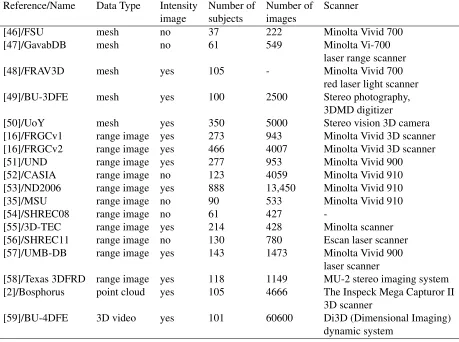
Table 2.1 describes the currently popular 3D face databases in four different categories,
Table 2.1– Popular 3D face databases
Reference/Name Data Type Intensity Number of Number of Scanner image subjects images
[46]/FSU mesh no 37 222 Minolta Vivid 700
[47]/GavabDB mesh no 61 549 Minolta Vi-700
laser range scanner
[48]/FRAV3D mesh yes 105 - Minolta Vivid 700
red laser light scanner
[49]/BU-3DFE mesh yes 100 2500 Stereo photography,
3DMD digitizer
[50]/UoY mesh yes 350 5000 Stereo vision 3D camera
[16]/FRGCv1 range image yes 273 943 Minolta Vivid 3D scanner
[16]/FRGCv2 range image yes 466 4007 Minolta Vivid 3D scanner
[51]/UND range image yes 277 953 Minolta Vivid 900
[52]/CASIA range image no 123 4059 Minolta Vivid 910
[53]/ND2006 range image yes 888 13,450 Minolta Vivid 910
[35]/MSU range image no 90 533 Minolta Vivid 910
[54]/SHREC08 range image no 61 427
-[55]/3D-TEC range image yes 214 428 Minolta scanner
[56]/SHREC11 range image no 130 780 Escan laser scanner
[57]/UMB-DB range image yes 143 1473 Minolta Vivid 900
laser scanner
[58]/Texas 3DFRD range image yes 118 1149 MU-2 stereo imaging system [2]/Bosphorus point cloud yes 105 4666 The Inspeck Mega Capturor II
3D scanner
[59]/BU-4DFE 3D video yes 101 60600 Di3D (Dimensional Imaging)
dynamic system
2.3
3D local feature-based methods
In the context of face recognition, 3D local feature descriptors are built from 3D local facial
information. These features have some advantages over global features, as global
descrip-tors are more sensitive to pose, facial expressions and occlusions [44]. The main objective
of local feature extraction methods is the detection of distinctive compact features, that are
robust to a set of nuisances. To the best of our knowledge, local feature-based algorithms
can be more robust against facial variations such as expression and occlusion, as they
attributes that are completely invariant under all variations [26].
A number of 3D local feature descriptors for 3D face recognition have been presented
in the literature. This section surveys and explains the main existing 3D local descriptors
and groups them into three different categories: Keypoints-based, curve-based and local
surface-based methods.
2.3.1
Keypoints-based methods
3D keypoints are interest points of shape, based on the definition of saliency. They are
detected according to some geometric information of the surface. The methods typically
involve two major steps, keypoint detection and feature description [60]. Although these
methods can cope with occlusions and missing parts, their computational cost is much
higher as they use a large number of keypoints, described by high dimensional feature
vectors. Hence, it is very important to only select the most effective keypoints, from the
local descriptors, to create an efficient feature vector.
Methods based on SIFT-like keypoints
Scale invariant feature transform (SIFT) [41] is a successful keypoint detector that has
motivated researchers to use the same scheme in the case of 3D images. The most important
limitation of SIFT keypoint-based methods is their sensitivity to noisy data. However,
these methods do not require very sophisticated registration algorithms. Furthermore, the
convincing representation of SIFT features on shape maps motivated researchers to apply
this framework in 3D.
A framework to detect SIFT-inspired 3D keypoints was first proposed by Mian et al.
[3], where they use the shape variation in combination with 2D SIFT descriptors. To detect
3D keypoints, for points in the sphere of radius r and center p, the mean vector m and
covariance matrix C are calculated. Then, matrix V of the eigenvectors is obtained by
Figure 2.2– A keypoint on a 3D face and its corresponding texture [3]
if the difference between the first two principle axes of the local region is greater than a
thresholdt. Figure 2.2 illustrates a keypoint on the 3D face and its corresponding texture
image. This method has influenced other researchers; for example SIFT keypoints are used
in [61] to detect relevant interest points on depth images, then local shape descriptors are
defined for the neighborhood of each keypoint. Mayo and Zhang [62] proposed a multiview
keypoint matching method, where SIFT keypoints are extracted from 2.5D images. In [63],
SIFT descriptors are extracted from 2D matrices of curvature maps, where the features are
defined at fixed scales and orientations for fixed locations. SIFT keypoint detection is
applied on multiscale local binary pattern and shape index maps in [64], and on pyramidal
shape index map in [65] for 3D domain and in combination with 2D keypoints, respectively.
The extension work of [65] has been presented in [66] using curvature maps. The main
weakness of these methods is their sensitivity to pose variations. Recently, a
Keypoint-based Multiple Triangle Statistics (KMTS) method has been presented by Lei et al. [67]
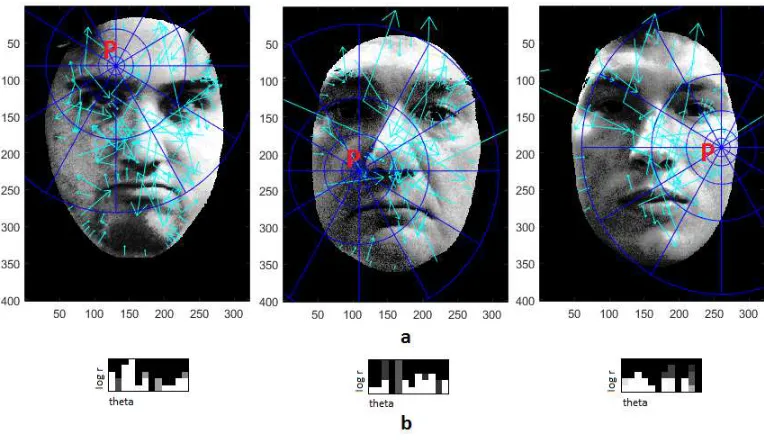
Low-level geometric features [13], described in Section 3.3 of this chapter, are extracted
from the patch around the detected keypoints. Applying low-level geometrical features
without any complicated mathematical operation shows that the approach is time efficient.
According to the experiments reported by authors using an Intel Core 2 Quad CPU and 16
GB RAM, the pre-processing, feature extraction and identification takes 0.62 s, 5.46 s, and
1.82 s, respectively.
Mesh-based methods
Although SIFT-like detectors present the informative features without registration for nearly
frontal scans, they are sensitive to large pose variations or occlusions. To overcome these
limitations, SIFT keypoints detection is applied directly on 3D mesh data in recent works.
Generally, approaches using 2D keypoints detection ideas have allowed the discovery and
implementation of powerful keypoint detectors in the 3D domain.
An extension of SIFT for 3D meshes, called MeshSIFT, was proposed by Maes et
al. [68], then extended by Smeets et al. [4]. The approach consists of four major steps:
keypoint detection, orientation assignment, local feature description, and feature matching.
Given an input meshM, the mean curvatureHis calculated for each vertexi, at each scales,
to detect salient points. The normal vector of the keypoint neighboring vertices is projected
onto its tangent plane. A weighted histogram is constructed using the projected normal
vectors. The canonical orientations are estimated with the highest peak in the histogram.
Normals and their projections onto the tangent plane are illustrated in Figure 2.3a. A feature
descriptor is defined for each keypoint by the concatenated histograms of nine circular
regions (the shape index and angles between normals), as shown in Figure 2.3b.
The meshSIFT-like keypoint detector has also been applied in [5] using maximum
(kmax) and minimum (kmin) curvatures, estimated in the 3D Gaussian scale space. A salient
point is the vertex whose value is a local extrema within its neighborhood. The detection
of keypoints is illustrated in Figure 2.4a. To calculate the local descriptor, a geodesic disk
Figure 2.3– a) Normals and their projections, b) Nine circular regions around a keypoint[4]
Figure 2.4– a) Salient points bykmax (left) andkmin (right), b) Canonical orientation, salient point and its neighborhood vertices [5]
circles with radius r2 are extracted, as shown in Figure 2.4b. Three histograms,
includ-ing surface gradient (HoG), shape index (HoS), and gradient of shape index (HoGS) are
calculated for each circle. The concatenation of these three histograms is considered the
local descriptor. A common disadvantage of the above methods is the detection of a large
number of keypoints. None of them presented a solution for selecting salient keypoints.
To overcome the stated problem and extract repeatable keypoints on 3D meshes,
Mesh-DoG [6], an extension framework of [69], proposes a multiring geometric histogram (GH)
Figure 2.5– a) 3D keypoints detected at each step b) central facett1and its neighbors c) the
angle and perpendicular distance [6]
detection of the 3D keypoints is done in three steps, i.e., scale-space, percentage
thresh-old, and corner analysis. Figure 2.5a shows the detected 3D keypoints in the three
dif-ferent steps and GH computation. The normals and the difference between minimum and
maximum perpendicular distance of two facets are calculated to create descriptors (see
fig-ure 2.5). An extension of the framework in [5] is described in [70], where a fine-grained
matching of 3D keypoint descriptors has been proposed to handle degradation conditions.
Among the above mentioned mesh-based SIFT-like matching methods [4, 70] provide a
registration-free recognition scheme.
Recently, Elaiwat et al. [7] proposed a keypoint detector and a local feature descriptor
by integrating different Curvelet elements of different orientations. Since Curvelet
trans-form is based on FFT, the computational complexity of keypoint detection and descriptor
definition is lower than SIFT-based methods. The coefficients of these Curvelet elements
are computed at each scaleaand angleθ, as shown in figure 2.6. Keypoints are detected by
comparing the magnitudes of Curvelet coefficients with the mean value of all coefficients
at scale a. A local descriptor is defined around each keypoint in the Curvelet domain for
all the sub-bands of the scale in which the keypoints are extracted. Since the keypoints
are extracted on different frequency bands and directions, they are highly repeatable and
Figure 2.6– Four-scale Curvelet decomposition [7]
Landmark-based methods
Landmarks are facial points extracted according to anatomical studies of the face. Some
methods use a set of landmarks on the face to create feature vectors, obtained by calculating
relationships between these landmarks. Therefore, accurate extraction of these landmarks
is critical to generate reliable local features. The landmarks could be the eyes, nose and
mouth on the facial image. They are also employed to correct the pose in pose sensitive
lo-cal feature-based methods. Their disadvantage is the sparsity that can affect the recognition
performance.
Shape index as curvature map is widely used to detect landmarks. In [71], feature
points, included inside and outside the corners of the eyes and the nose tip, are extracted
by calculating the local shape index at each point of the 3D mesh. In [72], shape index and
spin images are used as local descriptors to extract landmark points. Spin image encodes
each point pon the 3D face surface, with respect to the normal vectornat that point.
Fa-cial curvatures are also used for landmark detection [73, 74]. Triangles, resulting from the
14 manually detected landmarks are used to define a local shape dictionary, consisting of
curvature maps. Keypoints are then extracted from this shape dictionary. An enhanced
ver-sion of this work, presented in [21], uses a non-linear machine learning approach, namely
AdaBoost, to detect keypoints. There are other proposed methods to detect landmarks. In
[75], five landmarks on a range image of the face are extracted using radial symmetry and
shape information. These facial feature points are employed to extract a very small subset
of points on probe images, that are invariant under facial expressions. Gupta et al. [76]
presented an anthropometric approach by detecting 10 fiducial points and calculating the
Euclidean and geodesic distance between them as features. Song et al. proposed a
land-mark localization approach that uses local coordinate coding (LCC) and consists of two
stages: nose detection and resampling [77]. Another landmark-based method is described
in [78], where the authors proposed an automatic 3D landmark localization method that can
handle missing parts, with asymmetry pattern and shape regression. Recently, an automatic
3D facial landmark detection has been proposed in [79] using 2D Gabor wavelet features.
Summary
Table 2.2 summarizes the keypoint-based methods. The latter are categorized into
SIFT-like, mesh-based, and landmarks. The neighborhood of a keypoint is defined based on three
different measurements [80], i.e., Euclidean distance, geodesic distance and multirings.
Methods based on geodesic distances are robust under isometric deformations. On the other
hand, the geodesic distance calculation is time-consuming according to [80]. For example,
the computational complexity for geodesic distance calculation in [4, 70] is O(mlogm),
wheremis related to a neighborhood area with radiusr. Therefore, forngiven vertices, the
complexity for calculating all geodesic distances isO(nr2logr). As constants Pi and 2 will
be removed from the big O notation. The Euclidean distance, according to [7], is easier to
calculate but is sensitive to deformations. When multirings are used, for example like in
[6], the geodesic distance between two points on a mesh is approximated properly. They
are exerting more influence on other research works because of their effective results and
deformations handling.
2.3.2
Curve-based methods
These methods use a set of curves from facial surfaces as features. The latter include rich
geometrical information that captures shape information from different facial regions to
represent a 3D face. Compared to keypoint-based methods, they are less sparse and more
robust against facial expressions. In addition, the weight of the reference point (often the
nose tip) is higher than other points, as it contains descriptive shape informataion.
Curve-based methods can be grouped into two categories : contour- and profile-Curve-based [31].
Contour-based
Contours are closed curves with different lengths and without intersections. They are
de-fined as level curves classified into iso-depth and iso-geodesic curves. Iso-depth curves,
first introduced in [9], are obtained by translating a plane through the facial surface in one
direction. These curves are described using the intersections between the facial surface and
a plane. For a facial surfaceS, a set of level curvescλ is obtained, where each cλ consists
of all points psuch that F(p) =λ, withF being a depth value function for the z
compo-nent of point p. An extension of this framework is proposed in [8], where level curves of
a facial surface distance function, with the origin being the nose tip, are described as
iso-geodesic curves. An iso-iso-geodesic curvecλ consists of the set of all points, whose geodesic
distancedist, from a reference pointr, is in the range[λ−δ,λ+δ], for a small positive
δ. A Riemannian analysis framework is employed for comparing facial curves. The latter
have the advantage of being invariant to rotations or translations (isometric transformation).
However, both iso-depth and iso-geodesic curves (illustrated in figure 2.7), are sensitive to
large facial expressions, occlusions and missing parts. Iso-geodesic stripes have also been
com-T able 2.2 – K eypoint-based methods Cate gory/Reference,Y ear Database Matching Limitation Adv antage (Rob ustness) SIFT -lik e Mian et al. 2008[3] FRGCv2 Graph Occlusion, partial scans Expression Mayo and Zhang 2009[62] Ga v abDB W eighted matching Comple xity , expression Frontal neutral Huang et al. 2010[64] FRGCv2 Hybrid Noise Re gistration-free (frontal), partial occlusion Berretti et al. 2011[61] FRGCv2 χ 2dist Cost, k eypoints redundanc y P artial occlusion Huang et al. 2012[81] FRGCv2, Bosphorus, Hybrid Lar ge pose (manual landmarks) Re gistration-free (frontal) Ga v ab DB Inan and Halici 2012[63] FRGCv2 Cosine dist Noise Neutral expression Soltanpour and W u 2016[66] FRGCv2, Bosphorus Histogram matching Pose Expression Lei et al. 2016[67] Bosphorus, Ga v abDB, T w o-Phase W eighted Extreme pose, expression P art ial data, time ef ficient UMB-DB, SHREC08, Collaborati v e Representation B U-3DFE, FRGCv2 Mesh-based Li et al. 2011[5] Bosphorus Cosine dist Occlusion, pose, missing pa rts Expression Smeets et al. 2013[4] FRGCv2, Bosphorus, Angles comparison Noise Expression, partial data SHREC11 Berretti et al. 2014[6] FRGCv2, B U-3DFE, Bhattacharyya dist Noise,v erification accurac y Expre ssion, occlusion, missing parts Bosphorus Li et al. 2015[70] Bosphorus, FRGCv2 Fine-Grained Matcher Cost Expression, occlusion Elaiw at et al. 2015[7] FRGCv2, B U-3DFE, Cosine dist Occlusion, missing data Il lumination, expressions Bosphorus
Landmarks Koudelka
Figure 2.7 – Level curves of a) geodesic function [8], and b) depth function [9] for several levels
puted between each face point and the nose tip, and quantized into N intervals c1, ...,cN.
This way, theith stripe consists of all points whose distances ¯γ are in the intervalci. The
stripes are described by a 3D Weighted Walkthroughs (3DWWs) descriptor and used as
nodes in a graph-based matching scheme. Level curves have been also employed in [83],
[84], [85], [86], and [87]. The main limitation of most of these approaches, apart from
occlusion, is their lack of robustness to extremely large facial expressions.
Profile-based
Profiles are open curves, with starting and end points. Typically, the starting and end points
are in the middle and on the edge of the face, respectively [31]. Radial curves have been
introduced by Drira et al. [88] and extended in [10]. These curves are more efficient than
level curves [9], [8], as they cover different face regions that are related to different
and missing parts. Each curve originates at the nose tip and has an angleα, relative to a
reference curve, which is the vertical curve after rotating the face to the upright position.
The intersection of the plane pα and facial surfaceS yields the radial curveβα, as shown
in figure 2.8. Radial curves are also used together with level sets in [89] to approximate
the facial surface. The well-known machine learning algorithm, AdaBoost, is used to select
the most efficient features. The machine learning based feature selection method provides a
very compact signature of a 3D face and a fast classification approach for face recognition.
Using all curves, the computational time for recognition is 2.64s. However, with selected
curves the time is reduced to 0.68s, showing that the selection method enhances the system
computational performance. Facial curves are widely used as profile-based methods to
han-dle facial expression. Angular radial signatures (ARS) [11] are defined as a set of curves at
an interval ofθ radians (θ ∈[0,π]), emanating from the nose tip. A binary mask is defined
on thexy−plane to project ARSs along different directions. Each resulting path consists of
20 points, with 3mm distance between any two adjacent points. ARS feature value of these
points is computed from the depth value of each point, using bicubic interpolation at thex
andycoordinates. The ARS extracts significantly a set of discriminative 1D feature vectors
from the complex 3D facial surface that achieves computationally efficiency in recognition
task. On an INTEL Core 2 Quad-CPU and 8 GB RAM, face identification only requires
6.07s. In particular, the features extracted from semi-rigid regions are robust under facial
expressions. Figure 2.9 shows a binary mask, used to extract ARSs, and 17 ARSs on a face.
Another facial curve, obtained by connecting SIFT keypoints, is introduced by Berretti et
al. [90] to handle missing data. Because SIFT descriptors are not discriminant enough to
recognize an identity, facial curves from pairs of keypoints are defined to create effective
features. A graph of facial curves is constructed between matched keypoints. The
perfor-mance of the method in terms of accuracy can be improved at the curve matching level,
when a robust solution is used. In [91] facial curves, the intersection of a planePand the
facial surface are employed to make a rejection classifier. An adaptive region extraction is
Figure 2.8– Nose tip, the reference curvature, radial curves [10]
Figure 2.9– The binary mask and 17 ARSs [11]
profile. Although the partial central profile is less descriptive than the entire one, it is also
less sensitive to facial expression and occlusions, less complex, and hence it is used to make
a rejector. The similarity between a partial central profile and its corresponding profile from
another face is calculated based on the average distance between the two curves, using the
iterative closest point (ICP) algorithm [92]. Generally, curves are less discriminative than
regions. However, they are faster and require less space for storage. Using an Intel Core
Duo 2.34GHz machine with 1GB of memory, the verification process takes less than 9s and
that the rejection-based method is faster. Vertical central profile has been also used in [93],
where it is defined as the intersection between the symmetry plane, the facial surface and
mean curvature. Authors apply the property of the face bilateral symmetry to develop a fast
algorithm that on a 1-GHz Pentium IV PC with 512 MB RAM takes an average time equal
to 0.5 s for comparison. Recently, some profile-based methods have been proposed that
extend the application of facial curves. A set of Rotation-invariant and Adjustable Integral
Kernels (RAIKs) is computed from the surface patch around a 3D point, in [94]. Nasal
patches and curves are introduced in [95]. First, nasal landmarks are detected, and then
using pairs of landmarks, a set of planes is created. The intersection of these planes with
the nasal surface yields nasal region curves. These curves are applied to make the feature
descriptor. The feature vector is obtained by concatenating histograms of x, y, and z
com-ponents of the normal vectors of the Gabor wavelet filtered surface. A genetic algorithm
(GA) is used to select the more robust features against facial expressions. This method has
shown high class separability compared to previous methods.
Summary
Table 2.3 summarizes our surveyed curve-based methods that we divided into
contour-based and profile-contour-based categories. In most curve-contour-based methods, the nose tip is used as
a reference point or the origin of the system. Since the nose region is rigid, robust under
facial expression, and contains more distinctive shape features than other regions,
curve-based methods are robust under facial expression. However, hair covering the face, large
pose changing, and missing data affect the correct detection of the nose tip. Consequently,
face alignment and facial curve extraction are calculated using an incorrect origin, which
affects the recognition performance of these methods. In particular, we have found that
iso-depth curves [9], iso-geodesic curves [82], and the radial curves [10] are more effective
2.3.3
Local surface-based methods
Most local surface-based methods extract local geometric information, from several patches
of the facial surface or from some regions of the surface, that are invariant under facial
expression variations. These methods can be divided into LBP-based, geometric
feature-based and others.
LBP-based
Inspired by the efficient Local Binary Pattern (LBP) for 2D face recognition, LBP-based
methods, as surface descriptors, have been developed for expression-robust 3D face
recog-nition. LBP is a local shape descriptor that was initially introduced by Ojala et al. [42]
for 2D images. LBP was first employed by Li et al. [96] on intensity image and
sur-face in a fusion scheme for 3D sur-face recognition. Later, 3DLBP [97], in combination with
global matching was proposed. A multiscale extended LBP with a SIFT-based strategy
is described in [81]. LBP representation is also applied in [98] where, the face division
pattern is used to extract depth and normal information encoded by LBP. Local normal
pattern (LNP), proposed in [15], encodes facial normal component in the same way as the
LBP operator. LNP is defined by the decimal numbers from the encoding process. The
histogram-based statistics of LNP values are used as the facial descriptor. To overcome
facial expression variations, the weight of each facial normal image patch is learned and
applied in a weighted sparse representation-based classifier. The computational complexity
of the method depends on the gallery size and feature dimension. The identification time
(gallery size: 466) on a PC with Intel Core 2 CPU and 2.66 GHz has been reported at 3.55
s for this method. The results are only reported for face identification and the descriptor is
not evaluated in verification tasks. In addition, basic ICP algorithm has been utilized for
face registration, showing that applying an efficient registration method can improve the
recognition results. Werghi et al. [99] proposed the Mesh-LBP method, where they applied
Figure 2.10– Ordered ring construction, threeFout facets adjacent to the fcand sequences of
Fgapfacets [12]
central facet fcon the mesh,FoutandFgapare considered edge facets of fc. Starting with
threeFout facets around fc, theFgapfacets between each pair ofFoutfacets are extracted
and the outcome of this procedure is a ring of ordered facets around fc (see figure 2.10).
The mesh-LBP is computed for facet fcas∑mk=−01s(h(fkr)−h(fc)).α(k), with s(x)=1 if x≥
0 and s(x)=0 if x<0, whererandmare the ring number and the number of facets on the
ring, respectively. The function h(f) is a scalar function that contains either a geometric
or a photometric information, such as curvature and color or gray level, respectively. For
α(k), two variants are considered, i.e.,α1(k) =1 andα2(k) =2k. The curvature maps
in-cluding curvedness, Gaussian curvature, shape index, and the gray level are used forh(f)
in two different shape and texture modalities in a fusion scheme. A constructed histogram
over a given neighborhood is considered as a descriptor in the matching step.
Geometric feature-based
Some methods are developed based on geometric features. Xu et al. [100] proposed a 3D
face recognition method using geometric features and shape variation information. First,
the 3D point cloud is converted to a mesh, then a geometric feature vector is built, using
![Figure 2.2 – A keypoint on a 3D face and its corresponding texture [3]](https://thumb-us.123doks.com/thumbv2/123dok_us/1361769.1169008/38.612.142.504.70.305/figure-keypoint-d-face-corresponding-texture.webp)
![Figure 2.6 – Four-scale Curvelet decomposition [7]](https://thumb-us.123doks.com/thumbv2/123dok_us/1361769.1169008/42.612.178.473.75.293/figure-four-scale-curvelet-decomposition.webp)

![Figure 2.7 – Level curves of a) geodesic function [8], and b) depth function [9] for severallevels](https://thumb-us.123doks.com/thumbv2/123dok_us/1361769.1169008/46.612.201.452.72.323/figure-level-curves-geodesic-function-depth-function-severallevels.webp)