Review
1
A Promising Physical Pest-Control System
2
Demonstrated in a Greenhouse Equipped with
3
Simple Electrostatic Devices that Excluded all Insect
4
Pests
5
6
Yoshihiro Takikawa1, Koji Kakutani2,3*, Yoshinori Matsuda4, Teruo Nonomura4, Shin-ichi
7
Kusakari5, and Hideyoshi Toyoda5
8
1 Plant Center, Institute of Advanced Technology, Kindai University, Wakayama, 642-0017, Japan;
9
E-mail: [email protected] (Y.T.)
10
2 Pharmaceutical Research and Technology Institute, Kindai University, Osaka 577-8502, Japan;
11
E-mail: [email protected] (K.K.)
12
3Anti-Aging Centers, Kindai University, Osaka 577-8502, Japan
13
4 Laboratory of Phytoprotection Science and Technology, Faculty of Agriculture, Kindai University, Nara
631-14
8505, Japan; E-mails: [email protected] (Y.M.); [email protected] (T.N.)
15
5 Research Association of Electric Field Screen Supporters, Nara 631-8505, Japan; E-mails:
16
[email protected] (S.K.); [email protected] (H.T.)
17
18
* Correspondence: [email protected]; Tel.: +81-06-6721-2332
19
Received: date; Accepted: date; Published: date
20
Abstract: Applied electrostatic engineering can be used to construct greenhouses that prevent entry
21
of insect pests. Two types of electric field screen were used to exclude pests from the greenhouse:
22
single- and double-charged dipolar electric field screens (S- and D-screen, respectively). The S-screen
23
consisted of iron insulated conductor wires (ICWs) arrayed in parallel (ICW-layer), a grounded metal
24
net on either side of the ICW-layer, and a direct current voltage generator. S-screens were attached
25
to the side windows of the greenhouse to repel whiteflies (Bemisia tabaci) that approached the nets.
26
The D-screen was installed in a small anteroom at the greenhouse entrance to capture whiteflies
27
entering through it. The ICW-layers of the D-screen were oppositely charged with equal voltages and
28
arrayed alternately, and an insulator board or grounded metal net was placed on one side of the
ICW-29
layer. The ICW-layers captured whiteflies entering the electric field of the double-charged dipolar
30
electric field. Three screens equipped with yellow or gray boards or a grounded metal net were
31
installed in the anteroom based on the airflow inside the room, as most whiteflies were brought in by
32
air when the door was opened. Two D-screens with boards were useful for directing the airflow
33
toward the wall with the netted D-screen. This screen eliminated the insects and the pest-free air was
34
circulated inside the greenhouse. The D-screen with the yellow board attracted the whiteflies and
35
was effective for trapping them when there was no wind. Our method kept the greenhouse pest-free
36
throughout the entire period of tomato (Solanum lycopersicum) cultivation.
37
Keywords: electric field screen; pest management; photo-selective nets; whiteflies
38
39
1. Introduction
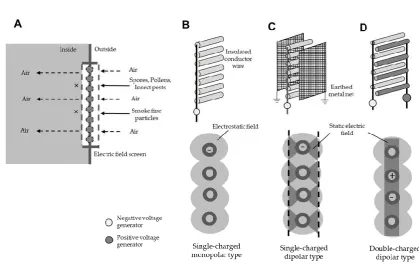
40
The protection of crop plants from infection or attack by pathogens and pests using safe,
41
environmentally benign methods has been a long-standing goal. Much effort has focused on
42
developing biological and chemical methods to achieve this, including the production of resistant
43
crop plants using conventional and new biotechnological techniques, biocontrol of pathogens and
44
pests using antibacterial, antifungal, and entomopathogenic microorganisms, and the screening of
45
biologically synthesized compounds that inhibit pathogen growth [1, 2].Despite much interesting
46
work, there has been little practical progress because the protective effects are easily overcome, and
47
because of problems with agent preparation, limited targets for application, and high costs [1].The
48
principal barrier to practical implementation lies in the application of individual methods for
49
pathogen and pest control at scales larger than in test experiments, and variable environmental
50
conditions. Trials have shown that the aforementioned techniques are, in essence, supplementary
51
measures suitable for a limited range of targets under specific conditions. The lack of reliable basic
52
methods that can be combined to constitute a suitable approach must be addressed.
53
Once a realistic research objective is set, steady progress can be made via the creation and
54
refutation of working hypotheses formulated from reproducible experimental results, eventually
55
leading to new applications for electric field screens [3]. An electric field screen is an air-shielding
56
apparatus based on the principles of applied electrostatic engineering, and was introduced in 2006 as
57
a physical tool to trap airborne conidia of tomato powdery mildew (Oidium neolycopersici) [4].
58
Powdery mildews are fungal pathogens in the order Erysiphales that affect many plant species.
59
Powdery mildews grow well in environments with high humidity and moderate temperatures;
60
greenhouses provide an ideal moist and temperate environment for spreading these diseases.We
61
focused on O. neolycopersici on greenhouse tomatoes (Solanum lycopersicum), which infects not only
62
all commercial tomato cultivars tested [5], but also cultivars bred for resistance against a European
63
isolate of the tomato powdery mildew pathogen [6].In a preliminary survey, we found
fungicide-64
tolerant isolates of O. neolycopersici on naturally infected tomato leaves, indicating the need for
65
alternative measures to control the pathogen. Although breeding pathogen-resistant traits is the
66
conventional method used to protect crop plants from disease [7-9], we need to remain alert to
67
outbreaks of new pathogenic strains of the pathogen on resistant tomatoes [10-12]. Therefore, we
68
developed new physical electrostatics-based control measures to prevent the spread of the disease [4,
69
13-15].
70
Initially, the test apparatus was conceived as a new device for capturing airborne spores of
71
phytopathogenic fungi during crop cultivation in greenhouses [16]. Physical methods, especially
72
those exploiting electrostatic phenomena, can generate physical forces sufficiently strong to catch
73
airborne fungal spores [17] or small flying insects that may pass through the conventional insect
74
netting used to protect greenhouse crops [14, 15, 18-22]. If an effective force could be generated, an
75
electrostatic approach would be an extremely promising tool to provide a spore-free, pest-free space
76
for crop plants in greenhouse environments (Figure 1A).
80
81
Figure 1.Conceptual diagram of the roles of the electric field screen (A), schematic representations of
single-82
charged monopolar (B), single-charged dipolar (C), and double-charged dipolar electric field screens (D) and a
83
cross-sectional view of the insulated conductor wires (ICWs) with an electrostatic field or static electric field in
84
each screen.
85
86
As the research progressed, the structure of the electric field screen was optimized so that it
87
could capture not only fungal spores and flying insect pests, but also pollen grains [23]that cause
88
pollinosis [24, 25], and fine particles [26, 27] in tobacco smoke that can cause disease, disability, and
89
death [28-30].Advances in electric field screen technology have allowed broader application of the
90
device, from agricultural fields, e.g., crop production, processing, and storage, to environmental and
91
public health. Indeed, electric field screens can be used in houses, hospitals, schools, greenhouses (for
92
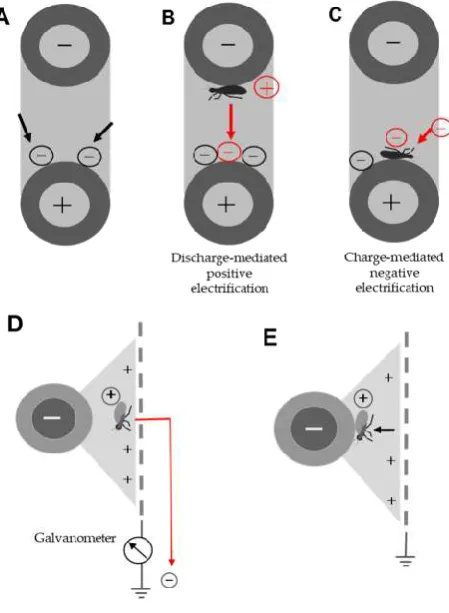
crop production), warehouses, plants (for processing harvested crops), and animal husbandry
93
facilities [3].A wide variety of electric field screen structures can be customized to prevent the entry
94
of biotic and abiotic environmental nuisances [25].Figure 1B–D shows the electric field screen types
95
used herein.The terms ‘single-charged’ and ‘double-charged’ in the figure refer to how the voltage
96
is applied, i.e., using either a single negative or positive voltage generator, or both types of voltage
97
generator, to produce monopolar and dipolar electric fields, respectively [31-34].The rod-shaped
98
structures in the figures represent metal (iron or copper) wire with an insulating coating, i.e., an
99
insulated conducting wire; the different colors indicate the application of a positive or negative
100
voltage.The net-like structure is a grounded metal net made of stainless steel or iron. All of the
101
screens have a simple, common structure; therefore, the cost of production is relatively low. Using
102
these devices, we describe the development of two types of electric field screen, with unique
103
structures and electrostatic mechanisms, to construct an ideal greenhouse that can completely
104
prevent the entry of greenhouse pests.
2. Structure and function of a double-charged dipolar electric field screen (D-screen)
106
2.1. Basic structure
107
There are various types of electric field screen, all of which include a screen body and an
108
electric driver, i.e., an electric power source and direct current (DC) voltage generator.While the same
109
electric driver is used for all electric field screen types, the screen body may vary depending on the
110
application, and all types involve insulated conductor wires (ICWs) that are arranged vertically to
111
make a barrier of static electric fields (Figure 1C and D). An insulated conductor is produced by
112
passing a copper or iron wire through a soft polyvinyl chloride (PVC) tube (1-mm thickness, 1 × 10⁹
113
Ω·m) [18].
114
The voltage generator can be operated by a 12-volt storage battery, and used to boost the
115
initial voltage (12 V) to the designated voltage (1–30 kV) using a transformer and Cockcroft circuit
116
[35]integrated into an electric circuit in the voltage generator (Supplementary Figure 1A and B).The
117
difference between the negative and positive voltage generators is that the Cockcroft circuit is set in
118
reverse, such that the negative charge (or free electrons) moves in the reverse direction.A negative
119
voltage generator draws negative free electrons from the ground, which serves as an infinite source
120
or sink of electrons (a source in this case) and supplies electrons to the conducting wire [36].A
121
negative charge accumulates on the surface of the wire conductor and is induced on the outer surface
122
of the insulated coating of the wire, thereby negatively electrifying the insulator via dielectric
123
polarization [31, 32] (Supplementary Figure 1A).A positive voltage generator pushes free electrons
124
to the ground (an infinite sink of electrons) to positively charge the conductor wire (positive
125
electrification) [36], and a positive charge is induced on the outer surface of the insulating coating
126
surrounding the conducting wire (positive electrification) due to electrostatic induction [32]. The
127
positive electrification of the insulated conducting wire causes the insulating coating to become
128
positively charged as a result of dielectric polarization (Supplementary Figure 1B).
129
The most advantageous characteristic of the voltage generator used in this study is the ability
130
to operate the generator using a 12-V DC source.The electric power consumption is small (5 W),
131
effectively equivalent to that of a small lightbulb, so the screen can operate for long periods using a
132
standard storage battery. This feature is useful for the practical implementation of electric field
133
screens. Here, two types of electric field screen are used for this purpose: a single-charged dipolar
134
electric field screen (S-screen; with grounded metal nets) (Figure 1C) and a D-screen (single layer
135
type) (Figure 1D).
136
137
2.2. A non-grounded electric circuit is essential for practical implementation
138
In the standard electric circuit configuration for negative voltage charging of the electric field
139
screen, electrons are pumped from the ground and supplied to the ICW using a voltage generator.
140
The grounded metal net eventually becomes electrified by electrostatic induction [32].In terms of
141
current movement, the same amount of electricity can be supplied by the ground to create a static
142
electric field (Supplementary Figure 1C).In a non-grounded circuit, the free electrons in the metal
143
net are supplied directly to the ICW using the voltage produced by the generator (Supplementary
144
Figure 1D).Therefore, the electric field screen with this circuit does not need to be grounded. By this
145
principle, the electric field screen can be placed freely, allowing portable electric field screens [37, 38].
The principle is exactly the same in the double-charged type, which uses both negative and positive
147
voltage generators; namely, the free electrons in the metal net are supplied to the ICW
148
(Supplementary Figure 1E) [39].In this case, however, the potential difference between the opposite
149
poles (oppositely charged ICWs) doubles, and the force generated is strengthened [25].
150
151
2.3. Insect-capturing function of a double-charged dipolar electric field screen
152
The whitefly (Bemisia tabaci Gennadius) is a major pest in tomato cultivation capable of passing
153
through conventional insect-proof nets (approximately 1.5 mm mesh) [40].The greatest economic
154
threat in tomato cultivation is the transmission of damaging plant viruses, primarily Geminiviruses
155
[41, 42].The whitefly is difficult to control with insecticides because it feeds and oviposits mainly on
156
the abaxial leaf surfaces [43], and because it has developed resistance to most classes of insecticides
157
used for its control [44-47].Physical methods could provide an alternative means of managing this
158
pest, since they would be compatible with other components of integrated pest management, have
159
little impact on the environment, and reduce pesticide use, thus slowing the development of
160
insecticide resistance [48].In Japan, B. tabaci carries Tomato yellow leaf curl virus (TYLCV), which is
161
a major cause of loss of tomato crops grown in greenhouses [49].To solve this problem, we used an
162
electrostatic spore precipitator that had been developed to control tomato powdery mildew [4].This
163
device is so effective at attracting air-borne conidia that tomato plants guarded by the spore
164
precipitator remain uninfected [4].Despite the success of an electric field in pathogen control, a
165
preliminary attempt to utilize this device for pest control was unsuccessful, because the electrostatic
166
force of the spore precipitator was insufficient to retain trapped adult whiteflies. Successful
167
application of the electric field screen enabled the management of whiteflies and other greenhouse
168
pests [14, 15, 19, 20].
169
A double-charged dipolar-type screen is easily constructed by linking the ICWs alternately
170
to negative and positive voltage generators [21, 50], forming an electric field between the oppositely
171
charged conductor wires.We know that some electrons are present in air. In this field, the force
172
always works to push electrons (negative electricity) toward the ground [50].In this field, however,
173
the electrons accumulate around the positive pole because it is insulated (Figure 2A).When an insect
174
enters this field, it can be captured in two ways [50]. First, an insect enters the space near the
175
negatively charged ICW (negative pole) (Figure 2B).Here, the insect is deprived of its free electrons
176
and is electrified positively and attracted to the negative pole (discharge-mediated positive
177
electrification).Alternatively, an insect enters the space near the positively charged pole (Figure 2C),
178
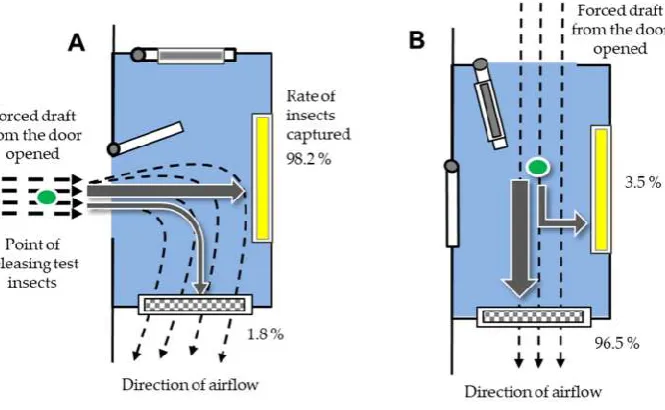
receives electrons and is negatively electrified and attracted to the pole (charge-mediated negative
179
electrification). Video data demonstrated the successful attraction of insects to the ICW (Video
180
Supplement 1); the force was strong enough to capture the insects despite a 7 m/s wind.Four kinds
181
of greenhouse pests were included in the tests: whitefly (B. tabaci), western flower thrip (Frankliniella
182
occidentalis Pergande), green peach aphid (Myzus persicae Sulzer), and tomato leaf-minor fly
183
(Liriomyza sativae Blanchard).All of these pests can pass through conventional insect-proof nets (mesh
184
size, ~ 1.5 mm) [48].In farms, small insect pests pose a serious threat to crops.Three of the pests listed
185
above cause particularly severe viral diseases, in addition to damage by pest attack.Whitefly, western
186
flower thrips, and green peach aphid also carry the TYLCV, tomato spotted wilt tospovirus (TSWV),
187
and cucumber mosaic virus (CMV), respectively.All of these pests have already acquired resistance
against the major available insecticides [47].Supplementary Table 1 shows that it is necessary to
189
enhance the voltage in response to the wind velocity and size of the test insects; charging at 2.0 kV
190
was sufficient to capture all of the test insects at the highest wind speed with all screens.Because each
191
screen was charged with the same magnitude of negative and positive voltages, the actual potential
192
difference was twice that of the voltages listed in the table [32]. These results indicated that the screen
193
could deal with all of the major pest insects tested under real-world conditions in a greenhouse.
194
195
196
197
Figure 2. Schematic representation of the insect-capturing mechanism of the electric field of double-charged
198
(A–C) and single-charged (D, E) dipolar electric field screens.
199
200
201
2.4. Insect-repelling function of a single-charged dipolar electric field screen
202
During our research, we devised a new method to generate a dipolar static electric field via
203
single charging (Figure 1C). The electric field screen creating this field exhibited a revolutionary
204
function for repelling insect pests [19, 51, 52]. An ICW charged with a negative voltage causes
205
dielectric polarization within the insulating coating, creating a negatively charged insulator surface.
206
The charged surface of the insulator produces an electrostatic field in the surrounding space [32, 33]
207
(Figure 1B).The difference from the S-screen design is that we placed a grounded metal net inside
208
the electrostatic field produced by the insulated conducting wire (Figure 1C) [51]. The grounded
209
metal net facing the charged insulated conductor becomes positively charged as a result of
210
electrostatic induction [32].Therefore, given that the ground is an electron source or sink, the free
211
electrons in the metal net are pushed to ground by the negative insulator surface, because like charges
repel. The electron deficiency in the metal net leaves the net with a positive charge.The opposite
213
negative charge of the ICW and positively charged grounded net create a dipole, forming an electric
214
field in the space between them. Therefore, we can create a positive pole (grounded metal net)
215
without using a positive voltage generator. This is our single-charged dipolar electrification system.
216
As shown in the figure, a static electric field is formed inside the electrostatic field.If we place another
217
grounded net on the opposite side of the ICW, a static electric field forms in a manner consistent with
218
bilateral symmetry. Accordingly, if we arrange the ICWs such that the upper and lower ends of the
219
two static electric fields contact each other, a new electrostatic barrier consisting of static electric fields
220
is formed (Figure 1C) [51].
221
In an experiment to examine the entry of insect pests, using partitions a greenhouse was
222
divided into three rooms equipped with S-screens installed in the windows of both end rooms.The
223
numbers of pests that entered each room were determined by counting the pests trapped on the
224
yellow and blue adhesive plates hung therein.In this experiment, many whiteflies and tomato
leaf-225
minor flies were trapped by the yellow plates.The results clearly show that the electric field screen
226
excluded pests from the greenhouse. Over the 2-week experiment, an average of 1,000 pests entered
227
the unguarded center room.In comparison, no pests were observed on the adhesive plates in
screen-228
installed, door-locked rooms. In the side room that allowed the entry/exit of workers during the
229
experiment, a few pests entered via the door.Nevertheless, the rate of pest exclusion exceeded 92%,
230
indicating that the electric field screens successfully prevented pest entry through the windows.
231
Because numerous pests invaded the central room, it is reasonable to assume that similar numbers of
232
pests attempted to invade both side rooms of the same greenhouse.Therefore, we initially expected
233
to find that the electric field screens of these side rooms had trapped the same number of pests as
234
were trapped in the central room. In fact, fewer insects were trapped, suggesting that the electric field
235
screens actually repel the pests.
236
To prove this, an acrylic cylinder with an axial fan was constructed to examine the behavior of
237
pests placed therein (Video Supplement 2) [19]. The cylinder was placed in contact with the
238
grounded metal net of the screen to observe the insects reaching the net. Moreover, insects were
239
blown forward when they reached the net.With no airflow, all of the pests that reached the net
240
stopped and placed their antennae or legs inside the static electric field of the screen, similar to a
241
‘searching’ behavior.These pests were deterred from entering the static electric field of the screen
242
(Video Supplement 2A).In comparison, when the pests were blown forward, almost all of them
243
clung to the net and assumed a posture to avoid the wind.However, some of the pests lost their grip
244
and were forcibly pushed inside the screen. These pests were captured by the strong force of the
245
electric field (Video Supplement 2B). These results are important as they confirm that all pests
246
reaching the grounded net of the electric field screen attempted to avoid the field (i.e., they were
247
repelled by the screen), and had to be forcibly pushed inside it by air.This is in good agreement with
248
the experimental results described in the previous section.The results of the insect avoidance assay
249
indicated that all insects tested exhibited avoidance behavior with respect to the static electric field.
250
The insects tested covered 17 orders, 42 families, 45 genera, and 82 species (Supplementary Table 2)
251
[52]. From these results, we concluded that all insects are deterred by the static electric field of the
252
electric field screen.
2.5. Insect-capturing function of the single-charged dipolar electric field screen
255
Video Supplement 2B shows that the ICW of the S-screen can capture insects blown inside the
256
electric field. This screen uses a strong force to capture various insect pests, including greenhouse
257
pests [whitefly, green peach aphid, western flower thrip, tomato leaf-minor fly, green rice leaf hopper
258
(Nephotettix cincticeps Uhler), and shore fly (Scatella stagnalis Fallen)] [53, 54], warehouse and food
259
processing factory pests [cigarette beetle (Lasioderma serricorne F.), rice weevil (Sitophilus oryzae L.),
260
red flour beetle (Tribolium castaneum Herbst), Adzuki bean weevil (Callosobruchus chinensis L.), and
261
vinegar fly (Drosophila melanogaster Meigen)], museum pests [book louse (Liposcelis bostrychophila)],
262
and domestic pests [common clothes moth (Tineola bisselliella Humm.), bathroom fly (Clogmia
263
albipunctata), German cockroach (Blattella germanica L.), Oriental termite (Nasutitermes matangensis),
264
and Asian tiger mosquito (Aedes albopictus)] [55, 56], indicating that our method is applicable to a
265
wide range of pest control problems.
266
The major characteristic of the static electric field is the negative charge of the ICW, which
267
creates a strong repulsive force for other negative charges in the electric field, pushing them toward
268
the ground via the metal net.In this way, any conductor that enters the field is deprived of its free
269
electrons and becomes positively charged.This phenomenon is called discharge-mediated positive
270
electrification (of the conductor), and can be used to the insect itself and how it responds to the static
271
electric field upon entering.Most insects possess a solid cuticle layer, which is the outer protective
272
layer that covers the body. This layer is conductive [57-61]. Consequently, an insect that enters a static
273
electric field is deprived of free electrons in the cuticle layer and becomes positively charged (Figure
274
2D) [62-64].Discharge-mediated positive electrification can be induced in actual insects, as the free
275
electrons of the cuticle layer move to ground.A galvanometer for detecting electric current can be
276
integrated into the ground circuit to detect this type of electron movement.Positively electrified
277
insects are attracted to the central ICW (Figure 2E).The force is so strong that the captured insect
278
cannot escape.This capturing mechanism is applicable to almost all insects, as they tend to possess
279
conductive cuticle layers.Supplementary Table 1 shows the results of the insect-capturing assay.
280
The results are summarized below.Larger voltages are required to capture larger pests.In all pests,
281
higher voltages produce stronger forces for capture.Charging at 4.2 kV was sufficient for capturing
282
all of the pests tested in this study.The captured insects were held tightly and were not blown away
283
with airflow at 7 m/s. Therefore, the electric field screens installed in the greenhouse were charged at
284
4.2 kV for field experiments.
285
286
3. Configuration of a model greenhouse completely preventing the pest entry
287
3.1. Installment of electric field screens on the side windows of a greenhouse
288
The electric field screen first put to practical use was the single-charged dipolar type produced
289
by our laboratory (Faculty of Agriculture, Kindai University) (Figure 3A) [65], and units were
290
developed to install the screens on the side windows of the experimental greenhouse.The electric
291
power consumed by the voltage generator was minimal, and could be provided by a standard lithium
292
storage battery; normal alternating current (AC) domestic power sources could also be used.The
293
screens were negatively charged at 4.2 kV, as described above.The ventilating fan was also covered
294
with an electric field screen box to prevent pests from invading via the opening for the fan, especially
when the fan was stopped (Figure 3A).The grounded metal net of the electric field screen was a
296
stainless steel net with the same mesh size (~1.5 mm) as a conventional woven insect net. Larger pests
297
that cannot pass through this mesh were not tested, as they were prevented from entering by the net,
298
without the need for an electric field screen.
299
300
301
Figure 3.An ideal greenhouse that completely excludes pests (A) and the three types of electric field screens
302
installed in the anteroom (B).
303
304
305
In the S-screen, all parts are integrated into the main body (Supplementary Figure 2A).This
306
screen requires no special modifications or ground installation.The first S-screen produced by our
307
laboratory consists of three units: ICWs held by a frame that integrates a negative voltage generator,
two stainless net frames containing contact plugs and electric lines to the voltage generator, and a
309
lithium battery.The lithium battery is installed on the surface of one of the net frames. The three unit
310
frames are combined by simply placing the two net frames on either side of the ICW frame.
311
In laboratory-scale experiments, the ICW, which is the heart of the electric field screen, was
312
made by passing a metal wire through a soft PVC tube.The electric field screen is easy to construct
313
and there are no functional problems. In outdoor experiments with longer exposure periods,
314
however, installed electric field screens are susceptible to discoloration, deformation, and cracking
315
due to changes in temperature, humidity, and ultraviolet irradiation.These issues limit the practical
316
implementation of electric field screens.In commercial electric field screens (single-charged dipolar
317
type), the conductors are coated with PVC resin to prolong screen operation in outdoor environments
318
with minimal deterioration [65]. Such screens are built and sold by Sonoda Seisakusho (Osaka,
319
Japan), a joint-stock company that designs, installs, inspects, and maintains electric field screens.A
320
commercial electric field screen produced by Sonoda Seisakusho was installed in a greenhouse in
321
Osaka Prefectural Research Institute of the Environment, Agriculture, and Fisheries (Supplementary
322
Figure 2B).It was constructed by welding multiple iron wires to an iron frame, coating it with PVC
323
resin, and placing grounded metal nets on either side of the frame.Another marketable electric field
324
screen is manufactured by Nabec (Panasonic Environment Engineering, Nagoya, Japan) and the ICW
325
is produced by coating iron-expanded metal with PVC resin (Supplementary Figure 2C).Grounded
326
stainless steel nets with a diamond-shaped mesh were placed on each side [65]. This electric field
327
screen is also weatherproof, and can be used outside for long periods without performance
328
deterioration.
329
330
3.2. Construction of an air-oriented anteroom with an electric field screen
331
In a greenhouse in which the side windows were equipped with S-screens, the problem of pest
332
entry through the greenhouse door remains. To solve this problem, an anteroom was created to
333
eliminate pests (Figure 3B) [21].Ground net-free D-screens were installed in the anteroom in an
334
attempt to create an ideal greenhouse that excluded all pests.Three types of electric field screen were
335
installed in this anteroom: 1) a ground net-free, single-layer type with a yellow board on the wall
336
opposite the entrance to the anteroom; 2) a ground net-free, single-layer type with a gray board at the
337
entrance to the greenhouse, and 3) a single-layer type with a grounded metal net on one side on the
338
wall opposite the greenhouse entrance (Figure 3B). A preliminary study indicated that whiteflies
339
were preferentially trapped by the screen with the yellow board due to their photoselectivity.
340
The concept of an anteroom for eliminating pests combines the functions of electric field
341
screens with regulation of the airflow in the room (Figure 4).This room was designed to generate
342
airflow mechanically when the doors were opened, and to direct the airflow through the electric field
343
screen [21].To evaluate the effectiveness of this system, we blew air into the anteroom when the door
344
was opened and simultaneously released whiteflies to examine the direction of the airflow and the
345
capture of insects by the electric field screens (Figure 4A).More than 90% of the insects released were
346
directed by the airflow and captured by the screen with the yellow board installed on the front wall.
347
When there was no blowing air, although more time was needed, this screen attracted and trapped
348
almost all of the insects.Next, air was automatically blown inside the anteroom when the greenhouse
349
entrance was opened (Figure 4B).The airflow passed through the electric field screen to the opposite
wall.The screen trapped the insects and pest-free air was directed into the greenhouse. This screen
351
was furnished with a grounded metal net on one side to repel useful insects, such as pollinators, from
352
inside the greenhouse.
353
354
355
Figure 4.Schematic representation of pest elimination in an airflow-oriented anteroom with electric field
356
screens.
357
358
359
3.3. Supplementary electrostatic devices
360
In a greenhouse in which the side windows and anteroom are furnished with electric field
361
screens, the entry of pests through the windows is prevented. Nevertheless, there was a risk of
362
invasion by insect pests that avoid the electric field screens installed in the greenhouse.The rate of
363
pest invasion through the entrance is low; however, such entry cannot be neglected as secondary
364
propagation of invading pests can lead to serious insect damage to cultivated plants. An electrostatic
365
insect sweeper and electrostatic flying insect catcher are useful for eliminating these pests in the initial
366
stage of invasion.
367
The second apparatus put into practical use was an electrostatic insect sweeper
368
(Supplementary Figure 3A) [37].In this apparatus, a S-screen is wound around a cylindrical PVC
369
pipe (Supplementary Figure 3B).The non-grounded circuit was integrated such that no ground line
370
was necessary.This apparatus is easy to operate in greenhouses (Supplementary Figure 3C, D).The
371
electrostatic insect sweeper is useful for trapping insect pests that frequently rest on leaf surfaces,
372
such as whiteflies and aphids [37].This apparatus was developed as a supplementary device for use
373
in greenhouses guarded by electric field screens.The pest population can be reduced considerably
374
by incorporating a sweeper as part of the routine care of cultivated plants.The electrostatic insect
375
sweeper is also produced by Sonoda Seisakusho [65]. The electrostatic insect sweeper has a
non-376
grounded circuit that produces a static electric field in the space between the ICW and the
non-377
grounded metal net. Insect pests are captured in this field.The size of the pests trapped varies with
the charging voltage. Whiteflies and western flower thrips were captured with a 0.8 kV charge,
379
whereas green peach aphids, tomato leaf-miner flies, and shore flies required 1 kV [37].Insects are
380
trapped easily after gently brushing the leaves they are resting on with the sweeper (Supplementary
381
Figure 3B). This approach is especially effective for trapping whiteflies, as they tend to stay on leaf
382
surfaces for long periods (Supplementary Figure 3E).
383
An electrostatic flying insect catcher (electrostatic racket) (Supplementary Figure 4) [38] is a
384
device used to capture flying pests.It is carried by a greenhouse attendant during routine plant-care
385
checks and is used to capture flying insects quickly, as they appear.It is possible to reduce the pest
386
population significantly with continual, diligent use of the device.The catcher was developed to
387
supplement the electric field screens, but is also useful in unprotected greenhouses.The area of the
388
racket surface is easily modified so that the apparatus can be used in various facilities, such as food
389
processing factories, warehouses, and facilities that provide meals in which the use of insecticides is
390
strictly regulated or prohibited. Sonoda Seisakusho also makes a commercial electrostatic flying
391
insect catcher [65].
392
393
4. Evaluation of the effectiveness of pest exclusion from a greenhouse by electrostatic guarding
394
In an actual greenhouse experiment, the greenhouse was separated into two rooms by a
395
partition. In one of the rooms, the anteroom was furnished with D-screens, and all of the side
396
windows were equipped with S-screens (negatively charged at 4.2 and 2 kV, respectively). The
397
ventilating fan was also covered with an electric field screen box to prevent pests from invading via
398
the opening for the fan, especially when the fan was stopped.The second room had no anteroom; no
399
screens were installed on the side windows and it served as a control. We examined the entry of insect
400
pests into both rooms.Each experiment lasted 2 weeks, and six experiments were conducted in total.
401
In the greenhouse, blue and yellow adhesive plates were hung at constant intervals to trap any pests
402
that invaded from the outside. Whiteflies, tomato leaf-minor flies, and green peach aphids are
403
attracted to the color yellow, while the western flower thrip prefers blue.The number of pests trapped
404
by the adhesive plates was counted to determine the number of pests in the greenhouse. In this
405
experiment, we also carefully surveyed individual tomato plants cultured in the screen-furnished
406
room to check for insects that may have hidden under plant leaves.
407
Over the course of the experiment, no green peach aphids or western flower thrips were
408
found, while moderate to severe whitefly and tomato leaf-minor fly invasions were evident. As
409
shown in Supplementary Table 3, both types of pests were completely prevented from entering the
410
screen-installed room in all experiments.These experiments clearly demonstrated the practicality of
411
the electric field screens.The severity of the pest invasion was clear from the number of pests trapped
412
by the yellow adhesive plates hung inside the control room, and the experimental room would have
413
been invaded similarly without the preventive measures. These results again demonstrate the
414
effectiveness of electric field screens for pest control.
415
In this greenhouse study, the installed electric field screens effectively excluded the pests, and
416
no supplementary devices (i.e., the electrostatic insect sweeper and electrostatic flying insect catcher)
417
were required. Nevertheless, supplementary devices are an emergency measure when pests evade
418
other means of trapping.
420
5. Conclusions and future perspectives
421
Applied electrostatic engineering has successfully managed pathogens and insect pests
422
affecting agricultural crops at various stages of crop production and preservation. Electrostatic
423
principles have been applied in diverse ways, including for capturing spores and insects by
424
exploiting the attractive force generated in a static electric field (without electric discharge) [4, 20, 21,
425
50, 51, 66-69], repelling insects via their aversion to electric fields [19, 51, 52], disinfecting bacterial
426
and fungal pathogens using ozone produced through streamer discharge [16], instantaneously
427
dislodging fungal pathogens from plants through exposure to a plasma stream produced via a corona
428
discharge in the electric field [13], instantaneously pulverizing insects nesting in dried rice grains
429
[70], electrocuting virus-carrying mosquitoes in the screen by insect-mediated arch discharge [71],
430
and negatively ionizing smoke particles in the ionic wind produced during corona discharge [27]. In
431
this work, we used electrostatic devices to repel and capture insect pests, creating a pest-free space
432
in a greenhouse with open windows. Based on these successful applications, we could realize a
non-433
insecticidal pest control system for crop plants.
434
The electrostatic devices described here are patented inventions.The patent holders are Kindai
435
University (Osaka, Japan), Kagome (Tokyo, Japan), Panasonic (Tokyo, Japan), and Osaka Prefecture
436
(Osaka, Japan). Kindai University is in charge of managing the patent licenses and has prepared
437
contracts for patent use. Contractors (including farmers) are allowed to make electric field screens
438
(single-charged dipolar type) and related apparatuses (electrostatic insect sweeper, electrostatic
439
flying insect catcher, electrostatic cabinet [20], and electrostatic seedling shelter [15]) for personal use
440
or to produce and sell under specific agreements.Research that has a real impact on society has been
441
our dream from the beginning. Therefore, the concepts and technologies originating from our
442
university laboratory are made readily available to the public, in an effort to fulfill our mission of
443
contributing to society by helping to solve real-world problems and move science forward. Our role
444
will not change with greater recognition of this technology, and we will continue to research
445
diligently and promote reliable techniques to improve the lives of others.
446
447
Supplementary Materials: Video Supplements 1 and 2: Test insect pests (whiteflies, western flower
448
thrips, green peach aphids, and tomato leaf minor flies) captured with the insulated conductor wires
449
(ICWs) of D-screens (1) and whiteflies captured and repelled with a S-screen (2). Supplementary
450
Figures 1–4: Structure and function of voltage generators (1) and the marketable electrostatic devices
451
developed (2–4). Supplementary Tables 1–3: List of voltages applied to the single- and
double-452
charged dipolar electric field screens (S-screens and D-screens, respectively) to capture all test insects
453
blown toward the insulated conductor wires at different wind speeds (1); list of insects examined in
454
terms of their avoidance of the electric field of the S-screen (2); and the results of a pest exclusion
455
assay in a greenhouse, in which the side windows and anteroom were furnished with S- and
D-456
screens, respectively (3).
457
458
Author Contributions: Conceptualization, K. K. and H. T. ; Methodology, Y. M., Y. T., and S. K.;
459
Compiling the literature and formal analysis, Y. M., T. N., and Y.T.; Writing-Original Draft
Preparation, H. T., and K. K.; Writing—Review & Editing, K. K., and Y. M., ; Funding Acquisition, Y.
461
M.
462
463
Funding: This work was supported by JSPS KAKENHI Grant Number 19K06299
464
465
Conflicts of Interest: The authors declare no conflict of interest.
466
467
References
468
1. Toyoda, H.; Matsuda, Y.; Nonomura, T.; Kakutani, K.; Takaikawa, Y. Comprehensive approaches
469
to crop protection. RAEFSS publishing, Nara, Jpn, 2015, pp. 1-316.
470
ISBN: 978-4-9908598-3-1
471
2. Toyoda, H.; Matsuda, Y.; Nonomura, T.; Ouchi, S. Molecular approaches to chemical and biological
472
control of bacterial wilt pathogen of tomato. In Plant diseases and their control. China Agricultural
473
Scientech Press, Beijing, China, 2000, pp. 79-82.
474
ISBN: 7-80167-243-7/S-165
475
3. Toyoda, H.; Matsuda, Y. Electric field screen; principles and applications. Nobunkyo Production,
476
Tokyo, Jpn, 2015, pp. 1-238.
477
ISBN: 978-4-9908598-1-7
478
4. Matsuda, Y.; Ikeda, H.; Moriura, N.; Tanaka, N.; Shimizu, K.; Oichi, W.; Nonomura, T.; Kakutani,
479
K.; Kusakari, S.; Higashi, K.; Toyoda, H. A new spore precipitator with polarized dielectric
480
insulators for physical control of tomato powdery mildew. Phytopathology. 2006, 96, 967-974.
481
DOI: 10.1094/PHYTO-96-0967
482
6. Kiss, L.; Cook, R.T.A.; Saenz, G.S.; Cunnington, J.H.; Takamatsu, S.; Pascoe, I.; Bardin, M.; Nicot,
483
P.C. Sato, Y.; Rossman, A.Y. Identification of two powdery mildew fungi, Oidium neolycopersici
484
sp. nov. and O. lycopersici, infecting tomato in different parts of the world. Mycol. Res.2001, 105,
485
684-697.
486
https://doi.org/10.1017/S0953756201004105
487
6. Kashimoto, K.; Sameshima, T.; Matsuda, Y.; Nonomura, T.; Oichi, W.; Kakutani, K.; Nakata, K.;
488
Kusakari, S.; Toyoda, H. Infectivity of a Japanese isolate of Oidium neolycopersici KTP-01 to a
489
European tomato cultivar resistant to O. lycopersici. J. Gen. Plant Pathol. 2003, 69, 406-408.
490
https://doi.org/10.1007/s10327-003-0070-y
491
7. Lindhout, P.; Pet, G.; van der Beek, H. Screening wild Lycopersicon species for resistance to
492
powdery mildew (Oidium lycopersicum). Euphytica. 1994, 72, 43-49.
493
https://doi.org/10.1007/BF00023771
494
8. Mieslerová, B.; Lebeda, A.; Chetelat, R.T. Variation in response of wild Lycopersicon and Solanum
495
spp. against tomato powdery mildew (Oidium lycopersici). J. Phytopathol. 2000, 148, 303-311.
496
https://doi.org/10.1046/j.1439-0434.2000.00492.x
497
9. van der Beek, J.G.; Pet, G.; Lindhout, P. Resistance to powdery mildew (Oidium lycopersicum) in
498
Lycopersicon hirsutum is controlled by an incompletely-dominant gene Ol-1 on chromosome 6.
499
Theor. Appl. Genet. 1994, 89, 467-473. DOI: 10.1007/BF00225382
10. Brown, J.K.M. Comparative genetics of avirulence and fungicide resistance in the powdery
501
mildew fungi. In The Powdery Mildews, Bélanger RR. et al Eds., American Phytopathological
502
Society Press: St. Paul, USA, 2002, pp. 56-65. ISBN: 0890542910
503
11. Lebeda, A.; Mieslerová, B. Variability in pathogenicity of Oidium neolycopersici on Lycopersicon
504
species. J. Plant Dis Prot. 2002, 109: 129-141. https://www.jstor.org/stable/43216189
505
12. Matsuda, Y.; Mori, Y.; Nishida, M.; Sakano, S.; Tarumoto, K.; Nonomura, T.; Nishimura, H.;
506
Kusakari, S.; Toyoda, H. Screening of wild Lycopersicon species for resistance to Japanese isolate
507
of tomato powdery mildew Oidium neolycopersici. Breeding Sci. 2005, 55, 355-360.
508
https://doi.org/10.1270/jsbbs.55.355
509
13. Nonomura, T.; Matsuda, Y.; Kakutani, K.; Takikawa, Y.; Toyoda, H. Physical control of powdery
510
mildew (Oidium neolycopersici) on tomato leaves by exposure to corona discharge. Can. J. Plant
511
Pathol. 2008, 30, 517-524.
512
https://doi.org/10.1080/07060660809507551
513
14. Kakutani, K.; Matsuda, Y.; Nonomura, T.; Kimbara, J.; Kusakari, S.; Toyoda, H. Practical
514
application of an electric field screen to an exclusion of flying insect pests and airborne conidia
515
from greenhouses with a good air penetration. J. Agric. Sci. 2012a, 4, 51-60.
516
http:/dx.doi.org/10.5539/jas.v4n5p51
517
15. Takikawa, Y.; Matsuda, Y.; Nonomura, T.; Kakutani, K.; Kusakari, S.; Okada, K.; Toyoda, H. An
518
electrostatic nursery shelter for safely raising pest-free and pathogen-free tomato seedlings in a
519
window-open greenhouse. J. Agric. Sci. 2016c, 8, 13-25. DOI:10.5539/jas.v8n4p13
520
16. Shimizu, K.; Matsuda, Y.; Nonomura, T.; Ikeda, H.; Tamura, N. Kusakari, S.; Kimbara, J.; Toyoda,
521
H. Dual protection of hydroponic tomatoes from rhizosphere pathogens Ralstonia solanacearum
522
and Fusarium oxysporum f. sp. radicis-lycopersici and airborne conidia of Oidium neolycopersici
523
with an ozone-generative electrostatic spore precipitator. Plant Pathol. 2007, 56, 987-997.
524
https://doi.org/10.1111/j.1365-3059.2007.01681.x
525
17. Takikawa, Y.; Matsuda, Y.; Nonomura, T.; Kakutani, K.; Kimbara, J.; Osamura, K.; Kusakari, S.;
526
Toyoda, H. Electrostatic guarding of bookshelves from mould-free preservation of valuable
527
library books. Aerobiologia. 2014, 30, 435-444. DOI 10.1007/s10453-014-9340-8
528
18. Tanaka, N.; Matsuda, Y.; Kato, E.; Kokabe, K.; Furukawa, T.; Nonomura, T.; Honda, K.; Kusakari,
529
S.; Imura, T.; Kimbara, J.; Toyoda, H. An electric dipolar screen with oppositely polarized
530
insulators for excluding whiteflies from greenhouses. Crop Prot. 2008, 27, 215-221.
531
DOI: 10.1016/j.cropro.2007.05.009
532
19. Nonomura, T.; Matsuda, Y.; Kakutani, K.; Kimbara, J.; Osamura, K.; Kusakari, S.; Toyoda, H. An
533
electric field strongly deters whiteflies from entering window-open greenhouses in an electrostatic
534
insect exclusion strategy. Europ. J. Plant Pathol. 2012, 134, 661-670.
535
DOI: 10.1007/s10658-012-0014-5
536
20. Kakutani, K.; Matsuda, Y.; Takikawa, Y.; Nonomura, T.; Okada, K.; Shibano, M.; Kusakari, S.;
537
Toyoda, H. Successful single-truss cropping cultivation of healthy tomato seedlings raised in an
538
electrostatically guarded nursery cabinet with non-chemical control of whiteflies. Glob. J. Pest.
539
Dis. Crop Prot. 2017, 5, 269-275. http://www.globalscienceresearchjournals.org/
540
21. Nonomura, T.; Matsuda, Y.; Kakutani, K.; Takikawa, Y.; Kimbara J, Osamura K, Kusakari S,
541
Toyoda H. 2014b. Prevention of whitefly entry from a greenhouse entrance by furnishing an
airflow-oriented pre-entrance room guarded with electric field screens. J. Agric. Sci. 2014, 6,
172-543
184. DOI: 10.5539/jas.v6n12pxx
544
22. Takikawa, Y.; Matsuda, Y.; Nonomura, T.; Kakutani, K.; Okada, K.; Shibao, M.; Kusakari, S.;
545
Miyama, K.; Toyoda, H. Exclusion of whiteflies from a plastic hoop greenhouse by a bamboo
546
blind-type electric field screen. J. Agric. Sci. 2018, (submitted).
547
23. Takikawa, Y.; Matsuda, Y.; Nonomura, T.; Kakutani, K.; Kusakari, S.; Toyoda, H. An
electrostatic-548
barrier-forming window that captures airborne pollen grains to prevent pollinosis. Int. J. Environ.
549
Res. Pub. Health. 2017, 14, 1-5. DOI: 10.3390/ijerph14010082
550
24. Kaneko,Y.; Motohashi, Y.; Nakamura, H.; Endo, T.; Eboshida, A. Increasing prevalence of
551
Japanese cedar pollinosis: A meta-regression analysis. Int. Arch. Allergy Immunol. 2005, 136, 365–
552
371. DOI: 10.1159/000084256
553
25. Matsuda1, Y.; Toyoda, H. Novel electrostatic devices for managing biotic and abiotic nuisances in
554
environments. Open Access J. Sci. 2018, 2, 337-353.109.
555
26. Takikawa, Y.; Matsuda, Y.; Nonomura, T.; Kakutani, K.; Kusakari, S.; Toyoda, H. Electrostatic
556
elimination of fine smoke particles by a newly devised air purification screen. Int. J. Sci. Res.
557
Environ. Sci. 2017, 51, 17-21. DOI: http://dx.doi.org/10.12983/ijsres-2017-p0017-0021
558
27. Matsuda, Y.; Takikawa, Y.; Nonomura, T.; Kakutani, K.; Okada, K.; Shibao, M.; Kusakari, S.;
559
Miyama, K.; Toyoda, H. A simple electrostatic device for eliminating tobacco sidestream to
560
prevent passive smoking. Instruments, 2018, 2: 3 (1-10).
561
https://doi.org/10.3390/instruments2030013
562
28. Schlesinger, R.B. The Health Impact of Common Inorganic Components of Fine Particulate Matter
563
(PM2.5) in Ambient Air: A Critical Review. Inhal. Toxicol. 2007, 19, 811-832. DOI:
564
10.1080/08958370701402382
565
29. Cao, S.; Yang, C.; Gan, Y.; Lu, Z. The health effects of passive smoking: An overview of systematic
566
reviews based on observational epidemiological evidence. PLoS ONE, 2015, 10, e0139907.
567
https://doi.org/10.1371/journal.pone.0139907
568
30. Saulyte, J.; Regueira, C.; Montes-Martínez, A.; Khudyakov, P.; Takkouch, B. Active or passive
569
exposure to tobacco smoking and allergic rhinitis, allergic dermatitis, and food allergy in adults
570
and children: A systematic review and meta-analysis. PLoS Med. 2014, 13, e1001939. DOI:
571
10.1371/journal.pmed.1001611
572
31. Jones, E.; Childers, R. Electric charge and electric field. In Physics. McGraw-Hill, Boston, USA,
573
2002, pp. 495-525. ISBN: 0-07-120491-1
574
32. Griffith, W.T. Electrostatic phenomena. In The Physics of Everyday Phenomena, A Conceptual
575
Introduction to Physics. Bruflodt, D.; Loehr, B.S. Eds., McGraw-Hill, New York, USA, 2004, pp.
576
232-252. ISBN: 10:0072969598
577
33. Giancoli, D.C. Electric charge and electric field. In: Physics, Principles with Applications. Challice,
578
J. Ed., Pearson Education International, London, UK, 2005, pp. 39-469. ISBN: 0-13-191183-X
579
34. Halliday, D.; Resnick, R.; Walker, J. Electric discharge and electric fields. In Fundamentals of
580
Physics. Johnson, S.; Ford, E. Eds., John Wiley & Sons, New York, USA, 2005, pp. 561-604. ISBN:
581
0-471-23231-9
35. Wegner, H.E. Electrical charging generators. In McGraw-Hill Encyclopedia of Science and
583
Technology-9th Edition. Geller, E. et al. Eds., The Lakeside Press, New York, USA, 2002, pp.
42-584
43. ISBN: 10:0079136656
585
36. Jonassen, N. Electrostatic effects and Abatement of static electricity. In Electrostatics. Kluwer
586
Academic Publishers, Massachusetts, USA, 2002, pp. 75-120. ISBN: 1-4020-7161-2
587
37. Takikawa, Y.; Matsuda, Y.; Kakutani, K.; Nonomura, T.; Kusakari, S.; Ito, H.; Osamura, K.; Toyoda,
588
H. Electrostatic insect sweeper for eliminating whiteflies colonizing host plants; a complementary
589
pest control device in an electric field screen-guarded greenhouse. Insects. 2015a, 6, 442-454. DOI:
590
10.3390/insects6020442.
591
38. Takikawa, Y.; Matsuda, Y.; Nonomura, T.; Kakutani, K.; Okada, K.; Shibano, M.; Kusakari, S.;
592
Toyoda, H. Elimination of whiteflies colonizing greenhouse tomato plants using an electrostatic
593
flying insect catcher. Int. J. Cur. Adv. Res. 2017, 6, 5517-5521. DOI:
594
http://dx.doi.org/10.24327/ijcar.2017.5521.0742
595
39. Matsuda, Y.; Kakutani, K.; Nonomura, T.; Kimbara, J.; Osamura, K.; Kusakari, S.; Toyoda, H. Safe
596
housing ensured by an electric field screen that excludes insect-net permeating haematophagous
597
mosquitoes carrying human pathogens. J. Phys. (Conference series). 2015, 646, 0120021-0120024.
598
http://iopscience.iop.org/article/10.1088/1742-6596/646/1/012002
599
40. Perring, T.M. 2001. The Bemisia tabaci species complex. Crop Prot. 2001, 20, 725-737. DOI:
600
10.1016/S0261-2194(01)00109-0
601
41. Cohen, S.; Berlinger, M.J. Transmission and cultural control of white-fly borne viruses. Agric.
602
Ecosyst. Environ. 1986, 17, 89-97. https://doi.org/10.1016/0167-8809(86)90030-7
603
42. Oliveira, M.R.V.; Henneberry, T.J.; Anderson, P. History, current status, and collaborative
604
research projects for Bemisia tabaci. Crop Prot. 2001, 20, 709-723. DOI:
10.1016/S0261-605
2194(01)00108-9
606
43. Sharaf, N. Chemical control of Bemisia tabaci. Agric. Ecosyst. Environ. 1986, 17, 111-127.
607
https://doi.org/10.1016/0167-8809(86)90032-0
608
44. Prabhaker, N.; Coudriet, D.L.; Meyerdirk, D.E. Insecticide resistance in the sweetpotato whitefly,
609
Bemisia tabaci (Homoptera: Aleyrodiae). J. Econ. Entomol. 1985, 78, 748-752. DOI:
610
10.1093/jee/78.4.748
611
45. Palumbo, J.C.; Horowitz, A.R, Prabhaker N. Insecticidal control and resistance management for
612
Bemisia tabaci. Crop Prot. 2001, 20, 739-765. DOI: 10.1016/S0261-2194(01)00117-X
613
46. Horowitz, A.R.; Kontsedalov, S.; Ishaaya, I. Dynamics of resistance to the neonicotinoids
614
acetamiprid and thiamethoxam in Bemisia tabacci (Homoptera: Aleyrodidae). J. Econ. Entomol.
615
2004, 97, 2051-2056. https://doi.org/10.1603/0022-0493-97.6.2051
616
47. Nauen, R.; Denholm, I. Resistance of insect pests to neonicotinoid insecticides: Current status and
617
future respects. Adv. Insects Biochem. Physiol. 2005, 58, 200-215.
618
DOI: 10.1002/arch.20043
619
48. Weintrub, P.G.; Berlinger, M.J. Physical control in greenhouses and field crops. In Insect Pest
620
Management. Horowitz, A.R.; Ishaaya, I., Eds., Springer-Verlag, Amsterdam, Netherland, 2004,
621
pp. 301-318. ISBN: 978-3-540-20755-9
622
49. Ueda, S.; Brow, J.K. First report of the Q biotype of Bemisia tabaci in Japan by mitochondrial
623
cytochrome oxidase I sequence analysis. Phytoparasitica. 2006, 34, 405-411.
http://www.phytoparasitica.org posting July 21, 2006
625
50. Matsuda, Y.; Kakutani, K.; Nonomura, T.; Kimbara, J.; Kusakari, S.; Osamura, K.; Toyoda, H. An
626
oppositely charged insect exclusion screen with gap-free multiple electric fields. J. Appl. Phys.
627
2012, 112, 116103(-1)-116103(-3). https://doi.org/10.1063/1.4767635
628
51. Matsuda, Y.; Nonomura, T.; Kakutani, K.; Takikawa, Y.; Kimbara, J.; Kasaishi,Y.; Kusakari, S.;
629
Toyoda, H. A newly devised electric field screen for avoidance and capture of cigarette beetles
630
and vinegar flies. Crop Prot. 2011, 30, 155-162.
http://iopscience.iop.org/article/10.1088/1742-631
6596/646/1/012003/meta
632
52. Matsuda, Y.; Nonomura, T.; Kakutani, K.; Kimbara, J.; Osamura, K.; Kusakari, S.; Toyoda, H.
633
Avoidance of an electric field by insects: Fundamental biological phenomenon for an electrostatic
634
pest-exclusion strategy. J. Phys. (Conference Series). 2015b, 646, 0120031-0120034.
635
http://iopscience.iop.org/article/10.1088/1742-6596/646/1/012003
636
53. Foote, B.A. Biology of shore flies. Ann. Rev. Entomol. 1995, 40, 417-442.
637
https://doi.org/10.1146/annurev.en.40.010195.002221
638
54. Helyer, N.; Brown, K.; Cattlin, N.D. Pest profiles. In A colour handbook of biological control in
639
plant protection. Northcott, J., Ed., Manson Publishing, London, UK, 2004, pp. 241. ISBN:
1-640
874545-28-6
641
55. Hill, D.S. Pests of stored products and their control. Belhaven Press, London,UK, 1990, pp.
1-642
274.ISBN: 1-85293-052-7
643
56. Foster, W.A.; Walker, E.D. Mosquitoes (Culicidae). In Medical and veterinary entomology.
644
Elsevier Science, New York, USA, 2002, pp. 203-262. ISBN: 9780125104517
645
57. Ishay, J.S; Shimony, T.B.; Shalom, A.B; Kristianpoller, N. Photovoltaic effects in the oriental
646
hornet, Vespa orientalis. J. Insect Physiol. 1992, 38, 37-48.
647
https://doi.org/10.1016/0022-1910(92)90020-E
648
58. McGonigle, D.G.; Jackson, C.W.; Davidson, J.L. Triboelectrification of houseflies (Musca
649
domestica L.) walking on synthetic dielectric surfaces. J. Electrostat. 2002, 54, 167-177.
650
https://doi.org/10.1016/S0304-3886(01)00177-2
651
59. McGonigle, D.G.; Jackson, C.W. Effect of surface material on electrostatic charging of houseflies
652
(Musca domestica L). Pest Manag. Sci. 2002, 58, 374-380. DOI: 10.1002/ps.463
653
60. Honna, T.; Akiyama, Y.; Morishima, K. Demonstration of insect-based power generation using a
654
piezoelectric fiber. Comp. Biochemi. Physiol. Part B: Biochem. Mol. Biol. 2008, 151, 460.
655
DOI:10.1016/j.cbpb.2008.09.052
656
61. Moussian, B. Recent advances in understanding mechanisms of insect cuticle differentiation.
657
Insect Biochem. Mol. Biol. 2010, 40, 363-375. DOI: 10.1016/j.ibmb.2010.03.003
658
62. Kakutani, K.; Matsuda, Y.; Haneda, K.; Sekoguchi, D.; Nonomura, T.; Kimbara, J.; Osamura, K.;
659
Kusakari, S.; Toyoda, H. An electric field screen prevents captured insects from escaping by
660
depriving bioelectricity generated through insect movements. J. Electrostat. 2012, 70, 207-211.
661
https://doi.org/10.1016/j.elstat.2012.01.002
662
63. Kakutani, K.; Matsuda, Y.; Haneda, K.; Nonomura, T.; Kimbara, J.; Kusakari, S.; Osamura, K.;
663
Toyoda, H. Insects are electrified in an electric field by deprivation of their negative charge. Ann.
664
Appl. Biol. 2012, 160, 250-259. https://doi.org/10.1111/j.1744-7348.2012.00538.x