International Journal of Emerging Technology and Advanced Engineering
Website: www.ijetae.com (ISSN 2250-2459, Volume 2, Issue 10, October 2012)60
An Efficient and Scalable Multi-Path Dynamic Routing
for Computing and Constrained Mobile Ad-hoc Network
Environment
Z a b i U r R a h a m a n . K
1, Dr. M. Giri
2,
Dr. M S Shashidhara
3 1Research Scholar in CMJ University, Shillong.2
Professor & Head, Department of C.S.E, Sreenivasa Institute of Technology and Management Studies, Chittoor, Andhra Pradesh, India.
3Professor & Head, Department of M. C.A, Oxford College of Engineering, Bommanahalli, Hosur Road, Bangalore,
India
Abstract— Wireless mobile ad-hoc networks are classified as networks with logical connections. These types of networks do not have fixed topology due to the mobility property of nodes, interference, propagation and loss of path. Hence a dynamic source routing protocol is required for these networks to working properly. Data transfer using this protocol based on shorted path, all packets need to be transferred using same path. The researcher on MANET proposed many Routing algorithms to this task. The main idea of this paper is to study, understand, and analyze the problems with existing routing methods. In the proposed multi path dynamic routing, first identify multi paths exist between source to destination and select best four paths and then data is segmented into four parts, each part is transferred to receiver using different paths which are already selected. At receiver end received data need to be rearranged. Finally the performance proposed system is compared with existing methods and proposed method shows better performance when compared with existing methods.
Keywords- Multi-Path, 3D Network, Dynamic Routing, Segmentation, and Reassembly.
I. INTRODUCTION
A personal computer or desktop computer intended for computing purpose. It is fixed in a single location with modern devices. It is mainly working on 1D (one dimension) of computer science area, i.e., computing. Desk top computers are also called as standalone systems. If the person wants to use this category of system, they must be present at room where the system is located, because personal computer is fixed in a single position.
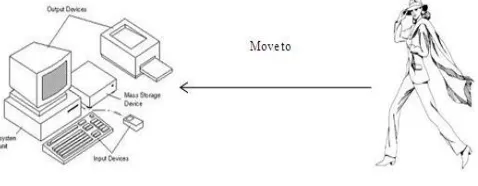
[image:1.612.327.566.319.412.2]The environment setup of standalone systems are shown in figure1.
Figure 1: Standalone system computing environment
International Journal of Emerging Technology and Advanced Engineering
Website: www.ijetae.com (ISSN 2250-2459, Volume 2, Issue 10, October 2012) [image:2.612.90.244.137.290.2]61
Figure 2: Client server computing environment
Mobile computing evolves during the most recent years as a need of portable and growing networks called wireless networks. Mobile computing enlarges the usability of systems, but raises many demanding challenges issues. Mobile computing working on 3D (three dimensions) of computer science, they are computing, communication, and mobility. In mobile computing mobile agents are connecting for computing and also communicating by moving its position. This property is called mobility. Mobile computing is also called as location independent computing.
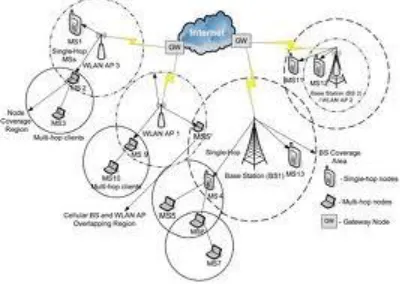
Mobile computing provides computing for the users are who work from numerous locations. Seamless mobility of mobile agent “connect” from any of the location, at any time based on their convenience of use (no extra setup is required like “plug and play”) same computing environment is sufficient, same services, in spite of location Mobile users may be willing to give up some performance for mobility. The environment setup of mobile computing is shown in figure 3.
Figure 3: Mobile computing environment
The remaining sections of the paper are structured as follows. We begin by describing the problem statement and objectives of the paper in section 2. In section 3, we present a new architecture of proposed system. In section 4, we show our experimental setup of the proposed systems. In section 5, we discuss related work. Finally, section 6 gives conclusions and direction of future work.
II. PROBLEM DESCRIPTION
The previous Researchers proposed many methods for transfer of data from one mobile agent to other. The Research paper studies a set of problems that are faced during mobile computing. A mobile user must be able to deal with the problems like slow even though expensive connection lines, frequent interruption of connection to failures, limited mobile host performance. Requirements for mobile agent services are stability, bandwidth or cost considerations, integration into the well-known environment, application transparency, and extendibility.
Researchers in mobile computing proposed many methods to transmit data from one mobile agent to other based shortest path and moreover they routes may be static routing or dynamic routing. These methods estimated the network bandwidth before transmit the data, and also select a single path to transmit data. Suppose bandwidth is greater than the data size, data is segmented into packets and packet are numbered with serial numbers and transferred to receiver. At receiver end all the packets are rearranged to restore original data. This research paper intended to address some of the problems and limitations of the use of single source shortest path static/dynamic routing. Problem with single source shortest is all packets are travelled using single path, route overhead, traffic, heavy load problems are raised.
This method focuses on the following objectives:
Focusing on the role of mobile agent and identifying list problems when a document is transfer from one mobile agent to other. Studying the solutions to these problems.
Identification of dynamic routing between mobile agents.
Presenting the method which is used to identify multiple paths from source mobile host to destination mobile host.
[image:2.612.66.266.553.695.2]International Journal of Emerging Technology and Advanced Engineering
Website: www.ijetae.com (ISSN 2250-2459, Volume 2, Issue 10, October 2012)62
III. PROPOSED ARCHITECTURE
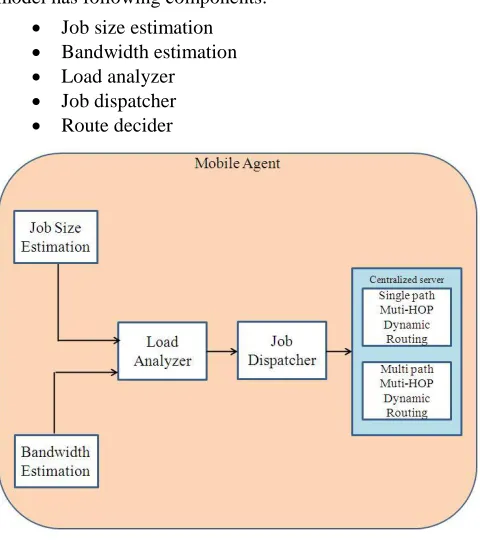
[image:3.612.326.576.138.355.2]Sender side architecture of proposed system is shown in figure 4. The main idea of proposed system is to use at least four routes from all pair shortest path between source mobile hosts to destination host. Architecture of proposed model has following components:
Job size estimation
Bandwidth estimation
Load analyzer
Job dispatcher
Route decider
Figure 4: Architecture of Mobile Agent at sender side
Source mobile agent generates a message or data and then size of the generated job is estimated. Find multiple paths from source to destination. Arrange paths based on distances and choose four best paths. Next, estimate the network bandwidth. Data /job size is grater than network bandwidth then job is segmented into four smaller jobs and each job is dispatched through one shortest paths. So, all smaller jobs are transmitted to receiver through different channel which reduces route overhead and network traffic.
Receiver side architecture of proposed system is shown in figure 5. Architecture of proposed model has following components:
Job receiver
Job reassembly
Display contents
Job size Estimation
Figure 5: Architecture of Mobile Agent at receiver side
At the receiver end first receiver receives data from various routes and rearranges the data into an order and final data is displayed to the user. At the receiver end received data size is estimated and it is compared with actual size. If both are equal then there is no loss of information or data during transit.
IV. PERFORMANCE EVALUATION
Existing methods of data transfer using static or dynamic routing algorithm uses a single source shortest path. Let data is divided into N packets. In order to transmit a packet using shortest path requires N units of time. To transfer N packets requires N * N units of time. Therefore total time complexity is O (N2).
In our proposed scheme data is divided into 4 parts and each part is transmitted through a single path from four selected shortest path. Therefore in order to transmit complete data 4 + N units of time is required, the time complexity of proposed system is approximately equal to O (N). Proposed method shows better performance when compared with existing methods.
V. RELATED WORK
[image:3.612.50.290.204.476.2]International Journal of Emerging Technology and Advanced Engineering
Website: www.ijetae.com (ISSN 2250-2459, Volume 2, Issue 10, October 2012)63
In order to eliminate this likelihood, Perkins and Bhagwat have newly proposed adding sequence numbers to routing updates in Destination-Sequenced Distance Vector (DSDV) protocol [16]. These sequence numbers are used to match up to the age of information in a routing update, and allow each node to preferentially choose routes based on the fresh information. DSDV also uses trigger routing update to speed route convergence. In order to damp route variation and reduce congestion from large numbers of trigger updates after a route changes, each node in DSDV maintain information about the frequency with which it seems route changes and may delay some routing updates.
Dynamic source routing protocol is an approach to few source routing protocols used in wired r wireless networks, such as in the IEEE 802 SRT Bridge [17]. Route request packet serves basically the same role in route finding as an “all paths explorer” packet. But, in wired networks, a bridge can copy an all paths explorer from one network interface onto other interfaces and that the explorer will flood the network in a logical and complete way. Some protocol includes optimizations such as caching h sender address, request id i pairs to efficiently overflow explorers through a wireless network. We can also make extensive use of caching and can successfully make use of promiscuous receive mode in the network interface to optimize dynamic route discovery.
VI.
C
ONCLUSION&
F
UTUREW
ORKThe study reveals that, DSDV routing protocol consumes more and more bandwidth, because of the frequent broadcasting of routing updated information. While the AODV is some what better than DSDV as it doesn’t maintain routing tables at nodes which results in less overhead and more bandwidth. In mobile computing many methods are used to transmit data from one mobile agent to other based shortest path and moreover they routes may be static routing or dynamic routing. These methods estimated the network bandwidth before transmit the data, and also select a single path to transmit data. All the data is transmitted using a single path only. In our proposed method data is segmented into four parts and each part is transmitted to receiver using different paths, which reduces transmission time. Proposed method shows better performance when compared with existing methods. in the proposed method only we consider file size and shortest path, in future we are planning to add some more parameters like cost to increase the quality of service.
REFERENCES
[1] IEEE Draft Standard P802.16j/D5, “Part 16: Air Interface for Fixed and Mobile Broadband Wireless Access Systems – Multihop Relay Specification,” May 2008.
[2] Johnson Kuruvila, Amiya Nayak, and Ivan Stojmenovic. Greedy localized routing for maximizing probability of delivery in wireless ad hoc networks with a realistic physical layer. Journal of Parallel and Distributed Computing, 66:499–506, 2006.
[3] Johnson Kuruvila, Amiya Nayak, and Ivan Stojmenovic. Progress and location based localized power aware routing for ad hoc and sensor wireless networks. International Journal of Distributed Sensor Networks, 2(2):147–159, July 2006.
[4] Johnson Kuruvila, Amiya Nayak, and Ivan Stojmenovic. Hop count optimal position-based packet routing algorithms for ad hoc wireless networks with a realistic physical layer. IEEE Journal on Selected Areas in Communications, 23(6):1267–1275, 2005.
[5] Douglas S. J. De Couto, Daniel Aguayo, John Bicket, and Robert Morris. A high-throughput path metric for multi-hop wireless routing. Wireless Networks, 11(4):419–434, 2005.
[6] Kemal Akkaya and Mohamed Younis. A survey on routing protocols for wireless sensor networks. Ad hoc Networks, 3(3):325–349, May 2005.
[7] Karim Seada, Marco Zuniga, Ahmed Helmy, and Bhaskar Krishnamachari. Energy-efficient forwarding strategies for geographic routing in lossy wireless sensor networks. In Proceedings of the 2nd International Conference on Embedded Networked Sensor Systems (SenSys’04), pages 108–121, 2004.
[8] Ivan Stojmenovic, Anand Prakash Ruhil, and D. K. Lobiyal. Voronoi diagram and convex hull based geocasting and routing in wireless networks. In Proceedings of the 8th IEEE Symposium on Computers and Communications ISCC, pages 51–56, July 2003.
[9] C. de Morais Cordeiro, H. Gossain, D. P. Agrawal, ”Multicast over wireless mobile ad hoc networks: present and future directions,” IEEE Network, Vol. 17, Issue: 1, January/February 2003.
[10]A. Rao, S. Rathasamy, C. Papadimitriou, S. Shenker, and I. Stoica. Geographic routing without location information. In Proceedings of the 9th Annual International Conference on Mobile Computing and Networking (MobiCom’03), pages 96–108, 2003.
[11]Marc Heissenb¨uttel and Torsten Braun. BLR: Beacon-less routing algorithm for mobile ad-hoc networks. Elsevier’s Computer Communications Journal, pages 1076–1086, 2003.
[12]Fabian Kuhn, Roger Wattenhofer, and Aaron Zollinger. Worst-case optimal and average-case efficient geometric ad-hoc routing. In Proceedings of the 4th ACM International Symposium on Mobile Computing and Networking (MobiHoc 2003), pages 267–278, 2003.
[13]Fabian Kuhn, Roger Wattenhofer, Yan Zhang, and Aaron Zollinger. Geometric ad-hoc routing: Of theory and practice. In Proceedings of the 22nd ACM International Symposium on the Principles of Distributed Computing (PODC), Boston, Massachusetts, USA, pages 63–72, July 2003.
International Journal of Emerging Technology and Advanced Engineering
Website: www.ijetae.com (ISSN 2250-2459, Volume 2, Issue 10, October 2012)64 [15]M. Kwon and S. Fahmy, “Topology-Aware Overlay Networks for
Group Communication,” Proc. ACM NOSSDAV’02, Miami, FL, May, 2002.
[16]Jie Wu, Fei Dai, Ming Gao, and Ivan Stojmenovic. On calculating power-aware connected dominating sets for efficient routing in ad hoc wireless networks. Journal of Communications and Networks, 4(1), March 2002.
[17]Charles E. Perkins and Pravin Bhagwat. Highly Dynamic Destination-Sequenced Distance-Vector Routing (DSDV) for Mobile Computers. In Proceedings of the SIGCOMM ’94 Conference on Communications Architectures, Protocols and Applications, pages 234–244, August 1994.
[18]Radia Perlman. Interconnections: Bridges and Routers. Addison-Wesley, Reading, Massachusetts, 1992.
About Authors
Zabi Ur Rahaman .K was received B. Sc in PMCs from Sree Siddaganga College for Boys, Bangalore University, Tumkur. He received MCA from School Sree Siddaganga Institute of Technology, Visvesvaraya Technological University, Belgaum. He received M. Phil in Computer Science from Sterling Institute of Advanced Technology Trust(R), Vinayaka Missions University, Salem, Tamilnadu. He is pursing Ph. D from CMJ University, Meghalaya. He is working as Assistant Professor, Department of MCA, VIDYAVAHINI U. G. AND P. G. COLLEGE, Tumkur. His area of interest includes Data Mining, and Mobile Computing.
International Journal of Emerging Technology and Advanced Engineering
Website: www.ijetae.com (ISSN 2250-2459, Volume 2, Issue 10, October 2012)65