DEVELOPMENT OF PID CURRENT CONTROL FOR DC MOTOR USING ARDUINO
MOHD KHAIRUL AKLI BIN AB GHANI
A project report submitted in partial fulfillment of the requirement for the award of the
Degree of Master Electrical Engineering
Faculty of Electrical and Electronic Engineering Universiti Tun Hussein Onn Malaysia
ABSTRACT
Power electronic systems have been widely used in varieties of domestic applications and industrial sector due to its reliability, simple construction and low weight. Therefore, this project is to design and to develop of PID Current Control that could be applied for the DC motor. The control technique was called as current control technique by comparing the output current with the reference current. Thus, the PID controller will force the output current to follow the reference current by creating the pulse with modulation (PWM) signals. The PID Controller was developed and simulated by using MATLAB/Simulink software and then implemented to the hardware by using Arduino microcontroller board as a digital signal processing system. The final observation from this project is by using Arduino Uno board, the current of DC motor can control but in small scale. This is due to the current sensor that used had range in small scale reading. Lastly, the result of the performance for this controller was explained in this report by observed in three condition; simulation, open loop control and closed loop control.
ABSTRAK
CONTENTS
TITLE i
DECLARATION ii
ACKNOWLEDGEMENT iii
ABSTRACT iv
CONTENTS vi
LIST OF TABLES ix
LIST OF FIGURES x
LIST OF SYMBOL AND ABBREVIATIONS xiii
CHAPTER 1 INTRODUCTION 1
1.1 Project Background 1
1.2 Problem Statement 3
1.3 Objectives of Project 4
1.4 Scope of Project 4
CHAPTER 2 LITERATURE REVIEW 6
2.1 Introduction 6
2.2 Direct Current (DC) Motor 6
2.2.1 Block diagram of DC Motor Closed-Loop Control 7
2.2.2 Shunt Wound DC Motor 8
2.3 Three Phase Controlled Rectifier 10
2.4 Three Phase Gate Driver 11
2.5 Controller Method 12
2.5.1 Proportional (P) Controller 12
2.5.2 Proportional-Integral (PI) Controller 13 2.5.3 Proportional-Derivative (PD) Controller 14 2.5.4 Proportional-Integral-Derivative (PID) Controller 14 2.5.5 Characteristic of Proportional (P), Integral (I) and
Derivative (D) Controllers 16
2.5.6 Tuning PID Method 17
2.5.6.1 Manual Tuning Method 17
2.5.6.2 Ziegler–Nichols Tuning Method 18
2.5.6.3 PID Tuning Software Method 19
2.6 MATLAB Software 20
2.7 Arduino 20
2.8 Current Sensor 22
CHAPTER 3 METHODOLOGY 24
3.1 Introduction 24
3.2 Specific Block Diagram of Project 24
3.3 Design Flow 25
3.4 Flowchart 26
3.4.1 General Flowchart of Project 26
3.4.2 Process Flow of System Software 28
3.4.3 Process Flow of System Hardware 29
3.5 Circuit Diagram 30
3.5.1 Three Phase Controlled Rectifier Circuit 30
3.5.1.1 Schematic Circuit 30
3.5.1.2 Layout Diagram 31
3.5.2 Three Phase Gate Driver 32
3.5.2.1 Schematic Circuit 32
3.5.2.2 Layout Circuit 34
3.5.3 Current Sensor Design 35
3.5.4 Controller Design 36
3.6 Experiment Set up 39
CHAPTER 4 RESULTS 40
4.1 Introduction 40
4.2 Simulation Result Analysis 40
4.2.1 Open Loop Simulation Diagram and Results 44 4.2.2 Close Loop Simulation Diagram and Results 47
4.3 Hardware Result Analysis 49
4.3.1 Gate Driver Circuit Analysis 49
4.4 Open Loop Analysis 55
4.5 Closed Loop Analysis 63
CHAPTER 5 DISCUSSION AND CONCLUSION 69
5.1 Discussion and Conclusion 69
5.2 Future Recommendation 70
REFERENCES 71
LIST OF TABLES
2.1 Characteristic of Proportional (P), Integral (I) and Derivative (D)
controllers 16
2.2 Effect of changing control parameter 18
2.3 Ziegler-Nichols tuning method, gain parameters calculation 19 2.4 Advantages and disadvantages of tuning methods 20
2.5 Specification of Arduino Uno Board 21
2.6 Comparison of current sensing method 23
3.1 List of components for gate driver circuit 33
3.2 List of component for the current sensor circuit 36
3.3 Relation current and voltage for current sensor 36
4.1 Comparison output voltage for rectifier 43
4.2 Result for open loop simulation process 46
LIST OF FIGURES
1.1 General block diagram of project 3
2.1 Types of DC motor 6
2.2 The block diagram of the DC motor closed-loop control 7
2.3 Equivalent Circuit of Shunt Wound DC motor 8
2.4 Connections of Shunt motor 9
2.5 Three-phase active rectifier system 10
2.6 Three-phase active rectifier system using MOSFET 11
2.7 Proportional controller block diagram 12
2.8 Proportional-Integral controller block diagram 13 2.9 Proportional-Derivative controller block diagram 14 2.10 Proportional-Integral-Derivative controller block diagram 15
2.11 Arduino Uno Board 21
2.12 Typical DC motor block diagram 22
3.1 Specific block diagram of project 24
3.2 Modeling processes 26
3.3 General flowchart of project 27
3.4 Flowchart of system software 28
3.5 Process flow of system hardware 29
3.6 Schematic circuit for three phase controlled rectifier 30
3.7 Layout for three phase controlled rectifier 31
3.8 Hardware development of three phase rectifier 31
3.9 Schematic of three phase gate driver 32
3.10 Layout for three phase gate driver 34
3.11 Hardware development of gate driver 34
3.12 Diagram of current sensor (BB-ACS756) 35
3.13 Schematic of current sensor (BB-ACS756) 35
3.14 The Simulink model for the controller 38
3.15 The design of PID current controller 38
3.16 PID controller block parameters 39
3.17 Experiment set up 39
4.1 The full simulation 41
4.2 Three phase rectifier and load model 41
4.3 The model that contained in controller block 42
4.4 Three phase input voltage for rectifier 43
4.5 Output rectifier during uncontrolled condition 44
4.6 Open loop simulation analysis 44
4.7 Result for open loop output current at Iref = 0.2A 45 4.8 Result for open loop output current at Iref = 0.3A 45 4.9 Result for open loop output current at Iref = 0.4A 46
4.10 Close loop simulation analysis 47
4.11 Result for close loop output current at Iref = 0.2A 47 4.12 Result for close loop output current at Iref = 0.3A 48 4.13 Result for close loop output current at Iref = 0.4A 48
4.14 The output of PWM signal 50
4.15 Input and output for gate driver 50
4.16 The peak-to-peak voltage output signal of gate driver 51
4.17 The overlap condition 52
4.18 Phase A and phase B input voltage 53
4.19 Phase B and phase C input voltage 53
4.20 Phase A and phase C input voltage 54
LIST OF SYMBOLS AND ABBREVIATIONS
Ω – Ohm
t – Time
u(t) – Output
e(t) – Error
DC – Direct current
MOSFET – Metal Oxide Semiconductor Field Effect Transistor
P – Proportional
PD – Proportional Derivative
PI – Proportional Integral
PID – Proportional Integral Derivative
MATLAB – Matrix Laboratory
PWM – Pulse Width Modulation
AC – Alternating current
A – Ampere
V – Volt
DAC – Digital to Analog Converter
Kp – Proportional controller mode gain
Ki – Integral controller mode gain
Kd – Derivative controller mode gain
VDD – Positive supply voltage
VSS – Negative supply voltage
CMOS – Complementary Metal Oxide Semiconductor
PCB – Printed Circuit Board
IGBT – Insulated Gate Bipolar Transistor
ADC – Analog to Digital Converter
PFC – Power Factor Correction
CHAPTER 1
INTRODUCTION
1.1 Project Background
Nowadays, almost every mechanical movement around the world is accomplished by an electric motor. The electric machines are a means of converting energy. Motors take electrical energy and produce mechanical energy. The direct current (DC) motor is a device that used in many industries in order to convert electrical energy into mechanical energy. The result from the availability of speed controllers is wide range, easily and many ways. In most applications, speed control is very important. For example, consider the DC motor in radio controller car, if just apply a constant power to the motor, it is impossible to maintain the desired speed. It will go slower over rocky road, slower uphill, faster downhill and so on. So, it is important to make a controller to control the speed of DC motor in desired speed [1]. In this project, researcher used multifunction DC motor with Shunt Wound DC motor connection just to know whether this type of motor able to operate or not with this controller.
drives [4]. This rectifier activated by gate driver circuit that charge pump signal to the gate for MOSFET in rectifier circuit. So, for this project three phase controlled active rectifier is selected.
The speed of DC motor can be adjusted to a great extent as to provide controllability easy and high performance. The controllers of the speed that are conceived for goal to control the speed of DC motor to execute one variety of tasks, is of several conventional and numeric controller types, the controllers can be: Proportional (P) Controller, Derivative (PD) Controller, Proportional-Integral (PI) Controller, Proportional-Proportional-Integral-Derivative (PID) Controller, Fuzzy Logic Controller, Genetic Algorithm technique, Particle Swarm Optimization technique or the combination between them: Fuzzy-Neural Networks, Fuzzy-Genetic Algorithm, Fuzzy-Ants Colony, Fuzzy-Swarm [5]. For this project, with demanding and sophisticated application, the PID controller is designed accordingly with PWM current controller to produce a better controller for DC motor. Current sensor had used as a reference current to compare with setting current that setting in the MATLAB Simulink Toolbox software.
Due to their functional simplicity and reliability, the PID controller is one of the most popular controllers in the industry. It provides robust and reliable performance for most systems if the PID parameters are determined or tuned to ensure a satisfactory closed-loop performance [6]. A PID controller is designed using MATLAB Simulink functions to generate a set of coefficients associated with a desired controller's characteristics [7]. The controller coefficients are then included in MATLAB Simulink Toolbox functional block diagram that implements the PID controller. MATLAB has been selected for this work due to the fact that it is one of the most widely used software and it is almost accessible in all education institutions around the world [8].
Arduino Uno board microcontroller has been selected to store and run the program from MATLAB. This Arduino Uno board had chosen due to a simple board, easy to handle and its affordable cost. This board can be program by using C/C++ programming language, Java or using MATLAB Simulink Toolbox function block.
Uno board, current sensor, MATLAB R2013a Simulink Toolbox software and DC motor as a load.
Figure 1.1: General block diagram of project
1.2 Problem Statement
The increase in the diversity and power values of semiconductors has led to rapid developments of simple control devices for DC motor. However, by far the majority of variable-speed drives consist of a basic DC shunt machine with external or static control units, usually of the resistance type. The replacement of an old variable speed drive by a new and more versatile one may prove a costly business, when all that may be required is the addition of a simple control device [9].
Nowadays, manual controller is also not practical in the technology era because it can waste time and cost. Operation cost regarding controller is got attention from industrial field. In order to reduce cost and time, making a controller based on computer because it is portable suggested. The user can monitor their system at certain place without need to going the plant (machine) especially in industrial implementation. From that, the man power can be reduced and reserve with computer which is more precise and reliable. The other product regarding this project where fully control motor via computer may be commercialized but their cost
Microcontroller Gate Driver
Power Electronic Converter
Sensor
MATLAB / Simulink
Controller Setting
DC Motor ~
~
~
Three phase supply
is very expensive. The hardware of may be complicated and maintenance cost is higher [1]. The simple electronic devices can be designed using power electronic control device to make a speed controller system.
This has led the researchers to consider the design and application of a power electronic control device to a DC motor. The adaptive PID controller is so designed that it can be used to overcome the problem in industry like to avoid machine damages and to avoid slow rise time and high overshoot. This is because when the starting voltage is high, it is not suitable for machine and can make machine damages. With the aid of feedback control, the controller monitors the armature current of the DC motor.
1.3 Objectives of Project
Basically, this project is listing four main objectives. i. To develop the three phase controlled rectifier. ii. To develop the three phase gate driver.
iii. To design the PID current control using MATLAB R2013a Simulink Toolbox function block.
iv. To study the communication between MATLAB R2013a Simulink software and Arduino Uno board.
1.4 Scope of Project
There are four main points in this project. These scopes parallel with the objectives of the project.
i. The rating for the three phase rectifier is the direct current (DC) output between 0V to 240V. For this project, 500V input voltage, 8A maximum current power MOSFET (IRF840) is selected to be used as switching device due to the specification of DC motor is 220V input voltage maximum, 1.8A maximum current and 300W output power.
the output to rectifier. This gate driver consists of three inputs and six outputs.
iii. The third point of this project is to design the PID current control using MATLAB Simulink Toolbox function block. The version of MATLAB software that used is MATLAB R2013a software. From the PID controller block, it produced the pulse width modulation (PWM) input signal for gate driver.
iv. Studying the communication between MATLAB R2013a Simulink software and Arduino Uno board. This MATLAB R2013a Simulink software and Arduino Uno board microcontroller should be able to communicate each other.
CHAPTER 2
LITERATURE REVIEW
2.1 Introduction
This chapter will focus on studies, facts and past researches on this project title. There are several topics that would be taken up for references.
2.2 Direct Current (DC) Motor
[image:17.595.125.518.580.705.2]Direct current (DC) motors have variable characteristics and are used extensively in variable-speed drives. DC motors can provide a high starting torque and it is also possible to obtain speed control over a wide range. The methods of speed control are normally simpler and less expensive than those of ac drives [10]. Due to its wide range of application different functional types of dc motor are available in the market for specific requirements [11]. Figure 2.1 show the types of DC motor:
Figure 2.1: Types of DC motor DC Motor
Separately Excited Self-excited Permanent Magnet
Series wound
Direct current motors hold the very important status in the electric driving automatic control system. Relative to the alternating current motor, the performance of direct current motor's speed control is much better. It is the first choice in the applications which require wide range of speed regulation and high-precision speed, and it has been widely used in Computerized Numerical Control machine tools and process control [12].
DC Motors can be used in various applications and can be used as various sizes and rates. Today their uses isn’t limited in the car applications (electrics vehicle), in applications of weak power using battery system (motor of toy) or for the electric traction in the multi-machine systems too. The speed of DC motor can be adjusted to a great extent as to provide controllability easy and high performance [13].
2.2.1 Block diagram of DC Motor Closed-Loop Control
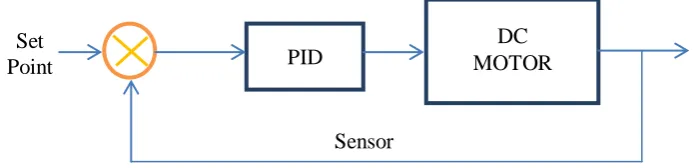
[image:18.595.161.509.575.659.2]The speed of dc motors changes with the load torque. To maintain a constant speed, the armature (and or field) voltage should be varied continuously by varying the delay angle of ac-dc converters or duty cycle of dc-dc converters. In practical systems it is required to operate the drive at constant torque or constant power; in addition controlled acceleration and deceleration are required [10]. Nowadays, most industrial drives operate as closed-loop feedback system due to the system has the advantages of improves accuracy, fast dynamic response and reduced effect of load disturbances and system nonlinearities.
Figure 2.2: The block diagram of the DC motor closed-loop control
As it is seen from figure 2.2 the block diagram of the DC motor closed-loop control, the speed sensor (encoder) measure the speed of the DC motor. In these loops we have the actual speed of the DC motor with the desired one. The DC speed
PID MOTOR DC
Set Point
Sensor
measurement gives the actual speed value. The error between theoretical and practical values is corrected with PID controller. The parameters of the PID controller are determined with MATLAB results which will be explained in the following sections. The output of the PID controller gives the duty cycle of the square wave generator [14].
2.2.2 Shunt Wound DC Motor
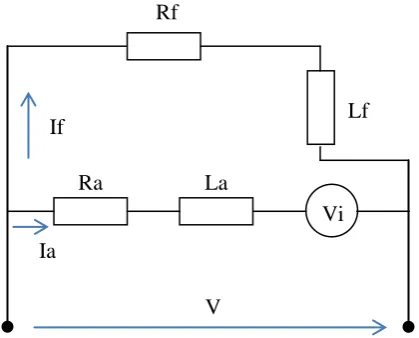
[image:19.595.210.420.416.585.2]The multifunction DC motor with Shunt Wound DC motor connection had used for this project. A shunt-wound motor is a dc machine that has field winding connected parallel to armature. It means that current from a source is sum of armature current and field current. Equivalent circuit of a shunt-wound motor is shown on figure 2.3. Symbols meaning is as follow: V is supply voltage [V], vi is induced voltage [V], Ra is armature winding resistance [Ω], La is armature winding inductance [H], Rf is field winding resistance [Ω] and Lf is field winding inductance [H] [15].
Figure 2.3: Equivalent Circuit of Shunt Wound DC motor
An electrical part of shunt-wound motor can be described by following equations (refer to Figure 2.3):
( )
( ) ( ) ( ) ( ) Rf
Ra La
Lf
Vi
V If
Ia
( ) ( ) ( )
Here, Va is voltage on armature (i.e. supply voltage V minus brush drops) [V], ia(t) is armature current [A], if(t) is shunt winding current [A], C is constant (dimension of product C·if(t) is [V·s-1]) and ω(t) is angular velocity [rad·s-1]. Current
i(t) from a source is
( ) ( ) ( ) ( )
To completing the shunt-wound motor description, mechanical equation is needed:
( ) ( ) ( ) ( ) ( )
Where TL is load torque [Nm], J is inertia moment [kg·m2] and D is friction coefficient [Nm·s·rad-1].
[image:20.595.182.397.576.683.2]Figure 2.4 shows the connections of a shunt motor. From these connections, the field current is constant, since it is connected directly to the supply which is assumed to be at constant voltage. Hence the flux is approximately constant and, since also the back e.m.f is almost constant under normal conditions the speed is approximately constant. It is usual for all practical purpose to regard the shunt motor as a constant speed machine. It is employed in practice for drives, the speeds of which are required to be independent of the loads. The speed can be varied by the inclusion of a variable resistor in series with the field winding as figure 2.4 below [16].
Figure 2.4: Connections of Shunt motor Armature
Resistor
Rsh
V
2.3 Three Phase Controlled Rectifier
[image:21.595.118.528.302.483.2]In general, control strategy for switching patterns and their duty cycles on the rectifier uses voltage or current. Figure 2.5 represents the topology of the three phase active rectifier proposed. The dynamic model of rectifier consists of a three-phase network connected to three-phase supply voltage ea , eb , ec by assuming a balanced three-phase system, the three-phase input line currents ia, ib, ic and va, vb, vc which represent the three-phase voltages generated by the PWM active rectifier. R and L are the resistance and inductance of the line, a smoothing capacitor, and the load represented by a current source [4].
Figure 2.5: Three-phase active rectifier system [4]
passive rectification which can be switched to active (synchronous) rectification by applying appropriate gate drive pulses to the power MOSFETs [17].
Figure 2.6: Three-phase active rectifier system using MOSFET [17]
The developing trend in switching power supply system has been aiming high-efficiency and low-cost power converters. A conventional power supply commonly has a simple diode rectifier, which consists of several diodes, an output inductor and a capacitor. However, AC/DC diode converter with low output voltage, total loss is consumed over 85% by the diodes, and the output inductor; for this reason, AC/DC power MOSFET rectifier is developed to operate with low power loss, unity power factor, low harmonic and low output ripple [18].
2.4 Three Phase Gate Driver
There are numerous IC gate drives that are commercially available for gating power converters. These include pulse-width modulation (PWM) control, power factor correction (PFC) control, combined PWM and PFC control, current mode control, bridge driver, servo driver, hall-bridge drivers, stepper motor driver and thyristor gate driver [10].
Recently, the interest with solid state pulsed power modulator has been growing because of many advantages such as long life span, rectangular pulse waveforms and easiness of controlling the pulse width and repetition rate [19].
between the IGBT power switches and the logic-level signals can be optimized to achieve low losses. Conventional Gate Driver (CGD) circuits have employed fixed gate voltage and resistor networks, which are selected to minimize switching losses, suppress cross-talk and EMI noise, and also limit the power device stresses at switching transients. However, these conflicting requirements are difficult to be realized in a conventional gate driver [20].
Basically, the purpose of using a gate driver is the application of to charge pump circuit to the gate of the MOSFET in the rectifier circuit. The gate requirements for a MOSFET or an IGBT switch are satisfy as follows; i) Gate voltage must be 10V to 15V higher than the source or emitter voltage. Because the power drive is connected to the main igh voltage rail +Vs, the gate voltage must be higher than the rail voltage. ii) The gate voltage that is normally referenced to ground must be controllable from the logic circuit. Thus, the control signals have to be level shifted to the source terminal of the power device, which in most applications swings between the two rails V+. iii) A low-side power device generally drives the high-side power device that is connected to the high voltage. Thus, there is one high-side and one low-side power device. The power absorbed by the gate drive circuitry should be low and it should not significantly affect the overall efficiency of the power converter [10].
2.5 Controller Method
This part expresses the type of controlled method that most widely used. The explanation about those controllers aid with block diagrams. The description control method focused for Proportional (P) controller, Proportional-Integral (PI) controller, Proportional-Derivative (PD) controller and Proportional-Integral-Derivative (PID) controller.
[image:23.595.131.459.684.735.2]2.5.1 Proportional (P) Controller
Figure 2.7: Proportional controller block diagram
Kp Plant
Set Point +
-
Proportional (P) controller is mostly used in first order processes with single energy storage to stabilize the unstable process. The main usage of the P controller is to decrease the steady state error of the system. As the proportional gain factor K increases, the steady state error of the system decreases. However, despite the reduction, P control can never manage to eliminate the steady state error of the system. As we increase the proportional gain, it provides smaller amplitude and phase margin, faster dynamics satisfying wider frequency band and larger sensitivity to the noise. We can use this controller only when our system is tolerable to a constant steady state error. In addition, it can be easily concluded that applying P controller decreases the rise time and after a certain value of reduction on the steady state error, increasing K only leads to overshoot of the system response. P control also causes oscillation if sufficiently aggressive in the presence of lags and/or dead time. The more lags (higher order), the more problem it leads. Plus, it directly amplifies process noise [14].
[image:24.595.122.499.431.531.2]2.5.2 Proportional-Integral (PI) Controller
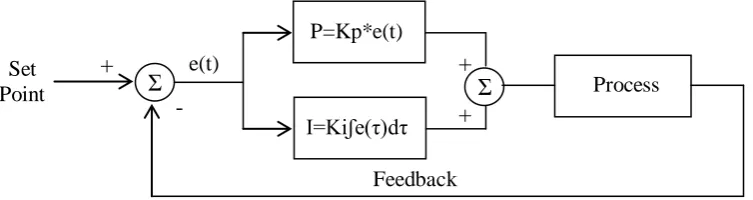
Figure 2.8: Proportional-Integral controller block diagram
Proportional-Integral (PI) controller is mainly used to eliminate the steady state error resulting from P controller. However, in terms of the speed of the response and overall stability of the system, it has a negative impact. This controller is mostly used in areas where speed of the system is not an issue. Since PI controller has no ability to predict the future errors of the system it cannot decrease the rise time and eliminate the oscillations. If applied, any amount of I guarantees set point overshoot [14].
P=Kp*e(t)
Process +
- Ʃ
Ʃ e(t) +
+ I=Kiʃe(τ)dτ
13
Set Point
2.5.3 Proportional-Derivative (PD) Controller
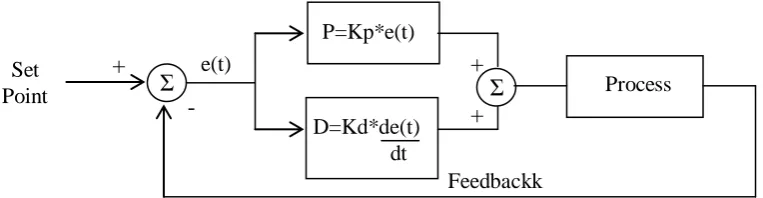
Figure 2.9: Proportional-Derivative controller block diagram
The aim of using Proportional-Derivative (PD) controller is to increase the stability of the system by improving control since it has an ability to predict the future error of the system response. In order to avoid effects of the sudden change in the value of the error signal, the derivative is taken from the output response of the system variable instead of the error signal. Therefore, D mode is designed to be proportional to the change of the output variable to prevent the sudden changes occurring in the control output resulting from sudden changes in the error signal. In addition D directly amplifies process noise therefore D-only control is not used [14].
2.5.4 Proportional-Integral-Derivative (PID) Controller
Proportional-Integral-Derivative (PID) controller has the optimum control dynamics including zero steady state error, fast response (short rise time), no oscillations and higher stability. The necessity of using a derivative gain component in addition to the PI controller is to eliminate the overshoot and the oscillations occurring in the output response of the system. One of the main advantages of the PID controller is that it can be used with higher order processes including more than single energy storage [14].
PID controllers are widely used in industrial practice over 60 years ago. The invention of PID control is in 1910 (largely owing to Elmer Sperry’s ship autopilot) and the straightforward Ziegler-Nichols (Z-N) tuning rule in 1942. Today, PID is used in more than 90% of practical control systems, ranging from consumer electronics such as cameras to industrial processes such as chemical processes. The PID controller helps get our output (velocity, temperature, position) where we want
P=Kp*e(t)
Process +
- Ʃ
Ʃ e(t) +
+ D=Kd*de(t) dt Set
Point
it, in a short time, with minimal overshoot, and with little error. It also the most adopted controllers in the industry due to the good cost and given benefits to the industry. Many nonlinear processes can be controlled using the well-known and industrially proven PID controller [21].
[image:26.595.123.501.359.505.2]The control structure used was the PID (Proportional + Integral + Derivative) as a base for software development. This type of controller was initially chosen, because it is generally applied to most of the control systems of continuous processes, proving its usefulness by providing a generally satisfactory control. The connection among the proportional, integral and derivative actions result in the PID controller, which can be found in various formats. Among the existing formats, the one chosen to be implemented in the experiment was parallel PID, since it is the most common among industrial controllers. Figure 6 shows the block diagram of a closed loop control system using PID controller [22].
Figure 2.10: Proportional-Integral-Derivative controller block diagram
The figure 2.10 above shows the PID controller block diagram, which has an adder which is integrates the actions of controllers: proportional, integral and derivative actions, resulting in the PID controller in parallel. The controller equation is shown in Equation 5.
( ) ( ) ∫ ( ) ( )
( ) Set
Point
Feedbackk P=Kp*e(t)
Process +
-
Ʃ Ʃ
e(t)
+ +
D=Kd*de(t) dt
I=Kiʃe(τ)dτ
+
Where;
t = Time
u(t) = Output
e(t) = Error = set point – process variable
Kp = Proportional controller mode gain
Ki = Integral controller mode gain
Kd = Derivative controller mode gain
Using above equation of the PID controller in time domain it is possible to develop an equation of a digital PID controller in order to use it on the Arduino. To approximate the equation 5, a T period sampling rate was used, thus the integral action is close to the sum of all values of the sampled error multiplied by the period, and the derivative action multiplied by the difference between the current and previous error divided by the period.
2.5.5 Characteristic of Proportional (P), Integral (I) and Derivative (D) Controllers
[image:27.595.108.533.660.711.2]The function of proportional controller (Kp) will have the effect of reducing the rise time and will reduce, but never eliminate, the steady-state error. An integral control (Ki) will have the effect of eliminating the steady-state error, but it may make the transient response worse. A derivative control (Kd) will have the effect of increasing the stability of the system, reducing the overshoot, and improving the transient response. Effects of each of controllers Kp, Kd, and Ki on a closed-loop system are summarized in the table shown below [23].
Table 2.1: Characteristic of Proportional (P), Integral (I) and Derivative (D) controllers
Parameter Rise Time Overshoot Settling Time S-S Error
Kp Decrease Increase Small Change Decrease
Ki Decrease Increase Increase Eliminate
Take a note that these correlations may not be exactly accurate, because Kp, Ki, and Kd are dependent of each other. In fact, by changing one of these variables can change the effect of the other two. For this reason, the table should only be used as a reference when you are determining the values for Ki, Kp and Kd.
2.5.6 Tuning PID Method
The meaning of tuning is adjustment of control parameters to the optimum values for the desired control response. The stability is a basic requirement. However, different systems have different behaviour, different applications have different requirements, and requirements may conflict with one another. PID tuning is a difficult problem, even though there are only three parameters and in principle is simple to describe, because it must satisfy complex criteria within the limitations of PID control. There are accordingly various methods for loop tuning, some of them [24]:
i- Manual tuning method,
ii- Ziegler–Nichols tuning method, iii- PID tuning software methods.
2.5.6.1 Manual Tuning Method
significantly less than half that of the Kp setting causing oscillation [24]. Referring to table 2.2, the effects of changing control parameters can be seen.
Table 2.2: Effect of changing control parameter
Parameter Rise Time Overshoot Settling Time S-S Error Stability
Kp Decrease Increase Small Change Decrease Worse
Ki Decrease Increase Increase Eliminate Worse
Kd Minor Dec. Minor Dec. Minor Dec. No change If Kd small,
better
2.5.6.2 Ziegler–Nichols Tuning Method
This method was introduced by John G. Ziegler and Nathaniel B. Nichols in the 1940s. The Ziegler-Nichols’ closed loop method is based on experiments executed on an established control loop (a real system or a simulated system). The tuning procedure is as follows [24]:
i- Bring the process to (or as close to as possible) the specified operating point of the control system to ensure that the controller during the tuning is “feeling” representative process dynamic and to minimize the chance that variables during the tuning reach limits. The process is brought to the operating point by manually adjusting the control variable, with the controller in manual mode, until the process variable is approximately equal to the set-point.
ii- Tune the PID controller into a P controller by setting set Ti = ∞ and Td = 0. Initially, gain Kp is set to “0”. Close the control loop by setting the controller in automatic mode.
measurement noise. This is important that Kpu is found without the control signal being driven to any saturation limit (maximum or minimum value) during the oscillations. If such limits are reached, there will be sustained oscillations for any (large) value of Kp, e.g. 1000000, and the resulting Kp value is useless (the control system will probably be unstable). One way to say this is that Kpu must be the smallest Kp value that drives the control loop into sustained oscillations.
iv- Measure the ultimate (or critical) period Pu of the sustained oscillations. v- Calculate the controller parameter values according to Table 2.3, and these
parameter values are used in the controller. If the stability of the control loop is poor, stability is improved by decreasing Kp, for example a 20% decrease.
Table 2.3: Ziegler-Nichols tuning method, gain parameters calculation
Control Type Kp Ki Kd
P 0.5*Ku - -
PI 0.45*Ku 1.2*Kp/Tu -
PID 0.6*Ku 2*Kp/Tu Kp*Tu/8
2.5.6.3 PID Tuning Software Method
There is some prepared software that they can easily calculate the gain parameter. Any kind of theoretical methods can be selected in some these methods [24]. Here the examples of software most used:
i- MATLAB Simulink PID Controller Tuning, ii- BESTune,
iii- Exper Tune etc.
2.5.7 Advantages and Disadvantages of Tuning Methods
Table 2.4 below shows the advantages and disadvantages for three PID tuning methods [24].
Table 2.4: Advantages and disadvantages of tuning methods
Method Advantages Disadvantages
Manual Tuning - No math required.
- Online method
- Requires experienced personnel.
Ziegler-Nichols - Proven method.
- Online method
- Process upset, some trial and error, very aggressive tuning.
Software Tools - Consistent tuning.
- Online or offline method. - May include value and sensor
analysis.
- Allow simulation before downloading.
- Can support non-steady state (NSS) tuning.
- Some cost and training involved.
2.6 MATLAB Software
Computer modelling and simulation tools have been extensively used to support and enhance electric machinery courses. MATLAB with its toolboxes such as Simulink and SimPowerSystems is one of the most popular software packages used by educators to enhance teaching the transient and steady-state characteristics of electric machines [25].
MATLAB software can be used for a range of applications, including signal processing and communications, image and video processing, control systems, test and measurement, computational finance, and computational biology. A million of engineers and scientists in industry and academia use MATLAB as the language of technical computing. A new control of a drive system is formulated and it is often convenient to study the system performance by using MATLAB Simulink support package.
2.7 Arduino
Figure 2.11: Arduino Uno Board
Arduino is an open-source electronics prototyping platform based on flexible, easy-to-use hardware and software. Arduino can sense the environment by receiving input from a variety of sensors and can affect its surroundings. Arduino projects can be stand-alone, or they can communicate with software running on a computer. In this development, Arduino UNO is used as the main controller because it satisfies these conditions as table 2.5 [27]:
Table 2.5: Specification of Arduino Uno Board
Microcontroller ATmega328
Operating voltage 5V
Input voltage (recommended) 7-12V
Input voltage (limits) 6-20V
Digital I/O pins 14 (of which 6 provide PWM output)
Analog input pins 6
DC current per I/O pin 40 mA
DC current for 3.3V pin 50 mA
Flash memory 32 KB (ATmega328) of which 0.5KB
used by boot loader
EEPROM 1 KB (ATmega328)
SRAM 2 KB (ATmega328)
Clock speed 16 Mhz
[image:32.595.170.509.498.658.2]2.8 Current Sensor
[image:33.595.121.513.342.492.2]Sensors are a critical component in a motor control system. They are used to sense the current, position, speed and direction of the rotating motor. Recent advancements in sensor technology have improved the accuracy and reliability of sensors, while reducing the cost. Many sensors are now available that integrate the sensor and signal-conditioning circuitry into a single package. In most motor control systems, several sensors are used to provide feedback information on the motor. These sensors are used in the control loop and to improve the reliability by detecting fault conditions that may damage the motor. As an example, Figure 2.12 provides a block diagram of a DC motor control system to show the sensor feedback provided for a typical motor control [28].
Figure 2.12: Typical DC motor block diagram
Nowadays, there is having three most popular current sensors in motor control applications:
i- Shunt resistors ii- Hall-Effect sensors iii- Current transformers
Shunt resistors are popular current sensors because they provide an accurate measurement at a low cost. Hall-Effect current sensors are widely used because they provide a non-intrusive measurement and are available in a small IC package that combines the sensor and signal-conditioning circuit. Current-sensing transformers are also a popular sensor technology, especially in high-current or AC
line-Torque
Speed
Direction
Input PICmicro
Microcontroller Driver Motor
monitoring applications. A summary of the advantages and disadvantages of each of the current sensors is provided in Table 2.6 [28].
Table 2.6: Comparison of current sensing method
Current sensing method Shunt Resistor Hall-Effect Current Sensing
Transformer
Accuracy Good Good Medium
Accuracy vs. Temperature Good Poor Good
Cost Low High Medium
Isolation No Yes Yes
High Current-Measuring
Capability Poor Good Good
DC Offset Problem Yes No No
Saturation / Hysterisis Problem No Yes Yes
Power Consumption High Low Low
Instrusive Measurement Yes No No
AC/DC Measurement Both Both Only AC
CHAPTER 3
METHODOLOGY
3.1 Introduction
This chapter will give explanations about the project methodology. It will be included the description of the design flow, flowchart (general project, software, hardware) and the detail explanations for the software system as well as the hardware system. In this chapter also include the circuit that used for this project.
[image:35.595.100.508.465.738.2]3.2 Specific Block Diagram of Project
Figure 3.1: Specific block diagram of project Arduino Uno
Board 3 Phase Gate
Driver Power Electronic Converter
Current Sensor
MATLAB / Simulink
PID Current Controller
DC Motor ~
~
~
Three phase supply
Software Development Hardware
REFERENCES
[1] Awang M.A.F., “DC Motor Speed Controller,” no. November, 2010.
[2] M. Electric, “Introduction To Electrical Drive.” [Online]. Available: ftp://ftp.dei.polimi.it/outgoing/Massimo.Ghioni/Power Electronics /Motor control/motor control overview/INTRODUCTION TO ELECTRICAL DRIVES.pdf.
[3] S. . Chapman, Electric Machinery Fundamentals, vol. 4th Ed. 2005, pp. 535– 551.
[4] A. I. Technology, M. H. Purnomo, and M. Ashari, “ADVANCED CONTROL OF ACTIVE RECTIFIER USING SWITCH FUNCTION AND FUZZY LOGIC FOR NONLINEAR BEHAVIOUR COMPENSATION,” vol. 40, no. 2, pp. 156–161, 2012.
[5] R. G. Kanojiya, “Method for Speed Control of DC Motor,” pp. 117–122, 2012. [6] C. Xu, D. Huang, Y. Huang, and S. Gong, “Digital PID Controller for
Brushless DC Motor Based on AVR Microcontroller,” no. 1, pp. 247–252, 2008.
[7] J. Tang, “PID CONTROLLER USING THE TMS320C31 DSK WITH ON-LINE PARAMETER ADJUSTMENT FOR REAL-TIME DC MOTOR SPEED AND POSITION CONTROL,” pp. 786–791, 2001.
[8] Asiya M. Al-Busaidi, “Development of an Educational Environment for Online Control of a Biped Robot using MATLAB and Arduino,” pp. 337–344, 2012. [9] J. Richardson, “New static controller for dc. machines,” vol. 119, no. 11, 1972. [10] M. H. Rashid, Power Electronics Curcuits, Devices and Applications. 2004,
pp. 640–781.
[11] “Types of DC Motor Separately Excited Shunt Series Compound DC Motor.” [Online]. Available: http://www.electrical4u.com/.
[12] W. C. M. yongbin, L. Yongxin, “Design of Parameters Self-tuning Fuzzy PID Control for DC Motor,” pp. 345–348, 2010.
[13] R. G. Kanojiya and P. M. Meshram, “Optimal Tuning of PI Controller for Speed Control of DC motor drive using Particle Swarm Optimization,” no. Dc, 2012.
[14] V. M. V. Rao, “Performance Analysis Of Speed Control Of Dc Motor Using P, PI, PD And PID Controllers,” vol. 2, no. 5, pp. 60–66, 2013.
[15] M. Mach, P. Grmela, and V. Hajek, “Shunt-Wound Motor Parameter Estimation by a Genetic Algorithm,” vol. 1003, no. 3, pp. 1003–1006, 2012. [16] “Types of DC Motor.pdf.” [Online]. Available:
www.most.gov.mm/techuni/media/EP_02021_4.pdf.
[17] M. G. Giiesselmann and M. R. Haider, “Design , Coinstruction and Test of a 3-Phase Cryogenic Synchronous Rectifier 3-3-Phase Synchronous Rectifier,” pp. 237–240, 1998.
[18] C.-M. Kung, Y.-S. Hwang, and J.-J. Chen, “Feedforward simple control technique for on-chip all-digital three-phase AC/DC power-MOSFET converter with least components,” IET Circuits, Devices Syst., vol. 3, no. 4, pp. 161–171, Aug. 2009.
[19] S. R. Jang and S. H. Ahn, “A Comparative Study of the Gate Driver Circuits for Series Stacking of Semiconductor Switches,” pp. 326–330, 2010.
[20] Z. Wang, X. Shi, L. M. Tolbert, and B. J. Blalock, “Switching Performance Improvement of IGBT Modules Using an Active Gate Driver,” pp. 1266–1273, 2013.
[21] M. S. Najib, M. S. Jadin, R. M. Taufika, and R. Ismail, “Design and Implementation of PID Controller in Programmable Logic Controller for DC Motor Position Control of the Conveyor System,” pp. 266–270, 2007.
[22] J. M. Neto, S. Paladini, C. E. Pereira, and R. Marcelino, “Remote Educational Experiment Applied To Electrical Engineering,” 2012.
[23] “Introduction to PID Control Introduction The three-term controller.” [Online]. Available:
http://ee.sharif.edu/~industrialcontrol/Introduction_to_PID_Control.pdf.
[24] K. ARI, F. T. ASAL, and M. COSGUN, “EE 402 DISCRETE TIME SYTEMS PROJECT REPORT PI , PD , PID.” [Online]. Available: www.eee.metu.edu.tr/~ee402/2012/EE402RecitationReport_4.pdf.
machinery courses,” Comput. Appl. Eng. Educ., vol. 15, no. 4, pp. 347–354, 2007.
[26] J. Antonio, “Automatic Control for Laboratory Sterilization Process based on Arduino Hardware,” no. Figure 2, pp. 130–133, 2012.
[27] Z. Othman, “High-Efficiency Dual-Axis Solar Tracking Developement using Arduino,” pp. 43–47, 2013.
[28] J. Lepkowski, “Motor Control Sensor Feedback Circuits,” 2003.



![Figure 2.5: Three-phase active rectifier system [4]](https://thumb-us.123doks.com/thumbv2/123dok_us/8766230.896574/21.595.118.528.302.483/figure-three-phase-active-rectifier-system.webp)
![Figure 2.6: Three-phase active rectifier system using MOSFET [17]](https://thumb-us.123doks.com/thumbv2/123dok_us/8766230.896574/22.595.117.522.134.299/figure-phase-active-rectifier-using-mosfet.webp)