ISSN: 1992-8645 www.jatit.org E-ISSN: 1817-3195
500
A SYSTEMATIC LITERATURE REVIEW OF
TECHNOLOGICAL FACTORS FOR E-LEARNING
READINESS IN HIGHER EDUCATION
ASMA ALI MOSA AL-ARAIBI 1, MOHD NAZ’RI BIN MAHRIN1, RASIMAH CHE MOHD
YUSOFF1
1
Advanced Informatics School, Universiti Teknologi Malaysia (UTM), Malaysia E-mail: [email protected]
ABSTRACT
E-learning is an innovation that is increasingly adopted in higher education settings. Although most higher education institutions have adopted e-learning, they still face challenges in its implementation, especially in relation to the technological aspects. The primary reason for e-learning implementation challenges is a lack of assessment of the readiness for e-learning. The successful implementation of e-learning relies on assessing the readiness of technological aspects in order to realize the benefits of e-learning and reduce the barriers to e-learning implementation. Studies on e-learning readiness lack agreement on the important technological aspects; thus, there remains a need to identify the relevant factors that shape the technological aspects of e-learning readiness. This paper provides a systematic review of the literature, with the aim to identify the technological aspects of e-learning readiness in higher education.
Keywords: Systematic Literature Review (SLR), Technological Factors, E-Learning Readiness, Higher
Education
1. INTRODUCTION
Most higher education institutions still face challenges when implementing e-learning, especially in relation to the technological aspects (Hussein, Aditiawarman, & Mohamed, 2007; Qureshi, Ilyas, Yasmin, & Whitty, 2012; Tarus, Gichoya, & Muumbo, 2015). According to Alshaher (2013), the adoption of e-learning systems in many organizations have failed, and a primary reason for this failure is the lack of assessment of organizational readiness for e-learning. Likewise, Hanafizadeh and Ravasan (2011) state that without proper readiness assessment, the e-learning project will probably face challenges during the implementation. For example, one of the reasons for failures in e-learning project implementation is users’ poor technical skills (Ouma, Awuor, & Kyambo, 2013), and the possession of these technical skills is one of the technological aspects of e-learning. Thus, the successful implementation of e-learning relies on an assessment of the readiness of the technological aspects in order to realize the benefits of e-learning and reduce the barriers to e-learning implementation (Alshaher, 2013). We conclude that most higher education institutions still face challenges during the implementation of e-learning, especially in relation to the technological aspects because there is a lack
of assessment of technological readiness, whereby this lack creates challenges and jeopardizes the successful implementation of e-learning.
ISSN: 1992-8645 www.jatit.org E-ISSN: 1817-3195
501 dissatisfaction and cause students to drop out from the e-learning course (Keramati, Afshari-Mofrad, & Kamrani, 2011).
Bhuasiri, Xaymoungkhoun, Zo, Rho, and Ciganek (2012) state that technology is an important aspect of e-learning; hence, it needs to be thoroughly explored in order to analyze the e-learning readiness. According to our previous research which was performed to explore the gaps in the knowledge about the technological aspects of e-learning readiness through the conduct of a literature review (Asma et al., 2016), there is a lack of agreement about the factors that shape the technological aspects of e-learning readiness; hence, a clear gap is identified in the knowledge on the technological aspects of e-learning readiness. Thus, there is a need to identify the factors related to the technological aspects of e-learning readiness. The aim of this paper is to investigate the factors that shape the technological aspects of e-learning readiness in higher education. In order to perform this study, we needed to select a method to gather the information. One of the methods of collecting data about a topic of interest is the systematic literature review (SLR).
Although significant research has been performed in the field of e-learning readiness, there has not been any attempt to review the literature using the SLR method to identify the technological readiness
aspects of e-learning. We use the SLR method which has been commonly used in various research fields. The main objective in conducting the SLR is to provide a summary of the existing studies related to e-learning readiness in order to identify the factors that shape the technological aspects.
The remainder of the paper is structured as follows: Section 2 describes the methodology of the study, Section 3 discusses the limitations of this study, and Section 4 presents the conclusions and discusses future directions for our work.
2. METHODOLOGY
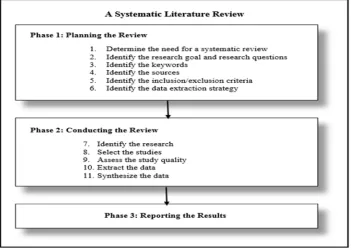
[image:2.612.132.484.454.704.2]The SLR method used in this study is based on the work of Kitchenham et al. (2009). The advantages of the SLR method are that it offers insights into a research problem and enables a study to gather the available information from a wide range of sources (Kitchenham & Charters, 2007). In addition, SLR results are more reliable and more likely to be unbiased compared to unstructured methods such as the simple literature review (Stapić, López, Cabot, de Marcos Ortega, & Strahonja, 2012). SLR consists of three main phases, namely, planning, conducting and reporting, as described by Kitchenham et al. (2009). Figure 1 outlines the three phases with the steps to be performed in each phase of the SLR. Each of the phases is described in detail in the following sub-sections.
ISSN: 1992-8645 www.jatit.org E-ISSN: 1817-3195
502 2.1 Planning the Review
In the planning phase, we have to identify the research questions, keywords, resources to be searched and the inclusion and exclusion criteria.
2.1.1 Research question
The goal of the SLR in the present study is to identify the necessary factors that shape the technological aspects of e-learning readiness. Thus, the following research question is addressed by our SLR:
What are the factors that shape the technological aspects of e-learning readiness?
2.1.2 Research keywords
Based on the research question stated above, the key phrase was “e-learning readiness”. We then identified the synonyms of the keyword “e-learning” as e-learning, electronic learning, online learning, virtual learning and e-education. We identified the synonyms of the keyword “readiness” as willingness, preparedness and ready.
After the search terms were identified, they were compiled into a search string to be used in the search process. In this research, the AND operators were used to link the different search terms into a single search string. The OR operator was used to group the various forms (for example, the synonyms and alternate spellings). The resulting search string used in the SLR is shown in Figure 2.
Figure 2: Search string used in the SLR
2.1.3 Resources to be searched
The following online databases were identified as the resources to be searched: IEEE Xplore, ScienceDirect, SpringerLink, Wiley InterScience and EdITLib. We also searched the reference lists
of the relevant primary studies manually to ensure the completeness of our search.
2.1.4 Inclusion/exclusion criteria
We developed two levels of inclusion and exclusion. In the first level, we excluded or included all the papers based on the following criteria:
Exclusion:
• Any studies without any of the mentioned keywords
• Any studies not in the English language • Any studies that were not full text • Discussion papers and short papers • Any studies which were found to be
repeated.
Inclusion:
• Any studies with any of the mentioned keywords
• Studies in English • Full text papers
• Review papers and white papers.
In the second level, we excluded all papers which were not relevant to the enquiry after reading the full text papers.
2.1.5 Data extraction strategy
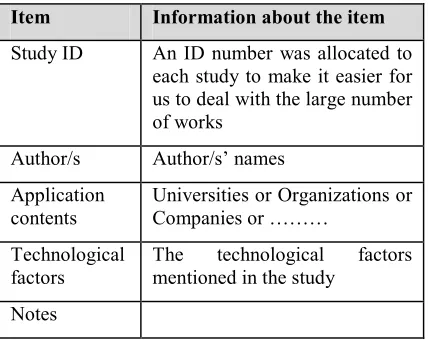
[image:3.612.312.526.527.697.2]The form of data extraction form the included studies is shown in Table 1.
Table 1: Form of data extraction
Item Information about the item
Study ID An ID number was allocated to each study to make it easier for us to deal with the large number of works
Author/s Author/s’ names
Application contents
Universities or Organizations or Companies or ………
Technological factors
The technological factors mentioned in the study
Notes ((“E-learning” OR “Electronic Learning” OR
“Online learning” OR “Virtual learning” OR
“E-education”) AND (“Readiness” OR
“Willingness” OR “Preparedness” OR
ISSN: 1992-8645 www.jatit.org E-ISSN: 1817-3195
503
2.2 Conducting the Review
The second phase involved the following steps: identification of research, selection of studies, assessment of study quality, data extraction and data synthesis.
2.2.1 Identification of research
After identifying the search string, we began the process of searching through the online databases (as mentioned above in Section 2.1.3). The result of the search process is presented in Table 2.
Table 2: Result of search process through online databases
Online Database Search Result
IEEE Xplore 29
EdITLib 70
Wiley InterScience 21
ScienceDirect 20
SpringerLink 19
Total of search result 159
2.2.2 Study selection
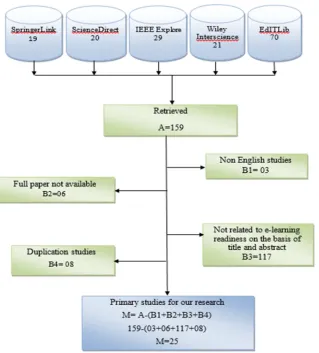
[image:4.612.148.467.358.711.2]Based upon the two levels of inclusion and exclusion criteria, we selected the primary studies. We excluded papers based on the first level of inclusion/exclusion criteria. Figure 3 shows the process of selecting the primary studies.
ISSN: 1992-8645 www.jatit.org E-ISSN: 1817-3195
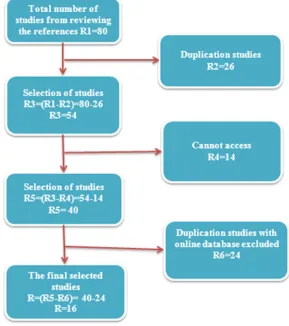
504 After applying the first level of exclusion criteria, we gathered 25 primary studies related to e-learning readiness. In these 25 studies, we then conducted a secondary search, which involved reviewing the
[image:5.612.164.453.156.482.2]references in the selected primary studies in order to identify any additional relevant studies. The process and the result of the secondary search are shown in Figure 4.
Figure 4: Result Of Searching References In Primary Studies
After conducting the primary search in the online databases and searching the references in the selected primary studies in the secondary search phase, we gathered 25 studies from the online database search and 16 studies from the references. The total number of primary selected studies was 41 studies.
The 41 primary studies were subjected to the second level of inclusion/exclusion criteria. We
ISSN: 1992-8645 www.jatit.org E-ISSN: 1817-3195
[image:6.612.91.523.62.382.2]505
Figure 5: Process Of Selecting Final Studies For Conducting SLR
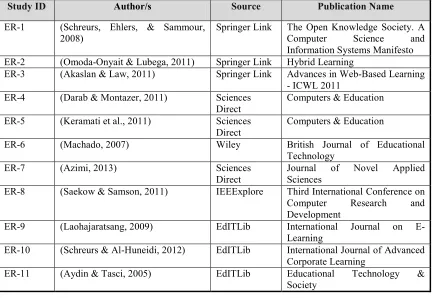
Table 3: Selected Studies
Study ID Author/s Source Publication Name
ER-1 (Schreurs, Ehlers, & Sammour, 2008)
Springer Link The Open Knowledge Society. A Computer Science and Information Systems Manifesto ER-2 (Omoda-Onyait & Lubega, 2011) Springer Link Hybrid Learning
ER-3 (Akaslan & Law, 2011) Springer Link Advances in Web-Based Learning - ICWL 2011
ER-4 (Darab & Montazer, 2011) Sciences Direct
Computers & Education
ER-5 (Keramati et al., 2011) Sciences Direct
Computers & Education
ER-6 (Machado, 2007) Wiley British Journal of Educational
Technology
ER-7 (Azimi, 2013) Sciences
Direct
Journal of Novel Applied Sciences
ER-8 (Saekow & Samson, 2011) IEEExplore Third International Conference on Computer Research and Development
ER-9 (Laohajaratsang, 2009) EdITLib International Journal on E-Learning
ER-10 (Schreurs & Al-Huneidi, 2012) EdITLib International Journal of Advanced Corporate Learning
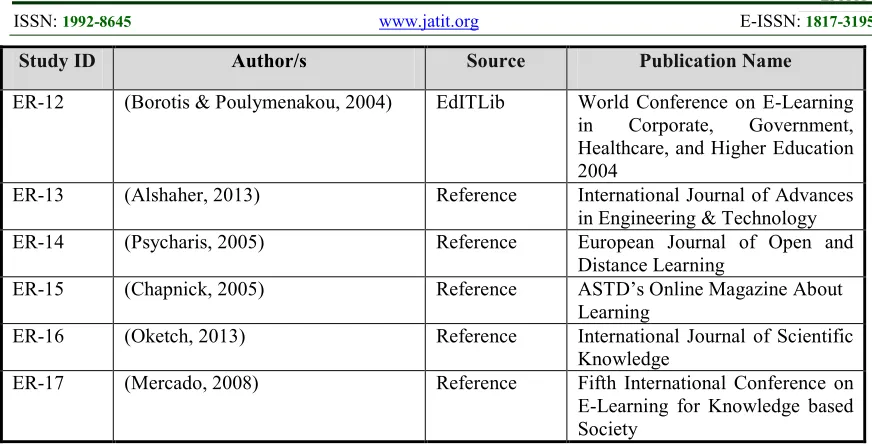
[image:6.612.86.519.442.740.2]ISSN: 1992-8645 www.jatit.org E-ISSN: 1817-3195
506
Study ID Author/s Source Publication Name
ER-12 (Borotis & Poulymenakou, 2004) EdITLib World Conference on E-Learning in Corporate, Government, Healthcare, and Higher Education 2004
ER-13 (Alshaher, 2013) Reference International Journal of Advances in Engineering & Technology ER-14 (Psycharis, 2005) Reference European Journal of Open and
Distance Learning
ER-15 (Chapnick, 2005) Reference ASTD’s Online Magazine About
Learning
ER-16 (Oketch, 2013) Reference International Journal of Scientific Knowledge
ER-17 (Mercado, 2008) Reference Fifth International Conference on E-Learning for Knowledge based Society
2.2.3 Study quality assessment
A quality assessment checklist was adopted from Kitchenham and Charters (2007) to assess the
quality of the evidence presented by the selected studies. Table 4 shows the checklist that was used for assessing the quality of the selected studies
[image:7.612.84.520.71.294.2].
Table 4: Study Quality Assessment Checklist
Number Question Answer
Q1 Are the study aims clearly stated? Yes/ No/Partially
Q2 Is the research described adequately? Yes/ No/Partially
Q3 Does the study explore diversity of perspectives and contexts? Yes/ No/Partially Q4 Do the objectives lead to conclusions clearly? Yes/ No/Partially
Q5 Are the findings important? Yes/ No/Partially
Q6 Are negative findings presented? Yes/ No/Partially
Q7 Do the researchers explain the consequences of any problems? Yes/ No/Partially Q8 Does the study add to your knowledge or understanding? Yes/ No/Partially
Q9 Do the results add to the literature? Yes/ No/Partially
Using the answer scale shown in Table 5 adopted from Azhar, Mendes, and Riddle (2012), we concluded that the higher the score of a study, the greater will be the degree of the study’s ability to address the research question, and consequently the greater is its quality.
Table 5: Score Of Questions In Quality Assessment Checklist
Answer Score
Yes 1
No 0
Partially 0.5
The scale of question for every study as in Table 4, where the last column for (“% Max S”) which shows the percentage attained by each included study out of the total score. Table 6 presents the results of the quality assessment of the included studies.
% Total score for each included study
9 100
For example, the %Max s for ER-1 was expressed as:
[image:7.612.89.518.381.517.2]ISSN: 1992-8645 www.jatit.org E-ISSN: 1817-3195
[image:8.612.100.539.72.332.2]507
Table 6: Quality Assessment Of Included Studies
Study Id Q1 Q2 Q3 Q4 Q5 Q6 Q7 Q8 Q9 Total Score
% Max S
ER-1 0.5 0.5 1 1 1 0 0.5 1 1 6.5 72
ER-2 1 1 0.5 1 0.5 0 0.5 0.5 0.5 5.5 61
ER-3 1 1 0.5 0.5 0.5 0 1 0.5 0 5 55
ER-4 1 1 1 1 1 0 0.5 0.5 0.5 6.5 72
ER-5 0.5 1 1 1 1 0 1 0.5 0.5 6.5 72
ER-6 1 0.5 1 1 1 0.5 0.5 1 1 7 78
ER-7 0.5 0.5 1 0.5 0,5 0.5 1 1 1 6.5 72
ER-8 0.5 0.5 0.5 0.5 1 0 0.5 0.5 0.5 4.5 50
ER-9 0.5 1 1 1 1 0 0.5 0.5 0.5 6 66
ER-10 0.5 0.5 1 0.5 0.5 0.5 0.5 0.5 0.5 5 55
ER-11 1 1 1 1 0.5 0.5 1 0.5 1 7.5 83
ER-12 1 1 0.5 1 1 0.5 1 0.5 0.5 7 78
ER-13 0.5 1 1 0.5 1 0 1 1 1 7 78
ER-14 1 0.5 1 0.5 0.5 0 0.5 0.5 0.5 5 55
ER-15 1 0.5 0.5 0 0.5 0 1 0.5 0.5 4.5 50
ER-16 0.5 1 0.5 0.5 0.5 0 1 0.5 0.5 5 55
ER-17 1 0.5 1 0.5 0.5 0 0.5 0.5 0.5 5 55
As shown above in Table 6, most of the studies that were included in the SLR were scored 4.5 or higher from the total score of 9 (rate of 50%). Therefore, all the articles were above 50% and were kept in the SLR process. The highest score belonged to ER-11 with a score of 7.5 from the total score of 9 (83%). The lowest mark belonged to 8 and ER-15 with the score of 4.5 from the total score of 9 (50%). In this step, all the articles were reviewed based on the quality assessment checklist and scored based on this checklist. The total number of papers included in this step was 17.
2.2.4 Data extraction strategy
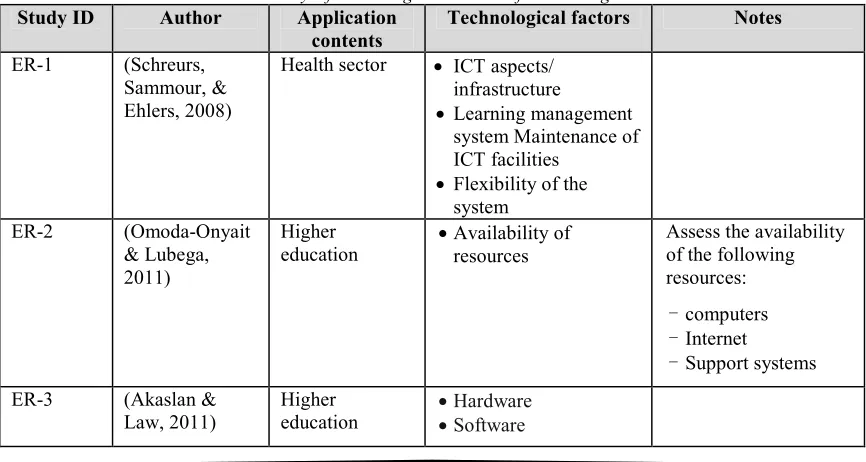
In the data extraction step, the data units were extracted from the 17 related studies. In this step, we focused on the technology factor of e-learning readiness in every study. We recorded the factors that were related to the technological aspects of e-learning readiness according to the form described above (Section 2.1.5). Finally, we identified 55 factors that were related to the technological aspects of e-learning readiness as presented in Table 7.
Table 7: Summary Of Technological Factors Of E-Learning Readiness
Study ID Author Application
contents
Technological factors Notes
ER-1 (Schreurs, Sammour, & Ehlers, 2008)
Health sector • ICT aspects/ infrastructure
• Learning management system Maintenance of ICT facilities
• Flexibility of the system
ER-2 (Omoda-Onyait & Lubega, 2011)
Higher
education •
Availability of resources
Assess the availability of the following resources:
computers Internet
Support systems ER-3 (Akaslan &
Law, 2011)
Higher
education •
Hardware
[image:8.612.90.523.512.743.2]ISSN: 1992-8645 www.jatit.org E-ISSN: 1817-3195
508
Study ID Author Application
contents
Technological factors Notes
• Stability of the Internet access
ER-4 (Darab & Montazer, 2011)
Universities • Communication network • Equipment • Security • IT support
ER-5 (Keramati et al., 2011)
High schools • Hardware • Software • Internet access
ER-6 (Machado,
2007)
Higher
education •
Provision of infrastructure
Provision of infrastructure includes:
Provision of computers
Access to the Internet
ER-7 (Azimi, 2013) Education
institutions •
Provision of ICT infrastructure
Providing ICT infrastructure including:
Equipment
Learning
management system
Internet access
Maintaining and upgrading hardware and software required for e-learning
ER-8 (Saekow & Samson, 2011)
Higher
education •
Hardware
• Software • Internet access ER-9 (Laohajaratsang
, 2009)
Academic sector (schools and higher education)
• Hardware
• Software
• Access to the Internet
• Technical staff
• ICT skills ER-10 (Schreurs &
Al-Huneidi, 2012)
Organizations • ICT infrastructure • Internet connectivity • Learning management
system ER-11 (Aydin & Tasci,
2005)
Companies • Resources: Access to computers and the Internet
• Skills: Ability to use computer and Internet • Attitude: Positive
ISSN: 1992-8645 www.jatit.org E-ISSN: 1817-3195
509
Study ID Author Application
contents
Technological factors Notes
use of technology
ER-12 (Borotis & Poulymenakou, 2004)
Organizations • Infrastructure
• Degree of access to the Internet
ER-13 (Alshaher, 2013)
Organizations • Access to the Internet • Access to a computer • Security
• Speed of the Internet • IT support
ER-14 (Psycharis, 2005)
Education system
•Infrastructure •Hardware •Software
•Access to the Internet •Learning management
system ER-15 (Chapnick,
2000)
Organizations •Equipment
•Technological skills ER-16 (Oketch et al.,
2014)
Higher learning •Resources •Attitude •Skills
Availability of computers and the Internet
Ability of the lecturers towards using the computers and the Internet
Attitude towards eLearning
ER-17 Mercado, )
200 7 (
Universities •Hardware •Software •Bandwidth •Connection speeds •Technical support •Infrastructure •Online platform
2.2.5 Data synthesis and results
We extracted 55 factors related to the technological aspects of e-learning readiness. In order to have a list of unique factors, these factors have to be filtered by removing the duplication (explicit and implicit) based on their similarities and differences via data synthesis. In this step, three steps proposed in grounded theory (Glaser, 1998) were used, namely, data coding, constant comparison and the memoing technique. Grounded theory is a method for analyzing collected data in a systematic way (Lawrence & Tar, 2013). Grounded theory is a general theory which can be applied in a wide range of disciplines and fields of study including social sciences and engineering. This theory is a systematic methodology which involves the
construction of theory through the analysis of data (Holton, 2008); in addition, this methodology is an alternative to the dominant qualitative and quantitative research paradigms. Moreover, Glaser (2033) articulates that this methodology enhances the potential for a rich multivariate conceptual theory. Corbin and Strauss (2008) state that grounded theory helps to analyze the data in a systematic manner. In the present study, a systematic approach for handling and analyzing the data was required.
ISSN: 1992-8645 www.jatit.org E-ISSN: 1817-3195
510 Provides explicit, sequential guidelines for
conducting qualitative research.
Offers specific strategies for handling the analytic phases of inquiry.
Streamlines and integrates data collection and analysis and legitimizes qualitative research as scientific inquiry.
As mentioned above, this study used only three steps of grounded theory to analyze the data. The reason for borrowing only three steps from grounded theory is because, as Onwuegbuzie, Leech, and Collins (2012) state, in order to analyze
literature the techniques of data coding, constant comparison and
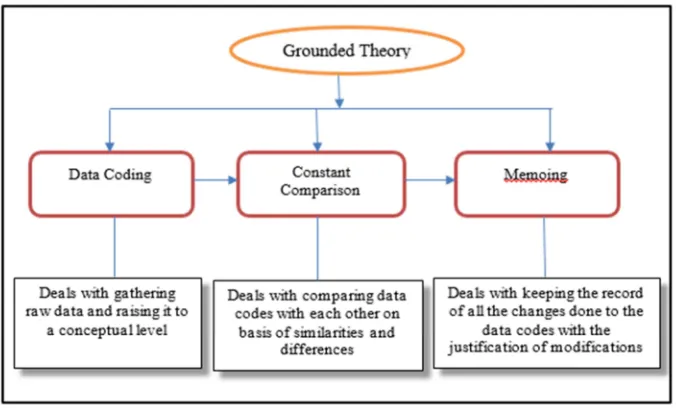
[image:11.612.138.476.257.461.2]coding data can assist researchers to understand multiple meanings from data; and assist them in identifying, creating and seeing the relationships among components of the data when constructing a theme. For this reason, the three main techniques of grounded theory, namely, data coding, constant comparison and memoing, were used. The three techniques of grounded theory are set out in Figure 6, and each technique is explained briefly in this section.
Figure 6: Techniques adopted from grounded theory (Glaser, 1998)
According to Glaser (1998), data coding deals with the conversion of raw data to a conceptual level. In this step, a researcher categorizes the data and describes the implications and details of these categories. In this step, a researcher also considers the data in minute detail while developing the
initial categories (in the case of the present study, this was related to the technological factors of e-learning readiness). Table 8 presents the code descriptions for the technological factors which were extracted from the 17 studies in this study’s SLR.
Table 8: Code description
Code Description Study ID
Infrastructure
Infrastructure is the basic physical and organizational structures and facilities needed for the operation of e-learning, e-learning infrastructure (e.g. hardware, software, Internet, support systems, e-learning platform, Intranet)
ER-1, ER-12,
ER-14, ER17
Provision of infrastructure
Refers to the available services and necessary facilities for adopting e-learning (e.g. provision of computers and access to the Internet)
[image:11.612.84.513.608.722.2]ISSN: 1992-8645 www.jatit.org E-ISSN: 1817-3195
511
Code Description Study ID
Provision of ICT infrastructure
Refers to the available technologies and services to assist organizations to adopt e-learning efficiently (e.g. hardware, software, access to the Internet, maintaining and upgrading)
ER-7
ICT infrastructure
ICT infrastructure offers a range of technologies to assist organizations in applying e-learning efficiently (e.g.
hardware, software, networking, Internet access, maintaining and upgrading)
ER-10
Learning
management system (LMS)
A learning management system is a software application for the administration, documentation, tracking, reporting and delivery of electronic content over the Internet.
ER-1,ER-7, ER-10, ER-14
Maintenance of ICT facilities
Refers to all actions taken to keep ICT facilities in
continuous good working condition (e.g. inspection, testing, servicing, classification as to serviceability, repair,
rebuilding, and reclamation)
ER-1
Flexibility of the system
Refers to the attributes of various types of systems. One of the characteristics used to describe a whole system.
ER-1
Availability of resources
Refers to the activities required to assess the available resources which include the available computers, Internet access, support systems.
ER-2
Support systems A group of people who manage the major computer
hardware and software and who provide help and support for learners in the face of technical problems in order to succeed and reach learning goals that are set by the institution.
ER-2
Hardware The hardware part of e-learning which includes the physical equipment that must be able to supply e-learning (e.g. computers, servers and communication networks).
ER-3, ER-5, ER-8, ER-9, ER-14, ER-17
Software The programs, applications and operating systems that enable computers to work.
ER-3, ER-5, ER-8, ER-9, ER-14, ER-17
Stability of the Internet access
The speed of the Internet access is stable and users are satisfied.
ER-3
Communication network
Refers to the bandwidth of the Internet connection, and the mode of Internet access from outside the university.
ER-4
Equipment Same as hardware; it is related to the material ER-4, ER-7, ER-15
Security Security is the degree of resistance to, or protection from, attack.
ER-4, ER-13
IT support Refers to a collection of services by which enterprises provide assistance to users of technology products such as computers and mobile devices to solve technological problems with computer systems.
ER-4, ER-13
Access to the Internet Refers to connections of individual computer terminals, mobile devices and networks to the Internet.
ER-5,ER-6, ER-7,ER-8
Bandwidth The maximum data transfer rate of a network or Internet connection. It measures how much data can be sent over a
ISSN: 1992-8645 www.jatit.org E-ISSN: 1817-3195
512
Code Description Study ID
specific connection in a given amount of time.
Provision of computers
The act of providing or supplying computers, or making the computers available
ER-6
Access to computers Refers to authorization, authentication and approval to access the computer system
ER-13
Internet connectivity Refers to connecting individual computer terminals, computers, mobile devices and computer networks to the Internet and sharing information.
ER-10
Maintaining and upgrading hardware and software required for e-learning
Maintenance is the testing and cleaning of equipment and updating of software in order to meet changing information requirements, such as adding new functions and changing data formats. It also includes fixing bugs and adapting the software to new hardware devices.
Upgrading is generally the replacement of hardware or software with newer or better versions, in order to bring the system up to date or to improve its characteristics.
ER-7
Skills The ability to use computers and the Internet ER-11
Attitude The positive feeling toward the use of technology ER-11
Attitudes toward
e-learning
A satisfied way of thinking or feeling about the use of e-learning
ER-16
Skills Ability of the lecturer and students to use the computers and the Internet
ER-16
Speed of Internet Refers to the speed of access to Internet services (broadband)
ER-13
Resources Refers to the technologies and physical equipment required for e-learning (e.g. availability of computers and availability of the Internet)
ER-11
Availability of computers
Refers to the ability of a user to access computers and use the computer
ER-17
Availability of the Internet
Refers to the ability of a user to access the Internet in a specified location and in the correct format
ER-16
Technological skills The knowledge and abilities needed to use the computer and the Internet
ER-15
Technical staff Refers to a group of people who are able to build and maintain any type of equipment anywhere
ER-9
Technical support Refers to a plethora of services that institutions provide in order to help individuals who are having technical problems with electronic devices such as computers and software products
ER-17
Connection speed Refers to the speed with which data is transferred between the user’s computer and the Internet
ER-17
Online platform The platform through which teachers will teach and students will learn; the options for an online learning platform
ISSN: 1992-8645 www.jatit.org E-ISSN: 1817-3195
513
Code Description Study ID
include: learning management system, social media and peer-to-peer platforms, online meeting/conferencing applications, two-way audio. In this study, the online platform is a learning management system (LMS)
In the constant comparison technique, data codes are compared with each other on the basis of similarities and differences. In this step, a researcher chooses one category as a core category. After that, all the other categories are related to that category in order to find the main and core category. In the present study, the various factors and items gathered from the different sources were compared on the basis of their similarities and differences until we obtained the main factors and their categories related to the technological readiness for e-learning. In order to identify the similarities, filtration was performed on the basis of explicit and implicit duplications. Explicit duplication is the clear duplication. Identifying the explicit duplication is necessary in implementing the grounded theory approach to analyzing the data. For example, in this study the “infrastructure” factor was found more than once in the data sources and was considered to be subject to explicit duplication. Such factors or categories like infrastructure were only included once.
The “degree of access to the Internet”, “stability of the Internet access” and “access to Internet” factors
had implicit duplication as their meanings were the same. This type of factor was also written once by giving it a unique name. In order to keep track of all these modifications, the memoing technique was used.
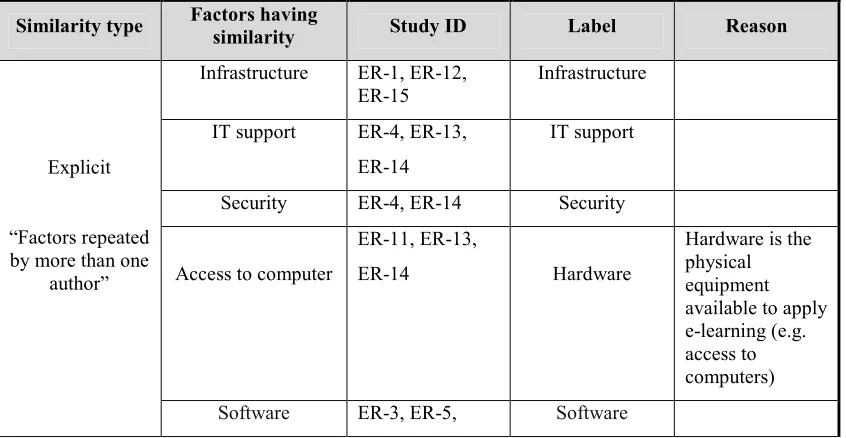
[image:14.612.97.520.507.726.2]The memoing technique deals with keeping a record of all the changes done to the data codes and maintaining the data code master file with the justification for the modifications (Glaser, 1998). In this study, the memoing process was used to record the core categories as they evolved throughout the study. Extensive marginal notes and comments were written and referred to in order to find the core technological factors and codes. For labeling, by following the data coding technique of grounded theory, every data unit (factor) was labeled. The labeling of each factor was done on the basis of the factor’s relatedness to a particular area. For instance, software and learning management system (LMS) were labeled as software. For the justification, memos were used. Generally, the substantive code was organized in this step. Table 9 shows the form that was used for tracking the modifications related to the factors.
Table 9: Memoing Table For Explicit And Implicit Duplication Of Technological Factors
Similarity type Factors having
similarity Study ID Label Reason
Explicit
“Factors repeated by more than one
author”
Infrastructure ER-1, ER-12, ER-15
Infrastructure
IT support ER-4, ER-13,
ER-14
IT support
Security ER-4, ER-14 Security
Access to computer
ER-11, ER-13,
ER-14 Hardware
Hardware is the physical equipment available to apply e-learning (e.g. access to computers)
ISSN: 1992-8645 www.jatit.org E-ISSN: 1817-3195
514
Similarity type Factors having
similarity Study ID Label Reason
ER-8, ER-9,
ER-15, ER-17
Access the Internet ER-9, ER-11,
ER-14
Access to the Internet
Hardware ER-3, ER-5,
ER-8, ER-9,
ER-15, ER-17
Hardware
LMS ER-1, ER 7,
ER-10, ER-15
Software LMS is a software application
Equipment ER-4, ER-7,
ER-16
Hardware Same as
hardware (related to the material needs)
Implicit
“Factors with the same meaning”
• Software
• LMS
• Online platform
ER-1, ER-3,
ER-5, ER-7,
ER-8, ER-9,
ER-10, ER-15, ER-17
Software
LMS is a software application and an online platform is an LMS; hence, they were modified into a single factor (“software”)
• Hardware • Equipment • Access to
computers • Availability of
computers • Provision of
computers
ER-2, ER-3,
ER-4, ER-5,
ER-6, ER-7,
ER-8, ER-9,
ER-11, ER-13, ER-14, ER-15, ER-16, ER-17
Hardware
Hardware and equipment are the same, while access to computers refers to the physical equipment that must be available to apply e-learning; hence, they were modified into a single factor (“hardware”)
• Availability of the Internet • Stability of the
Internet access • Internet access • Access to
Internet
• Degree of access
ER-2, ER-3,
ER-5, ER-6,
ER-7, ER-8,
ER-9, ER-10,
ER-11, ER-12
ISSN: 1992-8645 www.jatit.org E-ISSN: 1817-3195
515
Similarity type Factors having
similarity Study ID Label Reason
to the Internet • Internet
connectivity • Communication
network • Connection
speed • Speed of the
Internet • Bandwidth
ER-13, ER-14,
ER-15, ER-17
information; hence, they were modified into a single factor (“connectivity”)
• Infrastructure • Provision of
infrastructure • Provision of ICT
infrastructure
• ICT
infrastructure
ER-1, ER-6
ER-7, ER-10,
ER-12, ER-15
ICT
infrastructure
Infrastructure in this study related to e-learning; hence, these were modified into a single factor (“ICT
infrastructure”)
• ICT skills • Skills
ER-9, ER-11,
ER-17 ICT skills
Skill in the context of this research is specifically the ability to use ICT; hence, these were modified into a single factor (“ICT skills”)
• Attitudes toward ICT
•Attitude
ER-9, ER-11,
ER-17 Attitudes toward
ICT
Attitude in this research was related to ICT; hence, these were modified into a single factor (“Attitudes toward ICT”)
• Support system • IT support • Maintenance of
ICT facilities • Maintaining and
upgrading hardware and software • Technical staff • Technical support
1, 2, ER-4,
ER-7, ER-9,
ER-13, ER-14,
ER-17
Technical staff & support
ISSN: 1992-8645 www.jatit.org E-ISSN: 1817-3195
516
Similarity type Factors having
similarity Study ID Label Reason
factors related to providing support, either to the user or the system.
No Duplication
Given one time only by one author
• Flexibility of the system
ER-1
Flexibility of the system
After constant comparison and memoing, the technological factors were identified as: software, hardware, Internet, ICT infrastructure, ICT skills, attitudes toward ICT, technical staff and support, and flexibility of the system. Based on the code description above (Table 8), ICT infrastructure includes: hardware, software, Internet access, networking, maintenance and upgrades. Thus, this factor included most of the technological factors. Therefore, ICT infrastructure was excluded because all of its elements had been reported.
The “ICT skills” factor and “attitudes toward ICT” factor were mentioned in 15 studies as factors related to the people aspects of e-learning readiness and only two studies ((Aydin & Tasci (2005) and
Oketch (2013)) mentioned them as factors related to the technological aspects of e-learning readiness. From our point of view, these two factors are more closely related to people factors in e-learning readiness rather than technological factors in e-learning readiness; therefore, we excluded the “ICT skills” and “attitudes toward ICT” factors.
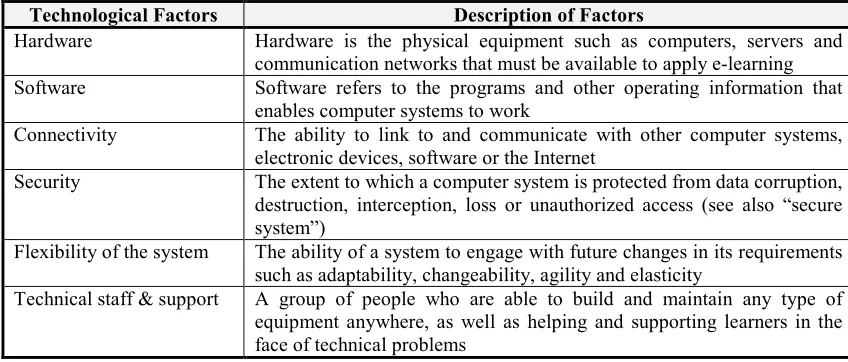
[image:17.612.92.516.464.645.2]The final factors shaping the technological aspects of e-learning readiness were identified as: software, hardware, connectivity, security, flexibility of the system, and technical staff and support. Table 10 lists the identified technological factors of e-learning readiness along with their descriptions (summarized from Table 8 above).
Table 10: Technological Factors Of E-Learning Readiness
Technological Factors Description of Factors
Hardware Hardware is the physical equipment such as computers, servers and communication networks that must be available to apply e-learning Software Software refers to the programs and other operating information that
enables computer systems to work
Connectivity The ability to link to and communicate with other computer systems, electronic devices, software or the Internet
Security The extent to which a computer system is protected from data corruption, destruction, interception, loss or unauthorized access (see also “secure system”)
Flexibility of the system The ability of a system to engage with future changes in its requirements such as adaptability, changeability, agility and elasticity
Technical staff & support A group of people who are able to build and maintain any type of equipment anywhere, as well as helping and supporting learners in the face of technical problems
Each of the identified technological factors of e-learning readiness is explained as follows:
• Hardware
The SLR identified technology as one of the most important factors that determine e-learning
ISSN: 1992-8645 www.jatit.org E-ISSN: 1817-3195
517 cheap, and it is necessary that the technology is available in hardware. In terms of hardware, the technology includes the role of computers or similar devices on which the e-learning can be conducted. We note that all of the reviewed 17 studies include hardware as an important factor among the technological aspects of e-learning readiness. Some of the studies mention the hardware factor and other studies mention the availability of computers as a factor which is also related to hardware. Thus, the access and availability of the hardware required to successfully implement the e-learning concept are important factors that determine the overall readiness of individuals to adopt e-learning in higher education.
• Software
The implementation of e-learning by an organization requires a set of variables relating to the kind of systems used. In this regard, software has been identified as one of the important factors. Software consists of the information aspects that help the system to be used to perform certain tasks (Aydin & Tasci, 2005). To adopt e-learning, an organization should have at least the minimum hardware requirements and the software required to use that hardware. The term “software” includes operating systems, LMS and application systems such as browsers among other relevant applications within an e-learning environment. Thus, the software factor is required for the successful implementation and adoption of e-learning, and is highlighted as one of the most important factors that determine e-learning readiness in higher education. Based on this discussion, we can postulate that the hardware and software require each other and neither can be realistically used without the other.
• Connectivity
All the studies in the SLR focused on the Internet as a means of communication. Laohajaratsang (2009) observes that access to the Internet is one of the most important technological factors that determine the readiness to adopt e-learning, so the access to the Internet should be easy. Zhang Omoda-Onyait and Lubega (2011) state that access to the Internet is not the only issue related to the Internet: the speed and availability of the service are other relevant factors. Borotis and Poulymenakou (2004) state that, for an e-learning system to be successfully adopted, it is necessary that a reliable Internet service with the required speed is available. The lack of appropriate Internet
infrastructure, speed and reliability affects the readiness of a country to adopt e-learning in its higher education sector and ensure that students are able to benefit from the various advantages of e-learning. The adoption of e-learning requires a sufficient amount of bandwidth which is capable of transferring both the video and audio forms of communication that are essential elements of e-learning (Schreurs et al., 2008). The assessment of the importance and significance of the Internet in the evaluation of e-learning readiness indicates that the availability, reliability and speed of the Internet are the main factors that determine the overall readiness of individuals to accept e-learning.
•Security
Another factor in assessing the readiness to adopt e-learning is security (Darab & Montazer, 2011). It is observed that the adoption of e-learning is heavily dependent on the security factor. It is because of security concerns that many individuals are reluctant to adopt e-learning and thereby forego the benefits of the various advantages of this new concept of education and training. Aydin and Tasci (2005) state that, among the various factors, security is one of the most important factors that influence the readiness to adopt e-learning. The lack of security prevents individuals from accepting this new technology and receiving the highest quality education on offer to students. Omoda-Onyait and Lubega (2011) add that the lack of security should be considered in assessing the readiness to accept e-learning. A lack of security creates fear among individuals, due to which they resist the new concept. However, if the benefits and implications of an e-learning system are conveyed to the general community and if security measures are in place, it is more likely that individuals will be ready to adopt this new innovation in the field of education and training.
ISSN: 1992-8645 www.jatit.org E-ISSN: 1817-3195
518 to several security threats such as hacking and mal viruses. These intentional security breaches not only harm the hardware that individuals are using but also hamper the overall process of acquiring education and knowledge through this new tool. The threat of piracy is another security factor that hinders the readiness to adopt e-learning. The specialized content being provided with the help of this new technology is exposed to a risk of being pirated and acquired through illegal means.
• Flexibility of the system
In recent years, flexibility has become a key concept in many fields, particularly in computer sciences. Consideration of the flexibility in a system is very important in assessing the readiness for e-learning. As found in the SLR, Aydin and Tasci (2005) state that the role of flexibility in a system is very important in the overall readiness to adopt an e-learning system. The flexibility of the system is defined as how flexible the system is in engaging with all the e-learning material. In the literature, flexibility is identified as a key property that should be embedded in high-value assets (Saleh, Hastings, & Newman, 2003). Intuitively, flexibility is understood as the ability to respond to change.
Flexibility is related to a system’s ability to handle change, such as adaptability, changeability, agility and elasticity. As mentioned above, flexibility has become a key concept in many fields such as computer and software design (Saleh et al., 2002). The main role of flexibility in a system is modernizing the educational and learning environments. In addition, flexibility can check the readiness of an educational system in relation to several aspects such as adaptability, changeability, agility and elasticity to implement e-learning. Akaslan and Law (2011) also point out that flexibility is related to using technology or a similar aspect will play an important role in the adoption of a new concept like that of e-learning.
• Technical staff & support
Technical staff and support includes IT support and maintenance. IT support is important in the successful implementation of e-learning as, without this factor, the general consumers of this new technology would not be able to adopt it (Ghavamifar, Beig, & Montazer, 2008). IT support exists to help learners if something goes wrong and to solve problems such as network issues
(Engholm, 2001). In the educational sector, the lack of appropriate IT support results in challenges and barriers for students. This lack of IT support can complicate the entire process of attaining education and is likely to influence the overall readiness of individuals to accept the new and innovative technology (Alshaher, 2013). The network and Internet settings in addition to the hardware requirements that are necessary for the successful implementation of an e-learning system are difficult for most students to manage; hence, students require appropriate IT support and expertise in order to acquire their education electronically.
Similarly, maintenance is important in the successful implementation of e-learning: without this factor, the general consumers of this new technology would not be able to adopt it (Ghavamifar et al., 2008). Darab and Montazer (2011) also state that a maintenance team of technological experts is required for the successful implementation and adoption of e-learning; for this purpose, it is extremely important that expert support is available and accessible to ensure that the process of seeking education and learning runs smoothly and is not disrupted by minor glitches and technological barriers. Moreover, Omoda-Onyait and Lubega (2011) observe that maintenance must be available to facilitate the overall process of attaining education through electronic means and to manage the technological barriers experienced by education-seeking individuals. Maintenance includes upgrading hardware and software, such as the replacement of hardware and software with newer or better versions, in order to bring the system up to date or to improve its characteristics (Azimi, 2013). It also includes fixing bugs and adapting the software to new hardware devices.
3. LIMITATIONS
ISSN: 1992-8645 www.jatit.org E-ISSN: 1817-3195
519 The contribution and quality of the 17 studies included in the SLR were evaluated by individuals based on their knowledge. We performed consensus meetings and peer reviews; however, the occurrence of bias and imprecision is one of the associated risks. In addition, the potential for misunderstanding when reviewing the literature cannot be ignored. We tried our best to overcome this by dealing carefully with the literature review, but the possibility of misunderstanding exists. We also cannot ignore the risk of inaccuracy. In this work, we aimed to have a high rate of accuracy but still cannot guarantee the accuracy.
4. CONCLUSION
This paper identified the factors that shape the technological aspects of e-learning readiness. The SLR method was used to investigate the relevant factors. We gathered 41 papers from online databases and from the references of the primary studies. Based on the exclusion and inclusion criteria, we excluded 24 studies and included 17 studies. From the 17 studies, we extracted 55 factors related to the technological aspects of e-learning readiness. These factors were grouped under six labels, namely, software, hardware, connectivity, security, flexibility of the system, and technical staff and support. Future work will use the identified technological factors to conduct e-learning readiness assessment. The identified technological factors will help institutions of higher education to identify and understand the technological aspects that must be considered when assessing the readiness to adopt e-learning. In addition, the list of technological readiness factors can be used by designers and developers as a guideline for identifying the necessary technological requirements for e-learning implementation.
REFERENCES
[1] Akaslan, D., & Law, E. (2011). Measuring Student E-Learning Readiness: A Case about the Subject of Electricity in Higher Education Institutions in Turkey. In H. Leung, E. Popescu, Y. Cao, R. H. Lau & W. Nejdl (Eds.), Advances in Web-Based Learning -
ICWL 2011 (Vol. 7048, pp. 209-218):
Springer Berlin Heidelberg.
[2] Albarrak, A. (2010). Designing E-Learning Systems in Medical Education: A Case Study.
International Journal of Excellence in
Healthcare Management, 3(1), 1-8.
[3] Alshaher, A. (2013). The Mckinsey 7s Model Framework For E-learning System Readiness Assessment. International Journal of
Advances in Engineering & Technology, 6(5).
[4] Asmas, A., Mahrin, M., & Ibrrahim, R. (2016). Technological Aspects of E-Learning Readiness in Higher Education: A Review of the Literature. Computer and Information
Science, 9(1), 113-127.
[5] Aydin, Cengiz Hakan, & Tasci, Deniz. (2005). Measuring Readiness for e-Learning: Reflections from an Emerging Country.
Educational Technology & Society, 8(4),
244-257.
[6] Azhar, Damir, Mendes, Emilia, & Riddle, Patricia. (2012). A systematic Review of Web
Resource Estimation. Paper presented at the
Proceedings of the 8th International Conference on Predictive Models in Software Engineering.
[7] Azimi, H. (2013). Readiness for Implementation of E-Learning in Colleges of Education.
Journal of Novel Applied Sciences, 2(12),
769-775.
[8] Bhuasiri, W., Xaymoungkhoun, O., Zo, H., Rho, J., & Ciganek, A. (2012). Critical Success Factors For E-learning in Developing Countries: A comparative Analysis Between ICT Experts and Faculty. Computers &
Education, 58(2), 843-855.
[9] Borotis, S., & Poulymenakou, A. (2004). E-Learning Readiness Components: Key Issues to Consider Before Adopting e-Learning
Interventions. Paper presented at the World
Conference on E-Learning in Corporate, Government, Healthcare, and Higher Education 2004, Washington, DC, USA. http://www.editlib.org/p/11555
[10] Chapnick, S. (2000). Are You Ready for E-learning. Learning Circuits: ASTD’s Online
Magazine All About ELearning. Retrieved
July 25, 2015, from
http://www.learningcircuits.org/2000/nov2000 /Chapnick.htm
[11] Corbin, J. , & Strauss, A. (2008). Basics of
Qualitative Research: Techniques and
Procedures for Developing Grounded Theory
(3rd ed.): SAGE Publications.
ISSN: 1992-8645 www.jatit.org E-ISSN: 1817-3195
520
Computers & Education, 56(3), 900-910. doi:
http://dx.doi.org/10.1016/j.compedu.2010.11. 002
[13] Engholm, P. (2001). What Determines An Organisation's Rediness For E-Learning.
(Bachelor Thesis), Faculty of Business and Economics, Monash University, Australia, 1-59.
[14] Ghavamifar, A., Beig, L., & Montazer, G. (2008). The Comparison of Different
E-readiness Assessment Tools. Paper presented
at the Information and Communication Technologies: From Theory to Applications, 2008. ICTTA 2008. 3rd International Conference on, IEEE. 1–5.
[15] Glaser, B.G. (1998). Doing Grounded Theory:
Issues & Discussion Sociology Pr.
[16] Glaser, B.G. (2033). The Grounded Theory Perspective II: Description's Remodeling of
Grounded Theory Methodology: Sociology
Press.
[17] Hanafizadeh, P., & Ravasan, A. (2011). A McKinsey 7S Model-Based Framework for ERP Readiness Assessment. International
Journal of Enterprise Information Systems(7),
23-63.
[18] Holton, J. (2008). Grounded Theory as A general Research Methodology. The
Grounded Theory Review, 7(2), 67-93.
[19] Hussein, R., Aditiawarman, U., & Mohamed, N. (2007). E-learning Acceptance in A developing Country: A case of The Indonesian
Open University. Paper presented at the
German e-Science Conference.
[20] Keramati, A., Afshari-Mofrad, M., & Kamrani, A. (2011). The Role of Readiness Factors in E-learning Outcomes: An empirical Study.
Computers & Education, 57(3), 1919-1929.
[21] Kitchenham, B., & Charters, S. (2007). Guidelines for Performing Systematic Literature Reviews in Software Engineering. Engineering, vol. 2, no.EBSE 2007-001.
[22] Kitchenham, B., Pearl Brereton, O, Budgen, D., Turner, M., Bailey, J., & Linkman, S. (2009). Systematic Literature Reviews in Software Engineering– A systematic Literature Review. Information and software
technology, 51(1), 7-15.
[23] Laohajaratsang, T. (2009). E-Learning Readiness in the Academic Sector of
Thailand. International Journal on
E-Learning, 8(4), 539-547.
[24] Lawrence, J., & Tar, U. (2013). The Use of Grounded Theory Technique as A practical Tool For Qualitative Data Collection and Analysis. The Electronic Journal of Business
Research Methods, 11(1), 29-40.
[25] Machado, C. (2007). Developing An e-readiness Model for Higher Education Institutions: Results of A focus Group Study.
British Journal of Educational Technology, 38(1), 72-82. doi: 10.1111/j.1467-8535.2006.00595.x
[26] Mehregan, M., Jamporazmey, M., Hosseinzadeh, M., & Mehrafrouz, M. (2011).
Proposing An approach For Evaluating E-learning by Integrating Critical Success
Factor and Fuzzy AHP. Paper presented at the
2011 International Conference on Innovation, Management and Service IPEDR.
[27] Oketch et al. (2014). E-learning Readiness Assessment Model in Kenyas’ Higher Education Institutions: A case Study of University of Nairobi. International Journal
of Scientific Knowledge, 5(6), 29-41.
[28] Omoda-Onyait, Godfrey, & Lubega, JudeT. (2011). E-learning Readiness Assessment Model: A Case Study of Higher Institutions of Learning in Uganda. In R. Kwan, J. Fong, L.-f. Kwok & J. Lam (Eds.), Hybrid Learning
(Vol. 6837, pp. 200-211): Springer Berlin Heidelberg.
[29] Onwuegbuzie, A., Leech, N., & Collins, K. (2012). Qualitative Analysis Techniques for The Review of The Literature. The Qualitative
Report, 17(28), 1-28.
[30] Ouma, G., Awuor, F., & Kyambo, B. (2013). Evaluation of E-Learning Readiness in Secondary Schools in Kenya. World Applied
Programming, 3(10), 493-503.
[31] Psycharis, S. (2005). Presumptions and Action Affecting An E-learning Adoption by the Educational System: Implementation Using Virtual Private Networks. European Journal
of Open and Distance Learning, 2, 1-7.
[32] Qureshi, I., Ilyas, K., Yasmin, R., & Whitty, M. (2012). Challenges of Implementing E-learning in a Pakistani University. Knowledge Management & E-Learning: An International
ISSN: 1992-8645 www.jatit.org E-ISSN: 1817-3195
521 [33] Saekow, A., & Samson, D. (2011). A study of
E-learning Readiness of Thailand's Higher Education Comparing to the United States of
America (USA)'s Case. Paper presented at the
Computer Research and Development (ICCRD), 2011 3rd International Conference on, IEEE. 287-291.
[34] Saleh, J., Hastings, D., & Newman, D. (2003). Flexibility in System Design and Implications for Aerospace Systems. Acta Astronautica, 53(12), 927-944.
[35] Schreurs, J., Ehlers, U., & Sammour, G. (2008). ERA - E-Learning Readiness Analysis: A eHealth Case Study of E-Learning Readiness. International Journal of
Knowledge and Learning, 4(5), 496-508. doi:
10.1007/978-3-540-87783-7_34
[36] Stapić, Z., López, E., Cabot, A., de Marcos Ortega, L., & Strahonja, V. (2012).
Performing Systematic Literature Review in
Software Engineering. Paper presented at the
CECIIS 2012-23rd International Conference.
[37] Tarus, J., Gichoya, D., & Muumbo, A. (2015). Challenges of Implementing E-learning in Kenya: A case of Kenyan Public Universities.
The International Review of Research in Open