S T U D Y P R O T O C O L
Open Access
The U&I study: study protocol for a
feasibility randomised controlled trial of a
pre-cognitive behavioural therapy digital
‘
informed choice
’
intervention to improve
attitudes towards uptake and
implementation of CBT for psychosis
Kathryn Greenwood
1,2*, Katie Alford
3, Iain O
’
Leary
1, Emmanuelle Peters
4,5, Amy Hardy
4,6, Kate Cavanagh
2,
Andy P. Field
2, Richard de Visser
2, David Fowler
1,2, Matthew Davies
1, Alexandra Papamichail
1and Philippa Garety
4,6Abstract
Background:At least 40% of people with psychosis have persistent distressing symptoms despite optimal
medication treatment. Cognitive behaviour therapy for psychosis (CBTp) is the only NICE-recommended individual therapy for psychosis, with effects on symptoms, distress and quality of life. Yet <10% of service-users receive it and 94% of trusts struggle to provide it. Of those offered it, 22–43% refuse or do not attend. We have developed a new pre-CBTp informed choice intervention to address knowledge and attitudes that influence uptake and
implementation and now want to test it in a feasibility trial.
(Continued on next page)
* Correspondence:[email protected]
1
R&D Department, Sussex Partnership NHS Foundation Trust, Sussex Education Centre, Millview Hospital Site, Nevill Avenue, Hove BN3 7HZ, UK
2School of Psychology, University of Sussex, Pevensey Building, Falmer,
Brighton, East Sussex BN1 9RP, UK
Full list of author information is available at the end of the article
(Continued from previous page)
Methods:The design is a two-arm, feasibility randomised controlled trial (RCT), with 1:1 randomisation, stratified by participant group and site. Participants are 40 psychosis patients and 40 clinicians, who are ambivalent towards uptake or implementation of CBTp. Sites are community and inpatient services in Sussex and London. The intervention is a pre-CBT digital psychoeducation intervention designed to address identified knowledge and attitudinal barriers to uptake and implementation of CBTp, incorporating behaviour change mechanisms, and supported by animated introductory, patient and clinician stories. The comparator is the NHS choices website for CBT. The primary aim is to assess clinical feasibility (recruitment, randomisation, acceptability, use, delivery, outcome measurement, retention). A secondary aim is a preliminary evaluation of efficacy. Outcomes will be assessed at baseline, post intervention, and one-month follow-up (blind to treatment arm). The primary efficacy outcome is likelihood of offering/taking up CBTp. Secondary outcomes include knowledge and attitudes towards CBTp, illness perceptions, empowerment, psychological wellbeing (patients only) and CBTp implementation (clinicians only). Use of the intervention and CBT behaviours during the follow-up period will be recorded and captured in a feedback questionnaire. Use, acceptability and experience of outcome assessment will be explored in qualitative interviews with participants (n= 6 per group). The efficacy evaluation will report descriptive data, key model parameters and 95% highest probability density intervals in a Bayesian growth model.
Discussion:This is the first feasibility trial of a digital‘informed choice’decision aid for the implementation of CBTp. If the trial proves feasible and demonstrates preliminary evidence of efficacy, a large multi-site trial will be warranted. Trial registration:ISRCTN registry,ISRCTN53107879. Registered prospectively on 2 August 2017.
Keywords:Pre-CBT, Psychosis, Psychoeducation, Informed choice, Decision aid, Intervention, Feasibility, Pilot, Implementation
Background
People who experience psychosis comprise approximately 1% of the UK population (approximately 600,000 people). At least 40% have persistent distressing symptoms, and poor re-covery, despite optimal medication treatment. Apart from the significant distress to patients, they make use of consider-able NHS inpatient and community resources. The cost has been estimated at £6.7 billion [1]. Cognitive behavioural ther-apy for psychosis (CBTp) is the only NICE-recommended in-dividual therapy for psychosis that is cost-effective [2–4] with effects in reducing hospitalisation, symptoms and distress, improving quality of life and social functioning [5–9]. Yet < 10% of service-users receive it and 94% of trusts struggle to provide it [10,11] with similar problems and levels of imple-mentation occurring internationally [12]. Moreover, of those offered it, 22–43% refuse or do not attend [13]. There is a dearth of research into barriers to implementation in CBTp [14] and research on uptake is also limited.
In terms of CBTp delivery, diffusion, dissemination and implementation are progressively more active steps in translating the evidence into practice [15]. Disse-mination is the process of distributing information to stakeholders, for example via guidelines, manuals and training, but it is insufficient to produce sustainable changes in practitioner behaviour [16]. Implementation of evidence-based health care presents a serious challenge and training transfer into routine practice is notoriously problematic [17]. A number of strategies are indicated to enhance implementation but no simple solution has been identified [18,19].
psychological interventions in psychosis [26–28] with some arguing that these attitudinal barriers may be at least as important to address as therapeutic skill training [29].
Significant steps have been made in addressing barriers at the organisational, financial, training and competency level with the advent of Improving Access to Psychological Therapies in Severe Mental Illness (Psychosis) (IAPT-SMI) national pilot sites and agreed competencies for therapy de-livery. Indeed, Jolley and colleagues reported a threefold in-crease in accepted referrals for NICE-recommended CBTp in a single year, when supported by strong organisational readiness, established referral pathways, referral monitoring and managerial support, ring-fenced funding for trained therapists, and embedding within specialist psychosis ser-vice where staff were knowledgeable about the difficulties faced in psychosis and about appropriate treatments and engagement approaches [30]. Newer brief, intensive interventions may also help to improve implementation, as they can be targeted and delivered in shorter time frames [31–33]. However, there is still much to be done to increase implementation. The London IAPT-SMI pilot delivered to only 300 patients, from an estimated pool of 3500 eligible participants, and brief intensive interventions are not yet embedded within routine practice.
Only two small-scale qualitative studies in the UK have investigated implementation at the individual clin-ician level in terms of knowledge and beliefs, finding that barriers exist in terms of beliefs about who is appro-priate for CBTp, who will accept it, who will benefit and who should deliver it [20, 21]. This pattern is repeated internationally, with low priority given to CBTp by clini-cians in a recent German study, influenced by lack of availability of general and specialist CBTp training and limited normalising illness beliefs [34]. Kimhy et al. also found considerable knowledge gaps concerning the evidence base for CBTp in the US, even in psychiatry and psychology training directors [35].
However, improved implementation is only half of the picture. Uptake of interventions in general [36–39], and of CBTp in particular, may be hampered by health, illness and treatment perceptions [40–42]. Illness perceptions in psychosis patients also impact on quality of life [36–38]. Specific interventions, based on changing illness percep-tions, have been effective in promoting adherence to and outcomes from physical health interventions and have emphasised the need to tailor these interventions to health beliefs [43, 44]. Brief interventions that encourage more adaptive beliefs about illness and informed choice regard-ing psychological treatment in psychosis are clearly needed [13,45,46], both to encourage uptake and to im-prove outcomes.
Hence, problems exist both in implementation by clini-cians and uptake by service-users, with significant potential impact on prolonging distress and disability. NICE have
emphasised the need for research to consider knowledge and beliefs when developing and evaluating interventions aimed at behaviour change among individuals or popula-tions [2]. Interventions drawing on implementation science and health perceptions may provide the mechanism, while information technologies may offer the means of delivery, being easy to implement in routine care. Interactive web-based interventions hold the potential to bridge the
‘quality chasm’ enabling the delivery of effective standar-dised interactive materials, in accessible, flexible, cost and time-efficient formats, blending a range of approaches, that can be flexible to the knowledge, beliefs and behaviours of individuals, incorporating motivational and behaviour change techniques, and being readily refined through use and feedback [47–53].
In summary, CBTp is an effective intervention for distressing symptoms of psychosis yet few service-users receive it. Despite the potential for increased capacity to deliver CBTp through training, this has not translated well into increased implementation or uptake. This is in part hampered by gaps in knowledge and pessimistic attitudes. There has been little research aimed at addressing these gaps.
Research question
Is a randomised controlled trial (RCT) of a pre-CBTp digital ‘informed choice’ intervention to improve know-ledge, beliefs and behaviours of clinicians and service-users feasible to be implemented?
Aims and objectives
This is the first feasibility RCT to develop and test a pre-CBT digital‘informed choice’psychoeducation inter-vention, designed to address identified knowledge and attitudinal barriers to uptake by psychosis patients and offers by clinicians of CBTp, and ultimately to improve implementation. The primary research aim is to explore trial methods, clinician and patient acceptability of the interventions and outcome measures, and to provide data to estimate the parameters required to design a future RCT. The primary objectives are as follows:
1. To determine the number of participants who accept referral and randomisation (benchmark set at 80% of target for progression);
2. To evaluate the appropriateness of eligibility criteria (ambivalence towards CBTp) by determining feasible eligibility and recruitment rates at each site; 3. To assess retention through post-intervention and
one-month follow-up rates (benchmark set at mini-mum 80% retention in line with previous studies); 4. To assess acceptability of the intervention, and
follow-up period, feedback questionnaire responses, and qualitative interviews;
5. To assess the acceptability and feasibility of the outcome measures as methods to measure efficacy of the intervention within a future trial.
Secondary objectives will be:
1. To measure and describe key outcomes post intervention and at one-month-follow up (e.g. com-pletion rates, likelihood of offering/referring or tak-ing CBT). Descriptive statistics will be used to quantify dropout and differences in mean responses on key outcome measures over time within each arm. Contingent upon the similarity of protocol for a future trial to this feasibility trial, Bayesian models may be fit to determine plausible estimates for the effect of the trial under both informative and uninformative priors.
We will not report significance tests as the feasibility RCT was not designed or powered to test hypotheses or to detect change. We have selected the NHS choices in-formation about CBT as the comparison intervention as this is the next best alternative online resource about CBT that is routinely available for use by NHS clinicians and the public.
Method
Design
The design is a two-arm, multicentre, longitudinal, feasi-bility RCT, with 1:1 block randomisation and varying block size, stratified by participant group (clinician or patient) and site (London or Sussex). Participants will be randomised by Kings College London Clinical Trials Unit, independently from the trial team, using an online randomisation system. Randomisation will be initiated by the research assistant immediately after the baseline assessment and before intervention delivery. Allocation will be confirmed by email. Baseline and one-month follow-up data will be collected blind to allocation to en-sure unbiased data collection. Post-intervention data will not be collected blind to allocation as these data are col-lected in a single session, immediately after intervention delivery. Participants will not be blind and will be reminded of the blind procedure at the start of the one-month follow-up, in order to reduce the risk that they reveal their allocation, and blind breaks will be re-corded. For reporting the feasibility of the RCT, the CONSORT (Consolidated Standards of Reporting Trials;
http://www.consort-statement.org/) extension to rando-mised pilot and feasibility trials statement will be followed [54]. For the protocol, the SPIRIT (Standard Protocol Items: Recommendations for Interventional
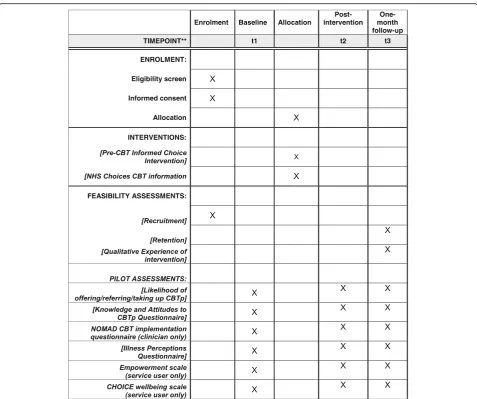
Trials) Figure and Checklist are provided in this paper see: Fig.1and Additional file1.
Setting
The setting will be secondary NHS community and in-patient services in two geographically distinct NHS Trusts: Sussex Partnership NHS Foundation Trust (rural and urban) and South London and Maudsley NHS Foundation Trust (urban inner city).
Participants
Participants will be 40 current psychosis patients and 40 clinicians working with people with psychosis, aged 16–65 years, who have expressed ambivalence towards uptake or implementation of CBTp.
Inclusion criteria are:
A current psychotic disorder diagnosis (F20-F29 ICD-10 diagnoses) as evidenced by clinical notes and/or discussion with lead mental health profes-sional (patients only);
Receiving treatment from secondary mental health services for psychosis or working as a clinician in a secondary mental health service that delivers treatments for psychosis;
Age 16–65 years;
Holding ambivalent views regarding CBTp, (defined as a score of≤7 on a 10-point Likert scale for likelihood of taking up CBTp (patients) or offering/referring for CBTp (clinicians).
Exclusion criteria:
Lack of capacity to give informed consent;
Insufficient grasp of the English language to enable questionnaire completion;
Cognitive impairment or learning disability which precludes engagement with the study materials.
Trial flowchart
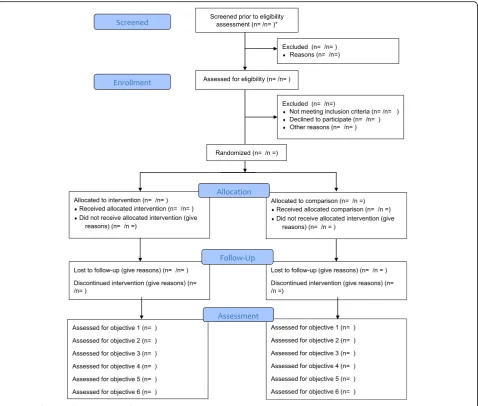
Figure2illustrates the trial flowchart.
Intervention development
The intervention was developed over three phases of user-centred design and research process. The purpose of these phases was: (1) to identify a rich set of issues af-fecting uptake and implementation through a qualitative study; (2) to identify the largest and most significant of these issues in two large quantitative questionnaire studies; and (3) to develop a broad set of intervention components and to select the most important of these through workshops and a Delphi consultation.
the nature of knowledge and attitudinal barriers to uptake and implementation of CBTp. The interviews were tran-scribed and analysed thematically; the content was used to develop the two knowledge and attitudes towards CBTp questionnaires (described below). In phase 2, these questionnaires were given to 206 clinicians and 206 pa-tients; the data were used to identify the most significant factors influencing uptake and implementation. In phase 3, a user-centred design approach, and workshops with pa-tients, clinicians and the research team, led by an industrial designer and Uscreates, a health design agency, developed and tested the design concepts, components and functions. The initial stories and content were informed by the rich qualitative data, questionnaire data and workshops. A Delphi consultation with clinicians, patients, CBT trainers and experts in digital therapy (n= 12) reached consensus on components of the final intervention.
Intervention
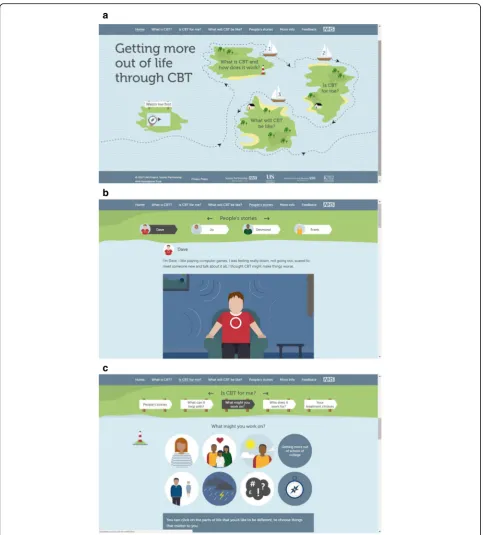
[image:5.595.59.537.85.484.2]compares to alternative treatments; what CBTp might be like, and advice on preparing to start CBTp. It also contains handouts and sections for family and friends, and for the whole clinical team, which aim to promote a cohesive and supportive social and clinical network for the implementation of CBTp. The animated stories are an especially important component. They incorporate key messages derived from the earlier stages of interven-tion development. They can be watched either as complete stories or in sections that illustrate the three main topics: What is CBTp? What will it be like? And Is CBTp for me?
The order of accessing the materials is fixed and partici-pants are encouraged to visit the different sections in order, following a journey represented by a sailing boat, through the intervention, with a route map and arrows that indicate the direction of travel. Although the partici-pant can select their own ‘goals’ within the intervention
and print these, no data are saved, thus avoiding patients’ concerns about personal data security. Although the intervention is designed for both patients and clinicians, patients felt strongly that they should have access to the same information as clinicians, while clinicians felt that the intervention should be geared towards the needs of patients; as such, only a single intervention platform was developed.
The intervention will be delivered during a manualised introductory session of up to 1-h duration, by a trained research assistant. Access to the intervention will be available for the subsequent month by computer or iPad, before follow-up. No specific instructions will be given for how or when participants should access the interven-tion, but overall usage data will be recorded. Images of the intervention are shown in Fig.3.
[image:6.595.60.539.87.493.2]clinician or a service user. The introduction explains: (1) how the intervention has been developed; (2) the prom-inent features of the intervention that are of relevance for each type of user (clinician or service user); and (3) the way in which each type of user might use the inter-vention in the subsequent month. Subsequent sections
of the manual describe which sections of the
intervention to visit, in which order, for how long, and which features and functions should be demonstrated and content emphasised in each section. Finally, the manual directs the research assistant to provide the user with an information sheet with the website address and space to record their experiences of use in the subse-quent month.
a
b
c
[image:7.595.57.541.85.621.2]Each research assistant who delivers the intervention will be provided with the manual and the intervention and will be required to practice delivery with and ask questions of a trained colleague to ensure confidence and competence before first use.
Comparator
The active comparator intervention is the CBT section of the NHS choices website. It controls for attention and intention and represents best-case routine care in relation to CBT decision-making. It contains written text in five sections: How CBT works; Uses for CBT; What happens during a session; Pros and Cons of CBT; and Finding a therapist. It also includes a short, written user story. It will be presented in an equivalent session of up to 1 h, with a printed summary sheet provided as a handout, alongside the link to the website for use in the subsequent month.
All routine care and interventions will be permitted throughout the duration of the study.
Assessments of outcome
Please refer to Fig.1(SPIRIT figure) for details of assess-ment at each visit. The sample sizes have been deter-mined by pragmatic means to establish the feasibility of study and intervention procedures.
Primary feasibility outcomes
The primary purpose is to assess the feasibility of the in-terventions in terms of acceptability, usability and accessi-bility, and to examine the feasibility of methods of a future trial including measures, recruitment procedures and trial processes. This will be done through monitoring using the study CONSORT diagram, through system analytics on use of the digital intervention during the one-month period, through the user feedback questionnaire collected at the end of one month, and through a qualitative inter-view with a sub-sample of those receiving the intervention (n= 6 per group) at the end of one month. The primary feasibility outcomes are:
1. Feasibility of eligibility criteria, recruitment and retention within the NHS (numbers referred, recruited, consented, randomised and retained in the trial) during the trial recruitment period of August 2017 to May 2018;
2. Feasibility of use, accessibility and acceptability of the intervention and the outcome measures in the NHS, measured using feedback questionnaire responses regarding use of the intervention; activity data on use of the intervention during the follow-up period (average number of pages visited per partici-pant), qualitative interviews with six patients and six clinicians (three each in Sussex and London) re-garding their experience of using the intervention,
the selection of outcome measures and participation in the trial; September 2017 to May 2018.
Efficacy evaluation outcomes
Participants will complete the following measures at (1) baseline, (2) immediately after introduction to the inter-vention, and (3) at one-month follow-up.
1. Likelihood of offering/referring or taking up CBT will be measured using a single Likert scale (0–10) for how likely the participant is, in general, to offer/ refer psychosis patients for CBT, if this were available, or how likely the participant is to take up CBTp if it were offered today, each rated from not at all (0) to extremely likely (10);
2. Knowledge and attitudes towards CBTp will be measured using mean factor score for two new questionnaires developed during earlier phases of the current study. The clinician questionnaire comprises 27 items, which form three factors (pro CBT content, supportive CBT culture, confidence in the value of CBT to patients), all with high internal consistency (α= 0.87, 0.82 and 0.71, respectively) and predictive validity for likelihood of referring/offering CBTp (robust estimate of
correlation = 0.45, 0.53 and 0.32, respectively). The patient questionnaire comprises 35 items, which form four factors (positive attitudes towards CBTp, personal barriers, doubt regarding efficacy and fear related to CBTp), each with good internal consistency (α= 0.94, 0.83, 0.76 and 0.82,
respectively) and predictive validity (robust estimate of correlation = 0.50, 0.46 and 0.54, respectively), except fear which was not a good predictor of uptake (robust estimate of correlation = 0.26). In each questionnaire, items are scored on a 7-point Likert scale from disagree strongly to agree strongly; 3. Illness perceptions will be measured using the mean
factor scores for the modified illness perceptions questionnaire [55] which has good internal consistency (α= 0.70) and forms three factors (cure/control, timeline, causes). The cure/control and timeline factors have good internal reliability and test–retest reliability (cure/controlα= 0.09/0.09 and timelineα= 0.7/0.06). Individual items are scored on a 5-point Likert scale from strongly agree to strongly disagree;
4. Attitudes and behaviours towards CBTp implementation will be measured using mean scores for five constructs of the NOMAD tool [56] adapted for CBTp implementation (clinicians only). The tool includes three items that assess
and 20 items that assess the four core constructs of coherence of CBTp with standard care, cognitive participation, collective action and reflexive monitoring, each rated on a 5-point Likert scale from strongly agree to strongly disagree;
5. Psychological wellbeing will be measured using the CHOICE short-form measure of psychological well-being (patients only). This scale has been produced by our research group and has good psychometric properties including internal consistency (α= 0.83), test–retest reliability (ICC = 0.73), convergent valid-ity (r= 0.52 with quality of life;−0.58 with mood) and sensitivity to change (t=−0.41) [57]. The short form used in the current study has been widely used including in the national IAPT-SMI pilot sites in the UK [30], and includes 11 items, and one per-sonal goal item, each rated on a 0–10 Likert scale from‘worst’to‘best’. The total mean score will be used;
6. Empowerment will be measured using the mean factor scores for the Rogers’Empowerment scale (patients only) [58] which has good internal consistency (α= 0.82) and factor structure with five factors: self-esteem (α= 0.82); perceived power (α= 0.59); optimism and control over the future (α= 0.45); community activism/autonomy (α= 0.59); and righteous anger (α= 0.64), with good convergent (hope/recovery r= 0.67, empowerment r= 0.45) and predictive validity (psychosis symptoms r=−0.39). The scale includes 28 items measured on a 4-point Likert scale from strongly agree to strongly disagree; 7. CBT-related activities in the preceding month will
be based on interview and case notes screen (at one-month follow-up).
The interview regarding CBT-related activities is part of a larger interview to explore attitudes to and use of the intervention during the follow-up period. The whole interview takes approximately 10 min.
Procedure
Clinician and patient participants will be identified through research staff presentations at team meetings, clinics, training events and following email and tele-phone contact with staff.
Clinician participants will be approached by a research assistant and patient participants by their lead clinician. All interested potential participants will be provided with the study information sheet and will have the op-portunity to discuss the study in a meeting or telephone conversation with a research assistant who is trained in taking informed consent and in Good Clinical Practice. Following informed consent, participants will complete the basic demographic information and baseline questionnaire
measures. They will then be randomised to either the intervention or comparison condition. The intervention or comparison condition will be provided according to a man-ualised protocol as part of a single session lasting up to 1 h, after which participants will also complete the same ques-tionnaires in the post-intervention assessment in the same session.
Participants in the intervention condition will be provided with access to the online intervention for the subsequent month. Where a patient participant does not have access to a computer, they will be provided with an iPad, locked to the intervention site, to enable access in the subsequent month. Usage data will be tracked through Google Analytics and will be stored safely and confidentially; data willonly be accessible to the re-searchers via a password. Usage data will be stored in an encoded format that prevents tampering. Comparison participants will be provided with the NHS choices web-site link and handout. This webweb-site is publicly available. After one month (−2/+ 8 weeks), each participant will complete the same questionnaires in a follow-up assess-ment, which will be conducted by a research assistant who is blind to randomisation arm, in person or by telephone. All participants in the intervention arm will also complete a brief feedback questionnaire on their use of the intervention.
A small subsample of six patients and six clinicians who receive the informed choice intervention materials will also undertake a brief semi-structured interview with a research assistant to explore their experience of using the intervention materials and to provide feedback to further refine the intervention.
Analysis plan
but only to describe what happened in the current trial. If the protocol does not change during data collection and, therefore, a subsequent trial would adhere to the current protocol, descriptive statistics will be reported; a Bayesian growth model will also be fit to the data, blind to study arm, treating change over time as a random effect within participants and randomisation arm as a time-invariant fixed effect. 95% highest probability density (HPD) intervals will be used to estimate plausible values of the key model parameters (notably the parameter quantifying the diffe-rence between the arms in the rate of change of the likeli-hood of taking up/referring to CBT). Bayesian growth model parameters are estimated using an iterative process (Markov chain Monte Carlo [MCMC]) and missing values are estimated as unknown parameters [59] in a process akin to multiple imputation [60]. To check the influence of priors of the model estimates, model fit with both infor-mative and uninforinfor-mative priors will be compared.
Data management and security
Data storage and confidentiality will be ensured, in line with the Data Protection Act 1998 and the NHS Code of Practice for Confidentiality. All personally identifiable data will be kept separately from anonymised research
data and all data will be stored in secure
password-protected files, available only to the study team, on Sussex Partnership NHS Foundation Trust pro-tected access shared drives and in locked filing cabinets. Study data will be identified using a participant identifica-tion number (ID). This ID will be linked to the participant’s name in a password protected link file. Audio-recording equipment will be used to record qualitative interviews re-garding the experiences of taking part in the intervention and the trial. These audio files, named with the unique participant identifier, will be stored as computer files on secure NHS servers in an anonymised and encrypted form.
The digital intervention will record how patients and clinicians use the intervention over the month that they have access, including which pages are accessed and how frequently. Only data about use of the package will be stored. No personal data will be stored. Usage data will be tracked through Google Analytics and stored safely and confidentially in an encoded and password-protected format that prevents tampering and that is only accessible to the researchers.
Data quality
Data quality will be ensured by close monitoring and routine auditing for accuracy. The main feasibility and pilot outcome data will be checked for every participant by comparing the paper record with that on the data-base, once all possible assessments for each time point have been completed. An error rate of no more than 5% is acceptable. If an error rate > 5% is found, advice will
be sought from the trial statistician regarding further data checking.
Study governance
Sussex Partnership NHS Foundation Trust is the spon-sor for this study. The trial has received a favourable ethical opinion from London-Dulwich research ethics
committee (reference 15/LO/0041; IRAS number
176709). The trial will be conducted in compliance with the principles of the Declaration of Helsinki [61], the Medical Research Council Guidelines for Good Clinical Practice [62] and in accordance with all applicable regu-latory requirements including the Research Governance Framework and the Mental Capacity Act 2005 [63]. The chief investigator will have overall responsibility for the trial dataset, supported by the trial oversight group. The sponsor and REC will be provided with direct access to source data and other documents if required for REC re-view and trial monitoring. The trial management group will meet approximately fortnightly to review trial con-duct and a trial oversight group and patient and public involvement group will meet approximately every 3–6 months to oversee study conduct, analysis and out-comes, including recruitment and data completion. The trial oversight group will comprise members of the study team who are not involved with the day to day running of the study. They will approve the protocol and amend-ments and in this feasibility study will undertake DMEC duties. The trial is registered at ISRCTN (reference 14678860), a primary clinical trial registry recognised by WHO and ICMJE. Individual participants will have the right to withdraw from the trial at any time. Any serious adverse events will be reported to the trial oversight group. The trial may be prematurely discontinued by the sponsor, chief investigator or on the basis of new safety information or for other reasons by the oversight group, regulatory authority or Ethics Committee. The trial may also be prematurely discontinued due to lack of recruit-ment. If the study is prematurely discontinued, active participants will be informed and no further participant data will be collected.
Public involvement
potential of the intervention to raise awareness and under-standing of CBTp and thus improve uptake, provide goals, offer hope for recovery and impact on important wellbeing outcomes, which were incorporated into the outcome measures. The PPI lead and a designated service-user researcher contributed to earlier phase data collection, qualitative analysis and questionnaire develop-ment. A study-specific advisory group co-facilitated with the PPI lead have advised on the intervention materials and interpretation of earlier phase outcomes. They will continue to meet approximately every three months to provide input to the study and steering group regarding recruitment, evaluation and dissemination of results.
Dissemination
Results will be presented from different perspectives (patient, clinician, trainer) and to a range of audiences, through patient and public, and academic peer-reviewed journals. All study co-applicants and research assistants will contribute to all study publications; all study publications will be submitted for review to the National Institute for Health Research before publication.
Discussion
This trial represents the initial feasibility RCT of the first pre-CBT informed choice intervention. The intervention has been designed following extensive qualitative and quantitative analysis and user-centred design research. It focusses on the needs, knowledge and attitudes of psych-osis patients and clinicians, and is a psycho-educational and decision-aid tool to facilitate high quality, informed and collaborative discussions and choices regarding the implementation and uptake of CBT for psychosis. The study will explore feasibility, accessibility, acceptability and utility of the intervention in routine clinical practice in the NHS to inform the design for a future RCT. The careful assessment of feasibility will help to ensure ef-fective future implementation within the NHS of the digital intervention [64].
We initially planned to develop two interventions: one for patients and one for clinicians, each addressing their unique needs, but during intervention development it be-came apparent that clinicians felt that the intervention should be focused on the needs of patients and patients felt equally that they should have access to the same informa-tion as clinicians. For these reasons, we developed a single intervention, but it will be important to understand the ex-tent to which this truly addresses the needs and barriers for clinicians offering CBTp alongside those of patients.
The qualitative and quantitative feasibility feedback will enable us to determine how and when in a patient’s journey, or a clinician’s interaction with their patients, the intervention would be most appropriate and most valuable. It will also enable us to understand where and
in what format the intervention might be most accept-able and accessible, bearing in mind both the strengths and limitations of an online intervention.
The inclusion of two sites each with a different ethos and organisational structure relating to CBTp will enable us to more readily generalise our learning to a range of NHS trusts and services.
Understanding and evaluating the ambivalence of cli-nicians and patients towards a NICE-recommended intervention requires sensitivity. An important outcome of the feasibility and pilot work will be to determine the best way to recruit to the study, capture ambivalence and evaluate outcomes in a study of this type. It may also provide some preliminary indication of the likely size of changes in knowledge, attitudes, intentions and behaviours towards CBTp.
The inclusion of measures of health perceptions and attitudes towards implementation will allow us to under-stand the factors that influence attitudes at baseline and will provide indicators of potential change mechanisms. Further indications of change mechanisms will be ob-tained from the qualitative feedback regarding which psychoeducation and behavioural change components were most used and most valued.
The final outcome from this study will be a robust protocol for a future RCT to test the effectiveness of the first digital‘informed choice’intervention to promote up-take and implementation of CBT for psychosis, as well as to explore purported mechanisms of action. The interven-tion has the potential to provide a valuable benchmark to enable high quality, collaborative discussions and offers of CBTp by clinicians, as well as empowering patients to make informed choices about uptake. If effective, this intervention or ‘therapeutic decision aid’ may pave the way for the development of additional decision aids to support informed choices about other psychological and non-pharmacological approaches, thus enabling these in-terventions to be better matched and targeted to patient needs and preferences.
Trial status
Recruitment of participants commenced in August 2017 and will be open until May 2018. The date of first enrol-ment is August 2017.
Additional file
Additional file 1:SPIRIT Checklist for the U&I Project. (DOC 121 kb)
Abbreviations
Revision; ICMJE: International Committee of Medical Journal Editors; IRAS: Integrated Research Application System; ISRCTN: International Standard Registered Clinical/soCial sTudy Number; NHS: National Health Service; NICE: National Institute for Health and Care Excellence; PPI: Patient and Public Involvement; RCT: Randomised controlled trial; REC: Research Ethics Committee; SPIRIT: Standard Protocol Items: Recommendations for Interventional Trials; WHO: World Health Organization
Acknowledgements
We would like to thank all patients and staff from the Sussex Partnership and South London and Maudsley NHS Foundation Trusts who took part in this study.
Funding
This project is funded by the Research for Patient Benefit programme, a National Institute for Health Research grant (ref. number PB-PG-0213-30125). The funding body has not influenced the design, conduct, analysis or dis-semination of this study. The views expressed in this publication are those of the author(s) and not necessarily those of the NHS, NIHR or the Department of Health.
Availability of data and materials
Not currently applicable. The datasets generated and/or analysed during the current study will be available from the corresponding author on reasonable request following the publication of results.
Trial sponsor
Sussex Partnership NHS Foundation Trust, Ms. Taffy Bakasa, R&D Department, Sussex Education Centre, Millview Hospital Site, Nevill Avenue, Hove. BN3 7HZ. [email protected]; Telephone: 0300 304 0088. The sponsor has not influenced the design, conduct, analysis or dissemination of this study.
Authors’contributions
KG is the CI of the study and accountable for all aspects of the work in ensuring that questions related to the accuracy or integrity of any part of the work are appropriately investigated and resolved. KG took responsibility for the main drafting of the manuscript and made substantial contributions to conception and design. AH, EP, KC, AF, RdV, DF and PG all made substantial contributions to conception and design of the project. AF is accountable for quantitative analysis and RdV is accountable for qualitative analysis. All authors have been involved in drafting the manuscript or revising it critically for important intellectual content. All authors read and approved the final manuscript.
Ethics approval and consent to participate
The feasibility-pilot RCT (U&I RCT) has been reviewed and given a favourable opinion by London-Dulwich Research Ethics RES NHS Committee (ref. no. 15/LO/0041/).
Consent for publication Not applicable.
Competing interests
All authors contributed to the development of the intervention. KG, EP, DF, AH, KC and PG have all published papers relating to CBT for psychosis, and KG, EP, DF and PG have all written CBTp therapy manuals, but there are no financial interests. No other authors have any competing financial or non-financial interests.
Publisher’s Note
Springer Nature remains neutral with regard to jurisdictional claims in published maps and institutional affiliations.
Author details
1R&D Department, Sussex Partnership NHS Foundation Trust, Sussex
Education Centre, Millview Hospital Site, Nevill Avenue, Hove BN3 7HZ, UK.
2
School of Psychology, University of Sussex, Pevensey Building, Falmer, Brighton, East Sussex BN1 9RP, UK.3Brighton and Sussex Medical School,
University of Sussex, Falmer, Brighton BN1 9RP, UK.4Department of
Psychology, Institute of Psychiatry, Psychology and Neuroscience, Kings
College London, De Crespigny Park, Denmark Hill, London SE5 8AF, UK.
5PICuP Clinic, South London and Maudsley NHS Foundation Trust, Maudsley
Hospital, Denmark Hill, London SE5 8NZ, UK.6South London and Maudsley
NHS Foundation Trust, Bethlem Royal Hospital, Monks Orchard Road, Beckenham, Kent BR3 3BX, UK.
Received: 27 April 2018 Accepted: 26 October 2018
References
1. Mangalore R, Knapp M. Cost of schizophrenia in England. J Ment Health Policy Econ. 2007;10:23–41.
2. National Institute for Health and Clinical Excellence. Core Interventions in the Management of Schizophrenia in Primary and Secondary Care. London: NICE; 2002.
3. National Institute for Health and Clincial Excellence. Schizophrenia: Core interventions in the treatment and management of schizophrenia in adults in primary and secondary care. London: NICE; 2009.
4. Lehman AF, Kreyenbuhl J, Buchanan RW, et al. The Schizophrenia Patient Outcomes Research Team (PORT): updated treatment recommendations. Schizophr Bull. 2004;30:193–217.
5. Wykes T, Steel C, Everitt B, Tarrier N. Cognitive behaviour therapy for schizophrenia:effect sizes, clinical models, and methodological rigor. Schizophr Bull. 2008;34:523–7.
6. Pfammatter M, Junghan UM, Brenner HD. Efficacy of psychological therapy in schizophrenia: conclusions from metaanalyses. Schizophr Bull. 2006; 32(suppl 1):S64–80.
7. Zimmermann G, Favrod J, Trieu VH, Pomini V. The effect of cognitive behavioral treatment on the positive symptoms of schizophrenia spectrum disorders: a metaanalysis. Schizophr Res. 2005;77:1–9.
8. Jones C, Cormac I, Silveira da Mota Neto JI, Campbell C. Cognitive behaviour therapy for schizophrenia. Cochrane Database Syst Rev. 2004;4: CD000524.
9. Pilling S, Bebbington P, Kuipers E, et al. Psychological treatments in schizophrenia: II. Meta-analyses of randomized controlled trials of social skills training and cognitive remediation. Psychol Med. 2002;32:783–91. 10. Tarrier N. Cognitive Behaviour Therapy for Schizophrenia–A Review of
Development, Evidence and Implementation. Psychother Psychosom. 2005; 74:136–44.
11. The All Party Parliamentary Group on Mental Health. Implementation of NICE Guideline on Schizophrenia. London: Department of Health; 2010. 12. Lambert M, Meigel-Schleiff C, Bock T, Naber D, Ohm G. Integrated
healthcare of patients with psychosis: the Hamburg Model] In: Amelung VE, Bergmann F, Hauth I, Jaleel E, Roth-Sackenheim C, Falkai P, et al., editors. Innovative Konzepte im Versorgungsmanagement von ZNS-Patienten. Berlin: XX: Medizinisch Wissenschaftliche Verlagsgesellschaft; 2010. p. 113–137. 13. Freeman D, Dunn G, Garety P, Weinman J, Kuipers E, Fowler D, et al.
Patients’beliefs about the causes, persistence and control of psychotic experiences predict take-up of effective cognitive behaviour therapy for psychosis. Psychol Med. 2013;43:269–77.
14. Berry K, Haddock G. The implementation of the NICE guidelines for schizophrenia: Barriers to the implementation of psychological interventions and recommendations for the future. Psychol Psychother Theory Res Pract. 2008;81:419–36.
15. Lomas J. Diffusion, dissemination, and implementation: Who should do what? Ann N Y Acad Sci. 1993;703:226–37.
16. Cucciare M, Weingardt K, Villafranca S. Using blended learning to implement evidence based psychotherapies. Clin Psychol. 2008;15:299–307. 17. Burke LA, Huchins HA. TrainingTransfer: An integrative literature review.
Hum Resour Dev Rev. 2007;6:263–96.
18. Greenhalgh T, Robert G, Macfarlane F, Bate P, Kyriakidou O. Diffusion of innovations in service organizations: Systematic review and
recommendations. Milbank Q. 2004;82:581–629.
19. Powell BJ, McMillen C, Proctor EK, Carpenter CR, Griffey RT, Bunger AC, et al. A compilation of strategies for implementing clinical innovations in health and mental health. Med Care Res Rev. 2012;69(2):123–57.
21. Waller H, Jolley S, Garety P, et al. Low intensity CBT for Psychosis: A pilot study. J Behav Ther Exp Psychiatry. 2013;44(1):98–104.
22. Rogers EM. Diffusion of Innovations. New York: Free Press; 1995. 23. Fleming M, Martin C, Miles J, Atkinson J. The utility of the Illness Perception
Questionnaire in the evaluation of mental health practitioners’perspectives on patients with schizophrenia. J Eval Clin Pract. 2009;15(5):826–31. 24. Ajzen I. The theory of planned behaviour. Organ Behav Hum Decis Process.
1991;50:179–211.
25. May CR, Mair F, Finch T, MacFarlane A, Dowrick C, Treweek S, et al. Development of a theory of implementation and integration: Normalization Process Theory. Implement Sci. 2009;4:29.
26. Corrigan PW, Steiner L, McCracken SG, Blaser B, Barr M. Strategies for disseminating evidence-based practices to staff who treat people with serious mental illness. Psychiatr Serv. 2001;52(12):1598–606.
27. Jones M. Cognitive-behavioural therapy for psychosis: Implications for the way that psychosis is managed within community mental health teams. J Ment Health. 2002;11(6):595–603.
28. Spidel A, Lecomte T, Leclerc C. Community implementation successes and challenges of a cognitive behaviour therapy group for individuals with a first episode of psychosis. J Contemp Psychother. 2006;36(1):51–8. 29. Fowler D, Garety P, Kuipers E. Cognitive therapy for psychosis: Formulation,
treatment, effects and service implications. J Ment Health. 1998;7(2):123–33. 30. Jolley S, Garety P, Peters E, Fornells-Ambrojo M, Onwumere J, Harris V, et al.
Opportunities and challenges in Improving Access to Psychological Therapies for people with Severe Mental Illness (IAPT-SMI): Evaluating the first operational year of the South London and Maudsley (SLaM) demonstration site for psychosis. Behav Res Ther. 2015;64:24–30. 31. Garety P, Ward T, Freeman D, Fowler D, Emsley R, Dunn G, et al. SlowMo, a
digital therapy targeting reasoning in paranoia, versus treatment as usual in the treatment of people who fear harm from others: study protocol for a randomised controlled trial. Trials. 2017;18(1):510.
32. Freeman D, Dunn G, Startup H, Pugh K, Cordwell J, Mander H, et al. Effects of cognitive behaviour therapy for worry on persecutory delusions in patients with psychosis (WIT): a parallel, single-blind, randomised controlled trial with a mediation analysis. Lancet Psychiat. 2015;2(4):305–13. 33. Hazell CM, Hayward M, Cavanagh K, Jones AM, Strauss C. Guided self-help
cognitive-behaviour Intervention for VoicEs (GiVE): Results from a pilot randomised controlled trial in a transdiagnostic sample. Schizophr Res. 2018;195:441–7.
34. Heibach E, Brabban A, Lincoln T. How much priority do clinicians give to Cognitive Behavioral Therapy in the treatment of psychosis and why? Clin Psychol. 2014;21(3):301–12.
35. Kimhy D, Tarrier N, Essock S, Malaspina D, Cabannis D, Beck A. Cognitive behavioral therapy for psychosis–training practices and dissemination in the United States. Psychosis. 2013;5(3).https://doi.org/10.1080/17522439.2012. 704932.
36. Williams K, Steer H. Illness perceptions: are beliefs about mental health problems associated with self-perceptions of engagement in people with psychosis? Behav Cogn Psychother. 2011;39(2):151–6.
37. Theodore K, Johnson S, Chalmers-Brown A, Doherty R, Harrop C, Ellett L. Quality of life and illness beliefs in individuals with early psychosis. Social Psychiatry Psychiatr Epidemiol. 2012;47(4):545–51.
38. Lobban F, Barrowclough C, Jones S. The impact of beliefs about mental health problems and coping on outcome in schizophrenia. Psychol Med. 2004;34:1165–76.
39. Leventhal H, Diefenbach M, Leventhal EA. Illness cognition: using common sense to understand treatment adherence and affect cognition interactions. Cogn Ther Res. 1992;16:143–63.
40. Morrison AP, Hutton P, Shiers D, Turkington D. Antipsychotics: is it time to introduce patient choice? Br J Psychiatry. 2012;201:83–4.
41. Kilbride M, Byrne R, Price J, Wood L, Barratt S, Welford M, et al. Exploring service users’perceptions of cognitive behavioural therapy for psychosis: a user led study. Behav Cogn Psychother. 2013;41:89–102.
42. Waller H, Garety PA, Jolley S, Fornells-Ambrojo M, Kuipers E, Onwumere J, et al. Training frontline mental health staff to deliver‘low intensity’
psychological therapy for psychosis: a qualitative analysis of therapist and service user views on the therapy and its future implementation. Behav Cogn Psychother. 2015;43(3):298–313.
43. Cameron LD, Petrie KJ, Ellis CJ, Buick D, Weinman JA. Trait negative affectivity and responses to a health education intervention for myocardia infarction patients. Psychol Health. 2005;20(1):1–18.
44. Horne R, Weinman J. Self regulation and self-management in asthma: exploring the role of illness perceptions and treatment beliefs in explaining nonadherence to preventer medication. Psychol Health. 2002;17:17–33. 45. McAndrew LM, Musumeci-Szabo TJ, Mora PA, Vileikyte L, Burns E, Halm EA,
et al. Using the common sense model to design interventions for the prevention and management of chronic illness threats: from description to process. Br J Health Psychol. 2008;13:195–204.
46. Petrie KJ, Cameron LD, Ellis CJ, Buick D, Weinman J. Changing illness perceptions after myocardial infarction: an early intervention randomized controlled trial. Psychosom Med. 2002;64:580–6.
47. Lewis C, Pearce J, Bisson J. Efficacy, cost-effectiveness and acceptability of self-help interventions for anxiety disorders: systematic review. Br J Psychiatry. 2012;200:15–21.
48. Andrews G, Cuijpers P, Craske MG, McEvoy P, Titov N. Computer therapy for the anxiety and depressive disorders is effective, acceptable and practical health care: a meta-analysis. PLoS One. 2010;5(10):e13196.
49. Marks IM, Cavanagh K, Gega L. Hands-on help: computer-aided psychotherapy. Hove: Psychology Press; 2007.
50. Newman G, Szkodny L, Liera S, Przeworski A. A review of technology assisted self-help and minimal contact therapies for anxiety and depression: is human contact necessary for therapeutic efficacy? Clin Psychol Rev. 2011; 31:89–103.
51. Cucciare MA, Weingardt KR. Integrating information technology into the delivery of evidence-based psychotherapies. Clin Psychol. 2008;15(4):299–307. 52. Institute of Medicine. Crossing the quality chasm: A new health system for
the 21st century. Washington: National Academies Press; 2001. 53. Webb TL, Joseph J, Yardley L, Michie S. Using the internet to promote
health behavior change: a systematic review and meta-analysis of the impact of theoretical basis, use of behavior change techniques, and mode of delivery on efficacy. J Med Internet Res. 2010;12(1):e4.
54. Eldridge SM, Chan CL, Campbell MJ, Bond CM, Hopewell S, Thabane L, on behalf of the PAFS consensus group, et al. CONSORT 2010 statement: extension to randomised pilot and feasibility trials. BMJ. 2016;355:i5239.
https://doi.org/10.1136/bmj.i5239.
55. Marcus E, Garety P, Weinman J, Emsley R, Dunn G, Bebbington P, et al. A pilot validation of a modified Illness Perceptions Questionnaire designed to predict response to cognitive therapy for psychosis. J Behav Ther Exp Psychiatry. 2014;45(4):459–66.
56. Finch TL, Girling M, May CR, Mair FS, Murray E, Treweek S, et al. NoMAD: Implementation measure based on Normalization Process Theory. [Measurement instrument]. 2015.http://www.normalizationprocess.org. 57. Greenwood KE, Sweeney A, Williams S, Garety P, Kuipers E, Scott J, et al.
CHoice of Outcome In Cbt for psychoses (CHOICE): The development of a new service user-led outcome measure of CBT for psychosis. Schizophr Bull. 2010;36(1):126–35.
58. Rogers ES, Ralph RO, Salzer MS. Validating the empowerment scale with a multisite sample of consumers of mental health services. Psychiatr Serv. 2010;61(9):933–6.
59. Gelman A, Carlin JA, Stern HS, Dunson DB, Vehtari A, Rubin DB. Bayesian Data Analysis. 3rd ed. Boca Raton: Chapman & Hall; 2013.
60. Merkle EC. A comparison of imputation methods for Bayesian factor analysis models. J Educ Behav Stat. 2011;36:257–76https://doi.org/10.3102/ 1076998610375833.
61. World Medical Association. Declaration of Helsinki ethical principles for medical research involving human subjects. JAMA. 2013;310(20):2191–4. 62. Medical Research Council Guidelines for Good Clinical Practice.https://
www.ich.org/products/guidelines/efficacy/article/efficacy-guidelines.html. 63. Department of Health. Mental Capacity Act. 2005.