The London School of Economics and
Political Science
Understanding Flexible Work and Well-being:
Analysis of a Critical Case
Almudena Cañibano
3
Declaration
I certify that the thesis I have presented for examination for the M.Phil./Ph.D. degree of the London School of Economics and Political Science is solely my own work other than where I have clearly indicated that it is the work of others (in which case the extent of any work carried out jointly by me and any other person is clearly identified in it).
The copyright of this thesis rests with the author. Quotation from it is permitted, provid-ed that full acknowlprovid-edgement is made. This thesis may not be reproducprovid-ed without my prior written consent.
I warrant that this authorisation does not, to the best of my belief, infringe the rights of any third party.
5
Abstract
This thesis examines the concept of flexibility as a characteristic of the employment relationship. It aims to provide a better understanding of the employees’ experience of flexible work and to theorise its connection with well-being. To that end, a large con-sulting firm was explored as a critical case for theory development, using a mixed-methods approach.
Flexible working is an increasingly implemented practice within firms, yet there is little consensus over its possible outcomes, particularly with regards to employee well-being. This ambivalence is problematic to understand the mechanisms underlying flexible work and its consequences. I propose that equivocal consequences stem partly from the polarisation in the definition of flexibility itself. Flexibility is usually studied either as an employer-oriented or an employee-oriented practice. This thesis disagrees with this dichotomy and contributes to the literature by looking at flexibility as a major aspect of the employment relationship. As such, flexibility is neither an employer nor an employ-ee-oriented practice exclusively, but a constructed exchange between the two parties.
This thesis contends that flexibility is perceived as a combination of contributions and inducements that are separate, but interrelated dimensions. Such perceptions are shaped by employees’ experiences and evolve over time. Understanding flexibility as a dual, controversial, constructed, and evolutionary process, allows for an insightful exploration of its relationship with well-being.
7
Acknowledgements
Writing a doctoral thesis involves enormous effort that is not borne solely by the re-searcher. In my case, family members, friends, and colleagues shared the burden of my journey. I am truly grateful to all the people who have walked me through the arduous roads of becoming an academic. May these words be a token of my appreciation and affection for them.
I would first like to express my immense gratitude to my husband, Daniel. One may say I have this PhD to thank for having met him, but I am sure I would have never complet-ed this research without him. His critical spirit and insightful suggestions have been essential intellectual incentives. His kindness and unconditional support have been my joy and strength. In our praised Joaquin Sabina’s words: “Mi amor, mi cómplice y mi todo / En la calle codo a codo / Somos mucho más que dos / Hoy por mi, mañana por ti”.
My journey at the LSE would not have been possible without the support and encour-agement of my supervisor, David Marsden. With his guidance, I developed a better un-derstanding of the field of employment relations. His insightful comments pushed me to articulate my arguments as best as I could. I am particularly thankful for his trust in my abilities and his confidence that I would complete this thesis, despite the bumps on the road.
I would like to express my appreciation to Alexandra Beauregard for her constructive criticism. She offered thoughtful and detailed feedback for advancing this research. My thanks also go to Daniel Beunza for his support as the director of the PhD programme and all staff members and fellow PhD students who participated at our weekly seminars during my years at the LSE. I am particularly grateful to Stephen Champion and Nuno Oliveira. Our discussions, laughs, and friendship kept me sane.
My colleagues at ESCP Europe have been highly supportive in the last stages of this PhD. Particular thanks go to Maria Cristina Destefano for her valuable comments to further the analysis of my survey data, and to my fellow academic directors who are a fantastic team to work with for their professional competence and cheerful disposition.
8
My special thanks are extended to the staff of the organisation where this study was conducted, particularly to Mr JPM and Mrs TA who granted me access, and to all the employees who agreed to be interviewed and answered my survey. Their time and dedi-cation was of vital importance to the success of this research.
I also want to express my appreciation to my friends in London and Madrid: Celia, Clara, Dolo, Elina, Gerardo, Isa, Janine, Julia, July, Lucía, Marcela, Paloma, Patricia, Ramon, Raquel, Robert, Sarah, Silvia, Sonia, Tesa… have all shared my journey with love and patience. My parents in law, Nicole and Federico, have also gone beyond themselves to be supportive. The assistance provided by Paula, both for the final for-matting of this thesis and the caring of my daughter are highly appreciated.
I have to acknowledge that belonging to a loving family of academics has smoothened the path towards the completion of this PhD. Without a doubt, I owe them the greatest gratitude. My sister, Carol is the person I turn to for advice. She helped me see the light at the end of the tunnel. Her loving understanding and patience gave me hope when my own was running thin. Her insistence on having an action-plan took me to the finish line. I would like to offer my special thanks to Richard for his illuminating discussions and exchanges. Our talks helped me navigate the intricacies of qualitative research and pushed me to consider the wider context of my work. His time and dedication have meant a lot to me.
My father has always been an example of hard work, dedication and perseverance. His support and infinite generosity have been essential to my personal and professional growth in general and to the completion of this thesis in particular. My mother is my most faithful supporter. Over the years she has been a stimulating coauthor, a demand-ing reviewer, the most efficient personal assistant, a baby-sitter, a shoulder to cry on, a coach, and most importantly my loving mom. Even through the worst of illness she found the strength to encourage and help me. This thesis is dedicated to her.
9
Table of Contents
Chapter 1. Introduction ... 13
1.0. Objective and overview ... 14
1.1. Introduction ... 14
1.2. Flexibility: a conceptual amalgam ... 17
1.3. “Frames of reference” to understand flexibility ... 21
1.3.1. Unitarist ... 21
1.3.2. Radical ... 23
1.3.3. Pluralist ... 25
1.3.4. Pluralism as an alternative approach to flexibility ... 27
1.4. Well-being ... 30
1.5. Goals and structure of the thesis ... 33
1.6. Rationale behind the research design ... 37
1.7. Research setting ... 40
1.7.1 Management consulting ... 40
1.7.2 The case: “Minerva” consulting ... 43
1.8. Overview of data collection procedures and timings ... 45
1.8.1. Phase 1 ... 46
1.8.2. Phase 2 ... 47
1.8.3. Phase 3 ... 47
1.8.4. An overall picture of the research design ... 48
1.9. Summary and Conclusion ... 51
Chapter 2. Understanding flexibility as an evolving phenomenon: The importance of employee experience ... 53
2.0. Objective and overview ... 54
2.1. Bipolar perspectives on flexibility ... 55
2.2. Theoretical frame ... 59
2.2.1. An economic-administrative perspective ... 59
2.2.2. Psychological contracts ... 62
2.3. Methods ... 64
2.4. Analysis ... 69
2.4.1. Understanding flexibility ... 70
2.4.2 Flexibility as exchange ... 76
2.4.3 Balancing mechanisms ... 78
2.4.3.1. Variance ... 78
2.4.2.2. Fulfilled expectations ... 82
2.4.2.3. Perceived balance and context ... 84
2.5. Discussion ... 86
2.6. Summary and conclusion ... 89
Chapter 3. Exploring employee perceptions of flexibility and well-being: a quantitative approach ... 92
3.0. Objective and overview ... 93
3.1. HRM and well-being: contrasting theoretical perspectives ... 95
3.2. Perceived flexibility and well-being ... 98
3.2.1. Concepts and theory ... 98
3.2.2. Hypotheses ... 101
3.2.2.1 Main effects ... 102
3.2.2.2 Combined effect ... 104
3.3. Method ... 106
3.3.1. Participants ... 106
10
3.4. Results ... 111
3.5. Discussion ... 119
3.6. Summary and conclusion ... 123
Chapter 4. Flexibility and well-being as interconnected processes: evolution and negotiation ... 126
4.0. Objective and overview ... 127
4.1. Literature review ... 128
4.1.1. Well-being at work: a static misconception ... 129
4.1.1.1. Job-demands-control model ... 129
4.1.1.2. Effort-reward imbalance ... 130
4.1.2. A different approach: well-being as a process ... 131
4.1.3. Flexibility and well-being in motion ... 134
4.2. Theoretical framework: Changing and evolving contracts ... 135
4.2.1. Adaptation ... 136
4.2.2. Transformation ... 138
4.3. Methods ... 140
4.4. Analysis ... 145
4.4.1. Adaptation: a slow decay in well-being ... 145
4.4.2. Transformation: when well-being triggers renegotiation ... 149
4.4.3. Well-being and flexibility as entangled processes ... 157
4.5. Discussion ... 162
4.6. Summary and conclusion ... 169
Chapter 5. Conclusion ... 172
5.0. Objective and overview ... 173
5.1. Theoretical contributions ... 174
5.1.1. A new understanding of flexibility ... 174
5.1.2 A theory of flexibility and well-being ... 177
5.1.2.1. A variance theory of flexibility and well-being ... 178
5.1.2.2. A process theory of flexibility and well-being ... 180
5.2. Applicability to other contexts ... 183
5.3. Practical implications ... 186
5.4. Limitations ... 189
5.5. Further work ... 190
5.6. Summary and conclusion ... 193
References ... 196
Appendix A. Interview Guide ... 224
Appendix B. Interviewee Form ... 226
Appendix C. Survey ... 227
Appendix D. Preliminary data analyses (Chapter 3) ... 239
Appendix E. Non significant interaction analyses (Chapter 3) ... 246
11
List of Figures
Figure 1.1 Overview of theoretical development per chapter ... 36
Figure 1.2. Multi-phase MMR design and data collection and analysis timeline ... 50
Figure 2.1. Integrative diagram on the meaning of flexible working for Minerva employees ... 72
Figure 2.2. Flexibility a combination of perceived inducements and contributions ... 76
Figure 2.3. Overall perceived flexibility as a compendium of varying experiences ... 80
Figure 2.4. Archetype of consistent flexibility experiences ... 81
Figure 2.5. Archetype of extreme flexibility experiences ... 81
Figure 2.6. Archetype of spread flexibility experiences ... 82
Figure 2.7. Archetype of fulfilled expectations of flexibility experiences ... 84
Figure 2.8. Three approaches to flexibility ... 87
Figure 3.1. Perceived flexibility categories and mean well-being. ... 112
Figure 3.2. Interaction between FC and HFI in predicting well-being. ... 115
Figure 4.1: Flexibility process for employee X ... 146
Figure 4.2: Idiosyncratic zones of acceptance. Employee A: The large example. ... 151
Figure 4.3: Idiosyncratic zones of acceptance. Employee B: The narrow example. .... 151
Figure 4.4: Employee X’s flexibility transformation (steady perception of flexibility as a contribution). ... 156
Figure 4.5: Employee Y’s flexibility transformation (with reduced perception of flexibility as a contribution). ... 156
Figure 4.6: Employee Z’s evolving flexibility ... 158
Figure 4.7: Employee Z’s evolving well-being: entangled flexibility and well-being processes over time ... 160
Figure 4.8: Well-being evolution over time for different employees ... 162
Figure 5.1. The relationship between flexibility and well-being. ... 178
Figure 5.2. The perceived flexibility framework. ... 179
Figure 5.3. Explaining flexibility and well-being with a process model. ... 181
12
List of Tables
Table 1.1. Research questions, design and data collection phase per chapter ... 49
Table 2.1. Characteristics of participants ... 66
Table 2.2. Flexibility as a contribution: open codes and quote samples ... 73
Table 2.3. Flexibility as an inducement: open codes and quote samples ... 74
Table 3.1. Demographic characteristics of the sample per work group. ... 107
Table 3.2. Flexibility as a contribution: open codes and quote samples ... 108
Table 3.3. Items developed for the FC scale for each of the open codes ... 109
Table 3.4. Items used to measure perceived flexibility as a contribution. ... 109
Table 3.5. Items used to measure perceived flexibility as an inducement. ... 110
Table 3.6. Items used to measure well-being. ... 110
Table 3.7. Correlations, means and standard deviations. ... 116
Table 3.8. Results of hierarchical regression analysis (Dependent variable = well-being; interaction variable = FC x FI). ... 117
Table 3.9. Results of hierarchical regression analysis (Dependent variable = well-being; interaction variable = FC x HFI). ... 118
Table 4.1: Characteristics of participants ... 141
Table 4.2: Initial coding template ... 142
Table 4.3: Final coding template ... 144
Table D.1. Principal Component Analysis with Varimax Rotation (Preliminary analysis with 20 items). ... 239
Table D.2. Principal Component Analysis with Varimax Rotation and reliability of scales (Final analysis with 18 items). ... 240
Table D.3. Summary item statistics for observed correlations. ... 241
Table D.4. Intraclass correlation coefficient. ... 241
Table D.5. Item-total scale statistics. ... 242
Table D.6. Summary item statistics for observed correlations. ... 242
Table D.7. Intraclass correlation coefficient. ... 243
Table D.8. Item-total scale statistics. ... 243
Table D.9. Summary item statistics for observed correlations. ... 243
Table D.10. Intraclass correlation coefficient. ... 244
Table D.11. Item-total scale statistics. ... 244
Table D.12. Means and standard deviations of items in the flexibility as a contribution scale ... 244
Table D.13. Means and standard deviations of items in the flexibility as an inducement scale ... 244
Table D.14. Means and standard deviations of items in the well-being scale ... 245
Table E.1. Results of hierarchical regression analysis (Dependent variable = well-being; interaction variable = FC x LFI). ... 247
Table E.2. Results of hierarchical regression analysis (Dependent variable = well-being; interaction variable = FC x MLFI). ... 248
Table E.3. Results of hierarchical regression analysis (Dependent variable = well-being; interaction variable = FC x MHFI). ... 249
Table F.1. Descriptives. ... 250
Table F.2. Test of homogeneity of variance ... 250
Table F.3. ANOVA ... 250
Table F.4. Homogeneous well-being subsets. ... 251
13
Chapter 1. Introduction
1.0. Objective and overview ... 14
1.1. Introduction ... 14
1.2. Flexibility: a conceptual amalgam ... 17
1.3. “Frames of reference” to understand flexibility ... 21
1.3.1. Unitarist ... 21
1.3.2. Radical ... 23
1.3.3. Pluralist ... 25
1.3.4. Pluralism as an alternative approach to flexibility ... 27
1.4. Well-being ... 30
1.5. Goals and structure of the thesis ... 33
1.6. Rationale behind the research design ... 37
1.7. Research setting ... 40
1.7.1 Management consulting ... 40
1.7.2 The case: “Minerva” consulting ... 43
1.8. Overview of data collection procedures and timings ... 45
1.8.1. Phase 1 ... 46
1.8.2. Phase 2 ... 47
1.8.3. Phase 3 ... 47
1.8.4. An overall picture of the research design ... 48
14
1.0. Objective and overview
The overall objective of this thesis is to explore the concept of flexible working—as an HR practice and a characteristic of the employment relationship—and its relationship with employee perceived well-being. It extends current theory by observing flexibility as a controversial, constructed process in constant evolution. It provides a better under-standing of the employees’ experience of flexible working and develops theory on its connection with well-being.
The broad purpose of this chapter is to introduce the research and place it in its context. It presents the research questions of this thesis and explains the research process under-taken to answer them. To start, this introductory chapter examines the meaning of the terms ‘flexibility’ and ‘well-being’ to present this thesis’ approach to them, and locates the research within the literature interested in human resource management and em-ployment relations. Then, the rationale that underpins the research design and its appro-priateness to answer the research questions are discussed. The final part of the chapter presents the research setting and provides a general overview of how the study was con-structed and conducted in terms of data collection procedures and analytical methods.
1.1. Introduction
15
Some scholars and practitioners argue that “healthy organisations” are those in which, “along with profits and productivity, the collective well-being of employees is an im-portant outcome” (Macik-Frey et al., 2007; 827). Awareness of the interrelationship between well-being and working life is not new (Karasek, 1979; Marmot et al., 2006). There is enough epidemiological and public health literature to state that organisational practices have relevant effects on human health and perceived well-being (Akerlind et al., 2007). However, management research in general, and human resource management studies in particular, have mainly focused on studying the impact of managerial practic-es on performance, while largely disregarding their effects on employee outcompractic-es such as health and well-being (Godard and Delaney, 2000; Pfeffer, 2010).
The field of Occupational Health studies whether work and workplaces contribute to health and promote the achievement of general wellbeing (Greasley and Edwards, 2015; Leka et al., 2004). This field of study has attracted the attention of all kinds of national and international institutions, such as the World Health Organisation (Burton, 2010), the OECD (Clark, 2009), the European Union (European Commission, 2010), and many national governments such as the UK (van Stolk et al., 2014), France (Ministère du Travail de la Solidarité et de la Fonction Publique, 2010) or Spain (Instituto Nacional de Seguridad, Salud e Higiene en el Trabajo, 2015) which are promoting and funding re-search projects. The issue of poor work well-being is not negligible: despite economic progress, the decline in the number of back-breaking physical jobs and the legal achievements in terms of working conditions, employee perceived well-being has been found to have decreased since the 1970’s (Green, 2006) while occupational injuries and illnesses have been found to have increased (Askenazy, 2001).
16
Flexible working is an increasingly popular topic whose advantages are advocated by many societal actors such as international organisations like the OECD (Eriksson, 2012) or the EU (Plantenga and Remery, 2010); governments such as the Spanish or the Brit-ish (Kersley et al., 2006; Ministerio de Empleo y Seguridad Social, 2013); professional organisations (CIPD, 2015); and employees (Acas, 2015; Sivatte and Guadamillas, 2013). Factors such as globalisation, the need for global competitiveness, uncertainty, the current economic crisis, the increasing relevance of the service sector or a changing and more demanding workforce, are often cited to justify a need for greater flexibility in the workplace (Zeytinoglu et al. 2009). However, in spite of previous research efforts, there is still no consensus on the outcomes of flexibility. After a systematic literature review, de Menezes and Kelliher (2011) conclude that evidence fails to support a busi-ness case for flexible work arrangements. At firm level, previous studies report both positive (Bhattacharya et al., 2005) and negative (van der Meer et al., 2009) relation-ships between flexibility and performance. Similar divergent results can be observed at the individual level. Some highlight the positive effects of flexible work arrangements on employees assuming that such arrangements allow employees to match working and personal life responsibilities (Hill et al., 2008b); but this assumption has been chal-lenged (Fleetwood, 2007). Other studies are unable to find any clear links between flex-ibility and employee outcomes (Hayman, 2009), and a few connect it to negative out-comes such as higher work intensity (Bourne and Forman, 2014; Kelliher and Ander-son, 2010). These convoluted outcomes and its widespread interest make flexible work particularly appealing for research.
17
Discussions on flexibility cover a wide range of topics and criticising the concept for being slippery and vague is not new (Pollert, 1991). Following Wood (1988; 135), “we need to be very clear about which types of flexibility we are talking about and not as-sume that they all move simultaneously together in the same direction”. The following section delves into a review of the term ‘flexibility’ and presents the approach adopted in this thesis.
1.2. Flexibility: a conceptual amalgam
In the human resource management (HRM) and employment relations (ER) literatures, the term ‘flexibility’ refers to the conditions under which labour is hired, deployed and rewarded, but it has been categorised and nuanced in many different ways. As a result, the variety of themes covered under the word ‘flexibility’ is substantial and confusing.
Despite—maybe even because of—the large amount of research conducted on this top-ic, flexibility is quite convoluted. It has been utilised as an umbrella-term including a broad range of practices, work arrangements, and workforce organisation systems (Kel-liher and Anderson, 2008). Extremely contrasting definitions can be easily found. For instance, for Gittleman et al. (1998; 10) flexible work practices represent “a movement away from a traditional, hierarchical structure in which employees have rigid, narrowly defined roles”. Wright and Snell (1998) define it as the firm’s ability to quickly recon-figure resources and activities to respond to environmental pressures. For Dastmalchian and Blyton (2001) flexibility is a set of practices that allow organisations to adapt to changes, with only minor regard to workers. Following MacDuffie (1995), flexible sys-tems create the conditions under which high performance work practices are most likely to yield effective performance. Hill et al. (2008a) describe flexibility as an employee empowering practice that allows individuals to make work arrangement choices. Over-all, despite its widespread usage, flexibility is still an imprecise, confusing term. The lack of consistency in the conceptualisation of the term generates great difficulties when it comes to analysing its outcomes for employees and organisations.
18
organisational competitiveness is achieved through low job security and putting pres-sure on employees. Others assume employers and employees can equally benefit from flexibility and see it as an organisational must to increase performance and innovation (Martinez-Sanchez et al., 2009). For the growing literature on work-life balance, flexi-bility is contemplated as a ladder towards reduced work-family conflict and employee autonomy (Hill et al., 2008a).
Two explanations to this definitional conundrum can be raised: (1) the confusion be-tween labour market and organisational flexibility, (2) the different meanings that flexi-bility has for different actors.
With regards to the first explanation, macro level studies focus on labour market flexi-bility which denotes the extent and speed with which labour markets adapt to economic, social, and productive changes and variations (Standing, 1999). It is argued that, to en-sure such flexibility, the regulation of business practices—particularly employment pro-tection legislation—should be minimal (OECD, 2013). The lack of labour market flexi-bility was believed to be a cause of high unemployment and slow employment growth in Europe during the 1970’s and the 1980’s (Walsh, 1991). Similar arguments are put forward nowadays to explain the high number of European citizens out of work and to encourage policy changes (European Commission, 2012). Over the last 10 years, many OECD countries, including Spain (Corral, 2015), have systematically reduced the strict-ness of employment protection legislation to guarantee that organisations are able to react more flexibly to economic fluctuations (OECD, 2013).
19
scope should come to replace economies of scale. This meant that to reduce the total cost of production it would no longer be necessary to produce as many equal items as possible, but to increase the number of different goods produced.
As a result, the Taylorist-Fordist premise that employee management issues can be tack-led by substituting labour for machinery and high levels of employee control with low discretion specialist jobs, became outdated. In the flexible specialisation context the ability of the firm to build a pool of multi-skilled flexible workers, able to work on dif-ferent activities and products, is essential to accommodate “ceaseless change” (Piore and Sabel, 1984; 17). The concept of flexibility is therefore associated to “labour pro-cess restructuring, to increased versatility in design and greater adaptability of new technology in production” (Smith, 1989; 203). Although one may argue that a flexible labour market may be necessary for firms to implement flexible production, these are really two very different aspects of flexibility and should not be mixed up. Decisions on the former are taken by governments and supranational organisations; decisions on the latter are taken by firms. This thesis is interested in developing theory on the way flexi-ble work arrangements are constructed in organisations and how such construction is connected to the experiences of employees and their well-being. Therefore it only con-siders flexibility from an organisational perspective, rather than a labour market one.
A second explanation to the flexibility conceptual amalgam lies in the different mean-ings that the term has for different constituencies. Governments, international organisa-tions, employers, unions, and employees may attach very different connotations to the same term (Zeytinoglu et al., 2009). In particular, two categories of definitions are visi-ble in the literature: those having an employer orientation and those having an employee one.
20
and non-standard employment contracts (for instance, short fixed term contracts, free-lancers who are paid for a precise piece of work, temporary staff supplied by agencies, etc.). Functional flexibility, also labelled as multiskilling or polyvalence, underscores the ability of the firm to allocate employees to different activities and tasks, and to re-distribute them in order to adapt to changing environmental conditions. It implies blur-ring labour functional boundaries to meet business needs. Financial flexibility should support the former types of flexibility and refers to a firm’s ability to adjust employ-ment costs to internal labour market factors, external conditions and business perfor-mance. Nowadays, some authors mirror Atkinson in arguing that ‘HR flexibility’ is re-flected in an employer’s ability to recruit or dispose of employees as needed, allocate work and responsibilities efficiently within the firm, define working hours to match business requirements, and modify labour costs to adapt to market needs (Reilly, 1998).
Other authors adopt an employee-centric perspective (Atkinson and Hall, 2011; Rich-man et al., 2008; Russell et al., 2009). This approach has gained relevance because in-creasing numbers of workers seek to have flexible work arrangements that match their specific needs (AEGON, 2012). For example, working parents suffer from a mismatch between the traditional working patterns most organisations have and their evolving needs because organisational values and practices change more slowly than individual conditions and expectations (Kanter, 1989). Employees push their organisations to re-spond to this gap by allowing for more flexibility in the way they organise their work (Christensen and Schneider, 2010). Flexibility is therefore understood as “the ability of workers to make choices influencing when, where, and for how long they engage in work-related tasks” (Hill et al., 2008a; 152). The concept includes two broad categories: spatial flexibility which enables workers to perform their tasks and activities from re-mote locations (Martinez Sanchez et al., 2007); and temporal flexibility which may grant employees scheduling freedom, short-term time off or reduced work hours (Chris-tensen and Schneider, 2010).
uni-21
tarist paradigm—in which employees are assumed to hold a united interest with the firm (Fox, 1974)—is inherent to HRM research and practice (Lewin, 2001). However, in addition to the unitarist approach, Fox (1974) proposed the existence of two alternative frames of reference: radical and pluralist. In contrast to the HRM literature, this thesis proposes to adopt a pluralist approach, which assumes conflict is an intrinsic aspect of the employment relationship and that working conditions ought to be negotiated to match employer and employee needs. The following section provides a review of Fox’s (1974) three frames of reference and analyses how they provide different lenses to ex-plain flexible working.
1.3. “Frames of reference” to understand flexibility
Fox (1974) coined the term “frames of reference” to allude to the presumptions and val-ues that individuals refer to when reflecting about the nature and governance of work. He held that three of such frames exist: unitarist, radical, and pluralist.
1.3.1. Unitarist
Unitarism posits that employers and employees have a common interest: the survival of the organisation. In that sense, conflict in not an inherent feature of the employment relationship. Instead, this relationship is intrinsically prone to cooperation and any con-flict is the result of poor management (e.g. inappropriate recruitment or poor communi-cation) (Fox, 1974).
problem-22
solving techniques that enhance mutuality and collaboration. Win-lose type of conflict can be controlled, minimised and conceivably eliminated to be replaced by win-win ini-tiatives (Ulrich, 1997) and any form of employee discontent indicates a management failure (Delaney and Godard, 2001). Third, the establishment of shared goals should make power imbalances wither away (Lewin, 2001). This is the reason why “HRM re-search often pays little attention to power differences as manifested in the ability of one party to impose its interests on the other” (Delaney and Godard, 2001; 398).
According to Coats (2004; 23), unitarism can “be described as the commonsense of the HR profession today”. Thus, practitioners adhere to the idea that the right HR practices are equally beneficial for both the organisation and its employees. Therefore, if man-agement comes up with the correct HRM approach—including flexible working— both sides of the employment relationship will be better off. As a result of this vision, the HRM literature has been primarily concerned with linking HRM practices to organisa-tional performance (Boselie et al., 2005). The underlying assumption is that, since the company invests in specific activities for its employees, these should have positive ex-periences and attitudes (Eisenberger et al., 1986; Whitener, 2001), creating a win-win relationship: employees feel better because of the practices and therefore they perform better (Delbridge and Whitfield, 2001). These positive employee effects are labelled HRM outcomes (Boselie et al., 2005). Job satisfaction, commitment, motivation, en-gagement or involvement (Alfes et al., 2013; Boxall and Macky, 2009; Guest, 1997; Paauwe and Richardson, 1997; Wood and Wall, 2007), are some of the most recurrently discussed ones.
This highlights that employees’ experiences and reactions are at the core of the HRM-performance relationship. Indeed, “there is a consensus among those researchers who have reported a link between HPWS1 and organisational performance measures (...) that the associations reflect a causal link which flows from practices through people to per-formance” (Ramsay, et al., 2000; 503).
Unitarist assumptions of HRM studies entail two relevant limitations. First, the HRM literature mostly “uses organisations as the unit of analysis, [and] largely ignores the
23
differences in individual employees’ work attitudes and performance” (Green et al., 2006; 560). The literature assumes a positive relationship between HR and performance that is mediated by the employees, but ignores or neglects asking them about this rela-tionship (Godard and Delaney, 2000). What happens at the individual level is therefore supposed, viewed from the perspective of management, giving substantial weight to managerial perspectives on employee outcomes (Bartel, 2004). Independent employee voice is absent from these discussions (Marchington and Grugulis, 2000). Since em-ployer and employee interests always coincide, there seems to be no room to study the employee’s view on HR practices: it is assumed to be the same as the employer’s (Bly-ton and Turnbull, 2004). In addition, there is no point in looking at the ability of one party to impose its interests on the other (Delaney and Godard, 2001). By refocusing the unit of analysis on employees, the influence of HR practices could be fruitfully ex-plored.
Second, the literature overwhelmingly focuses on data collected from managers, assum-ing, yet again, that they are more knowledgeable about HR practices (Purcell, 1999). Managers, however, may be biased in their accounts that tend to report on the intended practices rather than on their actual implementation (Khilji and Wang, 2006). For this reason, perhaps, there is still little exploration over the relationship between HR practic-es and well-being, since HR managers might focus on strategic concerns (Chow, 2012). Nonetheless, some authors call for a more holistic approach to contextualise HR pro-cesses (Truss, 2001). The process approach to HRM suggests that the relationship be-tween intended HR practices and performance is mediated by implementation and spe-cific employee interpretations (Bowen and Ostroff, 2004; Nishii and Wright, 2007). This highlights the importance of carefully analysing employee perceptions rather than just HR practices as intended by management.
1.3.2. Radical
24
This dynamic pushes for the minimisation of wages and the maximisation of effort through the threat of dismissal. Under this frame of reference, cooperation is not an op-tion. Class struggle and conflict are viewed as unsolvable aspects of employment rela-tions. Coming to an equally beneficial arrangement is not possible because management will always impose its vision and employees can merely comply with it (Abbott, 2006; Fox, 1974).
The radical approach is now largely ignored by the HRM literature, being ensconced firmly in a historical time period and political context. The only studies that are influ-enced by it, are those drawing from labour process theory (Braverman, 1974). Labour process theory (LPT) suggests that labour power is an inherent and inalienable property of human beings. It is a special production input, which cannot be put in storage and that firms aim to extract from workers as effort. The means employed to maximise that effort “may vary from enforcement upon the worker of the longest possible working day (...) to the use of the most productive instruments of labour and the greatest intensity of labour” (Braverman, 1974; 56).
From a labour process perspective, to maximise profit, firms need to maximise labour input as well. According to Braverman, the realisation of this potential will depend, oth-er factors aside, on the organisation of the process. Indeed, to this aim, firms are driven to implement practices that make the workforce deploy more effort by working longer or harder, in other words, practices that intensify work (Ramsay et al., 2000). Fleetwood (2007; 388) argues that management treats labour power as a commodity, as a mere means to build profit. He relies on the conviction that current capitalism is “wrapped in the velvet glove of freedom, individualism and, above all, flexibility” to emerge as dif-ferent and more acceptable to the workforce, while remaining the same that Marx criti-cised. In contrast with the unitarist approach, under this perspective power imbalance is such that management imposes unilaterally beneficial practices for the firm on the em-ployees (Hyman, 1975).
25
Orlitzky and Frenkel, 2005), stress (Ramsay et al., 2000; Tarafdar et al., 2007) or occu-pational hazards (Askenazy, 2001). However, these authors cannot be argued to adhere to the radical approach. Although they posit that management makes decisions that harm employees, they do not posit that conflict is unsolvable and have no interest in class struggle. In fact, the radical approach is difficult to find in contemporary studies. Some attempts have been made to bridge LPT and HRM theories by nuancing some of the most radical aspects of the former (Thompson and Harley, 2009).
For the purposes of this thesis, the radical approach has three major shortcomings. First, it understands the employment relationship as a way to forcefully extract effort from workers. It seems that workers are unable to escape the will and prerogative of man-agement. Nevertheless, in developed economies nowadays, employees have rights, are protected by the law and, most importantly, are free and capable of exiting the employ-ment relationship. Of course, they may have incentives to stay or difficulties to make the decision to quit (secure wages, stable employment, etc.), but a Zolian or Dickensian situation of extreme exploitation tends to be marginal.
Second, the radical approach does not put much stock in the option of peaceful negotia-tion that characterises modern employment relanegotia-tions. Employees can voice their discon-tent through direct and indirect participation schemes (Wilkinson et al., 2010). Work arrangements are negotiated both at the individual level and through collective bargain-ing (Marsden, 2013).
Third, the radical approach was developed taking the industrial manual worker as a model for theorisation. Some current roles differ drastically from this model. Knowledge workers, highly qualified and generally scarce are not usually a vulnerable entity, but tend to hold power and to be able to negotiate beneficial work arrangements for themselves (Rousseau et al., 2006). In sum, the radical approach may pass over val-uable insights on current employment relations for knowledge workers.
1.3.3. Pluralist
26
inevitable feature of the employment relationship (Lewin, 2001; 454). They have a number of common interests, like the long-term sustainability of the firm. Yet, some of their goals are different and often incompatible because employee income, security, satisfaction, development, etc., are not synonymous with shareholder profitability and management success. A persistent (although frequently latent) tension between manag-ers and employees is inherent to the employment relationship (Blyton and Turnbull, 2004; 4).
However, it is possible for these actors to negotiate and come to an agreed and fairer solution that maximises their common satisfaction. In this sense, conflict is seen as posi-tive–and even necessary–to the survival of the organisation. The potential for conflict serves as an incentive for managers to better handle work arrangements. At the same time, if employees voice their complaints and channel their diverging interests, their relationship with the organisation is more likely to survive in the long term. Hence, ne-gotiation between managers and employees is an essential aspect of the employment relationship (Fox, 1974).
An important facet of pluralist thought is that the expression of employee voice is legit-imate. Workers are citizens of the organisation. Although they accept to submit them-selves to managerial prerogative to a certain extent, they do not surrender their rights (Coats, 2004). In addition, the pluralist view highlights that employers have a power advantage over employees. This means, for instance, that employers may use environ-mental circumstances to their advantage (high unemployment, weak unions, loose legis-lation, etc.) to establish working conditions that meet organisational rather than employ-ee goals (Rubery et al., 2005).
27
1.3.4. Pluralism as an alternative approach to flexibility
The unitarist, radical, and pluralist perspectives on the employment relationship provide different frameworks to explore flexibility. To date, most of the HR literature that this thesis aims to contribute to, has generally followed unitarist assumptions and values to understand flexible working.
Managerialist definitions of flexibility describe it as a practice designed and established by management that serves the interests of both the organisation and its employees. For instance, Piore and Sabel (1984) propose that the flexible specialisation thesis offers a “new basis for a mutuality of interest between management and workers” (Wood, 1989; 14). More recent studies of flexibility are framed under the HRM paradigm (Bryson et al., 2005; McNabb and Whitfield, 1997; Michie and Sheehan, 2001; Verburg et al., 2007). Indeed, Reilly (1998, 11) states that “a flexible and adaptable workforce is a cen-tral feature of the HRM vision” and MacDuffie (1995) argues that flexible systems help create the conditions under which other innovative HR practices can yield organisation-al performance. These studies follow a unitarist logic.
Studies adopting employee-oriented definitions of flexibility also take a unitarist stance by arguing that there is a business case for flexible work arrangements (Konrad and Mangel, 2000; Martinez-Sanchez et al., 2007; Perry-Smith and Blum, 2000). These studies construct their hypotheses building on the win-win logic: flexibility encourages positive employee outcomes, which in turn lead to better organisational outcomes. In this sense, employer and employee objectives are served by the same practices.
28
The radical approach would say that flexibility is meant to exploit employees and ex-tract maximum effort from them. Following this line of thought, Fleetwood (2007) ar-gues that flexible working is really a facet of neoliberalism that has been “discursively rehabilitated” (ibid., 388) to be generally accepted as universally positive. He states that although many flexible working practices are employee-unfriendly and even exploita-tive, actors such as governments and professional organisations (i.e. CIPD), have re-cently promoted flexibility discourses that focus merely on work-life balance, masking the reality these practices and eliminating all negative connotations. Although the radi-cal approach may be able to explain the employer-oriented perspective of flexibility, it is unable to justify and analyse the implementation of employee-oriented flexible op-tions, where employees make choices to tailor work to their personal needs.
Following Lewin (2001)–who argues that HRM can learn much from IR in analysing and dealing with the impact of organisational practices–the work in this dissertation draws on the pluralist perspective of the employment relationship. Adopting pluralist assumptions and values to look at flexibility in comparison to the mainstream unitarist ones, has four major advantages. First, this perspective acknowledges that employees’ perceptions of HR practices are what really matter in the study of workplace of phe-nomena (Marchington and Grugulis, 2000). “Workers needs should be systematically assessed in order to reduce conflict, improve management and shape HR practices” (Lewin, 2001; 462).
29
Third, the pluralist frame of reference is compatible with economic and psychological theories on the employment relationship. Budd et al. (2004) note that “pluralist theory implies not only that a lack of balance in the employment system creates suboptimal outcomes but that unbalanced outcomes are ultimately unstable and short-lived”. In a similar manner, Simon’s (1957) theory of the employment relationship understands that a situation of imbalance between contributions demanded from the employee and in-ducements offered to the employee cannot endure, because it will push the organisation to change the arrangement or the employee to quit. Rousseau’s (1995) psychological contract theory also posits that if the employee does not perceive reciprocity and bal-ance, the employment relationship will not last. As will be discussed in chapter two, Simon’s (1957) and Rousseau’s (1995) perspectives on work contracts and relationships pay particular attention to the idea of balancing interests–implicitly assuming that em-ployer and employee interests do not naturally coincide. Because these two theories and pluralism share this basic premise, they can be used together to develop an understand-ing of flexibility as a negotiated concept, which balance (or lack thereof) influences out-comes.
30
As opposed to unitarist or radical perspectives, from a pluralist view management is not assumed to be solely responsible for the design of workplace flexibility. Flexibility is the result of a complex entanglement of interests. It is a bargained arrangement that should meet, to a certain extent, the divergent needs of employers and employees. As such, it cannot be assumed to have a straightforward positive impact on individual out-comes, which have so far been largely disregarded by HRM scholars. In this dissertation I will draw on pluralist assumptions and values to better understand the meaning of flex-ibility and to explore its impact on well-being as a major employee outcome. The fol-lowing section discusses the literature on well-being to present this thesis’ understand-ing of the concept.
1.4. Well-being
According to Gillet-Swan and Sargeant (2015; 136), “The key elements of wellbeing have been extensively debated in the philosophical, health, psychological and economic literature and in the absence of an agreed definition for wellbeing (…) researchers apply definitions based on their discipline imperatives”. As a result, there is no generally ac-cepted definition of well-being (King et al., 2014).
Following the general trend in the HRM literature, this thesis focuses on well-being within the domain of work. Warr (2007; 14) indicates that well-being can be considered as context-free (influenced by all aspects of life), domain-specific (focused on experi-ences linked to one aspect of life, such as work or family), or facet-specific (concentrat-ed on one aspect of a certain domain, such as spousal relationship in the family do-main). He defines work related employee well-being as the general quality of an em-ployee’s experience at work (Warr, 1987). Well-being at work has been argued to be the outcome of “a complex interaction between personal variables, job characteristics, and wider organisational factors” (Cartwright and Cooper, 2008; 2).
31
combined stocks and flows. Stocks are individual characteristics like personality or gender that provide a sense of stability. Flows are the result of events that may be fa-vourable or adverse, yielding satisfaction or distress. The interaction between stocks and flows determines both cognitive and affective aspects of well-being. Although this theo-ry may be criticised for considering aspects like social networks and socio-economic status as stable stocks—social positions can change both for better and worse (Goldthorpe et al., 1967) and social networks evolve rapidly—it considers well-being as something that is not set in stone and changes over time.
Cummins (2009) finds that well-being is generally stable, yet he sees it as something that behaves like a process because it evolves with arising challenges. He puts particular emphasis on the idea of homeostasis, arguing that individuals, like cells, continuously struggle and adapt to maintain their sense of well-being unless the strength of the chal-lenging agent is overwhelming, making well-being decrease. In his view well-being is a sort of floating balance that is rocked by challenging experiences. Aligned with Cum-mins (2009), MacIntosh and colleagues (2007) suggest well-being should be studied as a continual dynamic fluctuation, stemming from the individual’s effort to coordinate with their environment.
32
Third, well-being is not absolute, but involves satisfying demands of life, which are different to every actor. This thought is incorporated in Headey and Wearing’s (1989) model as part of stock factors, which vary between individuals. These factors, in con-nection with similar flows, will lead to different well-being outcomes. However, Headey and Wearing or Cummins’ models base their explanations on exogenous change (favourable or adverse events for Headey and Wearing, challenging agents for Cum-mins), yet changes in well-being can be propelled internally by the actors themselves. People strive towards increasing their own well-being. They are not passively waiting for events to take place but actively look to become “fully functioning person[s]” (Rog-ers, 1961; 187). In sum, individuals are able and willing to shape their own well-being. Some even argue that being well involves having the ability to contribute to the com-munity (Shah and Marks, 2004), making action an integral part of well-being (Gillet-Swan and Sargeant, 2015). This is related to the cognitive aspects of Diener and col-leagues’ (1999) definition: being able to act seems to be a part of life satisfaction and finding life meaningful.
33
However, in this thesis the concepts of health and well-being will not be used inter-changeably, to focus solely on well-being instead. On the one hand, the term is more appropriate for the literature this work aims to contribute to. Authors in different knowledge areas have given more importance to one concept or the other depending on their disciplines’ specific assumptions. Overall the terms ‘health’ and ‘illness’ tend to appear in the occupational health, public health, economic, and industrial relations liter-atures (Akerlind and Schunder, 2007; Askenazy, 2001; Lindberg and Vingard, 2012, Toomingas, 2005), and “well-being” is more common among organisational behaviour and human resource management studies (van de Voorde et al., 2012; Wood, 2008).
On the other hand, although many argue it should not be (Macik-Frey et al., 2007; Mac-Intosh et al., 2007), health is still highly associated to the pathological model (La Placa et al., 2013). For a long time, occupational health research was conducted within the pathological perspective, under which health is synonymous with the absence of illness and attention is paid solely to what is wrong with employees (Wright and Cropanzano, 2000). Some argue that the use of the word well-being has allowed researchers to disso-ciate the ideas of illness and quality of life by “de-medicalis[ing]” the concept of health (Stratham and Chase, 2010; 5). For Ryff and Singer (1998), latent to the concepts of health and well-being is a metaphysical understanding of what it means to lead a good life, instead of a strictly biomedical observation. However, the word well-being seems to better transmit this understanding (La Placa et al., 2013).
In addition, in the HRM and OB literatures, most take a biomedical approach to health and interpret the concept solely as the physical aspect of well-being (Grant et al., 2007; van de Voorde et al., 2012). The term health is also associated to the study of popula-tions (public health) whereas studies of well-being have been carried out “primarily by psychologists, who focus on individuals rather than populations” (Carlisle and Hanlon, 2008; 265).
1.5. Goals and structure of the thesis
34
flexibility approaches described in section 1.2., and 2) to investigate the relationship between flexible working and employee well-being and develop theory.
Meeting these objectives requires taking a step back from the idea that flexibility is nec-essarily a win-win or a win-lose practice and observing it as an individually constructed and negotiated phenomenon with multiple and potentially contrasting outcomes. For these reasons, this thesis undertakes an individual-level study of workplace flexibility that considers employees in context.
This thesis has been written following a three-paper model. Each of the papers is pre-sented as a chapter and responds to one particular research question. Even though every paper is self-contained in the sense that it represents an independent research output, each chapter builds on the previous ones. Their overall purpose is to contribute to a larger research question, which, for pragmatic reasons, had to be divided into three co-herent investigations. Each chapter adds a layer of nuance to the understanding of flexi-ble working that, together, provide a more holistic comprehension of the phenomenon. In general terms, I find that flexibility is an unwritten, perceptual and individually con-structed concept, that employees try to make sense of in time, and is subject to interpre-tation. Such interpretations are not only related to employee well-being, but also entan-gled with it. Well-being is not just a passive state but appears to play a significant role in the construction and negotiation of flexibility. With these findings, this thesis moves away from the mainstream unitarist paradigm and develops a more pluralistic under-standing of flexible working.
The thesis is structured in the following way:
work-35
place flexibility is a dynamic practice that employees enact as a combination of two dimensions: perceived flexibility as an inducement and perceived flexibility as a contri-bution. Instead of being stable and serving one party or the other (firm or employee), flexibility fluctuates in order to be perceived as reciprocal.
This chapter advances a perspective of flexibility based on the idea of exchange. This perspective is the underlying thread of the thesis and represents a key assumption for the analysis of the relationship between flexibility and well-being (c.f. chapters three and four) and of the evolution and negotiation of flexible work arrangements (c.f. chapter four).
Chapter three draws on the understanding of flexibility developed in chapter two to explore its relationship with well-being. Relying on one of the dominant theories in oc-cupational health psychology, Karasek’s (1979) job-demands-control model, it develops a framework linking employee perceptions of flexibility and well-being. The chapter looks to answer two complementary questions: Are perceptions of flexible work related with employee well-being? Do different interpretations of flexibility have a different connection with well-being? These questions are explored quantitatively by surveying employees. Results show that perceived flexibility is significantly related to well-being and that such relationship depends on how employees interpret flexibility.
This chapter builds on the previous chapter by operationalizing the dimensions of flexi-bility identified by means of the qualitative study. Using Mohr’s (1982) nomenclature, it presents a variance theory that explains the extent to which the dimensions of flexibil-ity and their interaction are connected to well-being.
36
two occupational health theories (job-demand-control and effort-reward imbalance) are used as a starting point. Going beyond their conclusions that well-being is the result of an equilibrium, a process perspective is proposed showing the complex entanglement between flexibility and being. Rather than just a passive object, employee well-being emerges as a trigger to the re-evaluation of flexible work.
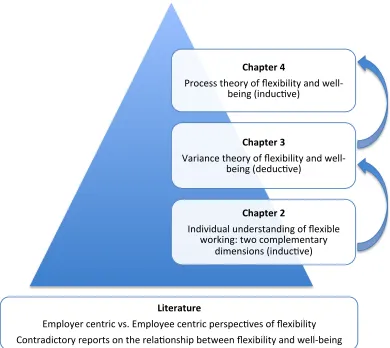
[image:36.595.105.495.322.670.2]This chapter advances a pluralistic understanding of flexibility, which deployment and evolution relies on both tacit and formal negotiation processes between the employee and the firm. Moreover, it proposes a theory on the co-evolution of flexibility and well-being.
Figure 1.1 Overview of theoretical development per chapter
Chapter five concludes the thesis by highlighting the connection between the three em-pirical chapters, bringing together all their contributions and discussing how they con-jointly advance the field of knowledge. This is shown in Figure 1.1 which depicts the
Chapter 4
Process theory of flexibility and well-being (induc9ve)
Chapter 3
Variance theory of flexibility and well-being (deduc9ve)
Chapter 2
Individual understanding of flexible working: two complementary
dimensions (induc9ve)
Literature
37
theoretical contributions of each of the chapter and how they build on one another. Chapter two proposes a different conception of flexibility based on the employees’ per-ception of their experience and identifies the existence of two different dimensions to the concept (i.e. flexibility as an inducement and flexibility as a contribution). Chapter three uses this understanding to develop a variance theory of the relation between flexi-bility and well-being. It identifies that the two dimensions of flexiflexi-bility defined in chap-ter two account for significant proportions of the variance of flexibility and are therefore seen as necessary and sufficient conditions for well-being (Mohr, 1982). Chapter four builds on the identification of this relation and theorises how it unfolds in time, propos-ing a process theory on flexibility and well-bepropos-ing (ibid). This overall construction relies on Langley’s (1999; 693) call to develop theory that combines variables and events, because it is important to “understand the effect of events on the state of an entity (a variable) or to identify the effect of a contextual variable on the evolution of events”. In addition, to contribute to the HRM literature, this chapter brings the discussion back to the unitarist vs. pluralist debate presented in chapter one. The concluding chapter ends with a description of the thesis’ practical implications, limitations, and avenues for fur-ther work.
The following section provides an overview of the rationale behind the methodology employed in this thesis and the combination of inductive and deductive logics. In sub-sequent sections a detailed description of the research setting and an overview of the data collection methods employed to address the research questions are given.
1.6. Rationale behind the research design
This section focuses on explaining the rationale behind the chosen research methodolo-gy. Section 1.8 provides a detailed explanation of the data collection procedures. Each of the subsequent empirical chapters contains a further description of the analytical methods specific to the studies reported.
phe-38
nomenon in its real context, when the frontier between the phenomenon and the context is not clear and where several sources of information are used (Hartley, 2004; Yin, 1989). Studying a case is considered an appropriate research technique for capturing knowledge from practitioners, investigating complex and new events and building theo-ries in which the intangible and dynamic elements play a crucial role (Cepeda and Mar-tín, 2005). The approach was designed as exemplified by previous case study research (Gratton et al., 1999; Robertson and Swan, 2003; Kärreman and Alvesson, 2004; Hailey et al., 2005; Alvesson and Kärreman, 2007) to better understand the complex links be-tween workplace flexibility and employee well-being.
Data were collected using a mixed methods design. Mixed methods research (MMR) involves the combined use of quantitative and qualitative methods in the same study. Creswell (2014) describes three basic types of MMR designs (concurrent, explanatory or exploratory) and three advanced ones (embedded, transformative and multi-phase). This dissertation takes a longitudinal multi-phase sequential approach. It goes back and forth between qualitative and quantitative data to build on each other, to address each of the research questions and to follow a common programme objective (ibid, 228).
The use of MMR relies on methodological eclecticism (Teddlie and Tashakkori, 2012) and the belief that in combination, quantitative and qualitative approaches may provide complementary answers to research questions than each individual approach (Creswell and Plano Clark, 2011). The selection of MMR was driven by the research questions discussed in the previous section (Creswell and Plano Clark, 2011), taking a pragmatic position.
39
According to Johnson and Onwueguzie (2004; 17) “pragmatism (…) offers an immedi-ate and useful middle position philosophically and methodologically; it offers a practi-cal and outcome orientated method of inquiry (…) it offers a method for selecting methodological mixes that can help researchers better answer many of their research questions”.
Tashakkori and Teddlie (2010; 16) highlight two fundamental methodological princi-ples of MMR: (1) it subscribes to the iterative, cyclical approach to research and (2) it eludes the either-or need to adhere to quantitative or qualitative methods at all levels of the research process.
MMR is characterised by a cyclical approach to research, which combines inductive and deductive logics in the same research inquiry (Tashakkori & Teddlie, 1998). This ena-bles researchers to generate theory and test hypotheses in a single study without com-promising one for the other (Jogulu and Pansiri, 2011). According to Teddlie and Tashakkori (2012; 781) “all mixed single studies or programs of inquiry go through the full cycle at least once, regardless of their starting point”. Different approaches for data collection and analysis can be added, mixed and integrated in different stages of the study, for which there is no standardised model (Creswell, 2014). Figure 1.2 (see page 50) summarises the different data collection and analysis phases carried out in this the-sis, highlighting its fit with this cyclical approach.
This study was initiated with an inductive logic aiming to grasp the complexities of the flexible working phenomenon from individual employees’ perspectives. To do so, it relied on interviews and document analysis to generate theory on flexible working at the individual level (see chapter two). Having developed a working model, the study adopt-ed a dadopt-eductive logic to generate hypotheses basadopt-ed on existing theory and then testadopt-ed such hypothesis by collecting quantitative data (see chapter three). However, additional questions emerged that required further theory generation, opening the door a reiteration of the research cycle and further qualitative data collection (see chapter 4).
ques-40
tions like how many or how often (Creswell and Plano Clark, 2011). However, MMR provides an opportunity to address exploratory and confirmatory questions simultane-ously (Teddlie and Tashakkori, 2009). Rather than forcing a choice, it can leverage the advantages of both methods to provide greater insight on a phenomenon (Creswell and Plano Clark, 2011; Johnson and Turner, 2003). MMR allows for a wide range of diver-gent and complementary views, which enable a rich understanding of a phenomenon and its boundaries to develop substantive theory (Venkatesh et al., 2013; 25). Triangu-lating allows building more reliable knowledge (Jick, 1979).
Given that the research in this dissertation is interested in understanding workplace flex-ibility and assessing its impact on employees, it is useful to design the study using methods allowing both for theory building and theory testing. Flexible work arrange-ments evolve through repeated interactions between the employer and the employee (Rousseau, 1995; Simon, 1957) and well-being, rather than a fixed state, is a dynamic feature affected by a large number of variables that are difficult to apprehend (Bircher, 2005). At the heart of what is being studied here are the complex personal experiences of employees. MMR was a good fit for this study because it enabled the collection of complementary data and allowed examining these experiences from diverse angles. In addition, a case study approach provides the opportunity to study these human events in their natural setting (Yin, 1989).
1.7. Research setting
1.7.1 Management consulting
HRM studies take a unitarist stance in understanding flexible work arrangements as a managerially developed set of practices that are equally beneficial for employers and employees. Conversely, this thesis argues that adopting a pluralist approach to observe flexibility at work, that is assuming a bargaining process between the actors of the em-ployment relationship, can shed light over the flexibility debate.
41
strong influence over their jobs, their careers, and the success of their firms (Fincham, 1999; Swart, 2008), the growth of which can be linked to the increasing reliance on flexibility and knowledge (Donnelly, 2008).
Knowledge workers hold jobs in which particular “emphasis on information processing, problem solving and the production of knowledge” is made (Benson and Brown, 2007; 122). Knowledge intensive firms (KIF) are hence defined as “companies where most work can be said to be of an intellectual nature and where well-educated, qualified em-ployees form the major part of the work force” (Alvesson, 2000; 1101). These firms have distinctive features because of the people they employ and the work they do (Rob-erton and Swan, 2003). The study of HRM and the employment relationship within management consulting firms, as an example of knowledge intensive firms, has drawn particular attention (Carvalho and Cabral-Cardoso, 2008; Robertson and Swan, 2003) because their nature poses a challenge to finding, organising, managing and retaining the best employees.
Acknowledging the fact that employee knowledge and abilities are the organisation’s major assets, makes the success of these firms dependent upon the uniqueness and the preservation of their human resources (Barney, 1995). KIFs face strong competition both in the output market (to obtain clients for its services) and the labour market (for attracting and retaining a very specific workforce) (Maister, 1993). Keeping employees loyal and committed is a critical management problem (Alvesson, 2000). For all these reasons, management consultants can be argued to hold bargaining power and to be ca-pable of shaping their employment arrangements to a large extent. As such, manage-ment consulting constitutes a critical case for the study of flexibility as a constructed and bargained practice (Goldthorpe et al., 1967). If a negotiation process does not take place in this particular context, it is highly unlikely it will in other sectors and occupa-tions.
42
boundaries of consulting jobs are often described as fuzzy and imprecise (Leonard and Sensiper, 1998), leaving a door open to eventual exploitation. For instance, there is a high level of discretion regarding working hours, making overtime a common practice (Carvalho and Cabral-Cardoso, 2008). A certain normative acceptance of very high work intensity can be argued to exist (Gallie, 2005), through cultural control (Alvesson and Karreman, 2007; Karreman and Alvesson, 2004; Robertson and Swan, 2003).
At the same time, consultants appear to enjoy high levels of autonomy (Frenkel et al., 1999; Swart, 2008). As scarce assets, they can better manage their work arrangements because of their capacity to bargain. Indeed, some authors believe that knowledge work is characterised by more progressive forms of work that enable flexibility for employees (Perrons 2006; Huyer and Hafkin 2007).
This uncertain situation with regards to the nature of flexibility is likely to raise particu-lar tensions for the individuals, setting an interesting scenario in which to develop a bet-ter understanding of the flexible working experience and in which to build theory on the connection between flexibility and well-being.
Moreover, according to Sturdy (2011; 527) “consultancy has not simply shaped the form and methods of organisational change (…) but management practice more general-ly”. Consulting firms are highly present in the business media (Sturdy et al., 2009) and have had an undeniable impact on their clients, their employees, and society (O’Mahoney, 2010). The study of HR policies within management consulting firms has drawn significant attention (Armbrüster, 2004), because of these firms’ capacity to spread their knowledge and practices on to their clients (O’Mahoney, 2010).