1 | P a g e
CONTENTS
RtI for ELLs – An Overview 3
RtI Infrastructure – Coordinating a Team and Organizing Stakeholders 13
Strong Core Instruction for ELLs – Tier 1 17
Serving the Struggling ELLs – A Step-by-Step Approach 30
2 | P a g e Dear Colleagues,
As you know, since July 2012, the New York State Education Department has required public schools to use Response to Intervention (RTI) in grades K-4; because of how our schools are structured, in New York City RTI is implemented in all grades, K-5. As you continue to develop your RTI structures and refine your expertise in how best to differentiate instruction for your students, ELLs included, we at the Office of ELLs would like to continue to support you by providing additional guidance as to how best to maximize this model with your diverse ELL population.
During past 18 months, OELL has offered school teams several intensive ELLs in RTI institutes. As a result of what we learned during these sessions, we created a reference document that highlights some of the most frequent questions you had around RTI and ELLs.
The core of RTI is research-based instruction for all students; this is why we partnered with nationally renowned researchers in the field of literacy and language development to create the following document. The Office of ELLs offers special thanks to Dr. Nonie Lesaux (Harvard Graduate School of Education) and Dr. Janette Klingner (University of Colorado at Boulder) for their guidance and work on this project.
We hope that you will find our document to be a valuable tool – one that provides you with information about how to support your ELLs under the RTI structure, how to design research based instruction that is linguistically and culturally appropriate for ELLs, how to best use assessments to guide daily instruction (Tier1), and how best to design instructional routines and interventions in Tiers 2 and 3.
Cordially,
Angelica Infante Chief Executive Officer
3 | P a g e
RtI for ELLs – An Overview
The Response to Intervention (RtI) model holds significant promise for better serving English Language Learners (ELLs) who are at-risk for academic difficulties. RtI is an instructional model that aims at prevention and early intervention through a tiered system of instructional support—one that adds layers of instructional support to the standard core curriculum delivered in a school, based on the demonstrated and changing needs of the student learners. This includes levels of intervention and instruction that increase in duration and intensity over time; as students improve, measured by reliable and valid assessments, the extra supports are removed. The NYCDOE RtI model is based on three tiers of instruction and intervention support. Please refer to the NYC DOE Response to Intervention Reference Guide for general information about the DOE framework and requirements. Tier 1 is the instructional core that is intended to incorporate high quality
Effective Instruction for ELLs using an RtI Approach
To provide ELLs with rigorous, culturally responsive instruction, a strong Response to Intervention (RtI) model should be in place. This set of guidance documents has been designed to assist teachers, instructional leaders, and ELL support services with RtIimplementation, as the model is adapted in each context. The documents outline a rationale for using the RtI model with a school’s ELL population, and describe the road map for
implementation.
Document 1: RtI for ELLs -- An Overview
Document 2: RtI Infrastructure – Coordinating a Team and Organizing Stakeholders Document 3: Strong Core Instruction for ELLs – Tier 1
Document 4: Serving Struggling ELLs – A Step-by-Step Approach
Document 5: Assessment and Evaluation for Special Education – Tiers 2 and 3
# 1: RtI for ELLs – An Overview
# 2: RtI Infrastructure – Coordinating a Team and Organizing Stakeholders # 3: Strong Core Instruction for ELLs – Tier 1
# 4: Serving the Struggling ELLs – A Step-by-Step Approach
4 | P a g e
evidence-based instruction for all students. This includes instruction that has been shown to be effective for ELLs, and differentiation to meet students’ diverse needs. Instruction for ELLs in English language development is provided at the Tier 1 instructional level. Students move into Tier 2 and Tier 3 if they demonstrate a need for more targeted and intensive academic support. This extra support can occur in the classroom, but also in separate settings with instruction focused on specific learning targets. Tier 2 and Tier 3 instruction should also be tailored to meet ELLs’ language needs and should be
incorporated into research-based intervention strategies.
Three Tiers of Instructional Support
The purpose of RtI has shifted over time, away from primarily addressing special education pre-evaluation to a more focused problem-solving model. Students are
5 | P a g e
experiencing difficulties that may not, in fact, stem from LD. When fully and effectively implemented, the RtI model is designed to:
determine whether students are benefiting from an instructional program within a reasonable time
build more effective instructional programs for students who are not benefiting
compare the efficacy of different forms of instruction
design more effective, individualized instructional programs
reduce inappropriate referral rate
increase educational opportunities for linguistically and culturally diverse populations
All of these actions have great potential for effective prevention and intervention efforts to support academically at-risk ELLs. When evaluated collectively, this
information should help initiate important conversations about classroom- and school-level models of prevention that will meet the needs of diverse populations of learners, including ELLs at-risk for academic difficulties.
ELLs and Language Acquisition
In order to meet ELLs’ needs in an RtI framework, it is important to understand their characteristics as children and learners, and to ensure that we view their status as language learners as an asset to draw upon as well as a dynamic developmental process that is inextricably tied to learning opportunities. Unfortunately, many educators have misconceptions about language and literacy development, and these false notions can perpetuate a deficit view of ELLs’ ability to learn; namely, that it is a problem to be fixed rather than a learning resource. See the Table at the end of this document for some of the common misconceptions about the language learning process for ELL students. In addition to having an understanding of these misconceptions, it is essential for
practitioners to investigate their students’ educational and linguistic histories. Teachers need to build upon the linguistic capabilities students bring to the classroom and
understand where challenges may lie. For example, a Spanish-speaking child struggling with the vocabulary of English school texts might have a well-developed Spanish vocabulary, at least conversationally. With an understanding of this child’s linguistic strengths, the teacher could guide the child to use cognates or familiar concepts in Spanish to support her English reading comprehension.
There are many factors that influence the language learning process and corresponding academic development. These include, but are not limited to:
o familiarity with/and exposure to English
6 | P a g e
o degree of proficiency in English and the native language
o opportunities to learn language(s) and build knowledge (in any language) in school and the community
o prior schooling experiences
o whether both languages are being learned at the same time (simultaneous bilingual) or whether one is learned, followed by the other (sequential bilingual)
o whether the student actively wanted to learn another language (elective bilingual) or had to learn a second language in order to survive
(circumstantial bilingual)
The RtI Model in New York City
Some components of RtI implementation are specific to meeting ELLs’ needs, and show promise for supporting ELLs’ academic outcomes. In particular, the RtI model should include:
a systematic process for examining how ELLs’ backgrounds and educational
contexts (i.e., first and second language proficiency, educational history including bilingual models, immigration pattern, socioeconomic status, and culture) have an impact on their academic achievement in a U.S. classroom
an opportunity to examine the appropriateness of classroom instruction and the classroom context, based on knowledge of individual student factors
a regular plan for gathering information through informal and formal assessments
nondiscriminatory interpretation of all assessment data
These components translate into 4 action steps for schools, outlined and discussed in this guidance document:
7 | P a g e
indications of risk in specific domains through set benchmarks or criteria, or by detailing how a child performs relative to peers of the same age or grade level. These assessments often point out risks that may not be apparent from classroom
interactions alone, and they are especially useful for understanding performance across groups of students. For ELLs this means:
As required by State rules and as a first step in a universal screening process, when a student enters a NYC public school for the first time, a Home Language Identification Survey (HLIS) is completed. With this information, teachers will begin to uncover the factors that could influence the student’s English language learning process, thereby allowing this knowledge to guide linguistically
responsive instructional choices (see section on ELLs and Language Acquisition above).
Beyond screening and identification for ESL services to support language development, the ELL student also takes part in RtI screening to assess whether his/her literacy skills and competencies are meeting grade level benchmarks. If an ELL student is flagged as at-risk or below-benchmark on any particular skill or competency, the student should receive targeted instructional support to bolster development in this area. This support should be delivered in coordination with language support services.
When reading instruction occurs in a language other than English, it is strongly recommended that schools administer screening instruments in the language of instruction in addition to English. Whenever possible, it is important to use screening tools that have been validated for the population(s) to be screened.
2. STRONG CORE (TIER 1) INSTRUCTION (click here for Strong Core Instruction for ELLs – Tier 1) is delivered to all students in the general education classroom by qualified educators. Strengthening classroom instruction (i.e., the instructional
core), is a key step to supporting ELLs at-risk for or experiencing difficulties, as well as a critical step in fully implementing the RtI model. In many U.S. schools, large numbers of ELLs are showing low academic achievement because the instructional core has not met their needs as learners. Since the RtI model works best, and serves the greatest number of students, when the instructional core is tailored to the needs of the classroom population, it holds particular promise in settings with high numbers of ELLs. The Center for Research on Education, Diversity and Excellence (CREDE) provides five interrelated instructional principles for teachers of linguistically diverse populations. By following these principles and teaching rigorous academic content, educators can create high-quality instructional environments that foster academic success.
8 | P a g e
Developing Language and Literacy Across the Curriculum. Language development at all levels should be fostered through purposeful, deliberate conversation between teacher and students, and among students. Reading and writing must be both taught as specific curricula, and integrated into each content area.
Making Lessons Meaningful. Teachers should leverage students’ funds of
knowledge and skills as a foundation for new knowledge. Quality core instruction necessarily links students’ background knowledge and daily lives to the content at hand, and provides experiences that show abstract concepts drawn from, and applied to, the everyday world.
Teaching Complex Thinking. As is the case with all learners, ELLs require instruction that is cognitively challenging. Teachers should target academically rigorous and challenging instructional goals, while simultaneously providing students with the instructional supports they need to achieve success.
Teaching through Conversation. Building students’ abilities to form, express, and exchange ideas is best achieved through dialogue, questioning, and sharing ideas and knowledge. In these instructional conversations, the teacher listens carefully, makes guesses about intended meaning, and adjusts responses to assist students’ efforts.
3. INTENSTIVE, TARGETED INTERVENTION is provided to support ELLs who are not showing sufficient progress on the skills and/or competencies measured. ELLs receive instructional interventions that utilize strategies that are research-based with ELLsi (Klingner, Soltero-González, & Lesaux, 2010). Teams considering ELLs’ progress should utilize a problem-solving process and a body of evidence to make decisions. For ELLs, the documentation analyzed should include:
an explanation of how instruction was differentiated to address native and second language concerns and cultural differences
a description of the amount and type of ESL instruction
an understanding of whether or not native language support was used
a description of the amount and type of native language instruction (as appropriate)
an identification of instructional areas (specific skills and competencies) that need further, more intense intervention (Tiers 2 and 3), and:
the extent, if any, to which ESL instruction and/or native language instruction is needed during Tiers 2 and 3 interventions to ensure the student will benefit from the intervention
9 | P a g e
student’s progress is then compared with levels demonstrated by peers from
comparable cultural, linguistic, and experiential backgrounds who have received the same or comparable intervention.
When monitoring ELLs’ progress, the following should be kept in mind:
When most students are not thriving, this is a systemic issue; it is likely that general education—Tier 1 or the instructional core—is ineffective and/or inappropriate.
Teachers and school leaders can use data to determine when it is necessary to adjust instruction for all ELLs (i.e., the instructional core).
If instruction is being provided in both the native language and English, assessments are conducted in each language.
Knowledge of typical second language development and the student’s history of first and second language (e.g., educational background) is considered when setting benchmarks and interpreting progress.
When evaluating instructional programs for students, it is important to gauge achievement levels for the site's overall population and for particular groups (i.e., ELLs) using outcome assessments designed for these purposes (Lesaux &
Marietta, 2011). This helps determine the effectiveness of the school’s program(s), and gives an indication of how individual students are doing compared to their local and national peers.
In Summary
At a time when there are significant concerns about placement of ELLs in special education services and disproportionality, there are several important features of the RtI system that hold promise for meeting academically at-risk ELLs’ needs:
The purpose of RtI has shifted away from only serving as a special education pre-evaluation to a more focused problem-solving model that aims at prevention of inappropriate referrals and early intervention through tiered layers of instructional support.
All students, including ELLs, are only evaluated for special education when they do not respond to effective and rigorous instruction, or additional intervention that is:
1. provided with increasing intensity 2. culturally and linguistically responsive.
In serving ELLs, the first focus should be on improving the quality of core instruction and making sure that most students have ongoing, high-quality opportunities-to-learn and are succeeding.
When an ELL seems to be struggling, we ask the following questions to devise a plan for the student’s improvement:
10 | P a g e
o We ask this question about all levels of instruction (Tiers 1, 2, and 3).
How can we support the teacher with some new research-based ideas to deliver effective (core/Tier I) instruction?
How can we further adjust the Tier 2 and Tier 3 interventions to help the student overcome his/her difficulties?
How can we partner with the family to benefit teaching and learning?
Are there other factors we can influence, such as motivation?
11 | P a g e
APPENDIX
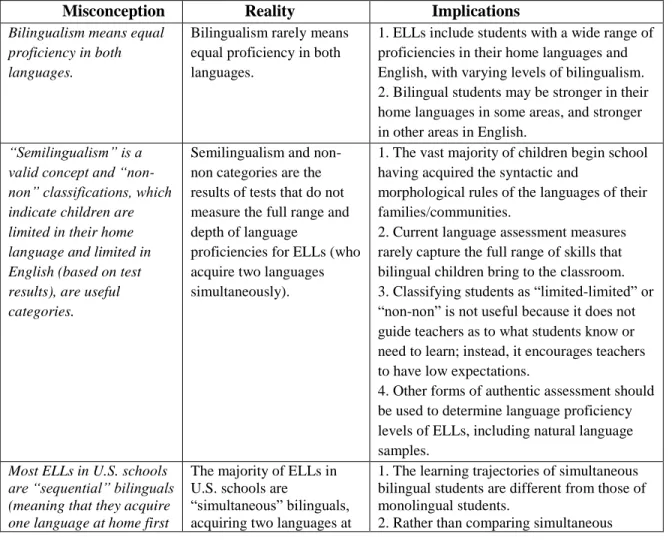
Table 1. Misconceptions and Realities about the Language Acquisition Process1
To build a strong multi-tiered instructional model that is culturally and
linguistically responsive, several common misconceptions around the second language acquisition process should be addressed. Supporting ELLs’ learning, demands that educators have a basic understanding of the theories of language acquisition, and how the intersection of language and learning influences ELLs’ academic development. The following table highlights some common misconceptions and realities, and their implications.
Misconception Reality Implications
Bilingualism means equal proficiency in both languages.
Bilingualism rarely means equal proficiency in both languages.
1. ELLs include students with a wide range of proficiencies in their home languages and English, with varying levels of bilingualism. 2. Bilingual students may be stronger in their home languages in some areas, and stronger in other areas in English.
“Semilingualism” is a valid concept and “non-non” classifications, which indicate children are limited in their home language and limited in English (based on test results), are useful categories.
Semilingualism and non-non categories are the results of tests that do not measure the full range and depth of language
proficiencies for ELLs (who acquire two languages simultaneously).
1. The vast majority of children begin school having acquired the syntactic and
morphological rules of the languages of their families/communities.
2. Current language assessment measures rarely capture the full range of skills that bilingual children bring to the classroom. 3. Classifying students as “limited-limited” or “non-non” is not useful because it does not guide teachers as to what students know or need to learn; instead, it encourages teachers to have low expectations.
4. Other forms of authentic assessment should be used to determine language proficiency levels of ELLs, including natural language samples.
Most ELLs in U.S. schools are “sequential” bilinguals (meaning that they acquire one language at home first
The majority of ELLs in U.S. schools are
“simultaneous” bilinguals, acquiring two languages at
1. The learning trajectories of simultaneous bilingual students are different from those of monolingual students.
2. Rather than comparing simultaneous
1 Note: Adapted from Klingner, Almanza de Schonewise, de Onis, Méndez Barletta, & Hoover (2008).
12 | P a g e
and then add another language later).
once. bilingual students with monolingual students as if they are “two monolinguals in one,” they should be compared with other simultaneous bilinguals.
The more time students spend receiving English literacy instruction
(immersion), the faster they will learn to read in English.
A student who receives some home language literacy instruction achieves at higher levels in English reading than a student who does not receive reading instruction in his home language.
1. Instruction in English and interactions with English speakers are important, but not enough to provide the optimal support for ELLs to be able to fully participate in classroom learning and achieve to their potential.
2. Skills developed in students’ native language transfer to English, particularly when teachers help students make connections across languages.
3. Students acquire English when they receive input that is understandable (i.e. by using language in context, providing background knowledge, using visual and context cues, clarifying vocabulary).
Errors are problematic and should be avoided.
“Errors” are a positive sign that the student is making progress and are a necessary aspect of second language acquisition.
1. Errors can be useful clues to understanding students’ interlanguages and can be a sign of progress.
2. Errors such as confusion with verb tenses, plurals, possessives, word order, subject/verb agreement, and the use of articles are common among ELLs and should not be interpreted as signifying that a student has a disability.
3. Code-switching is common among bilingual individuals around the world and should not be considered a sign of confusion. ELLs are not ready to
engage in higher level thinking until they learn basic skills.
ELLs are equally capable to engage in higher level thinking as fully proficient peers.
1. Instruction and practice at every grade level must provide frequent opportunities for ELLs to engage in higher level thinking. 2. Instruction should ensure that ELLs of all proficiency levels have multiple entry points to access content.
All ELLs learn English in the same way and at about the same rate.
The length of time it takes students to acquire academic language in English varies a great deal, from four to seven years or more.
1. Many different variables affect the language acquisition process.
2. Even when ELLs appear to be quite proficient in English, they may not yet have acquired full academic proficiency.
13 | P a g e
RtI Infrastructure – Coordinating a
Team and Organizing Stakeholders
With the principles and practices of general education and special education coming together, the RtI process involves many different individuals and requires significant leadership and collaboration. When RtI is functioning effectively,
professionals’ roles expand and adapt to implement interventions, monitor progress, and make data-based decisions, all with linguistic diversity in mind.
RtI works when teams and school leaders create a culture of sharing data, thinking objectively about struggling students, and discussing quality of instruction within each tier. Most successful models use grade-level planning meetings for examining, interpreting, and sharing data. Although team members should create a problem-solving perspective, these students are not problems; they are the responsibility of all those involved.
RtI Implementation and ELLs: a Team-Based Strategy
Special attention is needed when implementing the RtI model with the ELL population, particularly in coordinating the various stakeholders who regularly work with and support ELLs. To begin crafting a strategy, administrators need to bring together invested key players and generate a team. Leaders would be smart to carefully consider the team’s composition; members should be diverse (however you define it) and respected by their peers. The people on the team should be “nodes” in the professional network of the building, and the process of deciding who is on the team must be perceived as fair and transparent. One possible team combination is a teacher from every grade level, a parent, and key supporting staff members (e.g., ESL teacher, reading specialist, bilingual teacher, and social worker). Teams should stay together a minimum of 2 years to dispel the response that this is yet another initiative, and to recognize the fact that more than one year will be necessary to get things well off the ground.
# 1: RtI for ELLs – An Overview
# 2: RtI Infrastructure – Coordinating a Team and Organizing Stakeholders
# 3: Strong Core Instruction for ELLs – Tier 1
# 4: Serving Struggling ELLs – A Step-by-Step Approach
14 | P a g e
Who’s Involved in RtI and in What Way?
There are many individuals involved in the implementation of an effective RtI model. As you consider the members of your team and your RtI model more generally, bear in mind that individuals can provide diverse guidance and input as members of the team, as well as participating in any RtI-related decisions by consulting and/or meeting with the team along the way. Key information about a child and/or the instructional context, in the service of improved teaching and learning, is the basis for the RtI process. Use the lists below to determine how members of the school community can help as you plan to implement RtI effectively.
Administrator Support
Administrators are essential for communicating a shared vision of RtI at the school, and for providing practitioners with the tools they need to collaborate. Having an administrator who is actively involved in the RtI process on many levels is an essential component. Leaders should:
design the school’s model
provide logistical support (time and organizational structures as well as materials and assessments) for implementing RtI. Specifically, this
support must afford educators with built-in time to collaboratively analyze data, problem-solve, and plan. It should also include relevant and ongoing professional development. Have frequent communication with teachers, students, and parents about student progress.
Overall, leaders are charged with spearheading the RtI effort by sharing data, addressing needs, and celebrating successes.
Classroom Teachers
Classroom teachers play a central role in implementing a successful model. Teachers’ responsibilities include:
using high-quality research-based instruction that is differentiated for ELLs
understanding how to collect data, monitor ongoing progress, and
collaborate with colleagues in making student decisions based on the data collected
15 | P a g e
maximizing student potential by sharing insights into the student’s home life, family background, and interests that affect decision-making Reading Interventionists/Specialists
The reading specialist also has an essential role in the RtI process, providing both expertise and leadership. Specifically, reading specialists , and/ or trained,
knowledgeable, and skilled school personnel, should:
provide all Tier 2 and Tier 3 interventions, as recommended by the International Reading Association (2009)
share knowledge in the key areas of reading research, development, and teaching methodology
help clarify appropriate reading goals oversee progress monitoring
help interpret assessment data
serve as a resource for literacy practices
assume a key role coaching teachers in literacy instruction
share knowledge of how second language literacy instruction differs from first language instruction, and discuss common challenges ELLs may encounter
lead the school-wide implementation of RtI
ELL/Bilingual Specialists
ELL and bilingual specialists have specialized expertise about language and literacy development, how to use assessment tools and techniques, and how to use effective instructional practices for ELLs. As a result, it is essential that the
ELL/bilingual specialist be included in the RtI decision-making process. As a result of this knowledge, their roles should include:
clarifying needs associated with second language acquisition
providing evidence for differences between learning differences and disabilities
putting RtIdata into a cultural context
modeling effective instructional strategies for classroom teachers (Garcia & Ortiz, 1988)
assisting with culturally responsive assessment practices
Special Education Teachers
16 | P a g e
considered for special education. In some schools, intervention teachers and special educators work side-by-side to provide supplemental intervention to all students experiencing difficulty, whether or not they have an IEP. In other models, the special education teacher only works directly with students with IEPs, but serves on the RtI decision-making team and consults with classroom teachers regarding effective intervention methods. More specifically, special educators should assist in:
interpreting data
setting appropriate student goals
ensuring appropriate referral procedures supporting targeted classroom instruction
Other Personnel
School psychologists, social workers, and speech language pathologist (SLP) also have important roles in the decision-making process:
Psychologists need to have training and knowledge about comprehensive measurement and assessment tools for ELLs, and how to interpret the data acquired through those measures.
Social workers need to use their specialized skills to incorporate families into the process, and help the rest of the RtI team to understand the home and community factors influencing a student’s learning.
SLPs’ expertise in language development is beneficial in understanding the differences between first and second language acquisition.
Parents and Families
Parents and families have invaluable knowledge to share about their child’s previous schooling experiences, and language experiences. They can:
provide insight into their cultural values and norms, as well as interactions with community members and experiences outside of school
17 | P a g e
Strong Core Instruction for ELLs –
Tier 1
The foundation of RtI for ELLs is high-quality core, or Tier 1, instruction focused on promoting language and literacy development. Only once a rigorous, effective
instructional core is in place—one that targets the student population’s needs on a daily basis as part of a long-term plan—can we begin to build interventions that will serve as truly supplemental and supportive instruction. Unfortunately, some ELLs are taught in contexts with insufficient opportunities to learn; this kind of environment is also known as a “disabling context” (see Tiers 2, 3). To prevent such inadequate learning
opportunities, strong core instruction must be the norm. This guide provides a reference for instructional strategies that support differentiated, Tier 1 instruction to promote ELLs’ literacy development.
The guide focuses specifically on:
developing different key domains of literacy, to support competencies in reading, writing, listening, and speaking
presenting instruction that makes direct and appropriate connections to ELLs’ community values, identities, and languages2
In combination, this high-quality core literacy instruction is necessarily culturally and linguistically responsive.
2
adapted from Klingner, Soltero-González, & Lesaux, 2010
# 1: RtI for ELLs – An Overview
# 2: RtI Infrastructure – Coordinating a Team and Organizing Stakeholders
# 3: Strong Core Instruction for ELLs – Tier 1
# 4: Serving Struggling ELLs – A Step-by-Step Approach
18 | P a g e
Part I. Key Literacy Domains
Oral Language: The Underpinning of Learning and Knowledge
Why this focus?
Core literacy instruction should build on and expand students’ existing oral language competencies to support literacy learning and content knowledge. We know from research that English oral language proficiency is closely related to academic achievement in English. Without well-developed oral language, ELLs cannot readily handle the language and knowledge demands of the school curriculum—a curriculum that is delivered almost exclusively through oral and written language—especially as they move up through the grades.
But large-scale observational research carried out in linguistically diverse schools tells us that systematic instruction focused on oral language is limited. For example, research in high-minority, high-poverty schools3 finds that early elementary classrooms devote only 8-11% of the reading block to vocabulary development. This minimal focus on vocabulary and language development is mirrored in a similar study, also conducted in a large urban school district, documenting practices in secondary classrooms4. With this research in mind, we know that extending and strengthening oral language instruction in classrooms serving ELLs will require a considerable, but very necessary, shift in practice.
What does oral language instruction look like?
Building students’ oral language skills means teaching specialized vocabulary (and the often-abstract concepts such words represent), as well as the specialized structures of language in academic speech and text—often referred to as elements of
academic language. Accessing middle and high school textbooks demands a knowledge of academic language. Building such conceptual and language skills is essential for ELLs to succeed in school.
Core instruction that promotes oral language development is necessarily rich in both language and content. In these learning environments, students have opportunities to learn about, study, and discuss the language of texts. They then use this text-based
3
Gamse and colleagues (2008)
4
19 | P a g e
content learning in interactive experiences like labs, demonstrations, dramatic plays, and debates that promote academic conversation and knowledge building.
Strategies that promote ELLs’ oral language development must be explicitly planned and incorporated throughout the school day. These strategies include, but are not limited to:
building background knowledge:
o starting with rich text and big ideas so students encounter and study abstract language and abstract concepts, and learn about the world
o previewing key concepts and challenging vocabulary, as well as reviewing students’ understanding of important points
o when possible, drawing on and using students’ home languages close, interactive reading aloud (Click here for an example):
o frontload vocabulary, sentence structures, and concepts
o ask open-ended questions along the way; engage students in discussion and dialogue about a big idea in the text
o include relevant multicultural literature as well as multicultural chants, songs, and poems that help to build phonemic awareness
storytelling using wordless books collaborative discussion and debate:
o devote instructional planning and time to student projects that are discussion-based, including oral presentations and debates
o during discussions, pose open-ended questions and keep the conversation going
role playing and rehearsed oral performance multifaceted and intensive vocabulary instruction:
o study words, word parts, and word families as part of the content-based literacy instruction; build words and knowledge at the same time; include a focus on words with multiple meanings
o include vocabulary learning strategies such as using visual cues, total physical response (TPR; i.e., physically acting out new terms), and realia sentence transformations through guided dialogue
language frames for speaking and listening jointly constructed extended writing:
o e.g., co-constructing a written text based on a shared classroom experience o connecting writing assignments to content under study; supporting
20 | P a g e
Written Language: The Gold Standard
Why this focus?
Writing skills play an increasingly important role in determining students’ school and professional success, but developing advanced written language skills can be a particular challenge for ELLs. This challenge is due, in part, to the type and quality of writing instruction students receive. In fact, large-scale survey research indicates that many teachers report feeling under-prepared to effectively teach writing (Gilbert & Graham, 2010; Kiuhara, Graham & Hawken, 2009).
What does written language instruction look like?
Whether students already know how to write in their home languages, or whether they are in the early stages of English writing development, instruction should be
adjusted to refine and expand their competencies, and to help them acquire the academic writing skills they need in the content areas. Quality writing instruction during the classroom literacy core should be sustained and extended (e.g., developing extended research pieces, essays, and stories), so that it is continually linked to oral language and reading instruction.
Strategies for promoting ELLs’ written language development during the instructional core include the following:
connect the ways in which students and their families use literacy at home and in the community (e.g., topics, styles, and cultural knowledge) with classroom writing themes
provide different types of writing tools in the classroom
promote different types of writing purposes, genres, and formats model writing activities using the language experience approach:
o Write students’ dictations about a shared classroom experience. Use the text produced from students’ dictations as the basis for refining students’ writing abilities.
guide students’ early writing by co-constructing predictable and rhythmic books (e.g., poetry, rhyme, and patterned language books)
use writing in the service of deep text analysis, perhaps in tandem with literature circles
interact with students (and have students interact with each other) through written communications:
o For example, use dialogue journals. These journals are written
21 | P a g e
recommended to recast them and use the correct model in your responses as a way to advance students’ language proficiency.
model language structures when jointly writing texts:
o This method can be used to generate books for the classroom library such as modified patterned language books, stories for wordless picture books, recipe books, and scripts for readers’ theater.
teach the writing process (i.e., developing ideas, writing them down, getting feedback, editing, producing the final draft, and publishing):
o During the first stages of the process, focus writing instruction on communication and meaning construction, as opposed to mechanics and correctness. Many ELLs may struggle with editing their own writings when correctness obscures the expression of meaning and the
development of complex ideas.
o During the latter stages of the process (i.e., editing, producing the final draft, and publishing) support ELLs as they edit their own writings. Try using writing rubrics and the traits model to guide students. Bear in mind, most writing rubrics do not account for the bilingual strategies that ELLs often use when they write. Encourage ELLs to focus on conventions (e.g., spelling, grammar) as the last step in the editing process.
o Celebrate writing! Have students read their finished works aloud for their peers as each takes a turn sharing their writing during their writing celebration. Be sure to incorporate appropriate social, cultural, and linguistic adaptations.
integrate oral language and vocabulary instruction into writing instruction by having students:
o verbalize their thinking before putting it into writing, and share aloud after they have both thought and written about the topic
o use new vocabulary and language structures in their writing
Word Reading and Spelling Skills: Word Work in Context
Why this focus?
22 | P a g e
What does word reading and spelling instruction look like?
All efforts should be made to teach word-reading and spelling in interactive ways, and within the context of reading and writing activities, rather than in isolation. After all, for these skills to give reading and writing meaning, they need to be continuously linked to the context in which they will be used. The following are examples of word work activities that researchers have found effective when used with ELLs. These strategies are organized by three key components of reading and spelling skills: phonemic awareness, phonics, and sight words.
Phonemic awareness is the ability to identify and manipulate the phonemes or sounds in spoken words. When designing phonemic awareness instruction for ELLs, first identify what students already know in their home languages and in English. Then, provide explicit instruction to students with low levels of phonemic awareness (once a student has developed this skill, he does not require explicit instruction). Research shows that many activities that work well with monolingual learners should also help ELLs, including:
singing songs reciting rhymes
reading and rereading poems and books with rhythmic patterns making up alliterative sentences
playing word games in which students manipulate sounds and syllables
When promoting ELLs’ phonemic awareness, bear in mind that enhancing this skill in a student’s home language can facilitate the skill in English.
Phonics is the understanding of sound-symbol correspondence. When ELLs have learned to read in another language first, the process of learning to read in English is facilitated. This facilitation can be particularly useful when the orthographic systems of the two languages are similar (such as Spanish and Portuguese) but can be more
challenging when they are not (such as French and Japanese). Research shows many activities that work well with monolingual learners should also help ELLs develop phonics skills. Such activities include integrating the following practices into a rich unit of study:
creating student-generated word lists with specific rhymes (e.g., night, flight, bright)
sorting words according to their spelling patterns
23 | P a g e
using letter cards, rhymes cards, and/or magnetic letters to build and break apart words
Sight words are the most commonly used words in English and, as such, readers encounter them frequently. Many of these words have irregular spelling patterns (e.g., said, where, the). When teaching ELLs sight words, teachers should connect instruction to books read in the classroom. Teachers can help ELLs recognize sight words with accuracy and efficiency using strategies including, but not limited to, the following: building words using magnetic letters or letter cards
creating sight-word books rereading short, familiar texts creating an interactive word wall
Fluency: Reading with Ease, Not Racing Through Reading
Why this focus?
Fluency is the ability to read accurately and efficiently while maintaining
meaningful phrasing. Bear in mind, fluency should not be confused with accent. Students can read fluently in English with a Spanish language accent, for example. Because fluent reading frees up the cognitive space needed to make meaning from text, culturally and linguistically responsive core instruction should include activities that promote this key reading skill.
What does reading fluency instruction look like?
Like word reading and spelling activities, it is important to build students’ fluency in meaningful and relevant ways. Activities that build ELLs’ reading fluency are
appropriate for a wide range of students, including non-ELLs, so teachers can use them frequently, and can involve all of the students in class. Strategies such as the following will help build fluency:
modeled fluent, expressive reading
shared reading of big books and other shared texts repeated reading
readers’ theater choral reading partner reading
24 | P a g e
Reading Comprehension: Putting it all Together
Why this focus?
For all readers—including ELLs—reading comprehension is a multifaceted process that requires a number of separate, but related, competencies. Comprehension is facilitated by fluent word reading, but it is not guaranteed by it. Instead, comprehension requires a mastery of a range of abilities as well as the knowledge necessary for both extracting and making meaning from text. Some of the challenges that ELLs may face in reading comprehension are related to language proficiency, vocabulary knowledge, background knowledge, and use of comprehension strategies.
What does reading comprehension instruction look like?
Providing instruction that enhances ELLs’ reading comprehension means building background knowledge, highlighting key vocabulary, and interacting socially to make meaning. Strategies for building reading comprehension include, but are not limited to:
reading thematically related texts, across genres (i.e., text sets): o reading aloud, modeled and shared reading
modified guided reading (select books according to stage of development): o use guided reading format to model and build the multiple components
of reading comprehension (e.g., background knowledge, vocabulary knowledge, word-reading skills, comprehension monitoring) reciprocal teaching (i.e., the teacher models using reading strategies when
reading aloud, then leads students in a text-related discussion. As students become more proficient at applying the strategies, they take turns leading discussions about text content.)
scaffolded retelling (i.e., students share and compare their retellings of text and provide feedback at the whole story level, at the phrase and individual word levels, and back to the whole story level; students use visual cues such as graphic organizers to clarify and consolidate their thinking.)
literature circles (i.e., small groups of students who read or listen to the same book—or text set related to the same theme—and meet to discuss their understanding with others.):
o include quality literature in which the children can see themselves reading responses incorporating art, music, drama, poetry
25 | P a g e
build students’ background knowledge
focus on key vocabulary [including transition words (e.g., therefore, first, however), content-specific words (e.g., petri dish, robber barons, hypotenuse), and all-purpose academic words (e.g., culture, impact, contribute,
research)](e.g., )]
ask questions to promote understanding and prompt critical thinking and analysis
provide students with multiple ways to show what they are understanding and learning (oral, written, role play, drawing)
Comprehension Strategy Instruction: More isn’t always better
Comprehension strategy instruction is a part of content and language rich literacy curricula and important for literacy development. But we need to be mindful of how much strategy instruction is part of standard comprehension instruction. Many ELL students have strategies for reading text but lack the knowledge and language to make sense of what they are reading—so their strategies do not help them much. In fact, many ELLs have proficient word reading and good strategies, but also have underdeveloped language, vocabulary, and content knowledge. For this reason, reading comprehension instruction should target their language-learning needs. When vocabulary and content knowledge are similarly well-developed, their reading strategies will be much more useful to support comprehension.
Part II. Connecting to ELLs’ Home and Community Identities
and Languages
Making Learning Meaningful
Why this focus?
26 | P a g e
How do I make connections between ELLs’ home/community and classroom learning?
This aspect of literacy instruction should permeate all of the above domains. Strategies for connecting school learning to students’ homes and communities include, but are not limited to:
storytelling about family and neighborhoods:
o try compiling these stories in a book for the classroom library. They can include realistic elements like photographs and excerpts of interviews with family members.
autobiographies and personal narratives:
o try incorporating this writing project into a social studies unit books created in the home language (written, audio-taped):
o try reading them with similar language background peers letters to family and friends (including those who live far away) research projects in the local community
lessons or units that draw from students’ local literacy practices and knowledge
instructional classroom visits from family and community members who share knowledge and experiences; connect these conversations to content learning
Bilingualism as Resource
Why this focus?
ELLs draw on what they know about their home languages to learn to read and write in English. In other words, a student’s home language is a scaffold around, or a “bootstrap” into, English. Students who capitalize on cross-language transfer learn to read and write in English more easily than students who do not use this strategy. There are many skills and much knowledge that can transfer from a home language to English, and thus do not need to be re-taught. [e.g., vocabulary (cognates, or words that look similar in two or more languages and have similar meanings, such as democracy and
27 | P a g e
How do I make connections between ELLs’ home language and English?
Teachers should help and encourage ELLs to identify similarities and differences between their two languages and apply them to learning to read and write in English. There is no need to re-teach children what they already know. Teaching for cross-language connections should be done throughout the day and across the curriculum. Some ways to promote it include:
identifying cognates in books read, and creating a word wall with these examples
highlighting the similarities and differences between the home language and English in relation to syntax, spelling, text structure, and punctuation using students’ home languages to build background knowledge by
previewing key concepts and challenging vocabulary, as well as reviewing key concepts – all in native languages when possible
reading bilingual books to point out parallels and contrasts between the two languages (e.g., tone, text structure, word choice)
Culturally Responsive Teaching in Action
Digging deeper: Linking Language and Learning to Big Ideas
Miss Leslie’s kindergarten class is studying a unit about things that grow. She and the children are just wrapping up a discussion about the similarities between sprouting plants on the nearby shelf and those in the book, TheUgly Vegetable. Using content-rich language, she then reminds her 5-year-olds about center time. “If you choose to go to the science table to make compost for our worm habitat, don’t forget to add the leftover carrot sticks from the soup we cooked yesterday.” Joseph waves his raised hand, indicating his choice. The science table is Joseph’s favorite and Miss Leslie finds it is where he does some of his best learning. While Joseph makes his way toward the worm habitat and the other students walk to their chosen centers, Miss Leslie sits down in the writing area. Meeting with the students there, she uses questioning strategies she and her colleagues have been focused on as part of their ongoing professional development. Miss Leslie then joins Joseph and his peers who are mashing carrots, leaves, and soil together. She grabs the book on the table, Wiggling Worms at Work, and engages the students: “Hmm. What information do we still need about worms? What other questions do we have?...”
Revolutionary Instruction: Linking Language and Learning to Big Ideas
28 | P a g e
throughout the day. During this unit on the American Revolution, the students have been studying the historical period from multiple angles and opening up opportunities to build language. During reader’s workshop, the students have been examining biographies, learning about influential American colonists, and having discussions in-character about entering the war. During social studies, they have been learning about the key events and figures, and have had mock debates about whether to join the British, or fight against them. A writing project will conclude the unit; their task will be to write a biography, integrating information from multiple sources and weaving in some of the words they have studied along the way. Ms. McCombs will use these compositions to assess her students’ ability to synthesize research in writing and their understanding of the academic words. She’ll then present these data at the upcoming cluster meeting, where conversations about the literacy curriculum materials have been a great help during this first year with the program. Javonne’s teacher holds her tongue, giving him a moment to process her question about the bullet wound and construct an answer. He responds: “Um, that goes against, I mean, that violates…”
The Language of Math
Frustrated by how much their ELL students were struggling with various math concepts, a group of teachers went to the students’ homes and spoke with the students’ parents. Amidst the lively Hawaiian Creole conversations between parents and children, the teachers noted that the children did, indeed, have mathematical knowledge; they just needed a new way to access the harder concepts that had been too difficult to understand in class. The teachers rearranged lesson plans, building on the math knowledge that they witnessed and organizing class work so the concepts taught first were the ones that built on students’ strengths (e.g., counting rather than vocabulary related to position of objects). After teaching the math vocabulary in Hawaiian Creole, and incorporating activities students were familiar with outside of school (e.g. running a student store to understand money, teachers included cooking activities of native cuisine), the teachers saw dramatic increases in their students’ math success. Tapping into student strengths and helped students overcome their weaknesses.
Content-Based Literacy Instruction for Young Readers
Mr. Evans looked forward to teaching her bilingual first graders an integrated social studies/ literacy instruction unit about shelters around the world. He wanted the students to get a feel for what it was really like to live in different places, and he was as excited as they were about the lesson plans. The students researched the reasons why shelters were designed in certain ways, and how the local weather, geography, topography, economy, and other factors affected living arrangements. They designed shelters together and brought items from their homes to furnish them. When the assistant principal, Mrs. Margolis, walked by one day when they were all talking and planning and working throughout every corner of the room, the constant buzzing of voices made her stop and say, “Such fun you’re all having! Can I come in?” Later, Mr. Evans and Mrs. Margolis discussed the successful lesson. Mr. Evans said he was pleased with how collaboratively the students had worked in their small groups, and he thought that the volunteers, Spanish- and English-speaking parents who were in the room at the time, helped keep the kids focused and invested in the project (adapted from research by Arce, 2000).
Content-Based Literacy Instruction in the Upper Grades
29 | P a g e
30 | P a g e
Serving Struggling ELLs – A
Step-by-Step Approach
There are many complex factors that influence students’ outcomes, including their opportunities to learn; ELLs who are struggling should not necessarily receive special education services. To ensure an accurate identification of student needs, educators and decision-makers need to be aware of common challenges that ELLs may encounter in the areas of literacy development, as well as the similarities and differences between normal language acquisition and a learning disability. When the RtI model is implemented fully and effectively, ELLs are referred for special education assessment and services only
when they demonstrate insufficient progress over time despite targeted, high-quality classroom-level instruction and additional supplemental supports (such progress is measured against established, outside benchmarks). As such, within the RtI model, there is a systematic approach to determining when struggling ELLs need special education services. For this cohort, educators must determine that the issues presented run beyond those of second language learning and/or opportunities to learn.
#1: RtI for ELLs – An Overview
#2: RtI Infrastructure – Coordinating a Team and Organizing Stakeholders # 3: Strong Core Instruction for ELLs – Tier 1
# 4: Serving Struggling ELLs – A Step-by-Step Approach
31 | P a g e
1.
Examine Achievement at the Classroom Level
The foundation of RtI for ELLs is high quality core, or Tier 1, instruction that is focused on promoting language and literacy development. Only once a rigorous,
effective instructional core is in place—one that targets the student population’s needs on a daily basis as part of a long-term plan—can we begin to disentangle the appropriateness of instruction for meeting students’ needs from LD. Therefore, in this model, an
emphasis is placed on school contexts and the quality of instruction.
With this in mind, the first step in the identification process is looking at
collective achievement and the effectiveness of the instructional core. Teachers should look at how many ELLs are struggling in their classrooms and their schools. If the majority of ELLs are making little progress and/or underperforming, the teacher should focus on improving core instruction so that it’s more rigorous and targeted to student needs. When trying to understand the source of difficulty for a student who is struggling, and to consider how this child’s performance aligns with classroom achievement, here are some questions to be asked:
Are most of the student’s peers—especially those with similar profiles— succeeding? (If not, immediately consider overall opportunities to learn in the school setting)
Are students’ cultural and linguistic backgrounds taken into consideration when planning instruction to support language development, content learning, and knowledge building?
Are learning experiences connected to ELLs’ background knowledge? Are ELLs provided with opportunities to work in pairs and small groups, to further develop their language skills and to apply their knowledge?
Is the ELL students’ understanding routinely checked and is this population provided with opportunities to demonstrate their understanding in a variety of ways, including their native language, regardless of the type of program they are in (i.e., transitional bilingual education, dual language, or ESL)?
Do whole class activities reflect the specific English proficiency levels of ELLs in the classroom?
Do homework assignments match ELLs’ current levels of English proficiency and provide additional practice opportunities for what was taught during class time?
Are key terms, words, idioms, and phrases that ELLs need to learn explicitly taught and clearly displayed?
Is instruction targeted to, and appropriate for, the student’s level of English proficiency and learning needs?
32 | P a g e
2.
Draw on Multiple Sources of Information
If most English Language Learners in the class are thriving, the next step is to examine multiple sources of information regarding the student of concern. It is only with multiple indicators that we can accurately assess a child’s risk or source of difficulty and tailor supports to his or her needs. Here, we discuss the need to examine ELLs’ background variables, and further consider the multiple components of language and reading.
An ecological approach to information gathering. In order to make accurate decisions about ELLs’ sources of difficulties, information from a number of levels must be gathered and examined, specifically: information about the learner, his or her
classroom experiences, and his or her home and community context. A. Learner characteristics include language, experiential background,
values/norms, higher-order thinking skills, individual learning style, proficiency in both languages, how the students became bilingual (sequentially or
simultaneously), content area strengths, and weaknesses in each language. B. Classroom experiences include theways in which instruction has been
implemented with the student. Current classroom characteristics can be assessed though curriculum-based measures, classroom observations, and performance-based assessments.
C. Home-community characteristics
include home language, adjustment to new environment, and family
educational history. Teams can gather student background information through family interviews, review of records, portfolio assessments, and/or home visits.
Measuring the multiple components of reading and language. To identify LD students among the ELL student group, educators need multiple indicators that measure reading and language. It is not enough to simply use one global measure—whether it’s a reading comprehension measure, an oral proficiency measure, or an early literacy screener—and deem a child’s skills to be “low.” Despite the claims of many testing publishers, it is unlikely
Key findings from recent developmental science
# 1: ELLs and monolingual English speakers educated in similar settings develop
comparable phonological processing skills, phonics skills, and word reading fluency skills. When an ELL student experiences difficulties with these skills despite appropriate, intensive instruction, the
difficulty is most likely not due to the child’s level of English proficiency.
#2: As they grow up, the most common source of reading difficulty for ELLs is underdeveloped oral language; preventing later difficulties means assessing and targeting language development early. #3: For many ELLs, text-reading fluency is
not a reliable indicator of reading
33 | P a g e
that any one assessment can effectively serve many purposes; in reality, most assessments test one purpose well, especially for ELLs. Yet it is critical to expose students’ full profiles as readers and language learners, to shed light on their relative strengths and weaknesses, and to allow for the creation of more appropriate instructional plans when necessary. To gather this crucial information, assessment batteries (preK-12) must include measures of code-based skills (i.e., phonological processing and phonics skills)
and meaning-based skills such as listening comprehension, vocabulary knowledge, and conceptual knowledge.
Second language acquisition is an uneven, developmental process, and therefore ELLs’ understanding of different language dimensions will vary at given points in time. This means it is very important to measure the multiple dimensions of language, including:
grammar/syntax
morphological skills (understanding word forms and parts)
semantic skills/vocabulary (understanding the meaning of words and phrases)
phonological skills and pragmatics (understanding the social rules of communication)
3.
Analyze Data through a Language Acquisition Lens
It is important to understand how certain elements of the second language acquisition process compare to learner characteristics associated with LD. While components of language acquisition can seem to mirror LD, they do not necessarily indicate LD. Some of the characteristics are listed in the table below:
Some Similarities Between LD and Language Acquisition
Behaviors Associated with LD Behaviors Related to Acquiring a Second Language
Difficulty following directions Difficulty following directions
Difficulty with phonological awareness Difficulty distinguishing between sounds not in native language
Slow to learn sound-symbol correspondence
Confusion with sound-symbol
correspondence when different than in native language
34 | P a g e
Difficulty remembering sight words Difficulty remembering sight words when word meanings not understood
Difficulty retelling a story in sequence May understand more than able to convey in
English
Confused by figurative language Confused by figurative languagein English
Slow to process challenging language Slow to process challenging English
May have poor auditory memory May have poor auditory memory in English
May have difficulty concentrating May have difficulty concentrating May seem easily frustrated May seem easily frustrated
4.
Design and Implement Targeted Supplemental Supports
Once the ELL learning profile has been established using multiple indicators and sources of information, the collected data should be used to hone in on specific issues for intervention. An effective and comprehensive approach to promote ELLs’ reading development necessarily includes targeted supplemental interventions offered to those
who need more support. From the growing research base in this area, it is becoming clear
that many intensive small-group interventions deemed effective with populations of monolingual learners are similarly promising for ELLs struggling with early literacy skill development.
5.
Monitor Progress over Time
The purpose of progress monitoring is to ensure that instruction is adjusted to meet the needs of individual students and/or classrooms of learners. Once a plan for a struggling reader is in place, and additional supports are underway, it’s necessary to use assessments to monitor the effectiveness of the supports, to determine whether a child is making gains as expected, and to ensure that any necessary mid-course corrections are undertaken. As discussed, if a child struggles persistently despite different supplemental approaches, formal evaluation for additional services may be needed (click here for
35 | P a g e
Assessment and Evaluation for
Special Education – Tiers 2 and 3
ELLs who have been provided high-quality instruction and research-based interventions through an RtI framework may still have trouble demonstrating adequate progress in targeted skills and competencies. These students will undoubtedly be referred to special education. Since there are no tests that can definitively tell us if the student has a learning disability (LD), it is important to gather a lot of information about the student in question. When the information is amassed, determining whether an ELL student has LD is, to a large extent, a process of elimination.
# 1: RtI for ELLs – An Overview
# 2: RtI Infrastructure – Coordinating a Team and Organizing Stakeholders # 3: Strong Core Instruction for ELLs – Tier 1
# 4: Serving Struggling ELLs – A Step-by-Step Approach
36 | P a g e
An Ecological Framework for Special Education Referral and Eligibility
Many factors, both individual and external, must be considered and ruled out as possible reasons for a child’s struggles. As a result, we take an ecological approach to understanding the source of children’s difficulties, including those of ELL students. An ecological model5 views the importance of learner factors, classroom factors, and home/community factors in meeting the educational needs of students (Bronfenbrenner, 1979, 1995).
For example, the over-representation of ELLs in special education—many of whom are identified as having LD—is not because they have disabilities, but because they have not received adequate opportunities to learn. Therefore, looking at the quality of instruction they receive is a necessary first step. Some ELLs are taught in contexts with too few opportunities to receive appropriate instruction matched to their needs, and too few opportunities to develop their language/literacy skills—some people call these “disabling contexts” because students’ assessment results might qualify them for special education services but the results reflect inadequate opportunities to learn (click here for
Strong Core Instruction for ELLs – Tier 1).
Determining Special Education Needs for Struggling ELLs
Whether or not an ELL student is going to be evaluated for special education services should be a decision made after a thorough analysis of the student’s situation. We cannot, for example, distinguish between LD and language acquisition without first making sure that ELLs are receiving adequate opportunities to learn. We also cannot determine whether ELLs have LD without looking into their classrooms and comparing how they are doing with their peers. Going through the process of better understanding a student’s full range of regular learning opportunities does, however, uncover gaps that need to be addressed (click here for RtI Infrastructure – Coordinating a Team & Organizing Stakeholders).
In some schools, despite well-intentioned teachers working with carefully
constructed lesson plans, ELLs receive inadequate instruction both in classroom settings and in support sessions. Often this mismatch is caused by a lack of attention to a
55