Kathleen D Lowry. Organizing System for AYA Resource and Services: Descriptive Schema for Categorizing Resources for the AYA Cancer Population. A Master’s Paper for the M.S. in I.S degree. May, 2020. 51 pages. Advisor: Robert Capra
This Master’s project documents the development of a system for organizing or categorizing resources, aimed to serve the population of Adolescent and Young Adult cancer patients (AYAs). Historically, the AYA population has been under-researched (Smith et al., 2012), with cancer steadily reported as a leading cause of death, behind suicide, for AYAs (Heron, 2019). As recent as 2010, research really began to focus on identifying the unmet needs for the population and addressing the gaps in medical care. The research identified a vulnerable subgroup of the AYA population, while conclusively revealing unaddressed needs and inconsistencies in care among all AYA cancer patients in the US. The focus on the development of a system for organizing resources or services, aimed specifically at addressing the research-identified obstacles and gaps in AYA
cancer patient care in the US. The results of this Master’s project are intended to be generalizable across platforms and organizations.
Headings:
Adolescent and Young Adults (AYA)
AYA Cancer Patients
AYA Resources and Services
AYA Unmet Needs and Services
Organizing Systems
ORGANIZING SYSTEM FOR AYA RESOURCES AND SERVICES: DESCRIPTIVE SCHEMA FOR CATEGORIZING CANCER PATIENT RESOURCES FOR THE AYA
CANCER POPULATION
by
Kathleen D Lowry
A Master’s paper submitted to the faculty of the School of Information and Library Science of the University of North Carolina at Chapel Hill
in partial fulfillment of the requirements for the degree of Master of Science in
Information Science.
Chapel Hill, North Carolina
April 2020
Approved by
Table of Contents
Introduction ... 2
Background ... 2
Statement of the Problem ... 4
Scope ... 5
An Information and Library Science Discipline, approach ... 6
Conclusion ... 7
Definitions of Terms ... 8
Literature review ... 9
Introduction and Background ... 10
AYA’s Unmet Needs and Services ... 12
Methodology ... 25
Foundations of Organizing Systems ... 25
Functional Requirements for Subject Authority Data (FRSAD) ... 27
Descriptive Schema ... 28
Design Decisions ... 28
Results ... 31
Domain, Scope, Identification ... 31
Organizing AYA Cancer Patient Resources ... 32
Future Implementation ... 37
Conclusion ... 39
Bibliography ... 40
Appendix A ... 46
Appendix B ... 47
Appendix C ... 48
Introduction
Background
At 9 %, cancer was the fourth leading cause of death in 2019 for the population of
individuals between the ages 15 and 44 (Heron, 2019). The National Cancer Institute
(NCI, 2018) identifies this population of individuals diagnosed with cancer during the
ages of 15 and 39, as Adolescent and Young Adult (AYAs) cancer patients. Every year,
about 70,000 AYAs are diagnosed with cancer in the United States (NCI, 2018). Since
2010, cancer has steadily been reported and cited as one of the top four leading causes of
death for this population (Bleyer & Barr, 2009). Common cancers diagnosed to this age
range include leukemia and Hodgkin or non-Hodgkin lymphoma (Lymphoma).
Historically, large scale cancer research in the United States, specifically aimed at
understanding the medical, physical, and psycho-social needs of AYA cancer patients,
did not begin until the creation of the AYA HOPE Study in 2005, funded by the National
Cancer Institute (Smith et al., 2018). The study's full title is the Adolescent and Young
Adult Health Outcomes and Patient Experiences (AYA HOPE or HOPE) study,
conducted in 2008 and formally concluded with its findings published in 2011 (Harlan et
al., 2011). The results of the AYA HOPE study portrayed a subgroup of the AYA
population found to have pertinent, medical, physical, and social needs insufficiently met
and properly addressed (Smith et al., 2018). Therefore, identifying a vulnerable
A common collaborator in the research for AYAs is the LIVESTRONG
foundation; in 2011, researchers assessed patients of a LIVESTRONG survivorship
network and concluded that AYAs have low confidence in managing life after diagnosis,
including medical and mental health well-being (Casillas et al., 2011). Research reports
support that returning to work or education after treatments is central and fundamental for
cancer patients to be successful at identity formation and sustaining societal relationships
(Pedersen, Boisen, Midtgaard, Elsbernd, & Larsen, 2018). However, reports show just
about sixty-three percent of patients return to work or education after treatments (Stone,
Ganz, Pavlish, & Robbins, 2017); supporting AYA HOPE findings of a vulnerable
portion of the AYA population (Harlan et al., 2011).
In the last decade, research beyond medical prognosis and treatments, to improve
the livelihoods of AYA cancer survivors, has increased significantly (Blanch-Hartigan &
Kinel, 2018). Yet still, a thorough literature review published in 2015, similar to other
studies, identified some of the main issues that AYAs are faced with after diagnosis
include complex medical, psycho-social, and behavioral late effects (Patterson,
McDonald, Zebrack, et al., 2015). The study concluded by emphasizing their main point,
that it will require innovations and enhancements of multi-disciplinary support teams to
combat the extent of these effects for these patients to improve life beyond and after
diagnosis or treatments (Patterson, McDonald, Zebrack, & Medlow, 2015). Therefore, the
approach of this paper was to address the medical/health related concerns of the AYA
Statement of the Problem
As the AYA HOPE study discovered, there is a vulnerable population of AYAs
with unique needs that a cancer diagnosis introduces in quite a pivotal life stage (Smith et
al., 2018). Research illustrating the needs of this population were recently identified
(Smith et al., 2018), and therefore addressing or fulfilling these needs is still much in its
infancy. Given that pediatrics is still considered a new, developing medical field in
America, with explicit developments beginning in the early 20th century (Smith, 2019),
one can infer the gap of medical attention given to AYAs and the infancy the research is
currently in. Additionally, little is known about the patients afterwards due to the
transitionary nature of the timing of their diagnosis regarding age, professional and
personal development (Harlan et al., 2011).
At UNC- Chapel Hill Hospitals, a semi-new program is in the midst of being
developed, titled the “Adolescent and Young Adult Cancer Program” (UNC AYA Cancer
Program), that will include a newly designed AYA specific cancer treatment area, as well
as services, programs, and personnel to care for the AYA population at UNC hospitals
(L. Lux, personal communication, August 21, 2019). A website is being developed to
serve as a supplement to this program, and as a new system for access to information, to
serve AYA cancer patients (L. Lux, personal communication, November 2020). With
little to no established approach to addressing and meeting the needs of the AYA
population, this Master’s project served as a supplement and guide for hosting and
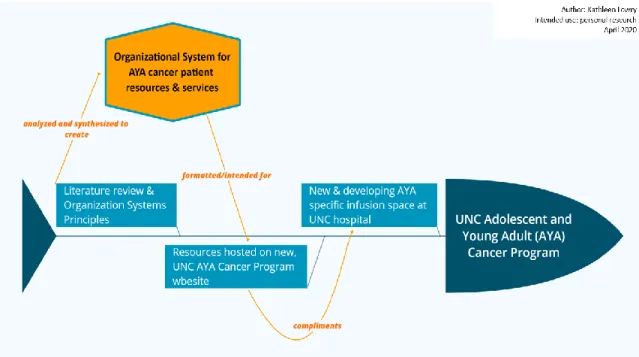
displaying information on the new UNC AYA Cancer Program website. To illustrate the
relationship between this Master’s project and UNC’s project conceptually, the below
Figure 1: Concept map of the UNC AYA Cancer Program, regarding this Master’s project
Scope
The purpose of this study is to develop and define an effective system for
organizing resources and services that are research-identified as unmet and pertinent
needs, specific to AYA cancer patients. It is important to distinguish that this Master’s
project is not the design of a database, but instead should serve as a document to instruct
others on categorizing AYA resources, in a systematic consistent method. However, as
Fienberg (2017, p.12) states, “a good database design requires this kind of conceptual
thinking”, therefore this Master’s project could provide a foundation for future
developments of a specific database of AYA resources and services. The scope of this
Master’s project was focused through the lens of the cancer patient and their ultimate
interaction with the resources. Specifically, items in scope of this Master’s project, are
resources or services intended specifically for an AYA cancer patient, and not from the
individuals will not interact with the system, but the scope was not focused from their
aspect of needs. Professional guidelines on organizing systems explicitly state the
distinctions between the focus of organizing data to create the system, and the actual
implementation of the system (Glushko, 2016a). However, the focus for this Master’s
project blended the distinction, given the planned integration with UNC’s AYA cancer
patient website and the time restraints on completing this Master’s project. In other
words, the implementation of the system was in mind during design and development,
but the actual implementation and users’ evaluation of it, is out of scope of this Master’s
project and was not researched.
An Information and Library Science Discipline, approach
As explained succinctly by Feinberg (2017), there are four basic elements that
constitute the structure of organizing systems; these include, “things” or elements,
resources, items, etc.; “categories” or attributes, dimensions, properties, etc.; “values” or
terms, descriptors, categories, etc.; and “relationships” (e.g. between things, between
categories, between values). Feinberg (2017) continues to illustrate the concept,
explaining the ubiquity of organizing systems and categorization processes, and their
complex integration throughout our forms of life—social, cultural, scientific, technical;
and the inherent instability, ambiguity, and arbitrariness of any organizing system (p.1).
These principles have been kept in mind through the development of this Master’s
project.
The design of my organizing system of AYA resources and services, follows the
results of research studies specifically identifying the needs of AYAs (Smith et al., 2018).
planning and fertility, financial assistance, health insurance, peer and community social
communication, and disruptions in life. Within each category are 2-5 second level tiers,
depending on the first level category, respectively. Some of these categories include,
male or female, work/career or education or relationships, re-occurrence, or follow-up
care, to name a few. This is portrayed in Figure 2 (pg. 33), in the Results section of this
paper. The intended use of this organizing system is to serve as a means to consistently
collect and categorize resources and services for AYAs, accessed through UNC’s AYA
Cancer Program website.
Conclusion
Over the past decade, research and studies have aimed to study the Adolescent
and Young Adult cancer population. This has identified several gaps in services and
unmet needs of AYA cancer patients. With the problem being identified for this
population, solutions are only recently being adopted and implemented through
“survivorship” programs that are designed specifically for AYAs (L. Lux, personal
communication, October 2018). This Master’s project aimed at providing an organizing
system for resources to AYA cancer patients, accessed through a new website for the
novel UNC AYA Cancer Program. As emphasized by authors Nass et al. (2015), AYAs
are part of a wired generation, relying mostly on the internet for information gathering
and interacting with others. This provides the ultimate opportunity of reaching, and
ultimately serving, the vulnerable AYA cancer population by tailoring this Master’s
Definitions of Terms
- AYAs- Adolescent and Young Adults, someone between the age of 15 and 39 at
time of cancer diagnosis. Used in this research as synonymous with “AYA cancer
patient”.
Literature review
In reviewing and analyzing literature of research and studies focused on the
population of Adolescent and Young Adult Cancer patients, the literature search was
focused in the following databases: Google Scholar, National Cancer Institute, PubMed,
and the Library and Information Science Source database through the University of North
Carolina at Chapel Hill. The only scholarly, peer-reviewed journal that currently exists on
the unique topic of AYA Cancer Patients is the Journal of Adolescent and Young Adult
Oncology. With one scholarly journal available, few unique and significant journal
results were obtained, so Google.com was also searched with the timing parameters of
the ‘past year’ to identify more current research. The keyword combinations used in the
searches included “AYA cancer patients”; “young adult cancer”; “cancer survivorship”
and “well-ness”; “after-treatment”; “survivorship”. Additional resources included the
physical space of the UNC Lineberger Comprehensive Cancer Center, and its associated
website (https://unclineberger.org/) and communications with the UNC personnel
(personal communications, 2018-2020). Review of the literature, specifically the AYA
HOPE study conducted in 2010(Harlan et al., 2011) and recentjournal articles (e.g.
Elsbernd, 2018), was used to create a system for organizing resources unique to the
Introduction and Background
According to the National Cancer Institute ([NCI], 2018) 70,000 AYAs are
diagnosed with cancer each year in the United States. The NCI (2015) emphasizes that
this makes up only about 5% of total cancer diagnoses a year, in the United States. AYAs
have been historically under-researched, i.e. misunderstood (Smith et al., 2018). This is
partly due to the lack of participation in clinical trials from the population but also as
result of neglect from national or institutional medical facilities addressing their needs
(Harlan et al., 2011). About 10 years ago, AYA specific research really began with the
fundamental study, the Adolescent and Young Adult Health Outcomes and Patient
Experiences study (AYA HOPE), conducted in 2008 and funded through the National
Cancer Institute (Smith et al., 2018). At the launch of the AYA HOPE study, little was
known as to why the trend of AYA cancer patients being under-researched was apparent
(Harlan et al., 2011) and over the decade, various studies have attempted to answer this
question and fill the research gap.
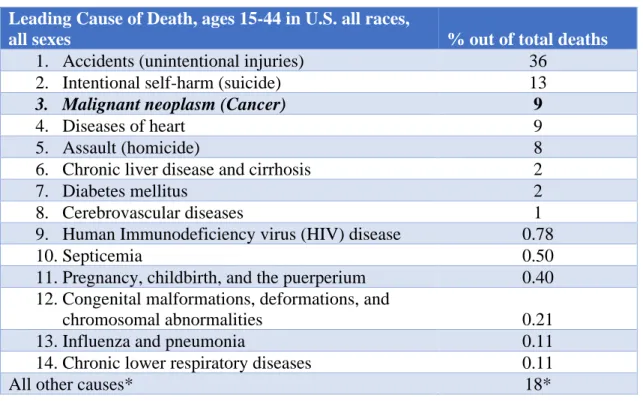
The below table portrays percentages for leading causes of death for the age
ranges 15-44 years old in the United States; percentages were calculated using the recent
version of the published National Vital Statistics report, Deaths: Leading Causes for
2017 (Heron, 2019). The report listed data values on leading causes of death in a format
that separated the age groups by five-year intervals (Heron, 2019, pp. 17-18). With the
data values in this format, there was the option to report leading causes of death for the
age range 15-34 years of age or 15-44 years of age. The latter option was used for this
in Table 1, below.
Table 1: Leading Causes of Death, ages 15-44, 2017.
* “All other causes” are ranked last to accurately portray the representation of multiple smaller causes of deaths combined
While cancer in adolescents and young adults is rare (Harlan et al., 2011), it is
currently the 3rd leading cause of death for this population, behind accidental deaths and
suicide (see Table 1). Relative to other patients with cancer diagnoses, the AYA
population has shown little improvement (Bleyer & Barr, 2009). My literature review has
illustrated that this gap is being addressed and approached by a variety of researchers and
experimenters, yet none have directly concluded, that as a whole, the AYA cancer patient
population has seen improvements to care and survivorship to date.
Treatments for AYA dominate cancers involve long term, life-altering side effects
including infertility, secondary primary malignancies, and cardio toxicity
(Clinton-McHarg et al., 2012). Even though survivors of AYA cancers are at higher risk of Leading Cause of Death, ages 15-44 in U.S. all races,
all sexes % out of total deaths
1. Accidents (unintentional injuries) 36
2. Intentional self-harm (suicide) 13
3. Malignant neoplasm (Cancer) 9
4. Diseases of heart 9
5. Assault (homicide) 8
6. Chronic liver disease and cirrhosis 2
7. Diabetes mellitus 2
8. Cerebrovascular diseases 1
9. Human Immunodeficiency virus (HIV) disease 0.78
10.Septicemia 0.50
11.Pregnancy, childbirth, and the puerperium 0.40
12.Congenital malformations, deformations, and
chromosomal abnormalities 0.21
13.Influenza and pneumonia 0.11
14.Chronic lower respiratory diseases 0.11
developing life-threatening health problems, studies have shown that this population are
often unaware and uninformed of their risk for late health effects (Smith et al., 2018).
Studies suggest that AYA cancer survivors develop unique physical, psychological,
cognitive, and social needs due to the simple fact of their cancer occurring during a
critical development phase of life (Clinton-McHarg et al., 2012), implying current cancer
services do not sufficiently support and serve the AYA population. Effects of a cancer
diagnosis in such a pivotal time in your life include, increased dependency and conflict in
relationships, interruptions to school and subsequently employment or educational
achievements, and lastly, body image concerns ultimately leading to difficulties in
maintaining interpersonal relationships (Clinton-McHarg et al., 2012).
AYA’s Unmet Needs and Services
Prominent Studies: AYA HOPE, CNQ-YP
The AYA HOPE study was the first study to utilize a population-based cancer
registry and focus on examining care quality, and physical and mental health outcomes
for the AYA population (Smith et al., 2018). By 2018, the AYA HOPE study had over
200 citations and “yielded 17 peer reviewed publications” (Smith et al., 2018, p. 2). My
literature review revealed a trend of research and studies regarding the AYA population
diagnosed with cancer increasing in pace and variety specifically in recent years. The
novel UNC AYA Cancer Program, mentioned earlier, is currently performing at least
four studies I am personally aware of ongoing at a UNC hospitals; a prominent facility
that is typically a forerunner for national medical research (L. Lux, personal
Smith et al., (2018) examined and summarized the results of the AYA HOPE
study and reported on them nearly ten years after the study was conducted. The results of
the study illustrated the fundamental difficulty in simply assessing the AYA population
as a whole in the US, over time (Smith et al., 2018). Even though the AYA HOPE study
showed it is possible to track a population of AYAs with the use of cancer registries
(Harlan et al., 2011) it acknowledges the realistic difficulty with studying such a mobile
and difficult to contact population (Smith et al., 2018). The author’s summary of the
AYA HOPE study highlighted the varying and diverse needs of AYA cancer patients,
and the research gaps that still remain (Smith et al., 2018). For example, they identified
unmet information needs regarding long-term medical care, fertility involving family
planning, financial support (both medical and non-medical), and for younger participants
of the study, unmet social information needs (Smith et al., 2018)
Additionally, 50 to 75% of respondents stated not receiving services including
support groups, pain management experts, physical or occupational therapist, a mental
health worker, or financial advice on health care payments (Smith et al., 2018). Further
topics of unmet needs found, involve, or relate to mental health and are understood to be
a cause of inferior health outcomes for this population of cancer patients versus pediatrics
or the elderly (Smith et al., 2018). In conclusion, these data suggest a vulnerable
subgroup of the AYA population that involve patients requiring mental-health specific
care to battle the disparities in health outcomes across cancer populations, as well as
within the AYA population alone (Smith et al., 2018).
Another prominent study credited for advancing this field of research and for a
study titled, the “Preliminary development and psychometric evaluation of an unmet
needs measure for adolescents and young adults with cancer: the Cancer Needs
Questionnaire – Young People (CNQ-YP)” (Clinton et al., 2012). It was conducted in
2010 in Australia and is the only globally accessible study to develop a current method
for assessing AYAs needs. This study defined “young people” starting at the age of 14
years old to follow the legal health care system of Australia, and because the World
Health Organization includes 14 years of age in the definition of adolescent (Clinton et
al., 2012). A PhD student conducting an AYA survivorship implementation plan at the
public health graduate school of the University of North Carolina, adapted this measure
to deploy nationally in the U.S. in 2019 (E. Haines, personal communication, September
18, 2019).
The CNQ-YP was adapted from an original Cancer Needs Questionnaire (CNQ
for adult cancer patients to assess the unique needs of young people (Clinton et al., 2012).
The CNQ has a reputation of an “easy to follow” formatted questionnaire by the adult
cancer populations, so that is why it was chosen to evaluate the AYA population (Clinton
et al., 2012). The CNQ-YP study used a variety of data collection methods to establish
their pilot testing, including a literature review, focus groups, and feedback from health
professionals, researchers, and the general public (Clinton et al., 2012). The pilot testing
attracted 32 participants (Clinton et al., 2012). Low enrollment or participation by the
AYA population was stated as a limitation in the AYA HOPE study, as well as several
other, similarly focused studies. The study’s pilot testing identified eight domains: cancer
treatment staff, cancer treatment center, education, work, information, feelings,
participants were initially recruited with only 34 staying enrolled through the completion
of the study (Clinton et al., 2012). The final questionnaire comprised of six domains and
70 total items. The items of the final questionnaire have been recreated for a visual
illustration in a table found in Appendix C.
As mentioned, a limitation to this study, and studies similar to it, is participation
from the AYA population. In the CNQ-YP study 50 % of those contacted were willing to
participate and this is considered a fairly good response rate with similar studies cited as
having as low as a 10% response rate (Clinton et al., 2012). Another limitation, expected
from the low-enrollment barrier, was the lack of a greater than 90% reliability test
indicating “reasonable variability” among the responses to the questionnaire (Clinton et
al., 2012, p. 5). While the authors’ concluded “reasonable variability” in their resulting
questionnaire, their research still yielded stronger validity variance factors than others
during that time (Clinton et al., 2012). Furthermore, in contrast to other similar studies,
there was an absence of discussions on various aspects of sexual health, outside of
infertility issues as an AYA cancer patient; research suggest this is due to the young ages
and small sample size of the pilot testing (Clinton et al., 2012). In regard to my study, this
questionnaire was used to inform and guide the design priorities of an organizing system
for resources and services for AYA cancer patients.
The following sections of this paper reflect the areas identified as unmet
information needs from the AYA HOPE and CNQ-YP studies: chances of cancer
re-occurrence, cancer treatment options, long-term side effects of treatments, financial
Medical, Fertility/Family Planning, Clinical Trials
Reasons for concerns of poor health care particularly for this population is due to
the fact that a medical “home” does not exist in the United states for this age group
(Smith et al., 2018, p. 2). An area that revealed particularly positive reports from the
AYA HOPE study is that over half participants reported excellent overall quality of
medical care (Smith et al., 2018). Availability and communication with healthcare
information was reported as important (Smith et al., 2018). Results of dissatisfaction with
care positively correlated with participants stating and describing their barriers to access
to medical information (Smith et al., 2018).
The AYA HOPE study sought to answer, are AYAs “getting appropriate
treatment and enrolling in clinical trials”? (Harlan et al., 2011). The results showed a rate
of 68% of patients receiving appropriate treatments related to their cancer care (Smith et
al., 2018). The researchers did not suggest whether this was an appropriate rate and other
studies from my review did not focus or report on this value. Other research has shown
that AYAs receive more rigorous treatments than individuals of the adult cancer group,
and less rigorous treatments than children (Smith et al., 2018). A limitation of the factors
used to measure appropriate treatment in the AYA HOPE study, was the lack of a
national consensus or any cohesive guidelines for assessing the appropriateness of
treatments for this population, at the time (Smith et al., 2018). Of the AYA HOPE
participants, only 13% were on clinical trials. Results further revealed a 68% enrollment
rate for patients who were informed of available clinical trials (Smith et al., 2018).
Indicating an information gap may be contributing to the overall low enrollment in
HOPE study participants reported being informed or made aware of available clinical
trials regarding treatment for their diagnosis. From a financial aspect, research predicts an
increase in AYAs enrollment in clinical trials with the provision added to US health
insurance to cover cancer related clinical trials (Guy et al., 2014). Suggesting a lack of
clinical enrollment could be credited to lack of health insurance coverage in the past,
creating unrealistic financial burdens for an AYA cancer patient.
Over half AYA participants in the AYA HOPE study reported negative impacts
on family planning related to their cancer diagnosis (Smith et al., 2018). These are
reasonable concerns given, established research through both national and international
studies have shown evidence that AYAs diagnosed with cancer have increased risks of
adverse reproductive outcomes (Smith et al., 2018). Interestingly, disparities were found
regarding physicians discussing fertility preservation between genders of cancer patients,
revealing males were more likely to receive fertility preservation options and
recommendations than females (Smith et al., 2018). Furthermore, patients without
insurance or with existing immediate families were less likely to discuss fertility
preservation with physicians (Smith et al., 2018). In conclusion, these results ultimately
suggest substantial negative effects of cancer diagnosis on AYAs lives, specific to dating,
sexuality, fertility, and family planning.
Mental Health & Physical Health
The AYA HOPE study also illustrated reports of the psychosocial impacts
relating to a cancer diagnosis, including positive, negative, and neutral ones (Smith et al.,
2018). These results include, both negative and positive impacts on relationships with
contrast, more negative effects were reported relating directly to social impacts (Smith et
al., 2018). Furthermore, negative impacts were reported relating to dating, sexual
intimacy, body image, and control over life (Smith et al., 2018). Reports revealed
negative impacts of cancer on sexual intimacy, showing a majority of impacts actually
remained persistent throughout the patient’s immediate life (Smith et al., 2018).
Forty-nine percent reported negative impacts to sexual intimacy 1-year post cancer and 70% of
those “persisted in their negative perceptions” 2 years post diagnosis (Smith et al., 2018,
p. 4).
Studies further report significantly worse physical health for AYAs diagnosed
with cancers versus others similarly aged (Smith et al., 2018). The more significant
impacts on AYAs HRQOL (health-related quality of life) include, limitations to physical
ability and to emotional capacities, differences in physical and social functioning, and
extreme fatigue (Smith et al., 2018). Not surprisingly, mental health was reported
comparatively worse for AYA patients that were currently undergoing treatments, having
current/recent symptoms, or lacking health insurance (Smith et al., 2018). The AYA
HOPE study found variations in reports of HRQOL areas among different demographics,
socio-economic statuses, and others life affecting factors. For example, worse physical
health was reported by sarcoma patients who had obtained a lower level of education by
time of diagnosis, or worse mental health was reported by unmarried patients (Smith et
al., 2018)
Financial Burdens & Health Insurance
Two-thirds of participants of the AYA HOPE study, reported negative impacts on
financial advice or information as an unmet need/service (Smith et al., 2018).
Additionally, authors Guy et al. (2014) conducted a study on the economic burdens that
AYA cancer survivors experience compared to other adults in the US. As expected,
AYAs carry a heavier economic weight after a cancer diagnosis and experience a greater
loss in productivity measured in monetary values (Guy et al., 2014). This study also
discusses the uncertainty regarding the impacts, or the relationship between health
insurance and access to care for AYA cancer survivors (Guy et al., 2014). To add, this
population is historically uninsured (Smith et al., 2018). Although, with relatively recent
changes to U.S. healthcare policy, such as the extension of the cut off age from 19 or 21
to 26 for eligibility of coverage under a family health insurance plan (Goldman, 2013),
the relationship between AYAs and health insurance coverage for today, needs to be
re-evaluated. This cause-and-effect relationship is imperative to understand for this
population as studies have shown impacts on future cancer related care is impacted by the
provisions of health insurance coverage. For example, the AYA HOPE study found a
positive correlation between patients having health insurance, and with the patients
receiving cancer-related follow-up care (Smith et al., 2018). Concerningly, this study also
revealed that the percentage of AYA patients enrolled in health insurance declined over
the time the study was conducted (Smith et al., 2018). However, again this statistic could
vary today with a decade of the Affordable Care Act and its provisions to health
insurance related to cancer patients being in place. More so, the HOPE study revealed
that patients without health insurance reported a worse HRQOL, including worse overall
physical and mental health, effects to emotional functioning, in addition to reports of
Overall, the data concludes that AYA cancer patients in the US experience
adverse impacts to their overall care and health outcomes, in regard to access to health
insurance coverage (Smith et al., 2018) and economic well-being (Guy et al., 2014).
Disruptions in Life
A key finding of the AYA HOPE study was that out of 463 participants, over 50%
of them indicated problems with work or school after their cancer diagnosis. According
to StupidCancer.org (“Support for…”, 2019) one out of every 100 college students is
estimated to be a cancer survivor; no further literature was discovered reporting on such
statistics other than a non-research-based website, i.e. StupidCancer.org. Furthermore, the
AYA HOPE study found only about 26% of participants categorized as part-time student
or employed before diagnosis, reported successfully transitioning to full-time
employment or student status after diagnosis (Parsons et al., 2012).
As mentioned, managing a cancer diagnosis is particularly difficult for this
population due to the transitionary nature of the stage of their life at the time. Not
surprisingly then, a major concern for when cancer occurs in late adolescent or early
adulthood is its effects on educational attainment and professional goal development.
Over half participants in the AYA HOPE study who categorized as full-time, reported
problems with their works and studies after diagnosis (Smith et al., 2018). A positive
correlation was seen between patients least likely to return to work and those who lacked
health insurance (Harlan et al., 2011). Open ended responses received descriptions of
inabilities to integrate cancer care and their daily life activities, including both work and
school (Smith et al., 2018). Overall insinuating AYA cancer patients face substantial
Reality of Attending College with Cancer” from AffordableCollegesOnline.org (Lee,
2019) break down the top general obstacles a cancer survivor/patient may face, hindering
successful reintegration to academics: fatigue, nausea and vomiting, changes in body and
appearance, memory or concentration problems, location and time constraints, changes in
social life, and struggles with a new reality.
Authors Vetsch et al. (2017) conducted a study on the disruption of education and
vocational goals for AYA cancer patients and concluded that almost 30% of participants
reported moderate impairment (by the study’s measures) to their goals due to their cancer
diagnosis. The participants in the study described difficulties in reintegrating to
school/work due to concentration problems and physical impairments (Vetsch et al.,
2017). Furthermore, the study concluded, AYAs would benefit from additional support
and services beyond what is currently being provided, to meet their unique needs from a
cancer diagnosis at their stage in life (Vetsch et al., 2017).
Taking a further look at the literature, the gaps between available resources and
AYA resource needs, become rather clear. Historically, these gaps were focused
primarily in the area of unmet medical related needs or access to information, such as
secondary cancers or follow-up appointments (Nass et al., 2014). However, more recent
studies, such as “On Your Own” (Elsbernd, Pedersen, Boisen, Midtgaard, & Larsen,
2018), report themes of needs more related to psycho-social and municipal support;
including, information on symptoms and late effects, navigating the medical system, lack
of understanding from peers, unofficial support, and changed perspectives. In a similar
report by the same researchers, Pedersen, Boisen, Midtgaard, Elsbernd, and Larsen
navigating the medical system, social reintegration, and the drive of youth. The same
study illustrated that AYA survivors do not have proper or adequate skills, nor energy, to
navigate their diagnosis (Pedersen, Boisen, Midtgaard, Elsbernd, & Larsen, 2018, p.1).
Authors Kaal et al. (2017) performed a questionnaire study to identify what the
relationship is between HRQOL (health-related quality of life) for AYAs and their
feeling of empowerment. Their general findings illustrated that low levels of
empowerment were mostly associated with low levels of autonomy, social support, and
coping difficulties (Kaal et al., 2017). Furthermore, their study found a positive
relationship between participants reporting feelings of empowerment, in addition to
reporting self-awareness, ability to manage new situations, and access to social support
(Kaal et al., 2017).
A study showed, a majority of AYA cancer patients require breaks and medical
leave from their education during treatments (Elsbernd, Pedersen, Boisen, Midtgaard, &
Larsen, 2018). Research further shows two main overlapping themes that AYAs struggle
with upon re-integrating in educational systems: navigating the educational system and
lack of understanding from peers or unofficial support (Elsbernd et al., 2018). Moreover,
as described by Cancer.Net (n.d.) and similar websites (NCI, 2018), survivorship for any
cancer patient is the most challenging and difficult part of their experience, because its
meaning and manifestation varies drastically from person to person.
Discussion
Reports and further examinations have found consistent and similar results
regarding this population; specifically showing impact of cancer diagnosis on HRQOL,
(Smith et al., 2018). In 2013, a collaborative workshop comprised of 60 experts,
convened to conduct a review, and summarize the state of the science of AYA oncology
(Smith et al., 2016). Their work examined manuscripts on current trends in cancer
incidence, mortality and survival, basic biological characteristics for AYA cancers,
clinical trial enrollment, care quality and health services, and social functioning (Smith et
al., 2016). In all, their review is suggesting of recent advancements, focus, and larger
cross-sectional, cross-discipline studies being conducted and focused specific on the
population of AYA cancer patients (Smith et al., 2016).
Although it was recognized and reported that AYAs with cancer were an
understudied population (NCI, 2018), prior to the AYA HOPE study published in 2012,
national data examining the impacts of cancer in the US, was still unavailable (Smith et
al., 2018). Therefore, the AYA HOPE study can be credited as supplying the clinical and
research communities with fundamental medical and survey data about care and
outcomes experienced by the AYA population (Smith et al., 2018). In all, authors
discussed the need that still exists for targeted research on future epidemiologic and
health services studies to accurately address the impact and needs of the AYA population
as an entirety (Smith et al., 2018). Even more so, further limitations of the AYA HOPE
study included, a small sample size, a U.S.-only demographic study, and lack of age- or
cancer-based comparisons, ultimately restricting generalizability of findings; illustrating
additional and further research needs of this field of study (Smith et al., 2018).
Additional factors, or impacts, that researchers declare require additional and
further research today include: comparing experiences of AYAs to older and younger
additional cancers affecting AYAs (studies reported on prevalent cancers as of 2010),
questions and concerns in delay of diagnosis, quality of overall care, and enrollment of
clinical trials (Smith et al., 2018). Finally, additionally areas were identified as needing
ongoing monitoring, including: developing appropriate survivorship care, identifying and
alleviating barriers to care, evaluation and monitoring of symptoms, changes in
comorbidities and HRQOL, family planning and fertility issues, and research of cancer
impacts to specific marginal subgroups of AYAs, e.g. ethnic minorities or individuals of
low socio-economic status (Smith et al., 2018). Then lastly, two areas that require current
and updated assessments due to their naturally evolving disciplines include impacts of
Methodology
In developing this Master’s project of an organizing system for resources and
services to serve the Adolescent and Young Adult Cancer Patient population, the
following concepts were applied for methodology.
Foundations of Organizing Systems
According to Glushko (2016a), there are four contexts that the act of organizing
can be placed into; they are, physical things, information about physical things, digital
things, and information about digital things. This Master’s project focused on identifying
and organizing resources that can be placed into the latter three contexts; information
about physical things (e.g. information regarding mental health resources), digital
resources (e.g. cancer websites; digital financial applications), information about digital
things (e.g. information regarding online support groups). Further explained by Glushko
(2016a), “an organizing system is an abstract characterization of how some collection of
resources is described and arranged to enable human or computational agents to interact
with the resources” (p.33). The pertinent portion of the previous statement is regarding
the human interaction with the resources organized through your system. As mentioned
in the introduction of this paper, the scope of this Master’s project stemmed from the
Some foundational concepts prominent to the design and development to
organizing systems, as explained by Glushko (2016a), include: “Resource”, “Collection”,
“Intentional Arrangement”, and “Organizing Principle”. As the textbook further defines,
a Resource can refer to any object of value that can support “goal-oriented activity” (p.
35) and a Collection refers to a group of resources selected for an intended purpose
(Glushko, 2016a). Furthermore, the concept of Intentional Arrangement regards the
explicit or implicit actions of organizing by humans, computers, or “as implementations
of, human intentionality” (Glushko, 2016a, p. 40). For example, to illustrate, an
arrangement of rock layers would not be an example of “intentional arrangement”
(Glushko, 2016a, p. 42). Lastly, the concept of Organizing Principle states the distinction
between design and implementation in regard to organizing systems, i.e. “directives for
the design or arrangement of a collection of resources” in such a way that does not
“assume” practical implementation (Glushko, 2016a, p. 43). This design philosophy is
referred to as “Architectural Thinking” (Glushko, 2016a, p. 43). Separating the design
and implementation aspect of organizing systems, algins with a what is called the
“three-tier architecture” that is mostly utilized by software architects and designers. The three
tiers of organizing systems includes, the storage of data (“storage”), the business logic of
functions that use the data (“logic”), and the user interface component that serves to
allow users and other applications to interact with the data (“presentation”) (Glushko,
2016a, p. 47). The idea or concept is, using this way of architectural thinking, allows for
the possibility of making a change to a component of the system without having to
rethink the design entirely (Glushko, 2016a, p. 78). In conclusion, there are four
resource, by dominant purpose or common purposes, according to nature or size of
expected user, according to technological demands/restrictions (Shin, 2017). This
Master’s project is predominantly classified by the dominant purpose or common purpose
of resources: resources and services for AYAs navigating cancer care.
Functional Requirements for Subject Authority Data (FRSAD)
Researcher Jonathan Furner (2012) explains the primary goal or focus of any
information system, such as a catalogue of resources for AYAs, is to assist users in
locating and accessing resources for their intended purposes. As he further illustrates, a
users’ discovery of a resource typically depends on the prior retrieving, describing, and
organizing resources (Furner, 2012). Ultimately, Furner (2012) is describing the
fundamentals required for a construction of a database that a user can interact with, and
those fundamentals involve the “theory and practice of resource description” (p. 495).
The Functional Requirements for Subject Authority Data (FRSAD) model, as explained
by Furner (2012), is meant to “guide the design and construction of resource discovery
systems” (p. 495). The model focuses on requirements for the production and
organization of resource descriptions, and its ultimate construction (Furner, 2012).
Limitations and other discussions exist concerning the FRSAD and related models
(Furner, 2012), but those discussion are out of scope of this Master’s project.
Using this model to guide my research, my schema focuses on resource
description for its intended implementation (i.e. the UNC AYA Cancer Program
Descriptive Schema
As recent as 2008, authors Lee et al. proposed the novel concept of “descriptive
schema” (DS) (Lee et al., 2008). The descriptive schema concept is inherently simple;
contrast to the traditional XML Schema Definition commonly utilized, the DS is not
intended to “prescriptively” control the structure of underlying data (Lee et al., 2008, p.
1). Lee et al. (2008) defend that through DS, data may occasionally violate the schema,
and this “tolerance [to] violations” illustrates their largest innovation to existing
approaches in the discipline (p.2); ultimately it is the “tolerance for violations” that
defines a descriptive schema.
For the purpose of this Master’s project, I combined the flexibility of a
Descriptive Schema with the foundations of “Organizing Systems” discussed, to develop
my overall organizing system.
Design Decisions
When deciding on “design decisions” as described by Glushko (2016b), five basic
questions should be asked. First, start with deciding ‘what is being organized’ (Glushko,
2016b, p. 64), including the scope and scale of the resource domain, and whether it will
be a physical object, digital object, or information regarding an object. In this Master’s
project, “AYA Resources” are being organized. They include both information and
services regarding cancer diagnosis for individuals between the age of 15 and 39.
Examples include, locations of hospitals in patient’s preferred area; hospital or
institutional funded/sponsored medical information or services include access to
psychiatry, physical fitness recovery programs provided by a hospital/institution. It
medical facilities, and digital resources that are produced by medical professionals, such
as the databases through the National Cancer Institute, or the American Cancer Society.
Furthermore, it will include information about specific resources; for example, it could
include a link to a website pertaining to information on Oncology-approved yoga, times,
and dates of sessions/courses, etc.
My research found that most information that falls within this scope is designated
between pediatric or elderly care. That, first, implies there will be overlap between labels
and categories for pediatric care and elderly care when compiling AYA resources,
especially initially. Secondly, as illustrated in the literature review, few resources
currently exist for this population. However, as the focus on AYA cancer patients and the
creation and development of resources and services to meet their needs increases, the
amount of available resources should as well. Ultimately provoking a continuation of this
research.
Next, the question to be asked is “why is it being organized” (Glushko, 2016b,
p.66). As explained in the literature review section of this paper, the AYA population has
been consistently reported as an under-research, under-served population. Therefore,
there is a clear lack of differentiating, or categorizing, cancer related patient resources
and services to include AYAs with pediatric and elderly cancer care. The ultimate goal of
this Master’s project, and any organizing system, is to serve as a resource to the UNC
Adolescent and Young Adult Cancer Program (comprised of personnel and patients).
Secondary, this Master’s project may also serve as a novel design to moving further with
AYA cancer patient population. The user class that would be impacted by these design
decisions range from the web developers, to UNC’s medical personal, and patients.
“How much is it being organized?” (Glushko, 2016b, p.70). The granularity of
this system will stay relatively simple in the discipline of organizing systems, with the
hierarchy being only three-levels in depth. First deciding between seven categories, then
between two to three categories, respectively. This structure mirrors the categories of
unmet AYA needs and services that were identified through analysis of results from the
AYA HOPE study (Smith et al., 2018). When applied, resources will be separated by
gender, stage of treatment, or topic of life-management relevant (i.e. education vs. work;
health insurances vs. financial assistance).
The remaining design questions to consider are “when is it being organized?” (p.
76) and “how (or by whom) is it organized?” (p.79) (Glushko, 2016b). By the nature of
these resources, some of the typical elements that the organizing is dependent on, are
created at time of creation, such as date, audience (AYA vs. pediatric), and, if relevant,
location. Actual organizing in the actions of this Master’s project will occur during the
creation and development of the content management system. The answer to “how” or
“who” is somewhat two-fold, as first the content will have to be accurately labeled, or
organized, into the content management system by a human. Then the content
management system has backend processes to display this information in accessible
Results
Domain, Scope, Identification
According to Feinberg (2017), the domain of a system is used to define the set of
items that your system will comprise of. The domain of my project is resources or
services to serve the needs of the Adolescent and Young Adult cancer patient population.
Further, Feinberg (2017) describes the scope of a system as guiding what is
included in or out of your set of items. For this system, items that discuss the topics
related to the identified unmet needs for AYAs that is discussed in the prior sections,
including medical information, fertility or family planning services, mental and physical
health information or services, financial assistance programs, and information or services
pertaining to disruptions to life. These resources and services will be limited to those that
are either peer-reviewed or published by an organization or institution. Specifically, items
that are not included, are those of opinion-based evidence or tone and theme. For
example, several ‘at-home’ remedies for cancer exist on the internet, but these are not
remedies suggested or supported by medical personnel and will therefore not be included
in this repository of resources. On a similar note, certain non-research-based, or personal
websites, that are promoted by professional organizations, (e.g. Elephants and Tea or
Cancer.Net) will be included in the study.
Identification, according to Feinberg (2017), is the means for ultimately
project, resources, and services will be identified/defined as one. The items will entail
information regarding, or instructions for accessing information regarding AYA
resources or services. For example, different types of financial aid programs intended for
AYAs exist, such as the SamFund or Cancer for College; a link to the primary websites
as well as any descriptions or pertinent information will be defined as one item. Since
most of these resources or services specific to AYAs is relatively new, since the AYA
HOPE study in 2010 started the developments in research, I will not constrain the schema
by certain attributes, such as data, location, subject, or topic. I expect, as my research
supports, that many sources will have few qualitative attributes besides the category of
“AYA resource”. Distinct parts that will need to be kept track of include, medical
information regarding during treatment versus after treatment, or fertility information for
male versus females, and other specifics that will be intrinsic to the item being
categorized. In other words, any attributes that would increase the granularity of the
distinction of resources will be an expected feature of the item. For example, a resource
concerning medical information for cancer patients will already be distinct between
during treatment medical information versus after treatment medical information, as an
intrinsic characteristic of the information.
Through this domain, scope and means of identification, the following section
outlining attributes and associated values to ultimately design a descriptive schema for
further implementation was designed.
Organizing AYA Cancer Patient Resources
The AYA HOPE study and CNQ-YP questionnaire was adopted and combined to
AYA services and resources. Using the results from the study and questionnaire, the
following concept map was created (Figure 2). The figure illustrates the relationships
between the attributes and topics identified through research as unmet needs and services
for the AYA cancer patient population.
Figure 2: Organizing Hierarchy for AYA Cancer Patient Resources and Services
According to Glushko (2016a), an appropriate, or good, organizing system
requires documentation that would allow someone else to use your system to categorize
the items within the domain. The following section will serve as such documentation.
The section following contains a definition to be used to identify an item as an AYA
resource and properly group it within the first hierarchy of Figure 2. If a second or third
level of exists in the hierarchy, an additional definition is given for the purpose of
properly categorizing the item further. Some caveats exist regarding items pertaining to
multiple categories, and these are discussed below the following definitions. Ideally, the
intended user of the system would be an individual already familiar with available AYA
resources and would therefore know the context in which to start curating sources (e.g.
using the following file structure and definitions to place content into folders accordingly.
Resources should be considered within the geographical scope of the United States.
I. Medical Information:
Definition: This should include information from professional and/or
peer-reviewed content authored by medical or educational institutions. For example,
information located on UNC Hospital’s cancer website, or the National Cancer
Institute’s web resources. This should be medical information specifically
regarding your disease that one would not categorize as mental or physical health.
More precisely, this includes information regarding diagnosis processes or
treatment options by type of cancer.
2nd level: Once defined, the item should be categorized by whether it
pertains to patients at “time of diagnosis”, “in treatment”, or “long-term side
effects”. This may be explicit within the resource or literature, but it may come to
the discretion of the individual at the time of organizing the resource.
3rd level: the item can then be categorized by “about your illness”,
“clinical trials”, “about your treatments”, “side effects”, “other information”,
“re-occurrence”, or “follow-up care”, respectively. These categories are rather
self-explanatory and will again be left to the discretion of the resource curator at the
time.
II. Mental & Physical Health
Definition: Medical or non-medical information concerning psychosocial
services, formal or informal community support groups, or exercise programs
targeting cancer survivors through organizations like the YMCA.
2nd level: the item can be further grouped pertaining to “during treatment”
or “after treatment” categories. This level of separation is included because the
information concerning these topics were seen to have varying responses from
AYA focused studies. As can be inferred, information pertaining to physical
health regarding a cancer patient could be different depending on whether the
patient is undergoing treatments, or if in their fifth year of recovery from
treatments.
III. Financial Assistance
Definition: any piece of information that pertains to financial assistance
targeting AYA cancer patients and/or their caretakers
2nd level: after identifying, the item should be categorized in either
self-explanatory group, “advisor/counselors” or “grants/scholarships/funds”
IV. Health Insurance
Definition: this is a broad and varying topic, but should be easy to identify
information pertaining to health insurance in the United States.
2nd level: next, the item should be categorized by whether it pertains to a
certain “state”, whether it pertains to cancer (other information should just
grouped within the other 2nd level categories), if it’s a specific financial assistance
program or information about one, or lastly, if it is specific legal assistance for
cancer patients, concerning their health insurance.
Definition: any resource targeting peer and community social gathering or
communications.
2nd level: once identified, these items can farther be grouped into
categories of phone or web-based apps, mentorships (e.g. with survivors), or local
based support groups
VI. Disruptions in Life
Definition: these items will pertain more to information on services
concerning assisting AYAs experiencing a disruption to life due to their cancer
diagnosis.
2nd level: after identified, the item should be categorized as concerning
work or career services, education services, or relationships. There may be cases
where items are categorized into two of these groups.
VII. Family Planning and Fertility
Definition: similar to medical information, this item will be
self-explanatory and should only contain information from professional and/or
peer-reviewed content from medical or educational institutions.
2nd level: similar to mental and health attributes, the item should next be
categorized as it pertains to the patient during or after cancer related treatments
3rd level: next, reasonably, the item should be categorized as it pertains to
male or female patients
Some caveats may occur when distinguishing items, such as items falling into one
or more categories or level of categories. For example, several medical information items
treatment/diagnosis. Additionally, items between the 2nd level of “disruptions to life” may
see some cross-over in multiple categories. For instance, an item such as a resource of
information or a service like a counselor, could fall into the category of both
“work/career” and “relationships”. When an item can be placed into multiple categories,
the item should be placed in the category that it applies to most appropriately. For
example, there is a resource called the SamFund that provides financial assistance to
AYA cancer survivors planning to start a family. This resource could be grouped under
“financial assistance” or “family planning and fertility”. However, this item could be
group most appropriately with “financial assistance” as it could then further be
categorized as “grants/scholarships/funds”, whereas it would not appropriately fit in any
of the second level categories within “family planning and fertility”. This approach
should be used, as opposed to placing an item in multiple categories, to minimize the
repetitiveness and maintain distinctiveness across categories.
The definitions may sound vague or generalized, however, this is due to concepts
borrowed from the discussion found in the Methodology section of this paper concerning
descriptive schemas.
Future Implementation
In regard to the implementation of this Master’s project’s resulting system for
organizing resources and services for AYA cancer patients, software of headless
contentment management systems (CMS) is being considered. Simple put, a headless
CMS is back-end only content management system, meant to build a “content repository”
accessible via technology for any device (Angerer, 2020). This makes a headless CMS
resources and services for this Master’s project. That is because, I do not have personal
control over the development of the new UNC AYA Cancer Program website. Therefore,
implementation using a headless CMS allows this Master’s project to be integrated with
any existing platform, independent from development. Time restraints on this Master’s
project did not allow for the complete creation of a headless content management system.
However, after discussions with web developers for the new AYA Cancer Program
website, plans for further development have been put in place to use the headless CMS
Strapi to start building a repository of resources expected to be accessible through UNC’s
new cancer program website (S. Balcom, personal communication, 16 April 2020). The
specific item that would be added to the repository is the web address for information
pertaining to a service or the resource. For the purpose of this Master’s project, this
Conclusion
While research shows that medical and professional advancements concerning
adolescent and young adult (AYA) cancer patient care has progressed in recent years, it is
still a widely under-researched topic with limited understandings. This Master’s project is
fundamentally aimed at developing a system for organizing resources and services
intended to support and address the needs of AYA cancer patients. Figure 2 (pg. 33)
illustrates the simple structure derived from the significant AYA HOPE study, performed
nearly a decade ago today. A limitation of this research is the narrow scope of the
categories achievable through the results of the HOPE study. This indicates the need for
further research to properly address and adequately serve the information needs in the
Adolescent and Young Adult cancer patient population, the eluding battle for adolescent
Bibliography
Angerer, D. (2020, April 2). Headless CMS explained in 5 minutes. Storyblok.
https://www.storyblok.com/tp/headless-cms-explained.
Blanch-Hartigan, D., & Kinel, J. (2017). Addressing Career-Related Needs in Adolescent
and Young Adult Cancer Survivors: University Career Service Professionals’
Experience and Resources. Journal of Adolescent and Young Adult Oncology,
7(2), 245–248. https://doi.org/10.1089/jayao.2017.0064.
Bleyer, A., & Barr, R. (2009). Cancer in Young Adults 20 to 39 Years of Age: Overview.
Seminars in Oncology, 36(3), 194–206.
https://doi.org/10.1053/j.seminoncol.2009.03.003.
Casillas, J., Syrjala, K. L., Ganz, P. A., Hammond, E., Marcus, A. C., Moss, K. M.,
Crespi, C. M., Lu, P., McCabe, M. S., Ford, J. S., Jacobs, L. A., Pucci, D.,
Palmer, S. C., Termuhlen, A. M., Diller, L., Campbell, M., Jones, B., &
Friedman, D. L. (2011). How confident are young adult cancer survivors in
managing their survivorship care? A report from the LIVESTRONGTM
Survivorship Center of Excellence Network. Journal of Cancer Survivorship,
5(4), 371–381. https://doi.org/10.1007/s11764-011-0199-1.
Clinton-McHarg, T., Carey, M., Sanson-Fisher, R., D’Este, C., & Shakeshaft, A. (2012).
Preliminary development and psychometric evaluation of an unmet needs
Questionnaire - Young People (CNQ-YP). Health and Quality of Life Outcomes,
10(1), 13. https://doi.org/10.1186/1477-7525-10-13.
Elsbernd, A., Pedersen, K. J., Boisen, K. A., Midtgaard, J., & Larsen, H. B. (2018). “On
Your Own”: Adolescent and Young Adult Cancer Survivors’ Experience of
Managing Return to Secondary or Higher Education in Denmark. Journal of
Adolescent and Young Adult Oncology, 7(5), 618–625.
https://doi.org/10.1089/jayao.2018.0058.
Feinberg, M. (2017, Fall). INLS520: Organization of Information [Syllabus]. School of
Information and Library Science (SILS), UNC-Chapel Hill.
https://ils.unc.edu/courses/2017_fall/inls520_002/.
Furner, J. (2012). FRSAD and the Ontology of Subjects of Works. Cataloging &
Classification Quarterly, 50(5–7), 494–516.
https://doi.org/10.1080/01639374.2012.681269.
Glushko, R. J. (Ed.). (2016a). Foundations for organizing systems. In The Discipline of
Organizing: Informatics Edition (4th ed.) (pp. 25–52).
https://ischools.org/Discipline-of-Organizing-Informatics.
Glushko, R. J. (Ed.). (2016b). Design decisions in organizing systems. In The Discipline
of Organizing: Informatics Edition (4th ed.) (pp. 61–83).
https://ischools.org/Discipline-of-Organizing-Informatics.
Goldman, T. (2013, December 16). Progress Report: The Affordable Care Act’s
Extended Dependent Coverage Provision. Health Affairs Blog. DOI:
Guy, G. P., Yabroff, K. R., Ekwueme, D. U., Smith, A. W., Dowling, E. C., Rechis, R.,
Nutt, S., & Richardson, L. C. (2014). Estimating The Health And Economic
Burden Of Cancer Among Those Diagnosed As Adolescents And Young Adults.
Health Affairs, 33(6), 1024–1031. https://doi.org/10.1377/hlthaff.2013.1425.
Harlan, L. C., Lynch, C. F., Keegan, T. H. M., Hamilton, A. S., Wu, X.-C., Kato, I.,
West, M. M., Cress, R. D., Schwartz, S. M., Smith, A. W., Deapen, D., Stringer,
S. M., Potosky, A. L., & the AYA HOPE Study Collaborative Group. (2011).
Recruitment and follow-up of adolescent and young adult cancer survivors: The
AYA HOPE Study. Journal of Cancer Survivorship, 5(3), 305–314.
https://doi.org/10.1007/s11764-011-0173-y.
Heron, M. (2019). Deaths: Leading Causes for 2017. National Vital Statistics Reports,
68(6), 77.
Kaal, S. E. J., Husson, O., van Duivenboden, S., Jansen, R., Manten‐Horst, E., Servaes,
P., Prins, J. B., van den Berg, S. W., & van der Graaf, W. T. (2017).
Empowerment in adolescents and young adults with cancer: Relationship with
health‐related quality of life. Cancer, 123(20), 4039–4047.
https://doi.org/10.1002/cncr.30827.
Lee, S. D., Yee, P., Lee, T., Cheung, D. W., & Yuan, W. (2008). Descriptive schema:
Semantics-based query answering. Paper presented at the CEUR Workshop
Proceedings, 360 133-135. http://ceur-ws.org/Vol-360/paper-2.pdf.
Lee, S., & Roth, T. (2019 September 24). Support for Students with Cancer & Survivors