PREVALENCE AND TRAJECTORIES OF INTIMATE PARTNER VIOLENCE AMONG SOUTH AFRICAN WOMEN DURING PREGNANCY AND THE POSTPARTUM PERIOD
Allison Kjellman Groves
A dissertation submitted to the faculty of the University of North Carolina at Chapel Hill in partial fulfillment of the requirements for the degree of Doctor of Philosophy in the
Department of Health Behavior.
Chapel Hill 2013
Approved by:
Suzanne Maman, PhD
ii © 2013
iii ABSTRACT
ALLISON KJELLMAN GROVES: Prevalence and trajectories of intimate partner violence among South African women during pregnancy and the postpartum period
(Under the direction of Suzanne Maman)
Intimate partner violence (IPV) is a significant public health problem in South Africa. However, there has been limited research on IPV during pregnancy and the postpartum period, despite significant negative consequences. A better understanding of the prevalence and trajectories of IPV for women in South Africa during pregnancy and the postpartum period will inform IPV prevention interventions
.
Study 1 used data from the South Africa HIV antenatal post-test support study
(SAHAPS) to describe the prevalence and rates of physical, sexual and psychological IPV at pregnancy, at four months postpartum and at nine months postpartum. More than 1 in 5 women experienced some form of IPV at least once during pregnancy. Psychological IPV was the most common type of IPV experienced in both pregnancy and the postpartum
period.
iv
not significant change in levels of IPV over pregnancy and the postpartum period. However, there was significant individual variability in trajectories of IPV over the study period. The association between pre-pregnancy IPV and IPV during pregnancy and the postpartum period was buffered by higher relationship power. Additionally, higher relationship stress increased women’s risk of psychological IPV during pregnancy and the postpartum period, regardless of pre-pregnancy IPV. Partner social support did not change women’s risk of IPV.
v DEDICATION
vi
ACKNOWLEDGEMENTS
The data for my dissertation comes from a research intervention that took place in Durban, South Africa. I have worked in tandem with our South African partners for the past six years on this intervention. I could not have completed this dissertation without the wisdom and efforts of our entire South African research team, especially Daya Moodley. I also could not have completed this dissertation if the women living in Umlazi had not been willing to partake in the research intervention. I am forever indebted to them for their willingness to share details about their intimate lives during pregnancy and the postpartum period.
I also completed this dissertation with a little help from my mentors, friends and loved ones. These categories are not mutually exclusive. I am very thankful to be surrounded by such wonderful individuals.
First, to Suzanne Maman. You have been a constant in my life for the last nine years, and I feel so lucky to have found you in the halls of Hopkins. Suzanne, thank you for teaching me how to do research with rigor, patience and respect. I look forward to the next opportunity to cross borders with you, or at the very least, to write with you while on a retreat. I am, and always will be, incredibly appreciative of your never-ending support in every corner of my life.
vii
you for being my methodological sounding board, for your unending faith in my work and for
your unreserved friendship since day one.
To the rest of my doctoral committee: Vangie Foshee, Sandy Martin and Carolyn Halpern. You have each provided thoughtful critique, editorial comments and fashion advice during times when I have needed it most. I truly appreciate the time and effort it took for each of you to be my mentor through this process.
The support I receive from my Baltimore familia (formed long ago) has no regard for state lines, and this dissertation could not have been completed without them in my life. A big thanks to: Clare Barrington, Becky Genberg, Nicole Masenior, Jay Graham, Caroline Fichenberg, Kirsten Stobenau, Benjamin Link, Marino Drake, Rafela Drake, Betsy Costenbader, Katie Frank and Millie Vandenbroek. Clare Barrington, your everyday
presence in my life in the halls of Health Behavior is something I cherished; you also were a source of inspiration throughout my dissertation year, since you were proof that one could indeed have a newborn and finish a dissertation within the same year. Becky Genberg, you have provided critical support in the form of online scrabble and timely phone calls. I cannot wait to return the love as you enter the realm of motherhood later this year. To all of the familia: I am lucky to have found each of you in Baltimore, and I will continue to carry your wisdom and friendship with me wherever I go.
The support I received from my North Carolina contingent also deserves mention. Christine Tucker, it amazes me what we have built between us in between three
viii
so grateful for the time we spent in it, particularly once we moved out of the supply closet. Thanks, too, to my other compatriots in the global health suite, including Lilli Mann. And finally, to my yoga teachers, Paul and Sommer Sobin – thank you for keeping me grounded.
The support I received in Washington DC from Health Behavior alumnae was also crucial – it helped me retain my HB identity amidst a sea of lawyers and new moms. Thank goodness for Nina Yamanis, Petra Stankard and Ashley Brooks-Russell; you have each acted as sounding boards during critical moments in this process. Nina, I am especially grateful to have shared the transition to becoming a new mom during this last year. Our ability to laugh (and cry) together at the sleep deprivation helped me to carry on even on those days when I felt very tired.
I would never have completed this dissertation with the love and support of my own parents, sisters and in-laws. Though my parents were lukewarm in response to my initial interest in living and working in sub-Saharan Africa, they have been wholeheartedly supportive ever since I studied abroad in Zimbabwe in 1998. Their support has come in every possible form imaginable, and I am grateful for their continued wisdom and love. I would not be where I am today without it. My sisters have also been magnificent throughout the years – and especially this last year, during which they have taken incredible care of both me and my son. I love you both dearly, even though both of you have rejected my entreaties to become public health professionals like me. And finally, I am so grateful that we now live closer to my in-laws, Nate and Diane Pierce. Kai’s and my Wednesdays with
Nan were instrumental in the completion of this dissertation.
ix
I always loved coming home to our bungalow on Hillcrest. Thank you for your willingness to always walk the dogs, proofread my sentences and grill the vegetables. You take such good care of me, Kai, Humphrey and Neko. We all appreciate it so, even though we may show our appreciation a little differently.
And finally, my dear Kai. I have become infinitely wiser and hopefully a little bit more patient since becoming your mother. There is nothing in the world quite like your laughter to pull me out of my own head and root me in the present. Thank you for those giggles and for bringing so much joy into our lives during this last year. I cannot wait to see what adventures await our family now that you are a part of it and now that this part of my journey is
x
TABLE OF CONTENTS
List of Tables ... xiii
List of Figures... xiv
List of Abbreviations ... xv
Chapter 1: Introduction and specific aims ... 1
Chapter 2: Empirical and theoretical literature review ... 6
Understanding the scope of IPV among South African women ... 7
Describing change in IPV ... 10
Identifying factors associated with change in IPV ... 14
Tables ... 18
Chapter 3: Prevalence, rates and severity of IPV during pregnancy and the postpartum period among South African women ... 23
Introduction ... 23
xi
Results ... 31
Discussion ... 33
Tables ... 41
Chapter 4: Trajectories of IPV among South African women during pregnancy and the postpartum period ... 43
Introduction ... 43
Methods ... 48
Results ... 57
Discussion ... 62
Tables and Figures ... 69
Chapter 5: Discussion ... 75
Summary of findings ... 75
Summary of strengths ... 76
Summary of limitations ... 77
Future research ... 79
xii
xiii
List of Tables
Table 2.1 Prevalence of IPV before, during and after pregnancy among
women in sub-Saharan Africa………..…..18
Table 2.2 Persistence and cessation of violence across three time points
in pregnancy and the postpartum period………..19
Table 2.3 Persistence and cessation of violence across two time points
in pregnancy and the postpartum period………..20
Table 2.4 Emergence of violence across three time points in pregnancy
and the postpartum period………..21 Table 2.5 Emergence of violence across two time points in pregnancy
and the postpartum period………..22
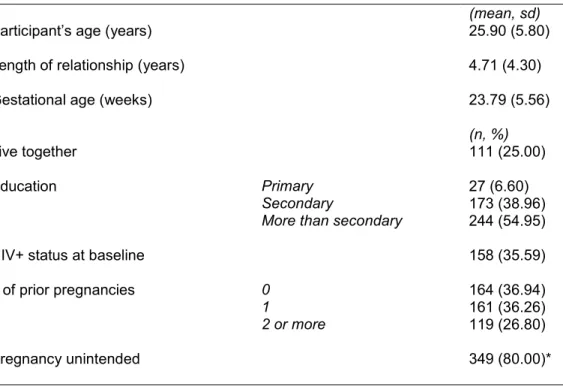
Table 3.1 Sociodemographic characteristics of the sample at baseline (n=444) ………..41
Table 3.2 Prevalence and rates of IPV during pregnancy and the
postpartum period (n=444)………..42 .
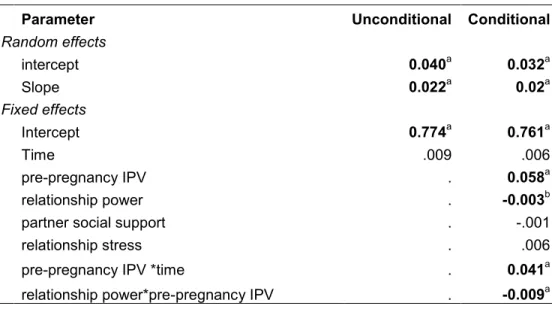
Table 4.1 Results of the unconditional and conditional model of physical IPV during pregnancy and the first nine months postpartum……….69
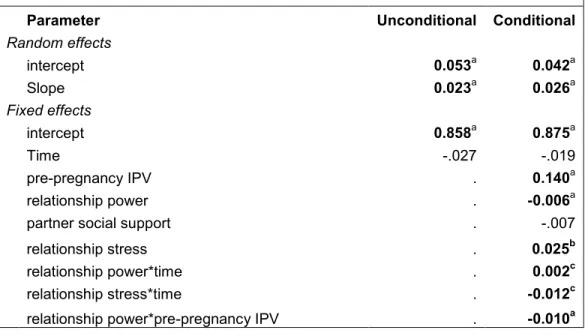
Table 4.2 Results of the unconditional and conditional model of
psychological IPV during pregnancy and the first nine months
xiv
List of Figures
Figure 4.1 Conceptual Model……….……….71
Figure 4.2 Physical IPV over time by relationship power and
pre-pregnancy IPV …..……….……….……...72 Figure 4.3 Psychological IPV over time by relationship power
and pre-pregnancy IPV…...……….…….73
xv
List of Abbreviations
DALY disability-adjusted life years HIV human immunodeficiency virus
IMAGE intervention with Microfinance for AIDS and Gender Equity IPV intimate partner violence
KZN KwaZulu Natal
SAHAPS South Africa HIV antenatal post-test support study SRPS Sexual Relationship Power scale
Chapter 1: Introduction and specific aims
South Africa has high rates of intimate partner violence (IPV) against women (1-3). Partner violence research suggests that one in three adult women in South Africa have experienced physical violence during their lifetime (4). Further, half of all women whom are killed in South Africa are killed by their intimate partners, and the rate of femicide
(8.8/100,000) is well above that which is reported in other countries such as the United States or the United Kingdom (5).
Despite general knowledge of IPV in South Africa, there has been very little research on the prevalence of IPV during pregnancy and the first nine months postpartum. Only one South African study has examined IPV during pregnancy and that study focused exclusively on physical violence (6). Findings indicate that approximately 7% of women experienced physical partner violence during their most recent pregnancy, and one-third of these women reported that the physical violence they experienced was severe enough to cause them pregnancy-specific morbidities, such as miscarriage. To our knowledge, no studies in South Africa have examined the prevalence of psychological or sexual IPV during pregnancy nor are there studies that have examined physical, psychological or sexual IPV in the
2
There is also a global gap in our understanding of how IPV changes during pregnancy and the postpartum period; further, the few existing studies on change in IPV during this time have yielded different conclusions. One longitudinal study found that IPV increased during pregnancy and decreased in the first year postpartum (16), whereas
another longitudinal study with women during pregnancy and the first six months postpartum did not find that IPV changed over this time period (17). Three cross-sectional retrospective studies that asked about IPV before, during and after pregnancy have used flow charts to describe how IPV changed for some women and not others (18-20).
Longitudinal methods like random coefficients multilevel growth modeling can help us to assess change at the individual level over time (21). Through this modeling approach, we can examine on average, how IPV changes over pregnancy and the postpartum period for the sample of women. We can also examine if there is significant heterogeneity between women in the sample in their experiences of IPV during pregnancy and the postpartum period.
Although it is not clear from existing literature if IPV changes during this time, one group that is at risk of IPV during pregnancy and/or the postpartum period is women who have experienced IPV in their relationship before pregnancy (18, 21). While there is
3
Life course theorists posit the continued pattern of a behavior or outcome over time, i.e., one’s trajectory, can be interrupted at developmental transitions depending on the levels of other factors at that transition (23, 24). Glen Elder, one of the earliest life course theorists to study trajectories and turning points posited that the resources and experiences that people have at the transition (pg. 35, (23)) are factors that may explain why these transitions matter for some individuals’ trajectories and not others. That is, levels of resources and
experiences may act as effect modifiers to explain differences between individuals in their trajectories of IPV over time.
Although life course theorists were not specific about which factors are considered
resources and experiences at transitions, other researchers have posited that certain
characteristics of the intimate relationship may help us to understand variation in trajectories of IPV (25). Specifically, there are three core relationship characteristics that can be
conceptualized as resources or experiences at pregnancy that may affect the association between pre-pregnancy IPV and IPV during pregnancy and the postpartum period.
Relationship power and partner social support are both resources that may buffer women’s risk of IPV, while relationship stress constitutes an experience that may exacerbate women’s risks of IPV. That is, women who have a history of IPV and who have higher relationship power (defined as greater control over both relationship processes and relationship
4
relationship stress at pregnancy (31). It is important to understand what relationship characteristics modify the association between pre-pregnancy IPV and IPV during pregnancy and the postpartum period since these characteristics may be amenable to intervention.
Therefore, the specific aims of the dissertation study are as follows:
Aim 1: To assess the prevalence, mean rates and severity of physical, psychological and sexual partner violence at pregnancy and at four and nine months postpartum
Aim 2: To use a random coefficients multilevel growth modeling approach to describe trajectories of physical and psychological partner violence during pregnancy and the first nine months postpartum
Aim 3: To test whether the association between pre-pregnancy IPV and IPV during pregnancy and the postpartum period is modified by core relationship characteristics (relationship power, partner social support and relationship stress)
The data set for this dissertation analysis comes from the South Africa HIV antenatal post-test support study (SAHAPS), a randomized controlled trial designed to provide
psychosocial support to HIV+ and HIV- women during pregnancy and the postpartum period. This longitudinal study is unique in that women report their experiences of physical, psychological and sexual IPV before pregnancy, during pregnancy, four months postpartum and nine months postpartum, which allows us to look at the prevalence and rates of IPV and the trajectories of IPV during pregnancy and the postpartum time period. A better
5
characteristics and women’s history of IPV act together to contribute to IPV during pregnancy and the postpartum will allow us to develop clinic-based IPV prevention
interventions tailored specifically to South African women seeking antenatal and postpartum care.
The dissertation is organized into five chapters. This chapter provides the general overview and specific aims. Chapter 2 provides further background information on IPV during pregnancy and the postpartum period and a review of the theoretical and empirical evidence in support of the aims of the dissertation. Chapter 3 contains the first dissertation manuscript on the prevalence and rates of physical, psychological and sexual IPV that South African women experience during pregnancy, at four and at nine months postpartum. Chapter 4 contains the second dissertation manuscript, which describes the mean
6
Chapter 2: Empirical and theoretical literature review
This chapter is organized into three sections. In the first section, I develop my rationale for understanding the scope of IPV during pregnancy and postpartum in South Africa. I start by reviewing existing literature on IPV against South African women in general and then describe what is known about IPV during pregnancy and the postpartum period. Given the limited literature on IPV during pregnancy and the postpartum period in South Africa, I broaden the review to include literature on IPV during pregnancy and the
postpartum period throughout sub-Saharan Africa. At the end of the first section, I describe the potential consequences of IPV during pregnancy and the postpartum period.
In the second section, I develop my rationale for using random coefficients growth modeling to assess if IPV changes during pregnancy and postpartum among South African women. In this section, I describe how a life course framework on trajectories, transitions and turning points informed the study. Then, I review empirical literature on patterns of IPV during pregnancy and the postpartum period to support the goal of describing the
trajectories of physical and psychological IPV for South African women during pregnancy and the first nine months postpartum. And finally, I talk about how the use of random coefficients growth modeling will build on existing literature to help us understand if IPV changes during pregnancy and the postpartum period.
7
pregnancy and the postpartum period, I draw on additional theoretical and empirical literature to develop hypotheses about how relationship power, partner social support and relationship stress act as resources and experiences to modify the association between pre-pregnancy IPV and IPV over pre-pregnancy and the postpartum period.
Understanding the scope of IPV among South African women
Prevalence of Intimate partner violence (IPV) among adult women in South Africa
Intimate partner violence (IPV) describes “physical, sexual or psychological harm by a current or former partner or spouse” (32). Such violence can occur among heterosexual or same-sex couples and perpetration can be bidirectional. However, for this study, we will be focusing on IPV that is perpetrated against women by current male partners. Although Article 12 of South Africa’s constitution states that individuals have the right to freedom from all forms of violence, including violence from private sources (33, 34), IPV is a significant public health and human rights problem in South Africa.
Prevalence estimates of physical, psychological and sexual IPV among adult women are consistently high in South African studies. In the only nationally representative study on IPV, 31% of South African women had experienced physical IPV at some point in their current relationship (4). Other types of violence within intimate partnerships are also quite common: nearly half of all women in a cross-sectional, community based study conducted in three provinces experienced psychological or financial abuse from their partner in the
8
Prevalence of IPV during pregnancy and the postpartum period in sub-Saharan Africa
There has been one study of IPV during pregnancy or the early postpartum period in South Africa. In a cross-sectional community-based study conducted in three provinces, the prevalence of physical violence during pregnancy by a current or ex-partner in the last year across the three provinces ranged between 4.7%-9.1% (39). In another cross-sectional study in South Africa which measured domestic violence (which included victimization by other individuals in the household), the pregnancy-specific prevalence among 570 women was 35% (40). Of the 200 women who experienced domestic violence during the current pregnancy, 80 of them experienced physical abuse (40%), 38 experienced sexual abuse (19%) and 82 experienced emotional or verbal abuse (41%). The inclusion of a broader range of potential perpetrators may help explain the high prevalence estimate. I could identify no studies that measured the prevalence of IPV during the postpartum period among women in South Africa. Therefore, there is a gap in our understanding of the
prevalence of physical, sexual and psychological IPV during pregnancy and the postpartum period in South Africa.
As seen in Table 2.1, there are six studies of IPV against women during pregnancy throughout sub-Saharan Africa. In these studies, the prevalence of IPV during pregnancy ranges from 2.3%-57.1% (6, 22, 40-45). The wide variation in prevalence is at least partially attributable to differences in measurement and definition of IPV across studies. For
9
Another limitation of much of the existing regional literature on the scope of IPV during pregnancy and the postpartum period is that a majority of the samples are drawn from clinics, even though a substantial portion of women in some of these countries do not seek antenatal care (or seek it quite late in pregnancy). In such contexts, selection bias will affect prevalence estimates, meaning that such estimates are not generalizable to the broader population of women in the country. Indeed, estimates may be downwardly biased given that women who experience IPV during pregnancy may be among the least likely to access prenatal care (47).
Finally, I could identify no studies that measured IPV in the postpartum period in sub-Saharan Africa. However, there was one study that found that 4% of women experienced domestic violence (which included violence perpetrated by other individuals in the
household) during the first six weeks of the postpartum period (48). While this number is small, the postpartum time period was also quite short. Thus, the gap in our understanding of the extent of physical, psychological and sexual IPV that occurs during the postpartum period extends throughout sub-Saharan Africa.
Consequences of IPV during pregnancy and the postpartum period
10
associated with adverse consequences for the infant, including low birth weight (12, 13, 15), preterm birth (12, 14) and perinatal death (12).
Describing change in IPV
Using a life course framework to understand trajectories of IPV during pregnancy and the postpartum period
A life course perspective on how IPV changes is one in which there is attention to both the trajectory of IPV over time as well as to transitions in the relationship that might affect the trajectory. Within the life course framework, a trajectory is a pattern of behavior marked by a sequence of events that occur over an individual’s lifetime (23). For example, we could map out an individual’s trajectory of physical partner violence victimization by looking at the levels of physically violent events she incurred from her intimate partner across her life course. Violence researchers have called for the use of longitudinal methods to better understand women’s trajectories of IPV during pregnancy and the postpartum period since there is some empirical evidence to suggest that pregnancy is a time of respite for some women and a time of risk for others (49).
Transitions are another key component to understanding trajectories over time. Transitions are specific events embedded within a trajectory. While everyone may go through the same transition, some individuals’ trajectories may change during the transition whereas others individuals’ trajectories may stay the same. For some, these changes can drastically alter the course of the individual trajectory (23, 24). Life course theorists
conceptualize such change in one’s trajectory as a ‘turning-point’ (24).
11
and not others. That is, levels of resources and experiences may explain differences
between individuals in their trajectories of IPV over time and the effects of these factors may contribute to pregnancy being a turning point for some individuals and not others.
Although original life course theorists were not specific about which factors were considered resources and experiences at transitions, other researchers have posited that certain characteristics of the intimate relationship may help us to understand variation in trajectories of IPV during the developmental transitions (25, 50). Prior to describing how relationship characteristics and women’s history of IPV might act together to contribute to IPV during pregnancy and the postpartum, I first need to determine the mean shape of these trajectories during pregnancy and the postpartum period. Therefore, in the next part of this section, I discuss the empirical literature on change in IPV during pregnancy and the postpartum period.
Cross-sectional studies that describe change in IPV during pregnancy and the postpartum period
There has been no longitudinal study of whether and how IPV changes during pregnancy and the postpartum period for South African women. One study found that between 5%-9% of South African women reported physical IPV during pregnancy (39), yet we have no knowledge of whether these women also experienced IPV in their relationship before pregnancy or whether they experienced physical IPV for the first time during
pregnancy. Further, we have no knowledge of how physical or psychological IPV changes for South African women in the postpartum period.
12
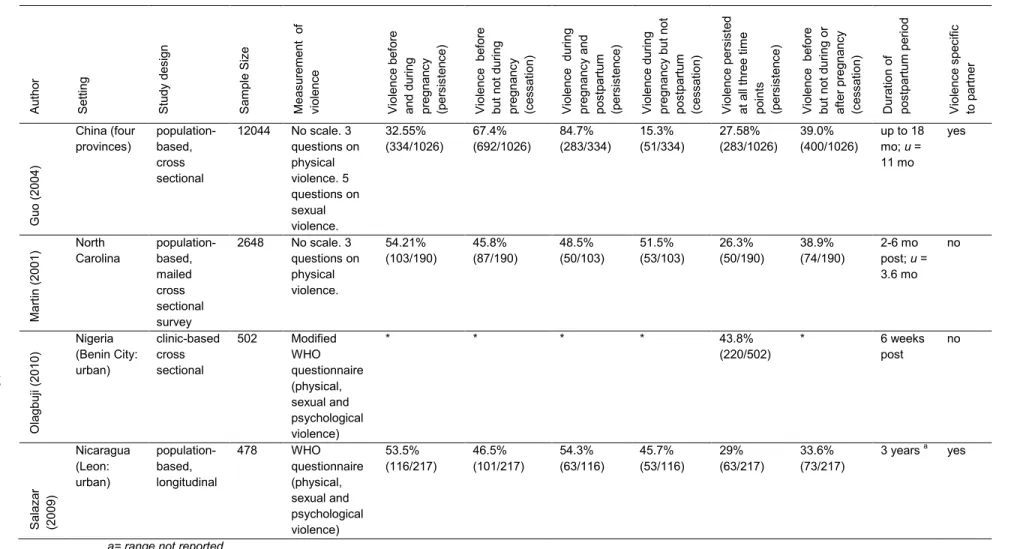
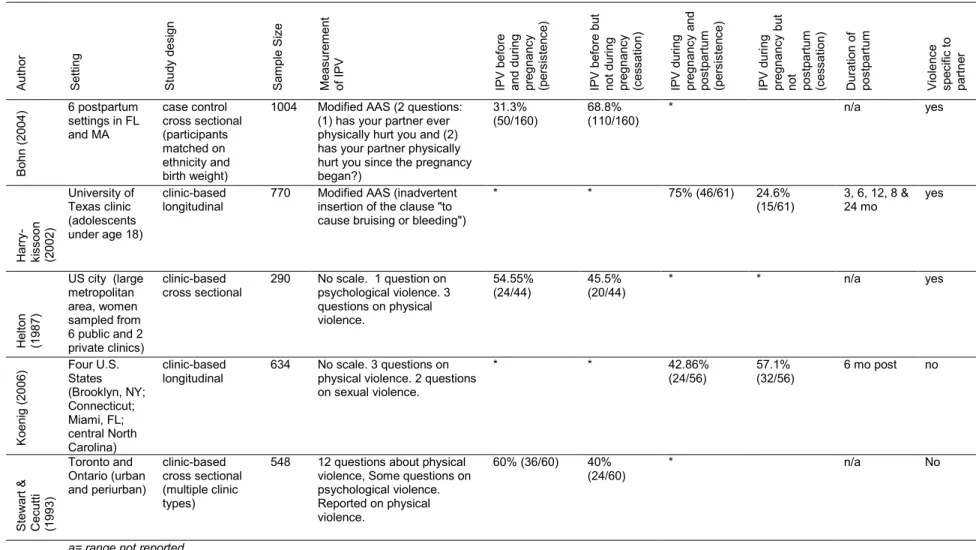
during pregnancy and the postpartum period. Further, between 45%-67% of the women who experienced IPV prior to pregnancy experienced cessation of IPV during pregnancy (Table 2.2). Other empirical studies of IPV in the United States and Canada during at least two of the three time points around pregnancy had similar findings. Between 40%-69% who experienced IPV before pregnancy experienced cessation of IPV during pregnancy and between 25%-57% of women who experienced IPV during pregnancy experienced cessation postpartum (Table 2.3).
On the other hand, empirical research also suggests that IPV persists for some women during pregnancy and the postpartum period. The same population-based cross sectional studies in North Carolina, Nicaragua and China found that between 26%-44% of women who experienced IPV before pregnancy experienced persistent IPV both during pregnancy and the postpartum period (Table 2.2). Other empirical studies of IPV in the United States and Canada during at least two of the three time points around pregnancy had similar findings. Between 31%-60% who experienced IPV before pregnancy experienced persistent IPV during pregnancy and between 43%-75% of women who experienced IPV during pregnancy also experienced IPV postpartum (Table 2.3).
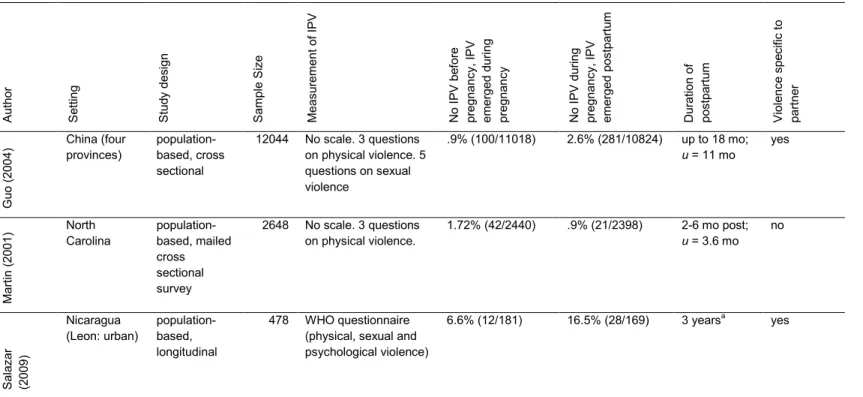
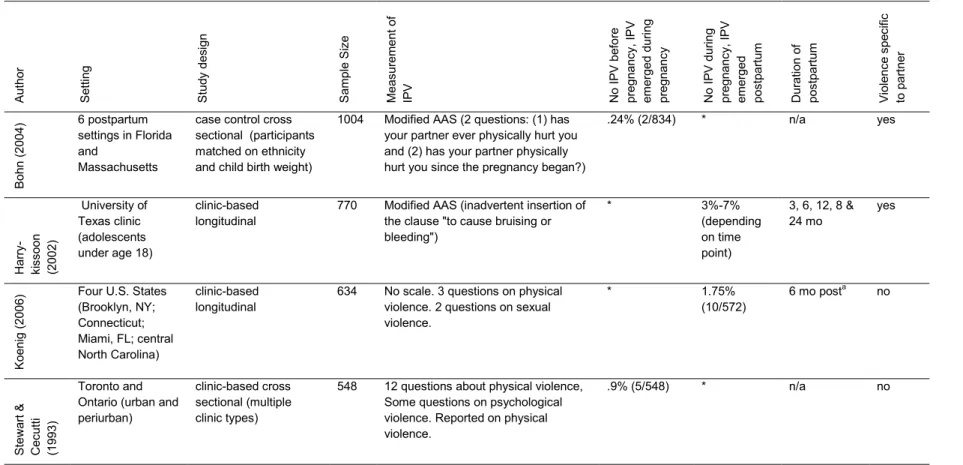
Finally,for some women, IPV emerged for the first time during pregnancy or the postpartum period. As seen in Table 2.4 and Table 2.5, between .9% - 16% of women experienced emergent partner violence during pregnancy or the postpartum period. The percentage of women experiencing emergent IPV was highest in the Nicaragua study (29). The study authors did not focus on emergence of IPV in their paper and thus did not discuss why more women in the Nicaraguan context might be at risk of IPV during pregnancy.
13
Longitudinal study that describes change in physical and psychological IPV during pregnancy and the postpartum period
In the only longitudinal study of IPV during pregnancy and the postpartum period with more than two time points, Macy et al. (2007) used hierarchical linear modeling to look at change in physical IPV for women in North Carolina who reported victimization during the first six months of pregnancy (n=31) as compared to women who did not report victimization during the first six months of pregnancy (n=45) (51). They found that, on average, women who experienced physical IPV in the first six months of pregnancy experienced a decline in physical IPV during the last three months of pregnancy and an increase in physical IPV after giving birth. They also found that the mean rate of psychological IPV for both victimized and comparison women increased during pregnancy through the first month postpartum and then decreased over the next year (51). However, a limitation of this study is that they stratified their sample into two groups, which limits our ability to make conclusions about average change in IPV across all women in the sample. A second limitation of this study is that the small sample size may affect generalizability of the results.
It is difficult to draw conclusions from the existing literature about what the trajectories of physical or psychological IPV will look like during pregnancy and the postpartum period. Modeling trajectories of IPV through the use of multilevel random coefficient growth analysis has a number of distinct benefits as compared to the methods used in previous studies. Specifically, this modeling approach allows us to describe the mean trajectory of IPV over time by generating a parameter to estimate the mean level of IPV at pregnancy (reflected by the intercept) as well as a parameter to estimate the mean change in IPV over time (reflected by the slope). In addition, this modeling approach allows us to test whether there is significant heterogeneity across women by generating a
14
as well variability across women in change in IPV over time (slope). And finally, this method enables us to assess what factors are associated with IPV at pregnancy as well as what factors are associated with change in IPV over pregnancy and the postpartum period. In sum, this method allows us to test if IPV changes over pregnancy and the postpartum period, if there is significant heterogeneity in women’s experiences of IPV at this time and to test whether particular factors explain deviation from the mean trajectory during pregnancy and the postpartum period (52).
Identifying factors associated with change in IPV
Prior IPV as a risk factor for future IPV
Although it is not clear from existing literature if IPV changes during this time, one group that is at continued risk of IPV during pregnancy and the postpartum period is women who have experienced IPV in their relationship before pregnancy (18, 21). One theoretical explanation for persistent victimization draws on the theory of state dependence. State dependence theorists posit that prior events (like the experience of IPV) change an individual in such a way that she is at increased risk of that same event in the future (53). Thus, adult women who have experienced IPV within their current relationship are
vulnerable and at risk of IPV in the future within their relationship.
15
Life course theorists posit that factors that fall under the umbrella of resources and
experiences might temporarily or fully buffer women’s trajectories over time. Psychosocial
resources, in particular, are factors that are posited to play “an ameliorative or positive role” at transitional moments (pg. 10, (24)). While such resources are broadly defined by life course theorists, other researchers contend that certain core characteristics of the intimate relationship can be conceptualized as resources that affect risk of ongoing violence (25). One psychosocial resource that may buffer the association between past IPV and future IPV is the power a woman has in her relationship to control her own decision making, her own behavior and the behavior of her partner. An additional psychosocial resource that may buffer the association between past IPV and future IPV may be the social support the partner provides. And finally, experience of relationship stress may exacerbate the
association between past IPV and future IPV. Each of these potential moderating variables is discussed in further detail below.
Relationship power
Women’s relationship power may counteract the negative effects of pre-pregnancy IPV to reduce risk of IPV during pregnancy and the postpartum period. Power is often conceptualized and measured differently across studies but in most cases captures at least one of the following domains: the comparative number of resources each individual has, who has more control over decision-making, and who has control over their own and their partner’s behavior (26, 27).This resource has reduced women’s risk of future IPV among women with a history of IPV in Canada. In Wuestt and Merit-Gray’s grounded theory
16
power within their relationship over pregnancy and the three year postpartum study period were more likely to experience cessation of IPV at three years postpartum than women who had lower relationship power (29). These two studies both described how relationship power affected women’s risk of IPV such that their IPV ended over the long term. However, neither study tested whether relationship power moderated the association between past
experience of IPV and future experience of IPV. This dissertation study builds on these prior studies by testing whether relationship power weakens the association between
pre-pregnancy IPV and IPV during pre-pregnancy and the postpartum period.
Partner social support
Another psychosocial resource that may buffer the association between past IPV and future IPV is the social support a male partner provides in the relationship. Criminologists Sampson and Laub posited that men’s deviance (including aggression) might be interrupted at a transition like marriage. They theorized that men who were more bonded to their wives at marriage would be less likely to engage in deviance (including aggression) than men who were less bonded because they would risk losing the investments they had gained from their relationship. They argued that bonding served as informal social control, and their empirical work supported their proposition (50). As applied to this study, the continuity of IPV might be interrupted or weakened at the transition of pregnancy for men who provide more support (and are therefore more bonded) to their partners as compared to men who provide less support.
Relationship stress
17
resources, negative experiences in the form of relationship stress might exacerbate the association between past IPV and future IPV. Relationship stress is a response to demands, or stressors, experienced by an individual or a couple (54). Both individual and
environmental factors can affect an individual’s ability to respond to these stressors. When the frequency or the impact of the relationship stressor(s) exceeds an individual’s ability or perceived ability to cope with the stress in an adaptive way, negative health outcomes or behaviors (e.g. perpetration of violence) can occur (55, 56).
The transition to parenthood that is associated with pregnancy may be a period of relationship stress for couples (57). Couples may face either new or increased relationship stress at this transition and their ability to respond to these relationship stress may change interactions within the relationship. Therefore, negative experiences in the form of
18
Tables
Table 2.1 Prevalence of IPV before, during and after pregnancy among women in sub-Saharan African countries
Author Setting Measurement of IPV Prevalence, % ,[SE or 95% CI]
Before During After
Abasiubong (2010) Nigeria (urban) Physical, sexual and economic * 22.9% c *
DeVries (2010) Cameroon Physical * 8.6% [0.4] *
DR Congo Physical * 9.4% [0.9] *
Malawi Physical * 3.8% [0.3] *
Mozambique Physical and sexual * 7.3% [0.7] *
Rwanda Physical * 8.8% [0.4] *
Uganda Physical * 13.5% [1.0] *
Zambia Physical * 9.0% [0.6] *
Zimbabwe Physical * 5.6% [0.4] *
Jewkes (2001) South Africa
(Northern Province) Physical * 4.7% [2.8 - 6.6] * South Africa
(Mpumulanga)
Physical * 6.7% [4.1 – 9.3] *
South Africa (Eastern Cape)
Physical * 9.1% [5.5 - 12.6] *
Kaye (2006) Uganda (urban) Physical, sexual and psychological (dichotomized for analysis)
* 27.7% [24.3-31.5] *
Makayoto (2012) Kenya (urban) Physical, sexual and psychological * 10% c
29% c
12% c
*
Stockl (2010) Tanzania (urban) Physical (single item) * 7% c *
Tanzania (rural) Physical (single item) * 12% c *
19
Table 2.2 Persistence and cessation of violence across three time points in pregnancy and the postpartum period
A ut ho r S et ting S tu dy d es ign S ample S iz e Mea su re men t of viole nc e V iole nc e be fo re an d du ring pregnanc y (p er sis te nc e) V iole nc e b ef or e bu t no t d ur ing pregnanc y (c es sa tion ) V iole nc e d ur ing pregnanc y and po st pa rt um (p er sis te nc e) V iole nc e du ring pregnanc y bu t n ot po st pa rt um (c es sa tion ) V iole nc e pe rs is te d at a ll th re e tim e po int s (p er sis te nc e) V iole nc e b ef or e bu t no t d ur ing o r af te r pr eg na nc y (c es sa tion ) D ur at ion o f po st pa rt um p er iod V iole nc e sp ec ific to p ar tn er Gu o (2 00 4) China (four provinces) population-based, cross sectional
12044 No scale. 3 questions on physical violence. 5 questions on sexual violence. 32.55% (334/1026) 67.4% (692/1026) 84.7% (283/334) 15.3% (51/334) 27.58% (283/1026) 39.0% (400/1026)
up to 18 mo; u = 11 mo yes Mar tin (2 00 1) North Carolina population-based, mailed cross sectional survey
2648 No scale. 3 questions on physical violence. 54.21% (103/190) 45.8% (87/190) 48.5% (50/103) 51.5% (53/103) 26.3% (50/190) 38.9% (74/190) 2-6 mo post; u = 3.6 mo no Ola gb uji ( 20 10
) Nigeria (Benin City:
urban)
clinic-based cross sectional
502 Modified WHO questionnaire (physical, sexual and psychological violence)
* * * * 43.8%
(220/502)
* 6 weeks
post no S alaz ar (2009 ) Nicaragua (Leon: urban) population-based, longitudinal
478 WHO questionnaire (physical, sexual and psychological violence) 53.5% (116/217) 46.5% (101/217) 54.3% (63/116) 45.7% (53/116) 29% (63/217) 33.6% (73/217)
3 years a yes
20
Table 2.3Persistence and cessation of violence across two time points in pregnancy and the postpartum period
A ut ho r S et ting S tu dy d es ign S ample S iz e Mea su re men t of IP V IP V b ef or e an d du ring pregnanc y (p er sis te nc e) IP V b ef or e bu t no t du ring pregnanc y (c es sa tion ) IP V d ur ing pregnanc y and po st pa rt um (p er sis te nc e) IP V d ur ing pregnanc y bu t no t po st pa rt um (c es sa tion ) D ur at ion o f po st pa rt um V iole nc e sp ec ifi c to pa rt ne r B oh n (2 00
4) 6 postpartum settings in FL
and MA case control cross sectional (participants matched on ethnicity and birth weight)
1004 Modified AAS (2 questions: (1) has your partner ever physically hurt you and (2) has your partner physically hurt you since the pregnancy began?)
31.3% (50/160)
68.8% (110/160)
* n/a yes
H ar ry -ki ss oo n (2002 ) University of Texas clinic (adolescents under age 18)
clinic-based
longitudinal 770 Modified AAS (inadvertent insertion of the clause "to cause bruising or bleeding")
* * 75% (46/61) 24.6%
(15/61) 3, 6, 12, 8 & 24 mo yes
H
elt
on
(1987
)
US city (large metropolitan area, women sampled from 6 public and 2 private clinics)
clinic-based cross sectional
290 No scale. 1 question on psychological violence. 3 questions on physical violence.
54.55% (24/44)
45.5% (20/44)
* * n/a yes
K
oe
nig
(2
00
6) Four U.S. States (Brooklyn, NY; Connecticut; Miami, FL; central North Carolina) clinic-based longitudinal
634 No scale. 3 questions on physical violence. 2 questions on sexual violence.
* * 42.86%
(24/56)
57.1% (32/56)
6 mo post no
S te w ar t & C ec ut ti (1993 ) Toronto and Ontario (urban and periurban) clinic-based cross sectional (multiple clinic types)
548 12 questions about physical violence, Some questions on psychological violence. Reported on physical violence.
60% (36/60) 40%
(24/60) * n/a No
21
Table 2.4Emergence of violence across three time points in pregnancy and the postpartum period
A ut ho r S et ting S tu dy d es ign S ample S iz e Mea su re men t o f I P V N o IP V b ef or e pregnanc y, IP V emer ge d du ring pregnanc y N o IP V d ur ing pregnanc y, IP V emer ge d po st pa rt um D ur at ion o f po st pa rt um V iole nc e sp ec ific t o pa rt ne r Gu o (2 00 4) China (four provinces) population-based, cross sectional
12044 No scale. 3 questions on physical violence. 5 questions on sexual violence
.9% (100/11018) 2.6% (281/10824) up to 18 mo; u = 11 mo
yes Mar tin (2 00 1) North Carolina population-based, mailed cross sectional survey
2648 No scale. 3 questions on physical violence.
1.72% (42/2440) .9% (21/2398) 2-6 mo post; u = 3.6 mo
no S alaz ar (2009 ) Nicaragua (Leon: urban) population-based, longitudinal
478 WHO questionnaire (physical, sexual and psychological violence)
6.6% (12/181) 16.5% (28/169) 3 yearsa yes
22
Table 2.5Emergence of violence across two time points in pregnancy and the postpartum period
A ut ho r S et ting S tu dy d es ign S ample S iz e Mea su re men t o f IP V N o IP V b ef or e pregnan cy , I P V emer ge d du ring pregnanc y N o IP V d ur ing pregnanc y, IP V emer ge d po st pa rt um D ur at ion o f po st pa rt um V iole nc e sp ec ific to p ar tn er B oh n (2 00
4) 6 postpartum settings in Florida
and
Massachusetts
case control cross sectional (participants matched on ethnicity and child birth weight)
1004 Modified AAS (2 questions: (1) has your partner ever physically hurt you and (2) has your partner physically hurt you since the pregnancy began?)
.24% (2/834) * n/a yes
H ar ry -ki ss oo n (2002 ) University of Texas clinic (adolescents under age 18)
clinic-based longitudinal
770 Modified AAS (inadvertent insertion of the clause "to cause bruising or bleeding")
* 3%-7%
(depending on time point)
3, 6, 12, 8 & 24 mo yes K oe nig (2 00
6) Four U.S. States (Brooklyn, NY;
Connecticut; Miami, FL; central North Carolina)
clinic-based longitudinal
634 No scale. 3 questions on physical violence. 2 questions on sexual violence.
* 1.75%
(10/572)
6 mo posta no
S te w ar t & C ec ut ti (1993 ) Toronto and Ontario (urban and periurban)
clinic-based cross sectional (multiple clinic types)
548 12 questions about physical violence, Some questions on psychological violence. Reported on physical violence.
.9% (5/548) * n/a no
Chapter 3: Prevalence, rates and severity of IPV during pregnancy
and the postpartum period among South African women
Introduction
Intimate partner violence (IPV) is a significant public health problem and human rights violation in South Africa (58). In a nationally representative study on IPV, one in three South African women had experienced physical IPV at some point in their current
relationship (59). Other types of violence within intimate partnerships are also quite
common: nearly half of all women in a cross-sectional, community based study conducted in three provinces experienced emotional or financial abuse from their partner in the previous year (financial abuse was defined in part if the partner withheld money within the
relationship) (6). Furthermore, though the sensitivity of asking about and reporting sexual violence makes measurement notoriously difficult (35, 36), one national study found that at least 7% of women reported being forced or persuaded to have sex against their will (37, 38).
African women’s daily lives and accounts for 10.9% of all disability-adjusted life years (DALYs) (58).
Despite evidence for the extent of IPV in SA, there has been very little research regarding IPV during pregnancy and the postpartum period. Only one South African study has examined IPV during pregnancy and that study focused exclusively on physical violence. Findings indicate that approximately 7% of women experienced physical partner violence during their most recent pregnancy, and one-third of these women reported that the physical violence they experienced was severe enough to cause them pregnancy-specific morbidities, such as miscarriage (6). To our knowledge, there are no studies in South Africa on the prevalence of sexual or psychological IPV during pregnancy or the first nine months postpartum.
In addition, there is a global gap in knowledge of how levels of IPV change during pregnancy and the first nine months postpartum. While retrospective research suggests IPV decreases during pregnancy (as compared to before pregnancy) it is unclear whether IPV decreases or increases postpartum. While two studies found that the prevalence of IPV increased within the first year postpartum as compared to during pregnancy (20, 62), a different study found that the prevalence of IPV decreased further in the immediate
postpartum time period (18). Further, there is a dearth of research on the severity of physical IPV and the prevalence of sexual or psychological IPV postpartum.
25
that abused women who also experienced IPV during pregnancy were at increased risk for future homicide as compared to abused women who did not experience IPV during
pregnancy (68).
IPV during pregnancy also has been associated with adverse consequences for the infant. Infants whose mothers experience IPV during pregnancy are at greater risk of low birth weight (69-71), preterm birth (69)and perinatal death than infants whose mothers do not experience IPV during pregnancy (69).
The purpose of this study is twofold. First, I describe the prevalence and rates of (a) any violence; (b) physical violence (including moderate and severe physical violence); (c) psychological violence; and (d) sexual violence during the period of reproduction amongst 444 urban South African women seeking antenatal and postnatal care. Second, I describe how the prevalence of IPV changes across pregnancy and the first nine months postpartum for these same women.
Methods
Setting and study overview
The data set for this analysis comes from women who participated in the control arm of the South Africa HIV Antenatal Post-test Support Study (SAHAPS), a longitudinal
26
Women were recruited for SAHAPS at their first antenatal visit and were eligible to participate if they: (1) were at least 18 years old, (2) were pregnant, (3) had never tested for HIV or had most recently tested negative for HIV at least 3 months prior to recruitment, (4) reported having a primary partner who they had been with for at least 6 months, (5) planned to live in Durban for at least the next year, (6) planned to take their infant to the clinic for immunization visits, (7) were able to communicate in English or Zulu, and (8) did not need critical care for a high risk pregnancy that clinic staff was not able to provide.
Of 3,333 women screened, 1,636 (49.1%) met the eligibility criteria. Of the 1,636 eligible, 1,500 (92%) women consented to participate and were subsequently enrolled and randomized. Subsequent to randomization, 13 women in the enhanced counseling arm and 7 women in the usual care arm either did not complete a clinical visit, refused HIV testing or indicated that they had tested at another location, and were therefore not eligible for the study, yielding a final baseline sample size of 1480 women (733 intervention and 747 control).
Women who consented to participate completed a baseline assessment immediately after providing informed consent and prior to receiving clinical services (including HIV
testing). After completion of the baseline survey, women were randomized to a study arm using permuted blocks of twelve, wherein subjects were randomly allocated within each block to the intervention or control condition. This randomization scheme was used to ensure that there was a good balance of participants allocated to the intervention and control arm on a daily basis. After randomization, women participated in the intervention or the control arm through 10 weeks postpartum. Women returned to the clinic to complete follow up assessments at 4 months postpartum and 9 months postpartum.
27
building, asking sensitive questions and good ethical conduct in order to maximize the quality of the data obtained. Women who showed any signs of distress during the interview were referred to the onsite psychologist on an as-needed basis. The research was approved by the board of ethics at the University of North Carolina and the University of
KwaZuluNatal.
Sample
28
Measures
Violence was measuring using a modified version of the World Health Organization (WHO) Violence Against Women instrument (74). This instrument contains thirteen
questions on physical, sexual and psychological violence that a woman has experienced with her current sexual partner, and it has been validated in numerous South African studies (75-77). In the study, the questions were modified to reflect the specific reference period for which the participants were being questioned. For example, in the baseline survey, the instrument assessed violence during pregnancy. Therefore, each question was prefaced with “during this pregnancy, how many times has your current partner…” In the four month postpartum survey, the instrument assessed violence since delivery, and each question was prefaced with “since delivery, how many times has your current partner…” Finally, in the nine month postpartum survey, the instrument assessed violence between four months and nine months, and each question was prefaced with, “since the last time I saw you, how many times has your current partner…” Each question had five response categories, ranging from ‘never’ to ‘more than ten times.’
Any violencewas created by summing a woman’s responses across all thirteen items on violence and then creating a binary variable where 0=no violence and 1=one or more episodes of violence (regardless of type). A comprehensive binary variable was created to index whether a woman reported experiencing violence at any point in pregnancy or the postpartum period. Three additional binary variables were created to index violence during pregnancy, violence at four months postpartum and violence at nine months postpartum separately.
Rate of total violenceIn order to calculate the total rate of violence at each time point, the responses to the items for all thirteen violence questions were summed and then divided by the number of months in that particular exposure period. For example, at
29
gestational ages varied at baseline (because each woman enrolled in the study when she initiated antenatal care). Therefore, the reference period for exposure to IPV differed across women. To adjust for different lengths of exposure to violence, scores on the violence measure were divided by gestational age (measured in months).
Likewise, at four months postpartum, women were asked about their experiences of IPV “since delivery.” Women had a window of time in which they could attend this visit, which meant that the reference period for exposure to IPV postpartum also differed. To adjust for different lengths of exposure to violence in the first postpartum period, scores on the total violence measure were divided by the number of months since the woman had given birth. At nine months postpartum, women were asked about their experiences of IPV since the last time we saw them. Therefore, a similar adjustment was made adjust for different lengths of exposure to violence in the second postpartum period.
Physical violence was measured through six items on physical violence from the WHO instrument. An example of one such item is, “during [reference period], how many times has your current partner pushed or shoved you?”
Prevalence of physical violence. To assess the prevalence of physical violence, each woman’s response was summed across the six items and then collapsed to create a binary variable where 0=no episodes of physical violence and 1=one or more episodes of physical violence. Binary variables were created to index physical violence during pregnancy, at four months postpartum and at nine months postpartum. The reliability averaged across the three time points was excellent (α=.80).
30
more episodes of moderate physical violence. Binary variables were created to index moderate physical violence during pregnancy, at four months postpartum and at nine months postpartum.
Prevalence of severe physical violence. The prevalence of severe physical violence was measured by four items “during [reference period], how many times has your current partner: 1) hit you with his fist or something else that could hurt you; 2) kicked you, dragged you or beaten you up; 3) choked or burnt you on purpose; and 4) threatened to use or actually used a gun, knife or other weapon that could hurt you (74)?” Severe physical violence is distinct from moderate physical violence in that it has a higher likelihood of causing physical injury (74). Each woman’s response was summed across the four items and then collapsed to create a binary variable where 0=no severe physical violence and 1=1 or more episodes of severe physical violence. Binary variables were created to index severe physical violence during pregnancy, at four months postpartum and at nine months
postpartum.
Rate of physical violence.To calculate a rate of physical violence at each time point, responses to the items for physical violence were summed and then divided by the number of months in the exposure period.
Psychological violence was assessed through four items on psychological violence
from the WHO instrument. One such item was, “during [reference period], how many times has your current partner insulted you or made you feel bad about yourself?”
31
four months postpartum and at nine months postpartum. The reliability averaged across the three time points was good (α=.69).
Rate of psychological violence. To calculate a rate of psychological violence at each time point, responses to the items for psychological violence were summed and then divided by the number of months in the exposure period.
Sexual violence was assessed through three items on sexual violence from the WHO instrument. One such item was, “during [reference period], how many times has your current partner physically forced you to have sex when you did not want to?”
Prevalence of sexual violence. Each woman’s response was summed across the three items and then collapsed to create a binary variable where 0=no sexual violence and 1=one or more episodes of sexual violence for each of the three time points. Binary
variables were created to index sexual violence during pregnancy, at four months
postpartum and at nine months postpartum. The reliability averaged across the three time points was excellent (α=.77).
Rate of sexual violence. To calculate a rate of sexual violence, at each time point responses to the items for sexual violence were summed and then divided by the number of months in the exposure period.
Results
Description of sample
32
partners worked elsewhere in the country for a major part of the year (78). On average, women had been in a relationship with their current partner for 4.5 years. Thirty-six percent of women in the sample were HIV-positive at baseline. Just over one-third of women were pregnant for the first time and four-fifths described their pregnancy as unintended. On average, women were five months pregnant at their first antenatal care visit (range 1-9 months).
Prevalence
Almost half of all women (42.12%) experienced at least one act of physical, psychological or sexual IPV either during pregnancy or postpartum. Just over one-fifth of women (21.39%) experienced any IPV during pregnancy (Table 3.2). Nearly a quarter of women (24.77%) experienced any IPV at four months postpartum and the prevalence decreased slightly (18.23%) after the initial postpartum period.
Approximately nine percent of women (8.78%) experienced physical IPV during pregnancy. The prevalence of physical IPV increased at four months postpartum (13.29%) and the prevalence of physical violence decreased slightly at nine months postpartum (11.18%). Approximately eight percent (8.33%) of all women experienced moderate physical violence during pregnancy, 12.61% experienced moderate physical violence at four months postpartum and 10.26% experienced moderate physical IPV at nine months postpartum. The prevalence of severe physical IPV was relatively stable across the three time points (ranging from 3.15%-5.17%).
33
Rates of IPV
Women experienced an average of 0.16 acts of IPV per month during pregnancy. The mean rate of any IPV nearly doubled at four months postpartum (from 0.16 to 0.29) and remained high at nine months postpartum (.27). Women experienced an average of 0.05 acts of physical IPV per month and the rate more than doubled at fourth months postpartum (.11) and remained high at nine months postpartum (.12). The mean rate of psychological violence per month during pregnancy (.09) was nearly double that of physical violence during pregnancy (.05). The mean rate of psychological violence increased at four months postpartum (.16) and decreased at nine months postpartum (.12). The mean rate of sexual violence was stable across the three time points (ranging from 0.02-0.03 acts per month).
Discussion
The aim of this study was to determine the prevalence and rates of different types of IPV at three points in pregnancy and the postpartum period. Over 40% of women
experienced at least one act of physical, psychological or sexual IPV across pregnancy or the postpartum period. More than 20% of all women experienced at least one act of physical, psychological or sexual IPV during pregnancy, and the prevalence and rates of any IPV were generally higher in the postpartum period as compared to during pregnancy. Almost 10% of all women experienced physical violence during pregnancy and the
prevalence and rates of physical IPV increased in the initial postpartum period and
continued to stay high at nine months postpartum. More than 15% of women experienced psychological IPV during pregnancy and the prevalence and rates of psychological IPV increased in the initial postpartum period and then decreased slightly at nine months
34
and the prevalence and rates of sexual IPV remained relatively constant through the postpartum time period.
Pregnancy
The prevalence of any IPV during pregnancy (21.4%) was similar to two other studies of IPV in sub-Saharan Africa in which 22.9% of urban Nigerian women (41) and 27.7% of urban Ugandan women experienced IPV during pregnancy (43); however, the prevalence of any IPV was lower than a study of IPV among urban women in Kenya (37%) (45). Additionally, the prevalence of physical IPV during pregnancy was 8.8%, which is within the range of other prevalence estimates of physical IPV during pregnancy in both South Africa and sub-Saharan Africa (3.8%-13.5%) (22, 42). The prevalence of physical IPV during pregnancy was higher than most prevalence estimates of women in the United States who experienced IPV during pregnancy (which ranged between 4.0-8.0%) (79). Finally, the prevalence of physical IPV during pregnancy was also within the range of most estimates in a study of IPV that spanned ten countries conducted by the World Health Organization (in most countries, the prevalence of physical IPV during pregnancy was between 4-12%) (74). While the wide variation in prevalence may be partially attributable to differences in
measurement and definition of IPV across studies, the estimates are conservative because the prevalence of IPV during pregnancy was assessed at women’s baseline visit, which took place at an average gestational age of five months.
35
pregnancy outcomes. For example, IPV directed at the abdomen during pregnancy has been associated with preterm labor and miscarriage (80, 81).
The prevalence of psychological IPV during pregnancy (16.67%) was lower than the prevalence of psychological IPV in a cross-sectional study with pregnant women in an urban city in Kenya (29%) (45) but still the most common type of IPV women in this study
experienced in pregnancy. The prevalence of psychological IPV (16.67%) was nearly double the prevalence of physical IPV (8.78%) and more than five times the prevalence of sexual IPV (3.15%). It is possible that psychological IPV is more prevalent than physical IPV because it is less visible and therefore easier to get away with during pregnancy; however, future research is needed to better understand the social norms governing different types of violence during pregnancy.
The prevalence of sexual IPV during pregnancy (3.15%) was comparable to the prevalence of sexual IPV among a group of Chinese women (2.8%) (20) and lower than the prevalence of sexual IPV in the cross-sectional study with pregnant women in an urban city in Kenya (12%) ((45). While the prevalence of sexual IPV was much lower than other types of IPV during pregnancy, the effects of sexual violence can be even more pernicious than the effects of physical violence alone and may include increased risk of sexually transmitted infections, including HIV (82).
Postpartum
36
months postpartum (18). The prevalence of physical violence was also among the highest estimates globally at nine months postpartum. That is, 11.0% of women in this study
reported physical IPV at nine months postpartum, compared to 7.4% of Chinese women and 4.1% of French women both at twelve months postpartum (20) (62).
Approximately 5.0% of women experienced severe physical violence at four and nine months postpartum. To my knowledge, there is no research assessing the effects of severe IPV in the postpartum time period. However, this can be a time of heightened vulnerability as women recover from the pregnancy and the physical act of labor. Future research should assess how severe IPV during this time affects women’s physical recovery, their ability to provide infant care, their ability to breastfeed their infant as desired and their mental health (83).
The prevalence of psychological IPV postpartum was high: nearly 1 in 5 women experienced psychological violence at four months postpartum. While there is a dearth of research on psychological IPV in the postpartum period in other settings, the high
prevalence is of concern given that research outside of pregnancy and postpartum has found psychological IPV to be just as detrimental to women’s mental health and well-being as physical IPV (84-86). For example, in one cross-sectional population-based study in Japan, women who experienced only psychological IPV had higher levels of suicidal ideation, symptoms of distress, difficulty with daily activities and greater use of health services as compared to women who did not experience psychological IPV(87).
37
Changes in prevalence and rates of violence over time
The prevalence of all types of IPV except sexual IPV increased from pregnancy into the postpartum period and the severity of physical violence also increased across this time period. These findings are consistent with research on violence during pregnancy and postpartum among women in China and France (20, 62). Social sanctions against IPV during pregnancy may end with the birth of the child, thereby explaining the increase the proportion of women who experienced IPV again (and in particular, physical violence) in the early postpartum period. A second possibility is that the stress that often accompanies the early postpartum time period elicits violence from the partner if he is unable to cope with the demands of parenthood (57). However, these interpretations are speculative; future
qualitative research is necessary to better understand the acceptability of IPV amongst South Africans, particularly during the postpartum time period.
There were two key differences in the findings depending on whether one interprets the trends based on prevalence estimates or as rate estimates. First, the degree of change over time differed using the different metrics. For example, for physical violence, the
38
changes for a specific population during this time. Currently, researchers predominantly report prevalence estimates in the literature. For greater precision and also more meaningful comparability of findings across settings, researchers may want to consider reporting rates of IPV in future work.
This study is not without limitations. First, the only assessment of IPV during pregnancy took place at a woman’s first antenatal visit, which means that we did not ask about women’s experience of IPV during the full exposure period of pregnancy. Since this visit took place, on average, at five months postpartum, it is likely the prevalence of IPV during pregnancy is downwardly-biased. Second, the eligibility criteria to participate in the SAHAPS study excluded women potentially at even greater risk of IPV than those in our sample (e.g. those who were HIV-positive were not eligible to participate). Such selection bias may have affected the prevalence estimates and also contributed to downwardly-biased estimates of IPV. Third, the sensitive nature of asking about IPV may have led to measurement error. Although the study interviewers were trained to ask questions in a sensitive manner, a woman’s unwillingness or inability to disclose violence may also have led us to underestimate the prevalence of IPV during this time. Further, given that the data are self-reported, recall bias could also affect the estimates of IPV. A final limitation is that I am looking at prevalence and/or rate estimates at each time point, which does not tell me if the same women who experienced IPV during pregnancy continued to experience IPV postpartum. Longitudinal research is needed to further understand how violence changes (or does not change) for women whose relationships are most abusive prior to pregnancy.
39
African women because it describes physical, psychological and sexual violence women experienced during this time. It also contributes to our global understanding of IPV in the postpartum time period as well as how prevalence and rates of IPV change across pregnancy and postpartum.
The high prevalence of violence (and particularly psychological violence) during pregnancy and postpartum highlight the urgent need to develop screening and intervention strategies during this time period. The findings illustrate the importance of screening and intervening both during pregnancy and the postpartum period. The findings also suggest that women need to be screened not only for physical violence but also for psychological violence since psychological violence was more prevalent than physical violence,
particularly during pregnancy.
South African women are not currently screened for IPV during pregnancy and the postpartum period (88). While there is little evidence to suggest that screening alone
reduces IPV, screening done in conjunction with an intervention may reduce women’s risk of future IPV(89). There are at least three interventions in other countries that have been efficacious at reducing IPV during this particular time period (90-92). The interventions each offered screening along with additional counseling and/or support to the pregnant
woman/new mother. These interventions could be adapted for the South African context and then evaluated to determine their effectiveness at reducing IPV during the period of
reproduction.
Interventions beyond the healthcare sector are also needed to address IPV during pregnancy and the postpartum period. While there are a number of community-based interventions that have been effective at reducing IPV in South Africa (such as Stepping Stones and the Intervention with Microfinance for AIDS and Gender Equity (IMAGE)) (93, 94), these interventions are not specific to pregnancy and the postpartum period.
40
and/or new fathers may be especially important to reduce male perpetration of violence during this time. Additional community-based research and intervention to better understand and address social norms surrounding violence during pregnancy and the early postpartum period may also prevent violence during the period of reproduction.