
PALLADIUM-CATALYZED REACTIONS OF UNACTIVATED
ALKYL ELECTROPHILES
Kayla Sue Bloome
A dissertation submitted to the faculty of the University of North Carolina at Chapel Hill in partial fulfillment of the requirements for the degree of Doctor of Philosophy in the
Department of Chemistry.
Chapel Hill 2013
Approved by:
Erik J. Alexanian
Albert A. Bowers
Jeffrey S. Johnson
ABSTRACT
KAYLA SUE BLOOME: Palladium-Catalyzed Reactions of Unactivated Alkyl Halides (Under the direction of Erik J. Alexanian)
I. Palladium-Catalyzed Reactions of Unactivated Alkyl Electrophiles
An overview of palladium-catalyzed reactions with sp3-hybridized electrophiles is
presented. Cross-coupling reactions and carbonylations with alkyl halides and sulfonates
are discussed in detail.
II. Carbonylative Alkyl-Heck Type Cyclization of Alkyl Iodides
A palladium-catalyzed carbonylative Heck-type cyclization of alkyl halides is
described. Treatment of a range of primary and secondary alkyl iodides with catalytic
palladium(0) under CO pressure forms a variety of synthetically versatile enone products.
The reactivity described represents a rare example of a palladium-catalyzed Heck-type
cyclization involving unactivated alkyl halides with β-hydrogens. Alkene substitution is
well tolerated, and mono- and bicyclic carbocycles may be easily accessed.
I 10 mol % Pd(PPh3)4 H O
2 equiv iPr2NEt 50 atm CO PhMe, 130 °C
iv
III. Alkyl-Heck Type Cyclizations of Alkyl Halides
A palladium-catalyzed Heck-type reaction of unactivated alkyl iodides is
described. This process displays broad substrate scope with respect to both alkene and
alkyl iodide components and provides efficient access to a variety of cyclic products. The
reaction is proposed to proceed via a hybrid organometallic-radical mechanism,
facilitating the Heck-type process with alkyl halide coupling partners.
IV. Palladium-Catalyzed Enantioselective Carbonylation of Alkyl Iodides
A palladium-catalyzed enantioselective carbonylation of unactivated secondary
alkyl iodides is reported. Preliminary results serve as proof-of-principle that hybrid
radical-organometallic reactivity enables the stereoselective synthesis of α-chiral
carbonyl compounds.
V. Palladium-Catalyzed Ring Forming C-H Alkylations of Aromatic Systems 70% yield
TsN I TsN
Me 10 mol % Pd(PPh3)4
2 equiv PMP 10 atm CO PhH, 130 °C
10 mol % Pd(OAc)2 O
O
I O O
O OEt 2 equiv NEt3
11 mol % (S)-DM-Segphos
1:1 PhH/EtOH, 100 °C 20 atm CO
50% yield 21% ee
10 mol % Pd(PPh3)4 2 equiv K3PO4
PhH, 130 °C
73% EtO2C
EtO2C
A palladium-catalyzed intramolecular C-H alkylation of heteroarenes and arenes
with unactivated alkyl halides is described. Preliminary results suggest this process is
applicable to primary alkyl bromides and iodides and tolerates electron-rich and –poor
aromatic systems. Our goal to be able to readily synthesize medium-ring fused aromatic
vi
ACKNOWLEDGEMENTS
It is my great pleasure to thank the numerous individuals who have helped to
produce this body of work. First, I am greatly indebted to my graduate advisor, Erik
Alexanian, for his outstanding guidance, mentorship, and continued support. This
dissertation truly would not have been possible without Erik’s enthusiasm and
commitment to rigorous and meticulous research. Being a member of Erik’s first class of
students is a tremendous honor, and I’m grateful for the opportunity to grow as a scientist
in such an exciting and challenging group.
I would also like to thank my committee members for their invaluable
contributions and support. Specifically, I would like to thank Professors Albert Bowers,
Jeffrey Johnson, Alexander Miller, and David Nicewicz for serving on my defense
committee, as well as Professors Michael Gagné, Joseph Templeton for serving on my
preliminary defense committee. Additionally, I would like to thank the Crimmins and
Nicewicz groups for generously allowing the use of their chemicals and instruments.
I would like to recognize the current and former members of the Alexanian lab for
their insight, encouragement, and friendship: Valerie Schmidt, Caitlin McMahon, Patrick
Bohan, Brendan Lainhart, Ryan Quinn, Rebecca McMahen, Alexander Venning, Dr.
Rahul Edwankar, John Thomas, Benjamin Giglio, Njamkou Ncouti, and Andrew Brusoe.
A special acknowledgement is also owed to the numerous talented contributors with
whom I share credit for this work: Rebecca for alkyl Heck chemistry, Patrick for
and the Baik group at Indiana University for DFT calculations. I am also grateful to the
palladium subgroup, Caitlin, Rebecca, and Alex, for making early Monday mornings
enjoyable as well as for their intellectual contributions.
I would like to thank my parents, Rob and Pam, for their love and support. Thank
you for always believing in me. Leaving my family was so much harder than I expected,
and I'm so grateful for you visiting often to ease my homesickness. Thank you to my
sisters Kristie and Kelli and their families as well as the Le and Cointot families for their
love and support.
Most of all, I would like to thank and recognize my husband, Duy. You have
been my favorite part of graduate school. Thank you doesn’t nearly express my gratitude
for your love, support, patience, and your ability to make every day better. You are my
best friend and my greatest blessing.
viii To my parents
TABLE OF CONTENTS
LIST OF TABLES………. xiii
LIST OF ILLUSTRATIONS………. xv
LIST OF ABBREVIATIONS AND SYMBOLS……….. xx
CHAPTER 1 Palladium-Catalyzed Reactions of Unactivated Alkyl Electrophiles………..………..….. 1
1.1 Introduction………...1
1.2 Palladium-Catalyzed Cross-Couplings of sp3- Hybridized Electrophiles……….………... 4
1.2.1 Alkyl Suzuki Cross-Coupling….……… 4
1.2.2 Alkyl Kumada Cross-Coupling……..………... 6
1.2.3 Alkyl Stille Cross-Coupling…..……….. 8
1.2.4 Alkyl Hiyama Cross-Coupling……….……….. 9
1.2.5 Alkyl Negishi Cross-Coupling……….. 10
1.2.6 Alkyl Sonogashira Cross-Coupling.………. 11
1.2.7 Alkyl Heck Cross-Coupling…….………. 13
1.3 Palladium-Catalyzed Carbonylations of sp3- Hybridized Electrophiles……….………. 15
1.4 Summary and Outlook……….. 19
1.5 References………. 21
x
2.1 Introduction………... 27
2.2 Background………..………. 28
2.3 Results and Discussion………. 32
2.3.1 Reaction Development………...………... 32
2.3.2 Substrate Scope Development………..…… 35
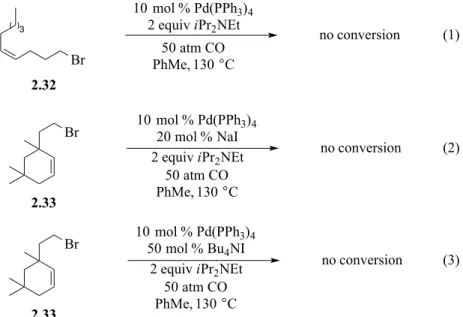
2.3.3 Mechanistic Studies……….. 39
2.4 Summary………..…………. 42
2.5 Experimental………. 43
2.5.1 General Methods………... 43
2.5.2 Preparation of Iodide and Bromide Substrates………. 44
2.5.3 Intramolecular Carbonylative Alkyl Heck Results………... 54
2.6 References………. 61
CHAPTER 3 Palladium-Catalyzed Heck-Type Cyclizations of Alkyl Iodides………..………...…. 68
3.1 Introduction………... 68
3.2 Background………..………. 69
3.3 Results and Discussion………. 72
3.3.1 Reaction Development………..… 72
3.3.2 Mechanistic Studies……….. 80
3.4 Summary………..…………. 84
3.5 Experimental………. 85
3.5.2 Preparation of Alkyl Iodide Substrates………. 86
3.5.3 Alkyl Heck-Type Reaction Results………... 97
3.6 References………..………. 109
CHAPTER 4 Palladium-Catalyzed Enantioselective Carbonylations of Alkyl Iodides……….…………... 115
4.1 Introduction………... 115
4.2 Background………..………... 116
4.3 Results and Discussion………... 119
4.4 Summary………..………... 131
4.5 Experimental………... 132
4.5.1 General Methods………...132
4.5.2 Preparation of Alkyl Halide Substrates…...…….………... 133
4.5.3 Palladium-Catalyzed Stereoselective Carbonylation Results………... 134
4.6 References………...… 137
CHAPTER 5 Palladium-Catalyzed Ring Forming C-H Alkylations of Aromatic Systems………... 141
5.1 Introduction………... 141
5.2 Background………..………... 142
5.3 Results and Discussion………... 146
5.4 Summary………..………... 155
5.5 Experimental………... 156
xii
5.5.2 Preparation of Alkyl Iodide and Bromide
Substrates…...………...….. 157
5.5.3 Results for the Palladium-Catalyzed C-H Alkylation of Alkyl Halides Results... 166
Appendix A: Spectral Data for Chapter 2………... 176
Appendix B: Spectral Data for Chapter 3…...……… 200
Appendix C: Spectral Data for Chapter 4………...……… 227
Appendix D: GC & HPLC Trace Data for Chapter 4………. 228
Appendix E: Spectral Data for Chapter 5……...……… 256
LIST OF TABLES
Table 2-1 Influence of Reaction Conditions on the Carbonylative
Carbonylative Cyclization……….... 34
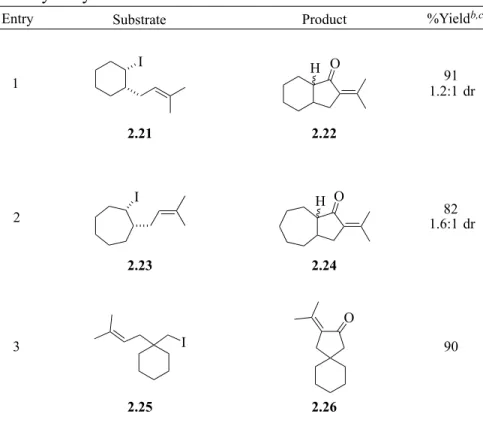
Table 2-2 Palladium-Catalyzed Carbonylative Cyclization of
Primary Alkyl Iodides …………..………..……….. 36
Table 2-3 Palladium-Catalyzed Carbonylative Cyclization of Secondary and Sterically Hindered Secondary
Alkyl Iodides…...………...…... 37
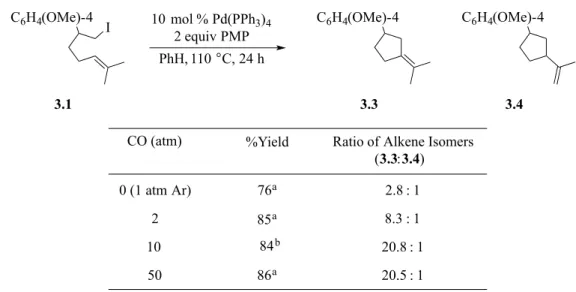
Table 3-1 Effect of Carbon Monoxide upon Alkene Isomer
Formation………...…... 74
Table 3-2 Optimization Efforts to Limit Reduction of Alkyl
Iodides... 76
Table 3-3 Palladium-Catalyzed Carbocyclizations of Primary
Alkyl Iodides………..……….….. 77
Table 3-4 Palladium-Catalyzed Carbocyclizations Resulting in
Significant Alkene Isomerization…………... 78
Table 3-5 Palladium-Catalyzed Carbocyclization for Secondary
Alkyl Iodides………..……….….. 79
Table 4-1 Investigation of the Influence of the Palladium-Catalyst upon the Diastereomeric Ratios of the Carbonylation
Reaction……... 122
Table 4-2 Effect of Carbon Monoxide Pressure on the
Carbonylation of Secondary Alkyl Iodides…………... 125
Table 4-3 Effect of the Base on the Carbonylation of Secondary
Alkyl Iodides………..………... 126
Table 4-4 Effect of Temperature on the Carbonylation of Secondary
Alkyl Iodides…………... 127
Table 4-5 Effect of the Concentration of the Nucleophile on the
Carbonylation of Secondary Alkyl Iodides…………... 128
Table 4-6 Effect of the Ligand on the Carbonylation of Secondary
xiv
Table 5-1 Capability of Transition-Metals to Catalyze the Intramolecular C-H Alkylation of Primary Alkyl
Iodides………...…….. 148
Table 5-2 Effect of Varying the Electronics of the Aromatic Ring in the Palladium-Catalyzed C-H Alkylation of Primary
Alkyl Iodidesa………..…150
Table 5-3 Palladium-Catalyzed C-H Alkylation Reactions of
Alkyl Iodides with a Sulfonamide Alkyl Tethera………..……….. 153
Table 5-4 Palladium-Catalyzed C-H Alkylation of Heteroaromatic
LIST OF ILLUSTRATIONS
Figure 1-1 Palladium-Catalyzed Cross-Coupling Reactions……… 1
Figure 1-2 Mechanisms for Oxidative Addition of Palladium to sp2- and sp3-Hybridized Electrophiles………..……….. 3
Scheme 1-1 Mechanism for β-Hydride Elimination of Alkylpalladium Species………...…... 3
Figure 1-3 Examples of Activated Alkyl Electrophiles……… 4
Scheme 1-2 Seminal Cross-Coupling of Unactivated Electrophiles Reported by Suzuki and Co-workers…………...………..……. 5
Scheme 1-3 Suzuki Coupling of Alkyl Bromides Utilizing Alkyl Phosphines………..… 6
Scheme 1-4 Suzuki Cross-Coupling of Alkyl Bromides and Boronic Acids….………..….... 6
Scheme 1-5 Seminal Palladium-Catalyzed Kumada Coupling Utilizing Alkyl Chlorides………,,……….…………... 7
Scheme 1-6 Palladium-Catalyzed Kumada Coupling of Aliphatic Bromides and Tosylates……….………..…... 7
Scheme 1-7 Stille Cross-Coupling of Primary Alkyl Halides with Vinyl Tin Reagents……….………..………..… 8
Scheme 1-8 Stille Cross-Couplings of Alkyl Iodides and Bromides with Vinyl and Aryl Stannanes………...……...…….……….... 9
Scheme 1-9 Hiyama Cross-Coupling of Unactivated Alkyl Haides………..…. 9
Scheme 1-10 Negishi Cross-Coupling of Alkyl Electrophiles………..…. 10
Scheme 1-11 Mild Negishi Cross-Coupling of Alkyl Bromides and Alkyl Zinc Reagents……….……… 11
Scheme 1-12 Potential Pathway for a Sonogashira reaction………...………... 12
Scheme 1-13 Sonogashira Coupling of Primary Alkyl Halides………. 12
xvi
Scheme 1-15 Plausible Catalytic Cycle for an Alkyl-Heck Reaction………. 14
Scheme 1-16 Intramolecular Heck Cyclization of Alkyl Bromide and Chlorides………...….. 15
Scheme 1-17 Palladium-Catalyzed Carbonylation of Perfluoroalkyl Iodides………...……… 16
Scheme 1-18 Base-free Carbonylation of Alkyl Iodides……… 16
Scheme 1-19 Palladium-Catalyzed Amidocarbonylation………... 17
Scheme 1-20 Palladium-Catalyzed Carbonylative Cyclization of Alkyl Iodides via a Radical/Metal Pathway………...………. 18
Scheme 1-21 Palladium-Catalyzed Carbonylation of Primary, Secondary, and Tertiary Alkyl Halides………..……….. 19
Scheme 2-1 Seminal Example of the Heck Reaction………...… 27
Scheme 2-2 Application of the Enantioselective Heck Reaction in the Total Syntheses of Psychloleine and Quadrigemine C………..…... 28
Figure 2-1 Challenges in Developing Alkyl-Heck Processes………. 29
Figure 2-2 Palladium-Catalyzed Heck Cyclization of Aliphatic Bromides and Chlorides……….…... 30
Figure 2-3 Proposed Palladium-Catalyzed Carbonylative Alkyl- Heck Cyclization………...………… 31
Scheme 2-3 Precedence for Palladium-Catalyzed Migratory CO Insertion Out-Competing β-hydride Elimination………...….. 32
Scheme 2-4 Potential Reaction Pathway for Palladium-Catalyzed Carbonylative Alkyl Heck Reaction………...………. 33
Scheme 2-5 Phosphonium Salt Control Reaction………. 35
Scheme 2-6 Isomerization of the Enone Products……… 38
Figure 2-4 Substrate Limitations for Alkene Substitution……….. 38
Scheme 2-7 Reaction Run in the Presence of a Radical Trap………... 40
Scheme 2-8 Plausible Organometallic-Radical Hybrid Mechanism for the Carbonylative Cyclization of Alkyl Iodides……...……..………. 41
Scheme 2-9 Plausible Organometallic-Radical Hybrid Mechanism with Increased Radical Character for the Carbonylative Cyclization of Alkyl Iodides……….… 42
Figure 3-1 Challenges in Developing Alkyl-Heck Processes…………... 68
Scheme 3-1 Nickel-Catalyzed Alkyl-Heck-Type Reaction…………... 69
Scheme 3-2 Titanocene-Catalyzed Alkyl-Heck-Type Reaction…………... 69
Scheme 3-3 Cobalt-Catalyzed Alkyl-Heck-Type Cyclization…………... 70
Scheme 3-4 Cobalt-Catalyzed Intramolecular Cyclization of Alkyl Iodides Employing Stannyl Cobaloximes and blue LEDs……….……... 71
Figure 3-2 Palladium-Catalyzed Heck Reaction of Primary Halides with Monosubstituted Alkenes…………... 71
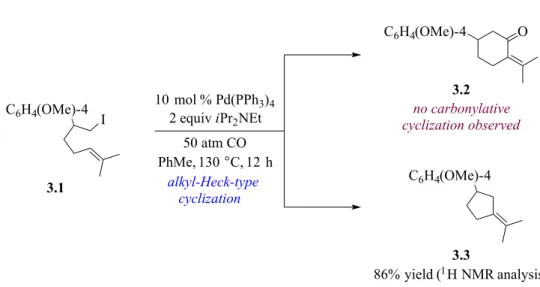
Scheme 3-5 Palladium-Catalyzed Carbonylative Heck-Type Reaction of Alkyl Iodides…………... 72
Figure 3-3 Competition Experiment between a 5-exo Alkyl-Heck- Type Cyclization and a 6-exo Carbonylative Alkyl- Heck-TypeCyclization………..………... 73
Scheme 3-6 Carbocyclization Reaction Attempted in the Absence of Palladium………..… 73
Scheme 3-7 Palladium-Catalyzed Carbocyclization to a Pyrrolidine in the Absence of CO………... 75
Scheme 3-8 Palladium-Catalyzed Carbocyclization of Alkyl Bromides……….…….. 80
Scheme 3-9 Palladium-Catalyzed Alkyl-Heck-Type Reaction Run in the Presence of TEMPO…………... 80
xviii
Figure 3-4 Preliminary DFT calculations of Palladium-Catalyzed
Alkyl-Heck Reaction via a Two-Electron Pathway…………... 83
Figure 3-5 Preliminary DFT calculations of Palladium-Catalyzed
Alkyl-Heck Reaction via a Single-Electron Pathway…………... 84
Figure 4-1 General, Enantioselective Approaches to α-Substituted
Carbonyl Compounds…………... 116
Scheme 4-1 Asymmetric Carbonylation of Benzyl Bromides via a
Kinetic Resolution…………...……..…… 117
Scheme 4-2 Palladium-Catalyzed Carbonylative Heck-Type
Cyclization of Unactivated Alkyl Iodides………..…………... 118
Scheme 4-3 Proposed Palladium-Catalyzed Enantioselective
Carbonylation Of Racemic Alkyl Halides...………....…..…. 118
Figure 4-2 Palladium/Light-Accelerated Carbonylation
Suggesting Metal Plays No Role in the Carbon-Carbon
Bond Forming Step...….… 119
Figure 4-3 Potential Mechanisms for the Enantioselective
Palladium-Catalyzed Carbonylation...………..………...… 120
Scheme 4-4 Attempted Palladium-Catalyzed Carbonylation of
Alkyl Bromides at Various Temperatures...………..…. 123
Scheme 4-5 Preliminary Enantioselective Carbonylation Result...……. 124
Figure 4-4 Structures for the Ligands in Table 4-6...……….... 130
Scheme 4-6 Attempted Palladium-Catalyzed Carbonylation Using
an Alkyl Bromide………...……… 131
Scheme 4-7 Palladium-Catalyzed Carbonylation of Homo-
Benzylic Secondary Iodides………...………..………... 131
Figure 5-1 General Approaches to C-H Alkylations of
(Hetero)aromatics with sp3-Hybridized Electrophiles………..……….. 142
Figure 5-2 Challenges for the Development of a C-H Arylation
Scheme 5-1 Palladium-Catalyzed Arylation of Perfluoroalkyl
Iodides………. 143
Scheme 5-2 Palladium-Catalyzed Intermolecular Alkylations
Facilitated by Norbornene………..………. 144
Scheme 5-3 Palladium-Catalyzed Intermolecular Alkylation of
Unprotected Indoles Enabled by Norbornene………. 145
Scheme 5-4 Palladium-Catalyzed Ortho Alkylation/Lactonization
of Benzoic Acids with 1,2-Dichloroethane……..………..……. 145
Scheme 5-5 Palladium-Catalyzed C-H Alkylation of Pyridine
N-Oxides with Secondary and Tertiry Alkyl Bromides……….. 146
Scheme 5-6 Preliminary results for C-H Alkylation of an
Aromatic System by an Unactivated Alkyl Iodide…….……… 147
Scheme 5-7 Palladium-Catalyzed C-H Alkylation of Alkyl
Bromides………..…….. 151
Scheme 5-8 Formation of Indanes via Palladium-Catalyzed C-H
Alkylation with Primary Alkyl Iodides………..………..151
Scheme 5-9 Attempted Formation of an Indane without
Substitution on the Alkyl Tether………...………….. 152
Scheme 5-10 Attempted Cycloheptane Synthesis via Palladium-
Catalyzed C-H Alkylation………...………….……... 152
Scheme 5-11 Palladium-Catalyzed C-H Alkylation of Secondary
Alkyl Iodides………..…….… 155
Scheme 5-12 Varying the Electronics of the Aromatic System in
xx
LIST OF ABBREVIATIONS & SYMBOLS
2D-NMR two-dimensional nuclear magnetic resonance
9-BBN 9-borabicyclo(3.3.1)nonane
Ac acetate
Acac acetylacetone
Ad adamantyl
Ar aryl
atm atmospheres
aq aqueous
BINAP 2,2'-bis(diphenylphosphino)-1,1'-binaphthyl
Bn benzyl
Boc benzyloxycarbonyl
br s broad singlet
tBu tert-butyl
Bz benzoyl
CAN ceric ammonium nitrate
cat catalytic amount or catalyst
C-C carbon-carbon bond
C-H carbon-hydrogen bond
Chiraphos Bis(diphenylphosphino)butane
Cl-OMe-BIPHEP 5,5'-Dichloro-6,6'-dimethoxy-2,2'-bis(diphenylphosphino)-1,1'- biphenyl
COSY correlated spectroscopy
mCPBA meta-chloroperoxybenzoic acid
CTAB hexadecyltrimethylammonium bromide
CTH-BINAM 2,2'-Bis(N-diphenylphosphinoamino)-5,5',6,6',7,7',8,8'- octahydro-1,1'-binaphthyl
CTH-P-Phos 2,2',6,6'-Tetramethoxy-4,4'-bis(diphenylphosphino)-3,3'-bipyridine
C-X carbon-halide bond
Cy cyclohexyl
Cyp cyclopentyl
d doublet
dba dibenzylideneacetone
DBU 1,8-diazabicyclo[5.4.0]undec-7-ene
DCE 1,2-dichloroethane
DCM dichloromethane
dd doublet of doublets
DFT density functional theory
DIAD diisopropyl azodicarboxylate
DIOP 4,5-bis(diphenylphosphinomethyl)-2,2-dimethyl-1,3-dioxolane
DLP dilauroyl peroxide
DMA dimethylacetamide
DMAP 4-N,N-dimethylaminopyridine
DME dimethoxyethane
DMF N,N-dimethylformamide
xxii
DM-Segphos 5,5'-bis[di(3,5-xylyl)phosphino]-4,4'-bi-1,3-benzodioxole
DMSO dimethylsulfoxide
dppb 1,3-bis(diphenylphosphino)butane
dppe 1,3-bis(diphenylphosphino)ethane
dppf 1,1'-bis(diphenylphosphino)ferrocene
dppp 1,3-bis(diphenylphosphino)propane
dr diastereomeric ratio
dt doublet of triplets
DTMB-Segphos 5,5'-Bis[di(3,5-di-t-butyl-4-methoxyphenyl)phosphino]-4,4'-bi-1,3-benzodioxole
EDG electron donating group
ee enantiomeric excess
eq equation
equiv equivalents
er enantiomeric ratio
ESI electrospray ionization
Et ethyl
Et2O diethyl ether
EtOAc ethyl acetate
EWG electron withdrawing group
FID flame ionization detector
h hour
HAS homolytic aromatic substitution
1H NMR proton nuclear magnetic resonance spectroscopy
HPLC high performance liquid chromatography
Hz hertz
IR infared spectroscopy
J coupling constant
kcal kilocalorie
L ligand
LAH lithium aluminum hydride
LDA lithium diisopropylamide
LRMS low resolution mass spectroscopy
M metal or molarity
m multiplet
Me methyl
MeCN acetonitrile
MeOH methanol
mg milligram
MHz megahertz
min minutes
mL milliliter
mmol millimole
Monophos (3,5-Dioxa-4-phospha-cyclohepta[2,1-a;3,4-a']dinaphthalen-4-yl)dimethylamine
xxiv
Ms methanesulfonyl
MTBE methyl tert-butyl ether
n number of atoms or counterions
NBS N-bromosuccinimide
NHC N-heterocyclic carbene
NIS N-bromosuccinimide
NMI 1-methylimidazole
NMP N-methylpyrrolidone
NOESY nuclear Overhauser enhancement spectroscopy
Nu nucleophile
Ph phenyl
PMP 1,2,2,6,6-pentamethylpiperidine
ppm parts per million
iPr iso-propyl
q quartet
R substitutent
Rf retention factor
rac racemic
rt room temperature
s singlet
Segphos 5,5'-Bis(diphenylphosphino)-4,4'-bi-1,3-benzodioxole
SET single electron transfer
SN2 biomolecular nucleophilic substitution
T temperature
t triplet
TBAF tetrabutylammonium fluoride
TBS tert-butyldimethylsilyl
TEA triethylamine
TEMPO tetramethylpiperidine-N-oxide
THF tetrahydrofuran
TLC thin layer chromatography
TMU tetramethylurea
Tol tolyl
Ts para-toluenesulfonyl
UV ultraviolet
X anionic ligand, halide, or substitutent
Xylyl-BINAP 1,1'-Binaphthalene-2,2'-diylbis[bis(3,5-dimethylphenyl)phosphine
Xylyl-OMe-BIPHEP 2,2'-Bis[di((3,5-dimethylphenyl)phosphine]-6,6'-dimethoxy-1,1'- biphenyl
Å Ångstrom
δ chemical shift
CHAPTER 1
Palladium-Catalyzed Reactions of Unactivated Alkyl Electrophiles
1.1 Introduction
Transition metal-catalyzed cross couplings are among the premier methods of carbon-carbon bond forming reactions as is exemplified by their essential role in the synthesis of organic building blocks and pharmaceutical and agrochemical targets.1-5 Their appeal is chiefly derived from their efficiency and selectivity, tolerance of several functional groups, and mild reaction conditions. One of the most commonly employed metal sources is palladium. Several palladium-catalyzed cross-couplings have been developed to allow concise generation of targets of high importance in both academia and industry (Figure 1-1). This is reflected by the 2010 Nobel Prize in chemistry that was awarded to pioneers in palladium-catalyzed carbon-carbon bond formation.6
Figure 1-1. Palladium-Catalyzed Cross-Coupling Reactions X
R R
R–BX2 R
Ar
Stille Negishi
Suzuki Sonogashira
H
R Ar
Ar–R
R–SnR'3 R–ZnX
Ar–R
Ar–R Hiyama
Kumada
Buchwald-Heck R–SiR1
3 R–MgX
H2NR Ar–R
Ar–R
Ar–NHR
Hartwig
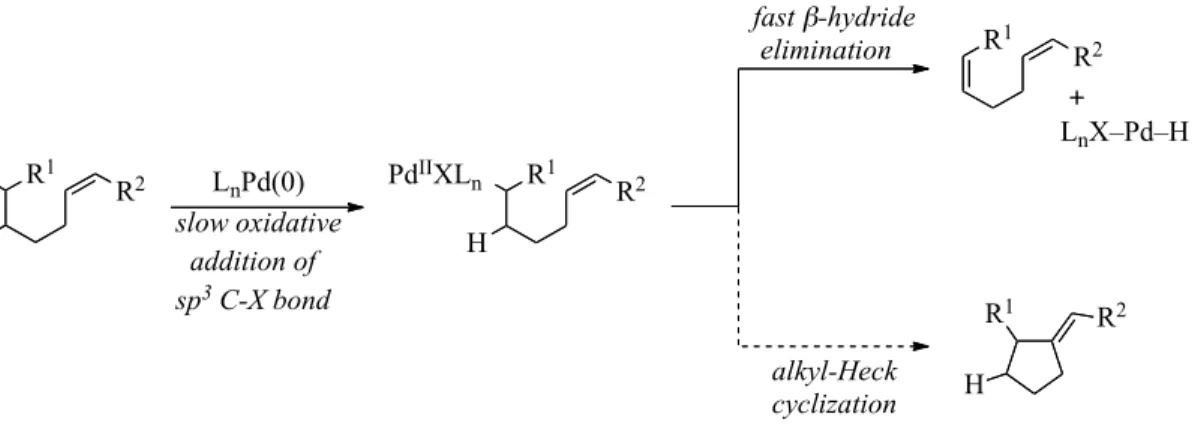
The majority of developed reactions for palladium-catalyzed cross-couplings involve the use of sp2-hybridized electrophiles.7-10 In contrast, examples employing sp3 -hybridized electrophiles are more scarce due to the synthetic challenges they present, which includes slow oxidative addition to the metal species (Figure 1-2).11-13 Furthermore, once generated, the transient alkyl-metal species will readily participate in unproductive side reactions, namely β-hydride elimination (Scheme 1-1).14-16
3
Figure 1-2. Mechanisms for Oxidative Addition of Palladium to sp2- and sp3-Hybridized Electrophiles
A pathway for β-hydride elimination of palladium-alkyl species 1.4 is depicted in Scheme 1-1. The product of oxidative addition forms the coordinatively unsaturated palladium-alkyl species 1.4. The vacant site on palladium is filled by an agostic interaction from a C-H bond on the carbon β− to the palladium-metal center, allowing for
a co-planar arrangement that results in rapid collapse via β-hydride elimination to form an olefin and palladium-hydride 1.5.
Scheme 1-1. Mechanism for β-Hydride Elimination of Alkylpalladium Species
A number of substrate modifications have been used to mitigate the challenges that oxidative addition and β-hydride elimination present. These ‘activated’ alkyl electrophiles either increase the rate of oxidative addition (Figure 1-3a) or do not have accessible β-hydrogens (Figure 1.3-b).
LnPd0 ArX Ar PdIIL
n X Pd0LnX
LnPd:
H X Ph H PdLn Ph X H PdXLn Ph a. Sp2-Hybridized Electrophiles:
b. Sp3-Hybridized Electrophiles: 1.1
1.2 1.3
PdLn R
X H
H PdLn-1
R X H H R R
H PdLn-1
Figure 1-3. Examples of Activated Alkyl Electrophiles
1.2 Palladium-Catalyzed Cross Couplings of sp3-Hybridized Electrophiles
Within the past ten years, unactivated alkyl electrophiles have been successfully employed in several cross-coupling reactions. General catalytic systems have been developed that prove that the aforementioned synthetic challenges can be overcome, and mechanistic studies have begun to provide insight into these catalyst systems. Examples of these powerful transformations are discussed herein.
1.2.1. Alkyl Suzuki Cross-Coupling
In 1992, Suzuki reported the first cross-coupling reaction that utilized unactivated alkyl electrophiles (Scheme 1-2).25 This pioneering methodology coupled aliphatic iodides with organoboranes by using commercially available Pd(PPh3)4. The reaction proved tolerant of several functional groups, but secondary alkyl iodides were not viable in the reaction. Notably, β-hydride elimination was generally inhibited, and substantial amounts of dehydrohalogentation of the iodide were observed.
Br
Cl
ref 1.22
ref 1.21
ref 1.24 Br
ref 1.19
a. Alkyl Halides that Increase the Rate of Oxidative Addition
b. Alkyl Halides without Accessible β-Hydrogens O
O I
ref 1.23
I OBn Me–I
5
Scheme 1-2. Seminal Cross-Coupling of Unactivated Electrophiles Reported by Suzuki and Co-workers
In 2001, the Fu lab was able to readily employ alkyl bromides in the Suzuki cross-coupling reaction (Scheme 1-3).26 Their method was reliant upon the use of the tricyclohexylphosphine ligand. The application of trialkylphosphines in couplings of alkyl electrophiles was inspired by previous investigations in the Fu laboratory, which utilized aryl chlorides in palladium-catalyzed cross-coupling reactions.27 Like alkyl electrophiles, they were considered poor coupling partners due to their reluctance to undergo oxidative addition, but were successfully reacted when bulky, electron-rich phosphines were utilized. Interestingly, trialkylphosphines with similar steric and electronic properties (e.g. P(tBu)3 and P(nBu)3) were significantly less effective in the Suzuki reaction of alkyl bromides, generating <2% yield of the desired product and producing increased amounts of β-hydride elimination. In this study, functional group compatibility was exemplified by the use of amines, alkynes, esters, acetals, ethers, cyanides, and alkyl chlorides. Methods have also been reported that allow for the facile use of alkyl chlorides28 and tosylates29 in the Suzuki coupling reaction.
R1–9-BBN 3 equiv K3PO4 dioxane, 60 °C
I R1
63-97% R
H H
R (1.5 equiv)
3 mol % Pd(PPh3)4
Scheme 1-3. Suzuki Coupling of Alkyl Bromides Utilizing Alkyl Phosphines
The Fu group also reported the Suzuki cross-coupling reaction of alkyl bromides and boronic acids (Scheme 1-4).30 Boronic acids are desirable coupling partners as, unlike their organoborane counterparts, they are air stable. Moreover, several boronic acid derivatives are commercially available. Cross-coupling was realized at room temperature with conditions similar to those developed for coupling with boronates. In this case, KOtBu was found to be a superior activator when compared to other Lewis bases such as K3PO4H2O, KF, and NaOMe, and a polar protic solvent was utilized.
Scheme 1-4. Suzuki Cross-Coupling of Alkyl Bromides and Boronic Acids
1.2.2. Alkyl Kumada Cross-Coupling
The Kumada coupling, a metal-catalyzed coupling of an electrophile and a grignard reagent, was one of the first reported cross-coupling reactions. In 2002, Beller reported the first palladium-catalyzed coupling of aryl grignards and alkyl chlorides (Scheme 1-5).31 While Grignard reagent’s high nucleophilicity as well as Brønsted
R1–9-BBN
THF, rt 8 mol % PCy3 1.2 K3PO4•H2O Br
R1 58-93% R
H H
R (1.2 equiv)
4 mol % Pd(OAc)2
R1 = vinyl, alkyl
R1–B(OH) 2
t-amyl alcohol, rt 10 mol % P(t-Bu)2Me
3 KOt-Bu Br
R1 63-97% R
H H
R (1.5 equiv)
5 mol % Pd(OAc)2
7
basicity limit the functionality that is compatible with Kumada couplings, cyanides, esters, amides, and acetals proved to be tolerant to the reaction conditions. NMP was found to be crucial to the success of the reaction. It is proposed that NMP weakly
coordinates to the palladium, saturating the metal center and therefore out-competing β -hydride elimination of the initially formed alkyl palladium species.
Scheme 1-5. Seminal Palladium-Catalyzed Kumada Coupling Utilizing Alkyl Chlorides
In 2003, Kambe was able to extend the substrate scope to include alkyl bromides and tosylates (Scheme 1-6).32 Catalytic Pd(acac)2 with 1,3-butadiene as an additive was able to effect coupling with both aryl and alkyl Grignard reagents. Interestingly, the palladium exhibited higher chemoselectivites in favor of the tosylates when compared to bromides and chlorides.
Scheme 1-6. Palladium-Catalyzed Kumada Coupling of Aliphatic Bromides and Tosylates
BrMg–Ar
THF/NMP, rt 4 mol % PCy3
Cl Ar
43-99% R
H H
R 4 mol % Pd(OAc)2
(1.5 equiv)
XMg–R1
THF, rt
30 - 100 mol % 1,3-butadiene
X = Br, OTs X
R1 48-93% R
H H
R 1-3 mol % Pd(acac)2
1.2.3. Alkyl Stille Cross-Coupling
The Stille reaction utilizes palladium to cross-coupling organostannanes with electrophiles. The Fu lab described the coupling of alkyl bromides with vinyl stannanes (Scheme 1-7).33 Similar conditions to their alkyl Suzuki reaction were employed, but required the addition of tetramethylammonium fluoride, which acts as a Lewis base in the activation of the tin towards transmetalation. Additionally, 3 Å molecular sieves were effective in raising the efficiency of the reaction.
Scheme 1-7. Stille Cross-Coupling of Primary Alkyl Halides with Vinyl Tin Reagents
Arylations of β-perfluoroalkyl-substituted alkyl iodides with aryl stannanes have been catalyzed by PdCl2(PPh3)2 catalysis; however, high catalyst loadings were required (up to 50 mol %) and moderate yields were observed.34 The Fu lab reported a method that was generally applicable to unactivated alkyl electrophiles (Scheme 1-8). By varying the ligand in conditions developed for the coupling of alkyl electrophiles with vinyl stannanes, arylation products were efficiently accessed from unactivated alkyl bromides and iodides.35
THF, rt 15 mol % P(t-Bu)2Me
1.9 equiv Me4NF 3Å molec. sieves Br
59-92% R
H H (1.1 equiv)
2.5 mol % [(η-C3H5)PdCl]2
9
Scheme 1-8. Stille Cross-Couplings of Alkyl Iodides and Bromides with Vinyl and Aryl Stannanes
1.2.4. Alkyl Hiyama Cross-Coupling
The Hiyama coupling is a palladium-catalyzed cross-coupling of an electrophile to an organosilane. Typically fluoride is added to the reaction, presumably to generate a hypervalent silicate intermediate that is more reactive towards transmetalation than its tetravalent organosilane precursor. Under identical conditions to those previously employed in the coupling of alkyl electrophiles to organostannanes, the Fu group did not observe any conversion with aryl silanes (Scheme 1-9);36 however, addition of a different fluoride source allowed the reaction to proceed cleanly at room temperature. The reaction proved tolerant of functional groups including esters, cyanides, acetals, and ketones on the alkyl bromide. Electronically varied aryl groups were employed with electronic-deficient aryl silanes providing lower yields.
Scheme 1-9. Hiyama Cross-Coupling of Unactivated Alkyl Haides R1–SnBu
3
3Å molec. sieves 8 mol % PCy(pyrrolidinyl)2
1.2 equiv Me4NF THF or MTBE, rt X = I, Br
R1 = vinyl, aryl X
R1 53-90% R
H H
R (1.1-1.2 equiv)
2.5 mol % [(η-C3H5)PdCl]2
Ar–Si(OMe)3
THF, rt 10 mol % P(t-Bu)2Me
2.4 equiv Bu4NF X = I, Br
X Ar
48-93% R
H H
R (1.2 equiv)
1.2.5. Alkyl Negishi Cross-Coupling
The Negishi cross-coupling utilizes catalytic palladium or nickel to couple an organic halide and an organozinc. The Fu group reported the first example of a palladium-catalyzed Negishi reaction that employed alkyl iodides, bromides, chlorides, and tosylates (Scheme 1-10).37 In addition to a wide variety of electrophiles, alkene, ether, nitrile, amide, and ester functionalities are compatible with the reaction conditions. The N-methylimidazole (NMI) is proposed to facilitate transmetalation via activation of the organozinc halide.
Scheme 1-10. Negishi Cross-Coupling of Alkyl Electrophiles
The first Negishi cross-coupling of unactivated alkyl bromides in the presence of a N-heterocyclic carbene (NHC) ligand was reported by the Organ group (Scheme
1-11).38 NHC ligands have similar σ-donor properties as the trialkylphosphine ligands from which the Fu group has enjoyed a large amount of success.39,40 By employing a NHC ligand, the reaction did not require the NMI additive or heating. In addition to the mild reaction conditions, the reaction proved tolerant of acetal, ester, amide, alkyne, and nitrile functional groups.
R1–ZnBr
THF/NMP, 80 °C 2 mol % Pd2(dba)3 8 mol % PCyp3
1.2 equiv NMI
Cyp = cyclopentyl X = I, Br, Cl, OTs
R1 = alkyl, alkenyl, aryl
R X R R1
11
Scheme 1-11. Mild Negishi Cross-Coupling of Alkyl Bromides and Alkyl Zinc Reagents
1.2.6. Alkyl Sonogashira Cross-Coupling
The Sonogashira reaction, employs palladium and copper catalysts to facilitate cross-coupling to a terminal alkyne and is proposed to undergo transmetalation with a copper acetylide (Scheme 1-12).41 Species 1.9 is produced in situ from a low catalyst loading of copper. This is in contrast to the aforementioned cross-coupling reactions, which employ a stoichiometric amount of an organometallic reagent (organoboron, -zinc, -magnesium, -silicon, or -tin). Moreover, higher concentrations of the organometallic
coupling partner helps to efficiently favor transmetalation product 1.7 over β-hydride elimination 1.8. Therefore, the substiochiometric concentration of 1.9 generates a significant challenge in promoting the desired reaction when an alkyl electophile are utilized.
Br R
H H
R1
ZnBr (1.3 equiv)
2 mol % Pd2(dba)3 THF/NMP, rt 8 mol %iPr N N iPr
Cl
R
Scheme 1-12. Potential Pathway for a Sonogashira reaction
To date, there are no reported examples of a palladium-catalyzed Sonogashira reaction in the presence of phosphine ligands. All known examples in the literature rely upon NHC ligands. In 2003, the Fu group reported seminal work employing primary alkyl bromides and iodides (Scheme 1-13).42 The absence of a harsh base and high temperature enabled excellent functional group tolerance including ester, nitrile, chloro, and acetal functionalities, olefins, and unprotected hydroxy groups; however, the substitution pattern of the alkyne had a pronounced effect on reaction outcome, and the reaction conditions had to be adjusted accordingly.
Scheme 1-13. Sonogashira Coupling of Primary Alkyl Halides R1
X H H
R1
PdIIL n H
H X
R1
PdIIL n H H R2 R1 H
H R2 LnPd0
R2 Cu Cu–X R1 1.7 1.9 H PdIIL
n X 1.8
R2
H R1 R2
R1–X X = Br, I
2.5 mol % [(η-C3H5)PdCl]2 7.5 mol % CuI 1.4 equiv Cs2CO3 DMF/Et2O, 45 °C
51-77% 5 mol %Ad N N Ad
Cl
R1 = alkyl R2 = alkyl, aryl
13
In 2006, the Glorius group reported the first Sonogashira reactions of secondary alkyl bromides (Scheme 1-14).43 The reaction employs similar reaction conditions as those previously utilized by the Fu group; however, higher reaction temperatures and polarity were required. A bioxazoline-derived NHC ligand was employed; this ligand family is electron-rich and sterically demanding, but exhibits a high degree of conformational flexibility.44 The reaction exhibited excellent levels of functional group tolerance with olefins, acetates, esters, and epoxides installed on the alkyl bromides. Notably, the use of enantiomerically pure (R)-2-bromooctane led to complete formation of the racemic product.
Scheme 1-14. Sonogashira Coupling of Secondary Alkyl Bromides
1.2.7. Alkyl Heck Cross-Coupling
The Heck reaction is the palladium-catalyzed cross-coupling of sp2-hybridized halides or sulfonates with alkenes. The use of an unfunctionalized coupling partner results in a significantly different mechanism (Scheme 1-15). The alkene 1.11 must undergo coordination to the metal, species 1.12, prior to undergoing insertion to generate alkyl palladium species. This requires the use of a coordinatively unsaturated palladium
species; however, the open coordination site on palladium will facilitate rapid β-hydride
elimination. Moreover, in order to generate the product 1.15, β-hydride elimination is R1
Br
R2 H n-C8H17 (1.45 equiv)
2 mol % [(L)PdCl]2 8 mol % CuI 1.4 equiv Cs2CO3 DMF/DME, 60 °C
n-C8H17 R1
R2
39-77%
N N O O
OTf
3 3
required. In order to successfully employ sp3-hybridized electrophiles in the reaction, the rate of insertion must be faster than the rate of the initial β-hydride elimination
Scheme 1-15. Plausible Catalytic Cycle for an Alkyl-Heck Reaction
In 2007, the Fu laboratory reported the only known organometallic alkyl-Heck reaction (Scheme 1-16).45 They relied upon the intramolecular 5-exo cyclization to outcompete the initial β-hydride elimination. Primary alkyl bromides and chlorides were
cyclized with mono-substituted to alkenes to provide cyclopentene products. Pd2(MeO-dba)3 was employed as the precatalyst in the reaction as electron rich dba ligands have resulted in a more active catalyst; a bench stable NHC ligand was also utilized; however, this method’s substrate scope is quite limited as secondary halides and further olefin substitution were not tolerated.
R1 X H H R1
PdIIL n H
H X
LnPd0
R1 1.10
H PdIIL
n X 1.13
1.15
R1
PdIIXL n H H 1.12 R 2 R1 H H R 2 PdIIXL
n H
15
Scheme 1-16. Intramolecular Heck Cyclization of Alkyl Bromide and Chlorides
1.3 Palladium-Catalyzed Carbonylations of sp3-Hybridized Electrophiles
Carbonylation of alkyl halides is one of the most important industrial processes.46
Palladium-catalyzed carbonylation can allow for the direct synthesis of carboxylic acids,
aldehydes, ketones, esters, and amides. Although generally, the use of alkyl electrophiles
is limited to methyl, benzyl, and allyl halides.47,48
The first palladium-catalyzed carbonylation of alkyl iodides was reported in 1989
by Fuchikami (Scheme 1-17). Carboxylic acids and esters were generated from primary
and secondary polyfluorinated iodides when KF or NEt3 were present in the reaction.49,50
Interestingly, when secondary amines were used as the nucleophile, a mixture of amide
and α-ketoamides was isolated.51
X = Br, Cl
5 mol % Pd2(MeO-dba)3
20 mol % KOt-Bu 1.1 equiv Cs2CO3
CH3CN, 65 °C 20 mol %Mes N N Mes
TfO
R = alkyl, aryl X
R R
Scheme 1-17. Palladium-Catalyzed Carbonylation of Perfluoroalkyl Iodides
It was found that employing TMU, DMI, or DMPU instead of a commonly employed amine or inorganic bases allowed base-sensitive compounds such as 1.17 to be carbonylated in good yields (Scheme 1-18).52 It was also found that molecular sieves could facilitate the reaction as well.53
Scheme 1-18. Base-Free Carbonylation of Alkyl Iodides
Palladium-catalyzed carbonylation of alkyl halides have also been used to access
N-acyl α-amino acids via a three-component coupling reaction (Scheme 1-19).54
Amidocarbonylation is an atom-efficient coupling of an amide, an aldehyde, and carbon monoxide. Palladium-catalyzed activation of α-halo N-acylamine 1.19 is followed by
R1 = H, alkyl
R1OH, KF
50 atm CO tBuOH, 80 °C I
42-93% C8F17
H H
5 mol % PdCl2(PPh3)2
C8F17
O OR1
R R
R= H, alkyl
R1 = alkyl
HNR1 2
50 atm CO heptane, 100 °C
I
21-80% C8F17
H H
3 mol % PdCl2(PPh3)2
C8F17 O
R R
R= H, alkyl
O NR1
2
C8F17 O
NR1 2
R Synthesis of Carboxylic Acids of Esters:
Synthesis of Amides and a-Ketoamides:
H3C
I
50 atm CO TMU, 100 ϒC
71% 5 mol % PdCl2(PPh3)2
17
carbonylation and nucleophilic displacement of the palladium complex55 to provide a wide range of α-amino acids such as hydantoins and aryl glycines.56-60
Scheme 1-19. Palladium-Catalyzed Amidocarbonylation
Ryu and co-workers reported a photo-accelerated palladium-catalyzed carbonylative cyclization of alkyl iodides (Scheme 1-20).61 The carbonylative cascade reaction was able to generate dicarbonylated carbocycles from aliphatic iodides. In contrast to the previous examples, Ryu’s method was proposed to proceed by single electron transfer oxidative addition of the alkyl halide to generate a carbon-centered radical. Radical-mediated carbonylation and cyclization was followed by nucleophilic displacement of the acyl-palladium intermediate to furnish product.
R NH2
O
R1
O
H R N
O
R1 R N
H O R1 X Pd L X L HN R1 R O Pd L X L O N H
R1 R
O COOH HN R1 R O
[PdL2]
H2O HX
L = PR3, CO
CO H2O
HX
1.18 1.19
Scheme 1-20. Palladium-Catalyzed Carbonylative Cyclization of Alkyl Iodides via a Radical/Metal Pathway
Ryu and co-workes have also published a carbonylation of primary, secondary,
and tertiary alkyl halides (Scheme 1-21).62 While commercially available Pd(PPh 3)4
routinely afforded good to excellent yields of product, palladium dimer
[Pd2(CNMe)6][PF6]2 provided similar yields. The reaction was proposed to proceed via a
palladium/light mediated mechanism as well, beginning with generation of the
carbon-centered free radical from the halide precursor. Free-radical carbon-carbon bond
formation is followed by generation of the acylpalladium species, which, upon
nucleophilic displacement by the nucleophile, affords the product. Additionally the
reaction boasted high functional group compatibility and could also generate amide
products in addition to ester products when a secondary amine was employed as the
nucleophile.
I
O
5 mol % Pd(PPh3)4 1.2 equiv NEt3
40 atm CO 10 mol % DMAP
hv (500 W Xe)
PhH, rt 82%
60 equiv BuOH O OBu
O
O
PdIIL n
O
O
O O
PdIL n
Pd0L n/hν
PdIL n
CO
CO
Pd0L n
BuOH •
• •
19
Scheme 1-21. Palladium-Catalyzed Carbonylation of Primary, Secondary, and Tertiary Alkyl Halides
1.4 Summary and Outlook
Despite significant challenges, alkyl electrophiles have been employed in several
palladium-catalyzed reactions including important organometallic cross-coupling
reactions as well as carbonylation reactions. Typically bulky, electron-rich alkyl
phosphines or NHC ligands are employed to achieve these processes. While primary
alkyl electrophiles have been used in several couplings with organoboron, magnesium,
-tin, -zinc, -silicon, and -zinc reagents, the use of secondary alkyl electrophiles is
considerably more scarce.
Nevertheless, there are several interesting challenges that have not been
successfully met. The alkyl-Heck reaction reported by Fu and co-workers has a limited
substrate scope. Extension of this methodology would prove highly desirable,
particularly for secondary alkyl electrophiles (Chapter 2 and 3). To date, examples of
palladium-catalyzed carbonylation of secondary alkyl electrophiles are also rare.
Development of a general catalytic carbonylation method, that can provide access to
enantiopure α-chiral carbonyl compounds from racemic alkyl halides would prove
invaluable for the synthesis of chiral carbonyl compounds that would otherwise take
several steps to synthesize (Chapter 4). Finally, extending the known cross-couplings of
sp3-hybridized electrophiles to reactions with inert C-H bonds would facilitate expedient R
R2 X R1
where X = Br, I
where R, R1, R2 = H, alkyl
5 mol % Pd(PPh3)4 1.5 equiv NEt3
45 atm CO 10 mol % DMAP
hv (500 W Xe) PhH, rt 40 equiv R3OH
R R2 R1 OR3
O
synthesis of a wide variety of bioactive natural products that contain a polycyclic
aromatic core (Chapter 5). Novel synthetic methodologies have been developed to meet
21 1.5 References
(1) Metal-Catalyzed Cross-Coupling Reactions (Eds.: A. De Meijere, F. Diederich), 2nd ed., Wiley-VCH, Weinheim, 2004.
(2) Transition Metals for Organic Synthesis (Eds.: M. Beller, C. Bolm), 2nd ed., Wiley-VCH, Weinheim, 2004.
(3) Zapf, A.; Beller, M. “Fine Chemical Synthesis with Homogeneous Palladium-Catalysts: Examples, Status, and Trends.” Top Catal. 2002, 19, 101 – 109.
(4) Zapf, A.; Beller, M. in Handbook of Organopalladium Chemistry for Organic Synthesis, Vol. 1 (Ed.: E. I. Negishi), Wiley, New York, 2002; pp. 1209.
(5) Nicolaou, K. C.; Sorenson, E. J. Classics in Total Synthesis, VCH, Weinheim, 1996; ch. 31.
(6) “The Nobel Prize in Chemistry 2010”. Nobelprize.org 3 March 2013 http://www.nobelprize.rog/nobel_prizes/chemistry/laureates2010/
(7) Rudolph, A.; Lautens, M. “Secondary Alkyl Halides in Transition-Metal-Catalyzed Cross-Coupling Reactions.” Angew. Chem. Int. Ed. 2009, 48, 2656 – 2670.
(8) Frisch, A. C.; Beller, M. “Catalysts for Cross-Coupling Reactions with Non-activiated Alkyl Halides.” Angew. Chem. Int. Ed. 2005, 44, 674 – 688.
(9) Luh, T.-Y.; Leung, M.-K.; Wong, K.-T. “Transition Metal-Catalyzed Activation of Aliphatic C–X Bonds in Carbon-Carbon Bond Formation.” Chem. Rev. 2000, 100, 3187 – 3204.
(10) Netherton, M. R.; Fu, G. C. “Palladium-Catalyzed Cross-Coupling Reactions of Unactivated Alkyl Electrophiles with Organometallic Compounds.” Top Organomet. Chem. 2005, 14, 85 – 108.
(11) Stille, J. K. The Chemistry of the Metal-Carbon Bond; S. Patai, Ed.; John Wiley & Sons, Inc.: New York, 1985; ch. 9.
(12) Pearson, R. G.; Figdore, P. E. “Relative Reactivities of Methyl Iodide and Methyl Tosylate with Transition-Metal Nucleophiles.” J. Am. Chem. Soc. 1980, 102, 1541 – 1547.
(14) Stromberg, S.; Zetterberg, K.; Siegbahn, P. E. M. “Trends within a triad: comparison between σ-alkyl complexes of nickel, palladium and platinum with respect to association of ethylene, migratory insertion, and β-hydride elimination.” J. Chem. Soc. Dalton Trans. 1997, 4147 – 4152.
(15) Bryndza, H. E. “Activation barriers for β-hydride elimination: systematic study of the single mechanistic step.” J. Chem. Soc., Chem. Commun. 1985, 1696 – 1698.
(16) Hosokawa, T.; Maitlis, P. M. “Lightly stabilized model for acid and base reactions, carbonylation, and .beta.-hydride elimination in organopalladium chemistry. Reactions of bis[dihapto-.sigma.,.pi.1-(1-phenylethylene)pentamethylcyclopentadiene]dichlorodipalladium(II).” J. Am. Chem. Soc. 1973, 95, 4924 – 4931.
(17) Hartwig, J. F. In Organotransition Metal Chemistry; University Science Books: Mill Valley, 2010: pp. 310 – 311.
(18) Crabtree, R. H. In The Organometallic Chemistry of the Transition Metals; Fourth Ed.; John Wiley & Sons, Inc.: Hoboken, 2005: pp. 165 – 166.
(19) Godschalx, J.; Stille, J. K. “Catalyzed Cross-Coupling of Allyl Bromides with Allyl Tin Reagents.” Tetrahedron Lett. 1980, 21, 2599 – 2602.
(20) Simpson, J. H.; Stille, J. K. “Coupling Reactions of α-Halo Esters with Allyl- and Acetoyltin Reagents. An Improved Synthesis of α-Acetonyl-γ-butyrolactone.” J. Org. Chem. 1985, 50, 1760 – 1763.
(21) Wu, G. Z.; Lamaty, F.; Negishi, E. “Metal-promoted cyclization. 26. Palladium-catalyzed cyclization of benzyl halides and related electrophiles containing alkenes and alkynes as a novel route to carbocycles.” J. Org. Chem. 1989, 54, 2507 – 2508.
(22) Bräse, S.; Waegell, B.; de Meijere, A. “Palladium-Catalyzed Coupling Reactions of 1-Bromoadamantane with Styrenes and Arenes.” Synthesis 1998, 148 – 152.
(23) Charette, A. B.; Giroux, A. “Palladium-Catalyzed Suzuki-Type Cross-Couplings of Iodocyclopropanes with Boronic Acids: Synthesis of trans-1,2-Dicyclopropyl Alkenes.” J. Org. Chem. 1996, 61, 8718 – 8719.
23
(25) Ishiyama, T.; Abe, S.; Miyaura, N.; Suzuki, A. “Palladium-Catalyzed Alkyl-Alkyl Cross-Coupling Reaction of 9-Alkyl-9-BBN Derivatives with Iodoalkanes Possessing β-Hydrogens.” Chem. Lett. 1992, 691 – 694.
(26) Netherton, M. R.; Dai, C.; Neuschütz, K.; Fu, G. C. “Room-Temperature Alkyl-Alkyl Suzuki Cross-Coupling of Alkyl-Alkyl Bromides that Possess β-Hydrogens.” J. Am. Chem. Soc. 2001, 123, 10099 – 10100.
(27) Littke, A. F.; Fu, G. C. “Palladium-Catalyzed Coupling Reactions of Aryl Chlorides.” Angew. Chem. Int. Ed. 2002, 41, 4176 – 4211.
(28) Kirchoff, J. H.; Fu, G. C. “A Method for Palladium-Catalyzed Cross-Couplings of Simple Alkyl Chlorides: Suzuki Reactions Catalyzed by [Pd2(dba)3]PCy3.” Angew. Chem. Int. Ed. 2002, 41, 1945 – 1947.
(29) Netherton, M. R.; Fu, G. C. “Suzuki Cross-Couplings of Alkyl Tosylates that Possess β Hydrogen Atoms: Synthetic and Mechanistic Studies.” Angew. Chem. Int. Ed. 2002, 41, 3910 – 3912.
(30) Kirchhoff, J. H.; Netherton, M. R.; Hills, I. D.; Fu, G. C. “Boronic Acids: New Coupling Partners in Room-Temperature Suzuki Reactions of Alkyl Bromides. Crystallographic Characterization of an Oxidative-Addition Adduct Generated under Remarkably Mild Conditions.” J. Am Chem. Soc. 2002, 124, 13662 – 13663.
(31) Frisch, A. C.; Shaikh, N.; Zapf, A.; Beller, M. “Palladium-catalyzed Coupling of Alkyl Chlorides and Grignard Reagents.” Angew. Chem. Int. Ed. 2002, 41, 4056 – 4059.
(32) Terao, J.; Naitoh, Y.; Kuniyasu, H.; Kambe, N. “Pd-Catalyzed Cross-Coupling Reaction of Alkyl Tosylates and Bromides with Grignard Reagents in the Presence of 1,3-Butadiene.” Chem. Lett. 2003, 32, 890 – 891.
(33) Menzel, K.; Fu, G. C. “Room-Temperature Stille Cross-Couplings of Alkenyltin Reagents and Functionalized Alkyl Bromides that Possess β Hydrogens.” J. Am. Chem. Soc. 2003, 125, 3718 – 3719.
(34) Shimizu, R.; Fuchikami, T. “Palladium Catalyzed Coupling Reactions of β -Perfluoroalkyl-Substituted Alkyl Halides with Organostannanes.” Tetrahedron Lett. 1996, 37, 845 – 8408.
(36) Lee, J. Y.; Fu, G. C. “Room-Temperature Hiyama Cross-Couplings of Arylsilanes with Alkyl Bromides and Iodides.” J. Am Chem. Soc. 2003, 125, 5616 – 5617.
(37) Zhou, J.; Fu, G. C. “Palladium-Catalyzed Negishi Cross-Coupling Reactions of Unactivated Alkyl Iodides, Bromides, Chlorides, and Tosylates.” J. Am. Chem. Soc. 2003, 125, 12527 – 12530.
(38) Hadei, N.; Kantchev, E. A. B.; O’Brien, C. J.; Organ, M. G. “The First Negishi Cross-Coupling Reaction of Two Alkyl Centers Utilizing a Pd–N-Heterocyclic Carbene (NHC) Catalyst.” Org. Lett. 2005, 7, 3805 – 3807.
(39) Hills, I. D.; Netherton, M. R.; Fu, G. C. “Toward an Improved Understanding of the Unusual Reactivity of Pd0/Trialkylphosphane Catalysts in Cross-Couplings of Alkyl Electrophiles: Quantifying the Factors That Determine the Rate of Oxidative Addition.” Angew. Chem. Int. Ed. 2003, 42, 5749 – 5752.
(40) Hadei, N.; Kantchev, E. A. B.; O’Brien, C. J.; Organ, M. G. “Electronic Nature of N- Heterocyclic Carbene Ligands: Effect on the Suzuki Reaction.” Org. Lett. 2005, 7, 1991 – 1994.
(41) Sonogashira, K. In Handbook of Organopalladium Chemistry for Organic Synthesis; Negishi, E.-i., Ed.; Wiley-Interscience: New York, 2002; pp 493 – 529.
(42) Eckhardt, M.; Fu, G. C. “Applications of Carbene Ligands in Cross-Couplings of Alkyl Electrophiles: Sonogashira Reactions of Unactivated Alkyl Bromides and Iodides.” J. Am. Chem. Soc. 2003, 125, 13642 – 13643.
(43) Altenhoff, G.; Wurtz, S.; Glorius, F. “The first palladium-catalyzed Sonogashira coupling of unactivated secondary alkyl bromides.” Tetrahedron Lett. 2006, 47, 2925 – 2928.
(44) Altenhoff, G.; Goddard, R.; Lehmann, C. W.; Glorius, F. “Sterically Demanding, Bioxazoline-Derived N-Heterocyclic Carbene Ligands with Restricted Flexibility for Catalysis.” J. Am. Chem. Soc. 2004, 126, 15195 – 15201.
(45) Firmansjah, L.; Fu, G. C. “Intramolecular Heck Reactions of Unactivated Alkyl Halides.” J. Am. Chem. Soc. 2007, 129, 11340 – 11341.
(46) Haynes, A.; Maitlis, P. M.; Morris, G. E.; Sunley, G. J.; Adams, H.; Badger, P. W.; Bowers, C. M.; Cook, D. B.; Elliott, P. I. P.; Ghaffar, T.; Green, H.; Griffin, T. R.; Payne, M.; Pearson, J. M.; Vickers, P. W.; Watt, R. J. “Promotion of Iridium-Catalyzed Methanol Carbonylation: Mechanistic Studies of the Cativa Process.” J. Am. Chem. Soc.2004, 126, 2847 – 2861.
25
(48) Grigg, R.; Sridharan, V. “Spriocycles via palladium catalyzed cascade cyclisation-carbonylation-anion capture process.” Tetrahedron Lett. 1993, 34, 7471 – 7474.
(49) Urata, H.; Kosukegawa, O.; Ishii, Y.; Yugari, H.; Fuchikami, T.; “Carbonylation of 1-Perfluoroalkyl-Subtituted 2-Iodoalkanes Catalyzed by Transition-Metal Complexes.” Tetrahedron Lett. 1989, 30, 4403 – 4406.
(50) Urata, H.; Kinoshita, Y.; Asanuma, T.; Kosukegawa, O.; Fuchikami, T. “A Facile Synthesis of α-ω-Dicarboxylic Acids Containing Perfluoroalkylene Groups.” J. Org. Chem. 1991, 56, 4996 – 4999.
(51) Urata, H.; Ishii, Y.; Fuchikami, T. “Palladium-Catalyzed Double Carbonylation of Alkyl Iodides Bearing Perfluoroalkyl Group.” Tetrahedron Lett. 1989, 30, 4407 – 4410.
(52) Urata, H.; Maekawa, H.; Takahashi, S.; Fuchikama, T. “Transition Metal Complex Catalyzed Carbonylation of Organic Halides in N,N,N’,N’ -Tetraalkylurea Solution in the Absence of Added Base.” J. Org. Chem. 1991, 56, 4320 – 4322.
(53) Urata, H.; Hu, N.-X.; Maekawa, H.; Fuchikami, T. “Transition Metal Complex Catalyzed Carbonylation of Organic Halides in the Presence of Molecular Sieves Instead of Base.” Tetrahedron Lett. 1991, 32, 4733 – 4736.
(54) Beller, M.; Eckert, M. “Amidocarbonylation–An Efficient Route to Amino Acid Derivatives.” Angew. Chem. Int. Ed. 2000, 112, 1027 –1044.
(55) Enzmann, A.; Eckert, M.; Ponikwar, W.; Polborn, K.; Schneiderbauer, S.; Beller, M.; Beck, W. “Aminomethyl and Aminoacetyl Complexes of Palladium(II), Platinum(II), Iron(II) and Rhenium(I) with N-Phthaloyl as Amino Protecting Group and Mechanistic Studies on the Palladium-Catalyzed Amidocarbonylation.” Eur. J. Inorg. Chem. 2004, 1330 – 1340.
(56) Gordes, D.; Neumann, H.; von Wangelin, A. J.; Fischer, C.; Drauz, K.; Krimmer, H.-P.; Beller, M. “Synthesis of N-Acetyl-α-aminobutyric Acid via Amidocarbonylation: A Case Study.” Adv. Synth. Catal. 2003, 345, 510 – 516. (57) Freed, D. A.; Kozlowski, M. C. “N-Acyl imine and enamide intermediates in the
palladium-catalyzed amidocarbonylation reaction.” Tetrahedron Lett. 2001, 42, 3403 – 3406.
(58) Beller, M.; Eckert, M.; Moradi, W. A. “First Amidocarbonylation with Nitriles for the Synthesis of N-Acyl Amino Acids.” Synlett 1999, 108 – 110.
4526.
(60) Beller, M.; Eckhert, M.; Holla, E. W. “Efficient Synthesis of N-Acyl-r-arylglycines via Palladium-Catalyzed Amidocarbonylation: Application to the Central Amino Acid of Chloropeptin.” J. Org. Chem. 1998, 63, 5658 – 5661. (61) Ryu, I.; Kreimermn, S.; Araki, F.; Nishitani, S.; Oderaotoshi, Y.; Minakata, S.
Komatsu, M. “Cascade Radical Reactions Catalyzed by Pd/Light System: Cyclizative Multiple Carbonylation of 4-Alkenyl Iodides.” J. Am. Chem. Soc. 2002, 124, 3812 – 3813.
Chapter 2
Palladium-Catalyzed Carbonylative Heck-Type Cyclizations of
Alkyl Iodides
2.1 Introduction
Palladium-catalyzed cross-coupling reactions have had a profound impact on
carbon-carbon bond forming processes.1,2 This is reflected by the 2010 Nobel Prize in
chemistry that was awarded to pioneers in palladium-catalyzed carbon-carbon bond
synthesis.3 The palladium-catalyzed Heck reaction, which couples aryl or vinyl halides
or sulfonates with simple alkenes, has emerged as a premier method for carbon-carbon
bond construction.4 The Heck reaction boasts excellent functional group tolerance,
obviates the need for prefunctionalization of the coupling partner, and generates an olefin
product can be readily utilized in subsequent transformations. In 1972, seminal work for
the Heck reaction described the palladium-catalyzed coupling of aryl halides with
styrenes or acrylates in the presence of an amine base (Scheme 2-1). 5
Scheme 2-1. Seminal Example of the Heck Reaction
1.0 equiv nBu3N
100 °C
75% 1 mol % Pd(OAc)2
Over the past forty years, the utility of the Heck reaction has been well
demonstrated in synthesis, finding widespread applications in various fields of chemical
science, which includes more than 100 different syntheses of natural products and
bioactive compounds.6,7 One remarkable example was disclosed by the Overman lab in
their syntheses of psycholeine and quadrigemine C, in which an enantioselective double
Heck cyclization provided two quaternary centers with excellent regioselectivity and
stereoselectivity (Scheme 2-2);8 however, despite the broad applicability of the Heck
reaction, there are significant fundamental limitations associated with the reaction scope,
as the Heck reaction is not generally applicable to alkyl electrophiles. As such, it is our
goal to develop synthetic strategies, which will enable this important transformation.
Scheme 2-2. Application of the Enantioselective Heck Reaction in the Total Syntheses of Psychloleine and Quadrigemine C
2.2Background
Extension of the Heck reaction to include alkyl electrophiles would be extremely
beneficial; however, there are inherent issues impeding such a realization (Figure 2-1).
First, alkyl electrophiles are generally reluctant to undergo oxidative addition,9-13 and, H N N NTsMe N Bn O TfO Me N H N TsN Me Bn N O OTf Me H H H N N Me H
1.0 equiv PMP MeCN, 80 °C 2 equiv(R)-Tol-BINAP N TsN Me O Bn N H N Me H N NTs Me O Bn
29
second, once the alkyl palladium species is generated, it typically undergoes rapid
β-hydride elimination.14,15 Previously, palladium-catalyzed Heck reactions of alkyl halides
has been accomplished by either by employing activated substrates such as benzylic,16-18
allylic,19 and α-halo carbonyl20,21 compounds to enable oxidative addition or utilizing
alkyl electrophiles without accessible β-hydrogens.22
Figure 2-1. Challenges in Developing Alkyl-Heck Processes
In 2007, the first example that relied upon catalyst control to overcome the
aforementioned issues was reported. The Fu laboratory described a palladium-catalyzed
intramolecular Heck cyclization of primary alkyl bromides and chlorides with
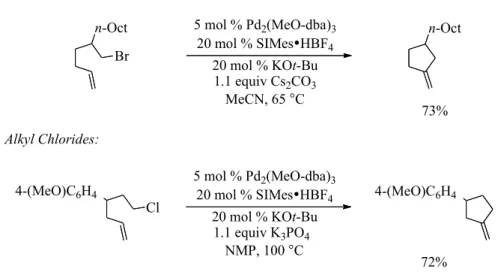
mono-substituted alkenes (Figure 2-2).23 In these transformations Pd2(MeO-dba)3 was utilized
as the precatalyst. The electron rich dba ligand variant is an especially active catalyst
because of its weaker affinity for the metal, which allows for more facile dissociation.24,25
An NHC ligand was successful as it shares the same σ-donation properties as the trialkyl
phosphine ligands that the Fu lab has successfully utilized in other palladium-catalyzed
cross-couplings with alkyl electrophiles.26,27 This metal/ligand combination was able to
effectively mitigate β-hydride elimination after oxidative addition and promote β-hydride
elimination after cyclization. This was attributed to the increased steric bulk around the
metal after cyclization, which promoted dissociation of the palladium(II) species. While X
R
slow oxidative addition
rapid β-hydride elimination
PdIIXL n
R R
H H
Pd(0)
these preliminary findings are encouraging, this method is limited to cyclopentene synthesis with primary halides and mono-substituted alkenes.
Figure 2-2. Palladium-Catalyzed Heck Cyclization of Aliphatic Bromides and Chlorides
Other research groups have reported useful alkyl Heck-type processes that possess free radical intermediates. Lebedev and Beletskaya reported a Ni-mediated method that couples alkyl bromides with styrene in the presence of zinc.28 Kambe described a titanocene-catalyzed system that requires stoichiometric grignard addition.29 Oshima has also reported a cobalt-catalyzed method that coupled alkyl iodides, bromides, and chlorides in the presence of stoichiometric Grignard reagent.30
We hypothesized trapping an alkyl palladium species by migratory carbon monoxide insertion would allow access to carbonylative Heck-type products (Figure 2-3). Carbonylative Heck-type reactions have been reported; however, they are limited to aryl or vinyl electrophiles.31-33 Furthermore, carbonylative cyclization products would
20 mol % KOt-Bu 20 mol % SIMes•HBF4
73% 5 mol % Pd2(MeO-dba)3
1.1 equiv Cs2CO3 MeCN, 65 °C Br
n-Oct n-Oct
Alkyl Bromides:
Alkyl Chlorides:
20 mol % KOt-Bu 20 mol % SIMes•HBF4
72% 5 mol % Pd2(MeO-dba)3
1.1 equiv K3PO4 NMP, 100 °C Cl




![Crystal structure of N [(8E) 12 methyl 14 phenyl 10,13,14,16 tetraazatetracyclo[7 7 0 02,7 011,15]hexadeca 1(16),2,4,6,9,11(15),12 heptaen 8 ylidene]hydroxylamine 1,4 dioxane hemisolvate](data:image/gif;base64,R0lGODlhAQABAIAAAP///wAAACH5BAEAAAAALAAAAAABAAEAAAICRAEAOw==)