HOW DO PRE-SERVICE TEACHERS UNDERSTAND INTERCULTURAL COMPETENCE DURING A SHORT-TERM STUDENT TEACHING ABROAD PROGRAM?
AN EXPLORATORY, COLLECTIVE CASE STUDY
Elizabeth Cynthia Barrow
A dissertation submitted to the faculty at The University of North Carolina at Chapel Hill in partial fulfillment of the requirements for the degree of Doctor of Education in the School of
Education.
Chapel Hill 2017
© 2017
ABSTRACT
Elizabeth Cynthia Barrow: How Do Pre-service Teachers Understand Intercultural Competence During a Short-Term Student Teaching Abroad Program: An Exploratory, Collective Case Study
(Under the direction of Xue Lan Rong)
This dissertation explores how four pre-service teachers (PSTs) came to define and understand intercultural competence (ICC) during a short-term student teaching abroad program. In this exploratory, collective case study I highlight the participants’ voice by analyzing their definitions of ICC before, during, and after their experience in Germany and using their descriptions of experiences living and working in German schools collected from journals, program evaluations, group interviews (before and during), class observation notes, re-entry individual interviews, and reflection surveys. Findings were analyzed using the conceptual framework of ICC (Alred, Byram, and Flemings, 2006; Bennett, 2008; Deardorff, 2006, 2008; Fantini, 2009) and transformative learning theory (Cranton, 2006; Mezirow, 1978, 1991, 2000; Taylor, 1994a, 1994b, 1997).
Findings reveal that participants developed a more complex understanding of ICC over the course of a one-month student teaching abroad experience and that perspective
transformation occurred in some of the participants. However, the pattern and depth of the transformation depend as much on participants’ affective and cognitive tendencies (impacted by individual’s professional and personal characteristics and history) as it does on program
components. Four themes emerged from the data: (a) cross-cultural comparisons; (b)
completed a perspective transformation during the four-week overseas period. The other two participants’ experiences validate Cranton’s (2006) concept of transformation iterative and cyclical and not hierarchical or linear.
ACKNOWLEDGEMENTS
There are many people I would like to thank for guiding me through this process. To Xue, thank you for supporting me and advising me. I have enjoyed working with you these past six years and look forward to future collaboration. To Janice, thank you for your words of encouragement and your nudges to embrace technology in social studies. To Cheryl, thank you for guiding me through CUFA and for teaching me the ins-and-outs of social studies education. To Sherick and Bill, thank you for your thoughtful words and editorial suggestions. To Cathy, thank you for showing me how to be an excellent student teacher supervisor. To Hillary, thank you for teaching me how a social studies methods course should be taught and for answering all of my questions. To those in the School of Education who have supported me throughout my journey: Anne, Lynda, Deb, Diana, and Alison. To my friends and writing buddies: Megan, Martinette, David, Emily, Alex, Meghan, Katie, and Mariah, thank you for giving me a nudge when I needed to be pushed and words of encouragement when I needed to hear kind words. I could not have done this without you. To Anja and Andreas, thank you for your hospitality and keen academic insight. I hope we will continue to work together for many years. To my
TABLE OF CONTENTS
LIST OF TABLES ... xii
LIST OF FIGURES ... xiii
LIST OF ABBREVIATIONS ... xiv
CHAPTER 1 – INTRODUCTION ... 1
Purpose of the Study ... 4
Methodology ... 5
Conceptual Framework ... 6
Significance... 8
Definitions of Terms ... 9
Cross-Cultural Awareness ... 9
Intercultural ... 10
Intercultural Competence ... 10
Frames of Reference ... 10
Perspective Transformation ... 10
Outline of Dissertation ... 10
CHAPTER 2 – LITERATURE REVIEW AND CONCEPTUAL FRAMEWORK ... 12
Types of Short-Term Study Abroad ... 12
Summer Semester Abroad ... 14
The Study Tour ... 15
Service Learning Trip ... 15
Inventories ... 17
Impact of Student Teaching Abroad Programs ... 19
Cross-Cultural Experiential Learning ... 20
Gaining A Global Perspective ... 28
Respect for English Language Learners ... 31
Study Abroad and ICC ... 34
Conceptual Framework ... 37
Intercultural Competence ... 38
Transformative Learning Theory ... 40
Summary ... 47
CHAPTER 3 – METHODOLOGY ... 48
Qualitative Methods and Collective Case Studies ... 48
Collective Case Study ... 49
Design of the Study ... 50
Participant Access and Selection ... 50
Data Collection ... 53
Data Analysis ... 61
Stages of Analysis and Coding ... 61
Statement of Positionality ... 62
Limitations ... 63
CHAPTER 4 – CONCEPUTALIZING THE STUDY ABROAD PROGRAM ... 65
Pre-Departure ... 68
Pre-Departure Sessions ... 68
German Exchange Students and the “Buddy” System ... 69
Student Teaching Abroad in Germany ... 70
Overview of German Education System ... 70
Germantown ... 73
School Placements ... 74
Homestays ... 77
Program Components... 78
School Visits ... 78
Seminars ... 79
Other Excursions ... 80
Journals ... 81
Conclusion ... 82
CHAPTER 5 – CASE NARRATIVES ... 87
Overview of Transformative Learning Theory ... 87
Bruce ... 89
Intercultural Communication ... 91
Community ... 94
Sophia ... 96
Curiosity and Self-Reflection ... 98
Gabi ... 102
Comparing German and American Education Systems ... 104
Natalie ... 107
Self-Confidence ... 108
Flexibility ... 110
Conclusion ... 111
Definitions of ICC Before and After Student Teaching in Germany ... 115
Pre-Departure Definitions of ICC ... 116
Definitions of ICC in Germany ... 117
Re-Entry Definitions of ICC ... 119
Cross-Cultural Comparisons ... 121
Comparing German and American School Systems ... 121
The Culture Wars ... 125
Refugees and Immigrants ... 127
Sociolinguistic Awareness ... 132
Speaking English in Germany ... 132
Cultural Awareness ... 134
Self-Development ... 136
Conclusion ... 138
CHAPTER 7 – DISCUSSION ... 140
Overview of Research Questions ... 140
Discussion of Research Questions ... 141
Research Question 1: How does a short-term student teaching abroad experience inform PSTs’ understanding of ICC? ... 141
Research Question 1a: How do PSTs define ICC at various stages of their experience? ... 146
Research Question 1b: How did PSTs experience student teaching abroad with respect to ICC and transformative learning? ... 147
Implications... 148
Cultural Distance ... 148
School Placement Sites ... 149
Review of Conceptual Framework ... 150
Applications ... 153
Model Program Overview ... 156
Limitations ... 158
Future Research ... 160
Concluding Thoughts ... 161
APPENDIX A – A LEARNING MODEL FOR BECOMING INTERCULTURALLY COMPETENT ... 162
APPENDIX B – EXPLORATION OF KEY TERMS ... 163
Cross-Cultural Awareness ... 164
Perspective Transformation ... 166
APPENDIX C – ELECTRONIC INFORMED CONSENT ... 167
APPENDIX D – DATA COLLECTION PROTOCOLS ... 169
APPENDIX E – ASSIGNMENTS AND JOURNAL REFLECTIONS ... 173
APPENDIX F – MEMBER CHECKING EMAIL TO PARTICIPANTS ... 175
APPENDIX G – CODEBOOK ... 176
APPENDIX H – PARTICIPANTS ICC CHARACTERISTICS AND SUPPORTING DATA ... 183
LIST OF TABLES
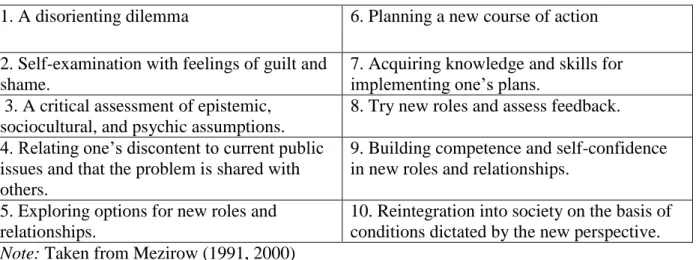
Table 2.1 Mezirow’s Initial Phases of Transformation ... 42
Table 2.2 Phases of Transformative Learning ... 43
Table 3.1 Student Teaching Abroad Participants ... 51
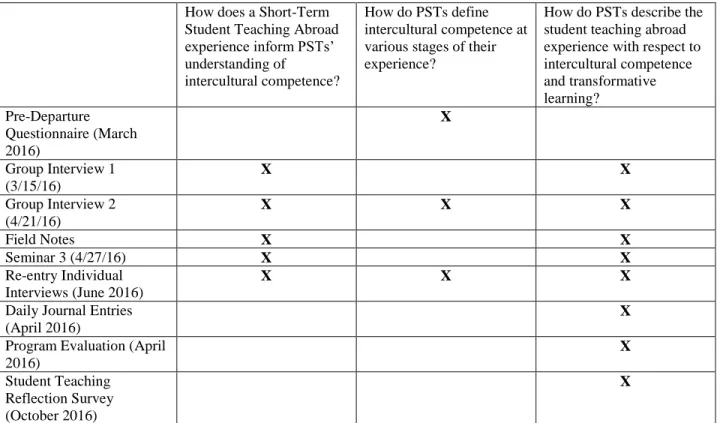
Table 3.2 Research Crosswalk ... 54
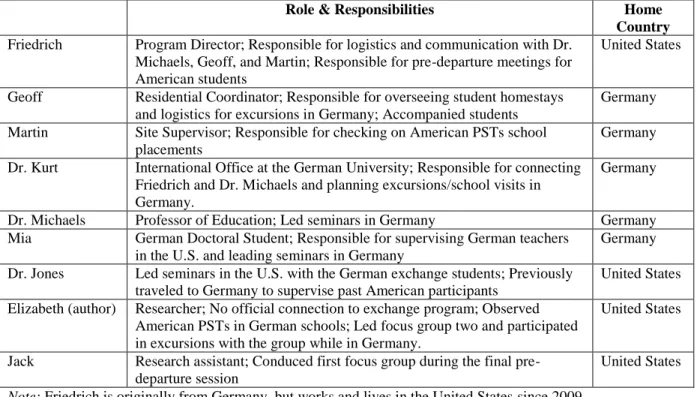
Table 4.1 Administrative Stakeholders in Student Teaching Abroad Program ... 67
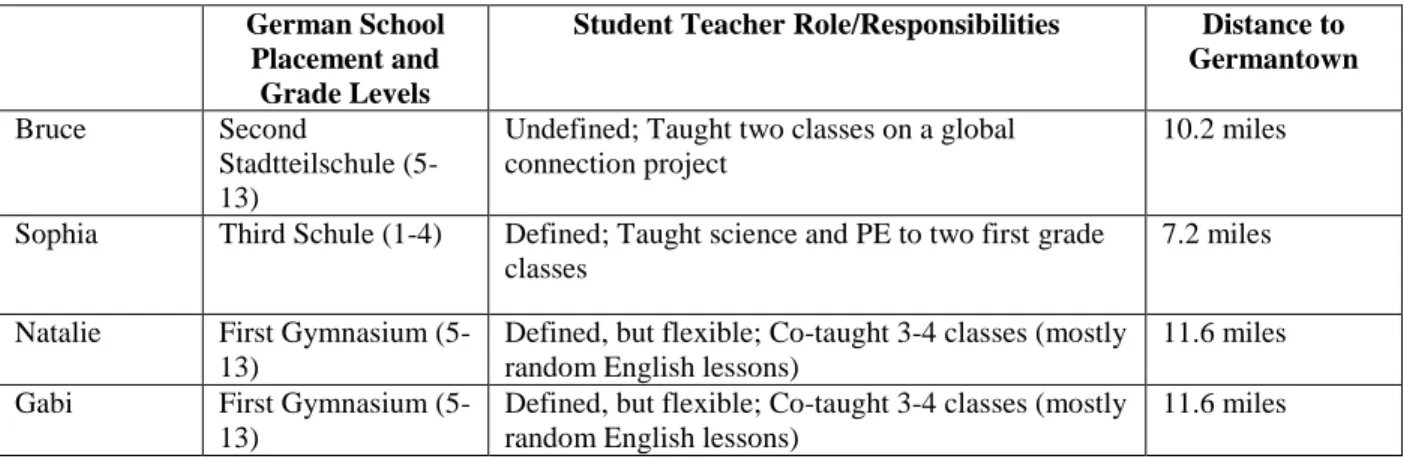
Table 4.2 American PSTs and German Teaching Placements ... 75
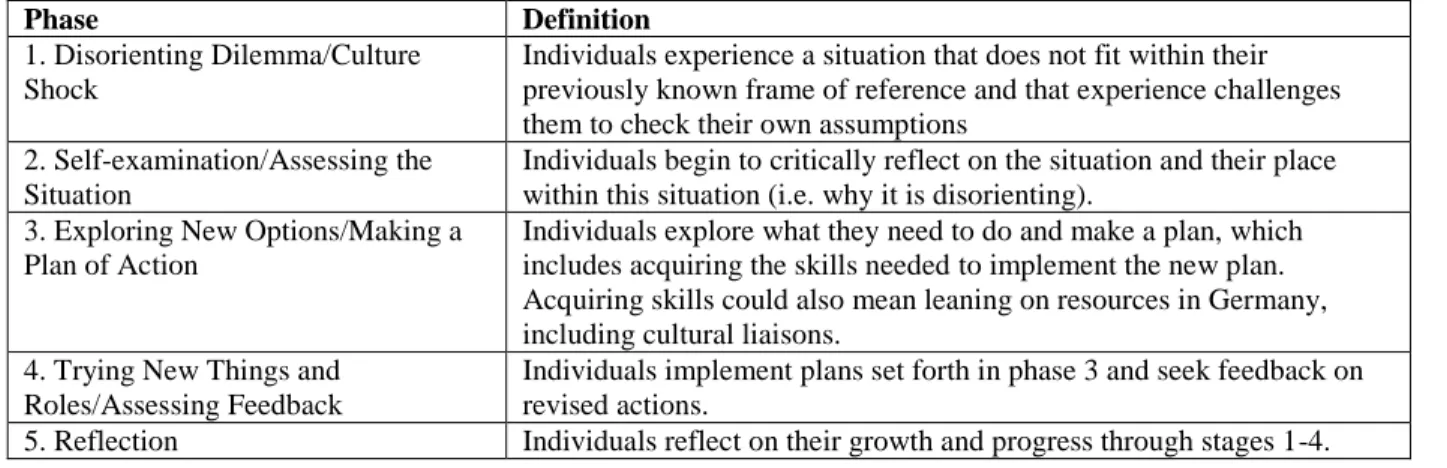
Table 5.1 Modified Phases of Transformative Learning and Definitions ... 88
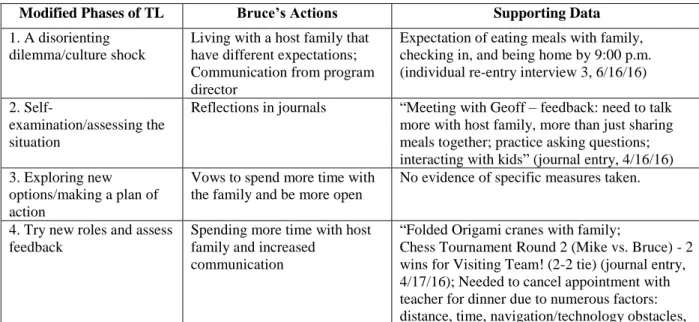
Table 5.2 Bruce’s Phases of Transformative Learning ... 95
Table 5.3 Sophia’s Phases of Transformative Learning ... 100
Table 6.1 Categorization of Emergent Themes ... 114
Table 6.2 Pre- and Post- Definitions of Intercultural Competence ... 115
LIST OF FIGURES
LIST OF ABBREVIATIONS
CHAPTER 1 – INTRODUCTION
“It’s hard to put into words what this trip did to me, but it changed my life. I’m the same person I was 30 days ago, but I have a different mindset now.”
(Natalie, Journal Entry, Final Reflection)
This dissertation examines how four pre-service teachers (PSTs) came to define, describe, and understand intercultural competence (ICC) during a short-term student teaching abroad program. This study highlights the complexity of defining ICC and also the process by which participants understanding of ICC evolved over one month’s time. As suggested by Natalie’s quotation above, participants in this study came to understand themselves better and gained an appreciation of what it means to be intercultural.
Most teaching candidates’ demographic characteristics, including racial, ethnic, cultural, and linguistic ones, do not mirror those of students in public school classrooms (Ladson-Billings, 2011), especially considering the ethnic makeup of those residing in the United States has
changed dramatically in the last 50 years and continues to evolve today (Banks & Nguyen, 2008; Krogstad, 2016). Accordingly, the cultural, linguistic, racial, and ethnic diversity of students in classrooms across the U.S. is also increasingly diverse and non-majority students respond academically and socially to teachers who share similar traits. Yet non-majority teachers, especially “young teachers of color[,] leave the [teaching] profession at higher rates than their European-American counterparts” (Ladson-Billings, 2011, p. 14). Given the challenge of
The most realistic and effective solution is to expand teacher preparation programs to include training that specifically addresses the ICC of PSTs. Such training could foster well-rounded classroom leaders who can teach diverse populations of students successfully.
However, course content alone—even if centered on multicultural education, social justice, and culturally responsive practices—is not sufficient to instill predominantly White and middle class teachers with the knowledge, skills, and attitudes necessary to work with a diverse population of students (Sleeter & Owuor, 2011). Nor does student teaching in a diverse field placement automatically produce a culturally responsive teacher (Sleeter & Owuor, 2011). Diverse field placements, Sleeter & Owuor (2011) suggest, may offer PSTs “cultural awareness” (Kambutu & Nganga, 2008), but mere awareness is insufficient. Although cultural awareness is a core cognitive competency1 essential to developing ICC (Bennett, 2008), teacher education programs must provide candidates with the opportunity to develop behavioral and affective competencies2 as well.
Moving beyond cultural awareness to ICC must be a goal of teacher preparation, yet many of today’s teacher education programs do not include intercultural practice. Research shows that either PSTs do not have the attitudes to support ICC or they are not receiving adequate instruction in their teacher preparation courses (Cushner & Mahon, 2009). Cross-cultural immersion field experiences that challenge student teachers to develop behavioral, affective, and cognitive ICC must be emphasized (Cushner, 2007; Cushner & Mahon, 2009; Merryfield, 2000). Ladson-Billings (2011) argued that a teacher preparation program that offers
1 Cognitive competencies include “cultural-general knowledge, culture-specific knowledge, identity development patterns, cultural adoption process, and cultural self-awareness” (Bennett, 2008, p. 18).
candidates the opportunity to teach overseas helps PSTs prepare for the diverse classrooms they will encounter in their careers by empowering them with competencies they can use to
successfully educate a broad range of students.
Research on student teaching abroad has proven that participants in international experiences benefit both personally and professionally from their intercultural sojourns
(Anderson, Lawson, Rexeisen, & Hubbard, 2006; Cushner & Mahon, 2002; Marx & Moss, 2011; Ozek, 2009; Willard-Holt, 2001; Zhao, Meyers, & Meyers, 2009). Through these experiences, participants gain the knowledge, skills, and attitudes necessary to be considered interculturally competent. Cushner (2008) found that teachers who successfully interact with individuals from a different culture promote ICC in their students as well. Merryfield (1997) suggested that
intercultural experiences have the power to influence pedagogical practices in everyday teaching: Teachers who have experienced another culture are more likely to perceive the power and potential of being connected to another part of the world and are also more likely to find ways in their daily instruction to teach local/global interconnectedness and perspective consciousness to their students. (p. 10)
She reminded teachers that their personal experiences with another culture can impact their professional practice as well.
Instead of relying on quantitative methods, such as the Intercultural Sensitivity
Purpose of the Study
The purpose of this study was to explore if and how student teachers develop an understanding of ICC during a one-month international experience. This dissertation, an
exploratory collective case study (Stake, 2000, 2006; Yin, 2014), investigated the experiences of four PSTs from a large university in the Southeastern United States (Mountain View University3) as they participated in a month-long student teaching abroad program. Research studies
emphasize the benefit of international immersion experiences for teacher candidates both
professionally (increasing their pedagogical knowledge) and personally (increasing their cultural awareness, self-efficacy, curiosity, empathy, flexibility, adaptability, and independence;
Anderson et al., 2006; Barnhart, 1989; Cushner & Mahon, 2002; Malewski & Phillion, 2009; Marx & Moss, 2011; Willard-Holt, 2001; Zhao et al., 2009). Marx and Moss (2011) concluded that long-term international exposure (8 weeks or more) increases the probability that
participants will develop the knowledge, skills, and attitudes that form the basis of intercultural competence; however, short-term international immersion programs (1 to 7 weeks) can be equally meaningful for student teachers’ personal and professional growth, including
development of ICC-related characteristics (Mapp, McFarland, & Newell, 2007). However, there is a gap in the literature regarding how PSTs define ICC in their own words and the process whereby these teacher candidates come to more fully understand ICC. This study was designed to begin to fill that gap.
This collective case study comprises four individual cases, and each provides insight into how PSTs define ICC and the process whereby such definitions are developed. From an analysis
of these four unique cases, I formulated a better understanding of the significance of a short-term student teaching abroad program on PSTs’ understanding of ICC.
The following research questions guided this study:
1. How does a short-term student teaching abroad experience inform pre-service teachers’ (PST) understanding of intercultural competence (ICC)?
1a. How do PSTs define ICC at various stages of their experience?
1b. How do PSTs describe the student teaching abroad experience with respect to ICC and transformative learning?
Methodology
As an exploratory collective case study (Stake, 2000, 2006; Yin, 2014), this dissertation was designed to explore the significance of a short-term student teaching abroad program on PSTs’ understanding of ICC by examining four individual cases and then making cross-case comparisons. This dissertation utilized a collective case study methodology because the phenomenon studied, i.e., development of ICC, exists within the real-life context of living and working abroad (Yin, 2014). Each case provides a unique view of a person’s experience, and the four cases collectively provide an overview of the study abroad program and the ways in which ICC can be developed.
these journals provided invaluable data on participants’ experience and thinking while abroad (Deardorff, 2009, 2011; Mezirow, 1997; Taylor, 2008). A more detailed examination of the methodology and study design is provided in Chapter 3.
Conceptual Framework
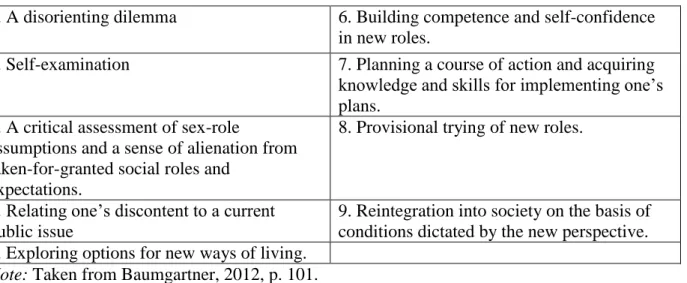
This research study draws upon a conceptual framework of ICC (Alred, Byram, & Fleming, 2006; Bennett, 2008; Deardorff, 2006; Fantini, 2009; Spitzberg & Changnon, 2009) and transformative learning theory (Cranton, 2006; Mezirow, 1978, 1991, 1997, 2000; Taylor, 1994a, 1994b). ICC is founded on the broad definition of the knowledge, skills, and behaviors needed to successfully interact in an intercultural setting (Deardorff, 2006). Transformative learning theory is founded on Mezirow’s (1978) research on adult women returning to the workforce. Transformative learning is the idea that critical incidents lead individuals to reflect upon their frame of reference or perspectives (Mezirow, 1978).
There is no consensus among intercultural scholars about the exact definition of ICC
(Deardorff, 2006); thus, for the purpose of this dissertation, I used the following elements of ICC
compiled from Deardorff’s (2006) extensive study as part of the conceptual framework:
skills to analyze, interpret, and relate, as well as skills to listen and observe;
the ability to understand others’ worldviews;
development of personal attributes, including curiosity, general openness, and respect for other cultures. (Deardorff, 2006)
These elements comprise the characteristics of ICC, including suspending judgment and challenging assumptions (Bennett, 2008).
Findings from this study indicate that during a short-term student teaching abroad
some of the personal attributes listed above. While participants showed signs of developing these characteristics and a more complete understanding of what it means to be interculturally competent, the skills listed above do not provide a picture as how and why participants began to develop these understandings. Therefore, I used transformative learning theory to explain the process of developing ICC.
Transformative learning theory is useful in analyzing both the process of developing the knowledge, skills, and behaviors of ICC and how a perspective may be transformed by a
disorienting dilemma. Central to transformative learning is the idea that experiencing a life-changing event, such as a crisis, dilemma, or loss, forces individuals to reflect upon their frame of reference or perspectives (Mezirow, 1978). In everyday life, a disorientating dilemma could be job loss or divorce (Taylor, 2008). In an international setting, the disorientating dilemma could be a person’s inability to communicate in the host country’s language. The trigger moment (Lyon, 2002) starts the transformative learning process. Taylor (1994a, 1994b) and Lyon (2002) connect trigger moments, or disorienting dilemmas, with culture shock—a type of disorientation a person experiences when interacting with individuals from a different culture, typically in an international setting. Simply recognizing a trigger moment, however, does not lead to a perspective transformation. Similarly, a person cannot become interculturally competent as a result of one positive intercultural experience. The process is complicated and nuanced, requiring thoughtful reflection and conversations with others that help the person to uncover the meaning behind the disorienting experience. The following quotation from Taylor (1994a) highlights the connection between transformative learning and ICC:
In an intercultural setting, people experience situations that may challenge their pre-conceived
cultural assumptions. As Taylor (1994a) postulates, assumptions can be revised in a way that
leads to a perspective transformation; the revision process itself may determine the degree of
transformation.
Central to both ICC development and perspective transformation is the existence of a
disorienting dilemma and a person’s grappling with the dilemma through reflection and critical
discourse (see Cranton, 2006; Taylor, 2008). Neither element alone is sufficient to alter a
person’s perspective; however, a person can combine a disorienting intercultural experience
reflection, discourse, and time and thereby gain the knowledge, skills, and behaviors necessary to
interact interculturally with success. See Appendix A for Taylor’s (1994a) model that connects
ICC and perspective transformation.
By pairing conceptualizations of ICC with transformative learning theory (Alred, et al., 2006; Bennett, 2008; Deardorff, 2006) this dissertation hopes to illuminate the process through which PSTs develop ICC during a short-term student teaching abroad experience. The
theoretical foundations of this conceptual framework, as well as other relevant literature, will be explored in more detail in Chapter 2.
Significance
2011). However, these inventories, as questions about fixed points in time, are not a means of evaluating ICC development over time (Deardorff, 2006). Intercultural scholars have created models to assess individual development of ICC (King & Baxter Magolda, 2005), but they have not reached a consensus about which of the numerous models most accurately measures ICC (Spitzberg & Changnon, 2009). There is a gap in the literature regarding multiple method research conducted in real time as participants are experiencing their international program. This study fills that gap.
Findings from this study suggest that student teachers can experience transformation and ICC development through teaching abroad and their intercultural interactions in a short time period. Short-term teaching abroad programs offer students an immersion experience in a different culture at a reduced cost. Findings from this study can inform future short-term study abroad programs; it can help future programs to maximize the potential opportunities for teacher candidates to develop ICC.
Definitions of Terms
A number of terms in this study have multiple definitions,4 or their definitions are
contested. Therefore, for the purposes of this study, the following definitions for these terms will be used.
Cross-Cultural Awareness
Cultural awareness is a conscious understanding of one’s own culture before studying other cultures. Cross-cultural awareness is defined as an
awareness of the diversity of ideas and practices to be found in human societies around the world, of how such, ideas and practices compare, and including some limited
recognition of how the ideas and ways of one’s own society might be viewed from other vantage points. (Hanvey, 1976, p. 8)
Intercultural
Intercultural refers to the interactions between two or more individuals from different cultures (Bennett, 2009).
Intercultural Competence
Generally, ICC is defined as the knowledge, skills, and attitudes needed to successfully interact in a global setting. Successful intercultural competence is defined as making
intercultural adjustments in “emotional regulation, openness, flexibility, and critical thinking” (Savicki, Binder, & Heller, 2008, pp. 113-114).
Frames of Reference
As defined within Mezirow’s (1997) transformative learning theory, frames of reference are structures individuals use to understand their experiences, including habits of mind and point of view. Taylor (2008) defines frames of reference more concretely as “structures of
assumptions and expectations that frame an individual’s tacit points of view and influence their thinking, beliefs, and actions” (p. 5).
Perspective Transformation
Perspective transformation is the idea that a person can develop a more “inclusive, differentiated, permeable, and integrated perspective” through reflection and discourse. (Mezirow, 1991, p. 155).
Outline of Dissertation
Within Chapter 1, I provide a background for this study and outline the research questions that guide it. The research questions address how PSTs who engage in student
the methodological approach. In Chapter 4, I contextualize the student teaching abroad program by presenting an overview of program components both before departure and while in Germany, including a brief overview of the placement sites and homestays in Germany. The findings are discussed in Chapters 5-6. In Chapter 5, I present the four case narratives of the participants that serve to confirm and complicate the conceptualization of ICC and the process whereby
CHAPTER 2 – LITERATURE REVIEW AND CONCEPTUAL FRAMEWORK
This dissertation is guided by conceptual literature and empirical studies on study abroad and student teaching abroad. In the first half of this chapter, I will review the literature to build the background and context for this research. My study adds to the body of literature on
intercultural competence (ICC) by contributing student teachers’ personal narratives about the process through which they developed ICC.
In the second half of this chapter I present the conceptual framework for the study; it draws on conceptualizations of the developmental models of ICC (Alred, et al., 2007; Bennett, 2008; Deardorff, 2006; Fantini, 2009) and Mezirow’s (1978, 1991, 2000) transformative learning theory. The developmental model of ICC provide a foundation for the knowledge, skills, and behaviors most commonly identified by intercultural scholars as necessary for effective and appropriate intercultural interactions. Transformative learning theory provides a lens through which to analyze the ICC acquisition process. The exploration of participants’ perceptions of ICC, lived experiences, and descriptions of ICC, and the process of transformation formed the framework for this study.
Types of Short-Term Study Abroad
literature (Batey, 2014; Batey & Lupi, 2012; Kamdar & Lewis, 2015; Mapp, 2012; Mapp et al., 2007; Malewski & Phillion, 2009; Ozek, 2009; Willard-Holt, 2001; Zhao et al., 2009). Some study abroad scholars argue that longer-term international sojourns are needed to instill intercultural awareness or cross-cultural awareness (Cushner & Mahon, 2002; Goldoni, 2013; Mahan & Stachowski, 1990; Marx & Moss, 2011; Medina-López-Portillo, 2004). However, rich learning experiences and transformations can occur during a short time period (Perry, Stoner, & Tarrant, 2012) when programs intentionally focus on fostering participants’ ICC and creating opportunities for reflection and discourse (Taylor, 1994a, 1994b).
There are three models for short-term study abroad: the summer semester abroad (8-12 weeks), the study tour (7-28 days), and the service learning trip (2-6 weeks). More specifically to student teaching abroad, Quezada (2004) identified three types of study abroad models for internationalizing student teaching: the tourist approach, internationalizing the curriculum, and allowing student teaching in another country as part of a cultural immersion program. Each program type and duration has benefits and limitations. In his study of the different types of student teaching abroad programs across the U.S., Quezada (2004) concluded that regardless of program type, teacher candidates who traveled overseas reported growth personally and
professionally, including gains in self-confidence (teaching and navigating different cultures), pedagogical techniques, and instructional planning. Additionally, participants “became more sensitive to issues of multiculturalism” (Quezada, 2004, p. 464).
Benton (2009), is that teacher candidates can study in any country in which their university has a relationship with a local university. This can provide participants with a choice of destinations, some with more of a culture gap than others. Conversely, bi-lateral exchanges limit the teacher candidate to one destination in which two universities from different countries (the home
institution and a foreign partner institution) typically have a contract or relationship to exchange teacher candidates (Cwick & Benton, 2009). Although bi-lateral exchanges limit the destination choices for potential participants, they offer participants from both countries rich educational opportunities to exchange ideas, opinions, and experiences with each other and their host communities. Multilateral exchanges, however, typically involve multiple universities from multiple countries. Each university hosts teacher candidates from another country and provides opportunities for the candidates to engage in interactions and/or curriculum centered around a common theme, such as “students at risk” (Cwick and Benton, 2009, p. 40). Cwick and Benton (2009) argue that multilateral programs “create a pedagogical orientation toward intercultural competence” (p. 40).
Summer Semester Abroad
The Study Tour
The second type of short-term study abroad program is the study tour (Sachau et al., 2010), or educational tourism (Quezada, 2004), whereby students travel from city to city visiting historical and cultural sites. Most closely representing the traditional tourist approach to
international travel, the study tour typically houses students in hotels and transports them as a group by bus or train (Sachau et al., 2010). Although students learn as they visit sites associated with a specific program theme, the study tour limits the amount of authentic interactions students have with natives (Sachau et al., 2010). Thus, according to Sachau, Brasher, and Fee (2010), study tours do not facilitate in-depth study and understanding of the host culture. One benefit of the study tour is the ability to see more of the host country in a shorter period of time (Sachau et al., 2010). Cwick and Benton (2009) warn against short-term educational tourist programs that do not promote in-depth learning and critical thinking. Short introductions to international travel may instill in participants a desire to return to the host country for a cultural immersion
experience (Sachau et al, 2010), and cultural immersion experiences promote ICC development and transformations. Quezada (2004) concluded that participants in student teaching abroad programs moved past educational tourism and showed gains in intercultural sensitivity.
Service Learning Trip
Volunteerism. Horn and Fry (2013) studied the propensity of study abroad participants to continue volunteerism after completing an international service trip, also accounting for destination, type of program, and duration as variables affecting volunteerism. Findings from this study indicated that longer-term international placements increase the likelihood that a person will continue to volunteer upon return; however, the destination of the international program was a stronger indicator of volunteerism than duration (Horn & Fry, 2013). For example, “the probability of development volunteerism among students who study abroad in a developing country without service-learning for 4 months is 17 percentage points higher than that of students who study abroad in a developed country without service-learning” [italics in original] (Horn & Fry, 2013, p. 1171). Unsurprisingly the three conditions that resulted in the highest level of volunteerism were: “studying abroad in a developing country, participating in an international service-learning program, and participating in a longer- rather than shorter-term program” (p. 1173); however, Horn and Fry (2013) do hypothesize that short-term service-learning programs in developing countries may also promote a higher level of volunteerism upon return to the U.S.
A range of program types, durations, and destinations have been studied in the literature reviewed in this chapter. They all aim to provide teacher candidates with intercultural
experiences that will help them grow personally and/or professionally as they gain the
knowledge, skills, and attitudes necessary to be successful educators in increasingly diverse U.S. classrooms.
Assessment of Growth
any external reflection of change. In an attempt to quantify growth as a result of an intervention (i.e., the study abroad experience), scholars have developed numerous inventories based upon desired intercultural outcomes. Some of the most common inventories related to assessing ICC are listed below.
Quantitative methods used to measure student growth in ICC during study abroad and student teaching abroad programs usually include Likert-style pre- and post- tests of participants’ intercultural sensitivity (Chen & Starosta, 2000; Olson & Kroeger, 2001), global competency and awareness (Braskamp et al., 2014; Cushner & Mahon, 2002), intercultural development (Hammer et al., 2003; Anderson et al., 2006), culturally responsive teaching (Siwatu, 2007), self-efficacy (Siwatu, 2007), multicultural teaching competency (Prieto, 2012; Spanierman et al., 2011), and intercultural maturity (King & Baxter Magolda, 2005). These inventories allow researchers to assess characteristics of ICC that may not be as easily measured with qualitative methods. These inventories have been designed to evaluate ICC development at a fixed point in time instead of evaluating the process over a period of time.
Inventories
Chen and Starosta (2000) based their Intercultural Sensitivity Inventory on six elements of intercultural sensitivity: “self-esteem, self-monitoring, open-mindedness, empathy, interaction involvement, and non-judgment” (p. 4). The inventory contains 24 Likert-style questions based upon possible interactions with individuals from different cultures. Results from Chen and Starosta’s (2000) study of their inventory indicated that individuals who score high on the inventory are more likely to perform well in intercultural settings, be more empathetic, and show “more positive attitude towards intercultural communication” (p. 12).
of Intercultural Sensitivity (DMIS). The DMIS is used to place a person’s worldviews along a scale ranging from ethnocentric orientations (denial, defense, minimization) to ethnorelative orientations (acceptance, adaptations, integration; Bennett & Bennett, 2004; Hammer et al., 2003).
The Intercultural Maturity Scale used by King and Baxter Magolda (2005) takes the IDI one step further to measure dimensions of intra- and interpersonal development, how individuals understand their own beliefs, and how they use these beliefs in intercultural situations. Results are used as a marker of intercultural maturity. The Intercultural Maturity Scale expands upon the IDI and the Intercultural Sensitivity Inventory to account for a more multidimensional
understanding of ICC development; however, most studies employing a quantitative
measurement of ICC use the IDI (see Anderson et al., 2006; Campbell & Walta, 2015; Marx and Moss, 2011; Medina-López-Portillo, 2004; Roller, 2015).
2015; Marx and Moss, 2011; Medina-López-Portillo, 2004; Roller, 2015) all indicate that given the right circumstances a person can show growth in intercultural sensitivity and develop a better understanding of ICC.
These studies (see Anderson et al., 2006; Campbell & Walta, 2015; Marx and Moss, 2011; Medina-López-Portillo, 2004; Roller, 2015) all attempted to quantify the impact of study and student teaching abroad programs on participants’ personal and professional lives, but they did not explain the process whereby one develops this growth. In response, study and student teaching abroad researchers are increasingly using qualitative methods to highlight participants’ voices about the impact of international experiences on their personal and professional lives. Qualitative studies provide a more detailed understanding of the possible long-term benefits of participating in an international exchange.
Impact of Student Teaching Abroad Programs
have reported findings similar to Barnhart’s (1989) and Willard-Holt’s (2001; see Anderson, et al., 2006; Cushner & Mahon, 2002; Mapp et al., 2007; Ozek, 2009).
Cross-Cultural Experiential Learning
Findings from short-term and long-term student teaching abroad programs indicate that overseas experiences result in increased cross-cultural awareness, increased cross-cultural
adaptability, and enhanced ability to work with culturally different students in the U.S. (Kambutu & Nganga, 2008; Malewski, Sharma, & Phillion, 2012; Wilson, 1982). Scholars have reported that cross-cultural experiential activities also result in professional and personal development (adaptability, flexibility, self-development, self-confidence; Batey & Lupi, 2012; Chan & Parr, 2012; Mapp et al., 2012; Sahin, 2008).
Wilson (1982) first reported the influence that cross-cultural experiential learning can have on PSTs’ self-development, cross-cultural effectiveness, and teaching effectiveness. He justified cross-cultural experiential learning for teachers for the following reasons:
1. Teaching itself is a cross-cultural encounter. 2. Cross-cultural experience aids self-development.
3. Cross-culturally effective persons have characteristics desirable for effective teachers. 4. Cross-cultural experience leads to global perspectives necessary for global education
to happen in schools. (Wilson, 1982, p. 186)
perspective. Although conducted decades ago, Wilson’s study is foundational; it provides an overview how an international practicum benefits teachers and remains relevant today.
In the subsections that follow, I review some of the studies that have extended Wilson’s work. I organize this section of the literature review thematically using in the following
sequence: (a) studies that focus on cultural awareness and cultural adaptability, (b) studies on working with diverse students; (c) studies on teaching from a global perspective, and (d) studies on working with English language learners (ELLs).
Cross-cultural awareness. Cross-cultural awareness is defined as an
awareness of the diversity of ideas and practices to be found in human societies around the world, of how such ideas and practices compare, and including some limited
recognition of how the ideas and ways of one’s own society might be viewed from other vantage points. (Hanvey, 1976, p. 8)
In schools, teachers uninformed about Hanvey’s (1976) definition of cross-cultural awareness may unintentionally perpetuate stereotypes of cultures by subscribing to the food and costume approach to teaching different cultures. Based on my experience as a teacher, such an approach only provides a superficial appreciation of differences. Depth of knowledge about a culture comes from living and working in that culture (Cushner & Mahon, 2002). Student teaching abroad programs provide teacher educators the opportunity to challenge their stereotypes and assumptions to promote deeper cultural knowledge that they can later share with their students (Cushner, 2008).
and let go of their assumptions. Kambuta and Nganga (2008) studied PSTs who traveled to Kenya for two to three weeks during a summer semester. Data from their pre- and post- surveys revealed participants’ lack of cultural awareness before departure and increased cultural
awareness after the international experience (Kambuta & Nganga, 2008). Follow-up interviews also indicated that participants had moved towards acculturation (Kambuta & Nganga, 2008). Using transformative learning theory as their theoretical framework, Kambutu and Nganga (2008) concluded that participants did show some change but that it was not enough to completely change participants’ previous knowledge and perspectives.
Participants’ varied reactions to the lack of American amenities in Kenya reveals
participant predispositions may not change as a result of a cultural immersion program (Kambutu & Nganga, 2008). Some participants considered living without certain amenities while in Kenya to be a hardship; others did not (Kambutu & Nganga, 2008). Living abroad does not always result in ICC. On the contrary, some experiences abroad can reinforce stereotypes and cultural assumptions (Cushner & Mahon, 2002; Merryfield, 2000) as indicated by some of Kambutu and Nganga’s (2008) participants’ reflection that living abroad made them more grateful for the life they have in the United States. However, other participants in this study (Kambutu & Nganga, 2008) study did reflect on their privileges as an American and subsequently moved towards being agents of and for social change. This study provides evidence that previous cultural knowledge is not easily altered and that specific program components or curriculum within the international experience may be necessary to foster cultural awareness.
knowledge in becoming culturally responsive educators,” when combined with course content (p. 34). They concluded that international experiences can challenge preconceived notions of cultural diversity and prepare teachers to teach in diverse settings. Malewski et al.’s program may promote ICC more effectively than Kambutu and Nganga’s (2008) program because participants in Malewski et al.’s study were required to complete curriculum components, including content specific assignments. Assignments, including daily reflections, and cross-cultural interactions challenged participants’ assumptions which resulted in a more complex understanding of the role of content knowledge and cultural knowledge for the future educators (Malewski et al., 2012). For example, social studies teachers came to understand through their cross-cultural exchanges that the role of a social studies educator is to challenge stereotypes and assumptions inherent in textbooks, thereby facilitating a “cross-cultural construction of history and its relationship to current global and race relationships of power” (Malewski et al., 2012, p. 35). Malewski, et al. (2012) is one of the only studies on content specific pedagogical
knowledge gained from student teaching abroad programs. It highlights a very important component of PST education: the connection between developing a more ethnorelative view of the world and a teachers’ role as an instructor of content knowledge.
International teaching exchanges not only benefit the teacher candidates traveling overseas but also influence the cultural understanding of the students they encounter in their international placements. Sahin (2008) concluded that increased cultural understanding is evident in teacher candidates from Turkey interning in U.S. schools and in the students and other individuals the Turkish students interacted with in the U.S. According to Sahin (2008),
of responsibility, self-confidence, and agency (Sahin, 2008). Sahin (2008) surveyed the Turkish teacher candidates as well as their U.S. mentor-teachers. Turkish PSTs also engaged in cross-cultural comparison of the systems of education in Turkey and the U.S., leading some Turkish teacher candidates to conclude that each system of education has benefits and challenges but their perceptions of a gap in education in Turkey was not as significant as they previously thought (Sahin, 2008). Comparing education systems promotes ICC by helping participants to understand the other country’s educational context (Sahin, 2008). PSTs from Turkey were often placed together at the same placement, sometimes with three Turkish students sharing the same U.S. mentor-teacher (Sahin, 2008). This factor is significant because it provides evidence that positive cultural awareness can be achieved even when participants in an international teaching program are placed in close proximity to one another (Sahin, 2008).
student reflections collected two weeks after the internship. This study is significant for
concluding that development of cultural awareness can occur during a short-term internship to a culturally similar destination; however, the study does not indicate how participants gained their increased cultural understanding (Batey & Lupi, 2012). To gain a more complete understanding of the degree to which participants moved towards cultural awareness, the study could have collected data from participants throughout the three-week internship and then compared this data to pre-departure data.
Teachers need support as they grapple with international teaching experiences; as teachers process their observations and experiences, they gain cultural awareness and new cultural knowledge. Chan and Parr (2012) concluded that participants in a three-week
international experience can gain an intercultural identity and that the “richest learning” occurred when individuals, either alone or in groups, discussed “these challenges in mutually supportive, collegial ways, [and] when they were able to find a way of dealing with a particular cultural or pedagogical or curriculum challenge” (p. 16). Chan and Parr (2012) did not explain in detail how the participants gained their cultural awareness, but it seems like their program required reflection and discourse—the central components of the process of developing cultural awareness and ICC (Cranton, 2006).
appreciate another culture, understand how another country operates its social work program, and acquire a different worldview. Participants in Mapp et al. (2007) and Mapp (2012) traveled to another English-speaking country that is culturally similar to the U.S. and still experienced an increase in cultural adaptability. However, Mapp, et al. (2007) did imply that students in their study may have shown more growth if they had traveled to a country that had more cultural difference or a language barrier.
Cultural diversity. Overseas student teaching has also been linked to teacher candidates’ understanding of diversity in the U.S. (Addleman, Nava, Cevallos, Brazo, and Dixon, 2014; Mahan & Stachowski, 1990; Walkington, 2015). Whereas some studies (see He & Cooper, 2009) indicate that cross-cultural learning and appreciation for diversity can occur without leaving the United States, Mahan and Stachowski (1990) concluded from their comparison of conventional and overseas student teaching placements that individuals who completed the overseas teaching experience were more likely to make personal gains related to identity, community, and worldviews. In their study, individuals who participated in the conventional student teaching practicum in the United States were less likely to participate in community activities and only reported interacting with individuals within their schools (Mahan &
Stachowski, 1990), thus limiting their possibility for personal growth outside of school and their understanding of cultural diversity.
Addleman et al. (2014) indicated that transformative learning and perspective transformations can take place over the course of a short-term cultural immersion experience. Participants experienced disorienting dilemmas, reflected on these situations and their disorientations, and ultimately began to alter their perceptions and actions accordingly (Addleman et al., 2014).
Students who do not travel internationally do not have the same opportunities to experience disorienting dilemmas, challenge their own assumptions, reflect on what they have learned, and then apply their new knowledge. Perspective transformations can occur in the U.S.; however, international experiences that combine coursework and theoretical knowledge learned at home with knowledge gained during the international teaching experience foster a better appreciation for teaching in diverse settings than study in the U.S. alone. Coursework and theoretical knowledge without international application may not be sufficient to change an individual’s perspective and challenge previously held beliefs about students from culturally different backgrounds.
Addleman, et al. (2014) and Walkington (2015) studied the significance of short-term cultural immersion programs on PSTs understanding of—and ability to work with—diverse students. Walkington (2015) also concluded that transformation can occur during a short-term student teaching abroad program. Participants in Walkington’s (2015) study traveled to China for two weeks. In addition to interning in Shanghai schools and participating in other
intercultural interactions, participants were required by their program to reflect on their experiences as part of a summative assessment, an ePortfolio, that also included activities
152). Participants expressed both personal and professional gains, including increased comfort interacting with individuals who are culturally and linguistically different; participants attributed their transformation to immersion in a country more culturally dissimilar to the U.S.
(Walkington, 2015). In Walkington (2015), the short-term cultural immersion experience in China served to supplement instruction from the home university in Australia. Although Walkington (2015) indicated that transformation occurred in her participants as a result of this trip, she did not use transformative learning theory, as Addleman et al. (2014) did, to show the process. Absent from both of these studies is follow-up research on how participants in these studies are interacting with diverse students in their classrooms as in-service teachers.
Gaining A Global Perspective
Defining a global perspective. The term global perspective broadly means to have a deeper understanding of the interconnectedness of the world (Merryfield, 1998). Hanvey (1976) describes a global perspective as something that can be achieved both individually and by a collective group:
As conceived here a global perspective is not a quantum, something you either have or don’t have. It is a blend of many things and any given individual may be rich in certain elements and relatively lacking in others. The educational goal broadly seen may be to socialize significant collectivities of people so that the important elements of a global perspective are represented in the group. …Every individual does not have to be brought to the same level of intellectual and moral development in order for a population to be moving in the direction of a more global perspective. [italics in original] (Hanvey, 1976, p. 2)
and cross-cultural awareness (described above; see: McGaha & Linder, 2014; Tarrant, Rubin, & Stoner, 2015). Perspective consciousness is described by Hanvey (1976) as follows:
The recognition or awareness on the part of the individual that he or she has a view of the world that is not universally shared, that this view of the world has been and continues to be shaped by influences that often escape conscious detection, and that others have views of the world that are profoundly different from one’s own. [italics added] (Hanvey, 1976, p. 4)
Understanding that others have views of the world different from one’s own is not an attribute that comes naturally to all (Deardorff, 2009). PSTs gain firsthand knowledge of multiple perspectives through international experiences.
Seeking a global perspective. Both study and student teaching abroad programs can support experiences that promote global perspectives in students. Merryfield (1997) and Cushner (2007) posited that international experiences can result in more globally- and internationally-minded teachers. Merryfield (1997) argued that there are multiple reasons to support global education in classrooms and the global education of teacher candidates:
Teachers who have experienced another culture are more likely to perceive the power and potential of being connected to another part of the world and are also more likely to find ways in their daily instruction to teach local/global interconnectedness and perspective consciousness to their students. (p. 10)
Alfaro (2008) echoes the findings of Cushner (2007) and Merryfield (1997) that some teacher candidates may not be able to think critically about their own approach to education and include multiple perspectives in their instruction until they have an international teaching
experience. Alfaro (2008) analyzed the international teaching experiences of four participants in Mexico and identified five themes: teaching from the heart, cultural experience of difference, negotiation of difference, transformation of cultural and intercultural phenomena, and
multicultural inclusive pedagogy. Specifically, within multicultural inclusive pedagogy, Alfaro (2008) concluded that “candidates transformed their teaching practices from a mono-lingual, mono-cultural perspective to a multilingual, multicultural perspective to being inclusive and teaching from a responsive pedagogical multicultural perspective of multiple realities” (p. 24). Participants recognized the significance of language as a component of the intercultural
experience and thereby recognizing the importance of supporting multiple language fluency in their classrooms (Byram, 2012; Fonseca-Greber, 2010). As candidates taught in Mexico, they were exposed to the perspectives of individuals often excluded from U.S.-centric instruction (Alfaro, 2008). It is possible that these teacher candidates could have gained a global
perspective from continued coursework and internships in the U.S., but living within another culture and coming to understand this culture in relation to one’s own worldview seems to have solidified a global perspective in the teaching candidates who participated in the international teaching experience studied by Alfaro (2008).
growth in global awareness (Slapac & Navarro, 2013), but the conditions that made that growth possible must be considered. Prior to the study, the participants may have already possessed an open mind towards diverse populations, and they may have been pre-disposed to challenge themselves during the international experience (Slapac & Navarro, 2013). The two programs studied by Slapac and Navarro (2013)—teaching abroad programs in South Korea and one in China—were highly competitive and may have selected individuals who were already globally aware. Nevertheless, Slapac and Navarro (2013) concluded that international teaching programs are valuable for promoting students’ global awareness and can “provide education students with a strategic way to open new understandings and perspectives on teaching/learning processes in culturally and linguistically diverse settings” (p. 11). Slapac and Navarro’s (2013) use of focus group interviews, blogs, journals, and coursework assignments provides a more in-depth view of the types of experiences and interactions that resulted in the teacher candidates’ growth than do studies utilizing pre- and post-questionnaires only (see: Anderson, et al., 2006).
In their study of a short-term study abroad program in Bangladesh, Gambino and Hashim (2016) recommended that programs require student reflective essays and genuine dialogue with host country nationals to “provide students with significant opportunities to deepen their
understanding of themselves as citizens with local, national, and global responsibilities” (p. 16). Although their findings report successful use of reflective essays during a short-term student teaching abroad program, Gambino and Hashim (2016) cautioned that not all aspects of global awareness can be learned from one short-term experience.
Respect for English Language Learners
individuals may struggle with the native language and can be forced to find other means of communication (Henry, 2007; Jiang & DeVillar, 2011; Medina, Hathaway, & Pilonieta, 2015). According to Jiang and DeVillar (2011), individuals often feel alienated when they cannot communicate effectively; the experience of struggling to communicate, however, may produce empathy and “a more positive attitude towards teaching ELLs” (Henry, 2007; Jiang & DeVillar, 2011; Medina et al., 2015). Participants may empathize more with their ELLs because they have actually experienced communication difficulties themselves.
Jiang and DeVillar (2011) concluded that students who participated in international experiences in non-English speaking countries gained more confidence in their teaching ability and a “positive attitude change toward second-language use in their classrooms” (p. 56). Additionally, participants in their study reported learning more about themselves and appreciating multiculturalism more (Jiang & DeVillar, 2011). Jiang and DeVillar (2011)
Medina, Hathaway, & Pilonieta (2015) echoed the findings of Jiang and DeVillar (2011). Medina et al. (2015) used transformative learning theory to study their participants’ feelings of being an outsider and their perception changes through the course of an eight-week study abroad experience to Germany. Unlike participants in Jiang and DeVillar’s (2011) study, participants in Medina, et al.’s (2015) study did not teach in international schools; instead, they completed methods coursework and visited German schools. Findings from this study indicated participants gained an understanding and knowledge of ELLs and subsequently developed empathy and advocacy, even though they did not work in German schools (Medina et al., 2015). Similar to the experiences of participants in Jiang and DeVillar’s (2011) study, participants in Medina et al.’s (2015) study felt like outsiders when they could not speak the language, leading them to reflect on what it must be like to be an ELL in the United States. When a culture gap is present, especially regarding language, participants experience dilemmas and are more likely to undergo perspective transformations.
Content area teachers are not the only type of student teacher that can benefit from a short-term student teaching abroad experience. Henry (2007) concluded that future art educators teaching in Italian elementary schools gained confidence in teaching ELLs in the U.S. through their experiences in Italy. Participants in Henry’s (2007) study taught art lessons; while
important information was translated from English to Italian, participants developed techniques to communicate their instructions, such as using visual references. More importantly,
participants in this study realized that “lessons involving higher-level thinking skills could be successfully taught despite the language barrier” (Henry, 2007, p. 36).
study focused on understanding the difficulties of teaching ELL students in the U.S. Yet all three studies supported the use of international student teaching experiences in fostering empathy and respect for the linguistically diverse students that PSTs will most likely teach as in-service teachers (Henry, 2007; Jiang & DeVillar, 2011; Medina et al., 2015).
Study Abroad and ICC
Previous research on teachers’ and teacher candidates’ ICC levels has revealed that many educators either do not have the attitudes to support ICC or they are not receiving adequate preparation in their teacher education program (Cushner & Mahon, 2009). Pederson (1997) even revealed that K-12 students were more interculturally sensitive than their teachers and teacher candidates (as cited in Cushner & Mahon, 2009). Yet it is difficult for teacher education
programs to focus on ICC development given accreditation demands and state regulated teacher education curricula (Cushner & Mahon, 2009). One way to introduce teacher candidates to intercultural development is through experiential experiences or field placements outside of their own culture (Merryfield, 2000; Cushner & Mahon, 2009; Cushner, 2007).
Studies that specifically explore teacher candidates’ understanding of ICC are not readily available. Two studies (Akpinar & Ünaldi, 2014; Leutwyler & Meierhans, 2016) offer opposing views on PSTs’ understanding and development of ICC. Akpinar and Ünaldi (2014) used a mixed method approach to study the impact of an “academic study visit” on the ICC
Akpinar and Ünaldi (2014) concluded that science teachers showed more growth in ICC (including knowledge, skills, attitudes, and awareness) than the foreign language teachers; nevertheless, both sets showed significant gains in self-awareness. To measure growth, Akpinar and Ünaldi (2014) used a 54-question pre- and post-questionnaire with Likert-style questions covering the components of ICC listed above. Interviews with participants served as a type of reflection and were therefore used to analyze participants’ understanding of ICC development (Akpinar & Ünaldi, 2014). For example, one question asked the participants the following: “To what extent did you develop these abilities? Why or why not?” (Akpinar & Ünaldi, 2014, p. 1161). This mixed method approach allowed Akpinar and Ünaldi (2014) to conclude that
studying abroad did have a significant impact on participants’ development of ICC, including the following life skills: “appreciation for others, open-mindedness, self-knowledge,” “a
non-prejudicial attitude, patience, understanding, reasoning, self-development, and independence” (p. 1162). Participants showed gains in ICC development, but the degree of development was not clear (Akpinar & Ünaldi, 2014). Participants made significant gains in self-awareness but not as much in attitudinal changes (Akpinar & Ünaldi, 2014). Akpinar and Ünaldi (2014) called for more research on the development of ICC characteristics.
post-questionnaires indicated that there was “no significant difference … regarding the teaching-specific self-efficacy beliefs and the motivation to teach” between the experimental group (studying abroad) and the control group (staying at home university; Leutwyler & Meierhans, 2016, p. 122). Both the experimental and the control groups maintained high levels of self-efficacy specifically in relation to teaching culturally diverse students. Ultimately, Leutwyler and Meierhans (2016) concluded that “the results of the longitudinal analyses suggest that participating in an exchange programme [sic] does not show, generally, any effect on the
discussed competencies and attitudes” of ICC (p. 124). The authors do admit that a limitation of a quantitative study is the lack of nuanced data to explain statistical findings, and they
acknowledged that there is potential for development during international exchanges; however, program coordinators, they argued, need to specifically design program components to support participants and foster ICC development (Leutwyler and Meierhans, 2016).
participants return from their international experience, leading to “hindsight bias” (p. 129). Very few studies on the impact of student teaching abroad, and specifically studies related to the development of ICC, collect data before, during, and after international sojourns. Many of the previous studies that have relied on self-reported data have not considered that participants may not possess the intercultural maturity to know what they have learned or to know what they do not know (Leutwyler & Meierhan, 2016). My study contributes to the larger body of literature by collecting qualitative data before, during, and after an international study abroad program and specifically asking participants to reflect on their own knowledge and definition of ICC at multiple stages.
Conceptual Framework
For this dissertation, I employed a framework of ICC characteristics (Bennett, 2009), the developmental model of ICC (Deardorff, 2006), and transformative learning theory (Mezirow, 1978, 1991, 2000) to interpret the process of developing ICC. In this section, I first present a definition of ICC that will be used throughout this dissertation, and I discuss different models for conceptualizing ICC as well as issues with assessing ICC. Second, I present transformative learning theory as an analytical lens. I outline the history of transformative learning theory, including critiques of the theory. I connect transformative learning to ICC. Finally, I evaluate studies that have used transformative learning theory in study abroad.
Intercultural Competence
There is no consensus among intercultural scholars regarding a definition of ICC
(Deardorff, 2006). Intercultural refers to the interactions between two or more individuals from different cultures (Bennett, 2009) where culture is defined as the “values, beliefs, and norms held by a group of people,” (Deardorff, 2006, p. 247). ICC has been loosely defined as the
knowledge, skills, and behaviors one must possess to effectively interact with individuals from another culture (Deardorff, 2006, 2008; Fantini, 2009).
Deardorff (2006) wanted intercultural scholars to reach a consensus regarding a definition of ICC, so she designed her seminal research to achieve that end. She polled administrators from U.S. institutions known for internationalization strategies as well as
intercultural scholars with international reputations. Deardorff’s (2006) research was thorough; she used both a questionnaire and Delphi study to gather data. However, her findings indicated that identifying a concrete definition of ICC is almost impossible (Deardorff, 2006). Participants in the study settled on a broad and vague definition of ICC as “the ability to communicate
effectively and appropriately in intercultural situations based on one’s intercultural knowledge, skills, and attitudes,” but they were unable to be more specific (Deardorff, 2006, pp. 247-48). Attempts by other scholars (e.g., Spitzberg & Changnon, 2009) to identify specific factors of ICC have resulted in long lists of characteristics, but these lists are ultimately problematic because no one person can conceivably embody all of the characteristics listed. Deardorff (2006) concluded that the following elements and characteristics are essential for developing ICC:
skills to analyze, interpret, and relate, as well as skills to listen and observe
development of personal attributes, including curiosity, general openness, and respect for other cultures. (Deardorff, 2006)
Findings also show that no one component (such as knowledge) completely characterizes ICC (Deardorff, 2006).
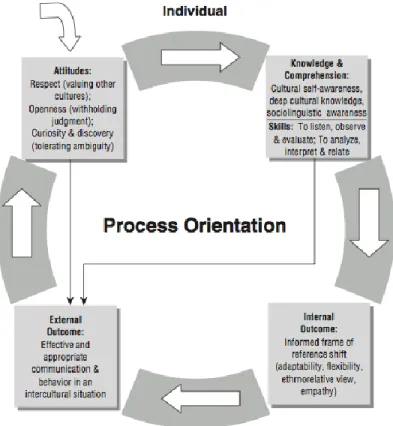
There are different models used to conceptualize the characteristics essential in ICC (see Spitzberg & Changnon, 2009). For the purposes of this dissertation, I used Deardorff’s (2006) developmental process model of ICC (see Figure 2.1) to show the influence of knowledge and skills, in combination with one’s attitude, in yielding a path towards shifting frames of reference internally that “enhance empathy, ethnorelativity, and adaptability” (Spitzberg & Changnon, 2009, p. 32).
Figure 2.1 Process Model of Intercultural Competence
This model “depicts the complexity of acquiring intercultural competence in outlining more of the movement and process orientation that occurs between various elements” (Deardorff, 2006, p. 257). Deardorff’s (2006) model best outlines the path to achieving a successful intercultural interaction, and the stages of development. Another model, Deardorff’s (2006) pyramid model, identifies the foundational values necessary for ICC and how these skills build upon each other to culminate in desired external outcomes, such as effective communication in intercultural settings (Spitzberg & Changnon, 2009). Although Deardorff’s (2006) pyramid model provides a linear visualization of the stages of ICC development, Spitzberg and Changnon (2009) argue that compositional models lack specific criteria or outcomes necessary to identify proficiency in ICC. Also, a model with linear structure may erroneously imply the ICC development must progress in a hierarchical manner.
However, Deardorff’s (2006) developmental process model does not show the process that an individual must traverse to obtain the required characteristics to be effectively
intercultural. Transformative learning is one theory that can be used to understand that process (Cranton, 2006). Both ICC and transformative learning theory examine frame of reference shifts; frame of reference shifts transform a person’s worldview, and they are required for one to be considered interculturally competent (Taylor, 1994a, 1994b).
Transformative Learning Theory
Transformative learning theory5 will be used to analyze if and how participants, as individual cases, underwent a change in meaning perspective during a short-term international experience. A meaning perspective is the cultural lens through which a person views all new experiences, and a person’s meaning perspective (Mezirow, 1978) or frame of reference
(Mezirow, 1997) is shaped by past experiences (Mezirow, 1978, 1999). Therefore,
transformative learning theory explains how new experiences in a person’s life are processed and appropriated (Taylor, 2008). According to the theory, transformative learning occurs when an experience of some life event—a crisis, dilemma, or loss—alters how the person sees the world (Mezirow, 1991). Mezirow (1978) theorized that disorienting experiences force people to reflect upon their own meaning perspectives.
For a learning experience to be transformative and to alter a person’s frame of reference, two things must occur: reflection and discourse (Taylor, 2008). First, the individual
experiencing a life-altering event must reflect on what is happening, and secondly, that person must engage in critical reflective discourse regarding the event (Taylor, 2008). Reflective discourse happens when people first assess why they think the way they do and then investigate alternative perspectives (Mezirow, 2012). Engaging in these two practices allows individuals to reflect upon what they have experienced and then adapt to whatever change is taking place (Mezirow, 1997), a point Mezirow (2012) explains aptly in his recent research:
Transformation theory’s focus is on how we learn to negotiate and act on our own purposes, values, feelings, and meanings rather than those we have uncritically
assimilated from others – to gain greater control over our lives as socially responsible, clear-thinking decision makers. (p. 76)
Using this theory has allowed me to analyze the process whereby participants have situated their intercultural interactions and to deduce whether they have been transformed.6