QUANTIFYING METHODOLOGICAL CHALLENGES IN POPULATION-REPRESENTATIVE CHILD MALTREATMENT RESEARCH THROUGH NOVEL DATA LINKAGES AND OUTCOME
CLASSIFICATION
Jared William Parrish
A dissertation submitted to the faculty at the University of North Carolina at Chapel Hill in partial fulfillment of the requirements for the degree of Doctor of Philosophy in the Department of Epidemiology in the
Gillings School of Global Public Health.
Chapel Hill 2016
Approved by:
Stephen W. Marshall Julie L. Daniels Paul Lanier
ABSTRACT
Jared William Parrish: Quantifying Methodological Challenges in Population-Representative Child Maltreatment Research Through Novel Data Linkages and Outcome Classification
(Under the direction of Stephen W. Marshall)
Background: Conducting epidemiologic research on a population basis is critical to understanding the magnitude of, and factors contributing to, child maltreatment. Large scale data linkage projects combining statewide birth records with child protective services records is a promising strategy to study maltreatment in a population. This project combines population-representative epidemiologic survey and administrative sources to estimate maltreatment incidence, and measure error resulting from poor linkage quality, limited cohort follow-up, and outcome ascertainment common in linkage studies.
Methods: Respondent data from the 2009 Alaska Pregnancy Risk Assessment Monitoring System (PRAMS) were linked with multiple administrative sources. To ascertain maltreatment reports we linked with child protective services (CPS), child advocacy center (CAC), Anchorage Police Department (APD), and child death review (CDR) records. A sub-study of all mortality among the 2009 and 2010 birth cohort was conducted to measure the reliability of maltreatment determinations made by the Alaska CDR. Results: The 2009 PRAMS respondents represent 11% of all resident live births in Alaska. Nearly 4% of the PRAMS respondents were censored annually; censoring was due to out-of-state emigration (n=237, 20%w) and deaths from competing causes (n=18, 0.7%w). Before age six years, 28%w (95%CI 24%w, 33%w) of Alaskan children born in 2009 were the subject of a maltreatment report to CPS, CAC, APD, or CDR. Failure to account for emigration or using stringent linkage assumptions would bias the risk estimate downwards by 12% and 43%, respectively. Agreement of maltreatment classifications between CDR panels was substantial for abuse but only fair for neglect and negligence. Multiple factors influenced discordant classification.
sample. The completeness of follow-up in this cohort is high, particularly for non-military births. While Alaska has unique administrative sources that allow for more comprehensive follow-up, other states could implement similar methods to better understand incidence of, and risk factors contributing to,
ACKNOWLEDGEMENTS
Without the support, love, and encouragement of multiple people this work would not have been possible. First and foremost I’m grateful for my love and wife, Kari for her amazingly giving heart, unfettered love, patience, and willingness to support me in my dreams and pursuits in life. I’m lucky to have her as my eternal companion as we work in partnership through life’s journey. She provided loving
encouragement, comic relief, and when needed kept me moving forward on this project. This truly was a team effort.
This work would not have been possible without the support of Dr. B.J. Coopes and her husband Paul Williams. Our relationship began with a simple conversation around a dinner table and has grown into a close friendship. I’m in awe of B.J’s energy and Paul’s giving kindness. I was so incredibly honored to conduct this work through the “Travis Fund” and will carry his memory with me throughout my life and
only hope that I can serve others the way he served our country.
I appreciate my family and the support they offered, especially towards the end when I wanted to be outside enjoying Alaska during the short summer months, opposed to inside working on a computer. My two brothers are inspirations to me and provide me with courage to push myself beyond expectation, Mike for his incredible personality and amazingly giving heart, and Jeff for his many conversations, and genuine interest in my work and life. I’m also grateful for my only sister Marty and her sweet love and
willingness to listen when needed. My parents and their spouses were always encouraging in my pursuits to which I’m thankful, my father Tom for teaching me how to work hard to pursue my goals and instilling
within me a love for the outdoors, and my mother Mary for teaching me how to love others, stay true to my faith, and keep my priorities focused.
I’m also extremely thankful for Steve Marshall my advisor and dissertation chair. I have learned
so much from him, and even with his busy schedule he always made time for me. Steve was instrumental in making the “Travis Fund” possible with the University of North Carolina. Steve truly exemplifies in my
feedback, and expressed genuine interest in me personally. I can only hope to become even a fraction of his stature and influence.
My dissertation committee was absolutely amazing! Each member was literally hand selected because of the excellence they bring. Dr. Patti Schnitzer provided expertise on child maltreatment measurements and has become such a great friend, Dr. Paul Lanier who I think is an epidemiologist at heart but works in social work is an amazing researcher and has a brilliant way of conceptualizing problems, Dr. Julie Daniels was my methodological rock who provide sought after critique and comment, and finally Dr. Meghan Shanahan assisted me with multiple conversations that made the development of this work possible.
I also recognize and thank a few instrumental mentors along this journey. I want to thank Dr. Ray Merrill at Brigham Young University who was my first epidemiology professor and ignited this passion within me. Dr. Alan Katz, Dr. John Grove, and Dr. Peter Holck while at the University of Hawaii at Manoa each taught me how to push myself in my academic pursuits and think systematically. I also thank Dr. Brad Gessner who was my first non-academic epidemiology mentor who inspired me to maintain scientific integrity and utilize the simplest tool to convey a message.
I really want to thank my colleagues at the Alaska Division of Public Health, specifically Stephanie Wrightsman-Birch who supports me in my creative efforts, Margaret Young and Kathy Perham-Hester for talking through research problems. I also thank the entire Maternal and Child Health Epidemiology Unit, especially the staff of the Maternal Infant Mortality and Child Death Review program for helping me collect and obtain crucial data needed for these projects.
I’m extremely appreciative of the staff of the UNC Injury Prevention Research Center (IPRC). Without their support and conversations along the way this journey just wouldn’t have been as fulfilling. I
always enjoy my return trips to IPRC and hearing about their successes. I especially thank Tonya Watkins who shared my passion for UNC basketball, for her support and help and many wonderful conversations.
The Epidemiology Department at UNC is phenomenal. I gained amazing insights through the scholarly works and teachings of many great instructors, which established my path forward.
Epidemiology student services made navigating the bureaucracy a pleasurable experience.
I’m grateful for the individuals in my life that continually inspire me through their work. I’m inspired
by Dr. Cathy Baldwin-Johnson for her unwavering strength in the face of adversity in treating abused children, Fred Van Wallinga for his huge heart and wisdom, Teri Covington for her passion for improving the safety of children worldwide, Ivana Vuletic for her amazing triumphs in life and guidance, and all the youth I’ve worked with in the Boy Scouts, who each individually provided unique strengths.
Most of all I’m thankful for the talents I’ve been blessed with by my Heavenly Father and His
TABLE OF CONTENTS
LIST OF TABLES ... xii
LIST OF FIGURES ... xiii
LIST OF ABBREVIATIONS... xiv
CHAPTER 1: INTRODUCTION ... 1
CHAPTER 2: REVIEW OF THE LITERATURE ... 3
2.1 Overview ... 3
2.2 Impact of maltreatment ... 5
2.3 Methodological challenges in child maltreatment research ... 6
2.3.1 Defining maltreatment ... 6
2.3.2 Maltreatment detection & classification ... 8
2.3.3 Child Death Review (CDR) ... 10
2.3.4 Study design considerations... 12
2.4 Prospective birth cohort studies ... 16
2.4.1 Prospective cohort studies using service agency cohorts ... 16
2.4.2 Prospective studies using birth cohorts ... 17
2.4.3 Birth cohort studies using health informatics approach ... 18
2.5 Factors predicting maltreatment ... 21
2.6 Theoretical basis for maltreatment study design development ... 25
2.7 Summary ... 27
CHAPTER 3: STATEMENT OF SPECIFIC AIMS... 29
CHAPTER 4: METHODS ... 31
4.1 Human subjects considerations ... 32
4.3 Aim 1 Methods ... 42
4.3.1 Study population ... 42
4.3.2 Study design ... 43
4.3.3 Study construction ... 43
4.3.4 Data linkages ... 46
4.3.5 Outcome ascertainment ... 49
4.3.6 Censoring and person-time ... 50
4.3.7 Analysis ... 51
4.4 Aim 2 Methods ... 53
4.4.1 Alaska Child Death Review Panels ... 53
4.4.2 Study design ... 54
4.4.3 Data collection ... 55
4.4.4 Maltreatment classifications ... 56
4.4.5 Analysis ... 57
CHAPTER 5: BIAS IN LONGITUDINAL DATA LINKAGE STUDIES OF CHILD MALTREATMENT (AIM 1 PAPER) ... 60
5.1 Background ... 60
5.2 Methods ... 61
5.2.1 Cohort establishment ... 61
5.2.2 Cohort follow-up ... 62
5.2.3 Censoring & competing causes ... 62
5.2.4 Outcome ascertainment ... 63
5.2.5 Linkage methods ... 64
5.2.6 Statistical analysis ... 64
5.2.7 Human subjects ... 64
5.3 Results ... 65
5.3.1 Outcome ascertainment ... 65
5.4 Discussion ... 67
5.4.1 Outcome ascertainment data sources ... 67
5.4.2 Bias in incidence ... 68
5.4.3 Bias in hazard ratios ... 69
5.5 Conclusion ... 69
5.6 Supplemental material ... 77
5.6.1 Data linkages ... 79
CHAPTER 6: FATAL MALTREATMENT CLASSIFICATION (AIM 2 PAPER) ... 84
6.1 Introduction ... 84
6.2 Methods ... 85
6.2.1 Data collection ... 86
6.2.2 Statistical analysis ... 87
6.2.3 Statistical power ... 88
6.2.4 Institutional Review Board ... 88
6.3 Results ... 88
6.3.1 Rater agreement ... 89
6.3.2 Data element variation ... 89
6.3.3 Demographic comparisons ... 89
6.3.4 Discordant classification description ... 89
6.3.5 Review panel ... 90
6.3.6 Impact of classification variation on maltreatment-related mortality estimates ... 91
6.4 Discussion ... 91
6.4.1 Limitations... 93
6.5 Conclusion ... 93
CHAPTER 7: DISCUSSION ... 98
7.1 Research significance ... 98
7.2.2 Non-linkage assumptions ... 101
7.2.3 Strengths and limitations of combining survey and administrative data to increase the richness of potential covariate data ... 103
7.2.4 Ethical considerations in using PRAMS data ... 105
7.2.5 Nonfatal outcome ascertainment (CPS and other sources) ... 105
7.2.6 Fatal outcome ascertainment (CDR and other mortality sources) ... 108
7.3 Future research needs ... 110
7.3.1 Replication of methodology in multiple jurisdictions ... 110
7.3.2 ALCANLink project expansion ... 111
7.3.3 Further steps in improving fatal and nonfatal outcome ascertainment ... 112
7.4 Public health significance ... 113
7.5 Conclusion ... 114
APPENDIX 1: STUDIES USING BIRTH COHRT DATA LINKAGES AND RELATED DESIGNS FOR MALTREATMENT RESEARCH ... 116
APPENDIX 2: PRAMS CONSENT FORM ... 135
APPENDIX 3: PRAMS SAMPLING WEIGHTS... 136
APPENDIX 4: DATA INDICATOR BY SOURCE ... 145
APPENDIX 5: LINKAGE ALGORITHMS AND SCORING ... 146
APPENDIX 6: STATE AND FEDERAL CHILD DEATH REVIEW MALTREATMENT QUESTIONS ... 152
APPENDIX 7: CROSS-CLASSIFICATION TABLES FOR AIM 2 ... 154
APPENDIX 8: FULL BIRTH COHORT AND PRAMS SAMPLE DEMOGRAPHIC COMPARISON ... 156
APPENDIX 9: LIFE TABLES... 157
APPENDIX 10: CUMULATIVE DISTRIBUTION FUNCTION ... 159
LIST OF TABLES
Table 2.1 Risk-set comparison between three population based US Studies
linking birth records with child protective services (CPS) records ... 25
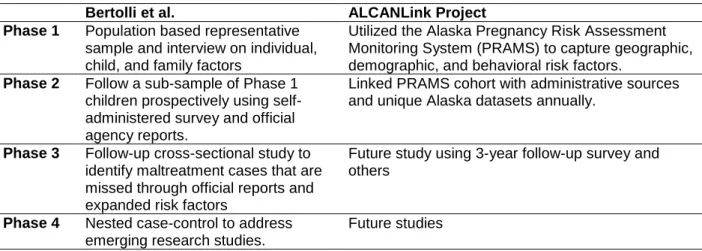
Table 4.1 Relationship between the Mixed-design strategy proposed by Bertolli et al. (1) and the ALCANLink project ... 31
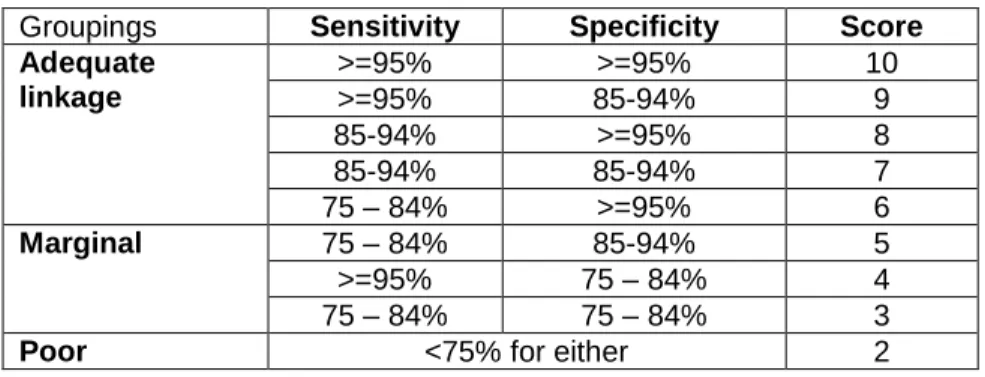
Table 4.2 Metric for classifying adequacy of data linkage relative to known training data ... 48
Table 4.3 Comparison of FRIL and R RecordLinkage package for probabilistic record linkage ... 48
Table 4.4 Unadjusted Odds of censorship among the PRAMS respondents, ALCANLink (n=1,235) ... 53
Table 4.5 Overall derived cross-classification of maltreatment between panels one and two with analysis methods described ... 59
Table 5.1 Cohort follow-up by age in years to event, death, or censor, ALCANLink (n=1,235) ... 74
Table 5.2 Comparing the hazard ratios of first maltreatment report before age six years when not accounting for out-of-state emigration, ALCANLink (n=1,235) ... 75
Table 5.3 Impact of censoring rule on incidence of any-agency report per 100 person-years, ALCANLink (1,235) ... 77
Table 5.4 Agency maltreatment report classification determinations ... 78
Table 5.5 Linkage rates by data source, ALCANLink (n=1,235) ... 82
Table 6.1 Operational definitions of maltreatment categories ... 86
Table 6.2 Agreement classification between two review panels, Alaska MIMR-CDR (n=101) ... 95
LIST OF FIGURES
Figure 4.1 Child Advocacy Center reporting data to the Alaska SCAN program
and site location, 2016 ... 39
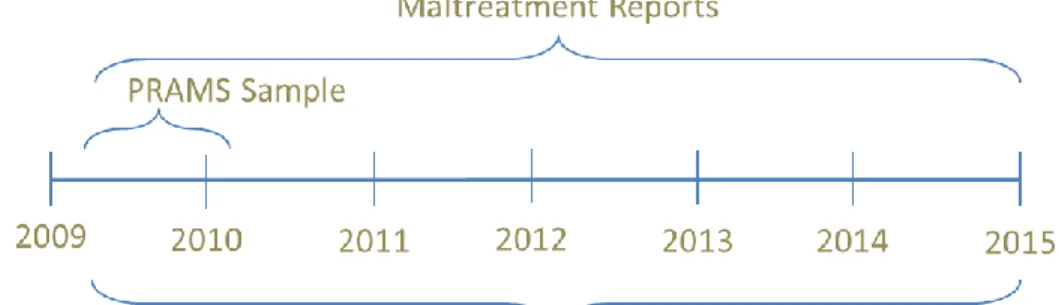
Figure 4.2 Timeline of proposed sampling, reports, and censoring ... 43
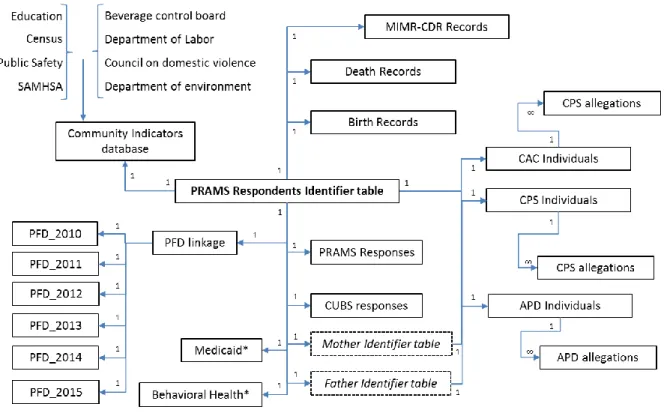
Figure 4.3 Relational data linkage map, ALCANLink (n=1,235) ... 45
Figure 4.4 Conceptual data linkage (longitudinal flow) schematic, ALCANLink (n=1,235) ... 46
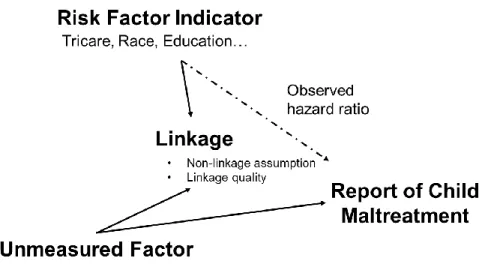
Figure 4.5 Diagram of potential linkage misclassification ... 49
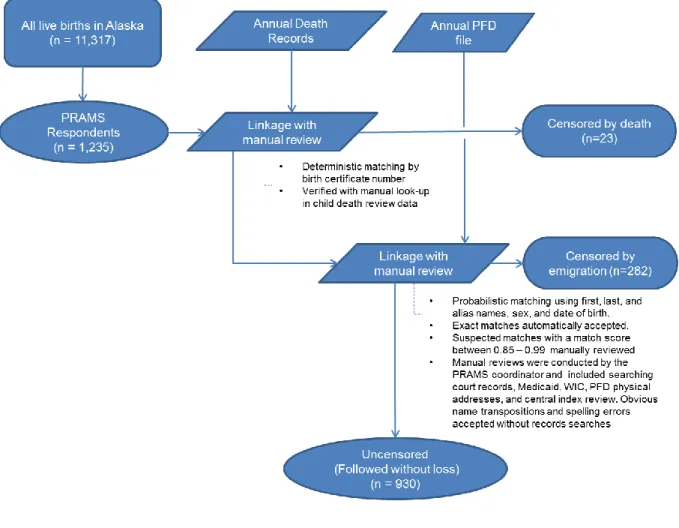
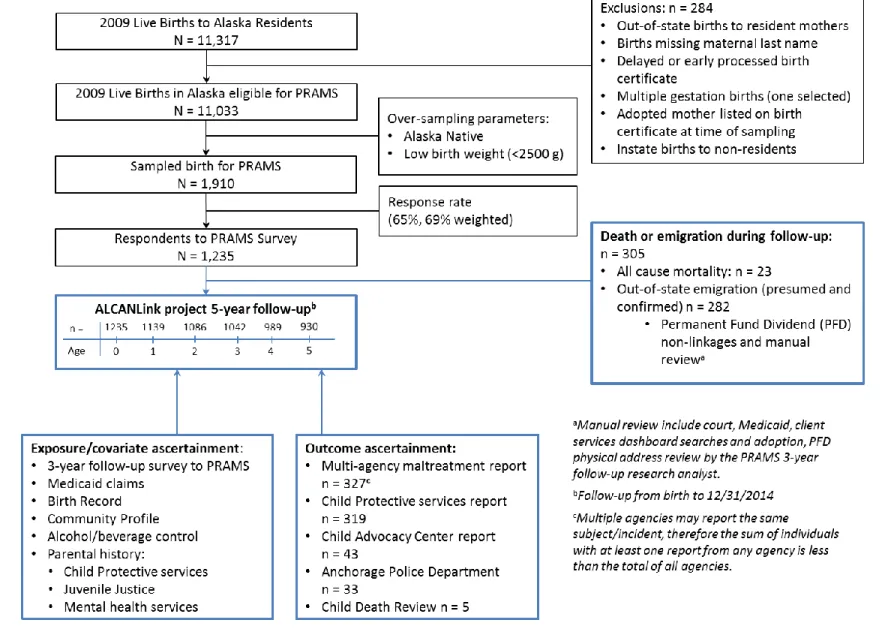
Figure 5.1 Participant flow diagram, ALCANLink (n=1,235) ... 71
Figure 5.2 ALCANLink follow-up and person-time specification profiles ... 72
Figure 5.3 Outcome ascertainment by data source for outcome-positive subjects, ALCANLink (n=327) ... 73
Figure 5.4 Risk of first maltreatment report, ALCANLink (n=1,235) ... 76
Figure 5.5 Mean Residual Life plot, of the linkage probability used to visually identify the “long-tail” of the distribution to establish initial manual review thresholds... 80
LIST OF ABBREVIATIONS
ALCANLink Alaska Longitudinal Child Abuse and Neglect Linkage Project ABC Alcohol and Beverage Control
ACA Alaska Children's Alliance
AddHealth National Longitudinal Study of Adolescent Health
AK Alaska
ALSPAC Avon Longitudinal Study of Parents and Children APD Anchorage Police Department
AST Alaska Screening Tool BH Behavioral Health BVS Bureau of Vital Statistics CAC Child Advocacy Center CAN Child Abuse and Neglect
CAPTA Child Abuse Prevention and Treatment Act CDC Centers for Disease Control and Prevention CDR Child Death Review
CFRT Child Fatality Review Team CI Confidence interval
CPS Child Protective Services
CUBS Childhood Understanding Behaviors Survey DBH Division of Behavioral Health
DCCED Department of Commerce, Community, and Economic Development DCRA Division of Community and Regional Affairs
Deff Design effect
DHSS Department of Health and Social Services DJJ Division of Juvenile Justice
FRIL Fine-grained Record integration and Linkage
g Grams
GAO Government Accountability Office
HIPAA Health Insurance Portability and Accountability Act HR Hazard Ratio
ICC Inter-class correlation
ICD International Classification of Disease IRB Institutional Review Board
IRR Incidence rate ratio LE Law Enforcement
LONGSCAN Longitudinal Studies on Child Abuse and Neglect MAR Missing at random
Mat-Su Matanuska-Susitna boroughs MCAR Missing completely at random MCH Maternal and Child Health MDT Multidisciplinary Team
Med Medicaid
MIMR-CDR Maternal Infant Mortality Review – Child Death Review MNAR Missing not at random
MRL Mean Residual Life Plot
NCANDS National Child Abuse and Neglect Data System
NCRPCD National Center for the Review and Prevention of Child Deaths NHTSA National Highway Traffic Safety Administration
NIS-4 4th National Incidence Study OCS Office of Children’s Services
OR Odds Ratio
PR Prevalence ratio
PRAMS Pregnancy Risk Assessment Monitoring System PSR Protective Services Report
PTSD Post-traumatic stress disorder ref Reference
SAMHSA Substance Abuse and Mental Health Services Administration SUID Sudden Unexplained Infant Death
SUIDI Sudden Unexplained Infant Death Investigation UK United Kingdom
UNC University of North Carolina
UNK Unknown
US United States
CHAPTER 1: INTRODUCTION
Child maltreatment is a general term that refers to all forms of childhood victimization due to acts of omission and commission by an adult caregiver.(2) Physical abuse, sexual abuse, emotional abuse and neglect are the most common forms of victimization. According to the 4th National Incidence Study (NIS-4) the incidence of maltreatment in the US during 2005-2006 was 17.1 per 1,000 children.(3) One recent national study measuring cumulative incidence using a synthetic cohort lifetable approach, estimated that by age 18, nearly 13% of the US population will experience confirmed maltreatment.(4)
The consequences of child maltreatment on both acute and chronic behavior and health
outcomes are numerous and well-documented. In stark contrast, evidence on the causes and even basic incidence of maltreatment remains limited. Maltreatment research is plagued by methodological
challenges such as measurement error, exposure and outcome misclassification, incomplete covariate adjustment, and over-reliance of simplistic statistical models to assess this dynamic multifaceted problem.(1,5) These limitations restrict our ability to develop prevention strategies built on strong evidence bases supported by theory.
Conducting epidemiologic research on a population basis is critical to understanding the etiologic factors contributing to child maltreatment. Large prospective birth cohort studies of maltreatment are needed. There have been few such studies in the US due to resource requirements, the extensive administrative support for participant follow-up, and duration of time to conduct these studies. Population-representative data linkage projects, which combine statewide birth records with child protective services records, have recently emerged as a health informatics approach to epidemiologic research in child maltreatment.(6,7) These population-based linkage studies however are rarely able to conduct complete cohort follow-up, often fail to quantify linkage error rates, and usually have limited outcome
Studies that link population-representative survey with administrative data are extremely powerful as they can mitigate some of the challenges experienced in survey only and administrative linkage only studies (including the ones noted in the preceding paragraph).(12) Twenty years ago Bertolli et al.
described the “Mixed design” strategy that combines the strengths of multiple research designs.(1) To our
knowledge this proposed research method has never been fully implemented.
Using this “mixed design” strategy as a map we linked the Alaska Pregnancy Risk Assessment
System (PRAMS) survey responses to administrative records and followed this historical cohort
prospectively with a high rate of follow-up. This project introduces an innovation to the field of child data linkage studies by using the PRAMS survey as the basis for the historical cohort. We examine the
performance of this study design methodology, which has the potential to be implemented by other states conducting PRAMS. We quantify the impact of non-linkage bias, examine the effect of poor or restrictive linkage methods, and evaluate incomplete outcome ascertainment. Assessment of outcome status remains the most challenging aspect of these studies. Expert review panels provide one of the preferred mechanisms for adjudication of child deaths to determine abuse and neglect. We examined the reliability of the child death review (CDR) process in Alaska, and provide recommendation for improving this process. The results of this dissertation support the long-term goal of creating a low-cost,
CHAPTER 2: REVIEW OF THE LITERATURE 2.1 Overview
Child maltreatment is a serious public health threat due to its lasting health effects on the individual, family, community, and society.(13-16) Quantifying the incidence of maltreatment however, has been extremely challenging. National estimates range greatly depending on the source and methods used to describe maltreatment. For example, the NIS-4 estimated that by age eighteen the rate of maltreatment is 17.1 per 1,000 children (3) which is substantially higher than what is estimated using the National Child Abuse and Neglect Data System (NCANDS) of 9.4 per 1,000 children.(17) National estimates from self-reports also vary considerably. One nationally-representative telephone survey of children 1month thru age 17 years (using parent proxy and child responses) reported that 14% experienced maltreatment by a caregiver in the past year and 25% reported any lifetime victimization. This study also reported the lifetime maltreatment by type of 11% for physical abuse, 13% for emotional abuse, 15% for neglect, and .5% for sexual abuse. (18) Another study, using The National Longitudinal Study of Adolescent Health (AddHealth) data, reported that by the start of 6th grade, 42% experienced supervisory neglect, 12% experienced physical neglect, 28% experienced physical assault, and 5% experienced sexual contact abuse.(19) Other studies using national inpatient data estimate the incidence of physical abuse requiring medical attention is 6.2 per 100,000 children <18 years (58.2 per 100,000 among infants, and 133.1 per 100,000 among infants covered by Medicaid). A recent study in Canada used a representative telephone survey and administered a comprehensive tool to capture neglect behaviors. Those researchers reported that the annual prevalence of children experiencing neglect in some form was 26% among children 6 months to 4 years of age, 29% among children 5-9 years, and 21% among children ages 10-15 years.(20)
approach the research team estimated that nearly 13% of the US population will experience a confirmed maltreatment event by age 18 years.(4) This novel approach provided the first national cumulative risk estimates of child maltreatment by age 18 years that were not based on retrospective self-report. All prior official reports are based on annual cross-sectional reports that underestimate the individual child burden. This approach calculates cumulative risk by assuming the age-specific probability of experiencing a specified outcome is constant at the initial cohort year’s rate.
The introduction of the cumulative risk and ecologic frameworks into the national research on maltreatment has increased our understanding of the etiology, causes, and consequences of
maltreatment.(15,16) The causes and complex etiology of individual episodes of maltreatment are multifaceted and influenced by both risk and protective factors.(21) Many acute and chronic negative behavioral and health sequela are linked to child maltreatment.(19,22-24) Research suggests that the accumulation and co-existence of childhood trauma and other household dysfunction intensifies this effect of maltreatment on the individual.(25-27) The impact of maltreatment and accumulation of harm can be attenuated or exacerbated by environment and social supports, individual resilience, severity of harm, developmental timing of occurrence, and chronicity.(21,28,29)
2.2 Impact of maltreatment
The consequences of maltreatment generally fall into three main categories, physical health, mental health, and behavioral health. Maltreatment exposure can lead to an increase in social, economic, and health problems and exacerbate mental health disorders, decision making, substance use, and transmission of violence.(27,41)
Many theoretical constructs help explain the relationship between child maltreatment and negative health outcomes.(42) Kendall-Tackett explored four etiologic pathways between abuse and health and suggested that the four pathways make up of a complex web of behavioral, emotional, social and cognitive functioning factors. Until all four pathways are adequately addressed, the long term health of victims of maltreatment is unlikely to improve.(43) Thus, the etiologic association between
maltreatment and poor health outcomes is likely multifaceted, rather than any single empirical cause. Studies document the relationship between the accumulation of early childhood experiences and victimization with long-term chronic health outcomes.(44-48) Children experiencing or living in
dysfunctional households have increased risk for heart disease, obesity, certain cancers, high blood pressure, diabetes, and many forms of early death.(25,49-52) Research has also demonstrated that outcomes of cumulative exposures may vary by individual resilience and other factors.(53)
The most common mental health consequences of child maltreatment (any form) documented in the literature include depression, anxiety, aggression, anti-social tendencies, and post-traumatic stress disorder (PTSD).(54-57) Researchers seeking to understand the etiologic link between maltreatment and many mental health consequences have investigated the physiology of brain development.(58-60) Additional epidemiologic and animal studies suggest that childhood trauma may impact neural development through changes in structure and modifications in neurotransmitter systems, gene expressions, and epigenitics.(61-63)
Behavioral consequences and dysfunction are also well documented in the literature with lasting effects into adulthood.(64) The most frequently documented behavioral consequences include:
Acute injuries and outcomes have also been documented. Most recognized are the physical injuries related to acts of commission (physical and sexual abuse), and include traumatic brain injuries, broken bones, bruising, genital trauma, burns, other harm resulting from inflicted trauma, and death.(70-72) Recent work by Schnitzer et al. indicates that a substantial proportion of unintentional injuries are a result of poor or absent adult supervision.(73) Further research has documented that maltreated children have an increase in hospital utilization, emergency room visits, and injury related mortality.(74,75) Clearly the multiple negative health outcomes and variations in causal pathways leading to maltreatment require comprehensive longitudinal data sources to adequately measure this complex issue.
2.3 Methodological challenges in child maltreatment research
Studying maltreatment, especially in a population-based sample is challenging. Multiple factors can influence the validity, generalizability, and interpretation of maltreatment research. Primary
considerations on improving the validity of all maltreatment research include specifying and
operationalizing definitions, comprehensive covariate assessment, and accurate outcome classification. Overall generalizability is influenced by the ability of the study sample to represent the target population, and is especially problematic since much maltreatment research has utilized clinical or high risk
populations. Additiional limitations of the maltreatment field include weak study designs, and limitations in datasets (such as limited covariates, restricted age ranges, and access to only subsets of an underlying population) and analysis.(1)
2.3.1 Defining maltreatment
Prior to conducting any study, attention must be given to how we even define and measure child maltreatment. Maltreatment research has continually been stymied by an inability to reliably and
accurately identify and classify maltreatment occurrences in a population-based sample. Official
definitions of maltreatment vary across state child welfare systems, professional disciplines, and research studies.(2) Research is of little use without a clear understanding of what one is measuring.
agencies is influenced by the statutorily defined definitions and other state based policies.(77) Policy can also dictate the maltreatment definition utilized by any given agency.(33) Furthermore, multiple
disciplines, including social welfare, judiciary and law enforcement, psychology, sociology, medicine, and more recently public health often operationalize definitions differently impacting comparability between research findings across disciplines.(34)
Fallon et al. suggested that, many of the maltreatment measurement issues originate from lack of definition clarity and detail.(5) There is no consistently-applied definition of what constitutes
“maltreatment”. Statistics from agencies may represent all reported events, substantiated only events, all
individuals, annual incident or childhood prevalence. Further operational definitions may be family or child based effect measurements. Both the National Incidence Study (NIS) and United States NCANDS system quantify national maltreatment estimates using similar definitions of maltreatment but differ in terms of their operational methodology. The two systems produce highly variable estimates.(5) These variations in methodology indicate that much of the variation in maltreatment quantification is likely influenced by not just by how maltreatment is defined but also by operational structures and resources within agencies.
To assist and unify maltreatment public health surveillance, the Centers for Disease Control and Prevention (CDC) developed and published a set of uniform maltreatment definitions. The CDC defines maltreatment as any act(s) of omission or commission by a caregiver or parent that results in completed, threatened, or potential of harm to a child less than age 18 years. This ensures that maltreatment is not conditional on expressed or perceived intention of harm on the part of the caregiver, caregiver legal liabilities, the economic situation of the caregiver, and religious or other cultural norms.(2) The CDC public health definitions allow for inclusion of incidents where the caregiver failed to provide adequate
supervision to the child that may otherwise be deemed “accidental” events.
be determined, this does not mean child abuse did not occur, rather the system couldn’t assign
responsibility under the definitions or legal process. While the CDC definitions provide an excellent theoretical basis, they do not specify how to operationalize the definitions in the detection of potential maltreatment.
The concept of maltreatment as a dichotomy (yes vs no) may to some respects be somewhat arbitrary if based on the behavior of a parent or caregiver opposed to the experiences of the child. Continuing to base our definitions on those developed for policy will lead to differential determinations. Childhood victimization may be experienced along a continuum and therefore need equally flexible scientific definitions to capture the outcome of child wellbeing that is impacted by deficits in care. 2.3.2 Maltreatment detection & classification
Identifying and classifying maltreatment is problematic because it requires capturing an event that often occurs out of sight. Official reports, survey, medical records review, and multi-source data linkages have all been used to detected and classify maltreatment.(79) Official reports to child welfare agencies are known to under-represent the magnitude of the problem due to under-reporting.(3,80,81) Among reported maltreatment the process of screening and confirming maltreatment (substantiation) is influenced by policy, adequacy of information, and other external processes.(82) These limitations in confirmed maltreatment by child welfare have influenced many researchers to abandon substantiation as an endpoint and use any investigate report as an endpoint.(83,84) A growing body of research suggests that children experiencing unsubstantiated reports or even simply reported to child welfare have similar risk profiles and experience similar rates of poor outcomes to those that are substantiated.(83-87)
Substantiated maltreatment is therefore likely a conservative estimate of all experienced maltreatment.(4) Substantiated maltreatment may only be useful for certain types of investigations (88) provided
researchers appreciate that although the number of false positives decreases by using this measure the number of false negatives likely drastically increases.
prevalence estimates in younger aged children (for example, if the caregiver respondent is an abuser and is seeking to conceal the abuse). Further, retrospective self-reporting bias may impact these estimates and those experiencing childhood victimization later in life and or experiencing negative effects into adulthood may be more likely to attribute this to recalled traumatic childhood experiences. Various tools and methods have been implemented to try and improve outcome (abuse and neglect) detection through interview instruments.(25,91) DiLillo et al. in a small study of graduate students assessed modality (computer, telephone, in person) of survey administration for assessing child maltreatment and found that disclosure was consistent across modes, but resulting distress among the participant varied by type.(92) Although for other health conditions self-reports and administrative data are fairly comparable,(93) for maltreatment larger difference exist in classification between detection modalities.(35,94-96) Self-reported maltreatment events may improve the sensitivity for capturing prevalent maltreatment in a population retrospectively, but capturing incident maltreatment prospectively would require frequent survey and subsequent confirmation through a standardized process and face ethical challenges to complete comprehensive follow-up.
In some longitudinal and cross-sectional studies self-reported maltreatment has been combined with official reports to increase maltreatment detection. Linking survey with administrative records is a powerful method for extending and improves longitudinal research.(12) Among population level
maltreatment research, this has primarily occurred in countries outside the US. However, a few selected studies in the US have used these methods. Nearly all of these studies using this multi-modal method have detected substantially more events than either method alone.(94,96,97)
Another method of maltreatment detection is through the use of International Classification of Disease (ICD) codes from medical records. Schnitzer et al. conducted extensive review of multiple ICD code series to determine the utility of sources such has Hospital Discharges as a method for
maltreatment surveillance. With age restrictions, this research identified several codes and code combinations that are “suggestive” of child maltreatment.(98) Although ICD codes may detect some
The one exception to this may be for specific mechanisms of injury such as Abusive Head Trauma.(100-104)
Aside for substantiation determinations made by child welfare agencies, nearly all other methods for classifying maltreatment are developed through research methods.(77) Given the known limitations of substantiations alone as a measure of completed maltreatment,(105) it is clear that other reliable and standardized methods are needed. One promising approach is the use of multi-disciplinary teams to review circumstances of injury using abuse and neglect experts.(80,106) This strategy has been in practice by child death review teams with various degrees across the US for decades for fatal maltreatment classification.
2.3.3 Child death review (CDR)
Mortality is the most severe outcome resulting from maltreatment. Given recent increased national attention, accurate enumeration of fatal maltreatment should be a priority.(107) Schnitzer et al. compared the linkage processes and utility for maltreatment-related mortality quantification for three states and found that, while no single source was adequate for capturing fatal maltreatment, combining 2 data sources allowed over 90% of all maltreatment cases to be identified. The authors concluded that of all the sources available and used, the child fatality review process is likely the most promising
surveillance approach for capturing and classifying maltreatment-related mortality. This is due to the ability of the multi-disciplinary panel to review and through consensus, classify the likelihood that maltreatment contributed to the death.(108) The child death review process was initiated over three decades ago with the goal of improving maltreatment fatality classification, however, this process has been little-studied and the performance of child death review teams has rarely been the subject of scientific review.(109)
inadequate) to allow for a degree of uncertainty in the causal role that maltreatment played in the actual fatality. They found that among the 32% cases that met the definite definition, 79% of the incidents were substantiated by child protection; lack of substantiation may be also attributed to the fact that many CPS agencies will only investigate if other children remain in the home. As a result of this research,
multidisciplinary child fatality review panels were adopted in multiple states as a “best practice” to improve
maltreatment-related mortality classification.(80) In Colorado, Crume and colleagues compared the results of child fatality review with vital statistics and found that roughly half of the maltreatment-related cases identified were indicated as such on the official death record. They further identified differential classification patterns by sociodemographic characteristics. They also concluded that deaths due to commission opposed to omission were more likely to be indicated correctly on the official death records.(36)
Palusci et al. attempted to conduct a capture-recapture study to ascertain the incidence of fatal maltreatment, this method is commonly used to estimate the magnitude or size of a problem by
identifying a number of events, marking them, and them and then capturing the events again from the same population. The union of these two event-capturing are considered estimations of the population. These researchers determined that the severe undercounting of neglect deaths in official sources as compared to the in-depth review “gold standard” prohibited this approach. They concluded that both
systematic and standardized processes are needed for identifying cases and making classifications.(111) Neglect related mortality continues to be the most difficult type of maltreatment to accurately classify. A recent study evaluated the consistency of child death review team members in classifying neglect scenarios. These researchers documented extreme variations between individual assessments of neglectful situations between members and even within the subjects themselves. They concluded that a more standardized process is needed for individuals to consistently classify neglectful situation as neglect.(112)
disciplines including child welfare, law enforcement, medical examiner, pediatrics, other health
professionals, public health, and additional members as needed to review the setting and circumstances contributing to a given child fatality.(115,116) The CDR process involves the challenge of bringing together multiple professional groups, each with potentially different definitions of maltreatment. This process, if focused on prevention, has the potential to successfully adopt a cross-sector definition for the purposes of developing consistent classifications, with the aim of grouping similar deaths that likely share common etiology for prevention.(117,118) The CDR model has contributed substantially to child welfare in general,(119) and to public health prevention efforts and the development of public policy regarding maltreatment.(118,120,121) The CDR process should be further evaluated to determine the feasibility of extending this or a similar expert consensus review process to nonfatal suspected maltreatment that is identified through multiple sources.
The national CDR model uses tiered (i.e. 4-levels, definite, probably, unlikely, unknown) public health definition and approach for maltreatment detection and classification. One of the criticisms of the use of the child death review team consensus determination in measuring maltreatment related child fatalities is the lack of consistency of classification, influence of team membership, and variation by type of death coded on the death certificate. Currently no validated set of questions or instrument has been assessed for maltreatment-related fatality classifications using a tiered public health definition. While the CDR is a comprehensive process for establishing maltreatment-related mortality classification, the lack of internal reliability of the classification metrics remain unknown. The scientific consensus is that the CDR team classification of maltreatment, using a tiered definition to reflect level of team certainty, has been successful in terms of raising awareness of the problem and advancing the field, but largely
un-validated.(36,120,122,123)
2.3.4 Study design considerations
most commonly employed designs implemented to measure incidence/prevalence, assess risk factors, develop predictive analytics, and make etiologic inferences. Many observational maltreatment research studies are simply restricted to “high risk populations” due to availability of information. Below we provide
a brief summary of the more commonly employed study designs and highlight key strengths and challenges in the use of that design for maltreatment research.
The “case-series” design describes the descriptive characteristics of a sample of patients,
respondents, or other group included in a review based on a common characteristic.(124) The case-series is limited in that it cannot estimate absolute or relative measures of effect due to lack of a comparison or counterfactual “stand-in” group. These designs are prone to selection bias, but are good
for hypothesis generation and description of a specified group. Most often this design is utilized to review diagnostics or review characteristics of a defined group within the maltreatment literature.(125) This design has limited utility in advancing our understanding of the epidemiology of child maltreatment. Furthermore, quantification of maltreatment may be non-uniform between groups, and lack the ability to identify risk groups.
Ecological studies of maltreatment using groups, communities, or some other aggregate community of people opposed to individuals are subject to various potential biases. Ecological studies have limited ability to support etiologic inferences due to the inability to adequately control for
confounding a the sub-aggregate (i.e. child or family) level, and heterogeneity of factors within the population. These studies are also often prone to an incorrect interpretation in terms of assigning aggregate risk to individuals.(126) While community level research has many challenges, some of the limitations with maltreatment research can be mitigated by incorporating ecological constructs and multi-level modeling or other theoretical approach to account for the multiple dimensions contributing to maltreatment.(31)
Cross-sectional studies provide a “snap-shot” of the prevalence of a condition at a point or over a
period of time. The population of interest is selected regardless of exposure or outcome considerations. Both the exposure(s) and outcomes of interest are captured at the same time which makes time
augment results to the count of cases obtained through official reports. Some authors have argued that self-reported maltreatment often used in cross-sectional studies may be more sensitive at detecting cases than relying solely on official reports.(1,127) While self-reports may capture un-reported maltreatment, they are particularly vulnerable to recall issues for event that occurred during early childhood. As Brown et al. described no single panacea exists for capturing maltreatment cases, rather using multiple methods such as both self-reports and official reports.(96) Maltreatment studies utilizing this study design are vulnerable to both the quality and completeness of the information collected through written or verbal questionnaire. These issues can often threaten the validity of the estimates and conclusions drawn from analytic assessments.(128)
The case-control study design is an efficient way of estimating the exposure distribution in the source population when the outcome is rare. For estimates to be valid, the exposure status must be independent of selection and the control population must represent the source population from which cases arose.(126) Bias resulting from inappropriate selection of controls, exposure measurement error, case identification, and specification of clear population at risk can be severe in maltreatment research. Classification of maltreatment in a well-defined population can be extremely problematic due to variety of reasons but often are exacerbated by jurisdictional definitions of agencies. Thus the potential for
misclassification of the outcome is great which can lead to biased effect estimation.
Determining the appropriate population to represent the population from which cases arose is particularly challenging. Often maltreatment case-control studies are implemented in clinical settings, through official child welfare reports, or law enforcement. Population-based strategies that utilize official reports of maltreatment can utilize a random (or other complex sampling design) to identify controls. However the legitimacy of the estimates produced is based on the ability of the research to accurately and comprehensively ascertain the outcome, which (as discussed above) is problematic. Poor outcome classification would result in a detection bias and impact the effect estimates.(126)
Leventhal reviewed 22 case-control studies assessing risk factors for child abuse and found that a common methodological error was inappropriate control group. Use of an incorrect control group or reference population could lead to spurious associations and effect estimates. Leventhal also indicated that very few studies addressed the issue of detection bias. The researchers concluded that the validity of these studies are suspect.(129)
It has also been noted that maltreatment types, severity, and chronicity are all factors that can contribute to how one defines a specific outcome and appropriate controls are selected from a well-defined population.(130) In view of these limitations, the use of case-control designs in future maltreatment research is questionable.
Cohort studies conducted either retrospectively or prospectively identify a population that share a common defining experience (e.g. birth cohort shares the same year of birth, and occupational cohort share a common place of work or workplace exposure). These studies are ideally suited for studying rare exposures. Cohort studies that are closed with no loss to follow-up or movement between exposure groups can directly estimate average risks, however many cohort studies are more dynamic with losses of the cohort, and changes in exposure status over time. Under the latter conditions rates are calculated using person-time denominators.
Classifying the exposure appropriately with adequate detail on timing and duration of exposure can be difficult. Often use of current, average, or cumulative exposure levels are utilized over the duration of the follow-up. These crude estimates can become problematic if a third variable influences a change in exposure status and is also related to the outcome (i.e. these classifications limit the researchers ability to control confounding). Cohort studies, if conducted prospectively, can be cost prohibitive and may require long periods of time to complete. Cohort studies are also impacted by the challenges of identifying and measuring actual maltreatment cases. Limiting research to only official reports may underestimate the true incidence estimates, and over-reliance on self-reports may skew the cumulative incidence.
Maltreatment population based prospective cohort studies can be difficult to accomplish with high fidelity to the study design.
ability to capture potential cases prospectively from a common population, and measure the incidence of disease. This design is the strongest observational study design for maltreatment research. Part of this dissertation involves a data-linkage historical cohort study using a birth cohort. The strengths and weaknesses of this design are discussed in detail in Chapter 2.4.3. The next section details cohort studies in general.
2.4 Prospective birth cohort studies
Due to their methodological strengths, cohort studies occupy a special place in observational research on maltreatment. This section reviews this literature in detail. Cohort studies can be divided in those that use birth cohorts, and those that use service agency cohorts.
2.4.1 Prospective cohort studies using service agency cohorts
Large prospective cohort studies that study maltreatment are frequently limited to high risk or populations known to child protective services. This limits the ability of the study to measure risk in the population. The Longitudinal Studies on Child Abuse and Neglect (LONGSCAN) was a consortium of research activities initiated in 1990 from multiple sites using common methodology to allow for follow-up of children and families into young adulthood.(131) Children who were maltreated or at risk of
maltreatment (i.e. known to child protective services, or had multiple risk factors) were eligible for being included in the projects. Data for LONGSCAN was collected at regular intervals (~ every 2 years) through review of administrative records, telephone interviews, and other modalities. The unifying of multiple projects was aimed at increasing the statistical power to allow for multiple subgroups analysis and generalizability. LONGSCAN studies have produced more than 200 maltreatment publications that have greatly expanded the knowledge of the impacts of maltreatment.
treatments, (74) long-term effects related to behavioral problems and poor academic achievement, (134,135) child death, (136) predictions of maltreatment, (137-139) and many others.(140,141) 2.4.2 Prospective studies using birth cohorts
Multiple maltreatment cohort studies have utilized larger more comprehensive prospective cohort study. The most prominent of which is the maltreatment research conducted by Sidebotham and
colleagues in the United Kingdom using the Avon Longitudinal Study of Parents and Children (ALSPAC).(142) This unique study collects comprehensive data throughout the life course on nearly 10,000 children and parents. Further, survey responses are linked with medical, academic, social services, law enforcement and other administrative records. This cohort study has been utilized to estimate the incidence of maltreatment, identify predictors of fatal child maltreatment, and using a nested case-control design, identify parental risk factors that affect maltreatment risk.(143-146)
Use of the ALSPAC study for maltreatment research has provided strong epidemiologic
information on the causes and consequences of maltreatment reported to official sources. But even this study is limited due to reliance on officially confirmed maltreatment reports. Further, this expansive study is extremely expensive and requires intense resources which limit replication in other locations.
In the United States the National Longitudinal Study of Adolescent Health (AddHealth) study has been utilized to quantify the prevalence of self-reported maltreatment. The AddHealth survey is a
nationally representative sample of adolescents attending school from grated 7 thru 12 and into
adulthood.(147) Data is collected in Phases at staggered times. Self-reported maltreatment was collected using a computer-assisted interview due to the sensitive nature of the questions and to reduce to
probability of reporter bias. Using this source Hussey et al. reported that self-reported maltreatment is common (42% reported supervision neglect, 28% reported physical abuse, 12% reported physical neglect, and 5% reported sexual abuse). They also determined that the risk factors contributing to maltreatment varied greatly across ecologic domains.(19)
between 1967 and 1971. Only those cases that were substantiated were included in the sample. Controls were matched on age, sex, race, and family social class.(148) A 2:1 ratio of controls to cases was attempted when sampling form birth records but was not obtained with only 667 matches made for the 908 maltreated children. This study failed to support the hypothesized relationships which the author attributed to sample size and duration of follow-up.
Multiple other cohort studies such as the Environmental Risk Longitudinal Study that surveys a national representative sample of twin pairs and their families and a subsample of an upstate New York families study have been implemented and allowed for nested maltreatment research.(53,96) Selected studies are described in APPENDIX 1.
2.4.3 Birth cohort studies using health informatics approach
Health informatics using administrative data linkages are an important tool for conducting public health research and have been used to study and estimate the disease burden of a variety of health topics.(149,150) Pioneered over 70 years ago,(151) the use of record linkages within a population to conduct large-scale health investigations has become a technological reality. Data integration and linkage studies are relatively common and have proven to be an extremely efficient way to enhance longitudinal surveys,(12) and develop longitudinal birth cohorts to study a variety of outcomes to influence policy and practice.(10,152-154) Data linkages have been used quite extensively in child maltreatment research however, population based linkages studies in the US are still developing in popularity. Large record linkage studies to measure a variety of population health issues and conduct public health surveillance have been described and extensively utilized in Western Australia, Canada, United Kingdom, and multiple other countries.(149,150,152,155-159)
in Aboriginal population experiences with reported and substantiated maltreatment.(7,160-162)
Population-level Health informatics approaches using data linkages to study maltreatment in the US are becoming more popular. These large scale linkage projects usually link statewide birth records with child welfare records to measure cumulative incidence and identify longitudinal associations.
Population based longitudinal studies using integrated administrative data sources have been suggested as an economical approach to examine risk and protective factors of maltreatment over time (selected studies described in APPENDIX 1).(163-168) Administrative data linkages are powerful study designs that often utilize entire birth cohorts opposed to samples, thus reducing the impact of random error. Putnam-Hornstein and colleges successfully probabilistically linked birth, CPS, and death records for 4.3 million children born between 1999 and 2006 in California.(75) This massive full birth cohort and other cohorts derived from it or additional birth years is being used extensively to develop predictive models, estimate the incidence and impact of maltreatment over time. (72,75,83,169-174) Most recent estimates suggest that before the age of five, nearly 14% will be reported for suspected maltreatment and just over 5% substantiated. These researchers used probabilistic name matching with manual review to integrate these records and in some studies are able to censor for competing causes of death. This project has ultimately lead to the development of the “Children’s Data Network” in San Diego which uses
integrated data to inform policy and practice related to preventing and responding to child maltreatment (http://www.datanetwork.org/).
A few additional prominent studies linking total state birth records to child welfare records are discussed in this paragraph. In Florida, researchers linked nearly 190,000 children born in 1996 with state child welfare agency records, and found that nearly 2% of the children experienced “some indication” and less than 1% of the children experienced “verified” maltreatment during the first year of life.(87) A
birth defects were associated with substantiated maltreatment, and substantially more medical neglect with a reported incidence of 23 per 1,000 children or 2.3% being substantiated.(175) Finally, in Alaska, researchers linked just over 70,000 births occurring during 1994 to 2000 with child welfare records, hospital-based trauma registry and discharges, and child death reviews. Using simplistic deterministic linkage methods, these researchers reported that .5% of births in Alaska will experience physical abuse during the first year of life. They also identified multiple factors that predicted substantiated physical abuse.(176)
Two pilot studies in Alaska, conducted by this doctoral candidate, linked the PRAMS respondent survey results with child welfare data over two time periods. The initial pilot study using the 1997-1999 PRAMS respondents found that by age four 13.9% of the birth cohort were reported to child welfare and that factors predicting reports were similar to those detected with full birth cohorts.(86) The second pilot study used 2009-2010 PRAMS respondents and used restrictive linkage methods found that by age two, 8% of the cohort were reported to child welfare.(177) These studies were pre-cursor research for the research described in Chapter 4.3
While data linkage studies of birth cohorts for longitudinal research have many advantages they present unique challenges.(178) Some misperception persists that large population based linkages studies are free from bias, and that through linkages with child welfare records, population longitudinal follow-up on the entire birth cohort is achieved.(164) In fact, Bohensky et al. point out that, while this methodology is a powerful tool for public health research, incomplete data linkages related to subject and other population characteristics can lead to systematic bias of effect estimates.(9) Researchers often must attempt to balance false positive and false negative linkages and potential implications on
interpreting incidence and effect estimates.(150) Additionally, population level birth cohort studies that link with child welfare records rarely have the capacity to follow the entire cohort prospectively. Subjects that do not link with CPS or death records in these studies are often assumed to remain in the cohort.
unable to be linked (due to adoption, or other name changes) are more or less likely to experience the outcome (i.e. maltreatment) or if emigration is related to some known factor or risk for maltreatment.
These potential issues around non-linkage assumptions remain largely unexplored in the
literature. Their impact on study accuracy (in the sense of bias and precision) may be as large as, or even greater than, the impact of random error or imprecision, particularly in very large cohorts which have excellent precision. Only limited research has quantified the influence of potential error resulting from poor probabilistic or reliance on deterministic linkage methods.(8,179) We are unaware of any prior population-based birth cohort linkage studies that were able to account for out-of-state emigration. The impact of these potential sources of bias on maltreatment incidence estimates measured from population-based data linkage studies in the US needs to be described and quantified in methodological research. 2.5 Factors predicting maltreatment
The harmful and lasting consequences of maltreatment are a serious public health problem. While the severity, type, timing, and chronicity of maltreatment likely all influence the extent of negative health outcomes, recognizing and preventing initial onset of maltreatment is clearly of fundamental importance for the victims. Further, research suggests that children less than 4 years of age have the highest rate of victimization, with infants being proportionately most affected, underscoring the need for early identification and prevention of abuse and other maltreatment.(87)
Multiple factors, including young maternal age and low maternal education, parental substance abuse, care-giver relationship status, social isolation, low income, parenting stress, increase the risk of a child experiencing maltreatment.(83) As is common in behavior-related outcomes, no single factor has been indicted as being necessary or sufficient for prediction maltreatment. Begle et al. compared the predictive ability of the ecologic and cumulative risk models among a sample of 610 caregivers. The authors noted that the strict ecological model that organized the data into domains provided poor fit to the data, but the cumulative risk approach significantly predicted maltreatment.(180)
Sherrod et al. conducted a prospective cohort study to extend simplistic risk factor assessments by including multiple models to measure maltreatment risk.(181) These researchers concluded that each model predicted maltreatment to some degree, thus supporting the need for multidimensional
heterogeneity. These research studies utilized theoretical frameworks from sociology, psychology, and ecology or systems approach. This has been foundational in developing a unifying public health model to assess and refine the prediction of maltreatment.
Research employing a range of predictive analytic strategies has primarily focused on clinical or high-risk populations. Kotch et al. explored risk factors present during the neonatal period and
maltreatment occurring during the first 4 years of life among a sample of 708 predominantly low income high risk North Carolinian women and infant dyads.(138) High risk criteria included low birth weight, young maternal age, congenital abnormalities or other birth defects, and other significant medical or social problems, which made up approximately 80% of the sample. Consistent with early work they documented that many of the same factors that predict maltreatment early in life (low maternal education, multiple dependents, maternal mental health, alcohol use, receiving public assistance, and young
maternal age) persist into childhood.(138,182)
Results from research on the relationship between social supports, health, and life stress on maltreatment has been mixed, indicating they are likely neither necessary nor sufficient in causing maltreatment. However Kotch et al. demonstrated that these ecologic domains significantly interact highlighting the complex etiologies that contribute to predicting maltreatment.(139) In a study of child fatalities, Stiffman et al. documented that compared to controls, maltreatment-related deaths among children <5 years living in households with unrelated adults had a odds 8 times that of households with 2 biological parents.(121) Household composition and other environmental factors provide evidence to suggest that the context of the relationship of the supports must also be considered.(183)
Brown and colleagues conducted a longitudinal assessment of risk factors over a 17-year time period using both official and self-reported maltreatment among a representative sample of 644 families in upstate New York between 1975 and 1992.(96) Except for young maternal age and maternal
maltreatment. Finally, these researchers point out that to adequately quantify maltreatment risk, predictive models must assess many risk factors at various ecologic domains of influence.(96)
Sidebothm and colleagues conducted a nested case-control study using the ALSPAC cohort and published a series of papers assessing various risk factor contributions on maltreatment.(143-145,184) The large sample and rich data of this study allowed for expansive assessment of both maternal and paternal risk factors, social influence, and child factors.(142) The initial study in this series naturally focused on the relationship between parental risk factors on maltreatment. After adjustment young parental age, and education, history of sexual abuse, and psychiatric illness were all had independent contributions to the risk of maltreatment. From this assessment they determined that single domain psychodynamic models are limited and more comprehensive ecologic models are needed to understand the factors influence maltreatment.(144)
The second study in the ALSPAC series addressed the larger socio-economic and community level factors relationship to maltreatment. They identified a number of factors representing lack of social connection, isolation, low income or financial instability, and poor housing stability all had strong
relationships with child maltreatment (adjusted odds ratios ranging from 2.3 for car ownership and paternal unemployment to 7.65 for public housing). This study supports the evidence that in addition to paternal risk factors, community level factors are also highly influential.(184)
The third ALSCPAC study assessed individual or child level risk factors and their influence on child maltreatment risk. In this study Sidebotham and colleagues concluded that although low birth weight (<2500g), developmental problems, and other child factors were significantly related to experiencing maltreatment, parental attitudes regarding the intendedness of the pregnancy, attachment, and negative views about the child are likely more influential. Regardless these individual level factors also play a role in understanding the complex etiology of maltreatment.(145)
causal etiology and balance the validity precision tradeoff, factors were limited in each domain to consider only those that had minimal missing information. Unfortunately this study did implement a missing
indicator method to avoid listwise deletion; this method is contraindicated and its effect on the results is unknown.(143)
Within each ecologic domain independent risk factors were identified. Parental factors included young age, low education, psychiatric history, and parental history of maltreatment. The strongest risk factors included low maternal age and education. Socio-economic environment factors included various poverty indicators which were the strongest of all risk factors. The strength of the association was
however somewhat attenuated upon adjustment of parental background factors but persisted. Poor social networks were also indicated, with maternal employment having a slight protective effect. Family factors included relationship instability as indicated by single parental status, divorce or separation, and domestic violence all had strong independent relationships. Child characteristics included low birth weight, poor parental perception of the pregnancy and child.(143)
This final ALSPAC study assessed the independent relationships of many factors at all levels of the ecologic model and discussed various causal pathways by which maltreatment can occur. While referral bias and utilization of official maltreatment reports may bias these findings, the extensive amount of covariate assessment and rigorous longitudinal design makes this study a key work representing the highly complex multifaceted causal etiologies that contribute to maltreatment. The author does indicate that identifying unique risks for each form of maltreatment may be counterproductive for risk identification and response, which is in direct contrast to Brown et al. who suggest that unique predictive factors by maltreatment type are important to understand and can reduce model heterogeneity through direct assessment.(96)
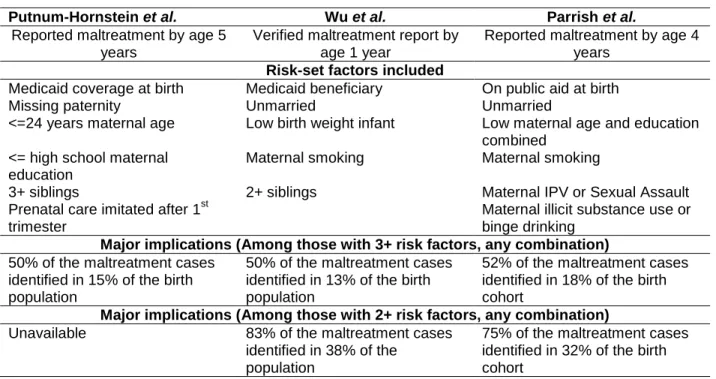
education as strong factors associated with maltreatment reports or verifications. Further, while the risk-sets developed also varied, all three studies (Table 2.1) found comparable distributions of accumulated birth risk factors in the population and maltreatment groups regardless of length of follow-up.
Table 2.1 Risk-set comparison between three population based US Studies linking birth records with child protective services (CPS) records.(83,86,87)
Putnum-Hornstein et al. Wu et al. Parrish et al.
Reported maltreatment by age 5 years
Verified maltreatment report by age 1 year
Reported maltreatment by age 4 years
Risk-set factors included
Medicaid coverage at birth Medicaid beneficiary On public aid at birth
Missing paternity Unmarried Unmarried
<=24 years maternal age Low birth weight infant Low maternal age and education combined
<= high school maternal education
Maternal smoking Maternal smoking
3+ siblings 2+ siblings Maternal IPV or Sexual Assault
Prenatal care imitated after 1st trimester
Maternal illicit substance use or binge drinking
Major implications (Among those with 3+ risk factors, any combination) 50% of the maltreatment cases
identified in 15% of the birth population
50% of the maltreatment cases identified in 13% of the birth population
52% of the maltreatment cases identified in 18% of the birth cohort
Major implications (Among those with 2+ risk factors, any combination) Unavailable 83% of the maltreatment cases
identified in 38% of the population
75% of the maltreatment cases identified in 32% of the birth cohort
These identified factors have been well documented in the literature; however the use of
population-based data can allow interpretation within the context of the underlying population distribution. With this information, measures such as the population attributable risk can be used to direct targeted prevention efforts. In the context of prominent theories, and as evidenced by the volumes of research assessing the risk and protective factors, parsing the causes of maltreatment does not likely follow a simplistic causal model, thus comprehensive data sources that move beyond the factors present on the birth certificate are absolutely crucial for birth-cohort linkage studies.
2.6 Theoretical basis for maltreatment study design development