Open Access
Research article
Effectiveness of screening preschool children for amblyopia: a
systematic review
Christine Schmucker*
1, Robert Grosselfinger
2, Rob Riemsma
3, Gerd Antes
1,
Stefan Lange
2, Wolf Lagrèze
4and Jos Kleijnen
3,5Address: 1Department of Medical Biometry and Statistics (German Cochrane Center), Institute of Medical Biometry and Medical Informatics, University Medical Center, 79104 Freiburg, Germany, 2Department of Non-drug Interventions, Institute for Quality and Efficiency in Health Care, 51105 Cologne, Germany, 3Kleijnen Systematic Reviews Ltd, York YO26 6RB, UK, 4University Eye Hospital, University Medical Center, 79106 Freiburg, Germany and 5The School for Public Health and Primary Care (Caphri), Maastricht University, 6200 MD Maastricht, Netherlands
Email: Christine Schmucker* - [email protected]; Robert Grosselfinger - [email protected]; Rob Riemsma - [email protected]; Gerd Antes - [email protected]; Stefan Lange - [email protected]; Wolf Lagrèze - [email protected]; Jos Kleijnen - [email protected]
* Corresponding author
Abstract
Background: Amblyopia and amblyogenic factors like strabismus and refractive errors are the most common vision disorders in children. Although different studies suggest that preschool vision screening is associated with a reduced prevalence rate of amblyopia, the value of these programmes is the subject of a continuing scientific and health policy discussion. Therefore, this systematic review focuses on the question of whether screening for amblyopia in children up to the age of six years leads to better vision outcomes.
Methods: Ten bibliographic databases were searched for randomised controlled trials, non-randomised controlled trials and cohort studies with no limitations to a specific year of publication and language. The searches were supplemented by handsearching the bibliographies of included studies and reviews to identify articles not captured through our main search strategy.
Results: Five studies met the inclusion criteria. Of these, three studies suggested that screening is associated with an absolute reduction in the prevalence of amblyopia between 0.9% and 1.6% (relative reduction: between 45% and 62%). However, the studies showed weaknesses, limiting the validity and reliability of their findings. The main limitation was that studies with significant results considered only a proportion of the originally recruited children in their analysis. On the other hand, retrospective sample size calculation indicated that the power based on the cohort size was not sufficient to detect small changes between the groups. Outcome parameters such as quality of life or adverse effects of screening have not been adequately investigated in the literature currently available.
Conclusion: Population based preschool vision screening programmes cannot be sufficiently assessed by the literature currently available. However, it is most likely that the present systematic review contains the most detailed description of the main limitations in current available literature evaluating these programmes. Therefore, future research work should be guided by the findings of this publication.
Published: 16 July 2009
BMC Ophthalmology 2009, 9:3 doi:10.1186/1471-2415-9-3
Received: 15 January 2009 Accepted: 16 July 2009
This article is available from: http://www.biomedcentral.com/1471-2415/9/3 © 2009 Schmucker et al; licensee BioMed Central Ltd.
Background
Amblyopia is a reversible visual deficit that develops dur-ing the maturation of the visual system (which is usually considered to be up to seven years of age) and may affect one or both eyes [1-3]. Risk factors associated with ambly-opia are strabismus (a misalignment of the eyes) and uncorrected refractive errors, in particular anisometropia (unequal refractive errors between the two eyes) [4,5]. Congenital cataract, congenital ptosis and corneal injury or dystrophy can also cause amblyopia but are less com-mon [6]. In Western countries, the prevalence rate of amblyopia among preschool children ranges between 2% and 5%, depending on the threshold value of visual acuity at a particular age [7-10]. In a multicenter study, it was shown that anisometropia was the cause of amblyopia in nearly 40% of children aged from three to under seven years. Strabismus was seen in 38% and a combination of anisometropia and strabismus was the etiology in 24% of preschool children treated for amblyopia [11].
Amblyopia is the leading cause of monocular vision loss in people aged between 20 and 70 years [12]. The lifetime risk of bilateral visual impairment in people with ambly-opia aged 55 years or over is nearly doubled by the pres-ence of this visual deficit (18%) [13]. The projected risk of vision loss affecting the non-amblyopic eye in individuals in the UK was also investigated by Rahi et al 2002, but they reported a much lower lifetime risk of bilateral visual impairment (1.2%) [14]. Moreover, amblyopia may also harm school performance and later adult self-image [15,16].
Preschool screening programmes for amblyopia were developed in response to experimental data in animals which suggested that early treatment of conditions analo-gous to human amblyopia is more effective than treat-ment later in life [17]. In some countries – for example in Sweden and Israel – these programmes have been well established [18,19]. However, countries like USA, Can-ada, Belgium and Switzerland have no standardised pre-school vision screening programmes [19]. Although different (cross-sectional) studies, in particular from Scan-dinavian countries [20] and a newly released study from Israel [18], suggest that preschool vision screening is asso-ciated with a reduced prevalence rate of amblyopia, the value of these programmes is subject of a continuing sci-entific and health policy discussion [21]. For example, a British review from the year 1997 has suggested that pre-school vision screening should be discontinued, on the grounds that there is insufficient evidence to justify it [22]. In contrast, the U.S. Preventive Services Task Force (USP-STF) recommends screening to detect amblyopia, strabis-mus and defects in visual acuity in children between three and four years of age [23]. Others, however, have argued
that additional research is needed to ascertain the utility of preschool vision screening programmes [24].
In view of these discrepancies, we conducted an assess-ment according to criteria of the UK National Screening Committee [25] to determine the effectiveness of a pre-school vision screening programme.
Methods
Systematic literature search
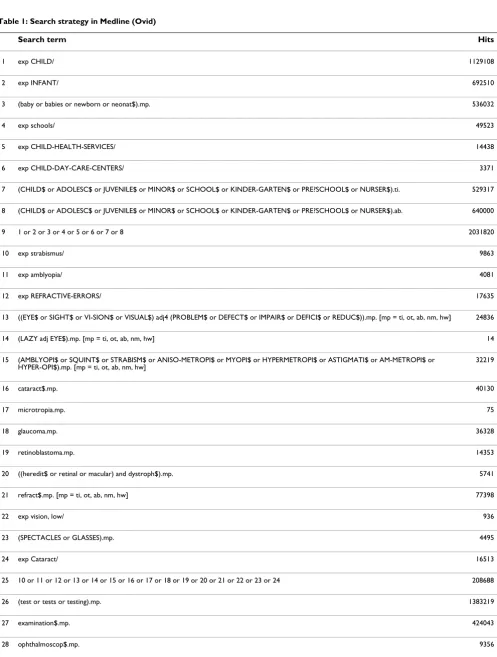
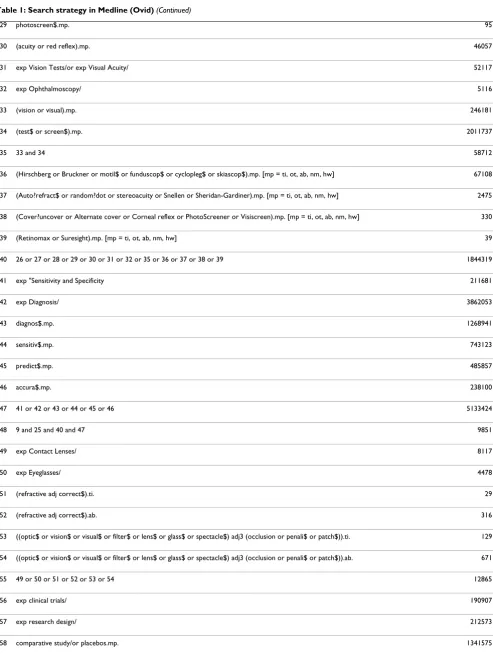
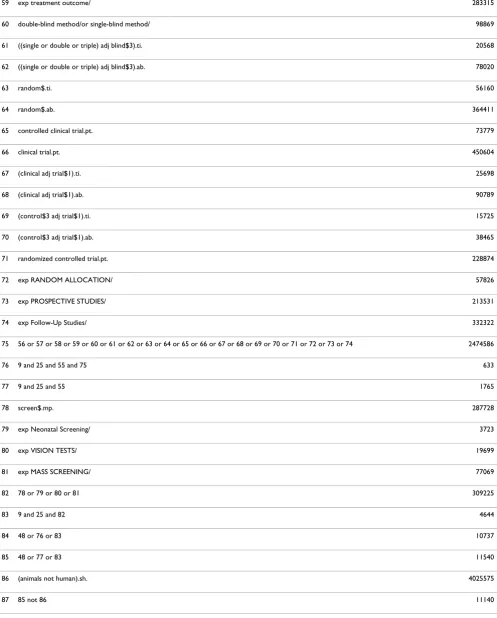
We searched Medline (Ovid), Embase, CINAHL, PSYCHinfo, Cochrane Central (CDSR, DARE, NHS EED, HTA), PSYNDEXplus, Social SciSearch, GIN and Medion from inception until December 2007. The search strategy was based on combinations of medical subject headings (MeSH) and keywords and was not restricted to specific languages or years of publication. The search strategy used in Medline (Ovid) is presented in Table 1. Search strate-gies for other databases were modified to meet the requirements of each database. However, the search algo-rithm was similar. Although not the focus of this review, the literature search also included terms associated with organic eye disorders, diagnostic measurements and treat-ment of amblyopia. The results of these searches will be presented in separate systematic reviews. The searches were supplemented by handsearching the bibliographies of included studies and reviews. Additionally, enquiries were sent to manufactures of screening instruments.
Study selection
Titles and abstracts were reviewed using specific inclusion criteria (see below). Full papers of appropriate studies were obtained for detailed evaluation. Authors of studies were contacted if data were unclear or appeared incom-plete.
All stages of study selection, data extraction and quality assessment were done independently by two reviewers (CS, RR, SL, RG or JK). Any disagreement during the selec-tion, extracselec-tion, and assessment process were resolved by discussion and consensus.
Inclusion criteria
Included were studies that focused on unselected children from the general population up to the age of six years. Studies which included children with specific diseases (such as diabetes, dyslexia, deafness or congenital dis-eases) and organic eye defects (such as congenital glau-coma, cataract, retinoblastoma) were excluded. Table 2 shows detailed inclusion criteria.
Data extraction and quality assessment
Dis-Table 1: Search strategy in Medline (Ovid)
Search term Hits
1 exp CHILD/ 1129108
2 exp INFANT/ 692510
3 (baby or babies or newborn or neonat$).mp. 536032
4 exp schools/ 49523
5 exp CHILD-HEALTH-SERVICES/ 14438
6 exp CHILD-DAY-CARE-CENTERS/ 3371
7 (CHILD$ or ADOLESC$ or JUVENILE$ or MINOR$ or SCHOOL$ or KINDER-GARTEN$ or PRE?SCHOOL$ or NURSER$).ti. 529317
8 (CHILD$ or ADOLESC$ or JUVENILE$ or MINOR$ or SCHOOL$ or KINDER-GARTEN$ or PRE?SCHOOL$ or NURSER$).ab. 640000
9 1 or 2 or 3 or 4 or 5 or 6 or 7 or 8 2031820
10 exp strabismus/ 9863
11 exp amblyopia/ 4081
12 exp REFRACTIVE-ERRORS/ 17635
13 ((EYE$ or SIGHT$ or VI-SION$ or VISUAL$) adj4 (PROBLEM$ or DEFECT$ or IMPAIR$ or DEFICI$ or REDUC$)).mp. [mp = ti, ot, ab, nm, hw] 24836
14 (LAZY adj EYE$).mp. [mp = ti, ot, ab, nm, hw] 14
15 (AMBLYOPI$ or SQUINT$ or STRABISM$ or ANISO-METROPI$ or MYOPI$ or HYPERMETROPI$ or ASTIGMATI$ or AM-METROPI$ or HYPER-OPI$).mp. [mp = ti, ot, ab, nm, hw]
32219
16 cataract$.mp. 40130
17 microtropia.mp. 75
18 glaucoma.mp. 36328
19 retinoblastoma.mp. 14353
20 ((heredit$ or retinal or macular) and dystroph$).mp. 5741
21 refract$.mp. [mp = ti, ot, ab, nm, hw] 77398
22 exp vision, low/ 936
23 (SPECTACLES or GLASSES).mp. 4495
24 exp Cataract/ 16513
25 10 or 11 or 12 or 13 or 14 or 15 or 16 or 17 or 18 or 19 or 20 or 21 or 22 or 23 or 24 208688
26 (test or tests or testing).mp. 1383219
27 examination$.mp. 424043
29 photoscreen$.mp. 95
30 (acuity or red reflex).mp. 46057
31 exp Vision Tests/or exp Visual Acuity/ 52117
32 exp Ophthalmoscopy/ 5116
33 (vision or visual).mp. 246181
34 (test$ or screen$).mp. 2011737
35 33 and 34 58712
36 (Hirschberg or Bruckner or motil$ or funduscop$ or cyclopleg$ or skiascop$).mp. [mp = ti, ot, ab, nm, hw] 67108
37 (Auto?refract$ or random?dot or stereoacuity or Snellen or Sheridan-Gardiner).mp. [mp = ti, ot, ab, nm, hw] 2475
38 (Cover?uncover or Alternate cover or Corneal reflex or PhotoScreener or Visiscreen).mp. [mp = ti, ot, ab, nm, hw] 330
39 (Retinomax or Suresight).mp. [mp = ti, ot, ab, nm, hw] 39
40 26 or 27 or 28 or 29 or 30 or 31 or 32 or 35 or 36 or 37 or 38 or 39 1844319
41 exp "Sensitivity and Specificity 211681
42 exp Diagnosis/ 3862053
43 diagnos$.mp. 1268941
44 sensitiv$.mp. 743123
45 predict$.mp. 485857
46 accura$.mp. 238100
47 41 or 42 or 43 or 44 or 45 or 46 5133424
48 9 and 25 and 40 and 47 9851
49 exp Contact Lenses/ 8117
50 exp Eyeglasses/ 4478
51 (refractive adj correct$).ti. 29
52 (refractive adj correct$).ab. 316
53 ((optic$ or vision$ or visual$ or filter$ or lens$ or glass$ or spectacle$) adj3 (occlusion or penali$ or patch$)).ti. 129
54 ((optic$ or vision$ or visual$ or filter$ or lens$ or glass$ or spectacle$) adj3 (occlusion or penali$ or patch$)).ab. 671
55 49 or 50 or 51 or 52 or 53 or 54 12865
56 exp clinical trials/ 190907
57 exp research design/ 212573
58 comparative study/or placebos.mp. 1341575
59 exp treatment outcome/ 283315
60 double-blind method/or single-blind method/ 98869
61 ((single or double or triple) adj blind$3).ti. 20568
62 ((single or double or triple) adj blind$3).ab. 78020
63 random$.ti. 56160
64 random$.ab. 364411
65 controlled clinical trial.pt. 73779
66 clinical trial.pt. 450604
67 (clinical adj trial$1).ti. 25698
68 (clinical adj trial$1).ab. 90789
69 (control$3 adj trial$1).ti. 15725
70 (control$3 adj trial$1).ab. 38465
71 randomized controlled trial.pt. 228874
72 exp RANDOM ALLOCATION/ 57826
73 exp PROSPECTIVE STUDIES/ 213531
74 exp Follow-Up Studies/ 332322
75 56 or 57 or 58 or 59 or 60 or 61 or 62 or 63 or 64 or 65 or 66 or 67 or 68 or 69 or 70 or 71 or 72 or 73 or 74 2474586
76 9 and 25 and 55 and 75 633
77 9 and 25 and 55 1765
78 screen$.mp. 287728
79 exp Neonatal Screening/ 3723
80 exp VISION TESTS/ 19699
81 exp MASS SCREENING/ 77069
82 78 or 79 or 80 or 81 309225
83 9 and 25 and 82 4644
84 48 or 76 or 83 10737
85 48 or 77 or 83 11540
86 (animals not human).sh. 4025575
87 85 not 86 11140
semination (CRD) was used [26]. Information on the number and age of participants, intervention, sample size planning, blinding of outcome assessor, group compara-bility, confounding factors, transparency of patient flow, definition of amblyopia and statistical significance of the results was abstracted.
Statistical analysis
Based on the limitations of the included studies, no meta-analysis or sensitivity-meta-analysis could be performed. There-fore, the results of this review are presented in a narrative way.
Results
Results of search and selection process
After removing duplicate references the searches identi-fied 25,944 citations (including potential relevant treat-ment and diagnostic studies and studies evaluating organic eye diseases). For the question of this review, 24 full text publications (21 studies) evaluating different screening strategies were retrieved for further assessment. Of these, 16 publications (16 studies) were excluded after reading the full paper. Reasons for exclusion and full ref-erence details are given (see Appendix 1).
Description of included studies
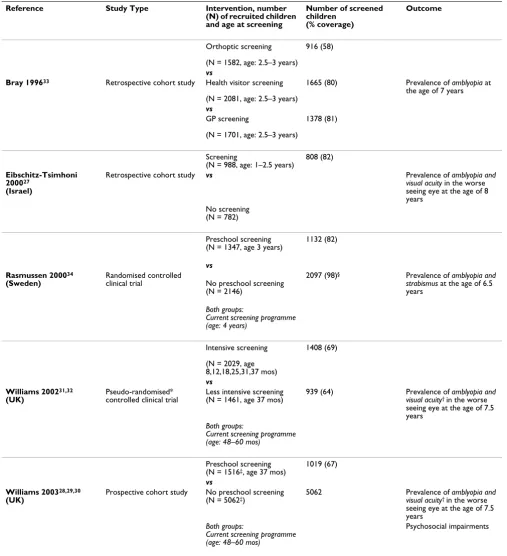
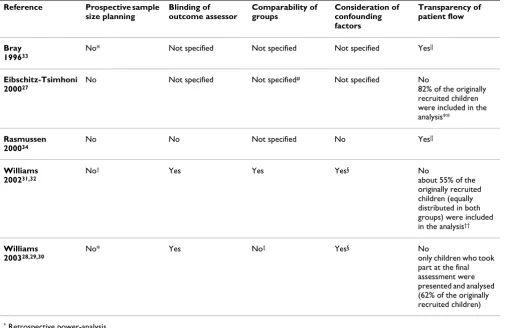
Five studies (eight publications [27-34]) met the a priori defined inclusion criteria. Table 3 shows characteristics and outcome measures of the included studies. The meth-odological quality of the studies, the prevalence rate of amblyopia and the significance of the results are summa-rized in Table 4 and 5, respectively.
Two cohort studies [27,28] and one pseudo-randomised controlled clinical trial [31,32] suggested that screening is significantly associated with an absolute reduction in the prevalence rate of amblyopia between 0.9% and 1.6% (relative reduction: between 45% and 62%). Further-more, in the retrospective cohort study of Eibschitz-Tsim-honi et al 2000 [27] (the only study which compared screening versus no screening without implementing a
current screening programme) it was observed that the frequency of severe amblyopia (visual acuity ≤5/15) was reduced by a factor 17 in the screening group (p < 0.001). Williams 2002 [31,32] and 2003 [28] also reported that mean visual acuity in the worse eye was better for children who had been treated for amblyopia in the intervention group than for similar children in the control group (0.15 versus 0.26 LogMAR p < 0.001; 0.14 versus 0.20 LogMAR p = 0.002, respectively).
However, the reliability of these findings is limited by methodological weaknesses of the studies. For example, Eibschitz-Tsimhoni et al 2000 [27] excluded approxi-mately 20% and Williams 2002 [31,32] approxiapproxi-mately 45% of the originally recruited children in their analysis without giving any reasons for exclusion. Williams 2003 [28] only presented children who took part at the final assessment at the age of 7.5 years in their publication. Fur-thermore, they showed by an "Intention-to-Screen" anal-ysis that the improved outcome for individuals with amblyopia diminished when considering all children offered screening rather than only those who received it. The retrospective cohort study from Bray et al 1996 [33] also found a lack of effects on the prevalence rate of amblyopia at the age of seven years using an "Intention-to-Screen" approach. Despite the fact that orthoptic screening detected more cases of amblyopia associated with microtropia and anisometropia than screening by a health visitor or GP.
The only randomised controlled clinical trial [34] did not find a difference in the prevalence rate of amblyopia between the groups. This study – the only one of the five included studies – also reported a prevalence rate for stra-bismus at the age of 6.5 years. However, the outcomes were similar in both groups (3.3% [intervention group] versus 3.8% [control group], p = 0.460, Chi2-Test, own
calculation).
No study conducted prospective sample size planning. Bray et al 1996 [33] and Williams 2002 [31,32], however,
Table 2: Inclusion criteria
Population Children from the general population up to the age of six years
Intervention Comparison of screening versus no screening or Comparison of different screening strategies
Type of study Randomised controlled trials Non-randomised intervention studies Controlled cohort studies
Outcome measurements Prevalence rate of amblyopia measured by visual acuity
Quality of life (e.g., psychosocial or emotional impairment, labelling, social isolation) Cognitive and educational development
Table 3: Characteristics and outcome measures of the included studies
Reference Study Type Intervention, number
(N) of recruited children and age at screening
Number of screened children
(% coverage)
Outcome
Orthoptic screening (N = 1582, age: 2.5–3 years)
916 (58)
vs
Bray 199633 Retrospective cohort study Health visitor screening
(N = 2081, age: 2.5–3 years)
1665 (80) Prevalence of amblyopia at the age of 7 years
vs
GP screening
(N = 1701, age: 2.5–3 years)
1378 (81)
Screening
(N = 988, age: 1–2.5 years)
808 (82)
Eibschitz-Tsimhoni 200027
(Israel)
Retrospective cohort study vs Prevalence of amblyopia and visual acuity in the worse seeing eye at the age of 8 years
No screening (N = 782)
Preschool screening (N = 1347, age 3 years)
1132 (82)
vs
Rasmussen 200034 (Sweden)
Randomised controlled
clinical trial No preschool screening (N = 2146)
2097 (98)§ Prevalence of amblyopia and
strabismus at the age of 6.5 years
Both groups:
Current screening programme (age: 4 years)
Intensive screening (N = 2029, age 8,12,18,25,31,37 mos)
1408 (69)
vs
Williams 200231,32 (UK)
Pseudo-randomised* controlled clinical trial
Less intensive screening (N = 1461, age 37 mos)
939 (64) Prevalence of amblyopia and visual acuity† in the worse
seeing eye at the age of 7.5 years
Both groups:
Current screening programme (age: 48–60 mos)
Preschool screening (N = 1516‡, age 37 mos)
1019 (67)
vs
Williams 200328,29,30 (UK)
Prospective cohort study No preschool screening (N = 5062‡)
5062 Prevalence of amblyopia and visual acuity† in the worse
seeing eye at the age of 7.5 years
Both groups:
Current screening programme (age: 48–60 mos)
Psychosocial impairments
* Pseudorandomisation: last digit in day of mother's date of birth was used to assign children to the intervention group.
† Visual acuity of children treated with occlusion.
showed by retrospective power calculation that the groups had too little power to demonstrate effects [33] or that only moderate effects could be detected [31,32].
The comparability of groups was not given in the cohort study from Williams 2003 [28]. But results were almost identical after adjustment for confounding factors. In the remaining two studies without randomisation [33,27], it was not specified whether factors which could be associ-ated with the main outcome were equally distributed between the groups.
One study [28] evaluated in two additional publications [29,30] the psychological impact (bullying) which patch-ing treatment or wearpatch-ing glasses might have on children. However, data were not interpretable because of an unclear selection process. Therefore, the relevant ques-tion, if such an association depends on the screening
model could not be answered. None of the included stud-ies reported data on other patient-relevant outcome parameters.
Discussion
Principal findings
Our systematic review identified a lack of rigorous con-trolled studies examining the effectiveness of a preschool vision screening programme. One of the main limitations of the included studies was that positive effects disap-peared when all recruited children were included in the final analysis and not only the sample undergoing screen-ing [28]. This findscreen-ing confirms that coverage, like compli-ance with follow-up [35,36], is an important mediator of the effectiveness of a screening programme. For example, in a retrospective cohort study, amblyopia has been found to be as prevalent in screening defaulters as in attenders, indicating that the efficacy of amblyopia detection – and
Table 4: Methodological quality of the included studies
Reference Prospective sample size planning
Blinding of outcome assessor
Comparability of groups
Consideration of confounding factors
Transparency of patient flow
Bray 199633
No* Not specified Not specified Not specified Yes||
Eibschitz-Tsimhoni 200027
No Not specified Not specified# Not specified No
82% of the originally recruited children were included in the analysis**
Rasmussen 200034
No No Not specified No Yes||
Williams 200231,32
No† Yes Yes Yes§ No
about 55% of the originally recruited children (equally distributed in both groups) were included in the analysis††
Williams 200328,29,30
No* Yes No‡ Yes§ No
only children who took part at the final assessment were presented and analysed (62% of the originally recruited children)
* Retrospective power-analysis.
† Retrospective power-analysis for the outcome measure: visual acuity; prospective power-analysis for a not relevant endpoint.
‡ Parents of screened children were older, higher educated and smoked less during pregnancy; however, results were almost identical after adjustment for confounding factors.
§ For example: duration of breastfeeding, mother's educational level, 1st degree relative with squint, sex. || No children were excluded from the analysis.
# It was only noted that the two communities were similar in terms of race, social status, health care facilities, education, nutrition and climate. ** Unclear, if only children who attended the final assessment were analysed.
hence the effectiveness of a preschool vision screening programme at all – is highly dependent on its attendance rate [37]. On the other hand, it is possible that the design of the studies made it difficult to find differences between the groups. Only one study compared screening versus no screening [27]. In the remaining studies implemented screening strategies – by means of current screening pro-grammes in the control group – could also have had an effect on the outcome measurement.
Beside methodological limitations, it is important to note that the definition of amblyopia varied across studies. These variations may also effect the outcome measure-ments. For example, the study of Eibschitz-Tsimhoni 2000 [27] showed that the frequency of moderate ambly-opia (visual acuity ≤5/10) was reduced by a factor of 2.5 in children in the screening group. In contrast, screened children with severe amblyopia (visual acuity ≤5/15) showed a prevalence of ambylopia which was reduced by a factor of 17. Bray et al 1996 [33] who used one defini-tion for amblyopia (cut-off visual acuity: 6/9) reported a similar prevalence in all three cohorts. We do not know whether there was a difference between the cohorts in children with more severe amblyopia.
Measures such as school performance, cognitive impair-ment and quality of life were not adequately evaluated in
the reviewed literature. However, concerns about bullying exist [29] and may be a reason to complete treatment (eye patching) prior to school entry.
Possible damaging effects of preschool screening
Our review has been unable to provide information on the adverse effects of population based preschool vision screening programmes. This is an important omission as concerns about harm exists, particularly from disruption of normal eye development [38], temporary loss of visual acuity in the non-amblyopic eye [39] and costs associated with further evaluation of children with false-positive screening results [40].
The potential psychological impact on the child or its family is also little explored. However, the frequency of these possible damaging effects is primarily dependent on the quality regulations and quality assurance measures in a screening programme.
Strengths and weaknesses of this review
This review focused on the question of whether preschool screening for amblyopia leads to better vision outcome. Data on diagnostic test accuracy and the effectiveness of interventions will be addressed in separate publications. Extensive effort was invested to identify a wide spectrum of published, unpublished and ongoing studies. We did
Table 5: Definition and prevalence rate of amblyopia
Reference Definition of amblyopia
(Snellen acuity)
Prevalence* (Intervention group)
Prevalence* (Control group) P-value
Orthoptist Health Visitor
VA ≤6/9 1.1% (0.7–1.8%) 1.0% (0.6–1.5%) Not reported
Bray 199633
GP
1.2% (0.8–1.9%) Not reported
Eibschitz- Screening No screening
Tsimhoni VA ≤5/10 1.0% 2.6% <0.01
200027 VA ≤5/15 0.1% 1.7% <0.001
Rasmussen Preschool screening No preschool screening
200034 VA not specified 0.0% 0.1% Not reported
Williams Intensive screening Less intensive screening
200231,32 Inter-ocular difference ≥ 2 lines 1.5% 2.7% 0.06
VA <6/12 0.6% 1.8% 0.02
Williams Preschool screening No preschool screening
200328,29,30 Inter-ocular difference ≥ 2 lines 1.1% 2.0% 0.05 (0.24)†
VA ≤6/9 1.9% 3.4% 0.01 (0.16)†
VA <6/12 0.7% 1.3% 0.11 (0.55)†
VA = Visual acuity.
* In brackets: 95% confidence interval, if reported in the publication.
not apply any language or date restriction. Furthermore, only children from the general population were included as they reflect the screening population. It is most likely that this review contains the most detailed description of the current available literature evaluating preschool vision screening programmes.
Comparison with other systematic reviews
A Cochrane review from 2005 concluded that insufficient evidence exists to determine the effectiveness of screening programmes on the prevalence of amblyopia [41]. The authors noted that no randomised controlled trials were conducted in this area. An UK assessment from 1997 rec-ommended that screening programmes should not be implemented unless they have been evaluated because there was no evidence found for the benefits of preschool vision screening [22]. A French guideline from 2002 also concluded that a national screening programme for vision disorders cannot be recommended in view of the uncer-tainties about the power of current screening programmes [42]. In contrast, the USPSTF recommends screening to detect amblyopia, strabismus and other defects in visual acuity in children between three and four years [23]. Sim-ilar to our review, the USPSTF found no direct evidence that screening for visual impairment, compared with no screening, leads to improved visual acuity. Their recom-mendation is based on indirect evidence. For example, they found that treatment of strabismus and amblyopia can improve visual outcomes. In addition, they identified no studies reporting harms resulting from screening, and judged the potential for harms to be small. Therefore, the USPSTF concluded that the benefits of screening are likely to outweigh any potential negative effects. A newly released Canadian Health Technology Assessment from 2007 also concluded that a preschool vision screening programme meets most of the criteria to consider when assessing a screening programme [43]. Still, they added that additional research is needed to ascertain the utility of national preschool vision screening in the Canadian context.
Overall, the cited reviews agree that there is a lack of evi-dence regarding preschool vision screening. However, the available systematic assessments came to different conclu-sions. This is most likely due to the fact that different reviews applied different inclusion criteria (for example some reviews also included studies with high-risk chil-dren). But it also shows that when reviews are based largely on observational rather than experimental data, their interpretation is likely to be less straightforward.
Conclusion
The methodological weaknesses of the literature currently available cannot be used to state that preschool vision screening is not effective. But it shows that these
pro-grammes have not yet been tested in rigorously controlled trials. Current recommendations should be targeted to maximise coverage in established screening programmes. In future research work screening studies should be devel-oped to compare screened children with children who did not undergo screening (ideally in randomised controlled trials without the implementation of a current screening programme in the control group). However, such a trial might be difficult in particular of ethical reasons. There-fore, different regions with and without screening – for examples in countries like USA, Canada, Belgium, Ger-many and Switzerland where no standardized preschool vision screening programme is established – should be compared using a controlled study design. Another possi-bility for such a comparison would be to introduce screen-ing programmes at different time points in different regions (for example three to four year old children should be compared with five to six year old children). The present systematic review also showed that prospec-tive sample size planning should be conducted in such studies. Furthermore bullying and other psychosocial fac-tors should form part of the outcome assessments of screening programmes for amblyopia.
Abbreviations
USPSTF: U.S. Preventive Services Task Force
Competing interests
The authors declare that they have no competing interests.
Authors' contributions
JK, RG and SL developed the protocol and design of the study. Study selection and data extraction was carried out by CS, JK, SL, RG and RR. WL provided clinical advice and GA provided methodological support. All authors were involved in data interpretation and had full access to all of the data. CS wrote the paper. All authors commented on drafts of the paper and approved the final version.
Appendix 1
References of excluded studies and reasons for exclu-sion after reading the full paper
Atkinson J, Braddick O: Population vision screening and individual visual assessment. Doc Ophthalmol Proc Series
1986, 45:376.
Reason for exclusion: no relevant outcome measurements.
Reason for exclusion: no relevant outcome measurements.
Hard AL: Results of vision screening of 6-year-olds at school: a population-based study with emphasis on screening limits. Acta Ophthalmol Scand 2007; 85:415–8.
Reason for exclusion: no comparison of different screening strategies.
Hard AL, Sjodell L, Borres MP, Zetterberg I, Sjostrand J. Preschool vision screening in a Swedish city region: results after alteration of criteria for referral to eye clin-ics. Acta Ophthalmol Scand 2002, 80:608–11.
Reason for exclusion: no relevant outcome measurements.
Jarvis SN, Tamhne RC, Thompson L, Francis PM, Ander-son J, Colver AF: Preschool vision screening. Arch Dis Child 1991, 66:288–94.
Reason for exclusion: no relevant outcome measurements.
Juttmann RE, Van der Maas PJ, Lantau VK, Simonsz HJ, De Faber JTN, Van der Werf-De Koning CM, et al: The Rotter-dam Amblyopia Screening Effectiveness Study (RAM-SES): Compliance and predictive value in the first 2 years. Br J Ophthalmol 2001, 85:1332–5. Reason for exclu-sion: no comparison of different screening strategies.
Kemper AR, Clark SJ: Preschool Vision Screening by Family Physicians. J Pediatr Ophthalmol Strabismus 2007, 44:24–7.
Reason for exclusion: no comparison of different screening strategies.
Kemper AR, Uren RL, Clark SJ: Barriers to Follow-up Eye Care After Preschool Vision Screening in the Primary Care Setting: Findings From a Pilot Study. Journal of AAPOS 2006, 10: 476–8.
Reason for exclusion: study type not eligible.
Kohler L, Stigmar G: Vision screening of four-year-old children. Acta Paediatr Scand 1973, 62:17–27.
Reason for exclusion: no comparison of different screening strategies.
Kvarnström G, Jakobsson P, Lennerstrand G: Screening for visual and ocular disorders in children of the system in Sweden. Acta Paediatr 1998, 87:1173–79.
Reason for exclusion: no comparison of different screening strategies.
Macchiaverni FN, Jose NK, Rueda G: Ophthalmologic screening of schoolchildren in Paulinia, Sao Paulo (Brazil). Arq Bras Oftalmol 1979, 42: 289–94.
Reason for exclusion: selected group of children.
Morad Y, Bakshi E, Levin A, Binyamini OG, Zadok D, Avni I, Dayan YB: Screening and Treating Amblyopia: Are We Making a Difference? Invest Ophthalmol Vis Sci 2007, 48:2084–88.
Reason for exclusion: no comparison of different screening strategies.
Nelson LB: Preschool vision screening by family physi-cians. J Pediatr Ophthalmol Strabismus 2007, 44:12.
Reason for exclusion: study type not eligible.
Pampapathi MR, Cadman A: Screening for squints and amblyopia in pre-school children in a service commu-nity. J R Army Med Corps 1990, 136:153–5.
Reason for exclusion: no relevant outcome measurements.
Schaeffel F, Mathis U, Bruggemann G: Noncycloplegic photorefractive screening in pre-school children with the "PowerRefractor" in a pediatric practice. Optom Vis Sci 2007, 84:630–9.
Reason for exclusion: no comparison of different screening strategies.
Zaba JN, Reynolds W, Mozlin R, Costich J, Slavova S, Steele GT: Comparing the effectiveness of vision screen-ings as part of the school entrance physical examina-tion to comprehensive vision examinaexamina-tions in children ages 3 to 6: an exploratory study. Optometry 2007, 10:514–22.
Reason for exclusion: selected group of children.
Acknowledgements
The project was referred by the Federal Joint Committee (Gemeinsamer Bun-desausschuss, 53721 Siegburg, Germany) to the Institute for Quality and Effi-ciency in Health Care (Institut für Qualität und Wirtschaftlichkeit im Gesundheitswesen [IQWiG], 51105 Cologne, Germany).
IQWiG commissioned the review prepared from Kleijnen Systematic Reviews Ltd and the German Cochrane Center. IQWiG prepared the final version of the full study report on which this paper is based and funded the researchers and authors, respectively.
References
2. Von Noorden GK: Binocular Vision and Ocular Motility. 4th edition. St Louis: Mosby; 1990.
3. Flynn JT, Woodruff G, Thompson JR, Hiscox F, Feuer W, Schiffman F, Corona A, Smith LK: The therapy of amblyopia: an analysis comparing the results of amblyopia therapy utilizing two pooled data sets. Trans Am Ophthalmol Soc 1999, 97:373-390. 4. Simons K: Preschool vision screening: rationale, methodology
and outcome. Surv Ophthalmol 1996, 41:3-30.
5. American Academy of Ophthalmologists: Amblyopia is a medical condition. 2006 [http://one.aao.org/CE/PracticeGuidelines/ ClinicalStatements_Content.aspx?cid=04a0b811-d234-4d38-a506-7831d0eb9736]. AAO Accessed January 08, 2009
6. Hatt S, Antonio-Santos A, Powell C, et al.: Interventions for stim-ulus deprivation amblyopia. In The Cochrane Library 2006 Issue 3 Chichester, UK: John Wiley & Sons, Ltd .
7. Barry JC, Konig HH: Test characteristics of orthoptic screening examination in 3 year old kindergarten children. Br J Ophthal-mol 2003, 87:909-916.
8. Ciuffreda KJ, Levi DM, Selenow A: Amblyopia: basic and clinical aspects. Boston: Butterworth-Heinemann; 1991.
9. De Decker W, Tessmer J: Zur Schielhäufigkeit und Behandlung-seffizienz in Schleswig-Holstein. Klin Monatsblätter Augen-heilkunde 1973, 162:34-42.
10. Preslan MW, Novak A: Baltimore vision screening project (Phase 2). Ophthalmology 1998, 105:150-153.
11. Pediatric Eye Disease Investigator Group: A randomized trial of atropine versus. patching for treatment of moderate ambly-opia in children. Arch Ophthalmol 2002, 120:268-278.
12. National Eye Institute Office of Biometry and Epidemiology: Report on the National Eye Institute's Visual Acuity Impairment Survey Pilot Study. Washington, DC: US Department of Health and Human Services; 1984.
13. Van Leeuwen R, Eijkemans MJC, Vingerling JR, Hofman A, de Jong PT, Simonsz HJ: Risk of bilateral visual impairment in individuals with amblyopia: the Rotterdam study. Br J Ophthalmol 2007,
91:1450-1451.
14. Rahi J, Logan S, Timms C, Russell-Eggitt I, Taylor D: Risk, causes, and outcomes of visual impairment after loss of vision in the non-amblyopic eye: a population-based study. Lancet 2002,
360(9333):597-602.
15. Packwood EA, Cruz OA, Rychwalski PJ, Keech RV: The psychoso-cial effects of amblyopia study. Journal of AAPOS 1999, 3:15-17. 16. Chua B, Mitchell P: Consequences of amblyopia on education,
occupation, and long term vision loss. Br J Ophthalmol 2004,
88:1119-21.
17. Wiesel TN: Postnatal development of the visual cortex and the influence of environment. Nature 1982, 299:583-591. 18. Morad Y, Bakshi E, Levin A, Binyamini OG, Zadok D, Avni I, Dayan
YB: Screening and treating amblyopia: are we making a dif-ference? Invest Ophthalmol Vis Sci 2007, 48:2084-2088.
19. Neugebauer A, Reier M, Fricke J, Rüssmann W: Kindliche Seh-störungen-Screeningprogramme im internationalen Ver-gleich. Ophthalmologe 2002, 99:32-37.
20. Kvarnström G, Jakobsson P, Lennerstrand G: Visual screening of Swedish children: an ophthalmological evaluation. Acta Oph-thalmol Scand 2001, 79:240-244.
21. Wright MC, Colville DJ, Oberklaid F: Is community screening for amblyopia possible, or appropriate? Arch Dis Child 1995,
73:192-195.
22. Snowdon SC, Stewart-Brown SL: Preschool vision screening.
Health Technol Assess 1997, 1:1-83.
23. U.S. Preventive Services Task Force. Agency for Healthcare Research and Quality, Rockville, MD: Screening for visual impairment in children younger than age 5 years. 2004 [http://www.ahrq.gov/ clinic/uspstf/uspsvsch.htm]. AHRQ Accessed January 07, 2009 24. Rahi JS, Dezateux C: The future of preschool vision screening
services in Britain. Br Med J 1997, 315:1247-1248.
25. UK National Screening Committee: Criteria for appraising the viability, effectiveness and appropriateness of a screening programme. 2003 [http://www.screening.nhs.uk/criteria]. NSC Accessed July 26, 2009
26. Center for Reviews and Dissemination: Undertaking systematic reviews of research on effectiveness. CRD's guidance for those carrying out or commissioning reviews (Report 4).
York: University of York; 2001.
27. Eibschitz-Tsimhoni M, Friedman T, Naor J, Eibschitz N, Fiedman Z:
Early screening for amblyogenic risk factors lowers the prev-alence and severity of amblyopia. Journal of AAPOS 2000,
4:194-199.
28. Williams C, Northstone K, Harrad RA, Sparrow JM, Harvey I, ALSPAC Study Team: Amblyopia treatment outcomes after preschool screening v school entry screening: observational data from a prospective cohort study. Br J Ophthalmol 2003,
87:988-993.
29. Horwood J, Waylen A, Herrick D, Williams C, Wolke D: Common visual defects and peer victimization in children. Invest Oph-thalmol Vis Sci 2005, 46:1177-1181.
30. Williams C, Horwood J, Northstone K, Herrick D, Waylen A, Wolke D, et al.: The timing of patching treatment and a child's well-being. Br J Ophthalmol 2006, 90:670-671.
31. Williams C, Northstone K, Harrad RA, Sparrow JM, Harvey I, ALSPAC Study Team: Amblyopia treatment outcomes after screening before or at age 3 years: follow up from ran-domised trial. Br Med J 2002, 324:1549-1551.
32. Williams C, Harrad RA, Harvey I, Sparrow JM, ALSPAC Study Team:
Screening for amblyopia in preschool children: results of a population-based, randomised controlled trial. ALSPAC Study Team. Avon Longitudinal Study of Pregnancy and Childhood. Ophthalmic Epidemiol 2001, 8:279-295.
33. Bray L, Clarke MP, Jarvis SN, Francis M, Colver A: Preschool Vision Screening: A prospective comparative evaluation. Eye 1996,
10:714-718.
34. Rasmussen F, Thoren K, Caines E, Andersson J, Tynelius P: Suitabil-ity of the lang II random dot stereotest for detecting mani-fest strabismus in 3-year-old children at child health centres in Sweden. Acta Paediatr 2000, 89:824-829.
35. Juttmann R: The Rotterdam amblyopia screening effective-ness study (RAMSES): compliance and predictive value in the first 2 years. Br J Ophthalmol 2001, 85:1332-1335.
36. Williamson T, Andrews R, Dutton G, Murray G, Graham N: Assess-ment of an inner city visual screening programme for pre-school children. Br J Ophthalmol 1995, 79:1068-1073.
37. Newman DK, East MM: Prevalence of amblyopia among defaulters of preschool vision screening. Ophthalmic Epidemiol 2000, 7:67-71.
38. Hård AL, Williams P, Sjöstrand J: Do we have optimal screening limits in Sweden for vision testing at the age of 4 years? Acta Ophthalmol Scand 1995, 73:483-485.
39. Campos E: Amblyopia. Surv Ophthalmol 1995, 40:23-39.
40. Simons K: Amblyopia Characterization, Treatment, and Prophylaxis. Surv Ophthalmol 2005, 50:123-165.
41. Powell C, Porooshani H, Bohorquez MC, Hatt S: Screening for amblyopia in childhood. In The Cochrane Library 2005 Issue 3 Chichester, UK: John Wiley & Sons, Ltd .
42. Agence nationale d'accrédidation et d'évaluation en santé: Early vision screening in children to prevent amblyopia. 2002 [http:/ /www.has-sante.fr/portail/upload/docs/application/pdf/VV_Mai03-Amblyopie_ENG.pdf]. ANAES Accessed January 07, 2009
43. Dunfield L, Keating T: Preschool vision screening (Technology Report No 73). Ottawa, Canada: Canadian Agency for Drugs and Technologies in Health; 2007.
Pre-publication history
The pre-publication history for this paper can be accessed here: