R E V I E W
Open Access
Multi-ingredient pre-workout supplements,
safety implications, and performance
outcomes: a brief review
Patrick S. Harty
1†, Hannah A. Zabriskie
1†, Jacob L. Erickson
2, Paul E. Molling
2, Chad M. Kerksick
1and Andrew R. Jagim
1,2*Abstract
In recent years, a new class of dietary supplements called multi-ingredient pre-workout supplements (MIPS) has increased in popularity. These supplements are intended to be taken prior to exercise and typically contain a blend of ingredients such as caffeine, creatine, beta-alanine, amino acids, and nitric oxide agents, the combination of which may elicit a synergistic effect on acute exercise performance and subsequent training adaptations compared to single ingredients alone. Therefore, the purpose of this article was to review the theoretical rationale and available scientific evidence assessing the potential ergogenic value of acute and chronic ingestion of MIPS, to address potential safety concerns surrounding MIPS supplementation, and to highlight potential areas for future research. Though direct comparisons between formulations of MIPS or between a MIPS and a single ingredient are challenging and often impossible due to
the widespread use of“proprietary blends”that do not disclose specific amounts of ingredients in a given formulation,
a substantial body of evidence suggests that the acute pre-exercise consumption of MIPS may positively influence muscular endurance and subjective mood, though mixed results have been reported regarding the acute effect of MIPS on force and power production. The chronic consumption of MIPS in conjunction with a periodized resistance training program appears to augment beneficial changes in body composition through increased lean mass accretion. However, the impact of long-term MIPS supplementation on force production, muscular endurance, aerobic performance, and subjective measures is less clear. MIPS ingestion appears to be relatively safe, though most studies that have assessed the safety of MIPS are relatively short (less than eight weeks) and thus more information is needed regarding the safety of long-term supplementation. As with any dietary supplement, the use of MIPS carries implications for the athlete, as many formulations may intentionally contain banned substances as ingredients or unintentionally as contaminants. We suggest that athletes thoroughly investigate the ingredients present in a given MIPS prior to consumption. In conclusion, it appears that multi-ingredient pre-workout supplements have promise as an ergogenic aid for active individuals, though further information is required regarding long-term efficacy and safety in a wider variety of populations.
Keywords:Ergogenic aid, Supplement, Pre-workout, Strength, Power, Energy, Resistance-training
* Correspondence:[email protected]
†Patrick S. Harty and Hannah A. Zabriskie contributed equally to this work. 1School of Health Sciences, Department of Exercise Science, Lindenwood
University, St. Charles, MO 63301, USA
2
Mayo Clinic Health Systems, Onalaska, WI 54650, USA
Background
The use of nutritional supplements to improve perform-ance and augment training adaptations is becoming increasingly prevalent in today’s world of sports and fit-ness [1,2]. A new class of dietary supplements known as multi-ingredient pre-workout supplements (MIPS) has garnered interest from athletes, fitness enthusiasts, and researchers alike. MIPS products typically contain a blend of ingredients such as caffeine, branched-chain amino acids, nitrates, creatine, β-alanine, and other in-gredients that are purported to improve acute exercise performance, potentially leading to augmented training adaptations following continued use [3–5]. These ingre-dients are often displayed on the supplement facts label in the form of a “proprietary blend,” with specific amounts sometimes not disclosed to the consumer. Though United States Food and Drug Administration (FDA) regulations require that all dietary ingredients in-cluded in proprietary blends are listed in descending order of predominance by weight, such labeling practices make it challenging to determine whether a supplement contains sufficient amounts of key ergogenic ingredients. For example, one ingredient listed at the beginning of a proprietary blend may be over-represented in the blend, while other ingredients may be included at quantities far below the threshold of efficacy. Because many of the common ingredients used in MIPS formulations act on different physiological mechanisms, many researchers have speculated whether certain combinations of these ingredients may confer a synergistic effect on the overall efficacy of a given formulation [5]. However, as the ma-jority of MIPS that have been investigated in the litera-ture do not list ingredients beyond a proprietary blend, it becomes difficult to make direct comparisons between the effects of a given MIPS and the equivalent amount of an individual ingredient or from one product to an-other. This problem is evident in the literature, as nearly all studies that have investigated MIPS have not com-pared the effects of these supplements against those of a recognized primary ingredient such as creatine, caffeine, or β-alanine. However, one notable exception to this trend is a recent investigation by Lane and Byrd [6], which compared the effects of a caffeine-containing MIPS against a caffeine-matched placebo and an inert placebo alone. The researchers found that bench press peak velocity was significantly improved over inert pla-cebo after ingestion of both MIPS or caffeine, though bench press mean velocity was only significantly im-proved after consumption of MIPS. Furthermore, both the MIPS and the caffeine condition were found to have no demonstrable effect on blood lactate levels, vertical jump performance, and repeat Wingate anaerobic cyc-ling performance, suggesting the presence of similarities between the effects of the MIPS in question and caffeine
alone. Conversely, Shields et al. [7] compared between the effects of caffeine and a caffeine-free MIPS formula-tion in a pilot study and reported that only subjects who consumed caffeine exhibited decreased calmness, a com-mon side effect of the substance. Future research should utilize similar study designs to allow for direct compari-son between the effects of a MIPS and one or more of its constituent ingredients, as the results of such investi-gations allow for one to determine the uniqueness and efficacy of proprietary blends. Despite the difficulties in comparing between MIPS and other ergogenic sub-stances, many off-the shelf MIPS formulations have been found to significantly improve acute exercise perform-ance and enhperform-ance training adaptations over time when combined with a structured training program. Due to their relative novelty, it is important to examine the effi-cacy and safety following both acute and chronic ingestion of these products before providing recommendations to the consumer. Unfortunately, many of the published works on this topic do not include clearly delineated pri-mary outcome measures and instead focus on all statisti-cally significant outcomes to bolster their strength and conclusions. Such an approach may skew the conclusions of the reader, as only the positive aspects of a given sup-plement are emphasized. As the purpose of this article was to review the entire body of scientific evidence asses-sing the potential ergogenic value of acute and chronic in-gestion of MIPS, no outcome measure from any relevant study was excluded from our analysis, allowing for a more complete and balanced overview of the literature. In addition, this review addresses the potential safety con-cerns surrounding MIPS supplementation and potential areas for future research. This was accomplished by the completion of a thorough review of the published litera-ture investigating the effects of MIPS ingestion on exercise performance and potential for the enhancement of train-ing adaptations over time.
Methods
Ending on May 2, 2018, PubMed, Ebsco Host, Medline, and Google Scholar databases were searched for pub-lished literature using but not limited to the following keywords: multi-ingredient pre-workout supplement, MIPS, pre-workout, multi-ingredient performance sup-plement. To facilitate interpretation of published results, the authors of this review calculated effect sizes when not provided by included texts. Standardized mean differ-ence (Cohen’s d) was calculated for each statistically sig-nificant (p < 0.05) outcome measure using the following formula: d = (ImprovementMIPS – ImprovementControl)/
SDpooled [8]. Effects were considered very weak if they
sample size or standard deviation, Relative Effects (RE) were calculated as follows: RE = [(PostMIPS/PreMIPS)*100 /
(PostControl/PreControl)*100]*100 according to the methods
employed by Trexler et al. [9] in a recent position stand. A relative effect greater than 100 indicates MIPS increased the outcome measure, while a value less than 100 indicates MIPS decreased the outcome measure. However, there were still studies in whichdand RE were impossible to cal-culate due to missing data or data being presented in a fig-ure without data labels. In these instances, the effect size is listed as NA. All effect measurements, the statistical signifi-cance of each effect, and the strength of each effect are pre-sented in parentheses throughout the text. Because direct comparisons between different formulations of MIPS re-main challenging due to wide variations in ingredients and dosages, summary tables have been developed that outline: dosing, MIPS ingredients listed in descending order of pre-dominance by weight, exercise interventions, effect size, and other relevant information to present a comprehensive overview of each study.
Ingredients
As the ergogenic effects of many of the primary MIPS ingredients have been examined on an individual basis and reviewed elsewhere, the following section will briefly outline the mechanism of action, common dosing proto-cols, and ergogenic potential of common MIPS ingredi-ents. For the purposes of this review, the term MIPS will be confined to multi-ingredient pre-workout supple-ments and is not to be confused with energy drinks, en-ergy shots, or commercial sport drinks (previously reviewed in Ref. [10]), which, despite having some over-lapping ingredients such as caffeine, tend to differ in specific ingredient profiles and purported benefits.
Caffeine
Caffeine (Reviewed extensively in Refs. [11–13]) appears to be the primary ingredient responsible for several of the acute ergogenic effects of MIPS, as it is rapidly absorbed and typically peaks in the bloodstream within 60 min of ingestion [5,11]. Caffeine acts as an adenosine receptor antagonist [14] and has been shown to acutely improve cognition as well as performance during endur-ance, power, and resistance exercise when consumed in dosages between 3 and 6 mg/kg bodyweight [11]. MIPS formulations that contain at least 300 mg caffeine per serving will fall within the acceptable dosing range for most individuals.
Amino acids and amino-containing compounds
Taurine is an amino-containing sulfonic acid that has been reported to have antioxidant, metabolic, and ergo-genic effects [15]. While chronic consumption of the sub-stance may improve time-to-exhaustion during endurance
exercise, acute ingestion of 1.5 g taurine as part of a MIPS has been shown to improve muscular endurance during resistance exercise [16]. Branched-chain amino acids (BCAAs) are often added to MIPS formulations with the intent of boosting rates of muscle protein synthesis, minim-izing protein breakdown, and reducing exercise-induced muscle damage [17]. While BCAAs have been theorized to ameliorate fatigue, they do not appear to significantly enhance exercise performance or stimulate muscle protein synthesis [17, 18].
Nitric oxide agents
Nitric oxide (NO) is a vital signaling molecule that has been shown to increase blood flow to active muscles, which in theory may result in increased exercise per-formance [19–21]. Several common components of MIPS (i.e. arginine, citrulline) are purported to increase levels of nitric oxide and thus improve performance via increased blood flow during exercise, with equivocal performance outcomes reported in the literature [22]. Dietary nitrate (Reviewed in Refs. [19–22] appears to en-hance acute endurance and high-intensity exercise per-formance when consumed in doses of 300 mg or higher [23]. Inorganic nitrate (NO3−) is a compound found in
beetroot juice and sodium nitrate that is reduced to Nitrite (NO2−) in the oral cavity via enzymatic activity
and then to nitric oxide (NO) in the stomach or peripheral tissues under hypoxic conditions [19–21]. L-arginine (Reviewed in Refs. [22,24]) is an amino acid that is a pre-cursor required for the synthesis of nitric oxide. While some studies have demonstrated ergogenic benefits result-ing from oral consumption of L-arginine, the majority of evidence suggests that arginine has limited efficacy in im-proving blood flow or exercise performance. L-Citrulline (Reviewed in Refs. [22,25]) is a non-essential amino acid found primarily in watermelon that is converted to L-arginine and thus promotes NO synthesis. L-Citrulline supplementation (often combined with malate, an inter-mediate in the citric acid cycle) has been shown to in-crease vasodilation and improve exercise performance when consumed chronically in doses of 6-8 g per day [22, 25]. However, the doses found in MIPS are generally far lower than those that have shown ergogenic effects.
Creatine
3-5 g per day following a loading period of 20 g/day [26]. While post-workout creatine consumption appears to be superior to pre-exercise supplementation [28], the regular consumption of at least 3 g of creatine from a MIPS per day for 28 days is likely sufficient to enhance exercise performance and augment train-ing adaptations [26].
Betaine
Betaine (trimethylglycine) is a naturally-occurring de-rivative of the amino acid glycine which may improve exercise performance by increasing rates of creatine syn-thesis, elevating levels of blood nitric oxide, and promot-ing fluid and thermal homeostasis [29, 30]. Chronic supplementation with 1.25–2.5 g per day of betaine has been demonstrated to enhance repetitions to fatigue and total volume load completed during resistance exercise [29,30], with improvements in power and force produc-tion also reported [31]. However, the dosages used in these investigations are far higher than those found in a typical MIPS.
Beta-alanine
β-alanine (Reviewed in Ref. [9]) is a common MIPS component and precursor to carnosine, a dipeptide which acts as an intramuscular buffer. The consumption of 4-6 g β-alanine per day over a period of at least 2 weeks has been demonstrated to improve high-intensity exercise performance [9]. Thus, provided that a MIPS contains sufficient amounts ofβ-alanine, similar ergogenic effects can be expected, if consumed daily to appropriately maintain intramuscular carnosine levels.
Acute effects of MIPS on performance
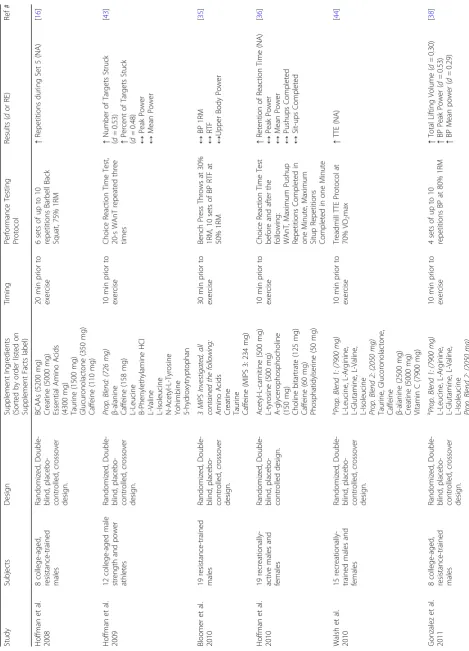
Numerous investigations have examined the effect of a single pre-exercise dose of MIPS on performance out-comes. These studies are outlined in Table1.
Force production
Acute MIPS ingestion appears to have little effect on maximal force production (i.e, strength), though results of several recent investigations suggest that pre-exercise consumption of a caffeine-containing MIPS may help to mitigate fatigue-related decrements in force production experienced over a series of repetitions. For example, Tinsley et al. [32] noted that consumption of either caffeine-free or caffeine-containing pre-workout supple-ments did not improve maximal concentric or eccentric force production during squatting exercise in both males and females. Collins and colleagues [23] employed a crossover design to examine the effect of a caffeine-con-taining ready-to-drink pre-workout beverage on bench press and leg press one-repetition maximum (1RM) and muscular endurance testing. During the acute testing
phase, male and female study participants performed bench press and leg press 1RM and muscular endurance testing (3 sets of 10 repetitions, last set to fatigue) to in-duce fatigue and then consumed either MIPS or placebo. The researchers noted that MIPS consumption prevented a decline in post-supplementation leg press 1RM follow-ing the pre-fatigufollow-ing bout of exercise and tended to miti-gate decrements in bench press 1RM, though this effect was not statistically significant. Likewise, Bergstrom et al. [33] reported no differences in maximal isokinetic force production between males who consumed MIPS or pla-cebo when measured after a training session containing high-volume resistance exercise to fatigue. However, the lack of between-group differences is notable, as the MIPS group had performed 9–14% more total volume (d= 0.42,
p = 0.004, small) during the session compared to the group who had consumed placebo. Therefore, while more research is warranted in this area, it appears that con-sumption of MIPS may allow for greater retention of force production during and after exercise.
Muscular endurance/Total volume completed
Many of the studies investigating the effect of MIPS on muscular endurance have reported that subjects who consumed MIPS completed more resistance exercise repetitions to fatigue relative to those who consumed placebo, though disparities between study designs, sup-plement contents, and dosing protocols make direct comparisons challenging. Hoffman and colleagues [16] noted that males who consumed a MIPS after a 7-day creatine monohydrate loading period performed signifi-cantly more back squat repetitions to fatigue compared to placebo after prior completion of 5 sets of 10 repeti-tions at 75% 1RM (NA). Conversely, Magrini et al. [34] failed to show between-group differences in push-up repetitions to fatigue following consumption of caffeine-containing MIPS or placebo. These null results were mirrored by Bloomer and colleagues [35], who evaluated the performance effects of three commercially-available, caffeine-containing MIPS on repetitions completed to fatigue using a bench press exercise machine. The re-searchers found no performance benefits of MIPS com-pared to placebo and noted that the dosage of caffeine contained in the proprietary blend of each MIPS was likely insufficient to confer ergogenic effects. Finally, Hoffman and colleagues [36] found no effect of acute MIPS supplementation on maximum pushups or sit-ups completed within a minute.
Table 1 Performance outcomes in acute MIPS studies (Continued) Study Subjects Des ign Suppleme nt Ingredie nts (Sort ed by order listed on Suppleme nt Fact s label) Ti ming Pe rformanc e Testing Prot ocol Resu lts ( d or RE) Ref # L-T yrosine (1200 mg) Caff eine (350 mg ) an d Anae robic Capaci ty Test s ↔ Bench Throw ↔ Critical Powe r Cameron et al. 2018 15 recreationall y-activ e fem ales Rand omi zed, Double-blin d, placebo-cont rolled, crossove r de sign. Prop Blend: (58 50 mg) β -alani ne Cho line Bitartrate L-T yrosine L-G lycine
Taurine L-Carnitine Beta
Table
1
Performance
outcomes
in
acute
MIPS
studies
(Continued)
Study
Subjects
Des
ign
Suppleme
nt
Ingredie
nts
(Sort
ed
by
order
listed
on
Suppleme
nt
Fact
s
label)
Ti
ming
Pe
rformanc
e
Testing
Prot
ocol
Resu
lts
(
d
or
RE)
Ref
#
Caff
eine
(150
mg
)
Muc
ana
pruitien
s
extract
(15
mg
)
β
-alani
ne
(1600
mg)
Argi
nine
(1000
mg)
↑
=
MIPS
was
significantly
greater
(
p
<
0.05)
than
control;
↓
=
MIPS
was
significantly
less
(
p
<
0.05)
than
control;
↔
=
N
o
sign
ifi
cant
dif
fer
e
n
ce
(
p
>
0
.0
5
)
w
a
s
o
b
ser
v
e
d
b
e
tw
ee
n
M
IP
S
a
n
d
con
tr
o
l;
1RM
1
re
p
etitio
n
m
aximu
m
,
BP
Be
n
ch
p
re
ss,
BS
Ba
ck
Squa
t,
CMVJ
Co
u
n
ter
m
ov
e
m
en
t
v
e
rti
ca
l
ju
mp
,
d
Effect
Size,
km
kilom
e
te
r,
LP
Le
g
p
res
s,
MB
P
M
e
dicin
e
bal
l
pu
t,
mg
m
illig
ra
m
,
mcg
m
ic
rog
ra
m,
MVC
M
a
xi
ma
l
v
o
lun
ta
ry
con
tr
a
ct
io
n
,
RE
Relat
ive
Eff
e
cts,
RTF
repe
ti
tions
to
fatigue,
VO
2ma
x
ma
xima
l
o
xyg
e
n
con
su
m
p
tio
n
,
VJ
V
e
rt
ic
a
l
jum
p
,
VT
V
e
n
ti
la
to
ry
th
re
sh
o
ld
,
TT
T
ime
tr
ia
l,
TT
E
time
to
exhaus
ti
on,
WAnT
W
in
g
a
tea
n
a
e
ro
b
ic
cy
cl
et
e
st
aStudies
used
an
identical
MIPS
containing
BCAAs,
β
-alanine,
caffeine,
and
creatine
bStudies
used
similar
formulations
of
a
MIPS
containing
BCAAs,
β
-alanine,
caffeine,
creatine,
and
citrulline
malate
cStudies
used
an
identical
MIPS
containing
BCAAs,
β
-alanine,
caffeine,
creatine,
citrulline
malate,
betaine,
and
tyrosine
dStudies
used
an
identical
MIPS
containing
β
-alanine,
caffeine,
L-arginine,
L-tyrosine
and
Mucana
pruitiens
extract
(15%
to fatigue compared to placebo (RE = 107.66,
p = 0.037), though no between-group differences were observed for back squat repetitions to fatigue. Like-wise, Jagim et al. [5] noted that male participants per-formed significantly more bench press (d = 0.38,
p = 0.027, small) but not back squat repetitions to fa-tigue compared to placebo after consuming MIPS. Conversely, Spradley and colleagues [37] reported that a pre-workout supplement significantly improved leg press but not bench press repetitions to fatigue at 75% 1RM (d = 0.42–0.72, p < 0.024, small - moder-ate). However, Collins and associates [23], observed that acute MIPS consumption significantly increased both bench press (d = 0.57, p < 0.05, moderate) and back squat (d= 0.55,p< 0.05, moderate) repetitions to fa-tigue at 70% 1RM compared to pre-supplementation values. Such an increase is particularly notable, since the participants were able to improve upon pre-testing values even after fatiguing exercise. Thus, while mixed results have been reported, the consensus is that consumption of MIPS may significantly aug-ment muscular endurance performance as measured by repetitions to fatigue.
Similarly, acute MIPS usage appears to augment the total exercise volume completed by participants in a var-iety of open-ended exercise modalities where maximal performance is encouraged. Jagim et al. [5] reported that acute MIPS ingestion significantly increased total vol-ume load completed by participants (defined as total repetitions completed x load) during a bench press set to fatigue at 85% of 5RM (d = 0.19, p = 0.032, very weak), though no such effect was found for back squat using an identical protocol. Likewise, Collins and col-leagues [23] found that acute consumption of a ready-to-drink MIPS prior to open-ended bench press and leg press tests increased both bench press volume (d = 0.34, p < 0.05, small) and total lifting volume (d = 0.50, p < 0.05, moderate) relative to fat-free mass completed by the participants. These results were sup-ported by Gonzalez et al. [38], who noted that total lift-ing volume completed durlift-ing four sets of barbell back squat or bench press at 80% 1RM was significantly aug-mented (d = 0.30, p= 0.022, small) following consump-tion of a MIPS 10 minutes prior to exercise. Bergstrom and colleagues [33] likewise demonstrated that pre-exercise consumption of a MIPS resulted in signifi-cantly greater total (d = 0.42, p = 0.004, small) and lower-body volume load (d = 0.57, p= 0.010, moderate) completed during a session consisting of four lower-body and four upper-body multi-joint barbell ex-ercises, with four sets to fatigue at 70% 1RM being per-formed for each exercise. However, the researchers noted that upper-body volume was unchanged relative to placebo.
Conversely, Bloomer et al. [35] noted that both total and mean volume load performed during 10 sets of rep-etitions to fatigue at 50% 1RM using a bench press ma-chine were unaffected by MIPS consumption. Similarly, Jung and associates [39] reported that the pre-exercise consumption of a caffeine-containing MIPS both with and without 20 mg synephrine had no effect on total lift-ing volume completed durlift-ing bench press and leg press repetition tests to fatigue at 70% 1RM. However, bench press lifting volume tended to be greater during the third set of the MIPS + synephrine condition. The effect of MIPS consumption on total volume completed during other open-ended exercise modalities has received less attention, though several recent studies have reported promising results. For example, Cameron et al. [4] found that a caffeine-containing MIPS consumed 1 hour prior to sprint running significantly increased the total dis-tance covered during a 25 s maximal-effort sprint test on a force-treadmill (d = 0.14, p = 0.039, very weak). Likewise, Jacobs et al. [40] observed that MIPS supple-mentation resulted in significantly greater volume of bodyweight exercise completed by male and female participants during a 20-min timed high-intensity bodyweight workout bout (d = 0.33, p< 0.05, small). Power production
findings of Bloomer and colleagues [35], who noted that the consumption of three types of MIPS had no effect on upper body power as measured by bench press throws at 30% 1RM. Martinez et al. [41] likewise failed to show a treatment effect of acute MIPS consumption on perform-ance during a medicine ball put test, which requires par-ticipants to throw a medicine ball as far as possible.
Pre-exercise MIPS consumption appears to improve anaerobic sprinting performance in certain cases, though results are inconclusive. Jagim and associates [5] ob-served significant increases in mean power production (d = 0.25, p < 0.034, small) following MIPS ingestion during a 25-s maximal effort sprint test on a non-motor-ized treadmill set to a resistance equal to 18% body-weight. However, later investigations by the same research group using similar treadmill testing protocols found no between-group differences in either peak or mean power production during the sprinting tests in both male [42] and female [4] subjects following con-sumption of two different MIPS products. Spradley et al. [37] likewise failed to show an effect of MIPS consump-tion on anaerobic running capacity as assessed by inter-mittent critical velocity testing. Conflicting results have likewise been reported regarding the effect of MIPS on anaerobic cycling performance. Martinez and associates [41] reported that peak and mean power measured dur-ing a Wdur-ingate anaerobic test (30 s all-out cycldur-ing with a resistance equal to 7.5% bodyweight) were significantly increased (d= 0.24–0.30,p< 0.006, small) following con-sumption of MIPS. Conversely, Jung et al. [39] as well as Hoffman et al. [36, 43] found no effect of acute MIPS consumption on Wingate anaerobic cycling perform-ance. Lane and Byrd [6] also failed to show an ergogenic effect of MIPS or a caffeine-matched placebo on re-peated 5 s Wingate cycling performance.
Similarly, it appears that MIPS ingestion has little ef-fect on jumping performance, as three recent studies conducted by the same research group found no treat-ment effect of MIPS on countermovetreat-ment vertical jump height or power production in male [5, 42] and female [4] subjects following acute ingestion. These results were also supported by Lane and Byrd [6], who found no effect of acute MIPS supplementation on vertical jump performance.
Endurance exercise performance
Limited evidence exists regarding the effect of acute MIPS ingestion on endurance exercise performance. To date, only one study has investigated the effect of acute MIPS supplementation on time to exhaustion during en-durance exercise, with promising results. Walsh and col-leagues [44] utilized a randomized, double-blind, crossover design to assess the effect of a caffeine-containing MIPS on time to exhaustion during treadmill exercise performed at a
customized velocity and grade that elicited 70% of each subject’s VO2max. The researchers found that time to
ex-haustion was significantly greater following MIPS con-sumption compared to placebo, as subjects were able to run 12.5% longer (NA) after consuming the supplement 10 min before exercise. However, a recent study by Collins et al. [23] found that acute MIPS consumption had little ef-fect on cycling time-trial performance in resistance-trained males and females. Following a one-minute warmup with gradually increasing load, participants performed a 4 km time trial as quickly as possible using a standardized resist-ance of 4 J/kg/rev. No differences in time, wattage, or rela-tive wattage were observed between conditions. However, because participants completed the time trial faster after consumption of MIPS compared to placebo, the re-searchers noted that the MIPS did not result in an ergolytic effect on performance. Similarly, Musgjerd and colleagues [45] noted that acute MIPS supplementation had no effect on running performance during a simulated 5 km running race. Clearly, more information is needed before results can be generalized further.
Subjective responses
Acute MIPS ingestion appears to improve self-reported subjective measures of focus, fatigue, alertness and self-reported energy levels, though conflicting results have been reported. Hoffman and colleagues [43] noted that pre-exercise consumption of a caffeine-containing supplement resulted in significantly increased subjective feelings of energy (d = 0.8, p < 0.05, large) and focus (d= 0.82, p< 0.05, large) as well as a trend towards in-creased alertness in male strength and power athletes during testing sessions that included repeated Wingate anaerobic cycle tests and reaction time testing. A 2010 study by the same research group [36] reported that recreationally-active subjects who consumed a caffeine-containing supplement prior to exhaustive exercise were better able to maintain focus and alertness (NA) com-pared to those who consumed placebo, though fatigue was elevated after exercise (NA) in the MIPS group but not the placebo group. A later study by Jagim et al. [5] using similar Likert-based subjective assessments found that subjects who consumed a caffeine-containing MIPS reported significantly lower subjective fatigue (d =− 3.78, p= 0.01, strong) and increased alertness (d = 2.72,
of energy and fatigue. Likewise, Spradley and colleagues [37] found that self-reported energy was higher (d= 1.34,p< 0.05, strong) and fatigue significantly lower (d =−1.46, p < 0.05, strong) in recreationally-trained males at the midpoint of the testing session, approxi-mately 95 min after consumption of a MIPS. The re-searchers reported significant main effects of treatment for self-reported energy (d= 0.35,p< 0.05, small), focus (d = 0.71, p < 0.05, moderate), and alertness (d = 0.53,
p < 0.05, moderate) across the entire testing session, which included resistance exercise and reaction time drills. Similar results were observed by Walsh et al. [44], who found that subjects who consumed MIPS reported significantly greater feelings of focus (d= 0.54,p= 0.031, moderate) and energy (d = 0.49, p = 0.016, small) and less fatigue (d = 0.60, p = 0.005, moderate) immediately before treadmill exercise as well as greater feelings of focus (d = 0.67, p = 0.026, moderate) and energy (d= 1.26,p= 0.004, strong) 10 minutes after the start of a treadmill time to exhaustion protocol at 70% VO2max.
No between-group differences were found after comple-tion of the exercise protocol. Jung and colleagues [39] also observed that participants who consumed MIPS with or without added synephrine reported they felt more vigorous and energetic (d = 0.52,p< 0.05, moder-ate) and were more optimistic about their future per-formance (d = 0.26–0.32, p < 0.05, small) compared to those who consumed placebo, though those who con-sumed MIPS with added synephrine reported signifi-cantly lower feelings of vigor and energy immediately after testing (d =−0.55, p < 0.05, moderate) compared to participants who consumed placebo or MIPS alone.
Conversely, Hahn and colleagues [42] reported that self-reported feelings of fatigue following maximal-effort treadmill sprinting were significantly elevated after con-sumption of both MIPS (d = 1.16,p < 0.05, strong) and placebo (d = 2.86, p < 0.05, strong), though the magni-tude of the change from baseline was significantly lower (d=−1.10,p< 0.05, strong) in the MIPS condition com-pared to placebo. Additionally, Gonzalez et al. [38] found no effect of MIPS on ratings of energy, fatigue, or focus during a bout of multi-joint resistance exercise to fatigue; findings which were replicated by Tinsley et al. [32] who did not detect between-group differences in any self-reported subjective variables during a bout of isokinetic squat exercise. Finally, Musgjerd and col-leagues [45] demonstrated that acute MIPS consumption had no effect on subjective measures of fatigue, alertness, energy, or focus either before or after a 5 km simulated running competition. In contrast to other investigations which examined self-reported mood state and fatigue, Bloomer and colleagues [35] instructed subjects to rate their perceived muscle“pump” before and after exercise. The researchers defined “pump” as a feeling of size,
hardness, and swelling within the muscle. While the sub-jects reported increased levels of“pump”after exercise, no between-group differences were noted. There appears to be a general trend regarding a positive influence on sub-jective ratings of energy and fatigue following MIPS inges-tion, which could play a role in the overall quality of a training session and improve exercise tolerability for cer-tain individuals.
Reaction time and cognitive processing
The results of several investigations suggest that acute MIPS consumption may have a beneficial effect on reaction time in recreationally-trained [36,37] and resistance-trained [43] males. Hoffman and colleagues [43] investigated the acute effects of a ready-to-drink caffeine-containing MIPS on re-action time performance during three tests which were in-terspersed with 20-s Wingate Anaerobic cycle tests. The researchers found that MIPS resulted in significant improve-ments in the number of targets struck during the test (d= 0.53,p< 0.05, moderate) as well as percent of targets struck (d= 0.48,p< 0.05, small) relative to placebo. A simi-lar investigation by the same group [36] found that recreation-ally-active participants who consumed MIPS were better able to maintain reaction time (NA) after a bout of exhaustive exercise compared to those who consumed placebo. These results were supported by Spradley et al. [37] in a later study, who found that acute MIPS con-sumption resulted in significantly improved reaction time performance during a 30 s test (d =−0.33 - -0.46,
p< 0.05, small) using combined visual and auditory stim-uli. Furthermore, Jung and colleagues [39] found that acute consumption of a MIPS with added synephrine sig-nificantly improved performance during a Stroop test (d = 0.36–0.69, p < 0.037, small to moderate), a type of standardized cognitive function test that measures reac-tion time, selective attenreac-tion, and cognitive processing. Thus, while more information is required in this area, ini-tial results are promising.
Hormonal response to resistance exercise
identical creatine loading protocol. Clearly, more informa-tion is needed in this area.
Energy expenditure and substrate utilization
Acute MIPS consumption may affect energy expenditure as well as substrate utilization at rest, though conflicting results have been reported. Similarly, limited evidence exists regarding the effect of MIPS on substrate utilization during prolonged aerobic exercise. Cameron and colleagues [4] reported that acute MIPS consump-tion resulted in higher resting energy expenditure (REE) (d = 1.64, p < 0.043, large) in recreationally-active fe-males. Conversely, Jung et al. [39] found that a MIPS with added synephrine increased REE (d= 0.71,p< 0.05, large) and RER (d = 1.14–1.66, p < 0.05, large) in recreationally-active male and female participants rela-tive to placebo during a supine resting metabolic rate test. However, Erickson and colleagues [47] found no ef-fect of acute MIPS consumption on fat oxidation in fe-males during 30 min of treadmill running at 90% ventilatory threshold. Clearly, more investigations in a wider variety of populations are required before definite conclusions can be determined regarding any metabolic-related benefits.
Gender
Limited evidence exists regarding a gender effect of acute MIPS supplementation, as none of the eight acute MIPS studies which examined the effects of MIPS on a mixed gender cohort [23,32,34,36,39,40,44,45] reported any form of menstrual control, and only two of these investi-gations [23, 32] used gender as a covariate in their ana-lyses. Collins and colleagues [23] used gender and relative caffeine intake as covariates in their analysis to control for the influence of the menstrual cycle and birth control, though they noted that no time x treatment x gender interaction effects were found for any outcome variable. Similarly, Tinsley et al. [32] did not detect any time x treatment x gender interaction effects, suggesting that any gender effect of MIPS supplementation is minimal. In addition, two investigations [4,47] have examined the ef-fects of acute MIPS supplementation in female partici-pants only. While both did not report any form of menstrual control, the results of these studies are not par-ticularly divergent from those conducted in males. Cam-eron et al. [4] found MIPS increased upper-body muscular endurance but had no effect on lower-body muscular en-durance or power production, while Erickson et al. [47] reported that acute MIPS supplementation had no appre-ciable effect on rates of fat oxidation. However, any conclusions regarding a gender effect of acute MIPS sup-plementation are likely premature until more robust stud-ies that utilize menstrual control are conducted.
Chronic effects of MIPS on performance
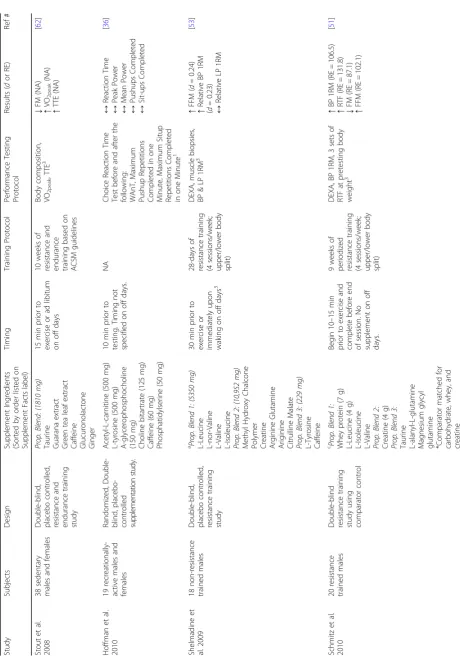
Many investigations have employed short-term (10 days or less) as well as long-term (greater than 10 days) sup-plement interventions both with and without a concur-rent training intervention. Studies including a training intervention are termed ‘training studies,’ while those that employed a single testing bout of exercise are termed ‘supplement loading studies.’Additionally, some studies used protocols which incorporated MIPS in-gestion on the day of post-testing. These studies and their relevant supplementation protocols are outlined in Tables 2 and 3.
Short-term supplementation (< 10 days)
Force production
At best, short-term MIPS consumption might preserve 1-RM performance after several bouts of fatiguing exer-cise but does not appear to favorably impact maximal strength. For example, Collins et al. [23] performed a 6-day supplement loading study. During baseline testing, participants completed 1RM and muscular endurance (3 sets of 10 repetitions, last set to fatigue) testing of the bench and leg press before and after an acute dose of MIPS or placebo. All participants were instructed to consume MIPS for an additional 5 days, and on the sixth day, participants performed identical post-testing. The authors claim that placebo consumption resulted in sig-nificantly lower leg press 1-RM after exhaustive exercise, while those who had consumed MIPS for 5 days retained greater force production and thus had significantly greater 1RM performance (d = 0.18,p= 0.3, very weak). However, the combination of the large reported p-value and small effect size suggest that there was no difference between placebo and MIPS. Similarly, Outlaw et al. [48] found no influence of MIPS on bench press or leg press 1RM relative to placebo following an 8 day supplementa-tion protocol coupled with four resistance training bouts. Given the minimal amount of research, it is difficult to conclude that any marked benefit of short-term MIPS supplement loading on force production is present.
Muscular endurance and total volume completed
Table 3 Performance outcomes and training adaptations in long-term (> 10 day) MIPS studies Study Subjects Design Supplemen t Ingredients (Sort ed by order listed on Supplemen t Facts label) Timi ng Tra ining Proto col Pe rformanc e Testing Prot ocol Resu lts ( d or RE) Ref # Stout et al. 2008 38 se dentary males and female s Double-blind, place bo cont rolled, resis tance and end urance trai ning study Prop. Blend: (18 10 mg ) Taurine Guarana extrac t Gree n tea le af extract Caff eine Glucuronol actone Ginge r 15 min prior to exerc ise or ad libitum on off days 10 weeks of resis tance and end urance training based on ACSM guidelines Body com positio n, VO 2peak ,T TE 3 ↓ FM (NA) ↑ VO 2peak (NA) ↑ TTE (NA) [ 62 ] Hoffm an et al. 2010 19 rec reationally-active males and female s Rand omized, Do uble-blind, pla cebo-contro lled su pp lem entat ion stu dy. Acety l-L-carnitine (500 mg ) L-tyros ine (500 mg) Α -glycerophosp hocholi ne (150 mg) Choli ne bitart rate (125 mg ) Caff eine (60 mg) Phosp hatidylserine (50 mg) 10 min prior to testing . Ti ming not spec ified on off day s. NA Ch oice Reac tion Ti me Test be fore and afte r the fol lowin g: WAnT , Max imum Pu shup Repe titions Co mpleted in one Mi nute, Maxim um Situp Re petitio ns Co mpleted in one Minut e 1 ↔ Reac tion Time ↔ Peak Powe r ↔ Mean Power ↔ Pushup s Comp leted ↔ Sit-ups Comple ted [ 36 ] Shelm adine et al. 2009 18 non-res istance trained mal es Double-blind, place bo cont rolled, resis tance train ing study a Prop. Blend 1: (53 50 mg ) L-Leuc ine L-nor-Valine L-Va line L-Iso leucine Prop. Blend 2: (10 ,952 mg ) Met hyl Hydroxy Chalc one Polym er Creati ne Argin ine Glutamine Ariginine Citrulline Mal ate Prop. Blend 3: (22 9 mg) L-Tyros ine Caff eine 30 min prior to exerc ise or imme diately upon waking on off days 3 28-days of resis tance train ing (4 session s/week; upper/lower body split) D EXA, musc le biopsies, BP & LP 1RM 3 ↑ FFM ( d= 0.24) ↑ Re lative BP 1RM ( d= 0.23 ) ↔ Relative LP 1RM [ 53 ] Schm itz et al. 2010 20 res istance trained mal es Double-blind resis tance train ing study using comparator control c Prop. Blen d 1: Whey protein (7 g) L-Leuc ine (4 g) L-Iso leucine L-Va line Prop. Blend 2: Creati ne (4 g) Prop. Blend 3:
Taurine L-alanyl-L-glutamine Magn
Table 3 Performance outcomes and training adaptations in long-term (> 10 day) MIPS studies (Continued) Study Subjects Design Supplemen t Ingredients (Sort ed by order listed on Supplemen t Facts label) Timi ng Tra ining Proto col Pe rformanc e Testing Prot ocol Resu lts ( d or RE) Ref # Smith et al. 2010 24 rec reationally trained mal es Single -blind, pla cebo contro lled, HIIT training study Prop. Blend: (21 00 mg ) Cordyce ps sine nsis Argin ine Creati ne
Citrulline Taurine Leucine Valine Isoleu
cine Caff eine Whey protein 30 min prior to exerc ise/test ing. Noth ing on off days. 3 we eks of H IIT interval trai ning (3 sessio ns/week ) BodP od, VO 2max fol lowed by four sprints to exha ustion 1 ↑ Tra ining volu me (NA) ↔ FFM ↔ VO 2max, critical veloci ty [ 63 ] Spillan e et al. 2011 19 non-res istance trained mal es Double-blind, place bo cont rolled, resis tance train ing study aProp. Blend 1: (53 50 mg ) L-Leuc ine L-nor-Valine L-Va line L-Iso leucine Prop. Blend 2: (10 ,952 mg ) Met hyl Hydroxy Chalc one Polym er Creati ne Argin ine Glutamine Ariginine Citrulline Mal ate Prop. Blend 3: (22 9 mg) L-Tyros ine Caff eine *Subjects als o consum ed a post-workou t suppl ement 30 min prior (pre) and within 30 min of end of exercis e (po st). Im medi ately upon waking on off days (post). 28 days of resis tance train ing (4 session s/week) D EXA, BP & LP 1R M, mu scle biop sies 3 ↓ FM ( d = − 0.08) ↑ FFM ( d = 0.17) ↑ Myo fibrillar prot ein mass ( d = 0.32) ↑ Upp er ( d = 0.57), lower-body ( d = 0.62) relative streng th [ 54 ] Orms bee et al. 2012 24 res istance trained mal es Double-blind, place bo cont rolled, resis tance train ing study bProp. Blen d 1: (96 60 mg ) Casein Protein Whey Protein
BCAAs L-arginine Prop.
Table 3 Performance outcomes and training adaptations in long-term (> 10 day) MIPS studies (Continued) Study Subjects Design Supplemen t Ingredients (Sort ed by order listed on Supplemen t Facts label) Timi ng Tra ining Proto col Pe rformanc e Testing Prot ocol Resu lts ( d or RE) Ref # Willem s et al. 2012 16 res istance trained mal es Double-blind, place bo cont rolled, training study Whey protein (30 g) Creati ne (5.1 g) Glutamine (5.1 g) HMB (1.5 g) On e dose in the morni ng and an other within 15 min of exerc ise end . Simi lar time on off days. 2, 6-wee k blocks of progr essiv e re-sista nce training (4 session s/week) BP , LP, & lateral pull 1-RM an d RTF at 80% 1R M, pe ak isokinetic torq ue measu red via a dy namom eter, MV C 3 ↑ BP RTF* ( d = 1.2) ↑ Lat eral pull RTF* ( d = 1.3) ↔ 1RM* ↔ MVC, pe ak conce ntric strength* [ 58 ] Lowe ry et al. 2013 20 res istance trained mal es Double-blind, place bo cont rolled, resis tance train ing study Prop. Blend 1: (28 00 mg) Creati ne β -alanin e Prop. Blend 2: (16 00 mg)
L-Taurine BCAAs Alanyl-glut
amine Prop. Blend 3: (62 0 mg) Glucuronol actone Caff eine Prop. Blend 4: (50 0 mg) Natur al nitr ates Quercetin (67 mg) 30 min prior and 3 serving s througho ut the day on off days. 8 we eks of spl it focus ed resistanc e training (3sess ions/we ek) D EXA, BP & LP 1R M, ultras onog raphy 3 ↑ FFM (RE = 104.1) ↑ Quad ricep s musc le thickn ess (RE = 108.0) ↑ BP 1R M (NA) ↔ LP 1R M [ 52 ] Orms bee et al. 2013 24 res istance trained mal es Double-blind, Placebo-cont rolled, resis tance train ing study b Prop. Blen d 1: (96 60 mg ) Casein Protein Whey Protein
BCAAs L-arginine Prop.
Table 3 Performance outcomes and training adaptations in long-term (> 10 day) MIPS studies (Continued) Study Subjects Design Supplemen t Ingredients (Sort ed by order listed on Supplemen t Facts label) Timi ng Tra ining Proto col Pe rformanc e Testing Prot ocol Resu lts ( d or RE) Ref # Kend all et al. 2014 17 rec reationally trained mal es Doubl e -b lind ,pla cebo control led 4-w eek su ppl ementation stu d y BCAAs (6 g) Creati ne (5 g) β -alanin e (4 g) Citrulline (1.5 g) Caff eine (300 mg ) 20 min prior to exerc ise an d ad libitum on off day s. NA Skinf olds (Brozek eq uation) , VO 2max ,B P& LP 1-RM , RTF at 75% 1R M 3 ↑ VT (% of VO 2max ) ( d = 1.21 ) ↑ LP 1RM ( d = 0. 45) ↓ Re lative VO 2max ( d = − 0.52) [ 57 ] Spillan e et al. 2014 24 res istance trained mal es Double-blind, resis tance train ing study using comparator control cProp. Blen d 1: Whey protein (7 g) L-Leuc ine (4 g) L-Iso leucine L-Va line Prop. Blend 2: Creati ne (4 g) Prop. Blend 3:
Taurine L-alanyl-L-glutamine Magn
esium glycyl gluta mine *Com parator match ed for maltod extros e, whey protei n, an d creat ine monoh ydrate ½ dose cons umed 15 min prior to exerc ise, othe r ½ dose cons umed at start of exercis e. Noth ing on off days. 6 we eks of periodized resis tance train ing (4 session s/week; upper/lower split) D EXA, BP, LP, & kne e exte nsion 1RM, BP & LP RT F at 75% 1-RM , mu scle biop sies 3 ↔ Body Compo sition ↔ 1RM ↔ RTF [ 61 ] Kreipke et al. 2015 27 res istance trained mal es Double-blind, place bo cont rolled, resis tance train ing study BCAA (2500 mg ) β -alanin e (1020 mg ) Long jack roo t (250 mg) 20 min prior and 2 h afte r exerc ise. With break fast and lunch on off days. 4 we eks of progr essiv e resis tance train ing (4 session s/week) D EXA, squat , BP, de adlight 1RM, POM S 3 ↑ BP 1R M ( d = 0.05) ↑ Tot al weight lift ed ( d = 0.15 ) ↑ Re lative deadlift streng th (FF M: d = 0.11; Tot al Mass: d = 0.08) [ 59 ] Orms bee et al. 2015 20 trai ned male runners Double-blind, place bo cont rolled, 4-wee k supplem enta-tion st udy b Prop. Blen d 1: (96 60 mg ) Casein Protein Whey Protein
BCAAs L-arginine Prop.
Table 3 Performance outcomes and training adaptations in long-term (> 10 day) MIPS studies (Continued) Study Subjects Design Supplemen t Ingredients (Sort ed by order listed on Supplemen t Facts label) Timi ng Tra ining Proto col Pe rformanc e Testing Prot ocol Resu lts ( d or RE) Ref # Köh ne et al. 2016 8 trained fem ale runners Doubl e -b lind ,pla cebo control led, 2 8-d ay su ppl ementation stu d y bProp. Blen d 1: (96 60 mg ) Casein Protein Whey Protein
BCAAs L-arginine Prop.
Blend 2: (48 90 mg) Creati ne Citrulline Mal ate Argin ine Prop. Blend 3: (31 70 mg) β -alanin e Creati ne Prop. Blend 4: (37 6 mg) Caff eine *Subjects als o consum ed a post-workou t suppl ement 30 min prior to exerc ise or imme diately upon waking on off days. NA VO 2max (before an d afte r sup plement ation ), mu scle pain pe rception, mu scle damage markers, squ at jump powe r, ha mstring flex ibility, an d limb circ umfere nces (b efore and after a sing le bout of downh ill runn ing afte r 28 days of sup plement ation ) 1 ↔ Ham string flex ibili ty ↔ Squat jump power ↔ Limb circumferen ce [ 64 ] Jung et al. 2017 80 res istance trained mal es Double-blind, place bo cont rolled, resis tance train ing study Suppl ement 1: β -alanin e (3000 mg ) Creati ne (2000 mg) L-arginine (2000 mg ) N-Ace tyl-L-tyrosine (300 mg) Caff eine (284 mg ) Muc ana pruitiens extract (15 mg ) Suppl ement 2: Supplemen t 1 + Citrus aur antiu m extrac t (20 mg ) 15 – 30 min prior to exerc ise or with break fast on off days. 8 we eks of resis tance train ing (4 session s/week; upper/lower body split) Co gnitive function, read iness to perform, BP & LP 1RM, Wingat e an aerobic cycling test 3 ↔ 1RM le g & be nch press ↔ Power ↔ Readi ness to
perform ↑Stro
repetitions to fatigue during 6 sets at 80% 1RM (d = 0.41–1.08, p < 0.05, moderate - strong). However, Martin and colleagues [50] found no effect of short-term MIPS supplementation on total repetitions or volume load completed during four sets of bilateral leg exten-sions to fatigue at both 30% and 80% 1RM. Again, given the minimal volume of research in this area, no solid conclusions can be made at this point in time.
Power production
A paucity of evidence exists regarding the effect of short-term MIPS supplementation on power production. Additionally, broad differences in study design make comparisons between the conclusions of relevant studies difficult. Kraemer and associates [49] found that individ-uals who had consumed MIPS for 7 days exhibited higher vertical jump power output than individuals con-suming placebo (NA). These results may suggest that brief supplement loading may enhance performance dur-ing a sdur-ingle exercise bout. However, these finddur-ings con-trast with those of Outlaw et al. [48], who found no difference in peak anaerobic power production during a 30-s Wingate Anaerobic Cycle test between subjects who consumed MIPS or placebo for 8 days. Collins et al. [23] similarly found no difference in anaerobic power output during a 4 km time trial in participants who had consumed MIPS for 5 days compared to placebo con-sumers. The difference in testing paradigms may poten-tially explain some of the discrepancy in findings, as the vertical jump depends largely on the ATP/PCr energy system, while a Wingate test draws upon both anaerobic energy systems. Clearly, more research is needed to in-vestigate the effect of short-term MIPS supplementation on power production.
Serum hormones and markers of muscle damage
Limited evidence exists regarding the effect of short-term MIPS consumption on hormones or markers of muscle damage caused by acute exercise. Kraemer et al. [49] found no difference in lactate, glucose or insulin between MIPS or placebo users after 7 days of supplementation. However, serum levels of creatine kinase were significantly lower midway through squat exercise (d=−0.85,p< 0.05, strong), immediately after exercise(d =−0.76, p < 0.05, moderate), and during 15 min of recovery (d =−0.61,
p< 0.05, moderate), while myoglobin was reduced imme-diately following exercise (d=−0.82,p< 0.05, strong) in MIPS users relative to placebo, potentially suggesting that the supplement may have affected muscle damage. Kraemer and colleagues [49] also found that MIPS con-sumption resulted in greater increases in GH (NA) and free testosterone (NA) midway during six sets of squats performed to fatigue at 80% 1RM and during 15 min of recovery (NA). Likewise, IGF-1 was elevated in the
treatment group immediately before exercise (i.e. about 30 min after acute supplement ingestion) (NA), though in-sulin was no different between MIPS and placebo.
Gender
The only study included in this review which studied a female population consuming a MIPS for a short period of time is the investigation by Collins and colleagues [23]. Roughly half of their total sample size was female and gender was used as a covariate in their analysis. Though expected differences in variables such as height, body composition, absolute upper and lower body strength, and relative upper body strength were noted, researchers did not find the MIPS to exert a different ef-fect on females than males over time. However, more re-search utilizing hormonal control is needed to fully understand the effects of gender on MIPS.
Long-term supplementation (> 10 days)
A significantly greater volume of research exists that has investigated the benefits of MIPS supplementation last-ing more than 10 days, typically in conjunction with some form of an exercise program. However, it is vital to note that not all of these investigations are placebo-con-trolled, as several studies opted to provide a comparator product lacking a proprietary blend of ingredients with-held by the supplement manufacturers as a control con-dition. However, these studies do not circumvent the central issue of differing proprietary blends and formula-tions in the various MIPS that were investigated, making it difficult to compare between products or identify pri-mary active ingredients.
Force production
resistance-trained males [55] or aerobically-trained males [56]. Notably, the resistance trained males consuming this specific MIPS also consumed a post-workout protein sup-plement, which also likely influenced training adaptations.
Interestingly, MIPS ingestion may improve upper-body strength but not lower-body strength despite lower-body resistance training, as evidenced by the work of Shelmadine et al. [53] and Lowery et al. [52], who both noted increases in bench press 1-RM but not leg press 1-RM in both trained and untrained males. Kendall et al. [57] likewise noted increases in leg press but not bench press strength after 4 weeks of supplementation loading without a supervised training intervention. How-ever, due to the lack of supervised resistance training and the high volume of aerobic exercise conducted by the par-ticipants, these results are less generalizable and should be interpreted with caution. Conversely, Willems and associ-ates [58] reported that MIPS supplementation resulted in no significant increases in upper or lower-body strength compared to placebo, though effect size analysis suggested that strength may have been increased in muscle groups and movements that were targeted during the resistance training regimen (d = 0.98–1.41, p= 0.07, strong). These results, though inconclusive, suggest that MIPS supple-mentation may support training-specific adaptations but does not result in systemic increases in muscle strength.
Several unique ingredients not common to all MIPS warrant mention. Kreipke et al. [59] found that resistance-trained participants who consumed a supplement contain-ing long jack root had greater gains in bench press strength relative to placebo (d = 0.05, p = 0.001, very weak). The treatment group also improved deadlift 1RM relative to body mass and lean mass. Another group utiliz-ing a product that has since been discontinued due to containing traces of a methamphetamine derivative [3] found no benefit of added betaine, citrulline, or dendro-bium extract compared to placebo on strength-related outcomes. Likewise, Jung and associates [60] found no ef-fect of chronic consumption of a MIPS containing
Mucana pruitiensextract (15% L-Dopa) or the same sup-plement with the addition of synephrine on 1RM bench press when compared to placebo.
Muscular endurance
Limited research has examined the effect of chronic MIPS ingestion on muscular endurance, and the results are challenging to interpret as some studies are com-parator controlled, while others are placebo controlled. Several studies conducted in resistance-trained partici-pants utilizing whole-body training regimens reported beneficial results of MIPS relative to a comparator or placebo [51,58]. Schmitz and colleagues [51] found that subjects who consumed MIPS containing a proprietary blend of ingredients performed more bodyweight bench
press RTF compared to those who consumed a creatine, carbohydrate and protein-matched comparator (RE = 131.8,
p= 0.004). Similarly, results reported by Willems et al. [58] suggest that repetitions to fatigue were enhanced at 80% pre-intervention 1-RM in participants who consumed a MIPS relative to those who consumed placebo (d= 1.2–1.3,
p< 0.05, strong). Conversely, several studies found no effect of long-term MIPS consumption on muscular endurance. Spillane et al. [61] investigated the effect of the same supplement used by Schmitz et al. [51] and found no differ-ences in RTF between those who consumed the experimen-tal supplement relative to a comparator product. However, these differences may be due in part to differences between training interventions, as the program implemented by Spillane and colleagues [61] was shorter (6 weeks vs. 9 weeks) than that used in the experiment by Schmitz et al. [51]. Similarly, Hoffman et al. [36] found no effect of chronic MIPS supplementation on maximum pushups or sit-ups completed during a minute.
Power production
Preliminary evidence suggests that long-term MIPS sup-plementation may not augment lower-body power pro-duction. Ormsbee et al. [55] reported that trained males consuming both MIPS and placebo who participated in resistance training 3 days per week for 6 weeks experi-enced significant improvements in peak anaerobic power during a Wingate test. Post hoc testing identified MIPS users as having significantly increased their peak power while placebo users remained unchanged. However, these results must be interpreted with caution, as no sta-tistically significant interaction (i.e. group x time) was identified (p > 0.05). Hoffman and colleagues [36] like-wise found no effect of 4 weeks of MIPS supplementa-tion on either peak or mean power measured during a Wingate test. Though evidence seems to indicate that MIPS does not affect power production, more research is needed to verify this hypothesis.
Endurance exercise performance
Limited research exists investigating aerobic perform-ance following long-term MIPS ingestion, and results of these studies are contradictory. Stout and colleagues [62] found that peak oxygen consumption (VO2peak) and
time to exhaustion during a graded cycling exercise test significantly increased by 8.4% and 5.7%, respectively, among sedentary men and women who consumed a MIPS containing caffeine, green tea extract, and glucur-onolactone but not in those who consumed placebo dur-ing a 10-week resistance and aerobic exercise regimen (NA). However, Smith et al. [63] found no between-group differences in maximal oxygen consumption (VO2max)
Kendall et al. [57] found that 4 weeks of supplementation with a MIPS containing caffeine, creatine, and β-alanine in recreationally-trained males resulted in decreased rela-tive VO2max, though no such change was found in those
who consumed a placebo (d=−0.51,p< 0.05, moderate). However, the percent of VO2max at which ventilatory
threshold occurred significantly increased in the treatment but not placebo group (d = 1.21, p < 0.05, strong). The contrasting results offered by Kendall and colleagues may be explained by the lack of a specific training intervention, as all participants reported physical activity levels via questionnaire. However, given the body of research it ap-pears that long-term MIPS consumption may augment aerobic performance in sedentary individuals beginning an exercise program or among aerobically fit individuals be-ginning a high-intensity protocol. However, more research is needed in this area.
Muscle damage
Early evidence suggests that long-term MIPS consump-tion has little effect on soreness, inflammaconsump-tion, and bio-markers of muscle damage resulting from exercise. Ormsbee et al. [56] found no effect of 4 weeks of MIPS consumption on perceived soreness, post-damage muscle function, or biochemical measures of muscle damage in endurance-trained males who performed a damaging downhill running bout. These results were mirrored in a trained female population by Köhne et al. [64], who re-ported that participants who consumed MIPS for 28 days prior to and 3 days after a bout of downhill running had no significant changes in soreness, muscle function, bio-markers of muscle damage, or inflammation, though effect size analysis suggested that MIPS slightly attenuated the inflammatory response to exercise. Clearly, more information is required, though initial results do not appear promising.
Body composition
The effect of MIPS on body composition appears to be promising, though differences in study design and the reliance on self-reported dietary intake make conclu-sions challenging. Several studies have found that the long-term consumption of MIPS in resistance trained males leads to greater increases in fat-free mass (FFM) following six [55,65] (d= 0.18–0.22,p< 0.05, weak) or 8 weeks [52] (RE = 104.1, p < 0.01) of resistance training (three sessions per week) compared to a placebo. While the aforementioned investigations used the same brand of MIPS, participants also consumed a protein-based post-workout supplement during each of the six-week interventions, thus potentially confounding the conclu-sions regarding the isolated effect of MIPS supplementa-tion that can be drawn from these studies. Chronic MIPS consumption has also been shown to improve body
composition in untrained populations, as Shelmadine et al. [53] (d= 0.24,p= 0.001, weak) and Spillane et al. [54] (d = 0.17, p = 0.023, weak) noted greater gains in FFM after 28 days of resistance training in non-resistance trained males consuming MIPS compared to placebo. Additionally, Spillane and colleagues found a significantly greater decrease in fat mass (FM) in the treatment group (d =−0.08, p = 0.026, very weak), though these effects may be due in part to post-exercise protein ingestion in addition to any chronic effect of MIPS supplementation. Stout and coworkers [62] examined the effect of MIPS in-gestion on body composition in sedentary men and women during a 10-week resistance and endurance training program and found that MIPS users lost sig-nificantly more FM (NA) relative to placebo users at the end of the intervention. Interestingly, the MIPS formulation employed in this investigation was the only supplement to result in positive changes in body composition that did not contain creatine.
Few placebo-controlled studies have found MIPS to have no influence on body composition. Jung et al. [60] examined the effects of a MIPS containing Mucana pruitiens extract (15% L-Dopa), an identical MIPS with added synephrine, or a placebo in 80 resistance-trained males and found no effect of either MIPS formulation on body composition relative to placebo after four or 8 weeks of training. Smith et al. [63] also found no differences in body composition between MIPS and placebo users after 3 weeks of high-intensity interval training. Similarly, one of the only studies to exclusively use female subjects [66] found no change in body composition in females who con-sumed MIPS while participating in 7 weeks of resistance training. Thus, it seems that long-term supplementation of MIPS that contain creatine, β-alanine, whey protein, or BCAAs may exert a favorable effect on body composition in males participating in resistance training.
et al. [51] were matched for carbohydrate, whey, and cre-atine. The results of these studies support the idea that creatine and protein are likely the primary ingredients driving increases in fat-free mass accretion.
Skeletal muscle adaptations
Three studies have utilized muscle biopsy techniques to identify changes in skeletal muscle after extended expos-ure to MIPS. Shelmadine and colleagues [53] found MIPS to increase myofibrillar protein content (d = 1.78,
p = 0.014, strong), total DNA (d = 2.96, p = 0.041, strong), as well as myogenic regulatory factors Myo-D (NA) and MRF-4 (NA) relative to placebo. Similarly, Spillane et al. [54] found MIPS to increase myofibrillar protein content (d = 0.32, p = 0.049, weak) as well as Myo-D (d = 0.51, p = 0.038, moderate) and MRF-4 (d = 1.37, p = 0.001, strong). In a later study, the same research group observed increased total muscle creatine and total muscle protein in both MIPS users and those who consumed a protein, carbohydrate, and creatine-matched comparator during 6 weeks of heavy resistance training [61]. In summary, as all of these experiments found beneficial effects of long-term supplementation of MIPS that contained whey protein, creatine, and BCAAs, these ingredients likely lead to favorable skeletal muscle adaptations.
Subjective measures
Several long-term MIPS studies have utilized the profile of mood states (POMS) assessment to measure psycho-logical responses to MIPS exposure. Ormsbee et al. [65] investigated the subjective effects of MIPS consumption and found no between-groups differences in mood state, as training led to increased vigor in both those who con-sumed MIPS or placebo. Similarly, Kreipke and col-leagues [59] did not witness any between-group differences in mood state, as an increase in anger was found in both participants who consumed placebo and participants who consumed a MIPS containing long jack root. Kedia and coworkers [3] documented the only dif-ference in subjective measures between MIPS and com-parator users and reported that MIPS led to increased energy and focus during endurance testing as well as sig-nificantly higher self-perceived energy, concentration, and focus (NA). The MIPS group also reported reduc-tions in self-perceived fatigue. However, the product uti-lized in this experiment was later recalled for containing methamphetamine analogs, which may explain many of the alterations in subjective measures. Hoffman et al. [36] likewise reported that recreationally-active sub-jects who consumed MIPS for 4 weeks were able to maintain focus after a bout of exhaustive exercise, while those who consumed placebo experienced de-clines in focus (NA).
Reaction time and cognitive processing
It appears that chronic MIPS supplementation has little effect on reaction time, as Hoffman and colleagues [36] found no effect of a caffeine-containing supplement on reaction time after a bout of exhaustive exercise. Jung et al. [60] found that those who consumed a MIPS contain-ing caffeine, L-tyrosine, and L-Dopa (derived from
Mucana puritens extract) with or without synephrine had better performance during a Stroop test (d = 0.12– 0.16, p < 0.05, very weak). However, as only a single study using a unique ingredient has investigated cogni-tive functioning after more than 10 days of MIPS expos-ure, more research is needed to bolster any conclusion drawn from these findings.
Hormonal response
The hormonal response to long-term MIPS use has only been evaluated in resistance trained males. In several resistance-training studies which used the same MIPS formulation, no changes were found in cortisol [65], GH [55], or insulin-like growth factor-1 (IGF-1) [55] relative to placebo. A similar product containing whey, creatine, BCAAs, and taurine also had little effect on insulin, IGF-1, cortisol, or GH relative to placebo [61]. While testosterone has been shown to increase following train-ing among both MIPS and placebo users [55], no study has yet demonstrated an effect of chronic MIPS supple-mentation on testosterone concentration relative to pla-cebo. Furthermore, consumption of a MIPS containing long jack root had no effect on bioavailable testosterone, free testosterone, total testosterone, sex-hormone bind-ing globulin, or estradiol compared to placebo [59].
Gender