31 *
Corresponding author.
Email address: [email protected]
A numerical and experimental study on tubular channel angular
pressing (TCAP) as a noble SPD method
Ghader Faraji*, Mahmoud Mosavi Mashhadi and Karen Abrinia
aSchool of Mechanical Engineering, College of Engineering, University of Tehran, Tehran, Iran, 11155-4563.
Abstract
The current study conducted a finite element (FE) and experimental investigation on tubular channel angular pressing as a noble severe plastic deformation technique for producing ultrafine grained and nanostructure tubular components. To examine the effects of the TCAP process on the strain distribution and deformation behavior, FE simulations were employed. The FE results demonstrated that equivalent plastic strain of 2.1-2.9 was developed after applying one pass TCAP. Analytical investigations were carried out to calculate the accumulated strain during the process. Tube thinning in the early stages of the process was observed as a result of tensile circumferential strains but this could be compensated for by the back pressure effect resulting from the next shear zones and also compressive circumferential strain resulting from decreasing the tube diameter. Microstructural observations showed significant grain refinement after one pass TCAP on AZ91 magnesium alloy at 300 ºC. Microhardness measurements demonstrated increasing hardness to 78 HV from the initial value of 51 HV.
1. Introduction
In recent years, there has been much interest in improving material properties by grain refinements using severe plastic deformation (SPD) [1] such as equal channel angular pressing (ECAP) [2], high-pressure torsion (HPT) [3] and accumulative roll bonding (ARB) [4]. Most of previous works have been done for producing bulk and sheet materials. Despite the need for high strength tubes in a wide range of industrial applications, few efforts have been undertaken to produce ultrafine grained tubular parts using SPD
methods.
Toth et al. [5] proposed an SPD method based on HPT for producing ultrafine grained (UFG) tubes. In HPTT, a tube was positioned on a mandrel and was then fully constrained by another mandrel from the top. After that, the tube was confined by applying a compression force on its upper and bottom wall surfaces, leading to a small axial shortening of the sample. Seemingly, the method of Toth et al. may have some limitations such as low homogeneity. Mohebbi and Akbarzadeh [6] developed an accumulative spin-bonding (ASB) method based on ARB to produce UFG tubes. Article info:
Received: 25/02/2012 Accepted: 24/06/2012 Online: 11/09/2012
Keywords:
Sever plastic deformation, Tubular channel angular pressing,
32
In the spin bonding process, two surfaces which were to be bonded (inner surface of the external tube and outer surface of the internal one) were degreased in acetone and wire brushed as surface treatment. Then, surface treated tubes were positioned against each other and fitted on the mandrel for tube spinning at room temperature.
In this stage, while the tube and mandrel rotated about their axes, a roller with a degree of freedom of about its own axis moved along the direction of the tube axis to reduce its thickness to 50% and lead to the bonding of the tubes [6]. This process had all the limitations of ARB method. For example, it might cause some defects between the layers. Faraji et al. [7] recently developed an effective SPD method based on TCAP which could solve most of the limitations encountered in the previous methods.
1 ϕ 1 ψ
2
ϕ ψ2
3 ϕ 3 ψ
R0
R
a
b
c d
I
II
III
a
b
c
d
(a) (b)
Fig. 1. (a) The principle of the tubular channel
angular pressing (TCAP) and (b) process parameters.
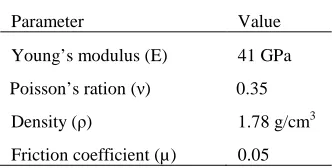
Table 1. The physical and mechanical properties of
AZ91 experimental alloy.
Parameter Value
Young’s modulus (E) 41 GPa
Poisson’s ration (ν) 0.35
Density (ρ) 1.78 g/cm3
Friction coefficient (µ) 0.05
In the present study, a numerical and analytical investigation was done on plastic deformation
behavior of AZ91 tube during TCAP processing and experimental tests were carried out. The principle of the tubular channel angular pressing (TCAP) is shown in Fig. 1(a).
2. FE and experimental procedures
A commercial FE code Abaqus/Explicit was used to perform the numerical simulations. An axisymmetric model was employed, in which geometrical dimensions and mechanical properties of the specimens were identical to those of the experiment. Axisymmetric four node elements (CAX4R) were employed to model the sections. To accommodate the predetermined large strains during the simulations, adaptive meshing was employed. The coulomb friction and penalty method were used to consider the contact between the die and specimen. The die and the punch were modeled as analytical rigid parts. The Coulomb friction coefficient was assumed to be 0.05 [8]. The experimental alloy properties and their values are given in Table 1. Mechanical properties of the AZ91 alloy were obtained through a compression test at the TCAP processing temperature of ºC and at the strain rate of 1x10⁻⁵ sec-1 [8].
The material used in this study was an AZ91 magnesium alloy. Cylindrical tubes of 20 mm in outer diameter, 2.5 mm in thickness, and 35 mm in length were machined from as-cast ingots. A TCAP die was manufactured from hot worked tool steel and hardened to 55 HRC. The channel angles of φ1, φ2, and φ3 in the TCAP die shown in Fig. 1(b) were 135°, 90°, and 135°, respectively. The angle of curvature, the outer corner angle ψ2, was 90° and both ψ1 and
ψ2 were equal to 0°.
33
3. Analysis
Figure 1(b) shows three angular zones (I, II, and III) of the tubular workpiece. The flow pattern and the strain–stress states of TCAP were different from those of the conventional ECAP. In the conventional ECAP, the strain state could be considered as simple shear while, in TCAP, there were some additional radial and circumferential tensile and compressive strains in regions b and c, respectively. To calculate the accumulated strain ε resulting from three consecutive conventional ECAP with channel angles φ (135º, 90º and 135º) and corner angles
ψ (0º, 90º and 0º), the following equation proposed by Iwahashi et al. [9] can be used:
2cot ( / 2 + / 2) cos ( / 2 + / 2) 3
ec
φ ψ ψ φ ψ
ε= +
(1) Hence, the accumulated equivalent strain resulting from three consecutive conventional ECAP was equal to 1.863, which was the three plastic strains of 0.478, 0.907 and 0.478, resulting from Eq. (1). In TCAP process, it could be expected that the total equivalent strain (ε ) would be higher than 1.863 because of the existence of radial and circumferential strains. The exact value of total accumulated strain (εT) in TCAP processing can be
calculated by the following equation, resulted from common engineering plasticity formulae and the geometry in Fig. 1(b):
3
1
2cot( / 2 + / 2) cos ( / 2 + / 2) 2 3
i i i i i
T i
ec
θ
ϕ ψ ψ ϕ ψ
ε ε
=
+
= +
∑
(2)2 3
εθ = εθ, (3)
ln 0
R R
εθ = , (4)
where R and R0 are radii of the tube in the channel region and final (=initial) tube, respectively, as shown in Fig. 1(b). Finally, the total equivalent strain after N passes of TCAP can be expressed in a general form by the following relationship:
3
1
2cot ( / 2 + / 2) cos ( / 2 + / 2) 3
2
i i i i i
i TN
ec N
θ
ϕ ψ ψ ϕ ψ
ε
ε =
+
=
+
∑ (5)
According to Eq. (1), the total equivalent plastic strain in TCAP with the parameters used in this work was 2.67, which was higher than that from three passes of conventional ECAP (1.863).
Inner die
Outer die
(a) (b)
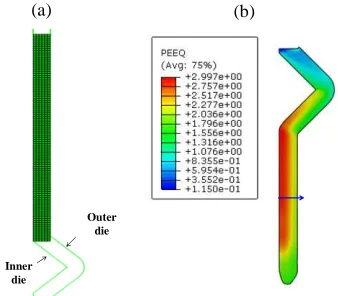
Fig. 2. (a) FEM model and the selected nodes in the
specimen cross section and (b) equivalent plastic strain contour.
4. Results and discussion
Figure 2(a) shows the finite element model of meshed tube and the dies. Figure 2(b) demonstrates the equivalent plastic strain contours corresponding to the TCAP processed tube. It could be seen that there were reasonably strain homogeneity in the directions of tube thickness and length. Careful examinations of the head shapes demonstrated that the tube head shape had a symmetric form as found in the conventional ECAP with parallel channels it can be also seen in Fig. 5(c), which will be discussed in the next paragraphs. This phenomenon was seen in [10 and 11]. Figure 3 presents the path plot of equivalent plastic strain through tube thickness. The FE results demonstrated that equivalent plastic strain of 2.1-2.9 was developed after applying one pass TCAP.
34
independent variable and equality of φ1 and φ3 leads to the following:
936 . 0 ) 4 2 ( cos 2 ) 4 2 cot( 2 3 1 ) 4 cot( 3
4 2 2 2 +
+ +
+ +
+
= ϕ π ϕ π π ϕ π
εT ec
(6)
Figure 4 shows the calculated equivalent plastic strains resulted from Eq. (6). It is clear that increasing channel angle φ2 led to the decrease in the equivalent plastic strain the trend seemed to have an exponential behavior. The best exponential fitting could be concluded as:
2
ϕ
ε n
T =Ke ,
2
009 . 0
8664 .
5 ϕ
ε = e−
T (7)
Fig. 3. Path plot of the equivalent plastic strain
through thickness from inside to outside.
Fig. 4. Equivalent plastic strain values calculated by
the analysis.
Figure 5 shows the material flow and deformation geometries during different stages of the TCAP processing Fig. 5(a) illustrates deformation geometries in the early stages of the TCAP processing. It can be seen that there was thinning in the tube, which was due to the
tensile peripheral strain resulting from the increase in the tube diameter [6].
Figure 5(b) demonstrated that the back pressure effect resulting from the shear zone of II can compensate for the tube thinning. Also, when the tube passed through shear zone II to III, there was compression peripheral strain which caused an increase in the tube thickness. According to Fig. 5(c), it is clear that the material in the die corner corresponding to shear zone I almost filled the channel, but it was not in shear zone III. This also occurred in the conventional multi-pass ECAP [10]. Kim [10] mentioned that this was caused by the back pressure effects resulting from the next shear zones on the initial shear zone. In the die corner corresponding to the shear zone III, in which there was no consequent shear zone, it can be seen that the die corner filling was incomplete.
(a) (b) (c)
Fig. 5. FEM predictions of deformation geometry
changes during TCAP processing (a) in the early stage just after passing from shear zone I, (b) after passing second shear zone and (c) final stage of TCAP.
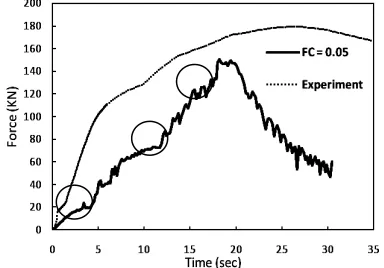
Fig. 6. Pressing load versus ram displacement during
35 Figure 6 shows the process load versus ram
displacement for TCAP processing corresponding to both FE and experiment. There were three slope change regions in all the cases. This change in curve trends corresponded to 3 shear zones [7].
When the process was preceded, the tube length before the shear zone III is decreased and the tube length after shear zone III decreased and the tube length after shear zone III increased, which led to the decrease in the force. There was also some difference between the required loads calculated from FE and resulted from the experiment. The experiment resulted load was higher than the FE calculated one.
The difference was probably because of some errors in temperature measurement. The temperature of the sample inside the die might be lower than that measured on the outer die surface. As is well-known, when the temperature decreases, the flow stress will be increased and the required load will be increased. Also, the second reason could be the formation of burrs around hollow cylindrical punch, which caused increase in the process load.
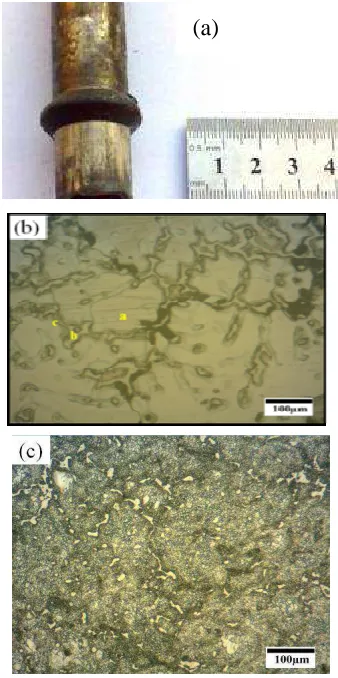
Figure 7(a) demonstrates an AZ91 work piece from the initial tube feeding stock to the form in tubular channel and the final TCAP processed tube. The microstructure of the initial as-cast material is shown in Fig. 7(b), which shows the mean grain size of 150 µm. Figure 7(c) presents the optical micrographs of the cross-sectional microstructure of the TCAP processed tube. In this figure, there are many dynamically recrystallized and equiaxed grains. It should be noted that dynamic recrystallization could occur during SPD of AZ91 at 300 ºC [12]. As can be seen, the TCAP process could significantly refine the microstructure. Grain size was refined to be from nanostructure range in the regions near the boundaries to about 2 µm inside the grains. There were also some un-dissolved Mg17Al12 phases in the microstructure.
Figure 8 shows the microhardness change during the process in regions "a"-"d" (Fig. 1(b)). Hardness increased notably for the TCAP processed tube cross-section after shear zone I
and reached the maximum value at the zone after shear zone of III. TCAP processing increase in microhardness to 78 HV from the initial value of 51 HV.
Fig. 7. (a) An AZ91 work piece in the process of the
TCAP, (b) optical micrographs of the initial sample showing the mean grain size of ~150 µm, (c) typical microstructures of the experimental alloy after single pass TCAP with the mean grain size of ~1µm [7].
40 45 50 55 60 65 70 75 80 85 90
0 1 2 3 4 5
M
ic
ro
h
a
rd
n
e
ss
(H
v
)
Position
a b c d
Fig. 8. Microhardness of the processed tube during
the TCAP.
36
5. Conclusions
The FE results demonstrated that equivalent plastic strain of 2.1-2.9 was developed after applying one pass TCAP. Tube thinning in the early stages of the process was observed as a result of tensile circumferential strains but this can be compensated for by the back pressure effect resulting from the next shear zones and also compressive circumferential strain resulting from the decreasing tube diameter. Microstructural observations showed significant grain refinement after one pass TCAP on AZ91 magnesium alloy at 300 ºC. Microhardness measurements showed increased hardness to 78 HV from the initial value of 51 HV.
References
[1] R. Z. Valiev, R. K. Islamgaliev and I. V. Alexandrov, "Bulk ulk nanostructured materials from severe plastic deformation" Prog. Mater. Sci., Vol. 45, pp.103‒189, (2000).
[2] R. Z. Valiev and T. G. Langdon, "Principles of equal-channel angular pressing as a processing tool for grain refinement", Prog. Mater. Sci., Vol. 51, pp. 881‒951, (2006).
[3] A. P. Zhilyaev and T. G. Langdon, "Using high-pressure torsion for metal processing: Fundamentals and applications", Prog. Mater. Sci., Vol. 53, pp. 893-979, (2008).
[4] Y. Saito, H. Utsunomiya, N. Tsuji and T. Sakai, "Novel ultra-high straining process for bulk materials development of the accumulative roll-bonding (ARB) process", Acta Mater., Vol. 47, pp. 579‒583, (1999).
[5] L. S. Toth, M. Arzaghi, J. J. Fundenberger, B. Beausir, O. Bouaziz
and R. Arruffat-Massion, "Severe plastic deformation of metals by high-pressure tube twisting", Scripta Mater., Vol. 60, pp. 175‒177, (2009).
[6] S. Mohebbi and A. Akbarzadeh, "Accumulative spin-bonding (ASB) as a novel SPD process for fabrication of nanostructured tubes", Mater. Sci. Eng.
A, Vol. 528, pp. 180‒188, (2010).
[7] G. Faraji, M. M. Mashhadi and H. S. Kim, "Tubular channel angular pressing (TCAP) as a novel severe plastic deformation method for cylindrical tubes", Mater. Lett., Vol. 65, pp. 3009‒3121, (2011).
[8] G. Faraji, M. M. Mashhadi and H. S. Kim, "Deformation Behavior in Tubular Channel Angular Pressing (TCAP) Using Triangular and Semicircular Channels",
Mater. Trans., Vol. 53, No. 1, pp. 8‒12, (2012).
[9] Y. Iwahashi, J. Wang, Z. Horita, M. Nemoto and T.G. Langdon, “Principle of equal channel angular pressing for the processing of ultra-fine grained materials”, Scripta Mater, Vol. 35, pp. 143‒146, (1996).
[10] H. S. Kim, "Finite element analysis of deformation behaviour of metals during equal channel multi-angular pressing",
Mater. Sci. Eng. A, Vol. 328, pp.
317‒323, (2002).
[11] G. I. Raab, "Plastic flow at equal channel angular processing in parallel channels", Mater. Sci. Eng. A, Vol. 410, pp. 230‒238, (2005).
[12] G. Faraji, M. M. Mashhadi and H. S. Kim, "Microstructure inhomogeneity in ultra-fine grained bulk AZ91 produced by accumulative back extrusion (ABE)"
Mater. Sci. Eng. A, Vol. 528, pp.