International
J
ournal of
P
harmaceutical
B
iological and
C
hemical
S
ciences
e-ISSN: 2278-5191
International Journal of Pharmaceutical, Biological and Chemical Sciences (IJPBCS) | APR-JUN 2015 | VOLUME 4 | ISSUE 2 | 20-29
www.ijpbcs.net or www.ijpbcs.com
R
esearch
A
rticle
Pag
e
20
EFFECT OF EXTRACTION TECHNIQUES ON THE EXTRACTABILITY OF
ANTIOXIDANT POLYPHENOLICS FROM
C. colocynthis
Abdul Dayyan Ajmal, Nazish Jahan*, Saba Aslam, , Khalil-ur-Rahman and Fatiqa Zafar
Department of Chemistry and Biochemistry, University of Agriculture, Faisalabad, Pakistan
*Corresponding Author Email:[email protected]
INTRODUCTION
Microwave-assisted extraction is becoming admired
among scientists due to its advantageous effects1. This
technique uses the efficiency of microwaves to heat
the solvent and disrupt the hydrogen bonds. As a
result, efficiency of solvent infiltration into the matrix
increases and leads to more elicitation of desired
compounds. Conventional extraction techniques are
tedious, time and solvent consuming2. Another
disadvantage of conservative techniques is the
degradation of heat labile compounds. Plants are richer
source of compounds that have health benefits but
sensitive to heat3. They should be extracted with great
competency to get profit from them. So the goal is to
extract these compounds from plants with greater
efficiency and minimum disruption4.
Natural sources for drug formulation are gaining
attention due to deleterious side effects related with
synthetic drugs. Natural sources are considered safer
than synthetic5. Medicinal plants have copious amount
of bioactive compounds that are health promoting6.
These bioactive compounds are secondary plant
metabolites. Polyphenolic are largely disseminated in
plant kingdom7. Commonly they consist of benzene
rings which linked to one or more hydroxyl groups8.
All families of polyphenols have shown a reassuring
effect in therapeutic for the treatment of diseases
which are commonly caused by oxidative stress. Over
production of free radicals direct to the onset of
oxidative stress that is responsible for the occurrence
of lethal diseases like cancer, atherosclerosis,
cardiovascular and CNS diseases9. Plants act as
antioxidants by scavenging these free radicals and
converting then to stable molecules10. The antioxidant
activity of plants is commonly positively correlated
with the total phenolic contents11. Previous researches
ABSTRACT:
Introduction: Total phenolic contents and antioxidant activity of extracted compounds appreciably influenced by many factors mainly type of solvent and technique. Citrullus colocynthis plant is well known for its medicinal properties. Methods:
In current research, antiradical activity of C. colocynthis fruit (dry and fresh) was tested at different concentration by employing various assays. Extracts were prepared with different solvents (Methanol, Methanol 80%, Ethyl acetate, Water, n- hexane) and techniques (Reflux, Soxhlet, Microwave and Mercerization). All extracts were tested for total phenolic contents by standard method and represented as gallic acid equivalents. Extracts having highest phenolic contents were evaluated for antioxidant activity. Results: Findings of current research evidently showed that C. colocynthis dry fruit had more antioxidant potential than fresh fruit. Ethyl acetate proved to be most effective solvent for the extraction of phenolic followed by methanol, water and n-hexane. Soxhlet extracts showed highest antioxidant activity but microwave assisted extraction technique results were also comparable to this technique. Thus microwave assisted extraction technique was proved to be efficient technique due to its time saving nature. Significant positive correlation was found between percentage inhibition and phenolic contents. Conclusions: By this research, it was concluded that C. colocynthis fruit has considerable antioxidant potential confirming its traditional use.
KEYWORDS:
Nazish Jahan *
et al;
EFFECT OF EXTRACTION TECHNIQUES ON THE EXTRACTABILITY………International Journal of Pharmaceutical, Biological and Chemical Sciences (IJPBCS) | APR-JUN 2015 |VOLUME 4 | ISSUE 2 | 20-29 | www.ijpbcs.net
Pag
e
21
confirmed the anti-inflammatory12, viral and
anti-carcinogenic activities of polyphenols13.
Citrulluscolocynthis belongs to family
Cucurbitaceous. It is a small scabbed herb with mottle
yellow fruits and climbing stem. It occurs through the
sub-continent and is growing in arid sand and warm
tracts. Physicians utilize it extensively for the
treatment of purgative, diabetics and jaundice14.
Previous researches mostly evaluated the antioxidant
potential of root of C. colocynthis. Due to extensive
beneficial effects of C. colocynthis, this project had
been designed to evaluate the antioxidant potential of
its fruit by employing solvent of varying polarities
with conventional and microwave assisted extraction
technique.
MATERIALS AND METHODS
CHEMICALS AND INSTRUMENTS
Chemicals of analytical grade were used in this
research: Gallic acid, 2,2-diphenyl-1-picrylhdrazyl
(DPPH), Lithium sulphate, Ascorbic acid, Sodium
molybdate, Sodium carbonate, Ethylene diamine tetra
acetate (EDTA), Phosphoric acid, Nitroblue,
tetrazolium regent (NBT), Sodium nitroprusside,
Sulphonamide, Tween 80, Linoleic acid, Ammonium
thiocyanate, Folin-Ciocalteu reagent, Sodium
dihydrogen phosphate, Disodium hydrogen
phosphate,Butylatedhydroxytoluene (BHT) etc.
INSTRUMENTS
Instruments that were used in current research:
Spectrophotometer, Rotary evaporator, Digital
balance, Incubator, Soxhlet apparatus, Reflux
apparatus, Shaker and Microwave oven.
Plant material:
The dried fruit of C.colocynthis were purchased from
local market while fresh fruit of C.colocynthi, were
collected from the local people of Chakwal, Pakistan.
They were washed with distilled water to remove dust.
The dried fruit was powdered and the pulp of fresh
fruit was wrung to obtain juice.
Preparation of crude plant extract
Dry and fresh fruit of C. colocynthis (1:10) was
elicited with solvents of different polarities and
conventional versus innovative microwave assisted
extraction technique. After extraction, solvent was
evaporated using rotary evaporator and concentrates
were stored in refrigerator for further analysis. Over
all 30 extracts of C. colocynthis plant was prepared.
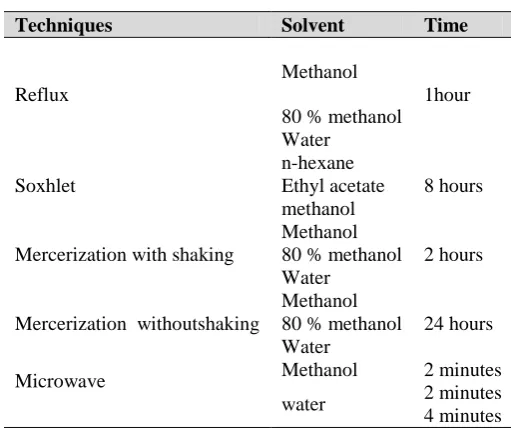
Experimental protocol was shown in Table 1.
Table 1. Experimental protocol
Techniques Solvent Time
Reflux
Methanol
1hour 80 % methanol
Water
Soxhlet
n-hexane
8 hours Ethyl acetate
methanol
Mercerization with shaking
Methanol
2 hours 80 % methanol
Water
Mercerization withoutshaking
Methanol
24 hours 80 % methanol
Water
Microwave Methanol 2 minutes
Nazish Jahan *
et al;
EFFECT OF EXTRACTION TECHNIQUES ON THE EXTRACTABILITY………International Journal of Pharmaceutical, Biological and Chemical Sciences (IJPBCS) | APR-JUN 2015 |VOLUME 4 | ISSUE 2 | 20-29 | www.ijpbcs.net
Pag
e
22
TOTAL PHENOLIC CONTENTS
Total phenolic contents of extracts were evaluated by
the method of Nabavi15. Plant material (1ml) was
mixed with Folin-Ciocalteu reagent (5ml) and sodium
carbonate (4ml, 20%). Absorbance of resulting
mixture was noted with spectrophotometer at 765nm
after an hour. Unknown concentration of plant extract
was determined from calibration curve of gallic acid
(0.01 - 0.10 mg/ml). Total phenolic contents of plant
extract were determined by applying formula (Total
phenolics = unknown concentration computed from
standard curve × Volume taken in ml / grams of plant
extract taken) and expressed as mg GAE/g of plant
extract.
DETERMINATION OF ANTIRADICAL
ACTIVITY
Four different assays were used to determine the
antiradical activity of the plant extracts to get reliable
results. Extracts with highest phenolic contents were
selected for the evaluation of antioxidant activity.
Results were reported in term of percentage inhibition
and IC50 value which is the inhibitory concentration
which restricts the formation of 50% radicals.
1. DPPH free radical scavenging activity
Free radical scavenging activity was verified by DPPH
assay. DPPH (0.1mM) ethanolic solution (1ml)was
mixed with different concentration of plant extract
(0.02 - 0.1 mg/ml)and kept in dark for 30 minutes16.
Absorbance of resulting mixture was noted at 517 nm.
BHT and Ascorbic acid were used as standard
reference and run in similar way.
2. Superoxide radical scavenging activity
Superoxide radical scavenging activity of plant
extracts was evaluated by the method of Mishra17.
Aliquot (1ml) of various concentrations of plant
extract (0.2 - 1 mg/ml) was mixed with sodium
carbonate (2 ml, 5%). After that, nitro blue tetrazolium
reagent (0.8 ml, 150 µM) was added followed by
addition of EDTA (0.6 ml, 0.5%). Consequential
solutions absorbance was checked immediately at 560
nm. Standards were also run in similar way.
3. Evaluation of reducing potential
Reducing capability of plant extract was ascertained
by reference method18with slight modification. Aliquot
(1ml) of various concentrations of plant extract (0.2 - 1
mg/ml) was mixed with phosphate buffer (0.2M) and
potassium ferricyanide (1%). Reaction mixture was
kept for 20 minutes at 50ºC. Later on, trichloroacetic
acid (1%) was added and homogenized. Upper layer
was diluted with water and mixed with ferric chloride
(1%). Resulting solution absorbance was taken at
700nm. Standards were also run in similar way.
4. Antioxidant activity in linoleic acid system
Antiradical activity in linoleic acid system was
evaluated by Ammonium thiocyanate method19.
Extract (5mg) was mixed with phosphate buffer
(0.04M) and linoleic acid emulsion. It was kept for 72
hours at 370C. Incubated sample (2ml) was removed
after every 24 hour gap and mixed with ammonium
thiocyanate (30%) and Fe2Cl3 (0.02M, 0.5ml).
Consequential mixture absorbance was taken at
500nm. Standards were also treated in similar way.
Statistical analysis: Results were represented with
mean ± S.D. Antioxidant activity was reported in term
percentage inhibition and IC50 Value. IC50 value was
calculated from slope equation (Y = MX+C). Pearson’s
correlation coefficient was used in order to establish
link between antioxidant activity and total phenolic
contents.
RESULT AND DISCUSSION
Nazish Jahan *
et al;
EFFECT OF EXTRACTION TECHNIQUES ON THE EXTRACTABILITY………International Journal of Pharmaceutical, Biological and Chemical Sciences (IJPBCS) | APR-JUN 2015 |VOLUME 4 | ISSUE 2 | 20-29 | www.ijpbcs.net
Pag
e
23
Table 2: Total phenolic contents (mg GAE/g of plant extracts) in Citrulluscolocynthisfruit. Total Phenolic Contents (mg GAE/g)
Techniques Solvent Time Fruit
Reflux
Methanol
1hour
Dry fruit Fresh fruit 103 ± .031 65 ± 0.17 80 % methanol 89 ± 0.17 45 ± 0.24
Water 46 ± 0.18 40 ± 0.26
Soxhlet
n-hexane
8 hours
22 ± 0.16 10 ± 0.24 Ethyl acetate 245 ±0. 75 85 ± 0.36 methanol 121 ± 0.34 55 ± 0.42
Mercerization with shaking
Methanol
2 hours
51 ± 0.34 39 ± 0.26 80 % methanol 36 ± 0.43 22 ± 0.35
Water 21 ± 0.25 35 ± 0.27
Mercerization withoutshaking
Methanol
24 hours
39 ± 0.27 30 ± 0.19 80 % methanol 37 ± 0.23 22 ± 0.26
Water 30 ± 0.42 35 ± 0.42
Microwave Methanol 2 minutes `225 ± 0.24 105 ± 0.24 water 2 minutes 105 ± 0.36 40 ± 0.16
4 minutes 185 ± 0.38 87 ± 0.56
Effect of solvent on the extraction of polyphenols
The experimental results showed that the extraction of
polyphenols form C.colocynthiswas greatly influenced
by the nature of solvents. According to the results,
Ethyl acetate proved best solvent for the extraction of
polyphenols. Its extracts showed the presence the
highest total polyphenolic contents (245 ± 0.75 mg
GAE/g). The extracts prepared with methanol also
showed good results but the extracts prepared with
n-hexane showed the lowest total polyphenolic contents
(10 ± 0.24 mg GAE/g). Methanol and ethyl acetate
extracts showed the presence of highest polyphenols
due to their polarity and organic nature. As hexane is
non polar solvent thus it does not possess the ability to
extract polyphenols.
Effect of extraction technique on the extraction of
polyphenols
The experimental data illustrated that the extraction of
phenolic compounds from C. colocynthissignificantly
affected by the extraction technique. Soxhlet
extraction method yielded highest total polyphenolic
contents (245 ± 0.75 mg GAE/g). But it is tedious
process and time consuming. Microwave assisted
extraction technique yielded polyphenols which are
comparable to soxhlet. Thus it is proved to be efficient
technique due to its time and solvent saving nature.
Effect of irradiation time on the elicitation of total
phenolic contents
The results showed that the extraction of polyphenols
form C.colocynthisobviously influenced by the
irradiation time. It was found that TPC increased with
increase in time irradiance up to a certain limit. For 2
to 4 minutes irradiance time with water as solvent,
TPC were found to increase from 105 to 185 mg
GAE/g for dry fruit of Citrulluscolocynthisand from
40 to 87 mg GAE/g for fresh fruit of Citrullus
colocynthis. With methanol as a solvent, 2 minutes
irradiance time showed 225± 0.24 mg GAE/g for dry
fruit of Citrulluscolocynthis and 105± 0.24 mg GAE/g
for fresh fruit of Citrulluscolocynthis. To practice
extracts with 4 minutes irradiance time with methanol
as solvent was not achievable due to evaporation of
solvent.
Effect of nature of plant material
The experimental results clearly indicated that the
extracts of dry fruit of C.colocynthis contained more
total polyphenols than the fresh fruit of medicinal
plant C.colocynthis in all the extraction methods.
Nazish Jahan *
et al;
EFFECT OF EXTRACTION TECHNIQUES ON THE EXTRACTABILITY………International Journal of Pharmaceutical, Biological and Chemical Sciences (IJPBCS) | APR-JUN 2015 |VOLUME 4 | ISSUE 2 | 20-29 | www.ijpbcs.net
Pag
e
24
Citrulluscolocynthis. It does not include the peel.
Therefore, the low phenolic contents may be due to
absence of peel20.
DETERMINATION OF ANTIRADICAL ACTIVITY
1. DPPH and superoxide free radical scavenging activity
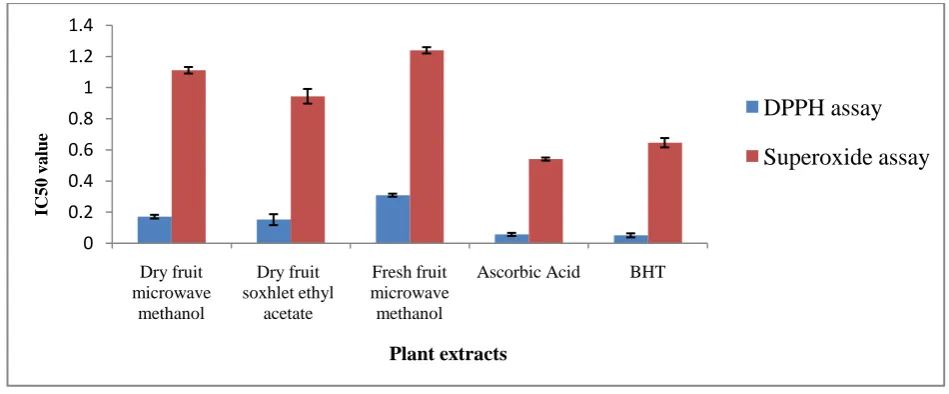
Antioxidants are very important due to injurious effects of free radicals. Results of inhibitory concentration 50 (IC50)
value for DPPH and super oxide free radical scavenging assay are depicted in Table 3 and Figure 1.
Table 3.IC50 value of Citrulluscolocynthis fruit by DPPH and superoxide free radical scavenging assay
Plant extracts and standards
IC50 value (mg/ml)
DPPH assay Superoxide assay
Dry fruit microwave methanol 0.171± 0.012 1.111± 0.021
Dry fruit soxhlet ethyl acetate 0.152± 0.035 0.944± 0.047
Fresh fruit microwave methanol 0.309± 0.01 1.239± 0.02 Ascorbic acid
(Standard) 0.057± 0.01 0.541± 0.01
BHT
(Standard) 0.051± 0.013 0.646± 0.03
Results of IC50 indicated that both standards ascorbic
acid and BHT have less IC50 value for both assays as
compared to tested plant. Thus they have more
inhibitory effect at less concentration. Among plant
extracts, dry fruit showed less IC50 value than fresh
fruit thus more inhibitory effect at less concentration.
Soxhlet extract exhibited somewhat less IC50 value
than microwave assisted extraction. But due to its time
taking nature to extract bioactive compounds to show
this activity, we don’t consider it good technique.
Thus by considering all aspects, we concluded that
microwave assisted extraction technique was best
technique for extract preparation. Previous researchers
also evaluated the free radical scavenging of C.
colocynthis seeds compared with ascorbic acid. They
also found maximum activity in ethyl acetate extract
and found that ascorbic acid possess more antiradical
activity than C. colocynthis seeds21.
Figure 1. IC50 value of Citrulluscolocynthis fruit by DPPH and superoxide free radical scavenging assay
0 0.2 0.4 0.6 0.8 1 1.2 1.4
Dry fruit microwave
methanol
Dry fruit soxhlet ethyl
acetate
Fresh fruit microwave methanol
Ascorbic Acid BHT
IC
5
0
v
a
lu
e
Plant extracts
DPPH assay
Nazish Jahan *
et al;
EFFECT OF EXTRACTION TECHNIQUES ON THE EXTRACTABILITY………International Journal of Pharmaceutical, Biological and Chemical Sciences (IJPBCS) | APR-JUN 2015 |VOLUME 4 | ISSUE 2 | 20-29 | www.ijpbcs.net
Pag
e
25
2. Measurement of reducing potential
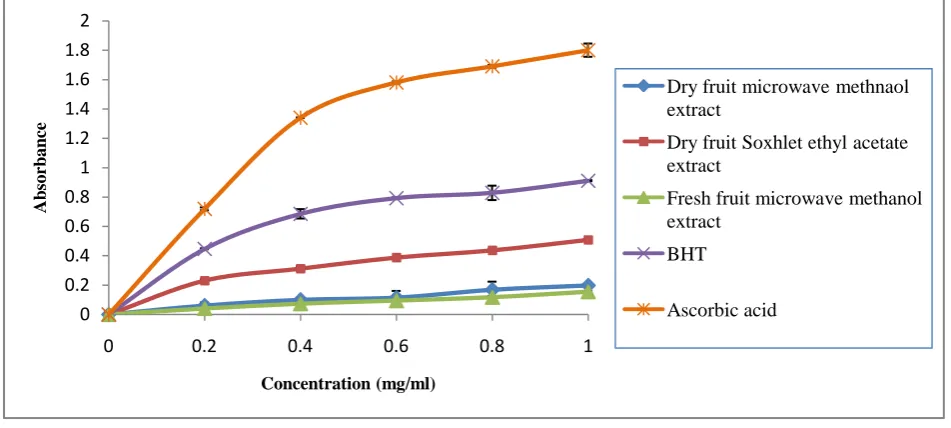
Results of reducing potential of different extracts of C.
colocynthis fruit are depicted in figure 2. These results
clearly indicate that standard compounds Ascorbic
acid and BHT had more reducing potential at all tested
concentrations than C.colocynthis fruit. Dry fruit
extract of C. colocynthis with soxhlet and ethyl acetate
as solvent showed more reducing potential (0.509±
0.004) than all tested extracts. Previous researchers
also ascertained the antioxidant activity of
C.colocynthis fruit at different concentrations by
employing different assays. Reducing potential results
were found to be in agreement with this research. They
also found than ascorbic acid possess more reducing
potential than C. colocynthis fruit22.
Values are expressed in mean ± S.D. (n=3).
Figure 2. Reducing potential of C. colocynthis fruit at different concentrations 3. Antioxidant activity in linoleic acid system
Results of antioxidant activity in linoleic acid system
are depicted in figure 3. These results showed that
BHT had maximum percentage inhibition in linoleic
acid system followed by ascorbic acid and tested plant
extracts. Among plant extract, dry fruit of C.
colocynthis showed highest percentage inhibition than
fresh fruit. Dry fruit extract prepared with soxhlet,
ethyl acetate showed 43.3± 0.98% inhibitions followed
by its microwave methanol extract (29.7± 1.23%).
Fresh fruit extract showed minimum inhibition (19.4±
1.18%).
Correlation study of phenolic contents with
antioxidant activity
Several studied stated that antioxidant activity is
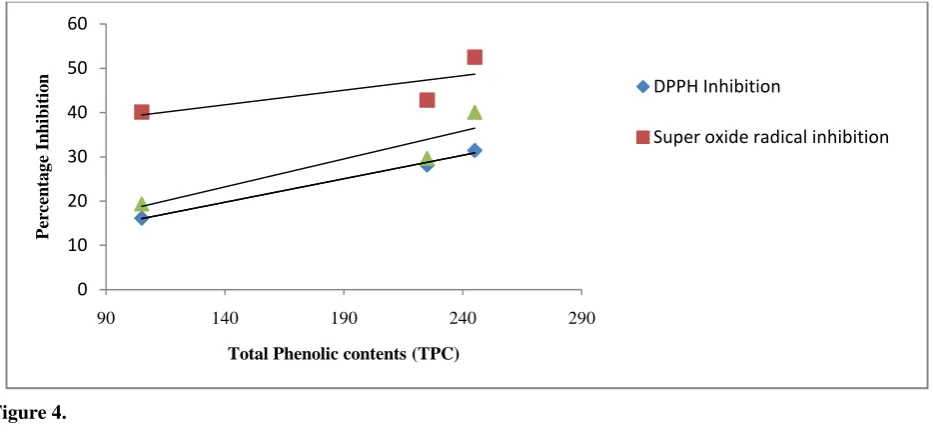
related with total phenolic contents22. Correlation
between total phenolic contents and antioxidant
activity for DPPH assay, superoside assay and
Linoleic acid assay was shown in figure 4 and for
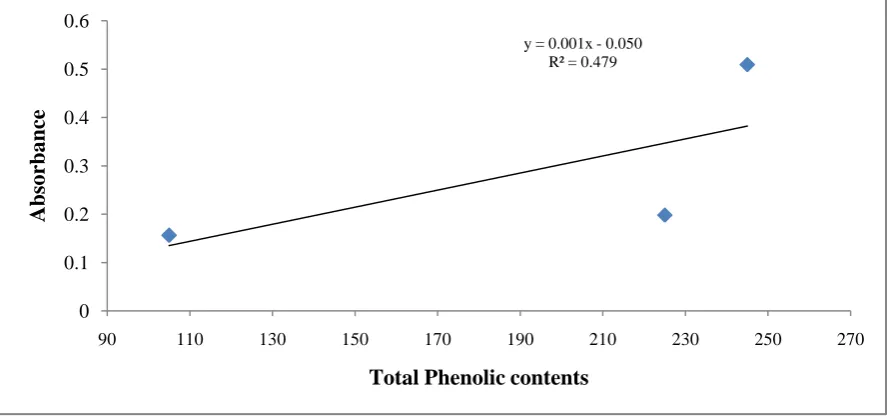
reducing potential assay in figure 5.All assay
confirmed the existence of positive correlation
between total pheolic contents and antioxidant
activity. Highest positive correlation was found
between in DPPH assay with Pearson correlation
coefficient r = 0.997 followed by linoleic acid assay (r
= 0.923), superoxide assay (r = 0.760) and reducing
potential assay (r = 0.692).
0 0.2 0.4 0.6 0.8 1 1.2 1.4 1.6 1.8 2
0 0.2 0.4 0.6 0.8 1
Ab
so
rb
a
n
ce
Concentration (mg/ml)
Dry fruit microwave methnaol extract
Dry fruit Soxhlet ethyl acetate extract
Fresh fruit microwave methanol extract
BHT
Nazish Jahan *
et al;
EFFECT OF EXTRACTION TECHNIQUES ON THE EXTRACTABILITY………International Journal of Pharmaceutical, Biological and Chemical Sciences (IJPBCS) | APR-JUN 2015 |VOLUME 4 | ISSUE 2 | 20-29 | www.ijpbcs.net
Pag
e
26
Values are expressed in mean ± S.D. (n=3).
Figure 3. Antioxidant activity in linoleic acid system of C. colocynthis fruit at different concentrations
Figure 4.
1. Correlation between TPC and DPPH radical inhibition= R² = 0.9945, r = 0.997, y = 0.106x + 4.8744.
2. Correlation between TPC and superoxide radical inhibition= R² = 0.5789, r = 0.760, y = 0.0655x +
32.575.
3. Correlation between TPC and inhibition in linoleic acid system=R² = 0.8527, r = 0.923, y = 0.1262x +
5.541
0 20 40 60 80 100
0 24 48 72
Per
ce
n
ta
g
e
in
h
ib
iti
o
n
Time in hours
Dry fruit microwave methnaol extract
Dry fruit Soxhlet ethyl acetate extract
Fresh fruit microwave methanol extract
ascorbic acid
BHT
0 10 20 30 40 50 60
90 140 190 240 290
Per
ce
n
ta
g
e
In
h
ib
iti
o
n
Total Phenolic contents (TPC)
DPPH Inhibition
Nazish Jahan *
et al;
EFFECT OF EXTRACTION TECHNIQUES ON THE EXTRACTABILITY………International Journal of Pharmaceutical, Biological and Chemical Sciences (IJPBCS) | APR-JUN 2015 |VOLUME 4 | ISSUE 2 | 20-29 | www.ijpbcs.net
Pag
e
27
Figure 5. Correlation between total phenolic contents and reducing potential (r = 0.692)
CONCLUSION
Based on the above study it can be concluded dry fruit
of C. colocynthis has more antioxidant activity than
fresh fruit. Microwave assisted extraction technique
proved to be most valuable technique. It can extract
high polyphenolic contents in less time but
optimization of condition is necessary for the
effectiveness of results. Ethyl acetate confirmed to be
most helpful solvent for the elicitation of phenolic
compounds from tested plant. Polarity of solvent plays
important role in the extraction of polyphenols.
Highest yield of polyphenols can be obtained using
polar solvents.
REFERENCES:
1. Aslam S., Jahan N., Ali S., Rahman K.U. 2012.
An innovative microwave-assisted extraction and
antioxidant potential of polyphenols from
different parts of Ocimum basilicum. J. Med.
Plants. Res., 6: 2150-2159.
2. Luo H.Y., Bin W., Guang Y.C., Feng X.Y. 2010.
Optimization of microwave-assisted extraction of
polyphenols from Enteromorphaprolifraby
orthogonal test. Chinese Herb. Med., 2: 321-325.
3. Proestos C., Komaitis M. 2008. Application of
microwave-assisted extraction to the fast
extraction of plant phenolic compounds.
LWT-Food Sci. Technol., 41: 652–659.
4. Ince A.E., Sahin S., Şümnü S.G. 2013. Extraction
of phenolic compounds from melissa using
microwave and ultrasound. Turk. J. Agric. For.,
37: 69-75.
5. Pourmorad F., Hosseinimehr S.J., Shahabimajd
N. 2006. Antioxidant activity, phenol and
flavonoid contents of some selected Iranian
medicinal plants. Afr. J. Biotechnol.,5:
1142-1145.
6. Ramesh B., Satakopan V.N. 2010. In vitro
antioxidant activities of Ocimum species:
Ocimumbasilicum and Ocimum sanctum. J Cell
Tissue Res., 10: 2145-2150.
7. Sharma R.J., Chaphalkar S.R., Adsool A.D.
2010. Evaluating antioxidant potential,
cytotoxicity and intestinal absorption of
flavonoids extracted from medicinal plants. Int. J.
Biotech. Appl., 2(1): 01-05.
8. Elmastas M., Gulcin I., Isildak O., Kufrevioglu
O.I., Ibaogluand K., Enein H.Y.A. 2006.Radical
scavenging activity and antioxidant capacity of
bay leaf extracts. J. Iran. Chem. Soc.,3: 258-266.
y = 0.001x - 0.050 R² = 0.479
0 0.1 0.2 0.3 0.4 0.5 0.6
90 110 130 150 170 190 210 230 250 270
A
bsorbance
Nazish Jahan *
et al;
EFFECT OF EXTRACTION TECHNIQUES ON THE EXTRACTABILITY………International Journal of Pharmaceutical, Biological and Chemical Sciences (IJPBCS) | APR-JUN 2015 |VOLUME 4 | ISSUE 2 | 20-29 | www.ijpbcs.net
Pag
e
28
9. Sini, K.R., Sinha B.N., Karpagavallis M. 2010.
Determining the antioxidant activity of certain
medicinal plants of attapady, (Palakkad), India
using DPPH assay. Curr. Bot., 13-17.
10. Gulcin I., Kirecci E., Akkemik E., Topal F.,
Hisar O. 2010. Antioxidant and antimicrobial
activities of an aquatic plant: Duckweed (Lemna
minor L.). Turk. J. Bio., 34: 175-188.
11. Awah F.M., Verla A.W. 2010. Antioxidant
activity, nitric oxide scavenging activity and
phenolic contents of Ocimum gratissimum leaf
extract. J. Med. Plants Res., 4: 2479-2487.
12. Young I.S., Woodside J.V. 2001. Antioxidant in
health and disease. J.Clin.Pathol., 54: 176-186.
13. Veeru P., Kishor M.P., Meenakshi M. 2009.
Screening of medicinal plant extracts for
antioxidant activity. J. Med. Plants Res.,3:
608-612.
14. Dallak M, Jaliah B. 2009. Antioxidant activity of
Citrullus colocynthis pulp extraction in the
RBC’s of alloxan-induced Diabetic rats. Pak. J.
Physiol., 6: 1-5.
15. Nabavi S.M., Ebrahimzadeh M.A., Nabavi S.F.,
Hamidinia A., Bekhradnia A.R. 2008.
Determination of antioxidant activity, phenol and
flavonoids content of Parrotiapersica Mey.
Pharmacologyonline,2: 560-567.
16. Ebrahimzadeh M.A., Hosseinimehr S.J.,
Hamidinia A., Jafari M. 2008. Antioxidant and
free radical scavenging activity of
Feijoasallowiana fruits peel and leaves.
Pharmacology online, 1: 7-14.
17. Mishra S.S., Petal K.K., Raghuwanshi N., Pathak
A., Panda P.P., Girhepunje K., Patro C.N. 2011.
Screening of ten Indian medicinal plant extracts
for antioxidant activity. Scholar Research
Library, 2: 162-170.
18. Yang J, Guo J, Yuan J. 2008. In vitro antioxidant
properties of rutin. LWT – Food SciTech. 41:
1060-1066.
19. Duan X., Jiang Y., Su X., Zhang Z., Shi J. 2007.
Antioxidant properties of anthocyanins extracted
from Litchi ( Litchichinensis Sonn.) fruit pericarp
tissues in relation to their role in the pericarp
browning. Food Chem., 101: 1365-1371.
20. Kratchanova M., Denev K.P., Ciz M., Lojek A.,
Mihailov A. 2010. Total phenols of some date
varieties. Polish Biochem. Soc., 57: 229-234.
21. Benariba N., Djaziri R., Bellakhdar W.,
Belkacem N., Kadiata M., Malaisse W.J., Sener
A. 2013. Phytochemical screening and free
radical scavenging activity of Citrullus
colocynthis seeds extracts. Asian Pac. J. Trop.
Biomed., 3: 35-40.
22. Jayaraman R., Christina A.J.M. 2013.Evaluation
of Citrullus colocynthis fruits on in vitro
antioxidant activity and in vivo DEN/PB induced
hepatotoxicity. Int. J. Appl. Res. Nat. Prod., 6:
1-9.
23. Jahan N., Rehman K., Ali S., Bhatti I.H. 2011.
Antioxidant Activity of Gemmo Therapeutically
Treated Indiginous Medicinal Plants. Asian J.
Nazish Jahan *
et al;
EFFECT OF EXTRACTION TECHNIQUES ON THE EXTRACTABILITY………International Journal of Pharmaceutical, Biological and Chemical Sciences (IJPBCS) | APR-JUN 2015 |VOLUME 4 | ISSUE 2 | 20-29 | www.ijpbcs.net