This is an open access journal, and articles are distributed under the terms of the Creative Commons Attribution-Non Commercial-ShareAlike 4.0 License, which allows others to remix, tweak, and build upon the work non-commercially, as long as appropriate credit is given and the new creations are licensed under the identical terms.
© 2018 Journal of Advanced Pharmacy Education & Research | Published by SPER Publication
63
Optimization and characterization of bacterial proteinase
enzyme using whey as a fermentation medium
Maged S. Ahmad
1, Baraka A. AbdEl-Salam
2, Manal M. Yaser
1, Safaa S. Taha
2*1Botany and Microbiology Department, Faculty of Science, Beni-Suef University, 2Dairy Research Department, Food Technology Research Institute, Agricultural Research
Centre, Giza, Egypt.
Correspondence: Safaa S. Taha, Dairy Research Department, Food Technology Research Institute, Agricultural Research Centre, Giza, Egypt. E_mail: [email protected]
ABSTRACT
Four lactic acid bacteria (LAB) isolated from sweet were screened for extracellular protease production in submerged fermentation medium using the dairy waste (whey) as a substrate. Different fermentation parameters such as media pH, temperature, carbon source and nitrogen source were studied for maximum production of protease enzyme. Two isolated lactic acid bacteria (LAB) showed maximum proteolytic activity and were identified as Lactobacillus plantarum and Enterococcus faecium using Biolog system. The highest protease activity of L. plantarum was (8.72Unit/ml), the protein content was (4.13mg/ml) and specific activity was (2.11Unit/mg) at optimum pH- 5 and 30ºC, after 36 hrs of incubation period, fructose was used as carbon source, and yeast extract was used as nitrogen source, whereas in (10.2Unit/ml), the protein content was (4.8mg/ml) and the specific activity was (2.13Unit/mg) at optimum pH-5.5 and 45ºC after 36hrs of incubation period, sucrose was used as a carbon source, and yeast extract was used as a nitrogen source for Enterococcus faecium.Two protease enzymes were partially purified using ammonium sulphate precipitation followed by sephadex G-100 chromatography, and then they were characterized.
Keywords:Protease, lactic acid bacteria, submerged fermentation, Whey.
Introduction
Proteases are a group of enzymes that hydrolyze or break down peptide bonds of proteins, and can break specific peptide bonds or link polypeptide chains to amino chain residues [1]. Proteases
execute a large variety of functions and represent the most important industrial enzymes of interest accounting for about 60% of the total enzyme market in the world and for approximately 40% of the total worldwide enzyme sale [2, 3].
Proteases constitute a large and complex group of enzymes that play an important nutritional and regulatory role in nature. Proteases are found in a wide diversity of sources such as plants, animals and microorganisms, but they are mainly produced by microorganisms like bacteria and fungi [3].
Proteases play important roles in physiological processes that is; they are involved in the regulation of metabolism and gene expression, enzyme modification, pathogenicity and hydrolysis of large proteins to smaller molecules for transport and metabolism [4, 5].
Although protease production is an inherent property of all organisms, only those microbes that produce a substantial amount of extracellular proteases have been exploited commercially. The current estimated value of the worldwide sales of industrial enzymes is expected to reach $8.5 billion in 2015 [6].
Biotechnology provided an unlimited and pure source of enzymes as an alternative to the plant and animal proteases to meet the current world demands. Microorganisms represent excellent sources of enzymes [7]. An attractive source of
protease enzymes is offered by microorganisms, because by using authorized fermentation techniques, microorganisms can be produced in large amounts in a short period of time, they generate the desired product abundantly and regularly, and the genetic manipulation that is used to generate new enzymes with different characteristics which are demanded for miscellaneous applications, being easier in them than in plants and animals [8-10]. However, among all microbial sources, proteolytic enzymes
which include almost all properties for biotechnological Access this article online
Website:www.japer.in E-ISSN: 2249-3379
How to cite this article: Maged S. Ahmad, Baraka A. AbdEl-Salam, Manal M. Yaser, Safaa S. Taha. Optimization and characterization of bacterial proteinase enzyme using whey as a fermentation medium. J Adv Pharm Edu Res 2018;8(2):63-76.
Source of Support: Nil, Conflict of Interest: None declared.
applications, are preferred over the plant and animal- derived enzymes [11].
Microorganisms produce extracellular proteases naturally to break down large polypeptides in the medium into peptides and amino acids before cellular uptake. Such enzymes have been commercially used to degrade protein in miscellaneous industrial processes. Protease enzymes are one of the most important groups of industrial enzymes which are vastly used in the food, pharmaceutical, protein hydrolysis, detergent, cheese-making, brewing, photographic, baking, meat and leather industries and as digestive aids in animal and human food [12, 13].
There are differences in characteristics like substrate specificity, active site, catalytic mechanism, pH and temperature optima in proteases [14]. The nature of the amino acid and other functional
groups (aromatic or aliphatic orsulphur-containing) which are close to the bond being hydrolyzed governs the specificity of proteolytic enzymes [15].
Since waste byproducts are generated in the industrial obtainment and manufacturing of food, high levels of pollution are produced. Significant liquid wastes are produced in dairy industries generate remarkable liquid waste, of which, cheese whey is the most abundant. Enormous pollution problems are caused if this industrial effluent is discarded in the water of rivers and lakes, because there are the large amounts of nitrogen, and phosphorus and high BOD (40 – 48,000 mg/L) and COD (89 -95,000 mg/L) contained in this by-product [16].
Thus, new biotechnological alternatives are sought by the scientists all around the world to utilize those by-products to get chemical compounds with potential applications in various industrial areas and decrease the environmental damage. Cheese-whey valorization has been examined in some research studies [17, 18].
Whey, which has been shown to be a potential substrate for protease production because of containing mainly lactose, protein and salts, is a waste byproduct of the dairy industry [19].
The whey consists of protein 0.36-0.46%, fat 0.26% and ash ranges from 0.84 to 0.95% [20]. These results demonstrated that
the dairy waste (whey) was rich in nutrients and could be potentially used as a substrate for microbial fermentation. Therefore, this study was designed to:
(1) Isolate bacterial strains from whey,
(2) Optimize the culture conditions for extracellular enzymes production using whey as a fermentation medium,
(3) Identify and characterize the isolates on the basis of their phenotypic characteristics, and
Purify and characterize the proteases produced from selected isolated lactic acid bacteria (LAB).
Materials and Methods
Microorganism
The bacterial strains were isolated from fresh sweet whey (Faculty of Agriculture, Cairo University, Giza, Egypt), using
the pour plate Technique in MRS (De Man –Rogosa- Sharpe) and M17 agar media [21]. The plates were incubated at 37 ºC for
48-72 hrs. The purified isolates were maintained in MRS andM17 broth and slants at 4ºC.
Screening for protease production
The bacterial isolates were subjected to primary screening for extracellular protease production by plate assay using gelatin agar plate as described by [22].
Identification of proteolytic isolates
The bacterial isolates were examined microscopically and identified using new GEN III Micro Plate™ test panel of the identification in Biolog system [23]. Micro Plates were read in the
Micro Station semi-automated reader after 20 hrs, and the results were interpreted by the identification systems software (GEN III database). The identification process was performed according to [24].
Lactic acid bacterial count
Lactic acid bacterial count was determined in MRS and M17 agar media, and the plates were incubated at 37OC for 48hr
according to the method described by [25].
Fermentation medium
In the present study, the fresh sweet cheese whey (pH 6.3 and 4.3% lactose) was used as a fermentation medium for protease production. The whey proteins were precipitated by thermo coagulation under acidic conditions. Precipitated proteins were separated by filtration techniques (cheese cloth and Whatmann filter paper No.1). The supernatant was termed as pure whey and used as a fermentation medium after sterilization at 121oC
for 20 min. The 250 ml Erlenmeyer flasks containing 100 ml of sterilized whey were inoculated separately with 5% of the bacterial isolates under aseptic conditions and incubated at different studied temperatures, pH conditions, and various incubation periods.
Optimization of culture conditions for
protease production
Different process parameters such as pH, temperature, incubation period, and carbon and nitrogen sources were optimized by varying the respective parameters to enhance protease production using whey as a fermentation medium.
The effect of incubation Period
The effect of different incubation periods (12, 24, 36 and 48hrs) on protease production was studied.
The effect of pH on protease production
The effect of different pH values on the production of protease was investigated by adjusting the pH of the fermentation medium at different levels (5.0, 5.5, 6.0, and 6.5using a standard pH meter (Jenway, model 3510, UK).
The optimum temperature for protease production was determined by incubating the fermentation medium at different temperatures (i.e. 30, 37, 40, and 45°C) for each organism. The pH, biomass (the bacterial cell concentration) and enzyme activity were determined after each interval of 12h of incubation at different studied pH and temperature values.
The effect of carbon source
For evaluation of the effect of different carbon sources on enzyme activity in fermentation media, three carbon sources viz. glucose, sucrose and fructose at different concentrations (1, 3 and 5% w/v) were added separately to fermentation medium as carbon sources. The fermentation medium flasks (sterilized whey) were inoculated with 5% (v/v), adjusted at the optimum pH and incubated separately at the optimum temperature and incubation period for each organism. At the end of the incubation periods, the fermentation media were centrifuged at 5.000 rpm for 20 min at 4oC. The supernatants were used for
enzyme assay.
The effect of nitrogen source
For evaluation of the effect of different nitrogen sources on enzyme activity in fermentation media, three nitrogen sources viz. yeast extract, glutamic acid and potassium nitrate (0.1, 0.3 and 0.5% w/v) for each source were added to fermentation medium. The fermentation medium flasks (sterilized whey) were inoculated with 5% (v/v) and incubated separately at the best temperature, pH, and incubation period for each organism. At the end of incubation periods, the fermentation media were centrifuged at 5.000 rpm for20 min at 4oC. The supernatants
were used for enzyme assay.
Analytical methods
Determination of pH
The pH value of fermentation media was measured using a standard pH meter (Jenway, model 3510, UK).
The determination of Bacterial cell
concentration
The bacterial cell concentration (biomass) was determined by measuring the optical density at 600nm using a spectrophotometer (Shimadzu UV-vis spectrophotometer, Model UV-1201, Japan) according to [26].
The determination of protease activity
The protease activity was determined by method of [27] except
for enzyme assay incubation time and temperature. One milliliter of culture filtrate was added with 1ml of 1% (w/v) casein solution in 0.05 M phosphate buffer, pH 7.0 and incubated at 37oC for 20min. The reaction was stopped by
addition of 4 ml of 5% tri-chloroacetic acid. The reaction mixture was centrifuged at 4000 rpm for 10 min. Five ml of 0.4 M Na2CO3 was added to 1 ml of the supernatant followed by
0.5 ml FolinCiocalteu’s phenol reagent (diluted with distilled
H2O ratio 1: 4). The reaction mixture was further incubated at
37oC for 20min, the amount of tyrosine released was
determined using a spectrophotometer (ShimadzuUV-visspectrophotometer, ModelUV-1201, Japan) at 660 nm against the enzyme blank. One unit of protease activity was defined as the amount of enzyme required to release1μg of tyrosine/ml/min under standard assay conditions.
Protease enzyme production under the
optimal conditions and extraction of crude
enzyme
Protease production was carried out under submerged fermentation conditions using sweet whey as a fermentation medium. The selected bacterial strains were grown under the obtained optimal conditions. Bacterial cultures were centrifuged by centrifuging (Harrier18/180, Refrigerated, Model MSE, and UK) at 5000 rpm at 4 ºC for 15 min to obtain culture supernatant. The culture supernatant is the crude extracellular enzyme extract. The pellet including cell debris was removed. The filtrate was then subjected for the purification.
Purification of protease enzyme
Purification of the proteases was done by standard protein purification methods which included ammonium sulphate precipitation, followed by dialysis, and Sephadex G-100 gel filtration chromatography. All purification steps were carried out at 4°C unless otherwise mentioned.
Ammonium sulphate precipitation
Protease precipitation was carried out by ammonium sulfate. The cell free extract (supernatant) was precipitated by adding solid ammonium sulphate at saturation levels (20-60% w/v). The precipitated protein was left overnight for 24hr at4oC, then
separated by centrifugation at 5000 rpm for 30 min at 4oc, and
dissolved in 40 ml of 0.05M phosphate buffer, pH 7, to get the concentrated enzyme solution [28]. Both enzyme activity and
protein content were determined.
Dialysis
The obtained ammonium sulfate precipitate (enzyme suspension) was dialyzed against distilled water using acetylated cellophane tubing prepared from Viking dialysis tube for 24 hr. at 4oCas described by [29]. Both enzyme activity and protein
content were determined.
Gel Filtration Chromatography Technique
fractions (50fractions) for each isolated strain was measured at 280 nm for protease activities using spectrophotometer (Shimadzu UV-vis spectrophotometer, Model UV-1201, Japan). The purified enzymes were stored at -20oC for further
studies. Both enzyme activity and protein content were determined. Preparation of the gel column and the fractionation procedure was performed according to the method described by [30].
Determination of Protein Content
The total protein content of the samples was determined according to the method described by [31], using Bovine Serum
Albumin (BSA) as a standard protein. The absorbance was measured with spectrophotometer (Shimadzu UV-vis spectrophotometer, Model UV-1201, Japan) at 660 nm against a blank control.
Characterization of Protease enzyme:
The effect of pH on protease activity
The effect of pH on activities of resulted purified proteases were measured at different pH values (4, 5, 6, 7, 8 and 9) using 1 % (w/v) solution of casein as a substrate dissolved in different buffers (0.05 M). Reaction mixtures were incubated separately at 37oC for 30 min, and then the protease activities and protein
contents were measured.
The effect of temperature on Protease
activity
The influence of temperature on activities of purified proteases of selected isolates were studied by incubating reaction mixtures separately at different temperatures (25, 30, 35, 37, 40, 45 and 50oC using 1 % casein solution as a substrate
dissolved in pH 0.7. The relative activities of the obtained
proteases were measured.
The effect of substrate concentration on
protease activity
This experiment was carried out to study the effect of different concentrations of casein substrate (0.5, 1.0, 1.5, 2.0, 2.5 and 3.0 %) on purified protease activity. The protease activity and protein content were determined.
Statistical analysis
Statistical analysis was performed using the GLM procedure with SAS software [32], analysis was carried out by Duncan
multiple ranges test to determine the differences between means of the treatments. A probability to P < 0.05 was used to establish the statistical significance.
Results and Discussion
Isolation of Bacterial strains
Four bacterial strains were isolated from the fresh sweet whey. The best growth was shown on the MRS and M17agar media for two strains and other strains, respectively. Four strains of varying morphology were selected and tested for qualitative analysis (zone of hydrolysis) for protease production.
Screening for protease production
The proteolytic activities of bacterial isolates were evaluated using gelatin agar medium. It was expressed as appearance of clear zone (zone of hydrolysis) around bacterial colonies. All bacterial isolates showed clear zones of hydrolysis around disc blank on the nutrient gelatin agar medium after incubation at 37 ˚C for 2 days, and the diameters of the zones were measured. The screening of 6 bacterial isolates was performed on skim milk agar plate and gelatin agar plate [33].
The identification of proteolytic isolates
The four bacterial isolates were identified by Gram staining and optical microscopy. Gram stain indicated that all bacterial isolates were Gram-positive, but two isolates (strains No.1 &2) were of cocoidal form, while other strains (strains No.3 & 4) were rod shaped, occurring singly or in chains.
Optimization of culture conditions for
protease production
Optimization of culture conditions is very important for maximum microbial growth and enzyme production by microorganisms [34]. Culture conditions such as pH, incubation period, temperature and sources of carbon and nitrogen are known to influence the synthesis and secretion of extracellular enzymes by microorganisms [35]. The pH, biomass and protease
activity changes were used as indicators of aforementioned parameters effects.
The effect of pH, temperature and Incubation
period on pH changes
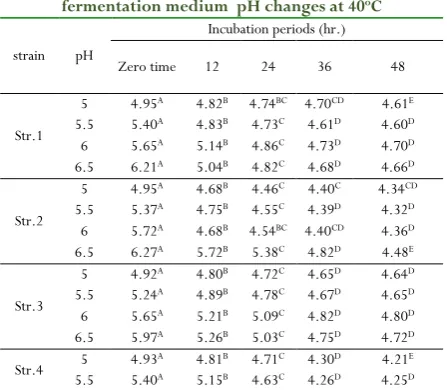
The influence of pH (5.0, 5.5, 6.0, and 6.5), incubation period (zero, 12, 24, 36 and 48hrs) and temperatures (30, 37, 40 and 45oC) for bacterial isolates on fermentation media and pH
changes are shown in (Tables 1:4). Microbial strains depend on the extracellular pH because culture pH strongly influences many enzymatic processes and transports various components across the cell membranes, which in turn support the cell growth and product formation [36]. It could be seen from the
results that the pH values of four bacterial isolates gradually decreased at different studied temperatures with increasing incubation periods. The lowest pH values were recorded for strain 4 at all studied temperatures except for 45oC at the end
of the incubation periods. The strain 2 showed lower pH changes compared to the other strains at 45oC during the
incubation period.
Table 1: The effect of pH and incubation periods on
fermentation medium pH changes at 30oC
Zero time 12 24 36 48
St.1
5 4.95A 4.88B 4.76C 4.67C 4.65C
5.5 5.40A 5.16B 4.72C 4.72C 4.63D
6 5.65A 5.26B 4.84C 4.71D 4.64D
6.5 6.21A 5.72B 4.95C 4.73D 4.64E
St.2
5 4.95A 4.85B 4.72C 4.60D 4.53E
5.5 5.37A 5.11B 4.86C 4.74D 4.69E
6 5.72A 5.33B 5.03C 4.88D 4.75E
6.5 6.27A 5.76B 5.53C 5.21D 4.80E
St.3
5 4.92A 4.78B 4.64C 4.53D 4.48E
5.5 5.24A 4.91B 4.77C 4.64D 4.58E
6 5.65A 5.12B 4.82C 4.69D 4.62E
6.5 5.97A 5.23B 4.84C 4.72D 4.68E
St.4
5 4.93A 4.72B 4.45C 4.10D 4.00E
5.5 5.40A 4.70B 4.43C 4.12D 4.00E
6 5.72A 4.71B 4.40C 4.13D 4.02E
6.5 5.96A 4.73B 4.44C 4.16D 4.06E
Different letters on the same row differ significantly at p<0.05, during the incubation period
Table 2: The effect of pH and incubation periods on
fermentation medium, pH changes at 37oC
Strain pH
Incubation periods (hr.)
Zero time 12 24 36 48
Str.1
5 4.95A 4.87B 4.76C 4.63D 4.62D
5.5 5.40A 5.00B 4.79C 4.67D 4.62D
6 5.65A 5.23B 4.81C 4.66D 4.60E
6.5 6.21A 5.28B 4.92C 4.66D 4.60E
Str.2
5 4.95A 4.86B 4.74C 4.63D 4.61D
5.5 5.37A 4.92B 4.81C 4.66D 4.61E
6 5.72A 5.22B 4.87C 4.70D 4.66E
6.5 6.27A 5.63B 5.23C 4.84D 4.72E
Str.3
5 4.92A 4.76B 4.63C 4.51D 4.50D
5.5 5.24A 4.88B 4.74C 4.60D 4.57D
6 5.65A 5.18B 4.85C 4.74D 4.71D
6.5 5.97A 5.26B 4.92C 4.69D 4.66D
Str.4
5 4.93A 4.55B 4.39C 4.08D 4.05E
5.5 5.40A 4.58B 4.34C 4.07D 4.02E
6 5.72A 4.54B 4.34C 4.06D 4.01E
6.5 5.96A 4.58B 4.31C 4.06D 4.00E
Different letters on the same row differ significantly at p<0.05, during the incubation period
Table 3: The effect of pH and incubation periods on
fermentation medium pH changes at 40oC
strain pH
Incubation periods (hr.)
Zero time 12 24 36 48
Str.1
5 4.95A 4.82B 4.74BC 4.70CD 4.61E
5.5 5.40A 4.83B 4.73C 4.61D 4.60D
6 5.65A 5.14B 4.86C 4.73D 4.70D
6.5 6.21A 5.04B 4.82C 4.68D 4.66D
Str.2
5 4.95A 4.68B 4.46C 4.40C 4.34CD
5.5 5.37A 4.75B 4.55C 4.39D 4.32D
6 5.72A 4.68B 4.54BC 4.40CD 4.36D
6.5 6.27A 5.72B 5.38C 4.82D 4.48E
Str.3
5 4.92A 4.80B 4.72C 4.65D 4.64D
5.5 5.24A 4.89B 4.78C 4.67D 4.65D
6 5.65A 5.21B 5.09C 4.82D 4.80D
6.5 5.97A 5.26B 5.03C 4.75D 4.72D
Str.4 5.5 5 4.935.40AA 4.815.15BB 4.634.71CC 4.264.30DD 4.254.21DE
6 5.72A 5.29B 4.64C 4.34D 4.33D
6.5 5.96A 5.26B 4.43C 4.03D 4.02D
Different letters on the same row differ significantly at p<0.05, during the incubation period
Table 4: The effect of pH and incubation periods on
fermentation medium, pH changes at 45oC
strain pH
Incubation periods (hr.)
Zero time 12 24 36 48
Str.1
5 4.95A 4.82B 4.71C 4.67D 4.67D
5.5 5.40A 4.93B 4.84C 4.75D 4.74D
6 5.65A 4.94B 4.86C 4.75D 4.73D
6.5 6.21A 5.14B 4.92C 4.82D 4.77E
Str.2
5 4.95A 4.64B 4.49C 4.43D 4.38E
5.5 5.37A 4.65B 4.48C 4.40D 4.35E
6 5.72A 4.63B 4.47C 4.40D 4.33E
6.5 6.27A 4.68B 4.49C 4.43D 4.39E
Str.3
5 4.92A 4.79B 4.74C 4.70D 4.68D
5.5 5.24A 4.92B 4.80C 4.71D 4.70D
6 5.65A 5.22B 5.15C 4.85D 4.84D
6.5 5.97A 5.39B 5.27C 5.17D 5.17D
Str.4
5 4.93A 4.82B 4.78BC 4.73D 4.71D
5.5 5.40A 5.28B 5.14C 5.02D 5.01D
6 5.72A 5.35B 5.14C 5.03D 5.02D
6.5 5.96A 5.32B 5.12C 5.00D 4.88E
Different letters on the same row differ significantly at p<0.05, during incubation period
The effect of pH, temperature and
Incubation Period on bacterial biomass
changes:
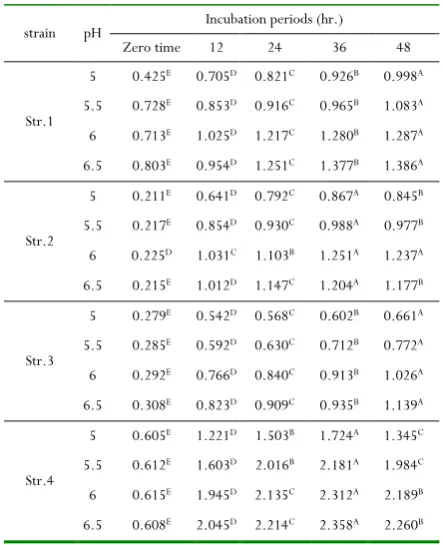
The bacterial biomass changes after incubation of bacterial isolates at different temperatures, incubation periods, pH conditions and inoculum volume (5%) which are presented in Tables (5:8). It could be observed that the bacterial biomass of all the bacterial isolates increased at all studied temperatures with progressing the incubation periods until 36hr.The bacterial biomass of strains1, 2 & 4, 1& 3 and finally 1& 2 decreased at 30, 37, 40 and 45oC, respectively, at the end of
the incubation period (48hr.). Also, it could be noticed that the highest value of bacterial biomass (2.358) was recorded for Strain 4 at 37oC and pH 6.5 after 36hr. of incubation periods.
The effect of pH, temperature and
Incubation Period on bacterial biomass
changes:
bacterial biomass of strains1, 2 & 4, 1& 3 and finally 1& 2 decreased at 30, 37, 40 and 45oC, respectively, at the end of
the incubation period (48hr.). Also, it could be noticed that the highest value of bacterial biomass (2.358) was recorded for Strain 4 at 37oC and pH 6.5 after 36hr. of incubation periods.
Table 5: The effect of pH and incubation periods on the
bacterial biomass at 30oC
strain pH Incubation periods (hr.)
zero time 12 24 36 48
Str.1
5 0.425E 0.812D 0.913B 1.023A 0.816C
5.5 0.728E 0.868D 1.005B 1.247A 0.914C
6 0.713E 0.953C 1.083B 1.214A 0.895D
6.5 0.803E 1.090C 1.151B 1.454A 1.016D
Str.2
5 0.211D 0.337C 0.458B 0.539A 0.549A 5.5 0.217E 0.538D 0.600C 0.777B 0.797A 6 0.225E 0.624D 0.772C 0.851B 0.864A 6.5 0.215E 0.655D 0.833C 0.934B 0.964A
Str.3
5 0.279E 0.566D 0.716C 0.816B 0.881A
5.5 0.285E 0.661D 0.808C 0.902B 0.986A
6 0.292E 0.709D 0.996C 1.092B 1.196A
6.5 0.309E 1.281D 1.341C 1.434B 1.707A
Str.4
5 0.605E 1.328D 1.747C 2.069B 2.121A
5.5 0.612E 1.587D 1.896C 2.142B 2.189A
6 0.615E 1.813D 2.016C 2.189B 2.241A
6.5 0.607E 1.845D 2.045C 2.197B 2.251A
Different letters on the same row differ significantly at p<0.05, during the incubation period
Table 6:The effect of pH and incubation periods on the
bacterial biomass at 37oC
strain pH Incubation periods (hr.)
Zero time 12 24 36 48
Str.1
5 0.425E 0.705D 0.821C 0.926B 0.998A
5.5 0.728E 0.853D 0.916C 0.965B 1.083A
6 0.713E 1.025D 1.217C 1.280B 1.287A
6.5 0.803E 0.954D 1.251C 1.377B 1.386A
Str.2
5 0.211E 0.641D 0.792C 0.867A 0.845B
5.5 0.217E 0.854D 0.930C 0.988A 0.977B
6 0.225D 1.031C 1.103B 1.251A 1.237A
6.5 0.215E 1.012D 1.147C 1.204A 1.177B
Str.3
5 0.279E 0.542D 0.568C 0.602B 0.661A
5.5 0.285E 0.592D 0.630C 0.712B 0.772A
6 0.292E 0.766D 0.840C 0.913B 1.026A
6.5 0.308E 0.823D 0.909C 0.935B 1.139A
Str.4
5 0.605E 1.221D 1.503B 1.724A 1.345C
5.5 0.612E 1.603D 2.016B 2.181A 1.984C
6 0.615E 1.945D 2.135C 2.312A 2.189B
6.5 0.608E 2.045D 2.214C 2.358A 2.260B
Different letters on the same row differ significantly at p<0.05, during the incubation period
Table 7. The effect of pH and incubation periods on the
bacterial biomass at 40oC
strain pH
Incubation periods (hr.)
Zero time 12 24 36 48
Str.1
5 0.425E 0.645D 0.872B 0.983A 0.963C
5.5 0.728E 0.853D 0.962B 0.994A 0.944C
6 0.713D 1.310C 1.437B 1.490A 1.485A
6.5 0.803D 0.852C 0.952B 0.986A 0.964C
Str.2
5 0.211D 0.690C 0.714B 0.835A 0.842A
5.5 0.217D 0.719C 0.853B 0.992A 0.993A
6 0.225D 0.803C 0.879B 0.975A 0.983A
6.5 0.215E 0.897D 1.003C 1.021B 1.043A
Str.3
5 0.279E 0.321D 0.465B 0.545A 0.433C
5.5 0.285E 0.343D 0.465C 0.638A 0.536B
6 0.292E 0.475D 0.672B 0.766A 0.611C
6.5 0.308E 0.552D 0.615C 0.896A 0.802B
Str.4
5 0.605E 0.646D 0.750C 0.875B 0.948A
5.5 0.612E 0.725D 1.163C 1.258B 1.332A
6 0.615E 1.022D 1.514C 1.628B 1.670A
6.5 0.608E 1.431D 2.027C 2.181B 2.251A
Different letters on the same row differ significantly at p<0.05, during the incubation period
Table 8:The effect of pH and incubation periods on the
bacterial biomass at 45oC
strain pH Incubation periods (hr.)
Zero time 12 24 36 48
Str.1
5 0.425D 0.467C 0.547B 0.593A 0.463E
5.5 0.728E 0.854D 1.080B 1.109A 1.061C
6 0.713E 0.999C 1.131B 1.181A 1.144B
6.5 0.803E 0.945C 0.964B 0.994A 0.866D
Str.2
5 0.211E 0.531D 0.632C 0.735A 0.687B
5.5 0.218E 0.658D 0.771C 0.881A 0.861B
6 0.225D 0.752C 0.870B 0.948A 0.883B
6.5 0.215D 0.831C 0.958B 1.027A 0.981B
Str.3
5 0.279E 0.1000D 1.058C 1.133B 1.155A
5.5 0.285E 1.072D 1.167C 1.192B 1.297A
6 0.292E 1.170D 1.260C 1.263B 1.337A
6.5 0.308E 1.227D 1.294C 1.497B 1.653A
Str.4
5 0.605E 0.614D 0.627C 0.647B 0.677A
5.5 0.612E 0.623D 0.639C 0.670B 0.698A
6 0.615D 0.625C 0.640B 0.654A 0.655A
6.5 0.608E 0.636D 0.707C 1.207B 1.332A
Different letters on the same row differ significantly at p<0.05, during incubation period
The effect of pH, temperature and
incubation Period on enzyme activity
clearly suggesting that the enzyme production is growth associated in nature [37, 38]. Where maximum enzyme
production was observed at the late exponential phase and early stationary phase of the growth. These results are in accordance with observations made by [39]. The strain No.1
showed high enzyme activity at 40°C, pH 5 and after 36hr.of incubation period (Table 11). Similar observation was reported by [40] who reported that the 40oC supported maximum
protease production from B. subtilis isolated from sea water. While, both strains (No.2 and 3) at pH5 and 6, respectively, recorded higher enzyme activity at 45°C after 36hr.of incubation period, as shown in (Table 12). On his study, [41]
found 45oC was optimum for a Gram+ve strain producing
protease. On the other hand, [42] reported that the optimum pH
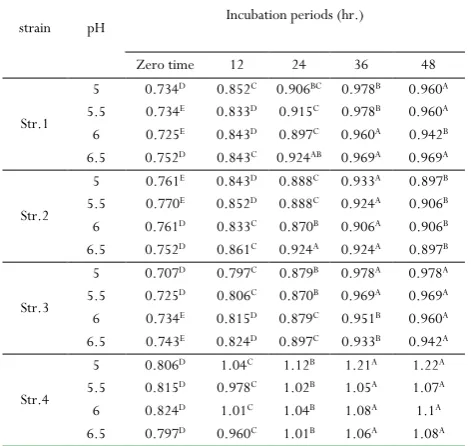
and temperature for L. delbrueckii was 6.5 at 45°C. The maximum protease enzyme was achieved at 30oC and pH 5 for
strain No.4 after 36hr.of incubation period (Table 9). The optimum temperature for action of protease isolated from a LAB, Enterococcus faecalisTN-9 was 30 oC [43]. Based on the
previous results, the statistical analysis showed that, the protease production was highly and significantly affected (p<0.05) by the medium temperature, pH and incubation period.
Table 9: The effect of incubation of isolated strains at 30oC
on the enzyme activity𝜇𝜇/ml at different pH conditions
strain pH Incubation periods (hr.)
Zero time 12 24 36 48
Str.1
5 0.734D 0.852C 0.906BC 0.978B 0.960A
5.5 0.734E 0.833D 0.915C 0.978B 0.960A
6 0.725E 0.843D 0.897C 0.960A 0.942B
6.5 0.752D 0.843C 0.924AB 0.969A 0.969A
Str.2
5 0.761E 0.843D 0.888C 0.933A 0.897B
5.5 0.770E 0.852D 0.888C 0.924A 0.906B
6 0.761D 0.833C 0.870B 0.906A 0.906B
6.5 0.752D 0.861C 0.924A 0.924A 0.897B
Str.3
5 0.707D 0.797C 0.879B 0.978A 0.978A
5.5 0.725D 0.806C 0.870B 0.969A 0.969A
6 0.734E 0.815D 0.879C 0.951B 0.960A
6.5 0.743E 0.824D 0.897C 0.933B 0.942A
Str.4
5 0.806D 1.04C 1.12B 1.21A 1.22A
5.5 0.815D 0.978C 1.02B 1.05A 1.07A
6 0.824D 1.01C 1.04B 1.08A 1.1A
6.5 0.797D 0.960C 1.01B 1.06A 1.08A
Different letters on the same row differ significantly at p<0.05, during incubation period
Table 10: The effect of incubation of isolated strains at 37oC
on enzyme activity𝜇𝜇/ml at different pH conditions
strain pH Incubation periods (hr.)
Zero time 12 24 36 48
Str.1
5 0.734E 0.870D 0.924C 0.978A 0.960B
5.5 0.734E 0.879D 0.915C 0.969A 0.933B
6 0.725E 0.861D 0.915C 0.978A 0.960B
6.5 0.752E 0.879D 0.924C 0.987A 0.960B
Str.2
5 0.761E 0.861D 0.897C 0.942A 0.933B
5.5 0.770E 0.870D 0.906C 0.960A 0.942B
6 0.761E 0.852D 0.888C 0.933A 0.897B
6.5 0.752E 0.861D 0.933C 0.960A 0.942B
Str.3
5 0.707E 0.824D 0.879C 0.924B 0.933A
5.5 0.725D 0.815C 0.861B 0.906B 0.924A
6 0.734E 0.824D 0.870C 0.942B 0.951A
6.5 0.743E 0.833D 0.879C 0.933B 0.951A
Str.4
5 0.806D 0.978C 1.02B 1.06A 1.07A
5.5 0.815D 0.987C 1.07B 1.08A 1.09A
6 0.824C 0.978B 1.03A 1.03A 1.04A
6.5 0.797D 0.987C 1.01B 1.08A 1.08A
Different letters on the same row differ significantly at p<0.05, during incubation period
Table11: The effect of incubation of isolated strains at 40oC
on enzyme activity𝜇𝜇/ml at different pH conditions
strain pH Incubation periods(hr.)
zero time 12 24 36 48
Str.1
5 0.734D 0.861C 0.942B 1.02A 1.01A
5.5 0.734E 0.870D 0.924C 1.01A 0.987B
6 0.725D 0.870C 0.933B 1.01A 1.01A
6.5 0.752E 0.879D 0.942C 1.01A 0.997B
Str.2
5 0.761E 0.888D 0.933C 0.987A 0.978B
5.5 0.770E 0.906D 0.951C 0.987A 0.978B
6 0.761D 0.888C 0.933B 1.01A 1.01A
6.5 0.752D 0.897C 0.942B 0.987A 0.987A
Str.3
5 0.707D 0.888C 0.933B 0.978A 0.987A
5.5 0.725D 0.879C 0.924B 0.969A 0.969A
6 0.734D 0.897C 0.942B 0.978A 0.987A
6.5 0.743E 0.870D 0.915C 0.951B 0.960A
Str.4
5 0.806D 0.924C 0.960B 0.987A 0.997A
5.5 0.815D 0.933C 0.978B 1.02A 1.03A
6 0.824D 0.942C 0.987B 1.03A 1.04A
6.5 0.797D 0.924C 0.960B 1.01A 1.02A
Different letters on the same row differ significantly at p<0.05, during incubation period
Table 12:The effect of incubation of isolated strains at 45oC
on the enzyme activity𝜇𝜇/ml at different pH conditions
Strain pH zero time 12 Incubation periods(hr.) 24 36 48
Str.1
5 0.734E 0.861D 0.906C 0.960A 0.924B
5.5 0.734E 0.852D 0.897C 0.942A 0.933B
6 0.725E 0.870D 0.906C 0.951A 0.942B
6.5 0.752E 0.870D 0.915B 0.960A 0.960C
Str.2
5 0.761D 0.906C 0.978B 1.06A 1.04A
5.5 0.770D 0.906C 0.960B 1.05A 1.05A
6 0.761D 0.897C 0.969B 1.05A 1.04A
6.5 0.752D 0.906C 0.951B 1.04A 1.04A
Str.3 5 0.707
D 0.897C 0.951B 0.987A 0.997A
6 0.734D 0.906C 0.960B 1.01A 1.01A
6.5 0.743D 0.915C 0.951B 0.987A 0.997A
Str.4
5 0.806D 0.879C 0.924B 0.960B 0.969A
5.5 0.815D 0.888C 0.933B 0.987A 0.997A
6 0.824D 0.897C 0.942B 0.978A 0.978A
6.5 0.797D 0.870C 0.906B 0.933A 0.942A
Different letters on the same row differ significantly at p<0.05, during the incubation period
The effect of carbon sources on protease
production
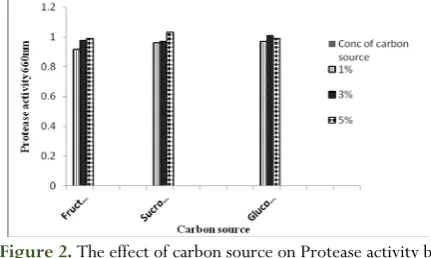
Carbon sources greatly influence the enzyme production, and a wide range of them serve as energy sources. The effect of various carbon sources on enzyme production was measured using the optimum temp, pH and incubation period for each isolate from aforementioned results, and presented in Figs. (1:4). From the obtained results, sucrose showed higher enzyme activity than glucose and fructose for three isolates (No.1, 2 and3), whereas fructose showed maximum enzyme activity for strain No.4 (Fig.4) at level of 5%. These findings indicated that sucrose is the best carbon source for protease production for three isolates, and the fructose is the best carbon source for the fourth isolate. This observation was in disagreement with previous studies which suggested that higher amount of protease was synthesized when carbon sources were poorly utilized for growth purposes [44]. However, [45] recoded
that the sucrose is a good substrate for production of extracellular proteases. Increased yields of alkaline proteases were also reported by several workers in the presence of different sugars such as lactose [46], sucrose [47] and fructose [48].
Figure 1. The effect of carbon source on Protease activity by
bacterial isolate.1
Figure 2. The effect of carbon source on Protease activity by
bacterial isolate.2
Figure 3. The effect of carbon source on Protease activity by
the bacterial isolate.3
Figure 4. The effect of carbon source on Protease activity by
the bacterial isolate.4
The effect of Nitrogen Sources on Protease
production
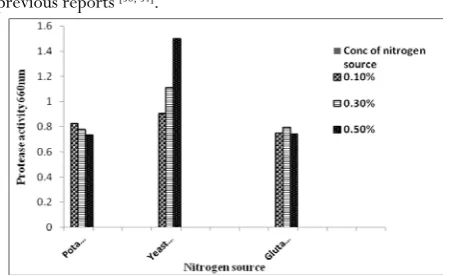
Most of the microorganism can utilize nitrogen sources either inorganic or organic forms or sometimes both, which are required to produce amino acids, nucleic acids, proteins and other cell wall components. The medium supplemented with organic nitrogen sources supported higher protease production when compared to inorganic nitrogen sources [49]. The alkaline
protease production was better with organic nitrogen sources than with the inorganic nitrogen sources [1]. The effect of
organic nitrogen source for protease production by four selected isolates. This trend is in a good agreement with the previous reports [50, 51].
Figure 5. The effect of nitrogen source on Protease activity in
bacterial isolate.1
Figure 6. The effect of nitrogen source on Protease activity in
bacterial isolate.2
Figure 7. The effect of nitrogen source on Protease activity in
bacterial isolate.3
Figure 8. The effect of nitrogen source on Protease activity in
bacterial isolate.4
Protease enzyme production under the
optimal conditions and extraction of crude
enzyme
The previous results showed that isolated strains No.2 and No.4 had higher protease activity, so that they were chosen for protease production under the obtained optimal conditions. The two selected isolates were cultured separately in submerged fermentation medium containing the sweet whey under the optimum conditions. After complete fermentation, the fermented broth for each isolate was centrifuged at 5000 rpm for 15minutes at 4oC to obtain supernatant extract
containing crude enzyme. The total protease activity and protein content were measured in the culture filtrate (crude enzyme). The maximum protease activity (8.72U/mL) and protein content (4.13 mg/ml) with specific activity(2.11U/mg) were obtained for strain No.4 at 30 ºC after 48 hr. of incubation with inoculum volume 5%,fructose (5%) and yeast extract (0.5%) at pH (5.0) and the maximum protease activity (10.2U/mL) and protein content (4.8mg/ml) with specific activity(2.13U/mg) were obtained for strain No.2 at 45 ºC after 36 hr. of incubation with inoculum volume 5% ,sucrose (5%) and yeast extract (0.5%) at pH(5.5). According to [52],
the highest protease activity (124.2 U/mL) was observed in
Bacillus sp. SP-5 after 24 h of incubation at 25 ºC using yeast extract as a nitrogen source and sucrose as a carbon source. Fructose was found to be the best carbon source [53].
3.8. The identification by Biolog system
The two bacterial isolates (strains No.2 and No.4) with the highest enzyme activity were further identified by Biolog system (Table 13) The results showed that the two bacterial isolates (2&4) were Enterococcus faeciumand Lactobacillus plantarum, respectively using Biolog system. The new GEN III micro plates were applicable to an unprecedented range of both Gram-negative and Gram-positive bacteria. The GEN III micro plates can be used to evaluate the ability of the cell to metabolize all major classes of biochemical. In addition to determining other important physiological properties such as pH, salt, and lactic acid tolerance; reducing power and chemical sensitivity were examined. Biolog’s technology gives a possibility to identify the environmental and pathogenic microorganisms by producing a characteristic pattern or “metabolic fingerprint” from discrete test reactions, performed within a 96 wells microplate. More than 2650 identification profiles of the environmental and fastidious organisms of interest in diverse fields of microbiology can be determined by the system. The end result of Biology GEN III is a pattern of colored wells on the micro plate that is a characteristic of that bacterial species.
The purification of protease enzyme
The purification of the proteases was done by standard protein purification methods which included ammonium sulphate precipitation, followed by dialysis, and Sephadex G-100 gel filtration chromatography.
The results of partial purification of both proteases are summarized in Table (14&15). Approximately 1.4-fold purification was achieved during ammonium sulphate precipitation (20%-60%) with a yield of14.46% enzyme and specific activity (2.91 U/mg) of the final partially purified enzyme from L. plantarum strain and fold purification (1.06) with yield of 11.96% enzyme, and specific activity of (2.26) U/mg for Enterococcus faecium. According to [54], partially
purified was thermos table alkaline protease from Bacillus pumilus D-6 by ammonium sulphate precipitation at 40-60% level of saturation.
The obtained ammonium sulfate precipitate (enzyme suspension) was dialyzed against distilled water with three to four changes of water using acetylated cellophane tubing to remove ammonium sulfate ions from protein molecules at 4oC.The dialyzed enzyme solutions of both L. plantrum and
Enterococcus faecium strains were loaded separately on sephadex G –100 gel filtration column. By gel filtration, the
protease enzyme was purified to (1.98) fold with a yield of (2.11%) and the specific activity of (4.18) U/mg for strain L. plantarum (Table 14). Similarly, the purification fold (2.84) with a yield of (1.74%) and specific activity of (6.05) U/mg were measured for strain Enterococcus faecium (Table 14). On their studies [55, 56], have reported the purification of protease
enzymes by gel filtration chromatography with Sephadex G-200 and Sephadex G-100 columns, respectively. Purified
fractions achieved having specific activity of 905.7 using sephadex G-100 column chromatography [57]. These variations
in results might be due to the nature of protease, column used and microbial sources. The gel filtration fractions with protease activities were pooled and collected separately, and stored at -20oC separately for further characterization of the proteases.
Table 14: The purification results of extracellular protease enzyme from L. plantarum
Fr ac tion Vo lu m e (ml ) ac tiv ity (uni t/ m l) To ta l a ct ivi ty (uni t/ m ) pr ote in (m g /m l) Tota l pr ote in (mg /ml ) Sp ec ific ac tiv ity (uni t/ m g) Yi el d ( % ) Pur ifi ca tion fo ld Crude
extract 200 8.72 1748 4.13 826 2.11 100 1
Ammonium sulphate precipitatio n (20-60%)
40 6.32 252.8 2.17 86.8 2.91 14.46 1.4
Sephadex
G-100 100 0.368 36.8 0.088 8.8 4.18 2.11 1.98
Table 15: Purification results of extracellular protease enzyme from Enterococcus faecium
Fr ac tion Vo lu m e ( m l) ac tiv ity (uni t/ m l) To ta l a ct iv ity (uni t/ m l) pr ote in (mg /ml ) Tota l pr ote in (mg /ml ) Sp ec ific ac tiv ity (uni t/ m g) Yi el d (%) Pur ifi ca tion f old Crude
extract 200 10.2 2040 4.80 960 2.13 100 1 A1
Negative Control
A2
Dextrin D-Maltose A3 D-Trehalose A4 D-Cellobiose A5 Gentiobiose A6 Sucrose A7 D-Turanose A8 Stachyose A9
A10 Positive Control A11 Sodium Bromate A12 pH 5 B1
D-Raffinose D-Lactose B2 D-Melibiose B3 B4 Methyl-D-Glucoside B5 D-Salicin B6 N-Acetyl-D-Glucosamine B7 N-Acetyl-D-Mannosamine B8 N-Acetyl-DGalactosa mine B9 N-Acetyl Neuraminic Acid B10
1% NaCl 4% NaCl B11 8% NaCl B12
C1
D-Glucose D-Mannose C2 D-Fructose C3 D-Galacto C4 C5 3-Methyl
Glucose
C6
D-Fucose L-Fucose C7
C8 L-Rhamnose C9 Inosine C10 1% Sodium Lactate C11
Fusidic Acid D-Serine C12
D1
D-Sorbitol D-Mannitol D2 D-Arabitol D3 myo-Inositol D4 Glycerol D5
D6 D-Glucose- 6-PO4 D7 D-Fructose- 6-PO4 D8 D-Aspartic Acid D9 D-Serine D10 Troleandomyc in D11 Rifamycin SV D12 Minocyclin e E1 Gelatin E2 Glycyl-L-Proline E3
L-Alanine L-Arginine E4 E5 L-Aspartic Acid E6 L-Glutamic Acid E7 L-Histidine E8 L-Pyroglutam ic Acid E9
L-Serine Lincomycin E10 E11 Guanidine HCl E12 Niaproof 4 F1 Pectin F2 D-Galacturoni c Acid F3 L-Galactonic Acid Lactone F4 D-Gluconic Acid F5 D-Glucuronic Acid F6 Glucuronamid e F7
Mucic Acid Quinic Acid F8 F9 D-Saccharic Acid F10 F10 Vancomycin F11 Tetrazoliu m Violet F12 Tetrazoliu m Blue G1 p-Hydroxy- Phenylacetic Acid G2 Methyl Pyruvate G3 D-Lactic Acid Methyl Ester G4
L-Lactic Acid Citric Acid G5 G6 Keto-Glutaric Acid G7 D-Malic Acid G8 L-Malic Acid G9 Bromo-Succinic Acid G10 Nalidixic Acid G11 Lithium Chloride G12 Potassium Tellurite H1 Tween 40 H2 Amino-Butryric Acid H3 Hydroxy- Butyric Acid H4 β -Hydroxy-D, LButyric Acid H5 Keto-Butyric Acid H6 Acetoacetic Acid H7
Ammonium sulphate precipitatio n (20-60%)
40 6.10 244 2.70 108 2.26 11.96 1.06
Sephadex
G-100 75 0.472 35.4 0.078 5.85 6.05 1.74 2.84
The characterization of protease enzyme
The effect of pH on protease activity
The effect of pH on activities of resulted purified proteases were studied by incubating the purified protease extracts separately at different pH values ranging from (4-9), and a temperature, 37°C for 30 min using1 % casein as a substrate to find the most suitable pH. The results in (Fig.9) showed that the enzyme activity for both strains decreased with increasing of pH. The highest protease activity for both enzymes was at pH 4.0. These results were in accordance with [58] who reported
that protease from Pedicoccusacidilactici had the maximum activity at pH4.0.
These results suggest that the protease enzymes of this study belong to the acidic protease group. Acidic proteases have extensive applications in the dairy industry for the coagulation of milk protein in cheese production [15] and generally in the
improvement of food flavors [59].
Figure 9: The effect of pH on protease activity of L. plantarum
and E. faecium
The effect of temperature on protease
activity
The influence of temperature (25: 50ºC) on activities of purified proteases of selected isolates using 1% casein as a substrate and at pH 4 for 30 min. are presented in Fig. (10). The highest protease activity was recorded at 35ºC for L. plantarum strain, similarly. Protease enzyme produced by B. anthracis, S-44 exhibited an optimum incubation temperature for purified enzyme activity, 35 ºC [60]. Whereas the highest
protease activity for Enterococcus faeciums train was at 37oC.
According to [61], the optimum temperature for Streptococcus
thermophiles CNRZ 385 was 37°C. The results showed that protease activity increased with increasing the temperature until reached to optimum, then, decreased for both isolated strains.
Figure 10: Theeffect of temperature on protease activity
inboth of L. plantarumand E. faecium
The effect of substrate concentration on
protease activity
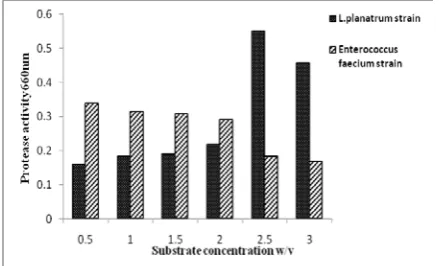
The effect of substrate (casein) concentration (w/v), viz. (0.5, 1.0, 1.5, 2.0, 2.5, and 3.0%) on the activities of purified proteases of selected isolates wereindicated in Fig. (11). The results showed that the protease activity gradually increased with increasing the substrate concentration in L. plantarum strain until reached to 2.5% and, then decreased and gradually decreased with increasing substrate concentration for Enterococcus. faecium strain. The results indicated that the optimum substrate concentration for purified protease enzyme was 2.5% for L. plantarum strain. Whereas for Enterococcus faecium strain, it was 0.5%. Considering other investigations, a study carried out by [62] indicated that protease from
Lactobacillus acidophilus had maximum activity at 2% casein concentration. The protease has a high level of hydrolytic activity against casein as substrate and poor to moderate hydrolysis of BSA and egg albumin, respectively [55].
Figure 11: The effect of substrate concentration on protease
Conclusion
Proteases are the leading enzymes with immense commercial potentials which are widely used in industrial and therapeutic applications. The dairy industry disposes sewage water causing inherent dangers of water pollution. This problem can be efficiently reduced by converting this hazardous by-product into an industrially important metabolite by microbial cell factories. In the present study, whey as a dairy industry waste was used as a substrate for extracellular protease production by isolated lactic acid bacteria. The optimization of growth conditions for maximum protease production by isolates was carried out. Under the optimum conditions, the enzyme yields were higher. Using Biolog system, two bacterial isolates with the highest enzyme activity were selected to identify and study characteristics of their proteases after purification. The results indicated that proteases were acidic and mesophilic. It has promising potentials for application in processes such as cheese making and improvement of food flavors.
References
1. Sharma, K.M., Kumar, R., Vats, S. and Gupta, A. (2014). Production, partial purification and characterization of alkaline protease from Bacillus aryabhattai K3. Int. J.Adv. Pharm. Biol. Chem., 3(2): 290-298.
2. Chouyyok, W., Wongmongkol, N., Siwarungson, N. and Prichanont, S. (2005). “Extraction of alkaline protease using an aqueous two-phase system from cell free Bacillus subtilis TISTR 25 fermentation broth,” Process Biochemistry, vol. 40, no. 11, pp. 3514–3518.
3. Muthulaksmi, C., Gomathi, D., Kumar, D. G., Ravikumar, G., Kalaiselvi. M. and Uma, “C. (2011). purification and characterization of protease by Aspergillusflavus under solid state fermentation,” Jordan. J. Biol. Sci., vol. 4, pp. 137–148.
4. Rao, M. B., Tanksale, A. M., Ghatge, M. S. and Deshpande, V. V. (1998). Molecularand biotechnological aspects of microbial proteases. Microbial. Mol. Biol. Rev., 597-635.
5. Li, A. N., Ding, A.Y., Chen, J., Liu, S. A., Zhang, M. and Li, D. C. (2007). Purification and characterization of two thermostable proteases from the thermophilic fungus Chaetomiumthermophilum.J. Microbiol. And Biotechnol. 17: 624631.
6. TMR. (2013). Enzymes Market - Global Industry Analysis, Size, Share, Growth, Trends, and Forecast, 2012 - 2018.
Available at: http://www.transparencymarketresearch.com/enzymes
7. Barredo, J. L. (2005). Microbial enzyme and biotrasormations. Published by Humana press Inc. 999 Riverview Drive, New Jersey 07512, USA. pp. 151-179. 8. Gupta, R.G., Beg, Q.B and Lorenz, P.L. (2002); Bacterial
alkaline proteases: molecular approaches and industrial
applications. Appl. Microbiol. And Biotechnol. 59(1):15-32
9. Dabananda, S.N., Kshetri, P. (2010). A thermostable alkaline protease from a moderately halo-alkalithermotolerant Bacillus subtilis strain SH1. Aust. J. Basic Appl. Sci. 10:5126-5134.
10. Tambekar, D.H., Kalikar, M.V., Shinde, R.S., Vanjari, L.B., Pawar, R.G. (2009). Isolation and characterization of multilple enzyme producer Bacillus species from saline belt of Purnariver. J. Appl. Sci. Res. 5:1064-1066. 11. Balakrishnan, P., Thamaraichelvan, R., Rajendran, N. and
Flanet, R. (2012). Production and purification of alkaline serine protease from marine Bacillus species and its application in detergent industry. European. J. Appl.Sci., 4:21-26.
12. Synowiecki, J. (2010). Some applications of thermophiles and their enzymes for protein processing. Afr. J. Biotechnol. 9: 7020-7025.
13. Dias, D.R., Vilela, D.M., Silvestre, M.P., Schwan, R.F. (2008). Alkaline protease from Bacillus sp. isolated from coffee bean grown on cheese whey. World. J. Microbiol.Biotechnol. 24:2027-2034.
14. Sumantha, A., Sandhya, C., Szakacs, G., Soccol, C. R. and Pandey, A. (2005). “Production and partial purification of a neutral metalloprotease by fungal mixed substrate fermentation”, Food Technol and Biotechnol., 43:313-319.
15. Sumantha, A., Larroche, C., andPandey, A. (2006). Microbiology and Industrial Biotechnology of Food-Grade Proteases: A Perspective. Food Technol. Biotechnol.44 (2) 211–220.
16. Kothari, R., Pathak, V.V., Kumar, V. and Singh, D.P. (2012) Experimental Study for Growth Potential of Unicellular Alga Chlorella pyrenoidosaon Dairy Waste Water: An Integrated Approach for Treatment and Biofuel Production. Bioresource. Technol, 116, 466-470. http://dx.doi.org/10.1016/j.biortech.2012.03.121 17. Türkmenoğlu, S. (2006) Organic acids productionfrom
cheese-whey, Master Sci. Thesis, Midle East Technical University, Turkey.Pakistan.208p.
18. Guimarães, P. M. R., Teixeira, J.A., Domingues, L. (2010) Fermentation of lactose to bio-ethanol by yeasts as part of integrated solutions for the volarisation of cheese whey, Biotechnol.Adv., 28, 375–384.
19. Donaghy, J.A., McKay, A.M. (1993) Production and properties of analkaline protease by Aureobasidiumpullulans. J. Appl.Bacteriol.74:662–666. 20. Omole, J. O., Ighodaro, O.M., Makanjuola, O.M.
(2012). Proximate Composition of whey from South West Nigeria. Adv. Biores., 3: 14-16.
22. Su, Y.A., Sulavik, M.C., He, P., Makinen, k.k., Makinen, P., Fiedler, S., Wirth, R. andclewell, D.B. (1991). Nucleotide sequence of the gelatinasegene from Enterococcus faecalis subsp. liquefaciens. Infect. Immun., 59, 415-420.
23. Bochner, B. R. (2008). Global phenotypic characterization of bacteria. FEMS Microbiology Reviewer 33: 191–205. 24. BiologDB (2013). BiologyGP Data Base. Release15G
Hayward, CA: Biolog
25. Andrew, D.E., Lenore, S. C., Eugene, W. R. and Arnold, E. G., (2005). Microbiologicalexamination. In: Standard methods for the examination of water andwastewater. 1015 Fifteenth Street, NW Washington, DC: Published by American Public Health Association (21P St P edition), pp. 9-34 to 9-71.
26. Henroette, C., Zinebi, S., Aumaitre, M.F., Petitdemange, E. and Petitdemange, H. (1993). Protease and lipase production by a strain of Serratiamarcescens. J. Ind. Microbiol., 12: 129-135.
27. Beg, Q.K. and Gupta, R., (2003). Purification and. characterization of an oxidation-stable, thiol- dependent serine alkaline protease from Bacillus mojavensis. Enz. Microbial. Technol. 32: 294-304.
28. Abirami, V., Meenakshmi, S. A., Kanthymathy K., Bharathidasan, R., Mahalingam, R. and Panneerselvam, A. (2011). Partial purification and characterization of anextracellular protease from Penicilliumjanthinellum and Neurosporacrassa.European J., 1(3): 114-123.
29. Tariq, A. L., Reyaz, A.L., and Prabakaran, J.J. (2011). Purification and characterization of 56 KDa cold active protease from Serratiamarcescens. African. J. Microbiol. Res.,5(32): 5,841-7.
30. Sharma, J., Singh, A., Kumar, R. and Mittal, A. (2006). Partial Purification of an alkaline protease from a new strain of AspergillusoryzaeAWT 20 and its enhanced stabilization in entrapped Ca-Alginate Beads. The Int. J. Microbiol., 2(2).
31. Lowry, O. H., Rosebrough, N. J., Farr, A. L. and Randall, R. J. (1951) Protein measurement with the Folin phenol reagent. J. Biol. Chem. 193, 265–275.
32. SAS, (2006). Statistical Analysis System. SAS User’s Guide statistics. SAS Institute Inc. Editors, cary, NC, USA. 33. Alnahdi, H.S., (2012). Isolation and screening of
extracellular proteases produced by new isolated Bacillus Sp. J. Appl. Pharma. Sci., 2(9): 071-074.
34. Kathiresan, K., Manivannan, S. (2006) α-amylase production by Penicilliumfellutanum isolated from mangrove rhizospheric soil. Afr.J. Biotechnol. 5 (10):829– 832
35. Bayoumi, R.A., Louboudy, S.S., Sidkey, N.M., Abd-El-Rahman, M.A. (2009). Biotechnological application of bacterial alkaline thermostable enzymes in bio-detergent industry. Egypt. J. Microbiol, 44, 29-46.
36. Moon, S.H., Parulekar, S.J. (1991). A parametric study of protease production in batch and fed-batch cultures of Bacillus firmus. BiotechnolBioeng. 37: 467-483.
37. Josephine, S., Ramya, V., Devi, N., Ganapa, B., Siddalingeshwara, K. G., Venugopal, N. and Vishwanatha, T. (2012), Isolation, production and characterization of protease from Bacillus Spisolated from soil sample. J. Microbiol. Biotech. Res., 2(1):163-168
38. Kumara, M. S., Kashyap., N. S., Vijay. R., Rahul. T., Anuradha.M. (2012). Production and optimization of extra cellular Protease from bacillus sp. Isolated from soil. Int. J. Adv. Biotechnol. and Res., 3:564-569.
39. Qadar, S.A., Erum, S., Samina, I., Abida, A.2009. Optimization of protease production from newly isolated strain of Bacillus sp. PCSIR EA-3. Ind. J. Biotechnol., 8, 286-290.
40. Nisha, N.S. and. Divakaran, J. 2014. Optimization of alkalineprotease production from Bacillus subtilis NS isolatedfrom sea water. Afri. J. Biotechnol., 13(16): 1701-1713.
41. Gautam, P., Pokhrel, S., Singh, R. andJyoti Das, A. (2013) .Comparative study of protease activity of psychotrophicandmesophilic bacteria. Int. J. Pharm. Life. Sci., 4:(3)2447-2453.
42. Fira, D., Kojic, M., Banina, A., Spasojevic, I., Strahinic, I., Topisirovic L. (2001). Characterization of cell envelope-associated proteinases of Thermophilic Lactobacilli. J. Appl. Microbiol. 90: 123-130.
43. Yuan, Q., Hayashi, A., Kitamura, Y., Shimada, T., Na, R. and Jin, X. (2009). Purification and characterization of cold-adapted metalloprotease from deep sea water lactic acid bacteria Enterococcus faecalisTN-9. Int. J. Biol., 1(2):12-21.
44. Tambekar, D.H. and Tambekar, S. D. (2012). Partial Characterization and optimization of alkaline protease production of bacillus pseudofirmus from LonarLake.Int.J. adv. pharm. and biol. Sci., 2(1): 130-138.
45. Madzak, C., Treton, B. and Blanchin-Roland, S. (2000). Strong hybrid promoters and integrative expression/secretion vectors for quasi-constitutive expression of heterologous proteins in the yeast Yarrowialipolytica. J. Mol.Microbiol. Biotechnol. 2 (2):207-16.
46. Malathi, S., Chakraborty, R. (1991) Production of alkaline protease by a new Aspergillusflavusisolate under solidsubstratefermentation conditions for use as a depilation agent. Appl. Environ. Microbiol.57:712 716. 47. Phadatare, S. U, Deshpande, V.V., Srinivasan, M.C.
(1993). High activity alkaline protease from Conidioboluscoronatus (NCL 86.8.20): Enzyme production and compatibility with commercial detergents. Enz.Microbiol. Technol., 15:72-76.
49. Narayana, K.J.P., Kumar, K.G, Vijayalakshmi, M. (2008); L-asparaginaseproduction by Streptomyces albidoflavus. Indian. J. Microbiol. 48(3):331-336.
50. Saurabh, S., Jasmine, I., Pritesh, G. and Rajendra Kumar, S. (2007). Enhanced productivity ofserine alkaline protease by Bacillus sp. using soybean as substrate. Malaysian. J. Microbiol.,3(1): 1-6.
51. Srividya, S., Mala M. (2011). Influence of process parameters on the production of detergent compatible alkaline protease by a newly isolated Bacillus Sp. Y. Turk. J. Biol. 35,177-182.
52. Sinha, P., Singh, R.K., Srivastva, R., Sharma, R., Tiwari, P. (2013). Characterization and optimization of alkaline protease enzyme produced by soil borne bacteria. Trends Life Sci., 2(2): 2319–4731.
53. Sevinc, N., Demirkan, E. (2011). Production of Protease by Bacillus Sp. N-40 Isolated from Soil and Its Enzymatic Properties. J. Biol. Environ. Sci., 5(14): 95-103.
54. Bajaj, B. K. And Jamwal, G. (2013). Bajaj, B.K. and G. Jamwal, 2013. Thermostable alkaline protease production from Bacillus pumilus D-6 by using agro-residues as substrates. Adv. Enzyme Res., 1(2): 30-36.
55. Adinarayana, K., Ellaiah, P. and Prasad., D.S. (2003). Purification and Partial Characterization of Thermostable Serine Alkaline Protease from a Newly Isolated Bacillus subtilis PE-11.AAPS.Pharm.Sci.Technol., 4 (4) Article 56 (http://www. aapspharmscitech.org).
56. Alam, S. I., Dube, S., Reddy, G. S. N., Bhattacharya, B. K., Shivaji, S. and Lokendra, S. 2005.Purification and characterization of extracellular protease produced byClostridium sp. from schirmacher oasis, Antarctica. Enz. Microbial. Technol., 36:824-831.
57. Anandan, D., Marmer, W. N., Dudley, R. L., (2007). Isolation, characterization and optimization of culture parameters for production of an alkaline protease isolated from Aspergillus tamari. J. Ind.Microbiol. Biotechnol.; 34: 339-347
58. Oke, M. A. and Onilude, A. A. (2014). Partial Purification and Characterization of Extracellular Protease from Pedicoccusacidilactici. Nigerian. J. Basic and Appl. Sci., 22(1&2): 19-25
59. Siala, R., Kamoun, A., Hajji, M., Abid, L., Gharsallah, N. and Nasri, M. (2009). Extracellular acid protease from AspergillusnigerI1: purification and characterization. African J. Biotechnol. 8(18): 4582-4589.
60. Abdul-Raouf, U. M. (1990). Studies of proteolytic bacteria isolate certain localities in Aswan city. A Thesisi (MSc.), Botany and microbiologyDepartment, Faculty of Scince, Al-Azhar University, Cairo.
61. Fernandez-espla, M.D., Garault, P., Monnet, V., Rul, F. (2000). Streptococcus thermophilusCell Wall-Anchored Proteinase: Release, Purification, and Biochemical and Genetic Characterization. Appl. Environ. Microbiol. 66: 4772-4778.