EFFECTS OF A SCHOOL-BASED SUBSTANCE USE
PREVENTION PROGRAM ON STUDENTS IN MALAYSIA
HJ Renee Tan 1,2, Anne Yee 3,6, Ahmad Hatim Sulaiman 3, Mas Ayu Said 4,5,6, Mahmoud Danaee 7, Ahai Chang Lua 8
1 Department of Psychiatry and Mental Health, Hospital Kajang, 4, Jalan Semenyih, Bandar Kajang, 43000, Selangor 2 Department of Psychiatry, Hospital Melaka, Jalan Mufti Haji Khalil, 75400, Melaka.
3 Department of Psychological Medicine, Faculty of Medicine, University of Malaya
4 Department of Social and Preventive Medicine, Faculty of Medicine, University of Malaya, 50603 Kuala Lumpur, Malaysia
5 The Julius Centre, University of Malaya, Faculty of Medicine, University of Malaya, 50603 Kuala Lumpur, Malaysia 6 University of Malaya Center for Addiction Sciences (UMCAS), Faculty of Medicine, University of Malaya, Kuala Lumpur,
Selangor
7 Academic Enhancement and Leadership Development Centre (ADeC ). The University of Malaya, Kuala Lumpur, Malaysia
8 Center for Drug Analysis, Tzu Chi University, Hualien, Taiwan
Correspondance:
Renee Tan Huey Jing Psychiatrist
Department Of Psychiatry And Mental Health Hospital Kajang
4, Jalan Semenyih, Bandar Kajang, 43000, Selangor Email: [email protected]
Abstract
Background: The rise in substance-use-related problems among Malaysian adolescents called for a study to
assess the efficacy of an anti-drug educational program to improve the knowledge, attitudeand perception
(KAP) of Malaysian students regarding substance use.
Methods: This study involved 573 students from four Malaysian Chinese schools in Malacca. Each student filled out a Likert-scale mandarin translated questionnaire (KAP-C) on substance use ( Pre-test). Following an educational program on substance use, the KAP-C questionnaire was given again to the students, immediately following the program (PT 1), and after a month (PT 2) and two months (PT3) of the programme.
Results: The students showed improvement in knowledge of the types of substance use in PT 1 (p<0.001), PT 2 (p<0.001) and PT 3 (p<0.001). The study also showed persistent changes in their attitude towards drug treatment strategies at two months following the program (p < 0.05). Changes were also noted in their attitudes
towards harm reduction strategies. Perceptions towards the substance-related problems changed following
the module (p=0.001), and remained even after two months (p<0.001).
Conclusion: This module effectively changed the KAP of students on substance use.
Keywords Anti-Drug Education, Knowledge, Attitudes and Perceptions of Substance Use ( KAP)
Introduction
Problems related to substance use have become alarming
as they are increasingly common among adolescents
(1, 2).Research showed there were about 2.2 million adolescents between 12 to 17 years old who used illicit drugs in the United States in 2015 (2).The situation on
substance use among adolescents was similar in Malaysia. The National Anti-Drug Agency (AADK) reported that
adolescents as young as 13 years old were found to use illicit drugs (3-5). The prevalence study did not capture youths who were actively abusing substance but were not caught by law enforcement officers. As a consequence, development of preventive measures for substance use
among youth in the country are much needed.
41
conducted in Europe and the United States (6-9). Programs
that enhanced social skills and programs which focused
on substance abuse aetiology, prevention theory and best practices were found to be effective in reducing substance use among adolescents (7, 10).
In Malaysia, compulsory classroom-based antidrug
education has been delivered in schools via various
programs such as Tunas, INTIM camp (Kem Kecermelangan Intelek Murid) and PIP (Program Intervensi Pelajar) (11).
Despite having these drug-education programmes, data have continued to show a steady increase in the number of adolescents involved in substance abuse over the years (3, 5). This increase suggested that these drug education programmes have failed to reduce or prevent substance use. A study in Malaysia evaluating perceived effectiveness of existing drug education programmes based on students’
feedback found that the students felt the programmes
were uninformative, dull and boring (4). The result of this survey further supported the need for a revised drug education programme.
The drug education programme conducted in secondary schools is delivered in Malay. There are different mediums of instruction in the educational institutions in Malaysia. In Chinese-medium schools, the students are taught in Malay and Chinese. However, many students in these schools use Mandarin as their first language. Therefore, the existing drug education programme, which is only available in Malay, is difficult for this group of students to comprehend.
The module in the study was adapted from an anti-drug educational module from the Tzu Chi University in Taiwan. This module adopted an approach different from the existing drug education modules in Malaysia, with 90 minutes of a film, and with 20 minutes of an interactive presentation. The module also touched on drug refusing
social skills.
The objective of this study was to examine the efficacy of a school-based antidrug module applied to 16-year-old students in Chinese-medium schools in Malacca, a
southern state in Malaysia.
Methodology
Study DesignThis study was a prospective study of three-month duration. The study aimed to include all 16-year-old students from all six Chinese-medium schools in the state
of Malacca, in the southern region of Peninsular Malaysia.
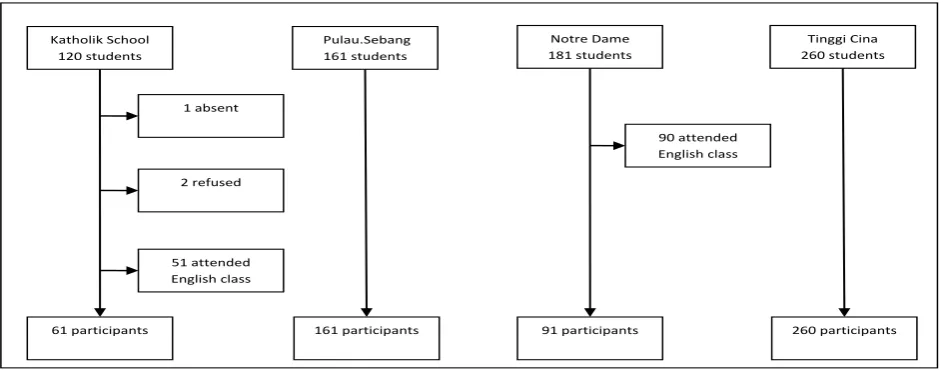
Malacca has a population of about 910000 (12). Two schools refused to participate. There was a total of 579 participants from the four participating schools(see Figure 1). Ethical approval from the Medical Ethics Committee of the University of Malaya Medical Center (Reference Number 1017.34) was obtained. Permission was also granted from the Ministry of Education (reference letter KP(BPPDP)603/5/JLD.14(133)). Consent was obtained from parents of all the participating students.
Fig. 1
Fig. 1 Sample Selection
Katholik School 120 students
Pulau.Sebang 161 students
Notre Dame 181 students
Tinggi Cina 260 students
1 absent
161 participants 51 attended
English class
61 participants 91 participants 260 participants 90 attended
English class 2 refused
Figure 1: Sample selection
Research instrument
The original version of the KAP Scale was used in a nationwide survey in Ireland. It was chosen because it was comprehensive, and validated. with statistically significant outcomes (13). Permission to translate and use the questionnaire was obtained from the author. This questionnaire was translated into Mandarin and was validated in a local setting. The KAP-C exhibited satisfactory internal consistency, with a Cronbach’s alpha
coefficient of .624 (14). The KAP-C consisted of 38 self-rated questions that were grouped into three domains: drug-related knowledge, attitudes, and perceptions of substance-related issues. Perception was defined as
the understanding and interpretation of students on
substance-related issues (15). Attitude referred to the enduring evaluation of students towards an object, issues
or others in general, and towards substance abusers and
The attitude domain evaluated in the questionnaire was further divided into several aspects: toward drug addicts, toward drug misuse, toward drug prevention, toward drug treatment, toward harm reduction and finally, toward legislation and policy intervention. The perception domain included perceptions on the extent of illicit drug-related problems, perceptions of illicit drug-use among youth and perceptions of danger and harm associated with illicit drug-use. Each question in the questionnaire had a seven-point
response scale. The scale ranged from strongly disagree
(1), moderately disagree (2), slightly disagree (3), and
don’t know (4), to slightly agree (5), moderately agree (6)
and strongly agree (7). The participants were required to choose a response that reflected the degree of agreement
with the statement on each item.
Data collection procedure
The module started with a Pre-test using the
KAP-C. Following that was a 60 min film entitled The Addict featuring the life story of a drug addict named Rui Fang. The film highlighted his emotional turmoil, regrets and remorse while he was in prison and his determination to overcome his challenges by quitting substance use. In the end, Rui Fang was able to stop substance use and engage
in community work.
The film was followed by an interactive PowerPoint slide presentation that provided information on the extent of the substance-related problems globally, information and pictures on the different types of illicit substances , as well as drug refusing skills. The long-term effect of substance use on the brain was illustrated by comparing PET scans
of a brain of a healthy adult and a substance abuser. Also,
indications and types of harm-reduction strategies were also explained to the students. The presentation also included advice on practical ways to refuse invitations
to use substances. Three post-tests were done using the
KAP-C on the same group of students. The first post-test was done at the end of the presentation (PT 1) followed by second post-test after one month (PT 2) and the third post-test after two months (PT 3).
Data analysis
The data ware entered into SPSS version 22 for data analysis (16). According to results of a normality test, six outliers were removed to maintain a normal distribution for research variables. Therefore, this study had a total of 573 participants. The data were analysed according to the three categories of knowledge, attitude and perception. The post-test mean scores of the research variables (PT 1, PT 2 and PT 3) for all research variables were compared with
the mean score at Pre-test. A one-way repeated measures
ANOVA (general linear model) was used to evaluate the significance of changes in mean scores of research variables over the time followed by using Bonferroni test for means comparison (Pre-test, PT 1, PT 2, PT 3). Any change in the
mean score for each section of the questionnaire, with statistical significance at 5%, was considered a change in knowledge, attitude and perception, respectively. A
Cohen’s d value of ≤ 0.2 indicated a small effect size while a Cohen’s d value of 0.3 to 0.5 indicated a medium effect size. A Cohen’s d value of ≥ 0.8 showed a large effect size.
Results
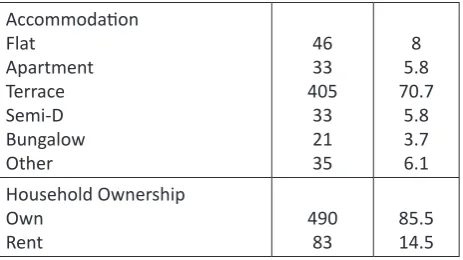
Demographic52.4% (n = 300) of the participants were male, and 47.6% (n = 273) were female as shown in Table 1. 9.8% of parents or guardians were between 30 to 39 years old while 57.2% were between 40 to 49 years old and 30% were between 50 to 59 years old. Additionally, 2.5 % of the parents or guardians were between 60 to 69 years old, and 0.5% was above 70 years old. The mean age for the head of household was 47.2, and the median age was 46. Among these students’ parents or guardians, 85.9% were married while 13.7% were separated, divorced, unmarried or
widowed. The summary of baseline demographic data is presented in Table 1.
Table 1: Demographic characteristics of participants
Characteristics Number Percent
Gender
Female
Male 273300 47.6%52.4%
Age of Parents
30-39 40-49 50-59 60-69 >70 56 328 172 14 3 9.8 57.2 30.0 2.5 0.5
Marital Status of parents Married
Separated
Living Together Widow / widower Divorced Not married 492 34 17 18 2 10 85.9 5.9 3 3.1 0.3 1.7 Parent Education University Diploma Lower Secondary Upper Secondary Primary Vocational Other 37 14 165 276 55 11 15 6.5 2.4 28.8 48.2 9.6 1.9 2.6
No of Siblings
Accommodation Flat
Apartment Terrace Semi-D Bungalow Other
46 33 405
33 21 35
8 5.8 70.7
5.8 3.7 6.1 Household Ownership
Own
Rent 49083 85.514.5
Knowledge of substance abuse
The results of the repeated measures ANOVA showed that
the differences among these four tests (Pre-test, PT 1, PT 2 and PT 3) were statistically significant (F(2.8, 1604.3) =
147.859, p < 0.001, d = 1.1). The Cohen’s d value indicated a large effect size. The Bonferroni post hoc test showed that students’ knowledge on common illicit drugs were
significantly increased following the drug education
module (Table 2, Table 3).
Attitude
Repeated measures ANOVA showed the differences among these four tests (Pre-test, PT 1, PT 2 and PT 3)
were statistically significant in attitudes toward drug
prevention strategies (F(3, 1716) = 5.661, p = 0.001, d =
0.20), attitudes toward drug treatment strategies (F(2.9, 1672.9) = 4.715, p = 0.03, d = 0.18) and attitudes toward harm reduction strategies (F(2.9, 1674.8) = 179.167, p
<0.001, d = 1.2) (Table 2, Table 3). Attitude towards drug treatment strategies and drug prevention strategies were significant only in PT 2 and PT 3.
Table 2: Pairwise comparison of Knowledge, Attitude and Perception on substance abuse with pretest
(I) Time (J) Time Mean Difference
(I-J) SE P Value
Knowledge Pretest -1.585 0.094 <0.001
Pretest PT 2 -1.579 0.102 <0.001
Pretest PT 3 -1.960 0.094 <0.001
Attitude drug addicts Pretest PT 1 -0.084 0.047 0.446
Pretest PT 2 0.043 0.045 1
Pretest PT 3 0.004 0.047 1
drug misuse Pretest PT 1 0.047 0.061 1
Pretest PT 2 0.091 0.06 0.773
Pretest PT 3 0.091 0.061 0.812
drug prevention
strategies PretestPretest PT 1PT 2 0.1330.254 0.0620.061 <0.0010.198
Pretest PT 3 0.188 0.063 0.019
drug treatment
strategies PretestPretest PT 1PT 2 -0.175-0.240 0.0810.077 0.0120.19
Pretest PT 3 -0.248 0.077 0.008
harm reduction
strategies PretestPretest PT 1PT 2 -1.312-1.527 0.0740.073 <0.001<0.001
Pretest P T 3 -1.538 0.074 <0.001
legislation and policy
intervention PretestPretest PT 1PT 2 0.1560.092 0.0620.063 0.0730.867
Pretest PT 3 0.086 0.06 0.934
Perception Extend of Illicit Drugs
Related Problems PretestPretest PT 1PT 2 -0.134-0.215 0.0360.035 <0.0010.001
Pretest PT 3 -0.236 0.037 <0.001
Illicit Drugs Use among
Youth PretestPretest PT 1PT 2 0.0020.047 0.0570.056 11
Pretest PT 3 0.021 0.055 1
Danger &Harm of Illicit
Drug Use PretestPretest PT 1PT 2 -0.047-0.025 0.0420.042 11
Pretest PT 3 -0.03 0.041 1
Perception
Repeated measures ANOVA showed the differences among these four test (Pre-test, PT 1, PT 2 and PT 3) were statistically significant only for the perceived extent of illicit
drug-related problems (F(2.9, 1689.9)= 16.650, p <0.001,
d = 0.4) (Table 2, Table 3).
Discussion
This was a pioneer study to examine the efficacy of a modified educational module. The study showed that this module was able to improve the student’s knowledge and attitude on drug-treatment strategies, harm-reduction strategies as well as perceptions of the extent of substance-related problems.
Following their exposure to the revised educational module, the students showed significant improvement in the
awareness of common illicit substance, as demonstrated
by the nearly 1.5 times increase in mean knowledge (p < 0.001) in PT 1. Their awareness of common illicit drugs
further increased three months after the study (p < 0.001). Therefore, the modified educational module was effective in increasing the students’ knowledge regarding common illicit drugs. Interactive group activities allowed knowledge sharing and strategic learning (17). This was possibly explained through the concept of herd behaviour as proposed by Raafat, Chater and Frithwhich involved the transmission of thoughts or behaviour and knowledge sharing through interactions between individuals in a group (18). The initial session acted as a kick-start for subsequent discussion among students following the session. Further sessions created more opportunities for more discussion
and exchange of knowledge and opinions on the topic. The study showed that the students generally started
out with negative attitudes toward drug addicts and substance abuse. Changes in attitudes toward drug addicts
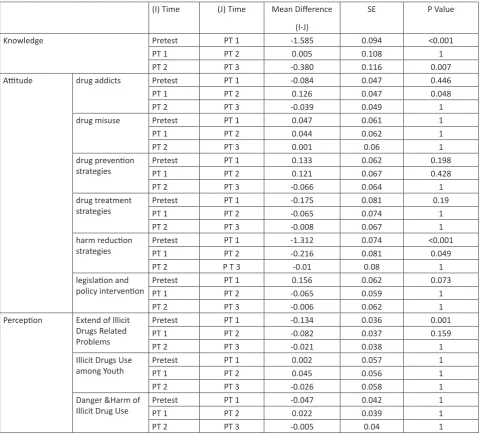
Table 3: Pairwise comparison of Knowledge, Attitude and Perception on substance abuse
(I) Time (J) Time Mean Difference
(I-J)
SE P Value
Knowledge Pretest PT 1 -1.585 0.094 <0.001
PT 1 PT 2 0.005 0.108 1
PT 2 PT 3 -0.380 0.116 0.007
Attitude drug addicts Pretest PT 1 -0.084 0.047 0.446
PT 1 PT 2 0.126 0.047 0.048
PT 2 PT 3 -0.039 0.049 1
drug misuse Pretest PT 1 0.047 0.061 1
PT 1 PT 2 0.044 0.062 1
PT 2 PT 3 0.001 0.06 1
drug prevention
strategies PretestPT 1 PT 1PT 2 0.1330.121 0.0620.067 0.1980.428
PT 2 PT 3 -0.066 0.064 1
drug treatment
strategies PretestPT 1 PT 1PT 2 -0.175-0.065 0.0810.074 0.191
PT 2 PT 3 -0.008 0.067 1
harm reduction
strategies PretestPT 1 PT 1PT 2 -1.312-0.216 0.0740.081 <0.0010.049
PT 2 P T 3 -0.01 0.08 1
legislation and
policy intervention PretestPT 1 PT 1PT 2 -0.0650.156 0.0620.059 0.0731
PT 2 PT 3 -0.006 0.062 1
Perception Extend of Illicit Drugs Related
Problems
Pretest PT 1 -0.134 0.036 0.001
PT 1 PT 2 -0.082 0.037 0.159
PT 2 PT 3 -0.021 0.038 1
Illicit Drugs Use
among Youth PretestPT 1 PT 1PT 2 0.0020.045 0.0570.056 11
PT 2 PT 3 -0.026 0.058 1
Danger &Harm of
Illicit Drug Use PretestPT 1 PT 1PT 2 -0.0470.022 0.0420.039 11
PT 2 PT 3 -0.005 0.04 1
and substance abuse were not statistically significant throughout the study. This was in line with findings
from the previous literature on society’s stereotypical views and prejudices against drug addicts (13). Their negative attitudes toward drug addicts might have been conceptualized through years of conditioning by negative images of drug addicts portrayed in the news, films and other social media. The existing school-based addiction
program, which stresseds the negative behaviours of drug addiction further reinforced their negative views. This
hadimplications for future addiction programmes to gear towards providing accurate information on the effects of substance use without reinforcing the negative prejudices
among students toward substance abusers.
The majority of the participants were somewhat agreeable toward strategies for preventing drug use, despite a slight decline in the mean score over time. Also, the students showed significant improvement in attitude toward treatment strategies for addiction one and two months
after the module. One possible explanation for this
was that with time, further opportunities for students
to communicate and exchange opinions and thoughts
facilitated the attitude change (18).
Initially, about one-fifth of the students were ambivalent about the use of harm-reduction strategies, as many of the students were not aware of the indication and types of strategies available for harm-reduction. However, their attitude became more favourable toward the use of
such strategies one and two months following exposure
to the module. As this might have been due to the new information provided to the students, it was, therefore, easier to bring about a change in attitude without the influence of pre-existing prejudices on this issue. The students were also found to have favourable attitudes toward legislation and policy interventions at baseline,
and it did not change following the module.
The students were initially ambivalent over the perceived
extent of substance use-related problems in the country.
However, more students agreed that substance use and related offences were serious concerns in society following the anti-drug programme. This was because information on the severity of the problem was disseminated in the module, which increased their awareness of the existing situation regarding substance abuse. However, a majority
of the students were uncertain whether substance use was
a problem among the youth. This was similarly reflected
in the study in Ireland. The study in Ireland found that
younger participants were less likely to acknowledge the dangerous effects of substance use (19). The reason for
this was because participants’ perception of the extent
of drug-use among youths were based on their personal
experience. A majority of the participants reported not having earlier personal knowledge of anyone who had used the drug, which might have contributed to their impression
that drug problems were not common among the youths.
This was an important finding since this perception might
lead to students minimizing the prevalence of the problem among the youths and thus making them less cautious in avoiding external influences on them to use drugs. Revision of the existing drug education program should be tailored towards correcting this misperception.
Regarding the students’ perceptions of the harmful effects of substance use, the students had perceived substance use as harmful and resulted in addiction, even before they went through the module. They continued to hold such perceptions after the module. Therefore, the module was effective in maintaining the correct perceptions among
students regarding the harm and danger associated with
substance use. This finding was similar to of previous studies indicating that students with high levels of prior knowledge and correct attitudes were able to maintain them after the program (20).
Limitations and recommendations
There were several limitations in this study. One limitation was the short duration of the study, which might not be sufficient to assess the sustainability of the change in
each of the examined domains. Also, the self-reported
questionnaire used might result in a bias as it largely depended on the level of honesty of the participants in reporting their responses. Some of the participants might have had an unconscious tendency to give socially
acceptable responses to be accepted by their peers and
gain approval from their teachers.
Subsequent studies may focus on more comprehensive assessments of the students’ knowledge of substance use. This could include assessing the retention of important
knowledge among students on other aspects of substance
use, such as effects on health, social relationship and school performances, and its relationship to change in attitudes and perceptions.
This study was on a single group intervention, without a control group to provide a definitive conclusion on the value of the module. There were other limitations such as the presence of confounding factors of the students’
own experiences as well as the influence of parental
education and background. Lastly, although the students’ knowledge, attitudeand perception toward substance
use changed during the study duration, a correlation with changes in behaviour and future practices could not be assumed. Subsequent outcome studies should be done on these students to assess the efficacy of this program in preventing future substance use.
Conclusion
In conclusion, the findings of this study indicated that this module changed the knowledge, attitudeand perception
Acknowledgements
This study is supported by UMRG Grant RP007E-13HTM.
The authors thank the headmasters, teachers and
participants of Melaka High School (C), Catholic High School, Notre Dame High School and Pulau Sebang High School as well as to Madam Rosalyn Moran for granting permission to translate and use the survey instrument.
References
1. Williams C, Griffin KW, Macaulay AP, West TL, Gronewold E. Efficacy of a Drug Prevention CD-ROM Intervention for Adolescents. Subst Use Misuse. 2005;40(6):869-78.
2. Bose J, Hedden SL, Lipari RN, Park-Lee E, Porter JD, Pemberton MR. Key Substance Use and Mental Health Indicators in the United States: Results from the 2015 National Survey on Drug Use and Health. Department of Health and Human Services, 2016. 3. AADK. Maklumat Dadah 2015. Selangor: 2015. 4. Chie QT, Tam CL, Bonn G, Wong CP, Dang HM,
Khairuddin R. Drug abuse, relapse, and prevention education in Malaysia: perspective of university students through a mixed methods approach. Front Psychiatry. 2015;6(65).
5. Mohamed M, Nazar, Marican S, Elias N, Don Y. Pattern of Substance and Dug Misuse Among Youth in Malaysia. Jurnal Antidadah Malaysia. 2008;56. 6. Faggiano F, Vigna-Taglianti F, D, Versino E, Zambon A,
Borraccino A, P L. School-based prevention for illicit drugs’ use. Cochrane Database Syst Rev. 2005;18(2). 7. Faggiano F, Richardson C, Bohrn K, Galanti MR,
Group EU-DS. A cluster randomized controlled trial of school-based prevention of tobacco, alcohol and drug use: the EU-Dap design and study population. Prev Med. 2006;44(2):170-3.
8. Strøm HK, Adolfsen F, Fossum S, Kaiser S, Martinussen M. Effectiveness of school-based preventive interventions on adolescent alcohol use: a meta-analysis of randomized controlled trials. Subst Abuse Treat Prev Policy. 2014:1-11.
9. Thomas RE, McLellan J, Perera R. Effectiveness of school-based smoking prevention curricula: systematic review and meta-analysis. BMJ Open. 2015:1-12.
10. LeMaster PL, Connell CM, Mitchell CM, Manson SM. Tobacco use among American Indian adolescents: Protective and risk factors. J Adolesc Health. 2002;30(6):426-32.
11. Agency NAD. Malaysian Country Report 2009. Affairs MoH; 2010.
12. Population statistics and location in maps and charts Melaka [Internet]. Department of Statistic Malaysia. 2016. Available from: https://www.dosm.gov.my/v1/ index.php?r=column/cone&menu_id=TmlOYTJZTEJJ ZXg5QUZQMUxrRVFKUT09.
13. Bryan A, Moran R, Farrell E, O’Brien M. Drug-related knowledge, attitudes and beliefs in Ireland: report of
a nation-wide survey. Drug Misuse Research Division, Health Research Board. 2000.
14. Renee Tan HJ, Yee A, Sulaiman AH, Said MA. Validation of Mandarin Version of Questionnaire for Knowledge, Attitude and Beliefs in Substance Use. International Conference of Addiction Prevention and Treatment 2015; Telekom Malaysia Convention Center,2015. 15. Petty RE, Wheeler SC, Tormala ZL. Persuasion and
attitude change. Handbook of psychology. 2003. 16. IBM. IBM SPSS Statistics for Windows, Version 20.0.
Armonk, New York: IBM Corp.; 2011.
17. Kraiger K, Passmore J, Santos NRd, Malvezzi S. The Wiley Blackwell Handbook of the Psychology of Training, Development, and Performance Improvement. Pondicherry: Wiley Blackwell; 2015. 18. Raafat R, Chater N, Frith C. Herding in humans. Pub
Med. 2009;13(10):420-8.
19. McCrystal P, Thornton M. Drug and Alcohol Knowledge and Use Amongst Primary School Children. Belfast, Northern Ireland: Queen’s University Belfast, 2004. 20. Holtz K, Twombly E. A Preliminary Evaluation of