University of Warwick institutional repository: http://go.warwick.ac.uk/wrap
A Thesis Submitted for the Degree of PhD at the University of Warwick
http://go.warwick.ac.uk/wrap/57067
This thesis is made available online and is protected by original copyright. Please scroll down to view the document itself.
Children’s Perception and Interpretation of
Robots and Robot Behaviour
Sajida Bhamjee
A thesis submitted in fulfilment of the requirements for the
degree of Doctor of Philosophy in Social Studies
University of Warwick
School of Health and Social Studies
Table of Contents
List of Tables ... i
List of Figures ... ii
Acknowledgements ... iii
Declaration ... iv
Abstract ... v
Chapter 1: Introduction ... 1
1.1. Starting the Journey ... 1
1.1.1. ‘The Emergence of Artificial Culture in Robot Societies’ ... 1
1.2. Emergence ... 4
1.3. My Research and Role in the Project ... 7
1.4. Culture and the Influence of Imitation in the Role of Culture ... 8
1.5. The Involvement of Children within the Project ... 12
1.5.1. Children as Novice Scientists ... 12
1.6. Stumbling Blocks/Research Impediments ... 20
1.7. Lived Culture... 24
1.8. Rationale for Researching Children’s Perceptions of Robots ... 25
1.9. Outline of the Thesis ... 27
Chapter 2: Literature Review ... 30
2.2. Social Constructivism ... 32
2.3. The Development of Robots ... 36
2.3.1. Robots in the media ... 39
2.3.2 Robots in popular film ... 41
2.4. Definitions of ‘Robot’ ... 43
2.5. Sociology of Technology ... 46
2.5.1 Technological Determinism ... 47
2.6. Sociology of Childhood and Technology... 52
2.7. Childhood and Robots ... 57
2.8. Children’s Interaction and Locus of Control in Robots ... 60
2.8.1. Interactivity levels of robotic toys ... 61
2.8.2. Control ... 69
2.9. Anthropomorphism and how we relate to the inanimate ... 73
2.10. Theorising of the Human–Machine Conceptual Relationship ... 76
2.11. Sociological and Psychological Perspectives on Children’s Conceptions of Animacy ... 83
2.11.1. Psychological Contributions to the Understanding of Children’s Conceptions of Animacy... 84
2.11.2. Sociological Contributions to the Understanding of Children’s Conception of Animacy... 91
2.12. Conclusion ... 94
3.1. Introduction ... 96
Part 1 - Methodology ... 97
3.2. The Mosaic Approach ... 97
3.3. Mosaic of Methodologies ... 98
3.3.1. Phenomenology ... 99
3.3.2. Visual Sociology... 104
3.3.3. Semiotics ... 114
3.3.4. Observation ... 120
3.3.5. Group Interviews ... 122
3.4. Putting the Mosaic Together ... 125
3.5. Triangulation ... 126
3.6. Open Science ... 128
3.7. Ethics ... 131
3.7.1. Informed Consent ... 132
3.7.2. Harm to Informants ... 133
3.7.3. Honesty in Research ... 134
3.7.4. Anonymity and Confidentiality ... 134
3.7.5. Ownership of Drawings ... 135
Part 2- Research Design and Methods ... 136
3.8. Research Design ... 136
3.9.1. Phase 1: Write and Draw and Phase 2: Children’s Observation of Robots ... 138
3.9.2. Phase 3: Manchester Science Festival ... 140
3.9.3. Phase 4: Pilot Study Engaging Children in Spotting Patterns of Behaviour ... 145
3.10. Methods and Analysis ... 145
3.11. Phase 1: Write and Draw ... 148
3.11.1. Write and Draw Method of Analysis ... 151
3.12. Phase 2: Children’s Observation of Robots and Group Interviews ... 152
3.12.1. Method of Analysis ... 159
3.13. Phase 3: Manchester Science Festival ... 159
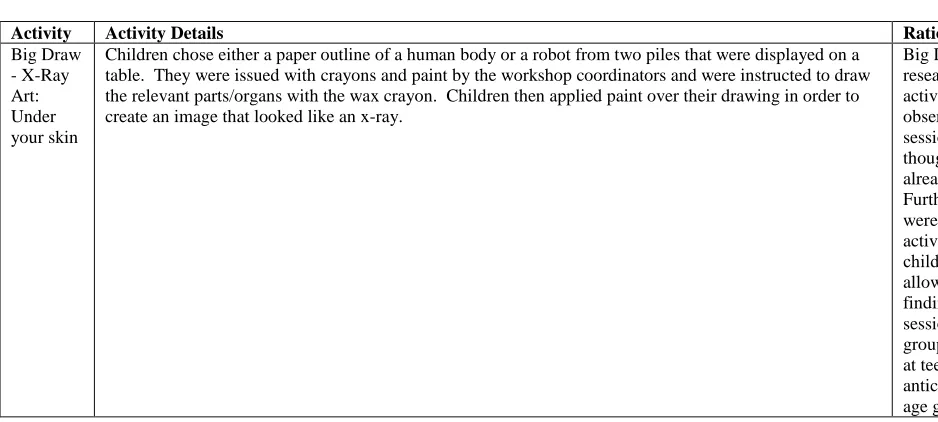
3.13.1. Big Draw- X-ray Art under your Skin ... 159
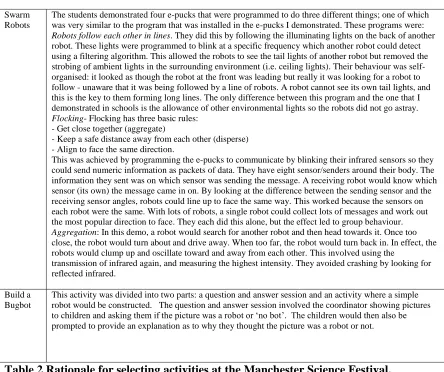
3.13.2. Swarm Robots... 164
3.13.3. Build a Bugbot ... 165
3.14. Phase 4: Pilot Study Engaging Children in Identifying Patterns of Behaviour ... 167
3.14.1. Method ... 167
3.14.2. Method of Analysis ... 169
Chapter 4: Results and Analysis ... 171
4.1. Introduction ... 171
4.2. Overall Research Objective ... 171
4.2.1. Sub-Objectives... 171
4.3. Phase 1: Write and Draw ... 172
4.3.2. Analysis of Stories ... 184
4.3.3. Summary of Write and Draw... 200
4.4. Phase 2: Children’s Observation of Robots and Group Interviews ... 201
4.4.1. Actions of the robots (What the children think the robots are doing) ... 202
4.4.2. Purpose of the Robots (Why the children think the robots are doing this) ... 204
4.4.3. Robot Functionality (What is going on inside the robot?) ... 208
4.4.4. Description of Robot Characteristics and Appearance ... 212
4.4.5. Gender Differences ... 214
4.4.6. Summary ... 216
4.5. Phase 3 -Manchester Science Festival ... 218
4.5.1. X-Ray Art Analysis ... 219
4.5.2. Swarm Robots... 244
4.5.3. Build a Bugbot ... 247
4.6. Phase 4 – Pilot study Engaging Children in Identifying Patterns of Behaviour ... 251
4.7. Triangulation of data ... 255
4.8. Conclusion ... 266
Chapter 5 – Conclusion ... 268
5.1. Introduction ... 268
5.2. Attribution of animacy and inanimacy and its relationship with locus of control ... 270
5.2.1. Are Robots Going to Take Over the World? ... 276
5.3. Reflexivity in Research ... 280
5.3.1 Strengths and Limitations of the Study ... 283
5.4. Identifying patterns of Emergent Behaviour ... 286
5.4.1. Are Children Really Novice Scientists? ... 289
5.5. Implications for Study and Directions for Future Research ... 290
References ... 295
Appendices ... 324
Appendix 1: Initial letter sent to schools ... 324
Appendix 2: A ‘rounded’ robot drawn by a girl... 325
Appendix 3: A ‘rounded’ robot drawn by a girl... 326
Appendix 4: ‘Buzz Light Year’- Character from popular media ... 327
Appendix 5: ‘Joe’: Character from popular media... 328
Appendix 6: Example of a child’s drawing ... 329
Appendix 7: Example of a child’s drawing ... 330
i
List of Tables
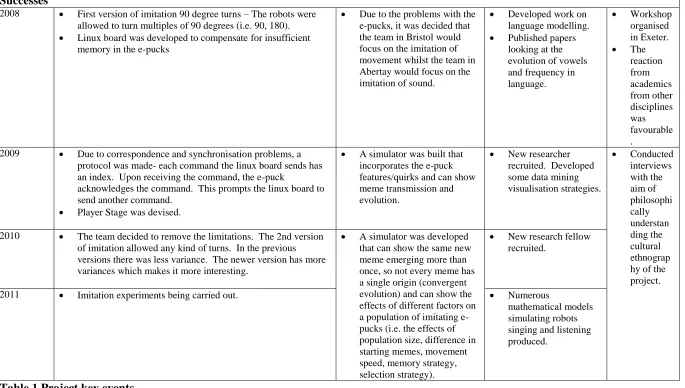
Table 1 Project key events. ... 22
Table 2 Rationale for selecting activities at the Manchester Science Festival. ... 142
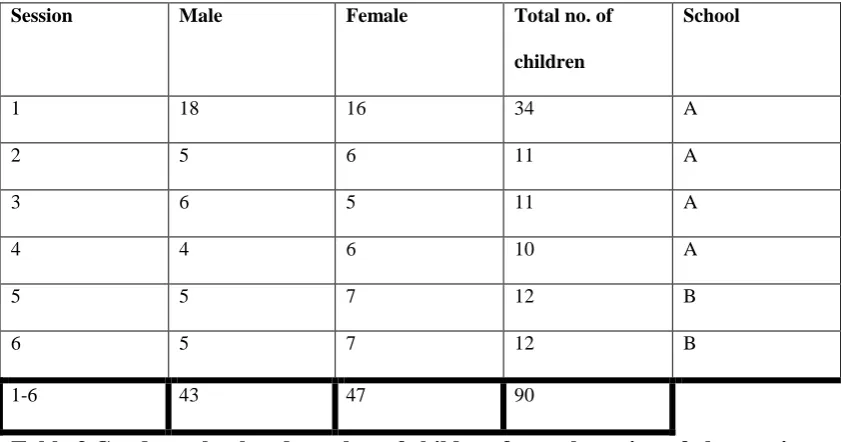
Table 3 Gender, school and number of children for each session of observation and group interviews conducted. ... 158
Table 4 ‘X-ray Art’ exercise age and gender distribution ... 162
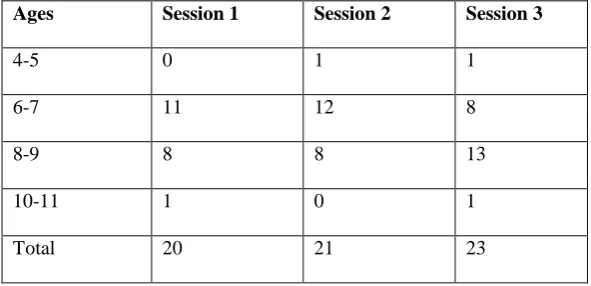
Table 5 ‘X-ray Art’ age and session distribution ... 162
Table 6 Components in descending order drawn by boys and girls of different ages ... 224
Table 7 Themes identified for each phase of research ... 256
ii
List of Figures
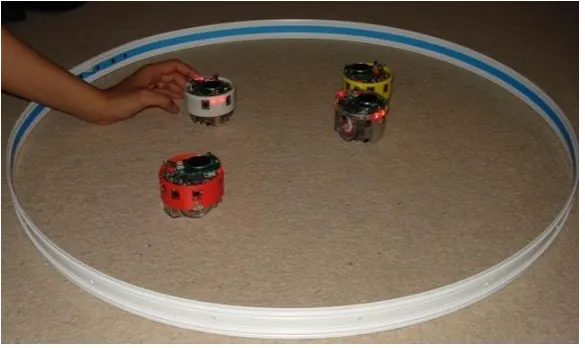
Figure 1 E-pucks . ... 3
Figure 2 The Tamagotchi (Author’s photograph) ... 64
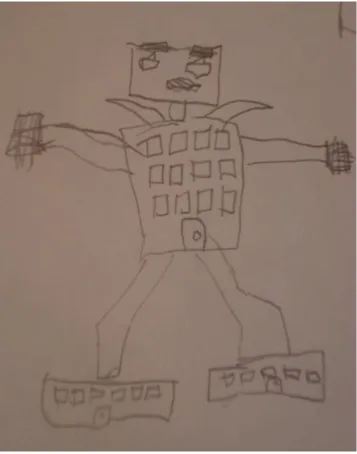
Figure 3 Jim’s robot (an example of a humanoid robot) ... 173
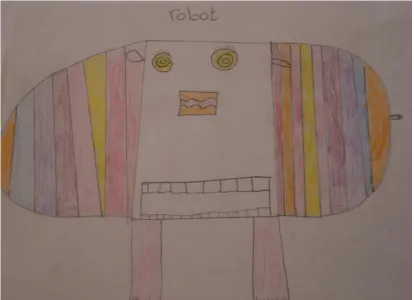
Figure 4 Oval-shaped robot drawn by a girl ... 174
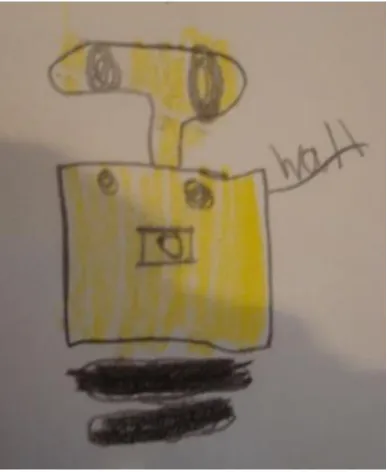
Figure 5 Depiction of the robot film character Wall-E ... 176
Figure 6 Amy’s robot with wheels and buttons ... 178
Figure 7 Susan’s robot with buttons ... 179
Figure 8 Robert’s robot with a ‘lightbulb’ ... 180
Figure 9 Alex’s robot with wheels and weaponry ... 182
Figure 10 Example of an indecipherable drawing ... 220
Figure 11 Example of robot drawing with visible insides ... 222
Figure 12 Player stage animation ... 252
iii
Acknowledgements
I would like to express my deep and sincere gratitude to the Engineering and Physical Sciences Research Council (EPSRC) who funded my doctoral study. Many thanks to my supervisors: Professor Frances Griffiths, Dr Julie Roberts and Dr Donna Chung for your dedication, patience and guidance. Thanks to my thesis advisory panel, Christine Harrison and Eileen Green. I would like to gratefully acknowledge all the children who spoke to me and patiently answered my questions.
iv
Declaration
I confirm that this thesis is my own work. It has not been submitted for examination at any other university for any other award. Aspects of the work have been reported in:
v
Abstract
The world of robotics, like that of all technology is changing rapidly (Melson, et al., 2009). As part of an inter-disciplinary project investigating the emergence of artificial culture in robot societies, this study set out to examine children’s perception of robots and interpretation of robot behaviour. This thesis is situated in an interdisciplinary field of human–robot
interactions, drawing on research from the disciplines of sociology and psychology as well as the fields of engineering and ethics. The study was divided into four phases: phase one involved children from two primary schools drawing a picture and writing a story about their robot. In phase two, children observed e-puck robots interacting. Children were asked
questions regarding the function and purpose of the robots’ actions. Phase threeentailed data collection at a public event: Manchester Science Festival. Three activities at the festival: ‘X-Ray Art Under Your Skin’, ‘Swarm Robots’ and ‘Build-a-Bugbot’ formed the focus of this phase. In the first activity, children were asked to draw the components of a robot and were then asked questions about their drawings. During the second exercise, children’s comments were noted as they watched e-puck robot demonstrations. In the third exercise, children were shown images and asked whether these images were a robot or a ‘no-bot’. They were then prompted to provide explanations for their answers.
Phase 4 of the research involved children identifying patterns of behaviour amongst e-pucks. This phase of the project was undertaken as a pilot for the ‘open science’ approach to
research to be used by the wider project within which this PhD was nested. Consistent with existing literature, children endowed robots with animate and inanimate characteristics holding multiple understandings of robots simultaneously. The notion of control appeared to be important in children’s conception of animacy. The results indicated children’s
1
Chapter 1: Introduction
1.1. Starting the Journey
The concepts of culture and emergence have generated extensive inter-disciplinary interest. As Winfield and colleagues note, ‘a profound question that transcends disciplinary boundaries is “how can culture emerge and evolve as a novel property in a group of social animals?”’(Winfield, et al., 2007:no pagination). One way to study the emergence of culture is to examine the emergence of artificial culture in a society of embodied intelligent agents or robots.
1.1.1. ‘The Emergence of Artificial Culture in Robot Societies’
This thesis is part of a wider, inter-disciplinary project on complexity and emergence called The Emergence of Artificial Culture in Robot Societies funded by the
Engineering and Physical Sciences Research Council (EPSRC). The senior
2 stages of the emergence and evolution of simple cultural artefacts...the
transition...from nothing recognisable as culture, to something (let us call this proto-culture)’ (Winfield, et al., 2007: no pagination). In sum, the team aimed to build a working model of cultural evolution, hoping to further our knowledge of culture by looking at the processes and mechanisms by which culture has emerged amongst robots.
This interdisciplinary project includes academics from swarm robotics, systems biology, cognitive modelling, philosophy, art and social science. There are four PhD students and one research assistant each working within their own disciplines at different universities across the UK all with a distinct role in the project. I am the social scientist on the project; the three other PhD students are from the disciplines of philosophy, robotics and the computer sciences.
3 The research team anticipated that within a short period of time, there would be a number of interactions between the physical e-puck robots. The use of real robots instead of simulated robots is pertinent to the methodology of the artificial culture project as real robots will have more possibilities for emergence in their interactions. Due to a combination of physical obstacles and environmental conditions, each experimental run will have different outcomes. Similarly, when one robot copies another’s behaviour it will be slightly different from the original, thus producing unexpected differences. Importantly, it is suggested that through observing the interactions of these swarm robots it may be possible to identify emergent patterns of behaviour. The concept of emergence is explored in the following section.
The team also decided that computer simulation experiments should be employed to allowa wide range of experiments to be run, in order to identify interesting
[image:18.595.184.477.551.725.2]experiments that could be executed with the physical robots. Computer simulation experiments also allow the robots to run on ‘evolutionary time’, permitting the simulation of multiple generations of robots.
4
1.2. Emergence
Emergence is a central theme in this research and is a term used in complexity sciences to describe the way complex systems and patterns arise out of numerous simple interactions (Cilliers, 2002). A fairly standard definition of ‘complex systems’ that suits my purpose here is a system comprised of elements or parts that are interconnected in order to produce a behaviour or number of behaviours that cannot be achieved from any part individually. These systems can be biological, mechanical, organisational or social.
Emergence can be categorised as bottom-up or top-down. For example, much of the past work of roboticists employed a top-down approach in the field of robot research, whereby they sought to replicate human intelligence in a machine (Harding, 2009). After establishing a number of possible robot capabilities, the roboticist would engineer an elaborate programme for robots to perform the prerequisite behaviours. In contrast, current robotics research can be categorised as bottom-up. It is
influenced by evolution and biology and similar to biological organisms involves a simple programme that allows for multiple, simple actions to produce remarkably complex behaviours.
5 and birds) and insects was a result of a flock leader’s instructions or an intention to flock. The computer programme written by Reynolds involved each digital bird acting ‘solely on the basis of its local perception of the world’ (Reynolds, 1987:27) . Reynolds called these digital birds ‘boids’, although a boid was not necessarily limited to bird species and could potentially represent any flocking creature. The flocking behaviour of boids in the computer simulation arose from three simple rules that Reynolds developed: “‘separation’: steer to avoid crowding local flockmates, ‘alignment’: steer towards the average heading of local flockmates and ‘cohesion’: steer to move toward the average position of local flockmates” (Reynolds, 2001:no pagination). By making each bird following these three simple rules, the bird flocking pattern is formed (Reynolds, 2001). The boids programme poses an interesting question: if animals follow simple rules that lead to complex behaviour, could the complex behaviour of humans be the result of following a few simple rules?
Similarly, Resnick (1992) developed a ‘StarLogo’ computer programme that allowed children to direct the actions of various ‘creatures’. Creatures were issued with instructions or rules and it was possible for creatures to follow numerous instructions at the same time. When creatures adhered to these simple rules complex behaviours emerged. One such creature was the termite and its programme consisted of
artificial termites and digital woodchips. At the beginning of the programme, woodchips were arbitrarily dispersed all over the termites’ world and the task was to make the termites cluster the woodchips into stacks. In order to do so, the termites were given two rules: ‘if you're not carrying anything and you bump into a
6 chip, put down the chip you're carrying’(Resnick, 1997:234) . By following these two rules together, the screen termites made woodchip piles even though children did not specifically direct them to do so (Resnick, 1992). The StarLogo computer programme highlights that the outcomes of individualized actions based on simple rules cannot be easily predicted; and the emergent phenomena and ‘decentralized control’ (Davis-Floyd and Dumit, 1998:322) evident in the programme’s outcomes are both indicative of bottom-up emergence.
Even though boids and the StarLogo programme are simple examples of emergence, they differ considerably from the form of emergence that team members anticipated with e-pucks. The boids and StarLogo programme are ‘rule-based’, i.e. each agent follows a simple set number of rules in order for a pattern of behaviour to emerge. In the current project, we did not aim for the emergence of a certain set of
behaviours among e-pucks, instead e-pucks were programmed with the capacity to interact (discussed later in section 1.4). Whether the interactions between robots constituted emergent behaviours was left to the interpretation of observers.
7 collated whilst searching for emergent patterns. Further detail of this is provided in the next sections.
1.3. My Research and Role in the Project
I was motivated to embark on this research project as it provided me with an opportunity to fuse the empirical and theoretical basis of my background in sociology and psychology with my interest in technology. Technological
advancement is often viewed as having a profound influence on our daily lives, and as playing an important role in the formation of various cultures and traditions (Wajcman, 1999; Haraway, 1997). In addition, I also have an interest in culture and the evolution of culture within society.
8 audience (such as groups of school children) would observe the robots through Internet ‘streaming’1
methods. This would ensure that members of the public would engage with and support the project in the interpretation of the results.
1.4. Culture and the Influence of Imitation in the Role of Culture
The project summary states that ‘Robots...will be able to copy each other’s
behaviours and select which behaviours to copy... behaviours (memes) will mutate because of the noise and uncertainty in the real robots’ sensors and actuators, and successful memes will undergo multiple cycles of copying (heredity), selection and variation (mutation)’(Winfield, et al., 2007:no pagination) . The term ‘meme’ will be explored later. By implementing this over several months, robots will learn and copy behaviours many times. The project team anticipated that this would
eventually produce a set of proto-cultural memes in the robot society that are ‘qualitatively and quantitatively’ different from the behaviours at the start of the experiment and which can be likened to an emerging ‘robot culture’ (Winfield, et al., 2007:no pagination).
Throughout the wider project, ‘culture’ is used as an abstract model to refer to a general rather than a human phenomenon, but this begs the question: what is culture?
1 Due to various tracking and logging equipment only accessible at the robot lab, it was not feasible to
9 ‘Culture is one of the two or three most complicated words in the English language...mainly because it has now come to be used for important concepts in several distinct intellectual disciplines and in several distinct and
incompatible systems of thought’ (Williams, 1983:87) .
Williams’ statement effectively highlights the difficulty in defining the word ‘culture’. Its meaning and use varies from discipline to discipline. Dictionaries provide many definitions of human culture but there is nothing documented here about species culture. Similarly, Whiten states that cultures are ‘defined by multiple traditions’ (Whiten, et al., 2007) or to put it simply ‘the ways in which things are done’. The use of the term ‘culture’ within the artificial culture project differs from my use of the term throughout this thesis as my focus is on one aspect of children’s lived culture: how robots are perceived. This is explored further in Section 1.7.
The project team made a significant assumption about the essential pre-requisites for the emergence of culture. Inspired by Nehaniv and Dautenhahn’s (2007) book ‘Imitation and Social Learning in Robots, Humans and Animals’, the project team
viewed imitation as crucial for the development of culture between agents within either a biological, computational or robotic autonomous system (Nehaniv and Dautenhahn, 2007). Therefore in order for a culture to emerge amongst the swarm of e-pucks, they will be required to copy each other’s behaviour. Additionally, as the programming allows for a certain level of autonomy, the e-pucks will also determine which of these behaviours to copy, much like human culture and
10 The term ‘meme’ was coined by Richard Dawkins in his book ‘The Selfish Gene’ in 1976.
‘When you imitate something else, something is passed on. This ‘something’ can then be passed on again, and again, and so takes on a life of its own. We might call this thing an idea, an instruction, a behaviour, a piece of
information... but if we are going to study it we shall need to give it a name...it is a meme’ (Blackmore, 1999:4).
However, it is worth noting that team members, including myself, were hesitant to use ‘meme’ as a term or concept as it is very controversial. Critics of the term question whether one can meaningfully categorise culture into discrete units. It is also argued that memetic evolution has no predictive or explanatory power.
Nevertheless, this term was initially employed in order to stimulate conversation and ideas.
‘The Emergence of Artificial Culture in Robot Societies’project draws on
11 Blakemore discusses the meme as an ‘evolutionary replicator’, where data is copied by individuals or agents through the process of imitation. She suggests that memes were apparent in human evolution when people became capable of imitating behaviour and from this time on in human evolution there were two replicators: memes and genes. ‘Successful memes changed the selective environment, favouring genes for the ability to copy them’ (Blackmore, 2001:225). This project therefore relies on the assumption that this meme-gene co-evolution is ‘a key underlying mechanism in the transition from no culture to proto-culture’ (Winfield and Griffiths, 2010:10).
A key problem that was anticipated by the project team was how to interpret
emergent behaviour. A senior member of the project team describes this difficulty in the following way: “In a sense we will be using robots like a microscope to study the evolution of culture. The possibility that genuinely novel, non-human, culture may emerge within the robot lab is both exciting and challenging. How will we be able to be sure that we are really witnessing the emergence of novel cultural behaviours, rather than simply projecting our own human concepts of culture on to the robots?”
12
1.5. The Involvement of Children within the Project
1.5.1. Children as Novice Scientists
As mentioned previously, my role was to involve children in order to explore their interpretations and understanding of robot behaviour. In this project, children were viewed as novice scientists who adopt a rational approach to the physical world without knowledge of the physical world and the experimental methodology accumulated by the institution of science. However, the novice scientist concept is contentious. Whilst some in the cognitive and developmental psychology field argue that children construct theories that are in many ways similar to those constructed by scientists (Gopnik, 1996; Brewer, Chinn and Samarapungavan, 1998; Carey, 1985), other researchers have countered this, suggesting that children’s theories are
conversely very different from scientific theories (Nelson, 2007; Overton, 2006; diSessa, 1988; Inhelder, et al., 1958). In addition, findings from the pilot fieldwork indicated very early on in the research that children held many preconceived ideas about robots.
Since the late 1980s, there has been increasing acknowledgement that children can make important contributions to the world of research. Children are seen as ‘co-creators’ (Freeman and Mathison, 2009:4) who can construct themselves in several social contexts. Children’s perceptions and experiences can offer a deeper
13 viewpoint, what is less clear is the extent to which these viewpoints correspond to the process of explaining and understanding in scientific theories. Whilst the idea of children as novice scientists has been adopted, it has not been assumed that children would come to the research without knowledge or pre-conceptions of robots and their behaviour.
Research methodologies exploring whether children are like scientists are often confined to asking children questions about the ‘natural world’ such as light and heat (Brewer, Chinn and Samarapungavan, 1998; Samarapungavan and Wiers 1997; Vosniadou and Brewer, 1994). These questions are used to explore children’s theories and explanations about a specific phenomenon. Brewer et al. (1998)
suggested that there are three types of explanations used by children. The first, called causal/mechanical, suggests that children often provide causal explanations when asked about the natural world. The example given by Brewer is ‘Why did the light not come on? - Because it was not plugged in’ (Brewer, Chinn and Samarapungavan, 1998:125). The second category is functional explanations. This category explains a phenomenon in terms of functional factors instead of mechanical or physical
14 The third type of explanation is intentional explanations. There are numerous studies indicating that children apply intentional explanations which refer to intentional states such as beliefs and desires of human behaviour to inanimate objects (Wellman, 1990) , e.g. ‘balloons go up because they want to fly away’ (Piaget, 1960:110) . Brewer et al. (1998) conclude that children use the same forms of explanatory framework as scientists. However, they argue that scientists also use formal or mathematical accounts to explain natural phenomena. So for example, ‘why does this emission line of hydrogen have this frequency? - Because of Balmer’s formula’ (Brewer, Chinn and Samarapungavan, 1998:125).
Researchers report that, like scientists’, children’s theories are empirically-based; however, children’s views are also obtained from adults. A study conducted to explore children’s views of astronomy showed that children attempted to come up with theories of the world which were empirically-based and also contained
15 develops with age and further learning and exposure to shapes (Vosniadou and Brewer, 1992).
While children’s theories of the world may be empirically-based, researchers suggest that children also gain information from adults. This implies that children may simply be ‘copying’ what has been heard and not necessarily formulating their own viewpoint in a scientific manner (Vosniadou and Brewer, 1992).
There are other researchers who adopt the ‘child as a scientist’ view whilst recognising differences between scientists and children, as a consequence of the social institution of science (Brewer and Samarapungavan, 1991). Brewer et al. (1991) argue that a person may develop into a scientist later into adulthood but may never develop without the explicit training that is required in order to be a member of the scientific community (Brewer, Chinn and Samarapungavan, 1998). However, scientists, it is argued, are supposed to be consciously reflective when they formulate theories. But science is structured within an institutional setting where interactions with other scientists occur, and are thereby likely to be influenced by the social institution of science. Similarly, changes in scientific theory may take years to occur; however, the same cannot however be said for children who develop and replace theories relatively quickly; in the space of a few months or years (Gopnik, 1996).
16 ‘[children] are limited in the extent to which they can reason in the abstract …tend to view things from a self-centred or human centred point of view ...they tend to endow inanimate objects with the characteristics of
humans…they will accept more than one explanation for a specific event and are not too concerned if some of these explanations are self-contradictory’ (Schollum and Osborne, 1985:55-56).
Similarly, Wiser (1988) conducted research on children’s conceptions of heat and temperature and he also concluded that children’s theories are inconsistent. Wiser argued that children did not take into account volume and gave contradictory responses to problems. While children accurately predicted that a bigger vessel would take longer to boil than a smaller one on identical burners, they inaccurately believed that it would not take more heat to boil a larger vessel. Children therefore thought of heat as a temperature that is measured in degrees without taking volume into account in the way an expert might have done.
17 Piaget proposed a staged sequence of child development, identifying the following four stages: the Sensorimotor (0-2 years), Preoperational (2-7 years), Concrete Operational (7-11 years) and Formal Operational (11- adulthood). In the ‘Sensorimotor’ stage, children can differentiate between self and object and are aware of their senses (hear, feel, touch, and smell). In the ‘Pre-operational’ stage, children learn to use language, are egocentric and are able to classify objects by a single feature (e.g. the child can collate all the red blocks disregarding the shape of the blocks). In the ‘Concrete operational’ stage, children can think logically about objects and events and can classify objects according to several features such as shape and size. In the last of Piaget’s stages, the ‘Formal operational’, children can think logically about abstract propositions and test hypotheses systematically and are capable of thinking of issues that may arise in the future. Piaget believed that these cognitive changes occurred due to two main factors: maturation of the brain, where the growth of the brain results in more complex thoughts and allows higher levels of thinking to occur; and the child’s interaction with the environment, as the child develops by intrinsically exploring and experimenting in their environment (Piaget, 1929).
18 Piaget’s theories have been subject to numerous criticisms. Firstly, his methodology has come under scrutiny with critics suggesting the instructions posed to children were difficult to understand and thus were usually misunderstood (Nolen-Hoeksema, Fredrickson and Loftus, 2009). Secondly, many argue that even though a sequence of children’s development does exist, this sequence does not occur in such discrete stages. Additionally, Piaget has also been criticised for underestimating children’s abilities.
For my research, it was critical that children were at a stage of development where they have accumulated reasoning about the world. Piaget’s theory of cognitive development was taken into consideration when choosing the specific age of the children to participate in the current study. The children involved in this study were mainly in the concrete operational stage where children are expected to have the ability to sort objects according to various characteristics such as appearance, size, colour, and shape. They are also expected to name and identify sets of objects and are no longer subject to the idea of animism (all objects are alive and thus have feeling). Children at this stage should also be able to take into account multiple aspects of a problem to solve it and, most importantly to this research; children should have the qualities of egocentrism: the ability to view things from different perspectives (Piaget, 1929). In accordance with Piaget’s theory, these characteristics therefore appear to be ideal for the interpretation of emergent behaviours.
19 applicability of his framework. Even though Piaget’s theories were established several decades ago, his pioneering work has been supported by many studies. Many contemporary researchers and psychologists have implemented similar age
boundaries distinguishing the different stages in children’s life reflecting the notions put forward by Piaget (e.g. Avan and Kirkwood, 2010; Goddard, Hoy and Woolfolk Hoy, 2004). In this study, Piaget’s stages of development were therefore only used as a guide to investigate children’s perceptions of robots and robot activity.
In assessing whether children are novice scientists, the evidence suggests that even though children may share similar characteristics with scientists, they do not engage in similar processes of logic, as the Piagetian approach suggests. Also, children’s worldviews are not primitive adult versions, but are qualitatively different from those of adults (Nelson, 2007). Comparable to scientists, children gain ideas about
20
1.6. Stumbling Blocks/Research Impediments
Working as part of an interdisciplinary project has many benefits as greater
collaboration and networking assists in solving complex problems when researchers from many disciplines combine their expertise. However, there were also setbacks in this study. In robotics research, there are several difficulties that robot engineers face even with the most sophisticated technology, such as achieving stability and fluency of movement in robots (Nehaniv and Dautenhahn, 2007). Along with these issues, the technical team faced many unexpected setbacks during the course of the research. Table 1 provides more detail of the main obstacles and successes
21
Key Events
Bristol Robotics Laboratory Computer Science-
University of Abertay-Dundee Computer Simulation- University of Manchester Philosophy- University of Exeter Obstacles
2008 PhD student leaves. New student recruited.
E-pucks did not have sufficient built-in memory.
Working with embodied robots was problematic. Even though the
e-pucks were able to move, see, hear and communicate through flashing lights, these devices were not as sensitive as the research team anticipated therefore reducing clarity.
Further limitations include problems with the hardware. The
amount of data involved from all the different sensors was greater than the team could process. This meant that, by necessity, the raw data needed to be simplified but, in doing so, detail was lost such as the camera’s resolution and the clarity in the e-pucks’ movements.
The team could not estimate the number of limitations for the
imitation algorithm – the calculations made on paper or on a simulation may not apply to the real hardware. They then have to be tested and corrected if needed.
PhD supervisor leaves- new
supervisor recruited.
The team did not have an
existing robot simulator.
Post-doctorate research
fellow leaves.
2009 Correspondence and synchronisation problems. That is, the
problems associated with when the robot sees something and has to translate it into an action.
Even though player stage was
devised, there was no sound simulation built into it.
Not much data set from
the robots in Bristol.
Post-doctorate research
fellow leaves.
2010 Problems with communication between the linux board and the
e-pucks. The imitation algorithm was running in the linux board (high-level program) and simple programs (such as turn left, right) were running in the e-pucks.
The e-pucks were not designed
to hear each other. To ensure they hear each other
consistently requires very contrived set-ups that are not suitable for actual
experiments.
PhD
student leaves.
2011 When a single robot is added to e-pucks interacting, the data
22
Table 1 Project key events. Successes
2008 First version of imitation 90 degree turns – The robots were
allowed to turn multiples of 90 degrees (i.e. 90, 180).
Linux board was developed to compensate for insufficient
memory in the e-pucks
Due to the problems with the
e-pucks, it was decided that the team in Bristol would focus on the imitation of movement whilst the team in Abertay would focus on the imitation of sound.
Developed work on
language modelling.
Published papers
looking at the evolution of vowels and frequency in language. Workshop organised in Exeter. The reaction from academics from other disciplines was favourable .
2009 Due to correspondence and synchronisation problems, a
protocol was made- each command the linux board sends has an index. Upon receiving the command, the e-puck
acknowledges the command. This prompts the linux board to send another command.
Player Stage was devised.
A simulator was built that
incorporates the e-puck features/quirks and can show meme transmission and evolution.
New researcher
recruited. Developed some data mining visualisation strategies. Conducted interviews with the aim of philosophi cally understan ding the cultural ethnograp hy of the project.
2010 The team decided to remove the limitations. The 2nd version
of imitation allowed any kind of turns. In the previous versions there was less variance. The newer version has more variances which makes it more interesting.
A simulator was developed
that can show the same new meme emerging more than once, so not every meme has a single origin (convergent evolution) and can show the effects of different factors on a population of imitating e-pucks (i.e. the effects of population size, difference in starting memes, movement speed, memory strategy, selection strategy).
New research fellow
recruited.
2011 Imitation experiments being carried out. Numerous
23 Due to the technical problems in developing programs for the robots, I could not engage children in interpreting emergent patterns of behaviour until the later stages of my research. Nevertheless, corresponding with the technical progress of the other team members, I decided to explore children’s perceptions of autonomous robots (e-pucks). The only programming developed at the time of my fieldwork involved robots following each other in lines. They did this by following the illuminated tail lights on the back of another robot. These lights were programmed to blink at a specific frequency which another robot could detect using a filtering algorithm, allowing robots to see the tail lights of another robot. Their behaviour was self-organised; it looked as though the robot at the front was leading but it was
programmed for another robot to follow, unaware that it was being followed by a line of robots. The key to robots forming long lines is that each robot cannot see its own tail lights. Due to both external and internal influences, such as other lighting in the room and the level of charge in each robot’s battery, variation in robots’
behaviour occurs. Interestingly, this can appear to be a spontaneous variation in the behaviour of robots as factors that bring about this variation might not be apparent to an observer. Many autonomous robots in today’s society portray unpredictable behaviours due to their ability to learn and adapt (Chapter 2 explores this further). Entities that are endowed with illusions of autonomy are essential if children are to perceive robot interactions as indicative of an emerging culture. In addition, by exploring children’s perceptions of robots, significant contextual knowledge is attained before immersing children in identifying emerging patterns of behaviour.
24 emerges’ (UWE Bristol: News, 2007), I decided to focus on one aspect of children’s cultures: how they perceive robots. The use of the term ‘culture’ in this thesis differs from the use of the term culture within the wider, interdisciplinary project as the wider project refers to memes as a unit of information, while this thesis focuses on human culture -- specifically the lived culture of children. How the term culture is used within this thesis is further examined in the following section.
1.7. Lived Culture
25 important for future research when engaging children in identifying patterns of robot behaviour. In the following section, my rationale for studying children’s perceptions of robots will be explored further.
1.8. Rationale for Researching Children’s Perceptions of Robots
In recent years, computers, consoles and various other technologies have become the leading leisure activity for children today (Wartella, O’Keefe and Scantlin, 2000). Many predict that in years ahead technology will play a central role in all aspects of children’s lives (Dautenhahn, Fong and Nourbakhsh, 2003). The pervasiveness of technology has led to many researchers and academics to suggest that children growing up now belong to a ‘digital generation’, that is ‘a generation defined in and through its experience of digital technology’ (Buckingham and Willet, 2006:1). Buckingham and colleagues argue that the popularity of the term is evident in its use in many sectors such as education, entertainment and government. For example, Mehlman (2003) noted that Panasonic is advertising its e-wear MP3 players as providing ‘digital music for the digital generation’. Mehlman (2003) also discusses the US Department of Commerce discussing the ‘preparation of the digital
generation for the age of innovation’. There are also various labels such as
26 Robots are one form of technology that are not only increasing in number but are also becoming more interactive (Chapter 2 explores this in more detail). What does this mean for the generation of children growing up surrounded by robots? It is possible that children’s identities are increasingly shaped by technology and a new form of childhood is being created that in many ways fundamentally differs from the one children had just a generation ago. Are children forming new identities as their relationship with technology changes whereby they are prepared to overstep the traditional distinction between animate and inanimate qualities in an attempt to formulate explanations about the capabilities of technological artefacts? (Turkle, 2005) This is typified in computer games where children adopt characters and identities. As children are immersed in these advanced technologies, their views and perceptions will become increasingly important to social research.
In an attempt to explore and further build on these notions, the main research question: ‘How do children perceive robots?’ was developed. The following objectives of the study were:
Overall Research Objective:
To understand how children perceive robots.
The overall research objective can be divided into the following three sub-objectives:
1. To investigate children’s perceptions and understandings of robots prior to any researcher-led prompts involving robots.
2. To understand children’s perceptions of e-pucks.
27
1.9. Outline of the Thesis
This thesis consists of five chapters. Chapter 2, the literature review, situates this thesis within an interdisciplinary field of human–robot interactions and draws on research from the disciplines of sociology and psychology and also extends to the fields of engineering and ethics. As a result, the literature review is based on a wide range of theories on children’s relationships with technology. The chapter
introduces the concept of social constructivism, the theory adopted as the framework for this study, as well as providing an overview of the definitional problems
associated with the word ‘robot’. Key debates situated within sociology of technology studies such as technological determinism are explored along with the importance of technology in people’s lives. Research within the field of child-robot interaction is then outlined and theoretical perspectives on child-robot interaction are presented. This chapter also explores the role of imagination in children’s play. In addition, the tendency of humans to anthropomorphise technological artefacts is discussed in relation to sociological and psychological theories. Finally, I argue that it is imperative to combine both sociological and psychological theories when investigating children’s perception of robots.
28 In section two, the method of study used for each phase of the research is outlined. Data from Phases 1, 2 and 3 were collated from schools whereas data from Phase 4 was gathered from a public science event. Throughout this chapter I have provided the method of analysis for each of the four phases. Issues such as negotiating access and the selection of participants are also explored.
Chapter 4 reports the results generated from all four phases of research and explores the results obtained from triangulating the data. In the drawing activity in phase 1, children mainly depicted humanoid robots. When they were requested to write a story about their robots, children attributed agency to their robots. Robots were generally viewed as positive although a few stories also portrayed robots negatively. The children’s drawings and stories depicted many of the robot stereotypes present in the media. Findings from phase 2 showed that children mainly attributed intention to the robots’ actions. However, when these children were asked about the robots’ functioning, some reported that ‘people’ controlled the robots whilst others
29 interpreted as the children identifying a pattern of behaviour, albeit expressed within language that they are familiar with.
Chapter 5, the final chapter of this thesis, sets out the conclusions of this study. The findings of the research presented in Chapter 4 are discussed in relation to existing literature in this area. Consistent with many human –robot interaction findings, children appear to endow robots with animate as well as inanimate characteristics. However, I suggest that the notion of control is important in children’s conception of animacy. The second part of this chapter provides an overview and reflection of the methodological approach used. This is followed by the implications of this study for the wider artificial culture project. The limitations of the study are also
30
Chapter 2: Literature Review
2.1. Introduction
During the past century, the rapid rate of technological advancement has resulted in the pervasiveness of technology2 across all aspects of society. As the nature of technologies change, such as robotic artefacts, various authors and researchers have adopted the view that the technological revolution will produce substantial, on-going changes to the way individuals perceive themselves and the technologies that
surround them (Papert, 1980; Pesce, 2000; Turkle, 1984; Turkle, 2005).
The presence of intelligent robots that appear to have autonomy and control over their own actions, raisequestions such as: what does it mean to be alive? (Turkle, 2005) and who or what is in control? Researchers have demonstrated that children have a propensity to attribute animate characteristics to robots, possibly because of this perceived control and autonomy (Bumby and Dautenhahn, 1999; Melson, et al., 2009). It is therefore likely that the way in which children perceive these
increasingly interactive, autonomous robots will affect their relationship with robots and may influence the development and integration of robots within society.
2
31 This thesis is situated in an interdisciplinary field of human–robot interactions. Drawing on research from the disciplines of sociology and psychology as well as the fields of engineering and ethics, this chapter examines a wide range of theories on children’s relationships with technology. The concept of social constructivism has been adopted as the framework for this study, guided by the belief that the formation and development of children’s views of robots are a result of an interaction between biological predisposition, cognitive sophistication, and socialisation. In the next section, an overview of the key theories and concepts within social constructivism is provided to explore why social constructivism is best suited in the current project to investigate the complex interaction of biological and social factors in children’s perceptions of robots.
This chapter also reviews the development of robots in the context of everyday life, including robots in the media. Subsequently, the definitional difficulties of the word ‘robot’ are explored, followed by an overview of the popular debates surrounding technologies. Next, consideration is given to existing studies relating to children and robots. After highlighting the dearth of research exploring children’s interactions with robots, a trajectory of the interactivity levels of robotic artefacts is presented as well as how robots’ interactive capabilities affect robots’ perceived locus of control. Studies reporting children’s relationships with highly interactive robotic entities are then presented, followed by the theoretical discourse surrounding the relationship between humans and machines. This chapter then highlights the possible reasons for the relationship between children and robots drawing on psychological and
32 combining psychological and sociological approaches when investigating children’s relationships with and perceptions of robots.
2.2. Social Constructivism
The term social constructivism is derived from concepts of ‘constructivism’ and ‘constructionism’. ‘Constructivism’ and ‘constructionism’ are very similar terms and are often used interchangeably (Freeman and Mathison, 2009). Both terms are used for:
‘the view that all knowledge, and therefore all meaningful reality as such, is contingent upon human practices, being constructed in and out of interaction between human beings and their world, and developed and transmitted within an essentially social context’ (Crotty, 1998:12).
Constructivism unlike constructionism is rooted in philosophy and psychology and focuses on the individual’s engagement with his/her environment. In interaction with the environment, meaning is constructed in the mind of the individual. Many of the early empirical studies of childhood utilise this concept3. Influential
psychologists such as Jean Piaget and Lev Vygotsky emphasise the importance of a child’s individual development on their perception of the world. Thus, research in this area has centred on children’s activities at particular stages of development. It was generally agreed that children perceive the world in substantially different ways
3
33 from adults and at different ages throughout childhood (Gelman and Gottfried, 1996; Piaget, 1929).
Constructivism as applied in the study of children has generated considerable debate. Within constructivism there is a notion that an individual’s development ends when a child becomes an adult. Freeman and Mathison (2009) reject the notion that childhood connotes immaturity and only in adulthood will an individual display full competency in their thinking patterns(Freeman and Mathison, 2009). Critics of the constructivist perspective also argue that ‘constructivism offers an active but
somewhat lonely view of children’ (Corsaro, 2005:16). Even though constructivists recognise that the relations between the child, parents, teachers, and peers can be influential in shaping individual children’s views, they do not take into account how children become part of cultural systems through interpersonal relations, and thus how cultural norms and practices are reproduced collectively.
Social constructionists, on the other hand, suggest that ‘all social reality is
34 sociology and social constructionism are linked to the theoretical tradition of
‘symbolic interactionism’. Symbolic interactionism is located within three premises (Blumer, 1969:2). Firstly, an individual’s conduct towards an object is related to the meaning he/she has for this object. Esterberg uses the example of chopsticks, stating that an American or European individual might perceive a bundle of bamboo sticks as simply sticks whereas an individual living in China might relate to the same bundle of sticks as chopsticks (Esterberg, 2002). Secondly, through social
interaction, meaning is established. Again, using Esterberg’s example, chopsticks in China are familiar eating utensils present in restaurants and homes. However, a child from another culture who had never seen chopsticks used would be unaware of their purpose. Thirdly, meaning is constructed and constantly changes through interpretation. Esterberg states that the form of chopsticks does not indicate their purpose; however, their meaning is ‘understood through a process of interpretation’ (Esterberg, 2002:15). For instance, if chopsticks are placed on the dinner table, one might infer that they are some form of eating utensil. A child on the other hand, may assume that they are placed on the table as a toy. At that point, the child has
constructed a meaning. However, after the child sees an adult eating with chopsticks, their interpretation may change.
Social constructionism places considerable emphasis on the influence of culture, experience and interaction in the shaping of an individual’s views and perspectives. This differs from the constructivist viewpoint that individual psychological
35 between the two camps’ (Gergen, 1999). As a result, the social constructivism perspective has attracted those who uphold both concepts in equal measure (Freeman and Mathison, 2009).
By integrating the two perspectives, social constructivists propose that individuals interact in a socially-constructed environment and these interactions shape their experiences.
‘Constructivism…points out the unique experience of each of us. It suggests that each one’s way of making sense of the world is as valid and worthy of respect as any other, thereby tending to scotch any hint of a critical spirit. On the other hand, social constructionism emphasizes the hold our culture has on us: it shapes the way in which we see things (even in the way in which we feel things) and gives us a quite definite view of the world’ (Crotty, 1998:58).
Consistent with social constructivism, Corsaro (2005) states:
‘Children do not simply imitate or internalize the world around them. They strive to interpret or make sense of their culture and to participate in it. In attempting to make sense of the adult world, children come to collectively produce their own peer worlds and culture’ (Corsaro, 2005:24).
36 Social constructivists argue that children’s experiences shape their perceptions of themselves and their surroundings. The views held by each child are important whilst still recognising the influence of culture on these views (Freeman and Mathison, 2009). Adopting a social constructivist perspective in this way enables the individual’s experiences and meanings to be understood in the context of their social world. Thus, individuals are to be understood as embedded within the society they experience. This thesis explores children’s perceptions and interpretation of robots and robot behaviour, but in doing so it takes account of how this may be influenced by the social context of children. However, this thesis also considers how children’s interactions with robots are currently shaping children’s social context and how this may influence the character of their society in the future.
Before exploring the existing literature on children’s interactions and relationships with robots, a brief overview of the development of robots and their uses in society is provided. Robots as featured in media such as film is also discussed as well as definitions of robots. This is followed by a section on the sociological issues surrounding technology.
2.3. The Development of Robots
The world of robotics, like that of all technology is changing rapidly (Melson, et al., 2009). Over two decades ago, robots were usually only found in automotive
37 service robots will be sold, including military and surveillance robots, robots
assisting in transportation, medical robots together with millions of vacuum cleaner and entertainment robots (World Robotics, n.d.). Indeed, we have already witnessed drastic growth, from 4.5 million in 2006 to 8.6 million in 2008 (Guizzo, 2010). These sales figures indicate the gradual permeation of robots within society, providing individuals with entertainment, domestic assistance and health care (Coeckelbergh, 2010b). Lin et al. (2011) present an overview of the robots that are presently in use in society:
Domestic robots – Robots such as ‘Roomba’ vacuum cleaners make up almost 50 per cent of the world’s service robots. Others include robots that do the washing, mowing and ironing.
Entertainment and companionship robots – Toys that include AIBO
(discussed later), Pleo, PaPeRo and Robosapien were manufactured to provide entertainment (much like a pet) for adults and children alike.
Medical and healthcare – Robotic dolls such as Kaspar are designed to
improve communication and socialisation among autistic children.
Research and education – NASA’s Mars Exploration Rover is designed to
explore the planet Mars, offering just one example of robots being used to conduct experiments in naturalistic settings. Similarly, robots are also being employed in classroom settings to deliver lectures and assist in educational activities such as counting and vocabulary.
Military and security – These robots include Predator, Reaper and Crusher,
38 robots have the ability to transmit photos of suspicious activities to their owner’s mobile phone.
Environment – Robots in this area are manufactured to identify toxins, clean
polluted areas and even collect information on climate change (Lin, Abney and Bekey, 2011:944).
New developments in the field of robotics research have generated extensive
attention. Academics and designers alike are interested in people’s expectations and perceptions of robots when developing and designing robotic artefacts to assist in education, therapy and entertainment (Brezeal, 2002; Lin, et al., 2009; Okita, et al., 2005; Woods, Dautenhahn and Schulz, 2007). For instance, in the field of
education, Lin et al. (2009) found that children aged 10 to 11 years viewed robots positively and would like to see robots in the classroom. Researchers, in
investigating the therapeutic use of robots, were interested in how the elderly viewed robots as aids to perform tasks that were difficult to carry out or as company for the elderly with mobility issues (Monk and Baxter, 2002). Similarly, Dautenhahn et al. (2005) investigated individuals’ views towards a robot companion in the home. They found that the majority of their participants were in favour of a robot companion to be their servant, assistant or machine.
39 of robots (Khan, 1998; Ray, Mondada and Siegwart, 2008; Scopelliti, Giuliani and Fornara, 2005). Thus, the following section explores how robots feature in the media, with a particular focus on robots in fictional film.
2.3.1. Robots in the media
Robots are widely represented in popular culture, particularly in the media. Robots first entered public discourse following Karel Capek’s play ‘Rossum’s Universal Robots’ which was performed in 1921 (Bradshaw, et al., 2008). This somewhat cautionary tale depicts the dangerous effects of issues relating to insufficient programming. Since then, robots have featured as the main protagonist in many best-selling films. Robots are used in science fiction across many cultures; India has just released its first ‘robot’ film, deviating from the typical ‘Bollywood’ love story. It is allegedly the most expensive Indian film ever made (Tilak, 2010).
40 The media and the media’s representation of topics and concepts play an important role in the shaping of people’s ideas (Hall, 1997). Giroux (1999), in his study analysing the effects of Disney media on children and adolescents states that popular culture ‘is the primary way in which youth learn about themselves, their relationship to others and the larger world’ (Giroux, 1999:2). Murdock (1998) argues that media permeates life in two different ways. Primarily, media contact provides the population with their primary leisure activity. However, Murdock agrees with Giroux in suggesting that for many people, the media provides social and political explanations, images and general lifestyle suggestions. The mass media also provides individuals with access to information about which they have no prior experience. For example, Wineburg (2001) reports that inmates entering prison for the first time are likely to use events seen on television/film to anticipate what might occur in their new environment. Therefore, the media is not just entertainment but it exerts a powerful influence on people’s ideas, perceptions and even actions. This was an important consideration of the research design undertaken for this thesis, to understand children’s pre-existing perceptions of robots before observing their interaction with actual robots.
41 is explored further in Chapter 5 where consideration is given to how the experience of children now, both through the media and direct interaction with robots, might establish certain characteristics of future generations of adults.
Critics of the theories concerning the powerful influence of the media suggest that humans are rational and critical subjects who are adept at interpreting and critiquing media representations, rather than passively absorbing them. Coinciding with the social constructivist view, Gauntlett (1996) argues that researchers have sometimes focused too closely on the effects of media ignoring other influential factors that may shape people’s ideas and thinking. As demonstrated in Chapter 4,children’s
perceptions of robots appear to be strongly influenced by the media, although other aspects of socialisation such as gender have a modulating effect.
Given the powerful influence of film on perceptions of robots in society, the next section explores how robots are represented in popular film.
2.3.2 Robots in popular film
Typically, the genre of science fiction films has ‘committed itself to certain kinds of narratives, conflicts and closures’ (Bukatman, 1993:12), lending itself to the
42 However, a further narrative portrayed in the media also evokes the fear of robots taking over.
Telotte (1995) argues that within science fiction films there is a blurring of the distinction between hope and destruction. Early science fiction films have
commonly depicted robots as destructive beings that would ultimately obliterate their creator. Asimov coined the term the ‘Frankenstein complex’ to describe the ‘part of an anti-scientific tradition which treats science as a violation of nature and a
dangerous act of human pride’ (Portelli, 1980:150). Asimov suggests that science should be seen as progress for humankind, rather than a threat. However, Susan Sontag (1966) in her essay on science fiction films states otherwise: they are ‘not about science’, she says, ‘they are about disaster’ (Sontag, 1966:215). She argues that science fiction is concerned with the aesthetics of destruction. Additionally, it is the imagery of havoc and destruction caused by robots that is the core of a good science fiction film (Sontag, 1965).
Robots can, however, be represented as a positive development for human society, as providing a service to humans. This service would result in our lives being easier, less complicated and free from work. However, Bates (2004) argues that individuals are not only looking for another domestic machine such as a vacuum cleaner but that they want these characters to be more natural and lifelike. In science fiction films robots are seldomly seen only as machines but often feature human-like
43 films, although often prompting fear about what the world would be like with robots, have also instigated and reflected hope for a world with robots.
The roboticist Professor Alan Winfield, principal investigator of the wider project4, which this research is nested, has suggested that ‘real robotics is a science born out of fiction’ (Winfield, 2011:32). Many film theorists and academics assert that expectations of robots in real life stem from robot depictions in the media (Bukatman, 1993; Telotte, 1995; Khan, 1998).
Until now, references to and usage of the term robot/s have implied that the meaning of the term was both obvious and shared by the reader. Given that robots have been featured in films for a number of years, one would assume that establishing the accepted definition of a robot should be a simple task. However, when Joseph Engelberger5 was asked to define a robot, he stated: ‘I can’t define a robot, but I know one when I see one’ (Poslad, 2009:205). In the next section further consideration will therefore be given to the definition of ‘robot’.
2.4. Definitions of ‘Robot’
Engelberger’s response to the question Define a robot? indicates the difficulty of providing a single definition for ‘robot’. The Merriam-Webster Dictionary defines a robot as ‘a machine that looks like a human being and performs various complex acts
4 ‘The emergence of artificial culture in robot societies’ project.
5 Joseph Engelberger has been called the father of robotics. The American engineer and entrepreneur
44 (such as walking or talking) of a human being’ (Merriam-WebsterOnline
Dictionary, 2010). In contrast, the Encyclopaedia Britannica lists a robot as ‘any automatically operated machine that replaces human effort, though it may not resemble human beings in appearance or perform functions in a humanlike manner’ (Encyclopedia Britannica, 2010).
There is possibly no single definition of a robot that works for all audiences and academic disciplines. Throughout this thesis I do not espouse Merriam-Webster’s definition, as many robots produced for research purposes do not necessarily resemble humanoid figures. In fact, only a small minority of robots that are
manufactured are humanoid. From my experience working on this research, those in the technical field tend to favour the Encyclopaedia Britannica’s definition although not in its entirety, as robots are not all engineered to replace human efforts.
The robots used in this project: e-pucks (described in Chapter 1) do not fit with either definition, as they do not bear a resemblance to the human morphology nor were they created as human labour substitutes. The roboticist Professor Alan Winfield, principal investigator on the wider project6 provides a precise definition. He states: ‘A robot is a self-contained artificial machine that is able to sense its environment and purposefully act within or upon that environment’ (Winfield, 2006:no pagination).
45 Professor Winfield’s definition may be indicative of the nature of robots used in this project and also in most of his other work. Because of my involvement with the wider project and experience with e-pucks, Winfield’s definition is implemented throughout this thesis. Various mechanisms such as motors, sensors, and batteries constitute robots and provide the capacity for them to interact with the environment (Robertson, 2010) and their interaction with the environment can beautonomous or semi-autonomous. Bekey (2005) defines an autonomous machine as a machine with ‘the capacity to operate in the real-world environment without any form of external control, once the machine is activated and at least in some areas of operation, for extended periods of time’ (in Lin, Abney and Bekey, 2011:943).Autonomous machines are typically endowed with the ability to ‘think’. This ‘thinking’ by a machine has been defined as the ability to‘process information from sensors and other sources, such as an internal set of rules either programmed or learned, and to make some decisions autonomously’ (Lin, Abney and Bekey, 2011:943).
Robotscan be broadly classified as either biomimetic or non-bio-mimetic. Bio-mimetic robots bear a resemblance to human or animal morphology, whereas non-bio-mimetic robots do not resemble animate entities, e.g., industrial robots. The e-pucks used in this study can be classified as non-biomimetic.