Trinity College Dublin
, The University of Dublin
Pre-Service Teachers and their Experiences of Technology: A Mixed
Methods Study
A thesis written in fulfilment of the requirements for the degree of Doctor
in Philosophy (PhD)
2018
ii
Declaration & Online Access
I declare that this thesis has not been submitted as an exercise for a degree at this or any
other university and it is entirely my own work. I agree to deposit this thesis in the
University’s open access institutional repository or allow the Library to do so on my
behalf, subject to Irish Copyright Legislation and Trinity College Library conditions of
use and acknowledgement.
Name: Alison Egan
Signed:
iii
Summary
The research study was conducted to explore pre-service teachers’ use of technology, in a personal and professional capacity. It sought to establish if participants were millennials, by virtue of their uses of those technologies and proceeded to identify any factors that aided or impeded technological use on school placement. The literature reviewed pre-service teacher education in Ireland and provided a context for the research. The domains of technology and education were then explored, and it was established that Ireland has had an inconsistent approach to technology integration in the classroom. The literature then moved to review the practice of use of technology, in personal and professional capacities, by teachers, and pre-service teachers. Finally, the intrinsic and extrinsic factors that can impede the use of technology in a school placement classroom were discussed. The final section explored the theoretical framework that underpinned the research study, including TAM, TRA, TPB, and discussed the psychological concepts of self-efficacy and technological self-efficacy, and their application to the current research.
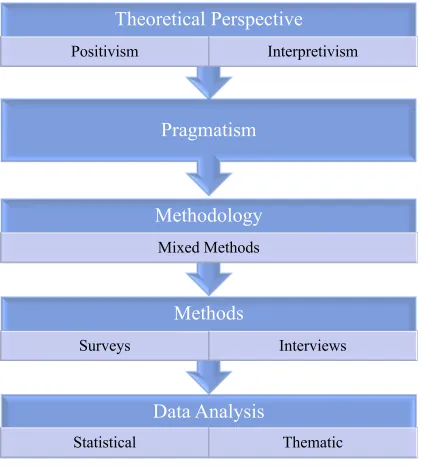
The research was conducted based on a pragmatic epistemological paradigm, and utilised mixed methods to generate data to address the research questions. These research questions were as follows:
•! Based on their personal uses of technology, rather than just age profile, can the pre-service teachers in this study be considered as members of the net generation or millennial learners?
•! What technologies are pre-service teachers using in the classroom, while on school placement, and how are these technologies being used? What are pre-service teachers’ perspectives on their experiences of technology use in their pre-service teacher education classes?
•! What barriers, if any, do pre-service teachers perceive as impacting on their use of technology in the classroom?
•! Does pre-service teacher’s technological self-efficacy correlate positively with their use of technology while on school placement?
iv variables (facilitating conditions and subjective norms), act as a positive predictor of their use of technology while on school placement?
The methods used to address these research questions included surveys and interviews, administered in a sequential explanatory design over three years, with each of two cohorts of pre-service teachers. The first survey was administered when the pre-service teachers entered their Bachelor in Education course, in first year, and then subsequent surveys were administered after school placement in second and third years. A sub-sample of survey respondents were invited to interview in the third year of the research study. Cohort one (C1) had 80 participants and cohort two (C2) had 104 participants. Of these, fourteen (n=14) respondents completed semi-structured interviews. Statistical and thematic analysis was conducted on the survey and interview data.
The results of the research demonstrated a complex and multi-faceted interplay of components that impacted on use of technology by the pre-service teacher participants. The research participants were frequent, and confident, users of a number of personal technologies. However, physical, social and cultural factors impeded technology use in the classroom. These factors included extrinsic barriers such as technology not being available and lack of technical support in the school. Intrinsic barriers experienced included participants own lack of competence using technology. Other contextual factors were germane for the pre-service teacher participants and included the influence of the mentor teacher, the college-based preparation course and the social norms experienced while on school placement. The implications of the results for general educational policies are discussed, where school environmental factors should be considered in future
v
Acknowledgements
This thesis is dedicated to Dad who left us far too soon – requiescat in pace.
I would like to thank Dr. Keith Johnston, my thesis supervisor, for his support and encouragement over the past six years. His insightful and perceptive words of wisdom were invaluable, as each chapter progressed. A particular word of appreciation for introducing me to Leonard Cohen in the Mahalia Jackson Theatre, New Orleans during a SITE conference – an exceptional event.
I am very grateful to the CRITE research group, especially Ann FitzGibbon, Elizabeth Oldham, Aibhin Bray, Brendan Tangney, Ciaran Bauer, Richard Millwood and Claire Smith. These critical friends reviewed chapters, conducted research seminars, shared desks (and teabags) and provided constructive feedback when needed. It is a real privilege to continue to work with this research group, as it has been for the past six years.
To my colleagues and friends in MIE, especially Dr. Anne O’Gara, whose support and words of encouragement came at pivotal junctures. A special word of thanks to Martin Lynch and Patrick Geary whose friendship, practical advice and counsel helped at every stage of the process. Also, to Anne McMorrough and Jennifer O’Sullivan who listened, cajoled, aided (& abetted) me along the way. Of course, without the student research participants, this project could not have happened, and their contribution to the research is recognised and appreciated.
Other PhD friends provided virtual assistance at all times of the day and night – Stella, Colin and Gerry, it has been entertaining. A special note of appreciation for my best pals Anto, Eva, Trina and the ‘mossies’, finally, my ‘homework’ is finished.
vi
Table of Contents
DECLARATION & ONLINE ACCESS ... II!
SUMMARY ... III!
ACKNOWLEDGEMENTS ... V!
TABLE OF CONTENTS ... VI!
LIST OF TABLES ... XVIII!
LIST OF FIGURES... XX!
LIST OF ABBREVIATIONS ... XXII!
LIST OF APPENDICES ... XXIII!
CHAPTER ONE INTRODUCTION ... 1!
BACKGROUND AND CONTEXT TO RESEARCH STUDY ... 1!
Research questions. ... 2!
RESEARCH LOCATION ... 3!
METHODOLOGY ... 3!
STRUCTURE OF THESIS ... 4!
CHAPTER TWO LITERATURE REVIEW ... 6!
PRE- SERVICE TEACHER EDUCATION IN IRELAND ... 8!
GREEN &WHITE PAPERS ... 9!
THE TEACHING COUNCIL ...10!
HIGHER EDUCATION AUTHORITY ...12!
National Strategy for Higher Education to 2030. ...13!
vii
SUMMARY... 14!
TECHNOLOGY IN IRISH EDUCATION ... 15!
THE SEVENTIES &EIGHTIES ... 16!
THE NINETIES ... 17!
SCHOOLS IT2000–APOLICY FRAMEWORK FOR THE NEW MILLENNIUM ... 18!
BLUEPRINT FOR THE FUTURE OF ICT IN IRISH EDUCATION ... 21!
TOWARDS 2016 ... 22!
NATIONAL DEVELOPMENT PLAN,2007 ... 22!
INSPECTORATE REPORT,2008... 24!
SMART SCHOOLS=SMART ECONOMY,2009... 25!
NATIONAL BROADBAND PLAN,2012 ... 25!
ICTCENSUS,2013 ... 26!
DIGITAL STRATEGY FOR SCHOOLS,2015 ... 27!
ACTION PLAN FOR EDUCATION,2016-2019 ... 28!
SUMMARY... 29!
PERSONAL USE OF TECHNOLOGY ... 31!
MILLENNIALS’USE OF TECHNOLOGY ... 31!
PROBLEMATIC TERMINOLOGY ... 32!
MEASUREMENT OF PERSONAL USE ... 34!
SUMMARY... 35!
PROFESSIONAL USE OF TECHNOLOGY ... 36!
TEACHERS’USE OF TECHNOLOGY ... 36!
SCHOOL POLICIES ... 39!
PRE-SERVICE TEACHERS AND THEIR COLLEGE PREPARATION COURSE ... 40!
viii
SCHOOL PLACEMENT REALITY ...45!
What is school placement? ...45!
Influence of school placement. ...47!
MEASUREMENT OF USE OF TECHNOLOGY...49!
SUMMARY ...50!
TECHNOLOGY INTEGRATION FACTORS ...51!
FIRST ORDER BARRIERS ...52!
SECOND ORDER BARRIERS ...53!
TEACHERS’BELIEFS AND INTRINSIC FACTORS ...55!
ATTITUDES...58!
Psychological construct of attitude. ...58!
SUMMARY ...61!
COMPUTERS AND SELF-EFFICACY ...62!
SELF-EFFICACY ...62!
COMPUTER SELF-EFFICACY ...64!
Efficacy and use of technology. ...65!
SUMMARY ...67!
THEORETICAL FRAMEWORK AND MEASUREMENT MODELS ...69!
THEORY OF REASONED ACTION ...69!
THEORY OF PLANNED BEHAVIOUR ...70!
TECHNOLOGY ACCEPTANCE MODEL ...73!
Technology acceptance model defined. ...74!
On-going use and application of TAM. ...75!
Criticism of TAM. ...79!
ix
SUMMARY ... 84!
CHAPTER TWO CONCLUSION ... 85!
CHAPTER THREE METHODOLOGY... 87!
LOGIC OF THE ENQUIRY ... 87!
RESEARCH QUESTIONS ... 89!
RESEARCH QUESTION ONE ... 89!
RESEARCH QUESTION TWO... 89!
RESEARCH QUESTION THREE ... 89!
RESEARCH QUESTION FOUR ... 89!
RESEARCH QUESTION FIVE ... 90!
EPISTEMOLOGY ... 90!
POSITIVISM ... 93!
INTERPRETIVISM ... 94!
PRAGMATISM ... 95!
RESEARCH DESIGN ... 96!
MIXED METHODS ... 96!
SEQUENTIAL EXPLANATORY DESIGN ... 97!
Timeline for the study. ... 98!
METHODS ... 100!
QUANTITATIVE METHODS SURVEYS ... 101!
Pilot surveys. ... 103!
Survey I. ... 105!
Surveys II & III. ... 107!
x
SURVEY DATA ... 109!
Nominal data. ... 110!
Ordinal data. ... 110!
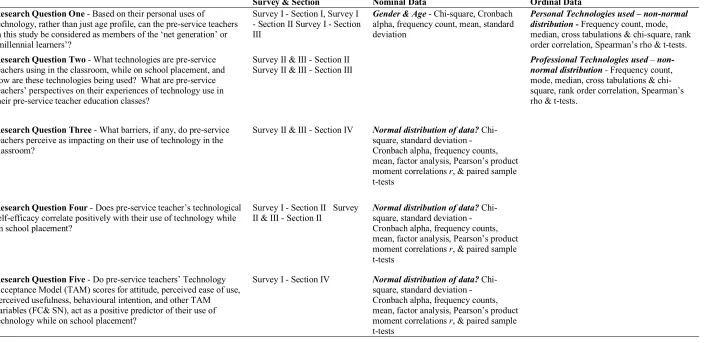
Review of statistical tests for each research question. ... 111!
Interval data. ... 113!
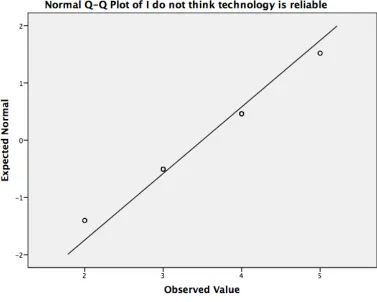
Tests for normality. ... 113!
Chi – square tests. ... 115!
NON-PARAMETRIC ANALYSIS ... 116!
Descriptive statistics. ... 116!
Spearman rank order correlation. ... 117!
PARAMETRIC ANALYSES... 118!
Descriptive statistics. ... 118!
Pearson’s product moment coefficient correlational analysis... 118!
T-tests. ... 119!
Factor analysis. ... 119!
QUALITATIVE METHODS ... 121!
SEMI –STRUCTURED INTERVIEWS ... 122!
Researcher as insider... 124!
Ethics & informed consent. ... 125!
SEMI-STRUCTURED INTERVIEW PROTOCOL ... 125!
Pilot interviews. ... 127!
SAMPLE SELECTION ... 128!
INTERVIEW TRANSCRIPTS ... 129!
THEMATIC ANALYSIS ... 129!
xi
Bias and validity. ... 133!
COMPUTER ASSISTED DATA ANALYSIS ... 135!
ETHICS OF THE RESEARCH ... 137!
COLLEGES’ETHICS COMMITTEES ... 138!
High-risk participants. ... 138!
Informed consent. ... 139!
Locus of research. ... 140!
Data protection. ... 141!
LIMITATIONS OF METHODOLOGY ... 141!
CHAPTER THREE CONCLUSION ... 142!
CHAPTER FOUR FINDINGS PART ONE ... 144!
PARAMETRIC AND NON-PARAMETRIC ANALYSES ... 144!
Tests for normality. ... 144!
Non-normal data. ... 145!
COHORT ONE AND TWO BASELINE DATA ... 146!
SAMPLE ATTRITION ... 147!
RESEARCH QUESTION ONE ... 149!
COHORT DEMOGRAPHICS ... 149!
EXPERTISE LEVELS... 150!
NON-NORMAL DATA DISTRIBUTION ... 151!
Mode and median results. ... 156!
PERSONAL TECHNOLOGIES USED ... 158!
Smart phones. ... 158!
xii
Social Media. ... 160!
Communication tools. ... 162!
Tablet devices and apps. ... 164!
OTHER PERSONAL TECHNOLOGIES ... 165!
CHI SQUARE &RANK ORDER CORRELATION ... 165!
EXPERTISE LEVELS &PERSONAL TECHNOLOGIES ... 170!
TECHNOLOGY AT HOME ... 170!
Desktop machines. ... 170!
Parental influence... 171!
Mobile phones. ... 172!
CONCLUSION ... 173!
RESEARCH QUESTION TWO ... 175!
NON-NORMAL DISTRIBUTION ... 175!
FREQUENCY COUNTS ... 178!
Data projectors & laptop. ... 181!
Desktop machines. ... 181!
Internet. ... 182!
Interactive whiteboard. ... 183!
PowerPoint. ... 184!
Video. ... 185!
iPads. ... 187!
TECHNOLOGIES NOT USED IN THE CLASSROOM ... 187!
COHORTS’USAGE PATTERNS ... 189!
EXPERTISE LEVELS &PROFESSIONAL TECHNOLOGIES ... 190!
xiii
HOW PROFESSIONAL TECHNOLOGIES WERE USED ON SCHOOL PLACEMENT ... 197!
Non-parametric analysis... 197!
Lesson planning... 199!
Social media. ... 199!
College virtual learning environment... 200!
Curriculum software packages. ... 200!
Other teaching methods mentioned at interview. ... 201!
Getting children involved. ... 203!
EXPERTISE LEVELS AND TEACHING WITH TECHNOLOGY ... 205!
PERSPECTIVES ON USE OF TECHNOLOGY ... 209!
CONCLUSION... 212!
CHAPTER FOUR CONCLUSION ... 214!
CHAPTER FIVE FINDINGS PART TWO ... 216!
Parametric Analysis ... 216!
RESEARCH QUESTION THREE ... 217!
NORMAL DISTRIBUTION OF DATA ... 217!
Reliability and validity. ... 220!
DESCRIPTIVE STATISTICS... 220!
Lack of technology. ... 223!
Influence of school placement environment. ... 226!
Lack of pedagogical models. ... 229!
Personal beliefs. ... 230!
Lack of skills. ... 231!
Beliefs about technology in a classroom. ... 233!
xiv
BARRIER SCALE ITEMS ... 236!
T-tests. ... 236!
FACTOR ANALYSIS ... 238!
LATENT FACTOR COMPOSITE SCORES ... 242!
EXPERTISE LEVELS AND BARRIERS EXPERIENCED ON SCHOOL PLACEMENT ... 243!
CONCLUSION ... 249!
RESEARCH QUESTION FOUR ... 250!
NORMAL DISTRIBUTION OF DATA ... 250!
Reliability. ... 253!
DESCRIPTIVE STATISTICS ... 253!
SELF-EFFICACY &INTERVIEWEES ... 256!
Personal mastery. ... 257!
Social models... 258!
College requirements. ... 259!
FACTOR ANALYSIS ... 261!
Composite technological self-efficacy scores. ... 264!
T-tests. ... 264!
PEARSON’S CORRELATION COEFFICIENT ANALYSIS ... 265!
TECHNOLOGICAL SELF-EFFICACY &EXPERTISE LEVELS ... 267!
CONCLUSION ... 271!
RESEARCH QUESTION FIVE ... 272!
NORMAL DISTRIBUTION OF DATA ... 272!
Reliability. ... 275!
DESCRIPTIVE STATISTICS ... 275!
xv
Behavioural intention. ... 279!
Perceived ease of use. ... 281!
Perceived usefulness. ... 282!
Subjective norm & facilitating conditions. ... 284!
FACTOR ANALYSIS ... 286!
T-tests. ... 290!
PEARSON’S CORRELATION COEFFICIENT ANALYSIS ... 291!
TAMVARIABLES &EXPERTISE LEVELS ... 293!
CONCLUSION... 297!
CHAPTER FIVE CONCLUSION ... 299!
CHAPTER SIX DISCUSSION ... 301!
EXPERTISE LEVELS... 301!
THEME ONE CONFIDENCE & COMPETENCE ... 302!
CONFIDENT USERS OF PERSONAL TECHNOLOGIES ... 302!
Facebook groups. ... 304!
TECHNOLOGICAL COMPETENCE &EFFICACY ... 305!
Substitution... 307!
PRE-SERVICE TEACHER EDUCATION ... 309!
Technology focused. ... 310!
Pedagogical knowledge lacking. ... 312!
Pre-service teacher educators... 315!
CONCLUSION... 317!
THEME TWO PHYSICAL, SOCIAL & CULTURAL FACTORS ... 319!
SCHOOL CONTEXT... 320!
xvi
Technical support. ... 321!
Social environment. ... 323!
Media influence. ... 325!
SUPERVISION OF SCHOOL PLACEMENT ... 326!
Supervisor opinions. ... 327!
An assessed environment. ... 328!
SYSTEMATIC APPROACH REQUIRED ... 329!
Partnership. ... 330!
CONCLUSION ... 331!
CHAPTER SIX CONCLUSION ... 331!
CHAPTER SEVEN CONCLUSION ... 333!
THE RESEARCH PROBLEM ... 333!
RESEARCH QUESTIONS ... 334!
Methods used to address the research problem. ... 335!
SUMMARY OF MAIN FINDINGS ... 335!
POLICY RECOMMENDATIONS ... 336!
PRACTICE RECOMMENDATIONS ... 338!
STRENGTHS AND LIMITATIONS OF THE RESEARCH ... 341!
Contribution to the literature. ... 342!
FURTHER RESEARCH ... 343!
Personal reflection. ... 344!
CHAPTER SEVEN CONCLUSION... 344!
REFERENCES ... 346!
APPENDICES ... 376!
xvii APPENDIX TWO SURVEY II&III ... 378!
xviii
List of Tables
TABLE 1RESEARCH QUESTION AND SURVEY SECTION OF RELEVANCE ... 104!
TABLE 2STATISTICAL ANALYSES CONDUCTED ON DATA ... 112!
TABLE 3OUTLINE OF NON-PARAMETRIC STATISTICAL TESTS CONDUCTED ON THE SURVEY DATA GATHERED ... 146!
TABLE 4DATA COLLECTION SCHEDULE FOR COHORT ONE ... 146!
TABLE 5DATA COLLECTION SCHEDULE FOR COHORT TWO ... 147!
TABLE 6COHORT ONE AND TWO GENDER PROFILES ... 147!
TABLE 7COHORT ONE AND TWO AGE PROFILES ... 150!
TABLE 8COHORT ONE AND TWO SELF-REPORTED EXPERTISE LEVELS... 150!
TABLE 9TECHNOLOGICAL SELF-EFFICACY AND EXPERTISE LEVEL CORRELATION SCORES .. 151!
TABLE 10PERSONAL TECHNOLOGIES USED AND FREQUENCY COUNTS PER COHORT ... 157!
TABLE 11CHI-SQUARE TEST FOR LAPTOP USE COHORT ONE ... 166!
TABLE 12COHORT ONE FREQUENCY OF USE (OFTEN OR VERY OFTEN) OF PERSONAL TECHNOLOGIES BY EXPERTISE LEVEL ... 168!
TABLE 13COHORT TWO FREQUENCY OF USE (OFTEN OR VERY OFTEN) OF PERSONAL TECHNOLOGIES BY EXPERTISE LEVEL ... 169!
TABLE 14COHORT ONE PROFESSIONAL TECHNOLOGIES AND FREQUENCY OF USE ON SCHOOL PLACEMENT ... 179!
TABLE 15COHORT TWO PROFESSIONAL TECHNOLOGIES AND FREQUENCY OF USE ON SCHOOL PLACEMENT ... 180!
TABLE 16DIFFERENCES BETWEEN COHORTS' USAGE PATTERNS PAIRED T-TEST RESULTS ... 190!
TABLE 17COHORT ONE SURVEY II FREQUENCY OF USE OF PROFESSIONAL TECHNOLOGIES > 4(OFTEN OR VERY OFTEN) BY EXPERTISE LEVELS ... 191!
TABLE 18COHORT ONE SURVEY III FREQUENCY OF USE OF PROFESSIONAL TECHNOLOGIES >4(OFTEN OR VERY OFTEN) BY EXPERTISE LEVEL ... 192!
TABLE 19COHORT TWO SURVEY II FREQUENCY OF USE OF PROFESSIONAL TECHNOLOGIES >4 (OFTEN OR VERY OFTEN) BY EXPERTISE LEVEL ... 193!
TABLE 20COHORT TWO SURVEY III FREQUENCY OF USE OF PROFESSIONAL TECHNOLOGIES >4(OFTEN OR VERY OFTEN) BY EXPERTISE LEVEL ... 194!
TABLE 21HOW TECHNOLOGIES WERE USED ON SCHOOL PLACEMENT FREQUENCY COUNTS ... 198!
TABLE 22TEACHING METHODS MOST AND LEAST USED BY DIFFERENT EXPERTISE LEVELS, COHORT ONE, SURVEY II AND SURVEY III ... 207!
TABLE 23TEACHING METHODS MOST AND LEAST USED BY DIFFERENT EXPERTISE LEVELS, COHORT TWO, SURVEY II AND SURVEY III ... 208!
TABLE 24SURVEY II(&III) RELIABILITY SCORES ... 220!
TABLE 25BARRIERS TO USING TECHNOLOGY FOR EACH COHORT DESCRIPTIVE STATISTICS . 222! TABLE 26PAIRED SAMPLE T-TESTS SURVEY DIFFERENCES ... 237!
TABLE 27PAIRED SAMPLE T-TESTS COHORT DIFFERENCES ... 237!
TABLE 28KMO SCORE FOR BARRIER STATEMENTS COHORT ONE ... 238!
TABLE 29FACTOR ANALYSIS ON BARRIER STATEMENTS & FACTOR LOADINGS FOR EACH .... 240!
TABLE 30FACTOR ANALYSIS ON BARRIER STATEMENTS & FACTOR LOADINGS FOR EACH .... 241!
TABLE 31COHORT ONE SURVEY II BARRIERS IMPACTING ON USE OF TECHNOLOGY ON SCHOOL PLACEMENT [AGREE & STRONGLY AGREE] ... 245!
xix TABLE 33COHORT TWO SURVEY II BARRIERS IMPACTING ON USE OF TECHNOLOGY ON
SCHOOL PLACEMENT [AGREE & STRONGLY AGREE] ... 247!
TABLE 34COHORT TWO SURVEY III BARRIERS IMPACTING ON USE OF TECHNOLOGY ON SCHOOL PLACEMENT [AGREE & STRONGLY AGREE] ... 248!
TABLE 35SURVEY I SELF -EFFICACY RELIABILITY SCORES ... 253!
TABLE 36TECHNOLOGICAL SELF-EFFICACY STATEMENTS DESCRIPTIVE STATISTICS ... 255!
TABLE 37KMO SCORE FOR TECHNOLOGICAL SELF-EFFICACY ... 261!
TABLE 38TECHNOLOGICAL SELF-EFFICACY STATEMENTS FACTOR LOADING SCORES FOR SURVEY 1, SECTION II ... 263!
TABLE 39TECHNOLOGICAL SELF-EFFICACY AND EXPERTISE LEVEL CORRELATION SCORES 264! TABLE 40RESULTS FROM T-TESTS BETWEEN COHORT DIFFERENCES FOR COMPOSITE TECHNOLOGICAL SELF-EFFICACY SCORES ... 265!
TABLE 41COMPOSITE TECHNOLOGICAL SELF-EFFICACY SCORES CORRELATED BY MOST FREQUENTLY USED TECHNOLOGIES ... 265!
TABLE 42COHORT ONE TECHNOLOGICAL SELF-EFFICACY STATEMENTS BY EXPERTISE LEVEL AND LEVELS OF AGREEMENT [AGREE & STRONGLY AGREE] ... 268!
TABLE 43COHORT TWO TECHNOLOGICAL SELF-EFFICACY STATEMENTS BY EXPERTISE LEVEL AND LEVELS OF AGREEMENT [AGREE & STRONGLY AGREE] ... 269!
TABLE 44SURVEY I RELIABILITY OF TAM STATEMENTS ... 275!
TABLE 45TECHNOLOGY ACCEPTANCE MODEL [TAM]MEAN SCORES PER COHORT SORTED BY TAMFACTORS... 276!
TABLE 46SURVEY IKMO SCORES FOR TAM VARIABLES COHORT TWO ... 287!
TABLE 47FACTOR LOADING SCORES FOR ATTITUDE COHORT TWO ... 288!
TABLE 48FACTOR LOADINGS FOR BEHAVIOURAL INTENTION COHORT TWO ... 288!
TABLE 49FACTOR LOADINGS FOR PERCEIVED EASE OF USE COHORT TWO ... 289!
TABLE 50FACTOR LOADINGS FOR PERCEIVED USEFULNESS COHORT TWO ... 289!
TABLE 51PAIRED T-TEST RESULTS FOR ALL TAM COMPOSITE SCORES FOR DIFFERENCES BETWEEN COHORT ONE AND COHORT TWO ... 291!
TABLE 52TAM STATEMENTS ATTITUDE & BEHAVIOURAL INTENTION: LEVELS OF AGREEMENT BY EXPERTISE LEVEL FOR EACH COHORT ... 294!
xx
List of Figures
FIGURE 1THEORY OF REASONED ACTION,CREATIVE COMMONS LICENCE ATTRIBUTION,
NON-COMMERCIAL ...70!
FIGURE 2THEORY OF PLANNED BEHAVIOUR MODEL,CREATIVE COMMONS LICENCE ATTRIBUTION,NON-COMMERCIAL ...71!
FIGURE 3 TECHNOLOGY ACCEPTANCE MODEL,DAVIS (1989)CREATIVE COMMONS LICENCE ATTRIBUTION,NON-COMMERCIAL...75!
FIGURE 4THE UTAUTMODEL-VENKATESH ET AL.(2003),CREATIVE COMMONS LICENCE ATTRIBUTION,NON-COMMERCIAL...83!
FIGURE 5RESEARCH PARADIGM, ADAPTED FROM CROTTY’S (1998)THEORETICAL FRAMEWORK (P.4). ...92!
FIGURE 6SEQUENTIAL EXPLANATORY DESIGN AS APPLIED TO THE CURRENT RESEARCH. 98! FIGURE 7TIMELINE FOR EACH COHORT & SEQUENCE OF STUDY ...99!
FIGURE 8SAMPLE OF THE OBSERVED AND EXPECTED VALUES Q-Q PLOT ... 115!
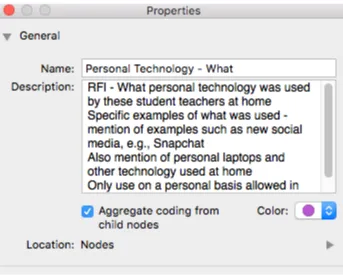
FIGURE 9SAMPLE OF A RULE FOR INCLUSION ON PERSONAL TECHNOLOGY CODE ... 131!
FIGURE 10SAMPLE OF INITIAL CODING ... 132!
FIGURE 11SAMPLE OF SEARCHING FOR THEMES ... 133!
FIGURE 12SAMPLE OF REVIEWING THEMES - AXIAL... 133!
FIGURE 13SKEWED DISTRIBUTION OF LAPTOP USAGE COHORT ONE... 152!
FIGURE 14QUARTILE TO QUARTILE PLOT OF LAPTOP USAGE COHORT ONE ... 153!
FIGURE 15SKEWED DISTRIBUTION OF SMARTPHONE USAGE COHORT ONE ... 153!
FIGURE 16QUARTILE TO QUARTILE PLOT OF SMARTPHONE USAGE COHORT ONE ... 154!
FIGURE 17SKEWED DISTRIBUTION OF LAPTOP USAGE COHORT TWO ... 154!
FIGURE 18QUARTILE TO QUARTILE PLOT OF LAPTOP USAGE COHORT TWO... 155!
FIGURE 19SKEWED DISTRIBUTION OF SMARTPHONE USAGE COHORT TWO ... 155!
FIGURE 20QUARTILE TO QUARTILE PLOT OF SMARTPHONE USAGE COHORT TWO ... 156!
FIGURE 21HISTOGRAM OF SKEWED DISTRIBUTION OF PROFESSIONAL USE OF DIGITAL PROJECTOR RESPONSES FOR COHORT ... 176!
FIGURE 22QUARTILE TO QUARTILE PLOT OF PROFESSIONAL USE OF DIGITAL PROJECTOR RESPONSES FOR COHORT ONE ... 176!
FIGURE 23EXAMPLE OF HISTOGRAM OF PROFESSIONAL USE OF LAPTOP RESPONSES FOR COHORT TWO ... 177!
FIGURE 24QUARTILE TO QUARTILE PLOT OF PROFESSIONAL USE OF LAPTOP RESPONSES FOR COHORT TWO ... 177!
FIGURE 25EXAMPLE OF NORMAL DISTRIBUTION OF ONE BARRIER STATEMENT FOR COHORT ONE ... 218!
FIGURE 26EXAMPLE OF QUARTILE-QUARTILE PLOT OF ONE BARRIER STATEMENT FOR COHORT ONE ... 218!
FIGURE 27EXAMPLE OF NORMAL DISTRIBUTION OF ONE BARRIER STATEMENT FOR COHORT TWO ... 219!
FIGURE 28EXAMPLE OF QUARTILE-QUARTILE PLOT OF ONE BARRIER STATEMENT FOR COHORT TWO ... 219!
FIGURE 29HISTOGRAM OF NORMALLY DISTRIBUTED RESPONSES FOR AN EXAMPLE OF A SELF-EFFICACY STATEMENT COHORT ONE ... 251!
xxi FIGURE 31HISTOGRAM OF NORMALLY DISTRIBUTED RESPONSES FOR AN EXAMPLE OF A
SELF-EFFICACY STATEMENT COHORT TWO ... 252!
FIGURE 32QUARTILE-QUARTILE PLOT OF NORMALLY DISTRIBUTED RESPONSES FOR AN EXAMPLE OF THE SELF-EFFICACY STATEMENTS COHORT TWO ... 252!
FIGURE 33COHORT ONE HISTOGRAM OF NORMAL DISTRIBUTION OF SAMPLE TAM
STATEMENT ... 273!
FIGURE 34COHORT ONE QUARTILE-QUARTILE PLOT OF SAMPLE TAM STATEMENT’S NORMAL DISTRIBUTION ... 273!
FIGURE 35COHORT TWO HISTOGRAM OF NORMAL DISTRIBUTION OF SAMPLE TAM
STATEMENT ... 274!
FIGURE 36COHORT TWO Q-Q PLOT OF SAMPLE TAM STATEMENT’S NORMAL
xxii
List of Abbreviations
ACM Access, Competence and Motivation Model ATCU Attitude to Computer Use Model
BECTA British Educational Communications and Technology Agency BI Behavioural intention
CPD Continuing Professional Development C TAM
-TPB Combined TAM and TPB model CAS Computer Attitude Scale
CESI Computers in Education Society Ireland
CRITE
Centre for Research in IT in Education, University of Dublin, Trinity College
DCMNR Department of Communications, Marine & Natural Resources DES Department of Education and Skills
DNAS Digital Native Assessment Scale EdTech Educational Technology
EU European Union
FC Facilitating Conditions HEA Higher Education Authority IBM International Business Machines
ICT Information and Communications Technology INTO Irish National Teacher's Organisation
IWB Interactive Whiteboard
LMS Learning Management System MBA Master’s in Business Administration
NCCA National Council for Curriculum and Assessment NCTE National Centre for Technology in Education NDP National Development Plan
NT National Teacher
OECD Organisation for Economic Co-Operation and Development PEU Perceived Ease of Use
PST Pre-Service Teacher PU Perceived Usefulness
SN Subjective Norm
SPSS Statistical Package for the Social Sciences TAM Technology Acceptance Model
TPB Theory of Planned Behaviour TRA Theory of Reasoned Action TTF Task Technology Fit Model
xxiii
List of Appendices
Appendix One Survey
Appendix Two Survey II & III
1
Chapter One Introduction
This chapter provides an introduction to the research study. It will explain the rationale
and background to the research. The focus of the research is to examine pre-service
teachers’ use of technology in their personal and professional lives. It will discuss the
disconnect that occurs when their frequent personal use of technology is not matched in
a professional environment. The research thesis uses the term pre-service teacher, in lieu
of student teacher, trainee teacher and student. A short précis of the forthcoming chapters
is provided here.
Background and Context to Research Study
Irish pre-service teachers’ use of technology on a personal basis, or in the classroom, has
long been an area of interest of the researcher (Egan & FitzGibbon, 2010). This previous
research identified a gap in the literature on personal and professional usage of technology
by Irish pre-service teachers. This prompted further enquiry as to how pre-service
teachers’ attitudes to technology were formed, and how these attitudes impacted on actual
use of technology in the classroom, especially during school placement blocks.
Cuban (1986, 1993, 2001a, 2001b) and Papert (1987a, 1987b) have long
advocated that having technology in a classroom does not ensure use of that technology.
Yet, the pre-service teachers in the current research were the millennials (Dede, 2005)
who were using technology every day on a personal basis, why were they not bringing
this familiarity with technology into the classroom? This is not a uniquely Irish
phenomenon, reviews of pre-service teachers’ use of technology in other countries have
reported similar results (Albion, 2011; Ottenbreit-Leftwich et al., 2012; Redmond &
Albion, 2002; Thinyane, 2010). A techno-centric focus to technology integration has
2 the benefit of technology and education was mooted in Ireland (DES, 1980). However,
Ireland has had an inconsistent approach to technology integration (DES, 1997), and
various initiatives and projects over the years have had limited effect on changing the
way technology is used in a classroom context. Hence, the focus of the research study
emerged and the findings would have implications for future policy, practice and
research.
Research questions.
The research questions were guided by the overarching theme of why if pre-service
teachers were using technology in their everyday lives, this was not translating to similar
frequent use of technology in their professional lives. This theme provided the focus of
the research, which was guided by five research questions. These were:
•! Based on their personal uses of technology, rather than just age profile, can the
pre-service teachers in this study be considered as members of the net generation
or millennial learners (Cuban, Kirkpatrick, & Peck, 2001; Dede, 2000; Tapscott,
1998)?
•! What technologies are pre-service teachers using in the classroom, while on
school placement, and how are these technologies being used? What are
service teachers’ perspectives on their experiences of technology use in their
pre-service teacher education classes (Cosgrove, Zastrutzki, & Shiel, 2005; Shiel,
Sofroniou, & Cosgrove, 2006)?
•! What barriers, if any, do pre-service teachers perceive as impacting on their use
of technology in the classroom (Ertmer, 1999; Ertmer, Ottenbreit-Leftwich,
3
•! Does pre-service teacher’s technological self-efficacy correlate positively with
their use of technology while on school placement (Albion, 2007; Bandura,
1977)?
•! Do pre-service teachers’ Technology Acceptance Model (TAM) scores for
attitude, perceived ease of use, perceived usefulness, behavioural intention, and
other TAM variables (facilitating conditions and subjective norms), act as a
positive predictor of their use of technology while on school placement (Davis,
1989; Teo, Lee, & Chai, 2007; Venkatesh & Davis, 2000)?
Research Location
The locus of the research was the researcher’s institution, one of many colleges of
education in Ireland. However, the researcher was not a member of the academic teaching
staff, but rather worked in an administrative support function, in the institution. The
researcher had no teaching contact with the pre-service teacher participants during their
time in college. The researcher also used a variety of techniques to negate demand
characteristics that may have been experienced by the pre-service teacher participants.
These are discussed in chapter three.
Methodology
The research study was conducted within a pragmatic epistemological paradigm and
utilised a mixed methods approach. The methods used included surveys and interviews,
administered in a sequential explanatory design over three years, with each of two cohorts
of pre-service teachers. The first survey occurred when the pre-service teachers entered
their Bachelor in Education course, in first year, and then subsequent surveys happened
after school placement in second and third year. A sub-sample of survey respondents
4 had 80 participants and cohort two (C2) had 104 participants. Of these, fourteen (n=14)
respondents completed semi-structured interviews. Sample attrition became a feature of
the research, as the research was of three year’s duration, and this is discussed in chapter
four. Parametric and non-parametric statistical analysis was conducted on the survey
data, using SPSS. Thematic analysis was conducted on the interview data, and the
researcher used nVivo to aid this analysis. The results of this pragmatic mixed methods
sequential explanatory research design are illustrated in chapters four and five.
Structure of Thesis
This thesis is presented in seven chapters. This first chapter provides a brief introduction
to the study and provides a context to the work. The second chapter outlines the relevant
literature that informed the research. This chapter is divided into five main sections.
These are the context of teacher education and technology integration in Ireland,
pre-service teachers and their personal uses of technology, professional uses of technology,
barriers experienced using technology and finally, a review of the psychological concept
of self-efficacy and how this has been applied to use of technology. Finally, a theoretical
framework for the current study is presented, and discussed in light of the psychological
literature that informed the TAM model. The third chapter provides a review of the
chosen methodology (mixed methods) and considers how a pragmatic epistemological
approach was employed during the course of the research study. This third chapter also
provides justification for the analytical methods chosen. Chapters four and five present
the findings of the research study. The results are presented by research question, with
analysis of the results presented sequentially. Chapter six examines the main findings of
the research and discussed where these have added to current literature on pre-service
teachers’ use of technology and factors that influenced this use. Finally, chapter seven
5 education, and the implications for governmental technology integration policies. This
final chapter delineates the limitations of the current work and provides suggestions for
6
Chapter Two Literature Review
This chapter outlines the literature that forms the basis of various themes explored in the
study and provides the foundation for the research methods chosen. The first section of
this chapter provides a context for the research. This section focuses on pre-service
education and technology policy in Ireland. This section proceeds to contextualise the
domain of technology in education and outline the impact of Irish government policies
on technology in education, up to and including the current Digital Strategy for Schools
(DES, 2015). Having reviewed the educational technology policies over the past 40 years
in Ireland, the predominant theme is one of techno centrism (sic.) – where there has been
a “tendency to given centrality to the technical object” (Papert, 1987a, p. 2) and a distinct
lack of detail on how to implement technology in the classroom. This techno-centric
theme persists to the current day with continued focus on provision of hardware and
access to broadband as key objectives of the Digital Strategy for Schools (2015), with a
lesser focus on the pedagogy of technology. However, the more recent Action Plan for
Education, 2016- 2019 demonstrates some awareness that technological pedagogies are
also required, in future education initiatives.
The second substantive section reviews literature on practice and use of
technology by pre-service teachers, with a particular focus on their professional use of
technology, during school placement. Use of technology is explored within the broader
domains of personal and professional use. Factors that influence successful technology
integration in the classroom are then investigated. The third section reviews intrinsic
factors that influence technology integration in the classroom, in particular the
psychological concepts of self- efficacy and attitude. The application of these concepts
to the technological domain with pre-service teachers is then discussed. The final section
7 measure attitude and self-efficacy. Explanation of how these psychological constructs
have been applied to the technological domain is then outlined.
While there is extensive literature on in-service teachers’ attitudes and use of
technology, there are few examples of pre-service teachers’ use and attitudes to
technology in the classroom, in an Irish context. Each section is designed to justify the
8
Pre- Service Teacher Education in Ireland
This section will give an overview of the history of pre-service teacher education in
Ireland. It will review various government policy documents that were influential during
that time, including the Green and White Papers, and then outline the enactment of the
Education Act, 1998. It will discuss the role of the Higher Education Authority and how
the establishment of the Teaching Council of Ireland heralded a time of change for
pre-service teacher education generally, in the past decade.
Formal training of primary school teachers (herein after referred to as pre-service
teachers) was first established in Ireland with the publication of the Stanley Letter (DES,
1831). This letter outlined formal procedures to govern education in Ireland and
established a model school in Dublin (now the location of the Department of Education,
Marlborough Street, Dublin) that would train teachers. Eventually, teacher training
model schools were established throughout the country and the new Irish State (1922)
inherited five of these model schools (Travers et al., 2004). These became colleges of
education in the 1960s (Coolahan, 1981) where trainee teachers qualified with a ‘national
teacher’ (NT) title, upon completion of a two-year course. However, this was not a
university qualification and after much lobbying from the Irish National Teacher
Organisation (INTO, a primary school teacher union), the Government requested that the
universities agree to award degrees to primary teachers. Thus, a formal Bachelor of
Education degree was established in 1974,
within a short period in the 1970s, the teaching profession became an all graduate one, with a mixture of concurrent and consecutive initial teacher education programmes on offer, and all new categories of teachers having degree status (Travers et al., 2004, p. 8).
While much progress had been made on formalising the role of pre-service teacher
9 example, Carysfort College (one of the largest teacher education colleges in the State at
that time) was closed due to a declining birth rate. Further, a more generalised lack of
government action in regard to education had been noted by Coolahan (2004).
The Organisation for Economic Co-operation and Development (OECD) (1991)
undertook a review of Irish Education in 1991. Whilst acknowledging the positive
aspects of the Irish education system, the OECD report outlined key areas of improvement
required, especially in teacher education. The OECD stated that teaching should be
viewed as a career, where “good quality initial teacher education, followed by a structured
form of induction and greatly expanded in-service teacher education” (OECD, 1991, p.
17) was recommended. These recommendations went on to form the basis of the Green
Paper, published by the Irish Government, the following year (1992).
Green & White Papers
Pre-service teacher education in Ireland was given formal mention in the Green Paper
(DES, 1992) where “a well-trained and committed teaching force is essential in
maintaining and enhancing the quality of education” (pp. 163-164). In 1995, the Charting
our Educational Future - White Paper (DES, 1995), again confirmed the importance of
“the teaching career as a continuum involving initial teacher education, induction
processes and in-career development opportunities” (p. 128). This White Paper
consolidated the role of universities in providing linkages with the Colleges of Education
and stressed an emphasis on combining academic study with the study of educational
theory and practice, alongside the subject requirements of the primary school curriculum.
The Department (of Education) also advised the development of a post-graduate diploma
(Higher Diploma) for those wishing to enter the teaching profession, but whose primary
degree was in another discipline. The effect of these two papers was to establish,
10 publications, a structured model of teacher education now applied to every teacher
(whether primary or post-primary) in Ireland. The Green & White Papers also provided
the basis for various sections in the Education Act, 1998, which was to follow, three years
later.
The Teaching Council
The Education Act 1998 transposed many of the recommendations of the White Paper
into legislation. A key feature of the Education Act, 1998 was the creation and
establishment of The Teaching Council by statute (The Teaching Council Act, 2001).
This gave statutory provision to the newly formed Teaching Council’s ability to review
and accredit the programmes of teacher education and training provided by institutions
of higher education and training in the State (Teaching Council Act 2001, s. 38.1.a).
Coolahan (2001, 2004) in his general review of pre-service teacher education in
Ireland, echoed the findings of both the White Paper (DES, 1995) and the earlier OECD
Report (OECD, 1991) which argued that the length and structure of the programmes
available should be reviewed. The Kellaghan Report (2002) also addressed course
modules in pre-service teacher education and was critical of their lack of integration.
With particular reference to the foundation courses (psychology of education, history of
education, philosophy of education) Kellaghan (2002) argued that when concepts and
theories of education were learned out of context, they were then only retrieved and
applied when a practical problem occurred. Both Coolahan and Kelleghans’
recommendations were key influencers when the Teaching Council commenced their
reviews of initial teacher education in the various colleges of education in 2009.
The Teaching Council undertook these, statutorily provisioned, reviews of
pre-service teacher education courses between 2009 and 2011 and examined the courses on
11 Education at that time, which offered programmes of primary teacher education leading
to a Bachelor of Education degree. These colleges also offered Graduate Diplomas in
Education (known as PG. Dip sic.), for those that already held an undergraduate degree,
in another discipline. The Teaching Council reviews were based on the over-arching
principle that,
the accelerating pace of societal and legislative change and educational reform, coupled with the increasingly complex and demanding role of teachers, necessitate a thorough and fresh look at teacher education. This is essential to ensure tomorrow’s teachers are competent to meet the challenges they face and are life-long learners, continually adapting over the course of their careers to enable them to support their student’s learning (Teaching Council, 2010, p. 7).
As a result of the Teaching Council’s reviews, they developed a document called
Initial Teacher Education: Criteria and Guidelines for Programme Providers (Teaching
Council, 2011) which outlined new criteria for pre-service teacher education courses in
Ireland. As a result of these guidelines, teacher education programmes in the colleges of
education, underwent substantial revision and re-configuration between 2011 and 2012.
One of the major changes that resulted from the Teaching Council review was the
extension of the Bachelor of Education programme from three years to four years’
duration, which came into effect for all new entrants to colleges, from September 2012.
Furthermore, the Postgraduate Diploma was extended from eighteen months to two years,
which came into effect from September 2014. This was now known as a Professional
Masters in Education (PME). These changes meant that a primary school teacher would
have either have spent four years as an undergraduate, and graduate with an honours
degree in education; or spent six years in college and graduate with a master’s degree in
education, before they commenced their teaching career. The Teaching Council reviews
thereby ensured a uniform approach to teacher education, across all colleges of education,
12 The Teaching Council guidelines (2011) provided clarity on the required content
for these newly configured degree courses. They advised that pre-service teacher
education courses should concentrate on three main areas – foundation studies;
professional studies and school placement (Teaching Council, 2011, p. 13) and outlined
the names of sixteen subjects that should be covered under these headings. However,
interpretation of the nature and duration of these sixteen topics was at the discretion of
each College of Education, when reconfiguring their individual programmes of study. A
particular focus on literacy, numeracy, ICT and inclusion were suggested (Teaching
Council, 2011, p. 15) but the duration and operation of these modules, in the various
colleges differed greatly, depending on the hours attributed to them, and where they
would fit into a curriculum focussed timetable. The Teaching Council had mentioned the
importance of technology in education in 2011, whereas heretofore ICT had not held such
prominence.
Higher Education Authority
The Higher Education Authority (HEA) was established by statute (HEA Act, 1971) for
“effective governance and regulation of higher education institutions and the higher
education system” (HEA website, n.d). Funded by the Department of Education the
HEA, as an agency of government, has statutory powers to carry out its functions. One
of its primary responsibilities was to review the operation of higher education institutions
and as such, a strategy group to write a future vision for these educational institutions,
was commissioned in 2010. The report of that strategy group is discussed subsequently.
This strategy document, combined with the reviews by the Teaching Council, heralded a
13 National Strategy for Higher Education to 2030.
The National Strategy for Higher Education to 2030 (Hunt, 2011) outlined a vision for
the future of higher education in Ireland, up to 2030. Commonly referred to as the Hunt
Report, the strategy document was commissioned by the Higher Education Authority,
under the auspices of the Department of Education. There were four main areas of focus.
These included greater diversity in higher education, increased research capacity of
higher education institutions, general funding policies and a number of structural changes
required for educational institutions. One concern raised by authors of the Hunt Report
was an awareness that the future education landscape would require “new pedagogies and
new delivery channels and that flexibility of provision” (p. 54) would be a requirement.
However, a lack of teaching and learning skills amongst those teaching in higher
education was identified by the authors. Hence, a separate government funded agency
was established to address this.
National Forum for Teaching & Learning at Third Level, 2012.
The National Forum for Teaching and Learning at Third Level (National Forum website,
n.d.) was announced in 2012. The role of the National Forum was to “enhance the
teaching and learning for all students in higher education” and they have funded various
projects in higher education institutions since. One key area of focus has been “building
digital capacity” of those teaching in higher education, and two Digital Roadmaps
(National Forum website, 2014, 2015) have been published in this regard. These
roadmaps were announced with associated funding opportunities for all higher
educational institutions and have been successful in supporting a number of digital
14 Summary
This section has provided a short history of pre-service teacher education in Ireland and
discussed the relevance of the Green and White papers, and their impact on pre-service
teacher education. The section also discussed the role of the Higher Education Authority
and the establishment of the National Forum for Teaching and Learning. The role of the
HEA and National Forum, and their agenda to increase the digital capacity of teaching
staff in HEA funded institutions was noted, as being particularly relevant in the current
research. An overview of the implications of the Education Act (1998), and subsequent
formation of the Teaching Council, and its influence on pre-service teacher education was
also outlined. This section then considered how the establishment of the Teaching
Council, the publication of the Hunt Report and subsequent reviews of teacher education
colleges heralded a time of change, in pre-service teacher education in Ireland.
The next section will review the various government documents, initiatives and
policies that have been influential on technology integration in Irish classrooms. It also
provides a critique of various governments’ views on technology integration that persist
15
Technology in Irish Education
This section will outline the history of governmental policy initiatives, and related
documents, that have influenced how technology has been used in the Irish classroom
since the 1970s. While there have been many projects and programmes designed to
improve both teachers and students’ access to technology, progress has been slow, with
a singular techno-centric approach. Various commentators’ analyses of policy
development on technology in education are also included in this section. Bruce (1993)
argued that most policy development in relation to technology in education has tended to
be ‘innovation focused’,
which tends in practice to highlight improvement in conditions…. for whatever area, the innovation addresses and problems are presented as remaining obstacles to overcome (p.3).
Bruce (1993) conceded that the real change happens at a social system level of policy
implementation, and “the discussion of technologies is too often isolated from an
understanding of the settings in which the technologies are used” (p. 4). Selwyn (2011a)
and others (Zhao, Pugh, Sheldon, & Byers, 2002) have critiqued the nature of
governmental policy discourse on the role of technology in education and referred to the
“technotopian” (p. 12) views of governments’ approaches to technology integration in
classrooms. Often seen as a universal belief in the ability of technology to improve
education, Selwyn (2011) outlined the critical role of the school, where the context of
where technology implementation happens was key to the success (or otherwise) of that
technological intervention. Schools were subject to “a series of complex interactions and
negotiations with the social, economic, political and cultural contexts into which they
emerge” (Selwyn, 2011, p. 41). How this has influenced use of technology in Irish
schools over the past few decades is now described, and this innovation focused (Bruce,
16 The Seventies & Eighties
Initial discussions around use of technology in education go as far back as the 1970’s and
one of the key outcomes of that decade was the establishment of CESI (Computers in
Education Society of Ireland). One of its original members, Elizabeth Oldham (Oldham,
1998), remembers a time of microcomputers; a focus on programming languages and
much hope that “programming could be a route to problem-solving for all, or at least, for
very many, students”. CESI’s role, at that time, was focused on “the promotion of IT in
education in a manner that is consistent with best principles and highest standards in
education”. McGarr (2009) referred to this era as the early technophile stage where early
adopters in Irish education were influential in their use of ICT, and he mentioned the
formation of CESI whose members were those “motivated by a curiosity about new
technology” (p. 1097).
Based on the results of a teacher survey conducted by Breathnach (1984, p. 18)
teachers, at that time, were concerned with their own computer literacy. For example,
CESI had lobbied to introduce computer studies as an optional module on the Leaving
Certificate curriculum. However, only teachers with a qualification to teach the subject
were allowed offer it, and there was no set syllabus provided. As this course was not part
of the Leaving Certificate examination, Breathnach (1984) was critical that,
the criteria for monitoring are unclear, and the distinctions made are gross, effectively between pass and fail; furthermore, the certificates awarded are separate from the Leaving Certificate proper, and therefore of dubious status (p.14).
During this time Kelly (1985) commented on a long history of inconsistency between the
term “computers in education” and the curriculum subject of “computer studies” (p. 156).
Kelly clarified that the term ‘computers in education’ meant both the use of the computer
17 aid or sometimes even replace the teacher in the classroom” (p. 156). This variance of the
terminology relating to the use of computers as a pedagogic aid rather than as a
technological tool has been the subject of debate since (Albion, Jamieson-Proctor, &
Finger, 2010; Bruce, 1993; Koehler & Mishra, 2009; Papert, 1987a) and persists to the
present day.
The Nineties
During the 1990s a plethora of technology related policy announcements were released
by the Irish government. Following publication of the Green Paper (DES, 1992) on
Education for a Changing World, as outlined earlier, Irish government policy was
concerned with “keeping abreast of the potential created by new technologies for the
process of teaching and learning” and outlined that “the use of the new information
technologies is likely to become a more familiar feature of classroom life in the future”
(p. 134), yet no specific implementation strategy was detailed. As outlined earlier the
Green and White papers formed the basis of the Education Act 1998. However, there
was no specific mention of ICT or technology in the Education Act, 1998 where one
section suggested teachers should “be aware of accelerating changes in their
environment” and that in-service training would therefore, be required (Walsh, 2011, p.
63). As Walsh (2011) commented “often policy documents are aspirational and can
remain little more than the good intentions of short-lived governments if not translated
into action” (p. 64); a critique of the lack of specifics to address implementation.
Indeed, the INTO (1996) report on Issues and Recommendations for Information
Technology in Irish Primary Education acknowledged that while the pace of change in
schools was quickening as the new millennium approached, government policy was not
keeping pace. Critically there was no national policy in relation to the development of
18 level to allow support and training for primary school teachers, as well as to equip schools
with the hardware required. Referring to the pilot project of the Primary Project –
Computers in Irish Primary Schools (DES, 1987), that had identified fundamental
problems around lack of access in primary schools, the INTO remarked on a lack of
activity by the Department of Education, in the “intervening twelve years and there is no
evidence to suggest that the Department has any plans to begin addressing them now” (p.
24). They (INTO) reported they were aware of the many primary school teachers who
were “understandably apprehensive about how to incorporate it (ICT sic.) into their
teaching methods” (p.i). Their report (INTO, 1996) outlined three fundamental principles:
- That every child and teacher had the right of access to the curriculum through information technology at school;
-! That teachers had the right of access for IT training at both pre and in-service levels of education and finally,
-! That information technology should be integrated into the primary curriculum as a cross-curricular resource (p. v).
They further recommended that, in relation to pre-service teacher education, an “overall
comprehensive pre-service programme in IT should be established in consultation with
the Colleges of Education and the INTO” (p. 25) and that this programme should focus
on the use of IT as a training tool, rather than just focus on the hardware. Referred to as
the “keyboarding phase” by McGarr (2009) the focus had begun to shift towards ‘how’
teachers were using the technology, rather than ‘what’ technology was available to
teachers, in the classroom. Yet, this was twenty years ago, and progress has been slow
since.
Schools IT 2000 – A Policy Framework for the New Millennium
Providing €51 million in funding, Schools IT 2000 – A Policy Framework for the New
Millennium sought to increase the integration of ICTs in primary and post-primary level
19
for the New Millennium “lags significantly behind” (DES, 1997, p. 1) its European
partners in the integration of information and communication technology in the
classroom. In light of this, the announcement of Schools IT 2000 was seen as a positive
first step to “computerise the nation’s schools” (Judge, 2002, p. 3). It outlined a range of
initiatives targeted at integration of ICT into Irish schools (H2 Learning, 2015) and sought
to,
place our pupils and teachers at the cutting edge of international innovation and development in education and help to secure important skills necessary to our future economic well-being (DES, 1997, p. 1).
Schools IT 2000 (DES, 1997) had three overarching themes – namely
-! Technology Integration Initiative (provision of technology),
-! Teaching Skills Initiative (provision of training on skills and pedagogy to use
ICT) and
-! Schools Support Initiative (provision of a Scoilnet website and School
Integration Project).
One of the main objectives of the technology provision objective was to ensure every
student in an Irish classroom,
should have opportunities to achieve computer literacy and to equip themselves for participation in the information society; support is given to teachers to develop and renew professional skills, which will enable them to utilise ICTs as part of the learning environment of the school (DES, 1997, pp. 2-3).
Schools IT 2000 also funded the National Centre for Technology in Education (NCTE)
which saw the rollout of a dialup broadband connection to “most schools” (p. 1270) and
was effective in raising the profile of computer literacy training requirements for teachers.
At that time, Freeman, Holmes, and Tangney (2001) believed “that ICTs within the
classroom are still confined to the ‘early adopter’ category and severe challenges are in
20 that is still somewhat valid sixteen years later. However, a report of the National Policy
Advisory and Development Committee (NCTE, 2002) on the Impact of Schools IT 2000,
detailed the achievements arising from the initiative and concluded that “it had been
successful in increasing the number of computers in Irish schools, and in significantly
increasing internet access for teachers and pupils” (p. 1). Yet investment by government
in IT in schools was still an issue, and the NCTE (2002) said “significant and sustained
investment” (p. 9) was still required.
Mulkeen (2003) argued that while the Schools IT 2000 strategy had put equipment
in schools; had given schools access to the internet (limited to dial up internet of one hour
per day) and had trained 70% of all teachers on a ‘short course’ in basic ICT skills, actual
use of ICT in schools was still lacking. A reason suggested was “an absence of clear
guidelines or regulations about how ICT was to be used, as a result of which the way in
which ICT was used was decided locally within each school” (p. 280). Mulkeen (2003)
also discovered that despite the large numbers of teachers attending the ‘short courses’,
these continuing professional development courses were not “sufficient to bring teachers
to a level of skill where they were confident enough to use ICT in the classroom” (p. 283).
As such, provision of IT equipment by government was not enough, and he suggested
that the “process of integration of ICT may depend on factors related to thinking and
beliefs within each individual school” (p. 291). More recently, Marshall and Anderson
(2008) queried the policy direction for embedding “digital technology in education” (p.
436) and cited an evaluation of Schools IT 2000, where there remained a demand for more
training; more funds and more equipment. This was a persistent theme (Marshall &
Anderson, 2008, p. 464) that focused on a techno-centric approach to technology
integration rather than a focus on how the technology should be used. However, Mc Garr
(2009) reminded us, that by the end of the decade, the Schools IT 2000 project had begun
21 Blueprint for the Future of ICT in Irish Education
A second policy document A Blueprint for the Future of ICT in Irish Education (DES,
2001) also set out to address integration of ICT in teaching and learning; enhance teacher
professional development and develop educational software and multimedia resources for
use by teachers. Given the formation of the National Centre for Technology in Education
(NCTE) and its role in the implementation of government policy, a NCTE Census on ICT
Infrastructure: Statistical Report (2006) established that while improvements in the
availability of computing resources in the schools were evident, much remained to be
achieved.
The NCTE Census (Sheil & O'Flaherty, 2006) also argued that while Ireland had
spent money on infrastructure and had improved it, other countries had also improved
their infrastructure in the same period, leading the report authors to conclude that “Ireland
continues to lag behind the OECD average on key indicators of infrastructure” (p. 68).
Given that both the Blueprint (2001) and NCTE Census (2006) were written by
government-funded departments, their lack of criticality on progress relating to basic
infrastructure was expected. The key infrastructural issue that persisted in Irish schools
was a lack of access to broadband and the report referred to the provision of broadband
by the Department of Communications which was announced the previous year,
(DCMNR, 2005) outlined “a grant to arrange networking and connection to broadband
for each school” (p. 68). Yet, ten years later lack of broadband in the Irish classroom was
still a bone of contention for the INTO, amongst others, especially in rural locations,
22 Towards 2016
In 2006, the Government put education and technology back on the agenda with the
publication of Towards 2016 (Department of an Taoiseach, 2006). Section 17, dedicated
to education and training, reflected a growing awareness of the need to embed key skills,
including ICT, and to develop technology subjects at all levels of education where “all
children will have the opportunity to become ICT literate by completion of second level”
(p. 31), however, there was scant mention of primary students. Later that year, the NCCA
(National Council for Curriculum and Assessment) published the ICT Framework: A
Structured Approach to ICT in Curriculum and Assessment (Assessment, 2006) and
included their proposals for the integration of ICT into the classroom providing a
“structured approach to using ICT in curriculum and assessment” (p. 5) as a guide for
teachers. This ICT Framework provided a comprehensive overview of ICT skills that
learners would need and was more explicit in terms of objectives and particulars of the
variety of skills a student might require in the 21st century. While useful as a guide for
teachers, implementation was at the behest of each local school where,
use of the ICT Framework, including provision of appropriate learning opportunities, will vary from school to school depending on a range of school factors including access to ICT equipment and resources, teacher competence and confidence in using ICT (p. 8).
This framework, again, acknowledged the lack of a comprehensive national approach,
but did mention the role that teacher competence and confidence had on use of ICT by
that teacher in the classroom.
National Development Plan, 2007
The focus of an OECD PISA report on Assessment of Mathematics, Reading Literacy,
Science and Cross-Curricular Problem Solving (2003) and the results for Irish students,
23 given the lower rankings than previous years, the Irish government began to focus on
improvement of these literacy and numeracy skills. Thus, in 2007 the National
Development Plan (2007) outlined a series of projects in which education was a key
priority for Ireland:
Key areas requiring further attention relate to school and classroom planning, assessment for learning, promoting active teaching and learning approaches, nurturing higher order thinking skills, embedding ICT skills across the subjects, and supporting engagement with parents (p. 199).
An investment of €252million was announced for schools over the period of the National
Development Plan and sought to develop an e-learning culture in schools and ensure ICT
usage was embedded into everyday teaching. In addition, schools were promised a
national broadband network. The National Development Plan (2007)created a strategy
group to advise government on key ICT priorities over the next five years. The impetus
of this strategy group was to prioritise what was required for ICT integration, with a focus
on infrastructure, hardware/software, professional development, digital content and
technical support/research. The strategy group were complimentary that €252million
would be spent on ICT in education, noting that such investment demonstrated “a
realisation that policy and investment is lacking” (p. 468) heretofore. The ICT strategy
group published their report Investing Effectively in ICT for Schools (DES, 2008a) in
2008 and issued recommendations for how the money announced in the National
Development Plan should be spent,