Solving the Balance Problem of On-Line Role-Playing
Games Using Evolutionary Algorithms
Haoyang Chen*, Yasukuni Mori, Ikuo Matsuba
Advanced Integration Science, Graduate School of Chiba University, Chiba, Japan.
Email: *[email protected], [email protected], [email protected]
Received May 6th, 2012; revised June 14th, 2012; accepted June 22nd, 2012
ABSTRACT
In on-line role-playing games (RPG), each race holds some attributes and skills. Each skill contains several abilities such as physical damage, hit rate, etc. Parts of the attributes and all the abilities are a function of the character’s level, which are called Ability-Increasing Functions (AIFs). A well-balanced on-line RPG is characterized by having a set of well-balanced AIFs. In this paper, we propose an evolutionary design method, including integration with an improved Probabilistic Incremental Program Evolution (PIPE) and a Cooperative Coevolutionary Algorithm (CCEA), for on-line RPGs to maintain the game balance. Moreover, we construct a simplest turn-based game model and perform a series of experiments based on it. The results indicate that the proposed method is able to obtain a set of well-balanced AIFs effi-ciently. They also show that in this case the CCEA outperforms the simple genetic algorithm, and that the capability of PIPE has been significantly improved through the improvement work.
Keywords: Game Design; Game Balance; Cooperative Coevolutionary Algorithm; Probabilistic Incremental Program Evolution
1. Introduction
In recent years, on-line Role-playing games (RPGs) be-come more and more popular all over the world. An on-line RPG is a multi-player virtual world which con-sists of several distinct races. Unlike most of board games (such as Chess, Shogi, Go, etc.), which are sym-metrical systems, while on-line RPGs are regarded as asymmetrical ones since each race has some unique ca-pabilities. For example: wizard can perform spells, while knight specializes in close fighting. Before starting the game, players should first create one character belonging to a certain race, then play the game by both exploring the virtual world and fighting with others.
To be enjoyable, the game must be balanced well [1]. In other words, for the individual player, it must be nei-ther too easy nor too hard, and for players competing against each other, fairness is crucial. A game without balance is untidy and ugly, flaws are reflected in the ex-perience of playing it. An unbalanced game is less satis-fying. More seriously, from the designer’s viewpoint, not only time but also effort has been wasted. If parts of the game are not well-balanced, there will be a risk that some of them will be used rarely, if at all, in which case the time spent developing them has gone to waste.
The concept of balance can be divided into two parts, balance of Player-versus-Environment (PvE) and balance of Player-versus-Player (PvP) [2]. In this paper, specifi-cally, the term PvP refers to “1 versus 1” because it is the core of on-line RPG’s combat systems. Generally, bal-ance of PvE mainly means the difficulty control of the game, while balance of PvP, existing only in asymmetri-cal games, refers to the power balancing between races. When designing an on-line RPG, the power of a race will be represented by some attributes and a set of skills each of which consists of several abilities. All the abilities and parts of the attributes are a function of the character’s level, called the Ability-Increasing Functions (AIFs). So the main task of balancing PvP is to construct a set of AIFs by which there are no dominating strategies in the game world and each race should have the same prob-ability to win unless designers have some special design purposes.
Traditionally, game companies solve the balance prob-lem by designer’s talent and human testing. In the case of single-player games and some multi-player games which do not allow players to fight with each other, called PvE games, such approach can handle the problem very well, even though it is expensive in both time and resources. The challenges of PvE games come from the environ-ment rather than other players, so there is only one aim
of the tuning process, namely to satisfy the human side. That is why the traditional way succeeded. However, in the case of on-line RPG, the traditional method causes two problems. Firstly, since designers can not ensure the inexistence of dominating strategies, testers have to take a lot of time to play the games and even human testers can not explore all strategies. Secondly, once a dominat-ing strategy is identified, all the AIFs need to be modi-fied to make the game in balance, which is too compli-cated for human testing to handle. For instance(refer to
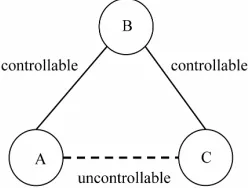
Figure 1), supposing there are three races (A, B, C) in the game world, designers may modify B’s AIFs to get a balanced relationship between A and B, then similarly modify C’s AIFs to get the balanced relationship be-tween B and C. After that, the relationship bebe-tween C and A becomes determinate because all the AIFs have already been constructed, which means that the last rela-tionship is uncontrollable. This is a multi-objective opti-mization problem which will become hard to solve with the number of races increasing. The number of uncon-trollable relationships, denoted by NUR, can be calcu-lated by the following formula:
NUR 1
2
n n
(1)
where n is the number of races.
Leigh, et al. [3] have presented a solution for balanc-ing a two-player, real-time action game called CaST. They use the competitive coevolutionary algorithm to search the dominating strategies and once found, tune the game rules and parameters. This solution highlights game imbalance as well as provides intuition towards balancing the game. It can be applied to on-line RPGs with some improvements. Alternatively, Olsen [4] has described the outline of an automated testing framework for on-line RPGs. In such framework, game designers firstly create all AIFs empirically. Then the in-game
combat data, recorded in game log, is used to construct a set of decision-making models by which a set of complex AI systems can be built. Based on those AIs, combats are simulated to verify whether one race is superior to an-other. If so, the AIFs will be continually tuned, until the game is in balance. Moreover, the decision-making mod-els are refined periodically and after each refinement, the combat simulations as well as the tuning tasks should be redone (refer to Figure 2). This approach can be re-garded as a kind of dynamic balance adjustment in which the dominating strategies are identified dynamically.
However, in those two solutions, the AIFs still will be adjusted by hand-tuning which is inefficient and time- consuming. Moreover, since strengthening one race will definitely weaken the others, the result of tuning opera-tions may, somehow, become worse. In this paper, we propose an evolutionary method for on-line RPGs to ob-tain a set of well-balanced AIFs. The method includes integration with an improved Probabilistic Incremental Program Evolution (PIPE) and a Cooperative Coevolu-tionary Algorithm (CCEA).
[image:2.595.160.438.544.719.2]The remainder of this paper is organized as follows. Section 2 presents a brief but necessary overview of ge-netic algorithm and gege-netic programming. Section 3 ex-plains the CCEA technology, followed by the details of PIPE in Section 4. Section 5 introduces the proposed
Figure 1. There is one uncontrollable relationship in the game having three races.
design method as well as the simplest turn-based on-line RPG model. Section 6 demonstrates the experiments and their results. Conclusions and possible future research directions are placed in the last section.
2. Genetic Algorithm and Genetic
Programming
Genetic Algorithm (GA) [5] is a probabilistic search al-gorithm based on the mechanics of natural selection and natural genetics. It iteratively transforms a population of objects, usually a fixed-length binary string and each with an associated fitness value, into a new population of offspring objects by using three operators that are selec-tion, crossover and mutation.
The theoretical basis of GA, the schema theorem, for-malized by Holland [5] and popularized by Goldberg [6]. A schema, H
*11* 0 **
, is a template for the 7- length individuals in which 2nd and 3rd locus are “1” while 5th locus is “0”. The asterisk “*” is the wild card symbol which matches either a “0” or a “1” at a particu-lar position. Schema order, denoted by , is the number of non “*” genes in schema H. Moreover, schema defining length, denoted by
o H
H , is the dis-tance between first and last non “*” gene in schema H. The schema theorem is given as follow:
Theorem 1. Given a simple GA with proportional selection, single point crossover and gene wise mutation. Then the expected number of schema H at generation
is,
1
t
, 1
,
f H
1
E m H t m H tf
where
0
1
c m
H
p o H
l
p
Here, is the number of individuals matching schema H at generation t,
,
m H t
f H denotes the mean fit-ness of individuals matching schema H, f is the mean fitness of individuals in the population of generation t, pc
and pm denote the crossover rate and the mutation rate,
respectively.
It means that short, low-order, above-average sche-mata receive exponentially increasing trials in subse-quent generations of a genetic algorithm. If we consider the algorithm without variational operators, then 0.
Genetic programming (GP) [7-9] is a specialization of GA in which each individual of the population is a tree-structured program. It is a machine learning tech-nique used to automatically solve problems without re-quiring the user to know or specify the form or structure of the solution in advance. At the most abstract level, GP is a systematic, domain-independent method for getting computers to solve problems automatically starting from
a high-level statement of what needs to be done.
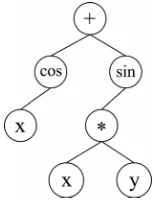
Figure 3 shows the tree structure of the program:
cosxsin x y , where
x y, is called the terminal set and
cos, sin, ,
is the function set. Such two sets together form the solutions of the target problem. While GA is usually concerned with modifying fixed-length strings, which associated with parameters of a function, GP is concerned with actually creating and manipulating the (non-fixed length) structure of the program (or func-tion). Consequently, GP is a much more complex and difficult topic.3. Cooperative Coevolutionary Algorithm
CCEAs [10,11] have been applied to solve large and complex problems, such as multiagent systems [12-14], rule learning [15,16], fuzzy modeling [17], and neural network training [18]. It models an ecosystem which consists of two or more species. Mating restrictions are enforced simply by evolving the species in separate populations which interact with one another within a shared domain model and have a cooperative relationship. The original architecture of the CCEA for optimization can be summarized as follows:
1) Problem Decomposition: Decompose the target problem into smaller subcomponents and assign each of the subcomponents to a population.
2) Subcomponents Interaction: Combine the individual of a particular population with representatives selected from others to form a complete solution, then evaluate the solution and attribute the score to the individual for fitness.
3) Subcomponent Optimization: Evolve each popula-tion separately by using a different evolupopula-tionary algo-rithm, in turn.
The empirical analyses have shown that the power of CCEAs depends on the decomposition work as well as separate evolving of these populations resulting in sig-nificant speedups over simple GAs [19-21]. Here, we give the theoretical evidence of such results with the fol-lowing two assumptions.
1) The elitists of CCEA populations are chosen as the representatives.
[image:3.595.384.461.619.720.2]2) There are no variational operators in both the simple
GA and CCEA.
Let’s begin with some definitions.
Definition 1. Given schemata: H H1, 2,,Hn, where i
H denotes a schema of the ith CCEA population, the n-expanded schema, denoted by 1
n
H , is the sequential concatenation of the n schemata. For example, let
1
H 1 0 , H2
1 1
, then
2
1 1 0 1
H 1.
Definition 2. Let there be n populations in the CCEA. A complete genotype is the sequential concatenation of n
individuals selected from n different populations. If all the individuals are representatives, then the complete genotype is the best one.
Definition 3. Given an individual I of the ith CCEA population, the expanded genotype of I is the best com-plete genotype in which the ith representative is replaced by I.
Definition 4. Given a target problem f, the two algo-rithms, simple GA and CCEA, are comparable if the population of the simple GA consists of all the expanded genotypes in the CCEA.
Theorem 2. Let a target problem f be decomposed into n subcomponents, ri be the increasing rate of the individuals matching Hi in the ith CCEA population, rCCEA be the increasing rate of the complete genotypes matching 1
n
H in the CCEA, and rSGA be the increasing rate of the individuals matching 1
n
H in the simple GA. If the two algorithms are comparable, then,
1) SGA
=1
< n
i i
r
r2) CCEA
min
1, ,2 ,
,n n
r k r r r
k1Proof. Since the two algorithms are comparable, in the simple GA, the number of individuals matching 1
n
H at
generation t can be calculated by:
1
1 , , n n i i
m H t M H t
where M H t
i,
denotes the number of individuals matching Hi at generation t, in the ith CCEA population.Then according to the schema theorem (refer to Theorem 1), we have,
1 1 1 1 1 1 , , 1 ,,
, n
i
n n i
n i n n i i
f H t
E m H t m H t
F i t
m H t r
where in the ith CCEA population, f H t
i,
and
,F i t denote the mean fitness of individuals matching
Hi and the mean fitness of all individuals, at generation t,
respectively.
In the case of CCEA, because 1
n
H is the conjunction of Hi, the number of the complete genotypes matching
1
n
H at generation t is given by:
1
1 , , n n i i
M H t M H t
Again, according to the schema theorem, we obtain the following equation:
i, 1
i,
E M H t M H t riThen,
1 1 11 1 2
, 1 , 1
,
, min , , , n n i i n i i i n n n
E M H t E M H t
M H t r
M H t k r r r
where
1 1 2
1 min , , ,
n
i
i n
r k
r r r
.
Hence, obviously, with the increasing of the
1
min r,,rn , 1
n
H will receive a much higher in-creasing rate in the CCEA.
However, Theorem 2 does not mean that CCEAs is superior to simple GAs, which depends on the target problems. Actually, since the representatives are neces-sary in calculating the fitness of the individual of an arbi-trary population, the relationships between populations impose a great influence on the efficiency of CCEAs [22, 23]. It has been proved that even with prefect informa-tion, infinite population size and no variational operators, CCEAs can be expected to converge to suboptimal solu-tion [23], while simple GAs does not suffer from such affliction [24-26]. However, Liviu [27] has emphasized that CCEAs will settle in the globally optimal solution with arbitrarily high probability, when properly set and if given enough resources.
4. Probabilistic Incremental Program
Evolution
PIPE [28] is a technology for synthesizing programs. Unlike traditional GP, It creates population according to an adaptive probability distribution over all possible pro-grams with respect to a predefined instruction set. In each generation, the distribution is refined by using the information learned from the best program or the best program found so far (elitist) to guide the evolutionary search [29]. It has been shown that PIPE achieved better results than traditional GP in solving function regression problem and 6-bit parity problem [28].
Prob-abilistic Prototype Tree (PPT), which is generally a com-plete n-ary tree with infinitely many nodes, where n is the maximal number of function arguments. Each node
j
N in a PPT consists of a value Rj which is randomly
taken from a problem-dependent set of constants and a variable probability vector Pj
for instruction set, which is initialized as follows.
, : 1
, : T
j
T j
P
P I I I T
l P
P I I I F
l
(2)
where PT is a predefined, constant probability for
select-ing an instruction from T (the terminal set), l is the total number of terminals in T and k is the total number of functions in F (the function set).
As we mentioned above, there are two kinds of learn-ing mechanisms in the PIPE, generation-based learnlearn-ing (GBL) and elitist learning (EL). GBL is the main learn-ing algorithm and the purpose of EL is to use the best program found so far as an attractor. The pseudo-code of PIPE follows:
1) GBL. 2) REPEAT.
3) With probability el DO EL. 4) Otherwise DO GBL.
P
5) UNTIL termination criterion is reached. where Pel is a user-defined constant in
0,1 .The process of GBL can be divided into five distinct phases:
1) Creation of program population. A population of programs PROGj (0 < ; is population size) is generated using the PPT.
<
j PS PS
2) Population evaluation. Each program PROGj of the
current population is evaluated on the given task and assigned a fitness value FIT P
ROGj
RO
P
according to the predefined fitness function. The best program of the current population is denoted by . The elitist is preserved in .
Gb
ROGel
P
3) Learning from population. Prototype tree probabili-ties are modified such that the probability of creating increases. This procedure is called adapt_PPT_towards which is implemented as follows.
ROGb
P P
ROGb P
PROGb
First is computed by looking at all PPT nodes
ROGbP P
j
N used to generate PROGb:
ROG
ROG ROG
: jused to generate b
j j b
j N P
P P
P I Pwhere P P
ROGb
denotes the instruction of programat node position j.
ROGb P
Then a target probability for is cal- culated:
TARGET
P ROG
b P
TARGET ROG
ROG ROG
ROG
1
b
el b
b
P P P
FIT P
P P lr
FIT P
(4)
where lr is a constant learning rate and is a posi- tive user-defined constant. Given PTARGET, all single node probabilities P Ij
j
PROGb
are increased itera-tively: a) REPEAT
b) P Ij
j
PROGb
P Ij
j
PROGb
1 ROGb
lr
j j
c lr P I P
c) UNTIL P P
ROGb
PTARGETwhere is a constant influencing the number of iterations.
lr
c
4) Mutation of prototype tree. All probabilities P Ij
stored in nodes Nj that were accessed to generate pro-
gram PROGb are mutated with probability PMp:
ROG
p
b
M M
P P
z P
(5)
where the user-defined parameter PM denotes the overall
mutation probability, z is the number of instructions in instruction set S and PROGb denotes the number of
nodes in program . Selected probability vector components are then mutated as follows:
ROGb P
1j j j
P I P I mr P I
(6) where mr is the mutation rate, another user-defined pa-rameter. All mutated vectors Pj
are finally renormal-ized:
*
:j
j j
j I S
P I
P I P I I S
P I
(7)b (3)
5) Prototype tree pruning. At the end of each genera-tion the prototype tree is pruned. PPT subtrees attached to nodes that contain at least one probability vector component above a threshold Tp can be pruned. The
pruning operation results in more concise population than traditional GP.
is modified to adapt_PPT_towards
ROGelP ,
PROGbthat is, PPT is adapted towards the elitist program with-out creating and evaluating population.
We notice that PIPE does not use the Elitist-Preserving Strategy (EPS) in which the individual with the highest fitness survives to be an individual of next generation. The EPS is a useful option by which, in some case, the performance of evolutionary algorithms can be improved [30-32]. In fact, there is a serious problem in applying it to PIPE, that is, if a low-quality elitist hasn’t been re-placed for many generations, PPT will converge to the suboptimal solution. So, in order to enable the EPS op-tion, an improvement has been made by adding a factor, named satisfied fitness value (FITc), into Formula (4).
The improved one is given by:
ROG
TARGET ROG ROG
ROG ROG 1 exp el b b b b c FIT P
P P P P P lr
FIT P
FIT FIT P
K (8) where K is a positive user-defined constant which used to control the pressure of learning. It is important to note that once PIPE employs the EPS, the EL will no longer be necessary.
5. Design Method
With the assumption that all the dominating strategies have been identified, the task of balancing PvP is re-duced to constructing a set of AIFs by which each race has the same probability to win. In order to solve this multi-objective optimization problem, we build a single aggregate objective function by weighted linear sum of the objectives, which means the relationships between the AIFs become cooperative. Therefore, we propose to use the CCEA to search the optimal solution, where each population is evolved by the improved PIPE. The pseudo-code of the proposed method follows:
1) Create a (population, PPT) pair for each AIF. 2) FOR population piP, all population. 3) Initialize i.
4) Construct by .
PPT
pi PPTi
i
5) Select representative PROGrep randomly. 6)
rep
.i ROG
FIT P
7) END FOR. 8) REPEAT.
9) FOR population i , all population.
10) Evaluate individual of with representatives from the others.
p P
i
p
11) IF
ROGb
ROGrep
i
FIT P FIT P .
12) Replace with . ROGrep
i
P PROGb
13) END IF. 14) Learn from
b
ROG
P and refine PPTi. 15) Reproduce pi with EPS.
16) END FOR.
17) UNTIL the termination criteria are met.
In an arbitrary group, the win probability of combatant 1 is regarded as a discrete random variable all outcomes of which are equally likely. So, similar to the portfolio theory, we define the fitness function mainly by using the mean and variance of the win probability of the combat-ant. The better individuals will return lower values in evaluation process. The function is given by:
2 ROG 1 1 2 rule mg g g
g
FIT P w E P V P
w f S
(9)where denotes the number of “1 versus 1” groups, n is the number of races,
2
n m
1 , ,
g g l g Lg
P p p p , a random variable, is the win probability of combatant 1 of group g, plg is it’s value at level l, and L is the
maxi-mum level. g
0,1 , called balance factor, is a user- defined constant, frule
S 0 denotes how good the complete solution S conforms to the designed rules.In order to test the proposed method, we construct a simplest turn-based on-line RPG model as the platform for experiments. The contents of design are listed as fol-lows:
1) There are three distinct races (R1, R2, R3) in the game world with the maximum level of L.
2) Each race has only one skill and two attributes which are health and dodge rate.
3) Each skill includes only one ability, the physical damage.
so, plg can be calculated by the following formula
ap-proximately.
1
1
1 2 T
l g l i l i l i
i
p p F p F p
F
(10) where
2 2
2 2 2
2 2 1 1 1 0
LT l i LT l
l i
i
D D i LT
LT l p F
i LT l
l
1 11 1 1
0
1 1
1
LT l
j i j
j
l i
i
D D i LT l
j p F
i LT l
2
21
h l LT l
d l
1 12
h l LT l
d l
1) population size = 100, the number of populations = 6.
The Simple GA:
1) population size = 600. Here, we suppose that combat ends within T rounds,
denotes the probability that combatant 1 launch the lethal attack at round i, is the probability that combatant 2 hasn’t launched the lethal attack before round i + 1, Dk, LTk, hk, dk refer to the dodge rate,
life-time, health value and damage value of combatant k, re-spectively, where .
l i
p F
l i
p F
1, 2k
Considering the stochastic nature of evolutionary al-gorithms, each of the algorithms is repeated 100 times.
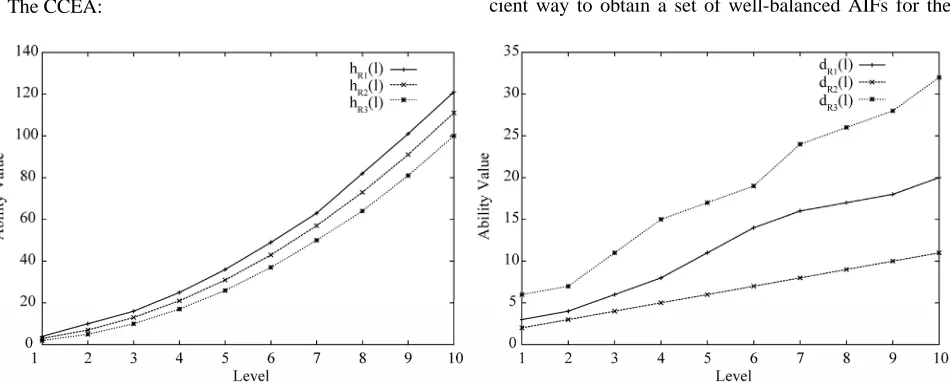
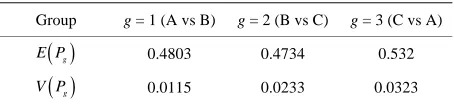
Figure 4 depicts a set of AIFs corresponding to the smallest fitness obtained by CCEA_I. It is important to note that all the designed rules are well obeyed. To verify whether the AIFs are well-balanced, according to For-mula 10, we calculate plg and show the mean and
vari-ance of Pg in Table 1, which indicates that E P
g isclose to 0.5 and V P
g is close to 0, for g
1, 2, 3
.Hence, the AIFs can be accepted as well-balanced.
6. Experiments and Results
In this section, we conduct the comparison of the pro-posed algorithm, denoted by CCEA_I, with the propro-posed algorithm using original PIPE instead of the improved one, denoted by CCEA_O, and the proposed algorithm using the simple GA instead of the CCEA, denoted by SGA_I. The environments are set as follows.
We compare the algorithms both in terms of final best-ever fitness and computation time. The comparison results are plotted in Figure 5. In this case, it is obvious that both CCEA_I and CCEA_O are superior to SGA_I. By counting the number of executions in which the final best-ever fitness is larger than 10, we obtain 6 for CCEA_I while 26 for CCEA_O. Moreover, the average computation time of 100 executions is 35.6991 for CCEA_I, whereas the value is 56.2348 with respect to CCEA_O. Hence, in case that PIPE employs the EPS, the capability of PIPE has been improved significantly by the improvement work.
The Game Model:
1) The maximum level: L10.
2) The dodge rate: DR10.2, DR20.6, DR30.1. 3) Rules of health value: R1
R2
hR3
l
h l h l .
3 1 2
R R R l
d l d l d . 4) Rules of damage value:
5) All the AIFs must be monotone increasing and
, .
20k
LT l k
1, 2 The Fitness Function: [(1)] 1) Balance factor: 1 230.520 T 30
.
7. Conclusion and Future Work
2) 1 , 2 , .
The Improved and Original PIPE: [(1)] 10
w w
This paper presented an evolutionary design method which contains integration with a CCEA and an im-proved PIPE for solving the balance problem of on-line RPGs. We demonstrated the theoretical evidence of why CCEAs, in some case, is faster than simple GAs, and in order to enable the EPS option, we improved the learning mechanism of PIPE. Through a series of experiments, we have shown that the proposed method is the most effi-cient way to obtain a set of well-balanced AIFs for the 1) Function and terminal sets have been used:
and ,
, , , sin, cos, exp
F T
R l, R
0, 50
denotes the generic random constant.2) The termination criteria: maximal generation = 300 and FITc0.075.
lr
3) lr 0.01, c 0.1, PM 0.4, ,
, .
0.3
mr
0.999999
P
T K2
[image:7.595.55.541.319.711.2]The CCEA:
[image:7.595.63.538.527.718.2]Figure 5. Performance comparison of the three algorithms in terms of final best-ever fitness as well as computation time with 100 executions.
Table 1. Verification data.
Group g = 1 (A vs B) g = 2 (B vs C) g = 3 (C vs A)
gE P 0.4803 0.4734 0.532
gV P 0.0115 0.0233 0.0323
target game model.
The game model presented above is a turn-based game in which each race has only one skill with only one abil-ity. While this may seem an extreme simplification, it should be noted that the original intent of this work was to lay a foundation of study, and that foundation would begin with simpler systems for which behavioral under-standing is more tractable. In future works, we will con-struct an action-based game model, which is much more complicated than the turn-based one. In such game model, since there are no formulas for calculating the win prob-ability, we have to use the Monte Carlo method which costs too much for evolutionary algorithms. Therefore, we plan to model the combat using the discrete competi-tive Markov decision process by which the win probabil-ity can be obtained quickly.
REFERENCES
[1] A. Rollings and D. Morris, “Game Architecture and De-sign: A New Edition,” New Readers, Indianapolis, 2004. [2] E. Adams, “Fundamentals of Game Design,” 2nd Edition,
New Readers, Berkeley, 2009.
[3] R. Leigh, J. Schonfeld and S. Louis, “Using Coevolution to Understand and Validate Game Balance in Continuous Games,” Proceedings of the 10th Annual Conference on
Genetic and Evolutionary Computation, Atlanta, 12-16
July 2008, pp. 1563-1570. doi:10.1145/1389095.1389394 [4] J. M. Olsen, “Game Balance and AI Using Payoff
Matri-ces,” In: B. S. Jones and T. Alexander, Eds., Massively
Multiplayer Game Development, Charles River Media
Inc., Hingham, 2002, pp. 38-48.
[5] J. H. Holland, “Adaptation in Natural and Artificial Sys-tems: An Introductory Analysis with Applications to Bi-ology,” Control and Artificial Intelligence, MIT Press, Cambridge, 1975.
[6] D. E. Goldberg, “Genetic Algorithms in Search, Optimi-zation and Machine Learning,” Addison Wesley, San Francisco, 1989.
[7] N. L. Cramer, “A Representation for the Adaptive Gen-eration of Simple Sequential Programs,” Proceedings of an International Conference on Genetic Algorithms and
Their Applications, Pittsburgh, 24-26 July 1985, pp. 183-
187.
[8] J. R. Koza, “Genetic Programming—On the Program-ming of Computers by Means of Natural Selection,” MIT Press, Cambridge, 1992.
[9] R. Poli, W. B. Langdon and N. F. Mcphee, “A Field Guide to Genetic Programming,” Lulu, Morrisville, 2008. [10] P. Husbands and F. Mill, “Simulated Coevolution as the
Mechanism for Emergent Planning and Scheduling,”
Pro-ceedings of the 4th International Conference on Genetic
Algorithms, San Diego, 13-16 July 1991, pp. 264-270.
[11] M. Potter, “The Design and Analysis of a Computational Model of Cooperative Coevolution,” Ph.D. Thesis, George Mason University, Fairfax, 1997.
[12] L. Bull, T. C. Fogarty and M. Snaith, “Evolution in Multi-Agent Systems: Evolving Communicating Classi-fier Systems for Gait in a Quadrupedal Robot,”
Proceed-ings of the 6th International Conference on Genetic
Algo-rithms, Pittsburgh, 15-19 July 1995, pp. 382-388.
[13] M. Potter, L. Meeden and A. Schultz, “Heterogeneity in the Coevolved Behaviors of Mobile Robots: The Emer-gence of Specialists,” Proceedings of the 17th
Interna-tional Conference on Artificial Intelligence, Seattle, 4
August 2001, pp. 1337-1343.
[14] K. S. Hwang, J. L. Lin and H. L. Huang, “Dynamic Patrol Planning in a Cooperative Multi-Robot System,”
Com-munications in Computer and Information Science, Vol.
[image:8.595.59.286.309.361.2]doi:10.1007/978-3-642-23147-6_14
[15] M. Potter and K. De Jong, “The Coevolution of Antibod-ies for Concept Learning,” Proceedings of the 5th Inter-national Conference on Parallel Problem Solving from
Nature, Kraków, 11-15 September 1998, pp. 530-539.
doi:10.1007/BFb0056895
[16] Y. Wen and H. Xu, “A Cooperative Coevolution-Based Pittsburgh Learning Classifier System Embedded with Memetic Feature Selection,” Proceedings of IEEE
Con-gress on Evolutionary Computation, New Orleans, 5-8
June 2011, pp. 2415-2422.
[17] A. Carlos and S. Moshe, “Fuzzy CoCo: A Coopera-tive-Coevolutionary Approach to Fuzzy Modeling,” IEEE
Transactions on Fuzzy Systems, Vol. 9, No. 5, 2001, pp.
727-737. doi:10.1109/91.963759
[18] R. Chandra and M. Zhang, “Cooperative Coevolution of Elman Recurrent Neural Networks for Chaotic Time Se-ries Prediction,” Neurocomputing, Vol. 86, 2012, pp. 116-123. doi:10.1016/j.neucom.2012.01.014
[19] M. Potter and K. De Jong, “A Cooperative Coevolution-ary Approach to Function Optimization,” Proceedings of
the 3rd International Conference on Parallel Problem
Solving from Nature, Jerusalem, 9-14 October 1994, pp.
249-257. doi:10.1007/3-540-58484-6_269
[20] M. Potter and K. De Jong, “Cooperative Coevolution: An Architecture for Evolving Co-Adapted Subcomponents,”
Evolutionary Computation, Vol. 1, No. 8, 2000, pp. 1-29.
doi:10.1162/106365600568086
[21] R. P. Wiegand, W. Liles and K. De Jong, “An Empirical Analysis of Collaboration Methods in Cooperative Co-evolutionary Algorithms,” Proceedings of the Genetic
and Evolutionary Computation Conference, Dublin, 12-
16 July 2001, pp. 1235-1242.
[22] T. Jansen and R. P. Wiegand, “Exploring the Explorative Advantage of the CC (1+1) EA,” Proceedings of the
Ge-netic and Evolutionary Computation Conference,
Chi-cago, 12-16 July 2003, pp. 310-321.
[23] R. P. Wiegand, “An Analysis of Cooperative Coevolu-tionary Algorithms,” Ph.D. Thesis, George Mason Uni-versity, Fairfax, 2004.
[24] C. Reeves and J. Rowe, “Genetic Algorithms Principles and Perspectives: A Guide to GA Theory,” Kluwer, New York, 2002.
[25] L. Schmitt, “Theory of Genetic Algorithms,” Theoretical
Computer Science, Vol. 259, No. 1-2, 2001, pp. 1-61.
doi:10.1016/S0304-3975(00)00406-0
[26] M. Vose, “The Simple Genetic Algorithm,” MIT Press, Cambridge, 1999.
[27] P. Liviu, “Theoretical Convergence Guarantees for Co-operative Coevolutionary Algorithms,” Evolution Com-
putation, Vol. 18, No. 4, 2010, pp. 581-615.
[28] R. P. Salustowicz and J. Schmidhuber, “Probabilistic Incremental Program Evolution,” Evolutionary Computa-tion, Vol. 5, No. 2, 1997, pp. 123-141.
doi:10.1162/evco.1997.5.2.123
[29] S. Baluja, “Population-Based Incremental Learning: A Method for Integrating Genetic Search Based Function Optimization and Competitive Learning,” Technical Re-port, CMU-CS-94-163, Carnegie Mellon University, Pit- tsburgh, 1994.
[30] K. De Jong, “An Analysis of the Behavior of a Class of Genetic Adaptive Systems,” Ph.D. Thesis, University of Michigan, Ann Arbor, 1975.
[31] A. Fujino, T. Tobita, K. Segawa, K. Yoneda and A. To-gawa, “An Elevator Group Control System with Floor- Attribute Control Method and System Optimization Us-ing Genetic Algorithms,” IEEE Transactions on
Indus-trial Electronics, Vol. 44, No. 4, 1997, pp. 546-552.
doi:10.1109/41.605632
[32] K. Deb, A. Pratap, S. Agarwal and T. Meyarivan, “A Fast and Elitist Multiobjective Genetic Algorithm: NSGA-II,”
Evolutionary Computation, Vol. 6, No. 2, 2002, pp. 182-