In Vitro Bile Acid Binding of Mustard Greens, Kale,
Broccoli, Cabbage and Green Bell Pepper Improves with
Sautéing Compared with Raw or Other Methods of
Preparation
*
Talwinder S. Kahlon, Rebecca R. Milczarek, Mei-Chin M. Chiu
Processed Foods Research Unit, Western Regional Research Center, United States Department of Agriculture—Agricultural Re- search Service, Albany, USA.
Email: [email protected]
Received April 24th,2012; revised May 24th, 2012; accepted June 2nd, 2012
ABSTRACT
Bile acid binding potential of foods and food fractions has been related to lowering the risk of heart disease and that of cancer. Steam cooking has been observed to significantly improve bile acid binding of green/leafy vegetables. It was hypothesized that other cooking methods could further improve the bile acid binding of various vegetables. Sautée cooking resulted in vitro bile acid binding measured on a dry matter basis relative to cholestyramine of 14% for mustard greens and kale, 9% for broccoli and collard greens, and 6% for cabbage, and 5% for green bell pepper. These results point to the significantly different (P ≤ 0.05) health promoting potential of mustard greens = kale > broccoli = collard greens > cabbage > green bell pepper. Sautéing significantly improved in vitro bile acid binding of mustard greens, kale, broccoli, cabbage and green bell pepper compared with steaming, boiling or raw (uncooked). Collard greens exhibited significantly higher bile acid binding by steaming compared with sautéing, boiling or raw. Data suggest that the cooking method with most heath promoting potential for mustard greens, kale, broccoli, cabbage and green bell pepper should be sautéing. Steaming should be used for collard greens as the cooking method. These green/leafy vegetables, when consumed regularly after sautéing, would promote a healthy lifestyle and have the potential to lower the risk of prema- ture degenerative diseases.
Keywords: In Vitro; Bile Acid Binding; Mustard Greens; Kale; Broccoli; Cabbage; Green Bell Pepper and Collard Greens; Sautéing; Steaming; Boiling
1. Introduction
Along with consuming lower calories from saturated fat and animal products, vegetarians and those consuming vegetables as a major portion of their daily diet are at a lower risk of coronary heart disease and cancer [1,2]. Vegetables are a good source of dietary fiber, antioxi- dants, phytonutrients, provitamins, polyphenols and min- erals. The USDA Food and Nutrition Information Center, Food Guide Plate (http://www.choosemyplate.gov/) re- commends that 50% of daily calories should come from vegetables and fruits. In order to maintain desirable body weight, one needs to consume dark leafy colorful vege- tables and low fat food products along with keeping an active lifestyle [3]. Some of the vegetables listed by the
USDA food guide include mustard greens, kale, broccoli, cabbage, collard greens and bell pepper. Isothiocyanates of the cruciferous vegetables in the brassica family have been shown to protect against various types of cancers [4-7]. Sulforaphane, indole-3-carbinol, glucaric acid and other isothiocyanates are antioxidants and potent stimu- lators of natural detoxifying enzymes in the body. These compounds are believed to be responsible for the low- ered risk of atherosclerosis and cancer [8,9]. Toxic me- tabolites in the gut and secondary bile acids increase the risk of colorectal cancer [10]. Atherosclerosis and cancer are two leading causes of death and disability in the de- veloped world and are increasing rapidly in the develop- ing world [11]. These are major human nutrition prob- lems and are preventable with diet and a physically ac- tive lifestyle. The healthful, cholesterol-lowering (athero- sclerosis amelioration) or detoxification of harmful me- tabolites (cancer prevention) potential of food fractions
could be predicted by evaluating their in vitro bile acid binding, based on positive correlations found between in vitro and in vivo studies showing that cholestyramine (a bile acid binding, cholesterol lowering drug) binds bile acids and cellulose does not [12-15]. Bile acids are acidic steroids synthesized in the liver from cholesterol. After conjugation with glycine or taurine, they are secreted into the duodenum. Bile acids are actively reabsorbed by the terminal ileum and undergo an enterohepatic circulation [16]. Binding of bile acids and increasing their fecal ex- cretion has been hypothesized as a possible mechanism by which food fractions lower cholesterol [17-19]. Bile acids are needed for the absorption of dietary fat from the GI tract. Dietary fat is a precursor of cholesterol synthe- sis in the body. By binding bile acids, food fractions prevent their reabsorption and stimulate plasma and liver cholesterol conversion to additional bile acids [20-23]. The US Food and Drug Administration and UK-Joint Health Claim Initiative have allowed label health claims on food products containing oats for their blood choles- terol lowering potential [24,25]. Excretion of toxic me- tabolites and secondary bile acids could lower the risk of cancer [10]. Bile acid binding of grain fractions, ready to eat cereals, various dry beans has been observed to be proportional to their dry matter content [26-29]. Steam cooking collard greens, kale, mustard greens, broccoli, green bell pepper and cabbage significantly improved in vitro bile acid binding compared with the values obtained for these vegetables in uncooked form [30,31].
The hypothesis of this study was to evaluate relative enhanced bile acid binding of mustard greens (Brassica juncea), kale (Brassica oleracea acephala), collard greens (Brassica oleracea acephala), broccoli (Brassica oleracea italica), cabbage (Brassica oleracea capitala), and green bell pepper (Capsicum annuum) by sautéing, steaming or boiling as determined by their bile acid binding on equal dry matter basis, with a bile acid mixture under human duodenal physiological pH of 6.3.
2. Materials and Methods
Fresh vegetables were purchased from a local grocery super market early in the morning at 6:30 a.m. as being displayed out of the delivery boxes. All the vegetables were purchased at the same time. The vegetables were washed, trimmed and sliced or chopped. Mustard greens, kale and collard greens were cut crosswise into 0.75 - 1.0 inch pieces; broccoli into 1.0 - 2.0 inch florets; cabbage into 1.0 - 1.5 inch pieces; and green bell pepper into 0.5 inch. Composition of the vegetables tested is given in Table 1.
500 g of fresh vegetable samples were boiled (10 to 14 min) in an 8 quart stainless steel pot with sufficient water
to cover the vegetables, stream cooked (10 to 20 min.) in the same pot with a steam inset, or sautéed (fried lightly in small amount of unsalted butter, 28.3 g; while turning over frequently) in a 14 inch flat bottom wok (Hot Point Model No. R B526 H3WW, General Electric Co Louis- ville, KY) setting 5 on a scale of 11 (LO, 1 - 9, HI) for 15 - 20 min to the tenderness as ready to be eaten. Cooking time was determined based on the evaluation consensus of the laboratory personnel. Unsalted butter was chosen as the common fat source used in sautéeing in most home kitchens. All the cooked vegetables were dried to a con- stant weight at 68˚C for 48 hr in a steam heated forced air food dryer (Proctor 062, Proctor & Schwartz, Inc, Horsham, PA, USA). Dry samples were ground in a Braun coffee grinder (Gillette Commercial, Boston, MA) to pass a 0.4 mm screen. Dry matter in sautéed samples was corrected after removing excess fat by hexane. Total dietary fiber (TDF) of the test samples was determined by AOAC method 985.29 [32].
Samples were analyzed for nitrogen by method 990.03 [33], with a Virio Macro Elemental Analyser (Elementar Analysen systeme GmbH, Hanau, Germany), crude fat with petroleum ether by accelerated solvent extractor (ASE 350 Dionex Corp., Bannockburn, IL), ash by me- thod 942.05 [33], and moisture by method 935.29 [33]. Nitrogen to protein conversion factor used for all the vegetables was 6.25. Cholestyramine, a bile acid binding anionic resin (a drug that lowers cholesterol and binding bile acids), was the positive control treatment, cellulose (a non bile acid binding fiber) was the negative control. Both were obtained from Sigma (St. Louis, MO).
2.1. In Vitro Bile Acid Binding Procedure
treat-ments. Each treatment replicate was weighed into 16 × 150 mm glass, screw-capped tube. Samples were di- gested in 1 mL 0.01 N HCl for one hour in a 37˚C shaker bath. After this acidic incubation which simulated gastric digestion, the sample pH was adjusted to 6.3 with 0.1 mL of 0.1 N NaOH. To each test sample was added 4 mL of bile acid mixture working solution. A phosphate buffer (4 mL, 0.1 M, pH 6.3) was added to the individual sub- strate blanks. After the addition of 5 mL of porcine pan- creatin (5×, 10 mg/mL, in a 0.1 M phosphate buffer, pH 6.3, providing amylase, protease and lipase for digestion of samples), tubes were incubated for one hour in a 37˚C shaker bath. Mixtures were transferred to 10 mL centri- fuge tubes (Oak Ridge 3118 - 0010, Nalgene, Rochester, NY) and centrifuged at 99,000 g in a 75-Ti rotor at 39 K rpm for 18 min at 25˚C in an ultracentrifuge (model L-60, Beckman, Palo Alto, CA). Supernatant was removed into a second set of labeled tubes. An additional 5 mL of phosphate buffer was used to rinse out the incubation tube and added to the centrifuge tube, which was vor- texed and centrifuged as before. Supernatant was re- moved and combined with the previous supernatant. Aliquots of pooled supernatant were frozen at −20˚C for bile acids analysis. Bile acids were analyzed by the Trin- ity Biotech bile acids procedure No. 450-A (Trinity Bio- tech Distribution, St. Louis, MO) using a Ciba-Corning Express Plus analyzer (Polestar Labs, Inc., Escondido, CA). Each sample was analyzed in triplicate. Values were determined from a standard curve obtained by ana- lyzing Trinity Biotech bile acid calibrators (No. 450-11) at 5, 25, 50, 100 and 200 μmol/L. Individual blank sub- strates were subtracted, and bile acid concentrations were corrected based on the mean recoveries of bile acid mix- ture (positive blank).
2.2. Statistical Analysis
Data are presented as means ± SEM. Before accepting analysis of variance results, Lavene’s test was used to check for homogeneity of variances among treatments. Since variances were considered homogenous from test results, analysis of variance was used to test for signifi- cant differences among treatments. Dunnett’s one-tailed test was computed with treatments compared to cho- lestyramine as a positive control and compared to cellu- lose as a negative control. For comparing non-control treatments to each other, Tukey’s test for comparison of all possible pairs of means was used. SAS Proc GLM was used for all statistical analysis and testing [37,38]. A value of (P ≤ 0.05) was considered the criterion of sig- nificance.
3. Results
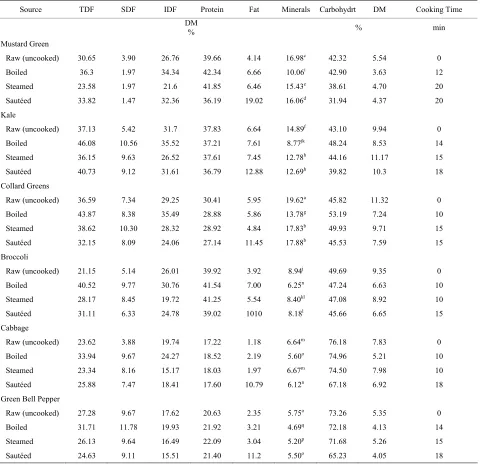
The composition, dietary fiber (total, soluble and insolu-
ble), percent dry matter, cooking time for boiled, steamed and sautéed mustard greens, kale, collard greens, broc- coli, cabbage, and green bell pepper is given in Table 1. Cooking time ranged from 10 - 20 min for the various vegetables tested. The dry matter content was highest for steam cooked kale (11%), and lowest for mustard greens (5%). Both cellulose and cholestyramine were considered as 100% total dietary fiber [15].
On an equal dry matter (DM) basis, bile acid binding was significantly higher for cholestyramine and signifi- cantly lower for cellulose than raw (uncooked) and cooked (boiled, steamed and sautéed) vegetables. The bile acid binding values for sautéed mustard greens, kale, broccoli, cabbage and green bell pepper were significantly (P ≤
0.05) higher compared to values for these vegetables raw, boiled or steam cooked (Table 2). Only collard greens had significantly higher bile acid binding values for steaming than for sautéing, boiling or raw. Steam cook- ing mustard greens, kale, collard greens, and cabbage resulted in significantly higher bile acid binding com- pared with boiling or raw.
The mean binding value of cellulose (negative control) was deducted from all treatments and the positive control values. Assigning a bile acid binding value of 100% to cholestyramine, the relative bile acid binding values on a dry matter basis for the test samples when sautéed were 14% for mustard greens and kale; 9% for broccoli and collard greens, 6% for cabbage and 5% for green bell pepper (Table 3). The relative health promoting potential based on bile acid binding on a dry matter basis was mustard greens = kale > collard greens = broccoli > cab- bage > green bell pepper. Only steamed collard greens had significantly higher (9%) bile acid binding compared to values for this vegetable in raw, boiled or sautéed form.
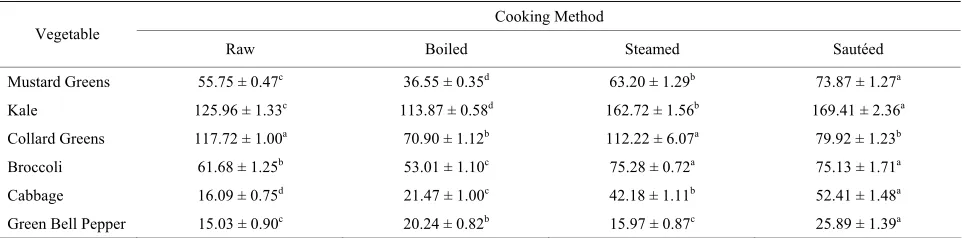
For vegetables cooked by various methods calculated as eaten, the highest bile acid binding value was ob- served for sautéed kale (169 µmol/100 g cooked as eaten) and the lowest value was for steamed or raw green bell pepper (15 µmol/100 g as eaten) (Table 4). The relative healthful potential was sautéed kale > steamed collard greens > steamed or sautéed broccoli = sautéed mustard greens > sautéed cabbage > sautéed green bell pepper.
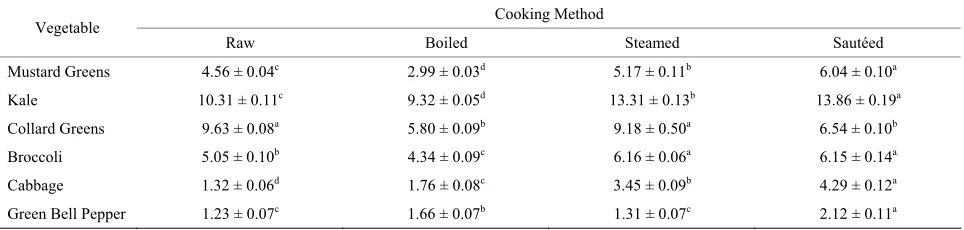
Table 5 presents calculated bile acid binding relative to cholestyramine for 100 g cooked vegetables as is based using 13.86% of cholestyramine (Table 3) for 169.41 umol/100 g as is (Table 4) for sautéed kale. High- est bile acid binding values were for sautéed kale and lowest for green bell pepper and cabbage.
4. Discussion
Table 1. Composition and cooking time of raw, boiled, steamed, sautéed; mustard greens, kale, collard greens, broccoli, cab- bage, and green bell pepper, dry matter (DM) basisa.
Source TDF SDF IDF Protein Fat Minerals Carbohydrt DM Cooking Time DM
% % min
Mustard Green
Raw (uncooked) 30.65 3.90 26.76 39.66 4.14 16.98c 42.32 5.54 0 Boiled 36.3 1.97 34.34 42.34 6.66 10.06i 42.90 3.63 12 Steamed 23.58 1.97 21.6 41.85 6.46 15.43e 38.61 4.70 20
Sautéed 33.82 1.47 32.36 36.19 19.02 16.06d 31.94 4.37 20 Kale
Raw (uncooked) 37.13 5.42 31.7 37.83 6.64 14.89f 43.10 9.94 0
Boiled 46.08 10.56 35.52 37.21 7.61 8.77jk 48.24 8.53 14 Steamed 36.15 9.63 26.52 37.61 7.45 12.78h 44.16 11.17 15 Sautéed 40.73 9.12 31.61 36.79 12.88 12.69h 39.82 10.3 18
Collard Greens
Raw (uncooked) 36.59 7.34 29.25 30.41 5.95 19.62a 45.82 11.32 0 Boiled 43.87 8.38 35.49 28.88 5.86 13.78g 53.19 7.24 10 Steamed 38.62 10.30 28.32 28.92 4.84 17.83b 49.93 9.71 15
Sautéed 32.15 8.09 24.06 27.14 11.45 17.88b 45.53 7.59 15
Broccoli
Raw (uncooked) 21.15 5.14 26.01 39.92 3.92 8.94j 49.69 9.35 0
Boiled 40.52 9.77 30.76 41.54 7.00 6.25n 47.24 6.63 10 Steamed 28.17 8.45 19.72 41.25 5.54 8.40kl 47.08 8.92 10 Sautéed 31.11 6.33 24.78 39.02 1010 8.18l 45.66 6.65 15
Cabbage
Raw (uncooked) 23.62 3.88 19.74 17.22 1.18 6.64m 76.18 7.83 0 Boiled 33.94 9.67 24.27 18.52 2.19 5.60o 74.96 5.21 10 Steamed 23.34 8.16 15.17 18.03 1.97 6.67m 74.50 7.98 10
Sautéed 25.88 7.47 18.41 17.60 10.79 6.12n 67.18 6.92 18
Green Bell Pepper
Raw (uncooked) 27.28 9.67 17.62 20.63 2.35 5.75o 73.26 5.35 0
Boiled 31.71 11.78 19.93 21.92 3.21 4.69q 72.18 4.13 14 Steamed 26.13 9.64 16.49 22.09 3.04 5.20p 71.68 5.26 15 Sautéed 24.63 9.11 15.51 21.40 11.2 5.50o 65.23 4.05 18
aNitrogen to protein factor used for all the vegetables was 6.25. Carbohydrate = 100 – (Protein + fat + minerals). Total dietary fiber (TDF); Soluble dietary fiber (SDF); Insoluble dietary fiber (IDF). Mineral values with different superscript letters differ significantly (P ≤ 0.05). Pooling data for cooking methods showed no significant effect on minerals or soluble dietary fiber levels between the cooking methods tested.
loss in mineral content compared with raw vegetables, and steam cooking resulted in 0% - 14% mineral loss (Table 1); similar observations have been previously reported [39]. Various cooking methods resulted in an increase in soluble dietary fiber (SDF) in kale (80%), collard greens (58%), broccoli (22%) and cabbage (217%), whereas it was unchanged in green bell pepper and de- creased in mustard greens (−46%). The data suggest that IDF was converted to SDF by cooking kale, collard
greens, broccoli and cabbage. Similar increases in SDF and reductions in IDF by cooking vegetables have been previously reported [40]. Pooling data for cooking meth- ods showed no significant effect on minerals or soluble dietary fiber levels among the cooking methods tested.
Table 2. Bile acid binding of mustard greens, kale, collard greens, broccoli, cabbage and green bell pepper as influenced by cooking methods, µmol/100mg dry mattera.
Cooking Method Vegetable
Raw Boiled Steamed Sautéed
Mustard Greens 1.01 ± 0.01c 1.01 ± 0.01c 1.34 ± 0.03b 1.69 ± 0.03a Kale 1.27 ± 0.01d 1.33 ± 0.01c 1.46 ± 0.01b 1.64 ± 0.02a
Collard Greens 1.04 ± 0.01b 0.98 ± 0.02b 1.16 ± 0.06 a 1.05 ± 0.02b Broccoli 0.66 ± 0.01c 0.80 ± 0.02b 0.84 ± 0.01b 1.13 ± 0.03a Cabbage 0.21 ± 0.01d 0.41 ± 0.02c 0.53 ± 0.01b 0.76 ± 0.02a Green Bell Pepper 0.28 ± 0.02c 0.49 ± 0.02b 0.30 ± 0.02 c 0.64 ± 0.03a
[image:5.595.57.539.301.415.2]aValues are mean ± SEM; values within rows with different superscript letters are significantly different (P ≤ 0.05), 100 - 102 mg dry matter used in each incu-bation; n = 6, each bile acid analysis was conducted in triplicate.
Table 3. Bile acid binding of mustard greens, kale, collard greens, broccoli, cabbage and green bell pepper as influenced by cooking methods, cholestyramine, % (dm basis)a.
Cooking Method Vegetable
Raw Boiled Steamed Sautéed
Mustard Greens 8.14 ± 0.08c 8.15 ± 0.09c 11.18 ± 0.25b 14.26 ± 0.26a Kale 10.48 ± 0.12d 11.09 ± 0.06c 12.18 ± 0.13b 13.86 ± 0.21a
Collard Greens 8.45 ± 0.08b 7.90 ± 0.14b 9.48 ± 0.56a 8.56 ± 0.15b Broccoli 5.04 ± 0.12c 6.29 ± 0.15b 6.69 ± 0.07b 9.25 ± 0.23a Cabbage 0.98 ± 0.09d 2.83 ± 0.17c 3.87 ± 0.13b 5.91 ± 0.19a Green Bell Pepper 1.65 ± 0.15c 3.52 ± 0.18b 1.85 ± 0.15c 4.86 ± 0.31a
aValues are mean ± SEM; values within rows with different superscript letters are significantly different (P ≤ 0.05), 100 - 102 mg dry matter used in each incu-bation; n = 6, each bile acid analysis was conducted in triplicate.
Table 4. Bile acid binding of mustard greens, kale, collard greens, broccoli, cabbage and green bell pepper as influenced by cooking methods, µmol/100g as isa.
Cooking Method Vegetable
Raw Boiled Steamed Sautéed
Mustard Greens 55.75 ± 0.47c 36.55 ± 0.35d 63.20 ± 1.29b 73.87 ± 1.27a Kale 125.96 ± 1.33c 113.87 ± 0.58d 162.72 ± 1.56b 169.41 ± 2.36a Collard Greens 117.72 ± 1.00a 70.90 ± 1.12b 112.22 ± 6.07a 79.92 ± 1.23b Broccoli 61.68 ± 1.25b 53.01 ± 1.10c 75.28 ± 0.72a 75.13 ± 1.71a
Cabbage 16.09 ± 0.75d 21.47 ± 1.00c 42.18 ± 1.11b 52.41 ± 1.48a Green Bell Pepper 15.03 ± 0.90c 20.24 ± 0.82b 15.97 ± 0.87c 25.89 ± 1.39a
aValues are mean ± SEM; values within rows with different superscript letters are significantly different (P ≤ 0.05), 100 - 102 mg dry matter used in each incu-bation; n = 6, each bile acid analysis was conducted in triplicate.
tive to cholestyramine the observed bile acid binding values for steam cooked vegetables (12% for kale, 11% for mustard greens, 9% for collard greens, 7% for broc- coli and 4% for cabbage) are very similar to those re- ported previously [31]. Data suggest that the healthful potential of these vegetables is very consistent and/or the bile acid binding assay is quite reliable. The most health- ful potential observed herein was for sautéed mustard greens = sautéed kale > steamed collard greens = sautéed
broccoli > sautéed cabbage > sautéed green bell pepper. Fat used in sauteing would not affect the bile acid bind- ing as it has been previously observed that bile acid binding is not related to the fat content [15].
The bile acid binding of various grain fractions, ready- to-eat cereals and beans has been related to their dry matter content [23-26]. Evaluating the health promoting properties (cholesterol lowering and excretion of toxic etabolites) of vegetables cooked by various methods as m
[image:5.595.58.539.474.593.2]
Table 5. Bile acid binding of mustard greens, kale, collard greens, broccoli, cabbage and green bell pepper as influenced by cooking methods, cholestyramine, %/100 g as isa.
Cooking Method Vegetable
Raw Boiled Steamed Sautéed
Mustard Greens 4.56 ± 0.04c 2.99 ± 0.03d 5.17 ± 0.11b 6.04 ± 0.10a
Kale 10.31 ± 0.11c 9.32 ± 0.05d 13.31 ± 0.13b 13.86 ± 0.19a Collard Greens 9.63 ± 0.08a 5.80 ± 0.09b 9.18 ± 0.50a 6.54 ± 0.10b Broccoli 5.05 ± 0.10b 4.34 ± 0.09c 6.16 ± 0.06a 6.15 ± 0.14a
Cabbage 1.32 ± 0.06d 1.76 ± 0.08c 3.45 ± 0.09b 4.29 ± 0.12a Green Bell Pepper 1.23 ± 0.07c 1.66 ± 0.07b 1.31 ± 0.07c 2.12 ± 0.11a
aValues are mean ± SEM; values within rows with different superscript letters are significantly different (P ≤ 0.05), 100 - 102 mg dry matter used in each incu-bation; n = 6, each bile acid analysis was conducted in triplicate.
they are normally consumed would be appropriate by testing their bile acid binding on dry matter basis. The differences in bile acid binding between various vegeta- bles tested may relate to their phytonutrients (antioxi- dants, chlorophyll, flavonoids, sulforaphane, indole-3- carbinol, glucaric acid and isothiocyanates, micro ele- ments, tannins), hyrophobicity or active binding sites. The effect of drying and grinding vegetable on bile acid binding cannot be determined in the study reported herein. It is assumed that such an effect would be insig- nificant. However, evaluation of this effect is of interest and would be the subject of future investigations. Labo- ratory animal and human studies are warranted to assess the in vivo cholesterol lowering and cancer prevention effects of these vegetables prepared by sautéing or steam- ing.
A relative bile acid binding value of 5% - 9% on dry matter basis for oat bran, oat bran ready to eat cereals and barley fractions (cereals with US-FDA and UK-Joint Health Claim initiative) approved for a label health claim for lowering cholesterol have been reported [24,25]. Bile acid binding of 5% - 14% in steamed or sautéed mustard greens, kale, collard greens, broccoli, cabbage and green bell pepper on dry matter basis is very encouraging. Data suggest that the green leafy vegetables tested have the potential to qualify for US and UK label health claims.
The bile acid binding value for steamed vegetables as- eaten per 100 g were significantly different among vege- tables tested. The highest bile acid binding values were sautéed kale (14%), steamed collard greens (9%), steamed or sautéed broccoli (6%), sautéed mustard greens, cab- bage and green bell pepper (6%, 4% and 2% respec- tively).
In conclusion, relative to cholestyramine, the in vitro
bile acid binding on a dry matter basis was 14% for sau- téed mustard greens and kale; 9% for steamed or sautéed collard greens; and 9%, 6% and 5% for sautéed broccoli, cabbage and green bell pepper, respectively. These re- sults point to the significant differences in health pro-
moting potential of sautéed mustard greens = kale > col- lard greens = broccoli > cabbage > green bell pepper as indicated by their bile acid binding on DM basis. Sauté- ing should be the cooking method of choice for the mus- tard greens, kale, broccoli, cabbage and green bell pepper. In the case of collard greens, steaming should be pre- ferred. In case lowering fat content in diet is advised, steam cooking all the vegetables tested would be desir- able. The hypothesis was proved that sautéing further improved the bile acid binding of several vegetables over steam cooking. Atherosclerosis and cancer are leading public health and nutrition research problems that are preventable by appropriate diet and lifestyle modifica- tions. These green/leafy vegetables, when consumed re- gularly after steam cooking or sautéing, would lower the risk of premature degenerative diseases, advance positive human nutrition outcomes and improve public health.
5. Acknowledgements
The expert statistical assistance of Linda C. Whitehand, Consulting Statistician, WRRC, USDA-ARS, Albany, CA is greatly appreciated. This study was supported by USDA-ARS base funds.
REFERENCES
[1] T. J. Key, G. E. Fraser, M. Thorogood, P. N. Appleby, V. Beral, G. Reeves, M. L. Burr, J. Chang-Claude, R. Frent- zel-Beyme, J. W. Kuzma, J. Mann and K. McPherson, “Mortality in Vegetarians and Nonvegetarians: Detailed Findings from a Collaborative Analysis of 5 Prospective Studies,” American Journal of Clinical Nutrition,Vol. 70, No. 3, 1999, pp. 516S-524S.
[2] T. J. Key, P. N. Appleby, E. A. Spencer, R. C. Travis, N. E. Allen, M. Thorogood and J. I. Mann, “Cancer Inci-dence in British Vegetarians,” British Journal of Cancer, Vol. 101, No. 1, 2009, pp. 192-197.
doi:10.1038/sj.bjc.6605098
http://www.choosemyplate.gov/
[4] K. A. Steinmetz and J. D. Potter, “Vegetables, Fruits, and Cancer Prevention: A Review,” Journal of American Die- tetic Association,Vol. 96, No. 10, 1996, pp. 1027-1039. doi:10.1016/S0002-8223(96)00273-8
[5] Y. Zhang, P. Talalay, C. G. Cho and G. H. Posner, “A Major Inducer of Anticarcinogenic Protective Enzymes from Broccoli: Isolation and Elucidation of Structure,”
Proceedings National Academy of Sciences,Vol. 89, No. 6, 1992, pp. 2399-2403.doi:10.1073/pnas.89.6.2399 [6] Y. Zhang, T. W. Kensler and C. G. Cho,
“Anticarcino-genic Activities of Sulforaphane and Structurally Related Synthetic Norbornyl Isothiocyanates,” Proceedings Na- tional Academy of Sciences, Vol. 91, No. 8, 1994, pp. 3147- 3150.
[7] J. W. Fahey, Y. Zhang and P. Talalay, “Broccoli Sprouts: An Exceptionally Rich Source of Inducers of Enzymes that Protect against Chemical Carcinogens,” Proceedings National Academy of Sciences,Vol. 94, No. 19, 1997, pp. 10367-10372.doi:10.1073/pnas.94.19.10367
[8] B. N. Ames, M. K. Shigenaga and T. M. Hagen, “Oxi-dants, Antioxi“Oxi-dants, and the Degenerative Diseases of Aging,” Proceedings National Academy of Sciences,Vol. 90, No. 17, 1993, pp. 7915-7922.
doi:10.1073/pnas.90.17.7915
[9] S. S. Hecht, “Chemoprevention of Cancer by Isothiocy-anates, Modifiers of Carcinogen Metabolism,” Journal of Nutrtion,Vol. 129, No. 3786, 1999, pp. 768S-774S. [10] V. Costarelli, T. J. Key, P. N. Appleby, D. S. Allen, I. S.
Fentiman and T. A. Sanders, “A Prospective Study of Serum Bile Acid Concentrations and Colorectal Cancer Risk in Post-Menopausal Women on the Island of Guern- sey,” British Journal of Cancer,Vol. 86, No. 11, 2002, pp. 1741-1744.doi:10.1038/sj.bjc.6600340
[11] C. D. Mathers, A. D. Lopez and C. J. L. Murray, “The Burden of Disease and Mortality by Condition: Data, Methods, and Results,” In: A. D. Lopez, C. D. Mathers, M. Ezzati, D. T. Jamison and C. J. L. Murray, Eds.,
Global Burden of Disease and Risk Factors, Oxford Uni- versity Press, New York, 2001.
[12] K. E. Suckling, G. M. Benson, B. Bond, A. Gee, A. Glen, C. Haynes and B. Jackson, “Cholesterol Lowering and Bile Acid Excretion in the Hamster with Cholestyramine Treatment,” Atherosclerosis, Vol. 89, No. 2, 1991, pp. 183-190.doi:10.1016/0021-9150(91)90059-C
[13] T. Nakamura and Y. Matsuzawa, “Drug Treatment of Yperlipoproteinemia: Bile Acid-Binding Resins,” Nippon Rinsho, Vol. 52, 1994, pp. 3266-3270.
[14] B. P. Daggy, N. C. O’Connell, G. R. Jerdack, B. A. Stin- son and K. D. Setchell, “Additive Hypocholesterolemic Effect of Psyllium and Cholestyramine in the Hamster: Influence on Fecal Sterol and Bile Acid Profiles,” Journal Lipid Research,Vol. 38, 1997, pp. 491-502.
[15] T. S. Kahlon and F. I. Chow, “In Vitro Binding of Bile Acids by Rice Bran, Oat Bran, Wheat Bran and Corn Bran,” Cereal Chemistry,Vol. 77, No. 4, 2000, pp. 518- 521.doi:10.1094/CCHEM.2000.77.4.518
[16] A. F. Hofmann, “The Enterohepatic Circulation of Bile Acids in Man,” Clinical Gastroenterology,Vol. 6, No. 1, 1977, pp. 3-24.
[17] H. C. Trowell, “Refined Foods and Disease,” Burkitt and Trowell, Eds., Academic Press, London, 1975, pp. 195- 226.
[18] E. K. Lund, J. M. Gee, J. C. Brown, P. J. Wood and I. T. Johnson, “Effect of Oat Gum on the Physical Properties of the Gastrointestinal Contents and on the Uptake of D-Galactose and Cholesterol by Rat Small Intestine in Vitro,” British Journal of Nutrition,Vol. 62, No. 1, 1989, pp. 91-101.doi:10.1079/BJN19890010
[19] J. W. Anderson and A. E. Siesel, “Hypocholesterolemic Effects of Oat Products,” In: I. Furda and C. J. Brine, Eds.,
New Developments in Dietary Fiber: Physiological, Physio- chemical, and Analytical Aspects, Plenum Press, New York, 1990, pp. 17-36.
[20] M. A. Eastwood and D. Hamilton, “Studies on the Ad- sorption of Bile Acids to Non-Absorbed Components of Diet,” Biochimica Biophysica Acta, Vol. 152, 1968, pp. 165-173.
[21] J. Balmer and D. V. Zilversmit, “Effect of Dietary Rough- age on Cholesterol Absorption, Cholesterol Turnover and Steroid Excretion in the Rat,” Journal of Nutrition,Vol. 104, 1974, pp. 1319-1328.
[22] D. Kritchevsky and J. A. Story, “Binding of Bile Salts in Vitro by Nonnutritive Fiber,” Journal of Nutrition,Vol. 104, 1974, pp. 458-462.
[23] S. M. Potter, “Soy Protein and Cardiovascular Disease: The Impact of Bioactive Components in Soy,” Nutrition Reviews, Journal of Nutrition, Vol. 56, 1998, pp. 231- 235.
[24] US Food and Drug Administration, “FDA Final Rule for Federal Labeling: Health Claims; Oats and Coronary Heart Disease,” Federal Register, Journal of Nutrition,Vol. 62, 1997, pp. 3584-3681.
[25] Joint Health Claims Initiative, “Final Report on Generic Health Claim for Oats and Reduction of Blood Choles- terol,” 2004. http://www.jhci.org.uk/approv/oats.htm [26] T. S. Kahlon and C. L. Woodruff, “In Vitro Binding of
Bile Acids By Rice Bran, Oat Bran, Barley and β-Glucan Enriched Barley,” Cereal Chemistry,Vol. 80,No. 3,2003, pp. 260-263.doi:10.1094/CCHEM.2003.80.3.260
[27] T. S. Kahlon and C. L. Woodruff, “In Vitro Binding of Bile Acids by Various Ready to Eat Breakfast Cereals,”
Cereal Foods World,Vol. 48, 2003, pp. 73-75.
[28] T. S. Kahlon and Q. Shao, “In Vitro Binding of Bile Ac- ids by Soy Bean (Glycine Max), Black Eye Bean (Vigna unguiculata), Garbanzo (Cicer arietinum) and Lima Bean (Phaseolus lunatus),” Food Chemistry, Vol. 86, No. 3, 2004, pp. 435-440.doi:10.1016/j.foodchem.2003.09.018 [29] T. S. Kahlon, G. E. Smith and Q. Shao, “In Vitro Binding
of Bile Acids by Kidney Bean (Phaseolus vulgaris), Black Gram (Vigna mungo), Bengal Gram (Cicer arietinum) and Moth Bean (Phaseolus aconitifolins),” Food Chemis- try,Vol. 90, No. 1-2, 2005, pp. 241-246.
[30] T. S. Kahlon and G. E. Smith, “In Vitro Binding of Bile Acids by Spinach, Kale, Brussels sprouts, Broccoli, Mus- tard Greens, Peppers Green, Cabbage and Collards,” Food Chemistry,Vol. 100, No. 4, 2007, pp. 1531-1536. doi:10.1016/j.foodchem.2005.12.020
[31] T. S. Kahlon, M. M. Chiu and M. Chapman, “Steam Cooking Significantly Improves in Vitro Bile Acid Bind- ing of Collard Greens, Kale, Mustard Greens, Broccoli, Green Bell Pepper and Cabbage,” Nutrition Research,Vol. 28, No. 6, 2008, pp. 351-357.
doi:10.1016/j.nutres.2008.03.007
[32] AOAC, “Official Methods of Analysis of the Association of Official Analytical Chemists,” 17th Edition, Arlington, 2000, pp. 78E-80E.
[33] AOAC, “Official Methods of Analysis of the Association of Official Analytical Chemists,” 15th Edition, Arlington, 1990, pp. 70-75.
[34] M. E. Camire, J. Zhao and D. A. Violette, “In Vitro Bind- ing of Bile Acids by Extruded Potato Peels,” Journal of Agriculture and Food Chemistry,Vol. 41, No. 12, 1993, pp. 2391- 2394.
[35] M. C. Carey and D. M. Small, “The Characteristics of Mixed Micellar Solutions with Particular Reference to
Bile,” American Journal Medicine, Journal of Nutrition, Vol. 49, 1970, pp. 590-608.
[36] S. S. Rossi, J. L. Converse and A. F. Hoffman, “High Pressure Liquid Chromatography Analysis of Conjugated Bile Acids in Human Bile: Simultaneous Resolution of Sulfated and Unsulfated Lithocholyl Amidates and the Common Conjugated Bile Acids,” Journal of Lipid Re- search, Journal of Nutrition, Vol. 28, No. 5, 1987, pp. 589-595.
[37] R. G. D. Steel and J. H. Torrie, “Principles and Proce- dures of Statistics,” McGraw-Hill, New York, 1960. [38] SAS Institute Inc., “SAS Online Doc 9.1.3 Carey,” 2004. [39] E. W. Murphy, P. E. Criner and B. C. Gray, “Compari-
sons of Methods for Calculating Retentions of Nutrients in Cooked Foods,” Journal of Agriculture and Food Chemistry,Vol. 23, No. 6, 1975, pp. 1153-1157.
doi:10.1021/jf60202a021
[40] F. Khanum, S. Swamy, K. R. S. Krishna, K. Santhanam and K. R. Vishwanathan, “Dietary Fiber Content of Com- monly Fresh and Cooked Vegetables Consumed in In- dia,” Plant Foods for Human Nutrition, Vol. 55, No. 3, 2000, pp. 207-218.doi:10.1023/A:1008155732404
Abbreviations
TDF: Total dietary fiber IDF: Insoluble dietary fiber SDF: Soluble dietary fiber DM: Dry matter