Exploring the use of Social Media and Block Chain
Technology and various Barriers to the Successful
Adoption of Block Chain Technology in Finance and
Trade Sector of Developing Countries
Anu Aggarwal
NAWADCO Delhi, India
Lokik Aggarwal
Recventures Education Services Private Limited
Delhi, India
Remica Aggarwal
School of Business, University of Petroleum & Energy Studies,
Dehradun, India
ABSTRACT
Present research work focuses on the key areas such as exploration of the benefit of social media and block chain technology to the finance, accounting and trade departments of small medium enterprises and thereafter exploring the various barriers to their successful adoption in these sectors in developing country such as India.
Keywords
Social media marketing; Small medium enterprises; Block chain technology; Finance and trade sector
1.
INTRODUCTION
Today’s customers are more aware of the benefits and goodness Social media is quickly becoming one of the most important aspects of digital marketing, which provides incredible benefits that help reach millions of customers worldwide1,2. It offers a series of benefits which includes improved brand awareness ; more brand authority ; cost effectiveness; more and better engagement with customers ; enhanced SEO rankings ; healthier customer interaction and market place awareness. Social media is one of the most stress-free and profitable digital marketing platforms that can be used to increase your business visibility. By spending only a few hours per week over their social media profile , over 91% marketers claimed that their social marketing efforts greatly increased their brand visibility and heightened user experience. By regular updating the right social media marketing strategy, it will lead to increased traffic, better SEO, improved brand loyalty, healthier customer satisfaction and much more. It gives a positive feeling to customer that they are being heard. Similarly, when an established brand invites its followers to their private circle , they feel special that they are part of something special. Marketers across the board are excited about the promise of video. One particularly exciting aspect of video is the ability to include live content on a number of social media platforms. Live content is exciting for a number of reasons and Facebook Live and Instagram Stories allow you to connect with followers in the way you can’t with even a video ad.
While organic social media is a great way to engage with those who are already familiar with your brand, paid social provides you with the opportunity to reach new audiences. Social platforms give you the flexibility to create all kinds of ads—videos, photos, text-based—and to place them in all sorts of areas—in viewers’ newsfeeds, as banners on videos, alongside organic content. Plus, social platforms know their users and allow marketers the opportunity to direct their ad spend at the prospects with the right attributes .
2.
BENEFACTORS BEHIND SUCCESS
OF SMALL BUSINESSES AND
FINANCIAL SERVICES ON SOCIAL
MEDIA
Some of the benefactors behind success of social media with small businesses are :
Small businesses are community and individual focused : Social media act as a great platform for people to talk about products or services . People can post pictures with their social product on business media or they can ask the customers to post their reviews and feedbacks .
Social media provides less expensive advertising : Advertisers can target their advertisements to reach people within their media reach and financial capacity and update their followers on promotions, sales, new products or even just industry-related information.
Joint social media marketing efforts : Multiple small businesses can collaborate on social media marketing strategies. As a small business owner, you can work with neighboring small businesses (not competitors) that target people within your niche. For example, you can post on your Twitter that customers can get a 20% coupon to another small business if they buy from you and vice versa.
Personalized attention : Small businesses are all about personalization. For some, shopping at small businesses is part of having a good buying experience. When customers are at your business, you can take the time to connect with individuals. Personalized attention isn’t just applicable to consumers who are at your physical business location. On social media, small businesses can give more than scripted responses to customers.
Some of the benefactors behind success of social media with financial services are:
New business models : Lenders are now using social media to credit rate applicants, and banks are asking people to use social media for references, meaning more people are receiving loans who would not have been given a second look previously
Social media marketing strategy : According to Accenture, the results are clear and better segmentation, real-time marketing, reduced acquisition costs and quicker time to market are requirements of a solid marketing strategy.
3.
EFECTIVE USE OF SOCIAL MEDIA
BY ACCOUNTANTS
Many accountants4 use social media for their business as a way to be present online where the like-minded linger. Social media can start and nurture conversations between you and clients, prospects, and other business partners. It's free, which makes it appealing, and online, therefore it's convenient and accessible. Facebook and LinkedIn, two of the most popular social media sites, allow you to create a company page that serves as a business profile where you tell your company's story. These pages should highlight products and services and provide another way to engage with followers and develop relationships. Beyond Facebook and LinkedIn, some accountants write blog postings, typically 300 words in length, sharing insight and expertise on a topic. Others record videos or tutorials and upload them to YouTube. Add social media icons to your website, e-mail signature, and in any outbound communication from your business (client correspondence, e-newsletters, brochures, URLs on your business card, etc.). Social media is used by accountants to encourage conversations and nurture relationships. Much like word-of-mouth advertising, exposure will spread through customers, co-workers, friends, and family. As your social media "followers" increase , so will your business exposure. Further social media can be used by accountants or finance person to provide useful insights . There are different opportunities for you to use social media and provide insight, such as participating in discussion groups, following and commenting on other blogs or Twitter postings, creating your own videos or writing your own blog. Discussion groups and Twitter are most often used to share stories, offer insight, and ask others for advice. While these types of social communication platforms provide the opportunity to share ideas, monitoring these sites can be disruptive to your schedule and difficult to stay on top because people post to these sites any day, anytime.
Blogs are used to provide specific thoughts on a topic. If you're considering starting a blog, try writing your professional opinion – 200-300 words – on breaking news you feel clients would be interested in. Include a link to the news at the end of your blog posting. Writing content can be challenging for some, as it requires dedication to keeping it insightful and timely. If you're committed long term and are willing to write and post every week, then a blog may be a good outlet for you. In the wake of a near-global financial meltdown, the roles of corporate accounting and finance departments are more important than ever. But as the corporate watchdogs on profitability and sticklers on controls, these teams are not always appreciated for what they do. Accounting departments are often perceived as impediments to business rather than enablers. Sales and marketing teams get especially frustrated, blaming accounting and finance for complicating their lives and preventing them from booking more deals. Now, enterprise social media technologies5 can
offer accounting and finance teams a better way to become more relevant, more involved and a trusted advisor to the rest of the business. While social technology may appear on the surface as faddish and incompatible with accounting in some ways, social accounting technology offers a way to change perceptions and increase the contributions of finance professionals for the better. The good news is that social apps like Salesforce Chatter can be directly embedded into core business applications (e.g. CRM, accounting, PSA). That way finance can easily participate in the day-to-day business dialogue. The social networking crowd calls this “ambient awareness” - the stream of conversations and activities happening in customer-facing operations to help you know what is going on. Compared to the linear, process-focused nature of traditional business systems, social apps encourage people to engage and connect in real-time across departments and lines of business. They offer a control panel into conversations that occur before a transaction is created – including deal closings and customer status– that give accounting the visibility into and the opportunity to participate with the rest of the business. If the accounting profession wants to truly modernize, it needs to break down the walls of individual departments and get social. This means adopting a more social mindset, along with the supporting technology.
4.
TODAY’S MODERN ACCOUNTING
SYSTEM : BLOCK CHAIN
Most of the tasks in accounting industry are manual, labour intensive tasks and they are far from being automated. Modern financial accounting is based on a double entry system. Double entry bookkeeping solved the problem of managers knowing whether they could trust their own books. However, to gain the trust of outsiders, independent public auditors have to verify the company’s financial information. Each audit is a costly exercise, binding the company’s accountants for long time periods. Blockchain has the potential to further enhance the accounting industry by reducing the costs of maintaining and reconciling ledgers, and providing absolute certainty over the ownership and history of assets[1,2,3]. While using blockchain, instead of keeping separate records based on transaction receipts, companies can write their transactions directly into a joint register, creating an interlocking system of enduring accounting records. As all entries are distributed and cryptographically sealed, chances of destroying or manipulating them to conceal activity is practically impossible. This is exactly similar as the transaction being verified by a notary — only in an electronic way. This will allow auditors to verify a large number of data in a short period of time. The cost and time necessary to conduct an audit would decline considerably. Amongst the other advantages of block chain technology includes reducing errors by automating the accounting functions; increasing the efficiency with its fast and powerful database ; reducing the cost by reducing errors and enhancing cost savings and reducing time particularly audit time ; reducing overhead costs and traditional high costs of security and last but definitely not the least the safe and secure transactions through internet data security and cyber-crime .
the one stop block chain software platform. However, there are certain barriers to wide adoption of block chain in accounting which can be classified into non-technical side (lazy nature of industry , non-availability of enterprise – ready block chain solutions etc.) and technical side (which includes incompatibility with software ; difficulty in hiring block chain developer , purchase of cloud base accounting services).
5.
CHALLENGES BEHIND ADOPTION
OF BLOCK CHAIN TO SMEs AND
FINANCIAL SERVICES [1,2,3]
5.1.Absence of regulatory framework
(ARF)
Blockchain SMEs face uncertain regulation that limits their scope of action and imply a risk for their growth. The real challenge, going forward, will be the legality of smart contracts, and a global regulatory framework needed to establish true peer-to-peer lending across borders; just because it is legal in one country, does not make it so in the next. A “good” regulatory framework should bring more clarity, fostering the uptake and prevent from fraudulent actions such as those linked to the anonymity of users in transactions. While it may take regulators some time to catch up, broader adoption will lead to sensible regulation.
5.2.Absence of Forward thinking and trust /
credibility (AFT)
Blockchain is however still in its early stages. The mass adoption of blockchain by SME companies has not yet started, and widespread adoption will take time. For this to happen, the biggest obstacle is getting more businesses to build on blockchain and drive customers toward these solutions. This asks for trust. The current cryptocurrency landscape has created a lot of confusion and mistrust.
5.3.Immutable Smart Contracts (ISC)
Smart contracts are programs that distribute transactions according to a predetermined set of rules. Currently, smart contacts added to the blockchain are immutable. And if there are flaws in the code that may be exploited by hackers, they will remain unless migrated to a new contract, which is a painstaking process.
5.4.Absence of secure data storage (ASD)
One of the major limitations of blockchain is that most blockchains are public ledger systems and there are certain applications with private data that cannot legally be stored on a public blockchain. This is ironic because data is more secure on a distributed storage system.
5.5.Absence of appropriate Infrastructure /
Legacy infrastructure (AAI)
For organizations to really benefit from blockchain they need new infrastructure. Legacy infrastructure is a major limitation for blockchain. "Industries like payments, insurance, real estate, banking, identity all operate on legacy systems. There is a significant investment of both time and capital to create a new infrastructure let alone get people to use it,” he said.
5.6.Scaling Limitations / scalability issues
(SL)
Blockchain work fine for a small number of users. But when the user number increase on the network, the transitions take longer to process. As a result, the transactions cost higher than usual, and this also restricts more users on the network. It can take even days to process the whole transaction. So, in the
end, this blockchain adoption challenge is making the technology less and less lucrative.
5.7.Legal Complexities (LC)
Jurisdictional issues are made more complex because blockchain based transactions could arguably be subject to the jurisdiction and laws of every country where a node is physically located. This creates a mess of laws and regulations (potentially conflicting) that would apply to transactions on the blockchain which muddies legal disputes and drives up costs associated with litigating them.
5.8.Prevalence of illegal Content (PIC)
Another limitation of blockchain is that inclusion of embedded illegal materials (a copy of which all node operators are forced to keep) creates potential liability for blockchain node operators and thus, threatens blockchain integrity as the node operators are faced with the choice of being subject to liability or forced to delete the unlawful content.
5.9.Inefficient Technological Design (ITD)
Even though blockchain technology has a lot of perks, still it lacks in many technological ways. A coding flaw or loophole is one of the significant points in this. For example companies like Ethereum allows developers to implement dApps based on their system. However, most of these dApps seem to have a matter of false coding and loopholes. Users can utilize these loopholes and hack into the system quickly. If this blockchain adoption challenge can be fixed, things will surely become more comfortable.
5.10.
Energy Consumption (EC)
Most of the blockchain technology follow bitcoins infrastructure and use Proof of Work as a consensus algorithm. This algorithm need computational power to keep the system live . Mining will require you to solve complex equations using your computer. So, when you start mining, your PC will take more and more electricity to overcome this situation. At present, miners are using 0.2% of the total electricity. If it keeps increasing then, miners will take more power than the world can provide by 2020. Thus, it now becomes one of the primary challenges of this network.
5.11.
Lack of security (LS)
Like any other technology, blockchain also comes with a few security loops. The 51% attack on the network is one of the security flaws of the network. In this attack, hackers can take over the network and exploit it in their way. They can even alter the transaction process and restrict other people from creating a block. To deal with this, the protocol layer needs more security.
5.12.
Lack of Adequate Skill Sets (LAS)
In addition to software and hardware, you must also find qualified personnel to manage blockchain technology. As you know, blockchain technology is relatively new and is still evolving. At the moment few people have the skills to support such technology.
5.13.
Slow speed of blockchains due to
complexity (SSC)
deliver it. For example, logging transactions or interactions in the IoT environment. These channels – in fact even computer files – can become slow and impractical. Banks earn huge profits through intermediaries. And because of this, the costs are much less than usual. But if blockchain can outrun this factor, it will be much cheaper than this.
5.14.
Unawareness amongst public (UAP)
The majority of the public is still not aware of the existence and potential use of this technology. If we want blockchain to be successful, it has to earn the acceptance. Also, the lack of proper marketing for this niche is making it unpopular. So, if you are not involved with this, you won’t even know it exists. Currently, blockchain technology is almost the same meaning as Bitcoin. Most people only think bitcoin is the only blockchain network. Others don’t even know about it except the cryptocurrency.
6.
ISM METHODOLOGY
Suggested by Warfield [4], ISM works with the following steps: it starts with identifying the relevant elements and pair-wise establishing the contextual relationship amongst them. Thereafter, a structural self-interaction matrix (SSIM) may be developed between two variables i.e. i and j establishing a “Lead to” relationship between criteria. Four symbols viz. V, A , X & O are used for establishing the relationships. It further lead to developing initial reachability matrix and then a final reachability matrix after removing transitivity . Afterwards, the reachability set and antecedent set for each criterion and for each element can be obtained from the final reachability matrix. After that a level partition matrix can be obtained based on establishing the precedence relationships and arranging the elements in a topological order. Finally a Mic-Mac analysis is performed categorizing the variables in to autonomous, dependent, driver and linkage category. Finally, a diagraph can be obtained.
7.
Numerical Illustration
In this section, ISM model is developed for studying the interrelationships amongst various barriers to the successful adoption of block chain technology in finance and trade sector of developing countries . Fourteen important criteria considered are : Absence of regulatory framework (ARF); Absence of Forward thinking and trust / credibility (AFT); Immutable Smart Contracts (ISC) ; Absence of secure data storage (ASD); Absence of appropriate Infrastructure / Legacy infrastructure (AAI) ; Scaling Limitations / scalability issues (SL) ; Legal Complexities (LC) ; Prevalence of illegal Content (PIC) ; Inefficient Technological Design (ITD) ; Energy Consumption (EC) ; Lack of security (LS) ; Lack of Adequate Skill (LAS) ; Slow speed of blockchains due to complexity (SSC); Unawareness amongst public (UAP). Next section constructs the structural self- interaction matrix for them.
7.1.Construction of Structural
Self-Interaction Matrix (SSIM)
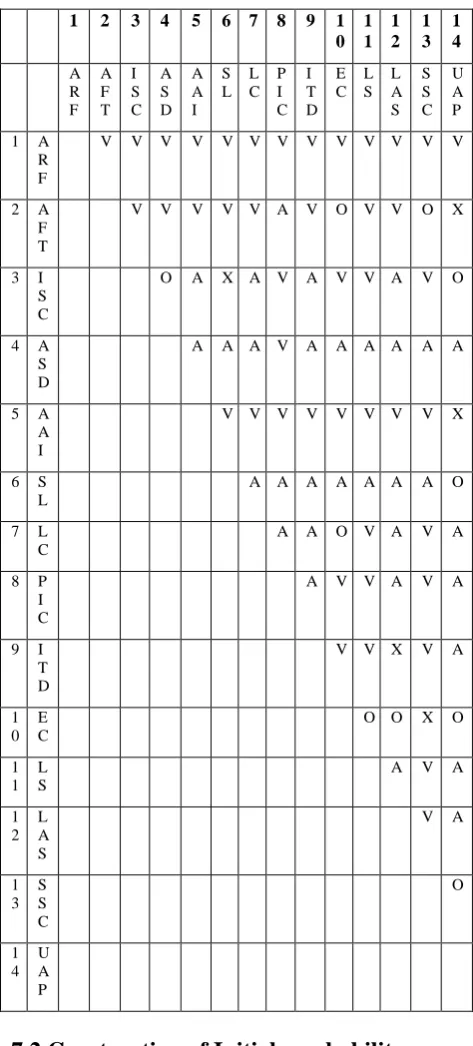
[image:4.595.310.547.84.608.2]This matrix shown as table 2 gives the pair-wise relationship between two variables i.e. i and j based on VAXO.
Table 2. Structural self – interaction matrix
1 2 3 4 5 6 7 8 9 1
0 1 1
1 2
1 3
1 4
A R F
A F T
I S C
A S D
A A I
S L
L C
P I C
I T D
E C
L S
L A S
S S C
U A P
1 A
R F
V V V V V V V V V V V V V
2 A
F T
V V V V V A V O V V O X
3 I
S C
O A X A V A V V A V O
4 A
S D
A A A V A A A A A A
5 A
A I
V V V V V V V V X
6 S
L
A A A A A A A O
7 L
C
A A O V A V A
8 P
I C
A V V A V A
9 I
T D
V V X V A
1 0
E C
O O X O
1 1
L S
A V A
1 2
L A S
V A
1 3
S S C
O
1 4
U A P
7.2.Construction of Initial reachability
matrix
Table 3. Initial reachability Matrix
1 2 3 4 5 6 7 8 9 1
0 1 1 1 2 1 3 1 4 A R F A F T I S C A S D A A I S L L C P I C I T D E C L S L A S S S C U A P
1 A
R F
V V V V V V V V V V V V V
2 A
F T
V V V V V A V O V V O X
3 I
S C
O A X A V A V V A V O
4 A
S D
A A A V A A A A A A
5 A
A I
V V V V V V V V X
6 S
L
A A A A A A A O
7 L
C
A A O V A V A
8 P
I C
A V V A V A
9 I
T D
V V X V A
1 0
E C
O O X O
1 1
L S
A V A
1 2
L A S
V A
1 3 S S C O 1 4 U A P
7.3.Construction of final reachability
matrix
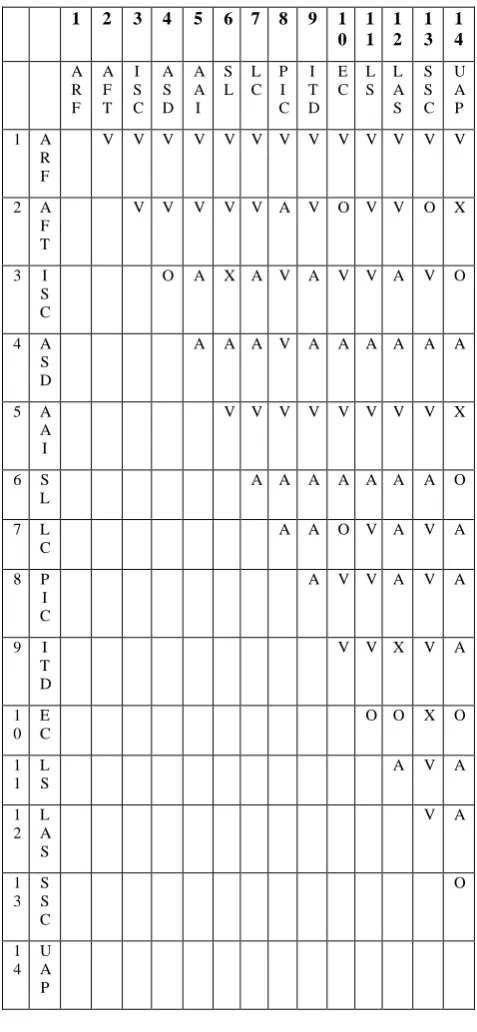
[image:5.595.309.548.85.602.2]After removing the transitivity, final reachability matrix is obtained along with the driving power as well as dependence power . Based on driving power and dependencies, these factors may be classified in to four groups of autonomous, dependent, linkage and independent (driver) factors.
Table 4. Final reachbility matrix
1 2 3 4 5 6 7 8 9 1
0 1 1 1 2 1 3 1 4 A R F A F T I S C A S D A A I S L L C P I C I T D E C L S L A S S S C U A P
1 A
R F
V V V V V V V V V V V V V
2 A
F T
V V V V V A V O V V O X
3 I
S C
O A X A V A V V A V O
4 A
S D
A A A V A A A A A A
5 A
A I
V V V V V V V V X
6 S
L
A A A A A A A O
7 L
C
A A O V A V A
8 P
I C
A V V A V A
9 I
T D
V V X V A
1 0
E C
O O X O
1 1
L S
A V A
1 2
L A S
V A
1 3 S S C O 1 4 U A P
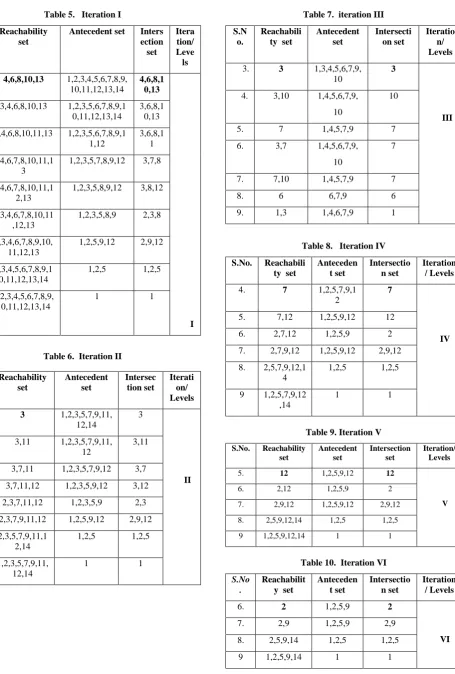
7.4.Level Partition
Table 5. Iteration I
S. No .
Reachability set
Antecedent set Inters
ection set
Itera tion/ Leve ls
1. 4,6,8,10,13 1,2,3,4,5,6,7,8,9,
10,11,12,13,14
4,6,8,1 0,13
I
2. 3,4,6,8,10,13 1,2,3,5,6,7,8,9,1 0,11,12,13,14
3,6,8,1 0,13
3. 3,4,6,8,10,11,13 1,2,3,5,6,7,8,9,1 1,12
3,6,8,1 1
4. 3,4,6,7,8,10,11,1 3
1,2,3,5,7,8,9,12 3,7,8
5. 3,4,6,7,8,10,11,1 2,13
1,2,3,5,8,9,12 3,8,12
6. 2,3,4,6,7,8,10,11 ,12,13
1,2,3,5,8,9 2,3,8
7. 2,3,4,6,7,8,9,10, 11,12,13
1,2,5,9,12 2,9,12
8. 2,3,4,5,6,7,8,9,1 0,11,12,13,14
1,2,5 1,2,5
9 1,2,3,4,5,6,7,8,9, 10,11,12,13,14
[image:6.595.303.547.74.749.2]1 1
Table 6. Iteration II
S.N o.
Reachability set
Antecedent set
Intersec tion set
Iterati on/ Levels
2. 3 1,2,3,5,7,9,11,
12,14
3
II
3. 3,11 1,2,3,5,7,9,11, 12
3,11
4. 3,7,11 1,2,3,5,7,9,12 3,7
5. 3,7,11,12 1,2,3,5,9,12 3,12
6. 2,3,7,11,12 1,2,3,5,9 2,3
7. 2,3,7,9,11,12 1,2,5,9,12 2,9,12
8. 2,3,5,7,9,11,1 2,14
1,2,5 1,2,5
9 1,2,3,5,7,9,11, 12,14
1 1
Table 7. iteration III
S.N o.
Reachabili ty set
Antecedent set
Intersecti on set
Iteratio n/ Levels
3. 3 1,3,4,5,6,7,9, 10
3
III
4. 3,10 1,4,5,6,7,9,
10
10
5. 7 1,4,5,7,9 7
6. 3,7 1,4,5,6,7,9, 10
7
7. 7,10 1,4,5,7,9 7
8. 6 6,7,9 6
9. 1,3 1,4,6,7,9 1
Table 8. Iteration IV
S.No. Reachabili
ty set
Anteceden t set
Intersectio n set
Iteration / Levels
4. 7 1,2,5,7,9,1
2
7
IV
5. 7,12 1,2,5,9,12 12
6. 2,7,12 1,2,5,9 2
7. 2,7,9,12 1,2,5,9,12 2,9,12
8. 2,5,7,9,12,1 4
1,2,5 1,2,5
9 1,2,5,7,9,12 ,14
1 1
Table 9. Iteration V
S.No. Reachability set
Antecedent set
Intersection set
Iteration/ Levels
5. 12 1,2,5,9,12 12
V
6. 2,12 1,2,5,9 2
7. 2,9,12 1,2,5,9,12 2,9,12
8. 2,5,9,12,14 1,2,5 1,2,5
9 1,2,5,9,12,14 1 1
Table 10. Iteration VI
S.No .
Reachabilit y set
Anteceden t set
Intersectio n set
Iteration / Levels
6. 2 1,2,5,9 2
VI
7. 2,9 1,2,5,9 2,9
8. 2,5,9,14 1,2,5 1,2,5
9 1,2,5,9,14 1 1
[image:6.595.47.286.74.637.2]Table 11. Iteration VII
S.No .
Reachabilit y set
Anteceden t set
Intersectio n set
Iteration / Levels
7. 9 1,5,9 9
VII
8. 5,9,14 1,5 1,5
9 1,5,9,14 1 1
Table 12. Iteration VIII
S.No. Reachabi
lity set
Antecedent set
Intersectio n set
Iteration/ Levels
8. 5,14 1,5 1,5 VIII
9 1,5,14 1 1
Table 12: Iteration IX
S.No. Reachability set
Antecedent set
Intersection set
Iteration / level
9 1 1 1 IX
7.5.Classification of factors
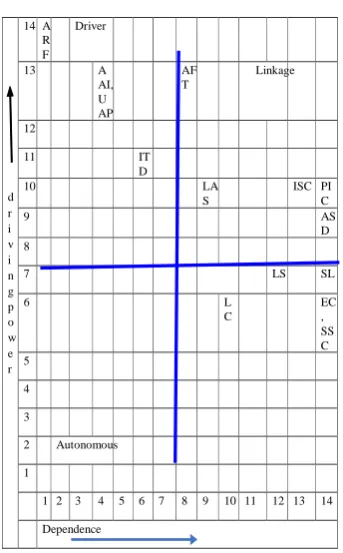
[image:7.595.352.502.121.369.2]The critical success factors described earlier are classified in to four clusters viz. autonomous factor, dependent factors, linkage factors and independent factors (mentioned in Table 13 below). As we can see that there is no autonomous criteria. Criteria AFT,LAS,ISC,PIC,ASD are linkage criteria whereas criteria ARF,AAI,UAP,ITD are driver criteria.
Table 13 . Driving Power & Dominance Diagram
7.6.ISM --The Diagraph
The diagraph presenting the hierarchy of the various barriers is shown in figure below.
Figure 1 : ISM Model
8.
MANAGERIAL IMPLICATIONS OF
SOCIAL MEDIA AND BLOCK
CHAIN TO SMEs AND FINANCIAL
SERVICES
1. Banks and traditional incumbents must adapt to the new reality that social media is creating. They can translate their productive ideas into the core banking services that many new entrants are targeting through disruptive new business models.
2. The opportunities social media provides do not concern only customer service and marketing, but more fundamentally affect the products and services themselves. New business models are changing the entire industry. Large, complex and highly regulated entities are being forced to learn how to innovate and roll out new ideas in agile ways to test and iterate quickly.
3. With the blockchain and related services such as smart contracts, the SME world may expect to see a total transformation of how they nowadays do their business. Blockchain will make international dealings more conducive for SMEs and may allow them to compete in ways that are unthinkable today. 4. Accountants are experts in record keeping,
application of complex rules, business logic and standards setting. So if properly understood by them , block chain technology can be efficiently utilized to create wonders .
5. There is almost no need to confirm the accuracy of blockchain transactions with external sources, but there is still lot of work needs to be done on the part that how these transactions are recorded and recognized in the financial statements, and how
LAS
ITD
ARF
UAP AAI
M AFT LC LS ISC
SSC PIC EC
SL ASD
d r i v i n g p o w e r
14A R F
Driver
13 A
AI, U AP
AF T
Linkage
12
11 IT
D
10 LA
S
ISC PI C
9 AS
D 8
7 LS SL
6 L
C
EC , SS C 5
4
3
2 Autonomous
1
12 3 4 5 6 7 8 9 10 11 12 13 14
[image:7.595.80.252.449.726.2]judgmental elements such as valuations are decided. In long term, more and more records could move onto blockchains, and auditors and regulators with access would be able to check transactions in real time.
9.
ACKNOWLEDGEMENTS
Co-Author Remica Aggarwal is thankful to Prof. S.P Singh of IIT Delhi, India in disseminating the knowledge about ISM methodology which helped her substantially in preparing the manuscript.
10.
REFERENCES
[1] Stolz, H., Stolze, M., Hamm, U., Janssen, M. and Ruto, E. 2010. Consumer attitudes towards organic versus conventional food with specific quality attributes. NJAS-Wageningen Journal of Life Sciences. 58, 67–72. [2]
https://www.cmswire.com/information-management/10-obstacles-to-enterprise-blockchain-adoption/ [3]
https://101blockchains.com/blockchain-adoption-challenges/
[4] https://www.huffpost.com/entry/how-social-media-is-shapi_b_9043918
[5] Schmitz, J. and Leoni, G. 2019. Accounting and Auditing at the Time of Blockchain Technology: A Research Agenda, Australian Accounting Review · DOI: 10.1111/auar.12286
[6] Lazanis, R. 2017. How Technology Behind Bitcoin Could Transform Accounting As We Know It. https://techvibes.com/2015/01/22/howtechnology- behind-bitcoin-could-transform-accountingas-we-know-it-2015-01-22
[7] Potekhina and Riumkin, Blockchain-a new accounting paradigm; Implications for credit risk management. https://www.diva-portal.org/smash/get/
diva2:1114333/FULLTEXT01.pdf