Original Article
A phase II study of neoadjuvant radiochemotherapy
followed by Surgery for locally advanced cervical cancer
Huixia Peng1*, Zhengli Di2*, Yingying Jin3, Yue Ke3, Shan Huang3, Hongbing Ma3
Departments of 1Obstetrics and Gynecology, 3Oncology, The Second Affiliated Hospital of Xi’an Jiaotong University, Xi’an 710004, Shaanxi Province, China; 2Department of Internal Medicine, Xi’an Center Hospital, Xi’an 710003, Shaanxi Province, China. *Equal contributors.
Received May 24, 2016; Accepted September 17, 2016; Epub December 15, 2016; Published December 30, 2016
Abstract: Objective: We investigate the feasibility of chemoradiotherapy with paclitaxel and carboplatin before sur-gery and assess the response rate of the treatment regimen. Methods: This is a single-arm phase II trial of 52 pa-tients, with locally advanced cervical cancer (stage Ib2-IIIB). Patients received radiotherapy (20Gy/10 fractions dur-ing Weeks 2) usdur-ing a three-dimensional conformal radiation therapy or intensity-modulated radiation therapy tech-nique plus brachytherapy (7Gy/fraction during Weeks 2) together with docetaxel: 20 mg/m2i.v., cisplatin: 40 mg/ m2i.v. on Days 1, 8 and 15. The primary end point was response rate 12 weeks post-chemoradiotherapy. Results: Baseline characteristics were: median age at diagnosis 43 years old; 86.5% squamous, 13.5% adenocarcinoma;
FIGO stage I-II (63.5%), III (36.15%). Complete or partial response rate was 69.2%, CRT showed potential benefit for
CR+PR rate enhancement rate in all 52 cases (22/28, 78.6% vs 14/24, 58.3%; P=0.115). The median follow-up was 24 months. Overall and progression-free survivals at 3 years were 84.6% (44/52, 95% CI: 44-52) and 90.4% (47/52, 95% CI: 56-63), respectively. Survival status showed obvious differences in the positive of postoperative lymph-node group in comparison with negative of postoperative lymph-node group (66.7% vs 94.7%; P=0.039 for 3-year OS; P=0.049, 75.0% vs 92.8% for 3-year PFS) and showed obvious differences in the tumor diameters ≥5 cm group in comparison with tumor diameters ≤5 cm group(80.0% vs 96.9%; P=0.045 for 3-year OS; P=0.021,
70.0% vs 93.8% for 3-year PFS). The complications were observed without significant differences between the CRT
and RT-alone groups (21.4% vs 20.8%, P=0.782). Conclusion: This study confirms good response rate in locally ad -vanced cervical cancer patients after chemoradiotherapy with paclitaxel and carboplatin. Our results indicate that this treatment regimen is feasible as evidenced by the acceptable toxicity of chemoradiotherapy and by the high compliance to radiotherapy.
Keywords: Local advanced cervical carcinoma, concurrent chemoradiotherapy, radical hysterectomy, prognostic factors
Introduction
Cervical carcinoma is the third most commonly diagnosed cancer and the fourth leading cause of cancer death in females worldwide [1], and is more serious in China, especially in the north-west regions [2]. Cervical cancer is highly sensi-tive to radiotherapy (RT) and chemotherapy (CT), and the standard treatment is platinum-based CT combined with radiotherapy in most developed counties in the world [3, 4]. Recently, the concurrent chemoradiotherapy (CCRT) has been shown to reduce treatment failure rates compared to RT alone and thus improve cervi-cal cancer survival by approximately 40% in advanced cervical cancer [5]. However, 5-year
investi-gate the feasibility of neoadjuvant CRT and assessed the overall response rate after the doublet CT and at 12 weeks after the comple-tion of CCRT.
Patients and methods
We conducted a single-arm phase II trial in women with locally advanced cervical cancer treated with neoadjuvant weekly docetaxel and cisplatin CCRT followed immediately by con-comitant Surgery. From March 2009 to July 2013, 52 patients with cervical carcinoma (FIGO stage IB2-IIIB, according to the pelvic examination) were treated in the Department of
Radiation Oncology, the Second Affiliated
Hospital of Xi’an Jiaotong University, China. Other eligibility criteria were between 18 and 65 years of age, adequate bone marrow func-tion (white blood cell count of 4-10×109/l,
neu-trophil count of 1.5×10⁹/l or more, platelet
count of 100×109/l or more and a hemoglobin
level of 90 g/l or more), renalfunction (serum
creatinine levels <130 μmol/l, carbamide level of <8 μmol/l), hepatic function (serum bilirubin level ≤20 μmol/l; serum alanine aminotransfer
-ase ≤80 IU/l, aspartate aminotransfer-ase ≤80 IU/l); Karnofsky performance status of ≥70% or
ECOG performance status 0-1.
Exclusion criteria included the following: patients with distant metastases, any previous palliative (neoadjuvant CT, RT) or incompletely healed from previous oncologic, major surgery or other serious medical conditions, known active infections, active cardiac disease, lung
fibrosis, pleural effusion or pericardial effusion
that required drainage or an active second malignancy. Patients with Hypersensitivity reactions to docetaxel or pregnant or breast-feeding patients were also ineligible. All pa- tients gave written informed consent before enrollment.
Treatment schedule
Preoperative pelvic RT was delivered using three-dimensional conformal radiation tech-niques and 6MV photons using a linear accel-erator (Clinac 21EX; Varian Medical Systems, Palo Alto, CA, USA). The treatment planning was designed and computed using the Plato system version 2.7.5 (Varian). Patients were immobi-lized with a custom vacuum mattress in the supine position. Treatment planning was based on computed tomography images of 5 mm slice
thickness taken by Light speed 16 CT scanner (GE Medical Systems, USA). Simulation images extended from L1 to 5 cm below the ischial tuberosities. The external beam radiation to
the pelvis was delivered using a four-field (AP/ PA and two lateral fields) arrangement. The
whole pelvis was given to a total dose of 19.8Gy or 20Gy in 11 or 10 fractions over 2 weeks. Intracavitary brachytherapy was given towards the end of or following completion of external beam radiation. Patients received a total dose of 14Gy in two fractions to point A HDR.
RT of the clinical target volume (CTV) included the gross tumor, cervix, whole uterus, as well as parametrium, upper part of vagina down to the level of lower border of obturator foramens, and the draining pelviclymph nodes up to the level of the common iliac (L4/5 junction) region-al lymph nodes (common, externregion-al, internregion-al iliac lymph nodes, obturator and presacral lymph nodes). If the primary lesion involved lower third of vagina or there were clinically pal-pable metastatic inguinal nodes, inguinal
regions were also included in EBRT fields. The planning target volume (PTV) was defined by a
uniform three-dimensional expansion around the CTV, using 5 mm margins around the lymph nodes, 8 mm around the vagina and, parame-tria and 10 mm around the cervix and gross disease. The treatment planning was designed and computed using the Plato system version 2.7.5 (Varian). HDR-ICBT was performed in 1 fraction/week, but EBRT and HDR-ICBT were not carried out on the same day. All brachy- therapy was carried out by 192Ir remote after
loading system (RALS, MicroSelectron HDR™, Nucletron, Veennendaal, The Netherlands). The concomitant CRTwas administered to patients by an intravenous infusion of weekly cisplatin (40 mg/m2i.v.) and docetaxel (20 mg/
m2i.v.) on Days 1, 8 and 15 during RT.
or residual carcinoma (RC). CR was defined as a
complete disappearance of all macroscopic and microscopic diseases and mainly showing
inflammatory cell infiltration, PR defined as
presence of persistent atypical cells or cervical
intraepithelial neoplasia, and RC defined as
macroscopic and/or microscopic residual dis-ease. Pathological response of resected lymph nodes was described in terms of lymph-node involvement (involved or not involved).
Assessments
All patients had an X-ray or Computed Tomography of the chest and Computed Tomography or MRI scan of the abdomen and the pelvis. Toxicity assessment was perfor- med according to the RTOG criteria [8] for Research and Treatment for Cancer late-radia-tion morbidity-scoring scheme. Chemotherapy to assess response using RECIST criteria [9]. Biochemistry and toxicity assessments were carried out weekly during treatment, Full blood counts were performed weekly. Severity of adverse events was categorised using the Common Terminology Criteria for Adverse Events Version 4.0 (CTCAE v4.0). After comple-tion of treatment, patients were followed at
3-month intervals for the first 12 months,
and at 6-month intervals thereafter. Patients were followed up regularly with gynecological
examination, laboratory studies (blood counts, liver and renal function tests), TVS,
transab-dominal ultrasonography, superficial
lymph-node examination, and radiographic studies, such as chest CT and/or pelvic MRI.
Statistical considerations
The primary end point was the response rate 12 weeks after completing all treatment. The pelvic tumor control, overall survival (OS), and progression-free survival (PFS) were calculated from the date of surgery to the last date of fol-low-up. Death in the absence of progression was censored in the calculation of PFS. The Kaplan-Meier method and log-rank test were used to estimate outcomes and effects on OS and PFS, respectively. Multivariate analysis was performed with the Cox proportional haz-ard model. The chi-squared test was used to compare proportions between different groups. GraphPad Prism and SPSS 21.0 (IBM, Armonk, NY, USA) software was used for all statistical analyses, and P-values less than 0.05 were
considered statistically significant.
Results
Patient characteristics
A total of 52 patients were recruited from three centres in Xi’an Central Hospital, the First
Table 1. Characteristics of 52 patients with IB2-IIIB cervical carcinoma
Characteristics Number of patients (%) Number of CCRT (%) Number of RT alone (%) Median age (range, years) 43 (25-66) 42 (25-65) 43 (34-66) FIGO stages
IB2 6 (11.5%) 4 (5.8%) 2 (5.8%)
IIB 27 (51.9%) 15 (28.8%) 12 (23.1%)
IIIA 3 (5.8%) 2 (3.8%) 1 (1.9%)
IIIB 16 (30.8%) 7 (13.5%) 9 (17.3%)
Tumor diameters (cm) (range, median, mean) (4-8, 5.3, 4.8) (4-7.5, 5.2, 4.8) (4-8, 5.4, 4.7)
<5 cm 32 (61.5%) 17 (32.7%) 15 (32.7%)
5.1-5.9 cm 16 (30.8%) 9 (17.3%) 7 (13.5%)
>6 cm 4 (7.7%) 2 (3.8%) 2 (3.8%)
Preoperative pathological types
Squamous cell carcinoma 44 (84.6%) 23 (44.2%) 21 (40.4%) Nonsquamous cell carcinoma 8 (15.4%) 5 (9.6%) 3 (5.8%) Preoperative EBRT doses
20Gy/10f 52 (100.0%) 28 (53.8%) 24 (46.2%)
Brachytherapy
Affiliated Hospital and the Second Affiliated
Hospital of Xi’an Jiaotong University between July 2008 and October 2012. The median age was 43 years (range, 25-66 years) and 86.5% (45/52) had squamous cell cancers. The mean tumor diameter was 4.5±1.0 cm, as measured by TVS. Baseline characteristics are shown in
Table 1. The majority of the cases were either FIGO stage IIb (51.9%) or IIIb (30.8%). In all, 9.6% (5/52) had positive PALN, 3 in FIGO IIb group and 2 in FIGO IIIb group (Table 1).
Safe and toxicity
Treatment compliance. Ninety-two point eight percent of patients (26/28) completed all two cycles of neoadjuvant CCRT, 17.9% (5/28) had
a dose delay, 82.1% (23/28) had 90% or full doses of drugs for two cycles.
The toxicities were: haematological (n=4) and abdominal pain/nausea/vomiting (n=3) and tin-nitus with or without palpitation (n=2). Dehydra-tion and anaemia (n=1) and allergic reacDehydra-tion (n=1). Five patients had a treatment delay dur-ing neoadjuvant CCRT, mainly due to toxicity (n=3), clinician/patient decision (n=1) or ad- ministrative/logistical/ other reasons (n=1). Ninety eight percent (51/52) of patients had RT. Ninety six percent had brachytherapy, received a dose of 14Gy in two fractions HDR (51/52). The complications were observed
without significant differences between the
CCRT and RT-alone groups (21.4% vs 20.8%,
[image:4.612.90.523.71.264.2]P=0.782).
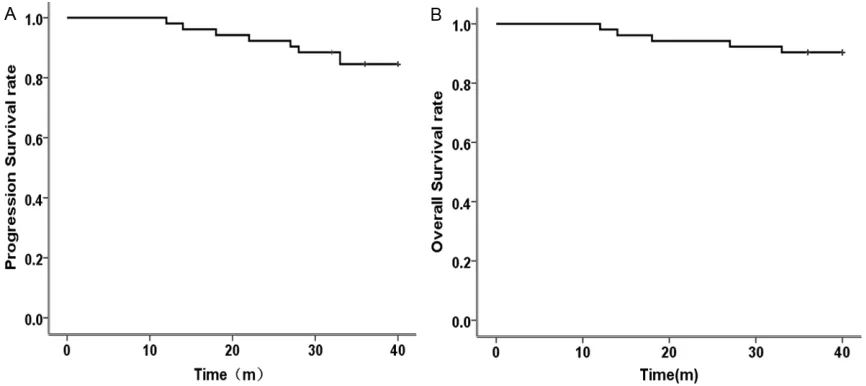
Figure 1. Kaplan-Meier overall survival (A) and progression-free survival (B).
Table 2. Correlations of major clinical/pathological factors
Factors P(3-year -value
OS) OR
95% CI P-value (3-year
PFS) OR
95% CI Lower Upper Lower Upper Tumor diameters
(≥5 cm vs, ≤5 cm) 0.045 0.129 0.013 1.253 0.021 0.156 0.028 0.870 Age of patients
(≥35 years vs. ≤35 years) 0.947 0.925 0.093 9.226 0.772 0.805 0.122 2.400 Postoperative lymph-node involvement
(positive vs negative) 0.039 0.158 0.023 1.089 0.049 0.222 0.045 0.912 Treatment modalities
(CRT vs RT alone) 0.514 1.857 0.284 12.163 0.075 4.333 0.784 23.945 Pathologic subtype
(squamous cell carcinoma vs nonsquamous cell carcinoma) 0.109 4.556 0.627 33.118 0.059 4.680 0.849 25.811 FIGO stage
(IB2-IIB vs IIIA-IIIB) 0.866 1.176 0.179 7.753 0.951 1.050 0.221 4.985
Efficacy
Median follow-up from the date of surgery was 24 months (10-64 months). The 3-year PFS and OS were 84.6% (44/52, 95% CI: 44-52) and 90.4% (47/52, 95% CI: 56-63) (Figure 1), respectively. The 3-year local pelvic control was
96.1% (50/52). Death was reported in five
patients (5/52, 9.6%), from distant metastasis
(2/52, 3.8%), severe complication of renal fail-ure (1/52, 1.9%), and second primary cancer (1/52, 1.9%), local recurrence (1/52, 1.9%).
There was no statistical significance between
CCRT and RT alone in metastasis rate (2/28, 7.1% vs 4/24, 16.7%; P=0.284, 95% CI: 0.143-0.473) and local recurrence rate (0/28, 0% vs 1/24, 4.2%; P=0.275, 95% CI: 0.96-1.134). In order to exclude the confounding factor,
[image:5.612.96.518.73.305.2]sub-Figure 2. Survival curves of progression-free survival (PFS) (A) and overall survival (OS) (B) of local advanced cervical carcinoma patients with tumor diameters after CRT or preoperative RT-alone modalities.
[image:5.612.95.520.357.584.2]group analysis classified by tumor size and
postoperative pathologic response were per-formed (Figure 1).
On multivariate analysis, In order to evaluate the impact of disease-related, treatment-relat-ed, and socio-demographic features more likely to affect QOL scores, we included in the multi-variate analysis the following parameters: pri-mary tumor diameter, age, postoperative pa- thologic response, pathologic subtype (squa-mous cell carcinoma vs nonsqua(squa-mous cell car-cinoma), FIGO stage (IB2-IIB vs IIIB) and pelvic lymph-node involvement status As summarized in Table 2. Positive lymph-node involvements
were confirmed in 12 patients (5 patients in the
CCRT and seven patients in the RT alone group).
There was no statistically significant difference
in lymph-node involvement status between CCRT and RT alone (5/28, 17.9% vs 7/24, 29.2%; P=0.335, 95% CI: 0.371-10.441). Sur- vival status showed obvious differences in the positive of postoperative lymph-node group in comparison with negative of postoperative lymph-node group (66.7% vs 94.7%; P=0.039 for 3-year OS; P=0.049, 75.0% vs 92.8% for 3-year PFS). Survival status showed obvious
differences in the tumor diameters ≥5 cm group in comparison with tumor diameters ≤5
cm group (80.0% vs 96.9%; P=0.045 for 3-year OS; P=0.021, 70.0% vs 93.8% for 3-year PFS) (Table 2).
Pathologic response in CCRT and RT alone
The CR rate was 28.8% (15/52), PR rate was 40.4% (21/52), and RC rate was 30.8% (16/ 52). Among patients with RC, 6 had greater than one-third cervical stromal invasion, two developed capillary-like space involvement, and one had ovarian invasion. The data of this
study CCRT showed potential benefit for CR+PR
rate enhancement rate in all 52 cases (22/28, 78.6% vs 14/24, 58.3%; P=0.115) (Figures 2
and 3).
Discussion
Current standard treatment for patients with cervical cancer who have locally advanced stage disease (International Federation of Gynecology and Obstetrics (FIGO) stage IIB to IVA) is concurrent chemoradiationtherapy (CCRT) [10], but, it was not recommended in a routine procedure, 3-year PFS (74%) or OS (69.1%) of the standard CCRT alone were still not satisfactory [11]. On the other hand, a clini-cal trial showed a contribution of surgery to the
patients with bulky residual disease after CCRT for cervical carcinoma by increasing OS and local control rate [12]. We applied preoperative CCRT or RT by pelvic radiation of 34Gy for the patients with LACC in this study. Interestingly, our data showed preoperative CCRT achieved better outcome in comparison to RT alone for LACC with acceptable low toxicity and
compli-cations. A finding of this study is that preopera
-tive CCRT was associated with significantly
improved PFS and OS compared with RT alone when the tumor size was less than 5 cm. Our study suggests that a combination of preopera-tive CCRT and radical surgery may provide a feasible and effective treatment for patients with LACC, though further comprehensive
investigation is needed for modified concurrent
chemotherapy in improved treatment of patients with late-stage or bulky tumor size. Tumor size is one of the most important predic-tive factors in patients treated with irradiation. Hirakawa [13] et al reported that PFS was
sig-nificantly different when the tumor size was
less than 5.2 cm or >5.2 cm. In Baiocchi [14] et al’s research, tumor size larger than 5 cm did not correlate with the risk of recurrence and death from cancer. The results of our study
revealed that the OS and PFS were significantly
different when the tumor size was less than 5 cm or >5 cm. Thus, there is a consensus that tumor size is crucial incervical cancer patients treated with irradiation.
Huang et al [15] reported that the prognostic factors contained incomplete tumor regres-sion, a low hemoglobin level, and positive lymph-node metastasis. Huguet et al observed pelvic lymph-node metastasis rate was reduced to 7.8% after CCRT based on cisplatin and 5-FU in IB-IIB stage cervical carcinoma [16]. The sur-vival state might depend on the number of lymph nodes involved: those with four or more
involved lymph nodes had worse cause-specific
survival compared with patients with one to three involved lymph nodes. Our study reported
that OS and PFS were significantly different
OS and PFS, maybe, the reason was the num-ber of patients is too little.
Acknowledgements
This work was supported in part by a grant from the Fund for New Technology Program
of the Second Hospital affiliated to Xi’an
Jiaotong University, China, No. 2009.
Disclosure of conflict of interest
None.
Address correspondence to: Dr. Hong-Bing Ma, Department of Oncology, The Second Hospital of Xi’an Jiaotong University, No. 157, Xiwulu, Xi’an 710004, Shaanxi Province, China. Tel: +86 29 87679786; E-mail: [email protected]
References
[1] Siegel RL, Miller KD and Jemal A. Cancer sta-tistics, 2015. CA Cancer J Clin 2015; 65: 5-29. [2] Chen W, Zheng R, Zhang S, Zhao P, Zeng H,
Zou X and He J. Annual report on status of can-cer in China, 2010. Chin J Cancan-cer Res 2014; 26: 48-58.
[3] Keys HM, Bundy BN, Stehman FB, Muderspach LI, Chafe WE, Suggs CL 3rd, Walker JL, Gersell D. Cisplatin, radiation, and adjuvant hysterec-tomy compared with radiation and adjuvant hysterectomy for bulky stage IB cervical carci-noma. N Engl J Med 1999; 340: 1154-1161 [4] Vale CL, Tierney JF, Davidson SE, Drinkwater
KJ and Symonds P. Substantial Improvement in UK Cervical Cancer Survival with Chemora- diotherapy: Results of a Royal College of Radiologists’ Audit. Clin Oncol (R Coll Radiol) 2010; 22: 590-601.
[5] McCormack M, Kadalayil L, Hackshaw A, Hall-Craggs MA, Symonds RP, Warwick V, Simonds H, Fernando I, Hammond M, James L, Feeney A and Ledermann JA. A phase II study of weekly neoadjuvant chemotherapy followed by radical chemoradiation for locally advanced cervical cancer. Br J Cancer 2013; 108: 2464-2469. [6] Friedman LC, Abdallah R, Schluchter M,
Panneerselvam A and Kunos CA. Adherence to vaginal dilation following high dose rate brachytherapy for endometrial cancer. Int J Radiat Oncol Biol Phys 2011; 80: 751-757. [7] Ferrandina G, Margariti PA, Smaniotto D,
Petrillo M, Salerno MG, Fagotti A, Macchia G, Morganti AG, Cellini N and Scambia G. Long-term analysis of clinical outcome and compli-cations in locally advanced cervical cancer patients administered concomitant chemora-diation followed by radical surgery. Gynecol Oncol 2010; 119: 404-410.
[8] Cox JD, Stetz J, Pajak TF. Toxicity criteria of the Radiation Therapy Oncology Group (RTOG) and
the European Organization for Research and Treatment of Cancer (EORTC). Int J Radiat Oncol Biol Phys 1995; 31: 1341-1346.
[9] Therasse P, Arbuck SG, Eisenhauer EA, Wanders J, Kaplan RS, Rubinstein L, Verweij J, Van GM, vanOosterom AT, Christian MC. Gwyther SG. New guidelines to evaluate the response to treatment in solid tumors. European Organization for Research and Treatment of Cancer, National Cancer Institute of the United States, National Cancer Institute of Canada. J Natl Cancer Inst 2000; 92: 205-216.
[10] Tangjitgamol S, Katanyoo K, Laopaiboon M, Lumbiganon P, Manusirivithaya S, Supawatta- nabodee B. Adjuvant chemotherapy after con-current chemoradiation for locally advanced cervical cancer. Cochrane Database Syst Rev 2014; 12: CD010401.
[11] Duenas-Gonzalez A, Zarba JJ, Patel F, Alcedo JC, Beslija S, Casanova L, Pattaranutaporn P, Hameed S, Blair JM, Barraclough H and Orlando M. Phase III, Open-Label, Randomized Study Comparing Concurrent Gemcitabine Plus Cisplatin and Radiation Followed by Adjuvant Gemcitabine and Cisplatin Versus Concurrent Cisplatin and Radiation in Patients With Stage IIB to IVA Carcinoma of the Cervix. J Clin Oncol 2011; 29: 1678-1685.
[12] Hirakawa M, Nagai Y, Toita T, Kudaka W, Inamine M, Ogawa K, Murayama S, Aoki Y. High-risk group for locoregional recurrence in patients with stage IB-IIB squamous cell carci-noma of the cervix treated with concurrent chemoradiotherapy. Anticancer Res 2011; 31: 1437-1441
[13] Houvenaeghel G, Lelievre L, Buttarelli M, Jac- quemier J, Carcopino X, Viens P and Gonzague-Casabianca L. Contribution of surgery in pa-tients with bulky residual disease after chemo-radiation for advanced cervical carcinoma. Eur J Surg Oncol 2007; 33: 498-503.
[14] Baiocchi G, Guimaraes GC, Rosa Oliveira RA, Kumagai LY, Faloppa CC, Aguiar S, Begnami MD, Soares FA and Lopes A. Prognostic factors in pelvic exenteration for gynecological malig-nancies. Eur J Surg Oncol 2012; 38: 948-954. [15] Huang YT, Wang CC, Tsai CS, Lai CH, Chang TC,
Chou HH, Hsueh S, Chen CK, Lee SP and Hong JH. Long-term outcome and prognostic factors for adenocarcinoma/adenosquamous
carci-noma of cervix after definitive radiotherapy. Int
J Radiat Oncol Biol Phys 2011; 80: 429-436. [16] Huguet F, Cojocariu OM, Levy P, Lefranc JP,
Darai E, Jannet D, Ansquer Y, Lhuillier PE,
Benifla JL, Seince N and Touboul E.