In-tool Learning for Selective Manual Annotation in Large Corpora
Erik-Lˆan Do Dinh†, Richard Eckart de Castilho†, Iryna Gurevych†‡ †Ubiquitous Knowledge Processing Lab (UKP-TUDA)
Department of Computer Science, Technische Universit¨at Darmstadt ‡Ubiquitous Knowledge Processing Lab (UKP-DIPF)
German Institute for Educational Research and Educational Information http://www.ukp.tu-darmstadt.de
Abstract
We present a novel approach to the selec-tive annotation of large corpora through the use of machine learning. Linguis-tic search engines used to locate potential instances of an infrequent phenomenon do not support ranking the search re-sults. This favors the use of high-precision queries that return only a few results over broader queries that have a higher recall. Our approach introduces a classifier used to rank the search results and thus help-ing the annotator focus on those results with the highest potential of being an in-stance of the phenomenon in question, even in low-precision queries. The clas-sifier is trained in anin-toolfashion, ex-cept for preprocessing relying only on the manual annotations done by the users in the querying tool itself. To implement this approach, we build upon CSniper1, a web-based multi-user search and annota-tion tool.
1 Introduction
With the rapidly growing body of digitally avail-able language data, it becomes possible to investi-gate phenomena of the language system that man-ifest themselves infrequently in corpus data, e.g. non-canonical constructions. To pinpoint occur-rences of such phenomena and to annotate them requires a new kind of annotation tool, since man-ual, sequential annotation is not feasible anymore for large amounts of texts.
An annotation-by-query approach to identify such phenomena in large corpora is implemented
1https://dkpro.github.io/dkpro-csniper
in the recently published open-source tool CSniper (Eckart de Castilho et al., 2012).
To enable a selective manual annotation pro-cess, a linguistic search engine is used, allowing the creation of queries which single out potential instances of the phenomenon in question. Those potential instances are then displayed to the user, who annotates each one as being an instance of the phenomenon or not. This process of search-ing and annotatsearch-ing can be performed by multiple users concurrently; the annotations are stored for each user separately. In a subsequent evaluation step, a user can review the annotations of all users, e.g. to discard a query if it yields unsatisfying re-sults. Finally, the annotations of multiple users can be merged into a gold standard.
Query
Annotate
Rank
Evaluate
Aggregate
review assessments refine
[image:1.595.321.522.478.583.2]query
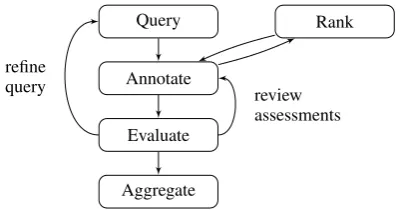
Figure 1:Annotation-by-queryworkflow extended with a ranking step.
This approach relieves the annotator from hav-ing to read through the corpus from the beginnhav-ing to the end to look for instances of a phenomenon. However, the search may yield many results that may superficially appear to be an instance of the desired phenomenon, but due to ambiguities or due to a broadly defined query only a small sub-set may be actual instances. This still leaves the annotator with the tedious task of clicking through the search results to mark the true instances.
To reduce the time and effort required, we present an extension of the annotation-by-query
approach (Figure 1) that introduces a ranking of the query results (Section 2) by means of machine learning; we order the results by confidence of the used classifier. To obtain a model for the classifier, we employ anin-toollearning approach, where we learn from the annotations that are made by users in the tool itself. This makes our ranking approach useful for highly specific tasks, since no pre-trained models are needed.
Finally we demonstrate the viability of our con-cept by the example task of finding non-canonical constructions in Section 3.
2 Ranking linguistic query results
Our approach employs machine learning to facili-tate — but not to completely replace — the man-ual annotation of query results. A query expresses the intention of the user to find a specific linguis-tic phenomenon (information need). An infor-mation retrieval search engine would provide the user with a list of results that are ranked accord-ing to their relevance, fulfillaccord-ing the information need. However, linguistic search engines such as CQP (Evert and Hardie, 2011) — which is used by CSniper — are basically pattern-matching en-gines, operating on different lexical or morpho-syntactic features like part-of-speech (POS) tags and lemmata and do not have a concept of rele-vance. Thus, if the query provided by the user overgeneralizes, relevant results are hidden among many irrelevant ones, ultimately failing to satisfy the user’s information need.
To tackle this problem, we use the annotations already created by users on the search results to train a classifier. Unannotated query results are then fed to the classifier whose output values are then used as relevance ratings by which the results are ranked. The classifier producing the ranking can be invoked by the user at any time; it can be configured in certain characteristics, e.g. the an-notations of which users should be used as train-ing data, or how many of the selected users have to agree on an annotation for it to be included.
2.1 Workflow and ranking process in CSniper
Currently, we train the classifier on features de-rived from the constituency parse tree, which makes it useful for tasks such as locating
sen-tences containing infrequent ambiguous grammat-ical constructions (cf. Section 3). Since parsing the query results is too time-intensive to be done during runtime, we parsed the corpora in advance and stored the parse trees in a database. To train the classifier, we employed SVM-light-tk (Mos-chitti, 2006; Joachims, 1999), a support vector ma-chine implementation which uses a tree kernel to integrate all sub-trees of the parse tree as features. Consider the following typical scenario incor-porating the ranking: A user constructs a query based on various features, such as POS tags or lemmata, which are used to search for matching sentences, e.g.
“It” [lemma=“be”] [pos=“AT0”]? [pos=“NN.*”]2
The result is a list of sentences presented in a
keywords-in-context(KWIC) view, along with an annotation field (Figure 2).
Then the user starts to annotate these sentences as Correct or Wrong, depending whether they truly represent instances of the phenomenon in question. Clicking on the Rank results button (Figure 2) invokes our ranking process: The SVM-light-tk classifier is trained using the parse trees of the sentences which the user previously annotated. The resulting model is then used to classify the re-maining sentences in the query results. We rank the sentences according to the output value of the decision function of the classifier (which we in-terpret as a relevance/confidence rating) and tran-siently label a sentence as either(Correct)(output value>0) or(Wrong)(output value≤0). The re-sults in the KWIC view are then reordered accord-ing to the rank, showaccord-ing the highest-rankaccord-ing result first. Repeatedly annotating those highest-ranking results and re-ranking allows for quickly annotat-ing instances of the phenomenon, while also im-proving the classifier accuracy at the same time. 2.2 Findmode
Figure 2: A screenshot showing the results table after the ranking process, with sentences sorted by confidence of the classifier (Score). The results are shown in akeywords-in-context(KWIC) view, sepa-rating left context, query match and right context (within a range of one sentence). Clicking on(Correct)
changes the label toCorrect.
the need for the user to design new queries, al-lowing users less experienced in the query lan-guage to annotate more effectively side-by-side with advanced users; 2) it could optimally gener-alize over all the queries that users have already made and potentially locate instances that had not been found by individual high-precision queries.
To support this, we implemented the Find
mode, to locate instances of a phenomenon while abstracting from the queries. In this mode, the SVM is first trained from all previously (manu-ally) labeled instances for a given phenomenon, without taking the queries into account that were used to find those instances. Then the corpus is partitioned into smaller parts containing a prede-fined amount of sentences (we used 500). One of these partitions is chosen at random, and the sentences therein are ranked using the SVM. This step is repeated, until a previously defined num-ber of sentences have been classified as Correct. Those sentences are then shown to the user, who now can either confirm a sentence as containing the phenomenon or label itWrongotherwise.
2.3 Related work
Existing annotation tools include automation functionality for annotation tasks, ranging from rule-based tagging to more complex, machine-learning-based approaches.
Such functionalities can be found in the anno-tation software WordFreak (Morton and LaCivita, 2003), where a plug-in architecture allows for a variety of different taggers and classifiers to be in-tegrated, for example part-of-speech taggers or co-reference resolution engines. Those require pre-trained models, which limits the applicability of the automation capabilities of WordFreak to tasks for which such models are actually available. In addition to assigning annotations a single label,
WordFreak allows plugins to rank labels for each annotation based on the confidence of the used classifier. Note that this is different to our rank-ing approach, where we instead perform a rankrank-ing of the search results which shall be annotated.
Another tool incorporating machine learning is WebAnno (Yimam et al., 2014), which imple-ments features such as custom labels and anno-tation types. In addition, WebAnno supports au-tomatic annotation similar to our approach, also employing machine learning to build models from the data annotated by users. Those models are then used to annotate the remainder of the documents. To accomplish this, WebAnno uses a split-pane view, showing automatic suggestions in one pane and manually entered annotations in another. The user can accept a suggested annotation, which is transferred to the manual pane. Lacking the search capability, WebAnno lists automatic annotations in the running corpus text, which makes it unsuited for selective annotation in large corpora. The ap-proach that we implemented on top of CSniper in-stead ranks the search results for a given query by confidence of the classifier.
learning as our goal is not to improve the training efficiency of the classifier but rather to allow the user to interactively find and label as many true instances of a phenomenon as possible in a large corpus. Thus, the items presented to the user are not determined by the expected information gain for the classifier but rather by theconfidenceof the classifier, presenting the user with those instances first which are most likely to be occurrences of the phenomenon in question.
3 Case study: Finding non-canonical constructions
We demonstrate our novel approach on the task of locating non-canonical constructions(NCC) and conduct an intrinsic evaluation of the accuracy of the system augmented with machine learning output on the data annotated by expert linguists. The linguists annotated sentences for occurrences of certain NCC subtypes: information-packaging constructions(Huddleston and Pullum, 2002, pp. 1365ff.), which present information in a differ-ent way from their canonical counterparts without changing truth conditions; specificallyIt-clefts(“It was Peter who made lunch.”), NP-preposing (“A treasure, he was searching.”), and PP-inversion
(“To his left lay the forest.”) clauses.
For our experiments, we used the British Na-tional Corpus (2007), comprising 100 million words in multiple domains3. Constituency pars-ing was conducted uspars-ing the factored variant of the Stanford Parser (Klein and Manning, 2003), incorporated into a UIMA pipeline using DKPro Core (Eckart de Castilho and Gurevych, 2014).
As a baseline we use queries representing the experts’ intuition about the realization of the NCCs in terms of POS tags and lemmata. We show that our system improves the precision of the query results even with little training data. Also we present run times for our ranking system un-der real-world conditions for different training set sizes. Further, we compare Krippendorff’s α co-efficient as an inter-annotator agreement measure among only annotators to the α which treats our system as one additional annotator.
We conducted the experiments based on the manually assigned labels of up to five annota-tors. If a sentence has been annotated by multiple 3CSniper and the used SVM implementation are language independent, which allowed us to also run additional prelim-inary tests using German data.
users, we use the label that has been assigned by the majority; in case of a tie, we ignore the sen-tence. These so created gold standard annotations were used in an iterative cross-validation setting: for each query and the corresponding annotated sentences we ran nine cross-validation configura-tions, ranging from a10/90split between training and testing data to a90/10split, to investigate the reliability of the classifier as well as its ability to achieve usable results with little training data.
For It-clefts, we observe that elaborate queries already have a high precision, on which the SVM improves only marginally. The query
“It” /VCC[] [pos=“NP0”]+ /RC[]4 (it17) already yields a precision of0.9598, which does not increase using our method (using10%as train-ing data, compartrain-ing the precision for the remain-ing90%). However, while broader queries yield lower precision, the gain by using the SVM be-comes significant (Table 1), as exemplified by the precision improvement from0.4919to0.7782for the followingIt-cleftquery, even at a10/90split.
“It” /VCC[] /NP[] /RC[]5 (it2) For other inspected types of NCC, even elaborate queries yield a low baseline precision, which our approach can improve significantly. This effect can be observed for example in the following NP-preposingquery, where precision can be improved from0.3946to0.5871.
[pos=”N.*”]{1,2}[pos=”PNP” & word!=”I”] [pos=”V.*”]6 (np55)
We conducted a cursory, “real-world” test re-garding the speed of the ranking system.7 Training the SVM on differently sized subsets of the 449
sentences returned by a test query, we measured the time from clicking theRank resultsbutton until the process was complete and the GUI had updated to reorder the sentences (i.e. including database queries, training, classifying, GUI update). The process times averaged over five “runs” for each training set size (20%,50%and90%) amount to5
seconds, 7 seconds, and 14seconds respectively. This leaves us with the preliminary impression that our system is fast enough for small to medium 4“It”, verb clause, one or more proper nouns, relative clause. VCC,NC, andRCare macros we defined in CQP, see Table 2.
5“It”, verb clause, noun phrase, relative clause.
it2 it17 it33 np34 np55 np76 pp42 pp99 pp103 Baseline 0.4919 0.9598 0.7076 0.4715 0.3946 0.4985 0.7893 0.4349 0.2365 SVM, 10/90 0.7782 0.9598 0.7572 0.5744 0.5871 0.5274 0.8152 0.8357 0.8469 SVM, 50/50 0.8517 0.9608 0.8954 0.6410 0.6872 0.6193 0.8657 0.8769 0.8720 SVM, 90/10 0.8634 0.9646 0.9261 0.6822 0.7723 0.6806 0.8865 0.8820 0.8796
Table 1: Precision for various NCC queries (Baseline) and for using the SVM with10%,50%and90%
training data.
sized training sets; as the last result suggests, for larger sets it would be desirable for our system to be faster overall. One way to achieve this is to pre-compute the feature vectors used in the train-ing phase once — this could be done at the same time with the parsing of the sentences, i.e. at the setup time of the system.
Krippendorff’sα, an inter-annotator agreement (IAA) measure which usually assumes values be-tween 0 (no reliable agreement) and 1 (perfect agreement), amounts to0.8207averaged over all manually createdIt-cleftannotations. If we inter-pret the SVM as an additional annotator (αsvm),
the IAA drops to 0.5903. At first glance this seems quite low, however upon closer inspection this can be explained by an overfitting of the clas-sifier. This effect occurs for the already precise baseline queries, where in some cases less than
5% of the query results were labeled as Wrong. The same holds for NP-preposing (α: 0.6574, αsvm: 0.3835) and PP-inversion (α: 0.9410,
αsvm: 0.6964). We interpret this as the classifier
being successful in helping the annotators after a brief training phase identifying additional occur-rences of particular variants of a phenomenon as covered by the queries, but not easily generalizing to variants substantially different from those cov-ered by the queries.
4 Conclusion
With automatic ranking we introduced an exten-sion to the annotation-by-query workflow which facilitates manual, selective annotation of large corpora. We explained the benefits of in-tool
learning to this task and our extension of an open-source tool to incorporate this functionality. Fi-nally, we showed the applicability of the concept and its implementation to the task of finding non-canonical constructions.
For future work, we plan to speed up the learn-ing process (e.g. by savlearn-ing feature vectors instead
of re-calculating them), and also add the ability for users to configure the features used to train the classifier, e.g. incorporating lemmata or named entities instead of only using the parse tree. In-tegrating such configuration options in an easily understandable and user-friendly fashion may not be trivial but can help to generalize the approach to support additional kinds of sentence level anno-tation.
Acknowledgements
We would like to thank Pia Gerhard, Sabine Bartsch, Gert Webelhuth, and Janina Rado for an-notating and testing. Furthermore we would like to thank Janina Rado for creating the CQP macros used in the tests.
This work has been supported by the Ger-man Federal Ministry of Education and Re-search (BMBF) under the promotional reference 01UG1416B (CEDIFOR), by the German Insti-tute for Educational Research (DIPF) as part of the graduate program “Knowledge Discovery in Scientific Literature” (KDSL), and by the Volk-swagen Foundation as part of the Lichtenberg-Professorship Program under grant No. I/82806.
References
Richard Eckart de Castilho and Iryna Gurevych. 2014. A broad-coverage collection of portable NLP com-ponents for building shareable analysis pipelines. In Proceedings of the Workshop on OIAF4HLT at COLING 2014, pages 1–11.
Richard Eckart de Castilho, Iryna Gurevych, and Sabine Bartsch. 2012. CSniper: Annotation-by-query for Non-canonical Constructions in Large Corpora. In Proceedings of ACL 2012, System Demonstrations, pages 85–90, Stroudsburg, PA, USA. ACL.
Shortcut Expansion
VCC ([pos=”VBB”|pos=”VBD”|pos=”VBZ”]* [lemma=”be”])|
([pos=”V.*”]* [pos=”VBG”|pos=”VBI”|pos=”VBN”]* [lemma=”be”]) NP [pos=”AT0”]? []? [pos=”AJ.*”]* [pos=”N.*”]
RC ([pos=”DTQ”|pos=”PNQ”|pos=”CJT”] /VCF[] []?) |
([pos=”CJT”]? /NP[] /VCF[] []?)|
([pos=”PR.*”]* [pos=”.Q”] /NP[] /VCF[] []?)
[image:6.595.107.493.70.203.2]VCF [pos=”V.?B”|pos=”V.?D”|pos=”V.?Z”|pos=”VM0”] [pos=”V.*”]*
Table 2: CQP macro expansions for self-defined macros. BNC uses the CLAWS5 tagset for POS tags (http://www.natcorp.ox.ac.uk/docs/c5spec.html).
Ben Hachey, Beatrice Alex, and Markus Becker. 2005. Investigating the Effects of Selective Sampling on the Annotation Task. In Proceedings of CoNLL 2005, pages 144–151, Stroudsburg, PA, USA. ACL. Rodney D. Huddleston and Geoffrey K. Pullum. 2002.
The Cambridge Grammar of the English Language. Cambridge University Press.
Thorsten Joachims. 1999. Making large-scale sup-port vector machine learning practical. In Bernhard Sch¨olkopf, Christopher J. C. Burges, and Alexan-der J. Smola, editors,Advances in Kernel Methods, pages 169–184. MIT Press, Cambridge, MA, USA. Dan Klein and Christopher D. Manning. 2003.
Accu-rate Unlexicalized Parsing. InProceedings of ACL 2003, pages 423–430, Stroudsburg, PA, USA. ACL. Thomas Morton and Jeremy LaCivita. 2003. WordFreak: An open tool for linguistic annota-tion. InProceedings of NAACL HLT 2003, NAACL-Demonstrations, pages 17–18, Stroudsburg, PA, USA. ACL.
Alessandro Moschitti. 2006. Making Tree Kernels Practical for Natural Language Learning. In Pro-ceedings of EACL 2006, pages 113–120, Trento, Italy.
Burr Settles. 2011. Closing the Loop: Fast, Inter-active Semi-supervised Annotation with Queries on Features and Instances. InProceedings of EMNLP 2011, pages 1467–1478, Stroudsburg, PA, USA. ACL.
The British National Corpus, version 3 (BNC XML Edition). 2007. Distributed by Oxford University Computing Services on behalf of the BNC Consor-tium. URL: http://www.natcorp.ox.ac.uk/.