Does value-based-pricing engender co-creation
practises in industrial small-and-medium-sized
enterprises?
Master Thesis
Helena Baniou
Master Sc. Business Administration
Track: Strategic Marketing and Business Information
Faculty of Behavioural, Management and Social Sciences
University of Twente
P.O. Box 217
7500 AE Enschede
The Netherlands
1
stSupervisor: Dr R.P.A. Loohuis
2
ndSupervisor: Dr A.M. von Raesfeld-Meijer
Table of contents
1 Introduction ... 1
2 Theoretical Framework ... 3
2.1 Pricing methods ... 4
2.2 Customer value ... 4
2.3 VBP ... 5
2.4 Information gathering of customer value and co-creation ... 6
2.5 Obstacles of VBP ... 7
2.6 Summary of the theory ... 8
3 Methodology ... 8
3.1 Research Design ... 9
3.2 Data collection ... 10
3.3 Measurement ... 12
3.4 Reliability and Validity ... 13
4 Results / Evidence ... 14
4.1 Understanding of value ... 15
4.2 Use of VBP ... 16
4.3 Obstacles ... 17
4.4 Co-creation ... 19
5 Analysis ... 20
5.1 Understanding of value ... 20
5.2 VBP in combination with co-creation ... 22
5.3 Obstacles with VBP... 25
6 Discussion and Conclusion ... 28
6.1 Answering the research question ... 28
6.2 Discussion ... 29
6.3 Theoretical and practical contributions ... 30
6.4 Further research and limitations ... 31
6.5 Conclusion ... 32
7 References ... 33
8 Appendices ... 36
Abbreviations
VBP = value-based pricing
SMEs = small-and-medium-sized companies CoBP = cost-based pricing
CmBP = competition-based pricing
List of Tables
Table 1: Company details ... 10
Table 2: Topics and interview questions ... 13
Table 3: Understanding of the value ... 15
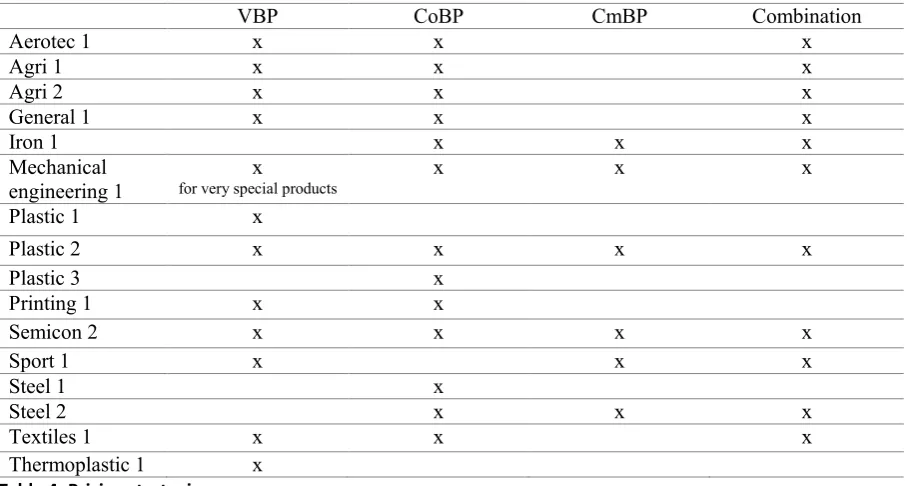
Table 4: Pricing strategies ... 16
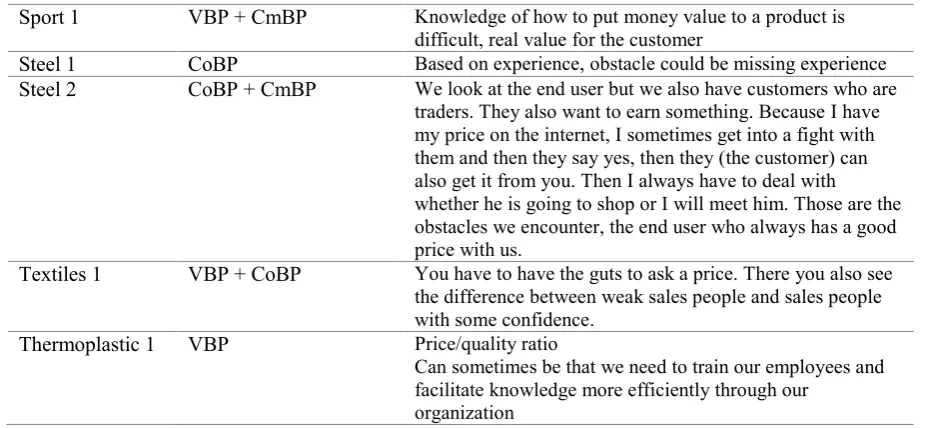
Table 5: Obstacles with pricing strategy ... 18
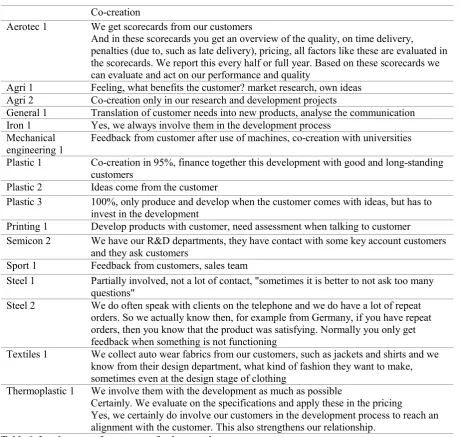
Table 6: Involvement of customer of value creation ... 19
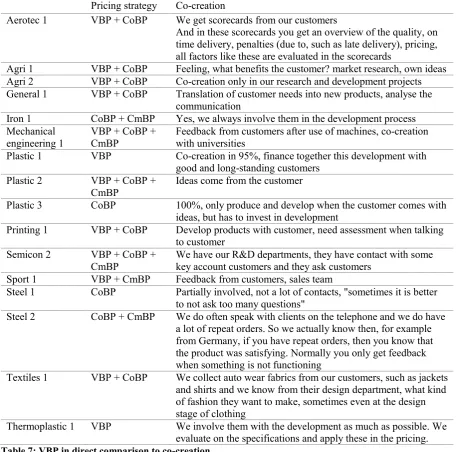
Table 7: VBP in the direct comparison to co-creation... 23
1
Introduction
Pricing of products and services is a complex and significant issue for companies. Only if pricing matches the customers‘ willingness-to-pay, enterprises are able to sell a sufficient amount of products (Alinezhad Sarokolaee, Vahid Taghizadeh, & Ebrati, 2012; Kienzler & Kowalkowski, 2017) and thus being competitive in the market and generate profit (LaPlaca, 1997). And who knows better what customers are willing to pay for a product than customers themselves?
Considering these aspects, the appropriate pricing to choose would be value-based pricing (VBP) as it draws a connection between customer ‘values and the willingness-to-pay and attempts to make it quantifiable (Dost & Geiger, 2017). It is crucial for companies to address the right target group and to investigate what the customer expects from the products (Maulana & Rufaidah, 2014).
Literature refers to VBP as the best, but also as one of the most difficult pricing strategies to implement. Dost and Geiger (2017) point out, that although VBP requires complex information and skills to be developed within the company, it is the most successful and desirable pricing method since it unites customer’ perceived values with their willingness-to-pay. Nevertheless, only roughly 17% of the companies use VBP (Liozu & Hinterhuber, 2013), which is also the reason, why many authors like Kienzler (2017) and Töytäri, Keränen, & Rajala (2017) put their emphasis on the obstacles and the challenges of VBP. One frequently found obstacle in recent literature is the measurement of customer value and the translation into corresponding prices due to missing analysis capabilities within companies (Töytäri, Rajala, & Alejandro, 2015). In this context, one method to explore customer value is co-creation, which can be defined as the cooperative development of products of firms with their stakeholders (Maulana & Rufaidah, 2014).
as large firms are known to benefit from the superior size, e.g. due to economies of scale, experience and pool of resources (Raju, Lonial, & Crum, 2011). The resources being an important factor for the execution of VBP. This leads to the following research question:
To what extent is co-creation related to the use of VBP of industrial SMEs?
Subquestions:
What are the key obstacles to co-create and to implement VBP?
The goal of this study is to explore, whether industrial SMEs, which use VBP apply co-creation for the identification of customer value and to investigate if the companies face obstacles when involving the customer. By focussing on the obstacles of VBP, this thesis wants to elaborate, if these problems are related to the customer value identification. The involvement of the customer could be the potential key to the success of VBP.
For the identification of VBP, the theory chapter will first elaborate on the understanding of customer value to further assess if the companies use this strategy. The topic of co-creation will be discussed as well as it is supposed to be beneficial to integrate the customer from the beginning in the development of products to meet the customers’ requirements and value expectations. In the end of the theory part, the obstacles related to VBP are presented to create an overview of common problems.
The chapter on the exploratory research aims at drawing conclusions about SMEs in the context of co-creation and the use of VBP. The SMEs approached are located in the area around Enschede in the Netherlands and around Münster in Germany. The thesis analysis 17 interviews conducted at industrial SMEs. The industries are various, including the steel, plastic, printing, textile or mechanical engineering branch. The company sizes vary from small to medium. Only one company has less than 20 employees, six of them between 20 and 50, four between 50 and 100 and the other four have more than 100 employees.
This paper provides theoretical and practical relevance.The former, as literature has not focused yet on the use of VBP with regard to co-creation and SMEs, this study presents novel findings in this field. The research found significant importance and success of the VBP strategy. Along with VBP, it is crucial to determine and measure the customer value, but theory does not clearly define how this is conducted. Therefore, co-creation offers a direct solution for customer value determination and might be beneficial for the special circumstances of SMEs including limited access to resources. This thesis draws a connection between VBP, co-creation and SMEs.
The latter, theory suggests that the determination of customer value is the most challenging part in praxis. This thesis aims to shed light on this phenomenon and points out if this is in line with the experience of the interviewed SMEs. The research will further show, what methods are used for the measurement of customer value and if the customer is involved in the product development and enhancement. Although there have been studies concerning VBP all over the world it is questionable, if studies from other countries are applicable for companies around the German-Dutch border. Different countries imply different political circumstances, laws and cultures. The limitation of the area around the German-Dutch border from Enschede to Münster, therefore, offers only a practical and regional contribution for SMEs in Germany and the Netherlands.
The research approach of the thesis is followed by an overview of the theoretical framework clarifying customer values, the topic of SMEs, VBP and co-creation as well as related possible challenges. Afterwards, the method section follows with an explanation of the single companies selected for the interviews, the procedure of the data collection as well as the measurement and validity of the data. The chapter on the conducted data analysis follows with a subsequent discussion chapter including limitations and further research areas. In the end, the overall conclusion of this research is presented.
2
Theoretical Framework
2.1
Pricing methods
Three types of pricing strategies can be identified within the current literature incorporating cost-based pricing (CoBP), competition-based pricing (CmBP) and VBP (Ingenbleek, Debruyne, Frambach, & Verhallen, 2003; Mario Kienzler, 2017). CoBP mainly uses the cost-structure and information from accounting as an indicator for price settings (Hinterhuber, 2008) and encloses a margin on top of the costs (Toni, Sperandio, Busata, & Larentis, 2017). The differentiation is made between unit costs and total costs which represent the main cost driver of a company.
CmBP tries to evaluate the price levels from the competition as a basis (Hinterhuber, 2008) as well as it aims to anticipate the competitors’ behaviour to be able to adapt the prices (Toni et al., 2017). In contrast, VBP concentrates on the advantages of the products, what the customer value and thus, customer are willing to pay (Hinterhuber, 2008). Although the author analyses that VBP is the only strategy, which explicitly involves the customer value and, the willingness-to-pay, VBP is the less frequent approach adopted so far.
2.2
Customer value
In general, customer value-based strategy has often been addressed as the application of a competitive advantage strategy (Flint, Woodruff, & Gardial, 2002). Due to this, many phrases and components have been formulated to define customer value. According to DeSarbo, Jedidi, & Sinha (2001) it has often been referred to as a compromise between quality and price all perceived from the customer side, whereupon quality can be interpreted as the “buyers’ judgment about a product’s overall excellence or superiority” and the price stands for the “consumers‘ subjective perception of the objective price of the product”. Another idea for the industry is, that value could be defined as “quality at the right price” or “affordable quality” (DeSarbo et al., 2001). A fundamental aspect, which makes examining customer value quite challenging is the price being part of all the definitions, and thus it can change rapidly, for example, the moment when other substitutes enter the market (Hinterhuber, 2004).
that it is the account in “monetary terms of the technical, economic, service, and social benefits” which someone receives when acquiring the product.
Beyond the definition of value and its classification, an important aspect is, how customers perceive value. Browning (2003) points out that apart from price and quality, the value depends on the customer's preferences and existing options. Flint et al. (2002) further state that customers usually have multiple elements in mind when considering purchasing a product. These components may include the product itself, the store and the brand behind the product as well as the communication with the sales representative leading to the sale process. Flint et al. (2002) though point out that the values customer perceive may change over a short period of time. Companies are thus forced to re-evaluate their value-based strategies on a constant basis in order to remain competitive. It is named the “customers' desired value change”. Browning (2003) states in this context, that there are two views to distinguish between customer value: the absolute and the relative value. The absolute value refers to the real or the true value of all product characteristics, whereas the relative value entails, in particular, the changes in the perception due to changes in the environment. For example, it is possible that a product becomes more valuable in the sequence of one year so that customers are willing-to-pay more for the same product and thus, the perceived value of the product increases for the customer. Another definition of value found is that customer-perceived value is the trade-off between benefits and costs (Gutierrez,Lopez,Tejeda, 2000).
2.3
VBP
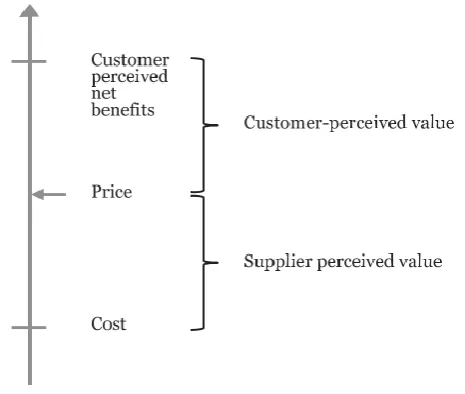
want and expect from the product (Füreder et al., 2014). The figure below shows that there is a range in which the supplier has to identify the perfect balance between the price and the perceived value from supplier’s side as well as from the customer side (Töytäri et al., 2015). The customer always assesses the benefits specific products offer, compares them with his individual willingness to pay and consequently decides on, whether the amount of money, at which the product is offered seems to be adequate for him.
Figure 1: Price relation with customer-perceived value and supplier costs (Töytäri et al., 2015)
2.4
Information gathering of customer value and co-creation
There are different methods on how to gather the required data to define the customers’ value for a product. Töytäri, Rajala, and Alejandro (2015) refer to aspects like the product itself, special connection or co-working relationships, which can be the origin of the source of value. Although it is difficult to identify, what values customers expect, suppliers have tried to develop customer-value models to determine and assess customer needs (Anderson & Narus, 1998). Companies incorporate data-driven models to derive a money based value determining the worth of their products. A different approach is, to conduct direct interviews with the customer and directly involving the customer in the pricing process. While this is probably the most effective method, it is not always possible to do so (Anderson & Narus, 1998) as it costs a lot of money and time and not all companies have these resources.
potential customers are needed, but also customers from competitors could be beneficial. Additionally, a closer relationship with the customers eases the communication and the customers are more willing to evaluate products or services to assist the company. Slater (1997) on the contrary argues that it is not only about research from the customers, but rather research about the customers. He suggests methods such as market experiments with subsequent in-depth analysis from professionals or taking advice from universities, partners or consultants. However, learning from experience should not be left unnoted since it may offer a unique contribution to each individual company (Slater, 1997).
In the context of customer value and methods of gathering data, co-creation is an aspect which should not be neglected. As mentioned above, the implementation of a VBP strategy needs an understanding of the customer perceived values, which can be best achieved when including him. Operating market-oriented is not sufficient (O’Cass & Ngo, 2012). Martini, Massa and Testa (2014) specify that “customer represent a fundamental source of knowledge for innvation” which is why the client should be included. The customer as an information source has gained a growing importance as companies have become aware of the value of customer insights. Customer value is not generated by the producer anymore, but created by the consumer himself (Grönroos, 2008).
Hereby, co-creation offers customised development of products according to the customers’ imagination (Ramaswamy & Ozcan, 2018) and enables the customer to develop the value they request themselves by interoperating with the supplier (Lombardo & Cabiddu, 2017). It can also be categorized as “mutual beneficial interaction” (Kohtamäki & Rajala, 2016). In addition, the authors differentiate between coproduction, which means that the customer is involved in the whole development process and just communication after testing of the product, the so called “value experience” which can be explained as user feedback.
2.5
Obstacles of VBP
to Töytäri et al. (2017), internal requirements can be changes in a companies’ business model or the improvement of customer relationship management. Kienzler (2017) defines several challenges hindering firms to adopt VBP. Firstly, the author argues that the top management needs to be supportive and aware of the required changes within the company. Secondly, customer value has to be made quantifiable, so the essential data for VBP can be gathered. Thirdly, managers might have prejudices towards changes within the company which are necessary for VBP (Kienzler, 2017). This discloses that a great measure of effort is needed to make efficient use of this pricing strategy.
2.6
Summary of the theory
To conclude the examined theory, VBP has gained huge interest, as it is supposed to be a very successful pricing approach. Therefore, it is essential to investigate how many SMEs are aware of this pricing strategy and if they utilise this strategy. Additionally, it will be important to monitor, if these companies apply the strategy accordingly as it is crucial to involve the customer to obtain the best results concerning perceived customer value. A closer look will be taken on the methods to gather the information from the customer as there are plenty of ways to conduct it, which leads inevitably to the part of co-creation. Literature reveals co-creating as a way to create the best-customised products, either involve the client from the beginning or just after the customer bought and used the products. In the context of VBP, it will be examined, if there are any obstacles inhibiting companies to implement or to conduct VBP adequately. This thesis investigates if there are some missing internal capabilities like knowledge or missing customer relations or if companies may find it difficult to translate and quantify the gathered information.
3
Methodology
the transfer of reliability and validity into trustworthiness will be discussed, as this topic is a critical element and highly relevant in regards to qualitative data.
3.1
Research Design
In this chapter, a “framework for the collection and analysis of data” is outlined (Bryman & Bell, 2015). As mentioned in the introduction, the purpose of this study is to analyse German and Dutch SMEs by interviewing a responsible person who is involved in the pricing process in order to disclose their pricing methods and the integration of the customer and related obstacles. The following chapter describes the design of the research methodology and the procedure of the data collection. Since the research is of explorative nature the data collection makes use of semi-structured interviews, hence the questions can be formulated quite open (Rabionet, 2011) giving the companies the possibilities to describe their individual way of approaching pricing and the interviewer to go deeper and to ask more about an interesting not suspected outcome. The advantage of exploratory research is the adaptability and thus the potential to reveal structures and patterns within data which may not be assumed in advance (Jebb, Parrigon, & Woo, 2017). Furthermore, this research method entails an inductive approach and thus facilitates the understanding and the interpretation of the collected data. The qualitative approach implemented in this thesis is a “naturalistic approach that seeks to understand phenomena in context-specific settings” (Golafshani, 2003).
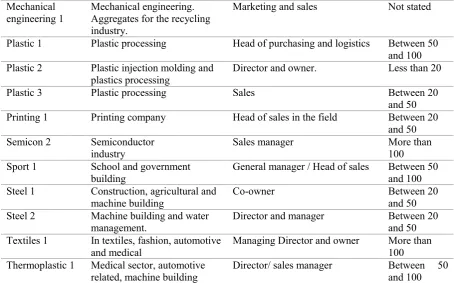
The approached firms are German and Dutch SMEs in the manufacturing sector, mainly in the region of North Rhine-Westphalia and around Enschede. SMEs, in this case, are defined to have a turnover between 10 and 100 Mio. € per year and an employee range of 10 to a maximum of 200. In total, the sample size incorporates 17 SMEs of various industries. An overview is provided in the table below.
Company Industry Role Employees
Aerotec 1 Aircraft industry,
semiconductor Sales Director Not stated Agri 1 Production of agricultural
machines Manager of the plus department, marketing, product management and communications.
More than 100
Agri 2 Production of agricultural
machines General manager/assistant of the business process investigator Between 20 and 50 General 1 Machinery and maintenance of
all industries CEO Between 20 and 50
Iron 1 Building industry, automotive
Mechanical
engineering 1 Mechanical engineering. Aggregates for the recycling industry.
Marketing and sales Not stated
Plastic 1 Plastic processing Head of purchasing and logistics Between 50 and 100 Plastic 2 Plastic injection molding and
plastics processing Director and owner. Less than 20
Plastic 3 Plastic processing Sales Between 20
and 50 Printing 1 Printing company Head of sales in the field Between 20
and 50 Semicon 2 Semiconductor
industry Sales manager More than 100
Sport 1 School and government
building General manager / Head of sales Between 50 and 100 Steel 1 Construction, agricultural and
machine building Co-owner Between 20 and 50 Steel 2 Machine building and water
management. Director and manager Between 20 and 50 Textiles 1 In textiles, fashion, automotive
and medical Managing Director and owner More than 100 Thermoplastic 1 Medical sector, automotive
[image:13.595.70.525.71.354.2]related, machine building Director/ sales manager Between 50 and 100 Table 1: Company details
Within the research group of four students, everyone interviewed about two to five companies. In the interview process, three students concentrated on Dutch SMEs and the remaining one on German SMEs. The thesis focuses on the overall picture of SMEs so that the full set of gathered data is examined. Since the analysed areas are seamlessly connected across the border, the thesis intends to give a clear picture of SMEs in a geographic area without focussing on an individual country. The designated interviewees were marketing professionals, sales managers, sales employees or employees in a management position who are in charge of pricing decisions.
3.2
Data collection
The study adopts semi-structured interviews as the method for data collection, which are of a qualitative nature. Qualitative studies are defined as "any kind of research that produces findings not arrived at by means of statistical procedures or other means of quantification" (Strauss and Corbin, 1990, p. 17). Thus the evidence is not quantifiable, but patterns are found within texts.
regarding general data of the company like firm size, operating area and location. All the interviews were individually conducted, which ensured accurate and honest responses. Right before performing the interviews further instructions were sent to the participants, including information regarding their right to remain anonymous and to withdraw participation at any time during the conversation.
The content of the interviews is on different topics of VBP and incorporates the use of it per se, the understanding of value as well as questions about the involvement of the customer and the obstacles related to VBP. The interview questions are provided in Appendix A. However, some of the companies may not use VBP, which is why the questions can be guided in two different directions. Qualitative analysis is the best when the researcher is open-minded but still wants to lead the procedure in one specific direction (LeCompte, 2003). This is why the questions for the interviews were developed to match the topic of VBP, but leaving the interviewees enough space to explain their concepts and approaches (Rabionet, 2011). Semi-structured interviews allow the interviewer to be flexible during the implementation and to go deeper into topics he did not intend to ask. The scheduled duration of the interviews was set at half an hour. The medium was chosen on an individual basis with each participant, but they were informed that interviews in person were preferred. The interviews were recorded with the permission of the participants to avoid misunderstandings and to allow a fluent conversation. Additionally, notes were taken during the interview to ensure consistency of the data. The recorded data was sent to the participants to ask them if they were satisfied and if the entire interview can be used for the thesis. Any annotations were considered and it was noted for a later change in the transcript. After the approval of the recording, the interviews were transcribed in the language they were conducted, either in English, Dutch or German and, afterwards translated into English with an additional check of a native German, Dutch and English speaking person. Further, the transcripts only incorporate the answers, which are relevant for the topic of this research; the remaining part was left out and marked with brackets and dots.
As the data gathering was performed by four students, the analysis benefits from a larger database than the self-conducted interviews, leading to 17 interviews in the end. This is a sufficient number of interviews ensuring substantial results.
3.3
Measurement
The objective of this paper is to investigate if SMEs who use VBP also co-create. It aims to identify the obstacles occurring when attempting to involve the customer in the product development or at any other stage. In order to answer these research questions, several interview questions have been formulated asking about these different topics (see Appendix A).
In the beginning, the interviewee was asked about his educational background and his position in the company as well as the operating area of the company. Afterwards, the term value was introduced with concrete questions of the use of VBP. The obstacles concerning pricing strategies were asked as well as how the customer gets involved in the development of products. In this case, the questions about obstacles have been formulated in the direction of the pricing, in general, to avoid distractions when asking directly about obstacles with the customer involvement.
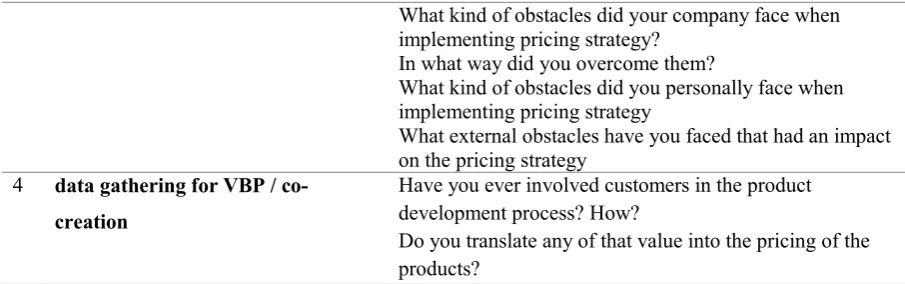
The data gathered from the interviews were grouped into four different topics: understanding of value, use of VBP/perception of use, obstacles concerning VBP and data gathering for VBP/co-creation. These four categories enable a comparison of the different understandings of customer value and the perception of the use of VBP. The questions further offer to draw a conclusion the participants are not aware of. The following table gives an overview of which question of the interview is assigned to which group:
Group Questions
1 Understanding of value What do you consider to be value?
2 use of VBP / perception of use What pricing strategy is used for new products? For how long have you been translating value into the pricing strategy?
If you don’t consider value within the pricing strategy, why not?
Do you consider the advantages of a product compared to competitor’s product in the price?
Do you consider the perceived value of the customer in the product’s price?
Do you consider the advantages of the new product offers to the customer in the price?
What kind of obstacles did your company face when implementing pricing strategy?
In what way did you overcome them?
What kind of obstacles did you personally face when implementing pricing strategy
What external obstacles have you faced that had an impact on the pricing strategy
4 data gathering for VBP / co-creation
Have you ever involved customers in the product development process? How?
[image:16.595.70.523.70.212.2]Do you translate any of that value into the pricing of the products?
Table 2: Topics and interview questions
For the measurement of the above-mentioned categories, this thesis utilises the method of open coding (Gibbs, 2007, p.50). This method is executed by reading the transcripts very carefully to detect the predefined groups within the text. It is required to draw connections, compare the data and formulate questions. Hereby, Babbie (2007, p. 385) states that open coding incorporates “the initial classification and labelling of concepts in qualitative data analysis”. The codes are proposed by screening and requesting the data (Babbie, 2007, p. 385).
To measure if VBP and co-creation are related, it has to be determined at first if the firms have a clear understanding of value and followed by an assessment if the firms apply VBP. The assessment between co-creation and VBP will be performed in the next step since either the involvement of the customer in the development of products, a testing of the products by the customers or a profound market research on customer value has to occur, so that this pricing method is executed correctly. For the identification of the obstacles concerning VBP and co-creation, the participants will be asked in general about obstacles with regard to VBP to further see if the obstacles are linked to co-creation.
3.4
Reliability and Validity
live and work, and because in-depth interviewing opens up what is inside” (Patton, 2002, p. 407). The criteria by Lincoln and Guba (1985) serve as an alternative approach for the evaluation of qualitative research, the so-called trustworthiness: credibility, transferability, dependability, and confirmability. These aspects were defined to replace validity and reliability and to create a better understanding of what is meant by the term trustworthiness (Bryman & Bell, 2015, p. 400).
Credibility replaces internal validity (Bryman & Bell, 2015, p. 401) and makes sure that the findings of the study are “carried out according to the canons of good practice and submitting research findings to the members of the social world who were studied for confirmation that the investigator has correctly understood the social world” (Bryman & Bell, 2015, p.401). As the data collection was executed by more than one student, it is ensured, that the results of the research are reliable.
Transferability means external validity and asks the question if the outcome of the study would be identical when investigating it again within another research (Bryman & Bell, 2015, p. 402). The framework of this study can be used for answering further questions. Therefore, the specific details of the companies and the methods used have to be disclosed which is ensured in this study. Due to this, another observer can easily compare the specifics of the companies he analyses with the specifics of this study, assess if they are comparable and may draw conclusions.
Dependability is a synonym for reliability and ensures a constant record of all stages of the project (Bryman & Bell, 2015, p.403). This study was performed with the utmost care and everything has been recorded, transcribed and explained. Therefore, this study can be repeated and the reproduction of similar results is ensured.
Confirmability can be equated with objectivity. The meaning is that it can be ensured that, although it is almost not possible to be completely objective, the research has not been influenced by personal feelings and values of the researcher (Bryman & Bell, 2015, p.403). To guarantee objectivity, the data collection has to be transparent, so that an external person can judge on his own if the results are biased.
4
Results / Evidence
coming analysis. While screening the 17 conducted interviews the first time, it turned out that the company “Semicon 1” is not a manufacturer of products, but resells products as a third party. For this reason, this data set was excluded from the results and the analysis as it falls out of the predefined criteria of a producing company. The remaining 16 interviews are presented in the next subsections. In addition, the results are presented shortly in tables as it provides a clear overview.
4.1
Understanding of value
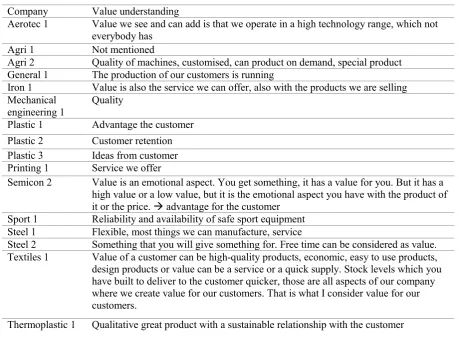
The understanding of the term “value” turned out to be very miscellaneous. The table below gives an overview of the statements of the companies.
Company Value understanding
Aerotec 1 Value we see and can add is that we operate in a high technology range, which not everybody has
Agri 1 Not mentioned
Agri 2 Quality of machines, customised, can product on demand, special product General 1 The production of our customers is running
Iron 1 Value is also the service we can offer, also with the products we are selling Mechanical
engineering 1 Quality
Plastic 1 Advantage the customer Plastic 2 Customer retention Plastic 3 Ideas from customer Printing 1 Service we offer
Semicon 2 Value is an emotional aspect. You get something, it has a value for you. But it has a high value or a low value, but it is the emotional aspect you have with the product of it or the price. advantage for the customer
Sport 1 Reliability and availability of safe sport equipment Steel 1 Flexible, most things we can manufacture, service
Steel 2 Something that you will give something for. Free time can be considered as value. Textiles 1 Value of a customer can be high-quality products, economic, easy to use products, design products or value can be a service or a quick supply. Stock levels which you have built to deliver to the customer quicker, those are all aspects of our company where we create value for our customers. That is what I consider value for our customers.
[image:18.595.69.529.284.622.2]Thermoplastic 1 Qualitative great product with a sustainable relationship with the customer
Table 3: Understanding of the value
customisation of products and, above all, the uniqueness of the products create value within their company. “Aerotec 1” confirms this understanding of value, stating that their special products make them unique and set them apart from the competition. In contrast, Plastic 3 sees his customers as the most essential input in the creation of value as he receives insights for new products. “Textiles 1” mentioned the quality as a superior aspect along with the design of the product.
The second most common perception of value was the offered additional service surrounding the product. One SME pointed out, that their customers especially value their service and that the excellent service sets them apart. In addition to the service, two companies stated that the advantages for the customer are the most important value.
4.2
Use of VBP
In order to investigate whether the SMEs using VBP co-create as part of their strategy it first has to be examined if is VBP applied.
VBP CoBP CmBP Combination
Aerotec 1 x x x
Agri 1 x x x
Agri 2 x x x
General 1 x x x
Iron 1 x x x
Mechanical
engineering 1 for very special productsx x x x
Plastic 1 x
Plastic 2 x x x x
Plastic 3 x
Printing 1 x x
Semicon 2 x x x x
Sport 1 x x x
Steel 1 x
Steel 2 x x x
Textiles 1 x x x
[image:19.595.72.526.376.619.2]Thermoplastic 1 x Table 4: Pricing strategies
strategies, which means that they, on the one hand, calculate the costs as a solid basis and, on the other hand, attempt to measure value for the customer, so that the margin can be increased. The three SMEs observe the competition and the demand on the market to integrate this information as well. A combination of pricing strategies performed by two SMEs of the 11 companies, namely “Iron 1” and “Steel 2”, is CoBP with CmBP. Only “Sport 1” answered to use a mix of VBP and CmBP. The table also shows that four companies apply one single pricing strategy. VBP is utilised by two companies, “Plastic 1” and “Thermoplastic 1”, as well as CoBP is only used by “Steel 1” and “Plastic 3”. CmBP is not used as a single strategy, but only in combination with other pricing methods.
4.3
Obstacles
Another question to be answered in this thesis is whether SMEs face obstacles utilise VBP and co-creation. For this reason, the table 5 exhibits if the companies employ VBP somehow and related to this the obstacles they face.
Pricing strategy Obstacles
Aerotec 1 VBP + CoBP What we sometimes do get is that the time to come up with prices has to be faster because of instant gratification Capacity has been an obstacle. We need experts for measures, and if I get more projects on my table with a certain timespan,
It certainly has, with the lack of expertise we can only rely on assumptions.
Agri 1 VBP + CoBP Problems to explain VBP to customers
Agri 2 VBP + CoBP When developing a new idea with the customer, divergent ideas
General 1 VBP + CoBP No problems
Iron 1 CoBP + CmBP -
Mechanical
engineering 1 VBP + CoBP + CmBP
No problems with the strategy, just price discussions
Plastic 1 VBP Commodity prices are problems since contracts are made 3 years in advance
Further obstacles: energy costs, when comparing to competitors abroad.
Plastic 2 VBP + CoBP + CmBP Customer want lower prices
Personal problems, comes not along with one customer
Plastic 3 CoBP -
Printing 1 VBP + CoBP Problems to enforce the prices, when other competitors offer better prices
Semicon 2 VBP + CoBP + CmBP Issues with choosing the price for a product based on value-based pricing
Sport 1 VBP + CmBP Knowledge of how to put money value to a product is difficult, real value for the customer
Steel 1 CoBP Based on experience, obstacle could be missing experience Steel 2 CoBP + CmBP We look at the end user but we also have customers who are
traders. They also want to earn something. Because I have my price on the internet, I sometimes get into a fight with them and then they say yes, then they (the customer) can also get it from you. Then I always have to deal with whether he is going to shop or I will meet him. Those are the obstacles we encounter, the end user who always has a good price with us.
Textiles 1 VBP + CoBP You have to have the guts to ask a price. There you also see the difference between weak sales people and sales people with some confidence.
Thermoplastic 1 VBP Price/quality ratio
Can sometimes be that we need to train our employees and facilitate knowledge more efficiently through our
[image:21.595.67.532.69.283.2]organization
Table 5: Obstacles with pricing strategy
4.4
Co-creation
The next part of the research question is to answer whether co-creation is related to VBP. The answers of the participants concerning the involvement of their customers are as follows:
Co-creation
Aerotec 1 We get scorecards from our customers
And in these scorecards you get an overview of the quality, on time delivery,
penalties (due to, such as late delivery), pricing, all factors like these are evaluated in the scorecards. We report this every half or full year. Based on these scorecards we can evaluate and act on our performance and quality
Agri 1 Feeling, what benefits the customer? market research, own ideas Agri 2 Co-creation only in our research and development projects
General 1 Translation of customer needs into new products, analyse the communication Iron 1 Yes, we always involve them in the development process
Mechanical
engineering 1 Feedback from customer after use of machines, co-creation with universities Plastic 1 Co-creation in 95%, finance together this development with good and long-standing
customers
Plastic 2 Ideas come from the customer
Plastic 3 100%, only produce and develop when the customer comes with ideas, but has to invest in the development
Printing 1 Develop products with customer, need assessment when talking to customer Semicon 2 We have our R&D departments, they have contact with some key account customers
and they ask customers
Sport 1 Feedback from customers, sales team
Steel 1 Partially involved, not a lot of contact, "sometimes it is better to not ask too many questions"
Steel 2 We do often speak with clients on the telephone and we do have a lot of repeat orders. So we actually know then, for example from Germany, if you have repeat orders, then you know that the product was satisfying. Normally you only get feedback when something is not functioning
Textiles 1 We collect auto wear fabrics from our customers, such as jackets and shirts and we know from their design department, what kind of fashion they want to make, sometimes even at the design stage of clothing
Thermoplastic 1 We involve them with the development as much as possible
Certainly. We evaluate on the specifications and apply these in the pricing
[image:22.595.70.532.139.576.2]Yes, we certainly do involve our customers in the development process to reach an alignment with the customer. This also strengthens our relationship.
Table 6: Involvement of customers of value creation
into the next development or production. “Steel 3” specified that having repeat orders as that is a direct link to satisfaction. “Agri 2”, “Iron 1” as well as “Thermoplastic” 1 affirmed utilizing co-creation, but just in their development and research phase of projects. “Plastic 1, 2, 3” and “Printing 1” disclosed that the product development is in fact triggered by the customers coming with new ideas and requesting new products. “Plastic 1 and 3” stated that the customers always co-invests in the development so that the costs are shared. “Semicon 2” indicated to be in contact with key account customers within their Research and Development Department and “Textiles 1” keeps a constant level of communication with customers to understand what the customers really want from their products.
5
Analysis
In this chapter, the results are connected with the theory described in the theoretical chapter to answer the research questions of this thesis. In the beginning, the general understanding of customer value is analysed. Afterwards, the link is being made between using VBP and the involvement of the customer in the development process. In the end, the obstacles are discussed to understand if they are common, severe or non-existing.
5.1
Understanding of value
The understanding of value is a crucial point when trying to operate with the VBP approach since it is the only method including data on customer value. As presented in theory, many definitions occur attempting to explain customer value, but, as described earlier, the focus rather lies on the quality and the price of the product, which needs to be in accordance with each other. In addition, customer's preferences and existing options have been found to be very substantial leading to the perceived customer value, the relative value. The issue is that everyone assesses products and services differently, making it difficult to clearly define value.
A different view from the literature is that value is seen as the trade-off between benefits and costs. The benefits for the customer are broader and can be seen from different angles as it is not only about the quality. For example, two companies explicitly stated offering special products, which are highly individual and convert the value through their specialisation. Hereby, the benefits derived from the fact that not every company is able to produce such specifications, which make the company and the products unique.
Four other companies also specified the term value as the advantage for the customer, meaning that customer value is only given if the purchaser perceives to acquire an advantage with the product. “Printing 1” specified that it is essential to be able to meet the customers’ requirements as, for example, in the printing industry, customers can be quite picky with their “house colour” or with special pressed paper.
Some other SMEs did not state advantages per se, but instead defined the benefits of their product, which can be seen as advantages for their customer. “Sport 1”, for example, indicated that due to their operating segment their products need to be safe and reliable. So advantages can be defined very differently when looking at different market segments and can thus vary a lot.
“Plastic 2” answered that perceived value translates into customer retention. However, you only have loyal and recurring customers when they are satisfied, which by implication means that the company perceived to have an advantage from the products or are satisfied with any other feature like quality or usability.
Another interesting answer came from “Plastic 3” who just develops products when the customer requests it. The interviewee noted that the ideas of their customers are most important since, without them, there would be no products and thus no value. However, this is a very special case as they work closely with their clients and they already know in the phase of developing new products that the customer will buy them.
“Semicon 2” revealed to have an interesting understanding of value, stating that value is mostly an emotional aspect and everyone assesses products and services differently. Products and services might present value to one person but another person has a different opinion on its value. This statement comes close to the idea of perceived value as firms can create value, but not everyone has the perceives the value in the same way. The advantages mentioned above can also be evaluated completely different among customers as it is related to the perceived value and advantages with regard to individual and customised products.
In conclusion, value is not understood to be a trade-off between quality and prices or a compromise of both, customer value rather incorporates either quality or advantages for the customer, which is one of the most important components when defining customer value. That the price is not mentioned may be due to the fact, that the companies do not connect customer value directly with prices and see this as a separate matter.
5.2
VBP in combination with co-creation
This section examines the central question of this thesis and assesses whether SMEs really incorporate VBP and if co-creation is connected to it. The previous chapter 5.1 analysed the understanding of the term value showing that the overall thinking is uniform in the direction of quality and advantages for the customer. The issue with VBP is that it is still quite unknown and only a small amount of experts know how it is implemented and executed. This is why the statements of the different companies are examined and questioned with regard to the specifications of this pricing method. It is investigated if the SMEs which indicated not to use VBP maybe apply it without knowing it. A direct comparison to co-creation is being drawn in order to identify if it goes hand in hand with VBP.
Pricing strategy Co-creation
Aerotec 1 VBP + CoBP We get scorecards from our customers
And in these scorecards you get an overview of the quality, on time delivery, penalties (due to, such as late delivery), pricing, all factors like these are evaluated in the scorecards
Agri 1 VBP + CoBP Feeling, what benefits the customer? market research, own ideas Agri 2 VBP + CoBP Co-creation only in our research and development projects General 1 VBP + CoBP Translation of customer needs into new products, analyse the
communication
Iron 1 CoBP + CmBP Yes, we always involve them in the development process Mechanical
engineering 1 VBP + CoBP + CmBP Feedback from customers after use of machines, co-creation with universities Plastic 1 VBP Co-creation in 95%, finance together this development with
good and long-standing customers Plastic 2 VBP + CoBP +
CmBP Ideas come from the customer
Plastic 3 CoBP 100%, only produce and develop when the customer comes with ideas, but has to invest in development
Printing 1 VBP + CoBP Develop products with customer, need assessment when talking to customer
Semicon 2 VBP + CoBP +
CmBP We have our R&D departments, they have contact with some key account customers and they ask customers Sport 1 VBP + CmBP Feedback from customers, sales team
Steel 1 CoBP Partially involved, not a lot of contacts, "sometimes it is better to not ask too many questions"
Steel 2 CoBP + CmBP We do often speak with clients on the telephone and we do have a lot of repeat orders. So we actually know then, for example from Germany, if you have repeat orders, then you know that the product was satisfying. Normally you only get feedback when something is not functioning
Textiles 1 VBP + CoBP We collect auto wear fabrics from our customers, such as jackets and shirts and we know from their design department, what kind of fashion they want to make, sometimes even at the design stage of clothing
[image:26.595.70.527.72.524.2]Thermoplastic 1 VBP We involve them with the development as much as possible. We evaluate on the specifications and apply these in the pricing. Table 7: VBP in direct comparison to co-creation
In addition, these firms showed to have a good value understanding as the most critical issue for them was quality and the advantage for customers. Another point mentioned in the literature is that VBP is primarily used successfully in particular market segments. “Plastic 1” operates in a very small niche market with many specialised products. The participant stated that a lot of know-how is needed to develop the products, to sell the products and to promote the products. The competition is rather limited as they stated knowing every market participant quite well in the market. “Thermoplastic 1” is active in a special field namely the production of particular thermoplastics for the “medical sector, automotive related, machine building and specials”. “Mechanical engineering 1” stated utilizing VBP only for very special products, which are not common and require an extended knowledge in this field of expertise.
The operating fields of both companies using VBP and the third firm practising VBP for special products, “Mechanical engineering 1” only disclosed the implication of the literature that this pricing method is useful in niche markets or markets exhibiting a low level of competition. Both companies executing VBP agreed not to tend towards changing their pricing method as they are quite successful with it, which confirms the usefulness in niche markets as well.
The ten SMEs who stated to use a combination of pricing methods all explained to integrate the customer somehow expect for “Agri 1” which only relies on market research to gain information to reflect them against their own ideas and perception. However, the participant stated to use, inter alia, VBP as a strategy, which is contradictory since this approach uses customer value information as a basis for pricing. As shown in the literature, it is not enough to just use market research or own insights and, therefore, it is more desirable to combine more than one pricing methods and not just solely a VBP strategy. Nevertheless, the interviewee indicated to use external data to gather information on customer value, so no direct interaction with their clients about the products occurs.
it is beneficial since students have the current know-how and are very creative. Additionally, the company contacts their clients after the use of the products to receive feedback and insights to improve the products.
Two companies, “Plastic 3” and “Steel 1”, pointed out to use a pure CoBP method while the remaining two companies use a mix of CoBP and CmBP. One of them did not state anything about Co-creation, two of them convey that it is important and attempt to integrate the customer at a very early stage of the process. Only “Steel 1” which uses CoBP responded that it is not always beneficial to involve the clients because it may cause more issues than benefits. This reveals that this company has no interest at all in this pricing method as they are not satisfied with the idea of co-creation. However, the statements from the other three companies show that they adopt the knowledge about customer value to a certain degree in order to modify their products accordingly. The missing link seems to be the direct translation of information into prices, which is a requirement for VBP. The examined firms assume to be convinced that their method of value creation is superior to others.
In general, it is illustrated that VBP is a popular but, nevertheless, a difficult strategy to use. Despite the difficulties it comprises, VBP is becoming utilized to a greater extent. The analysis illustrated that only two companies employ a sole VBP approach strategy and these two also showed to have a profound knowledge on customer value as well as taking advantage of co-creation to deliver superior value for the customer. Nine of ten SMEs using VBP in combination with other pricing methods integrate the customer for the value identification assuming high relevance in this field.
Four companies out of 16 do not exercise VBP of any form, although two of them co-create, providing a decent understanding of value, while the third one analyses feedback from their customers. The fourth one showed no interest in co-creation at all and refused integrating their clients.
5.3
Obstacles with VBP
To begin with, the two companies which employ a sole VBP strategy stated to have different obstacles. The first one indicated to experience problems with the pricing because of the not stable prices of commodities and the contracts with its customers are made up to three years in advance. The participant explained it is not possible to forecast the course of the prices and, therefore, the profit of the projects is not secured. Further, the company mentioned that other costs play a significant role, e.g. energy costs, showing that the general composition of costs is the main obstacle in this case. This point reveals that, although the company uses a VBP strategy, it has to monitor the costs, having a direct effect on the margin.
The other SME in comparison stated that it is complicated to find a functioning ratio between quality and the price since you cannot overcharge the customer even if you have the opinion that the products are superior. The translation of value into prices appears to be an issue as well as finding a price that the customer is willing to pay. Further, it was mentioned was that the employees have to be trained so that they are able to facilitate knowledge efficiently throughout their organization. If the employees were informed to a great extent about how to practise VBP and how to translate value into prices, the former problem would be solved by illustrating the importance to train human capital within an organisation.
The problems concerning the quality-price ratio and the missing expertise are in line with the obstacles found in literature and confirm that issues exist in the context of VBP, but also in the context of pricing, in general. Since this firm properly employs VBP and thus, has the expected obstacles with the value translation into prices. However, the cost component mentioned by the first company applies for all firms of the producing sector and cannot just be linked to the VBP approach, but to all pricing methods.
be that the customer only has a limited understanding of VBP and how this pricing method is exercised.
This fits with the following statement as one participant said that the lack of expertise causes obstacles which lead to incorrect pricing or rather to unsatisfying results on both sides. Another participant stated that a great number of customers do not understand the approach of VBP, and thus do not understand how the prices are derived. This seems to be connected to the statements of the other companies, which revealed to have a general problem with pricing. In the first place, the customers are unsatisfied with the prices, due to a lack of understanding of how VBP works. The firms may also have problems to advertise the additional benefits of the products according to VBP so that the customer is not aware of the advantages and is not willing to pay the advertised price.
Another obstacle that was mentioned is the co-creation process itself which involves the customer having different ideas and approaches of design and development. As found earlier, most of the SMEs integrate the customer to a certain degree in the development process of new products.
One company stated co-creation is not always beneficial as it might provide divergent views. This can be a problem when both parties are confident about their ideas and approaches, which may lead to significant issues such as losing the client. In this regard, one company stated that personal issues with the characteristics of the clients might lead to obstacles. This might not only be the case with pricing or VBP, but rather appears to be a general problem companies have when doing business.
The last interesting obstacle mentioned was that when performing VBP, a certain degree of boldness is required to ask for certain prices. It might seem too high, but in the end, if the products offer an observable advantage than higher prices are justified. As mentioned above, it appears to be important to advertise and offer the products accordingly, so that the customer’s willingness-to-pay matches the indicated prices.
6
Discussion and Conclusion
The conducted analysis of the interviews at industrial SMEs with regard to findings and implications of existing literature provide useful results to answer the research question of this thesis. This final chapter, therefore, answers the research questions, contains a discussion of the result, and provides theoretical and practical implications as well as limitations and implications for further research. Moreover, an overall conclusion will be given to generalizing the topic of this thesis.
6.1
Answering the research question
The main question of the thesis is whether SMEs who use VBP as their pricing approach co-create for the identification of customer value. To answer this question, several questions had been asked to assess first if the approached companies practise VBP and if they co-create.
The evidence illustrated that VBP is employed entirely in only two companies, whereas ten SMEs use a mix of methods including VBP. Four companies stated not to utilise it at all, but the analysis exhibited that two of them incorporate customer value and co-creation to gather information leading to a value-based product development and advancement.
Co-creation is almost used by all companies. The methods to gather information are mainly the direct co-development of products as well as collecting feedback after the purchase of the products. Almost all companies find it quite important to involve the customer in the product development, as they are one of the most reliable sources of information.
Examining VBP and co-creation together reveals that almost all companies using VBP involve the customer. Only one SME who stated to use VBP and another pricing method indicated to only use market research and their own insights. From the four companies not using VBP two practice co-creation, one SME only to a limited degree as they communicate with their clients on the phone occasionally and the fourth firm does not co-create to any extent. The participant explained that most of the time it is not beneficial as the customer has entirely different views which may lead to conflicts. Arriving at the conclusion, that co-creation is related to VBP as almost all of the companies using VBP set a great importance on the ideas of their customers. Additionally, as two of the SMEs which responded not to apply VBP were found to utilise customer value and to involve the customer even enhances the findings.
implies limited expertise in the determination of customer value, and thus co-creation. Further, participants elaborated that the main issues were to explain VBP to customers and the necessity of cooperation. One SME explicitly indicated to face obstacles in the co-creation procedure as divergent ideas between the customer and the company can hinder development. Defining the real value for the customer, and thus the collaboration and determination process was found to be another obstacle concerning co-creation. Evidence presents that including the customer into the value determination process is difficult. However, these obstacles are not equally found throughout the entire sample of SMEs.
6.2
Discussion
This thesis investigates if SMEs which practise VBP also co-create and the obstacles that occur when using VBP and involving the customer.
After reviewing the literature and conducting interviews with 17 SMEs in the Netherlands and Germany, it can be determined that the majority of firms which employ VBP practice co-creation and involve the customer in the product development and enhancement. Most of the SMEs stress the importance as it offers customised products and ensures that the products will be sold afterwards.
These findings are in line with the expectations presented in the beginning of the thesis. Based on the theory is was assumed that at least some of the SMEs employ VBP in combination with co-creation, but surprisingly the majority was found to practice it. Theory further illustrated that the customer value has superior importance in the VBP approach, which can be confirmed by the findings as well. Furthermore, it was suggested by the theory that direct involvement of the customer in the form of interviews is the best method to gather information on customer value which was found with the companies as well.
Literature suggests co-creation being one of the best methods to collect in-depth information on customer value which can be confirmed by the evidence presented in this thesis as the majority of the SMEs illustrated to co-create.
The obstacles mentioned by the participants are twofold. Almost half of the SMEs stated to have issues concerning VBP in combination with co-creation, which was anticipated to be more prevailing among the companies using VBP. However, many companies indicated having obstacles with general pricing and prices, which may be due to the fact, that VBP is almost never used as the sole pricing method. According to the investigated literature, one of the frequent found obstacles is the translation of value into prices and thus problems with customer value, which is confirmed by the findings of this study. The combination of pricing strategies was not considered within the former studies on obstacles, which is why there might be even significant differences.
6.3
Theoretical and practical contributions
This paper offers theoretical relevance in the area of VBP in combination with co-creation. This study discovered that VBP and co-creation are connected at SMEs. Current literature has not shown this correlation before, which is why this research offers a new approach and a new topic area to be further examined in the future. It further reveals that VBP is successful as all the SMEs are very satisfied with this strategy and integrate customer value with the utmost importance. Further, literature has not attempted measure the effect of combining pricing methods. This thesis illustrates that the majority of the companies practise more than one pricing method which is a valuable finding in the area of pricing.
With regard to the obstacles, this study demonstrates that literature evince a reliable framework of issues regarding VBP. Most of them were found to be prevailing at the examined companies thereby confirming the findings in literature.
the involvement of customers into the identification process of value in the area around the German-Dutch border around Enschede.
6.4
Further research and limitations
Due to the amount of 17 interviews with German and Dutch SMEs, this thesis provides a reliable overview of the use of VBP in connection with co-creation. The interviews were conducted semi-structured which allowed going deeper into specific topics where the interviewer suspected some more relevant information.
However, the research revealed additional topics, which are worth investigating. The SMEs analysed were drawn from different industries. An interesting research topic would be to put the focus on certainr markets, as VBP is particular useful in niche markets. The dataset contains companies from the steel industry, thermoplastic processing, printing companies and textiles. These markets of the sample are quite diverse, making it favourable to divide and focus on certain industries, e.g. plastic processing or steel processors, to investigate if similar results can be produced. The special focus on the nature of products might reveal new insights. It may be a significant difference if the companies produce finished products or semi- finished products, if the products are fast-moving-consumer-goods or just industrial goods.
Another interesting topic to be investigated would be the direct comparison of SMEs to large companies with regard to VBP and the involvement of the customer. There might be differences in how the size of the firms affects the way of how VBP is practised and whether VBP is provides benefits. As VBP was found in most cases to be performed in combination with other pricing strategies, it could be interesting to develop a new model, which accounts for a combination of pricing methods.
difficult to provide a clear overview of how the performed pricing strategies differ from each other.
6.5
Conclusion
This thesis illustrates that VBP and the customer value gains increasingly interest and importance among the methods of pricing. However, as customer value is difficult to measure, co-creation provides a reliable solution for companies to directly involve the customer and reduces the requirement for complicated market analysis. The combination of both, VBP and co-creation is a frequent occurring phenomenon and quite useful for SMEs. Nevertheless, the overall costs are often still included in the pricing process indicating existing insecurities concerning the customer value and how to use it.
7
References
Alinezhad Sarokolaee, M., Taghizadeh, V., & Ebrati, M. (2012). The relationship between target costing and value-based pricing and presenting an aggregate model based on customers’ expectations. Procedia - Social and Behavioral Sciences, 41, 74–83. https://doi.org/10.1016/j.sbspro.2012.04.010
Anderson, J. C., & Narus, J. A. (1998). Understand what customers value. Harvard Business Review, 76(6).
Babbie, E. (2007). The Practice of Social Research (Eleventh E). Belmont Wadsworth Publishing.
Browning, T. R. (2003). On customer value and improvement in product development processes. Systems Engineering, 6(1), 49–61. https://doi.org/10.1002/sys.10034
Bryman, A., & Bell, E. (2015). Business Research Methods (Fourth Edi). Oxford University Press.
Carson, D., & Gilmore, A. (2000). SME marketing management competencies. International Business Review, 9(3), 363–382. https://doi.org/10.1016/S0969-5931(00)00006-8 DeSarbo, W. S., Jedidi, K., & Sinha, I. (2001). Customer value analysis in a heterogeneous
market. Strategic Management Journal, 22(9), 845–857. https://doi.org/10.1002/smj.191 Dost, F., & Geiger, I. (2017). Value-based pricing in competitive situations with the help of
multi-product price response maps. Journal of Business Research, 76, 219–236. https://doi.org/10.1016/j.jbusres.2017.01.004
Flint, D. J., Woodruff, R. B., & Gardial, S. F. (2002). Exploring the Phenomenon of Customers’ Desired Value Change in a Business-to-Business Context. Journal of Marketing, 66(4), 102–117. https://doi.org/10.1509/jmkg.66.4.102.18517
Forbis, J. L., & Mehta, N. T. (1981). Value-based strategies for industrial products. Business Horizons, 24(3), 32–42. https://doi.org/10.1016/0007-6813(81)90125-7
Füreder, R., Maier, Y., & Yaramova, A. (2014). Managing Organizational Competencies for Sustainable Business Excellence. IStrategic Management, 19(4), 013–019.
Gibbs, G. (2007). Analyzing qualitative data.
Golafshani, N. (2003). Understanding Reliability and Validity in Qualitative Research. The Qualitaive Report, 8(4).
Grönroos, C. (2008). Service logic revisited: who creates value? And who co‐creates?
European Business Review, 20(4), 298–314. https://doi.org/10.1108/09555340810886585
Gutierrez,Lopez,Tejeda. (2000). Customer-perceived value in industrial contexts,
64(March 1994), 1332–1334.
Hinterhuber, A. (2004). Towards value-based pricing - An integrative framework for decision making. Industrial Marketing Management, 33(8), 765–778.
https://doi.org/10.1016/j.indmarman.2003.10.006
Hinterhuber, A. (2008). Customer value-based pricing strategies: Why companies resist.