Utilization of Low Density Plastic Waste in
Construction of Flexible Pavement with a Partial
Replacement of Bitumen
Payal Dubey
1, Nakul Gupta
21 Ph.d Research Scholar, Civil Engineering Department GLA University, Mathura,U.P 2Assistant Professor, Civil Engineering Department, GLA University, Mathura, U.P
Abstract: Metropolitan areas have very heavy and enormous road network and the road networks are growing with a fast steps to meet the demands. Therefore there is demand of large amount of material for the construction of pavements. Metropolitan areas also generate huge amount of municipal waste that contains large amount of plastic waste. As per the central pollution control board report in 2018, 92% of the plastic waste contains thermoplastics. This can be recycled, Such as Low Density Polyethylene (LDPE), Polyethylene terephthalate (PET), Poly Vinyl Chloride (PVC) etc. Approx 4000 tonnes of plastic waste is generated per day in India. Accumulation of plastic zones led researchers to look for alternative methods to use waste plastic. A flexible pavement is most use pavements in India. This paper provides an effect of using low density polyethylene waste as per the partial replacements of bitumen. Plastics were shredded and mixed with regular bitumen mix using dry method of mixing. Various proportions of replacing the bitumen with plastic were selected and experiments were performed for each proportion to establish the optimum ratio of replacement. Enhancement in marshal stability number and flow of bitumen mix were noticed and compared with the regular bitumen mix. Use of plastic waste in flexible pavement can be promoted to resolve the problem of plastic waste disposal.
Keywords: Flexible pavement, Bitumen replacement, Plastic waste recycling, Low Density Polyethylene, Marshal stability test.
I. INTRODUCTION
Plastic waste is easily available nowadays because the plastic has entered into our lifestyle in such a way that we generally use the things made from plastic. A property of plastic is such that it cannot be dissolved or decomposed. Hence, polluting the environment and brings environmental challenges. The scarcity of natural resources brings about a thought to use low density polyethylene plastic waste(LDPE/PW) as a material in flexible pavement road with partial replacement of bitumen in proportion 2%, 4%, 6%, 8%, 10%, 12% and mitigate the challenges of decomposing plastic waste to an extent.(1) Low density polyethylene (LDPE) has been used to modify bitumen to develop the properties of bituminous mix.(2) Bitumen is a complex organic matter and it can be artificially acquired during naturally or distillation of petroleum. bitumen is chemically hydro-carbon. It is dark or brown and it is obtained in a solid and semi-solid state. Bitumen is insoluble in water, but it dissolves completely in carbon bisulfate. Bitumen is softening when heated and again solidifies when the temperature is lowered. The crude petroleum varies widely in their composition and almost all of them contain considerable amount of water along with oil. They are therefore to be dehydrated before starting the distillation. To stabilize the highway pavement, special techniques and material is required to control the quality. In the course of design, bitumen mixtures possess the ability to resist shoving and routing under traffic. Therefore, stability is enough to handle traffic amply under the required traffic conditions. The lack of stability in an asphalt mixture causes unravelling and flow of the road surface.(3) Increased traffic will increase pressure on road from heavy vehicles have been causes early cracking and failure of flexible pavement. Numerous solutions have been planned to minimize the weakness of bituminous concrete mix to cracking. In few years, there has been fast increasing in using plastic waste to mend its properties.(2) This paper deals with the possibility of using reclaimed polyethylene derived from low density milk bags, carry bags collected from domestic waste as an additive in flexible pavement road construction. Plastic roads mainly use low density polyethylene (LDPE) plastic waste that are collected from debris landfills as an important element of the construction material. The stability of the roads set out with shredded plastic waste is much additional as compared with roads of ordinary bituminous mix. While a normal highway quality road lasts five to six years and in
of the plastic in the bitumen. Hence, this technology will outcome in slighter road repairs.
II. MATERIAL AND METHODOLOGY:
The materials used in this paper:
A. Bitumen B. Aggregates
C. Low density Polyethylene (LDPE/PW)
[image:2.595.165.435.266.451.2]1) Bitumen: The bitumen VG-30 grade used in this study has been used. It has been tested in the laboratory, whose test name is as follows: Ductility, Penetration, Softening Point, Viscosity, Specific Gravity and Flash Point. The outcomes of all these tests are given in the table below.
Figure 1: Properties of Bitumen
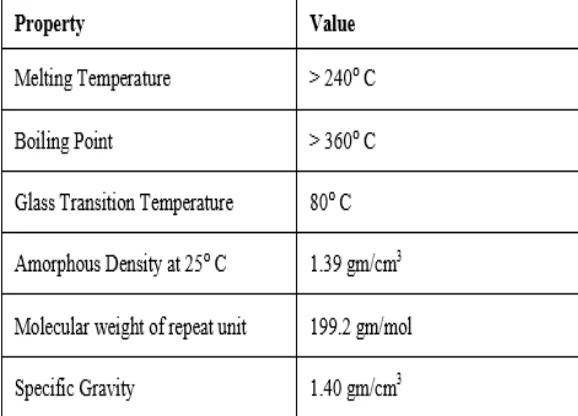
2) Low Density Polyethylene: In this research, soft drink water bottles and polyethylene have been used from the local place and from the dump side. After collecting all these materials, it has been thoroughly cleaned and the shreded machine has made small pieces of proportion to 2.36 mm -4.36mm. The physical properties of these materials are shown in the table below.
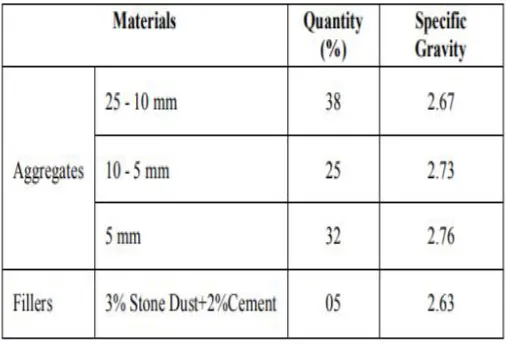
[image:2.595.151.440.514.722.2]3) Aggregates: Before using aggregate, its physical properties have been studied, as well as testing the aggregate and their results have been known.
Figure 3: Properties of Aggregates:
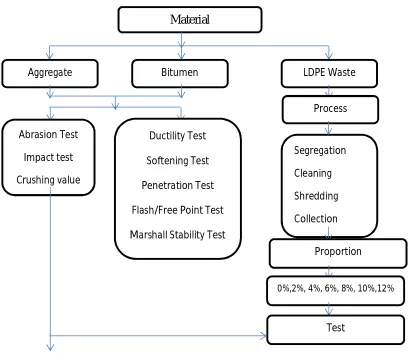
Material
Aggregate
Bitumen
LDPE Waste
Abrasion Test
Impact test
Crushing value
Ductility Test
Softening Test
Penetration Test
Flash/Free Point Test
Marshall Stability Test
Process
Segregation
Cleaning
Shredding
Collection
Proportion
0%,2%, 4%, 6%, 8%, 10%,12%
important property on the content and rigidity of the bituminous matrix. The stuffing material used in the Research paper is Cement and Stone Dust. 5% filler, 3% stone dust and 2% cement were used. Grading requirements for mineral filler indicated in Table 4.
Figure 4: Grading requirements for Mineral Filler
5) Program of Experimental work: The current study is related to the preparation and testing of dense bituminous macadam (DBM) mixtures. DBM mix was prepared in this study (Videography of ASTM Design D1559-62T) according to the Marshal Mix design process, Mix bitumen (according to Job Mix Table-5) by mixing the Poles and LDPE (PW). The weight was added by the weight of bitumen (VG-30) in different percentages. The weight of bitumen was compounded with 0, 8, 10, 12 and 14%. Martial samples were kept for 24 hours 1 hour in water bath at 60ºC for. Samples placed in a thermostatic controlled water bath are kept for 30 to 40 minutes at 60 forc, which are called unconditional samples. The proportion of the values of martial specimens of unconditional specimens is called retained stability. Marshall Stability Test Controls (plain bitumen) and LDPE (PW) were done on modified bituminous mix.
Figure 5: Job Mix for 50 mm DBM (Grade II)
III. RESULTS
Results of the Marshall Stability Test are presented and discussions are made to bring out the effect of plastic waste on various properties of DBM mix. DBM Mix was prepared as a control sample with plain bitmap and bitumen mixed modified samples were made with plastic wastes.
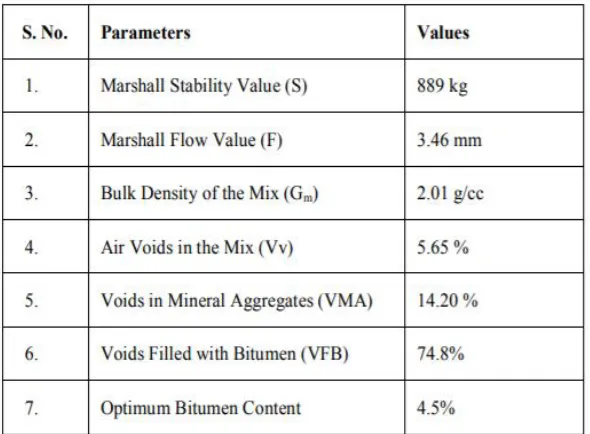
A. Optimization of Plain Bitumen in Mix
[image:4.595.171.424.416.588.2]Figure 6: Properties of the Mix (DBM) with Plain Bitumen
B. Effect of LDPE on the power of DB Mix
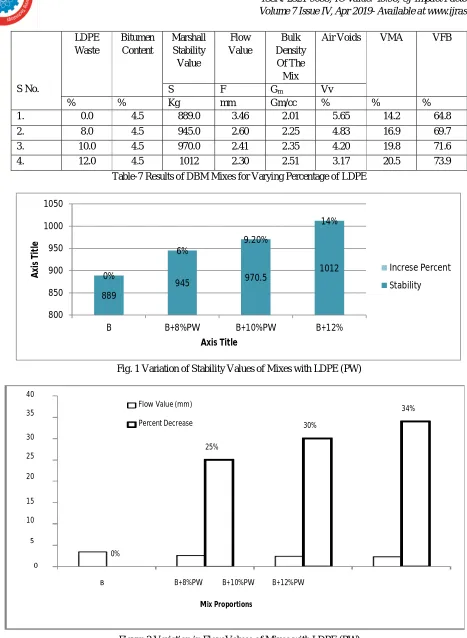
Plastic wastewater (PW) was mixed with bitumen in 2, 4, 6, 8, 10 and 12%, and with each percentage, the prepared martial stability test was done. The average values of all the important parameters were taken from samples of three replication tests of the most significant percentage of plastic wastes (8, 10 and 12%), which are shown in table-7 and fig. 1 to 6
The variation in the constant value of the mixture includes simple-and-modified bitumen shown in table-7 and fig. It has been seen from Fig. 1 that the durability values of the modified mixture with plastic waste increased significantly. For the prepared mixture with plain bitumen, waste at 12% waste at the rate of 14%. Due to the addition of plastic waste, it shows an increase in the strength of the mixture, which states that the density of the mixture increases with the incorporation of plastic waste.
C. Effect of LDPE on the flow value of DB Mix
The difference in the flow value of the mixture is shown in fig. It is evident from Figure 2 that the flow value of the mixture was reduced from 8 to 12% with an increase in waste content in the mixture. However, the maximum drop in flow value is seen at 12% waste content, which is about 34%. A decrease in the flow value shows that the mixture becomes even more stable at 600C temperature.
D. Effect of LDPE on bulk density of DB Mix
It is clear from fig 3 that the bulk density of the mixture was also increasing with the increase in plastic waste material. The most important part of the garbage is observed as 12%, which is the maximum density (2.51g / cc). Which is about 25% higher than the density of the mixture made from plain bitumen. Impact of LDPE on DBM Mix Fig's Pyrkennet Air Wyids Indicates the diversity of air wides (VV) values with waste material. It is believed that Vv values were changing from 0.65 to 3.1 to% 0 to 12% of waste content. However, decrease in Vv values was seen as 44% in 12% waste content. The lack of VV values shows that the addition of plastic waste was improving the consistency of the mixture.
E. LDPE Effect on Voids in DBM mineral Aggregate Mix
VMA variation of the blends is shown in Figure 5. It is evident from Figure 5 that the amount of VMA in the mix was increasing with 8 to 12% increase in wastes. However, the maximum increase in the VMA value is seen at 12% waste content, which is approximately 44%.
F. Effect of LDPE on DBM Mix VFB
S No.
Waste Content Stability Value
Value Density Of The Mix
S F Gm Vv
% % Kg mm Gm/cc % % %
1. 0.0 4.5 889.0 3.46 2.01 5.65 14.2 64.8
2. 8.0 4.5 945.0 2.60 2.25 4.83 16.9 69.7
3. 10.0 4.5 970.0 2.41 2.35 4.20 19.8 71.6
4. 12.0 4.5 1012 2.30 2.51 3.17 20.5 73.9
Table-7 Results of DBM Mixes for Varying Percentage of LDPE
[image:6.595.59.526.80.718.2]Fig. 1 Variation of Stability Values of Mixes with LDPE (PW)
Figure 2 Variation in Flow Values of Mixes with LDPE (PW) 889 945 970.5 1012 0% 6% 9.20% 14% 800 850 900 950 1000 1050
B B+8%PW B+10%PW B+12%
A xi s Ti tl e Axis Title Increse Percent Stability 40 35
Flow Value (mm) 34%
Percent Decrease 30%
30 25 20 25% 15 10 0%
B+8%PW B+10%PW B+12%PW
Fig. 3 Variation in Bulk Densities of Mixes with LDPE (PW)
[image:7.595.49.527.539.712.2]
Figure 4. Variation in Air Voids (Vv) of Mixes with LDPE (PW)
Fig 5. Stripping Value of Control and Modified Bituminous Mixes 100
90
80
70
60
50
40
Percent Increase VFB (%)
11 14
64.8 69.7 71.6 73.9
B B+8%PW B+10%PW B+12%PW
Mix Proportions 30
Bulk Density (g/cc)
Percent Increase
25% 25
17%
15
12%
10
0%
B+8%PW B+10%PW B+12%PW
Mix Proportions
50
45
40
35
30
25
Air Voids Vv (%)
Percent Decrease
44%
26%
15%
10
5.65 4.83 4.2
3.17 0%
B B+8%PW B+10%PW B+12%PW
It is evident from the results of the current study that the stability of DBM mix was significantly improved in the adding of plastic waste. Compared to plain bitumen, the coating of the plastic modified bitumen also improved. Therefore, the current study will reduce road repair and help in the use of plastic waste using non-biodegradable waste. In addition to LDPE (PW), the air reduces air vessels, which inhibits the bitumen absorption and oxidation by entering the air. This increases the stability cost of Marshall. It has been observed that the value of the stability of the blends modified with plastic waste has been increased to 12% in the garbage by 14% compared to the mixture made with plain bitumen. Due to adding plastic waste, it shows an increase in the strength of the mixture, which shows that the density of the mixture increases with the incorporation of plastic waste. The amount of waste in the mix increased by 8 to 12% and the flow value of the mixture was decreasing. In the mixture Bulk density will increase with the increasing in plastic waste. The most vital proportion of the plastic waste is detected as 12%, on which the density is maximum- {2.51g/cc}. This is nearby 25% in excess of the density of the mixture ready from plain bitumen.
REFERENCES
[1] Mir AH. Use of Plastic Waste in Pavement Construction : An Example of Creative Waste management. IOSR J Eng. 2015;05(02):57–67. [2] Malik Shoeb Ahmad D. Low Density Polyethylene Modified Dense Graded Bituminous Macadam. Int J Eng Trends Technol. 2015;16(8):366–72. [3] Diener E, Oishi S, Tay L. Abstract : 2018;20(January):89–108.
[4] A.I. Al-Hadidy, T. Y.Q. (2008). Effect of polyethylene on life of flexible pavements. Construction and Building Materials, 1456–1464. [5] Mazumdar, M. P. (2002). Utilization of reclaimed polyethylene in bituminous. Journal of Materials in Civil Engineering, 527-530 [6] Othman, A. M. (2010). Effect of low-density polyethylene on fracture toughness. Journal of Materials in Civil Engineering, 1019-1024. [7] Punith, V. S., & Veeraragavan A. (2011). Characterization of OGFC mixtures containing. Journal of Materials in Civil Engineering , 335-341.
[8] R. Vasudevan, S. N. (2007). Utilization of waste polymers for flexible pavement and easy. Sustainable Solid Waste Management pp. 105-111. Chennai, India: Sustainable Solid Waste Management.
[9] S. E. Zoorob and L. B. Suparma (2000). Laboratory design and investigation of the properties of continuously graded asphaltic concrete containing recycled plastics aggregates replacement (Plastiphalt), Cement Concrete Composites, 22, 233–42.
[10] Sangita, T. A. (2011). Effect of waste polymer modifier on the properties of bituminous concrete mixes. Construction and Building Materials, 3842- 3848.