169 | P a g e
DECENTRALIZED ACCESS CONTROL WITH
ANONYMOUS AUTHENTICATION AND AUTO FILE
PUBLISHING IN CLOUD.
Madhubala Chandak
1, Harsha Kumble
2, Sanjana Prasad
3Akshata Kulkarni
4, Prof. A.N. Banubakode
5
Department of IT, S. P. Pune University, Pune (India)
ABSTRACT
In today’s world, the communication network is widely developed. You can send the texts as well as files,
also it can be shared in one or many forms. While communicating with the other person via medium, the
registered details become transparent to the third party. What if we could demolish the transparency?
We propose a cloud system where user can upload, download, view and also share data by keeping his
identity anonymous. The application can be an anonymous sharing system for government where user can
bring into notice the certain issues of government by keeping his identity secured. It is also important to
ensure that respective file is delivered to the authorities in any case.
Keywords - anonymous sharing center, access control, decentralized.
I. INTRODUCTION
Now-a-days, in Online social networking access control is very important. Only valid user must be allowed to
access and store personal information, images and videos and all this data is stored in cloud. The goal is not just
to store the data securely in cloud, it is also important to make secure that anonymity of user is ensured. In the
proposed system, the cloud verifies the authenticity of the user without knowing the user’s identity before
storing data. In Existing System, existing work on access control in cloud are centralized in nature except that
all other schemes use attribute based encryption. The scheme uses a symmetric key approach and does not
support authentication.
Suitable cryptography method is used, to achieve secure data transaction in cloud. The data owner must encrypt
the file and then store the file to the cloud. If a third person downloads the file, he/she may view the record, if
he/she has the key which is used to decrypt the encrypted file. Sometimes this may lead to failure due to the
technology development and the hackers. A lot of techniques have been introduced to make secure transaction
and secure storage and to overcome the problem. The encryption standards are used for transmitting the file
securely. To maintain the secrecy, the encryption technique was implemented with set of key operations.
Security of data and privacy of users is more important and has to be preserved. Cloud should make sure that
the users trying to access data and services are authorized users. Authentication of users can be achieved using
many public key cryptographic techniques. Users should also ensure that the cloud is not tampering with their
data and computational results. Sometimes, it can also be important to hide the users identity for privacy
170 | P a g e particular patient, given the identity. Users should also ensure that the cloud is able to perform some
computations on the data, but without knowing the actual data values.
1.1 Objectives
There are three main objectives:
Privacy Reliability Accessibility
The goal is not just to store the data securely in cloud but it is also important to make sure that anonymity of
user is ensured.
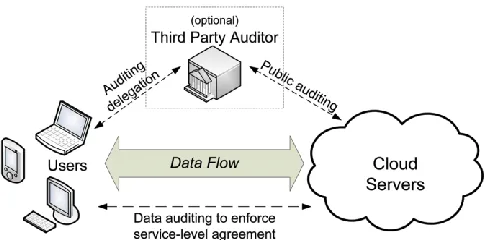
Fig 1-Cloud Storage Service Architecture
II. LITERATURE SURVEY
ABSs were introduced by Maji et al, to ensure anonymous user authentication. This was also a centralized
approach. A recent scheme by Maji et al takes a decentralized approach and provides authentication without
disclosing the identity of the users.
In this system we are going to use KDC for generation of encrypted Tokens and encrypted keys. Key
distribution is done in a decentralized way. There is KDC which generates encryption and decryption keys and
keys for signing. On presenting token to KDC, the creator will provide secret keys and keys for signing. The
cloud takes decentralized approach in distributing secret keys and attributes to user.
Ruj et al proposed a distributed access control mechanism in clouds. However, the scheme did not provide user
authentication. The other drawback was that a user can create and store a file and other users can only read the
file. Write access was permitted to users other than the creator.
Although Yang et al proposed a decentralized approach. Their technique does not authenticate the users, who
want to remain anonymous while accessing the cloud. ABS(Attribute-based signature) is a protocol which was
proposed by Maji et al.
III. EXISTING WORK
Cloud computing, helps the users to outsource their computation, applications and storage to servers (also
called clouds) using Internet. This frees users from the hassles of maintaining resources on-site. Clouds provide
services like application as a service (e.g., Google Apps, Microsoft online), infrastructure as a service (e.g.,
171 | P a g e Windows Azure). Since services are outsourced to a remote server, security and privacy are of immense concern
in cloud computing.
Now-a-days, access control in clouds is gaining more attention because only authorized users have access to
valid service. While ensuring access control of the sensitive information care should be taken as the information
can be related to health, important documents (as in Google Docs or Dropbox) or even personal information (as
in social networking). Access control also gains importance in online social networking where users (members)
store their personal information, pictures, videos and share them with selected groups of users or communities
they belong to. Such data are being stored in clouds. Only authorized users are given access to those
information. A similar situation arises when data is stored in clouds, for example when data is stored in
Dropbox, and shared with certain groups of people.
In many applications, it is essential to use a common secret key for secured communication among multiple
devices. Granting access rights to certain users and forbidding other users to access the data, is called access
control. One way to achieve this is to attach a list of all valid users to the data. In cloud computing scenario,
such lists can be extremely long and often dynamic, which will make handling such lists extremely difficult.
Each time the list has to be checked to see if the user is valid. This results in a huge computation and storage
costs. Another way to encrypt data is by using public keys of valid users, so that only they are able to decrypt
data using their secret keys. However the same data then must be encrypted several times (individually for each
user), which may result in huge storage costs. Hence we use the cryptographic technique called Attribute Based
Encryption(ABE) to achieve access control in clouds.
IV. TECHNOLOGIES TO BE USED
Our system uses the following technologies:
Java
Java is designed for applications that are portable and also have high-performance for the widest range of
computing platforms .By making applications available across heterogeneous environments, businesses can
provide more and more services and boost end-user productivity, communication, and collaboration—and
dramatically reduce the cost of ownership of both enterprise and consumer applications.
All the implementation of Java compilers, virtual machines, and class libraries were released by Sun under
proprietary licenses. As of May 2007, in compliance with the specifications of the Java Community Process,
Sun relicensed most of its Java technologies under the GNU that is General Public License. Others have also
developed some alternative implementations of these Sun technologies, such as the GNU Compiler for
Java (byte code compiler), GNU Classpath (standard libraries), and IcedTea-Web (browser plugin for applets).
Token generation
In this method, we will generate encrypted token by KDC. A security token provided by KDC is given to an
authorized user of computer services is given to ease authentication. The term may also refer to software tokens.
Security tokens are used to prove one's identity electronically. The token is used in place of a password to prove
172 | P a g e
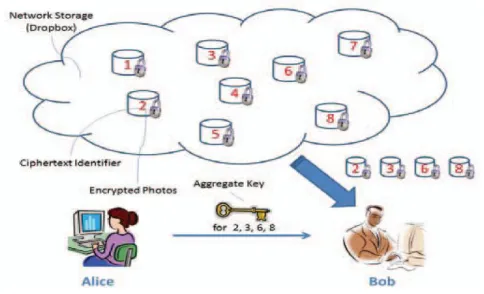
Fig 2-Token Genertaion
Key generation
After Validating the tokens we will generate the encrypted key to the user. Key generation is the process of
generating keys in cryptography. An electronic key that is provided to the user is used to encrypt and decrypt
whatever data is being encrypted/decrypted.
Fig 3-Key Generation
V. PROPOSED SYSTEM
In the proposed system, the cloud verifies the authenticity of the user without knowing the user’s identity before
storing data. In the existing system, RSA algorithm is used. We are now using AES encryption algorithm which
is of 256 bit key length. A user can create and store a file and other users can only read the file. The write access
is only permitted to the creator not to the other users. To authenticate the user, OTP is sent to the user’s
email-id. Multiple files can also be uploaded. The file should be delivered to the right authorities in any case. A
pre-defined deadline is scheduled after which the file will be automatically posted even without the provider’s
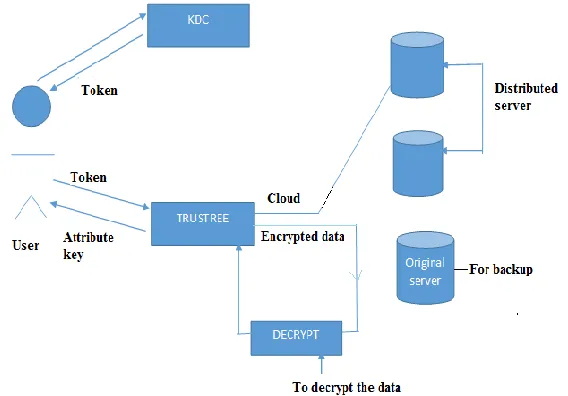
173 | P a g e Fig 4-Proposed system
5.1.PRODUCTPERSPECTIVE
The perspective of this application to maintain security and unauthorized person who wants to access the data
on the cloud. This was also a centralized approach. A recent scheme by Maji et al. Takes a decentralized
approach and provides authentication without disclosing the identity of the users.
In this system we are going to use KDC for generation of encrypted tokens and encrypted keys. Key distribution
is done in a decentralized way. There is KDC which generates encryption and decryption keys and keys for
signing. Creator will present token to KDC and it will provide secret keys and keys for signing.
5.2.PRODUCTFUNCTION
Registration:-Register user with name, email, Date of Birth and address.Token will be sent to specified email
to authenticate user.If token is correct, then user will again get key on email, thereafter email and key will be
the log-in credentials.
After Logging In, user can upload files on Cloud and see list of uploaded files if uploaded before. Also user
can share files from his uploaded file list through email.
5.3.USERCHARACTERISTICS
Proposed system involves important role for the User-
User will able be to Register with system with credentials -Name, Email, Date of Birth, Address. User will be able to Login with Email and Key which will sent on email.
User Able to Upload File. File sharing via Email interface.
VI. ALGORITHM
1. Register User
1.1: Sent all user details to Web Service.
1.2 : Validate fields.
174 | P a g e 1.4 : Sent Login key on Mail if OTP correct.
2. Login User
3. Home page
3.1 : Uploaded files.
3.2 : Show list of uploaded files.
3.3 : Send files
4. Stop
VII. IMPLEMENTATION AND DISCUSSION
In this proposed system, we briefly discuss the existing works about Decentralized Access control system.
1. In this the additional feature of a timer has been added in order to assure file publishing in any case.
2. The earlier 2 step user authentication has been advanced into a three step authentication system .
3. In the existing system only single files can be uploaded. In this system the user is able to upload multiple
files into the cloud.
4. The authentication is done via the email and phone number of the user.
5. The uploaded file is stored on a backup server and also into the main cloud.
6. Advanced key encryption methods like 256 bit key is used improving the security provided.
VIII. CONCLUSION
Here, we have presented a decentralized access control technique with anonymous authentication, which
provides user revocation and prevents replay attacks. Key distribution is done in a decentralized way. The
proposed system provides a Anonymous Authentication of Decentralized Access Control of Data Stored in
Cloud. It prevents replay attacks and addresses user revocation. The user credentials are verified by cloud who
store the data but cloud does not know who the user is.
IX. ACKNOWLEDGEMENTS
This project aims at providing a quality of service at the traffic junctions. We are profoundly grateful to Prof.
Dr.A.N.Banubakode for his expert guidance and continuous encouragement throughout to see that this project
rights its target since its commencement to its completion. We are also grateful to Head of Department
Dr.A.N.Banubakode for his support and guidance that have helped us to expand my horizons of thought and
expression.
X. REFERENCES
[1] S. Ruj, M. Stojmenovic, and A. Nayak, “Privacy Preserving Access Control with Authentication for
Securing Data in Clouds,” Proc. IEEE/ACM Int’l Symp. Cluster, Cloud and Grid Computing, pp. 556563,
2012.
[2] C. Wang, Q. Wang, K. Ren, N. Cao, and W. Lou, “Toward Secure and Dependable Storage Services in
175 | P a g e [3] J. Li, Q. Wang, C. Wang, N. Cao, K. Ren, and W. Lou, “Fuzzy Keyword Search Over Encrypted Data in
Cloud Computing,” Proc. IEEE INFOCOM, pp. 441-445, 2010.
[4] S. Kamara and K. Lauter, “Cryptographic Cloud Storage,” Proc. 14th Int’l Conf. Financial Cryptography
and Data Security, pp. 136149, 2010.
[5] H. Li, Y. Dai, L. Tian, and H. Yang, “Identity-Based Authentication for Cloud Computing,” Proc. First Int’l
Conf. Cloud Computing (CloudCom), pp. 157-166, 2009.
[6] C. Gentry, “A Fully Homomorphic Encryption Scheme,” PhD dissertation, Stanford Univ., http://www.crypto.stanford.edu/ craig, 2009.
[7] A.-R. Sadeghi, T. Schneider, and M. Winandy, “Token-Based Cloud Computing,” Proc. Third Int’l Conf.
Trust and Trustworthy Computing (TRUST), pp. 417-429, 2010.
[8] R.K.L. Ko, P. Jagadpramana, M. Mowbray, S. Pearson, M. Kirchberg, Q. Liang, and B.S. Lee, “Trustcloud:
A Framework for Accountability and Trust in Cloud Computing,” HP Technical Report HPL-2011-38,
http://www.hpl.hp.com/techreports/ 2011/HPL-2011-38.html, 2013.
[9] R. Lu, X. Lin, X. Liang, and X. Shen, “Secure Provenance: The Essential of Bread and Butter of Data
Forensics in Cloud Computing,” Proc. Fifth ACM Symp. Information, Computer and Comm. Security