INTRODUCTION
Phenols (derivative aromatics) are involved in many in processes and frequently are released into the environment through industrial discharges. Moreover nitrophenols and chlorophenols occur in the environment as degradation products of the organophos phorus and chlor inated phenoxyalkanoic acid pesticides, respectively. Anilines also occur in the environment as degradation products of the phenyl urea and dinitroaniline herbicides. Phenols are per sistent in the environment and toxic at the low mg/l level¹. In the 80/778/EEC directive of the European Union it is stated that the maximum admissible concentration for each individual phenol in drinking water should not exceed 0.1 mg/l². Anilines are also of toxicological importance and the monitoring of their levels in environmental waters is Break important for the protection of health and the environment³
Solid-phase extraction derivative aromatic compounds
in water samples and determination of using GC-FID
ALI MOGHIMI¹* and ASGHAR GHAZAL²
¹Department of Chemistry, East Tehran(Ghiamdasht) Campus Islamic Azad University, Tehran (Iran) ²Department of Chemistry, Saveh Campus Islamic Azad University, Saveh (Iran)
(Received: June 10, 2008; Accepted: July 15, 2008) ABSTRACT
A simple method to pre-concentrated derivative aromatic compounds on active carbon in column has been applied as stationary phase which is used to measure the concentration of derivative aromatic compounds in water samples by means of solid-phase extraction. To measure 250 cc water samples and 250mg active carbon could be applied. Next step is to measure the derivative aromatic compounds by injecting them to the gas chromatography with flame ionization. The advantages of applying gas chromatography–flame ionization detection (GC–FID) with SPE in presence Carbon active are high sensitivity, High speed transformation of aromatic compounds and improving ration standard for river waters with derivative aromatic compounds in the range of ppb or those with less than 10% of LOD. The quantity of extraction could be affected by sample’s pH, amount of solvent, washing liquid type, solvent and flow rates of the sample solutions.
Key word: Solid phase extraction, Water analyzing, active carbon, derivative aromatic (phenol compounds), Gas chromatography flame ionization detection (GC–FID).
The most common techniques for the analysis of anilines and phenols in environmental waters are gas (GC) and high-perfor mance liquid chromatography (HPLC)¹. The direct analysis of phenols by GC is difficult4 and GC analysis is usually performed after a derivatization step1,5-7. Anilines are also thermolabile and polar compounds and a derivatization step is often required before GC analysis3,8-11. Most of the derivatization processes however are not straightforward and sometimes require handling of hazardous chemicals. Since in HPLC analysis there are no der ivatization requirements, it appears to be a good alternative to GC analysis and nowadays has been widely accepted as the method of choice1,12.
been used, including C1821,22, polystyrene-divinylbenzene-based polymers22,23, and various forms of carbon18,20. A number of these sorbents show relatively low recovery for some phenolic compounds13,14,7,24,25.In this study, a β- cyclodextrin-bounded silica on active carbon in CBP column has been applied as stationary phase which is used to measure the concentration of derivative aromatics (phenol compounds) in water samples by means of solid-phase extraction.
EXPERIMENTAL Reagents
β-Cyclodextrin and irregular silica gel were purchased from Merck (Darmstadt, Germany). 3-Glycidoxypropyltrimethoxysilane (KH-560) and high-temperature epoxy resin of type 5203 were obtained from Huili company (Jiangsu, China). Phenol (PN), nitrophenol (NP), 3-chlorophenol (3-CP) and 4-methylphenol (4-MP) were obtained from Merck (Darmstadt, Germany). Standard solutions (2000 mg l-1) from each individual compounds were prepared in methanol. A mixture of these phenolic compounds applied to different detection systems, was prepared weekly by diluting the standard solution with methanol, and more diluted working solutions were prepared daily by diluting these solutions with triple distilled water or river water. The concentration of mixture to be analyzed by gas chromatography–flame ionization detection (GC– FID) was made at a range of 100–200 mg l-1. The commercial cartridges used were Carbon active Carbopack B from Merck. β-cyclodextrin bonded silica stationar y phase (CDS) was prepared according to a procedure reported elsewhere with some modification26,30.
Apparatus
A gas chromatograph model Varian Star 3800 equipped with a flame ionization detector and a split/splitless injector was used. Separations of aromatic compounds (phenols) were carried out using a capillary column CBP 10 low bleed MS (25m×0.22mm I.D.) with 0.25µm film thickness. The injector and detector temperatures were set at 250 and 280°C, respectively. The separation of aromatic compounds (phenols)on (GC–FID) was performed by a temperature program as follows: 60°C during 5 min, at 10°Cmin-1 to 230°C, 5 min
hold at 230°C. An aliquot of 1-2µl from each sample was introduced into the chromatographic columns using splitless mode injection. A Hewlett-Packard HP series gas chromatograph equipped with a split/ splitless injector and a HP mass-selective detector was also used. The analytical column was a HP-5 MS 0.25 µm of 30m×250 µm I.D. The column temperature was programmed as follow: 80°C for 3 min thenwas heated at 20 °Cmin-1 to 260 °C and 30°Cmin-1 to 290°C. The mass spectrometry was operated at electron energy of 70 eV. The injection and GC–MS interface temperature were set at 220 and 250 °C, respectively. The ion source temperature was set at 200°C, and quadrupole temperature was set at 150 °C. The mass control system was programmed for a selected-ion monitor (SIM); the monitored ions were m/z at 96 for PN, m/z at 125 for 4-NP, m/z at 130 for 3-CP and m/z at 110 for 4-MP. Chromatographic data were recorded using an HP Chemsation, which was controlled by Windows NT (Microsoft) and equipped with Wiley mass spectral librar y. Helium and nitrogen (99.999%) were used as carrier and make-up gas, respectively. The flow rate of carrier gas was adjusted at 1mlmin-1. A JSM-6330F scanning electron micro analyzer (Japan Electronic Company) was used to investigate the CDS surface.
Solid-phase extraction equipment
A standard column 20mm glass vacuum filtration apparatus was utilised after being rebuilt according to The normal sintered piece of glass, acting as support for the glass fibre filters and SPE on active carbon in CBP, This construction facilitated and reduced the time for cleaning of the extraction equipment. The vacuum source used was a MZ 2C vacuum pump (Germany).
Sample preparation and derivatization
experiments where the pH effects were studied, citrate buffer (pH 1.5–5) was used for the adjustment. The derivatization procedure used was based on previous report by Rodr´ýguez et al.³¹. A volume of 2ml of a methanol solution containing aromatic compounds (phenols)was mixed with 1ml of 5%K2CO3 and 2ml of n-hexane containing 200 µl of acetic anhydride and internal standard. The mixture was shaken for 1 min and the organic phase was allowed to be separate. The aqueous phase was then extracted with a further 1ml of n-hexane containing only internal standard. The two n-hexane portions were collected, mixed and dried over anhydrous sodium sulfate and injected into the GC system. To access lower detection limits in the sample solution at sub-ppb concentrations, the final extract was concentrated to 0.5 ml under a gentle stream of nitrogen.
RESULTS AND DISCUSSION
The CDS possesses a porous structure should significantly increase the available surface
area of it, and therefore, increase the extraction capacity.
Evaluation of sorbent
To evaluate the ability of the CDS for the extraction of derivative aromatics (phenolic compounds) from water samples, a mixture of five phenolic compounds including PN, 4-NP, 3-CP and 4-MP were used as model compounds. In general, phenols are amenable to GC without derivatization17,7–9. But at lower concentration, peak tailing and discrimination in the injector of capillary column might occur9,10, especially when environmental samples are analyzed. To overcome these problems, phenols could be derivatized with a suitable derivatizing reagent11–14. Among the wide variety of derivatizing reagents used for this purpose, acetylating agents have been employed to the greatest extent15–17.
Effects of different parameters such as the sample pH, the sample volume, flow rate of sample (Table 1) , the volume of eluting solvent, the capacity
Table 1 Effect of flow rates of the sample solutions on the recovery percentage of derivative aromatics (phenolic compound)
Flow rate Extraction%
ml/min phenol 4-nitro phenol 4-methyl phenol 3-choloro phenol
0.5 80.97 50.25 30 60.5
1 75.12 33.24 28.60 28.42
1.5 57.74 27.0 25.5 21.2
2 8.23 22.95 21.37 10
3 8.0 5.27 12.27 7.02
4 2.2 0.64 5.2 3.0
Table 2 The extraction recoveries obtained for the studied derivative aromatics (phenolic compounds) at different volume of sample solution (n =4)
Volume(ml)
Comp-1000 500 300 100 ound
RSD Recovery RSD Recovery RSD Recovery RSD(%) Recovery
(%) (%) (%) (%) (%) (%) (%) (%)
5.9 22.3 6.2 97.4 5.5 80.5 5.0 85.2 PN
8.5 41.8 5.3 72.2 3.6 92.8 3.9 25.9 3-CP
7.2 58.4 5.1 75.3 4.9 52.3 5.8 38.9 4-NP
Fig. 1: The extraction recoveries obtained for the studied derivative aromatics (phenols) at different sample pH
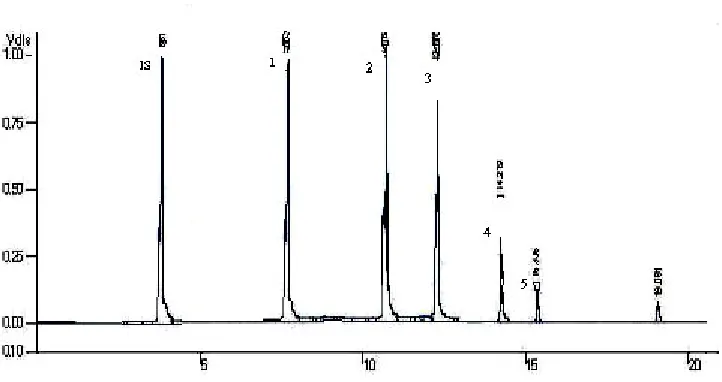
Fig. 2: Gas chromatograms of the Alum Pars manufacture (Saveh, Iran) 200 ml wastewater sample and the same sample spiked with 2–3 µg L-1 of a standard solution of derivative aromatics
(phenolic compounds). Internal standard (I.S.), (1) PN, (2) 4-NP, (3) 4-MP, and (4,5) 3-CP of sorbent and the linearity of recovery were
evaluated using this sorbent. The sample pH is an important factor, which may affect on the recovery of aromatic compounds (phenols)from water. To increase the extraction recovery of phenolic compounds by sorbents, it is necessary to acidify
compounds (phenols) from water samples, 120 ml samples with same concentration in the 200–300µg l-1 levels at different pH values (1.5, 3, and 5) were preconcentrated using CDS as a sorbent. Fig1 shows the recovery obtained at each pH and clearly, the maximum recovery is obtained at pH 1.5. Higher recovery results at low pH could indicate that the ion exchange interactions have little contribution in retaining mechanisms. The pronounced recovery decrease for phenolic compounds in comparison with phenol at higher pH, justifies the non-ionexchange interactions.
In order to determine the volume of the sample that can be concentrated with acceptable recoveries for all the compounds studied, it was necessary to obtain the breakthrough volumes. Different volumes (100, 300, 500, and 1000 ml) of distilled water, at pH 1.5, were spiked with a solution containing five phenolic compounds at the 200– 500µg l-1 levels. Following the preconcentration step, the trapped analytes on the percolumn were eluted with 2ml of methanol. After derivatization and extraction with a total of 3ml of n-hexane, an aliquot of 2 µl was injected into the GC system. The recover y of phenolic compounds and the repeatability for the different volumes are given in Table 2. Good recoveries were obtained for all compounds studied using 250 ml sample volumes. Of course, when samples of 500 ml were preconcentrated, the recover ies were, still, acceptable, except for phenol. Further experiments revealed that, for less polar compounds, i.e. 3-CP breakthrough volumes higher than 600 ml was obtainable. It was also found that flow rates up to 7ml min-1 for water samples loading on the percolumn had no effect on the recover y percentage.
To find the required volume of methanol to elute all aromatic compounds (phenols) from the cartridge, elution volumes up to 4ml were examined. It was found that a volume of 1ml was sufficient to desorb the trapped pollutants from the SPE per column; of course includes the volume of solvent to saturate the packed cartridge. This relatively low volume of methanol eluted all compounds from the cartridge easily and other solvents were, therefore, excluded from any further examination. The low consumption of desorbing solvent is a clear
advantage of this sorbent, which would be far more useful in on-line applications.In order to study the capacity of the sorbent and the linearity of recovery, each compound was determined using a river water sample spiked at much higher levels, i.e. 2–3 µg L-1, by GC–MS. No significant differences were obtained, indicating that its capacity is sufficiently high. It also demonstrates that even the preconcentration of water samples spiked with such levels of concentrations has no negative influence on the recovery results.
Comparison studies
In comparison with other repor ts, it appears that, these recoveries, at least for some, are better than those which obtained using some commercial sorbents such as C184,7,23,24., cyclohexyl 24. and monofunctional C18 (C18/OH) 4.. In a report 23., 250 mg Amberchrom CG-161 was used for the preconcentration of 100 ml of water and recoveries lower than 75% for these phenolic compounds were obtained. Also, in another work7. SPE of 250 ml of water sample by 250 mg active carbon, led to low recoveries, specially for 2-CP and pentachlorophenol (5-CP) that were 40 and 48%, respectively. At the same time, another group²². used car tridges of 500 mg of carbon active, cyclohexyl and PLRP-S, a styrene-divinyl benzene-based copolymer, for the preconcentration of aromatic compounds (phenols). Acceptable recoveries were obtained with these sorbents using different volumes of solution with and/or without use of ion-pair reagent for extraction of all compounds studied except 3-CP and 5-CP which had recoveries lower than 70% for all conditions applied. While some authors4. have demonstrated that PLRP-S provides the best recoveries even for 3-CP and 5-CP aws compared to other sorbents, in the previously described work24. recoveries were reported to be lower than 70% for 3-CP and 5-CP. Generally, styrene–divinylbenzene-based polymers especially LiChrolut EN33,34. because of its high surface area of 1200m2 g-1, has shown satisfactory results.
than 90% were obtained for all compounds except pentachlorophenol which had a recovery value of about 75%. Comparing these related results using some common sorbents with the present work demonstrates that CDS has an enhanced perfor mance for the extraction of phenolic compounds, especially 3-CP and 4-MP.
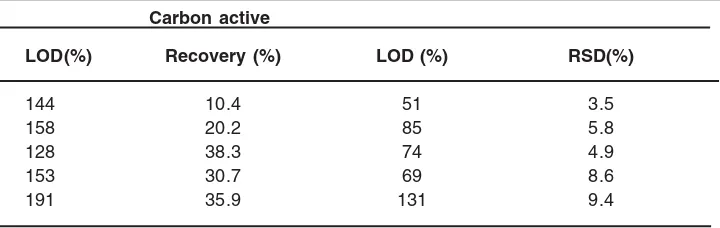
To have a better overview on the efficiency of the CDS, a comparison study was carried out using carbon active. carbon active is a well-known and widely used commercial sorbent and the other two polymers are relatively new and more efficient sorbents. Spiked distilled water samples with aromatic compounds (phenols) were passed through the car tridges. After elution and derivatization, an aliquot of 2µl was injected onto the GC. As Table 3 demonstrates, the recoveries of all compounds are less than 40% using 250 ml of water samples when carbon active was used. Real sample
In order to study the effects of sample
matrix on the performance of the sorbent, the recovery results were examined using real-life sample spiked with the phenolic compounds at two different concentration levels. A wastewater sample from Alum Pars manufacture (Saveh, Iran) was spiked with the selected aromatic compounds (phenols) at 2–3 µgl-1 levels. After the SPE and derivatization step, an aliquot of final extraction was injected into the GC–MS system. The TIC traces obtained from SPE of 200 ml of river water spiked with a standard solution of aromatic compounds (phenols) when CDS was used revealed that, in this case, the clean up process was more efficient. The capacity of CDS for retaining derivative aromatics (phenolic compounds) were 50–125 mg g-1, while for phenol was 30mg g-1. Fig. 2 shows the gas chromatograms of the Alum Pars manufacture (Saveh, Iran) wastewater sample and the same sample spiked with a standard solution of phenolic compounds. The limits of detection using 200 ml of water were calculated based on a signal-to-noise ratio of 3 and were in the range of 15–120 ng L-1, using TIC mode (Table 3).
Table 3: The extraction recoveries obtained for the studied derivative aromatics (phenols) at 200 ml volume of waste water sample solution Alum Pars manufacture spiked in the range between 2 and 3 µg1-1 using carbon activea
Carbon active
LOD(%) Recovery (%) LOD (%) RSD(%)
144 10.4 51 3.5
158 20.2 85 5.8
128 38.3 74 4.9
153 30.7 69 8.6
191 35.9 131 9.4
aThe relative standard deviations (RSD) between 3.5-9.4% (n = 4).
CONCLUSIONS
The developed Using carbon active CDS as a SPE sorbent method was capable of handling various water samples with a reduced sample preparation time and solvent consumption
REFERENCES
1. D. Puig, D. Barcelo, Trends Anal. Chem. 15: 362 (1996) .
2. EEC Drinking Water Directive 778/ 80, EEC No. L229/11- 29, Brussels, (1980).
3. A. Dasgupta, J. Chromatogr. B 716: 354 (1998).
4. H.Faraji, Journal of Chromatography A, 1087: 283 (2005).
5. A.P. Hart, A. Dasgupta, J. Forensic Sci. 42: 693 (1997).
6. T. Heberer, H.J. Stan, Anal. Chim. Acta 341: 21 (1997).
7. K. Nick, H.F. Scholer, Fresenius J. Anal. Chem. 343: 304 (1992).
8. A. Dasgupta, C. Jagannath, Ther. Drug Monit. 21: 238 (1999).
9. R. Haas, T.C. Smidt, K. Steinbach, E. von Low, Fresenius J. Anal. Chem. 359: 497 (1997).
10. M. Longo, A. Cavallaro, J. Chromatogr. A 753: 91 (1996).
11. H.B. Lee, J. Chromatogr. 457: 267 (1988). 12. J. Patsias, E. Papadopoulou-Mourkidou, J.
AOAC Int. 82: 968 (1999).
13. E. Pocurull, M. Calull, R.M. Marc´e, F. Borull, Chromatographia 719: 105 (1996).
14. D. Puig, D. Barcel´o, Chromatographia 40: 435 (1995).
15. W.J. Landzettel, K.J. Hargis, J.B. Caboot, K.L. Adkins, T.G. Strein,H. Veening, H.D. Becker, J. Chromatogr. A 718: 45 (1995).
16. K. Kawamura, I.R. Kaplan, Environ. Sci. Technol. 17: 497 (1983).
17. M.I. Turnes, I. Rodr´ýguez, M.C. Mejuto, R. Cela, J. Chromatogr. A 683: 21 (1994).
18. I. Rodr´ýguez, M.I. Turnes, M.C. Mejuto, R. Cela, J. Chromatogr. A 721: 297 (1996). 19. M.C. Hennion, Trends Anal. Chem. 10: 317
(1991).
20. I. Rodr´ýguez, M.I. Turnes, M.C. Mejuto, R. Cela, J. Chromatogr. A 786: 285 (1997). 21. M.W. Jung, D.W. Lee, J.S. Rhee, K.J. Paeng,
Anal. Sci. Int. 12: 981 (1996).
22. E. Pocur ull, R.M. Marc´e, F. Borrull, Chromatographia 41: 521 (1995).
23. E.R. Brouwer, U.A.Th. Brinkman, J. Chromatogr. A 678: 521 (1994).
24. P. Mußmann, K. Levsen, W. Radeck, Fresenius J. Anal. Chem. 348: 654 (1994) . 25. E. Pocurull, M. Calull, R.M. Marc´e, F. Borrull,
Chromatographia 38: 579 (1994).
26. Y.Q. Feng, M.J. Xie, S.L. Da, Anal. Chem. Acta 403: 187 (2000) .
27. Y. Tang, J. Zukowwski, D.W. Armstrong, J. Chromatogr. A 743: 261 (1996) .
28. S.H. Lee, A. Berthold, D.W. Armstrong, J. Chromatogr. A 603: 82 (1992).
29. Y. Fan, Y.Q. Fenge, S.L. Da, Anal. Chim. Acta. 484: 145 (2003).
30. G. Li, Y. Zheng, Y. Hu, Anal. Sci. 20 :667 (2004) .
31. L. Rodr´ýguez, M.I. Turnes, M.C. Mejuto, R. Cela, J. Chromatogr. A 721: 297 (1996). 32. H. Bagheri, M. Saraji, J. Chromatogr. A 910:
87 (2001).
33. H. Bagheri, M. Saraji, J. Chromatogr. A 986: 111 (2003).
34. I. Rodr´ýguez, M.P. Llompart, R. Cela, J. Chromatogr. A 885: 291 (2000).
compounds. A CDS sorbent was prepared and investigated with five derivative aromatics (phenolic compounds). It could be used more than 150 times. It exhibited fast equilibrium in the extraction for the porous structure of silica particles.
ACKNOWLEDGMENTS