57
ENERGY RESOURCE OPTIMIZATION IN WIRELESS AD-HOC NETWORK USING DYNAMIC
STATES
J. Gautam, B. Lukshana Fathima, K.S. Sangeetha and P.M. Mohamed Muzammil
Department of IT, Velammal College of Engineering and Technology, Madurai, India.
[email protected], [email protected], [email protected], [email protected]
ABSTRACT
Wireless Ad-hoc network is the decentralized type of network and it does not rely on pre-existing infrastructure. The Energy efficiency continues to be a key factor in limiting the deploy ability of ad-hoc networks. Deploying an energy efficient system exploiting the maximum life time of the network has remained a great challenge since years. The major concern in Wireless network in recent days is Energy consumption. There are numerous algorithms proposed to overcome this issue. In this paper, we proposed a algorithm called Energy Efficiency Dynamic State (EEDS) algorithm. This algorithm is designed to increase the network lifetime by continuously monitoring the individual nodes in the network, thereby it increases the quality of service of the network.
Index Terms---LEAD, Virtual grid, EEDS, Network lifetime, Dynamic states
I. INTRODUCTION
Network is the collection of nodes (computer systems) that can be connected through the communi-cation link. The link can be wired or wireless. If the nodes are connected through the air or space, then it is called wireless network. Ad-hoc Network is Built for Special Purposes, It Does not rely on the Base Stations Or Routers. Wireless Ad-hoc network is not centralized and have structure which contains collection of nodes in specific range. Every individual node participating in routing to forward the data to other nodes. To improve the quality of service we need to improve mainly the 3 parameters that are, PDR (packet delivery Ratio) is the essential parameter to measure the network perfor-mance. PDR is defined as the Ratio between the total number of packets received to the total number of packets sent by the nodes. Throughput is the second essential parameter. In networks, throughput is defined as the amount of data can be sent by the source node per unit time (typically it can be measured by bits per second (bps)). Network Lifetime is the Most essential parameter to improve the performance of the network. It is the time taken by the node at which it starts participating in routing until the node running out of energy. While improving the above 3 parameters we should Avoid the Attacks to the nodes, Reduce the congestion and traffic and maintain the energy.
II. RELATED WORKS
Subhankarmishra [1] proposed the algorithm called LEAD that deals with the energy efficiency round scheduling of cluster head allocation of nodes. After that the ordinary nodes are allocated to the cluster heads for maximizing the network lifetime using ANDA algorithm.
Sumithradevi [2] proposed the ANDA algorithm which comprises two algorithm which are covering algorithm and reconfigure algorithm.
Singh [3] proposed Homogeneous Clustering Algori-thm (HCA) the whole network is virtually divided into zones based on geographical layout and density of the
network and it ensures the uniform selection of cluster heads.
Sasikala [4] proposed HEED (Hybrid Energy Efficient Distributed) clustering method maximizes the network lifetime by distributing the energy consumptions and it creates well distributed cluster heads. HEED extends the scheme of LEACH.
Anantha Chandrakasan [5] proposed LEACH- Low Energy Adaptive Clustering Hierarchy. In LEACH it will randomly distributes the energy among the nodes in the network. The nodes in the network organize themselves as a local network and assign a cluster head. LEACH compress the data which is sent from the cluster heads to the BS. Hence it reduces the energy dissipation. So, it enhances the network lifetime.
Deosarkar [6] proposed the idea led to the construction of the sensor network as several clusters with a dyna-mically elected cluster-head node is only allowed to forward the data to the sink.
Xue [7] proposed a cellular-assisted UE CH selection algorithm for the WSN, which considers several para-meters to choose the optimal UE gateway CH. They analyze the energy cost of data transmission from a sensor node to the next node or gateway and calculate the whole system energy cost for a WSN.
Lukachan [8] consider these issues in the design of a simple, scalable, energy-efficient location aided routing (SELAR) protocol for WSN. In SELAR, location and energy information of neighbouring nodes together with the location information of the sink node are used to perform the routing function.
Aslam [9] present a novel energy efficient cluster formation algorithm based on a multi-criterion optimization technique. Our technique can use multiple individual metrics in the cluster head selection process as input while simultaneously optimizing on the energy efficiency of the individual sensor nodes as well as the overall system.
58
Qin [11] proposed a Replication strategy in peer-to-peer systems. In this only node that request an object make copies of the object.Cohen [12] proposed two different replica strategies uniform and proportional - yield the same average performance on successful queries.
Giwon [13] proposed the dynamic replication for peer to peer networks. It mainly focused on tackle of replica placement problem.
TABLE I. INFERENCE OF RELATED WORKS
III. PROPOSED METHODOLOGY A. Simulation
1) Network Formation:
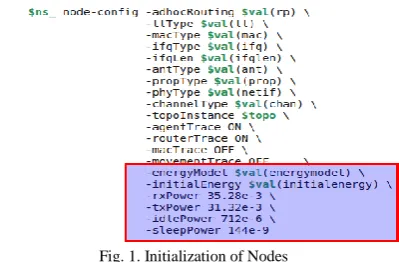
Simulation is regulated using NS2 2.35. Because of the link stability and route lifetime, no route overhead was considered in our simulation. In 500 X 500 area, mobile nodes exist. Square area is used to increase average hop length of a route with relatively small nodes. Every mobile node is moving based on the mobility data files that were generated by mobility generator module. Several 50 nodes is created. The transmission range is fixed at 100 meters. 100 nodes have destinations and try finding routes to their destination nodes. Maximum speed of node is set to 20 m/sec. The nodes are assigned with an initial position. All nodes do not stop moving and the simulation second is 500 seconds.
Fig. 1. Initialization of Nodes
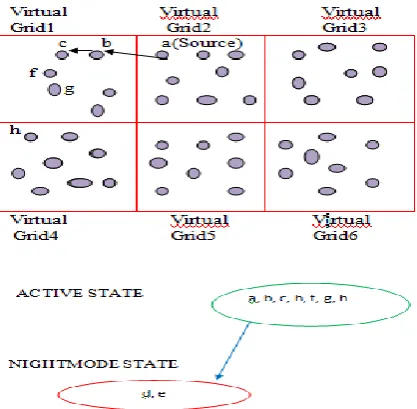
In this section, we describe the EEDS algorithm. Initially, the network is divided into virtual grids. Each virtual grid is assigned with n number of nodes based on their current position. The nodes which are in the same virtual grid are designed in such a way that these nodes within a grid will rely on one another i.e., any node in the virtual grid can assign its work to the any other node which is present in the same virtual grid.
Fig. 2. Representation of Virtual Grids of the Network
In this paper, we discuss about three different states where a node can enter to conserve its energy. i) Active state –it contains the nodes which is actively participating in the routing process. ii) Night mode - it contains the nodes which are idle and it is in a energy consuming state. iii) Discovery state- it contains nodes which are ready to participate in routing process.
Fig. 3. Representation of States of the Node.
59
allocated for a new node entering the state. When the fifth node enters the buffer, the first node that entered the buffer will move towards the discovery state indicating that it is ready to actively participate in the routing process.In discovery state, the node consumes half of the energy when compared to the energy consumed by the active state since it triggers an alarm periodically indicating that it is ready to enter the active state. The node triggers an alarm when it is in a discovery state for a time stamp greater than T.
Similarly, when a node in active state loses 10 percent of its energy and wants to move to the night mode, it send a request message to discovery state for a node to enter the active state. This process continues although the simulation for efficient energy management of each node in the network which in turn increases the overall network lifetime. As discussed earlier, the nodes in the virtual grid are mutual to each other, when one node enters the night mode, it assigns its work to the neighbouring node in the same virtual grid. Consider the following routing process which denotes the shortest path form source (a) to destination (h).
Fig. 4. Actual Shortest Path from Source to Destination.
The above figure shows the source and destination nodes named as a and h respectively. The intermediate nodes are b, c, d and e. The packets are transferred from a to h through b, c, d and e. Here, the nodes d and e consumed 10% of energy and so these two nodes are ready to enter into the night mode to conserve its energy.
Fig. 5. Representation of Nodes in Night Mode State.
The above figure represents the nodes d and e are in the night mode state and it does not consumes energy and remains the same until it enters into the discovery state.
Fig. 6. Representation of the Node Assigning its Work to its Neighbouring Nodes.
The above figure represents the nodes d and e assigns their work to the neighbouring nodes f and g respect-tively. Hence in the routing process nodes f and g participate on behalf of nodes d and e respectively. Assigning a node work to some other is done by duplicating its id whenever necessary.
Fig. 7. Code to Print Position and Energy
B. Flow Chart
Fig. 8. Energy Efficient Dynamic State Algorithm
60
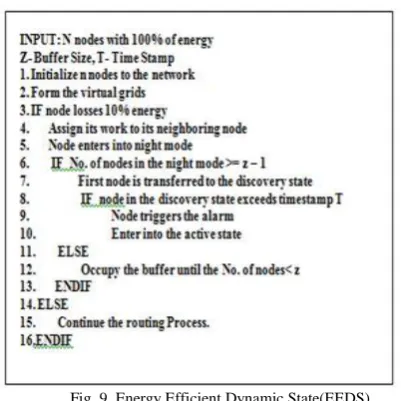
Fig. 9. Energy Efficient Dynamic State(EEDS)
This algorithm is found to be more efficient that existing algorithms since entire network lifetime is maintained uptime throughout the simulation
IV. EXPERIMENTAL ANALYSIS
The packets are routed very efficiently by nodes that are actively participating in the routing process. The Packet Loss Ratio is evaluated with the parameters such as number of packets sent and number of packets received. It is inferred that as the number of nodes with minimum energy increases with respect to the simula-tion time the packet loss ratio increases gradually as shown in the Figure 10. The Calculated packet loss ratio is lesser than the value that obtained without any Energy efficiency algorithm incorporated in nodes in the network.
Fig. 10. Packet Drop Ratio Comparison between AODV, OLSR and EEDS
Fig. 11. Throughput Comparison between EEDS, AODV and DSR.
From the above graph, it is inferred that once the Energy Efficiency Dynamic State Algorithm has been incorporated with the routing protocol the results produced are far better than the other traditional methods used for energy efficiency. Here the Packet Drop Ratio is tremendously reduced when each node in the network can actively participate in transmitting and receiving the packets beyond a stipulated timestamp. Similarly, the obtained results for throughput also infers that results are better than other existing works. EEDS Algorithm has been compared with other routing protocols for comparison.
In the below table, the nodes lifetime is compared with respect to simulation time. The results obtained are more encouraging that above 80 percentage of the nodes maintain its energy level above 50 Percentage after the end of simulation. This shows that the entire network can perform more than an expected time tamp with uptime efficiency.
TABLE II.Comparison of active nodes with respect to simulation time
0 50 100 150 200 250
10
0
20
0
30
0
40
0
50
0
60
0
Pack
e
t
D
ro
p
R
atio
Simulation Time
Packet Drop Ratio
DSR
AODV
61
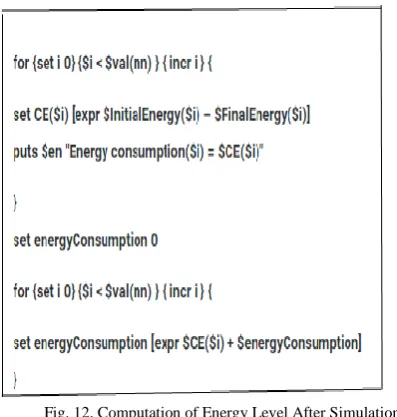
Fig. 12. Computation of Energy Level After Simulation
V. CONSLUSION
Network lifetime is considered to be the major impact that influences the performance of the network. This Paper Proposed a solution to improve the entire lifetime of the network by monitoring the nodes continuously. The Energy Efficiency Dynamic State Algorithm enhances the nodes performance throughout the simulation by maintaining the energy of the node uptime than other traditional methods used to provide energy efficiency. Since all the nodes can actively perform in the routing process beyond the expected timestamp the overall performance is also increased. Our future work will be implementing this algorithm that can sustain the attacks and still maintain the same quality of service.
VI. REFERENCES
[1] Subhankar Mishra, Sudhansu Mohan Satpathy and Abhipsa Mishra, Energy Efficiency In Ad Hoc Networks. International Journal of Ad hoc, Sensor & Ubiquitous Computing (IJASUC) 2(1): 139 - 145 (2011)
[2] Mohanaradhya, K.A.Sumithradevi, AndheDharani, Vijay singh, Clustering methodologies and their implications in sensor networks. published in springer
[3] Shio Kumar Singh, M. P. Singh and D. K. Singh, Energy Efficient Homogenous Clustering Algorithm for Wire-less Sensor Networks. International Journal of WireWire-less & Mobile Networks (IJWMN) 2(3): 49 - 61(2010) [4] Sasikala, A.Nithya, Clustering In Wireless Sensor
Net-works: ASurvey 1M. International Journal of Computer trends and Technology (IJCTT) 17(3): 112 - 16 (2014) [5] Wendi Rabiner Heinzelman, Anantha Chandrakasan and
Hari Balakrishnan. Energy-Efficient Communication Protocol for Wireless Microsensor Networks. Procee-dings of the Hawaii International Conference on System Sciences, Maui, Hawaii January 4-7 (2000).
[6] Deosarkar B. P., Yada N. S. and Yadav R. P., Cluster Head Selection in Clustering Algorithms for Wireless Sensor Networks: A Survey, Proceedings of the Interna-tional Conference on Computing, Communication and Networking, Virgin Islands, USA (2008).
[7] Xue Q. and Ganz A., Maximizing sensor network lifetime: analysis and design guides. Proceedings of the military communications conference vol. 2, Monterey, CA, Pp. 1144–1150 (2004).
[8] G. Lukachan and M. Labrador, SELAR: Scalable Energy Efficient Location Aided Routing Protocol for Wireless Sensor Networks, Proc. 29th Annual IEEE International Conference on Local Computer Networks, Florida, USA Pp. 694-695 (2004).
[9] Aslam N., Phillips W., Robertson W. and Sivakumar S., A multi-criterion optimization technique for energy efficient cluster formation in wireless sensor networks. Inf. Fusion 12: 202–212 (2011).
[10] S. C. Ergen and P. Varaiya, On Multi-Hop Routing for Energy Efficiency. IEEE Commun. Lett. 9(10): 880-881 (2005).
[11] Qin Lv, Edith Cohen and Scott Shenker, Search and Replication in Unstructured Peer-to-Peer Networks, ICS Proceedings of the 16th international conference on Supercomputing (2002)
[12] E. Cohen and S. Shenker, Replication strategies in unstructured peer-to-peer networks, Proceedings of ACM SIGCOMM, August (2002).