Repository and Information Exchange
Electronic Theses and Dissertations2019
Diversifying Cornfields by Interseeding Cover
Crops: Practical Implications and the Response of
Invertebrate Communities
Michael Bredeson
South Dakota State University
Follow this and additional works at:https://openprairie.sdstate.edu/etd
Part of theAgricultural Science Commons,Agriculture Commons,Agronomy and Crop
Sciences Commons,Ecology and Evolutionary Biology Commons, and theNatural Resources Management and Policy Commons
This Dissertation - Open Access is brought to you for free and open access by Open PRAIRIE: Open Public Research Access Institutional Repository and Information Exchange. It has been accepted for inclusion in Electronic Theses and Dissertations by an authorized administrator of Open PRAIRIE: Open Public Research Access Institutional Repository and Information Exchange. For more information, please [email protected]. Recommended Citation
Bredeson, Michael, "Diversifying Cornfields by Interseeding Cover Crops: Practical Implications and the Response of Invertebrate Communities" (2019).Electronic Theses and Dissertations. 3173.
IMPLICATIONS AND THE RESPONSE OF INVERTEBRATE COMMUNITIES
BY
MICHAEL BREDESON
A dissertation submitted in partial fulfillment of the requirements for the Doctor of Philosophy
Major in Biological Sciences South Dakota State University
“One of the penalties of an ecological education is that one lives alone in a world of wounds. Much of the damage inflicted on land is quite invisible to laymen. An ecologist
must either harden his shell and make believe that the consequences of science are none of his business, or he must be the doctor who sees the marks of death in a community that
believes itself well and does not want to be told otherwise.” -Aldo Leopold
This dissertation is dedicated to those agricultural producers who live by the words of history’s greatest conservationists and, with a sense of urgency, work each day to better
ACKNOWLEDGEMENTS
To begin, I would like to thank my committee members, Drs. Jonathan Lundgren, Alexander Smart, Dwayne Beck, Peter Sexton and Mr. Cable Hardin. They have been quick to give advice when asked, and excellent communicators. There is no clear roadmap when it comes to attaining one’s PhD, and superior advisement has been a tremendous help.
This work could not have been accomplished without the assistance of many hard-working individuals that so graciously lent their skills to the effort. A field of corn during pollen-shed is, for lack of better words, uncomfortable. Nevertheless, the people whose names are listed in acknowledgement sections throughout this dissertation showed relentless optimism during long days in the field.
All the research detailed in this dissertation was conducted on farmer-owned and operated land. I cannot express enough appreciation to those individuals who allowed myself and a team of researchers full access to their farms. As a result of this
collaboration I’ve been fortunate enough to forge meaningful relationships with stakeholders and learn from their years of agricultural experience; it is an education beyond anything I could attain in the classroom.
I would like to thank my bird-dog, Lucy. Because of her, I’ve been encouraged to spend countless hours strolling through the Brookings prairie and many of the other public walk-in areas of our region. Of all the great teachers I’ve had throughout my educational career there hasn’t been one which can rival mother nature. In an ever-busy academic life it can be a rarity to find one’s self quietly observing the natural world. For that, Lucy, I thank you and owe you a new bone.
My wife, Tera, will receive the final acknowledgement because it is she who has been the most important person in my life throughout graduate school. Tera has been a remarkably supportive and positive partner, ever-understanding when my research and schoolwork pulled me away from home. Without her this process would have been a much grander challenge, and I cannot thank her enough for her boundless confidence in me.
CONTENTS
LIST OF FIGURES ... vii
LIST OF TABLES ... viii
ABSTRACT ... xi
INTRODUCTORY STATEMENT FROM THE AUTHROR ... 1
CHAPTER ONE: TOP-DOWN AND BOTTOM-UP MECHANISMS FOR INVERTEBRATE PEST MANAGEMENT IN MIXED-CROPPING SYSTEMS Abstract ... 4
Introduction ... 6
Literature Cited ... 41
CHAPTER TWO: INVERTEBRATE GRANIVORY OF CALCIUM CARBONATE-COATED COVER CROP SEEDS Abstract ... 63 Introduction ... 64 Methods... 68 Results ... 72 Discussion ... 74 Literature Cited ... 80
CHAPTER THREE: INTERSEEDING COVER CROPS INTO ESTABLISHED CORN AFFECTS INVERTEBRATE ABUNDANCE AND DIVERSITY AND ELEVATES THE ACTIVITY OF GENERALIST PREDATORS Abstract ... 91 Introduction ... 92 Methods... 94 Results ... 101 Discussion ... 108 Literature Cited ... 113
CHAPTER FOUR: NEONICOTINOID INSECTICIDAL SEED-TREATMENT ON CORN CONTAMINATES INTERSEEDED COVER CROPS INTENDED AS HABITAT FOR BENEFICIAL INSECTS Abstract ... 134 Introduction ... 135 Methods... 138 Results ... 142 Discussion ... 143 Literature Cited ... 147 CONCLUSIONS... 159
LIST OF FIGURES CHAPTER TWO:
Figure 1. Image of field-deployed seed card possessing uncoated cover crop seeds .... 87 Figure 2. Cover crop seeds per species (mean ± SEM) damaged by arthropods after seeds were exposed to field conditions for 7 d ... 88 CHAPTER THREE:
Figure 1. Interseeder built to plant cover crops between corn rows in 2018 ... 120 Figure 2. Total invertebrates (A), predators (B), herbivores (C) and detritivores (D) captured on the soil surface from corn monocultures (open circles) and corn interseeded with cover crops (dark circles) ... 121 Figure 3. Total invertebrates (A), predators (B), herbivores (C) and detritivores (D) in the soil column of corn monocultures (open circles) and corn interseeded with cover crops (dark circles) ... 123 Figure 4. Total invertebrates (A), predators (B) and herbivores (C) collected from corn foliage at three plant stages from corn monocultures (open circles) and corn interseeded with cover crops (dark circles) ... 125 Figure 5. The 4 site-year percentage of sentinel wax moth (Galleria mellonella) larvae consumed during a 1-h field exposure in corn monocultures and cornfields interseeded with cover crops ... 127 CHAPTER FOUR:
Figure 1. Thiamethoxam and Clothianidin within cereal rye tissue ... 154 Figure 2. Thiamethoxam and Clothianidin within hairy vetch tissue ... 156
LIST OF TABLES CHAPTER TWO:
Table 1. Mean ± SEM arthropod granivores collected per pitfall in plots possessing cover crop seed cards ... 89 Table 2. Mean ± SEM lime-coated and bare cover crop seeds damaged by arthropods following 7 d of field exposure ... 90 CHAPTER THREE:
Table 1. Mean ± SEM invertebrates in corn plots interseeded with cover crops and in corn monocultures summed across sampled corn stages in the corn foliage, on the soil surface, and in the soil column ... 128 Table 2. Corn grain yields and plant densities from corn monocultures and cover crop-interseeded plots... 131 Table 3. Predation on wax moth (Galleria mellonella) sentinels in corn monocultures and in corn possessing a mix of interseeded cover crops ... 132 Table 4. Invertebrate taxa observed actively eating sentinel wax moth larvae (Galleria mellonella) presented on the soil’s surface in corn ... 133
CHAPTER FOUR:
ABSTRACT
DIVERSIFYING CORNFIELDS BY INTERSEEDING COVER CROPS: PRACTICAL IMPLICATIONS AND THE RESPONSE OF INVERTEBRATE COMMUNITIES
MICHAEL BREDESON 2019
The lack of suitable habitat conditions for beneficial organisms in simplified agroecosystems leads to unstable invertebrate communities and overreliance on chemical control of herbivores. It is possible to manage pest populations without agrichemicals by manipulating farmland so that herbivores are impaired by plant-driven bottom-up and enemy-driven top-down antagonisms. Interseeding cover crops between established crop rows is a method used by farmers to improve habitat suitability for natural enemies and hinder host-finding, feeding and movement by herbivores. Here I address three important research gaps related to interseeding cover crops. A calcium carbonate seed coating, used to improve seed-broadcasting efficiency, was tested to determine if arthropod granivores are deterred from consuming cover crop seeds. Invertebrate communities were compared between monoculture cornfields and cornfields possessing a mixture of cover crop species. Finally, neonicotinoid seed treatment, thiamethoxam, and metabolite,
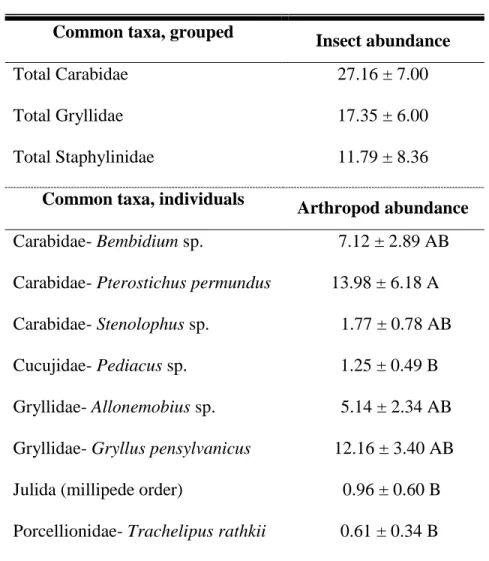
clothianidin, were quantified within vegetative tissue of cover crops growing between seed-treated corn to examine a potential route of exposure by non-target organisms. The addition of a calcium carbonate seed coating reduced seed granivory by invertebrates. Hairy vetch (Vicia villosa) and sorghum × sudan (Sorghum × drummondii) were especially protected. Gryllidae, Carabidae and Staphylinidae were the most
abundantly-collected granivores. Corn interseeded with cover crops possessed a larger abundance of surface-dwelling predators, herbivores, numerous individual taxa and total invertebrates than monocultures. Greater epigeic species richness was also recorded in cover-cropped fields. With the exception of four individual taxa, subterranean invertebrate abundances were unchanged between interseeded and monoculture corn, however, cover crops did increase species diversity below the soil surface. Interseeding did not affect species richness, diversity or arthropod abundance on corn foliage. Thiamethoxam and toxic metabolite, clothianidin, were detected in interseeded hairy vetch and cereal rye (Secale cereale) on all but one sampling dates during the corn growing season with highest concentrations in earlier samplings. On each collection date clothianidin was found at a higher level than thiamethoxam for both species. As management techniques improve interseeding cover crops has potential to become an increasingly important tool for restoring agroecosystem functions if the incompatibility of added plant diversity and existing pesticide strategies is addressed.
INTRODUCTORY STATEMENT FROM THE AUTHOR
Industrialized agriculture in developed nations has led to a simplification of the agrolandscape, a phenomenon impossible to ignore when traveling through United States farm country. Substitution of native vegetation with a small number of crop species grown in monoculture has resulted in substantial degradation of ecosystem services and functions once fully supported by native plant communities. Production of food, fuel and fiber to sustain a burgeoning human population has come at the cost of biodiversity, climate and landscape change, and environmental intoxication, to name a few. The question becoming ever-more present in the minds of agroecologists is, how can we design food production systems which drastically reduce the currently-observed negative environmental footprint, and furthermore, how do we restore the damage done?
Within the area of food production and land management there are a great number of things which can be done to improve the functionality of land crops are grown on. Disturbing earth less-frequently by eliminating mechanical soil turbation and drastically curtailing pesticide use are both ways we can soften our negative production impacts. In concert with limiting disturbances, the addition of plant diversity on field and landscape scales shows promise for restoring important ecosystem services.
Transitioning from crop monocultures to mixed-cropping systems is a feasible method for bolstering cropland biodiversity and may be applicable on an extensive scale. Whether it be multiple harvestable crops grown simultaneously, or one crop in
companionship with non-crop supporting plant species a growing number of farmers are diversifying cropland through these techniques despite a lack of research in this area to reinforce decision making.
Invertebrate communities, especially those species beneficial to agricultural producers stand to gain suitable habitat conditions from the plant-derived resources provided under a mixed-cropping regimen. Complex plant communities provide nutritive and abiotic elements necessary for sustained inhabitance by these organisms. Persistent beneficial arthropod populations in farmland perform a plethora of services such as nutrient cycling, soil aeration, weed seed granivory, pollination, and predation of crop herbivores. It is the biological control of pests which drives many producers to adopt techniques for plant diversification, as chemical control has both high economic and environmental costs.
There is an urgent need for research observations and on-farm trial-and-error to elucidate farming techniques which go beyond ameliorating the negative effects of production agriculture. Restoration of functionality and health to working lands is also in order. Interseeding plant diversity into crops which are usually grown as monocultures might be one of these techniques.
This dissertation addresses numerous factors related to the response of cornfield (Zea mays) invertebrate communities to the addition of plant diversity via interseeding cover crops. It is the goal of the author to provide transferable information on how top-down and bottom-up forces in a diversified habitat serve to prevent herbivore outbreaks. In the following chapters readers will be informed of the previous works and developed theories explaining the mechanistic response of arthropod communities to cropland plant diversification. Primary research results will also be revealed addressing several
previously unanswered questions regarding interseeding cover crops into an extensively-grown plant species, corn. First, the effect of coating cover crop seeds in calcium
carbonate to prevent arthropod granivory of surface-broadcasted seeds is documented. Second, invertebrate community responses and generalist predator activity are compared in corn monocultures and corn possessing interseeded cover crops. Finally, the possible intoxication of cover crops by neonicotinoid seed-treated corn is explored by quantifying pesticide levels in plants meant to provide resources to beneficial invertebrates.
CHAPTER ONE: TOP-DOWN AND BOTTOM-UP MECHANISMS FOR INVERTEBRATE PEST MANAGEMENT IN MIXED-CROPPING SYSTEMS
Abstract
Conventional agricultural land is often managed as large-scale monocultures experiencing frequent disturbances in the form of tillage, pesticides, and fallow periods. Cropland managed in this fashion is often subject to damage via herbivore populations which function relatively unchallenged in an environment where natural enemy habitat requirements are not met. As a result, both prophylactic and reactive insecticides are utilized to prevent such outbreaks, not without some negative non-targeted effects. To remediate this phenomenon, agricultural producers have begun to integrate management practices which mimic the diversity and stability of natural ecological systems where pest outbreaks are rare due to a combination of predator-driven top-down, and plant-mediated bottom-up antagonisms. Many methods exist for the diversification of cropland plant communities, but there still often remains a substantial period during the growing season where plants are gown in monoculture. One method gaining attention is the use of interseeding technology to plant cover crops between rows of established focal crops. The added plant diversity of interseeded cover crops can change agroecosystem conditions to become more favorable for maintaining natural enemy communities (top-down) and provide a less hospitable environment for herbivorous arthropods (bottom-up). Predatory and parasitic natural enemies can persist in croplands depauperate of specialist crop herbivores if non-prey foods items such as nectar, pollen, and alternative prey are provided as a nutritional substitute from non-crop plants. In addition to meeting the
nutritional needs of top-down antagonists, physical conditions of the farmscape must also be conducive for survival of these species. Alternative plant species can ameliorate extreme abiotic conditions, and provide structures for shelter, prey capture, and oviposition. Impedance of an herbivore recognizing the visual and olfactory ques
necessary in host plant finding, and physical impairment of pest movement are important effects of diversifying the cropland plant communities. Here we discuss the underlying mechanistic effects of diversifying annual cropland plant communities through
interseeding on the management of herbivores and conservation of beneficial arthropods.
Keywords: Conservation biological control, cover crops, integrated pest management (IPM), intercropping, interseeding, natural enemies
1.0 Introduction
Though drastically altered and simplified in comparison to its pre-agricultural state, farmland is nonetheless an ecosystem governed by biological processes, and to the dismay of many land managers, is not a simple medium by which crops grow
unchallenged by antagonists. Instead, farmland abides by the same rules as natural ecosystems. When populations of a single plant species becomes abundant and monoculture-like in natural habitats, a diverse suite of herbivores, diseases, and plant competitors act to correct the imbalance (Hunter and Price, 1992). Within simplified cropping systems these biological actors enter as “weeds”, providing ecosystem services such as erosion prevention, accumulating excess nutrients and offering resources to pollinators and predators, to name a few (Blaix et al., 2018). Cropland monocultures are attractive to herbivores and pathogens. These crop antagonists are undesirable for agricultural producers because they are often expensive to suppress and can result in reduced crop productivity. As annual cropland is repeatedly brought back to a state of early secondary succession each growing season, the natural progression of plant community diversification and habitat stabilization is quashed by inputs of tillage, pesticides, and fertilizers to support the favored growing conditions for a single plant species (Altieri, 1999; Odum, 1966). Such conditions are ripe for supporting populations of damage-inflicting invertebrates whose host plant is abundantly available, and poor for supporting beneficial invertebrates that require the resources offered in plant-diverse habitats (Altieri and Nicholls, 2003).
Suppression of ecological succession is not a trivial task, and maintenance of herbivore-free monocultures through regular implementation of anthropogenic inputs can
be economically (Johnson et al., 2009) and energetically (Deike et al., 2008) costly for farmers as well as environmentally degrading (Goulson, 2013). Insect pest management on conventionally managed cropland uses a combination of prophylactic and reactive pesticide applications (Douglas and Tooker, 2015; Johnson et al., 2009), and genetically engineered (GE) crops that confer resistance to herbivores (Fausti et al., 2011). However, these management techniques are frequently cited as having detrimental effects on beneficial and non-targeted organisms either through direct toxicity (Moser et al., 2008; Pisa et al., 2015) or indirectly by simplifying landscapes and limiting nutritional
resources (Fausti, 2015; Meehan et al., 2011).
Pressure from consumer groups desiring pesticide-free food and fiber (Magnusson and Cranfield, 2005), and political entities banning insecticides and GE crops is
encouraging farmers to adapt their management practices, but existing barriers are slowing progress. The current agricultural paradigm in developed countries overwhelmingly relies on large-scale monocultures for production. As a result,
government regulation, agricultural equipment, as well as on- and off-farm infrastructure has been developed to support this paradigm (Fausti, 2015). Additionally, advanced management strategies for achieving maximal crop yield and suppressing plant
competition has resulted in a farmer ethic which socially rewards producers whom are achieving high yields (via regional yield contests) in insect- and weed-free monocultures. Clearly, social, regulatory, and infrastructural changes must be addressed to support producers and speed the transition toward natural resource conservation in a diversified agricultural ecosystem.
Pre-industrialization of agriculture in developed nations [arguably with the advent of synthetic fertilizers in the early 1900s (Erisman et al., 2008)], farmers managed
cropland hosting much greater diversity than is seen in today’s farming landscapes. This is partly because access to synthetic fertilizers and pesticides was limited, but also because individual family-owned and operated farms were supported through multiple sources of revenue (i.e. livestock, dairy, vegetables, forage, bedding, etc.) (Berglund et al., 2014). To maintain these different farm assets producers had to incorporate different types of plants and plant mixtures in a more complex rotation, including periods of perenniality. In concert with rotational complexity and perennial crops, plant diversity was undoubtedly bolstered through the presence of weeds (Timmons, 2017). In terms of integrated pest management (IPM), increased diversity across the agricultural landscape through this “older” way of farming would have provided a hospitable environment for beneficial arthropods, while making it difficult for specialist herbivore populations to increase to outbreak levels (Barzman et al., 2015). With recent advances in seeding technology, and a clearer understanding of the beneficial associations between plant diversity and pest management the ecological benefits of a more diverse “older” style of farming can once again be realized in the modern production regimen without sacrificing productivity (Martens et al., 2015).
Agricultural producers pioneering conservation in agriculture recognize the futility of resisting ecological succession and have begun to explore alternative cropping system designs which are less reliant on inputs for the control of crop pests (LaCanne and Lundgren, 2018). Instead, farmers are beginning to implement production regimens which mimic ecosystems that naturally resist pest outbreaks. A defining characteristic of
most natural habitats is the presence of multi-species, genetically diverse plant communities (Schmid, 2014). Plant diversification is a prerequisite for sustained, simultaneous top-down and bottom-up control of herbivores. Commenting on the importance of complexity and diversity within mature ecological habitats for the prevention of pest outbreaks Odum (1966) states, “Such mechanisms enable the
biological community to maintain the large and complex organic structure that mitigates perturbations of the physical environment. Severe stress or rapid changes (i.e. tillage, pesticides and fertilizer) brought about by outside forces can of course, rob the system of these protective mechanisms and allow irruptive, cancerous growths of certain species (i.e. herbivores, weeds and pathogens) to occur, as man too often finds to his sorrow.”
Conservation of natural enemies is an important top-down method to prevent the “cancerous growth” of pest populations, and is a component of ecologically-based pest management that land managers can directly affect through the manipulation of cropland plant assemblages (Landis et al., 2000). Habitat suitability for biological control agents largely depends on the organism’s access to vital nutritional resources and refugia. Establishing suitable habitat conditions through plant diversification is necessary for maintaining persistent natural enemy populations and supporting their ecosystem services (Holland et al., 2016; Landis et al., 2005; Landis et al., 2000).
Diverse plant assemblages also hinder herbivore population growth and feeding efficiency through plant-mediated, bottom-up forces (Moreira et al., 2016). Though there is much to be discovered regarding the effects of chemical ecology and multi-trophic interactions on herbivory in diversified agricultural habitats a few mechanisms have been identified. For example, interference of a pest’s host-finding capabilities by impairing
clear recognition of visual (Degen and Städler, 1996) and olfactory cues (Togni et al., 2010) and subsequent limited locomotion due to the presence of non-host plants (Mazzi and Dorn, 2012) can reduce herbivore success in mixed cropping systems.
Augmenting plant and genetic diversity in cropland can be accomplished through numerous methods (Altieri and Letourneau, 1982; Landis et al., 2005; Landis et al., 2000). Current strategies are aimed at diversification of cropland temporally [crop rotation (Barzman et al., 2015)], during periods when cropland would otherwise be fallow [fallow cover cropping (Lundgren and Fergen, 2010)], or in non-cropped habitats (Tschumi et al., 2015). Though these are important strategies inclusive in a holistic pest management framework, and shouldn’t be ignored, a significant portion of the growing season remains un-diverse as focal crop species grow in monoculture. Interseeding additional plant species between crop rows has become a viable management tool used by farmers to diversify would-be monocultures and mimic the conditions found in late-succession, self-regulating natural habitats (Belfry and Van Eerd, 2016; Noland et al., 2018).
Interseeded cover crops (CCs) are used in farmland habitats to meet several agronomic goals. As a management tool interseeding can positively affect weed (Uchino et al., 2015) and disease suppression (Uzokwe et al., 2016), soil microbial communities (Lange et al., 2015), erosion prevention (Sij et al., 2016), water infiltration and water use efficiency (Gulick et al., 1994; Hu et al., 2016), nutrient fixation and carbon sequestration (Lange et al., 2015), and pollinator and other wildlife populations (Pereira et al., 2015). In addition to these benefits, interseeding CCs shows great promise for maintaining
herbivorous pest populations to below economically-threatening levels (Manandhar and Wright, 2016), potentially curtailing or even eliminating the need for chemical control. As we further understand the negative environmental significance of simplified
agricultural landscapes and non-targeted effects of chemical pest control the need to identify reliable alternative methods is prodigious. Here we address the implications of current insect pest control in conventional monocultures and review the known
mechanisms for herbivore suppression in cropland augmented with plant diversity during the growing season via interseeding additional plant species. It is our aim that this
document will make land managers aware of potential hazards associated with insecticide usage and assist farmers in developing plans to diversify cropland in their own unique growing situations by gaining a mechanistic understanding of how plant diversification through interseeding can inhibit arthropod pests.
2.0 Replacement of biological control with human capital, and consequences of doing so
Despite published evidence of higher yields in some mixed versus monocropping systems (Putnam and Allan, 1992; Qiao et al., 2016; Reiss and Drinkwater, 2018;
Vandermeer, 1992), modern agricultural practices have trended toward a simplified system of monocultures having negative environmental consequences. Examples of this are especially evident across much of USA’s “corn belt”, where 37 million ha in 2017 was planted to a single species, corn (Zea mays), (NASS, 2017). Extensification and simplification of farmland has led to a replacement of naturally occurring biological control of pests, pathogens and weeds (natural capital) with anthropogenic substitutes like
tillage, pesticides, etc. (human capital). Prior to commercially available pesticides and GE crops farmers largely relied on ecological principals to avert herbivorous insect outbreaks (Barzman et al. 2015). Insecticides and genetically-modified plants possessing insecticidal proteins frequently replace crop rotation, scouting, and other IPM practices in making farmland unsuitable for herbivore proliferation (Pilcher et al., 2002).
2.1 GM crops
In 1994 potatoes (Solanum tuberosum) became the first commercially available crop to possess genes from the bacterium Bacillus thuringiensis (Bt) for controlling the Colorado potato beetle (Leptinotarsa decemlineata) (Perlak et al., 1993). Numerous other extensively grown crops have since been modified to possess Bt genes encoding for insecticidal proteins and are now commercially available for on-farm use (Huesing and English, 2004). Corn farmers were first able to purchase seeds genetically engineered to resist the lepidopteran insect pest, Ostrinia nubilalis (Hübner) using Bt technology in 1996 (Pilcher et al., 2002). Seven years later, corn varieties engineered to possess toxic proteins against western corn rootworm (Diabrotica virgifera virgifera) also became available (Gassmann et al., 2011). Bt corn effectively controlled pests (Keweshan et al., 2015), which has led to a steady increase in adoption by growers across the Midwest, regardless of evidence for the development of resistance by some targeted species
(Wangila et al., 2015). In 2018, Bt hybrids constituted 82% of planted corn (USDA-ERS, 2018). This large-scale acceptance of GM crops by producers has not been without some unintended direct and indirect consequences.
There is little evidence for negative effects of GM crops on entire beneficial invertebrate communities (Lozzia, 1999; Wolfenbarger et al., 2008) or in other groups of soil biota (Saxena and Stotzky, 2001). However, there are numerous documented cases where harm to individual species is observed. For instance, Moser et al. (2008) measured
prolonged development in fourth-instar zoophytophagous ladybeetles [Coleomegilla
maculata (DeGeer)] after consuming Bt corn seedling tissue compared to individuals
feeding on non-Bt seedlings. Monarch (Danaus plexippus) larvae consuming milkweed
(Asclepias curassavica) tissue dusted with pollen from Bt corn exhibited slower development, reduced feeding, and greater mortality compared to larvae consuming undusted milkweed (Losey et al., 1999). Interestingly, predatory lacewing (Chrysoperla carnea) larvae reared on larval cotton leafworms (Noctuidae: Spodoptera littoralis) which had been fed an artificial diet containing Bt toxins resulted in significantly higher lacewing mortality compared to individuals consuming unintoxicated prey (Hilbeck et al., 1999).
Beyond the direct effects of GM corn on non-targeted invertebrates, widescale adoption of this pest management tool has been followed by an overreliance on Bt
technology. In fact, fields are often planted to Bt corn without being rotated with another species for several years (Gassmann et al., 2012), with some midwestern fields having continuous corn for >10 consecutive seasons (personal communication with Minnesota corn grower, Jacob Bredeson). Bt dependence by producers has resulted in the
development of resistance by herbivores (Gassmann et al., 2011), poor IPM technique by land managers (Pilcher et al., 2002) and simplified farmscapes (Fausti, 2015; Lundgren and Fausti, 2015).
The effects of transgenic Bt plants and pollen on non-targeted invertebrates is hotly debated within the scientific literature (Gatehouse et al., 2002; Scriber, 2001), with studies describing toxicity to beneficial organisms (as described above) as well as studies documenting no ill ecological effects (Gatehouse et al., 2002; Li and Romeis, 2010). Direct toxicity of pesticidal GM crops to pollinators, predators and other beneficial organisms seems to be situational and warrants further discussion and research that especially considers multi-trophic interactions (Hilbeck et al., 1999).
2.2 Insecticides
Synthetic insecticide use persists as a popular tool for conventional farmers despite wide-spread adoption of insect-resistant GM crops. Though GM crops were developed, in part, to reduce synthetic insecticide use (Romeis et al., 2006), the opposite has occurred, and insecticide use has increased in corn-dominated regions. As described in Fausti et al. (2011), the percentage of corn planted in South Dakota possessing insecticidal GM traits grew from 33.0% in 2000, to 59.0% in 2007. Interestingly, the same study concluded that for each 1.0% increase of GM corn acres planted in South Dakota, there was a subsequent increase of 0.24% in the number of corn acres treated with an insecticide (Fausti et al., 2011). Though increased insecticide use in corn
identified by Fausti et al. (2011) is concerning their study didn’t capture the more recent adoption of insecticidal seed treatments, which has further increased the quantity of insecticides applied in cornfields. In fact, Douglas and Tooker (2015) estimate that in 2010 as much as 594,036 kg neonicotinoid active ingredient was applied to corn as a seed treatment, and by 2011, 87.0% of US corn acres were planted with a neonicotinoid seed
treatment, a remarkable adoption rate considering that these seed treatments only became widely available to farmers in the early 2000’s (Douglas and Tooker, 2015).
Replacement of natural capital and ecologically-based cropland management by neonicotinoids and other synthetic insecticides has led to several unintended and negative consequences in both agricultural and non-agricultural habitats. For example, two worm species, one anecic (Aporrectodea nocturna) and one endogeic (Allolobophora icterica) were observed by Capowiez et al. (2005) to have greater weight loss, higher mortality, and frequent development of abnormal “globular swellings” when subjected to field-collected soils polluted with the neonicotinoid imidacloprid compared to untreated soils. Any detrimental effect of synthetic pesticides to worms or other members of the
detritivore community could lead to a disruption of nutrient and organic matter cycling (Altieri, 1999). In thiamethoxam seed-treated sunflower (Helianthus annuus) fields, both pollinator and predator (especially Coleoptera: Coccinellidae) community abundances were significantly reduced when compared to untreated sunflowers (Bredeson and Lundgren, 2018). By hindering beneficial invertebrates, insecticide use can have detrimental effects on the ecosystem services that they provide, including predation (Douglas et al., 2015) and parasitism of herbivores (Moscardini et al., 2014), weed seed granivory (Cutler et al., 2016), nutrient cycling (Capowiez et al., 2005), and pollination of food crops (Stanley et al., 2015). Agritoxins have also been implicated in the global decline of other non-arthropod animals for reasons such as immune suppression and reduced prey abundance (Gibbons et al., 2015; Mason et al., 2013).
Humans are not isolated from exposure to commonly used insecticides.
possess measurable levels of agrochemicals within their bodily fluids (Cox, 1994; Kasiotis and Machera, 2015). Exposure to pesticides is difficult to avoid even for those who are not involved in agriculturally-related activities. For example, recent research determined that post-treatment drinking water at the University of Iowa’s main campus in Iowa City was contaminated with the neonicotinoids imidacloprid, clothianidin and thiamethoxam (Klarich et al., 2017). Commonly purchased consumer goods can also be contaminated with agricultural pesticides. Chen et al. (2014) quantified neonicotinoid insecticides in fruit and vegetable samples purchased from a local Boston, MA grocery store. Of the 25 produce items examined, 23 possessed measurable amounts of insecticide (tomatoes and nectarines did not), and 45% of vegetables, and 72% of fruits were found to have more than one type of neonicotinoid in their tissues (Chen et al., 2014).
As non-target effects of agricultural toxins become more apparent, producers and researchers are exploring methods and technological advancements to reduce the need for, and negative effects of, pesticides in industrialized farming. Diversifying farmland plant communities and harnessing the naturally-provided services of biological control through ‘ecologically-based pest management’ is a method gaining traction by farmers for restoration of ecosystem services within managed lands (LaCanne and Lundgren, 2018). The remainder of this manuscript will be a discussion on how the maintenance of invertebrate pests below economic thresholds is aided through diversification of cropland plant communities. Special attention will be given to the effects of diversification via interseeding additional plant species during annual crop growing seasons typically produced as monocultures.
3.0 Non-interseeding methods for row crop agroecosystem diversification Farmers have access to a wide variety of options for agroecosystem diversification ranging from large-scale landscape-level changes, down to genetic variations between plants of the same species. Augmented plant diversity on all spatial levels results in habitat heterogenization and subsequent development of niches to be occupied by higher organisms, including natural enemies of crop pests (Jimenez-Valverde and Lobo, 2007).
In agriculturally-dominated regions, landscapes are diversified by possessing a wide variety of land use types and different crop species. Regionally, farmscapes may possess little variation, such as those where only one or two crops prevail, whereas in other regions a milieu of natural habitats, pastures, and numerous plants in cultivation can exist simultaneously. As landscapes possessing numerous land-use types also receive varied disturbance regimes over time, there is greater potential for extended resource availability within a locality to support beneficial invertebrates (Tscharntke et al., 2008). Spill-over of invertebrates between natural and agricultural habitats, or between
agricultural habitats offering resources at different times allows natural enemies with adequate dispersal capabilities to acquire their basic requirements for survival
(Tscharntke et al., 2005). Gardiner et al. (2009) performed a comprehensive study on the effects of landscape diversity on soybean aphid (Aphis glycines) biological control in 26 fields across Iowa, Michigan, Minnesota and Wisconsin. As the diversity of crop and non-crop habitat increased in the area surrounding soybean fields biological control of aphids was improved. A possible contributing factor to the observed biological control
was an increase in abundance of an important aphid predator group, Coccinellidae, as the proportion of forests and grasslands increased around study areas.
Within landscapes, small parcels of land set aside for non-crop habitat, such as beetle banks (MacLeod et al., 2004), flowering strips (Tschumi et al., 2015), hedgerows (Morandin et al., 2014) and other natural areas (Holland et al., 2016) function in part as sources for beneficial arthropods which spill over into cropped habitat to provide parasitism and predation of herbivores (Landis et al., 2000). Tschumi et al. (2015) discovered that in Swiss winter wheat fields planted with flowering strip borders, cereal leaf beetle (Oulema sp.) larvae and adult populations were reduced by 40% and 53%, respectively, and plant damage was reduced by 61% when compared to unbordered fields. The reduction of cereal leaf beetles was likely a result of increased natural enemy abundance observed within and adjacent to flowering strips (Tschumi et al., 2015). In a similar case, tomato (Lycopersicon esculentum) fields planted adjacent to perennial hedgerows had significantly more abundant natural enemy populations than fields
without hedgerows. As a result, aphid (primarily Macrosiphum euphorbiae) populations
on tomato plants were reduced below economically damaging levels (Morandin et al., 2014).
A complex crop rotation can break pest cycles by
establishing periodic conditions
that are unfavorable for pest establishment and proliferation (Barzman et al., 2015; Lundgren et al., 2017; Reeves, 2017). Indeed, crop rotation has been recommended for managing pests in our most commonly grown crops for more than one hundred years (see
Hill et al,. 1948, for examples with Diabrotica spp. in corn). More recently, Kabaluk and Vernon (2000) found that Canadian potato fields suffered increasing tuber flea beetle (Epitrix tuberis) populations as the number of continuous potato-growing seasons progressed without rotating to a different plant species. The researchers also found that potato fields without a history of crop rotation required more insecticide for herbivore control (Kabaluk and Vernon, 2000). Barzman et al. (2015) highlighted the effectiveness of crop rotation very clearly, when they stated, “A diversified crop sequence prevents selection and buildup of the best-adapted pest populations.” A possible added benefit to increasing rotational complexity is the subsequent diversification of land-use types within an agricultural region, resulting in the benefits described earlier for landscape-level effects on pest suppression. There is a need for further research aiming to quantify the potential effects of crop rotation on pest management at the landscape scale. Results of such work could give direction to land managers for simultaneously establishing multiple crop types within a geographical area.
Producers looking to add plant diversity to their farms will frequently adopt the use of CCs (Reeves, 2017). Typically, CCs grown by farmers in the Midwestern United States are established in a brief period either before cash crops have been spring planted, or after crops have been harvested. When livestock is utilized as an economic and ecological asset CCs can be grown throughout a full growing-season for grazing or harvestable forage to replace grain production while diversifying farm revenue streams. Cover crops can also be a valuable tool in terms of IPM. Lundgren and Fergen (2010) observed greater corn root biomass, fewer third instar corn rootworms (Diabrotica virgifera), and increased epigeic predator abundances in corn fields following a
fall-planted, spring-terminated CC of slender wheatgrass (Elymus trachycaulus). In a similar study conducted in Minnesota, USA, aphid (Aphis glycines) populations were
significantly suppressed on soybeans planted following a winter rye (Secale cereale) CC compared to soybeans in non-CC treatments (Koch et al., 2012). Farmers who frequently use CCs view them as an adaptive management tool and CC use is increasing. The 2016-2017 Sustainable Agriculture Research and Education CC survey reported that farmers using CCs increased the area planted to them on their farms by 84.3% between years 2012 and 2016 from an average of 217 acres to nearly 400 acres per farm (CTIC, 2017).
Adding intra-specific diversity into cropland by planting multiple varieties of a single crop species also shows promise in restricting herbivore abundance and increasing crop yield. In a recent two-year study by Grettenburger and Tooker (2016), bird cherry-oat aphid (Rhopalosiphum padi) females produced as many as 14.0% (first year) and 10.5% (second year) fewer offspring when isolated on winter wheat (Triticum aestivum) planted in close association with genotypically-diverse wheat neighbors compared to a low-diversity stand of wheat. Underlying mechanisms for why aphid populations were reduced in genotypically-diverse wheat stands are not clear and should be addressed in future research. Planting multiple crop varieties simultaneously has benefits beyond herbivore suppression and, for example, has been used to increase crop yield in farmland where plant diseases are problematic (Reiss and Drinkwater, 2018).
Aforementioned techniques successfully increase agroecosystem plant diversity on both local and landscape scales and can contribute to on-farm pest suppression. However, row crops remain a monoculture for most of the growing season. Concurrent cultivation of multiple species shows promise for adding numerous ecosystem services to
agroecosystems lacking the functionality observed in later-successional habitats (Vandermeer, 1992). Interseeding alternative species into an established cash crop is a promising option for diversification of agricultural landscapes during a time of year typically depauperate of plant diversity. Providing resources for natural enemies and creating a less-habitable environment for crop herbivores will likely increase the level of plant protection on farmland (Rusch et al., 2016). Biological control of herbivores and disease vectors can be an effective tool in suppressing pest populations without the use of costly pesticides that can have pernicious effects on non-targeted organisms (Geiger et al., 2010).
4.0 Interseeding to bolster top-down control of herbivores
Natural habitats with diverse plant assemblages support a great variety of invertebrate herbivores and stable predatory and parasitic arthropod communities (Schmid, 2014). Top-down biological control of herbivores in agricultural fields can be accomplished by mimicking the conditions found in highly-functional natural
environments (Altieri, 1999). Meeting the habitat and nutritional requirements of biological control agents within cropland allows natural enemies to be present before pests arrive (Gillespie et al., 2016; Landis et al., 2000; Lundgren, 2009).
4.1 Providing non-pest food resources to natural enemies
Very often, predators and parasitoids do not solely attain their nutritional
requirements from prey. Nearly all “predatory” arthropods are actually omnivorous (for a thorough review see Lundgren, 2009). Non-prey food sources such as nectar, pollen, or
vegetative tissue can supplement a prey-based diet or can be used in lieu of prey when that resource is limited. In certain cases, a diet of non-prey foods alone can be enough for predatory arthropods to complete development and reproduce (Lundgren and
Wiedenmann, 2004). Diversifying plant communities within cropland to have different floral architectures, colors, phenologies, etc. can ensure that floral resources are available to beneficial species throughout the growing season.
Many CC species produce pollen and nectar in excess, and these abundant and nutritional resources are important foods for pollinators and predatory arthropods alike. In a review comparing the nutritional values between various non-prey resources, pollen ranked highest in calories per gram (fresh weight) when compared to seeds, prey, fungus and floral nectar (Lundgren, 2009). Surprisingly, even spiders will consume nectar (Jackson et al., 2001) and pollen (Eggs and Sanders, 2013). In a laboratory setting, Peterson et al. (2016) observed direct consumption of corn pollen by each of three spider species (from families Araneidae, Linyphiidae, Lycosidae), and confirmed, via ELISAs, the presence of corn-derived Cry toxins within cornfield-collected spiders. This result is especially important considering spiders are one of the most abundant predatory groups present in Midwestern agricultural fields (Lundgren and Fausti, 2015). Gut dissections of field-collected generalist predatory ladybeetles [Coleomegilla maculata (DeGeer)] from Illinois cornfields during anthesis revealed progressively increasing amounts of pollen in beetle digestive tracts throughout larval development and into adulthood (Lundgren et al., 2005). Cottrell and Yeargan (1998b) observed that the same ladybeetle species mentioned above was more abundant in its egg and larval stages in corn fields where the native weed, Acalypha ostryaefolia (Euphorbiaceae), was allowed to persist in comparison to
weed-free fields. Greater abundance of C. maculata due to weed-derived floral resources resulted in significantly lower populations of corn earworm larvae (Helicoverpa zea, Boddie), an economically important corn pest (Cottrell and Yeargan, 1998b; Olmstead et al., 2016). Similarly, Altieri and Whitcomb (1980) observed the suppression of fall
armyworm (Spodoptera frugiperda) in diversified fields where weed communities were
allowed to persist between alternating corn rows compared to weed-free fields. Although weed-derived resources can bolster insect populations through resource provisioning this is by no means a call for the abandonment of weed management in agriculture as these non-crop plants can prove to be powerful competitors. However, some investigators are of the opinion that the presence of a sub-economically damaging weed population can result in benefits to the ecosystem without jeopardizing farmer profitability (Coble and Mortensen, 1992).
Nectar, though less calorically rich than pollen, is also an important component of predator and parasitoid diets. Inclusion of nectar or other sugary materials from either floral nectar (van Rijn and Wäckers, 2016), extrafloral nectar (Limburg and Rosenheim, 2001), or honeydew (Tena et al., 2018; Wäckers, 2001) can positively affect a species’ fitness. For example, Tylianakis et al. (2004) observed that the aphid parasitoid Aphidius rhopalosiphi survived significantly longer (3-4 times) and possessed nearly twice as many developing eggs (after 48 days) when provided with a nectar substitute versus pollen or a water control. The same researchers documented a significant, negative
correlation between the number of parasitized aphids (Rhopalosiphum padi) on wheat
esculentum) (Tylianakis et al., 2004), a CC species used for interseeding in other vegetable (Gibson et al., 2011) and perennial crops (English‐Loeb et al., 2003).
It is important to note that for some species of invertebrates the adult stage is predominantly nectar feeding while larvae are predatory. Such is the case with zoophagous hover flies (Diptera: Syrphidae) and, of course, parasitoid wasps
(Hymenoptera). In such scenarios, establishing a population of predatory larvae is highly dependent on providing an appropriate source of nectar to the non-predatory adults (van Rijn and Wäckers, 2016). Those plant species which provide a source of simple
carbohydrates unprotected by an inflorescence (via extrafloral nectaries) should especially be considered for use as CCs in mixed cropping circumstances to provide resources for an extended duration (consult Weber et al. 2015 for a list of extrafloral nectary possessing plant species). To highlight the importance of extrafloral nectar for parasitoids and their subsequent control of pests we can consider the work done by Jamont et al. (2013). These researchers observed parasitoid wasps (Diaeretiella rapae) surviving for an average of 14 days when given access to extrafloral nectar-possessing faba beans (Vicia faba), intercropped between aphid-infested Brassica oleracea. Treatments where parasitoids were given infested B. oleracea and water, but no nectar-possessing faba beans resulted in a significant reduction in parasitoid survival (longevity: 4 days).
When natural enemies are provided with non-prey food sources, the ecosystem service of pest biological control typically improves. For example, Manandhar and Wright (2016) examined the rate of parasitism of corn earworm (H. zea) eggs by native
(Orius spp.) in corn interseeded with various flowering CCs versus corn in monoculture. Corn earworm eggs collected in fields possessing sunnhemp (Crotolaria juncea L.) and cowpeas (Vigna unguiculata L.) between corn rows were parasitized at significantly higher rates than eggs collected from corn-only fields. Additionally, in one of two study years, thrips populations were reduced in all interseeded treatments compared to corn-only plots (Manandhar and Wright, 2016).
Another mechanism for attracting and retaining predator and parasitoid communities is by supporting an abundant and stable community of alternative prey sources (Gillespie et al., 2016; Landis et al., 2000; Settle et al., 1996). As abundance of herbivores on crop plants can be low during portions of the growing season (LaCanne, 2017) interseeding CC species which attract non-pest herbivores can maintain biological control agents during periods of low prey density. For instance, long-tailed butterfly [Lampides boeticus (Lepidoptera: Lycaenidae)] eggs are a viable host for generalist parasitoid Trichogrammatidae wasps and are laid on interseeded cover crops. These alternative hosts allow the parasitoids to maintain their population so that they are able to quickly respond when corn pests arrive (Manandhar and Wright, 2016). These non-crop “trap crops”, or “banker-plants” can be susceptible to a number of herbivorous pests and are deliberately established near focal crops to provide alternative prey to biological control agents (Frank, 2010; Huang et al., 2011). Under some pest management
regiments, however, trap crops are treated with pesticides once they’ve been infested with a pest of concern (Vernon, 2005). Such a practice might unintentionally be detrimental to natural enemies utilizing the attracted herbivores as a source of prey.
Many examples of successful trap cropping systems are from greenhouse trials where this pest management tactic is commonly used to support augmentative biological control agents and limit pesticide use under controlled conditions (Payton Miller and Rebek, 2018). Andorno and Lopez (2014) recently studied the effect of adding oat plants (Avena sativa) infested with an alternate aphid host (Rhopalosiphum padi) on the
parasitic biological control agent, Aphidius colemani, in greenhouse arugula and sweet pepper production. A significant reduction in pest (Myzus persicae) density on arugula occurred in greenhouses supplemented with oats compared to those without (Andorno and López, 2014). There have also been documented successes in implementing trap crops outside of greenhouse conditions. Parker et al. (2016) observed that by establishing a multi-species trap crop near broccoli (Brassica oleracea var. italica) crucifer flea beetle (Phyllotreta cruciferae) feeding was inhibited, resulting in significantly greater broccoli yield in those fields adjacent to plant-diverse trap plots. Adapting the concept of banker plants and trap crops by interseeding susceptible CCs between row crops is an option which should be further explored to sustain natural enemy communities for long-term pest regulation. Agricultural land managers and the biological control community would benefit from additional field research in this area as there are many questions which need to be resolved. For example, how does the addition of alternative prey resources on non-crop plants affect herbivore control on focal non-crop species? Which CC species play host to a diversity of non-crop pest herbivores, and are those CC species compatible as
companion plants growing adjacent to a primary crop? How much CC diversity leads to positive outcomes in pest management?
Supplementary to the prey and non-prey resources mentioned above, some omnivorous natural enemies of important crop pests gain nutrition through facultative herbivory (Lundgren, 2009; Moser et al., 2008). In a study performed by Lundgren et al.
(2011) C. maculata larvae, common predatory ladybeetles in corn production systems
(Cottrell and Yeargan, 1998a), were observed consuming pinto bean (Phaseolus vulgaris
L.) leaf tissue regardless of being provided an unrestricted amount of aphids
(Acyrthosiphon pisum), moth eggs (Ostrinia nubilalis) or Lundgren’s Super CMAC diet
(Lundgren et al., 2011). Increasing plant diversity in polycultures might provide
additional resources for beneficial insects to optimize their diets by self-selecting tissues which meet the requirements of an omnivore’s complex nutritional profile (Waldbauer and Friedman, 1991).
4.2 Interseeding to support natural enemy structural habitat requirements
In addition to supporting natural enemy communities by providing alternative sources of nutrition, beneficial invertebrates also require a heterogeneous habitat for oviposition, protection from biotic and abiotic factors, and in some cases substrate to assist in acquiring prey. Monocultures often lack the habitat complexity needed to support a suite of arthropod biocontrol agents.
Vegetational complexity offers a variety of microhabitats that predators use in prey capture. Spiders prove to be a good example, as this group of predators has
individuals which capture prey through numerous strategies [mimicry and ambush (Théry and Casas, 2002), stalking (Bartos and Szczepko, 2012) and building webs with great morphological diversity (Lubin, 1978)]. In a study of spider habitat suitability,
Jimenez-Valverde and Lobo (2007) found that vegetational complexity was the most important factor in determining spider species richness. Explaining their results, the researchers mention “The availability of structures for attaching a web, and of ambush and refuge sites is probably the most direct effect of vegetation complexity…” (Jimenez-Valverde and Lobo, 2007). Spiders are not the only group of natural enemies which benefit from a heterogeneous habitat. A meta-analysis conducted by Langellotto and Denno (2004) of 62 studies revealed significant increases in overall natural enemy abundances when detritus, vegetation (in some cases through intercropping multiple plant species) or individual plant architecture was made more complex.
Invertebrate biological control agents are not immune to predation themselves, and much like the herbivore pests they control, natural enemies have habitat requirements which allow them to evade antagonists. Vegetational complexity in a diverse
environment can provide heterogeneous habitat for refuge from intraguild predators. Wolf spiders (Pardosa littoralis) and mirid bugs (Tytthus vagus) are important predators of Prokelisia spp. planthoppers in Atlantic coast salt marshes, with spiders typically consuming hopper nymphs and adults, and mirids preying upon hopper eggs. In microcosms where spiders, mirids, and planthoppers were present, Finke and Denno (2002) found that the addition of vegetational complexity (thatch) resulted in much greater control (87%) of planthoppers compared to mesocosms completely lacking vegetation. Vegetational complexity allowed predatory mirids to escape intraguild predation by wolf spiders, resulting in greater overall biological control of herbivores. When observed under field conditions, there was a significant positive correlation between higher mirid populations per spider, and vegetational complexity. The authors
explained this phenomenon by stating “… complex vegetation promotes the co-occurrence of these predators in the field by decreasing the intensity of intraguild predation” (Finke and Denno, 2002). Mimicking the natural environment by improving vegetational heterogeneity in agricultural landscapes during crop growth may curb intraguild predation and add efficiency to the biological control-performing community.
Diversification of plant communities within croplands may attract and support gravid natural enemies for oviposition. Invertebrates often prefer or require a specific plant species to deposit their eggs on from which new individuals can disperse in search of resources (Cottrell and Yeargan, 1998b; Lundgren, 2011). The dispersal of beneficial invertebrates from natural and diverse habitats into crops for biological control has been previously documented (Horton et al., 2009; Tscharntke et al., 2005; Tylianakis et al., 2004). Cottrell and Yeargen (1998b) observed ladybeetle (C. maculata) preference for ovipositing on the “weed”, Acalypha ostryaefolia, versus sweetcorn when given the
choice. However, when corn earworm (Helicoverpa zea) eggs, a prey source for
ladybeetles, were presented away from A. ostryaefolia, beetle larvae left the plants they had eclosed on in search of nutrition. In field observations, the same researchers also found significantly more ladybeetle larvae on sweetcorn growing in plots possessing A. ostryaefolia compared to weed-free corn (Cottrell and Yeargan, 1998b). In 2006 this
research was advanced by Seagraves and Yeargen when they replaced A. ostryaefolia
between sweetcorn rows with a more desirable companion crop, tomatoes. In their two-year field study ladybeetle ovipositional preference on interplanted tomatoes was significantly greater than on corn. Remarkably, when researchers augmented ladybeetle eggs on both plant species predation of eggs on tomatoes was significantly less than those
placed on corn plants (15-39% survival on corn and 88-100% on tomatoes). Observations described here provide evidence that incorporation of additional plant species into
cropfields might make agroecosystems more suitable for natural enemy recruitment, protection, and proliferation. The factors involved in ovipositional preference by biological control agents deserves further research efforts so that this important component of ecologically-based pest management can be considered when designing herbivore-resistant polycultures.
Many agriculturally-dominated landscapes are located in places where seasonal variations in temperature and other abiotic factors can be extreme. Ectothermic species often possess physiological adaptations that can help them weather adverse conditions (Watanabe et al., 2002), but behavior and habitat selection also assists in reducing the impact of unfavorable abiotic circumstances (Landis et al., 2000; May, 1979). If agricultural field conditions are not well suited to allow invertebrate survival during inhospitable periods, then natural enemies may not persist. Recolonization of cropland in such scenarios will likely take place through recruitment from external sources, perhaps not quickly enough to prevent reaching an economic threshold. Increasing vegetative complexity in mixed-cropping systems may provide adequate conditions for natural enemy overwintering (Thomas et al., 1994) or thermoregulation during temperature extremes (Orr et al., 1997). For example, Dennis et al. (1994) described increasing winter abundances of the predatory Staphylinidae beetle, Tachyporus hypnorum, in field
boarders possessing greater vegetation height. Tachyporus hypnorum also had
significantly higher winter survival rates in areas with vegetation cover versus bare soil (Dennis et al., 1994).
High temperatures can also adversely affect the survival and services provided by ectothermic invertebrates (Kearney et al., 2009). Temperatures on the surface of bare agricultural soils can be very high in Midwestern crop fields if no residue or living plant matter is present (Teasdale and Mohler, 1993). To buffer the effect of potentially harmful high temperatures many ectotherms require microclimates that provide shade and prevent overheating and desiccation (Kearney et al., 2009; May, 1979). Interseeding CCs into cropfields can have a significant effect on ameliorating extreme abiotic conditions in an agricultural setting (Landis et al., 2000). For instance, when ryegrass (Lolium multiflorum
Lambert) is established between corn rows the soil’s maximum surface temperature is decreased in comparison to bare ground or corn residue alone, allowing for improved egg viability of the parasitoid, Trichogramma brassicae Bezdenko (Orr et al., 1997).
Many species of nematodes, fungi, bacteria and viruses infect arthropod hosts and can be a significant contributor in controlling insect populations. An extreme example is through the annually augmented release of Bacillus thuringiensis bacteria onto many acres of cropland for control of agronomically-concerning pests (Lacey et al., 2015). However, research detailing the effects of habitat manipulation to increase endemic entomopathogen populations is limited and deserves more attention, but existing work shows that conservation biological control via pathogens can be a successful method and should not to be overlooked (Hajek and Nielsen, 2005). As a measure of potential
usefulness of entomopathogens one can look to the work of Hajek and Nielsen (2005), where the researchers observed a soybean aphid “population crash” due to the presence of fungus, Pandora neoaphidis, in aphid-infested soybean fields of New York state. Habitat manipulation is of utmost importance in increasing the rate of insect infection by
an entomopathogen. All insect-attacking fungi, for example, possess a portion of their lifecycle where they are free-living in the soil. Through interseeding cover crops a soil’s surface would be protected from damaging UV radiation and desiccation in comparison to soil left bare. As maintained high humidity is a necessity for entomopathogenic fungal growth (Pell et al., 2010) interseeding cover crops may be a viable option to improve this biological control agent’s habitat requirements. In fact, Pell et al. (2010) explicitly mentioned this phenomenon by stating, “Intercropping with plant species that increase canopy cover may also prove useful by raising ambient humidity”. Beyond abiotic condition improvement through interseeding, added plant diversity during the crop growing season would likely increase resource availability for non-infectious saprophytic and rhizosphere-dwelling pathogen life stages (Bruck, 2010; Pell et al., 2010).
5.0 Interseeding to strengthen bottom-up control of invertebrate herbivores There is more than one way to skin a cat, and there are also ways beyond top-down antagonism by predators for control of pest arthropods. Plant-mediated, bottom-up effects play a vital role in reducing the efficiency of herbivorous arthropod populations, and these effects can be strengthened with increased plant diversity through
‘associational resistance’ (Barbosa et al., 2009; Prokopy, 2003; Tahvanainen and Root, 1972). Interseeding cover crops may strengthen resistance to pest populations by reducing the concentration of a specialist’s food resource [‘resource concentration hypothesis’ (Grez and Gonzalez, 1995)], in turn confusing visual cues (Smith and McSorley, 2000; Togni et al., 2010) and masking host plant volatiles during host
the augmentation of plant diversity within agroecosystems may alter a crop’s volatile profile (Kessler et al., 2006), attract natural enemies via chemical signals from injured plants (Kessler and Baldwin, 2001), and impede a pest’s dispersal capabilities (Power, 1987). Together with the effects of natural enemies, reviewed above, these bottom-up forces add another layer of crop protection often lacking in simplified agroecosystems.
Herbivores are known to rely on visual cues when searching for and recognizing adequate habitat (Döring and Chittka, 2007; Powell et al., 2006; Stenberg and Ericson, 2007). Schmid et al. (2017) describe the importance of specific light wavelength within the green color spectrum, and light intensity in attracting an economically important wheat pest, the Hessian fly (Mayetiola destructor (Say). In addition to cues derived from plant color, herbivore recognition of plant shape (Degen and Städler, 1996) and leaf orientation (Harris et al., 1993) are also important factors in identifying suitable host plants.
Stark differences in color between a host plant and its background can aid herbivores in host finding. Replicating this effect in a laboratory setting Harris et al. (1993) observed attraction of M. destructor to lightly colored targets contrasted with a dark background, whereas when targets and backgrounds were similarly colored no attraction was seen. It may be possible that establishing vegetation between crop rows will hinder visual cues associated with pest host-finding. Simple agricultural landscapes possessing bare ground between crop rows in obvious contrast to green leaf tissue
provides an easily navigated environment for searching pests. Field studies examining the effects of interseeding CCs on visual searching by herbivores are in need, but are difficult
to conduct, as added plant diversity affects other factors, such as natural enemies, possibly confounding results (Döring and Chittka, 2007).
Establishment of non-host plants between rows of focal crops may limit
movement of pests (Kareiva, 1983) and even disease transmission by herbivorous vectors (Perrin and Phillips, 1978; Theunissen and Schelling, 1996). In Nicaraguan corn fields, researchers examined the abundance and rate of movement of the economically important herbivore and disease vector, maize leafhoppers (Dalbulus maidis), in both monocultures and corn fields interseeded with beans (Phaseolus vulgaris) (Power, 1987). Interseeding beans not only reduced the overall abundance of leafhoppers, across-row movement of the herbivore was also impeded in comparison to fields where only corn was grown, thus limiting the potential for disease spread (Power, 1987). Farrell (1976) observed a very similar occurrence when interseeding P. vulgaris between rows of ground nuts (Arachis hypogaea) to control Aphis craccivora (Aphididae), a vector of groundnut rosette virus. Interestingly, Ferrell attributed the reduced disease rate to limited locomotion of aphid vectors entrapped by hook-shaped epidermal hairs (trichomes) on P. vulgaris.
Crop pests often use olfactory cues when searching for and locating suitable host plants (Bruce and Pickett, 2011). Each plant species possesses a unique profile of
volatiles which allows insects to distinguish between host and non-host plants. In simplified agroecosystems where crops are grown monoculturally, crop volatiles are easily recognized by pests because a crop’s unique chemical profile is unmasked by other plant species (Togni et al., 2010). In diversified plant communities host plant finding by herbivores can be impeded through the mixing of volatiles from distinct species. Bemisia tabaci whiteflies, economically important pests of numerous crops across the globe,
identify their hosts partially via host plant volatiles. However, when Tongi et al. (2010) used a multi-choice test to examine the attractiveness of tomato volatiles, and intermixed volatiles from tomato and coriander, they found that simply mixing volatiles significantly reduced the selection by adult whiteflies in comparison to tomato volatiles alone. In a subsequent field study, tomatoes interseeded with coriander possessed fewer B. tabaci
compared to tomato monocultures, reaffirming what was observed in the laboratory (Togni et al., 2010).
Natural enemies also search for prey sources by cueing in on herbivore-induced plant volatiles, thus these phytochemicals serve as an important
share of plant’s defense systems (Ton et al., 2007). For example, Kessler and Baldwin
(2001) found that damage from three herbivores, tomato hornworms (Manduca
quinquemaculata), Dicyphus plant bugs (Dicyphus minimus), and tobacco flea beetles (Epitrix hirtipennis) altered the volatiles of tobacco (Nicotiana attenuata). When isolated volatiles from injured tobacco were artificially emitted from undamaged plants the
predator, Geocoris pallens (Heteroptera: Geocoridae), successfully located and consumed more sentinel tomato hornworm eggs compared to tobacco where no volatiles were released. In a similar study system, De Moraes et al. (1998) characterized a change in the chemical volatile profile of corn, cotton and tobacco following damage by tobacco budworm (Heliothis virescens) caterpillars. Cardiochiles nigriceps, a tobacco budworm parasitoid, was successfully recruited to plants with altered volatile profiles, even when caterpillars and damaged plant leaves had been removed.