Cleveland State University
EngagedScholarship@CSU
ETD Archive2014
Impact of Teacher Attitude and Urbanicity
Through the Implementation of Positive Behavior
Support Programming
Theodore Caleris Cleveland State University
Follow this and additional works at:https://engagedscholarship.csuohio.edu/etdarchive Part of theEducation Commons
How does access to this work benefit you? Let us know!
This Dissertation is brought to you for free and open access by EngagedScholarship@CSU. It has been accepted for inclusion in ETD Archive by an authorized administrator of EngagedScholarship@CSU. For more information, please [email protected].
Recommended Citation
Caleris, Theodore, "Impact of Teacher Attitude and Urbanicity Through the Implementation of Positive Behavior Support Programming" (2014).ETD Archive. 47.
IMPACT OF TEACHER ATTITUDE AND URBANICITY THROUGH THE IMPLEMENTATION OF POSITIVE BEHAVIOR SUPPORT PROGRAMMING
THEODORE CALERIS
Bachelors of Science in Biology Cleveland State University
May, 1997
Masters of Education in Administration Cleveland State University
May, 2002
Submitted in partial fulfillment of the requirements for the degree DOCTOR OF PHILOSOPHY IN URBAN EDUCATION:
ADMINISTRATION at the
CLEVELAND STATE UNIVERSITY May, 2014
We hereby approve this dissertation of Theodore Caleris
Candidate for the Doctor of Philosophy in Urban Education degree This Dissertation has been approved for the
Office of Doctoral Studies,
College of Education and Human Services and
CLEVELAND STATE UNIVERSITY College of Graduate Studies by:
____________________________________ Dr. Frederick Hampton: Committee Chairperson Counseling, Administration, Supervision, and Adult Learning
____________________________________ Dr. Brian Harper: Methodologist
Curriculum and Foundations
____________________________________ Dr. Ralph Mawdsley; Committee Member
Counseling, Administration, Supervision, and Adult Learning ____________________________________
Dr. Paul Williams; Committee Member
Counseling, Administration, Supervision, and Adult Learning ____________________________________
Dr. Mittie Davis Jones; Committee Member Urban Studies
DEDICATION
This dissertation is dedicated to those who have endlessly supported me through this journey. Their support was absolute and unwavering even on the long nights that brought me through our doors so late into the night. To Shelly, Samantha and Zachary – my love for you has given me the strength to complete this journey.
To my son Zach … I am so grateful for your constant energy and endless devotion. I am so proud of who you have become! You bring me constant joy and you inspire me daily!
To my daughter Sammy … no words can express my amazement in your abilities and who you have become as a young lady. Your presence and confidence is something that I long to achieve.
To my mother … you have made me the person I have become and I am so grateful for the sacrifices you have made in your life for me to be a better person. I cannot say thank you enough for who you are as a person, mother and grandmother.
To my life partner and best friend Shelly … when I came to you with this crazy idea of getting my doctorate you did not hesitate with your support. Through the long and endless nights I thank you for always being there. You truly are my better half and the glue that holds our family together. Your strength comes from your confidence and wisdom about life! I love you and thank you for picking me!
ACKNOWLEDGEMENTS
I would like to thank my dissertation committee chair, Dr. Frederick Hampton, for his constant dedication to this process. We have known each other a long time and I thank you for always hearing me out! Thank you for being a part of my journey.
To Dr. Harper … thank you for your time and patience. Your guidance through this process was invaluable. I always appreciated you never complicating the dissertation process for me. Finally, thank you to my committee for being a part of this experience.
IMPACT OF TEACHER ATTITUDE AND URBANICITY THROUGH THE IMPLEMENTATION OF POSITIVE BEHAVIOR SUPPORT PROGRAMMING
THEODORE CALERIS ABSTRACT
One of the major questions that both urban and non-urban public school districts are faced with is the relationship between the predictors of school climate, student behavior, staff perceptions and the influence these variables have on school climate. School districts are under public scrutiny to produce positive achievement results for all students. Much research suggests that schools that are considered urban are generally considered unsafe, unproductive and unable to produce students that are competitive in a 21st century global economy. In the major urban centers, student populations are
decreasing, flooding the first-ring school districts. First-ring school districts are the individual school districts that immediately border major urban school centers. What are left in the major urban districts are families that are unable to improve their situation and move out of the school districts that are generally considered a failure. One area that has been generally targeted as a method to improve student achievement is the area of school climate.
Various programs in the public school setting have been instituted to positively influence school climate. Inside the school setting, there are diverse variables that can affect the efficient running of a school building: school climate, student population, discipline occurrences in a school, specific positive behavior support programs (PBS), at-risk behavior intervention programs for students, academic intervention programs, staff morale and standardized testing results for a specific school district. These predictors,
essential to understand how these characteristics can impact school climate in an urban and non-urban setting; what policies or procedures can positively impact climate at the building level; and how can these factors can influence staff perceptions towards student achievement. Educators have yet to determine the exact interplay of the factors that predict school climate and their influence upon student achievement. Among other variables, the topic of school climate has had profound implications upon staff retention, school discipline and student academic achievement.
The purpose of this study is to assess the impact of positive behavior supports on school climate, specifically in relation to teacher perceptions and feelings towards positive behavior support programming; to identify the awareness of specific positive behavior supports used within a school setting; to determine the impact of these supports on school climate by measuring teacher attitude and perception about student
achievement; and ultimately, to determine is there a statistical significance in staff perception of school climate relative to the school setting of an urban and non-urban school. Two-hundred and six educators were surveyed from four school district in Northeast and Northwest Ohio. Results demonstrated that working in a urban setting or non-urban setting was statistically significant in terms of the impact on teacher attitude, collegiality, achievement perceptions and awareness with regards to the tested factors that influence school climate. It was found that there were statistically significant differences between teachers working in either an urban or a non-urban setting in relation to teacher attitude, collegiality, achievement perceptions and awareness, as related to school climate. However, the effect sizes were low demonstrating that the differences were not large enough to be of a practical concern.
TABLE OF CONTENTS ABSTRACT ... v LIST OF TABLES ... x LIST OF FIGURES ... xi CHAPTERS: I. INTRODUCTION ...1
School Climate in Education ... 3
Purpose Statement ... 6
Research Focus ... 7
Research Questions ... 7
Limitations of the Study... 8
Summary and Implications for Practice ... 8
Definition of Terms ... 11
II. LITERATURE REVIEW ...13
School Climate in Education ... 14
Common Positive Behavior Support Programming in Schools ... 20
The Impact of Staff Perceptions and Feelings on School Climate ... 23
The Impact of Communication on School Reform ... 26
The Impact of Curriculum and Instruction on School Reform ... 31
Variables that Predict Academic Achievement ... 33
Impacting the achievement gap through culturally relevant curriculum instruction ...38
Identifying the dynamic of language ...40
Identifying the cultural gap in schools ...41
Addressing the motivational issue in our schools ...42
Provide autonomy and rich feedback to our students ...44
Limitations in the Literature Review ... 47
III. METHODOLOGY ...49 Introduction ... 49 Research Questions ... 50 Sample ... 51 Instrumentation ... 52 Construct validity ...53 Construct reliability ...56 Data Collection ... 57
Findings from the Pilot Study ... 58
Final Study Instrumentation ... 59
Data Analysis ... 60
IV. RESEARCH FINDINGS ...62
Results ... 62
Construct reliability of the final research study: Spring, 2014 ...63
Sample Demographics ... 63
Research Findings ... 65
Analysis of Mean Scores ... 66
Research question #2 ...76
Research question #3 ...76
V. SUMMARY, DISCUSSIONS, IMPLICATIONS, RECOMMENDATIONS, LIMITATIONS ...79 Summary ... 79 Discussion ... 81 Research question #1 ...82 Research question #2 ...82 Research question #3 ...83
Limitations of the Study... 87
Recommendations ... 88
REFERENCES ... 91
APPENDICES ... 100
A. FINAL SCHOOL CLIMATE TEACHER SURVEY...101
B. INFORMED CONSENT FORMS ...108
C. PILOT AND DISSERTATION INSTITUTIONAL REVIEW BOARD APPROVAL ...111
D. FACTOR ANALYSIS ...142
LIST OF TABLES
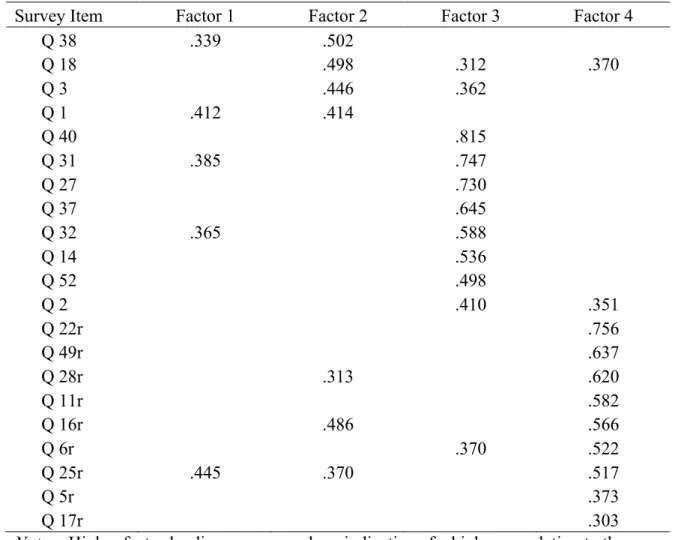
1. Factor Loadings with Varimax Rotation of Positive Behavior Supports
Climate Survey ...55
2. Identified Dimensions from the Teacher-Level School Climate Survey and their Cronbach Alpha Reliability Coefficients ...58
3. Identified Dimensions from the Teacher-Level School Climate Survey and their Cronbach Alpha Reliability Coefficients – Final Research Study ...60
4. Experience Demographics of Number of Surveyed Participants ...64
5. Mean Scores by Factor in the Urban Setting ...66
6. Mean Scores by Factor in the Non-Urban Setting ...67
7. Perception of School Climate and the Corresponding Factor Loading with Item ...68
8. Perception of Collegiality that Supports Learning and Achievement and the Corresponding Factor Loading with Item ...69
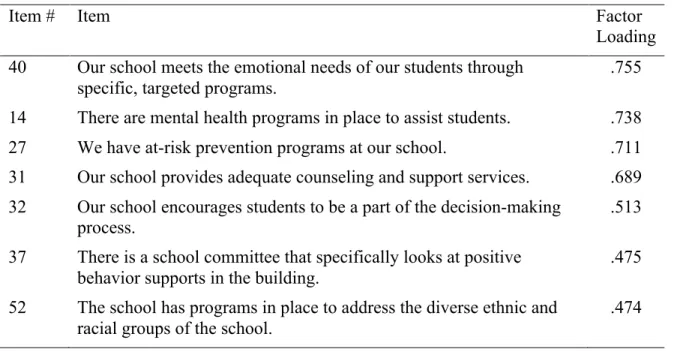
9. Awareness of Positive Behavior Supports at the Building Level and the Corresponding Factor Loading with Item ...70
10. ANOVA Summary Table for Effects of Setting on the Factors of School Climate, PBS and Collegiality ...77
11. Measures of Association Summary Table for Effects of Setting on the Factors of School Climate, PBS and Collegiality ...77
LIST OF FIGURES
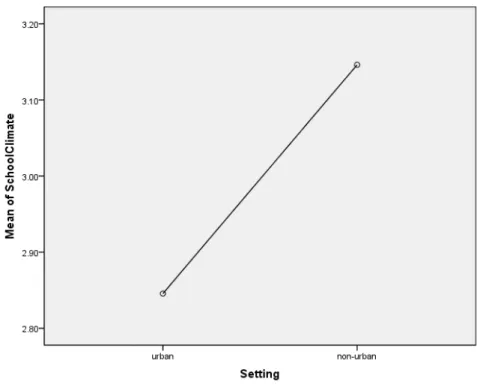
Figure 1. Mean Score of School Climate Perception vs. Setting ... 71
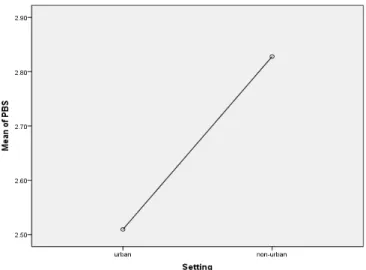
Figure 2. Mean Score of Awareness of Positive Behavior Supports vs. Setting ... 72
CHAPTER I INTRODUCTION
One of the major questions that both urban and non-urban public school districts are faced with is the relationship between the predictors of school climate, student behavior, staff perceptions and the influence these variables have on school climate. School districts are under public scrutiny to produce positive achievement results for all students. Much research suggests that schools that are considered urban are generally considered unsafe, unproductive, and unable to produce students that are competitive in a 21st century global economy. In the major urban centers, student populations are
decreasing, flooding the first-ring school districts. First-ring school districts are the individual school districts that immediately border major urban school centers. Many times what are left in the major urban districts are families that are unable to improve their situation and move out of the school districts that are generally considered failures. One area that has been generally targeted as a method to improve student achievement is the area of school climate.
School climate is generally defined as the social atmosphere of a setting or learning environment in which students have different experiences (Marshall, 2001). In contrast, school culture refers to the reflecting of shared ideas, assumptions, values and
beliefs that give an organization its identity and standard for expected behaviors (Best Practices Brief, 2004). Many school officials generally believe that the ability to improve the climate of the school will produce positive student achievement results.
The Ohio Department of Education (ODE) created classifications for different types of similar districts, referred to as the typology of the school district. ODE utilized several data sources to create these typologies based on similar demographic and
geographic characteristics. The 2013 typology classifications are described below (Ohio Department of Education, 2013):
VI. Typology Code 1 (Rural) – High student poverty and small student population (enrollment 1,366 students).
VII. Typology Code 2 (Rural) – Average student poverty and very small student population (enrollment 1, 032 students).
VIII. Typology Code 3 (Small Town) – low student poverty and small student population (enrollment 1, 676 students).
IX. Typology Code 4 (Small Town) – High student poverty and average student population (enrollment 2,230 students).
X. Typology Code 5 (Suburban) – Low student poverty and average student
XI. Population (enrollment 4,176 students).
XII. Typology Code 6 (Suburban) – Very low student poverty and large student population (enrollment 5,254 students).
XIII. Typology Code 7 (Urban) – High student poverty and average student population (enrollment 4,608 students).
XIV. Typology Code 8 (Urban) – Very high student poverty and very large student population (enrollment 30,647 students).
Various programs in the public school setting have been instituted to positively influence school climate. Inside the school setting, there are a multitude of variables that can affect the efficient running of a school building: school climate, student population, discipline occurrences in a school, specific Positive Behavior Support (PBS) programs, at-risk behavior intervention programs for students, academic intervention programs, staff morale and standardized testing results for a specific school district. These predictors, along with individual human development and behavior, influence school climate. It is essential to understand how these characteristics can impact school climate in an urban and non-urban setting, what policies or procedures can positively impact climate at the building level; and how can these factors can influence staff perceptions towards student achievement.
School change has come in many forms; however, this analysis will focus on the use of PBS in an attempt to compare positive school climate and perceived academic achievement in two distinct settings; urban and non-urban settings. “Positive Behavior Supports (PBS) is a great and worthy idea predicated on the notion that creating a life of quality and purpose, embedded in and made possible by a supportive environment, should be the focus of our efforts as professionals” (Carr & Horner, 2007, p. 3). School Climate in Education
School climate is defined as the social atmosphere of a setting or learning
environment in which students have different experiences. School climate comes in many different forms. A specific school climate can determine a student’s success and redefine
the educational success of the building. The following factors have been identified as influences on school climate: a) Number and quality of student-teacher interactions, b) Student-teacher perception of the school environment, c) Environmental factors, d) Academic performance, e) Feelings of safeness, and f) Feelings of trust and respect for students and teachers. Ultimately these factors significantly affect student achievement and the overall quality of the instruction being given to students (Marshall, 2001).
These factors depend upon the protocols set up by the teachers and administrators (Moos, 1979). The social environment of a school can be divided into three categories: a) Relationships that include involvement; affiliation with others in the classroom, and teacher support, b) Personal growth or goal orientation that includes the personal development and self-enhancement of all members of the environment, and c) System maintenance and system change that include the order of the environment, the clarity of the rules, and the strictness of the teacher in enforcing the rules (Moos, 1979). Although the atmosphere of the school building can determine student academic and social success, this variable is not the only determinate of student behavior and academic success at the building level.
Practitioners struggle to demonstrate that the climate of a school and the achievement of its students are controlled by the atmosphere of the organization. The variables of school climate, student achievement, and building leadership show a
correlation in the context of their impact on schools. Simply stated, stakeholders have the power to determine school climate. These factors, in turn, can directly impact student instruction and achievement.
An initial analysis of the research emphasizes that school climate and the implementation of PBS programming may be specific and singular to each and every school district. Carr and Horner (2007) describes a quality of life (QOL) as the dependent variable that best exemplifies the field of PBS for people with challenging behaviors and problems adapting to new settings. QOL “focuses our attention on the question, ‘What can go right in a person’s life?’ and not on, ‘What are the forms of psychopathology that ruin a person’s life?” (p. 4).
Because school districts are unique in ethnicity, socioeconomic status, and diversity, attaining a prescriptive remedy to improve school climate may be
unattainable. It is clear that there are many factors that influence school climate in the public school setting. What improves school climate in one school district may not be as effective in another school setting. It is evident from the literature review that an
additional investigation into student behavior supports is needed to quantify the
connection between these perceived positive behavior supports, teacher perception, and school climate.
Educators have yet to determine the exact interplay of the factors that predict school climate and their influence upon student achievement. Among other variables, the topic of school climate has had profound implications upon staff retention, school
discipline, and student academic achievement. This research looks to connect various aspects of positive behavior support programming and the impact that these supports and school setting have on various aspects of school culture.
In PBS, programs look to support and “enhance personal competencies (skill development) and systems-change procedures to create environments in which those
competencies can be used to promote a good quality of life” (Carr & Horner, 2007, p. 5). In terms of this analysis, an environment with a good quality of life can be correlated to a positive school climate. “The special mission of PBS involves the detailed analysis and development of support mechanisms that improve QOL, engendering personal
satisfaction and happiness for legions of people and their families who need help now and cannot wait for a cure” (Carr & Horner, 2007, p. 6).
School climate has also been viewed through the lens of a practitioner. This perspective has used experience as a way of communicating best practice approaches to improve the various areas of school culture that directly impact a positive school climate.
The difficulty in measuring school climate is that there is no prescriptive measure to improve school culture through the variables discussed in this analysis. Every child is different. Every staff member has various strengths and professional areas of need. Every school has its own individual identity that impacts students and staff. Ultimately every school has its own set of solutions that are unique to its specific setting. Educators have shown that reflecting on the school climate question through a sociocultural approach can lead practitioners to improve school culture, student achievement, and organizational change. In analyzing the effects of specific positive behavior supports used within an urban setting, administrators and teachers will be better able to control climate within a school building and in turn create an environment that will be conducive to positive student achievement.
Purpose Statement
The purpose of this study is to assess the impact of positive behavior support programming on school climate, specifically in relation to teacher perceptions and
feelings towards positive behavior support programming; to identify the awareness of specific positive behavior supports used within a school setting; to determine the impact of these supports on school climate by measuring teacher attitude and perception about student achievement; and ultimately to determine if there is a statistical significance in staff perception of school climate relative to the school setting of an urban and non-urban school.
Research Focus
At this stage in research, school climate will generally be defined as the social atmosphere of a setting or learning environment in which students have different
experiences (Marshall, 2001). Literature will be reviewed on the following topics in order to understand the impact that these variables have on school climate: school climate in education, common positive behavior and intervention support programming, cultural and structural context of school change, staff perceptions, leadership in the school setting, curriculum and instruction, variables that effect student achievement in the context of school climate and the achievement gap in schools.
Research Questions
School climate research looks to improve student instruction through various mechanisms. What is difficult to predict is the factor that has the most statistical significance upon the measure of school culture. This research will look to answer the following questions:
1. Is there a greater awareness between non-urban and urban teachers with respect to positive behavior intervention and support programming within a school building?
2. Is there a statistically significant relationship between urbanicity and the impact of collegiality on perceived student achievement by teachers among urban and non-urban teachers?
3. How does urbanicity effect teacher perceptions and attitudes of school climate?
Limitations of the Study
The difficulty in measuring school climate is that a researcher needs to be specific as to which predictor is being used to measure school culture. Each piece of literature asks a different question about school climate. Therefore, to get a true picture of how school climate is defined becomes a complicated process. It is obvious from the context of this analysis that school climate is effected and measured from various sources. It is evident from this literature review that an additional investigation into student behavior supports and teacher perceptions in both an urban and non-urban setting is needed to quantify the connection between these perceived positive behavior supports, and teachers’ perception of school climate, and student academic achievement. A clear comparison is needed between these two distinct settings. Key questions remain as to which variable has a stronger influence on school climate in the school setting. Absent from the literature is a clear comparison of teacher climate perceptions and perceived academic achievement within an urban and non-urban school setting.
Summary and Implications for Practice
School climate impacts multiple areas of the school environment. School climate has been defined as the social atmosphere of a setting or learning environment in which
students have different experiences. These experiences depend upon the protocols set up by the teachers and administrators.
Researchers have primarily used a quantitative methodology to research the impact of school climate, student achievement, and building leadership on school climate. Researchers generally used large sample populations to address their research questions that were specifically focused to measure one view of school climate. The difficulty with quantifying school climate is that it is a variable that is determined by other confounding variables. Leadership affects teacher attitudes and the work environment. Teacher attitudes shape how students feel about school and learn while at school. A student’s feelings about school shape how they perform at school. All of these variables impact the measure of school climate as a real and tangible characteristic of a school.
Another difficulty in measuring school climate is that a researcher needs to be specific to which predictor is being used to measure school culture. Each piece of
literature asks a different question about school climate. Therefore, to get a true picture of how school climate is defined becomes a complicated process. It is obvious from the context of this analysis that school climate is impacted and measured from various sources. Key questions remain as to which variable has a stronger influence on school climate in the school setting.
School climate has also been viewed through the lens of a practitioner. This perspective has used experience as a way of communicating best practice approaches to improve the various areas of school culture that directly impact a positive school climate. This literature review has shown that there are five areas that can affect the measurement of school climate: specific positive behavior support programming, staff feelings and
perceptions, climate, curriculum and instruction, and leadership. When analyzing the literature it becomes difficult to specify a research question or problem that pinpoints their specific influence on school culture; there becomes no way to target a problem area and measure the results after the implementation of a solution. The literature gives sound advice for school administrators and practitioners but lack the scientific methodology that is necessary to identify a singular specific correlation from a set of research questions. These articles use experience as a way to guide practitioners to improve school culture and climate. The best strategy approaches used by these authors are ambiguous and cannot be absolutely applied by all practitioners in all school settings. This becomes a challenge when trying to quantify a procedure to improve the overall climate, culture, and achievement of a school district. It seems that there are multiple methodologies needed to enhance school climate in a specific school setting.
An additional difficulty in measuring school climate is that there is no prescriptive measure to improve school culture through the variables discussed in this analysis. Every child is different. Every staff member has various strengths and professional areas
of need. Every school has its own individual identity that impacts students and staff. Ultimately every school has its own set of solutions that are unique to its specific setting.
An initial analysis of the research emphasizes that school climate may be specific and singular to each and every school district. Because school districts are unique in ethnicity, socioeconomic status and diversity, attaining a prescriptive remedy to improve school climate may be unattainable. It is clear that there are many factors that influence school culture in the public school setting. What improves school climate in one school district may not be as effective in another school setting. It is evident from this literature
review that an additional investigation into student behavior supports and teacher perceptions in both an urban and non-urban setting is needed to quantify the connection between these perceived positive behavior supports, and teachers perception of school climate and student academic achievement. The intent of this research is to uncover the common factors of positive behavior supports that influence teacher attitudes about school climate and academic achievement. Statistical analysis will be used as a way to compare each control group environment: urban school setting and a non-urban school setting.
Definition of Terms
Affiliative Leadership: This style emphasizes the importance of team work, and creates harmony in a group by connecting people to each other (Murray, 2012).
Coaching Leadership: This one-on-one style focuses on developing individuals, showing them how to improve their performance, and helping to connect their goals to the goals of the organization (Murray, 2012).
Commanding Leadership: This is classic model of “military” style leadership; probably the most often used, but the least often effective. Because it rarely involves praise and frequently employs criticism, it undercuts morale and job satisfaction (Murray, 2012).
Democratic Leadership: This style draws on people’s knowledge and skills, and creates a group commitment to the resulting goals. It works best when the direction the organization should take is unclear, and the leader needs to tap the collective wisdom of the group (Murray, 2012).
Pacesetting Leadership: In this style, the leader sets high standards for
performance. The leader obsessive about doing things better and faster, and asks the same of everyone (Murray, 2012).
Positive Behavior Supports: Includes a broad range of systematic and
individualized strategies for achieving important social and learning outcomes while preventing problem behavior (Warren et al., 2003).
Productive Change: Change that makes a positive difference in student learning and in how schools operate (Schwahan & Spady, 2002).
School Climate: The social atmosphere of a setting or learning environment in which students have different experiences (Marshall, 2001).
School Culture: Reflecting the shared ideas, assumptions, values and beliefs that give an organization its identity and standard for expected behaviors (Best Practices Brief, 2004).
Social Structure: Social positions, social roles, and networks of social
relationships are arranged in our institutions, such as the economy, polity, education, and organization of the family (Wilson, 2009).
Strategic Alignment: The structure, policies, procedures, and practices of the organization totally support the organization’s vision (Schwahan & Spady 2002).
Typology: The Ohio Department of Education (ODE) created classifications for different types of similar districts (Ohio Department of Education, 2013).
Visionary Leadership: This style is most appropriate when an organization needs a new direction. Its goal is to move people towards a new set of shared dreams (Murray, 2012).
CHAPTER II LITERATURE REVIEW
This section contains a review of the literature describing the different variables that affect school climate within a school building or school district. The purpose of this study is to measure the impact of positive behavior supports on school climate,
specifically in relation to teacher perceptions and feelings towards positive behavior support programming; to identify the awareness of specific positive behavior supports used within a school setting; to determine the impact of these supports on school climate by measuring teacher attitude and perception about student achievement; and ultimately to determine is there a statistical significance in staff perception of school climate relative to the school setting of an urban and non-urban environment.
This section will be divided into the following subsections: a) school climate in education, b) common positive behavior support programming, c) staff perceptions and feelings, d) communication in the school setting, e) curriculum and instructional
leadership, f) variables that effect student achievement, and g) the achievement gap in schools.
School reform can mean many different things to different observers. School reform does not necessarily have an accurate and precise definition across disciplines.
Using school reform as the platform of change, educators must differentiate between school culture and school climate. The Best Practices Brief (2004) defines school culture as reflecting “the shared ideas, assumptions, values and beliefs that give an organization its identity and standard for expected behaviors” (p. 1). “School climate reflects the physical and psychological aspects of the school that are more susceptible to change and that provide the preconditions necessary for learning to take place” (Best Practices Brief, p. 2, 2004).
For the purpose of this research, the author will use school climate as the indicator of school change and student achievement. School reform has a common message;
improve student instruction through various mechanisms. What is difficult to predict is the factor that has the most statistical significance upon the measure of school climate. School Climate in Education
School climate is defined as the social atmosphere of a setting or learning
environment in which students have different experiences. School climate comes in many different forms. A specific school climate can drastically determine a student’s success and redefine the educational success of the building. The following factors have been identified as influences on school climate: a) Number and quality of student-teacher interactions, b) Student-teacher perception of the school environment, c) Environmental factors, d) Academic performance, e) Feelings of safeness, and f) Feelings of trust and respect for students and teachers. Ultimately these factors significantly affect student achievement and the overall quality of the instruction being given to students (Marshall, 2001).
These experiences depend upon the protocols set up by the teachers and administrators (Moos, 1979). The social environment of a school can be divided into three categories: a) Relationships that include involvement, affiliation with others in the classroom, and teacher support, b) Personal growth or goal orientation that includes the personal development and self-enhancement of all members of the environment, and c) System maintenance and system change that include the order of the environment; the clarity of the rules, and the strictness of the teacher in enforcing the rules (Moos, 1979). Although the atmosphere of the school building can dramatically determine student academic and social success, this variable is not the only determination of student behavior and academic success at the building level.
Specific characteristics of schools, such as the physical structure of a school building and the interactions between students and teachers, are the two factors that can affect and influence the broad concept of school climate. A specific school climate can drastically determine a student’s success and redefine the educational success of the building (Marshall, 2001).
Research shows that school climate can affect many areas within a school. Some examples of specific areas that can be influenced by a positive school climate are: student discipline referrals, school safety, parental involvement, extra-curricular programs for students, student-teacher perceptions, student-student relationships, student-teacher relationships and transition of new students into school. Previous school climate research supports the conclusion that many factors contribute to the complex identity of a school (Marshall, 2001).
School climate characterizes the organization at the school building or classroom level. Climate can vary from building to building, but overall has a specific atmosphere within that structure (Best Practices Brief, 2004). School climate has been linked to increasing academic achievement, along with, being a “potential solution to problems such as bullying, inter-student conflicts, suicide, character education, and moral education (Best Practices Brief, p. 2, 2004).
A study conducted in 2009 determined the academic classification of school districts in Texas. Schools were classified as exemplary, recognized and acceptable differ in their school climates, as measured by the 10 dimensions of the Organizational Health Inventory. The sample was comprised of 29 schools located in a large suburban school district in southeast Texas (Busch, Macneil, & Prater, 2009). Teachers in each school used the OHI to rate the overall climate of their school. In total, 1,727 teachers were surveyed in the study. The results indicated that each of the schools that demonstrated higher student achievement also demonstrated healthier school climates than schools with lower academic ratings. This difference could only be found to be statistically true for exemplary and acceptable schools. No statistical significance could be found between exemplary schools and acceptable schools or recognized schools and acceptable schools (Busch et al., 2009). How have these schools officials increased climate? How can this method be modeled in other school districts?
Freiberg (1998) notes, “the interactions of various school and climate factors can create a fabric of support that enables all members of the school community to teach and learn at optimum levels. School climate can be a positive influence on the health of the learning environment or a significant barrier to learning” (p. 5).
Practitioners struggle to demonstrate that the climate of a school and the achievement of its students are controlled by the atmosphere and the culture of the organization. The variables of school climate, student achievement, and building leadership show a correlation in the context of their impact on schools. Simply stated, stakeholders have the power to determine school culture and climate. These factors, in turn, can directly impact student instruction and achievement.
Educators have yet to determine the exact interplay of the factors that predict school climate and their influence upon student achievement. Among other variables, the topic of school climate has had profound implications on staff retention, school
discipline, and student academic achievement. The following section will look to connect various aspects of positive behavior support programming and the impact that these supports have on various aspects of school culture.
In the December 2004 issue of Best Practices Briefs, the brief contends “school climate reflects the physical and psychological aspects of the school that are more susceptible to change and that provide the preconditions necessary for teaching and learning to take place” (p. 2). In addition, the brief looks at school climate in terms of four parts of the school environment: physical environment, social environment, affective environment, and academic environment. It is the contention of this brief that each factor can either support learning or impede learning for students. The four aspects of school climate are:
• A physical environment that is welcoming and conducive to
learning.
• An affective environment that promotes a sense of belonging and
self-esteem.
• An academic environment that promotes learning and
self-fulfillment (Best Practices Brief, 2004, p. 3-4).
Each element is briefly summarized below to outline specific building-level examples and practices:
Physical Environment Supports Learning:
•School building contains a limited number of students. •Students feel safe and comfortable.
•Classrooms are orderly.
•Instruction area is appropriate for all users.
Impedes Learning:
School building contains a large number of students.
• Students are harassed by other students. • Classrooms are disorganized.
• Classrooms are in rooms not intended for that use. Space is overcrowded.
Social Environment Supports Learning:
• Interaction is encouraged.
• Decisions are made on-site, with the participation of teachers. • Staff are open to students’ suggestions.
Impedes Learning:
• Interaction is limited.
• All decisions are made by a central administration or principal.
• Students have no role in determining classroom or building activities and
decisions.
• Bullying and conflicts are ignored.
Affective Environment Supports Learning:
• Interaction of teachers and staff with all students is caring, responsive, supportive,
and respectful.
• Students trust teachers and staff.
• Teachers, staff and students are valued and respected. • Parents perceive the school as warm, inviting and helpful.
Impedes Learning:
• Interaction of teachers and staff is generally distant and minimal. • Morale is low among teachers and staff.
• The school belongs to the majority of the students. • Teachers and staff feel unappreciated.
Academic Environment Supports Learning:
• There is an emphasis on academics, but all types of intelligence and
• Progress is monitored regularly.
• Teachers are confident and knowledgeable.
Impedes Learning:
• Academic performance is downplayed or not rewarded. • There is minimal or no periodic assessment.
• There is little communication about results of assessments.
• Rewards and praise are minimal (Best Practices Brief, 2004, p. 3-4).
Common Positive Behavior Support Programming in Schools
School climate is defined as the social atmosphere of a setting or learning
environment in which students have different experiences. School climate comes in many different forms. A specific school climate can determine a student’s success and redefine the educational success of the building (Marshall, 2001).
Warren et al. (2003) states that “positive behavior support includes a broad range of systematic and individualized strategies for achieving important social and learning outcomes while preventing problem behavior” (p. 80). The organizational application of these positive supports for students lead to the following outcomes: (a) improved
academic achievement (b) enhanced social competence, and (c) safe and learning teaching environments (Bohanon et al., 2006, p. 131).
Colvin’s (1991) article describes nine components of schoolwide positive behavior supports: a) clearly stating the purpose of school-wide discipline, b) clearly stating and posting school wide expectations, c) creating schoolwide structures to reinforce demonstrations of expected behaviors, d) creating schoolwide structures to teach expected behaviors, e) clarifying behaviors that are managed by staff and those that
are referred to the office, f) providing opportunities for staff to work together to address persistent minor behavior, g) offering a continuum of structures to address serious behavior and h) developing record-keeping procedures to readily track student behavior.
Gislason (2009) conducted a three-week qualitative study at the School of Environmental Studies (SES), a public high school with an environmental studies focus. Students and staff were interviewed as part of the study in order to determine if the school’s open plan architecture positively contributes to the social climate at SES. The interviews established that the students felt more socially accepted at school and better enjoyed their time at school in comparison with other high school they attended.
In recent years, the Journal of Positive Behavior Interventions (JPBI) has been established for the purpose of creating a dialogue to share and discuss a best practices approach to positive school change. This journal, through various research efforts and dialogues, has published research that has influenced “government priorities as seen in the funding of various PBS initiatives on schoolwide positive behavior support, early intervention, home-school collaboration, and many other projects (Carr & Horner, 2007, p. 4).
Positive behavior supports has a wide variety of implementation within the structure of a school. These supports have generally been tied to programs that are in place within a school setting. These programs have been linked to funds that are directly appropriated for the implementation of PBS within the school setting.
In every school there are groups that are isolated because of factors of race, socioeconomic status, ethnicity and culture. Markey et al. (2002) describes a specific PBS program that looked to bring training programs to urban parents in New Orleans,
Louisiana. This program was a focused “training curriculum and train-the-trainer model developed by Pyramid Parent Training Community Parent Resource Center that brings PBS best practices identified by leading PBS researchers to parents” in an urban school setting (p. 218). Parents were given information on how to collect data on their children’s strengths, likes and dislikes, as well as a functional behavior assessment in the
development of a PBS plan. Logic would suggest that parents would not have access to this specialized training without the direct funding and involvement of the PBS training program.
Smith and Heflin (2001) describe the Behavioral Intervention Program (BIP), “a project funded by the state of Georgia since 1991, provides community-based technical assistance to school systems for students with developmental disabilities and severe problem behaviors” (p. 39). The goal of this program is to establish local school expertise to conduct behavior assessments in order to promote positive long-term behavior
interventions for students with behavior problems. Outcomes of this program have included reduced rates of impeding behavior, increased student learning of strategies intended to improve staff-student interactions, and a decreased use of behavior intervention plans for students. The BIP currently funds full-time and part-time staff members to implement this initiative within school districts in Georgia. We can see in this example, that again, funding can directly be correlated to the wide-spread
implementation of a specific PBS program.
Carr and Horner (2007) suggests that at the heart of the PBS initiative is a civil rights issue of students having the ability to access school curriculum. “The PBS approach has been codified within the law, specifically the Individuals with Disabilities
Act (IDEA) that mandates PBS for all children with disabilities” (p. 4). Programming such as Georgia’s BIP and Louisiana’s Operation Positive Change, has shown the ability to make improvement in student behavior through staff and parental training. It is
important to note that the use of PBS in schools can allow students to access curriculum, it is not a mandate covered under IDEA. Questions remain as to what happens when the funding for PBS is no longer available to school districts. Carr and Horner (2007) suggest the “need to build an infrastructure to ensure the future viability of the PBS approach by focusing on preservice issues (e.g., university-based courses in PBS), inservice
development (e.g., cadres of knowledgeable professionals who can function effectively in the community), and organizational change (p. 4). To professionally train our educators and parents in proper PBS intervention techniques could lead to a sustained approach to positive behavioral change for our students; this sustained approach can lend itself to improved school climate and academic achievement.
The Impact of Staff Perceptions and Feelings on School Climate
The purpose of this section is to clearly define the impact that staff perceptions have on school climate. There are many observable indicators of school climate
(discipline cases, attendance rates, achievement results, etc.), however, “concealed within and throughout the observable and measureable barriers to educational effectiveness may be the more subtle presence of fear or distrust in working relationships (Rafferty, 2003, pp. 49-50).
Beaudoin (2011) presents the topic of teacher and administrator perceptions, feelings and attitudes towards school and how the expression of these feelings can directly impact staff-student relationships. The author conducted a survey of 200
educators in California in 2004 and 2009 regarding the ideas of fostering a positive school environment, teacher feelings about school and feelings of self-worth while at school. Results of the survey indicate that staff members that engage in two specific behaviors can directly influence their personal and professional attitudes towards students and other staff members. These attitudes directly affect school climate. Staff members that engage in problem-saturated conversations often find it difficult to become positive and generally take those negative attitudes back into the classroom. A school climate of gossip and cliques greatly interferes with trust, collaboration and openness in a school. The author suggests that there are three ways to combat a negative school climate: (a) Contrast intentions and effects instead of focusing on problem-saturated conversations, more energy should be put into solutions and positive, professional behavior towards other staff and students, (b) Consider how to use power in the school. This is particularly valuable for both staff and administrators, and (c) Foster appreciation for what teachers do on a daily basis. These behaviors directly influence positive school climate and positive teacher-student interactions (Beaudoin, 2011).
Mason (1998) suggests through various sources that there are some questions as to whether or not urban field experiences for pre-service teachers enhance their
motivation to teach in inner-city schools. Mason conducted the study for the purpose to assess changes in students' attitudes towards inner-city teaching resulting from their participation in a field-based practicum in an urban elementary classroom. Students (N=176) in this study were compared to a similar group of peers in a non-urban setting.
“The sample was predominantly female (97 percent) with less than five percent of the participants in the program identifying themselves as belonging to a minority
group.” Students were asked to complete a questionnaire to assess their attitudes and perceptions from their field experience. Most pre-service teachers used in this study attended elementary and high schools in predominantly white, middle-class communities. The author focused on three research questions: a) Do pre-service teachers become more positively disposed toward teaching in an urban setting as a result of an urban field experience?, b) Do pre-service teachers' attitudes toward inner-city, low-income, and minority students improve as a result of completing an inner-city field experience?, and c) How do attitudes toward low-income and minority students of pre-service teachers who complete an inner-city field experience compare with those who complete one in a suburban school? Results indicate that the effect of the field experience on interest in urban teaching was positive overall for all participants. Questionnaire responses suggest that the inner-city experience had an overall positive effect on attitudes toward urban schools. The author demonstrated that exposure to urban classrooms did not appear to negatively impact prospective teachers and their desire to teach in an urban setting (Mason, 1998).
The Kalamazoo Promise was announced in the fall of 2005, offering free college tuition at any public state college or university for graduates of the district who have gained acceptance to a post-secondary institution. This program was funded through anonymous donors, and a federally funded evaluation is currently underway to examine potential changes that result from its implementation. This evaluation research draws from multiple data sources including interviews with educators, surveys and interviews with students in the school district. Findings from the post-evaluation of this study indicate that school climate has improved since the announcement of the program.
Students generally perceived the promise as a good thing, but were generally concerned with how teachers would react to this scholarship opportunity. Reports were often mixed, with many reservations about the prospect for quick changes in the district due to the Promise (Miron, Jones, & Kelaher-Young, 2011).
The articles referenced attempted to find significance in staff feelings as a measure of school climate and the implication these feelings have on the school surroundings. The results generally support the position that staff feelings and attitude can directly impact school climate, student achievement and teacher interest in inner-city employment opportunities.
The Impact of Communication on School Reform
Leaders have the difficult job of both assessing and changing school culture. Culture change by definition alters a wide variety of variables within the school setting. These relationships are at the very core of the institutional stability. Any reform should be approached with sensitivity and concern for others. The impact that leaders have upon the school climate has been measured and shown to be an influential change agent within the school organization.
Linn, Sherman, and Gill (2007) conducted a qualitative analysis in which the researchers explored the meaning of the principalship through interviews conducted at the end of a university principal preparation program. The interviews conducted identified four specific themes regarding qualities of the principal as an institutional leader: a) protection and nurturing, b) skill, adventure, or problem solving, c) challenge, risk, and threat; and d) chance and luck (p. 161).
Leadership is less about the needs of the leader, and more about the needs of the people and the organization being lead. Leadership styles should be adapted to the particular demands of the situation, the particular requirements of the people involved and the particular challenges facing the organization (Murray, 2012).
Goleman, Boyatzis and McKee (2002) describe six different styles of leadership. The most effective leaders can move among these styles, adopting the one that meets the needs of the moment. These leadership styles can all become part of the leader’s
repertoire:
• Visionary Leadership: This style is most appropriate when an organization
needs a new direction. Its goal is to move people towards a new set of shared dreams.
• Coaching Leadership: This one-on-one style focuses on developing
individuals, showing them how to improve their performance, and helping to connect their goals to the goals of the organization.
• Affiliative Leadership: This style emphasizes the importance of team work,
and creates harmony in a group by connecting people to each other.
• Democratic Leadership: This style draws on people’s knowledge and skills,
and creates a group commitment to the resulting goals. It works best when the direction the organization should take is unclear, and the leader needs to tap the collective wisdom of the group.
• Pacesetting Leadership: In this style, the leader sets high standards for
performance. The leader obsessive about doing things better and faster, and asks the same of everyone.
• Commanding Leadership: This is classic model of “military” style leadership
– probably the most often used, but the least often effective. Because it rarely involves praise and frequently employs criticism, it undercuts morale and job satisfaction (p. 1).
Toll (2012) analyzes six key steps in her theory of learning leadership.
Traditionally, principals have been expected to be the instructional leader of his or her building, responsible for the “planning, and evaluation of instruction (p. 50). Toll argues that principals must now be learning leaders that focus “on what is learned and how it is learned (p. 50). Using the context of school climate, expectations in teacher learning can easily influence the school culture of a building. This impact can have both a positive and negative influence in the school setting. The belief that “all teachers are learning, leads the principal to behave in a supportive rather than corrective manner, and it also compels the principal to pay closer attention in order to observe the learning that is taking place (p.50).
Price (2012) determined that the principals’ relationship with their teachers affects satisfaction, cohesion, and commitment levels for both the principal and teacher. “Among principals, these positive work relationships improve job satisfaction, cohesion
perceptions, and commitment levels” (p. 40). These relationships ultimately affect the school environment. The relationships of principals, as the school leader, strongly and directly affect teachers’ attitudes, which is one variable that can determine the school climate of a building.
Rafferty’s (2003) study described “the relationship between school climate and communication. More specifically it describes teachers’ willingness to upwardly
communicate about school-related issues and concerns in relation to school climate (p. 50). Rafferty’s findings suggest that there was a more upwardly open communication of relevant information from the teacher to the principal in schools with an open school climate. Teachers that worked in schools that were categorized as having a positive school climate were more likely to positively or upwardly communicate important information to the principal.
Smith and Eisterhold (2010) present ten ways to help improve teacher retention in the schools. The author presented the ten recommendations from a theoretical and best practices approach. The author recommended the following steps to prevent teacher turnover: a) reserve challenging students for your most veteran teachers, b) support staff with resources for their classrooms, c) emphasize teamwork, d) schedule meetings that are relevant and meaningful, e) promote social activities for the teaching staff, f) stress professional development, g) administration should provide both formal and informal feedback frequently, h) promote positive family relationships, i) limit meaningless
paperwork, and j) be appreciative of what the teacher does inside the classroom (Smith & Eisterhold, 2010).
A recent analysis by Schwahan and Spady (2002) present a best strategies approach to organizational change in schools. The authors theorize that only when the organizational structure and staff are aligned with the school vision can productive and exciting change happen for children. The authors drive home their point with two key definitions that they believe are the main reasons true organizational change occurs. Productive change is defined as change that makes a positive difference in student learning and in how schools operate. Strategic alignment occurs when the structure,
policies, procedures, and practices of the organization totally support the organization’s vision. The authors have conducted various professional development training with various school districts and offer five tips to producing true positive organizational change: a) stakeholders need to believe there is a true reason to change, b) stakeholders need ownership into any organizational change, c) leaders need to model the change for all stakeholders, d) people need to see the vision and proposed end product of the change, and e) leadership needs to support all stakeholders in the process of change (Schwahan & Spady 2002).
Weber (2008) suggests a best practices approach for school leaders to establish and maintain a positive school climate. Leadership experts describe successful
organizations as those that are guided by a leader who exhibits appropriate behavior and vision for the organization and its employees. The author uses this narrative to discuss how establishing a positive school climate by leadership can dramatically influence school personnel, students and parents. Weber maintains that fighting negative attitudes through self-reflection has been a key to his success throughout his career (Weber, 2008).
Whitaker’s (1997) narrative focuses on the effect the principal has on the
development of the building and the instructional goals of the building. The author uses previous research in her narrative to discuss the effect the principal has on students and staff. Through previous research, the author suggests three qualities that an effective instructional leader should have: a) Instructional leaders should be people orientated, b) Effective instructional leaders function within the network of other principals, and c) Effective instructional leaders have mentors to guide them. The author references research that identifies ways instructional leaders can promote higher levels of student
achievement: a) Being a resource provider, b) Modeling beliefs, c) Being a visible
presence and d) Providing interaction and feedback to staff. These practices are supported by research from Foriska (1994) that instructional leaders are “critical to the development and maintenance of an effective school” (Whitaker, 1997).
The Impact of Curriculum and Instruction on School Reform
Benjamin Bloom, a psychologist in the education department at the University of Chicago, published the taxonomy of objectives in various 'domains', including the cognitive, affective, and psycho motor. Bloom reduced learning to its core and
systematically criticized age-graded instruction and current traditional methodologies of teaching. There was an obvious public discontent with the state of the public school system and Bloom sought to change the dynamics of student learning and teaching (Bloom, 1981).
Progressivism attempted to do just that – meet the needs of a diverse and ever-changing student population. Throughout the decades, various new and innovative methodologies have been developed to meet the needs of our diverse students.
Instructional strategies such as Robert Marzano’s Nine Essential Instructional Strategies provide an example of how educators have been driven towards innovation and away from a traditional teaching pedagogy (Reese, 2005). Such pedagogies have been instituted in an effort to produce change in the form of positive student achievement through an influence on school culture. In essence, curriculum and the methodologies used to teach students underwent a radical change both in theory and in practice.
Burris and Welner (2005) suggest that students on either side of the achievement gap can achieve through a relevant and rigorous curriculum. The context of the article is a
narrative of the first-hand experiences and best practice strategies that closed the achievement gap between white students and minority students through an
implementation of high-track curriculum in a New York City Public School. The school district systematically eliminated all low-track courses; ultimately aligning all courses with the end of the course Regents exams. This high school was able to transition students into this curriculum through instructional support classes and carefully monitoring the progress of struggling students. The district's implementation of
heterogeneous groups across all curriculums was a key step to closing the achievement gap within the school district. Various groups of students were monitored, all showing similar results. The implementation of detracking across student populations was a key to increasing student achievement measured through the passage rates of the New York State Regents Exams (Burris & Welner, 2005).
Hoerr’s (1996) work suggests that instructional leadership is not the sole responsibility of the building principal. He suggests that teachers need a shared leadership responsibility for instructional development and change. With the ever- increasing demands of the principal position, a building leader needs to empower the teaching staff to take on the new role of being a teacher leader. The author suggests five strategies for building leaders: a) Allow for sufficient time, b) Invite staff to participate; do not command them to do so, c) Share power and allow staff to make decisions, d). Principals need to be a member of the team and e) Focus on what is important to the teachers (Hoerr, 1996).
Leone's (1999) article argues that the current model of alternative schools is punitive and often referred to as a last chance model for students that have been removed
from the traditional school setting because of behavioral difficulties in the traditional school setting. The author states that alternative education needs to become a meaningful alternative to traditional, contemporary public schooling. The author uses research from Schorr (1997) to summarize the elements of a successful alternative education program. A successful alternative education program should have the following: a) Clear focus on academic learning, b) Ambitious professional development, c) Strong level of autonomy and professional decision making and d) Sense of community. The authors suggest that these characteristics serve as a foundation for successful alternative education programs. In the end, all students should have the option of enrolling into these programs and these programs should not be limited to students that experience extreme difficulties in the traditional public school setting (Leone, 1999).
Variables that Predict Academic Achievement
Academic achievement can most directly be related to student grades, student grade point average, student entrance exam scores (ACT, SAT) or other standardized state testing measures. The federal No Child Left Behind (NCLB) Act of 2001 had left states the unenviable task of measuring student achievement through the lens of standardized testing. Though legislation has brought about change within the federal landscape of testing, states are still left with high-stakes testing as a means of measuring student achievement.
The implementation of No Child Left Behind (NCLB) has drawn major attention to the achievement gap between the performances of students from different racial, ethnic or socioeconomic backgrounds. With the advent of the Race to the Top initiative under the Obama administration, continued efforts have been made towards closing the ever
widening achievement gap between African-American and Caucasian students. School administrators, teachers, and researchers have been looking to identify best practices in an effort to close the achievement gap. For the purposes of this analysis, the achievement gap is defined as measuring the performance of White and minority students on tests such as the National Assessment of Educational Progress, end-of-grade, or end-of-course examinations (McLauchlin, 2007, p.2).
Student role performance includes the behaviors centered on how students perform in their positions as students and how well students meet the expectations and obligations based on their ascribed and achieved roles (Wright, 2006). Students perform many roles in their positions including race, sex, disabilities, homework completion, and extracurricular activities. The role of race can be detrimental to the academic achievement of minorities (Fordham & Ogbu, 1986). Traditionally this has been a characteristic that African-American students have not excelled in. However, Black students believe they have a cultural responsibility to uphold, which influences their ability to achieve academically because academic achievement may be viewed as a "White" goal; Black students may behave in a way so as not to be labeled as "acting White" (Fordham & Ogbu, 1986). Black males, specifically, either have an inability or lack of motivation for performing their roles as students within traditionally "White" school settings (McLauchlin, 2007.)
Clotfelter, Ladd, and Vidor (2007) analyzed the relationship between teacher credentials and student achievement in math and reading. Data were collected from the records of approximately 1.8 million students (grades 3-5) in the North Carolina Education Research Data Center. The data collected represented student information,
specifically standardized test scores in reading and mathematics, and teacher data from the 1994/1995 school year to the 2003/2004 school year. The research employed a multiple regression analysis in which student performance on standardized tests in reading and mathematics was linked to specific teacher credentials. Results from this analysis concluded that teacher credentials and education were positively correlated with student achievement. The results demonstrated that there was a great correlation for mathematics than for reading.
Research by Harris and Sass (2010) studied the effects of education and on the job training and its specific correlation to student achievement. Data was collected from all public schools in Florida, specific to students in grades 3-10 in the content areas of math and reading. Through this database, the authors were able to match specific students to their classroom teacher at all grade levels for the school years 1999-2000 through 2004-2005. Additionally, the student data was also able to provide information specific to the amount of time each student spent in each teacher's classroom. A multiple regression analysis model was performed for each predictor variable specific to the student data. Results indicate that teacher output improves with experience for both elementary and middle school teachers. The data suggests high school teachers were not affected by this model in relation to productivity. Additionally, it appears that formal professional development did not have an effect on teacher productivity.
Funkhouser (2009) looked to analyze the effects of classroom size reduction and how this specifically influenced student achievement in the form of test performance at the second-grade level. Data was collected from the State of California's Department of Education database between the school years 1997-1998 through 2003-2004. Funkhouser