Santa Clara Law
Santa Clara Law Digital Commons
Faculty Publications Faculty Scholarship
8-6-2012
Reforming Software Patents
Colleen Chien
Santa Clara University School of Law, [email protected]
Follow this and additional works at:http://digitalcommons.law.scu.edu/facpubs Part of theLaw Commons
This Article is brought to you for free and open access by the Faculty Scholarship at Santa Clara Law Digital Commons. It has been accepted for inclusion in Faculty Publications by an authorized administrator of Santa Clara Law Digital Commons. For more information, please contact [email protected].
Automated Citation
Colleen Chien,Reforming Software Patents(2012),
REFORMINGSOFTWAREPATENTS1 Colleen Chien2
Abstract
While many believe the patent system has hit a historic and unprecedented low, discontent with patents is nothing new. In 1966, a Presidential Commission recommended prohibiting software patents because of the PTO’s inability to vet them. In 1883, the Supreme Court railed against “speculative schemers who make it their business to watch the advancing wave of improvement and gather its foam in the form of patented monopolies, which enable them to lay a heavy tax.” In 1836, the Ruggles Report documented how lax patent standards, “encourag[ed] fraudulent speculators in patent rights, deluging the entire country with worthless monopolies, and laying the foundation for endless litigation.” In short, the problems that now confront the patent system are well-known. What is less well-known, however, is that many of the very reforms being considered - abolishing certain types of patents, fee-shifting, and an increasing maintenance fees for example - have been called for and in many cases tried before, under similar and different conditions. In fact, agrarian design patents were “abolished,” according to a recent historical account, but by tweaking the standard for granting a design patent, rather than by outlawing patents relevant to a specific industry. Fee-shifting has been the norm in many European countries and in certain US contexts – and the theory and evidence indicate that it works best when low-odds cases can be identified ahead of time and the loser is not judgment proof – predicates that, given the unpredictability of patent litigation and the use of shell companies to bring patent litigation, cannot always be satisfied. During this historic
moment, what can the past teach the present and the future about how to solve the software patent crisis? Based on my research, quite a lot. History teaches away from broad based
legislative reform and towards, narrowly tailored, incremental reform. For example rather than trying to enact an independent invention defense, patent reformers could consider bolstering protection for users, which are in some situations protected in other countries and in the US in the case of medical method patents, by encouraging courts to stay cases brought against them rather than the manufacturer. Rather than pushing for new changes to the law, patent targets could pool information and prior art and capture economies of scale in taking advantage of the multiple ways a patent can be challenged after issuance. These and other suggestions and
available historical and empirical evidence about what has been tried, what has worked, and what has not, are detailed in this paper.
1
© 2012 Colleen V. Chien, [email protected]. Final draft to be published in 2012 Houston Law Review. Thanks to David Olson, Eric Goldman, Michael Risch, Mark Lemley, and David Schwartz, and participants and audiences at the 2012 Santa Fe IP Law Institute, 2012 Salishan Conference, 2012 Princeton “Patent Success or Failure” conference, and Stanford Law School for their comments, Lex Machina, RPX Corporation, and Gazelle Technologies for sharing data, and to Gerald Wong, Lee-Ann Smith Freeman, Nicole Shanahan, and Kevin Isaacson for their excellent research assistance, and Dirk Calcoen for his support.
2
2 TABLE OF CONTENTS
INTRODUCTION
SECTION I:WHAT’S THE PROBLEM?
A. Pervasive and Inadvertent Infringement of Patents Covering the Basic Building Blocks of the Economy
B. Specialized and Invulnerable Patent Plaintiffs
C. Settlements Driven By the Cost of Avoiding Legal costs and Remedies, Rather Than the Economic Value of The Patent
SECTION II:HOW THE CRISES AROSE AND RESOLVED IN THE PAST
A. How the Crises Arose B. How the Crises Resolved
1. What Didn’t Work: Broad, Substantive Legislative Proposals Across the Patent System 2. What Worked: Narrowly-Tailored, Specific Reform
a. Abolishing Agrarian Patents
b. Courts, Self-Help Through Railroad Associations, and Challenging Railroad Patents
SECTION III:IMPLICATIONS FOR CURRENT PROPOSALS
A. Problem-Framing and Designing Patent Reform B. Proposals to Reduce the Number of Patents 1. “Abolish software patents”
a. The Definitional Issue
b. Towards a Working Line c. Circumvention
d. How Abolishment Was Accomplished
2. Tweaking Obviousness
a. KSR’s Impact b. Transaction Costs
3. Increasing Maintenance Fees
a. Broad-Sweeping Reform
4. Better Patent Examination
a. Patent Legacies
C. Proposals to Bolster Defenses and Decrease Remedies 1. An Independent Invention Defense
a. Broad-Sweeping Change
b. Towards An Innocent User Defense to Software Patent Infringement?
2. Injunctions Reform at the ITC
D. Proposals to Reduce the Incentive to Bring Nuisance Suits 1. Increased use of Fee-Shifting/Sanctions in Patent Cases
a. Does Fee-Shifting Deter Frivolous Litigation? Theory And Evidence b. Shifting Fees in Patent Cases
c. The Differential Impact of Fee-Shifting on Different Patent Trolls and Tactics d. The Definitional Challenge- Identifying Patent Nuisance Suits
e. Scope
f. Circumvention and Avoidance
i. Circumvention and the Misjoinder Rules 2. Decreasing the Costs of Litigation
a. Judicial Innovation b. Market-Based Innovation
E. Self-Help
1. Demonstration Effects 2. Farmer and Railroad Groups SECTION IV:CONCLUSION
3
INTRODUCTION
The patent system is in crisis. Though supposed to “promote the progress of [] the useful arts,”3 the patent system is routinely now blamed for doing the opposite. The increasingly widespread, legal practice of buying or developing patents and using them for assertion and licensing,4 rather than for making products5 (“patent trolling”) is typically blamed.
These developments have led the mainstream press and lawmakers to compare patent enforcement to “shakedown” efforts by organized criminals.6 Patent trolling is now being seen as a business model to be outlawed, or at least regulated.7 Proposals to abolish software patents have become mainstream,8 and patent holders have been excoriated in the halls of Congress for suing technology users like the Red Cross for soliciting charitable contributions on the Internet9 and going after companies like Costco and McDonald’s.10 Patent wars between competitors have raised a host of other issues. In 2012, Google spent $12.5B to buy Motorola Mobility and its patents,11 and $5.2B in 2011 on R&D.12 In 2011, Apple spent $2.4B on R&D13 but contributed
3
See U. S. Const., Art. I, §8, cl. 8. 4
For example, Colleen Chien, NPEs and the ND California, Address at the Northern District of California Judicial Conference 9 (April 26, 2012), (reporting data provided by RPX Corp. that indicates that 55% of new suits from January 1, 2012 to April 8, 2012 have been brought by companies that do not practice their patents – non-practicing entities (“NPEs”)).
5
Colleen V. Chien, From Arms Race to Marketplace: The Complex Patent Ecosystem and Its Implications for the Patent System, 62 HASTINGS L.J. 297, 328 (2010) (PAEs are “entities . . . focused on the enforcement, rather than the active development or commercialization of their patents.”), accord, FTC The Evolving IP Marketplace: Aligning Patent Notice and Remedies with Competition 8 n.5 (Mar. 2011), available at
http://www.ftc.gov/os/2011/03/110307patentreport.pdf. Unlike the more popular term “NPE,” “PAE” excludes startups and others who seek to commercialize their technology.
6
See, e.g., Ryan Davis, Cisco, Others Tell Lawmakers to Keep NPEs Out of ITC, Law360 (July 18, 2012),
http://www.law360.com/ip/articles/360428?nl_pk=bbc3d26f-4bfd-4165-97b0-226125cbf024&utm_source=newsletter&utm_medium=email&utm_campaign=ip (quoting Rep. Zoe Lofgren as referring to patent enforcement as a “shakedown situation.”), see also remarks of Chris Sacca in This American Life, Episode 441: When Patents Attack! transcript available at
http://www.thisamericanlife.org/radio-archives/episode/441/transcript. 7
Introductory remarks of Representative Goodlatte, Hearing on the ITC and Patent Disputes before the House of Representatives Judiciary Committee on Intellectual Property, Competition, and the Internet Subcommittee. July 18, 2012 <add link to transcript when available> <add parenthetical re: same>.
8
See, e.g., Oversight of the United States Patent and Trademark Office: Implementation of the Leahy-Smith America Invents Act and International Harmonization Efforts, Comments of Sen. Dianne Feinstein, June 20, 2012 <add link, parenthetical to same>.
9
157 CONG.REC. H4480, H4496 (Statement of Rep. Crowley) (legislative history in the House of the America Invents Act), available at http://www.uspto.gov/aia_implementation/20110623-debate_hr_1249_h4480-h4505.pdf. (hereinafter referred to as “House AIA History.”) Ziarno v. Am. Red Cross, No. 99 C 3430 (N.D. Ill. June 28, 2001). 10
House AIA History, supra note ___ at H4496 (statement of Rep. Grimm). See, e.g., Kelora Systems, LLC v. Target Corporation et al., (N.D. Cal., Aug. 29, 2011, C 11-02284 CW LB) 2011 WL 6000759 (Costco); GeoTag Inc v. Starbucks Corp et al., No. 2:10-cv-00572-TJW (McDonald’s).
11
Google Official Blog, We’ve acquired Motorola Mobility, http://googleblog.blogspot.com/2012/05/weve-acquired-motorola-mobility.html (last visited May 24, 2012); Jenna Wortham, Google Closes $12.5 Billion Deal to Buy Motorola Mobility, New York Times (May 22, 2012), available at
http://bits.blogs.nytimes.com/2012/05/22/google-closes-12-5-billion-deal-to-buy-motorola-mobility. Google has since said that of the $12.5B, $5.5were for patents, see Phil Goldstein, Google: Motorola’s Patents Worth $5.5B, Fierce Wireless (July 25, 2012), available at http://www.fiercewireless.com/story/google-motorolas-patents-worth-55b/2012-07-25.
more, approximately $2.6B, to a single transaction to buy patents from Nortel.14 The patent system, it seems, has hit a historic low, at least in the public eye.
Yet discontent with patents is nothing new. In 2006, Justices of the Supreme Court criticized the use of patents “to charge exorbitant fees” of productive companies.15 In 1994, at hearings held by the Patent and Trademark Office (PTO), software patents were described by a startup executive as “defensive and an infuriating waste of our technical talent and financial resources.”16 Most programmers that testified about software patents testified against them.17 In 1967, a Presidential Commission opposed granting software patents because of the PTO’s inability to vet them.18
Fears that patents are hurting, rather than helping, innovation go back further. In 1883, the Supreme Court railed against “speculative schemers who make it their business to watch the advancing wave of improvement and [] lay a heavy tax.”19 Five years before that, Senator Christiancy complained to Congress about “patent-sharks [who][] procure an assignment of [a][] useless patent, and at once proceed to levy black-mail [] upon any man who has ever
manufactured or sold, or even used, the later and valuable invention; and hundred[s], at least, among the innocent users, choose to compromise rather than run the risk of ruin from lawsuits; [] millions are thus filched and extorted from the people every year.”20 In 1836, the Ruggles Report 12
Google, Inc., Annual Report (Form 10-K), (Jan 26, 2012), available at
http://www.sec.gov/Archives/edgar/data/1288776/000119312512025336/d260164d10k.htm (reporting an R&D expenditure of $5.2B in 2011). [update with 2012 data if available pre-publication]
13
Apple, Inc., Annual Report (Form 10-K), (Oct. 26, 2011), available at
http://www.sec.gov/Archives/edgar/data/320193/000119312511282113/d220209d10k.htm (reporting an R&D expenditure of $2.4B in fiscal year 2011 (ending September 30, 2011)).
14
Apple, Inc., Quarterly Report (Form 10-Q), (July 20, 2011), available at
http://www.sec.gov/Archives/edgar/data/320193/000119312511192493/d10q.htm (“On June 27, 2011, the
Company, as part of a consortium, participated in the acquisition of Nortel’s patent portfolio for an overall purchase price of $4.5 billion, of which the Company’s contribution will be approximately $2.6 billion.”).
15
eBay Inc. v. MercExchange, L.L.C., 547 U.S. 388, 396, 126 S.Ct. 1837, 1842 (2006) (Kennedy concurrence (joined by Justices Stevens, Souter, and Breyer)).
16
UNITED STATES PATENT AND TRADEMARK OFFICE,PUBLIC HEARING ON USE OF THE PATENT SYSTEM TO PROTECT SOFTWARE-RELATED INVENTIONS AT SAN JOSE,CALIFORNIA --JANUARY 26-27, 1994, 48 (1994), available at: http://www.uspto.gov/web/offices/com/hearings/software/sanjose/sjhrng.pdf [hereinafter SAN JOSE HEARING]. 17
UNITED STATES PATENT AND TRADEMARK OFFICE,PUBLIC HEARING ON USE OF THE PATENT SYSTEM TO PROTECT SOFTWARE-RELATED INVENTIONS AT ARLINGTON,VIRGINIA --FEBRUARY 10-11, 1994 (1994), available at:
http://www.uspto.gov/web/offices/com/hearings/software/arlington/vahrng.pdf [hereinafter VIRGINIA HEARING] [the SAN JOSE HEARING and the VIRGINIA HEARING will be referred to collectively as SOFTWARE PATENT HEARINGS], at 90-91. Commissioner Bruce Lehmann stated: “There is no question about it that the lawyers seem to very much in favor of patent protection. Companies tend to be somewhat split, and programmers who've testified, though not all, a majority of them have testified against it.” Accord, independent analysis “SW Patent Hearings Sorted.xls” (finding that only 2 out of 13 software engineers testified in favor of software patents).
18
THE PRESIDENT’S COMMISSION ON THE PATENT SYSTEM,“TO PROMOTE THE PROGRESS OF ...USEFUL ARTS,at 21, Report to the Senate Judiciary Committee, S. Doc. No. 5, 90th Cong., 1st Sess. (GPO 1967). (“The Patent Office now cannot examine applications for programs because of the lack of a classification technique and the requisite search files. Even if these were available, reliable searches would not be feasible or economic because of the tremendous amount of prior art being generated. Without this search, the patenting of programs would be tantamount to mere registration.”).
19
Atlantic Works v. Brady, 107 U.S. 192, 200, 2 S.Ct. 225, 231 (1883). 20
documented how lax patent standards, “encourag[ed] fraudulent speculators in patent rights, deluging the entire country with worthless monopolies, and laying the foundation for endless litigation.”21 American patent nuisance lawsuits date back to the early 1790s.22 In 1601, British parliamentarians complained excessively about “royal monopolies”23 in the House of
Commons.24
Thus, many of the problems, real or perceived, that currently confront the patent system are familiar and well-known. In both modern and historical times, large numbers of colorably infringed patents, oftentimes held by entities that do not make products, have been asserted against users and makers of technology. Less well-known, however, is that many of the very reforms which are now being proposed have been called for and in many cases tried before, in response to both similar and different conditions.
For example, those dissatisfied with the current patent system have recently demanded shifting costs to losing plaintiffs,25 creating an independent invention defense,26 and the end of software patents.27 Not for the first time. Beginning in the 1880s, farmer groups lobbied for the creation of an innocent user defense, fee-shifting provisions that would deter frivolous claims, and eliminating certain patents, all in response to demands made by patent-holders of agrarian patents.28
Patent reformers also now press for reducing damages29 and increasing the fees patent owners must pay to keep their patents active,30 effectively reducing their term.31 Just like in the late 1800s, when railroad companies sued en masse by patent purchasers in the pushed to change how damages were calculated and impose renewal fees on granted patents.32
Recent and related history and experiences are also instructive. In the past decade, Congress and the PTO have extensively regulated business method patents.33The courts and Congress have changed nearly every aspect of patent law – its remedies, procedure, and substance.34 Nuisance lawsuits date back to Justinian times,35 and in the US, efforts to curb
21
Senate Report Accompanying Senate Bill No. 239, 24th Cong., 1st Sess. (April 28, 1836).
22 Described in Robert P. Merges, The Trouble With Trolls: Innovation, Rent-Seeking, And Patent Law Reform, 24 BERKELEY TECH.L.J. 1583, 1592 (2009). Many of the problems were related to the registration - rather than examination - based system in place at the time.
23
As patents were called then. 24
Thomas B. Nachbar, Monopoly, Mercantilism, and Intellectual Property 91 Va. L. Rev. 1313 (2005) at *20-21. 25
E.g. through the introduction of the 2012 SHIELD Act, described infra, at Section ___. 26
Described infra, at Section ___. 27
Described infra, at Section ___. 28
Described infra, at Section ___. 29
See, e.g., FEDERAL TRADE COMMISSION,THE EVOLVING IPMARKETPLACE:ALIGNING PATENT NOTICE AND REMEDIES WITH COMPETITION Chapter 4 (2011) (describing and advocating for the continued evolution of damages law in order for the judicial remedy “to replicate the market reward”).
30
See, e.g., proposals from Gerard Magliocca, Blackberries and Barnyards: Patent Trolls and the Perils of Innovation, 82 NOTRE DAME L.REV. 1809, 1813, 1836-37 (2007) (describing increased maintenance fees as a “dormancy tax”) and others, infra at Section ___.
31
See, e.g. www.defendinnovation.org (advocating that software patents be limited to a five-year term). 32
Described infra, at Section __. 33
Described infra, at Section __. 34
perceived litigation abuses, primarily in tort law, have been ongoing for decades.36
Some of these efforts have worked, others have failed. But virtually every idea currently proposed has been tried before, in some version. Collectively, these historic and more recent efforts, and how they have fared, represent a rich data source of experiments to fix the patent system. Studying them provides a context for understanding the current situation, why certain proposals have failed, and which ones are likely to succeed. Upon reflection, they reveal the different roles institutions have played, in both initiating and implementing reform and a host of other lessons.
During this historic moment, what can be learned about the nature of the current
technology patent crisis and how to resolve it? Based on the research described below regarding what has been tried, what has worked, and what hasn’t, I believe, quite a lot. Pausing to reflect can help policymakers avoid the mistakes the past, illuminate the paths they should be exploring, and be mindful of current progress. The benefit of hindsight is substantial where, as here, there are strong parallels between the past and present.
The Federal Circuit’s State Street decision confirming the patentability of business method patents was decided in 1998. From 2005 to 2012, Congress debated and finally passed a new patent law,37 and the Supreme Court and Federal Circuit changed many aspects of patent law. 38 Patent reform in both venues continues.39
According to a recent account, the agrarian patent crisis started when functional design patents were created by the PTO and Congress around 1869.40 It took about 30 years for this patent crisis to develop and resolve, through a combination of PTO and legislative acts.41 There was a significant push for railroad patent reform around the same time. About twelve years elapsed between two seminal patent cases42 that set and changed the balance of power involving 35
See Werner Pfennigstorf, The European Experience With Attorney Fee Shifting, 47 LAW &CONTEMP.PROBS. 37 (1984) (describing the origins of fee-shifting rules in Europe and frivolous litigation in the Justinian era, around 400 A.D.). See also Robert P. Merges, The Trouble With Trolls: Innovation, Rent-Seeking, And Patent Law Reform, 24 BERKELEY TECH.L.J. 1583, 1592 (2009). According to Robert Merges, nuisance patent lawsuits in the U.S. date back to the late 1790s, when patents were in effect registered rather than examined.
36
See, e.g., Theodore Eisenberg and Geoffrey Miller, The English vs. The American Rule on Attorneys Fees: An Empirical Study of Attorney Fee Clauses in Publicly-Held Companies’ Contracts (November 9, 2010), NYU Law and Economics Research Paper No. 10-52, available at SSRN: http://ssrn.com/abstract=1706054. See also Ronen Avraham, and John Golden, From PI to IP: Yet Another Unexpected Effect of Tort Reform (July 12, 2012). U of Texas Law, Law and Econ Research Paper No. 211. Available at SSRN: http://ssrn.com/abstract=1878966 or
http://dx.doi.org/10.2139/ssrn.1878966 (discussing the parallels between tort reform and patent reform and the dynamic of same.)
37
Joe Matal, A Guide to the Legislative History of the America Invents Act: Part I of II, 21 Fed. Cir. B.J. 435 (2012), (Part I), at 438 available at http://papers.ssrn.com/sol3/papers.cfm?abstract_id=2064740.
38
Described infra, at Section __. 39
Described infra, at Section ___. 40
Described in Magliocca , Barnyards, supra note __ at 1820-21, and infra, Section___. 41
Id. 42
Sayles v. Chicago and NW Ry Co., 21 F. Cas. 600 (1871), aff’d by Railway Company v. Sayles, 99 U.S. 554, 556– 57 (1878) (affirming a pro-patentee doctrine for deciding damages, the doctrine of savings), and Atlantic Works v. Brady, 107 U.S. 192 (1883), 199–200 (in dicta, condemning “speculative schemers” who used “patented
monopolies[] to lay a heavy tax upon the industry of the country without contributing anything to the real advancement of the art.”).
disputes between railroads and the patent holders that demanded royalties from them.
To be sure, historical and modern eras differ. In the late 1800s, the Patent Office played a substantive policy-making role,43 the International Trade Commission (ITC) was not a major patent venue,44 and competitors tended not to engage in sustained patent wars. There was no Federal Circuit.45
But the similarities are striking. Each patent crisis evolved in part in response to a surge in patenting46 driven by rapid economic growth in at least part of the economy. Each generated many thoughtful, substantive proposals to change substantive law that were never enacted. They all generated great anxiety for specific sectors of the economy; the agrarian and railroad crises were resolved through changes to the patent system that largely left other sectors of the economy intact. Much progress was achieved outside the halls of Congress, and in the courts, the PTO, and through self-help. Applying a lens that is informed by these historical lessons provides a different and constructive view of modern-day reforms. It casts skepticism on broad-based reforms that are popular but hard to tailor narrowly. It highlights both the need for judicial and legislative reform and the importance of self-help, including capturing economies of scale, coordinating strategies and sharing information, and resisting the divide and conquer strategies of patent speculators, to advance the interests of consumers and companies.
Section I describes three features commonly associated with the current and past patent crises: (1) too many trivial patents, held by (2) specialized and invulnerable patent plaintiffs (3) that bring cases for their nuisance value. Section II summarizes the development and resolution of the agrarian and railroad patent crises. Section III discusses several groups of current
proposals, including: (1) reducing the number of software patents by abolishing them, (2) bolstering patent defenses through an independent invention defense, and (3) changing the economics of patent litigation, including through fee-shifting, as well as (4) self-help attempts; their historical counterparts, and what past experiences can teach.
Section I: What’s the Problem?
The use of patents to extract settlements or exclude competitors is perfectly legal and nothing new. So is the opportunistic use of patents to accomplish the same aims. Indeed, Robert Merges cites as historical examples of patent rent-seeking: nuisance suits based on patents after the 1793 patent act, agricultural patents in the 1860s and 1870s,47 railroad patents of around the same time, and automobile patents in the early 1900s.48 The rent-seeking comes in the pattern of
43
One example of the PTO’s authority is described in Gerard N. Magliocca, Ornamental Design and Incremental Innovation, 86 MARQ. L. REV. 845, 850-851 (2003) (recounting successful efforts by the Patent Commissioner to lobby Congress regarding design patents, with the result that Congress “just deferred.”) the.
44
Not until the ITC was modernized under the 1974 Trade Act did it become so. Described in Chien, Patently Protectionist? An Empirical Analysis of Patent Cases at the International Trade Commission, 50 WM. & Mary L. Rev. 63 (2008).
45
The Federal Circuit was created under the Federal Courts Improvement Act of 1982, which merged the United States Court of Customs and Patent Appeals and the appellate division of the United States Court of Claims. 46
Described infra, at note ___. [reference the patent numbers and description re: name] 47
Gerard Magliocca’s paper, Blackberries and Barnyards: Patent Trolls and the Perils of Innovation, 82 NOTRE DAME L.REV. 1809 (2007) provides an excellent recent description, drawing upon historical and primary accounts. 48
assertion: often through the use of older patents,49 in cases in which copying is not alleged, and based on a technology in which the defendant has already invested considerable resources, thereby maximizing holdup. Today’s smartphone patent “wars” have been predated by patent “wars” over airplanes,50 diapers,51 and sewing machines.52 Others have compared the current disputes over technology patents to historical disputes over telegraph, aircraft, semiconductors, radio, and 3G cell phone patents.53
Some of these comparisons are inapposite. Smartphone technology, for example is covered by an estimated 250,000 patents54 and the subject of numerous court battles between a diverse set of practicing companies, non-practicing entities, competitors, and others around the world, with diverse stakes and business models.55 The sewing machine patent wars, in contrast, resolved with a patent pool involving just nine patents and four members.56 The historical airplane and automobile patent incidents involved single patent “extorters,” namely the Wright Brothers and George Selden, and their tactics to have their patents extended and applied broadly.57
Yet two historical precedents have much to offer. In the late 1800’s, according to
49
Cf Hayter, supra note ___, at 62-63 (describing the practice of agrarian patent rings of buying up “old claims, or ‘bottom’ patent,” getting them reissued or continued, and asserting them en masse), Congressional Testimony infra note ___ (describing same in the railroad context), and Brian Love, supra note ___ (same).
50
Of the early 1900s, described, e.g., in
http://www.centennialofflight.gov/essay/Wright_Bros/Patent_Battles/WR12.htm
51
Of the 1980s, described, e.g., in Fred Warshofsky, THE PATENT WARS (Wiley & Sons 1994), pp. 18-28 (also discussing the microprocessor and related patent wars)
52
Petra Moser and Ryan Lampe, Do patent pools encourage innovation? Evidence from the 19th-century sewing machine industry (NBER 2009), (describing the Sewing Machine “Wars” of 1846-1856), at p.7 available at
http://www.nber.org/papers/w15061. 53
See presentation of David Kappos, at Princeton Conference, Patent Success or Failure, available at
https://citp.princeton.edu/event/patent-success-or-failure/ <the presos aren’t posted yet> 54
RPX Corp., Registration Statement (Form S-1), at 59 (Sept. 2, 2011), available at http://www.sec.gov/Archives/ edgar/data/1509432/000119312511240287/ds1.htm (“Based on our research, we believe there are
more than 250,000 active patents relevant to today’s smartphones . . . ”). 55
See, e.g., Layne-Farrar, Anne, The Brothers Grimm Book of Business Models: A Survey of Literature and Developments in Patent Acquisition and Litigation (March 21, 2012), available at SSRN:
http://ssrn.com/abstract=2030323 (listing a variety of business models and 24 disputes brought in 4Q2011-1Q2012 in a variety of venues); Florian Mueller, “List of 50+ Apple-Samsung lawsuits in 10 countries”, Foss Patents , Apr. 28, 2012, http://www.fosspatents.com/2012/04/list-of-50-apple-samsung-lawsuits-in-10.html (listing 50+ suits between Samsung and Apple alone, in multiple venues) (last visited May, 27, 2012). Martin Kenney & Bryan Pon, Structuring the Smarphone Industry: Is the Mobile Internet OS Platform Key?, 11 J. Ind. Compet. & Trade 239 (2011) (describing the number of players in the smartphone industry and the diversity of their stakes).
56
Ryan Lampe & Petra Moser, Do Patent Pools Encourage Innovation? Evidence from the 19th-Century Sewing Machine Industry 7, Appendix A (June 8, 2010), available at SSRN: http://ssrn.com/abstract=1308997, Singer, Wheeler & Wilson, Grover & Baker, and Elias Howe were its members).
57
See Robert P. Merges & Richard R. Nelson, On the Complex Economics of Patent Scope, 90 COLUM.L.REV. 839, 889–90 (1990). Similarly, the “Telephone patent war” that some have tried to compare to the current situation focused on two patents held by inventor Alexander Graham Bell. See Kenneth Lustig, No, the Patent System is Not Broken, FORBES LEADERSHIP FORUM, Feb. 9, 2012, available at
http://www.forbes.com/sites/forbesleadershipforum/2012/02/09/no-the-patent-system-is-not-broken/ (last visited May 30, 2012); see also Overland Telephone Company v. American Bell Telephone Company, 126 U.S. 1 (1888). In contrast to reforming the patent system generally, patent “reform” efforts were focused on addressing problematic patents specifically, for example by opposing extensions to their terms.
Congressional record and historical accounts, the patenting of agricultural tools produced a “flood” of patents until “practically every device or tool that the farmer had” was covered by a patent.58 Patents covered “the most insignificant things” and there were “so many patents to different people on the same article” that “farmers had neither the time, money, nor skill ‘to wade through the vast labyrinth’” of patent rights.59 Patentees sold their patents to patent “royalty agents” that would demand fees from farmers,60 who, due to their lack of experience with patent law, financing, and access to skillful representation61 were easier to collect from than manufacturers and more willing to pay royalty fees to escape costly litigation.62 Patents were also used anticompetitively by patent “rings,” groups of manufacturers that controlled various essential articles and used various tactics to get their patents reissued with broadened scope.63 They used their patents to “drive out competitors by compelling them either to sell or assign their patents or pay a royalty fee for every article manufactured.”64
During the same era, according to the chief historian of this period in patent history Steven Usselman, the railroad industry was “besieged” by lawsuits brought by “avaricious patent agents”65 who bought up patents.66 Railroad managers themselves initially sought few patents, not because they did not innovate but because the industry was “so dynamic that railroad
managers assumed they would profit more from the open exchange of technical information than they would by securing exclusive rights to specific inventions.”67 This led to extensive
infringement, sometimes willful.68 Companies were taken by surprise as the increasing
complexity of railroad technology exposed them to lawsuits over their use of technology “that they had assumed either had become generic or were covered by patents for which they had paid a nominal fee.”69
58
Earl W. Hayter, The Patent System and Agrarian Discontent, 1875-1888, 34 MISS.VALLEY HIST’L.REV. 1 (1947) 59, 61. 59 Id., at 63. 60 Id., at 61. 61 Id., at 64. 62 Id., at 61. 63
Id. at 62 (citing Arguments before the Committee on Patents, Senate Miscellaneous Documents, No. 50, 45 Cong., 2 Sess., 362-63; Prairie Farmer, XLIV (1873), 297; Buck, Granger Movement, 118-19).
64
Id. at 63. See also id. at 65 (citing some farmers were subjected to multiple royalty demands on the same tool.). 65
Steven W. Usselman and Richard R. John, Patent Politics: Intellectual Property, the Railroad Industry, and the Problem of Monopoly, 18 J. Policy Hist. 96, 99 (2006); STEVEN W.USSELMAN,REGULATING RAILROAD INNOVATION:BUSINESS,TECHNOLOGY, AND POLITICS IN AMERICA,1840-1920, at 116 (2002) [hereinafter REGULATING RAILROAD] (describing the activities of patent dealers Chittenden and Sayles who bought up patents and sued a whole industry based on them in particular).
66
“There is now growing up a class of men in the country who, when they find an invention in successful use, go to the Patent Office and rake over all the patent files to see if they can find an old patent which will supersede the later successful one, and then buy it up for a mere nominal sum. After obtaining a reissue, if needed, they commence an onslaught on legitimate business.” U.S. Senate, Arguments before the Committees on Patents of the Senate and the House of Representatives in Support of and Suggesting Amendments to Bills (S. 300 and H.R. 16I2) to Amend the Statutes in Relation to Patents, and for Other Purposes, 45th Cong., 2d Sess., miscellaneous document no. 50, 304 [hereinafter Arguments before the Committees] (statement of Mr. Hyde).
67
Id. at 104. While railroads did not compete on patents, they did compete on other government-granted privileges over, for example, particular rights of way.
68
Id. at 106-107. (“[i]f a patentee asked for an unreasonable price or there was a dispute over priority between multiple patentees, the railroads were more than willing to refuse any fee and simply infringe the patent.”). 69
Modern and historic suits also had similar motivations. These days, patent assertion entities serve a market need by overcoming the obstacles to patent monetization and providing a “path to liquidity” for invention assets.70 The growth in railroad litigation was fueled in large part by the challenges faced by independent inventors in getting support for their inventions, due to the sophistication and built-in advantages of the railroads. For example, “[i]f railroad managers detected a conflict between two patented inventions, they might refuse to purchase either one, confident they could fend off an infringement suit by contending that the ownership of the product or process in question remained in dispute.”71
While distinct, the patent disputes over agrarian, railroad, and modern technology patents present a common story, that a practice and an industry has formed to exploit three basic facts: A. Pervasive and Inadvertent Infringement of Patents Covering the Basic Building Blocks of the Economy
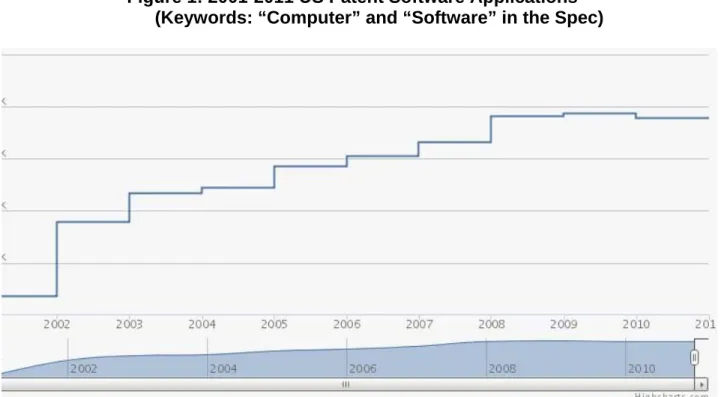
The patenting of incremental inventions, historically and recently, has led to inadvertent infringement across industries that make and use technology. There are now a growing number of software and computer patents.72 Many cover small improvements to the basic building blocks of commerce. Individuals and companies have recently been sued over their use of social
media,73 internet solicitations,74 and pop-up advertising.75 A century ago, railroads were sued over paints, lubricants, office machinery, and electrical equipment.76 Basic farm tools were covered by numerous patents; according to a historical account, “there were as many as 20 patents on an ordinary coal stove, 647 on a corn planter, 378 on a corn sheller, and 6,211 on the different parts of a plow.”77 The result in each case: pervasive and inadvertent infringement of patents that cover the basic building blocks of the economy, by businesses that make and use technology. There has also historically been systemic underenforcement, due to the high cost of assertion by practicing entities.78 The sheer number of patents has made certain market-based
70
Described, e.g., in Chien, Of Trolls, supra note __, at 108. 71
Usselman and John, supra note ___at 105. 72
For modern patent proliferation, see Figure 1. Historically: “By the end of the Civil War, the number of railroad-specific patents had increased from fifty per year to more than five hundred.” Usselman and John, supra note __, at 104. Hayter, supra note __, at 61 (documenting the increase in agricultural patents from 400 in 1863 to 1800 in 1866).
73
EveryMD v. Rick Santorum, Mitt Romney, Newt Gingrich, et al., No. CV12-01623 (C.D. Cal. filed Feb. 27, 2012), available at http://www.patentlyo.com/files/everymdcomplaintasfiled022712-1.pdf.
74
Ziarno v. Am. Red Cross, No. 99 C 3430 (N.D. Ill. June 28, 2001). 75
Stephanie Olsen, Patent owner stakes claim in Net ad suit, CNETNEWS, Jan. 7, 2004, http://news.cnet.com/2100-1024_3-5136909.html (last visited May 28, 2012).
76
Usselman and John, supra note ___, at 104. 77
See Hayter, infra note, ____, at 63, FN 13. (“It was claimed there were as many as 20 patents on an ordinary coal stove, 647 on a corn planter, 378 on a corn sheller, and 6,211 on the different parts of a plow.”) (citing 8 CONG.REC. at 269, 307, 1372.).
78
Described, e.g., in Chien, Predicting Patent Litigation, 90 Tex. L.Rev. 283, 291- (2011) (HENRY
CHESBROUGH, EMERGING SECONDARY MARKETS FOR INTELLECTUAL PROPERTY: US AND JAPAN COMPARISONS 31 (2006) (citing David J. Teece, Profiting from Technological Innovation: Implications for Integration, Collaboration, Licensing and Public Policy, 15 RES. POL’Y 285 (1986)), available at
solutions, such as patent clearance79 economically unfeasible.
Figure 1: 2001-2011 US Patent Software Applications (Keywords: “Computer” and “Software” in the Spec)
Source: Author Analysis, Using Cambia’s PatentLens
B. Specialized and Invulnerable Patent Plaintiffs
In both historical and contemporary times, patent plaintiffs have enjoyed the benefits of specialization. Modern patents have been transferred to outside entities that do not practice them.80 Likewise agricultural inventors transferred patents to “royalty agents,” who split the proceeds from assertion with them.81 This revenue-sharing model has been used by modern patent assertion entities (PAEs) such as Acacia82 that focus wholly on the monetization of patents
79
Described, e.g., in Chien, Predicting Patent Litigation, 90 Tex. L.Rev. 283 (2011). See also James Bessen & Michael J. Meurer, Lessons for Patent Policy from Empirical Research on Patent Litigation, 9 LEWIS &CLARK L. REV. 1 (2005).
80
Described, e.g. in Chien, Arms Race, supra not __, at Abstract. 81
Hayter, supra note ___, at 61 (“They could either collect damages from producers for infringing their patents, which they seldom chose to do, for litigation with corporations was expensive, or they could take the other
alternative and collect royalty fees from purchasers. Since these articles were purchased by farmers who were much easier to collect from than manufacturers, the royalty agents began to visit the rural areas during the period under discussion.”).
82
Acacia Research Group LLC, 2012 Presentation, available at
http://acaciatechnologies.com/ACTGPresentation1stQtr2012.pdf, p.5 (last visited May 28,2012) (stating “Acacia partners with patent owners (50/50)”).
rather than the commercialization of technology. Past railroad suits were brought by inventors as well as “patent speculators.”83 In an incident eerily reminiscent of the public statement of
embarrassment by a Yahoo! engineer that his former employer was suing Facebook in 2012,84 a railroad company issued a “contrite” apology that its patent had fallen into the hands of a patent dealer, to those threatened with litigation over it, in 1869.85
In both eras, patent “speculators” have turned being out of the market into an advantage.86 Unlike companies who sell products, specialized plaintiffs are invulnerable to counter accusations of infringement, distractions from the core business, and reputational and brand damage among consumers. PAEs and patent speculators don’t have to abide by industry norms which have traditionally favored patent stalemate rather than war.87 By focusing solely on patent assertion, PAEs can enjoy economies of scale88 and reduce the risks of assertion including through financing mechanisms89 built, for example, around contingency fee lawyers.90 While practicing companies typically want freedom to operate, patent assertion entities enjoy freedom to litigate, and therefore gain leverage by pursuing high-stakes injunctions and damages.
When practicing companies sue competitors opportunistically, they may also enjoy have special advantages, for example “ultra powerful” standards essential patents. In the late 1800s, suits by George Westinghouse based on patents over his air-brakes, which quickly became an industry standard, “deeply troubled” policymakers.91 The infringement may be unavoidable: recently, both houses of Congress held hearings addressing the potentially unfair use of patents
83
U.S. Senate, "Arguments Before the Committees on Patents of the Senate and the House of Representatives in Support of and Suggesting Amendments to Bills (S. 300 and H.R. 16I2) to Amend the Statutes in Relation to Patents, and for Other Purposes," 45th Cong., 2d sess., miscellaneous document no. 50, 79 (Mr. Hyde). 84
Andy Baio, A Patent Lie: How Yahoo Weaponized My Work, WIRED EPICENTER, Mar. 13, 2012, http://www.wired.com/epicenter/2012/03/opinion-baio-yahoo-patent-lie/ (last visited May 28, 2012). 85
REGULATING RAILROAD, supra note __, at 116, FN 61 (Had this transfer been avoided “he certainly would have granted permission to use the device without charge throughout the system.”).
86
In other words, the business model of “Being Infringed,” see Markus G. Reitzig, Joachim Henkel, and Christopher Heath, On Sharks, Trolls, and Other Patent Animals - 'Being Infringed' as a Normatively Induced Innovation Exploitation Strategy, available at SSRN: http://ssrn.com/abstract=885914.
87
See Chien, Arms Race (describing the historic patent peace that has prevented companies from driving each other out of business with patents, even though they probably could).
88
See Chien, Forbes (2011) (“They sue multiple defendants at the same time. They use the same patents over and over again. They show up in the same courtrooms, using the same set of counsel. Trolls capture economies of scale in litigation, and lower their committed capital by using contingent fee lawyers. Though trolls don’t make anything, this may be their real “product:” a safer, cheaper way to monetize patents.”).
89
Id. Chien. Forbes (2011); see also Tom Ewing. Introducing the patent privateers, IAM Magazine, Jan/Feb 2011, at 31.
90
For a description of this phenomenon, see William Gallaher, Trademark and Copyright Enforcement in the Shadow of IP Law (September 2, 2011). Santa Clara Computer and High Technology Law Journal, Vol. 28, 2012, available at SSRN: http://ssrn.com/abstract=1990588; see also Schwartz, David L., The Rise of Contingent Fee Representation in Patent Litigation (March 23, 2012). Alabama Law Review, Forthcoming, available at SSRN: http://ssrn.com/abstract=1990651.
91
Usselman and Richard, supra note ___ at 108, (“The public clamor for air brakes became intense, and legislation mandating their installation was seriously debated not only in several states but also in Congress. Seizing the moment, Westinghouse negotiated lucrative air-brake contracts with several large railroads, and sued others for patent infringement. Westinghouse’s conduct deeply troubled [the Railroad Commissioner].)”
essential to complying with a standard.92
C. Settlements Driven By the Cost of Avoiding Legal costs and Remedies, Rather Than the Economic Value of The Patent (“patent nuisance fee economics”)
Historical and modern patentees have also relied on “patent nuisance fee economics,” a term I use to describe the incentive that exists to assert patents not because they are economically valuable but because defending against a patent demand can be expensive, and therefore induces settlement.93 This model takes advantage of the reality that if a lawsuit is threatened or filed, it’s often cheaper to settle than pay litigation expenses, even if the case appears to be weak.94 If the asserter has a large patent portfolio, the cost of evaluating it, even for the owner, has been described as a “a mind-boggling, budget-busting exercise to try to figure [] out with any degree of accuracy at all.”95 By agreeing to settle, the painful exercise of determining on a patent-by-patent basis what products infringe what patent-by-patent claims and their validity, as well as the appropriate royalty, as a court would, can largely, though not completely, be avoided.
In the late 1800s, patent agents demanded payments from farmers for articles the farmers had purchased or made themselves.96 Thousands of cases were filed on behalf of single
patentees, in venues inconvenient for their targets. In one example, attorneys reportedly prepared for more than 4,000 cases in Iowa on behalf of a single patentee with the likely result that
“unwary and unsuspecting farmers” would pay the nuisance fee rather than “be dragged one hundred fifty miles away from their homes, at great inconvenience and expense.”97 Most farmers were too poor to mount any investigation or defense against the alleged patent rights,98 and settled.99
“Cost of defense” tactics have been utilized recently as well. In Eon-Net LP v. Flagstar
92
See Senate Judiciary Committee, July 11, 2012 Hearing on “Oversight of the Impact on Competition of Exclusion Orderes to enforces Standards-essential
Patents,”http://www.judiciary.senate.gov/hearings/hearing.cfm?id=45dca2a38e7309da19dce3a4cc06b817) ; House Judiciary Committee, Subcommittee on Intellectual Property, Competition and the Internet, July 18, 2012 Hearing on “"The International Trade Commission and Patent
Disputes”http://judiciary.house.gov/hearings/Hearings%202012/hear_07182012.html. 93
Inspired by David Rosenberg & Steven Shavell, A Model in Which Suits Are Brought for Their Nuisance Value, 5 Int'l Rev. L. & Econ. 3 (1985).
94
Two excellent papers that discuss why and how IP lawyers bring cases even when they are weak are: William T. Gallagher, , Trademark and Copyright Enforcement in the Shadow of IP Law (September 2, 2011), Santa Clara Computer and High Technology Law Journal, Vol. 28, 2012, and David L. Schwartz, The Rise of Contingent Fee Representation in Patent Litigation (March 23, 2012), Alabama Law Review, Forthcoming. available at
http://ssrn.com/abstract=1990651. 95
Competition and Intellectual Property Law and Policy in the Knowledge-Based Economy: Hearing Before the Fed. Trade Comm'n, supra note __, at 743 (statement of Fred Telecky, General Patent Counsel for Texas Instruments).
96
Hayter, supra note __, at 65-66. 97
Id. at 68 (describing Arguments before the Committee on Patents, Senate Miscellaneous Documents, No. 50, 45 Cong., 2 Sess., 362-63; Prairie Farmer, XLIV (1873), 297; Buck, Granger Movement, 118-19).
98
Magliocca, Blackberries, supra note ___, at 1824. 99
Id. at 1823-24 (citing 11 CONG.REC. 1973 (1881) (statement of Sen. Voorhees: "The manufacturing company will stand on its legal rights and go into litigation quite as cheerfully as the other side, while the plain people of the country shrink from law, and justly so, as they would from contagion, small-pox, or any other great calamity.")).
Bancorp,100the Federal Circuit affirmed an award of attorney’s fees in a case that displayed “‘indicia of extortion’” where a non-practicing entity filed a large number of cases in order to “exploit[] the high cost to defend complex litigation to extract a nuisance value settlement.” Each complaint was followed by a “demand for a quick settlement at a price far lower than the cost of litigation… based on the defendant’s annual sales: $25,000 for sales less than $3,000,000; $50,000 for sales between $3,000,000 and $20,000,000; and $75,000 for sales between
$20,000,000 and $100,000,000.”101 Judge Davis of the Eastern District of Texas has singled out “plaintiffs who file cases with extremely weak infringement positions in order to settle for less than the cost of defense and have no intention of taking the case to trial. Such a practice is an abuse of the judicial system and threatens the integrity of and respect for the courts.”102
Section II: How the Crises Arose and Resolved in the Past
A. How the Crises Arose
How did the historical crises arise? In the case of agrarian patents, according to a recent account, in 1869, the start of the agrarian patent crisis was the Patent Office’s creation of a new kind of design patent that enabled applicants to protect incremental functional designs. The change was codified by Congress the next year.103 Contemporary accounts blamed the patent office and its “laxity in administering the law” and practice of granting patents on “trifling modifications...not entitled to protection.”104 By 1874, groups sympathetic to farmer’s causes called on Congress to change the law.105
Patent demands became so pervasive that in farmers found that they could not escape the patent system: “it is in our boots, it is in our clothes, it is in the tools we work with, in the buggy we ride in, in the harness on the horse, in the whip we strike him with. It is to be found in our fences, our gates, in our pumps, in our kitchen, in our food, and finally in our coffin.”106
In the case of railroads, the “new economic order” brought by industrial development put pressure on many governmental institutions, including the patent system. The expanding
economy generated a surge of patent activity that the patent office had a hard time keeping with and “significantly increasing the success rate of would-be patent holders.” 107 Similar things could be said of the digital revolution. The growing backlog has recently driven calls for more PTO fees to be allocated to hiring examiners, rather than diverted to other activities. Just as the
100
Eon-Net LP v. Flagstar Bancorp, 653 F. 3d 1314 (Fed. Cir. 2011), available at http://www.cafc.uscourts.gov/images/stories/opinions-orders/09-1308.pdf. 101
Id. at 1326-1327. 102
Raylon LLC v. Complus Data Innovations, et al., 6:09cv355, 356, 357 (E.D. Tex. Mar. 9, 2011). On the filing of weak cases in IP cases, see Gallagher, supra note ___, generally. See also Schwartz, Contingent Litigation, supra note ___ (noting that the strength or weakness of a case is in the eye of the beholders, with plaintiffs and defendants holding widely divergent views).
103
Magliocca , Barnyards, supra note __ at 1820. See Ex parte Crane, C.D. 7 (1869), reprinted in HECTOR T. FENTON, THE LAW OF PATENTS FOR DESIGNS 225 (Philadelphia, Campbell ed. 1889). At the time, the Patent Office played an expanded role in the patent system. (cite/paraphrase)
104
Hayter, supra note __ at 65-66. 105
Hayter, supra note __ at 77 (describing the National Grange convention) and 78 (discussing other farmer interest groups).
106
Hayter, supra note __ at 64 (citing an 1879 farmer statement). 107
large number of patent applications did in the late 1800s.108 Patent demands brought by practicing companies and patent outsiders alike and high-profile suits involving double-acting and air brakes, sleeper cars, and a variety of railroad safety equipment caused the railroads great anxiety and drove them to get organized.
Through their specialized industry groups such as the Eastern and Western Railroad Associations (the ERA and WRA), the railroads hired patent attorneys and coordinated defense efforts for the entire industry. These efforts included lobbying Congress and the courts, settling cases, and other forms of self-help.109
B. How the Crises Resolved
In the name of agrarian patent reform, an innocent user defense was introduced in several forms110 to curb the “[harassment of][] people with vexatious suits about that of which they never could by any possibility have had knowledge.”111 Another amendment would shift fees to plaintiffs if the economic value of their suit was low or they lost in order to discourage frivolous suits and end, “wholesale raiding upon innocent people.” 112 Schemes to eliminate injunctive relief for certain patents and set the licensing rate ex ante, by statute113 or in connection with the issuance or payment of renewal of patents were also proposed.114 Railroads pressed for a statute
108
Id. at 102 (“Patent commissioners grumbled about the financial drain [other priorities] posed: they would have preferred to use funds to hire more patent examiners.”).
109
Described supra, Section ___. 110
Sen. Windom’s Proposal: “No recovery of damages or costs shall be had against the defendant in any suit brought for the alleged infringement of a patent by the use of any patented device, process, invention, or discovery, if it shall appear that the defendant purchased the same for his own private use from the manufacturer thereof or from a dealer engaged in the open sale of the same, unless it shall also appear that the defendant at the time of such purchase had knowledge or actual notice of the existence of such patent.” 8 CG 269. An alternative version of this reform would have eliminated liability for innocent consumers of patented products. The National Grange petitioned Congress to “amend the patent laws of America as to make the manufacturer or vendor alone responsible for infringement in the sale of patented articles.” 10 Cong. Rec. 101, 102 (1880) (statement of Sen. Butler introducing the petition).
111
“Now, the object of this amendment is to prevent the oppression and the great injustice that is being perpetrated upon hundreds of thousands of innocent people by means of the patent law… I want to free [the user][]from such harassing and vexatious suits. Give the patentee his full redress against the vender, against the manufacturer, or against the man who has knowledge of the patent, but do not send him into every farmhouse and cottage in this country to harass the people with vexatious suits about that of which they never could by any possibility have had knowledge. That is the object of this amendment.” 8 Cong. Rec 269 (1879).
112
The proposal: “[i]f the plaintiff shall not recover the sum of $20 or over, the court shall adjudge him to pay his own costs, unless it shall also appear that the defendant at the time of such purchase, manufacture, or practical application, had knowledge or actual notice of the existence of such patent.” 8 Cong. Rec. 652, 660 (1879). Senator Windom explained that the purpose of the change would be to “[c]ompel these men to give security for costs and then inform them that such suits must be conducted at their own expense, and we shall hear no more of wholesale raiding upon innocent people.” 8 Cong Rec 303 (1879) (Sen. Windom).
113
Senator Christiancy proposed “[t]here is still another class of cases in which, for patents hereafter to be issued, to prevent extortion, some rate of compensation should be fixed by the statute . . . when the infringement consists in using the thing patented.” 8 CONG. REC. 291, 308 (1878).
114
“A number of state granges proposed that, when patents were issued or renewed, a definite royalty fee be set and paid to the patentee; in return for this payment could construct and sell such improved machines and thus bring them into immediate use.” Hayter, supra note __, at 77. (citing Iowa State Grange, Proceedings, IV (1873), 44-45; Michigan State Grange, Proceedings, II (1875), 42; Kansas State Grange, Proceedings (Topeka), VIaII (1880), 8).
of limitations on claims of infringement.115 There was a proposal to adopt European style
renewal fees on granted patents.116 A new way of calculating damages – by using an established license fee or profits from sales and doing away with a legal principle called the doctrine of savings – was suggested.117
The railroads and other supporters of patent reform expended significant money and time to convince Congress to change patent law.118
1. What Didn’t Work: Broad, Substantive Legislative Proposals Across the Patent System
Most of these legislative proposals failed. They failed because, in solving the problems of farmers and railroads, they would, it was perceived, create problems for other parts of the patent system. It appeared for example, and rightly so, that “patent reforms brought forth by the railroad were done for the railroads [sic] self-interest.”119 Likewise, the “hardship” experienced by
farmers was seen “hardly a sufficient justification[] for abolishing that system of patents which has accomplished so much in this country.”120 Fee-shifting proposals were rejected as unfairly punishing patentees with lawful claims, but low damages.121 Suggestions to reform damages were seen as self-serving because few others suffered from the doctrine of savings that the railroads complained about.122 In addition, they appeared to hinder judges and juries with their specificity.123
The changes were portrayed as helping large companies, at the expense of small inventors.124 Individual inventor Thomas Edison claimed that they would “strongly tend to discourage and prevent the perfection of useful inventions.”125 Companies in other industries likewise opposed any changes. Their opposition was focused mainly on the isolated nature of patent shark attacks. Most industries and inventors had nothing to do with patent sharks. As such, they saw no need to limit their patent rights because of a problem that did not affect them. In addition, as has been said recently, Congressional change is subject to numerous “veto
115
Regulating Railroad, supra note ___, at 145. 116
Id. 117
Id. 118
Regulating Railroad, supra note ___, at 154-155. 119
U.S. Senate, "Arguments before the Committees on Patents of the Senate and the House of Representatives in Support of and Suggesting Amendments to Bills (S. 300 and H.R. 16I2) to Amend the Statutes in Relation to Patents, and for Other Purposes," 45th Cong., 2d Sess., miscellaneous document no. 50, 304 [hereinafter Arguments before the Committees], at 69.
120 Id. 121
This amendment “would absolutely prevent, practically at least, the bringing of any suit simply to settle the question of the validity of a patent, or the infringement, where the damages were not considerable.” 8 Cong. Rec. 570 (1879) (Sen. Wadleigh).
122
Usselman, Regulating Railroads, supra note __, at 159. 123
Id. 124
Id. 125
See Hayter, supra note __ at 81 (“Thomas. A. Edison, in opposing the bill of 1879, stated in a letter to Butler: "I am sure that this provision will not only act oppressively upon many inventors, but will strongly tend to discourage and prevent the perfection of useful inventions by those most fitted for that purpose, and most likely to accomplish it.... It would be very burdensome to me.") Citing Thomas A. Edison to Butler, February 17, 1879, Butler Papers.
players,” and “legislative priorities are often unduly skewed by political expediency.”126 2. What Did Work: Narrowly-Tailored, Specific Reform
a. Abolishing Agrarian Patents
Where these proposals failed, more tailored changes to the law, accomplished largely outside of the legislative process, succeeded. A period of confusion during which the Patent Office “flip-flopped” several times about what should be considered patentable under the design law followed the change that precipitated the agrarian patent crisis.127 According to legal
historian Gerard Magliocca,“[i]nstability in patent law eventually became a major concern, and Congress was forced to step in and restore order.”128 Congress codified a stricter standard in 1902.129 The Patent Office applied this more stringent standard, making it harder to get patents on trivial advances,130 and complaints about patent sharks subsided. Reform took time –thirty years elapsed prior between the two Congressional amendments that bookended the period of patent “crisis.”
b. Courts, Self-Help Through Railroad Associations, and Challenging Railroad Patents In the case of railroad patents, reform was led by the Court and railroad associations rather than Congress. Though many legislative fixes were proposed, none really succeeded as “Congress could not accommodate the special concerns of railroads without sacrificing essential features of a patent system that still functioned quite capably in most segments of the
economy.”131
How, eventually, did the crises abate? According to historical accounts, ourt leadership and self-help were critical. Supreme Court Justice Joseph P. Bradley, an ex-railroad man himself, through a series of decisions regulating the railroad industry, has been credited with meticulously and carefully helping. In Railway Company v. Sayles, he “avoided making any sweeping
pronouncements [][about] the doctrine of savings… instead, honed in on the specific details of the patent claims []advanced,”132
to invalidate the patents at stake. In other decisions, he ruled for the patentee, but based on specifics that “kept patent law relatively unencumbered by abstract principles.”133 However, his views on the patent system became clear in his 1883 Atlantic Works v. Brady decision, that:
126
Arti Rai, Patent Validity Across the Executive Branch: Ex Ante Foundations for Policy Development 61 Duke Law J., 1237, 1266 (2012)
127
Gerard N. Magliocca, Ornamental Design and Incremental Innovation, 86 Marq. L. Rev. 845, 878-879 (2003) (hereinafter “Ornamental Design”).
128
Id., 879. 129
Ornamental Design, supra note __, at 879. See P.L. 57-109; 35 U.S.C. §73 (1902). (by deleting the word “useful” and spurring the PTO to “taking the hint,” applying a stricter interpretation of patentability.)
130
Ornamental Design, supra note __, at 879. 131
See Naomi R. Lamoreaux, Daniel M. G. Raff and Peter Temin, editors, LEARNING BY DOING IN MARKETS, FIRMS, AND COUNTRIES,UNIVERSITY OF CHICAGO PRESS (1999),at 76-77. See also Steven Usselman, Patents, Engineering Professionals, and the Pipelines of Innovation: The Internalization of Technical Discovery by Nineteenth-Century American Railroads.
132
Usselman, Patent Politics, supra note ___, at 116. 133
“To grant a single party a monopoly of every slight advance made, except where the exercise of invention somewhat above ordinary mechanical or engineering skill is distinctly shown, is unjust in principle and injurious in its consequences . . .
It was never the object of [the patent] laws to grant a monopoly for every trifling device, every shadow of a shade of an idea, which would naturally and spontaneously occur to any skilled mechanic or operator in the ordinary progress of manufacturers. Such an indiscriminate creation of exclusive privileges tends rather to obstruct than to stimulate invention.
It creates a class of speculative schemers, who make it their business to watch the
advancing wave of improvement and gather its foam in the form of patented monopolies, which enable them to lay a heavy tax upon the industry of the country without
contributing anything to the real advancement of the art. It embarrasses the honest pursuit of business with fears and apprehensions of concealed liens and unknown liabilities to law suits and vexatious accountings for profits made in good faith.”134 This decision supported the already formidable defense efforts mounted by the major railroad associations, trade groups that worked to for example, identify relevant prior art, coordinate responses, and work towards a common goal of providing its members with freedom to operate.135 These efforts were credited with driving down railroad patent litigation136 and are described below, in the “self-help” section.
Section III: Implications for Current Proposals A.Problem-Framing and Designing Patent Reform
Although much has been accomplished with respect to patent reform, great dissatisfaction remains. As firms watch others make money137 and build firm reinvigoration strategies off of patents,138 the practice of patent assertion is expected intensify, rather than abate, in the short-term.139 As quickly as patent institutions have moved to reform the patent system, the market has arguably moved even faster, introducing new sources of capital, business models, and tactics140 to the business of patent assertion. For these reasons, efforts to reform patents continue, with
134
Atlantic Works v. Brady, 107 U.S. 192 (1883), 199–200. 135
Usselman, Regulating Railroads, supra note ___, at 171-176. 136
Usselman, Regulating Railroads, supra note ___, at 174-175. 137
For example, through the successful stock prices of well-managed company Acacia, whose approximate value has increased 1000%, from a low of $2.50 in 2008 to a low of $28.76 in 2012 thus far, financial data available at http://finance.yahoo.com/q?s=ACTG
138
For a recent example Mike Masnick, “Early Mobile Internet Company That Failed to Adapt Becomes Patent Troll,” Tech Dirt (April 18, 2012) http://www.techdirt.com/blog/wireless/articles/20120418/03490318538/early-mobile-internet-company-that-failed-to-adapt-becomes-patent-troll.shtml [add parenthetical]
139
In accordance with customary demonstration effects in the patent world, described e.g., in Chien, Arms Race, supra note ___.
140
See, e.g., Chien, Forbes, supra note ___ Patent Law Institute 2012 Program IP Monetization 2012: Maximize the Value of Your IP Assets, chair Jose Esteves (describing various financing and legal vehicles for patent monetization) described at
http://www.pli.edu/Content/Seminar/IP_Monetization_2012_Maximize_the_Value_of/_/N-4kZ1z1330y?ID=142943.
several proposals receiving attention.
Addressing the three problems of too many patents, invulnerable patent defendants, and patent nuisance fee economics, these proposals include: (1) reducing the number of software patents including by abolishing them, (2) bolstering patent defenses including through an independent invention defense, and (3) changing the economics of patent litigation, including through fee-shifting, as well as (4) self-help attempts; their historical counterparts, and what past experiences can teach. This section focuses on these and related proposals and the lessons that can be gleaned from analogous reforms.
How the problem is framed informs the solution. Alternative arguments that the single “problem” is really the patents (software patents or at least certain software patents), the people (trolls), or their specific behavior (nuisance tactics), are each convincing. But each category of “offense” contains a wide variety of practices. Though the claim is often made that most
software patents are trivial and do not promote innovation, there are exceptions. For example, the PageRank patent, over a search algorithm, arguably enabled search technology to be transferred from Stanford University to Google.141 Trolls also come in different types. Although all of them, according to my definition, use patents primarily for litigation and licensing rather than to support technology transfer and commercialization, they do so in different ways. RPX
Corporation estimates that inventors, who often assert a single or handful of patents comprise 18% of non-practicing entity (NPE) litigants and sue fewer defendants, while “licensing entities” bring the bulk of suits (69%) and serial NPEs like Acacia bring 15% of them.142 While Acacia is a high-volume, repeat player in patent assertion, individual inventors are more likely to sue in a “one-off” capacity.
Each “problem” also yields different solutions, with their own tradeoffs. A way to consider them is with respect to the common yardsticks of: precision – are they overly broad or under inclusive; effectiveness – would they operate only on existing patents, future patents, only litigated patents, or all of the above; and fairness – would they exacerbate existing inequalities for example that disfavor inventors lacking in resources? What institution implements the reform matters– improved patent examination impacts only future patents, while courts can in one decision impact all patents, existing, future, litigated and unlitigated. 143 So do the issues of costs of implementation and circumvention – how easily can a new rule be circumvented or skirted; and the?
These and are other concerns inform the analysis below.
B. Proposals to Reduce the Number of Patents
141
See, e.g. Colleen Chien, Race to the Bottom, Intellectual Asset Management Magazine Jan/Feb 2012. 142
RPX Corporation Analyst Day Presentation, March 8, 2012, at 2, available at
http://files.shareholder.com/downloads/ABEA-5XYKB4/2003662716x0x551346/409b5f43-ce6b-4ae3-993d-264e383845b1/RPX%20Analyst%20Day%20v4.pdf
143
See David Schwartz, Retroactivity in Patent Law, ____Ala. Law Rev.___ (2012) (Forthcoming), available at http://ssrn.com/abstract=1945554 (describing the retroactive nature of court decisions and arguing that because patent lawyers circumvent court decisions through clever drafting, the decisions primarily impact preexisting, rather than prospective, patents). But see also Arti Rai, Patent Validity Across the Executive Branch: Ex Ante Foundations for Policy Development 61 Duke Law Journal 101, ____ (2012) (describing how courts are mindful of and try to limit the retroactive impact of their decisions.)