FARMERS‘ EXPECTATIONS OF YIELD DIFFERENCES
BETWEEN TRIPLE-STACK AND CONVENTIONAL CORN HYBIRDS
BY
KRISTA JOY UBBENGA
THESIS
Submitted in partial fulfillment of the requirements
for the degree of Master of Science in Agricultural and Consumer Economics in the Graduate College of the
University of Illinois at Urbana-Champaign, 2009
Urbana, Illinois
Master‘s Committee:
Professor Gary Schnitkey, Chair Professor Scott Irwin
Professor Emerson Nafziger Assistant Professor Nick Paulson
ii ABSTRACT
In 1996, genetically modified corn was commercially available for the first time. Since then, seed technology companies have introduced new genetically modified hybrids, including ―stacked trait hybrids‖ containing multiple traits. Adoption rates of the genetically modified
seed increased for several years and the technology is now widely accepted in the United States.
Willingness to adopt a new technology is based on the belief that it is an improvement over current practices. Seemingly, a triple-stack corn hybrid (a hybrid containing three genes) should provide a higher net return than a hybrid with fewer genetic traits. Dramatic farmer adoption rates of triple-stack corn hybrids could suggest that farmers believe that the added traits will improve hybrid performance. On the other hand, farmers must also choose seed from the selection available, consisting mostly of hybrids with a triple-stack trait package.
Previous studies comparing transgenic yields to non-transgenic yield have mixed results. However, the literature reviewed suggests that farmers believe that there is a yield advantage associated with triple-stack corn hybrids. Therefore, the hypothesis is developed that farmers‘ subjective estimates of triple-stack corn yields will be above the yields found in the objective data. Three goals are set to test this hypothesis: 1) determine the effect that traits in hybrids have on corn yields, specifically the effect of triple-stack traits on corn yields; 2) determine what farmer perceptions of triple-stack hybrid yields are; and 3) compare the triple-stack objective yield data to farmer perceptions.
iii
The objective data are from the University of Illinois corn hybrid test trials from 2004-2008. Hybrids are assessed based on the traits present and regression models are used to test for statistical differences in yields between hybrids with varying traits. Personal interviews
conducted with eight farmers located across Illinois in August, 2009, and a survey distributed to 65 Farm Business Farm Management Association cooperators in September, 2009, are used as proxies for farmer perception; the results from both are used as subjective data in the study.
The objective yield data shows that the traits for corn borer resistance and root worm resistance both significantly increase yield by approximately 2 and 4 bushels per acre,
respectively. A trait for herbicide tolerance was not found to make a significant difference in yield. Triple-stack hybrids, containing all three traits, have a yield advantage of 6-7 bushels per acre. In the interviews, farmers indicated a value in triple-stack corn hybrids, but much of that value is due to advantages other than yield. Farmers who pinpointed a range for triple-stack yield advantage over refuge hybrids, selected ranges beginning at 7 bushels per acre and going up to 15 bushels per acre. Based on weighted averages of the responses from farmers who selected a specific range in the survey, the farmers who plant stack hybrids believe stack yields are 9.45 bushels per acre higher than refuge and the farmers who do not plant triple-stack hybrids believe triple-triple-stack hybrids yield 5.87 bushels per acre higher than refuge.
A conclusion is reached that farmers‘ yield assessments are fairly accurate. Farmers that
plant triple-stack hybrids perceive a triple-stack yield advantage that is slightly higher than the value found in the objective data, although some did not provide a specific range. Interestingly, 23% of farmers planting triple-stack hybrids believe triple-stack and refuge yields are the same.
iv
ACKNOWLEDGEMENTS
This study would not have been possible without the assistance of a number of people. Special thanks to my adviser, Professor Gary Schnitkey, for his guidance, willingness to help, and for reading my draft updates as quickly as I could write them. Also, I appreciate the assistance, advice, and suggestions each of my other committee members, Professors Scott Irwin and Emerson Nafziger, and Assistant Professor Nick Paulson, offered when I asked.
I also want to thank each of the farmers who participated in the personal farmer interviews and those who took the survey for taking the time to help me with this project and supplying my source of subjective data. Additional thanks to my dad, a farmer who let me ―test‖ all of my interview and survey questions on him.
I was fortunate to receive financial support from the Risk Management Agency, a part of the United States Department of Agriculture, while I worked on this study. In addition, Paul Stoddard provided me with a teaching assistantship during each of my semesters of graduate school which was very valuable to me when I first decided to enroll in the graduate program.
I am grateful to my family and friends who offered help and support throughout this process, especially those who proofread my paper and provided comments: Brett Swanson, Charlie Thompson, Kate Legge, Nichole Folkman, Paul Kirbach, and Sydney Jarrett. My mom deserves an exceptionally large ―thank you‖; I cannot even count the number of times she read
through my thesis drafts marking grammatical errors and making many, many comments and suggestions.
v
TABLE OF CONTENTS
CHAPTER I: INTRODUCTION ... 1
1.1 MOTIVATION AND RESEARCH QUESTION ...1
1.2 PROBLEM STATEMENT AND OBJECTIVE ...6
1.3 ORGANIZATION OF THE THESIS 7 CHAPTER II: BACKGROUND AND LITERATURE REVIEW ... 8
2.1 INTRODUCTION TO HISTORICAL CORN YIELDS ...8
2.2 PLANT BREEDING METHODS, IMPACTS ON YIELDS ... 11
2.3 TYPES OF TRANSGENIC CORN ... 14
2.3.1 INSECT RESISTANT CORN... 14
2.3.2 HERBICIDE TOLERANT CORN ... 16
2.4 ROLE OF SEED TECHNOLOGY COMPANIES ... 17
2.5 FARMERS‘ SUBJECTIVE BELIEFS ... 18
2.6 AGRONOMIC RESEARCH ON THE IMPACTS OF TRANSGENIC YIELDS ... 22
2.7 SUMMARY AND CONCLUSIONS ... 29
CHAPTER III: YIELD TRIAL EVALUATION ... 32
3.1 INTRODUCTION... 32
3.2 YIELD TRIAL DESCRIPTION ... 32
3.3 DATA AND DESCRIPTIVE STATISTICS ... 36
3.3.1 NUMBER OF OBSERVATIONS ... 36
3.3.2 YIELD AVERAGES ACROSS TIME AND LOCATION ... 36
3.3.3 DESCRIPTIVE STATISTICS ON CONVENTIONAL AND TRANSGENIC HYBRIDS ... 39
3.4 STATISTICAL TESTING FOR DIFFERENCES IN CONVENTIONAL AND TRAITED HYBRIDS ... 43
3.5 REGRESSION RESULTS BY YEAR ... 51
3.6 SUMMARY AND CONCLUSIONS ... 55
CHAPTER IV: INTERVIEW EVALUATION ... 57
4.1 INTRODUCTION ... 57
4.2 METHODS ... 57
4.3 DATA ... 61
4.4 RESULTS AND DISCUSSION ... 66
4.5 COMPARISON TO OBJECTIVE YIELD DATA ... 66
4.6 SUMMARY AND CONCLUSIONS ... 68
CHAPTER V: SURVEY EVALUATION ... 70
5.1 INTRODUCTION ... 70
5.2 METHODS ... 70
5.3 DATA AND RESULTS ... 73
5.4 DISCUSSION AND COMPARISONS TO OBJECTIVE DATA ... 77
5.5 SUMMARY AND CONCLUSIONS ... 80
CHAPTER VI: SUMMARY AND CONCLUSIONS ... 82
FIGURES AND TABLES ... 91
APPENDIX A: INTERIVEW...131
APPENDIX B: SURVEY ... 132
1
CHAPTER I: INTRODUCTION
1.1MOTIVATION AND RESEARCH QUESTION
For several decades—beginning near the turn of the 20th century—traits from superior conventional crops have been advanced through traditional breeding methods. In the last twenty years, new applications to agriculture—through biotechnology—have made it possible to
develop another element in crop cultivars. Using biotechnology techniques, ―transgenic‖ crops are created by introducing a specific trait, or traits, into the plant‘s genetic material. In the
mid-1990s, transgenic corn and soybean seed was commercially available for the first time. Since then, several new transgenic hybrids and varieties have been introduced, including seed containing multiple traits—coined ―stacked trait hybrids‖ by the seed technology companies developing and selling the products (See Figure 1).
There are two types of transgenic traits currently available for inclusion in corn hybrids: insect resistance—both for corn borer and rootworm, and herbicide tolerance—to herbicides with either active ingredient glyphosate or glufosinate. Use of hybrids with transgenic traits for insect resistance and herbicide tolerance has increased dramatically in recent years and stacked trait hybrids—first available in 1998—are now widely used in the United States (ETC Group, 2008). According to the United States Department of Agriculture-Economic Research Service (USDA-ERS, 2009), 80% of corn acreage in Illinois was planted to genetically modified corn hybrids in 2008. This figure includes an estimated 13% of total acreage to any form of insect resistant hybrid, 15% to herbicide tolerant hybrids and 52% to stacked trait hybrids. As recently as 2004, only one third of corn acreage in Illinois was planted to any type of transgenic corn hybrids and only 2% to stacked trait hybrids (See Table 1). The rapid change could signify the quick
2
adoption rate of genetically engineered crops, but seed technology companies produce and sell mostly genetically modified seed and farmers must choose seed based on the selection offered.
Regardless of why transgenic corn has been adopted, the percentages of transgenic corn planted by Illinois farmers are reflected in the percentages of transgenic entries in the University of Illinois hybrid test trials. From 2004 to 2008, the percentage of transgenic hybrid entries in the trials increased from 63% to more than 93%. The remaining entries are conventional hybrids. Historically, the term ―conventional‖ has been used to characterize corn hybrids without transgenic traits. In more recent publications, ―conventional‖ has characterized all
commonly grown corn hybrids, even those that are transgenic (Thomison and Geyer, 2009). To prevent confusion, in this paper ―conventional‖ is always used to indicate non-transgenic
hybrids. Of the traited hybrid entries in 2008, 88% contain at least three transgenes, 8% contain two transgenes, and just 4% contain only a single transgene.
Many seed companies are making claims that triple-stack corn hybrids—hybrids containing three transgenes—are providing higher yields. In 2005, Monsanto Company (―Monsanto‖) was the first seed technology company to make triple-stack corn hybrids
commercially available, although only in very limited quantities at first (ETC Group, 2008). Monsanto collected extensive data from numerous field trials during three harvest years—from 2004-2006—and submitted it to the USDA claiming it ―clearly demonstrated that Monsanto YieldGard triple-stack technologies deliver more consistent yields, effectively lowering risk‖ (Monsanto Company, 2007). In addition, Monsanto declared the extensive data collected from
3
the 2007 harvested crop confirms that their YieldGard VT Triple yielded more than 10 bushels per acre above ―competitive‖ technologies (Monsanto Company, 2007).
Others challenge such claims. One example is Dennis Rawley, owner of Augusta Seed Corporation and member of the Virginia corn board, who stated ―technology does not yield anything‖ and added that the technology protects the potential for yield that is supplied by
genetics (Hotchkiss, 2008). Dave Nanda, the president of Bird Hybrids in Tiffin, Ohio, agrees. He points out that claims are only justified if a fair assessment—to compare triple-stack hybrids with ―refuge‖ hybrids containing the exact same genetic package except traits—is made
(Bechman, 2009). ―Refuge‖ is the term applied to the acres dedicated to insect resistance management (IRM). The Environmental Protection Agency (EPA) has set forth regulations to protect transgenic corn technology. Hybrids with a trait for corn borer, a trait for rootworm, or stacked trait hybrids containing both require a 20% refuge in non-cotton growing counties. Refuge hybrids can be conventional hybrids or herbicide tolerant hybrids. The refuge can be planted in a number of different patterns, and farmers can choose which pattern they prefer (NCGA, 2009a).
Due to the controversy behind the use of genetically modified corn, opinions and study results are conflicting. Clearly, the large seed technology companies developing transgenic seed and triple-stack corn hybrids seek to show a yield advantage in corn with multiple traits. Small seed companies—who must purchase the right to use the technology to stay competitive in the market—are more hesitant to give credit to triple-stack corn hybrids and trait technology until an incontestable yield advantage is established. Another group of participants in the debate,
4
opponents of genetic modification, seek to portray a negative image of triple-stack corn hybrids, transgenic corn, and transgenic crops in general.
A central part of this debate not fully addressed: what are farmers‘ perceptions of
triple-stack performance? The rapid adoption rates noted above suggest that farmers view triple-triple-stack corn hybrids favorably. Although transgenic corn hybrids were adopted quickly, the adoption rate of triple-stack corn hybrids has been even more phenomenal. Using Illinois as an example, transgenic corn hybrids were planted on 17% of total corn acres in 2001 and 80% in 2008, gaining 63% of total corn acres in that nine year period. Triple-stack corn hybrids, planted on just 5% of all Illinois corn acres in 2005, were planted on 52% in 2008 equating to a 47% movement in only four years (USDA-ERS, 2008). Such fast paced adoption is a strong indication that farmers believe triple-stack corn will perform well—likely including a yield advantage—which could conflict with what objective yield data shows. For example, in 2008, results from a study by Channel Bio Corp. (owned by American Seeds Inc., a subsidiary of Monsanto) reported that 74% of farmers surveyed believe triple-stack hybrids return at least a 15 bushel per acre advantage. Studies have been conducted to test farmer perception of related technologies but, with the exception of the survey performed by Channel, no previous studies of farmer expectations of triple-stack advantages have been found (SeedQuest.com, 2008).
Although experimental results are varied, there is experimental evidence that supports the view that triple-stack corn hybrids have a yield advantage. For example, Below, et al. (2007) finds that triple-stack corn hybrids containing the rootworm trait have a significant yield advantage over hybrids without the trait. The authors believe the yield advantage is a
5
combination of rootworm control provided by the trait and increased nitrogen use efficiency due to the presence of the trait (Below, et al., 2007).
Emerson Nafziger, crop production specialist for the University of Illinois, notes the perception that current corn genetics are superior (to corn genetics in the past) was strengthened in 2008, as producers began the season in a pending disaster due to flooding and ended with close to record high yields. He points out that farmers tend to believe circumstances would have been worse without good hybrids, a selling point for seed technology companies who develop traits and sell transgenic corn hybrids (Berry, 2008).
Representatives from such seed technology companies are taking advantage of the situation and proclaim great promises for increased corn yields in the future. For example, DuPont Company‘s Pioneer Hi-Bred unit plans to raise yields to more than 300 bushels per acre,
and the chief technology officer of Monsanto Company announced the company is prepared to double yields in the next twenty years (Berry, 2008). When farmers are exposed to such exciting and promising news, their perceptions of the technology‘s benefits could be affected.
Dave Nanda questions whether farmer beliefs are justified in a Prairie Farmer article (Nanda, 2009) earlier this year. Following is an excerpt:
―The pressure comes from reports saying triple stacks performed better in 2008. In fact, nearly every farmer in every combine cab we visited praised triple stacks. But I always wonder: Are they comparing triple stacks with the genetically equivalent isoline (identical hybrids) used for refuge acres?
Despite all the optimism, I still believe farmers should evaluate their situation case by case. Genetics is still the key factor. The base genetics of the hybrid must yield well on your farm‖ (Nanda, 2009).
6
Both Nafziger and Nanda bring forth the opinion that farmer perception could be influenced, and therefore vary from what objective yield data shows. The idea that farmer attitudes toward a technology can be altered by perceptions of several factors such as increased net benefit—a result of increased yields—is consistent with the conclusion from a study on producers‘ perceptions and attitudes toward precision agriculture technologies (Adrian et al., 2005).
Although research analyzing farmer perception of agricultural technologies is rare (Adesina and Baidu-Forson, 1995), the ability to understand farmer perception of transgenic technology in corn hybrids could provide insight as to why farmers adopt transgenic hybrids and could be a valuable tool for the seed technology industry.
1.2 PROBLEM STATEMENT AND OBJECTIVE
Transgenic technology has changed a majority of the corn hybrids offered to farmers and will inevitably continue to evolve in future years. Triple-stack corn hybrids have been widely adopted by farmers since their introduction, but it is important to question if farmers are planting hybrids with the trait because they perceive triple-stack hybrids to be higher yielding than other hybrids, or because they must adapt to the new types of hybrids available. To answer, the following three goals are set:
1) Determine the effect that traits in hybrids have on corn yields, specifically the effect of triple-stack traits on corn yields;
2) Determine what farmer perceptions of triple-stack hybrid yields are; and 3) Compare the triple-stack objective yield data to farmer perceptions.
Using information from those objectives, this thesis seeks to identify and compare farmers‘ expectations of yield differences between triple-stack and conventional corn hybrids to objective yield data. Our hypothesis is that farmers‘ subjective beliefs about triple-stack yields
7
will be above the yields found in the objective data. To investigate our hypothesis about the impact of genetic engineering on corn yields, the study will compare objective yield data from the University of Illinois hybrid test trials with subjective data from case studies with individual farmers and a survey as proxies for farmer perception. If the objective values vary from the subjective data collected, we will aim to explain why the variation exists.
1.3 ORGANIZATION OF THE THESIS
Chapter II contains relevant background on how corn yields are affected by traditional and modern breeding methods and previous studies evaluating yields and farmer perception. Chapter III explains the University of Illinois hybrid test trials and the approach for obtaining, analyzing, and using data from the trials for this study. Trial data from 2004-2008 is used in regression models to compare yield differences in hybrids with different traits. The analysis of yield data in Chapter III is accomplished to determine the effects of traits on yield, objective 1. Farmer perception of triple-stack corn hybrids are evaluated in Chapter IV and Chapter V, objective 2. Chapter IV includes an analysis of data collected during personal farmer interviews and Chapter V outlines the survey sent to farmers, and the results obtained. At the end of Chapter IV and the end of Chapter V, each respective set of data for farmer perception is compared to the objective yield data from Chapter III, objective 3. The study concludes with Chapter VI, a comparison of results obtained from assessment of Chapters III, IV, and V.
8
CHAPTER II: BACKGROUND AND LITERATURE REVIEW 2.1 INTRODUCTION TO HISTORICAL CORN YIELDS
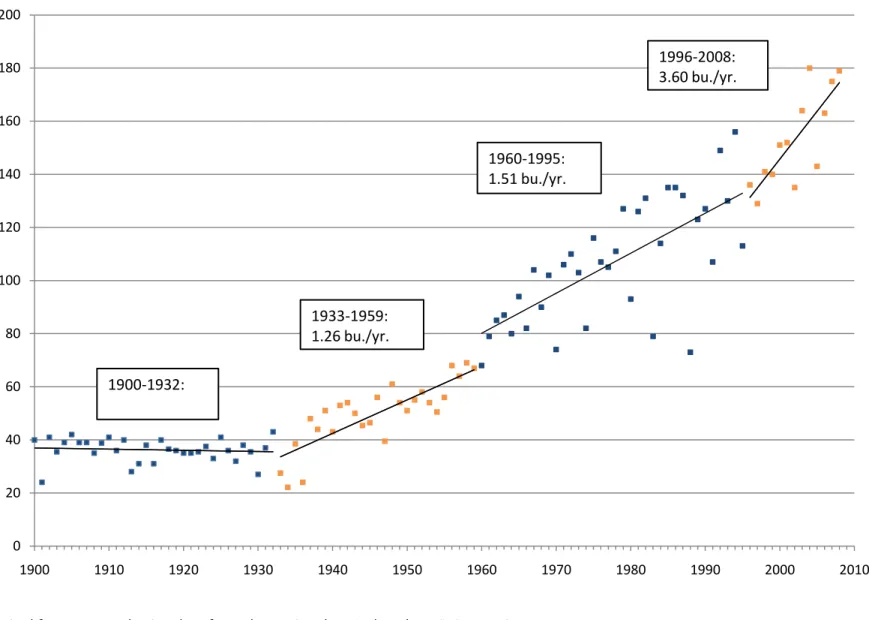
Throughout the twentieth century, corn yields increased over time as is evident in Illinois corn yield data (USDA-NASS, 2009). This change in yields over time is commonly referred to as the ―trend yield‖ (Tannura, et al., 2008). Regression results reveal yields have increased by
1.28 bushels per year from 1900-2008 (See Figure 2).
According to Duvick (2005), the increase in yields since the 1930s is attributed equally to improved cultural practices—crop production techniques such as weed and pest control,
timeliness of planting, amount of fertilizer applied, plant density, etc.—and plant breeding. The author notes the importance of the interaction between the two, adding that neither cultural practices nor plant breeding could have had the same effect alone. Hybrids developed using traditional breeding methods were clearly the source of most of the historical increase due to plant breeding, considering transgenic hybrids were not on the market prior to the mid-1990s. Following the introduction of hybrids formed through crosses of inbred lines in the early 1930s, corn yield increased proportionately to the area of corn planted to hybrids (Duvick, 2005). For example, in Iowa from 1933-1943, as the percentage of corn area planted to hybrids soared from 0.7 to 99%, corn yields increased from approximately 32 bushels per acre to approximately 56 bushels per acre (Duvick, 2005). This is comparable to the use of stacked gene hybrids in Illinois from 2000-2008; as the percentage of corn area planted using triple-stack seed increased from 1 to 52%, overall corn yields improved from 151 bushels per acre to 179 bushels per acre (USDA-ERS, 2008; USDA-NASS, 2009).
9
In his review of several of his University of Illinois studies, Below (2008a) also
emphasizes interaction between important factors that positively impact corn yields. Weather, the factor over which farmers have the least control, is also the most critical. Research shows grain yields due to weather vary by a 70+ bushels per acre margin when all other yield factors are optimal and constant. Weather also has a significant impact on the next factor—nitrogen fertilization. Weather affects the ability to apply, time of application, and potential leaching and nitrification from nitrogen fertilizers. Nitrogen fertilizer, on average, increases grain yield by 70 bushels per acre (Below, 2008a). In addition, the role of hybrid selection (further detail
presented in the agronomic research section of this chapter), previous crop, plant population, tillage, and chemicals are all noted as key components affecting corn yield (Below, 2008a).
Although different factors are highlighted as more or less important in the literature reviewed, nearly all sources agree that a complex combination of many factors determine corn yields. Due to this complexity, it is challenging to attribute changes in corn yield trends to a single factor. Despite this, numerous farmers, crop industry experts, and seed technology
companies indicate corn yield increases since the mid-1990s are due to improvements in genetics and application of biotechnology (Fitzgerald, 2006).
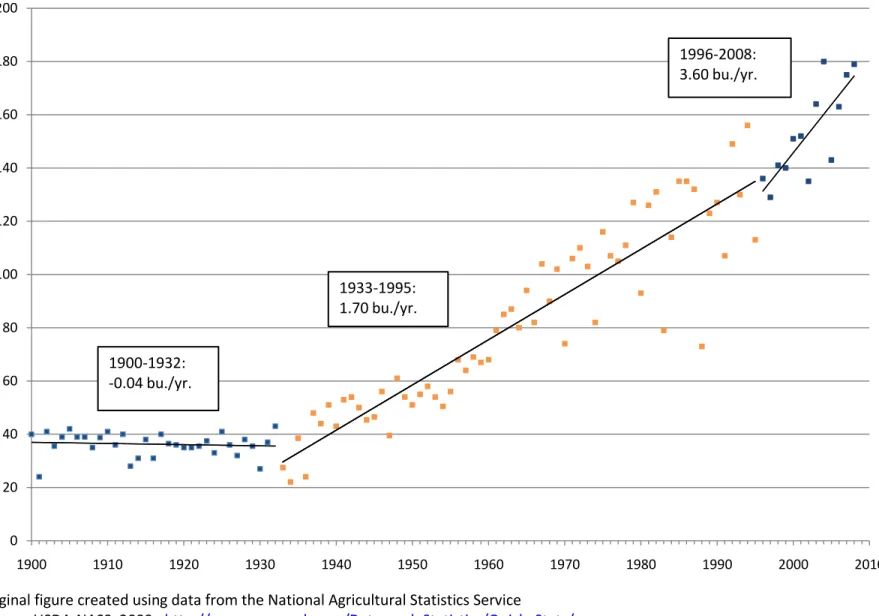
The notion that a new technology with agricultural applications, like biotechnology, can increase corn yields is not without historical precedent; two major technological revolutions— the introduction of corn hybrids in 1933 and nitrogen fertilizers in the late 1950s—both appear to have had a large impact on corn yields (Tannura et al., 2008). From 1900-1933, yields were fairly stable with very little change. Following the introduction of corn hybrids, corn yields
10
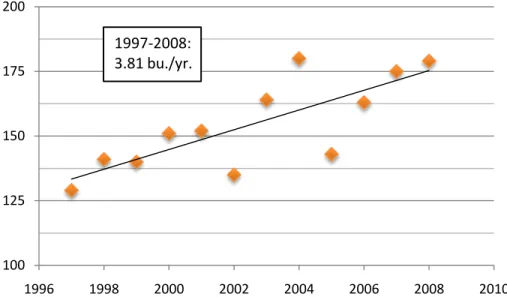
increased at a faster rate, an average of 1.26 bushels per year. The rate increased to an average of 1.51 bushels per year after the introduction of nitrogen fertilizer. Finally, in the 1996-2008 time period, in which transgenic corn hybrids have been commercially used, there is an extraordinary expansion in the trend yield, jumping to an average of 3.60 bushels per year increase (See Figure 3).
Although the changes in trend yields appear to correspond to major technological revolutions, making those claims is controversial due to possible weather effect. Tannura et al. (2008) conducted a recent study investigating the relationship between weather, technology, and corn and soybean yields in the U.S. Corn Belt. Regression results showed the factors with the greatest impact on corn yields are technology as modeled by trend, amount of precipitation in June and July, and magnitude of temperatures in July and August. The authors note
―considerable discussion in the agricultural community that improved technology has caused
corn yields to increase at an increasing rate in recent years‖ and suggest this has lead to widespread perception that corn yields will continue to outperform the long-term unadjusted trend. Results from one portion of the study, further examining the time period since the mid-1990s, show that weather in the time period from 1996-2006 was relatively benign for corn development across the Corn Belt as a whole. It is possible that the impact of relatively favorable weather since the mid-1990s has not been recognized and that technology has mistakenly received credit for corn yield increases in some studies. This is a noteworthy discovery that should not be ignored in future trend yield studies (Tannura, et al., 2008).
11
2.2 PLANT BREEDING METHODS, IMPACTS ON YIELDS
In the last section, two major introductions in corn plant breeding—hybrid corn and transgenic corn—are discussed. Although nitrogen fertilizer was previously included as a ―technological revolution,‖ it is not pertinent to plant breeding and therefore will not be included
in this section. Therefore, the Illinois corn yields—with respect to plant breeding—can be divided into three major parts: prior to corn hybridization (1900-1932), after corn hybridization up until the introduction of transgenic corn (1933-1995), and subsequent to the introduction of transgenic corn (1996-2008) (See Figure 4). Corn yields were essentially unchanged from 1900-1930s, indicating selection techniques known at that time—mass selection based on individual plant performance—did not raise yields (Duvick, 2005; Sprague, 1952).
Plant breeders began to apply theoretical science principles to agriculture and first developed recognizable strains of corn, called hybrids, which were commercialized in 1933 (Duvick, 2005). Since then, thousands of hybrids have been developed using what is now referred to as ―traditional breeding methods.‖ Inbred lines are developed by selfing—pollinating
an ear with pollen from the same stalk—open-pollinated corn cultivars. Inbred lines are examined and plants with desirable characteristics are selected for breeding with plants from different inbred lines to create hybrids. Although inbred lines do not have high yields, when crossed with each other, the hybrid produced is much more prolific than the original inbred lines. Selection of desirable characteristics has allowed for production of high yielding corn hybrids that thrive in the varying soils and climates of the farming regions around the world (Duvick, 2005). Hybrid corn adoption rate, as measured by percent of corn acres planted to hybrids, jumped from 10% in 1935 to 90% in 1939 in Iowa. Adoption rates were almost as high in other
12
states in the Corn Belt, thus demonstrating that farmers were responsive to the new technology. While improved yields certainly were a factor in the rapid adoption of hybrid corn, hybrid corn had a number of other characteristics that made it desirable. Some factors besides yield that farmers considered: overall uniformity (useful for machine harvesting), consistent ear heights, and greater resistance to drought, especially important in the dust-bowl period from 1934-36 (Crow, 1998).
Those same traditional breeding methods have been improved upon over time and are still being used by plant breeders, in conjunction with the use of modern plant breeding methods such as genetic engineering. Genetic engineering refers to several methods that seek to alter hereditary traits via direct manipulation of the organism‘s genetic material (DNA). Research on
the possible applications of genetic engineering in agriculture was under way well before transgenic agricultural crops were commercially available. Especially during the last decade, genetic engineering has become a valuable technique for plant breeders in the agricultural industry, allowing them to produce corn with desired traits, such as various starch and oil contents, more efficiently that with traditional breeding methods. Additionally, desirable traits from other organisms that are not present in corn, but have a benefit when added to the corn, such as genes for disease and insect resistant, can be made available in corn hybrids.
Through traditional breeding methods, corn hybrids acquire genes from the parents through cross pollination. An alternative is to create transgenic corn hybrids—hybrids that contain a single gene or multiple genes that have been artificially introduced into the plant— using genetic engineering methods that can achieve desired results quicker and more efficiently
13
than traditional methods. The inserted gene sequence—called the transgene—could come from the same type of plant, an unrelated plant, or a different species.
To create a transgene, the desired coding sequence is placed between a promoter—which serves as an on/off signal—and a poly-A sequence—which serves as a stop sign (See Figure 5). The transgene is inserted into a plasmid DNA construct next to a selectable marker gene—which assists in following the inheritance of the transgenes (See Figure 5). At best, only 1 out of every 1,000 cells integrates the DNA introduced. The transformed cells—called events—are selected by killing the non-transformed cells with a selective agent. An example is using an herbicide on a group of cells that have had a transgene for herbicide resistance introduced; the
non-transformed cells will be killed by the herbicide and the non-transformed cells will not be affected. On average, only 1 out of every 100 events is eventually commercialized. The transgenic lines produced are then crossed with commercial varieties using traditional breeding methods of backcrossing and selection to obtain a commercial transgenic line (See Figure 6) (Moose, 2001). Backcrossing is important; designed to result in a genotype that is mostly like the non-transgenic parent, but has kept the desired genes from its transgenic parent.
In the media and some sources, corn containing transgenes is labeled as ―genetically modified‖ corn. As explained, all corn on the market has been genetically modified over time
from its original state through selection and controlled breeding. Therefore, the term ―transgenic corn‖ is used to describe corn containing a transgene or multiple transgenes.
14
2.3 TYPES OF TRANSGENIC CORN
In commercialized transgenic corn, there are two major types of traits: insect resistance— including traits for resistance to corn borer (―CB‖) and rootworm (―RW‖)—and herbicide
tolerance—including traits for resistance to glyphosate herbicides (Round-Up Ready, ―RR‖) and glufosinate herbicides (Liberty Link, ―LL‖). Given that protection against insects or herbicides
would not be necessary when grown under optimal conditions with no pests or weeds, neither of the types of traits, insect resistance or herbicide tolerance, would be likely to increase the
―intrinsic yield‖ (yield potential in optimal conditions). Alternatively, crops containing the transgenes would be expected to maintain or increase ―operational yield‖ (yield that can be
achieved in a given environment) in the presence of pests (Gurian-Sherman, 2009).
2.3.1 INSECT RESISTANT CORN
Economically speaking, corn borer and corn rootworm—including Western, Northern and Mexican corn rootworm—are perhaps, the most important corn pests (Metcalf, 1986). European corn borer, a major pest in the United States Corn Belt, is capable of severely damaging corn plants physiologically and greatly reducing yield potential as larvae tunnel in stalks and ear shanks and feed directly on corn kernels (Pilcher et al., 2002). Traditional management practices such as altering planting date, planting hybrids with natural resistance to the pest, and applying insecticides have been shown to reduce corn borer presence. However, populations generally still remained above economic threshold levels (Mason et al., 1996). In a different manner, corn rootworm larvae damage corn by feeding on root tissue which reduces stalk strength— causing lodging and fallen plants—and the size and number of kernels the plant produces
15
(Levine and Oloumi-Sadeghi, 1991). Although some traditional controls for corn rootworm have been effective in the past, Western corn rootworm has developed
resistance to several insecticides making chemical control difficult (Meinke et al., 1998). In addition to the traditional methods noted above for corn borer, crop rotation has
traditionally been used to control corn rootworm, which is not a major pest in other crops. However, in recent years, crop rotation has been less dominant as the percent of
production acres planted to corn and therefore, continuous corn, have both risen. Another obstacle to using crop rotation as a control method is both Western and Northern corn rootworm have developed ways to circumvent crop rotation by laying eggs in soybean fields or they have developed an ―extended diapauses‖ lifecycle, so their traits do not
hatch for two years (Levine and Oloumi-Sadeghi, 1996).
All insect resistant transgenic corn hybrids available on the market today contain insecticidal proteins—called Cry proteins—derived from the soil bacterium Bacillus thuringiensis (―Bt‖). Insects feed on the corn and ingest toxins from the Cry proteins, which rupture inside the insect. The commercialized transgenic Bt corn, first introduced in 1996, targeted European corn borer and improved farmers‘ ability to manage the pest
(Koziel et al., 1993). Later, in 2003, transgenic corn containing a different Cry protein— targeting corn rootworm larvae—became commercially available (U.S. EPA, 2003). Nearly all stacked hybrids currently commercially available provide resistance to both corn borer and corn rootworm and virtually all ―double-stack‖ hybrids—hybrids containing two transgenes—contain the CB and RW traits.
16
2.3.2 HERBICIDE TOLERANT CORN
Although the initial adoption rate was not as rapid as for Bt insect resistant corn hybrids, transgenic herbicide tolerant corn hybrids are as widely used today, and both insecticide and herbicide tolerance traits are generally included in stacked trait hybrids (See Table 1) (Owen, 2000; USDA-ERS, 2008).
Corn hybrids with tolerance to two broad-spectrum foliar applied herbicides, glufosinate and glyphosate, have been developed using transgenic approaches in which a bacterial gene is identified and transformed into susceptible germplasm (Devine, 2005). Glufosinate resistant hybrids allow for control of both annual broadleaf and grass weeds in areas of low to moderate pressure, but might require several applications to treat perennials and later season weeds using herbicide with the active ingredient glufosinate. Glyphosate resistant hybrids allow for annual and perennial weed control using herbicide with the active ingredient glyphosate (Agronomy Guide 2009-2010, 2009).
Generally triple-stack corn hybrids contain the CB and RW traits and one herbicide trait, either RR or LL. Due to intellectual property rights, glyphosate resistant corn—commercially available as Roundup Ready, owned by Monsanto—and glufosinate resistant corn—
commercially available as Liberty Link, owned by Bayer—are generally not available together. However, some seed companies have marketed hybrids that contain both RR and LL, or two different transgenes for any one of the traits. In that case, the hybrid technically contains more than three transgenes. In the future, hybrids with even more traits will be available. In fact, hybrids with eight traits have been approved in the United States for the 2010 growing season.
17
There are discrepancies among seed companies in how all of these hybrids have been named in marketing; depending on the marketing perspective a hybrid containing transgenes for CB, RW, RR and LL, or two transgenes for any one of those traits is referred to as ―triple-stack‖ or ―quad-stack‖ (hybrid containing four transgenes). For the purpose of this study, ―triple-―quad-stack‖ will refer
to those corn hybrids containing CB, RW and at least one herbicide trait—RR or LL.
2.4 ROLE OF SEED TECHNOLOGY COMPANIES
Although first generation corn hybrids are uniform and productive, the increased hybrid vigor is not passed on, and following generations tend to have high variability. Therefore, farmers must plant new hybrid seed each year. Farmers purchase corn hybrid seed from large seed technology companies that produce and sell the seed themselves, or smaller seed companies that purchase the rights from the seed technology companies to use the transgenic technology and sell it in their seed. The corn hybrids produced using only traditional breeding methods are referred to as ―conventional hybrids.‖ Transgenic corn hybrids are produced using a
combination of traditional breeding methods and modern breeding methods using biotechnology.
There are currently four major seed technology companies that have produced and secured property rights for the technology they created: Bayer CropSciences, Pioneer Hi-Bred in conjunction with Dow AgroSciences, Monsanto, and Syngenta. Corn hybrids containing any of the single traits described, or stacked traits, are currently available and registered by those companies under numerous trade names and with varying characteristics (See Table 2).
18
Higher seed costs are associated with each additional transgene included in a corn hybrid. Regardless of the selection, from the farmer‘s perspective, the additional economic return needs
to outweigh additional costs associated with that selection. Perhaps the best way for a farmer to determine the performance of the triple-stack corn would be to plant a side-by-side comparison of a conventional or refuge hybrid next to the same hybrid, with the same base genetics, with the triple-stack technology added. Unfortunately, it is nearly impossible for commercial farmers to make such comparisons because it is rare for seed companies to offer the same hybrid with varying levels of traits. This brings the question: is there a reason seed technology companies do not want farmers to make comparisons? If the technology truly is adding to the product, it would make sense that the seed technology companies would welcome the on-farm comparisons.
2.5 FARMERS‘ SUBJECTIVE BELIEFS
In addition to benefits in economic return, a farmer‘s willingness to adopt a new
technology is based on the belief that it can improve current practices. It seems as though a triple-stack corn hybrid should provide a higher net return than a hybrid with fewer genetic traits. As noted in the introduction, the ability to understand farmer perception is important, but there is a lack of research on farmer perception in agriculture (Adesina and Baidu-Forson, 1995). Crop biotechnology, in particular, is a progressive field in which new technology is continually applied to improve and develop crop hybrids. With the introduction of new and improved hybrids, farmers have uncertainties about relative costs, profitability and yields (Marra et al., 2003).
19
Adoption rate is an indicator of farmers‘ perceptions of a technology. One of the first economic studies of adoption in agricultural was Griliches‘ (1960) research on hybrid corn in the
United States. The rate at which farmers planted acres to hybrid corn was dependent on the associated profitability; in turn profitability is dependent on corn yield and average number of acres planted to corn per farm. A remarkably close correlation was found between the
distribution of corn yields and the rates of acceptance of hybrid corn; as yield increased, the rates of acceptance increased (Griliches, 1960).
In the mid-1990s, various studies elicited subjective yield distributions from individual farmers to evaluate farmer perception. For example, Smale et al. (1994) sought to discover why individual Malawian maize farmers were partially allocating land to both new and traditional seed varieties. Subjective yield distributions were collected from individual farmers for different maize hybrids to find estimates of relative riskiness and additional variables that might influence adoption patterns were also analyzed. These researchers found that the farmers‘ land allocation
was affected by perceptions of expected yields and relative variation between hybrids, among other factors. The perceptions of relative riskiness in planting new maize hybrids influenced profitability of adoption and intensity of cultivation (Smale et al., 1994).
Using a similar method, Smith and Mandac (1995) used direct elicitation to gather farmers‘ subjective probabilities of yield distribution with a relatively objective estimate of yield
distribution, aiming to determine if objective distributions are an accurate approximation of farmer perceptions. This study is based on fertilizer use in tropical rice production. Due to the belief that rice yields are constrained by farmers‘ risk aversion causing suboptimal fertilizer
20
rates, they assume that fertilizer application is based on each farmer‘s implicit probability
distribution of yield response to nitrogen. The estimated subjective yield distributions were obtained using farmer predictions of yield on each farm in the following season at three nitrogen rates. Results showed that the means of the farmers‘ subjective yield distributions and the objective yield distributions were similar, but farmers underestimated the variance in yield distributions compared to the more precise estimates of objective variance (Smith and Mandac, 1995). The results indicate that farmers have yield expectations within a specific range that is smaller than the actual range that is present in objective yield data.
The method used in these studies—direct elicitation of a subjective yield distribution to be compared with an objective yield distribution—is likely to have more value when conducted on a small scale. Using that method, the first part of the subjective yield study is based on a personal meeting with eight farmers located across Illinois. However, it is assumed that the probability that a sample is an accurate representation of the entire population increases as the sample size increases. Consequently, studies using a different approach to reach a larger sample of the farmer population are also relevant.
A survey is a different approach that can be used to gauge farmer perception of a new technology (Grieshop et al., 1998) as demonstrated in 1995, by Pilcher and Rice (1998) in their study aimed to determine farmer perception of transgenic Bt corn for the management of the European corn borer and corn rootworms. The following year, the two researchers, along with several others, began another study based on a similar survey distributed over three conservative years, during the 1996, 1997, and 1998 growing seasons. The survey questioned farmers‘
21
viewpoints on the performance of Bt corn for insect protection and agronomic characteristics of Bt corn, presence of European corn borers, and management strategies for controlling the insect. The survey was sent to randomly selected farmers who planted at least 50 acres of any corn and were located in one Eastern and five Midwestern states. Survey results were tabulated by the Iowa Agricultural Statistics Service and each question was statistically analyzed for variability with chi-square and analysis of variance tests also conducted. One question asks farmers to select reasons for planting Bt corn from the following choices: prevent yield losses, eliminate field scouting, eliminate need for insecticide/herbicide, previous experience with company‘s hybrids, performance in university field trials, performance in seed company field trials, and neighbors‘ experience with Bt corn. ―Prevent yield loss‖ was selected by the largest percentage
of farmers and was selected significantly more than any other choice. Given that ―yield advantage‖ was not a choice and it most closely related to ―prevent yield loss,‖ it is possible
some of the farmers believe there is a yield advantage, but instead selected prevent yield loss. It is likely that farmers‘ rationale for planting triple-stack corn is the same reason, as a means of preventing yield loss that would otherwise occur, or to obtain a yield advantage from planting triple-stack corn. The beliefs that farmers have are based on a number of different sources including, but not limited to: seed companies and seed dealers, crop consultants, farm magazines and newspapers, media, neighbors, and Cooperative Extension Service (Pilcher, et al., 2002).
A different case study conducted by a group at The Ohio State University used a survey to gather information from Ohio farmers to estimate adoption of genetically modified corn and soybeans (Darr and Chern, 2000). Survey responses were used to approximate the acres planted to genetically modified corn and soybeans in Ohio and to examine influences on Ohio farmers‘
22
adoption of genetically modified seed. The survey was distributed to 600 randomly selected farmers through the Ohio Corn Growers Association. Questions were designed to capture farmer attitudes towards genetically modified crops, history and future intentions regarding genetically modified crops, acreage, cost, and price information for 1998, 1999, and 2000. The response rate was 21.5% and little was done to attempt to increase the response rate due to time constraints. The researchers used an economic model to estimate probability, number and portion of acre planted with genetically modified corn or soybeans, and share of acreage to herbicide resistant soybeans, Bt corn, and herbicide resistant corn for 1998, 1999, and 2000 (Darr and Chern, 2000).
The farmer adoption rates of triple-stack corn hybrids—as noted in the introduction— suggest one of two possibilities: that farmers have high expectations for the technology‘s
performance or that they have adopted triple-stack corn hybrids because that is all they could purchase. Economists question whether these expectations are in line with reality. It is
important to determine if the presence of transgenes has an effect on corn yields or if changes in yields are due to the impact of other critical factors.
2.6 AGRONOMIC RESEARCH ON THE IMPACTS OF TRANSGENIC YIELDS
A great amount of research has been conducted to determine the effect a single factor has on yield. Given that numerous factors have an effect on grain yields, it is difficult to determine the contribution of any one factor. There are sources that attribute increased yields to the presence of transgenes in crops.
23
Fernandez-Cornejo and Caswell (2006) characterize the effects of transgenic crops on yields, per results of several studies in their review of the first decade of genetically engineered crops in the United States. Six studies were on herbicide-tolerant soybeans, with half based on data from a survey and half based on experimental data. One experimental study showed yields were the same (Delannay et al., 1995) and one survey study showed a small decrease in yields (Duffy, 2001), while the rest of both types showed an increase in yields (Roberts et al., 1998; Arnold et al., 1998; Marra et al., 1998; Fernandez-Cornejo et al., 2002). Four of the five studies on herbicide-tolerant cotton were based on experimental data and all of those showed yields were the same (Vencill, 1996; Keeling et al., 1996; Goldman et al., 1996; Culpepper and York, 1998), while the remaining study based on data from a survey showed a yield increase (Fernandez-Cornejo et al., 2000). The one study on herbicide tolerant corn was based on data from a survey, and resulted in an increase in yields (Fernandez-Cornejo and Klotz-Ingram, 1998). Four of the six studies on Bt cotton use data from a survey, and all showed an increase in yields (Stark, 1997; Gibson et al., 1997; Marra et al., 1998; Fernandez-Cornejo et al., 2000). The remaining two studies were both based on experimental data and one of those showed a yield increase (Bryant et al., 1998) while the other showed yields to be the same (ReJesus et al., 1997). All of the studies on Bt corn showed an increase in yield, and six of those were based on survey data (Rice and Pilcher, 1998; Marra et al., 1998; Benbrook, 2001; Duffy, 2001; Pilcher et al., 2002; Fernandez-Cornejo and Li, 2005), while the remaining two were based on experimental data (Baute, Sears, and Schaafsma, 2002; Dillehay et al., 2004).
In summary, a majority of the studies based on experiments ended up with no yield difference, while all but one of the studies based on surveys show a yield increase. Overall, the
24
survey studies using subjective elicitations tend to be more optimistic than experimental results (See Table 3). However, most of these and other studies attributing increased yields to
transgenes in the hybrids do note the associated yield improvements are likely a result of decreased yield loss—due to pests, weather, or other stress conditions—that would have occurred with conventional hybrids.
To accurately attribute yield increases to a single factor—such as transgenes—the effects of that factor must be isolated from all other factors that influence yield (Guiran-Sherman, 2009). Due to the difficultly in isolating a single factor, some studies are based on unsuitable data. For example, McLaren (2005) examines how crop biotechnology can provide opportunity to develop sustainable energy. Corn is used as an example to show the impact genetic change can have and potential benefits of applying biotechnology tools. However, the report is based on a very general data set—United States corn yield trends from 1985-2003—in which a small change in trend yield is observed after 1995. He concludes a major portion of the yield increase between 1985 and 1995 is due to improved germplasm, obtained through traditional breeding methods. He attributed the change in trend yield after 1995 to transgenic maize. While considering trend yields can be useful, the author is quick to point to biotechnology without examining a more specific data set or accounting for weather patterns that could also affect yields (Tannura et al., 2008).
In their studies, Jost et al. (2008) and Meredith (2006) took different approaches, but both compared transgenic and non-transgenic cotton varieties. Jost et al. (2008) conducted their own field experiments at two locations in Georgia from 2001 through 2004. The experiments were
25
designed to compare cotton production systems of different varieties, including cotton cultivars with no pest management traits (non-transgenic), an insect management trait (Bollgard-B, or Bollgard II-B2), a weed management trait (Roundup Ready-R, RR; or Liberty Link-LL), or a combination of the two traits (BR, B2R). Some management practices varied among the different varieties as each was managed for profit maximization consistent with
recommendations by the University of Georgia Extension Service at that time (Jost et al., 2006).
The lint yield and price, cotton seed yield and price, seed cost, herbicide cost, insecticide cost, and application costs for herbicide and insecticide were used to calculate return above system costs, the means for comparison in this study. Overall, returns and lint yield tended to follow the same pattern. Multiple regression analysis revealed net returns were positively influenced in all studies by increases in lint yield, price and seed income and negatively
influenced by increases in seed cost. The addition of traits considerably increases seed costs, so the technology itself did not result in greater returns. Coefficients on the regression variables show lint yield is the parameter with the largest impact on net returns for a cultivar.
Throughout the study, lint and seed yield were consistently linked with increasing profitability. Therefore, both are important considerations in assessing profit potential of a cultivar. Taking into account all years and locations, no transgenic technology system provided greater returns than a non-transgenic system. The Roundup Ready cultivars generally yielded lower than all other cultivars and were consistently the worst performers in terms of returns in all years and locations in the study. Overall, results reveal profitability was most directly related to yield and not technology (Jost, et al., 2008).
26
In his study on cotton, Meredith (2006) sought to compare estimates of breeding progress for yield and fiber quality based on tests of 17 conventional varieties released between 1936-1995 with progress based on tests of 12 transgenic varieties released from 1996-2003.
A regression of yield on year—representing progress in all management factors—was conducted to compare the two time periods. Based on regression results, there is a continuous yield increase in conventional varieties from 1936 to 1995 of about 6.5 lbs of lint/acre/year, about 0.5% per year. The yields of the transgenic varieties in the second time frame were spread across a wide range, with an average yield of 1,323 lbs/acre. In general, yields were higher for transgenic varieties introduced after 2000 than for those available prior to 1999, consistent with seed technology companies‘ practice of producing transgenic varieties from higher yielding
conventional varieties than those used to produce the first transgenic varieties. Therefore, the conclusion that background genetics can have a greater impact on yield determination than the presence of a transgene is reached (Meredith, 2006).
To isolate the effect of transgenes from background genetics, the optimal study would compare transgenic and non-transgenic hybrids with identical—except for the presence or absence of the transgene—background genetics. Such lines are referred to as ―near-isogenic lines‖ (Guiran-Sherman, 2009). However, when seed companies introduce a new high yielding
transgenic hybrid with stacked traits, they seldom make the non-transgenic version of the hybrid available, so it difficult to design a side-by-side study comparing near-isogenic hybrids with varying transgenic traits. Variations in background genetics between hybrids cause hybrids to
27
have different reactions to insertion of transgenes which could cause yields to increase or decrease (Thomison, et al., 2009).
Elmore, et al. (2001) controls for background genetics by comparing four (1999) or five (1998) pairs of near-isogenic soybean lines, in which one set was glyphosate resistant and the other non-glyphosate resistant. This study was designed to test for yield drag—the effect of the glyphosate resistance gene insertion on glyphosate resistance and the effect of glyphosate—in varieties with a trait for glyphosate resistance. In addition, eight other cultivars—including 3 high yielding entries—were included in the experiment as checks. The experiment was replicated several times at each of four different locations in Nebraska.
Yield averages for the non-glyphosate resistant sister lines were all above the yield
averages of the corresponding glyphosate resistant sisters and were significantly greater in two of the five pairs. Averages over all locations and both years reveal the non-glyphosate resistant lines, on average, yielded 5% higher than the transgenic glyphosate resistant lines. The high yielding varieties—which were not herbicide resistant—used as checks in the study had higher yields than all but one of the non-glyphosate resistant sister lines. This indicates the trait for herbicide resistance—inserted in the glyphosate resistant sister lines but not the high yielding checks—was not inserted in the highest yielding varieties available at the time. Overall, the study demonstrated that the presence of the glyphosate resistance gene or its insertion caused 5% yield suppression and another 5% suppression was due to differential background genetics in the cultivars (Elmore et al., 2001).
28
The conclusion that the background genetics has an impact on yield is consistent with Below‘s (2008a; Below, et al. 2007) findings that hybrid selection can make a 50 bushel per acre
difference in yield, when grown in an environment where all other factors are optimal and constant, due to large differences in yield potential between leading commercial corn hybrids.
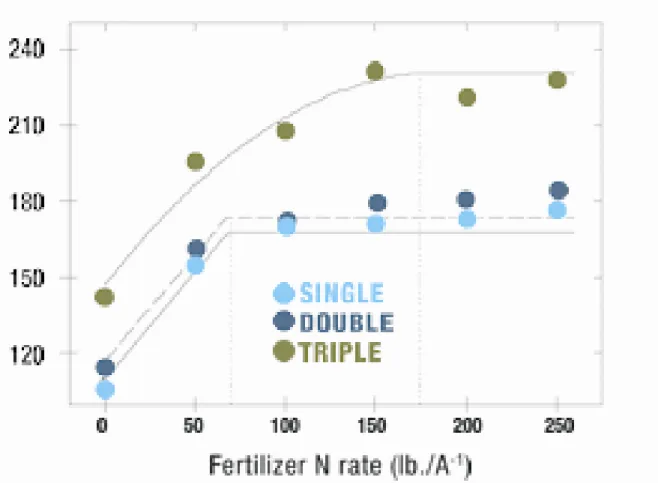
Below, et al. (2007) investigated genetic improvement in nitrogen use efficiency through three studies. For all of these, hybrids were grown with varying levels of nitrogen, ranging from deficient (0 lb N/acre) to excessive (300 lb/acre). One study, a comparison of the same hybrid with varied degrees of transgenic traits—including single (herbicide resistance), double (herbicide resistance and corn borer Bt) and triple (herbicide resistance, corn borer Bt, and rootworm Bt)—is used to evaluate the impact of the rootworm Bt trait. The group does not believe the large yield advantages they previously observed in corn containing the rootworm trait are entirely due to rootworm control, and they hypothesize the rootworm Bt trait inadvertently altered corn‘s nitrogen requirement. Data from the study shows a large yield advantage of more
than 50 bushels per acre in the hybrid version containing the Bt rootworm trait, but only with a nearly 100 pound per acre increase in the nitrogen fertilizer rate needed to achieve maximum yield. In another case, inclusion of the rootworm Bt trait increased yield without changing the nitrogen level needed to achieve maximum yield. In yet another case, yield increased and the nitrogen level needed to achieve maximum yield decreased.
Based on these results, it is difficult to determine the extent to which the presence of the transgene for the rootworm Bt trait affects nitrogen use, but consistent yield increases do indicate
29
a correlation between the trait, yield and nitrogen response (Below, et al. 2007; Below, 2008b) (See Figure 7).
2.7 SUMMARY AND CONCLUSIONS
The trend yield literature reflects that corn yields have changed over time. In the past century, increased corn yields can be attributed to improved cultural practices and plant breeding. Plant breeding not only encompasses traditional breeding methods, but also the application of transgenic traits in hybrids since the mid 1990s, which since that time has been used in addition to traditional plant breeding. Although there is historical precedence to support the notion that increased trend yield are associated with a new agricultural technology, such as when hybrid corn and nitrogen fertilization were introduced, a possible weather effect must also be considered (Tannura et al., 2008). Yield is determined by a complex assortment of factors besides technology, specifically weather, nitrogen fertilization, hybrid selection, previous crop plant population, tillage, and chemicals (Below 2008a). Due to this complexity, it is difficult to conclude that technology, or any other single factor, has the ability to change yields over time.
As of 2009, there are two major types of traits in commercialized transgenic corn: insect resistance—including traits for resistance to corn borer and rootworm—and herbicide
tolerance—including traits for resistance to glyphosate herbicides and glufosinate herbicides. The assumption can be drawn that the traits should add more value to yield in years in which environmental conditions are less than optimal.
30
The seed technology companies who develop transgenic corn hybrids use a combination of traditional breeding methods and biotechnology techniques. The companies offer only a limited selection of conventional hybrids and refuge hybrids and most emphasis is placed on their most advanced triple-stack corn hybrids. Since the introduction of triple-stack hybrids, farmers have uncertainties about relative costs, profitability and yields (Marra et al., 2003). Commercial farmers who would like to do on-farm comparisons of the same hybrid with varying levels of traits are generally prevented from doing so due to the selection of hybrids available.
Such comparisons would aid farmers in determining if the triple-stack hybrids have a large enough economic return to cover the additional price premium they must pay to purchase the hybrids with traits. Although farmer perception in agriculture is not a widely studied area, the ability to understand farmer perception is important (Adesina and Baidu-Forson, 1995), in this case to determine why farmers are adopting triple-stack corn hybrids. Adoption rate can be used as an indicator of farmers‘ perceptions of a technology, and unlike some of the other
indicators, an objective data source can be used. Data cited earlier is available that includes the percent of corn acres hybrids with different traits are planted on, but it is possible that farmers have adopted based on selection available and not necessarily based on their perceptions. Direct elicitation and surveys are two other methods used to determine farmer perception, and both include the collection of subjective data.
A number of studies provide background on prior research evaluating the performance of transgenic crops in comparison to non-transgenic crops. The general conclusion is that there is no sound experimental evidence that clearly demonstrates the presence of traits in crops causes a
31
crop to have greater yields. An exception to this is the research by Below (2007). In his comparison of the same hybrid with varying levels of traits, the triple-stack hybrid did have significantly higher yields. On one hand this is an ideal comparison—same hybrid planted at the same time with one, two and three traits—but, on the other hand, this experiment was conducted with a single hybrid, in one year at one location, so it does not have as much depth as some of the other studies reviewed. By and large, the research points to background genetics of a hybrid, regardless of traits present in the hybrid, as the primary factor affecting yield.
Overall, the conclusions drawn about yields from studies based on surveys tend to be more optimistic than those drawn from studies based on experimental results. Therefore, the literature review provides support for the hypothesis of this study, that farmers‘ subjective beliefs about triple-stack corn hybrid yields are greater than objective evidence would indicate.
32
CHAPTER III: YIELD TRIAL EVALUATION 3.1 INTRODUCTION
In this chapter, objective evidence on corn yields is presented, thereby accomplishing objective 1; evaluating the effect that traits in hybrids have on corn yields, especially in triple-stack hybrids. Data for this analysis comes from the University of Illinois hybrid test trials. This dataset includes yields over a five year period from corn hybrids containing a variety of traits; more detailed descriptions of the data and the trials are in the following sections. Descriptive statistics on hybrids with traits and yields for conventional and traited hybrids is then presented in the ―Data and Descriptive Statistics‖ section. Testing of the data is conducted using linear
regression models. These models allow for control of the absence and presence of traits. The models used and the empirical results from those models are presented in the ―Statistical Testing for Differences in Conventional and Traited Hybrids‖ section. In the ―Regression Results by Year‖ section, the effect of traits for each year is analyzed. Later, the objective data from this
chapter is used as a basis for comparison to farmer perception on the impact that the insertion of transgenes into corn hybrids has on yield.
3.2 YIELD TRIAL DESCRIPTION
To compare how farmer perception of triple-stack corn hybrid yields match up to objective triple-stack corn yields, a source of objective evidence is needed. The United States Department of Agriculture-National Agricultural Statistics Service provides an online database of yields for each year on a national, state and county level. While that data provides an excellent source of information to judge overall yield trends, it does not include a record of the hybrids planted and therefore could not be used as a sole data source in this study. It is
33
challenging to find a perfect data source because, as noted in Chapter II, yield is impacted by the interaction between numerous factors. Several universities conduct corn yield trials annually, and they are, perhaps, the best source of data available for this study. Therefore this study is based on objective data from the University of Illinois hybrids test trials that include a sound record of genetics in the hybrids planted and consistency in planting methods.
Beginning in 2004, consistent documentation of the traits in each hybrid was kept. Therefore, data from 2004-2008 is used for comparisons between traits. Traited hybrids were first entered in the trials from 1997-2003, but the traits were not documented during that time period. Although the data from 1997-2003 cannot be used for hybrid trait comparisons, it is presented and used for benchmarking purposes. The corn hybrid test trials are conducted
annually by the Department of Crop Sciences at the University of Illinois (University of Illinois, Department of Crop Sciences, 2009).
Producers of hybrid seed corn in Illinois and surrounding states are invited to enter hybrids. Although entry fees in earlier years were lower, since 2002, the ―entrants‖ (hybrid corn
producers) have paid a fee of $240 for each corn hybrid entered in a region. The entry fees are a means of financing for the trials. The entrants voluntarily choose what hybrids, and how many different hybrids to enter, and may have motives for making their selections. A few
experimental hybrids are entered, but most hybrids in the trials are available commercially. Given that hybrids used in the trials are selected by the entrants, plots are not necessarily a representative sample of what is commercially grown. However, hybrids in the plots at each
34
location are exposed to the same growing conditions and cultivation practices. Therefore, results from the trials can be used to assess the hybrids included in the trials.
Between 1997 and 2008, the number of corn hybrids entered in the trials ranged from 311 to 532 and the number of entrants ranged from 43 to 72. The numbers of corn hybrids entered and the number of entrants have both declined in recent years (See Table 4).
For the purpose of the test trial study, the state of Illinois is divided into four major regions, the Western, Northern, Eastern and Southern regions. There are three fields in each region, for a total of twelve field plot locations. In all years, the Western region includes a field near Monmouth, the Northern region includes a field near DeKalb, the Eastern region includes a field near Urbana and the Southern region includes a field near Carbondale/Elkville. These locations are constant from 1997-2008. Some of the other field locations have been added or changed during that time period. In 2008, trials were planted in fields at the following locations in Illinois with the stable location in all years listed in bold font (See Figure 8):
Western Region: Monmouth (Warren County), New Berlin (Sangamon County), and Perry (Pike County);
Northern Region: DeKalb (DeKalb County), Erie (Whiteside County), and Mt. Morris (Ogle County);
Eastern Region: Dwight (Livingston County), Goodfield (Woodford County), and Urbana (Champaign County);
Southern Region: Belleville (St. Clair County), Elkville/Carbondale (Jackson County), and St. Peter (Fayette County).
35
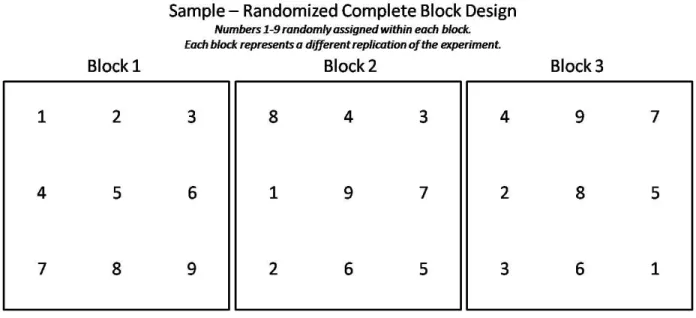
All selected test fields have high fertility levels to prevent yield limitation that could occur if fertility levels were too low. Fertilizer is plowed down or side dressed as needed. The field plots are arranged in a randomized complete block design or an alpha lattice design with three replications. Typically, the randomized complete block is used for smaller trials while the alpha lattice is used for larger trials. For the randomized complete block design, all hybrids in the experiment are randomly assigned within each block. A separate block is used for each replication (See Figure 9, Panel A). The alpha lattice design is similar except small groups of hybrids are assigned to sub-blocks which make up the complete block. Like the randomized complete block, each complete block is considered to be one replication (See Figure 9, Panel B). Both designs allow for calculation of the least significant difference, a method the Crop Science Department at the University of Illinois uses to compare entries to one another.
Tillage practices vary across locations and include work done in the fall and spring. A modern four row planter with modifications for small plot work is used to plant all trials. Force—a soil insecticide targeting corn rootworms, cutworms, white grubs, and wireworms—is applied in furrow while planting all corn trials, including corn with traits for rootworm
resistance. It is important to point out that herbicides used vary across locations. No herbicides with either active ingredient—glyphosate or glufosinate—are used in the trials, due to the presence of hybrids in the trials that are not resistant to one or both of the herbicides. It is possible the performance of hybrids containing herbicide traits for resistance to glyphosate, glufosinate, or both, could be altered when the corresponding herbicide is not applied.
36
The four-row, 21 to 23 foot long, corn plots are over planted by 10% and thinned to desired stand. The hybrid yields are determined at harvest from the center two rows of the four row plot. A custom-built, self-propelled, corn plot combine is used to harvest all corn plots. Grain from each plot is weighed, and moisture content is collected. Possible grain lost in harvest is not taken into account. Reported yields are the result of grain weight and moisture converted to bushels per acre of No. 2 shelled corn at 15.5% moisture (Department of Crop Sciences, 2009).
3.3 DATA AND DESCRIPTIVE STATISTICS 3.3.1 NUMBER OF OBSERVATIONS
An observation is a hybrid planted at one location. A hybrid planted at more than one location is treated as multiple observations. Therefore, the number of observations will be greater than the number of specific hybrids. Observations for all trials in all locations each year ranged from 558 to 1,181 between 1997 and 2008 (See Table 5). The number of observations over all years in that time period ranged from 100 to 176 in the Western region, from 133 to 318 in the Northern region, from 167 to 405 in the Eastern region, and from 96 to 348 in the Southern region (See Table 5).
3.3.2 YIELD AVERAGES ACROSS TIME AND LOCATION
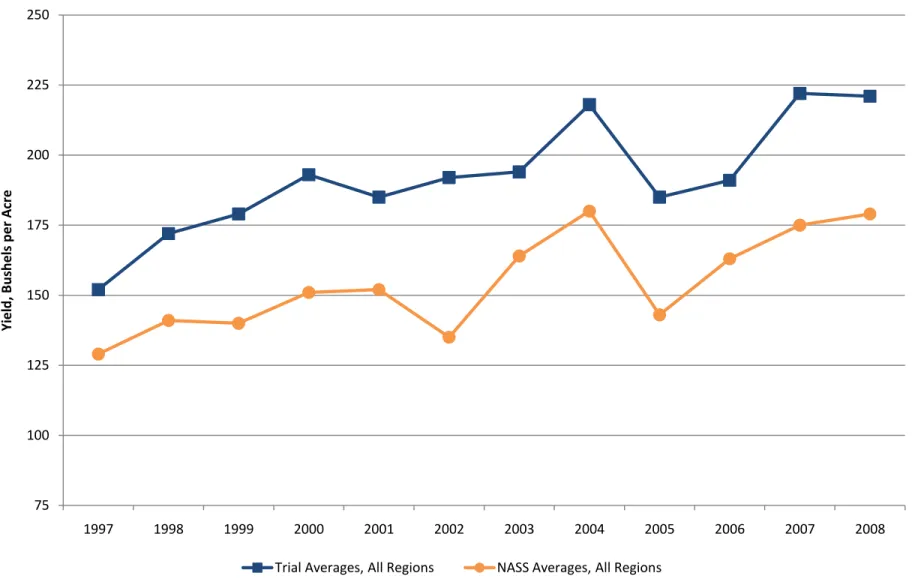
Yield averages by year ranged from 152 to 222 (See Table 6). Yields improved by 45% between 1997 and 2008. Although not a noteworthy drop, the yield average for 2008 was 1 bushel per acre less than in 2007. Other exceptions to yield increase are the 2001, 2005, and 2006 crop years. The drop in 2001 came after the unusually high yields