A CAUSAL-COMPARATIVE STUDY OF STRATEGIES DESIGNED TO DECREASE DISCIPLINE INCIDENTS IN URBAN ELEMENTARY SCHOOLS
by
John Christopher Jung Liberty University
A Dissertation Presented in Partial Fulfillment Of the Requirements for the Degree
Doctor of Philosophy
Liberty University 2020
A CAUSAL-COMPARATIVE STUDY OF STRATEGIES DESIGNED TO DECREASE DISCIPLINE INCIDENTS IN URBAN ELEMENTARY SCHOOLS
by John Christopher Jung
A Dissertation Presented in Partial Fulfillment Of the Requirements for the Degree
Doctor of Philosophy
Liberty University, Lynchburg, VA 2020
APPROVED BY:
Monica Huband, Ed.D., Committee Chair
ABSTRACT
Urban schools have struggled to overcome the achievement gap, including the most recent issue of inequity of discipline within the schools. A causal-comparative design was used to find whether the varying strategies alleged to successfully decrease discipline issues are as effective within urban elementary schools as in suburban schools. The sample included 790 public, elementary, urban or suburban schools within the state of Ohio that drew on ex post facto data of discipline incidents and enrollment from the school years of 2017-2018 and 2018-2019 acquired from the Ohio Department of Education. The large sample of schools in both urban and
suburban groups allowed for stronger validity. The researcher used an independent samples t-test as the main analysis procedure, but there was a violation of Levene’s t-test of homogeneity of variance. For this reason, the Mann-Whitney U test was used to verify the t-test results. In both analyses, a comparison of the urban schools and the suburban schools was shown to have no statistically significant differences in the decline of discipline incidents per student between the two groups. From these results, the conclusion was that the urban schools have success similar to suburban schools using the state mandated PBIS strategies. Further research should include a closer examination of which strategies are the most effective.
Copyright Page
© 2020
John Christopher Jung ALL RIGHTS RESERVED
Dedication
This manuscript is dedicated to my personal trinity. The first is my dad, Ed Jung, who instilled in me the love of learning, life, and the religious foundation that set me on my path for a life of faith. My wife Kristie has continued that trend in my life by being my friend, confidant, encourager, helper, and supporter throughout this journey. I love you both, I thank God for you, and I want you to know that I am who I am today because of what you have done and continue to do for me.
Most of all, I praise my Lord for all of His rich blessings and unending mercies. I am nothing on my own but everything because He gives me all I need. Thank you, Lord, for helping me do this!
Acknowledgments
I would like to acknowledge the amazing faculty at Liberty University in the School of Education, specifically Dr. Keith, Dr. Pantana, Dr. Smith, Dr. Black, and Dr. Claxton, for their wonderful instruction and encouragement. You paved the way for this to happen. Thank you more so to Dr. Watson and Dr. Huband who guided and encouraged me through the challenges to achieve the goal.
Table of Contents ABSTRACT ... 3 Copyright Page ... 4 Dedication ... 5 Acknowledgments ... 6 List of Tables ... 10 List of Figures ... 11 List of Abbreviations ... 12
CHAPTER ONE: INTRODUCTION ... 13
Overview ... 13
Background ... 13
Problem Statement ... 17
Purpose Statement ... 18
Significance of the Study ... 18
Research Question ... 19
Definitions ... 19
CHAPTER TWO: LITERATURE REVIEW ... 21
Overview ... 21 Theoretical/Conceptual Framework ... 22 Behaviorism ... 22 Social-Cognitive Learning ... 24 Transformative Learning ... 24 Related Literature ... 25
School-to-Prison Pipeline ... 25
Disproportionality ... 27
Exclusionary Discipline (ED) ... 29
School Climate ... 31
Strategies for Decreasing Discipline Incidents ... 34
Fidelity of Implementation ... 52
Role in Ohio Schools ... 53
Summary ... 53
CHAPTER THREE: METHODOLOGY ... 55
Overview ... 55
Design ... 55
Research Question ... 56
Null Hypothesis ... 57
Participants and Setting ... 57
Instrumentation ... 58
Procedures ... 58
Data Analysis ... 59
CHAPTER FOUR: FINDINGS ... 63
Overview ... 63
Research Question ... 63
Null Hypothesis ... 63
Descriptive Statistics ... 64
CHAPTER FIVE: CONCLUSIONS ... 70
Overview ... 70
Discussion ... 70
Implications ... 73
Limitations ... 74
Recommendations for Future Research ... 76
REFERENCES ... 78
List of Tables
Table 1 Group Statistics ... 644 Table 2 Independent Samples t-Test ... 677 Table 3 Mann-Whitney U Test ... 677
List of Figures
Figure 1 Proportion of students with varying numbers of ODRs in Horner’s studies versus inner-
city. ... 14
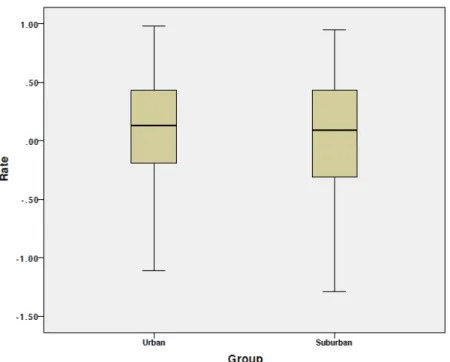
Figure 2 Box and whisker plot of data in categorical groups. ... 66
Figure 3 Histogram of the urban data on rate change in discipline incidents. ... 68
List of Abbreviations Exclusionary Discipline (ED)
Lesbian, Gay, Bisexual, Trans, Queer, etc. (LGBTQ+) Office Discipline Referral (ODR)
Ohio Department of Education (ODE) Peer Mediation (PM)
Penn Resiliency Program (PRP)
Positive Behavior Intervention and Supports (PBIS) Positive Behavior Supports (PBS)
Positive School Culture (PSC) Progressive Discipline (PD) Restorative Justice (RJ)
CHAPTER ONE: INTRODUCTION Overview
Urban schools have struggled through decades of scrutiny and research-based initiatives to overcome the suspected causes of the achievement gap. One of the most recent challenges is student behavior management, which is most visible using state reported data from discipline incidents. Urban schools have striven to decrease the number of disciplines incidents in order to also increase achievement and attendance. The topic of the current study is a comparison of the effectiveness of collective strategies between urban and suburban elementary schools.
Background
According to the data recorded on discipline incidents nationwide (often measured in Office Discipline Referrals or ODRs), African Americans, Hispanics, and Latinos are much more likely to be given an ODR and punished more severely than their Caucasian peers (Gastic, 2017). This disparity is evident at all socio-economic levels but is compounded in urban
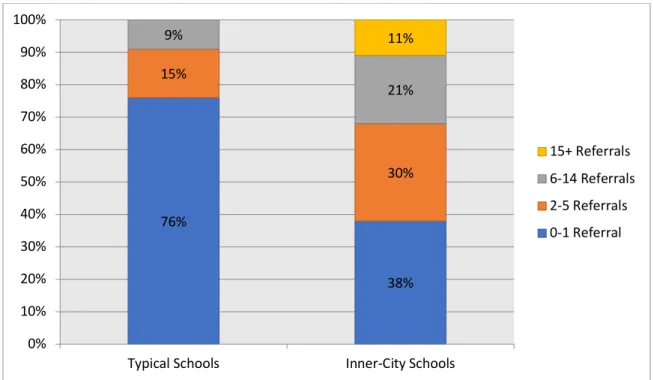
schools, which often have higher percentages of minorities at lower socio-economic levels and often with higher frequencies of disabilities (Esin, Dursun, Acemoglu, & Baykara, 2015). Each of these factors have individually been found to acquire elevated rates of ODRs, so the larger population found in urban schools creates a community that is even more likely to receive ODRs. Warren (2003) observed the variances between the schools referenced as typical and inner-city schools as they pertain to school-wide positive behavior intervention supports and found both the number and frequency of ODRs to be drastically different. Figure 1 illustrates these differences.
Figure 1. Proportion of students with varying numbers of ODRs in Horner’s studies versus inner-city (Warren et al., 2003).
Teachers often admit that in any circumstance and with any given child, the ultimate goal is for the child to modify the behavior and conform to the rules and expectations set forth by the school community. Yet, a higher rate of ODRs is often a sign that the behavioral climate is not conducive to achieving its goal and fails to modify the students’ behaviors accordingly (Irvin, Tobin, Sprague, Sugai, & Vincent, 2004). This data left researchers asking why the process continues to be used despite its failure to sufficiently modify behaviors.
Behavior modification began with Ivan Pavlov (1849-1936) and his early ideas of
behaviorism (Alberto & Troutman, 2006; Miller, 2011). His work with animals led to his theory of classical conditioning. Pavlov’s theory was later applied to humans by John Watson (1878-1958) who became known as the father of behaviorism (Knight, 2006). Some controversial methods and radical purports diminished Watson’s credibility and reputation. B. F. Skinner (1904-1990) rejuvenated the concept of behaviorism with what he called operant conditioning,
76% 38% 15% 30% 9% 21% 11% 0% 10% 20% 30% 40% 50% 60% 70% 80% 90% 100%
Typical Schools Inner-City Schools
15+ Referrals 6-14 Referrals 2-5 Referrals 0-1 Referral
which focused more on consequences leading to behavior modification (Slavin, 2012). Despite their differences in theories, all three of these men shared the idea that behavior was teachable and changeable.
Two other theories also guided creation of some of the recommended strategies for decreasing the number of discipline incidents in schools. The social-cognitive learning theory extends the concepts of behaviorism into social situations and notes the connection of social interactions and whether they encourage or discourage behaviors (Brauer & Tittle, 2012). Jack Mezirow’s (1923-2014) transformative learning theory takes the concept even further by incorporating interpretation of events and experiences surrounding an individual as a factor in behavior and extends the theory of behaviorism to include emotions and thoughts as possible change agents (Mezirow, 1996).
The general practice of behavior management over the past several decades has been based on Skinner’s behaviorist concepts of rewards and consequences as being predictors of future behavior (Irby & Clough, 2015; Leach & Helf, 2016). These consequences generally came in the form of punishment and were considered the standard strategy for discipline
including a hierarchy of punitive consequences, such as (a) warning, (b) time-out, (c) phone call home, and (d) discipline referral. One of the main strategies within this system that has more recently undergone scrutiny is exclusionary discipline (ED), which includes any form of removal from the classroom and has been used frequently in urban elementary schools over the years (Fenning & Rose, 2007; Gonsoulin, Zablocki, & Leone, 2012; Green, Maynard, & Stegenga, 2017; Ispa-Landa, 2018; Mallet, 2016; McIntosh, Ellwood, McCall, & Girvan, 2018; McNeill, Friedman, & Chavez, 2016; Morton, 2014; Pyne, 2019; Ryan & Zoldy, 2011; Shah, 2013; Skiba, 2014; Stinchcomb, Bazemore, & Riestenberg, 2006; Townsend-Walker, 2014; Welsh & Little,
2018). Exclusionary discipline succeeds in a temporary elimination of the problem behavior, but the student who is removed is generally placed in a setting that is not conducive to academic or behavioral learning (Kennedy-Lewis, 2013; Martinez, McMahon, & Treger, 2016).
In recent years, researchers have recommended a more introspective approach toward student behavior modification, which is attributable to the behavioral concepts of Mezirow’s (1996) transformational learning theory and the social-cognitive theory. Researchers have begun to analyze the various possible roots of inappropriate behavior of students and also the behavior modification practices of schools and districts through the lens of improving behavior. This has led to an assortment of solutions currently observable in schools.
When asked, teachers from different schools described their administrations’ efforts to diminish ODRs in a myriad of ways. Many studies shared about the deeply rooted positive behavior intervention supports that had been put into place methodically and intentionally by a representative team of stakeholders (Algozzine, Christian, Marr, McClanahan, & White, 2012; Childs, Kincaid, George, & Cage, 2016; Cressey, Whitcomb, McGilvary-Rivet, Morrison & Shander-Reynolds, 2014; Feuerborn & Tyre, 2012; Gage, Grasley, George, Childs, & Kincaid, 2019; George, 2017; Kim, McIntosh, Mercer, & Nese, 2018; McDaniel et al., 2018; Molloy, Moore, Trail, Van Epps, & Hopfer, 2013), while others stated that the administration simply changed the policies by disqualifying certain offenses for an ODR (DeMatthews, Carey,
Olivarez, & Saeedi, 2017; Englehart, 2014; Fenning & Rose, 2007; Van Dyke, 2016). These two examples show a wide range of theories in the approaches taken. The first is student focused and seeks to use restorative practices with the students. The other targets change in adult behaviors, which addresses the possible impact of adult interactions with students on student behavior. These demonstrate the drastic diversity of potential solutions that are created in the face of this
particular issue. In addition to these potential solutions, school districts throughout the United States have used the following strategies to address student behavior: policy reform, cultural responsiveness, school-wide structure and predictability, clear expectations with specific rules, behavioral instruction, data-driven decisions, effective instructional delivery and student engagement, professional development for teachers maximizing positive interaction,
acknowledging expected behavior, and responding to rule infractions. These strategies have had mixed reviews of success. At times, a given strategy might succeed initially at lowering the number of discipline incidents, but it may or may not have the persistence to keep the numbers low (Mathews, McIntosh, Frank, & May, 2014).
Essentially, the strategies in question are derived from various theories in the realm of behaviorism. Some are student-focused while others are more teacher-driven, but all have the same goal in mind—to decrease student misbehavior and therefore decrease discipline incidents. This increasingly large array of strategies compounded by other challenges faced by urban elementary schools can leave the leadership administration confused and struggling to determine whether they really have accomplished their goals in all of the various school settings.
Problem Statement
The research on the topic of lowering discipline incidents in schools has grown
significantly over the past ten years but primarily addresses middle and high schools in middle class or affluent communities. There is a significant gap in the data on the effectiveness in urban elementary schools of the strategies for reducing discipline incidents. As mentioned previously, strategies and methods that work in schools of middle class and affluent communities do not always have the same results for the diverse and impoverished urban schools (Hambacher,
2018). The problem is that urban elementary schools do not know how they are faring compared to suburban schools in the area of behavior management improvement.
Purpose Statement
The purpose of this causal-comparative study was to use quantitative analysis to
determine whether urban elementary schools were having the same impact on student behavior as the suburban elementary schools as measured by the rate of change in discipline incidents. The ex post facto data from the Ohio Department of Education (ODE) including student
enrollment and discipline incidents for school years 2017-2018 and 2018-2019 were analyzed to determine whether there is a congruent drop in average discipline incidents per student in both urban and suburban schools.
Significance of the Study
The data from this research will guide future administrative decisions to address unwanted behaviors to decrease discipline incidents. This study showed that the strategies currently implemented by the ODE are working (Ohio Department of Education, 2020) and that other interventions are not necessarily needed in the urban schools to close the achievement gap in student behavior. A rejection of the null hypothesis suggested that these strategies are not significantly different in effect in urban schools than they are in suburban schools, which also proposed that the previous studies that were not focused on urban schools were applicable. This is helpful to urban elementary schools that often feel as if they are struggling to maintain student behavior when the facts show that things are improving (Mallett, 2015). The large sample of participating schools and the diversity of the students within those schools indicate that the results of the study can be applied to other urban elementary schools beyond the state of Ohio that face similar challenges (Ghasemi & Zahediasl, 2012).
Research Question
The purpose of this research study was to determine if a significant difference exists between the rate of change in the frequency of discipline incidents of urban elementary schools and suburban elementary schools in Ohio. Researchers recommend the need to decrease the frequency of discipline incidents to bring equity to the forefront and to focus on serving those populations that are receiving a disproportionate number of discipline incidents. They should do so using strategies that promote student learning and allow students to remain in the classroom. The research question for this study was:
RQ1: Is there a difference in the rate of change in the frequency of discipline incidents between urban elementary schools and suburban elementary schools?
Definitions
1. Behavior management - Any combination of actions or conscious inactions to enhance the probability that students, both individually and in groups, will behave appropriately. Behavior management is designed to minimize misbehavior and to maintain order, safety, and student obedience to rules and superiors (Bear, 2012)
2. Caucasian - A person of white skin and/or European origin. Many studies cited within the current literature vary on which term is used, but for the sake of consistency, this term was used for all references to this demographic.
3. Discipline incidents - Any behavioral infraction that is formally documented at the school level and registered with the state. Discipline incidents are recorded only in the state of Ohio if a discipline action was given in response to a student’s behavior infraction (Ohio Department of Education, 2020).
4. Elementary - For the purpose of this study, elementary schools include kindergarten through sixth grade.
5. Office discipline referrals (ODRs) - A formal written account of a behavior, procedure, or policy infraction that transfers jurisdiction of the student’s infraction from the staff member to the administration. ODRs allow for the collection of data about the nature of the infraction, which can be used collectively with data from other ODRs to help
diagnose and prevent future similar infractions.
6. Suburban – A categorization of schools by the State of Ohio’s Department of Education that delineates schools in an environment that is low poverty and average to very large student population
7. Urban - A categorization of schools by the State of Ohio’s Department of Education that delineates schools in an environment that is high poverty and has an average to very large population (Ohio Department of Education, 2013b).
CHAPTER TWO: LITERATURE REVIEW Overview
School accountability now extends beyond academic achievement into student behavior. An increasing number of researchers are analyzing data from office discipline referrals (ODRs), suspensions, and expulsions and the negative impact that exclusionary practices have on
students. Included in the findings of these studies is the concern about the disparity in numbers between male students of color and their Caucasian counterparts as it pertains to the number of disciplinary incidents as well as exclusionary consequences. While ODRs and exclusionary consequences are not the same, it is important to note that ED is always preceded by a discipline referral, which is then assigned a consequence. Decreasing behavior issues and ODRs would also result in decreasing exclusionary practices (Freeman et al., 2016). The research data has led educational leaders and lawmakers to create policies and procedures that bring equity into focus by lowering the frequency of ODRs received by those overrepresented, and to find
non-exclusionary ways to redirect the students’ behavior in and out of the classroom (Kaufman et al., 2010; Welsh & Little, 2018).
This new focus on decreasing discipline issues and bringing equity into the picture creates a unique challenge for urban communities to overcome. Urban schools have a much higher percentage of children of color (Kunesh & Noltemeyer, 2019) with children of color making up 72% of the urban schools’ student bodies (Englehart, 2014; Kinsler, 2011; National Center for Education Statistics, 2019; Sobalvarro, Graves & Hughes, 2016). The elevated levels of poverty affecting children who attend urban schools exacerbate these matters through mental and emotional health issues, increased trauma and its aftermath, and malnourishment that leads to physiological and psychological complications (Esin et al., 2015; Fenning & Rose, 2007;
Kunesh & Noltemeyer, 2019; McDaniel et al., 2018; Silva, Langhout, Kohfeldt, & Gurrola, 2015; Warren et al., 2003). Overcoming these challenges within the new policies and
regulations requires change, which begs the question of whether there is a difference in the rate of change in the frequency of discipline incidents in urban elementary schools and those of suburban elementary schools.
Theoretical/Conceptual Framework
The comparative effects of behavior modification on the rates of change of discipline incidents in urban and suburban schools was analyzed in this causal-comparative study. The primary foundational framework extends from behaviorism, but some strategies draw on the concepts of social-cognitive theory and transformative theory as well. These theories are defined and described to the extent that it is necessary to understand the foundation of each included strategy. The core of this study stemmed from the idea that behavior in students can be modified through specific targeted actions and strategies. This draws its roots directly from the theory of behaviorism.
Behaviorism
The concept of behaviorism is grounded on the hypothesis that all behaviors are
acquired through conditioning (Cherry, 2018). Behaviorism is considered an objective science in which those who adhere to it study behavior without any consideration of the mental process behind the behavior (Miller, 2011). It focuses on observable behaviors, not thought or emotion (Alberto & Troutman, 2006; Miller 2011). Behaviorism stresses the behavior must be
measurable and observable in some quantitative way. Behaviorists are concerned with describing behavior instead of explaining it, and they seek to both find and validate the
(Alberto & Troutman, 2006).
Behaviorism took root from Ivan Pavlov (1849-1936), who studied behavior modification in animals in the late 1800s and early 1900s. He inadvertently discovered a phenomenon he called conditioning while studying digestion in dogs. Pavlov called this phenomenon classical conditioning, which was described as “the process of pairing stimuli (a conditional and
unconditional stimulus) so that the unconditional stimulus elicits a response” (Alberto &
Troutman, 2006, p. 19). Pavlov’s studies demonstrated how one action could prompt a reaction and how behavior can be taught through a series of repeated conditional events (Slavin, 2012).
John Watson (1878-1958) was known as the “father of behaviorism” (Knight, 2006) and applied Pavlov’s work in classic conditioning directly to humans. Watson conditioned an 11-month-old baby to fear a white rat (Miller, 2011). He asserted in his “declaration of
behaviorism” that psychology’s goal should be to predict and control human behavior instead of defining states of consciousness. Watson even purported to be able to take any healthy, well-formed baby and train the baby to be whatever he desired based on behaviorism’s principles, regardless of the heritage of the child (Knight, 2006; Miller, 2011). Watson believed that feelings and thoughts were not of value in the study of psychology (Knight, 2006) and that the focus should be on what could be measured and directly observed (Alberto & Troutman, 2006; Miller, 2011).
B. F. Skinner (1904-1990) took Pavlov’s discoveries from simple reflexive behaviors into what he referred to as operant behaviors, which included a much broader range of behaviors that operate on the environment without any unconditioned stimuli (Slavin, 2012). Instead, these behaviors were controlled by consequences. Pleasurable consequences encourage the behavior to continue while unpleasant consequences lead to changed behavior. This later became known
as behavior modification. This concept of programming human behavior led to many developments in education, and many tangents of Skinner’s work feed into the strategies contained herein.
Social-Cognitive Learning
Social learning theory extends behaviorism from rewards and consequences to social situations. Social learning theorists recognize the connection between social interactions and the encouragement or discouragement of behaviors. Education is a very social atmosphere and social learning theory addresses the various interactions and the possible impact they can have on desired behaviors of the students. Behavior is learned through both direct and indirect
reinforcement, and undesired behavior can be taught in the same way as the desired behavior (Brauer & Tittle, 2012). Cognitive learning theorists propose that behaviors are learned based on a combination of individual learning styles, the depth of rigor and relevance in the curriculum, and the network of support from other sources including technology and family (Ali & Saunders, 2006; Brauer & Tittle, 2012). Through these pathways to the brain, behavior is learned and defined. Once an individual has the opportunity to apply a learned behavior or piece of
information to a real-life scenario, the information will be stored in long-term cognition (Ali & Saunders, 2006).
Transformative Learning
Transformative learning theory was developed by Jack Mezirow (1923-2014) and is described as a process of changing cognitive, conative, and emotional components and is focused on both habits of the mind and perspective. In essence, transformative learning theorists utilize a previous interpretation of an experience to create new meaning or revision of an existing
transformative learning make up an extension of the behavioristic concepts. Theorists now enter into the realm of thoughts and emotions but maintain the idea that behavior can be redirected. Transformative learning has been used in educational research to help understand how beliefs and social structures influence student learning (Mezirow, 1996). It allows theorists to
acknowledge the complexity of human thought and reasoning as well as the various constructs that guide reasoning and action.
Related Literature
State boards of education and educational researchers have turned their focus beyond the academic realm to one of the greatest classroom hindrances to academic achievement – student behavior and disruption. With data at the center of every decision made, it is only fitting that ODRs have become the focal point for most studies dealing with discipline. These documents offer a wealth of information that allows schools, districts, and state boards to track who is being disruptive, where disruptions are happening, when they are most likely to occur, and what behaviors are common (McIntosh et al., 2017). As this data has been compiled and analyzed, patterns have been found that show large discrepancies between socio-economic and ethnic groups, which has brought the topic of inequity in discipline to the forefront of the research. School-to-Prison Pipeline
One of the main concerns about school discipline is that the school systems are
functioning in a similar manner and creating a direct pathway into the prisons for those who do not follow the rules. Both schools and the justice system have traditionally adhered to a
mentality of crime and punishment. These systems focus on catching those who break the rules and serving them a consequence that is meant to prevent them from making the same choice again. Despite their best interests for the students, policymakers and stakeholders created a
system that has shown little to no success in modifying the actions and choices of the students who are caught up in this systemic chain of punishment (Young, Young, & Butler, 2018). The findings intimate that many students who commit rule infractions are not socially knowledgeable or equipped to respond appropriately within the school setting of rules and procedures due to circumstances beyond the school’s control. Any form of ED (suspension or expulsion) would remove these students from the realm of the school’s control and put them solely into the environment that has failed to help them thus far (Ryan & Zoldy, 2011). Administrators and teachers must then create proactive methods of preventing misbehavior or change the way they approach consequences so that students can truly learn from the mistake and be better equipped to act appropriately in the future (Anyon et al., 2016; Englehart, 2014).
Schools with larger populations of minority and underprivileged students statistically have more anti-violence rules and policies, despite the decline in violent crimes by young people, which has plummeted anywhere from 30% to 45% since its peak in 1994, depending on the specific offense (Mallett, 2015; Puzzanchera & Hockenberry, 2013). The increase in school resource officers (SROs), zero-tolerance policies, and the unintended social-emotional impact of these policies on minorities has created an atmosphere of hopelessness for those who struggle with behavior, oftentimes for reasons that are not their personal fault nor insurmountable with proper guidance and instruction (Mallett, 2015). Those students who are affected by this movement have had families and teachers utilize legal and criminal justice terms when
discussing the student offense in question, which creates more negatively perceived interaction that leads directly to the student entering the justice system and the school-to-prison pipeline (Kayama, Haight, Gibson, & Wilson, 2015).
In a school and community that has already been marginalized by social structures and living conditions, it is unrealistic to expect children who often live under the expectations of failure and inferiority to come to school without bringing those same expectations along. Whether intentionally or subconsciously, many contexts within the school could be inherently racist and further marginalize the majority of the student population in many urban elementary schools. This is the string of perceived failure that can often lead to misbehavior, then to punitive responses, then to the justice system (DeMatthews, 2016).
Disproportionality
According to the discipline incident statistics, people of color, including Hispanics, Latinos, and African Americans, are all disproportionately disciplined compared to their
Caucasian counterparts (Gastic, 2017). The figures on Latino and Hispanic students are mixed, showing that they are disciplined less in elementary school but more in high school (Martinez et al., 2016). This disparity does not carry over to the data representing the African American population, which are consistent throughout all grade levels. The data also reveal that an African American male is twice as likely to be disciplined via an ODR than a Caucasian male (Kaufman et al., 2010; Kennedy-Lewis, 2013; Martinez et al., 2016; Smolkowski, Girvan, McIntosh, Nese, & Horner, 2016) and often faces harsher punishment (Gastic, 2017; Skiba, Michael, Nardo, & Peterson, 2002). African American girls are also more likely to receive an ODR and be punished with ED than any other demographic of girls (Kemp-Graham, 2018). There have been
preliminary figures advocating that economically disadvantaged students and student members of the LGBTQ+ community are facing higher than proportionate disciplinary consequences as well (Whitford, Katsiyannis, & Counts, 2016). These figures do not change significantly when controlling for other factors such as poverty, student-teacher ratio, and participation in gifted
programs, which could lead to the conclusion that systemic racism could be a factor
(Smolkowski et al., 2016). Kinsler (2011) also found no basis for racial bias when comparing the race of the student with the race of the administrator assigning the consequence, which strengthens the point that the problem could indeed be systemic. Both Kinsler (2011) and Smolkowski et al. (2016) found that the majority of disparity in the assignment of ODRs by teachers and ED by administrators occurred when the vulnerable decision points included subjective infractions such as disrespect. One study by Kaufman et al. (2010) also noted that there seemed to be patterns within the nature of the offense that were tied to the developmental stages of the student offender. Younger students were more likely to be referred for aggressive behaviors, middle school students for disrespect, and high school for attendance issues. Even while accounting for these differences, the discipline gap remained, favoring Caucasian students over African Americans males.
In addition to the statistics based on race and gender, the other demographic that stood out as overly prominent within the population of students who received ODRs was students with disabilities, who were also represented at a much higher rate than the size of their population should expect. This is especially true for students with emotional and behavioral disorders, a classification that is also dominated by African American males (Robinson-Ervin, Cartledge, Musti-Rao, Gibson, & Keyes, 2016). Students with emotional and behavioral disorders often present challenging behavior for schools. Esin et al. (2015) defined challenging behavior as “behavior of such an intensity, frequency or duration as to threaten the quality of life and/or physical safety of the individual or others” (p. 867) and stated that they are an initial
representation of a psychiatric disorder. The cause of such behavior issues is attributed to factors including low socioeconomic status, large family, childhood abuse, marital discord, and parental
problems. One of these by itself has a negligible effect, but two or more of them combined quadruples the risk (Esin et al., 2015).
This inequity of ODRs and disciplinary actions is magnified in the urban schools due to the heightened population of people of color (especially African Americans) and the increased poverty and challenges faced within some homes throughout the urban community (Skiba et al., 2002). In Ohio alone, all schools that are listed as urban with high-poverty report that minority students make up more than 50% of their student population. Some have minority populations as high as 85% in the extremely large urban districts and 100% in the smaller urban districts (Ohio Department of Education, 2013b). Given these statistics and the national figures found regarding disciplinary incidents, urban schools face the greatest challenge of decreasing the frequency of these incidents.
Exclusionary Discipline (ED)
Students attending urban schools statistically face more challenges than their suburban peers. Poverty, crime rates, deviant or dysfunctional family situations and community
relationships, and a transient upbringing lead to a lack of consistency and continuity in
instruction at school and an unhealthy instability in the home, which impacts the mind and body (Esin et al. 2015). These difficult circumstances are magnified by the large number of people who face these situations living in a common community and socially build a sense of normality and numbness to the negative impact through peer relations (Esin et al., 2015). All of these factors have been found to contribute to emotional and behavioral disorders in youth, which, in turn, negatively impacts their education (Barber, 2003).
The impacts of the consequences go beyond the intended punishment for the offender of the rule infraction. Oftentimes, discipline incidents garner exclusionary consequences
(Kennedy-Lewis, 2013), which then lead to a loss of instructional time (Luiselli, Putnam, Handler, & Feinberg, 2005). This also produces a decrease in learning and achievement
(Kennedy-Lewis, 2013; Martinez et al., 2016; Shah, 2013). The concept of ED generally focuses on suspension and expulsion and has been utilized as a punitive response to many ODRs despite causal factors of the infraction that might make less severe consequences appropriate
(Stinchcomb et al., 2006). More than two million students in the United States faced some form of ED in the 2009-2010 school year (Kennedy-Lewis, 2013), even though extensive research claimed that it was ineffective. Statistically, troubled African American youth are the students who are most at risk of failure, leading to negative future outcomes as adults. ED exacerbates the problem by removing them from the classroom, perpetuating a cyclical pattern of failure. By being pulled from their classes to serve a suspension or expulsion, they are less likely to pass, graduate, or become successful (Anyon et al., 2017; Sprague, 2018).
As previously mentioned, studies have shown that ED does not alleviate the problem behaviors. In fact, it often increases the undesired conduct (Mitchell & Bradshaw, 2012) and fails to teach the proper socially appropriate behaviors to the offending child (Robinson-Ervin et al., 2016). Students who are presented with an ODR have statistically already experienced four negative interactions with the teacher or other staff member prior to the referral, and the poor behavior is often the manifestation of a student seeking to leave the classroom in hopes of avoiding some other undesired scenario (Mitchell & Bradshaw, 2012). Therefore, the teacher’s action that was meant to be punitive (ODR) is now actually a reward to the disruptive student.
There are no statistically sound findings in favor of suspension and expulsion as a
modifier of behavior, as they often produce negative outcomes and additional problems (Ryan & Zoldy, 2011). The arguments made in favor of ED defending the practice include the belief that
the problem stems from the parents’ lack of training and responsibility, so the punishment should send the student back to the source of the misbehavior for correction. In their opinions,
removing the problematic child also removes the problematic behavior and allows other students in the class to focus and learn instead of being distracted (Shah, 2016). Some classroom teachers also contend that ED is a microcosm of the real world—thus reinforcing the school-to-prison mentality—which is not supported by research (Shah, 2016). Students who have been assigned some form of ED frequently also suffered some negative psycho-social experience inside or outside of school, which oftentimes leads to a negative perspective of rules, school, and society (Pyne, 2019). These concepts lead to the need for a closer look at the classroom teacher and the climate that exists within the classroom as well as the school.
School Climate
School climate encompasses atmosphere, culture, values, resources, and social networks of the school. It is how the shared values, attitudes, and beliefs of all of the stakeholders come together in the form of interactions and define what are acceptable and appropriate norms for the school (Gage, Larson, Sugai, & Chafouleas, 2016). The researchers of many different studies have come to the conclusion that a school’s climate and learning environment are leading factors in controlling and changing negative behavior. Gage et al. (2016) stated that successful schools were expected to “create environments that promote academic achievement, social competence, and pro-social behaviors by providing safe, orderly, and positive learning environments for all students” (p. 493). As stated earlier, Barber (2003) found that many negative elements within the daily surroundings of a child could lead to emotional and behavioral disorders. This included the home, the community, and the schools because of the amount of time spent within each area of influence. Recent studies have diminished the theory that these disorders came from genetic
causes and instead found that they are more often an effect of the environment surrounding the individual person (Barber, 2003). Therefore, students who develop emotional or social behavior disorders prior to their schooling years have had some consistent negative influences in one of the other areas. The school can only consistently and directly impact what happens inside its own walls. The influential power within the school can either foster positive interactions and social skills or continue the negative trend that has already impacted these children elsewhere (Mitchell & Bradshaw, 2012).
In closer examination of the effect of school climate on behavior, Gage et al. (2016) advised that students’ perceptions of their experiences at school and the environment created therein may have an impact on their behavior. One way to view the behavioral climate of a given school is to review the information found within the ODRs (Irvin et al., 2004). The validity of an individual ODR’s data or in the data in small numbers of ODRs relating to one person has been challenged citing possible inconsistencies in data points, but that has not invalidated the value of the collective data within ODRs in a given school or district. For example, Mitchell and Bradshaw (2012) found that certain teachers who rely on ODRs for discipline often have punitive forms of classroom management while others only use them when they have exhausted all other methods. A comparative analysis of these two types of teachers would be skewed including wide differences in frequency, reasoning, and most likely
temperament in the classroom with the students. It was also noted that students with a low perception of discipline within certain areas of their school were able to separate their
perceptions of other aspects of the school because of positive experiences in other facets of the school climate (Mitchell & Bradshaw, 2012). This shows that a partially positive climate can still impact the students.
In another study, Kennedy-Lewis (2013) noted the drastic increase in behavior problems in students transitioning from elementary school to middle school and found the causes to include: (a) a changed, more strict focus on discipline and control; (b) more whole-class task organization and less small-group instruction; (c) lower level cognitive tasks; (d) higher grading standards with an emphasis on performance instead of mastery; (e) decline in classroom
relationships; and (f) the responsibility for learning shifted from teacher to student. All of the points listed have to do with a change in climate within the classroom, which changes the way that students will react to the different climate. The conceptual thinking that a positive
environment breeds positive behavior and a negative environment breeds negative behavior has led to the creation and implementation of many strategies to help decrease the number of ODRs and increase student achievement.
Developing a positive climate in any school is a challenge. It should again be noted that the challenge is compounded by the surroundings of the poverty stricken, culturally diverse, environment that characterizes many urban schools. The numbers of ODRs in the urban schools are especially high and disproportionate based on race/ethnicity, gender, and special education, and are more strongly associated with (ED) as a result of the ODRs. One specific concern regarding the inequity of these students is bias within the school. Smolkowski et al. (2016) proposed that bias (explicit or implicit) among teachers and administration could potentially create a systemic climate of school-wide discipline that is ineffective and leads to vulnerable decision-making. In one study, the data showed that most African American males given ODRs were cited for defiance. The administration removed defiance from the ODR options in efforts to bring equity to the ODR statistics. After one year under the new policy, the numbers had not changed. Instead, the teachers selected a different reason but sought the students’ removal to the
same degree (Van Dyke, 2016). This adds to the theoretical foundation that bias exists within the schools. Other researchers have found that programs that foster positive school climate do not specifically show a drastic change in the equitable distribution of ODRs unless coupled with some form of race-conscious approaches (Anyon et al., 2017). Changing school climate extends beyond policy or procedural modifications. It permeates into the very purpose and motivation for what is done in a school community.
Strategies for Decreasing Discipline Incidents
Skiba (2014) stated, “Setting limits is often an important part of many programs, the effects of punishment are always unpredictable” (p. 31). The focus must change from
punishment to management, so that behavior can improve. This different conceptualization of the problem could be a key ingredient of decreasing ODRs and increasing positive behavior, which is crucial to learning in the classroom. In one study, a school that successfully decreased the frequency of discipline incidents in one year averaged a gain of 10,620 minutes of increased instructional time and over 50 school days in attendance instead of suspensions because teachers spent less time dealing with referral-based behavior (Luiselli et al., 2005). Another study
showed a decrease in exclusionary practices of 50-80% in one school year (McNeill et al., 2016). Multiple strategies have been created with this need in mind. Many schools and educational leaders have developed strategies to create a more positive school climate and to decrease discipline incidents and ED and give different titles or names to them, including positive behavior supports (PBS), positive behavior intervention and supports (PBIS), positive school culture (PSC), restorative justice (RJ) learning and interventions, Penn Resiliency Program (PRP), peer mediation (PM) policy changes, progressive discipline (PD), and alternative learning environments (McNeill et al., 2016). Much of the research makes reference to these programs,
and schools may overlap certain methods while excluding others. Therefore, for the sake of this study, each strategy is explained below individually, apart from any formal given programs in which that given strategy might be included.
Many of the acronyms above stem from the same movement currently referred to as PBIS. This positive form of behavior management has taken on many forms as it evolved from an intervention support for targeted students to a three-tiered, school-wide set of strategies (Boneshefski & Runge, 2014; Childs et al., 2016; George, 2018). The research that led to PBIS has also been the foundational movement for much of the research supported in this chapter. The basic essential elements of SWPBIS include:
(a) capitalizing on the prevention of problem behavior, (b) teaching appropriate social behavior and skills, (c) acknowledging appropriate behavior, (d) using a multi-tiered approach to instruction/intervention that matches behavior support intensity to student need, (e) using data-based problem solving, and (f) investing in systems that support evidence-based practices. (Childs et al., 2016, p. 89)
The state of Ohio, along with many other states, has adopted some form of policy regarding the use of PBIS within all of its districts in order to reform the schools and improve school climate and student behavior (Ohio Department of Education, 2013).
Policy reform. Throughout history, rules, laws, and policies have existed to bring coherence and conformity to an organization or entity. There are also endless instances when newer knowledge and life changes have called for changes in those rules and policies. This could be true of slavery in the south, suffrage for both women and non-Caucasians, and equal rights laws that are still regularly being amended or uprooted. This can occur when it is plainly obvious that a policy or law is unfair, or that a strategy within a policy is not working.
One policy that was visibly not working was that of zero-tolerance. The zero-tolerance policies of the 1990s led to large numbers of students being referred to the court system, which extended the school-to-prison pipeline to levels that were becoming unreasonably excessive. This influx into the judicial system elicited a response from the courts expressing the need to scale back the numbers and limit the reasons and rationale for the court referrals. Legislation followed, forcing change through the laws and policies to make schools deal with the majority of the issues and to encourage students to remain in the classroom (Feierman et al., 2013;
Townsend-Walker, 2014). In addition, the aftermath of the zero-tolerance policies led to one of the first reports of disproportionate frequency of discipline incidents. This caused the courts to closely examine policy and mandate changes that would correct the inequities. This strategy has occurred at all levels but was pushed strongest at the federal and state levels through the Every Student Succeeds Act (2015) in which mandates were made into law with financial backing for school districts that incorporated the strategies into the legislation (Gregory & Fergus, 2017; Skiba, 2014).
States and school districts all took a slightly different view of the necessary changes in policy. Some school districts would not allow primary students to be suspended if their actions did not pose a safety risk (Gregory & Fergus, 2017). Other school districts removed specific infractions (e.g., defiance, disobedience, insubordination) from the ODR form to target specific frequent behaviors in the populations that were being overrepresented in numbers of ODRs (Van Dyke, 2016). In the state of Ohio, the State Department of Education published laws and
regulations to create a framework for school districts to follow and from which to create the necessary behavior support systems (Ohio Department of Education, 2018). Districts have also put pressure on school administrators to rectify the problem individually through their
decision-making at the school level. This has led to school-based policies including more discretionary actions in punishing students with discipline incidents or simply asking teachers to lower the number of students given ODRs without any expectations as to how that was to be done
(Findlay, 2014). Some schools have also done away with in-school suspension and mandated the creation of alternative learning centers (Cincinnati Public Schools, 2018).
While some of these strategies have successfully brought down the number of ODRs, they have not necessarily changed or improved the actual behavior of the students. Irby and Clough (2015) addressed how decreases in ODRs, suspensions, and expulsions could be indications of many different factors beyond student behavior, thus warning against simple policy change without a rationale.
One viewpoint of policy that has brought about lower ODR frequency is an analysis of rules and regulations that are unfair in some way toward students of a certain demographics (e.g., socio-economic, cultural, disability). Dress codes, for example, can sometimes favor those who are more affluent and able to afford the specified clothing requirement, whether it is as specific as a uniform or a less strict dress code that excludes clothing that is already possessed. The additional and often unexpected expense of specified uniform clothing often creates problems with those who cannot readily afford the expense. These policies also create an issue with certain religious groups that require specific articles of clothing that represent their faith including Jewish kippot, Nigerian gele, or Islamic hijabs (Kemp-Graham, 2018). Expectations for grooming could ostracize specific cultures or ethnicities as well. A review and revision of these policies could eradicate any ODRs that might stem from one of these issues and prevent a student outburst brought on by the unfairness or inequity of the policy (Kemp-Graham, 2018).
The final policy reform mentioned in the literature involves two interrelated shifts in education that are lumped into one concept called progressive discipline (PD). The literature did not give specific details of changes or methods but simply stressed the broader philosophical and pedagogical move toward progressive forms of education that cater to the concepts of
differentiation and individualization in academics as well as social, emotional, and behavioral learning (Milne & Aurini, 2015). The second aspect of this reform is that it promotes and encourages parents and guardians to take an active role in the behavior management and discipline policies from their inception (Milne & Aurini, 2016).
Conflict resolution. Conflict resolution can encompass many different strategies that all focus on bringing forgiveness, healing, and closure to any given situation. The foundation of any conflict resolution strategy is the realization that conflict is inevitable in a social setting,
especially including school. It is unrealistic to think that a large number of diverse humans could coexist in an enclosed setting without conflict. The strategies in this section can include basic conflict resolution, which utilizes a neutral third party to bring amiable closure and common understanding to both or all parties involved (Sharkey & Fenning, 2012; Townsend-Walker, 2014). Peer mediation (PM) adds a student-led factor to the strategy and utilizes the
empowerment of students as leaders to gain buy-in. It is a strategy used in conflict resolution that bases its framework on integrative negotiation and mediation, using the student mediator as a third party to help the two disagreeing parties come to a mutually satisfying agreement
(McNeill et al., 2016; Sharkey & Fenning, 2012). Restorative justice (RJ) is the use of targeted strategies and techniques to repair harm once a rule infraction has occurred. It focuses on restoring all stakeholders involved including the offender. The concept came from indigenous cultures around the world (Anyon et al., 2016). It allows the one who inflicted harm the
opportunity to make peace with those who were hurt or offended and bring a new restorative climate to the school community (McNeill et al., 2016; Sharkey & Fenning, 2012). One large urban school district performed a longitudinal study and found that the district’s overall suspension rate decreased from 11% to 6% over seven years, thus showing its effectiveness in urban schools (Ispa-Landa, 2018). Anyon et al. (2016) had similar results in a large urban district using restorative interventions, decreasing the likelihood of past offenders receiving a future ODR. McDaniel et al. (2018) found that an evidence-based cognitive-behavioral intervention strategy called coping power was much more effective in helping tier 2 urban primary students to learn and implement social skills that promoted positive behavior through restorative practice rather than punitive response. Utilizing strategies such as these not only bring peace and resolution to a tense situation, they also are viewed by the community and constituency as advocating for and mobilizing a supportive community (Stinchcomb et al., 2006). These strategies bestow the students with better coping mechanisms and social tools to help them deal with future conflict that will result in a more mutually agreeable end. Given the statistically higher levels of aggression in urban schools as shown by the ODR data, these coping mechanisms could resolve the aggressive nature and decrease ODRs.
School-wide structure and predictability. Peaceful schools will be nonexistent if piecemeal discipline remains the norm (Anderson, 2009). Anderson posited that school-wide unity and uniformity in how procedures are done as well as how behavior is managed are crucial elements to success in school. Student behavior is consistent and predictable when the school environment is structured and predictable. This can be accomplished with actions such as arranging classrooms for teacher proximity and planned movement and monitoring, which can help prevent behavior issues. Prevention can also include avoiding student congestion and high
traffic throughout the school building. Structure and predictability also include maintaining supervision with consistency, so students come to expect accountability, and pre-empting student misbehavior before it happens (Power, 2012).
One of the main elements of School-Wide Positive Behavior Intervention Supports (SWPBIS) is the creation of a school-wide structure that is empirically based and outlines specific expectations throughout the school environment. Longitudinal studies have shown that the systematic implementation of this concept led to decreased behavior incidents including office discipline referrals (Childs et al., 2016; Kim et al., 2018). From one year to the next, Taylor-Greene et al. (1997) transitioned from their previous system to a school-wide system of expectations with rewards for compliance and referrals for non-compliance. This led to a 42% reduction in discipline incidents in suburban schools. Urban schools’ tendency to have an elevated population of students with emotional and behavioral challenges indicates that these schools should be more proactive by setting specific, annual, school-wide goals or benchmarks instead of simply reacting to data (McCurdy et al., 2016).
Clear expectations with specific rules. Simple, school-wide and classroom
expectations should be agreed upon by all staff with a unified understanding of the expected behavior. Then, expectations should be able to be taught to all students and reinforced in a positive manner to ensure consistency. One key to an effective school-wide behavior plan is attention to the training, monitoring, and reinforcement of the expected behavior. These
expected behaviors must be clearly defined. Rules and routines should be established and able to be enforced consistently (Anderson, 2009). This is especially important when a given set of rules or expectations is subjective. It is vital to actually demonstrate and consistently revisit
what it means to show respect for example, because simply telling someone to be respectful is ambiguous (Silva et al., 2015).
Consistency is also a vital aspect of this concept. Algozzine et al. (2008) noted that teachers often have inconsistent numbers of discipline incidents within a school. This can sometimes be attributed to factors such as age or grade level, or even an elevated number of students or incidents attributable to those who are either socially inept or
emotionally/behaviorally disabled within a specific classroom. There is also significant data showing that some teachers are simply more inclined to write office referrals than others (Algozzine et al., 2008; Fenning & Rose, 2007). This type of behavior can produce feelings of mistrust and inequity within the student body. Therefore, consistent understanding of the expectations is vital to all stakeholders within the school community. The urban nature of schools in this study also suggests that a more intense and intentional approach be taken by adopting a universal, evidence-based curriculum of social skills (McCurdy et al., 2016).
Behavioral instruction. Clearly defined rules should be explicitly taught and
demonstrated to the students. Consistency throughout the entire school building is crucial, and sufficient time and communication should be afforded to the school staff as they work to define and agree to what those behaviors should be and look like (Green, 2009). At the beginning of any school year or pivotal transition time, students need to be instructed how to behave or what a proper procedure looks like (Cressey et al., 2014). According to Molloy et al. (2013), teaching expectations is one of the most important active ingredients within a behavior plan. For those who are at-risk and are unresponsive to the first level of expectation instruction, more intensive instruction and intervention in proper behavior is necessary (Algozzine et al., 2012). Students in this second tier generally require more focused instruction and help regarding the behavioral
expectation and how to achieve it, but they can usually benefit from a singular system such as check-in/check-out or coping power to accomplish their goals (McDaniel et al., 2018). It is also important to remember that these students often have not had the opportunity to learn what appropriate behavior is and that the ignorance is not their fault (Anderson, 2009). This targeted guidance from at-risk behavior to appropriate behavior through retraining of the thought process is often referred to as resiliency. It is intense and can require many focused lessons that
gradually guide a student’s reactive thinking toward other options than the initial one that led to incorrect behavior (Howard, 2014). McCurdy et al. (2016) recommended that, due to the heightened population of students with behavioral deficits, these lessons of behavioral expectations should be taught more frequently.
Data-driven decisions. Data is not just for testing and achievement. Behavior plans depend on accurate data to help guide the efforts and fix any problem areas. In order to be able to collect proper data, it is important that the school develops a team of leaders who collect and analyze data to drive decisions, including rules, procedures, and any other factors that are involved in school climate. A system must be in place in order to properly collect the data and make it usable to the decision-making team. This includes data from ODRs and any other methods necessary as deemed by the school community, which can help identify patterns of inappropriate behavior that will also help establish interventions against those patterns. These patterns can indicate problematic situations that might be caused by factors such as: (a) a specific location in the building that is prone to issues, (b) a specific behaviorally-challenged student, (c) an adult who is either ineffectively monitoring students or inappropriately implementing the code of conduct, or (d) a time of day that is more challenging for student self-control (McCurdy et al., 2016; Spaulding et al., 2010). It is especially important in the urban schools that the data within
the ODRs is also viewed through the lens of the cultural and demographical perspective to ensure that there is not disproportionality in the assignment of referrals or punishment. This ties into the cultural responsiveness previously mentioned and is one way to discover any issues of cultural bias that might exist beneath the surface (Boneshefski & Runge, 2014).
While ODRs supply a wealth of data, they are only as consistent as the group of teachers and administrators who complete them. Individual adults might respond differently to
inappropriate behavior or have varying tendencies toward using ODRs and therefore skew the data. Between 80% to 90% of students will be successful if supports and interventions at tier I are positive, consistent, and firmly established (Childs et al., 2016; Cregor, 2008; George, 2018). Taking notes and monitoring ODRs provide data that can inform future decisions and changes to the school-wide discipline plan. ODRs become a data point for monitoring students who could potentially be moved to Tier 2. About 10% to 15% of students are considered at risk for behavior disorders and mental illness and should receive more intensive, individually-tailored intervention according to the behavioral and emotional needs of the student (Cregor, 2008; McDaniel et al., 2018). For example, students who demonstrate some kind of difficulty in following the procedures and rules might need an intervention such as a check-in/check-out system, which has successfully improved the behaviors of tier 2 students from urban elementary schools (Sobalvarro et al., 2016). If a student does not respond to these interventions and
continues to be given ODRs, he or she is moved to tier 3 in which an estimated 5% of the student population should receive immediate intensive support for issues such as mental illness or an emotional or behavioral disorder. Oftentimes, these students pose a safety risk to themselves and others. All actions at all levels are data-driven, designed to extinguish any unwanted behavior, and aim to improve academic performance and quality of life. Utilizing a design that begins
with the least intensive intervention and gradually moves to the most intensive intervention is most effective when driven and supported by data (Anderson, 2009).
Effective instructional delivery and student engagement. The first step to overcoming classroom behavior issues is to know the students well enough to reach them at their levels of readiness. Vygotsky referred to this as the zone of proximal development (Slavin, 2012).
Teaching beyond the student’s realm of understanding will turn them away and potentially create a sense of failure, which could manifest in an inappropriate behavioral response (Anderson, 2009). Students who are actively engaged in instruction are much less likely to misbehave in the classroom (Kennedy-Lewis, 2013). Increasing the quality of instruction including higher level thinking skills, problem solving, and metacognition, was strongly linked to decreased and more equitable use of ODRs (Gregory, Clawson, Davis, & Gerewit, 2016). This did not necessarily hold true for academic remediation-based schools, however. These schools were designed to help struggling students gain their needed credits and succeed in a less crowded and more remedial-friendly environment. Despite these particular needs being catered to, discipline and attendance were not improved (Wilkerson, Afacan, Yan, Justin, & Datar, 2016).
Professional development. Many teachers have been engrained in old systems of punitive and consequence-based discipline and classroom management. They are also
accustomed to ED and do not have training or proper readiness for the changes in expectations that have surfaced over the past 10 to 15 years (Mitchell & Bradshaw, 2013; Townsend-Walker, 2014). Teachers must be given the opportunity and resources necessary to develop their skills and effectiveness inside and outside of the classroom. Remaining current with engaging
classroom strategies and proper discipline techniques is vital, especially for veteran teachers who would otherwise remain stagnant in the old ways. The increased challenges of the urban schools
also warrant a more targeted focus of training staff in the effective use of behavioral procedures including contingent behavior-specific praise (McCurdy et al., 2016). Staff professional
development has the potential to move away from a punitive system of behavior management, thus decreasing ODRs, but the research strongly advocates that it must be used and implemented in a way that cultivates a culture of preventative measures and early intervention. According to Gonsoulin et al. (2012),
professional development has the potential to (a) shape policy and practice in the school settings; (b) open effective and clear lines of communication; (c) educate students, parents, and guardians; (d) encourage partnerships among schools, law enforcement agencies, and the community. (p. 310)
With all of this in mind, money should also be allocated for these purposes (Anderson, 2009). Maximize positive interactions. Punitive discipline increases discipline infractions, creating more negative interactions, which leads to distrust, but a positive school climate creates trust between teachers and students. Students exposed to a positive environment are more likely to follow the regulations and succeed at higher rates within the environment (George, 2018). Most at-risk students can be strongly impacted by one adult whom the student perceives as caring about them. This relationship can help the student to overcome trauma and strive for success inside and outside of school (Pritzker, 2015). This can also improve teacher perceptions of the workplace, which increases academic performance (Houchens et al., 2017). Interactions with students that promote positive self-concept are the most compelling motivators for learning (Anderson, 2009). Creating a positive school climate helps to build positive student-teacher relationships. Effective teachers are perceived by their students to be caring, respectful, and friendly. Students in this environment are more likely to comply with teachers who are
perceived this way. This includes the avoidance of sarcasm or any form of degradation (Power, 2012). Students’ perceptions of teachers as trustworthy and caring lead to more positive views of the rules and fewer disciplinary referrals (Shirley & Cornell, 2011). Utilizing strategies such as restorative practices brings the focus of rules and infractions to a more personal level of discussion and focuses more on healing and learning rather than crime and punishment. Through programs such as this, students and teachers create stronger positive relationships, and discipline referrals are consequently diminished (Gregory et al., 2016).
In addition to student-teacher relationships, it is also important to create student-student interactions that build a socially and emotionally positive community. The large numbers of at-risk students in urban schools often require extensive instruction and intervention in order to achieve the social skills needed to foster the positive culture desired. Albrecht, Mathur, Jones, and Alazemi (2015) found that a three-tiered social skill intervention program implemented over three years produced increased attendance, decreased time out of class, and decreased ODRs. By increasing the positivity of the interactions in the school, it increased the motivation to be present and focus on achievement and collaboration.
Acknowledge expected behavior. Effective teachers praise students four times as often as they correct them, which encourages the positive reinforcement and minimizes the negative reinforcement. Positive behavior and meeting the expectations should be rewarded to encourage appropriate behavior. It is estimated that 80% to 90% of all students respond to this level of behavior management and follow the established rules and expectations willingly (Anderson, 2009). Power (2012) affirmed that positive reinforcement does not require a tangible reward but that it can be as simple as praise or a token of some kind.