www.ssoar.info
The Dual Function of Judgment Devices: Why Does
the Plurality of Market Classifications Matter?
Chiapello, Eve; Godefroy, Gaëtan
Veröffentlichungsversion / Published Version Zeitschriftenartikel / journal articleZur Verfügung gestellt in Kooperation mit / provided in cooperation with: GESIS - Leibniz-Institut für Sozialwissenschaften
Empfohlene Zitierung / Suggested Citation:
Chiapello, E., & Godefroy, G. (2017). The Dual Function of Judgment Devices: Why Does the Plurality of Market Classifications Matter? Historical Social Research, 42(1), 152-188. https://doi.org/10.12759/hsr.42.2017.1.152-188
Nutzungsbedingungen:
Dieser Text wird unter einer CC BY Lizenz (Namensnennung) zur Verfügung gestellt. Nähere Auskünfte zu den CC-Lizenzen finden Sie hier:
https://creativecommons.org/licenses/by/4.0/deed.de
Terms of use:
This document is made available under a CC BY Licence (Attribution). For more Information see:
https://creativecommons.org/licenses/by/4.0
The Dual Function of Judgment Devices. Why Does
the Plurality of Market Classifications Matter?
Eve Chiapello & Gaëtan Godefroy
∗Abstract: »Die Doppelfunktion der Beurteilungsinstrumente. Warum die Plura-lität der Marktklassifikationen zählt«. This article aims to advance understand-ing of the dual function of judgment devices (Karpik 2010) in markets. First, these devices support the construction of markets and their segmentation into classes of products, each segment being associated with different procedures for judging the quality or value of goods. Second, they organize classifications and a ranking of the things traded in the same market segment. The fragmen-tation of markets, understood as the cohabifragmen-tation of several types of judgment devices, each one associated with different configurations of actors and prac-tices, can then be seen as a welcome source of diversity, preventing the stand-ardizing effects that would result from over-similar judgment devices. This arti-cle studies the classification operations that accompany changes in the French market that provides funding for social-sector organizations through financial and banking channels. We observe the arrival on this market of impact invest-ing, the name given since the end of the 2000s to a set of venture capitalism-inspired financing methods that originated in the USA and the UK. We study these classification operations at three levels: the boundary-building work needed to create the idea of a new financing market (the impact investing (II) market), the fragmentation of the existing market for financing social organi-zations into sub-spaces governed by different assessment and classification re-gimes, and the effect of these classifications on the organizations being judged.
Keywords: Judgment devices, classification, boundary work, quality conven-tions, impact investing, social business, social sector, venture capital.
∗ Eve Chiapello, Marcel Mauss Institute, Centre d’étude des mouvements sociaux, School for Advanced Studies in the Social Sciences, 54 Boulevard Raspail, 75006 Paris, France; [email protected].
Gaëtan Godefroy, University of Paris Ouest-Nanterre la Défense UPOND, Institutions et Dynamiques Historiques de l’Economie et de la Société (UMR 8533 UPOND/CNRS), 200 ave-nue de la République, 92001 Nanterre Cedex, France; [email protected].
1.
Introduction
1Impact investing (in short: II) is the name that has been given since the end of the 2000s to a set of financing methods intended for firms and organizations with a social purpose, whether they are for-profit (e.g. firms set up by social entrepreneurs) or more traditional non-profit organizations that provide social services (e.g. education, health, housing, etc.). These methods mainly consist in adapting financial investors’ practices to this sector: developing specific invest-ment funds, risk assessinvest-ment metrics and returns, and connecting these funds to the financial asset management circuits in the initial fund-raising stage, then throughout the duration of the investment. II promises investors a dual return, both financial and social (or environmental), on their investments, and presents itself as an alternative to public or philanthropic funding of social activities in the North and development aid in the South.2 To achieve this, a new type of
investment fund must be developed: impact funds, principally modeled on venture capital funds, since the investees are small, unlisted organizations.
II practices were invented in the USA and UK. They are actively promoted internationally and the popularity of the concept can be traced through a num-ber of initiatives both transnational (by bodies such as the G8 or the European Union) and national (in this article, French), which reflect II’s gradual diffu-sion. This diffusion is disrupting existing practices concerning the funding of social organizations, first by redefining them. While its US and UK promoters primarily associate II with venture capital-type financing, its French importers are remodeling it to encompass other pre-existing practices while also support-ing growth for new actors in the social segment. If a market is considered to be unified by shared judgment practices, then the French market is fragmented. Two different finance providers can be identified, using judgment devices of differing natures and origins, and operating through largely disconnected fi-nancing methods. At least two major types of approach and fifi-nancing method can be observed, forming two sub-segments (or classes) in the market. As a result of this fragmentation, social organizations in search of funding can theo-retically find financing on variable terms as regards expected returns and inves-tor involvement in their activities. The current fragmentation of this financing market allows different practices to coexist, but the competition between mar-ket segments for the public funding that supports them and the public policies that institutionalize them can be a source of concern for social organizations.
This example will be used to illustrate the dual function of judgment devices in markets. Market judgment devices shape not only market segmentation, but
1
We are grateful for the comments received from one anonymous reviewer, Karoline Krenn, the editor of the HSR Special Issue and Philipp Golka.
2
also the ranking of the objects inside each compartment. These two facets of judgment devices have rarely been addressed together in the literature and one purpose of this article is to draw them together in the same analysis. The first part is devoted to the clarification of the main concepts in the theoretical ap-proaches underpinning our arguments. We also show how the selected case is relevant to study this question. In the second part, we present the efforts made by mainly US and UK impact investing promoters to create a new market, or as they would say a new “asset class” (Morgan 2010). The third part focuses on the situation in France.
2.
Understanding the Role of Judgment Devices in the
Production of Market Classifications
Sociological research has attracted attention to the institutions that facilitate trade or exchanges and contribute to the social construction of markets (Swed-berg 1994; Fligstein and Dauter 2007). Some of them are classifications, un-derstood as organized systems for classifying varied objects. In the case of markets, the first thing to be classified is whatever is traded, which is generally grouped into classes based on quality, for example wheat grain of a certain quality (Cronon 1991, 116). The “quality class” is then associated with specific judgment devices that are considered relevant for valuing what is recognized as being of the same “quality.” For example, high-quality goods may be valued on the basis of the producer’s name, whereas standard goods may be valued on the basis of the type of materials used in making them. These judgment devices can take various forms (Karpik 2010): they may be founded on measurement sys-tems and quantified criteria, involve expert assessment, rely on word-of-mouth reputation through social networks, etc.
But ultimately, a judgment is formed on the basis of conventions that the re-searcher can try to bring to light. We now highlight the dual role of these judgment devices in the construction of markets (they stabilize different sub-spaces of exchanges or market segments) and in the production of classifications inside each segment, which have consequences for the objects of classification.
2.1 The Dual Role of Judgment Devices
Segmentation of markets into different classes (whether the segmentation re-sults from formal rules related to market regulation controlling the products and participants in market dealings, or from the business dynamics brought out
by analysis)3 is a central question in understanding how real markets operate.
The seminal proposal by Eymard-Duvernay (1989) deserves note. His objective was to explain the complexity of the industrial fabric in a given sector, and the diversity of existing forms of exchange, which standard economic theory was unable to take into account. His concept of quality convention should improve our understanding:
The complexity of the industrial fabric comes from the coexistence of these different ways of assessing quality. Some zones of exchange have a more nat-ural affinity with one particular assessment practice […]. But their distribution between different quality conventions is never completely stabilized, and this gives rise to continuous risks and tensions. The plurality of quality conven-tions explains the diversity of forms of coordination that are simultaneously in force, with the economic fabric presenting as a tangle of varying kinds of ties. A purely market-based standpoint ignores this complexity, and thus weakens the analysis considerably. (Eymard-Duvernay 1989, 359, our own translation)
The French economics of conventions (Eymard-Duvernay 2006a, 2006b) has since then produced numerous studies using the quality convention concept to differentiate market segments based on the features of the goods exchanged (Eymard-Duvernay 1989; Salais and Storper 1997; Eymard-Duvernay and Marchal 1996; Rivaud-Danset and Salais 1992). Among other advantages, market segments (or quality classes) make it possible to set coherent prices within a category, as goods of the same type are valued by the same type of procedures and all participants more or less agree on what matters in the valua-tion process, i.e. on a quality convenvalua-tion. But quality convenvalua-tions do more than just support exchange by facilitating agreement on the thing and the price. As Eymard-Duvernay (1989) stresses, they can explain the forms of coordination in action between economic actors whose relations cannot be reduced to pure market exchanges. Many studies in economic sociology concern market devic-es (Callon et al. 2007; Callon and Munidevic-esa 2005), principally considered in terms of how they facilitate or structure price-setting. We propose in this article to analyze them in terms of the way they structure and coordinate actors on market segments both upstream and downstream of the market exchange, nota-bly by harmonizing the rules for judging the quality of what is being ex-changed, but also what should be produced and what is expected from the parties. This makes it possible to trace different configurations of actors and game rules, through quality conventions and the judgment devices that enact them. As Eymard-Duvernay (1989) emphasizes, these segments or classes are not necessarily stable, and it is also the researcher’s job to understand the cross-connections, tensions, and competition between them, and how they have de-veloped. This is what we aim to do here for the case of the market providing
3
Identification of market segments associated with different competitors, clients and de-mand features is one of the basic tasks in any marketing or corporate strategy analysis.
funding through financial and banking channels for social sector organizations in France; a market that is in upheaval as practices, discourses, quality conven-tions and forms of coordination associated with the US and UK concept of impact investing are being imported into France.
Judgment devices support the building of markets and their segmentation into classes of products, each segment having a special type of judgment procedure associated with a specific relational configuration. It is important to stress that it is not necessary for every organization operating on a market to use exactly the same judgment devices: this situation can arise when a single metric becomes the established practice, for example, but is relatively rare. However, organizations in the same segment share the same approach to quality assessment and use the same type of devices. Within the same market segment, these devices also organize classifications and a ranking of the things traded there. This second feature is what is most often noted in the sociology of markets (Beckert and Musselin 2013), which sees quality classifications as a way of achieving prices based on quality judgment in markets where the problem of quality uncertainty is crucial4 (as in the market studied by Akerlof [1970]5). It is for example
pos-sible to show that there is a link between the quality judgments available and the level of prices (Beckert and Rössel 2013; Rössel and Beckert 2013).
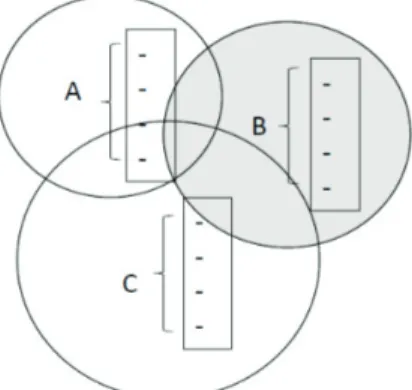
Figure 1: The Dual Role of Judgement Devices
Figure 1 schematically represents the dual role of judgment devices, which contribute to the production of two types of market classifications. First, they contribute to the institutionalization of market classes considered as market segments: in Figure 1, type A, B, and C devices are central to the coordination
4
In the same line, Karpik (2010) argues that judgment devices are all the more important when products are differentiated and singular.
5
Akerlof (1970), studying the market for second-hand cars, argued that uncertainty over quality leads to destruction of the market. The classification system reduces, so to speak, this uncertainty and information asymmetry.
of sub-segments of a single, bigger market. The segments overlap because some actors (providers or buyers) may be involved in different relational configurations, and some goods may be exchanged through different channels. Second, inside each segment, type A, B and C devices classify actors and products, thus enabling their comparison and ranking.
The capacity of judgment devices to rank things in the same category should also be addressed from a more critical standpoint than simple acknowledge-ment of their instruacknowledge-mental role in the market’s operation. Ever since Durkheim and Mauss (1969 [1903]), sociology has been interested in what classifications do to the things, or people they classify. Inclusion in a particular category has social consequences that are all the more unpleasant when the category carries a stigma. Critical sociology combined with the sociology of knowledge has produced countless studies aiming to deconstruct categories and show the re-sulting social determinisms (Hacking 1999; Bourdieu 1984; Starr 1992; Four-cade and Healy 2013). It is thus impossible to see the judgment devices that structure market sub-segments solely as solutions to coordination problems or different organization practices, because the evaluations they produce have consequences. Judgment devices are used to value not only products that are being exchanged, but also the actors that produce them.6 As we will now
ex-plain, the case of impact investing is particularly suitable to highlight the im-portance of judgment devices for shaping the future of actors, because it is a market for binding promises.
2.2 The Relevance of the Impact Investing Case
Impact investing is a market for finance and markets for finance have the par-ticularity of connecting actors, the organizations that provide finance and the organizations financed. Products may circulate, such as financial securities, but they are simply the commodification of contracts that bind actors together in the long term. This aspect is particularly apparent when looking at the vocabu-lary: a bond for example can be the name for a financial security or a relation-ship. This is a far cry from the ideal-type of the market, in which parties are once again independent immediately after the exchange is completed. The notion of market is usually typically understood in contrast to debt and gifts, just as freedom contrasts with the constraint of contractual bonds. But the mar-kets for finance do not correspond to this definition, since longer-term relations are created there. The same applies to labor market as a job is not an item of
6
It would also be relevant to look at the effects on the actors who buy the products, as in the case of luxury or “statutory goods,” or cultural goods that are markers of belonging to social groups (Bourdieu 1984).
merchandise like any other. It is a long-term conditional relationship construct-ed with an organization.7
Consequently in both types of markets (finance or labor), the judgment de-vices in use classify not products, but the desirability of particular relations, and this has decisive effects, at least on the party seeking finance (or employ-ment): will they manage to obtain funding (or a job)? On what terms? In ex-change for submission to what discipline? The few existing economic sociolo-gy studies examining how judgment devices affect people and entities (and not only products and prices) all have the specificity of concentrating on the type of market where bonds and promises are traded, rather than products, and where contracts that affect the parties’ future are signed. This is true of the studies by Fourcade and Healy (2013) and Lazarus (2012) who look at con-sumer credits and personal loans, and by Eymard-Duvernay and Marchal (1996) focusing on labor markets. The study by Espeland and Sauder (2007) on the role of university rankings is another example, as university rankings tend to structure matching between students and higher education institutions and determine universities’ access to certain resources, particularly financial re-sources. The research by Eymard-Duvernay and Marchal (1996) and Lazarus (2012), feeding largely on French conventionalist research, succeed to some extent in the dual approach proposed here, combining analysis of different market segments (labor or personal loans) with analysis of the judgment devic-es used to assdevic-ess the people. They show that the way people are valued and treated varies according to the market segment, because the regimes of coordi-nation and the judgment devices in use vary. In the case of II, we shall see that there are at least two segments in this financing market, occupied by different financial institutions and using specific valuation methods for the organizations seeking financing. These different valuation processes are not without conse-quences for the selection of the organizations that will be funded, the terms granted and the type of relations between them and their finance providers.
Impact investing is also interesting to study because it is a “concerned mar-ket” (Geiger et al. 2014) – in the same way as fair trade or the market for “green” products. The usual promise to investors of II is indeed that the money invested will produce a double return: a financial one for the investors and a social one for the public interest. Concerned markets are – by construction – shot through with a variety of values that cause tensions between “orders of worth” (Boltanski and Thévenot 2006). These increase the difficulties of agree-ing on relevant judgment devices, or to borrow the expression of MacKenzie (2009), of “making things the same,” i.e. relating the heterogeneity of what is being exchanged to a standard that makes things comparable, converting plural
7
This specificity comes on top of the often emphasized specificity that labor – which is what the person seeking a job is selling – is also a fictitious commodity, as defined by Polanyi (1944), because it cannot be separated from the person.
qualities into comparable quantities, i.e. commensuration (Espeland and Ste-vens 1998). In a market where goods are seen from the outset as having several “dimensions” (economic, social, and environmental for example), the dispute over the conventions that can be used to judge quality appears even harder to resolve. It can concern not only the criteria to select for each dimension, but also the weight each one should carry in the overall judgment. Unless a stand-ard succeeds in accumulating enough coercive force (e.g. via a legal obligation) or economic force (e.g. by attracting the market’s most powerful actors) to permanently sideline other proposals, the debates are more likely to end in fragmentation of the markets, with many actors using a variety of quality judgment systems. The study of a fragmented market is certainly a good way to compare the different quality conventions in use and their effects on parties.
Analyzing this fragmentation dynamically could also enhance understanding of the link between the market’s structural evolution (each segment’s size and game rules) and the consequences of this evolution for the organizations fi-nanced. The case of II in France is also interesting as to this aspect, because it concerns an environment undergoing significant change, marked by the arrival of a new conception coming from abroad, which forces the participants to shift their practices.
2.3 Method
and
Data
The rest of this article is organized around a presentation of the case of II in France, which is used in a dynamic narrative to bring out the dual function of judgment devices.
The difficulty presented by this case is that the category of II is not a local category. Not only is it “foreign,” it is also recent and is the object of mainly intellectual investments (in the form of reports, surveys, development of meas-urement systems and standards) designed to institutionalize and create a new “asset class,” as its promoters would say (Morgan 2010). The very concept of II is in fact a topic of discussions in this inner circle to determine its meaning, and this complicates our task since discussions about the concept and its boundaries are ultimately part of the object of our study. It is thus important to pay attention to the work of building a new category before seeing how French actors then take the whole and translate its approach into their national space. It is only in a second phase that we will examine all the practices its French im-porters have placed under the umbrella of II, mainly through studying the judgment devices used, to show the existence of several evolving segments.
Our work is thus based on two major sources. First, we collected discourses and information available online concerning the actors and promoters of the II market, including think tanks, foundations, financial actors, etc. We have col-lected and read a great many publications produced by banks (e.g. JP Morgan, Credit Suisse), audit and consulting firms (e.g. Monitor, McKinsey & Cy,
Boston Consulting group, KPMG), international organizations (e.g. OECD, World Bank, G8), universities (e.g. Stanford, Northwestern, Harvard), large foundations (e.g. Rockefeller, REDF, Bertelsmann), special network organiza-tions (e.g. EVPA, Social finance, World economic Forum, Eurosif), but also public bodies in different countries. We sought notably to understand the type of classification operations these publications perform to build this “new” market and the role they give to judgment devices in its construction. It can be noted that since this object is relatively new, there is very little sociological research on the topic (Barman 2015; Golka 2016). Data collection and analysis have taken place progressively through constant monitoring of the subject since 2012 and regular discussions with people involved in this professional field.8
Among this gray literature, texts produced by the French promoters of the category required special attention. We shall return in part 4 to the report by the
Comité Français (2014), written by a French working party at the request of government Minister Benoît Hamon as part of an international initiative by the G8. We have also attended various conferences and events organized in France on the topic since 2013.
The second source of information comes from a small field study conducted in 2014 with financial actors operating on the impact investing market in France (see appendix). Twenty-one interviews (of which fourteen were recorded and transcribed) and a three-day observation period in the investment team of one of the French funds provided a grasp of the judgment devices actually used by French actors,9 and the way they position themselves in relation to each
other and compared their judgment methods. Our survey covered the same type of actors as those brought together for the Comité Français (2014) report.10
They answered our questions on practices for assessing the social impact of the organizations financed and showed us their measurement instruments and reporting documents. The interviewees were chosen with the objective of a widely diverse sample. As there are not many financial actors in France con-cerned by these practices, this data collection is enough to give good insights into the structuring of the French field. The data has also been cross-checked with gray literature and other research on the French social investment sector (Chateau-Terrisse 2013; Bourgeron 2016). The field study highlights the exist-ence of two evaluation approaches associated with different actors. It so hap-pens that the two groups identified on the basis of other criteria by the Comité Français report (2014), presented in a well-documented appendix to that
8
The first author (as supervisor of a Master’s thesis) has for example been involved in the research conducted by Adrien Baudet (Alix and Baudet 2013) in a French think tank dedi-cated to European affairs.
9
This field work was conducted by the second author as part of a Master’s thesis. 10
We interviewed seven funds. Five had representatives on the report committee (the fund of funds A and the regional fund G were not involved in the committee). See appendix.
port, were consistent with the two smaller groups in our sample. The market segments identified through our survey focusing on judgment devices are thus also acknowledged by professionals, who associate them with other questions (such as the legal status of the organizations funded, or the hoped-for financial return). Our presentation of the French market will thus be based both on the survey and the data collected by the authors of the French report; this infor-mation was also complemented with further inforinfor-mation taken from their web-sites about the actors on the French impact investing market, particularly our interviewees, and a more specific examination of the legal framework.
Despite the relatively small scale of the interview-based survey, this article thus draws on an extensive body of information to propose a sound overview of an issue on which practically no sociological research has yet been published. It remains a broadly exploratory work, intended to give intelligibility to an ongoing transformation of discourses and practices in the financing of social organizations in France. We use this work to illustrate the complexity of the role played by judgment devices in the production of various types of market classifications.
In the following part (3), we present the efforts made by impact investing promoters to create first the idea of II, and then the market itself. We shall see that this requires an initial work of categorization intended to separate impact investing from other related practices. This is broadly a work of boundary-building, associated with the construction of a quality judgment system able to organize this new space.
3. The “Building of a Marketplace” and a New “Industry”
11The creation of II market has been the subject of continuous effort since at least 2007, led in the United States by the Rockefeller Foundation12 (Barman 2015)
and in the UK, under the name of “Social investment” by various groups and institutions encouraged by Sir Ronald Cohen (co-founder of the first venture
11
In the words of the promoters of II (Rockefeller 2012a and 2012b; Monitor 2009). 12
In 2008, the Board of Trustees of the Rockefeller Foundation approved $38 million in sup-port of the Impact Investing Initiative for the period 2008-11. In particular, “the Founda-tion’s support aims to achieve four major outcomes: 1) Catalyze collective action platforms that help impact investors work together more effectively on activities such as standard setting, advocacy and marketing; 2) Develop industry “infrastructure,” such as standards and rating systems; 3) Support scaling of intermediaries ranging from private equity funds to secondary market facilities; and 4) Contribute to fundamental research and advocacy neces-sary to grow the field of impact investing” (Jackson 2012 b). The foundation funded several reports (Monitor 2009; JP Morgan 2010) that were then aggressively marketed. The report by Monitor (2009), in particular, based on a study of “mainstream” financial practices, iden-tifies a whole series of necessary actions to “build a marketplace” and “to unlock capital” which became a roadmap for the foundation during the four years of the initiative.
capital fund set up in Europe in 1972).13 These actions have recently taken on
an international dimension. The United Kingdom put II on the G8 agenda dur-ing its presidency in 2013 (SIITF 2014a) and in 2014 each of the G8 countries, including France, produced a national report explaining its position on the issue and determined various action to be taken to promote it. The European Union is part of the movement, and in October 2011 launched a “Social Business Initia-tive,” through which the Commission set out an action plan to strengthen the role of social businesses in the Single Market, as announced in the Single Mar-ket Act of April 2011. Various actions have been taken under this framework,14
including the establishment of a fund of funds named The Social Impact Accel-erator (SIA)15 in 2015 managed by the European Investment Fund, which
in-vests the money collected in II funds located in various European countries. Various actors including think tanks, foundations, financial actors, etc., are therefore striving to create a new market segment for corporate finance, and their proposals are being taken up and incorporated into public systems both at national and supranational levels. One of their objectives is to give credibility to the existence of a new “asset class” as this concept structures the work of finance professionals. To identify this class, a “convention of equivalence” (Desrosières 2001) is needed that makes it possible to include otherwise dis-parate elements. This convention must be capable of judging whether goods are of the required quality (in our context, whether they are indeed “impact invest-ments”) while leaving aside goods of similar quality that are not part of the class. This work has a strong boundary-building dimension, as it must be possible to draw a line between what will and will not be included in the new class. It also involves diverse efforts to establish specific judgment devices suitable for evaluation of the specific goods traded there. The two facets of this work are discussed below. This is close to a work of ideological production, combining normative proposals with practical and methodological proposals. It is
13
Creation in 2000 of the Social investment task force or SIFT (at the request of HM Treasury); then in 2007 the not-for profit organization Social Finance UK which lay behind the first experiment with Social Impact Bonds in 2009 at Peterborough prison; establishment of Big Society Capital in 2010; the G8’s Social Impact Investment Task force (SIITF) created in 2013 was chaired by Sir Ronald Cohen, who was also the first Chairman of Bridges Venture, a venture capital fund dedicated to social investments launched in 2002 (see <http://www. ronaldcohen.org> (Accessed February 21, 2017).
14 <http://ec.europa.eu/growth/sectors/social-economy/enterprises/index_en.htm> (Accessed March 22, 2017).
15
“The Social Impact Accelerator (SIA) is the first pan-European public-private partnership addressing the growing need for availability of equity finance to support social enterprises. […] [It] reached its final closing in July 2015 at the size of EUR 243m, combining resources from the EIB Group and external investors, including Credit Coopératif, Deutsche Bank as well as the Finnish group SITRA and the Bulgarian Bank of Development (BDB).” <http://www.eif.org/what_we_do/equity/sia/index.htm> (Accessed February 21, 2017).
portant to distinguish it from the actual implementation of these proposals, and the possible extension and forms of the practices that claim to be part of them.16
3.1 Boundary
Building
As Höchstädter and Scheck (2015) point out, the impact investing concept remains vague despite its popularity. Yet there has been a constant effort to establish a definition ever since the earliest reports funded by the Rockefeller Foundation. The Monitor report (the first one the Rockefeller Foundation com-missioned) tried for example to position II in relation to “social investing,”17
“philanthropy,”18 “mission-related investment,” “project-related investment,”
“bottom of the pyramid,” “private sector in poor countries,” “corporate social responsibility,” “inclusive business” (Monitor 2009, 14). As the idea gradually takes shape the definitions are becoming more stable.
The European Venture Philanthropy Association proposes a fairly compre-hensive and frequently-used classification (cf. Figure 2), based on the type of organization financed (charities, social enterprises, socially driven businesses, traditional businesses) but associating each one with a form of financial contri-bution (grant making, social investment, investment) and an investor approach (impact only, impact first, finance first).
In the middle of this spectrum is “social investment”, which is different from both grant making and investment in CSR19 companies (which are the
typical target of Socially Responsible Investment [SRI]). This dual exclusion of pure philanthropy and SRI is used in the majority of reports and publications we consulted to define the boundaries of the II class by exclusion. They define SRI as financing for-profit companies (mainly listed) that are selected
16
II remains an ultra-minority practice for the time being. Eurosif, the network for all socially responsible investment (SRI) actors in Europe, conducts surveys every two years about the management strategies used by SRI asset managers in thirteen European countries. The types of strategy identified are “exclusion,” “norms-based screening,” “best-in-class selec-tion,” “sustainability themes,” “ESG integraselec-tion,” and “engagement and voting”. In 2011, the “impact investing” strategy was added. In 2013, the survey estimated that II assets under management accounted for around 1% of total SRI assets declared (Eurosif 2014, table p. 34). SRI management is itself a minority practice in the asset management industry. 17
“Social investing includes investments made with the intention of having a positive impact, investments that exclude ‘harmful’ activities, and investments that are driven by investors’ values and don’t necessarily correspond to having a positive social or environmental impact.
Impact investing is a subset of social investing; it refers only to the social investing that
actively seeks to have a positive impact” (Monitor 2009, 14).Social investing in this first definition includes II and Socially Responsible Investment (SRI).
18
“Philanthropy has traditionally focused on gifts made by individuals and organizations to benefit society and the environment. Impact investing, with its requirement of a minimum return of principal, is distinct from grantmaking activities. Impact investing can however be an important vehicle for philanthropists to realize their objectives” (Monitor 2009, 14). 19
ing to different strategies along Environmental, Social and Governance criteria (ESG), whereas II is a type of financing for “social businesses” or organiza-tions “designed with intent to make a positive impact” (Morgan 2010, 7) such as “helping” unemployed people back into work, preventing convicts from reoffending, providing micro-credit, etc. The organizations financed by II are usually small and unlisted, and some have adopted a legal form of entity that prevents them from distributing profit.
Figure 2: Investment Spectrum
Source: EVPA, <http://evpa.eu.com/about-us/what-is-venture-philanthropy> (Accessed Febru-ary 22, 2017).
Yet this boundary building work is also an opportunity for boundary blurring. This representation stresses the existence of one continuum from gifts to in-vestments (under the name of “venture philanthropy”) (Chiapello 2015), and another continuum structured around the idea of “social purpose organizations,” some of which distribute profits while others do not. The aim is to assert that there is no difference between gifts and investments apart from the type of return the investor is seeking.
This boundary building work also has to be securely attached to the concept of the asset class. This is attempted in the report by the merchant bank JP Mor-gan (2010), also commissioned by the Rockefeller foundation,20 which decided
to use “indicators of an asset class”21 (ibid., 24). Indications are then gathered
20 “Impact investments have begun to carve out a niche within the investment portfolios of a wide range of investor types, but does that make them an asset class? We believe it does based on an understanding of how the term ‘asset class’ has come to be used” (JP Morgan 2010, 24). 21
The indicators are the following 1) “Unique set of investment/risk management skills” (Professionals defining themselves by their expertise in the sector); 2) “Organizational struc-tures to accommodate this skillset” (Sell-side experts in the sector; Buy-side organizations allocating capital and hiring investment specialists in the sector); 3) “Industry organizations, associations and education” (Networks, conferences, education and resources are built to
to demonstrate that Impact investments are “showing signs of being a burgeon-ing asset class.” The report also takes the opportunity to identify all the ele-ments needed for a separate market to work, and states clearly what should be done. Among these operations, one is of particular interest to us: establishing devices for assessing qualities that could organize the space defined, in other words, a system of “standardized metrics, benchmarks, and/or ratings.” Once the market, or the universe of investments that can be considered as “impact investments,” has been delimited, the space must be organized based on judg-ment devices that can coordinate the parties. In particular, criteria are needed on which to base prices. In the world of finance, the convention is that the prices of financial assets relate to the expected return and the anticipated risk. This is what we have called the mean-variance convention (Chiapello and Walter 2016). But in this case, this convention is insufficient because impact assets not only have to produce a financial return, they must also generate social returns, and that requires elaboration of appropriate judgment devices.
3.2 Building Judgment Devices to Classify Assets
For the II marketplace builders, this question of social impact assessment was immediately seen as decisive. Since the intermediaries (fund managers) are engaged by investors to invest their money with the expectation of a dual – social and financial – return, the question of their accountability is central. The impact has become a promise to an investor just like the promise of financial returns, and so reporting must concern both issues. Measuring the impact thus potentially structures the entire investment chain, the relations between inves-tees (the social organizations financed) and the financial intermediary (the impact fund), and the relations between the fund and its investors, which may also be intermediaries themselves (funds of funds).
Investors also want to be able to compare and choose their investments in different social organizations or impact funds. Standard metrics that are good for comparability have obvious virtues, as does the possibility of employing third parties to conduct audits, evaluations or ratings. For example, the Rocke-feller Foundation instigated and funded the creation of the GIIN (Global Im-pact Investing Network),22 whose first initiative was to produce a catalogue of
400 impact indicators called the IRIS (Impact Reporting and Investment Stand-ard). Next, it helped the non-profit organization B-Lab to develop ratings for
address the new group of experts in the field); 4) “Standardized metrics, benchmarks, and/or ratings” (Risk and return reporting standardization; Indices to monitor and benchmark the performance of the sector; Ratings to help investors find relative value between investment prospects) (JP Morgan 2010, 25).
22
social firms (with the GIIRS [Global Impact Investing Rating System]) (Bar-man 2015). The G8 Social Impact Investment Task Force (SIITF 2014b) also issued a special report on the subject, while the EU commissioned a report from the Expert Group on Social Entrepreneurship (GECES 2014), and there are countless publications on the same issue by banks, consulting firms and think tanks in a wide range of countries.
Despite these considerable efforts, the general impression is of extreme dis-persion in evaluation practices, and this is considered one of the barriers to the growth of impact investing.23 Promoters of the market emphasize “a blend of
the culture and tools of finance and investment, on the one hand, interacting with the culture and tools of social-mission organizations, on the other hand” (Rockefeller 2012b, 8). Also, many social organizations are still utilizing their own methods and indicators, so “fragmentation in measurement approaches persists, and tension remains between centralized and decentralized systems” (ibid., 13). Finally, there are tensions between “those actors in the field who are building measurement systems as public goods, on the one hand, with those who carry out impact assessment for proprietary revenue for their organiza-tions, on the other hand” (Rockefeller 2012a, XVI). This proliferation of possi-ble metrics and actors with divergent interests prevents collection of substantial databases, which financial professionals usually consider necessary for the market to develop.24 As a result of the mean-variance convention that
domi-nates in the financial sector, the actors want to found their decisions on quanti-fied, historical past data that can be used to analyze entire investment portfolios according to a small number of metrics (Chiapello and Walter 2016).
Studying the French setting will provide another understanding of this frag-mentation. In the dominant narrative, this fragmentation relates to insufficient
23
Eight barriers have been identified : 1) “Shortage of high quality investment opportunities with track record,” 2) “Lack of appropriate capital across the risk/return spectrum,” 3) “Diffi-culty exiting investments,” 4) “Lack of innovative deal/fund structures to accommodate inves-tors’ or portfolio companies’ needs,“ 5) “Lack of common way to talk about impact investing,“ 6) “Lack of research and data on products and performance,“ 7) “Lack of investment profes-sionals with relevant skill sets,“ 8) “Inadequate impact measurement practice“ (GIIN, Morgan 2014, 6). Interestingly, points 5) 6) 7) and 8) all relate to the development of a common defi-nition of the market and capacities for assessing these investments, i.e. the two operations of boundary building and construction of a judgment system which we are examining. 24
“The field of impact investing can be rightly said to be metrics-rich […]. However, because of its early stage of development, impact investing, so far, is generally data-poor – though there are important efforts underway to rectify this situation” (Rockefeller 2012b, 8). The IRIS encourages organizations that use its indicators to file their reports in its database. In 2014, 4,989 organizations reported their performance. The majority of them (64%) operate in the financial services sector (mainly microfinance institutions, and impact funds). 24% are based each in North America, and Latin America & the Caribbean, with just under 11% in Europe and Central Asia (IRIS 2014). Most of the organizations participating in this cen-tral data collection are financial intermediaries looking for funds, and information about their investees remains scarce.
maturity in the sector. But this article will show that it is actually caused by the existence of different institutions and networks of actors that are coordinated differently depending on the judgment devices adopted.
4.
Impact Investing in France: The Fragmentation of a
Market around Different Evaluation Cultures
4.1 The Arrival of Impact Investing in France
The concept of Impact Investing began to spread in France from 2012, largely under the impetus of EU and G8 initiatives.25 It joined a dynamic financial
world dedicated to social finance that had grown under the name of Finance Solidaire (Solidarity Finance) since 1996, around an association called Finan-sol.26 This association organizes the market, issuing labels and lobbying the
authorities for favorable changes in the law and taxation (Château-Terrisse 2013). It also organizes an awareness-raising week every year with a range of events and awards, to promote solidarity savings to the general public.27
In France, private funding for social purposes (apart from gifts and subsi-dies) has so far grown mainly through attracting investment from private indi-viduals (i.e. non-professionals) either directly by solidarity organizations, or through the intermediary of collective investment products such as employee savings plans offered by employers. The vision conveyed by II is different from this traditional solidarity finance approach, since the finance practice at the heart of the concept is the Venture Capital Fund oriented towards producing an impact. These entities raise funds mainly from very wealthy (said “high net worth”) individuals or professionals – institutional investors who are them-selves fund managers – who can provide substantially higher amounts than the individuals involved in standard solidarity finance.28 There are a few entities of
25
The first public report on the question was released in 2013 (Guézennec and Malochet 2013). In April 2012, the Impact2 event was held for the first time in Paris: the aim of the first event was “to present and discuss the theme of impact investing, this new segment of finance that serves the fight against exclusion and poverty.” The guests included Penelope Douglas, founder of Pacific Community Ventures (USA) and Peter L. Scher, Executive VP of JP Morgan Chase & Co, and twenty social entrepreneurs from all five continents. This annual event has grown constantly since then. In 2015 it began to give out awards to entrepre-neurs, in cooperation with its sponsors.
26
<http://www.finansol.org/> (Accessed February 22, 2017). 27
According to Finansol (2016, 6), solidarity savings accounted for 0.19% of total French savings at December 31, 2015, so it is a very small sector. Solidarity savings products in-tended for socially-oriented organisations are clearly differentiated from SRI in these statistics. 28
What is largely glossed over in this classical presentation is that development of these venture-capital structures requires very active public policies: raising impact funds is greatly
this kind in France that predate the importation of the II concept, but they only attracted a comparatively small amount of funds. And so the II concept in France appears to be attractive above all for those who want to develop this new type of financial intermediation.
Nonetheless, the French report to the G8 included solidarity finance in the impact investing category (Comité Français 2014) as the funds collected from private individuals via solidarity finance channels must also be invested in socially-oriented organizations. If we focus on the use of the funds, in social organizations, the common features are undeniable; but if we concentrate on the organization of the finance circuits, two groups emerge which the report was obliged to distinguish, namely investisseurs solidaires (solidarity inves-tors) and capitaux-investisseurs à impacts (venture-capital impact investors).29
The former manage assets worth some €3.7 billion, of which around €300 million are invested in “social impact organizations,” while the latter reportedly manage assets worth €180 million, all of which are for investment in “social impact organizations.” Fund raising in process at the time of writing led to hopes that the second segment would double in size in the medium term (Comité français 2014, 76-8).
This report (Comité Français 2014) deserves a closer look, because it ex-plains the work the importers of II have done in France to adjust it to the French context. The French committee in charge of the report was headed by Hugues Sibille, Vice-President of the bank Crédit Coopératif since January 2010. Hugues Sibille is also well known in the French ecosystem devoted to developing social entrepreneurship in France, a cause he works tirelessly to promote.30 The concept of “social entrepreneurship,” born in the 1990s in the
United States, is based on the premise that what social activities are lacking to achieve real efficiency is genuine entrepreneurs who will manage their
dependent on contributions from public banks or consortiums coordinated by a public initi-ative. This is the case in Europe with the large contributions from the SIA, in France with the
Banque Publique d’Investissement, in the UK with Big Society Capital, etc. 29
Cf. Dossier 2 (supply and demand for social impact corporate finance) attached to the report (Comité Français 2014, 70-83).
30
Hugues Sibille is a former consultant who joined France’s Ministry of Employment under Martine Aubry in Lionel Jospin’s left-wing government. He was the Delegate for the Social Economy from 1998 to 2001, then joined the public bank CDC where he took part in the structuring of support networks for business creation. He founded the AVISE (Agence de Valorisation des Initiatives Socio-Economiques) in 2002, with the support of the CDC, to assist owners of social projects and in 2005 he moved to the Crédit Coopératif where from 2008 he was president of the investment subsidiary operating in the social economy. In 2009 he contributed to the White Paper on social entrepreneurship which proposed to set up a merchant bank for social entrepreneurship. In early 2012 he was appointed expert ad-visor to the European Commission, as part of the Commission’s social business expert group (GECES), and participates in this group’s research on measuring social impacts. In June 2013, the Minister Benoît Hamon appointed him as the G8 Task Force’s French representative for investments with social impacts.
ties with the same verve and the same methods as entrepreneurs in the for-profit world. This idea then spread throughout the world, relayed by business schools in the 2000s. Through the various posts he has held, Sibille has always aimed to “modernize” the social sector and encourage its development by at-taching importance to entrepreneurship, and to the construction of financing solutions for entrepreneurial organizations. Positioning himself in the long-established institutions of the social economy which have given him access to increasingly central posts, he is also considered as an activist-innovator be-cause of his constant heart-and-soul support for business solutions for this social sector (Sibille 2011). The committee he set up to write the report on II has twenty-nine members, all like him committed to this financial “moderniza-tion”: employees of the Crédit Coopératif, the CDC31 and their subsidiaries, the
French public investment bank BPI and the French development bank AFD, venture capital funds and asset management companies, militant associations in the world of social entrepreneurship (AVISE, MOUVES), FINANSOL, repre-sentatives of major foundations, of venture philanthropy (EVPA), and finally two representatives of the French state (Ministries of Foreign Affairs and for the Economy) and one representative of the OECD. It is striking that apart from one representative of the “social entrepreneurs movement” (MOUVES), there are no entities representing the organizations that might be beneficiaries of the capital, nor of any of the social sector’s federations. This committee is largely favorable to the cause of impact investing, comprising the major French funds and banks concerned. The solidarity financing network is represented, but essentially through fund managers and the promotion association Finansol. The main effort was to federate these financial actors and present the full range of what is happening in France under the umbrella label of II.
Our own survey shows that despite these efforts for greater federation, the practices of solidarity investors are not the same as the practices of venture-capital impact investors: among other things, they use different types of judg-ment devices and rely on different quality conventions organizing the relation-ships between investors and investees (notably different return demands), and this is not without consequences for the firms assessed. The “solidarity inves-tors” invest in organizations that carry a label for their social impact, whereas the “venture-capital impact investors” refer to ad-hoc indicators relating to the activity of the investee. We shall also show that for both segments of the mar-ket, the idea of constructing a new market for impact investment organized on the basis of social impact assessment leads to a greater demand for measure-ment, although in different forms. The two segments appear to be undergoing reorganizations that enable them to specialize professional actors in this type of
31
CDC (Caisse des Dépots et des Consignations) is a French public bank, Crédit Coopératif is a cooperative bank which initially mainly worked with associations, cooperatives and small busi-nesses. Both have developed specific banking products (loans and guarantees) for the sector.
investment. The importation of the concept of impact investing thus transforms the sector, but without actually eliminating the range of different practices.
Beyond their differences, both segments have also the common feature of drawing on assessment methods that do not seek to establish an equivalence (and therefore construct possibilities of trade-offs) between financial returns and social returns. But we shall also see how certain actors are nonetheless interested in the creation of this type of commensuration and seek to develop new types of judgment devices relying on certain tools such as SROI32 (Social
Return on Investment) or contracts as Social Impact Bonds33 (SIB), even
though these initiatives have not so far succeeded in building a real third mar-ket segment in France.
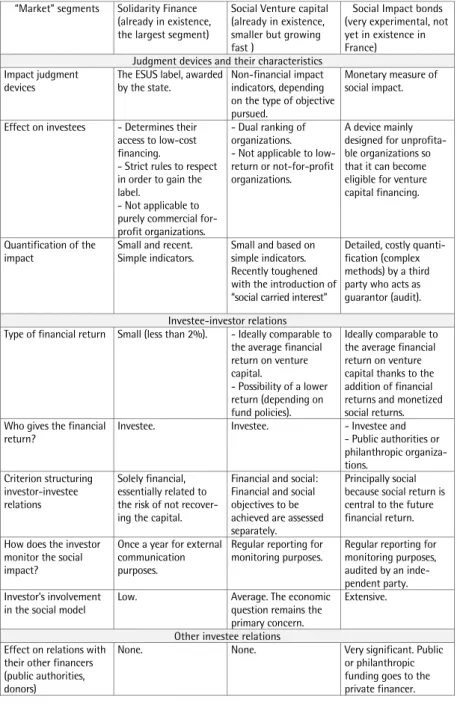
Table 1 briefly presents the three segments that will now be studied in detail.
Table 1: Segments of French Impact Investing Markets
Segments Solidarity Finance (the largest segment)
Social Venture capital (smaller but growing fast)
Social Impact bonds (experimental) Judgment devices
used to evaluate the social impact
A Label Ad-hoc non-financial indicators
Monetary measure of social impact
4.2 Solidarity Investors and the Role of Labelling
Who are Solidarity Investors?
Solidarity investing is represented here by managers of “90/10” investment funds, which are a French specificity. This type of funds was created by the “Fabius” law of 2001 concerning French employee and pension savings. Between 5% and 10% of the money collected must be invested in approved solidarity firms, and the remaining amounts are invested in listed companies but must be managed under SRI criteria. Since the 2008 Law on Modernisation of the Economy (LME) was adopted, all entities receiving savings investments (sub-sidiaries of banks and insurance companies) are obliged to include at least one solidarity fund in their product range. The law has also organized a number of incentives to encourage development of employee savings funds and pension funds, notably by reducing taxes on the income generated by the return on investment (“Fabius” law of 2001; “Fillon” law of 2003). The law of 2008, which more specifically promotes solidarity savings, achieved a substantial increase in the amounts invested in social enterprises. Interviewees from
32
SROI, a method proposing to give every social impact a monetary value, is actually promoted by the same business school (ESSEC) that introduced social entrepreneurship into France. 33
Proposition # 3 in the French report (Comité Français 2014) to the G8 was in fact to exper-iment with SIB in France.
izations E and F in our sample are in charge of such “90/10” funds, which are among the largest on the market.
The Judgment Devices They Use
Practices in these cases are strictly governed by the law, which defines the criteria and modalities for approving the social firms. They were recently re-viewed for the new law on Social and Solidarity Economy of 2014. This ap-proval (called ESUS, standing for entreprises solidaires d’utilité sociale or solidarity firms of social utility) is intended “to identify firms with strong social value which meet specific social needs and direct support and funding mecha-nisms, including solidarity savings funds, towards those entities.”34 A firm may
apply for ESUS approval when it fulfils a number of conditions: 1) its primary purpose must be to seek some social benefit, 2) the cost induced by this pur-pose must have a significant impact on the firm’s income statement or financial profitability, 3) wages and differences in wage levels in the firm must comply with certain restrictions, 4) the firm’s shares must not be listed on a financial market. The ESUS label is automatically awarded to several types of entities that already bear a label because they benefit from subsidies, grants or tax breaks for their activities (organizations helping people back into work,35
sup-porting work for disabled people, foundations and associations of recognized public benefit, etc.). Other entities can apply for approval once they have existed for at least three years.
ESUS approval results in the definition of a class of organizations that can benefit from the solidarity pockets of 90/10 funds, but it does not require any further measurement of organizational activities. The label is considered enough to guarantee a social impact, while the rest of the decision is based on financial criteria.
So we select them via their impact… um, their utility […] So basically, from our point of view, the firm has to have the solidarity approval. […] That’s an obligation. It’s given by the Prefecture [the public body issuing ESUS approv-al]. […] So in our social analysis of the entity, we need to see that support. […] Anyway, we do this analysis of the social utility, then a more traditional financial analysis when we look at the accounts, we try to get a business plan. […] We look closely at the social side of things. But if it’s got solidarity ap-proval, we consider the entity already meets [the criteria]. (E Fund)
The financial returns in this segment are low for the investor (between 0.5% and 2%) (Comité Français 2014), as the ESUS label places (notably rules 2 and
34
<http://www.avise.org/actualites/nouveau-decret-agrement-entreprises-solidaires-dutilite-sociale> (Accessed February 22, 2017).
35
Known in France as organizations for “integration through economic activity”: entities to help the unemployed find work again that were first developed in the 1990s as part of na-tional policies to reduce unemployment.
3, see above) strong limits on the potential profits. Funds operating on the highly competitive employee savings funds market also charge “low” man-agement fees according to the investors (around 0.5% of the amounts managed) which means they cannot dedicate many resources to impact assessment (Comité Français 2014, 76).
The Recent Evolution towards More Measures and Professional
Specialization
Fairly simple indicators concerning the activities of the entities financed (ber of homes managed, num(ber of families benefiting from micro-credit, num-ber of hours of training, etc.) have recently begun to be collected, and are used to prepare fund reports. But not even the managers believe that these figures measure the impact of investments.
But then, yes, we now ask for an impact indicator every year all the same […] I mean an indicator of the impact of the entity, not our funding! […] well, we total up all the social utility entities we finance […] [opens a report and shows a page] and in consolidated figures at 31/12/2013 they were managing 6,277 homes! (E Fund)
This market segment nonetheless seems to be becoming more organized. A gradual grouping of solidarity pockets can be observed in specialist funds, which manage solidarity pockets on behalf of several 90/10 funds. Being larger, they are able to dedicate people and create specialized investment committees.
To begin with, the 10% were managed directly by us [the team in charge of the total 90/10 fund]. I said: we can’t go on like this, we’re going to set up a specialist fund [...] to manage that pocket. We set that fund up in 2005, so it took… well, 3 years for it to come out… […] I went to see the management and I told them: I can’t keep on managing pockets directly like this. I don’t want to manage things like this anymore, I want a specialist fund, with an in-vestment committee […] something really specific […] It took B** [a compet-itor] 10 years before it launched its fund compared to us, and A** [another com-petitor] didn’t believe in it either at the time. (F Fund, the first dedicated fund) X** [a bank collecting savings] engaged us a year and a half ago now to man-age the 10% pocket of its solidarity funds. (E Fund)
The problem these forms of solidarity pocket groupings into specialist funds are trying to resolve was generally solved differently in the past. On the whole, most of the 10% pockets used to go to three specialized intermediary entities which act not like funds but like firms collecting equity for development: SIFA, which initially specialized in funding for entities supporting social integration, ADIE which distributes micro-credit in France, and Habitat et Humanisme,
which finances construction and management of social housing.36 Specialist
funds will enable 90/10 fund managers to diversify their investments by having their money invested in entities other than these three. This situation also trig-gers a process of professional specialization among asset manatrig-gers: some pro-fessionals are specializing in impact investment, which in our view is a notable development.
Effect on the Investees
This class of II is characterized by a long chain of intermediation between the investor and the investee (involving the collector of the savings, the manager of the 90/10 fund, the specialist investors of the social sector) and is strongly structured by a label controlled by the State, which is itself inseparable from various public policies intended for social purposes. For these reasons, the financial actors’ capacity for intervention in the activities of the investees is low. Social performance is not a significant management concern for the finan-ciers, and entities are not compared with each other on that factor. If they are considered able to reimburse, then they can have funding for a small cost. Small-scale impact funds like the regional fund G in our sample, which are not constrained by the legal framework and are in shorter intermediation chains, have also chosen to develop their activity, essentially based on the recognition of such labels.
4.3
Venture Capital Impact Investors and the Management by
Objectives
Who Are They?
The actors concerned in this section are investment funds that operate under the same legal status as traditional venture capitalists, such as B, C and D Funds in our sample. These funds originally raised money from wealthy individuals and are now taking advantage of the opening of funds of funds, such as A Fund interviewed for this study, the EU’s Social Impact Accelerator (SIA) managed by the European Investment Fund (EIF), and special funds for small and medi-um-sized businesses set up by France’s Public Investment Bank (BPI). These funds of funds are more recent contributors to impact funds, but contribute large sums. They also add length to the intermediation chain.
B is a fund that was created in 2007-2008 […], originally founded by the owners of investment funds and the top managers of French firms who got to-gether, around eighty of them, to create a social impact fund. This wasn’t long
36
“These three issuers were historically the first on the market and they’re the ones that received a large share of the investments from solidarity funds. But in the last few years everyone has been trying to diversify.” (E Fund)
after the 2005 riots. The idea was to do something for underprivileged areas. And what they knew about was investment funds, investing in businesses. So they had the idea of setting up a fund which was for 5 million euros at first. […] In the first fund, there were only individuals. […] Then later, they were joined by institutional investors in 2010. They put in 10 million euros. […] They are from the banking sector, mutual health insurance companies, people with money to manage. And this year we’re going to raise a third fund, of 44 million Euros. (B Fund)
Unlike 90/10 funds, which accept low returns on the small share of the portfolio intended for social enterprises, these funds mentioned their need to provide financial returns.
And there’s a social (called “fiduciary”) responsibility: we manage assets, for insurance clients too, so we have to have a return on investment; there’s a purpose, namely paying a return on a euro fund for Mr Dupond in France, who well, who’s going to invest his savings. (A Fund)
According to the Comité Français (2014, 78), the expected returns vary from 3% to 12% and the management fees withheld are 1% to 3% of assets under management, in other words two to six times higher than for solidarity finance providers, whose job is very different in the opinion of our interviewees.
We don’t do solidarity […] that’s a very specific, very French status. What we want to do is quite the opposite. Solidarity investing is philanthropy! Funds that finance entities that aren’t trying to make money. The Prefecture approval is completely… Well, capping the manager’s salary so he can’t earn more than x times the minimum wage. What’s that got to do with anything?... What I’m interested in is knowing if the impact is monitored at all […]. But after all when you’re lending money with no hope of getting it back… With solidarity funds, you don’t get a return. You’re giving up on returns. You get the capital repaid, but there’s no return. So obviously if that’s used for the association’s boss to buy himself a BMW because he’s getting money, well clearly… You have to make sure there’s some level of governance […]. Solidarity funds are a very French thing. They’re a great thing too… I’m in the board of a firm that funds solidarity projects and there are wonderful stories, but those stories aren’t tenable. Solidarity investing often concerns associations […]. Impact Investing isn’t the same thing, it’s quite different. (A Fund)
The Judgment Device They Use
The judgment devices adopted by impact venture capitalists to identify targets also differ, as reference to a label certifying social quality appears to be insuffi-cient. All the funds interviewed operate in the same way: they specialize in certain types of entity or certain types of objective. B Fund, for example, wants to help entities founded by entrepreneurs from poor areas, so it sets itself tar-gets for the number of entities helped, job development in those entities, rises in the number of young people trained by them, etc. The chosen indicators differ depending on the desired type of impact. Funds then organize reporting with their investees using those indicators in the same way as reporting on
financial indicators, and consolidate them at portfolio level for the purposes of reporting to capital providers.
The indicators used are not converted into monetary value.37 The impact is
monitored in the form of different sets of indicators, in what investors find a much more feasible approach.
For a start, there are many existing tools that work on the basis of what you could call “financialization” of the social impact, to assign financial value to the social impact, and that’s not easy to do, it takes time and it’s pretty subjec-tive. It isn’t easy to set a value on a social impact. […] There are some things that are really difficult to measure or quantify financially: you know, it’s a bit difficult when it comes to the wellbeing of a certain group, or stuff like that! So we decided it would be better to use a slightly more qualitative approach: we assess things, but without necessarily putting a price or value on them, just a quality assessment. (D Fund)
This market segment’s practices seem to adopt a similar approach to the one that guided the inventors of the GIIN when they developed the IRIS measures (Barman 2015)38 and the JP Morgan proposal39 (2012). The question of the
social impact is in both cases considered independently of the question of fi-nancial return, by reference to non-fifi-nancial criteria.
Funds do not convert the social impact into monetary terms but want to be able to compare the social impact dimensions of their investments and judge them in relation to each other. The solidarity finance label identifies a group of investees that is not ranked on impact, but impact venture capitalists want a system where investees are assessed in relation to each other. This is also why they specialize in certain impacts, to compare and consolidate them.
The idea is that all investments should be comparable. […] When we make an investment, the financial performance is always comparable to some other en-tity’s financial performance. For social performance, that’s not always straightforward. So the fund’s investment policy has to be very clear, and tar-geted enough for each entity’s social performance to be comparable. (B Fund)
37
As it would be with a SROI approach. 38
As one of the interviewees in the study by Barman (2015, 30) observed: “what social impact looks like is investor specific. For example, one might want rural electricity in Africa while another might care about water sanitation for villagers in India. Other investors, like [name of an established impact investing fund] might think social impact arises when the very poor obtain employment.”
39
In its study, the merchant bank develops a general methodology from a description of impact portfolio managers’ practices: any impact investor is first supposed “to articulate a set of well-defined impact goals for the portfolio,” with “reference to specific impact tar-gets” “possibly quantifiable.” Once the target characteristics of the portfolio are defined, “investors may start to analyse the set of investments that fall within the scope of those portfolio targets.” JP Morgan proposes to characterise “every investment in three dimen-sions: impact, return, and risk,” and to “abandon the trade-off debate“ (“whether or not there needs to be a ‘trade-off’ on financial returns in order to add the pursuit of impact to the investment”) (Morgan 2012, 5).