Sharif University of Technology
Scientia Iranica
Transactions E: Industrial Engineering
www.sciencedirect.com
Research note
A fast hybrid particle swarm optimization algorithm for flow shop
sequence dependent group scheduling problem
D. Hajinejad
a,
N. Salmasi
b,∗,
R. Mokhtari
aaDepartment of Mathematical Sciences, Isfahan University of Technology, Isfahan, P.O. Box 84156-83111, Iran bDepartment of Industrial Engineering, Sharif University of Technology, Tehran, P.O. Box 11365-11155, Iran
Received 17 February 2010; revised 8 September 2010; accepted 22 November 2010
KEYWORDS
Group scheduling; Flow shop scheduling; Particle swarm
optimization; Sequence dependent
scheduling; Meta-heuristics.
Abstract A Particle Swarm Optimization (PSO) algorithm for a Flow Shop Sequence Dependent Group Scheduling (FSDGS) problem, with minimization of total flow time as the criterion(Fm|fmls,Splk,prmu| ∑
Cj), is proposed in this research. An encoding scheme based on Ranked Order Value (ROV) is developed, which converts the continuous position value of particles in PSO to job and group permutations. A neighborhood search strategy, called Individual Enhancement (IE), is fused to enhance the search and to balance the exploration and exploitation. The performance of the algorithm is compared with the best available meta-heuristic algorithm in literature, i.e. the Ant Colony Optimization (ACO) algorithm, based on available test problems. The results show that the proposed algorithm has a superior performance to the ACO algorithm.
©2011 Sharif University of Technology. Production and hosting by Elsevier B.V.
1. Introduction
The flow shop scheduling problem has been an interesting subject in the area of scheduling since the first scheduling paper published by Johnson [1]. In flow shop problems, several jobs should pass through a predetermined path. The sequence of using machines is the same for all jobs.
Usually, the jobs assigned to a flow shop cell are categorized into different groups based on similar requirements in different terms, such as tooling and setups on machines, in order to improve production efficiency. This subject is called Group Scheduling (GS). In GS, the jobs belonging to a group are processed after each other without any interruption by the jobs of other groups. Usually a major setup on each machine is required for switching the process between the groups.
∗Corresponding author.
E-mail address:[email protected](N. Salmasi).
An insignificant setup is also required on the machines for switching between the jobs of the same group that merged in the run time of the jobs. If the required setup time to prepare each machine to process a group is dependent on the previous processed group on that machine, the problem is called a Flow Shop Sequence Dependent Group Scheduling (FSDGS) problem. Schaller et al. [2] investigated the FSDGS problems for the first time. They developed several heuristic algorithms with minimization of the makespan as the criterion. They also devel-oped a lower bounding method to evaluate the performance of their heuristic algorithms. Franca et al. [3] developed two evo-lutionary algorithms, a Genetic Algorithm (GA) and a Memetic Algorithm (MA) with local search to minimize the makespan for FSDGS problems. They compared the performance of their proposed meta-heuristics with the algorithms proposed by Schaller et al. [2], and showed that their MA algorithm pro-vides a higher quality solution compared to other available al-gorithms. Logendran et al. [4] developed several meta-heuristic algorithms based on the Tabu Search (TS) for the two stage FSDGS problem with minimization of the makespan criterion. They also developed several efficient lower bounding methods to evaluate the performance of their proposed meta-heuristic algorithms. Hendizadeh et al. [5] developed a TS algorithm for the same problem with minimization of the makespan as the criterion. They showed that the performance of their pro-posed algorithm is the same as the MA algorithm propro-posed by France et al. [3]. Lin et al. [6] proposed a simulated annealing-based algorithm for the same problem with minimization of the
1026-3098©2011 Sharif University of Technology. Production and hosting by
doi:10.1016/j.scient.2011.05.023
Open access under CC BY-NC-ND license.
Elsevier B.V.
Peer review under responsibility of Sharif University of Technology.
makespan criterion and showed that their performance in bet-ter than the MA proposed by Franca et al. [3]. Salmasi et al. [7] developed two meta-heuristic algorithms based on TS and Ant Colony Optimization (ACO) for FSDGS problems with minimiz-ing total flow time as the criterion. They showed that their pro-posed ACO algorithm has a superior performance compared to the proposed TS algorithm. They also proposed a cal model for the proposed problem and used the mathemati-cal model to mathemati-calculate lower bounds for the proposed research problem, based on the Branch-and-Price algorithm. To the best of our knowledge, this is the only available research for FSDGS problems. As is clear, except the research performed by Salmasi et al. [7], other research is performed based on minimization of the makespan criterion.
Usually, companies have different customers. The orders of each customer have to deliver separately. In this case, mini-mization of the total flow time criterion is a more efficient ob-jective for companies than minimization of the makespan, since it minimizes the amount of work in process in the company. This was our motivation; to develop a more efficient upper bound for the proposed problem with this objective function.
Recently, a novel evolutionary technique, named Particle Swarm Optimization (PSO), proposed by Kennedy and Eber-hart [8], has gained much attention and wide application in a variety of fields, particularly for continuous optimization prob-lems. Since then, the PSO algorithm has been applied to a few scheduling problems. For instance, Lian et al. [9] proposed a similar PSO algorithm for permutation flow shop scheduling problems. In this research, the crossover operators are used in the PSO with minimization of the makespan as the criterion. Lian et al. [10] also proposed a novel PSO algorithm for permu-tation flow shop to minimize the makespan. In the novel PSO algorithm, crossover and mutation operators are used. Fatih Tasgetiren et al. [11] combined the PSO algorithm and the Variable Neighborhood Search (VNS) method to minimize the makespan and total flow time in the permutation flow shop sequencing problem. Liu et al. [12] extended a hybrid PSO al-gorithm for flow shop scheduling with limited buffers. In all cases, the PSO algorithm has a superior performance compared to available meta-heuristic algorithms.
Based on limited available research in FSDGS problems the encouraging performance of the PSO algorithm in regular scheduling problems and the increased application of the PSO algorithm in different scheduling areas, we are motivated to de-velop the application of the PSO algorithm for FSDGS problems with minimization of the total flow time as the criterion. To the best of our knowledge, this is the first research regarding appli-cation of the PSO algorithm to FSDGS problems.
2. Flow shop group scheduling problem
The problem considered in this research can be notated based on Pinedo [13], asFm
|
fmls,Splk,prmu|
∑
Cj. The notation explanation and the assumptions made in this research are as follows:
•
ggroups are assigned to a flow shop cell that hasmmachines (Fm). In this research,Gprepresents groupp.•
Each group (p=
1,
2, . . . ,
g) includesbpjobs (fmls). In thisresearch,Jpjrepresents thejth job (j
=
1,
2, . . . ,
bp) in group p(p=
1,
2, . . . ,
g). The number of jobs of groups can be different.•
The setup time of a group (l) on a machine (k) depends on the immediately preceding group (p) that is processed on that machine (i.e. sequence dependent setup time (Splk)).•
All jobs and groups are processed in the same sequence on all machines (permutation scheduling (prmu)).•
Each job of a group does not need a separate setup time. If it does, the required setup time is assumed to be included in its run time.•
A setup on each machine is required for processing the first group.•
The jobs belonging to each group are processed without any interruption by other jobs of other groups (group technology assumption).•
The run time of each job on each machine is independent of the runtime of other jobs.2.1. Solution representation
Solving the group scheduling problem is performed in two steps: finding a sequence for the jobs within each group as the first step, and finding the sequence of the groups as the second step. In this research, a feasible solution is presented byg
+
1 vectors. The firstg vector presents the sequence of jobs in groups. The last vector corresponds to the sequence of groups. Since there is interaction between these two stages, theseg+
1 vectors must be considered simultaneously. Since the number of jobs in each group are unequal (i.e.bp̸=
bq) thesolution of the group scheduling problem can be represented as a pseudo matrix. A pseudo matrix is a matrix in which the number of components at each row (column) can be unequal. In this pseudo matrix, the first g rows are related to the sequence of jobs in the groups, and the
(
g+
1)
th row (the last row) corresponds to the sequence of the groups. For instance, suppose three groups with three, two, and four jobs in each group are, respectively, assigned to a cell with three machines to be processed. The pseudo matrix for a possible sequence of processing groups, as well as the jobs such as:G3(J33
−
J32−
J34−
J31)−
G1(J12−
J11−
J13)−
G2(J21−
J22),is presented as the following:
X
=
J12 J11 J13 J21 J22 J33 J32 J34 J31 G3 G1 G2
.
(1)In order to apply the PSO algorithm to the proposed problem, the component of the above matrix should be converted to integer numbers. Therefore, the following transformations are used to convert the components to integer numbers:
Jpj
→
j+
p−1−
k=0 bk,
p=
1,
2, . . . ,
g,
j=
1,
2, . . . ,
bp,
(2) Gp→
p p=
1,
2, . . . ,
g,
(3)wherebpis the number of jobs in groupp
(
p=
1,
2, . . . ,
g)
and b0=
0. This mapping converts the pseudo matrix in Eq.(1)tothe following pseudo matrix:
X
=
2 1 3 4 5 8 7 9 6 3 1 2
.
(4)Based on the new developed pseudo matrix, the sequence of processing the jobs on each machine for the proposed example is as follows:
3. Standard particle swarm optimization
PSO is an iterative method with emphasis on cooperation. This algorithm was developed based on observation of the social behavior of animals, such as bird flocking and fish schooling [8]. The population of PSO is called a swarm, and each individual in the population of PSO is called a particle. Each particle, which is a potential solution in the PSO, is known with its current position, as well as its current velocity. The particles fly around in the multidimensional search space in order to change their position. The new position of each individual particle is obtained by assigning a new position, as well as a new velocity, to the particle. During performance of the search, each particle is gaining different positions. The value of each position is calculated based on the objective function value of the position. The best position of each particle that has been gained so far during the previous stages is called the best position (p-best) of the particle. The best position taken by all particles so far is called the global best (g-best) position of the search. The new position and velocity of each particle is obtained based on its previous position, thep-best, and theg-best of the search.
Consider a d-dimensional search space. Assume that the number of initial solutions (swarm size) isS. In this case, the
ith particle (i
=
1,
2, . . . ,
S) is associated with the position vectorxi=
(
xi1,xi2, . . . ,xid)
and the velocity vectorv
i=
(v
i1, vi2, . . . , vid)
. Let’s define thep-best of theith particle as yi=
(
yi1,yi2, . . . ,yid)
andg-best asyˆ
=
(
yˆ
1,yˆ
2, . . . ,yˆ
d)
. Thenew velocity and position update for the new position of each particle are calculated by Eqs.(5)and(6), respectively.
v
ij(
t+
1)
=
wv
ij(
t)
+
c1r1(yij(
t)
−
xij(
t))
+
c2r2(ˆ
yj(
t)
−
xij(
t)),
(5) xij(
t+
1)
=
v
ij(
t+
1)
+
xij(
t),
(6)where
w
is the inertia weight that controls the influence of the previous velocity of the particle,c1and c2 are called theconfidence coefficients or acceleration coefficients,r1 and r1
are independently uniformly distributed random variables with range
(
0,
1)
,i=
1,
2, . . . ,
Sandj=
1,
2, . . . ,
d.In PSO algorithm, Eq. (5) is used to calculate the new velocities for particles according to their previous velocity and the distance of their current position from bothp-best andg -best. Generally, in order to control the extreme roaming of particles outside the search space, a maximum (
vmax
) and a minimum (vmin
) range is defined for the new velocity. In this case, the new velocity of each particle can be restricted to the interval[
vmin
vmax
]
. The particle moves toward a new position according to Eq.(6). This process is repeated until a stopping criterion is satisfied.3.1. Extended particle swarm optimization
In the standard PSO algorithm, the solutions are presented as vectors. In this research, each feasible solution in GS problems is presented as a pseudo matrix. Thus in order to apply the PSO algorithm to solve the proposed research problem, the standard PSO algorithm is extended to be applied in a GS problem, as follows:
Assume thatXi is a feasible solution of a GS problem as a
particle in the PSO search space. In this research,Xiis presented
as a
(
g+
1)
×
hpseudo matrix. In this pseudo matrix, the firstgrows present the sequence of jobs in groups, and the last row presents the sequence of groups. The value ofhis equal to the maximum number of jobs in a group and the number of groups.
Xi
=
Xi11· · ·
Xi1h...
...
...
Xi(g+1)1· · ·
Xi(g+1)h
.
(7)ParticleXi flies in the search space with velocity matrixVi as
follows: Vi
=
Vi11· · ·
Vi1h...
...
...
Vi(g+1)1· · ·
Vi(g+1)h
.
(8)Similar to the standard PSO, the velocity and position update equations are calculated based on the following equations:
Vijk
(
t+
1)
=
w
Vijk(
t)
+
c1r1
Yijk(
t)
−
Xijk(
t)
+
c2r2
ˆ
Yjk(
t)
−
Xijk(
t)
,
(9)Xijk
(
t+
1)
=
v
ijk(
t+
1)
+
Xijk(
t),
(10)whereYi is thep-best of theith particle andY
ˆ
is theg-best.The range ofk,j, andiarek
=
1,
2, . . . ,
h,j=
1,
2, . . . ,
gandi
=
1,
2, . . . ,
S, respectively.The other operations are similar to the standard PSO algo-rithm.
4. The hybrid PSO algorithm
Since the PSO algorithm is used basically for continuous optimization problems and the GS problem is a discrete problem (the optimal solution is the sequence of groups, as well as jobs, which is a discrete problem), it is required to perform several changes in the standard PSO algorithm to make it applicable for such discrete problems. Therefore, a novel encoding scheme, based on the Ronked Order Value (ROV) rule, is developed. The ROV rule converts the continuous position value of the particles to job and group sequences. Then a neighborhood search strategy named Individual Enhancement (IE), composed of PSO, is developed to enhance the searching ability and to balance exploration and exploitation. This algorithm is called PSOIE. A meta-heuristic algorithm based on the extended PSO algorithm is developed to solve FSDGS problems as follows.
4.1. Ranked order value rule
Consider a feasible solution of a flow shop GS problem. Assume thatXi is the pseudo matrix of the positions of the
jobs and the groups in a continuous space for theith particle that is obtained from the current stage. Assume that Xi1
=
(
Xi11,Xi12, . . . ,Xi1b1)
is the first row in this pseudo matrixcorresponding to the sequence of the jobs of the first group. In the ROV rule, the Smallest Position Value (SPV) in vector
Xi1is firstly mapped to the first rank. Then, the second SPV is
nominated as the second rank. In the same way, all position values are converted to a job sequence for the first group. This method is applied to all rows in pseudo matrixXi. For instance,
assume thatXi1
=
(
1.
06,
3.
98,
2.
77,
3.
14)
; in this case, sinceXi11
=
1.
06 has the smallest value of the particleXi1thenXi11is assigned the rank value 1, thenXi13
=
2.
77 is mapped to therank value 2. In the same way,Xi14andXi12are assigned to the
rank values 3 and 4, respectively. Thus, based on the ROV rule, the job sequence in the first group is (1, 4, 2, 3).
4.2. Neighborhood search scheme
Assume that Xi is a solution pseudo matrix for the GS
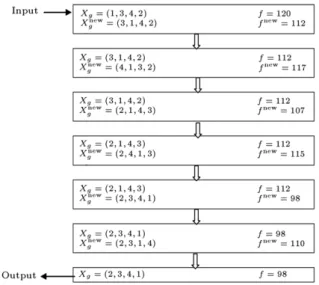
Figure 1: Individual enhancement strategy.
vector related to the group sequence (the last row) are changed, a new solution for the GS problem is generated. The new pseudo matrix is called a neighborhood.
If the objective function value of the new solution is better than the current objective function, the change is accepted, oth-erwise two other groups are chosen to change their positions. This method is called Individual Enhancement (IE) which is ap-plied as follows.
Assume that there areg slots in the last row in order to identify the sequence of groups. Assume that the groups are set in an arbitrary sequence. A new neighborhood is generated by changing the position of a group assigned to slot ‘‘b1’’ with the group assigned to slot ‘‘b2’’ such that 1
≤
b1≤
b2 andb1
≤
b2≤
g. A graphical example is illustrated inFigure 1. In this example, it is assumed that there are four groups andXis a solution for this problem. Suppose that the original group sequence isXg
=
(
1,
3,
4,
2)
and the objective function valuefor the solutionX is f
=
120. The positions of the groups in the first two slots are changed inXg. In this case, the newsequence is shown asXnew
g
=
(
3,
1,
4,
2)
. Assume that theobjective function value of the new sequence isfnew
=
112. It is clear that the objective function of the new sequence is better than the previous one. Therefore, the new solution is accepted (Xg=
Xgnewandf=
fnew). Afterwards, assume that the pairof groups on the first and third slots are nominated to change their components based on the same rule. The changes of the next iterations are presented inFigure 1.
It is clear that the neighborhood search is not directly applied to the continuous pseudo matrix but to the group sequence in the discrete pseudo matrix. In order to do this, the value of the groups whose positions are changed in the IE should be changed in the continuous pseudo matrix. So, when a neighborhood search is completed, the continuous position should be updated to guarantee that the sequence resulted by the ROV rule for the new continuous position is the same as the sequence resulted by the neighborhood search. For instance, ifXg
=
(
2,
3,
1,
4)
is the group sequence related to the slot(0.12, 0.22, 0.06, 1.14), obviously the swap of groups 2 and 4 is corresponding to the swap of 0.12 and 1.14.
A hybrid algorithm, resulting from the IE algorithm and the PSO algorithm, is developed for the research problem. At each stage, when PSO generates new solutions, the IE scheme improves these solutions and passes them to the next stage in
the PSO algorithm. The pseudo code of the PSOIE algorithm is provided inAppendix A.
4.3. PSO parameters
In this research, the dynamic coefficients
w
,c1, andc2in Eq. (5)are considered, which vary nonlinearly during the evolution process [14]. The values ofw
, c1 and c2 at each stage arecomputed by Eqs.(11)–(13), as follows:
w
=
w
min+
w
max−
w
min 1+
e−a(maxmaxII−I),
(11) c1=
c1min+
c max 1−
cmin1 1+
e−a(maxmaxII−I),
(12) c2=
c2min+
c2max−
c2min 1+
emax−aII,
(13)where
w
maxandw
minrepresent the maximum and minimumvalues for
w
, respectively. Similarly,c1max and cmin1 represent the maximum and minimum values forc1, andc2maxandc2minrepresent the maximum and minimum values for c2. The
parameter ‘‘a’’ has a constant value. The parameter ‘‘I’’ is applied to show the current iteration, and the parameter ‘‘maxI’’ presents the total number of iterations.
An initial population of particles is generated randomly for the PSO algorithm by the following formula:
Xjk
=
Xmin+
rand×
(
Xmax−
Xmin), (14)whereXminandXmax are the lower and upper bounds for the
position value in the continuous search space, respectively. A random variable, calledrand, in the range (0, 1) is used in this formula as well. Similarly, the initial velocity of the particle is generated as follows:
Vjk
=
vmin
+
rand×
(vmax
−
vmin),
(15)where
vmin
andvmax
are ones explained in previous sections, andrandis a random variable in the range (0, 1).5. Results and comparisons
The performance of the proposed PSO algorithm is compared with the best available meta-heuristic algorithm in literature, i.e. the ACO algorithm proposed by Salmasi et al. [7]. The comparison is performed based on flow shop test problems generated by Salmasi et al. [7]. These test problems are generated in three different sets with two, three and six machines in a cell. The number of groups is between two to 16, and the number of jobs in each group is between two to 10.
Microsoft visual C++ 6 is used to code the proposed algorithm. A laptop with 2.1 GHz CPU and 2 GB RAM is used to perform the experiments. The PSO algorithm is tuned based on setting parameters according to the values of Table 1. These values for the parameters are obtained by extensive experiments using test problems different from those used for the meta-heuristic algorithms comparison. The stopping criterion to stop the search by the PSO algorithm is considered as 30 s of the CPU time. This is the same criterion used by Salmasi et al. [7] for solving problems with the ACO algorithm. Since almost the same hardware is used for both algorithms, it can be concluded that a fair comparison is performed to compare them.
In order to compare the performance of the algorithms, a pairedt-test is performed between the results of the PSO
Table 1: The particle swarm optimization algorithm parameters.
Swarm size 2×g
Maximum value ofw (wmax) 2
Minimum value ofw (wmin) 0.4
Maximum value ofc1(cmax
1 ) 2
Minimum value ofc1(cmin
1 ) 0.4
Maximum value ofc2(cmax
2 ) 2
Minimum value ofc2(cmin
2 ) 0.4
Upper bound for position value 4
Lower bound for position value 0
Maximum velocity 4
Minimum velocity −4
a 10
Table 2: The average percentage error for the PSOIE algorithm and ant colony algorithm from the lower bound proposed by Salmasi et al. [7].
Problem Average percentage error
PSOIE algorithm (%) ACO algorithm (%)
2-machine 13.9 14.4
3-machine 15.7 16.3
6-machine 13.5 13.9
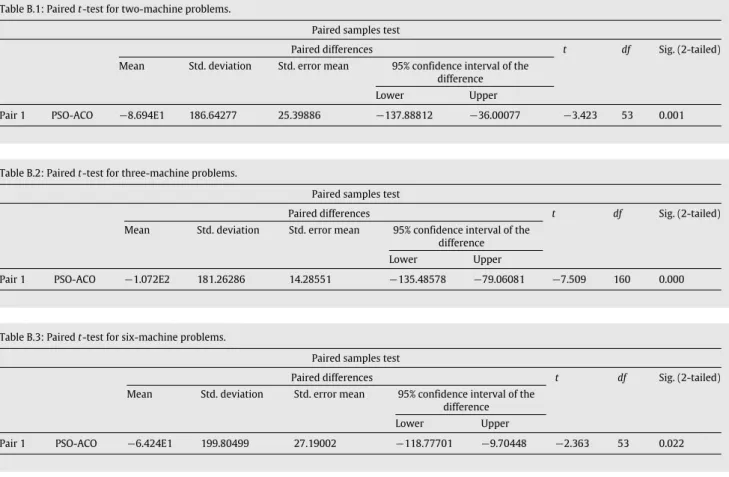
algorithm and the results of the ACO algorithm developed by Salmasi et al. [7]. This comparison is performed for two, three and six machine problems separately, by considering minimization of the total flow time value for each test problem as the criterion. The results of the statistical comparison are shown inAppendix B. TheP-VALUE for the comparison between the two algorithms for two, three and six machine problems is about zero (0.001, 0.000, and 0.022, respectively). Thus it can be concluded that there is a significant difference between the results of these algorithms based on two, three and six machine problems. Since the average objective function value of the PSO algorithm is less than the ACO algorithm for all three-problem sets, it can be concluded that the PSO algorithm provides better solutions for the proposed research problem. For further comparison, the percentage error of both algorithms based on the Lower Bound (LB) proposed by Salmasi et al. [7] for available test problems are presented inTable 2. This LB is calculated based on the following formula:
(
The heuristic algorithm solution−
The lower bound)
/
The lower bound.
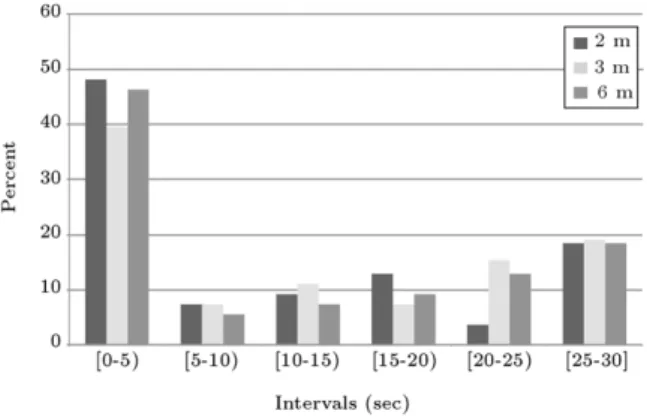
As shown, the percentage error of the PSO algorithm is less than the ACO algorithm percentage error in all three cases. In order to provide a better evaluation of the ACO algorithm performance, the histogram of the time required to reach the best solution for the PSO algorithm is shown inFigure 2. The same histogram for the ACO algorithm is shown inFigure 3. This figure is adopted here by receiving the permission of the publisher of the paper. The comparison of these histograms shows that the best solution of the PSO algorithm is reached in a shorter time than the ACO algorithm in most test problems.
6. Conclusion
In this research, a meta-heuristic algorithm based on PSO for solving theFm
|
fmls,Splk,prmu|
∑
Cjproblem, is developed.Then, the PSO algorithm performance is compared with the ACO algorithm, which was known as the best available meta-heuristic algorithm in literature for the proposed problem. The result of the pairedt-test shows that the PSO algorithm has a
Figure 2: Runtime percentage histogram for the particle swarm optimization algorithm.
Figure 3: Runtime percentage histogram for the ant colony optimization algorithm taken from Salmasi et al. [7] with permission.
better performance than the ACO algorithm, and is also able to find the best solution in a shorter time. The proposed PSO algorithm can be used to solve FSDGS problems with different objective functions, such as minimization of total tardiness with minor changes. There is room for improvement of the proposed algorithm in this research by finding a better neighborhood search mechanism.
Appendix A
The pseudo code of hybrid particle swarm optimization algorithm:
1. Generate initial solution randomly; 2. Iteration
=
0;3. Repeat until iteration
=
maxiteration;3.1. Generate new solutions based on Eqs.(9)and(10), 3.2. Enhance solutions by IE strategy,
3.3. Update local best solution, 3.4. Update global best solution, 4. Global best solution is final solution.
Appendix B
The result of the pairedt-tests for the hybrid particle swarm optimization and ant colony optimization algorithm compari-son is shown inTables B.1–B.3.
Table B.1: Pairedt-test for two-machine problems.
Paired samples test
Paired differences t df Sig. (2-tailed)
Mean Std. deviation Std. error mean 95% confidence interval of the difference
Lower Upper
Pair 1 PSO-ACO −8.694E1 186.64277 25.39886 −137.88812 −36.00077 −3.423 53 0.001
Table B.2: Pairedt-test for three-machine problems.
Paired samples test
Paired differences t df Sig. (2-tailed)
Mean Std. deviation Std. error mean 95% confidence interval of the difference
Lower Upper
Pair 1 PSO-ACO −1.072E2 181.26286 14.28551 −135.48578 −79.06081 −7.509 160 0.000
Table B.3: Pairedt-test for six-machine problems.
Paired samples test
Paired differences t df Sig. (2-tailed)
Mean Std. deviation Std. error mean 95% confidence interval of the difference
Lower Upper
Pair 1 PSO-ACO −6.424E1 199.80499 27.19002 −118.77701 −9.70448 −2.363 53 0.022
References
[1] Johnson, S.M. ‘‘Optimal two- and three-stage production schedules with setup times included’’,Naval Research Logistics Quarterly, 1, pp. 61–68 (1954).
[2] Schaller, G.E., Gupta, J.N.D. and Vakharia, A. ‘‘Scheduling a flow line manufacturing cell with sequence dependent family setup time’’,European Journal of Operational Research, 125(2), pp. 324–329 (2000).
[3] Franca, P.M., Gupta, J.N.D., Mendes, P.M. and Veltink, K.J. ‘‘Evolutionary algorithms for scheduling a flow shop manufacturing cell with sequence dependent family setups’’,Computers and Industrial Engineering, 48(3), pp. 491–506 (2005).
[4] Logendran, R., Salmasi, N. and Sriskandarajah, C. ‘‘Two-machine group scheduling problems in discrete parts manufacturing with sequence-dependent setups’’,Computers & Operations Research, 33, pp. 158–180 (2006).
[5] Hendizadeh, H., Faramarzi, H., Mansouri, S.A., Gupta, J.N.D. and Elmekkawy, T.Y. ‘‘Meta-heuristics for scheduling a flow shop manu-facturing cell with sequence dependent family setup times’’,International Journal of Production Economics, 111, pp. 593–605 (2008).
[6] Lin, Sh.W., Gupta, J.N.D., Ying, K.Ch. and Lee, Z.J. ‘‘Using simulated annealing to schedule a flowshop manufacturing cell with sequence-dependent family setup times’’, International Journal of Production Research, 47(12), pp. 3205–3217 (2009).
[7] Salmasi, N., Logendran, R. and Skandari, M.R. ‘‘Total flow time minimiza-tion in a flowshop sequence-dependent group scheduling problem’’, Com-puters & Operations Research, 37, pp. 199–212 (2010).
[8] Kennedy, J. and Eberhart, R. ‘‘Particle swarm optimization’’, Proceed-ing of IEEE International Conference on Neural Network, 4, Australia, pp. 1942–1948 (1995).
[9] Lian, Z., Gu, X. and Jiao, B. ‘‘A similar particle swarm optimization for permutation flow shop scheduling to minimize makespan’’,Applied Mathematics and Computation, 175(1), pp. 773–785 (2006).
[10] Lian, Z., Gu, X. and Jiao, B. ‘‘A novel particle swarm optimization algorithm
for per-mutation flow shop scheduling to minimize makespan’’,Chaos, Solutions and Fractals, 35(5), pp. 851–861 (2008).
[11] Fatih Tasgetiren, M., Liang, Y.C., Sevkli, M. and Gencyilmaz, G. ‘‘A particle swarm optimization algorithm for makespan and total flow time minimization in the permutation flow shop sequencing problem’’, European Journal of Operational Research, 177, pp. 1930–1947 (2007). [12] Liu, B., Wang, L. and Jin, Y.H. ‘‘An effective hybrid pso-based algorithm
for flow shop scheduling with limited buffers’’,Computers & Operations Research, 35(9), pp. 2791–2806 (2008).
[13] Pinedo, M.,Scheduling Theory, Algorithms, and Systems, third ed. Prentice Hall (2008).
[14] Kuo, I.H., Horng, S.J., Kao, T.W. and Lin, T.L. ‘‘An effective flow shop scheduling algorithm based on a hybrid particle swarm optimization model’’,Expert Systems with Application, 36(3), pp. 7027–7032 (2009). Davood Hajinejadreceived his B.S. from the Department of Mathematics at Shahrood University of Technology in 2006, and his M.S. degree from the Department of Mathematics at Isfahan University of Technology in 2009. His is currently a part time instructor at Payame Noor University, Kashmar Branch. Mr. Hajinejad’s research interests include Scheduling and Applied Operations Research.
Nasser Salmasiis currently an Associate Professor at the Department of Industrial Engineering at Sharif University of Technology (SUT), Tehran, Iran. He received his Ph.D. from the Department of Industrial and Manufacturing Engineering at Oregon State University (OSU). Dr. Salmasi’s primary areas of research include Applied Operations Research, Scheduling and Information Systems.
Reza Mokhtarireceived his Ph.D. in the area of Applied Mathematics at the University of Science and Technology, Tehran, Iran. Dr. Mokhtari currently is Assistant Professor in the Department of Mathematics at Isfahan University of Technology, Iran.