in Ontario Community Colleges
Samuel Glass, B.Ed
Department of Graduate and Undergraduate Studies in Education
Submitted in partial fulfillment of the requirements for the degree of
Master of Education
Faculty of Education, Brock University St. Catharines, Ontario
The hospitality industry in Canada is growing. With that growth is a demand for qualified workers to fill available positions within all facets of the hospitality industry, one ofthem being cooks. To meet this labour shortage, community colleges offering culinary arts programs are ramping up to meet the needs of industry to produce
workplace-ready graduates. Industry, students, and community colleges are but three of the several stakeholders in culinary arts education.
The purpose ofthis research project was to bring together a cross-section of stakeholders in culinary arts education in Ontario and qualitatively examine the
stakeholders' perceptions of how culinary arts programs and the current curriculum are taught at community colleges as mandated by the Ministry of Training, Colleges and Universities (MTCU) in the Culinary Program Standard. A literature review was conducted in support of the' research undertaking. Ten stakehold,ers were interviewed in preliminary and follow-up sessions, after which the data were analyzed using a grounded theory research design.
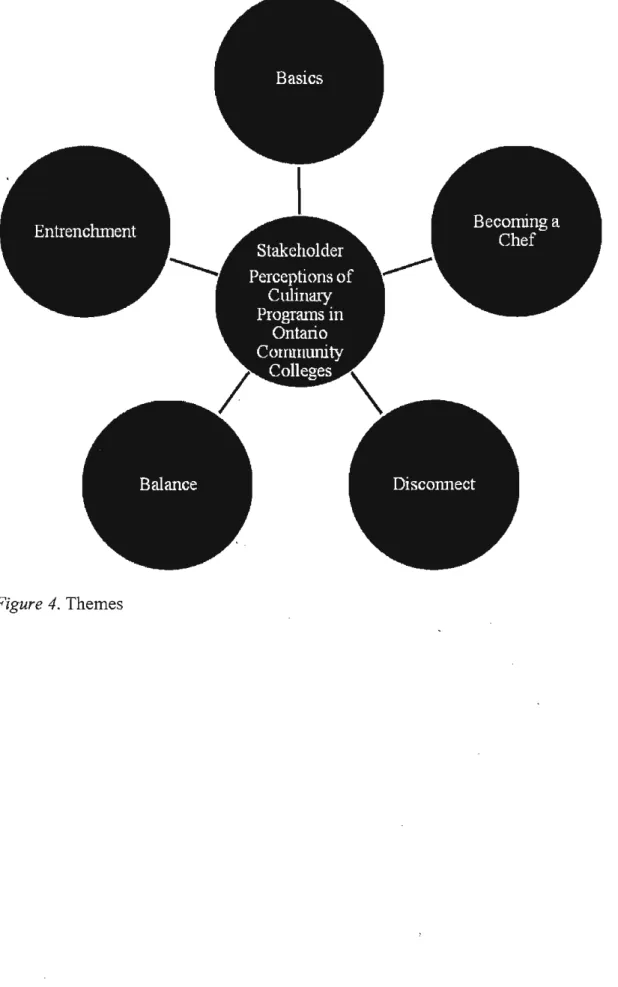
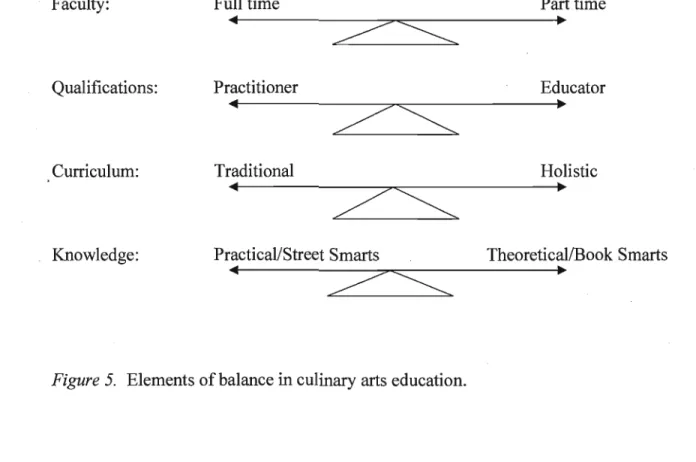
The findings confirmed the existence of a disconnect amongst stakeholders in culinary arts education. Parallel to that was the discovery of the need for balance in several facets of culinary arts education. The discussions, as found in Chapter 5 of this study, addressed the themes of Becoming a Chef, Basics, Entrenchment, Disconnect, and Balance. The 8 recommendations, also found in Chapter 5, which are founded on the research results of this study, will be of interest to stakeholders in culinary education, particularly in the province of Ontario.
In the words of the late Jerry Garcia, "lately it occurs to me what a long, strange trip it's been". Almost 10 years ago, I returned to university, hoping to complete my Bachelor degree, after leaving some 20 years earlier in pursuit of a culinary career. Never in my wildest dreams did I expect to find myself at this stage, completing my thesis, and yet, here I am!
Along the way, there have been so many who have helped me with my academic endeavors, be they friends, family, colleagues, and of course, professors. Without them, I doubt that I could have completed this undertaking. To Elizabeth Wright, one of my undergrad instructors, thank you for showing me the light as well as encouraging me to be a troublemaker by asking critical questions, albeit in a polite way. To my brother Joseph, the true academic in the family, thank you for making yourself available whenever I needed questions answered on the how-to and the whys of research papers and this thesis in particular:-, ,
To Drs. Denise Paquette-Frenette and Maureen Connolly for your ongoing support, advice, guidance, and critique of my work as committee members, my sincerest thanks. To Dr. Alice Schutz, who was both my academic and thesis advisor, words cannot express my gratitude. From day one, when you helped me with my coUrse selection, you said I was going to be "one of yours". I hope your belief in me has paid off.
Finally, I must thank my family, who have put up with me during this educational adventure. To Jonah and Alanna, thank you for your technical support when needed and just remember that if I can do it, so can you! To Randi, who by osmosis of my academic discourse and the proofreading of all my papers probably warrants a degree too, all I can
adventure and discovery. No thoughts of a PhD .... at least for the next couple of years!
Abstract. ... .ii
Acknowledgements ... .iii
List of Tables ... vii
List of Figures ... viii
CHAPTER ONE: CONTEXT OF INQUIRY. ... 1
Background of the Problem ... 1
Statement of the Problem Situation .... '" ... 10
Purpose of This Study ... 11
Questions to Be Answered ... 11
Rationale ... 11
Scope and Limitations of This Study ... 13
Outline of the Remainder of the Document ... 13
CHAPTER TWO: LITERATURE REVIEW ... 14
A Chefs Roles andC4aracteristics ... 15
I Culinary Curriculum in Ontario ... '" ... '" ... 20
Student Voices ... 22
Culinary Educators ... : ... 25
Culinary Education ... 28
Educational Components of Culinary Education ... .32
Summary ... 49
CHAPTER THREE: METHODOLOGY AND PROCEDURES ... 51
Research Methodology ... 51
Grounded Theory ... 52
Pilot Studies ... 54
Selection of Site and Participants ... ; ... 55
The Participants ... , ... 58
Ethical Considerations ... 67
Restatement of the Research Question ... 68
CHAPTER FOUR: PRESENTATION OF FINDINGS ... 69
Themes ... 69
Summary ... 120
CHAPTER FIVE: SUMMARY, DISCUSSION, AND RECOMMENDATIONS .... 122
Summary ... 122
Discussion ... 125
Implications for Theory ... 147
Implications for Practice ... 150
Further Research ... 154
Conclusion ... 156
REFERENCES ... 157
I Appendix A: Brock University REB Clearance ... 173
Appendix B: Interview Guide 1.. ... 174
Appendix,C: Interview Guide 2 ... 177
Table
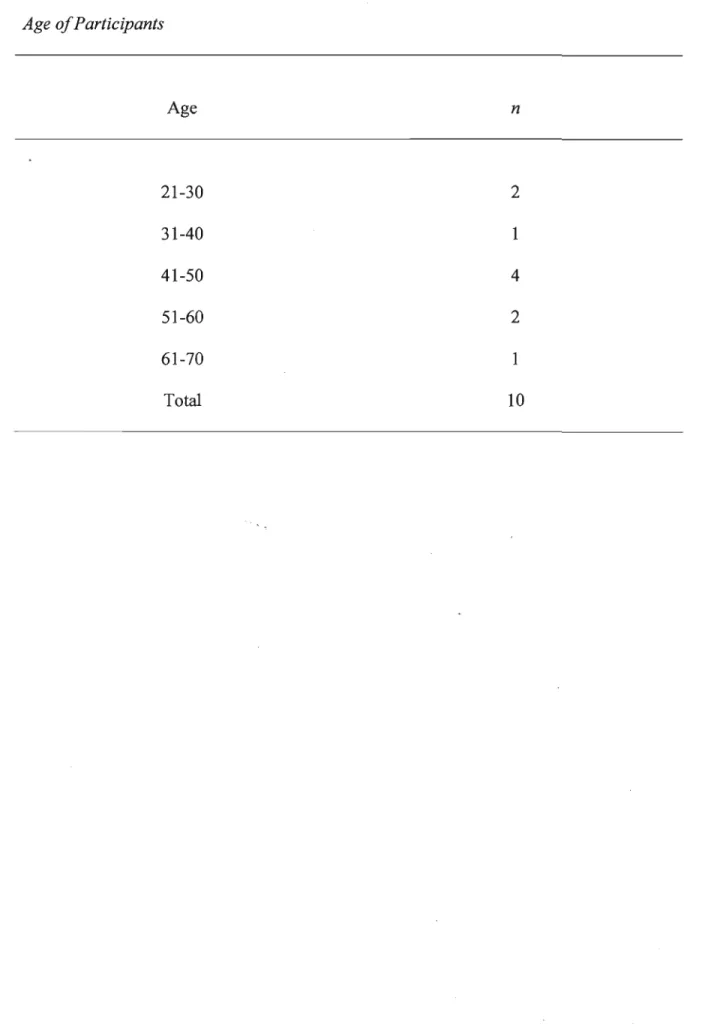
1 Age of Participants ... 60
2 Gender of Participants ... 61
3 Participants with Red Seal Certificate ... 62
4 Participants with Certified Chef de Cuisine (CCC) Designation ... 63
5 Academic Qualifications of Participants ... 64
6 Strength of Connection Amongst Stakeholders in Culinary Education in Ontario ... .108
Figure
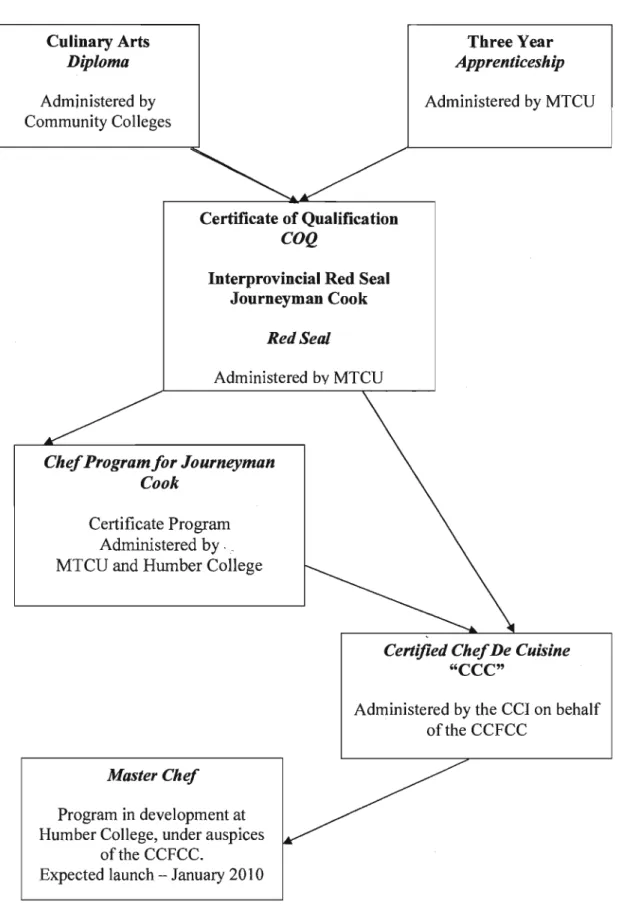
1 Certification Path for Culinary Professionals in Ontario ... 19
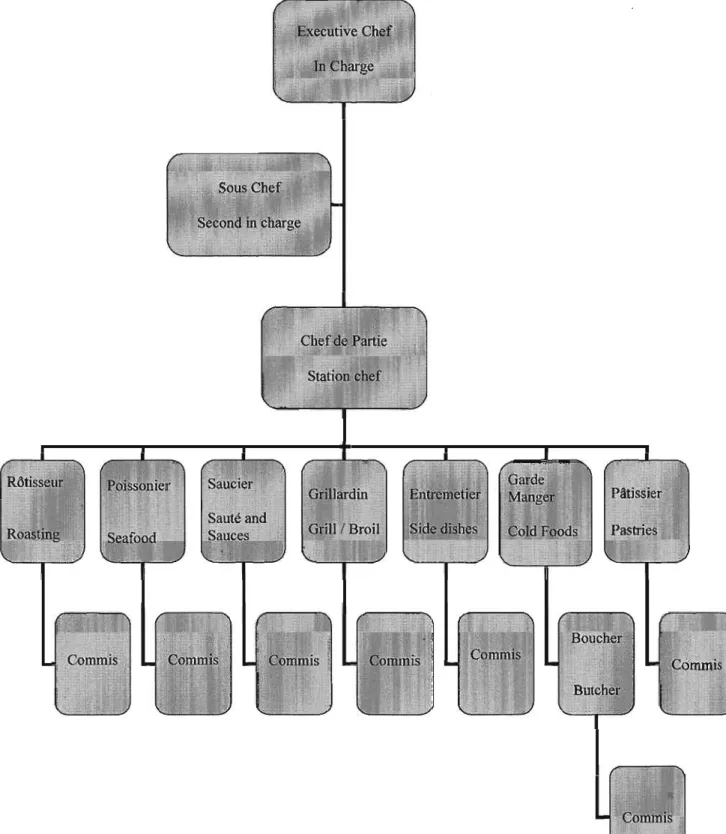
2 Classical Brigade System ... .44
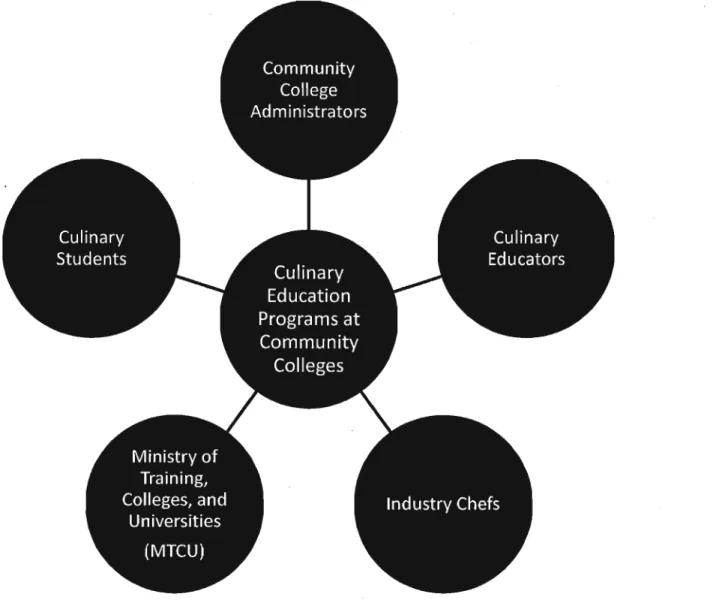
3 Stakeholders in Culinary Education Programs at Community Colleges in Ontario ... , ... .59
4 Themes ... 70
5 Elements of Balance in Culinary Arts Education ... 89
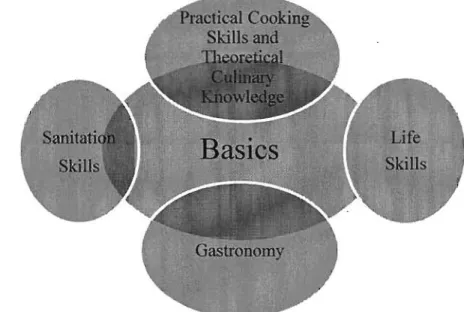
6 Elements of a Basic Culinary Arts Education ... 130
7 Entrenchment in Culinary Arts Programs at Ontario Community Colleges ... 134
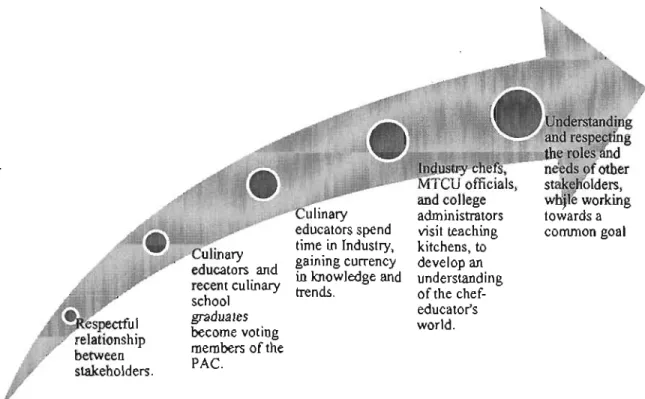
8 Steps Required for Solving the Disconnect Amongst Stakeholders in Culinary Arts Prograri1sat Ontario Community Colleges ... ,. ... .l42 9 Culinary Arts Curriculum -The Focal Point ... 147
10 Culinary Arts Education and Certification Model. ... 154
This is a study of culinary arts education in Ontario's community colleges, focusing on the perceptions of its stakeholders. This study examines the needs and expectations of its several stakeholders. It looks at the challenges and examines a need
for
improvement and the level of congruence among its stakeholders. This chapter looks at the background ofthe problem, states the problem situations and provides the purpose, guiding questions, rationale, and scope and limitation of this study.Background of the Problem
Culinary programs are taught throughout the world. Cooking is a truly portable skill, in which trained cooks can apply cooking fundamentals which they have learned to most cuisines and produce food representative of the region or country that they are in. Without sound culinary training, this portability would be difficult.
In its early stages, initial culinary education was informal and based on the apprenticeship system. According to Emms (2005), it was not until, .1883 that the first cooking school was established. Emms describes this early phase:
Traditionally the education of cooks and chefs was through the apprenticeship system, thus a journeyman would have served an
apprenticeship with a mentor of master craftsmen ... who would take on an apprentice and teach them everything they knew. In exchange, the young apprentice would work for little or no money; [sic] and their board and keep. In most instances their culinary education would consist of a melange of visual, olfactory, and taste references, practical production
skills, the use of specialized equipment, and artistry and story telling. (p. 61)
The European apprentice system, as just described, provided a template for culinary training and education in North America until cooking schools became ~he more popular, if not standard method (Dornenburg & Page, 2003) of
educating future cooks and chefs.
Over the past 50 years, the practice has shifted from an apprenticeship model to a more formalized environment, with the introduction of professional cooking schools. According to Harrington, Mandabach, VanLeeuwen, and Thibodeaux, "culinary
education has seen significant growth and change over the past few years" (2005, p. 197). Baskette notes that the growth of culinary programs over the past 20 years is "testimony to the rising interest in food for dining pleasure and for careers" (2007, p. 37) and that culinary arts and hospitality programs have also become big business for both public and private institutions.
Nowadays, most aspiring cooks learn the theory of cooking prior to facing and experiencing the reality of the culinary world. Dornenburg and Page (2003) believe that a cook's first formal education often takes place in a culinary classroom and that
"cooking school offers an opportunity to gain exposure in a concentrated period oftime to an immense amount of information, from cooking techniques (knife skills, saute, grill) to theory (nutrition, sanitation), to international/regional cuisines (French, Italian, Asian)" (p. 64). Ralli ( cited in Babilonia, 2004) claims that "cooking school was more than learning about technique ... from developing heat-resistant hands to managing the temperamental personalities, we developed the stamina necessary in a professional
kitchen" (p. 100). Brefere, Drummond, and Barnes assert that "formal training in the culinary field is imperative for anyone who wants to work as a chef [and that] culinary training also has adapted to reflect changing food trends and eating habits" (2006, p. xv). Cooking schools further validate and legitimize the culinary arts as a profession, rather ~han as a vocation. Portale (cited in Dornenburg & Page, 2003) notes that:
It [cooking school] immediately legitimizes you as a professional and exposes you to a broad base of information, even though not much of it is practical. It certainly puts you at a greater advantage than someone who's self-taught or learns going up through the ranks. (p. 64)
A caveat to the advantages of formal culinary education, as noted by Fine (1996), is that the aforementioned skill sets and theoretical knowledge "are acquired in the artificial environment, where students are rarely pressured, overworked or sharply criticized" (p. 51), with graduates often ignorant of the realities of industry and the real world.
In the province of Ontario, there are at least 12 community colleges offering culinary arts training. Among those colleges, there are over ,85 culinary arts programs,
labeled as chef training, culinary management, culinary administration, and culinary skills (Ontario College Application Service, 2006). In addition to the community colleges, there are several private career colleges offering culinary arts training.
According to the Ministry of Training, Colleges and Universities (MTCU), private career colleges are focused on people who require specific skills to enter the workforce as quickly as possible or who are not interested in the academic requirements of a
community college (2006). Both the community colleges and private career colleges follow a curriculum that was mandated by the MTCU in 1997.
According to Wolf (2005), culinary programs should be reviewed on a short-term basis (annually) or in 5- to 10- year cycles, while Baker, Cattet, and Riley (1995) note
~hat currency in curriculum is important for maintaining credibility of programs. If this is the case, Ontario's culinary curriculum is in need of review based on Wolfs
recommendation and that ofthe Ministry (MTCU) itself, as stated in its program standard document that regular reviews of the vocational outcomes must take place. It should be noted that the province of Newfoundland's culinary training standards for apprentices were written in 1997 and revised in 2000, 2003, and 2005 (Provincial Apprenticeship Board of Newfoundland, 2005). In Ontario, the in-school curriculum standards for apprentice cooks and assistant cooks were last revised in 2002. The practical requirements, also known as apprenticeship training standards for cooks, were last revised in 2005. What has remain.ed stagnant since 1997 is the curriculum for colleges , teaching culinary arts, although one community college, located in Toronto, has, independently of the MTCU, "formulated a strategy to reVaI)1p dated curriculum and bring its programs into the modem era" (Kyte, 2008, pp. 28-29).
Before reviewing curriculum and refining it, it is important to know what curriculum is as well as the different orientations within curriculum. Simply stated, curriculum is a plan for the education of learners. Curriculum can take on many different definitions and orientations, with Eisner (1985) advocating five basic orientations:
• Development of Cognitive Processes • Academic Rationalism
• Personal Relevance
• Social Adaptation and Social Reconstruction
• Curriculum as Technology
A brief explanation of curricula based on academic rationalism and personal relevance is offered since these two are the most relevant when referring to the current state of culinary curriculum at Ontario's community colleges.
A curriculum of academic rationalism is one that focuses on the needs of the subject to be taught, deemed as important by the institution and in some instances the global economy, whereas a curriculum of personal relevance focuses on the needs of the learner with an emphasis on personal meaning (Eisner, 1970, 1985). The latter approach is consistent with andragogy, as advocated by Knowles (1984). Andragogy is "premised on at least four crucial assumptions about the characteristics of adult learners that are different from the assumptions about child learners on which traditional pedagogy is premised" (M. K. Smith, 1?96, 1999, p. 2). One of those premises is a readiness to learn,
-',
with adult learners being most interested in subjects that have immediate relevance to their job or personal life rather than what the academic institution wants or deems necessary.
In its current state, it can be argued that culinary education is taking an academic
rationalism approach rather than one of personal relevance. This position is supported by Quint-Rapoport, who asserts that "community colleges are now gearing up to educate students to become marketable global citizens who will become a vital part of the global economy and are changing their curricular objectives to accomplish this goal" (2006, ~ 19) ..
Harrington, Mandabach, Thibodeaux, and VanLeeuwen, when discussing culinary education, note that "needs and interests of political, social and economic concerns
should be balanced with those ofthe individual" (2005, p. 47). Perhaps Harrington, Mandabach, Thibodeaux et al. are advocating a balance between academic rationalism . and personal relevance? As noted by Gustafson, Love, and Montgomery:
Balance must be attained in institutions of higher education. Hospitality [ and culinary] programs have long struggled with an image problem, seen by many outsiders as vocational training programs (Riegel, 1990) .. As hospitality [ and culinary] curriculum decisions are made, educators should seek to balance and meet the needs of all of their constituents: students, industry and society. (2005, p. 59)
That balance is important when considering the demographics of postsecondary institutions, such as colleges. With adult student enrollment in postsecondary educational institutions approaching a level of 50% (Mancuso, 2000), it is imperative that a
learner-I
centered approach be used, one that is designed to be relevant and meet the needs of the learners, in this case, culinary arts students, rather than those of the institution. Cross (1991) draws a parallel between the education of lifelong learners and the culinary industry. According to Cross:
The intermediate adult learner should be given considerable say about the ingredients of his or her learning program, and it should be our
responsibility to teach the students about ingredients, how to combine them for taste and nourishment, and how to derive satisfaction from the process of creating the learning program. (pp. 6-7)
Even if the ingredients needed for the successful recipe known as culinary curriculum are in place, the end result might not be perfect.
An outdated or personally irrelevant curriculum may not be the only problem facing culinary education in Ontario. Culinary educators, like most community college . educators, it seems, are not happy with the current state of community colleges. This is due to chronic under funding (Olinski, 2004), overcrowded classrooms (OPSEU, 2006), and a curriculum that is in need of review. Industry (the end user chef), it seems, is disappointed with the quality of graduates, who often lack the fundamental skills and attitudes needed, believing "that what is taught in class is not the reality in the work environment [and] that educators are not up to date with the latest trends or techniques, particularly if they have not been in the field professionally for many years" (Canadian Tourism Human Resource Council (CTHRC), 2006, p. iv). Pratten (2003a) also notes that employers are troubled with the deficiencies or lack of practical content within culinary programs at postsecondary instjtutions. This concern is further supported by The
I
Hospitality Training Foundation (cited in Pratten & O'Leary, 2007), which notes that "employers have expressed concerns about the lack of pra,ctical content in some college based training programs for chefs" (p. 73).
One of the challenges faced by culinary schools is the demographic profile of their student body. Historically, most cooks started their training at an early age through the apprenticeship model (Emms, 2005). According to Korus, the current demographic of culinary students is comprised of "young adults in quest of a career, mature adults seeking a career change, individuals simply needing ajob, and occasionally, a few culinary hobbyists" (2004, p. 2), with most of them having little or no idea of the
demands of the foodservice industry (Pratten, 2003b). According to Livingston (2000), culinary arts programs will continue to attract nontraditional students, among them, adults changing careers.
It would appear that in some instances culinary students are often caught in the . middle of what seems to be a perpetual problem: Upon graduation, students are deemed
trained by the colleges, yet, from my own personal experience, they are often incapable of meeting industry demands for entry level positions. The students may not be getting the education or receiving the discipline which is so integral to success in the culinary arts, even though, according to Lefever and Withian (cited in Hertzman & Stefanelli, 2005), industry professionals feel that culinary program graduates are enthusiastic, energetic, and technically well prepared, yet overestimate their abilities and possess unrealistically high expectations for their first jobs.
Culinary schools further perpetuate the problem, according to Bernstein (cited in Klein, 2006), by giving graduates the impression that upon comp~etion of their studies they are good cooks, let alone chefs. Bernstein feels that
the [ culinary] school should give them a glimpse into the workloads they can look forward to, and let them know they have to be open to working many hours without pay, and to be sponges, to absorb what people teach them rather than show off what they've learned in their two or four years. (2006, ~16)
Under the umbrella of culinary education, there are several stakeholders. Those stakeholders include the Ontario Ministry of Training, Colleges and Universities (MTCU), culinary program administrators, culinary educators, working chefs
(representative of the industry), and culinary students. All of these stakeholders have different wants and needs which must be met. One of the pressing issues is how those different wants and needs can be connected. Currently, the literature seems to be pointing to a disconnect between the stakeholders rather than a common ground. According to a . study by the CTHRC, "the educational institutions are also largely disconnected from
industry and have little communication with them. There is almost no effort put into curriculum validation, and learning opportunities of forums for both educators and industry are minimal" (2006, p. iv). Furthermore, when asked if there was a disconnect between educational institutions and industry, most participants in the aforementioned study agreed that "there is a separation between industry and educational institutions" (CTHRC, p. 3). Other organizations have also identified "a disconnect between trades and schooling" (Catholic Principals' Council of Ontario [CPCO], 2004, p. 16), "the disconnect between industry and institution" (Association of Canadian Community Colleges [ACCC], 2003, p. 6},:and "the disconnect between the workforce development , needs of the employers, the current skills of the workforce and the training provided by the educational programs" (Northwest Pennsylvania Workforce Investment Board [NWPAWIB], 2004,p. 1). Sykes notes the "growing disconnect between the attitudes and abilities of new employees and the requirements of new jobs" (2006, p. 25). Smith (2006) feels that a significant disconnect exists between the actual skill sets students need upon graduation and what they, as students, think they need upon graduation, while Taylor (2008) talks of the disconnect of what is being offered academically and
developmentally and how it relates to what students actually wanted or received. From all of the above, it would appear that a disconnect exists on several levels.
Statement of the Problem Situation
With the Government of Ontario's Ministry of Colleges, Training and Universities setting the standards, all stakeholders in culinary education should be striving to meet nine vocational learning outcomes, as identified in Chapter Two of this study. A possible disconnect in culinary education occurs when individual stakeholders feel that their needs are being met yet their counterparts feel they are not. For example, the chef-educator might feel that after successfully making one or two omelettes in class, a student has met the required objectives as stated by the MTCU, while the chef of a restaurant asks that student, now a graduate of a culinary program, to prepare several for lunch and he/she is not able to perform that task in an effective manner. One stakeholder (the chef-educator) is satisfied, while two (the industry chef and former culinary student) might be
disappointed. Little research has been done to examine how stakeholders either meet these standards or whether they interpret them in a similar manner. Jooste notes that "a fundamental shortcoming in'the field of culinary education is oft~n that persons with limited expertise in the field of curriculum studies bear the primary responsibility for addressing curriculum changes" (2007, p. iii). Another challenge surrounding culinary education,' according to Hegarty (1998), is that
Culinary arts/hospitality research is still in its infancy but suffers from similar but greater difficulties as educational research, namely it is not carried out by the practitioners. It is the gap between culinary arts/hospitality researchers and practitioners which betrays the fatal flaw in hospitality research. For it is the researchers and the academics, not the practitioners who determine the agenda for professional research in this field .... Culinary arts/hospitality is caught between
two stools [sic], that of basic (social) sciences and that of industry practitioners. Culinary arts/hospitality researchers have become adept at falling offboth stools, achieving neither prestige from mainstream disciplines nor gratitude from
industry professionals. (p. 347)
Purpose of This Study
The purpose of this study was to qualitatively examine the stakeholders'
perceptions of culinary programs as taught by community colleges and mandated by the MTCU in the Culinary Program Standard (1997). Specific stakeholders who were interviewed include 2 employees of the MTCU, 2 community college administrators, 2 culinary educators, 2 culinary students and 2 chef-employers (also referred to as industry chefs).
Questions to Be Answered The following questions guide this study:
1. Is culinary education meeting the needs and expectations ,of its stakeholders? 2. What are the challenges, if any, faced by stakeholders in culinary education? 3. Is there a need for improvement in the current state of culinary education, and if
so, how can it be addressed?
Rationale
This study is a result of my desire to better understand curriculum and how it applies to culinary education. Throughout my studies, both at an undergraduate and now graduate level, the focus of my research has been to better understand culinary education from an educator's perspective rather than that of a chef. As a chef, terms such as
or no meaning to me. Mine was, and at times still is, a world of mirepoix, roux, Grande Cuisine, Mother Sauces, and stocks. Now, I look at myself as both chef and educator. Having begun a career as a teacher in formal culinary education several years ago, complemented by a B.Ed. in Adult Education and my current graduate studies in
~urriculum, I now consider myself to be a chef-educator, able to switch back and forth in two distinct, yet complementary fields. Reflectively, this thesis is the result of who I have become, although I will always consider myself to be a work in progress. This thesis will also add to the limited body of knowledge since "there seems to be very little research on the culinary curriculum" (Robert Harrington (personal communication, May 8, 2004). It will also provide the stakeholders interviewed for this thesis a document to review and reflect upon and ultimately integrate, should they find the need to do so.
This research study incorporated the opinions of five stakeholder groups in the province of Ontario, those being representatives from the MTCU, community college administrators, culinary educators, culinary students, chefs, and employers (industry
I
chefs). I believe that the educational and service parts of the culinary arts need to be considered together. Ifthey influence each other positively,. both are enhanced. If they are in conflict, there will be a serious dysfunction in both.
The literature is silent regarding culinary curriculum in general and the interplay between curriculum and service in particular. It is my belief that in order to understand and enhance the culinary profession, a dialogue needs to be created which allows the stakeholders to listen to each other. However, before that can happen, we need to hear the perceptions of each ofthe stakeholders independently. It is for this reason that I am interested in addressing this topic in my study. This thesis aims to tackle these challenges
by integrating my experience as a culinary practitioner and educator with my research skills, with the results being of benefit to industry, culinary education, and academic research.
Scope and Limitations of This Study
This study was based on interviews conducted with stakeholders in culinary education in Ontario. The study was limited to culinary stakeholders living either near or within the boundaries of a large metropolitan area in the province of Ontario.
Outline of the Remainder of the Document
Chap!er Two consists of a review of literature, acting as a critical review of both historical and current literature regarding culinary educators, chefs, culinary curriculum, assessment, behaviourism, brigade and discipline, emotional intelligence, and
stakeholders' voices. Chapter Three discusses the methodology and procedures used for this research project. Chapter Four presents the results and findings of the research which was conducted. In this chapter, the opinions of the stakeholders are shared. Chapter Five
I
is a summary of the study, in which the findings are discussed and recommendations provided based on the research that was conducted.
CHAPTER TWO: LITERATURE REVIEW
A literature review, according to Creswell, "is a written summary of articles, books, and other documents that describe the past and current state of knowledge about a topic" (2002, p. 646). The topic under review in this study is culinary education. One of :the challenges I face in reviewing literature about culinary education is-that it embraces two worlds, one being the culinary world, the other being the world of education. Another challenge, according to Robert Harrington (personal communication, May 8, 2004), is that
there seems to be very little research on the culinary curriculum [and that] the good news is [that] there is a lot of opportunity for new research in the area of culinary education. The bad news is that there is not a strong literature stream to draw from.
Harrington is supported by J ooste, who, when referring to culinary arts education, notes that "the lack of empirical research in this field of study is an indication that both students and professionals should be encouraged to do the relevant research" (2007, p. iv).
In reviewing the literature, I have chosen several areas relative to the research being conducted, with the expectation that the literature would provide not only insight to my research but provide a basis for the questions being asked of the research participants. The areas are:
• A chef s roles and characteristics • Culinary curriculum in Ontario • Student voices
• Culinary educators • Culinary education
• Educational components of culinary education • Connoisseurship
• Assessment • Behaviorism
• Emotional intelligence • Holistic approaches
A Chef's Roles and Characteristics
But just what is a chef? The definitions range from the sublime to the simple. Montagne, in his seminal work, Larousse Gastronomique, in quoting the French poet Desaugiers states:
A cook [chef], when I dine, seems to me a divine being, who from the depths of his kitchen rules the human race. One considers ~im as a
minister of heaven, because his kitchen is a temple, in which his ovens are the altar. (1961, p. 305)
Babilonia (2004) invokes the image of a chef as "a nameless Frenchman dressed in an all-white apron and a tall white hat" (p. 100), while former New York Times restaurant critic Bryan Miller (cited in Rowinski, 2000) notes that "the qualities of an exceptional cook [or chef] are akin to those of a successful tightrope walker: an abiding passion for the task, courage to go out on a limb and an impeccable sense of balance" (p. 36). Marcel Escoffier (personal communication, January 21,2007) draws an analogy between a chef and a quarterback as someone "who is a winner, and who can lead his staff to exceed
their own expectations of themselves". Escoffier (1987) also notes that "the ideal chef hadto have a firm knowledge of the techniques and utensils of his trade" (p. 54).
According to Gisslen, "the chef is the person in charge of the kitchen" (1999, p. 6), while Jones (2005) states that "chefs and cooks are typically defined as those who are engaged in food production for customers, irrespective of the size or scale of the
establishment" (p. 269). A Service Canada (2003) report indicates that in order be a chef, usually all that is needed is a high school diploma and certification as a cook, in
combination with training, experience, and credentials. If only it were that simple!
Cullen (2000) points out that historically the chef was often seen as the chief cook, but in today's modem kitchen
the chef is not only expected to be a first-class culinarian who can create gastronomic masterpieces, but also be a supervisor who can motivate and lead the kitchen team .... [and that the chef] needs to be technically
competent and know the'aspects that make up professional culinary practices: the processes, equipment and quality standards .(p. 2)
Fine (1996) notes that "the most important skills that distinguish chefs from cooks include: creativity, personnel management and organizational abilities [and that] together, they constitute the chefs role" (p. 64). According to Bouley (cited in Hamilton and Kuh, 2007), "a chef has to have strength and leadership, lead by example, and understand [that] they are teaching" (pp. 52-53). Labensky, Hause, Malley, Bevan, and Sicoli remark that
chefs must be able to identify, purchase, utilize and prepare a wide variety of foods. They should be able to train and supervise a safe, skilled and
efficient staff. To do all this successfully, chefs must possess a body of knowledge and understand and apply certain scientific and business principles. (1999, p. 14)
According to Van Landingham (1995), the term chef was best defined by Angus M~Intosh (1990), who wrote that a chef is "a creator; master of innovation; historian; pleasure-giver; recognition seeker; time-manager; perfectionist; cajoler; consoler; stress victim; craftsman; accountant; student; teacher; comforter; referee; liaison; surrogate parent; story-teller; dishwasher; patriot; preacher and whipping post" (p. 22). Even with all of these attributes, there is still more to that which makes up the fabric of a chef. According to Pratten (2003b), training is essential, while Lee-Ross (as cited in Pratten, 2003b) asserts that a chef "must be able to work quickly and effectively under pressure and have appropriate motor skills and manual dexterity" (p. 455). Johnson (cited in Hartnett and Levesque, 2002, p. 58) claims that "every chef is an artist trying to make a profit [and] as a chef, that is one'of,the magic parts of our job". Bask~tte notes that "the professional chef of today is a teacher, a leader, an organizer, and above all, a person willing to learn and try new things" (2007, p. 37).
In Canada, the Certified Chef de Cuisine (CCC) designation and program are administered by the Canadian Culinary Institute (CCI). The CCI is the educational and certifying branch ofthe CCFCC (Canadian Culinary Federation / Federation Culinaire Canadienne). According to the CCFCC (2008), a candidate must have the following in order to challenge the CCC exam:
• During the 5 years of employment after Red Seal certification, a minimum of 2 years as an employee supervisor working on the management team in the kitchen. • A Food Handlers certificate (i.e., Advanced Food Safe, Section 43 Certificate or
ServeSafe).
The Red Seal, also known as the COQ (Certificate of Qualification), is a
theoretical exam, which can be challenged by an apprentice or culinary school graduate upon completing 6,000 hours of documented culinary experience and education. Those who have successfully completed the exam are referred to as Journeyman Cooks. This is an important step towards the CCC designation. As illustrated in Figure 1, there are two paths towards certification as a Chef de Cuisine in Canada. Both the Three Year· Apprenticeship stream and the Culinary Arts Diploma stream converge at the first level of certification, which is the Red Seal, also referred to as the Certificate of Qualification. After obtaining the Red Seal, a culinarian may opt to take the recently introduced Chef Program for Journeyman Cooks after one year's experience as ajo~eyman (Humber College, 2008) or challenge the CCC exam provided he/she has met the criteria as previously identified. It is at this point where certification is nQ longer regulated by the government. It is administered by a professional association, the CCFCC, rather than a government group, the MTCU. Contrast the Canadian system to the American system. In the United States, the American Culinary Federation (ACF)is the certifying body for professional cooks and chefs at all levels. According to Guggenmos (cited in Foodservice and Hospitality, 2008, p. 5), "the U.S. program is very comprehensive and could or should be a model for the rest ofthe world". Figure 1 shows the certification path available to culinary professionals in Ontario
Culinary Arts Diploma Administered by Community Colleges Certificate of Qualification COQ
Interprovincial Red Seal Journeyman Cook
Red Seal
Administered bv MTCU
Chef Program for Journeyman Cook
Certificate Program
Administered by"
MTCU and Humber College
Three Year
Apprenticeship
Administered by MTCU
Certified Chef De Cuisine
"CCC"
Master Chef
Program in development at
Humber College, under auspices
of the CCFCC.
Expected launch - January 2010
Administered by the CCI on behalf
of the CCFCC
There is minimal interaction between state regulatory bodies and the ACF. It should be noted that in either country, certification is not mandatory, and that in the province of Ontario, the profession of cook is not regulated. In referring to the certification process, Kluftinger notes:
If there was that kind of structure and it was prescribed by the
government, it would attract more people to our trade. It would improve the quality of the cooks that come out of the system, as well as pay rates, we'd have more people staying in the business as a career and not just passing through. (cited in Foodservice and Hospitality, 2008, p. 5)
Certification and career path are but two components of a culinary career or being a chef. Perhaps Humphrey (cited in Maybach, 2003) sums it up best when he states:
Being a chef is a state of mind. It is a consciousness that is characterized by constant mental mise-en-place. You have to be prepared before you walk into the kitchen every day: physically, mentally and emotionally. You have to be willing to stay in your professional role despite anything that may arise in your kitchen. That level of commitment demands a full~ time desire, not a part-time attitude .... Dependability, reliability,
accountability, respectfulness for people and products, honesty,
cleanliness and effective communication skills are the qualities that allow people to achieve. (p. 282)
Culinary Curriculum in Ontario
In the province of Ontario, there are more than 20 professional cooking schools. Cooking is taught in community colleges as well as private vocational schools. All of
these schools are required to meet standards as identified by the Ministry of Education and, more specifically the Ministry of Training, Colleges and Universities. Each
postsecondary program in the province must include vocational standards, generic skills standards, and general education standards (MTCU, 1997). The Ministry identifies nine
sp~cific vocational outcomes for culinary arts programs at community and career
colleges. They are:
1. Provide fundamental culinary planning, preparation, and presentation to a variety of foodservice environments.
2. Apply basic and advanced food and bake theories and other related theories to all aspects of food preparation.
3. Contribute to the provision of a healthy, safe, and well maintained kitchen environment and to the service of food and beverage products that are free of harmful bacteria or other contaminants.
4. Apply knowledge of kitchen management techniques, as required, to support (
the goals of the operation and the responsible use of resources.
5. Apply fundamental nutritional principles to all aspects of food production. 6. Perform effectively as a member of a food and beverage preparation and
service team.
7. Apply cost control techniques to foodservice operations.
8. Apply self-management and interpersonal skills to enhance performance as an employee and team member to contribute to the success of a foodservice operation.
9. Develop ongoing personal professional development strategies and plans to enhance culinary, leadership, and management skills for the hospitality environment. (MTCU,1997,p. 9)
According to the MTCU, "these elements outline the essential skills and kn?wledge that a student must reliably demonstrate in order to graduate from the
[culinary] program" (1997, p. 3). Using the province of Ontario as an example, knowing what is to be expected is important, but even more important is knowing how to meet the expectations and, more specifically, what is required, from the stakeholders' perspectives, in creating an effective culinary curriculum.
Student Voices
As previously mentioned in this study, there are several stakeholders in culinary education. Those stakeholders include chefs, chef-educators, educators, administrators, government officials, and students. In reviewing the literature, I have been able to "hear" from most of those stakeholders,'with the exception of one key group, the students. It seems that little has been written by or about culinary students. It is important that their voices be heard. The challenge, according to Brooker and Macdonald (1999), is that "although students are considered central to schooling, they are rarely consulted in curriculum making" (p. 83) and that it is important "to embrace curriculum-making practices that are more inclusive and valuing of student voices" (p. 95). Kordalewski notes that "when students have a voice in classroom processes, they share in decision-making and the construction of knowledge" (1999, p .2), while Haywood (cited in Christie- Mill, 1991) espouses the notion that
students should participate in determining the objectives of learning, the methods to be employed in learning, and have the freedom to experiment with different methods and strategies of learning in which mistakes are viewed as contributing to learning rather than the basis for punishment. (p. 184)
Christie- Mill (1991) notes that "involving students in the process [oflearning] will produce people who will take more responsibility for their own learning-both present and future" (p.186). Adult education literature, although not specific to culinary education, demonstrates, if not advocates, the need for student voices to be heard in both the classroom and curriculum development (Bos, 2001; Brooker & MacDonald, 1999; Wamba, 2005;). According to Grundy (cited in Thornton & Chapman, 2000), "the corollary of having students as active participants in the construction of learning is that learning becomes meaningful" (p. 126).
According to the website of one community college in Ontario, a group made up I
exclusively of leading chefs and pastry chefs assist in course design, while the make-up of its Hospitality and Tourism Sector Council lacks any student representation. Contrast that situation to the opinion of Hegarty who notes that "the presence of student
representatives from each year of a program on a program committee permits students' to bring to the attention of the program team points of view on whether the program
achieves its objectives, as they arise" (2004, pp. 54-55). Antun is supportive of student involvement in the design of culinary arts curriculum, noting that "recent culinary program graduates and a fully array of alumni, in addition to the more formal advisory
board structure might be helpful in determining what skills need to be included in the new curriculum" (2008, p.3 7).
One ofthe challenges faced in hearing student voices is that there are few, if any, formal mechanisms in place. One such mechanism is the Key Performance Indicator
{KPI) system currently in place in the community college system in Ontario. KPIs
provide students with a platform to evaluate teaching effectiveness, thus providing a forum in which their voices and opinions can be heard. According to Centennial College, a community college in Ontario:
Key Performance Indicators (or KPIs) are a province-wide accountability tool established by the Ontario government in 1998 to measure and reward college performance in meeting specific goals and objectives .... Centennial College uses the results of the Key Performance Indicators to determine our success in meeting the needs of our students and the marketplace. The Government uses the KPI results to reward colleges for the~r
achievements, and in the planning and policy-making for the college system. (2006, p. 1)
Unfortunately, according to Gursoy and Umbreit, "many colleges and universities make use of students' evaluations [such as KPIs] without assessing what is measured or how to utilize the information" (2005, p. 92). It is as if the institutions are going through the motions of data collection and not listening to what the data tell them. KPIs might be seen as nothing more than a quantitative data source used for funding and, in some instances, self-promoting purposes. What is lacking in the literature, and in the reality of everyday college life, is a process of in-depth interviews with students who can
qualitatively share their opinions. According to Kang, Wu, and Gould (2005), "few studies have been conducted into how students perceive classes taught by instructors with different backgrounds" (p. 46), referring to subjects taught by academic faculty members or industry practitioners. Understanding students' perceptions of a course, instructor, and ~urriculum, according to Jeong, Horton, and Oh (2004) also serves a dual purpose by offering continual feedback and as an indicator of an academic unit's performance. It is because of this lack of literature that I think it becomes imperative to interview those students and hear their voices.
Culinary Educators
One of the current challenges in culinary education is "finding qualified instructors and educators to lead us through this crucial time" (Hofmeister, cited in Orde, 2006 p. 21). Most are second career teachers (Harrington, Mandabach, VanLeeuwen, et aI., 2005), who, according to Kouri (2000), are teachers who have no formal training as teachers, yet based on their professional qualifications and trade experiences are deemed to be experts and thus capable of teaching their chosen profession to others. Frei notes that:
The vast majority of postsecondary educators in culinary and baking and pastry arts come to teaching after having devoted a former life to working in commercial kitchens. They enter the classroom as chefs with a
commitment to teaching their craft to the next generation. (2008, ~ 8)
Even if those practitioners are deemed to be proficient as teachers, there are still problems faced when moving from a practical environment to an educational institution. According to Harrington, Mandabach, VanLeeuwen, et aI., "curriculum and [financial]
accountability are two issues that are most difficult for those making a transition from industry to academia" (2005, p. 196).
Culinary educators, and interchangeably, for the purpose of this study, chef-educators, according to Hofmesiter (cited in Orde, 2006) should now require a master's ~egree in either education or business to complement their culinary skills, thus "ensuring that our people [culinary educators] are trained as well as educated" (p. 21). Paul II (cited in Baskette, 2007) believes that a good culinary educator should have "passion and compassion for the student" (p .45) along with real-world experience that can be shared with students. La Lopa, Xie, Cornwell, Sleeman and Halterman believe that "it is time to convene a summit to identify and adopt proven ways to teach, so culinary students will master those [cooking] courses" (2005, p. 25). Hartnett and Levesque (2002), in their book Chef Scenarios: Case studies, case histories, and narratives on teaching, and leadership in kitchen classrooms and industry, share the experiences of chef-educators as they make the transition from the kitchen to the classroom. In one ~nstance, a chef -educator, who chose to remain anonymous, noted that "they [college administrators] do not understand the value of credentials, the skills or the degrees and certifications that are respected in the outside work world" (Hartnett & Levesque, p. 19). The fact that the chef-educator chose to remain anonymous might be representative of a schism' or lack of connection between teachers and administrators, something that was noted in Chapter One of this study. According to Tess, some culinary educators feel that "they are losing face with industry because they are mired in the administration required to pass audit rather than focusing on the skills that students need to enable them to cook" (2005, p. 1). Even so, chefs still continue to make the transition from kitchen to classroom. The
question is why? According to Dornenburg and Page (2003), they become culinary educators because:
No matter how strong a chefs [or cook's] inspirations, they are not enough to give rise to greatness. They must be carefully honed and refined through directed effort. The palate, which allowed a chef to first learn what he or she found most enjoyable, must be trained to discern subtleties in flavors and flavor combinations, and to critique as well as taste.
Similarly, basic cooking techniques must be mastered, with speed and efficiency developed over repeated efforts, in order to be able to create desired effects. This is what leads chefs into professional kitchens and increasingly into cooking schools. (p. 63)
Despite a strong technical background in cooking, the lack of an
educational background might prevent the transition from chef to chef-educator. Terms such as andragogy (Knowles, 1984), stakeholders, behaviourism,
emotional intelligence, methods of assessment and evaluation, reflection (Brookfield, 1990), and critical thinking are often foreign to. culinary educators due to their lack of formal training as teachers of adults. Conversely, most
culinary terms and concepts would be foreign to educators. It is through this study that I hope to connect both worlds and collate what is being said by chefs and educators, and in some instances the chef-educator, as well as other
Culinary Education
According to Fine (1996), more cooks in the United States are learning their trade/profession in institutes such as trade schools as opposed to apprenticeship. This is supported by Pratten and O'Leary (2007), who point out that "most formal training for
tp.e [
culinary] industry is offered in appropriate departments in local colleges of further education" (p.70). Fine also notes that while providing students with basic technical skills and culinary education, these institutions [and colleges] fail students by graduating them "ignorant of the culinary real world" (p. 51). Fine further states:Trade school builds expectations for which the real world is a rude awakening. Some consider trade school training to be a dream world. Cooks agree that while trade school training is not worthless, it is not an adequate introduction to the skills that they need when hired by a
restaurant. Industry lacks a safety net. (p. 52)
But what makes up a culinary education or culinary arts prow~? According to Labensky et aI., "a culinary program should, at a minimum, provide the student cook with a basic knowledge of foods, food styles and the methods used to prepare foods [as well as ] sanitation, nutrition and business procedures" (1999, p. 14). Labensky et ai. also remark that
culinary schooling alone does not make a student a cook [or chef]. Nothing but practical, hands-on experience will provide even the most academically gifted students with the skills needed to produce,
consistently and effectively, quality foods or to organize, train, motivate, and supervise staff .(1999, p. 15)
The perspective offered by Labensky et al. (1999) is through the eyes of culinary educators. But what are the chefs, who ultimately employ culinary school graduates, saying? Chef Neil Baxter ofthe Stratford Chef School (cited in Campbell) feels that "it's important for a chef to have a good basic foundation" (2008, p. 6), while Certified Master ~hef Aidan Murphy (cited in Spellman) notes that "when you understand the basics and the fundamentals [of cooking], you can do anything" (2008, p. 13). According to chefs
. who responded to a CTHRC (2006) focus group, culinary programs should, at bare minimum, instill students with enthusiasm, a strong work ethic, and basic skills. Those basic skills should include:
• ability to use a knife without accident; • ability to make a basic stock/soup; • ability to make a basic stew;
• ability to adhere to safe food-handling practices in a kitchen; • understanding ofbasl<.>kitchen vocabulary;
• ability to work in teams (p. 1).
The chefs who responded to the CTHRC focus group' are not alone in their opinions, as demonstrated by Leahy, who asserts that "at its fundamental level, a culinary education supplies graduates with an understanding of kitchen science,
terminology, techniques, and sanitation" (2006, p. 56), while in a wider sense, culinary education is "an education which includes all ofthe senses. In this context, it is [a] largely inter- or multi disciplined subject which draws together aspects of art, design, nutrition, scents, tastes, and memory" (Emms, 2005, p. 63). According to Pratten and O'Leary, culinary students require "hygiene [sanitation] skills, knife skills, and the ,
ability to perform basic tasks: the ability to follow a menu was an advantage.
Enthusiasm, dedication and reliability were key characteristics needed" (2007, p. 74). Andriola (cited in Klein, 2006) notes that "with [ culinary] school you get knowledge from a number of sources, in all different ways, shapes, and forms" (,-r19).
According to Certified Master Chef (CMC) Ferdinand Metz (in Ruhlman, 1997), the former president of both the American Culinary Federation and the Culinary Institute of America,
a culinary education has several components. One is to thoroughly understand, and be able to thoroughly execute, those basic cooking principles ... and also creativity ... on top of it, the one word again is passion ... and then there's another ingredient that's called balance .... So I would say those are the three components: basic understanding, passion and balance. (pp. 271-273)
The perspective offered-by Metz is that of the chef. Two other faculty members of I
the Culinary Institute of America offer their opinions about the nature of teaching and culinary education. According to ChefUwe Hestnar (cited in Ruhlman, 1997), culinary education is "a balance of training and education [while] training is I show you to do something and you do it. Education is, you figure it out yourself' (p. 86), while Chef Don Pardus (cited in Ruhlman) asserts that "training is I show you how to do it, you do it. Education is I show you how to do it, and then we discuss why it did what it did, why mine is better than yours" (pp. 86-87). Are the perspectives on culinary education and training, as offered by Metz, Hestnar, and Pardus correct, or do others think differently?
According to Hofmeister (cited in Orde, 2006), culinary education has changed over the past 20 years. There are over 600 institutions in the United States with 2- year associate degree culinary programs graduating students to perform learned skills, which in reality are not realized for several years, and only then by practice. Hofmeister (cited ip Orde,) also contends that:
We have evolved from the good old apprenticeship into a totally degree-focused system, with diplomas and associate and bachelor degree, at a cost [equal] to that of expensive college tuition. I'm surprised at how many schools still manage to produce student-unfriendly curriculum and the same old boring concepts. (p. 21),
Another perspective on culinary education is offered by Airey and Tribe (2000) who consider a culinary education to be a vocational action which is all about
"involvement with the world of doing, and engaging in the world as lived ... the prevalence of training restaurants, production kitchens, and industrial placements as a
I
part of the students' learning experience all provides tangible evidence of this focus" (p. 277). Airey and Tribe's perspective is supported by Van Landingham, (1995) who advocates apprenticeship as a means of culinary education. According to Van
Landingham, apprenticeship "allows individuals to receive skilled training on the job while at the same time earning a salary" (p. 3). Van Landingham (1995) believes that "thought should also be given to providing only the basics in vocational education. This would leave the more technical aspects up to industry" (p. 5). Airey and Tribe point out that hospitality/culinary curriculum is "certainly at a point where it could break out from
its vocational action orientation and begin to explore new territories, relating for example to the cultural, social, [and] anthropological aspects of hospitality" (p. 289).
According to Brown, "culinary arts education students are introduced to a skill based set of educational goals, along with assessment expectations of introduced
problems which are to be solved" (2005, p. 95). Joseph Hegarty, Ed.D, an educator who has headed the School of Culinary Arts and Technology at the Dublin (Ireland) Institute of Technology asserts:
In culinary arts vocational training, competent performance may be conceived in terms of ability to perform specific kitchen tasks but in undergraduate education it needs to be conceptualized far more broadly. The roles that a culinarian undertakes may be identified as those of knowledgeable and creative practitioner, (providing both nutrition and gastronomic pleasure) connoisseur, manager, professional leader, communicator and educator. (2004, p. 29)
In summary, this section has briefly looked at the history of, along with several definitions and perspectives, of culinary education. It has identified that a basic culinary education requires, among other things, theoretical knowledge, practical skills, mental discipline, and a self-directed passion in order to be effective.
Educational Components of Culinary Education
This section will deal with some of the educational components of culinary education. It will look at connoisseurship, assessment, behaviourism, brigade and
discipline, emotional intelligence, and finally, holistic approaches and how they relate to a culinary education.
Connoisseurship
In the previous section, Hegarty(2004) referred to the term connoisseur and its relationship to the role of culinarian. According to Eisner (1990), "the ability to make fine-grained discrimination among complex and subtle qualities is an instance of what I have called connoisseurship. Connoisseurship is the art of appreciation" (p. 63). Eisner continues:
In its customary mode, connoisseurship is concerned with matters of quality, in the sense of value. Connoisseurs of wine [and food], of art, of carpentry are typically those who can discern the value of what they attend to. They can often [and should be able to] provide reasons for their
judgment. (p. 69)
A chef, based on years bfexperience, could be seen as a connoisseur of
I
food, and as such would be able to provide valid explanations for hislher
judgment of food and related culinary topics. In this instance, assessment could be substituted for judgment, and from here, the role of assessment in the culinary arts needs to be reviewed.
Assessment
The question arises as to what needs to be assessed and how it is assessed. According to Hegarty (2004), there is "a shift towards assessing understanding and meaning rather than rote learning and recall information" (p. 35). Hegarty also points out that "a major drawback in the existing assessment and examination system in culinary
arts is its narrow focus and summative nature" (p. 57). Hegarty's call for change in assessment is supported by Stecher et al. (1997), who point out that
vocational educators need assessments that are sensitive to the unique features of the vocational context. In particular, vocational educators face changes in the nature of the students enrolling in vocational courses and in the nature of skills being taught in those courses. Both features need to be understood to make wise assessment choices. (p. 15)
From a traditional perspective, assessment has three roles or functions. Those roles, according to Nagy (2000), are gatekeeping, ensuring accountability, and instructional diagnosis. The gatekeeping role is one in which assessment provides legitimization for allowing a student to graduate. Accountability is concerned with whether or not educational institutions are performing adequately. Finally, instructional diagnosis is concerned with "what students do and do not know, and what to do about it" (Nagy, p. 262). , "
When reviewing methods of assessment in the culinary arts, Certified Culinary Educator and Certified Executive Chef Ron Wolf (2004a) discusses the use of rubrics in assessing performance of culinary arts students. Simply put, a rubric is "a scoring tool that lists the criteria for a piece of work. A good rubric also describes levels of quality for each of the criteria or standard, using a point scale" (Wolf, 2004, ~ 3). A rubric is also a "scoring guide used in subjective assessments. A rubric can be an explicit description of performance characteristics corresponding to a point on a rating scale" (New Horizons for Learning, 2002, ~ R).
The use of rubrics is a relatively new element in formal culinary education, which now requires a much more identifiable manner of assessment to be in place (Wolf, 2004b). The rubric serves several purposes, such as helping the student and teacher to define quality standards as well as reducing "the time that instructors spend grading ~tudent work. [It] makes it easier for instructors to explain why they got the grade they did as well as indicating clear ways for [students] to improve their work" (Wolf, ,-r 5). Another benefit of culinary rubrics, according to Wolf, is that the measures of quality in the culinary classroom will most likely carryover to the professional kitchen, once students learn to appreciate the value of the rubric and the discipline that it brings.
A culinary rubric, according to Wolf (2004a), should be concerned with standards (techniques) and levels of quality ranging from "highly competent" to "competent" and finally, to "needs improvement". Point values are assigned to the levels of quality. With such a rubric in place, students could also take further ownership of their learning in a self-directed manner by determining just what is of value to them and how they can work
I
towards achieving their goals or objectives as identified in the rubric.
Unfortunately, current practice is driven by, if not focused on, numerical values (marks) rather than a teacher's instinct or intuition. Too often, it seems, there are students who are strong in theory and weak in a practical manner, and conversely there are
students who are weak in theory, yet strong in practice. The focus, therefore, should be on developing an assessment model "which tries to elicit the students' best performance" (Hegarty, 2004, p. 35). Hegarty seems to be advocating the use of nontraditional or alternative assessment methods.
Alternative methods of assessment have been implemented in several types of vocational education (Stecher et al. 1997). One alternative method of assessment, as espoused by La Lopa (2001, 2002), is performance- based learning and assessment (PBLA). According to La Lopa, PBLA "integrates skill sets that are derived from an ,?ccupational analysis for determining validity of competencies. The competencies then become what students master so they will be prepared to meet the demands when cooking in their first professional kitchen" (2001, p. 30). La Lopa further states that PBLA
provides instructors information on how students think and·comprehend as well as "strategies that they use in learning so that teaching and learning can be continuously improved" (p. 32). Such competency- based assessment pairs well with the behaviorist themed competency- based instruction, as identified by Scott (1998) and Magro (2001).
Behaviourism
RF. Skinner, a behavioral psychologist, was one of the key advocates of the educational philosophy of behaviourism. According to Leicester (1994), "behaviourism
I
equates mental acts with bits of observable behaviour" (p.11S), while Skinner, in his writings, emphasized the importance and benefits of behaviour in the educational process. According to Skinner (n.d.),
Many instructional arrangements seem 'contrived', but there is nothing wrong with that. It is the teacher's function to contrive conditions under which students learn. It has always been the task of formal education to set up behavior which would prove useful or enjoyable later in a student's life. (~11)
What is the role of the learner? What is the role of the teacher? According to Magro (2001):
A behaviorist orientation in adult education focuses on skills development and behavioral change. Computer-based instruction, competency- based instruction, demonstration and practice, and criterion-referenced testing reflects the
behavioral orientation to teaching and learning. Learning is viewed as
hierarchical; one step is mastered before the next step is tried. The teacher's role is to manage and control the learning environment by setting specific expectations and then monitoring the learner's progress. (p. 77)
Scott (1998) offers her perspective on behaviourism, in which she asserts that the teacher's role is to manage learning by designing an environment that elicits desired behavior and extinguishes undesirable behaviors; that is, skills can be taught through an extrinsic reward and punishment system. Competency-based education, mastery learning, self-control and assertiveness training are examples
I
of methods and strategies used in the classroom. Assessment and/or evaluation are based on the demonstration of changed behavior in accord with predetermined
beha~ioral objectives. Objective, criterion-referenced tests are standard evaluations. (p. 101)
The previous definitions offered by Magro and Scott are very broad based and need to be examined in relation to the culinary curriculum currently in place at
postsecondary institutions throughout Ontario. Having taught at both community colleges and a private vocational school, I would like to share my insights on the curriculum, showing how it is taught, and how it relates to the behaviourist perspective.
Both Scott (1998) and Magro (2001) identify competency-based instruction as an element of the behavioural perspective in adult education. According to Morrison, Ross, and Kemp (2001):
The terms competency-based instruction, performance-based instruction and mastery-based instruction are used interchangeably with criterion-referenced instruction. These methods identify a program that provides experiences intended to bring most learners to a satisfactory level of proficiency in learning or
performing a task that will be measured by testing. When criteria are set and learners successfully meet them, the concept ofmastery-Ieaming is realized. (p. 217)
How does this relate to culinary curriculum? Cooking requires both theoretical knowledge and kinaesthetic skills. The theory of knife cutting skills identifies the julienne cut as one with dimensions of 118 x 118 x 2 inches. The kinaesthetic skill requires the student to be able to'cut vegetables in such a manner. Through instructor , facilitated demonstration and student practice, in which the student practices the newly found behaviour skill, it is hoped that these skills are eventually mastered. Once a student has mastered the skill of julienne, that student can then proceed to another vegetable cut, the brunoise, whose dimensions are 118 x1l8 x 118 inch. The achievement of this next step relates to Magro's (2001) description of behaviourism, in which learning is hierarchical and one step is mastered before the next one is tried. Evaluation of these skills is quite simple. The cuts must meet the exact measurements. Once those skills have been met, the student has demonstrated a desired, albeit changed, behaviour (in this case,
a new skill), which supports Scott's (1998) portrayal of the behaviourist perspective in which "evaluation is based on the demonstration of changed behavior" (p. 101).
The same lens can be used when teaching a student how to make consomme. A consomme is a stock that has been clarified to remove any impurities. It should be crystal c.1ear and have no fat on its surface. The ingredients used to make a consomme include stock (a clear, flavorful liquid made from simmering bones, vegetables, and other flavoring agents), mirepoix (a brunoise of carrots, onion, and celery), egg whites, and an acid (usually a tomato base). In order for a student to successfully make consomme, the student must have mastered the production of stock and know how to cut vegetables into a brunoise. The student would also require the theoretical knowledge of consomme prior to producing the same. The mastery of one or in this case several skills is required in order to progress to the next level. The student's success in the production of the consomme can be measured through the clarity of the final product. The teacher could also reinforce the learning process by asking the student to garnish the consomme with a
I
julienne or brunoise of vegetables.
Magro (2001) also identifies that within the behaviourist orientation, there are clearly defined objectives and standards. The Culinary Program Standard (MTCU, 1997) identifies three program standards, those being vocational, generic skills, and general education. These standards result in a structured program which is anything but learner focused. A teacher-controlled classroom is consistent with behaviourism, unlike the radical perspective in which the student is empowered as a partner in the learning process (Scott, 1998). The learning of a skill can be seen as a change in behaviour. In culinary